54.7 F
Davis

Davis, California

Friday, December 19, 2025
Home Blog Page 515

Solomon’s Delicatessen opens in Davis Commons

DAVIS WHALEN / AGGIE

Deli seeks to mix old, new

On the side of the store, a large sign that reads “No Bagels, No Life” stands behind Solomon’s Delicatessen’s glass exterior. This slogan for Solomon’s Delicatessen is inspired by “No Music, No Life,” a slogan of Russ Solomon, the founder of Tower Records. Solomon passed away in March of this year.

Solomon’s Delicatessen will also open its flagship location in Sacramento sometime this year. Its K Street location will be in a former Tower Records store.

Despite the Sacramento location being the flagship deli, the Davis location was the first to open, on 1st Street at Davis Commons.

Solomon’s takes the place of Hot Italian. Andrea Lepore, who previously worked for Hot Italian, was one of the co-founders of Hot Italian. Just two weeks ago, Hot Italian signs were still there. The “#eatrealpizza” sign was still above the front door.

Sarah Keesee came to eat at Hot Italian but saw its windows plastered with newspapers. With regard to the deli, Keesee plans to “definitely give it a try” once it opens.

Aimal Formoli, having previously owned his own Sacramento restaurant for 11 years, came to work for Solomon’s as the executive chef. He has been exploring different types of foods for a long time in New York City and Los Angeles and has been head chef in his bistro, incorporating European influence into his food.

In terms of the food, Formoli wants it to mimic old-school New York-style Jewish delis, which offer pastrami sandwiches, corned beef, matzo ball soup, smoked fish and bagels. The deli will also be a mix of old and new.

The old is pretty much of the food that is offered to people,” Formoli said. “The new is the Sacramento influences, the design [and] the building, Tower Records — which is a huge part of Sacramento. Also the modern feel to it. Healthier food with locally sourced products as well.”

The deli will do catering as well as allow for online ordering for pickup or delivery.  

Solomon’s Deli isn’t the only new store at Davis Commons. Halal Guys has also opened up, right next door.

Chris Robbins, the manager at the Verizon store two doors down from the deli, had only heard of Halal Guys recently. He thinks that more people will come down to the Verizon store when the two eateries open up and attract steady customers.

“There will be three doors on this side instead of two,” Robbins said.

Forrest Pasturel is a second-year student majoring in environmental policy and planning. Pasturel is part of Zeta Beta Tau, a Jewish fraternity at UC Davis. He often gets Jewish deli food from Hillel at Davis and from Sacramento, but will give Solomon’s Deli a try. He also lists bagels, matzo ball soup and challah as what’s often expected in a Jewish deli.

“It isn’t a Jewish deli without bagels,” Pasturel said.


Written by: Justin Chau — city@theaggie.org

Editor’s note: A previous version of this article misspelled Lepore’s last name as Lamore and stated that she was a co-founder of Solomon’s. Lamore was a co-founder of Hot Italian. The article has been updated to reflect these changes.
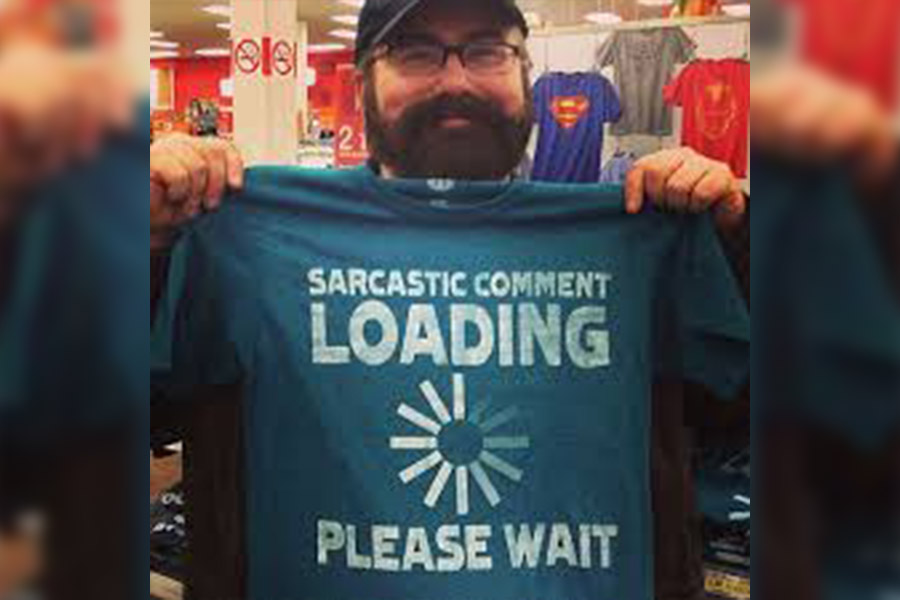

Humor: Dude with sarcastic graphic tee’s hand numb after all those high fives, handshakes

MIKE MOZART [CC BY 2.0] / FLICKR
Kohl’s sells sex

No one knows where he got a shirt that cool. Target? Maybe Gap? Perhaps Kohl’s? In any case, it’s the biggest statement anyone’s ever made at this school.


“This guy gets all the ladies,” Maggie Pinklerton said. “Just look at his shirt. I bet he puts it on just to take it back off again.”


Everyone passing by was physically moved by this man. As he walked down the hall, people stepped back in awe. Others were so moved that they dropped everything to call their mothers, who would nearly faint from the news. How could someone be THAT cool?


“I don’t know, I guess I was just born this funny and stylish,” The Man said. “It’s a curse, really.”


Many trips to the hospital reveal the downside to his social glory. His hand has gone numb from a few high-five-related fractures. Thousands of flowers and cards arrive when he goes to the emergency room.

On his last few days of senior year, his mother used color-safe bleach on his prized shirt. This made the words bolder and the miracle even bigger. Every mailman, cashier and dog The Man passed swerved their heads and sprinted to congratulate him. One footballer was a little too appreciative and decided a full body tackle was the best way to celebrate this man’s gifts. Lying on the hospital bed, The Man stuck true to his shirt and spit out his final words: “Come to the dark side…we have” — he coughed — “cookies.”


Written by: Beck Nava — rnavamcclellan@ucdavis.edu

(This article is humor and/or satire, and its content is purely fictional. The story and the names of “sources” are fictionalized.)

From the California Chronicles

CHRISTIE NEO / AGGIE

The small talk commenced in the shower…

Paul saw it all and he didn’t even know what my middle name was. He needed no imagination for this one. The guy I was with sprung up and threw his hands up like a soccer player trying to convince the referee that it wasn’t him that kicked the ball out of bounds.

Paul went out as quickly as he came in, and to make things worse, he let out a “sorry” from behind the closed door. I just lay there through the whole thing and commented, “Well, the moon was out early tonight it seems.” I looked at my phone; there was a text from Paul. It said, “I’ll come back later lol.” I took advantage of that offer.

As is customary, the small talk commenced in the shower. I learned that he was studying philosophy and wanted to be a lawyer someday. There was no reasonable doubt that he would become one. He spoke eloquently and no one would object when they saw his face. Sneaking him in and out of the dorm showers was more fun than difficult. He called me crazy, but intriguing, and I asked him what he intended to do about that. He asked me what I was doing on Saturday night to which I responded, “Having dinner with you at a restaurant that you surprise me with.” It was settled, and we got ready in the dorm bathroom.

On his way out, I left him with “Have fun in last night’s clothes!”


Next week: The real date


Written by: Terry Hudson — arts@theaggie.org

Disclaimer: The views and opinions expressed by Terry Hudson are completely fictional and do not necessarily indicate the views and opinions held by The California Aggie. The story is fictionalized, as is Terry Hudson.

From the California Chronicles

CHRISTIE NEO / AGGIE

“Well, there’s some excitement!”

My pupils dilated at the slightly affirming “sure” that he decided to respond with. I suggested that we go to Temple because it was the only place that my bougie self had managed to wander to downtown. Not to mention that my constant desire for caffeine is detrimental to both my health and my budget.

It was Sunday, so I suggested that we go that afternoon before school started the next day. He agreed, and I waited on the patio for him later that afternoon. When he arrived, I learned his name was Jack and he was studying economics. He was living in Tercero and complained how the draft in the morning made his room smell like cow shit. “It’s an organic alarm clock,” I said, trying to make a joke out of an unfortunate situation, which is what I often try to do.

He didn’t laugh at my joke, or any other joke I made, so that meant we weren’t meant to be. While I tried to distract myself from Jack by investigating if the fig plant in the window was fake, I accidentally spilled my hot coffee all over him because I reached for my coffee without looking. I said to myself this time, “Well, there’s some excitement!”

He just sat there, so I decided to get up and ask the barista for a rag to clean up the weiner aisle. We talked for a bit more and then parted ways. I opened up Grindr and found another guy about a thousand feet away that I felt like taking back to my dorm with me, so I did.

We talked for a bit — just a bit. Fast forward to an hour later, as things were getting down under, when I heard the key swipe on my door. My roommate was pushing the door open.


Next week: Looking


Written by: Terry Hudson — arts@theaggie.org

Disclaimer: The views and opinions expressed by Terry Hudson are completely fictional and do not necessarily indicate the views and opinions held by The California Aggie. The story is fictionalized, as is Terry Hudson.

Deadpool 2

CAITLYN SAMPLEY / AGGIE

Deadpool’s sequel follows its predecessor almost too closely

“Deadpool 2” isn’t a bad movie. “Deadpool 2” isn’t a great movie. It’s much a continuation of the first; it feels exactly the same. The humor remains raunchy and phallic. The gore explodes in ribbons of red. Fourth wall breaks aren’t uncommon. People who enjoyed the first “Deadpool” will absolutely enjoy the second. Ryan Reynolds lands his witty humor. The new and returning cast members support the narrative and humor, functioning as a solid backseat for Reynold’s loud performance.

Not necessarily a downside, but more a missed opportunity, the movie should have taken more risks. Sequels are times for risk and changes. While more characters were added, the film could’ve done more than just relying on Deadpool’s wit to carry the occasionally slow yet surprisingly wholesome narrative from start to finish (wholesome in regard to the plot’s motivation, not content). A risk the film could have taken, however, is in its character development. While slightly present, it isn’t lived to its fullest potential. Instead the film hides meaningful development behind similar jokes. Again, the jokes used are funny — there is nothing wrong with them. It just could have been interesting to see a “Deadpool” with a few more human moments.

Deadpool is franchised. That’s not a bold claim or a surprising truth, as franchising has become a trend in the movie industry. For good reason, too — just look how the new “Avengers” is doing so far. But why make it so obvious? The movie’s plot is practically centered around franchising. Without giving away too much, Deadpool’s hunt for a perfect “team” isn’t written to set up just the third act, but also the third movie. Sequels are without a doubt important — and I will definitely watch a third Deadpool movie — but the film seems to jump the gun. It was as if the creators were so excited to start the third movie they didn’t even let “Deadpool 2” get through the second act without implying the next bigger and badder adventure. De-emphasizing clear markers of franchising would’ve improved the film by not making certain scenes feel like set-up for a third.

The movie is funny and entertaining, and the new characters motivate a fairly simple plot while adding to the swell of humor. “Deadpool 2” doesn’t succeed over the first, but it continues on the groundwork it laid. The movie entertained with traditional violence alongside stranger scenes (including ones where full-grown men had baby legs?).


Written by: Nicolas Rago — arts@theaggie.org

Why Russia isn’t dangerous

HIROYUKI KAMBE [(CC BY-SA 2.0)] / FLICKR
By placing Russia on a scary list, the U.S. government ignores reality

In January, the State Department revamped its system of travel advisories, making it easier for American citizens to know what dangers await abroad. The updated model uses a tiered ranking system to designate the safest and most dangerous countries in the world for Americans to visit. There are four levels, with the first level advising would-be travelers to “exercise normal precautions,” and the fourth level bluntly warning “do not travel.”
Russia was placed at Level 3, which urges Americans to “reconsider travel” if we are unlucky enough (or apparently stupid enough) to think about going. It’s a decision that reflects political nitpicking rather than common sense realities.

By itself, the State Department’s ranking system doesn’t do much from a practical standpoint. Our government doesn’t strictly prohibit tourism in any country with the exception of Cuba and North Korea, although this might change given recent diplomatic efforts. We can generally go where we want, when we want, notwithstanding other nations and their own entry requirements.

Still, the rankings have the potential to do more harm than good, especially for countries that run afoul of popular media. By the State Department’s own admission, the very first step for potential travelers should be to look at its list of travel advisories. When the perception of danger is higher than what reality suggests, travel is considered more burdensome than necessary, and misinformation about the world persists.

Following Donald Trump’s ascension to the presidency, a foreign policy that was once firmly against Russia’s international aggression is now an unbalanced shell of its former self. Our credibility on the Russia issue has eroded. One minute, President Trump denies election hacking and trolling, of the type started in unremarkable St. Petersburg suburbs. The next, cruise missiles strike targets in Syria, risking a genuine conflict with Russia in a volatile region.

Our inconsistent policies have only been inflamed by placing Russia at a level three, and with it comes skewed points of view. Here are some other countries placed at the same level:

The Democratic Republic of Congo, where a history of ethnic conflict and mineral plundering has created millions of refugees and internally displaced persons, continuing to this day;

Venezuela, which is embroiled in economic and humanitarian crises ranging from severe food shortages to violent crackdowns that have also prompted a mass migratory response;

El Salvador, home to the world’s highest murder rate.

Like every other country, Russia has its own issues — corruption, a flagging economy and crackdowns on independent journalism and protest. But they do not warrant the safety judgments that a list recommending to “reconsider travel” warrants. There is no exodus of refugees or mass casualty events stemming from ethnic struggles.

The State Department cites terrorism and harassment of Americans as reasons for Russia’s inclusion on level three. Of the two, terrorism is easier to quantify. In a report by the Global Terrorism Index published in 2017, Russia’s GTI score — a composite figure measuring the impact of terrorism within a country’s borders, with higher scores indicating more risk from terrorist incidents — was 5.3 out of a possible 10. The United States placed at a 5.4.

Despite apparent precursors to anti-American sentiment — consulate closings, sanctions, more belligerent military action — I’ve found nothing but friendliness towards Americans while living in Russia, and other study abroad students will agree. I’ve been offered drinks and a toast by rowdy soccer fans after some amusing banter over our recent missile strikes in Syria. Americans here garner curiosity, not harassment. Living here has revealed not the worst side of Russia, as our government would have us believe is the unyielding truth, but the best.

With tensions between the American and Russian governments playing a risky game of red light-green light, it’s easy to forget that people actually exist beneath the highest echelons of power and the war of words that dominate our public perceptions of each other.

That’s why the State Department’s decision to place Russia so high on its advisory list is so backwards — it reflects conditions at the top, the clash of politicians at odds over long-term policy goals, rather than conditions for actual people (and travelers) living in reality. The world will be better off without such delusions of danger.


Written by: Nick Irvin — ntirvin@ucdavis.edu

Disclaimer: The views and opinions expressed by individual columnists belong to the columnists alone and do not necessarily indicate the views and opinions held by The California Aggie.

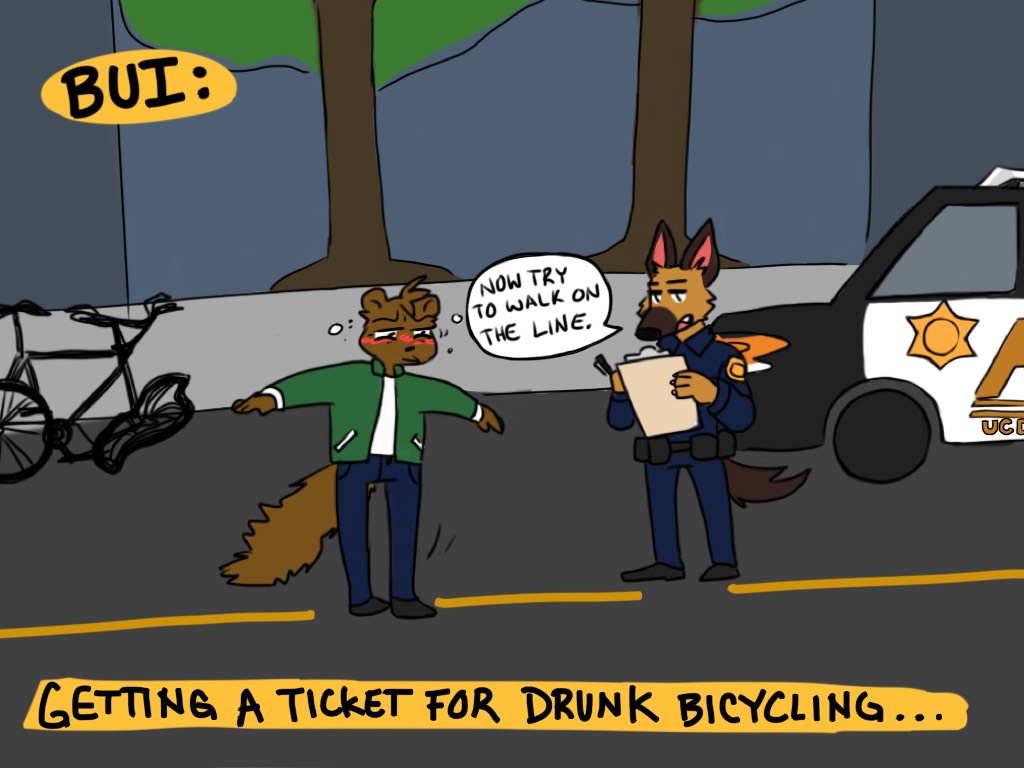
Cartoon: Don’t Drink and ‘Cycle

By: Diana Olivares — deolivares@ucdavis.edu

Disclaimer: The views and opinions expressed by individual cartoonists belong to the cartoonists alone and do not necessarily indicate the views and opinions held by The California Aggie.


Five of the most unusual sporting events

PUBLIC DOMAIN

The Aggie explores five strange sports competitions from Europe, North America

With the addition of two new women’s sports to the athletic program earlier this year, UC Davis continues to add diversity in competitions for its student-athletes. However, there is a division of sporting events that cannot be found at most universities. Five of these unusual sports –– while they may not be added to UC Davis’ NCAA list anytime soon –– have earned their own followings and made a name for themselves in their respective cultures.

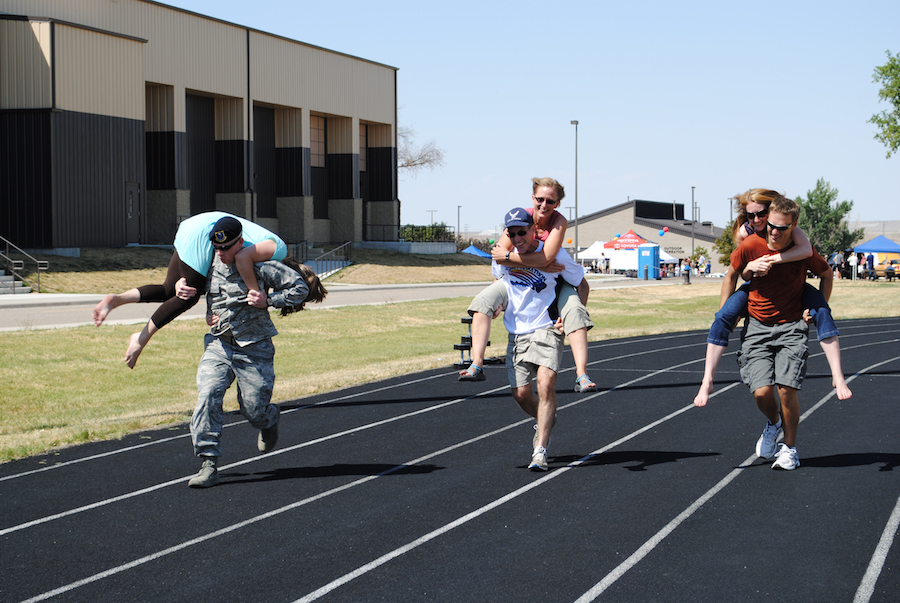
The first of these sports was started in Finland and is based off of the legend of “Ronkainen the Robber,” a famous thief who was accused of stealing women and wives alongside goods during his village rampages. The sport of wife-carrying was born from this tale and spread across Europe and North America during the 1990s. In North America, the championship event is held every October in Maine’s Sunday River Resort; 13 American winners from different states and two Canadian teams from different provinces compete for the first-place crown. While the teams of two do not have to be legally married to compete, the teammates get close and comfortable with one another, as the sport requires one person to cling onto the body of their counterpart; there is no rule on how the typically female teammate is to be carried. This counterpart then competes in an obstacle course race, and, if the person holding on falls or is dropped, the team is penalized with adding a few seconds to their time. The winner of the whole ordeal is whichever team can complete the course the fastest without dropping the “wife” of the duo.

The second strange sport on the list is considered a tradition by people of all ages in certain regions of the United Kingdom. Every spring, typically in May, the South West England Gloucester region holds the highly-anticipated cheese-rolling competition. This sport has won fame for both its simplicity and its wide range of age-specific competitions. The rules are as simple as the name: competitors stand at the top of a long, grassy hill, and a nine-pound round of Double Gloucester cheese is rolled down from the top. Those competing then have to chase it down to the very bottom, and whoever crosses the finish line first gets to keep the cheese as their trophy. The competition used to be a chasing game, in which the person who could catch the rolling cheese first would win, but the amount of injuries that rule caused forced the overseers of this sport to alter the game. The event takes place on Cooper’s Hill in Brockworth, Gloucester and offers competitions for both adults and children who want to participate in this English tradition.

While the next sport on the list may seem like an adaption of a simple child’s game, it has been gaining fame and fans since the 1970s. Toe wrestling is essentially the feet-version of arm wrestling; opponents are to take their shoes and socks off, interlock their big toes together and attempt to knock their enemy off the ‘toedium.’ Like cheese-rolling, toe wrestling was started as a competition in the United Kingdom when the locals at a pub near Ye Olde Royal Oak Inn in Wetton, Derbyshire thought it would be entertaining to host a toe wrestling competition for themselves and visitors to their town. Although the strange sport was rejected from being added to the Olympics’ roster in 1997, it continues to grow in fame throughout Europe, and the championships are held every year at the Bentley Brooke Inn near the Staffordshire and Derbyshire border.

Unlike toe wrestling, the fourth sport was part of the original Olympic Games, Cotswold Olimpicks, back in 1612, alongside an array of other strange sports in Gloucestershire, England. While there has yet to be a modern Olympian who specializes in shin kicking, it continues to entertain citizens more than 400 years later. The competition starts with two opponents facing each other and holding each other’s collar in a rink. The two are then to kick their enemy in the shins as hard as they can, and each time an opponent falls to the ground, the other player gets a point. The winner of the game is the competitor with the highest score after the end of three rounds. Competitors are permitted to pad their legs with as much straw as they would like and are required to wear soft shoes –– a drastic change from the steel-capped boots that English ancestors were fans of in the past.

The final unusual sport on the list is governed by the Underwater Society of America, the same organization that looks over more traditional sports, such as diving, in the United States. Underwater hockey is played as a mashup of soccer, basketball, and ice hockey, in which six players from two teams compete at the bottom of a swimming pool. Players are equipped with fins, masks, snorkels, gloves, and headwear for protection and are given very short sticks to move the puck around with. Just like ice hockey, the objective of the sport is to score goals in the other team’s net. While playing a sport entirely underwater may seem dangerous, it is reported that players typically only spend no more than 15 seconds underwater, and the success of a team ultimately relies on the players’ teamwork and communication with one another.

While UC Davis’ athletic department is already known for its addition of non-traditional sports in intramural sports, perhaps students will one day see strange competitions such as these added to the list to bring more opportunities for students to try out something new.


Written by: Kennedy Walker — sports@theaggie.org

Police Logs

NICKI PADAR / AGGIE

Who puts sugar in a gas tank?

May 2

“Truck drove across the reporting party’s lawn and driveway, parked in the yard partially. Silver pick-up — vehicle is not on, does not appear occupied, possibly associated with a nearby party.”

“Unknown subject attempted to jump patio gate then left area.”


May 3

“Reporting party’s vehicle and garbage can barricade in front of residence were spray painted with profanities last night by unknown subject.”

“[Subject] has been stealing items from the business for last several months — has been told to leave several times today but subject just returns a little while later.”

“Ongoing problem with neighbor following reporting party, peeking in the window, nothing spoken.”


May 5

“Secondhand information to the reporting party — a group of subjects hopped the fence and are in the pool area.”

“Leaf blower started at 0730 hours — reporting party requested they be advised of city code ordinance.”

“Reporting party and roommate had 415V. Threatened to kill her after her she turned on the A/C. Punched hole in bathroom door. Took reporting party’s phone/wallet.”


May 6

“Two minutes ago, heard only, 10 popping sounds.”


May 7

“Reporting party noticed a flat tire last week and then today she went to fill gas and her tank was full of sugar, reporting party thinks it’s her neighbor she was in a 415V with last week.”

Pioneer, César Chávez elementaries will have new principals this fall

ALEXA FONTANILLA / AGGIE

Veronica Dunn, Patricia Astin to take lead positions

Pioneer Elementary and César Chávez Elementary will both see new principals take office in the coming school year. Patricia Astin, the current coordinator of educational support services in the Tehama County Department of Education, will be the new principal at Pioneer Elementary. Veronica Dunn, the current interim principal at Pioneer Elementary, will take up the position at Chávez.

“We’re always looking to select the best candidate for the position,” said Maria Clayton, the public information officer for the Davis Joint Unified School District. “Obviously, at César Chávez Elementary, we need a bilingual individual, and experience there as a teacher was something Ms. Dunn brought to the job for sure, and Patricia Astin also brings a lot to the table when it comes to Pioneer. We’re always looking for the best leader that we can in order to make sure that our programs our going to excel and to support the student needs academically, socially and emotionally.”

Veronica Dunn, a UC Davis alumna, has been working as an educator for 11 years. She began teaching 4th and 5th grades at Winters Joint Unified School District in 2000 and moved to César Chávez Elementary School in 2014, teaching 6th grade. Dunn completed her master’s degree in education leadership at Sacramento State in the fall of 2017 and has since acted as principal at Fred T. Korematsu, Pioneer, César Chávez, Marguerite Montgomery and Willet, all elementary schools in Davis. Now, she has been chosen to become the permanent principal at César Chávez Elementary. Because César Chávez Elementary is part of a Spanish immersion program that focuses on integrating both English and Spanish into students’ education, Clayton and Dunn both emphasized the importance of the school’s principal being bilingual and embracing the Spanish language.

“My entire career has been dedicated to Spanish immersion programs,” Dunn said. “Learning languages has always been a passion of mine, and I will continue to advocate for this remarkable program in our District […] Looking ahead, I am looking forward to working with the teachers, staff and families to identify the conditions, systems, issues, barriers and challenges that our school must address to meet its obligation to establish equitable education, create a positive school climate and prepare our students for the 21st century.”

Astin, who will be filling Duffy’s role as the permanent principal at Pioneer Elementary, has worked as an educator and administrator for the Cascade Union School District in Anderson, the Junction Elementary School District in Palo Cedro, the Gerber Union School District and the Redding Elementary School District. She earned her bachelor’s in child development and her teaching credentials at Chico State and finished her master’s in special education at National University in Redding.

“I hope with my experience and knowledge I’m able to support Pioneer and Davis Unified while they provide me the opportunity to learn and grow as a principal,” Astin said. “I never see any student that isn’t capable — to me, everyone has a tremendous amount of possibility. I’m in education because I believe in every single student that I interact with and meet.”

The positions both opened up when Denise Beck, the current principal at César Chávez Elementary, chose to retire at the end of this school year and Matt Duffy, the current principal at Pioneer Elementary, accepted a promotion to become the director of Elementary Education and Leadership for DJUSD. Veronica Dunn was chosen to fill his role as interim principal at Pioneer and after July 1, when the next school year begins, will take Beck’s position as principal at César Chávez Elementary. Patricia Astin will replace Duffy as the permanent principal at Pioneer.


Written by: Ahash Francis — city@theaggie.org

“Radically Tender” writing workshop led by poet Ariana Brown

JULI PEREZ / AGGIE

Workshop celebrating power in tenderness hosted at Cross Cultural Center

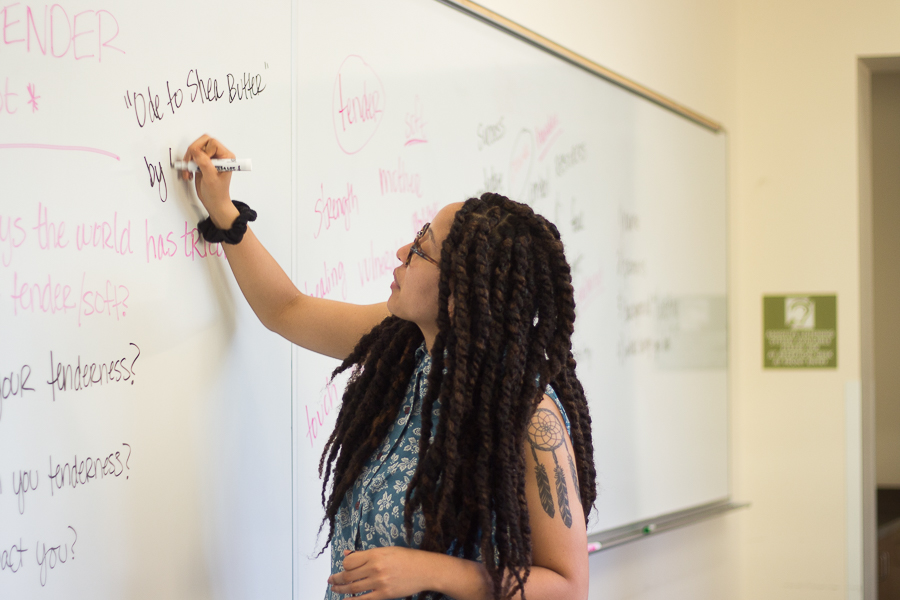
On Tuesday, May 8, the Cross Cultural Center hosted “Radically Tender,” a writing workshop led by poet Ariana Brown.

According to her online biography, Brown is a “Black Mexican American poet from San Antonio, Texas, with a B.A. in African Diaspora Studies and Mexican American Studies from the University of Texas, Austin.” She received “two Academy of American Poets Prizes” and is “a 2014 collegiate national poetry slam champion.”’

“I’ve been writing for as long as I can remember, but as of now, I am a poet,” Brown said. “I try not to limit the way I define that, but I’ve done slam [poetry] for a really long time and spoken word as well.”

Brown was invited to facilitate a writing workshop by members of the CCC last month. Initially, Brown was asked to teach a workshop she currently offers titled “Phenomenal Woman.”

“[Phenomenal Woman] is specifically about womanhood, but they asked me to make it more inclusive so that folks who are non-binary and genderqueer would also feel comfortable and accounted for in the space,” Brown said. “At that point, I, of course, was willing to make the accommodations. But I was looking at the curriculum and I thought that workshop in particular was intended to be specifically about womanhood, and I think that there should be spaces for that to happen.”

After thinking over how to make a more accessible writing workshop, Brown came up with “Radically Tender.”

“I think that what would be more useful in this space that everyone can be included in is a workshop on tenderness,” Brown said. “I think that […] people who are not men, we don’t have a lot of spaces to talk about tenderness — especially spaces in which we can think about how we can be tender to ourselves and people who are not the men in our lives.”

The flyer for the event, sent to the Middle Eastern and South Asian listserv and shared widely on Facebook, described the workshop as follows: “Embracing our own softness can feel impossible in a world which tells us we must develop hardness in order to survive. How can we allow ourselves to find the power in tenderness, in softness? This workshop explores the capabilities of tenderness, focusing on self-care and communal care, through writing exercises and group dialogue.”

The workshop began with standard introductions in addition to the questions: “What is your background with writing?” and “What brings you here today?”

Students, led in discussion by Brown, began with a discussion of various words and descriptives typically associated with the terms “power” and “tender.”

Continuing the discussion, Brown introduced the group to the Five Love Languages: quality time, physical touch, acts of giving or service, gift giving and words of affirmation. The Love Languages are a concept introduced in a book titled “The Five Love Languages,” written by Gary Chapman. According to Chapman, these languages are said to be the five ways humankind expresses and experiences love. Brown asked the group to relate these languages to tenderness and list ways that each student displays tenderness to the people around them and then how they display tenderness to themselves.

After, Brown introduced two writing prompts for the rest of the one-hour session: “What are some ways the world has tried to keep you from being tender/soft?” and “How do you maintain your tenderness? Who has shown you tenderness, how and what impact did it have on you?” Responses to these prompts ranged from bulleted thoughts to rough drafts of slam poems; later, the discussion spanned topics including relationships, prejudice, stereotypes and even full slam-style poetry.

“One of the things that was useful [from the discussion during workshop] was the observations […] about the different types of love that you receive in friendships versus […] in familial relationships,” Brown said. “I’ve been thinking a lot about expectations, just in general, and how that can be not great. I think with family I often have to readjust my expectations so that I’m not hurt.”

Brown concluded the workshop with a small assignment, asking the people in the group to make a list of additional ways they could show tenderness to themselves.

To students who weren’t able to make it to the workshop or didn’t know about it, Brown asked that they try to make some time for themselves.

“If they can’t take an hour to come to a workshop, then I would challenge them to, in their day-to-day, try and find a moment in which they can […] provide tenderness to themselves,” Brown said.

“I know this is [an] especially busy time in the quarter for people,” Brown said. “So I think it’s even more important as the school year is winding down and everything is becoming a little less hectic that people take time to reflect and sort of turn inward and make sure that they’re doing okay internally, that they have time and space and energy to process everything that might have happened during the most busy part of their lives and have patience with themselves to sit in the quietness.”


Written by: Priyanka Shreedar — campus@theaggie.org

Aggies in a cappella

CHRISTIE NEO / AGGIE

Overview of a cappella community at UC Davis

It was roughly 9:30 p.m. one night her freshman year when Yanise Nevarez remembered that auditions for the one of Davis’ a cappella groups ended at 10 p.m. After not getting into any groups at the joint a cappella auditions beforehand, she thought there was nothing to lose. So she showed up in her pajamas, blew the crowd away, and was accepted into the Cleftomaniacs, quickly becoming a part of the UC Davis a cappella community.

“Once I went to my first rehearsal with them, they all just wanted to get to know me,” said Nevareza, a third-year English and Chicana/o studies double major and now president of the Cleftomaniacs. “They had made nicknames for everybody the first day, I remember I was late so my nickname was like something about being tardy all the time. It was a really great experience. It really is a small family inside of Davis.”

A cappella is a form of music that doesn’t use any sort of instrumental accompaniment. Those who sing in a group use only their voices to produce the music, and modern a cappella has transitioned to using percussion noises created by beat boxers.

There are a number of a cappella groups on the UC Davis campus, and each one tends to range between 7 and 16 members. The Cleftomaniacs (Cleftos) started in 2014 and are one of Davis’ newest groups.

“Right now we’re actually the smallest we’ve been,” Nevarez said. “Two years ago we were pretty big [at] about 20 members, and that was probably the biggest size of most of the groups on campus. Since then it’s gotten a little bit easier to reduce the size so that we can have a more equal balance of members.”

The Cleftos were born in the interest of being an all-female group, but that idea didn’t last long. The group has since become co-ed in order to open the door of possibilities for its sound. As the newest group on campus, it has worked hard the past few years to prove itself to the existing a cappella community.

“We were literally amateurs, so it definitely took some time to kind of prove ourselves as being a part of the a cappella community,” Nevarez said. “As far as the group itself, it was fairly welcoming. [Other groups] would invite us to shows and showcases so we could feel what it’s like to perform and be a part of the community.”

Since “Pitch Perfect” was released in 2012, a cappella has risen in mainstream awareness and popularity, but it was around on the UC Davis campus long before the film. The very first group established at UC Davis was the Lounge Lizards, which was founded in 1995 by a group of students in the Tercero dorms.

“[The name] is actually an old saying in the music community, like a lounge lizard, somebody who hangs around and lounges, old jazz musicians I think,” said Gabriel Pereyra, a third-year transfer English major and member of the Lounge Lizards. “Basically we’re a competitive a cappella group, so we go around to competitions and we practice about two to three times a week.”

The Lounge Lizards is a co-ed group made up of about fifteen people who characterize their sound as warm and dark and prefer to sing songs from genres influenced by jazz and pop.

At UC Davis, a cappella groups hold joint auditions in the fall, but throughout the year individual groups may also host their own.

“We have two rounds of auditions,” said Brendan Caskey, a third-year genetics major and member of the Lounge Lizards. “The first round is almost all entirely listening to the voice and confidence, but then the second round if they get through that, we bring them to one of our rehearsals and teach them some of our music. A major part of that is seeing how they interact with the other members of the group and looking for any red flags that might indicate future conflicts.”

Members of the Lounge Lizards pride themselves in the close-knit connection of their group — they’re not only looking for new members with great voices, but also a personality to vibe with other members. This is the running theme for many of the a cappella groups on campus when it comes to auditions.  

“The way that we go about picking new members is music comes first, that is the priority, we are primarily a music group, and the family and the connection and the personalities and the friendship that we all share is a very close secondary,” said Anusha Suresh, a fourth-year biology major and co-president of The Spokes. “Sometimes people walk in and you just feel that Spokes energy. All of us have some sort of spunkiness, or honestly weirdness to us, but we are very comfortable around each other to really show that weirdness.”

The Spokes is Davis’ only all-female a cappella group. It began in 2004 by a number of members who actually used to be a part of a different a cappella group on campus but wanted to be in charge of their unique sound.

“[The founders] started this group basically with the idea of ‘we want an all-female group that empowers each other through music’ and we have really created a sisterhood within our group,” Suresh said. “[When] we pick our songs they can be fun, we don’t really restrict ourselves to a genre. Most of our songs are pop, but we like to do different types of interpretation, we throw some jazz in there, we do our classic ballads, but in the past we’ve done more electronic-y stuff.”

The Spokes are responsible for Davis’ biggest a cappella show, HellaCappella, which has now been running for 14 years. Over time, it has transitioned from the small stage of Rock Hall to filling the tiers at the Mondavi Center. The small profit made from the tremendous event goes toward recording songs and albums that are available on Spotify.

“It’s taught me a lot in terms of music production, event production, and also what it’s like to balance being in the group as a performer, but also putting on these really big logistical passion projects, so that’s really cool,” Suresh said. “I take a lot of pride in it, and it’s definitely a team effort between all the leadership and also all the members.”

This 16-member group has fluctuated in size over the years, and a generational shift will be taking place this June with the graduation of eight of its members. Suresh pointed out that it will definitely take some hard work on the part of its remaining members to expand their ranges and round out their sound in the absence of voices.

The Afterglow, a steadfast group that’s been on campus for more than six years, tends to fluctuate in numbers quite drastically at the end of each Spring Quarter. While The Spokes have no shortage of soprano and alto voices, the all-male a cappella group on campus carries the ability for the opposite kind of sound.

“I would say [our sound is] barbershop, a lot of our members have roots in jazz and soul and funk, so we pull out some of those,” said Zachary Whittles, a fourth-year materials science and engineering major and Afterglow member. “[All] of our members are at least moderately into pop, so it ends up being a lot of pop music that we at a certain degree change around a little bit, just to make it fun for the people who like jazz to sing, make it fun for the people who like soul and R&B to sing.”

According to Whittles, the name Afterglow comes from barbershop, where performers would host “after parties” after their shows. Essentially, as the origins of the name indicate, The Afterglow is a group all about pleasing the crowd. In fact, their slogan suggests just that: “we put the XY in ‘sexy.’”

“No matter what event we’re doing, we really just want to spread our appreciation for music through engaging the audience and making it fun for everybody, regardless of how much music experience you have,” Whittles said. “We try to do a lot of crowd-pleasing songs or songs that we like to sing. Obviously with an all guy group you don’t have the upper range of girls, but then again you get a much deeper sound, so it can turn into kind of a really cool dynamic that you just can’t get with other groups.”

The Afterglow’s big annual show, known as “Lights Low with the Afterglow,” takes place in the winter and invites groups from other schools to perform. Even though The Afterglow has recently focused on performing for local community groups and businesses, many of the groups on campus actually compete in capstone competition: The International Championship of Collegiate A Cappella.

“Competing in ICCA’s is definitely such a highlight every year because you see not only your own development as an a cappella singer, but you see yourself as a group develop this perfection in your set,” said Neil Capulong, a third-year microbiology major and the social media chair for The Liquid Hotplates. “You also see other groups in that competition that have worked hard, each week they rehearse so many hours and you see that in there and I’m just so proud to see that.”

The Liquid Hotplates is a co-ed, competitive a cappella group on campus that has competed in the ICCAs many times. At this year’s quarter finals, the group won best arrangement for their 13-part set. Other Davis a cappella groups also competed in ICCAs, with The Spokes winning best choreography and the Lounge Lizards winning best soloist in the quarter finals.

“Before [joining LHP] I used to be so shy and not very sure about the group, but being able to sing with these people and sharing the same interests in music is such a nice comforting thing to be in,” Capulong said. “Singing in a cappella has actually made me more confident in singing by myself too because it kind of validated that you are talented, that you have this music in you.”

Although all these different groups have their own distinct style and sound, at the end of the day they are all a part of a robust and inter-motivating a cappella community. Each group pushes each other to not only improve vocally, but also work together to create an integrated a cappella community thriving with deep friendships.

“Every single year it’s been getting better and better, not just how we sound, but our friendships,” Nevarez said. “That’s something that I don’t know how many campus orgs can say, is that the people you make friends with in those clubs are the people you’re going to have as friends for lifetimes. I feel really comfortable saying that with a lot of the people in my a cappella group.”


Written by: Marlys Jeane — features@theaggie.org

Have Trump’s Twitter wars brokered a peace between North and South Korea?

JAMIE CHEN / AGGIE

Diplomacy in the digital age

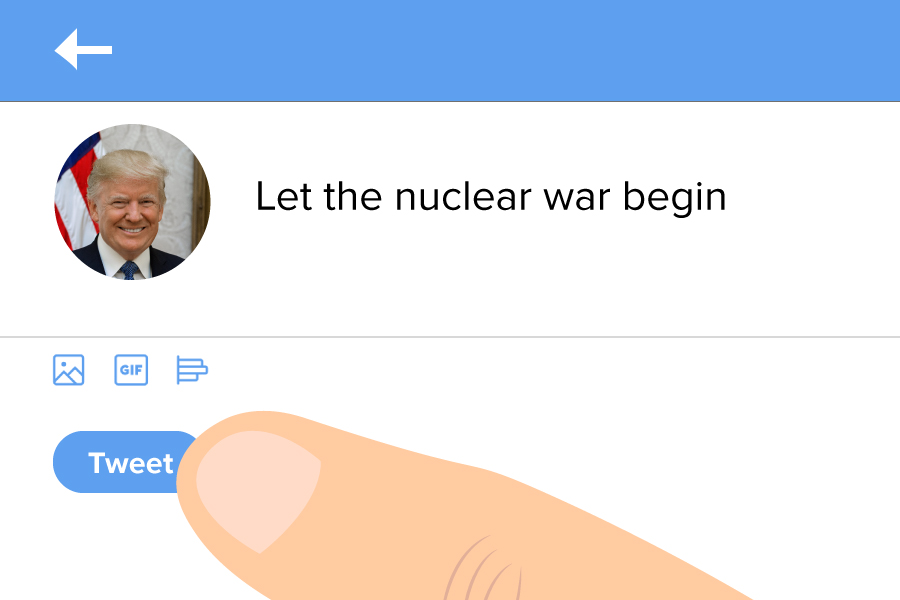
Donald Trump is undoubtedly the first President of the United States to use Twitter as a form of diplomacy. That is, if you can call it that. For the past two years, Trump has made headlines with his bullying tactics on social media, featuring absurd nicknames, uninformed rants and accusations of “fake news.” In particular, the summer of 2017 was met with an unusual Twitter battle between Trump and a trigger-happy Kim Jong Un, who declared that his country had ballistic missiles that could potentially reach the United States. Trump’s unusual propensity toward name-calling reached its zenith with his public condemnation of Kim as a “little rocket man.” The mockery, which outraged some — many people even believed that the two countries could be on the verge of nuclear war — has had a curious effect on American-Korean relations.

Trump is planning a meeting with Kim this May, according to the White House, although Press Secretary Sarah Huckabee Sanders has assured news outlets that the sanctions will continue unless Kim agrees to denuclearization. The meeting of Trump and Kim would be historic, not only for Trump’s presidency, but for the world; no American leader has met or even had a telephone call with the notoriously volatile Kim.

But then Trump is volatile, too. Curiously, their equally belligerent approach seems to have brought about a possible détente between the United States and North Korea. Moreover, North and South Korea have engaged in peace talks. Proponents of Trump’s aggressive and isolationist foreign policy have argued that his hard-line approach has been one of the main instigators for the possible rapprochement between the historic enemies. Kim may be embarrassed about the state of his country — there is significant evidence to support the fact that many North Koreans are starving. Meanwhile, South Korean leaders may be inclined to bury the hatchet with their old rival to demonstrate their commitment to peace in the region and to enhance their own status on the Asian continent. Some people have even gone so far as to suggest that Trump should win the Nobel Peace Prize.

Regardless of this, however, let’s not forget that much of Trump’s success with Kim is circumstantial. Moreover, as some of Trump’s critics have suggested, the President’s decision to enter peace talks with North Korea may imply that the U.S. recognizes it as a legitimate nuclear power. This would send the wrong message entirely to North Korea and would perhaps encourage more volatile behavior on the part of Kim.

In my column, I’ve often written about the way that technology and social media influence the American electorate, and I feel it’s important to address the role of Twitter in the tentative North Korea-South Korea rapprochement. Trump is a notorious bully and has no compunction when it comes to venting his spleen about opponents on Twitter. Paradoxically, however, this approach has been remarkably effective. The more Trump continued to condemn “fake news” outlets — i.e., liberal news media like CNN and The New York Times — the harsher the criticism he received from these newspapers. The criticism not only inadvertently popularized him but also enhanced the rhetoric of victimhood and self-aggrandizing that Trump employed.

Trump used the same tactic with North Korea that he did with the United States itself. By participating in a Twitter war with one of the most dangerous world leaders in recent history, he received exactly what he wanted; for Trump, any publicity is good publicity. In turn, the boyish online battle that ensued between the two leaders was further proof of North Korea’s belligerence — just as Trump wished. The embarrassment that this caused for North Korean diplomats may have brought about their purported wish to broker peace with South Korea and initiate potential diplomatic relations with the United States. After all, their authoritarian leader had been openly and ruthlessly criticized by a rival western power. Whether this actually spurred the North Koreans to positive diplomatic action remains a mystery, however. It is unlikely that we will know just what pushed Kim to introduce the long-elusive possibility of peace with his country’s arch rival, the South.

What we do know is that both Trump’s campaign and his foreign policy have thrived from his verbal and online recklessness. Indeed, Twitter is ideal for both Trump and Kim: it’s a playground for political bullies like themselves who are willing to push their agendas at any cost.


Written by: Rebecca Bihn-Wallace — rlbihnwallace@ucdavis.edu

Disclaimer: The views and opinions expressed by individual columnists belong to the columnists alone and do not necessarily indicate the views and opinions held by The California Aggie.

Humor: Nobody has endorsed your cattitude skill on LinkedIn, and nobody will

JAMIE CHEN / AGGIE

You’re not a cat, you just like bringing people dead birds in your mouth

You are better than most other people. You are perhaps more lithe, more graceful, surely more cunning, definitely more skittish and just the right mixture of totally composed and suddenly spastic. You are better at catching lizards, too. You do not overtly flaunt it, though. After all, it’s not an opinion to be argued. It’s fact. Pure fact. This is cattitude.

In an attempt to advertise your unique skill set, you may want to add cattitude to the skills on your LinkedIn page. It’s a valuable skill that encompasses your unique personality, right? I’m here to advise you, to softly place my hand on your hand poised over the computer mouse, ready to click, and solemnly shake my head. No.

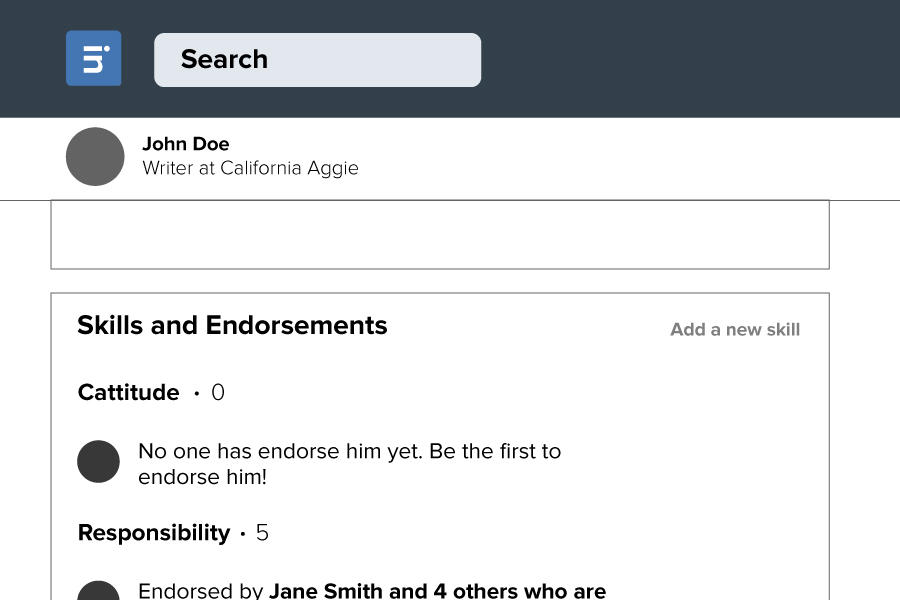
If you have already added cattitude to your LinkedIn skills, you may have already witnessed this skill’s static position next to the unchanging “0” on your profile, because nobody has endorsed your cattitude, and nobody will.

In your own eyes, you may see yourself as someone who is fiercely independent. Someone who has phenomenal reflexes. Someone who is more analytical and less emotional. You may feel comfortable within the bounds of this word cattitude, which (for you) conjures a misanthropic yet cuddly persona. In doing so, you may feel an inexplicable kinship to other cats. One day, you may look deeply into a cat’s eyes and realize that you will never experience such a profound spiritual connection with another human being. Ever.

But others will only see stereotypes from popular culture: viral cat memes, hipster cartoon cats who wear glasses, old lady posters of kittens wearing feather boas and tiaras and the assorted reincarnations of the “crazy cat lady.” You will be written off as another freak who’s obsessed with cats. You will be distraught beyond belief. You will seek solace from the only “person” who understands you, your cat. And, of course, your cat will be like, “Wtf, I’m trying to nap?”

This is why you cannot add cattitude to your LinkedIn page. Just don’t. Deep down, you may feel like a cat, but you are not a cat. You’re just a weirdo who really likes yarn. Not that I would know.


Written by: Jess Driver — jmdriver@ucdavis.edu

(This article is humor and/or satire, and its content is purely fictional. The story and the names of “sources” are fictionalized.)

Tracking violence from police encounters

CAITLYN SAMPLEY / AGGIE

Half of threatening encounters end with violence, racial bias exists

Chris Smith, an assistant professor in the Department of Sociology, started collecting data about violent police encounters in 2015 while wrapping up her Ph.D. project.

“It was a good year to collect data, and I wasn’t the only one working on this,” Smith said. “The Guardian was doing a similar project, The Washington Post was doing a similar project. The Bureau of Justice Statistics was using online news reports to start double fact-checking their own work because their work was criticized for only picking up 50 percent of the cases.”
Beginning in January 2015, Smith ran a Google search for local news sources’ reports of threatening encounters between civilians and police officers. Every day for 13 months, the search would pull up dozens of articles from both big cities and little towns across the United States. The fruits of this labor were 11,000 articles depicting 5,000 threatening encounters. All of these encounters collectively constitute the Police and Civilian Outcomes of Threatening Encounters (PACOTE) database.

“The big contribution that makes my project so different is that I’m looking at threatening encounters compared to just counting the fatal cases,” Smith said.

Police departments in the United States are a hodgepodge of 18,000 local, county, state and federal agencies. Some departments prefer to operate independently of a federal agency like the Department of Justice or the FBI. Reporting every threatening encounter between civilians and police to a centralized agency is a lot of work, and there are few incentives to fill out supplemental forms detailing how a civilian was injured or killed by an officer.

Even small towns often have a dedicated crime blogger for a local newspaper who reports on police interactions. The large PACOTE database provides evidence that media sources often contain more reliable information about police use of force than federal agencies. To sift through the dataset and make sense of all these encounters, Smith assembled a team of undergraduate students to read each article and create unique IDs for each event.

“The characteristics we’re coding are the civilian’s name, age, race, gender, status and whether or not they were armed,” said Cierra Bordwine, a third-year sociology student working on the PACOTE project. “Their status could be whether or not they were on drugs, intoxicated from alcohol, a mental illness or if they were suicidal at the time. Then it’s the same stuff for the police officer, except for status, whether or not they were off duty or on duty. We go through the articles, and as we read them, we have that event ID, and we’re filling out the different variables.”

The PACOTE database includes events resulting in the death of a civilian by a police officer, but also include other forms of violence and use of force by police departments.

“It’s not just fatal shootings,” said Matthew Thompson, a sociology Ph.D. candidate working on the PACOTE project. “We have non-fatal shootings, we have attempted shootings — where an officer shoots at somebody, but doesn’t hit anything. Then other forms of violence — tasers, beatings, batons, use of a vehicle as a weapon and then direct verbal threats. We also capture situations where there was an expectation of violence, but it was resolved with no use of violence.”

Preliminary results from the first three months of 2015 revealed that 46.6 percent of the 1,501 threatening encounters recorded resulted in violence against civilians, while 17.8 percent of the total encounters recorded resulted in a civilian fatality.

“Once we consider level of force, the patterns are even more interesting,” Thompson said. “Across the board, African Americans experience more force. But white men experience disproportionate amounts of fatal violence. This indicates that the threshold for using violence against a white man is higher, but when they do use violence, it is disproportionately fatal violence.”

To determine how to classify the race of the civilian victims, Smith’s team looked at images of the civilians when included in news reports.

“We’re using perceived race,” Smith said. “For the majority of these cases, a police officer walks up, sees somebody, and that’s what they decide the race is.”

Smith pointed out that sociologists treat race as a social construct, and people often identify in complex ways. But testing for an implicit racial bias in use of force or violence relies on how people in a social network interact and perceive each other.

In the United States in 2015, while 15 percent of white civilians killed by police were unarmed, 32 percent of black civilians killed by police were unarmed. The disparities along racial lines suggest police patrol neighborhoods in a particular way or treat civilians differently according to their perceived race.

“Poverty and concentrated disadvantage are predictors of crime,” Thompson said. “But there’s these risk assessments in sentencing aspects, with police being embedded in a larger criminal justice system, where the whole system is about managing risks to society in general. You end up identifying these risky populations by these characteristics, and then we direct policing attention to those populations. Right now, those populations are young men of color. That directs policing attention, which feeds back into the system — if police are paying attention to these groups, that also drives crime rates and arrest rates. There are other groups that are not being paid attention to. This is why white-collar crime never gets the same arrests or attention, because police are focusing more on these other types of crimes.”

Smith originally began the PACOTE project after unarmed Michael Brown was killed by a police officer in Ferguson, Mo. in 2014. The response to this officer-involved shooting led to protests for weeks after the shooting, riot squads arriving to disrupt crowds, a midnight curfew to discourage nighttime gatherings and the galvanization of the Black Lives Matter movement.

“Police have been killing black men in these communities for a long time,” Thompson said. “This is not a new problem. What’s changed is the visibility of it outside of just the black community. White communities have either rediscovered this problem or are being forced to deal with it for the first time. New information and technologies are allowing communities that are seeing it across the nation to connect it to a larger pattern. It’s not just a local story anymore. People are making the connection [that] it’s an institutional problem. It’s not just bad apples — it can’t just be bad apples — because if it was, it would be happening randomly across the country. But it’s concentrated in these specific places.”

Improved data from local police forces and federal agencies about civilian encounters with officers could help encourage methods of policing which reduce civilian violence. Incentives could be created for local departments to catalog and report threatening encounters between police and civilians, helping to fill in some of the data gaps.

“There’s a lot of missing data,” Bordwine said. “We don’t know, right now, the mechanisms that lead to fatal interactions with police. That’s why I wanted to get into it, to be able to contribute to that discussion on what we need to fix and where the actual problem is.”

Smarter and more sensitive reporting from journalists can help shape the viewpoints of citizens hoping to reduce inappropriate uses of force and unnecessary civilian deaths.

“We have our stereotypes of what a typical criminal is,” said Lauren Wong, a third-year sociology student working on the PACOTE project. “That’s perpetuated by the media. But we see through this coding that things are more complicated than they see. I think that this project is a tool of social change that we’re trying to facilitate.”

Complete coding of the PACOTE database will likely be completed by the end of summer 2018. Further analysis will be performed before the full dataset is ready for publication.


Written by: George Ugartemendia — science@theaggie.org