56.1 F
Davis

Davis, California

Friday, December 19, 2025
Home Blog Page 516

Changing career path late in the college career

JEREMY DANG / AGGIE

UC Davis alumni reflect on degrees they regretted pursuing in college, decisions made in later years

Throughout the first and second year of college, it’s not unlikely for students to change their major until they find the most suitable fit. However, some students decide much later in their lives that they may have decided to pursue an unsuitable degree that they fear may be too late to change.

David Chang, a UC Davis alumnus, spent his college years pursuing a computer science major only to find post-graduation that he no longer wanted to continue on his intended path.

“I’m now on a career path in insurance trying to become an actuary,” Chang said. “During my time in college, I found the courses in computer science to be really boring. I wasn’t the best at coding so I decided to pursue a career that didn’t make me so unhappy. I was initially interested in statistics, so I started looking into careers in that area post-college.”

Chang noted that finding a career in a field different from his college pursuits was difficult, but not impossible.

“It took me a year after graduating before I got my first job,” Chang said. “It was a bit difficult since I was competing with people who had more relevant skills and experience. But I think in general my degree in computer science was an advantage because people automatically assume that computer science majors are competent. There is also some overlap in the two fields.”

Amy Jan, a UC Davis alumna, was able to find a career in marketing soon after graduating, though she pursued a career in nursing throughout her time in college.

“I think I was lucky because my housemate, who was a communication major, forwarded me a job posting to the position where I’m currently working at,” Jan said. “It’s definitely closer to what I want to do. It’s not exactly what I want to do, but it is a step in the right direction.”

After working in her current position, Jan found that the degree for her new career path didn’t make as much of an impact on her career as did her skills and past experiences.

“I relied a lot on my experience with my personal blog, my experience doing photography for a clothing store, and my experience doing social media in my student job,” Jan said. “In my career, it’s definitely more important to have the experience and the skills. The degree really only trains you to have a good work ethic and get better at what you’re doing. Experience is really necessary; it shows you whether that idea of the job you want to do is actually what you want to do versus just thinking about it as an idea. The experience will give you more insight into the field and open up more possibilities that you might not have known was a real job; before, I didn’t know the position I have right now was a real job but it is.”

Other students decide that taking a few extra years in college may be worth changing a major switch toward something they may be more passionate about. Jennifer Kim, a UC Davis alumna, spent the first three years of her college career working toward an electrical engineering degree. In the fall of her fourth year, she decided to change her major to programming.

“I realized I was pretty decent at programming, and I didn’t like electrical engineering or the courses of that major,” Kim said. “I would study a lot but I was never that good at it, and I was always really struggling. I switched the fall quarter of my fourth year and I thought, an extra one or two years of my life is really nothing in retrospect.”

Some individuals note that their hesitancy to switch majors to something more aligned with their personal interests may be due to outside pressures, often from friends and family. Kim recalls a stigma developed by her peers against taking over four years to graduate from college.

“I didn’t initially switch my major because I thought it was too late,” Kim said. “I feel like a lot of freshmen and sophomores, more so than upperclassmen, think that if you graduate college in over four years, it’s a bad thing. So that’s the mentality that I took on as well. Eventually, when I saw older people that I knew take more time to do what they want and what they liked, it helped give me a different perspective on my own decisions.”

Chang reflected that his hesitancy to switch majors was due more to pressure from his family, as they hoped for him to take a career path different from his personal interests.

“I didn’t switch my major in college because my parents pressured me not to,” Chang said. “I actually came into Davis as a statistics major, which is what I wanted to do, but my parents basically told me that I needed to switch majors or my life would be too difficult.”

Often, students have difficulty making the leap from one major to another after investing so much time into their initial major.

“I was scared to make the jump because for so long everything I did was related to healthcare so I didn’t think I’d be able to make it outside of that field,” Jan said. “That’s why it took me so long to finally be like, ‘No that’s not what I’m want to do.’ When I did decide that I told myself I’d find a way to make it work.”

Those reflecting on their decisions generally agree that changing their major in college would’ve been a more advantageous decision for them.

“If I could go back and change my major, I definitely would have,” Chang said. “It would’ve made things easier to graduate with a degree more relevant to my current career interests.”

Others agree that changing their major would have been a better option for them in the long run, but not so late in their college career.

“Looking back, I wish I did change my major earlier,” Jan said. “But I wouldn’t have changed my major as a senior. At that point, I would’ve just looked for classes to take post college and used that as applicable skills to apply to positions with, but I do wish I changed my major earlier in my college career.”

Alumni offered advice to current students with qualms about their current path in college that may affect their long term career plans.

“For those considering switching their career path and major late in their college career, I think it’s important to consider what you’re switching to and from,” Chang said. “It really comes down to balancing the major’s usefulness and relevance in your intended industry with  how much you like the material.”

For those in similar positions, others share and emphasize the knowledge they’ve gained from going through their own personal dilemmas.

“Definitely try a lot of different things,” Kim said. “Take classes that you’re interested in and see what you’re good at. Don’t just do what you like; I like eating but I’m not just going to become a food blogger because I’m not good at that kind of stuff either. See what you’re good at and see what you like; nothing is easy, that’s what I learned.”


Written by: Alyssa Hada — features@theaggie.org

Unanimous support in committee for child care bill

SHEREEN LEE / AGGIE

AB 2292 to expand child care services, funds

A recent California Assembly bill, AB 2292, championed by Yolo County Assemblymember Cecilia Aguiar-Curry, proposes improvements to the child care system. By establishing the Early Education Expansion Program, the bill’s goal is to provide better access to high-quality child care and education programs for infants as well as toddlers. AB 2292 proposes to establish grant programs to fund both child care facilities and the recruitment of skilled child care workers. The bipartisan bill made it through the education committee’s hearing with unanimous support. It is now on its way to the appropriations committee.

“There is a child care crisis going on in the whole nation,” said Sandy Batchelor, the work-life coordinator at UC Davis, who works alongside student parents.

First 5 California, a state agency focused on supporting innovative investments in young children, is sponsoring AB 2292. Erin Gabel, the deputy director of First 5 California, is hopeful about the changes this bill could bring. Gabel, who specializes in child care policy, asserts that there is a desperate need for this type of legislation.

“We provide almost no assistance in the state of California to families,” Gabel said. “14 percent of infants and toddlers, 38 percent of 3-year-olds and 67 percent of 4-year-olds have access to […] subsidized help. And everyone else is paying out of pocket for the entire state.”

First 5 California is in support of this bill, as it addresses the need for a better rate of funding per child, which will improve ratios between children and child care providers.

“The brain science coming out of Harvard and the University of Washington […] shows how crucial the first three years of life are, where 85 percent of a child’s brain capacity develops during that time,” Gabel said.

Kim Krukle, the executive director of the Child Care Law Center, recognizes the flaws within the child care system and is in support of the bill.

“What we are doing to the children in California right now is criminal,” Krukle said. “We leave everybody out to fend for themselves to deal with the most important thing in our life, which is a young child.”

The Child Care Law Center advocates for everyone involved in child care. Krukle applauds the efforts of AB 2292, as it is tackling the structural issues within the child care system.

“Every single step that a legislator makes […] to help better fund and improve early child care services for children is a step in the right direction,” Krukle said.

Those who see a need for affordable and high-quality child care argue that a bill like this is a necessity.

“There is a shortage of quality, reliable, affordable care, and that is a nation-wide issue,” Batchelor said.

Batchelor has seen firsthand the struggles student parents face. In regard to the bill, Batchelor is hopeful that it will help address parents’ financial needs.

“It [AB 2292] will not only address the financial, but it will improve the capacity […] the other thing is that it’s going to create more choices for child care,” Batchelor stated.

Focusing on improving capacity is a prevalent concern among child care advocacy groups as well.

“We have seen a 30 percent decrease in licensing capacity over the last few years in California […] so we are needing to recruit a new generation of licensed child care workers into the workforce,” Gabel said.

This bill, however, does more than attempt to improve just surface-level issues.

“We can’t just keep funding child care spaces without addressing the structural problems […] that’s what this bill is about,” Gabel said.

Assemblymember Aguiar-Curry’s AB 2292 has passed uncontested through the education committee. It’s been estimated that the creation of the Early Education Expansion Program will cost $167 million to establish. The status of this bill will be determined as it is assessed within the appropriations committee.


Written by: Cassidy Kays — city@theaggie.org

Adventure awaits

MATTHEW FINKLE / COURTESY

Davis’ Outdoor Adventures offers students a thrilling new experience

Northern California is home to many scenic natural landmarks to take advantage of throughout the rest of these sunny Spring Quarter Saturdays.

Outdoor Adventures at UC Davis offers students the opportunity to escape their daily routines and appreciate the world around them while having thrilling experiences. Whether you’re an outdoor enthusiast or just looking to test the waters of adventure activities, whitewater rafting can provide an unforgettable weekend experience.

Whitewater rafting is an adventurous way to explore nature’s marvels while experiencing an adrenaline rush. In essence, participants collectively paddle a raft through a river’s rapids, dodging whirlpools and rocks along the way.

Matthew Finkle, a fourth-year environmental policy major, has been involved with Outdoor Adventures since his freshman year. Throughout his years as an undergraduate, Finkle went through multiple guide schools and became the water program coordinator this past fall.  

“I’ve got a soft spot for rafting,” Finkle said. “It’s probably the coolest thing we do. No other universities have a permit to run the south fork in the American River and it’s a pretty unique outdoor sport for college guides to run.”

Finkle explained how the activities offered by Outdoor Adventures give students a unique experience.

“It’s a day jam packed with adrenaline,” Finkle said. “I love all of the outdoor sports that we run, but rafting for sure has the most thrills in a day.”

In a typical rafting trip run by OA, participants meet at 10 a.m. at Camp Lotus in Coloma, Calif., located about an hour away from Davis. After meeting with the guides, participants gear up in wetsuits, life jackets and helmets provided by OA. After some safety and instruction talks, the group makes its way into the water.

“The first half of the day is class two rapids,” Finkle said. “So bouncing around and splashed but nothing too crazy. It’s a great opportunity for people we take who have never been rafting before to get on the same beat, paddling together and building up that confidence and excitement for the day.”

Following the first half of the day, the group stops for a 30-minute lunch break where participants are asked to bring their own lunches. After the break, the group makes their way back into the raft for the most exhilarating part of the day — class three rapids.

“The class three rapids [portion] is through the gorge section,” Finkel said. “All the water gets funneled together and it’s a little quicker moving. If people get knocked out of the boat it’s during the second half of the day.”

After making it through the river, the group makes its way into Lake Folsom, where other OA team members welcome rafters back and tow the raft across the lake on a jet ski. The exciting day of adventure comes to an end, and participants return to Davis by 6:30 p.m.

Finkle explained that Outdoor Adventures is an economical choice for college students looking for a day nothing short of ordinary. For a standard day trip to the south fork of the American River, students pay $65.

“We primarily serve the student body since we are a part of the university,” Finkle said. “Our prices are cheaper for students and ARC members, but we provide trips to anybody and everybody. The prices are slightly different but still very affordable.”

Finkle offered a piece of advice for students who don’t consider themselves to be “outdoorsy.”

“Go for it,” Finkle said. “College is all about trying new things and putting yourself outside of your comfort zone. If you aren’t a big outdoorsy person or even if you are and you’ve never gone rafting it’s okay, [rafting] is totally outside most people’s comfort zone, but in the best way possible.”

As far as safety goes, participants shouldn’t be too worried, according to third-year psychology major Ayla Lebovitz. Lebovitz got involved with Outdoor Adventures as a freshman and now teaches various guide schools.

“We take safety super seriously,” Lebovitz said. “Your guide will always be with you and you’re always wearing a life jacket and helmet. You don’t need any experience to go on a trip. Your guide will have all the experience necessary to take you down safely.”

All rafting guides go through an intensive set of guide school classes and practice trips before taking out a group of participants.

“We always have super experienced guides on every trip,” Lebovitz said. “The guides know what to do in any given situation and there are always two boats out there, so if something goes wrong in one of the boats there will be another experienced guide to help out.”

In addition to the multiple physical and thrilling benefits of rafting, there is also an important benefit to being out on the water. Kevin Trujillo, a third-year mathematics major, is an experienced rafter who works as guide at Sunshine Rafting. To Trujillo, rafting is almost a liberating experience.

“I’m a huge advocate for mental health,” Trujillo said. “I think that just being outdoors really improves your mental state. It gives you more time to think and get your heart racing rather than being cooped up in your room or on campus.”

Moreover, Trujillo explained how rafting can be a fun way to experience nature and socialize.

“I think [rafting] gives you a better appreciation of where we are in California,” Trujillo said. “We have so many natural wonders around us which is awesome [and] having that experience in the sun with a good group of people is a blast.”

For those looking for a unique adrenaline rush that allows one to focus on the excitement and nature rather than just the physical exercise, visit the OA center and book your next great adventure.


Written by: Sneha Ramachandran — features@theaggie.org

Native-born mothers in US show higher infant mortality rates

PUBLIC DOMAIN

California researchers find that several factors, including social experiences, can negatively impact pregnancies

Researchers at UC Davis and the University of North Carolina have found that mothers born outside the U.S., across many races and ethnicities, have lower infant mortality rates (deaths per 100,000 infants) than mothers born inside the U.S. when both groups give birth within the United States.  

The study used data from developed and developing areas like China, Japan, Mexico and broader ethnic groups like Hispanics, Native Americans and Asian-Pacific Islanders. With this wide collection of infant mortality rate data, the trend showed that regardless of race/ethnicity — with exception for women born in Puerto Rico — all women immigrating into the United States had better infant health outcomes and therefore lower IMRs than their native-born counterparts.

Countries are classified based on income levels. Western Europe, Australia, New Zealand and the United States are some of the areas considered developed, or high income, by the United Nations’ standards. On the other side of the spectrum sit countries experiencing lower income which are therefore considered developing countries, such as regions in Africa and Asia and all of Central and South America.

It is typically assumed that within developed countries, health standards are higher with lower mortality rates than in developing areas. But this is not the case in the U.S.

“[This] is a major issue within the United States and we’re seeing that reflected in infant mortality rates, as well as disparities in maternal mortality rates,” said Mellissa Withers, an assistant professor at the University of Southern California’s Institute for Global Health. “That definitely highlights some major problems in terms of maternal care — prenatal, delivery care, post-partum care.”

Maternal and infant care is not the only area in which the United States performs poorly as a country. When compared to other developed countries, it performs the worst across all categories of health. This includes longevity, infant mortality, and rates of chronic diseases such as cardiovascular disease, diabetes and obesity.

Ultimately, it seems that healthier populations are the ones seen immigrating. Erin Hamilton, an associate professor of sociology at UC Davis and one of the researchers on this study, mentioned that mothers coming from countries outside the U.S. are not representative of their populations of origin.  

“We observed the trend across people of different national origins and racial and ethnic backgrounds,” Hamilton said. “Immigration is so costly and difficult that it selects on a healthy, robust group of individuals who are able to afford and take the risks that are involved with immigration internationally.”

But why are mothers in the U.S. performing so poorly? Nicole Smith, a UC Davis alumna and a public health nurse, found similar results during her master’s thesis three years ago looking into maternal and health outcomes in disadvantaged communities.

“Black women have two to three times the infant mortality rates of women of other races,” Smith said. “It doesn’t really matter where you look across the United States — if you look different states, you’re going to find that black women have worse birth outcomes than white women.”

Population health scientists have looked deeper than the external biological factors that affect human health.

“[Many] factors influence a woman’s health, often starting very early on,” Withers said. “Even before she is born but certainly all the way through childhood and these different exposures that happen throughout the stages of life have a cumulative effect on you.”

Known as the social determinants, they take into consideration multiple levels of factors that influence the health of an individual.

Socioeconomic determinants, made up of factors such as wealth and education, control one’s ability to limit exposure to pathogens, development of illness and even access to treatment. Environmental controls such as water sanitation systems or vaccinations help prevent the risk of contamination that leads to illness and is the next social determinant. Personal preventative measures are the means by which an individual’s actions can reduce the risk of illness, through practices like washing hands, eating well and exercise. When already exposed or at risk to disease or malnutrition, the next determinant at play is therapeutic interventions like surgery, antibiotics and other medical treatments.

Do these determinants play a role in infant mortality?

“There’s all kinds of more fundamental causes of health that precede whether or not you go to the doctor,” Hamilton said. “Even with something like pregnancy which isn’t really a health problem, what’s going on with a pregnancy has more to do with the environmental conditions that you live in, your health behaviors, and your socioeconomic status.”

Smith argued there might be yet another factor behind these poor health outcomes. Recently, more research has gone into studying the impacts of racism on health and have concluded that individuals experiencing racism or even perceived racism can lead to poor health.

Published in 2017, some of Hamilton’s results showed that black women born outside the U.S. have IMRs of 9 per 100,000 births and those born inside the U.S. have IMRs of over 13 per 100,000.

“It can be racism the woman has experienced starting from when she was born or when she was in utero and her mother’s racial stress triggers over time cause this affect that can cause worse health outcomes, including birth outcomes,” Smith said. “The service black women receive is not the same as women of other races, and there is racism in the health care they receive while they’re pregnant and that impacts the birth outcome.”

All in all, it seems that there is no single explanation to this phenomenon. Whether it’s the environment negatively impacting the mothers, racism or the U.S.’s complicated healthcare system, it seems that all these factors place a toll on health outcomes.

“Women, for example, in Texas, if you isolate that group, have maternal mortality rates that are much worse than even some countries that have much lower incomes,” Withers said. “That highlights a gap, a racial and ethnic gap in terms of maternal mortality. And obviously, infant mortality is very much related to the care that women get during pregnancy.”

Access to clean water and healthy food, things many people might take for granted are not guaranteed for everyone. And the lack of access can lead to dramatic health issues.

“Our healthcare system is very much focused on reacting, after the fact when someone is already sick,” Withers said. “Instead we should really be focusing much more on preventing these conditions and diseases to begin with.”

Hopefully, with more research combining social views with hard science, more light will be shed on the problem.

“We have a cultural idea in the U.S. that medicine is the best solution to all kinds of problems, even though a lot of our problems are social,” Hamilton said.


Written by: Alice Rocha — science@theaggie.org

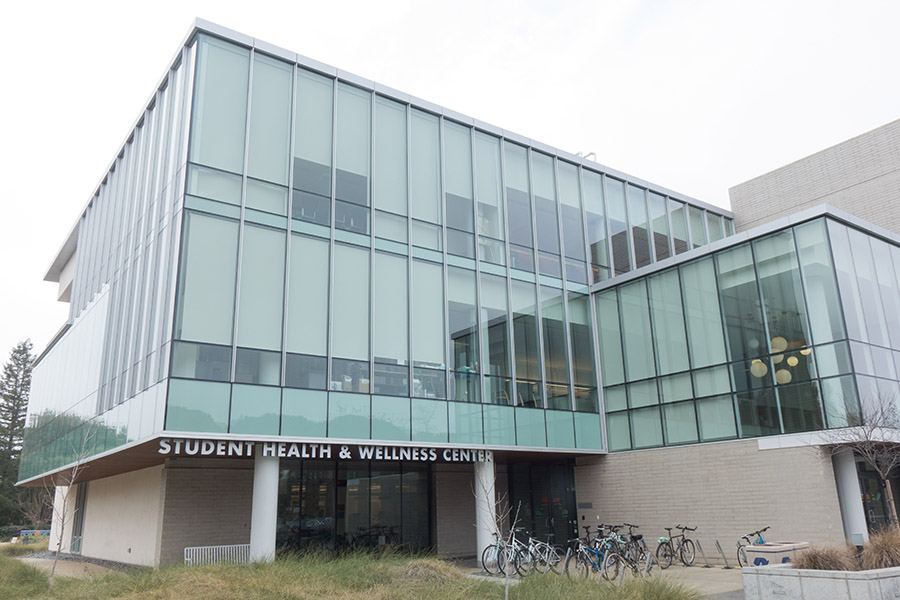
Student Health and Counseling Services launches three nutritional initiatives to promote student well-being

JORDAN CHOW / AGGIE

Walking paths, food access map, nutritional icons meant to address food insecurity, encourage fitness

UC Davis Health Education and Promotion, serving under Student Health and Counseling Services, has implemented a series of programs on campus to address food insecurity and promote well-being. Officially marked walking paths, food access maps and nutritional icons in campus eateries are in place across campus.

In Oct. 2016, the UC system signed onto the Healthier Campus Initiative, which is part of the nationwide Partnership for a Healthier America program. The initiative involved a three-year agreement for college campuses to develop and follow 23 guidelines “to create campus environments that encourage and support greater physical activity and healthier eating habits.”

SHCS used support from this initiative to launch these programs.

Shantille Connolly, a health promotion specialist specializing in well-being for SHCS, approached the three dining commons to incorporate an orange-shaped icon into their premises. The project, titled Nourish, marks fruits, vegetables and meals that have more whole grains, healthy fats and less sodium, saturated fat and added sugars.

This icon system is an expansion of a previous icon system, Healthy Happy Apple.

The expansion’s goal is to “revamp the system” and “make the healthier choice the easier choice,” Connolly said.

All three dining commons have incorporated Nourish and the CoHo intends to begin labeling in food in the next few weeks. According to Leah Renert, a registered dietician for Student Housing Dining Services, the icon will soon be found in the UC Davis Health Pavilion Cafe as well.

Nourish is still in its “pilot phase,” and “has allowed us to see what fits, what doesn’t and what we can improve on…[we’re] trying to create a culture on campus of health and well-being,” Renert said.

The CoHo has also begun altering its recipes and practices to provide healthier foods for students.

“One adjustment we made after reviewing our nutritional data was to switch to a lower sodium soup base in our recipes,” said Darin Schluep, the food service director of the CoHo. “Our team continues to look at ways that we can offer even healthier options to our customers, while still maintaining the flavor that our customers love.”

The walking paths are each at least two miles and labeled with directional and distance markers on the ground across campus. The Stride for Aggie Pride 5K route was approved as an official five kilometer route for the program. Smaller one-mile routes have also been marked in the Pavilion district, Quad district, Gateway district and Health Sciences district.

The paths were set to be official in March but were delayed due to rain.

According to Connolly, there is interest in coordinating with faculty in instituting “walk and talk” hours for professors and students to try and “reaffirm campus as a community” and encourage those who may find office hours intimidating.

Funding for these projects came from the Healthy Campus Network, another UC-wide initiative started in Jan. 2017 to support “the groups responsible for programs impacting the health and well-being of our staff, faculty and students.”

SHCS received a $4,300 grant from Healthy Campus Network to create its online-accessible food access map.

The conception for the idea came after the American College Health Association – National College Health Assessment coupled with the UC Student Food Access and Security Study reviewed the 2017 results from a survey conducted at UC Davis every two years.

The study revealed “food insecurity is a huge barrier in people’s lives” and “that 19 percent of UC students indicated they had ‘very low’ food security,” said Daisy Valdez, a fifth-year sustainable agriculture and food systems major and physical well-being student coordinator for HEP.

The map contains categories for pointing out vegan/vegetarian eateries, early-hour or late-hour venues or spots offering free food.

To support the release of the map, volunteers like Valdez and Rachel Lou, a fourth-year clinical nutrition major and student coordinator for nutrition services, used funds to purchase microwaves for sites on campus interested in adding one and placing them as microwave accessible on the food access map.

According to Lou, the Pantry accepted a microwave as did the BioBrew cafe, and the ARC is in process of acquiring one.

“Increased student admissions has led to much longer wait times for students/faculty/staff at campus eateries,” Valdez said via email. “Students/faculty/staff that do not want to/cannot wait in the long lines may just choose to not eat or eat convenience foods, instead, that are often times unhealthy. We want to create this food map to raise awareness to these issues on campus as well as to provide students/faculty/staff with a comprehensive list of everywhere they can eat.”


Written by: Elizabeth Mercado — campus@theaggie.org

Editor’s note: An earlier version of this article stated that Rachel Lou and Daisy Valdez are HEP volunteers. The article has been updated to include their specific job titles. 

Last week in Senate

HANNAH LEE / AGGIE

Senator Danny Halawi announces resignation

The weekly Senate meeting was brought to order on May 3 at 6:10 p.m. by Vice president Shaniah Branson. Senators Danny Halawi and Brandon Clemons were late.

Senator Ko Ser Lu Htoo began by recognizing 12 members of ASUCD, including former Gender and Sexuality Commission Chair Becca Nelson.

Next, Dining Services Director Darin Schluep gave the CoHo’s quarterly report. With the CoHo’s 50th anniversary this year, throwback deals and prices have been offered. With fewer people walking in the door and purchasing food items, the CoHo cut hours of operation and closes at 9 p.m. Monday through Thursday instead of 10 p.m.

Senate discussions next went to the Plaza 2555 Presentation held by a lobbyist from Sacramento whose organization is working on a new housing project. The location will be next to Playfields Park in Davis. The proposal will be for townhouses that will extend toward the Research Park area. Between 170 and 180 units will be built and will be off the Q bus line, 1.2 miles from campus.

During the discussion, it was learned that Davis City Council has been pressured not to build additional student housing. The lobbyist confirmed a growth policy in Davis of 1 percent per year and said that there is a compromise between slow growth versus sustainable growth in Davis. Additional discussion included issues of freeway air pollution, parking and the affordability of these new units.

Senate business moved next to the Rise organization, founded in September 2017. According to its website, Rise, a private nonprofit, is “students and allies fighting for free college tuition, protections from student debt, and greater investments in quality, public higher education in California.” At issue in the meeting was Rise’s work toward the fight for free college tuition and protection from student debt. It has 10,000 students supporters at over 50 campuses. The presentation by Rise proposed a partnership with ASUCD.

Up next was discussion on the Aggie Public Arts Committee and its Quarterly Report. In the last quarter a bike circle mural was installed. APAC is working to do more outreach and create more projects. Senator Halawi suggested the organization adopt a senator to work on projects. APAC discussed upcoming projects including a free refrigerator where students can store food and food sustainability projects to combat student hunger.

Next a series of confirmation interviews for the Administrative Advisory Committee confirmations were conducted. All nominees were confirmed after questions and answers.

A break was held at 8 p.m. The meeting resumed at 8:15 p.m.

Next was the consideration of previous legislation. Senate Bill #57 proposed the creation of a Picnic Day (restricted) reserve and was vetoed by President Michael Gofman on April 23. The reserve would have helped to ensure financial stability and fiscal responsibility in the future.

Gofman urged the Senate not to overturn his veto, stating “we as an association can’t afford to let any unit have a reserve like this.” While Senators Bryan Perez and Ko Ser Lu Htoo voted to overturn Gofman’s veto and Senator Halawi abstained, nine senators voted against overturning Gofman’s veto.

Next was ASUCD Senate Resolution #15, which supports the contract demands of American Federation of State, County, and Municipal Employees Local 3299. During discussion, the authors brought up issues including a zero percent raise on the table from the UC, no cost of living adjustments, disrespect for service workers on campus and wage discrepancies between black women and their white male counterparts. The petitioners asked for Senate support. The resolution passed with a 11 yes votes and one no vote from Senator Atanas Spasov.

Senate Bill #65, which revises chapter thirteen of the ASUCD Bylaws and improves the
Long-Range Plan process, was passed as amended, as did Senate Bill #66, which updates the duties of the Internal Affairs Commission and the Business and Finance Commission. Senate Resolution #14, which expresses “Faculty and students’ frustrations over recent study space reductions, specifically regarding the reductions to Physical Sciences and Engineering Library” as well as Senate Bill #59, which allows “students to serve on no more than three […] subordinate bodies of the ASUCD Senate” also passed.

New legislation was then introduced. Senate Bill #68 proposed changes to the interview process and Senate Bill #67 would “streamline the process of rehiring positions.”

During public announcements, a moment of silence was held for Janice Corbett, a UC Davis alumna and professional staff member at the university who passed away on April 29. Senator Halawi announced his plans to resign from his senatorial position.

After ex-officio reports and elected officer reports, the Senate meeting adjourned at 11:11 p.m.


Written by: George Liao and Hannah Holzer — campus@theaggie.org

Editor’s note: This article originally included an incorrect hyperlink, it has been updated to reflect the correct website associated with the nonprofit Rise. An incorrect mission statement was attributed to the nonprofit Rise. It has been updated to reflect the actual group’s mission statement. 

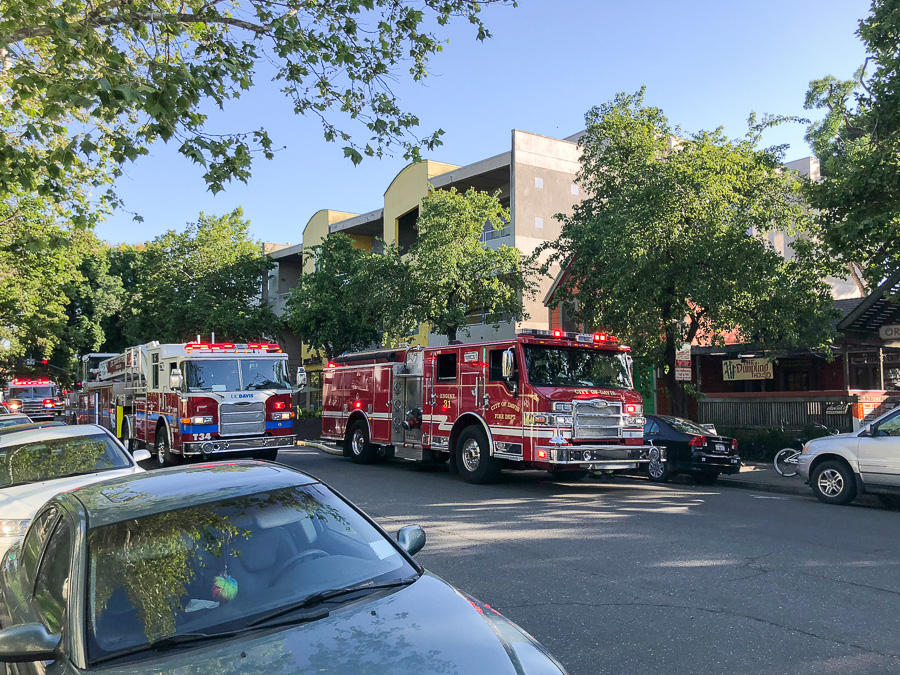
Fire, smoke erupt in downtown Davis: Estimated $80,000 in structural damage

BRIAN LANDRY / AGGIE

Dumpling House, surrounding businesses temporarily closed

At 5:24 p.m., Fire Division Chief Joe Tenney received a call that there was smoke pouring out of a roof downtown, which quickly burst into flames. According to Tenney, the fire was located on the second floor attic and the ceiling of the first floor at 117 E St., a unit in construction that was property of the Dumpling House next door.

“The call came in as a reported fire on the roof,” Tenney said.

The scene was crowded with firetrucks, PG&E trucks and several police cars as dozens of firefighters and policemen made their way into and out of the taped-off area. According to Luis Parrilla, the fire investigator on the case, the response time was approximately three to four minutes. Upon arriving at the scene, the fire was put out within approximately 12 minutes, with no firefighter or civilian injuries. Four restaurants in the area were evacuated, including the Dumpling House and Sophia’s Thai Bar & Kitchen.

Linda Liu, the owner of the Dumpling House, rushed to her business upon getting a call from one of her employees that there had been a fire.

“I was home — my employee just called me,” Liu said. “I jumped right away and drove here.”

Liu elaborated on the fire, clarifying that it had not come from the restaurant and that nobody was hurt. Employees had called 911 right away after seeing and smelling the smoke. Liu mentioned that she had an empty unit in the building that was under construction, which was being remodeled when the fire erupted.

Although no one was injured, the structural damage to the building is significant.

“The dollar loss is estimated at about $80,000,” said Daryl Arbuthnott, the Davis fire chief. “That’s mostly structure, not content.”

Firefighters were still on the scene approximately two hours later working on overhaul, as the building has many old pockets and spaces. Tenney also mentioned that Dumpling House is an 1890s building and is surrounded by many other buildings with wooden structures, which led his team to be extremely cautious to ensure that the fire didn’t spread.

Along with all of the City of Davis Fire Department and UC Davis Fire Department vehicles — which included four engines, one truck, one rescue and one battalion chief — fire trucks from West Sacramento and Woodland were also dispatched, one arriving at the scene and the other taking over other calls in Davis.

Sophia’s Thai Bar & Kitchen remains undamaged from the fire, but the Dumpling House is expected to be closed much longer, although the exact time frame is still unknown. The exact cause of the fire is also still unknown, as the scene is still under further investigation.


Written by: Kaelyn Tuermer-Lee — city@theaggie.org

Humor: Kanye West ghostwriter revealed to be randomwordgenerator.com

VENOOS MOSHAYEDI / AGGIE

Randomwordgenerator.com had this to say: “Zydeco, Goldfish, Eleven, Bottles, Stardust”
Twitter exploded on Friday when a leaked video of Kanye West became the subject of national attention. In the video, West appears to be using the online word generator site “randomwordgenerator.com” to write songs for his upcoming album “Jesus Jesus I Am God, Kanye West, President of the Future.”

In the video, which is security cam footage from Kanye’s studio in Santa Monica, a heavily inebriated West appears to use the site to fill in “Kanye Libs,” a variant of Mad Libs, in which Kanye injects assorted words into one of several general templates about himself. The Kanye Libs were seen to have titles such as “Slave is just another word for dummy” and “Kanye can French kiss any girl he wants, even Taylor Swift.”

The camera rolled as Kanye began his process. In one song, he rapped: “A man uses fishes to find baby on the weeee-kend / Louis Vuitton rollin’ diamonds off the deeeep-end.” In another: “LA is just a place where girl make the stars-shine / Feel baby gonna f—k hay bam gam stars-shiiiiine.”

A spokesperson for Mr. West informed The California Aggie that the website is not completely responsible for his lyrics. He explained that sometimes when randomwordgenerator.com produces an unsatisfactory result like “parsnip” or “Bangladesh,”  Kanye will just write about himself or whatever he is doing. To further his point, Mr. West’s spokesperson included some lyrics from his upcoming album, which included statements such as: “Kanye is making some bread,” “Kanye doesn’t like Mondays” and “Kanye is a blackbelt in every martial art except the dumb ones.”

Since the leak of the video, Kanye has distanced himself from the online word generator, stating that in the future he will just let a bowl of alphabet soup inform his creative choices.


Written by: Parker Nevin — phnevin@ucdavis.edu

A feminist film festival for all

LINDSAY BALTUS / COURTESY

13th annual Davis Feminist Film Festival shakes up definition of “feminism”

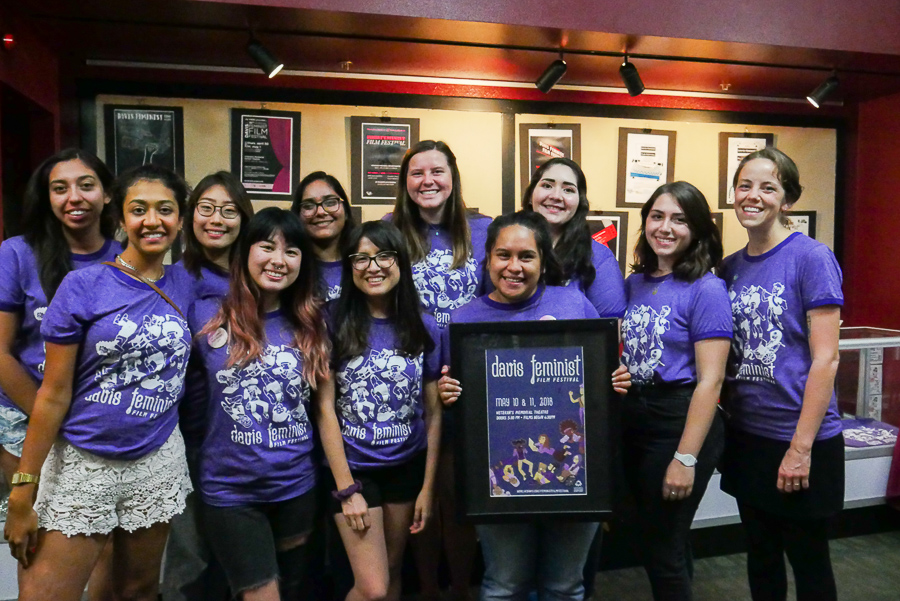
Events like the 2017 Women’s March circulated a popular image: a sea of pink “pussy hats” and posters advocating reproductive health, equal pay and women’s rights. However, feminism is more than just a one-dimensional movement for gender equality — it fights for everyone. This year’s Davis Feminist Film Festival strives to show exactly that.

The DFFF raises awareness about topics regarding race, class, gender, sexuality and ableism to shift the idea that feminism is only for women.

Ariela Cuellar, a fourth-year communication major, emphasized that feminism needs to be intersectional and must include queer and trans people of color. Intersectionality, a term coined by feminist scholar Kimberlé Crenshaw in 1989, views categories such as race, class and gender as inseparable.

“My definition of feminism is definitely how it has to be intersectional and how it has to relate to different identities, not just women and female empowerment, which is what it’s usually defined as,” Cuellar said. “Learning from others and hearing their experiences is what helps me grow and understand feminism in general.”

Lindsay Baltus, an English Ph.D candidate and program director for the DFFF, wanted to create an event that not only fosters community, but also provides an inclusive space for underrepresented artists — particularly for women of color, who are often discriminated against in mainstream media.

“The first night’s themes are “beyond the binary” and “bodies and technology,” so we have films that talk about gender […] and to think about the relationship between gender and social issues in relation to technology and how our bodies relate to that,” Baltus said. “The second night we’re showing themes of nation, family, and community. Then we’re having a panel with two student filmmakers and a faculty respondent who will be talking about their films and the ideas behind their films and the process of making them.”

Each DFFF intern participated in an intensive curation process, repeatedly sorting through hours of films and eventually selecting only a handful to make it through. For many, elimination was the most difficult part.

Francesca Iacono, a first-year gender, sexuality and women’s studies and community and regional development double major, felt there were a number of films that were tough to let go.

“The hardest part was probably saying no to certain films. Some of them were so great and we were rooting for them so hard, but maybe there was one aspect that didn’t completely meet our mission,” Iacono said. “I feel like we did miss out on a few, but at the same time you need to make hard decisions for it to be the most successful version it could be.”

The group of DFFF interns was more than just a team full of strong, capable students. It was a family that learned from each other to best ensure that the upcoming event would be successful, inclusive and representative of their community.

When discussing feminism, Iacono believes it’s crucial to be aware of the privileges that we take for granted.

“It was a long process, almost two quarters worth of work right now, but we really needed that time,” Iacono said. “We had a few films regarding ableism and disability, especially from places outside the U.S., and just the fact that body politics in our society is very binary. There were a lot of films regarding that struggle, and a lot of them also put beauty in that struggle, showing there’s no right way to have a body and that you could choose what you want to do with it.”

After months of preparation, the event is finally drawing close, and Cuellar along with the rest of her team are overjoyed to see how everything will turn out.

“I love the lineup this year,” Cuellar said. “Every film we chose for this line up was very special, and I’m just looking forward to watching them one more time.”

The event will take place on May 10 and 11 at 5:30 p.m at the Veterans Memorial Center Theater. Tickets are available online at a $5-7 sliding scale donation.


Written by: Becky Lee — arts@theaggie.org

Tree tags in Arboretum soon to appear on trees downtown

TREVOR GOODMAN / AGGIE

Arboretum and Public Garden interns working with City of Davis to create informational tree tags

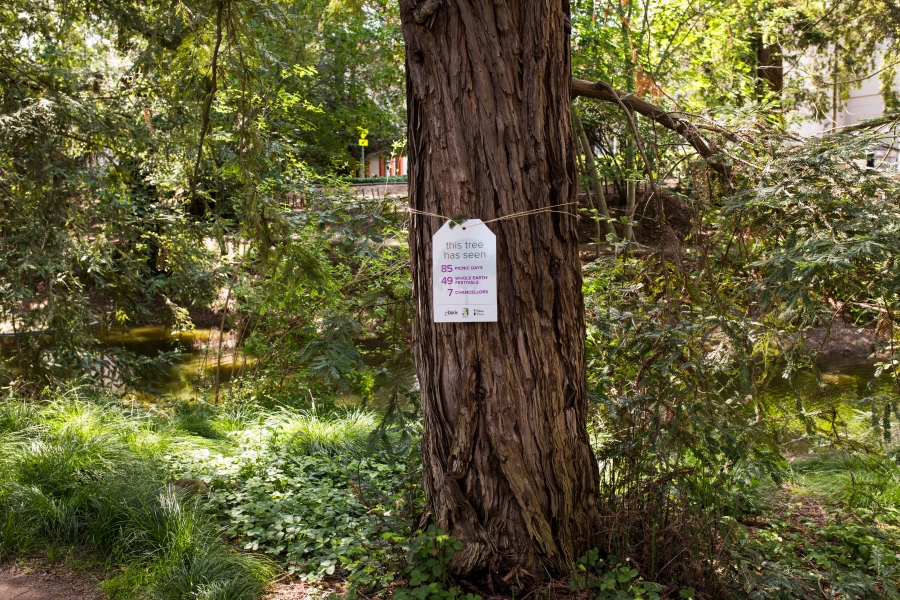
During the week of May 21, the informational tags attached to the trees that line the Arboretum and Public Garden will also appear downtown. Led by the Arboretum museum education interns, the project is a collaboration between the UC Davis Arboretum and the City of Davis Tree Commission.

The tree tags are attached with a string to the trunk of each tree at eye level. Each tree tag features informational messages about the tree. Some of the tags feature specific facts about the tree, such as the number of Picnic Days and Whole Earth Festivals the tree has lived through. Other tags feature general facts about trees.

For Mia Groff, an Arboretum museum education intern, one of the more impactful tags is one that assigns value to the trees.

“The most important [type of tag] for us and the Tree Commission was the ‘This tree gives back’ [tag],” Groff said. “It’s like an appraisal process for a tree. You can appraise a tree just like you do a house, so can see just how much [carbon dioxide] it reduces and the energy saved per tree.”

The inspiration for the tree tag project was from a similar project done at the Morton Arboretum in Lisle, Ill. According to Maya Makker, the Arboretum and Public Garden museum education and interpretive manager, one of the members of the City’s Tree Commission was at the Morton Arboretum when they observed the tags that were attached to some of the trees.

“[The tags] are kinda getting people to think about how trees can benefit our community and what they offer to people,” Makker said. “I think what we wanted to do is to draw attention to trees that people walk by every day, and [the trees] are just such a part of our landscape that you don’t even notice them and you don’t even think about what they’re doing for our community.”

The project for the campus tree tags began at the end of Winter Quarter, and the tags were hung up on campus trees the week before Picnic Day. When choosing trees, Makker explained that they looked for trees that have had important historical value or environmental impact.

“The idea was kind of to grab the attention of people who walk the Arboretum a lot,” Makker said. “There are people who walk the Arboretum every day so we thought, what a cool way to help them see what these trees are doing to the community, and these trees are such a [big] part of their daily routine.”

After creating a general route for the tree tags to follow, the museum education interns met with Melanie Gentles, a campus arborist, and Emily Griswold, the director of GATEways Horticulture, to help choose trees on the east end of the Arboretum.

The tags will be taken down around the week of May 21, when similar tags will appear across downtown, made by the Arboretum museum education interns. A route will be set up that extends from the east end of the Arboretum into downtown. While the interns considered other areas of the city to place the tree tags, the downtown area was selected due to its connection to the city and its historical context.

“We’ve started a draft as far as the content we’re going to include on the trees […] which will be similar to the trees we had in the Arboretum,” said Kaila Mattera, a museum education intern. “We’re working with [Stacy Parker, a GATEways Horticulturist], our connection to the city and hopefully city arborist and the City Tree Commission to be able to put the tags up.”

For the following two weeks, the tree tags will be strung onto the trees downtown featuring facts that Groff hopes will have a positive impact on the community.

“[These trees] have been here longer than our community, too,” Groff added.  “We really want to highlight that— especially [in] downtown Davis […] That’s my main goal — to just have people recognize how many trees people have and the beauty that they hold, too.”


Written by: Hannan Waliullah city@theaggie.org


UC Davis Fencing Club hosts regional tournament

LENA DEJANI / COURTESY

Club fencers land in top three of individual events

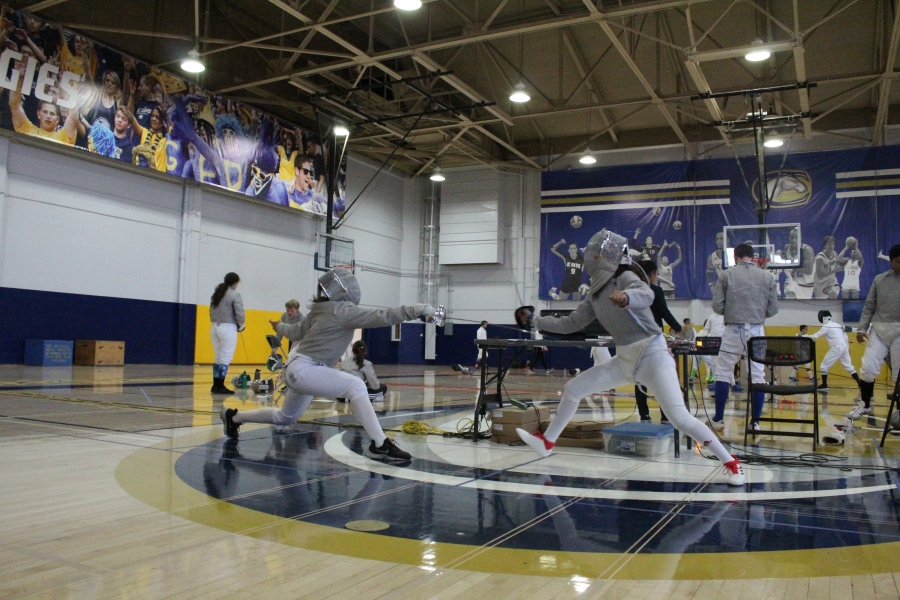
The sound of fencing weapons clashing and shoes pounding the hardwood floors echoed through Hickey Gym as fencers from UC Davis and seven other colleges (including UC Berkeley, UC Santa Cruz, Cal Poly San Luis Obispo and University of Nevada Reno) competed in a two-day tournament hosted by the UC Davis Fencing club from May 5-6.

All in all, nearly 100 fencers competed across three individual and team versions of these events: épée, foil and sabre. Five UC Davis fencers fought their way into the top three of the individual events and one novice placed second in novice foil.

First-year Ph.D. candidate in integrative pathobiology and co-president of UC Davis Fencing Arturo Oliver Guimera won gold in mixed épée and spoke on his path to first place.

“My mind was into it, I fought really tough people, but I bested them,” Guimera said. “Winning here in Davis, that’s awesome.”

In fact, Guimera was so intensely focused in the gold épée round that he didn’t realize he’d won the round.

“I couldn’t believe it at the beginning — I was not keeping track of the points,” Guimera said.

He was waiting for the judge to say, “en-garde, ready, fence”, but the gold round was over, 10-7.

“So when I [went] for the last point, I just went back to my position and tried to fence again, they said ‘no, no, you’re done’, I was really excited,” Guimera said.

The events are named after the weapons used, and have rules that are specific to the event. The épée weighs approximately 27 ounces and is the heaviest of all swords. Fencers can only score a point with the tip of the sword, but anywhere on the body is fair game in épée. Because of this, fencers need to be more cautious of their moves.

Foil is similar to épée in that fencers must score with the tip, but the scoring area is smaller — only the torso, groin and back. Contact with anywhere else halts play until fencers get back into position.

In foil, fencers must establish the “right-of-way” for their point to count, which is determined by a judge. It boils down to two essential elements which judges evaluate, initiating an attack and forward movement. In the event that both fencers simultaneously land a hit, the judge must determine who had priority. Attacks can also be parried and followed up with a counterattack, a method of establishing priority defensively.

Foil and fencing rounds last until a fencer gets 10 points, so these rounds can get highly strategic and heated. Fencers occasionally celebrate with a triumphant roar, explained by UC Davis fencers as a strategy to exude confidence in the bout — judges may view this confidence as a sign that fencer landed the hit first.

Sabre is the quickest and most aggressive of the three types.

The points are lightning-fast, with fencers making split-second decisions.

The whole upper body is the target, priority must be established and any part of the weapon can be used to score a point. The first fencer to 15 wins the bout. Sabre is often described by fencers as a “Pirates of the Caribbean” style of fighting because of the speed of the movements and the way the sword is held.

Fencers’ gear is hooked up to equipment that registers a touch and shows up on the judges box, who then interprets the play and decides which fencer won the point, or can decide to reset the point.

Fencing bouts are a combination of finesse, solid footwork and mental toughness.

When third-year animal science major Tyra Tse found herself down 7-3 in a direct elimination foil bout, she had to concentrate her efforts on one thing.

“I was just trying to keep as calm as possible,” Tse said. “I knew that he wanted me to get mad, or he just wanted a reaction out of me.”

Tse focused and leaned toward defense until she started to rally back, and her teammates were exuberant when she tied the bout 8-8. For her, the formula for winning the bout was simple.

“I was like ‘be calm, collected and beat his butt,’ that’s it,” Tse said.

Tse got revenge against her opponent and was very happy she was able to stage a comeback, exhibiting mental toughness.

“It was really good, after hearing him scream a lot,” Tse said. “I got the last point and I was able to scream back.”

Fourth-year neurobiology physiology and behavior major Oliver Duan is a sabre fencer who is usually calm and confident going into his bouts. Duan described his mindset after beating his opponent 15-6, advancing to the round of 8.

“I was pretty relaxed going into it,” Duan said.

Although Duan appeared to comfortably secure the bout, he had to quickly adjust his play because of the defensive style his opponent played, which opened Duan up to counterattacks.

“I went on to figure out I needed to shorten my attacks, to not project as much,” Duan said.

Duan went on to place third in sabre, losing to third-year plant science major Benjamin Louie. Louie placed second in sabre.

Fencing is often referred to as physical chess, and fencing weapons are said to be the second fastest moving object in Olympic sports (behind bullets in the marksman event).

The sport demands that fencers make quick calculations and learn about the opponent. Guimera, who started fencing with his dad in Castellon de la Plana, Spain, says this is what he enjoys about fencing.

“It’s really cool when you have these games because you start to learn about each other,” Guimera said. “It’s really entertaining when you get into it.”


Written by: Bobby John — sports@theaggie.org

Best Place to Study: Shields Library

ANH-TRAM BUI / AGGIE

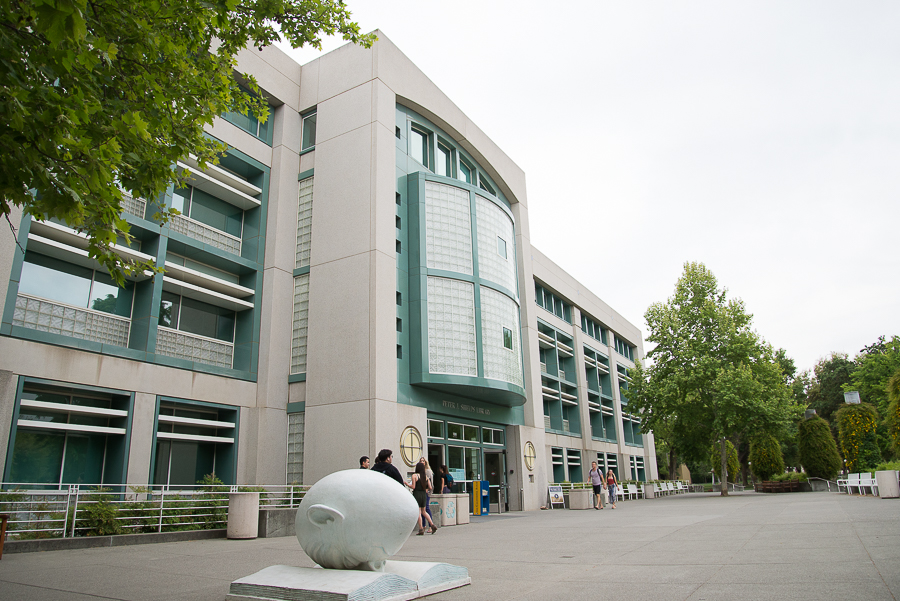
Whether you prefer to set up camp at your favorite coffee shop or get comfortable under a shady tree on the Quad, everyone has their favorite study spot. However, there’s one place all UC Davis students have found themselves at one point or another throughout the dreaded midterm season, and that’s Peter J. Shields Library. With its convenient on-campus location and readily-available table space, it’s no surprise that Shields Library was chosen as Davis’ best place to study.

“It’s a good place to sit down and focus on nothing but school work,” said second-year biochemistry major Kerri Ritter. “It helps me block out all the small things in life that distract me from school. I also feel like all the common library-goers form a little community and I can always find someone to talk to when I need a mental breather.”

Shields provides a variety of different study spaces for every student’s needs. When you need to buckle down and focus up in those days leading up to a big exam, sequester yourself away in one of the single study cubbies on the second and third floor. If you’re looking to study in more of a group setting, find a spot on one of the lower levels for a collaborative study session. In need of some natural lighting? Head to the Main Reading Room to enjoy the vaulted ceilings and open windows. During finals week, Shields even works in conjunction with the CoHo to bring coffee, tea and snacks directly to the library for better convenience.

Shields Library is open Monday to Thursday from 7:30 a.m. to 12 a.m., Friday from 7:30 a.m. to 6 p.m., Saturday from 12 p.m. to 6 p.m. and Sunday from 12 p.m. to 12 a.m.


Written by: Sydney Odman — arts@theaggie.org

Best Dessert: Davis Creamery

ALEXA FONTANILLA / AGGIE

The Davis Creamery has been churning out ice cream for over 15 years. Located on E Street, the creamery is frequented by all kinds of dessert-lovers: ice-cream fanatics who come for the infamous Bracketology series, cupcake lovers who seek their handcrafted desserts, caramel apple lovers who have no idea where else to get them.

Twice a year, the Davis Creamery holds its Bracketology series, in which it seeks ice cream flavor ideas from the community and then runs them against each other, bracket-voting style, slowly approaching a winner. From cherry blossom to raspberry iced tea, it’s impossible to know what the final flavor will be.

The creamery doesn’t stop at ice cream-based gamesmanship. It also offers daily specials, like milkshake happy hour from 4 p.m. to 7 p.m. on Fridays or $2 scoop night on Mondays from 5 p.m. to 10 p.m.

The Aggie talked to Victoria Bioarsky, a third-year applied mathematics major, who has tried a wide range of flavors.

“I think I tried the […] Boston cream pie filling, the trifecta candy one, I tried honey habanero salt-something,” Bioarsky said.

It’s not unusual to leave the Davis Creamery with a laundry list of flavors under your belt (or tongue). Bioarsky says this is what sets the creamery apart.

For all of its health-conscious sweet-toothers, the Davis creamery offers a host of vegan, gluten-free and sugar-free dessert options to choose from. Not convinced yet? Head over to the Davis Creamery between 12 p.m. and 10 p.m. and see for yourself why this family-owned classic has made its way into the hearts (and bellies) of Davis-ites.


Written by: Stella Sappington and Emily Nguyen — features@theaggie.org

Best GE Course: NUT 10

DANIELLE MOFFAT / AGGIE

General education courses can be a tedious requirement to fulfill for those just trying to focus on their major classes. But since we all have to do it, why not take a course that was voted the best GE course of 2018?

For the second consecutive year, Nutrition 10: Discoveries and Concepts in Nutrition, more commonly known as NUT 10, has been crowned the best general education course at UC Davis.

Taught this spring by Dr. Jacqueline Bergman, the course aims to present the “concepts and rationale of nutrition” in a way that can also be applied to students’ personal diets. The best part of the course is that, while informative, it isn’t demanding.

“It’s easy because everything is there for you,” said Adam Ali, a third-year computer science major currently enrolled in the course. “The guidelines are clear.”

The goal of the class isn’t to trip you up. Instead, periodic extra credit quizzes help ease the stress when the midterms hit, providing students with a cushion should disaster strike, or just an easier night’s sleep the day before — rare for a UC Davis class in general, as any student can tell you.

This three-unit GE has a minimal homework load and a number of extra credit opportunities, making it an easy pick in completing those GEs. NUT 10 is also offered as an online course for those looking for more flexibility within their schedule or those just looking to sleep in.

Students leave with not only a healthier look at their diets, but also a chance to take a breather from more intensive, major-related courses, which leaves us wondering: what more could you ask for in a GE?


Written by: Erin Hamilton and Hanadi Jordan — features@ucdavis.edu

Best Place to Nap: Quad Hammocks

HUCK VAUGHAN / AGGIE

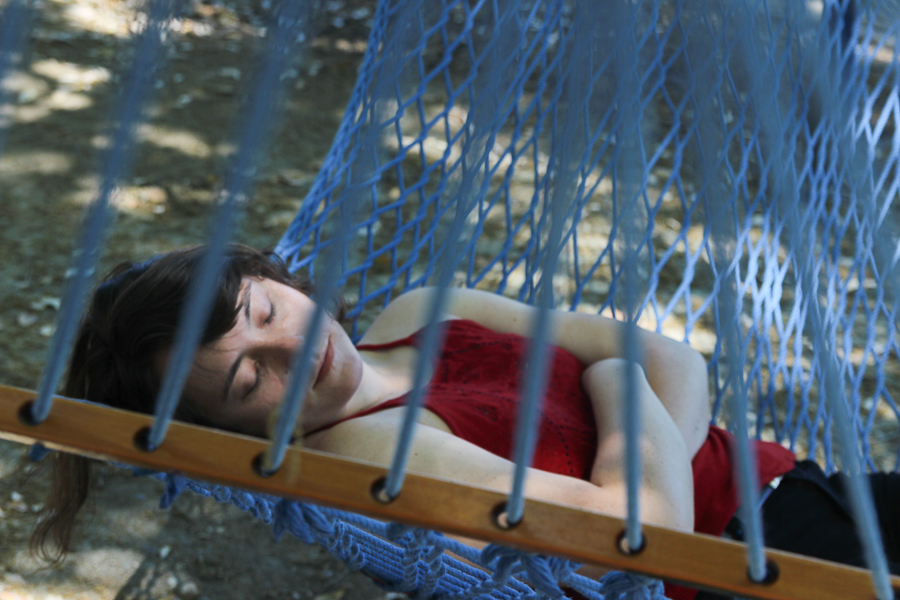
Students will normally see the elusive Quad lawn hammocks swaying on any sunny day, but resting on one is an entirely different endeavor. Despite the scarcity, the hammocks were once again voted by UC Davis students as the best place to nap.

“I find [the hammocks] really relaxing because you get to enjoy the beautiful scenery of grass and trees,” said Angela Ruan, a second-year managerial economics major. “But it’s extremely rare [because people are always] slowly lining up to get on one.”

The high demand for the hammocks sometimes causes students to dash across the street as someone else vacates the hammock they were just sitting on. But even though the hammocks are difficult to obtain, many students enjoy the brief comfort and serenity they bring.

The hammocks are convenient for students who seek a moment of rest between classes, and their central location on the Quad means folks leaving Olson Hall and Wellman Hall will pass by the hammocks as they head to their next destination.

UC Davis introduced the hammocks four years ago, but the university has not expanded the program outside the Quad. Instead, students often make their own hammocks across tree branches in other shady areas across campus.

As popular as they are, many students hope to see more hammocks installed on campus to ensure more opportunities at nabbing a sacred UC Davis hammock to nap on.


Written by: Dante Valenzuela — city@theaggie.org