53.8 F
Davis

Davis, California

Friday, December 19, 2025
Home Blog Page 517

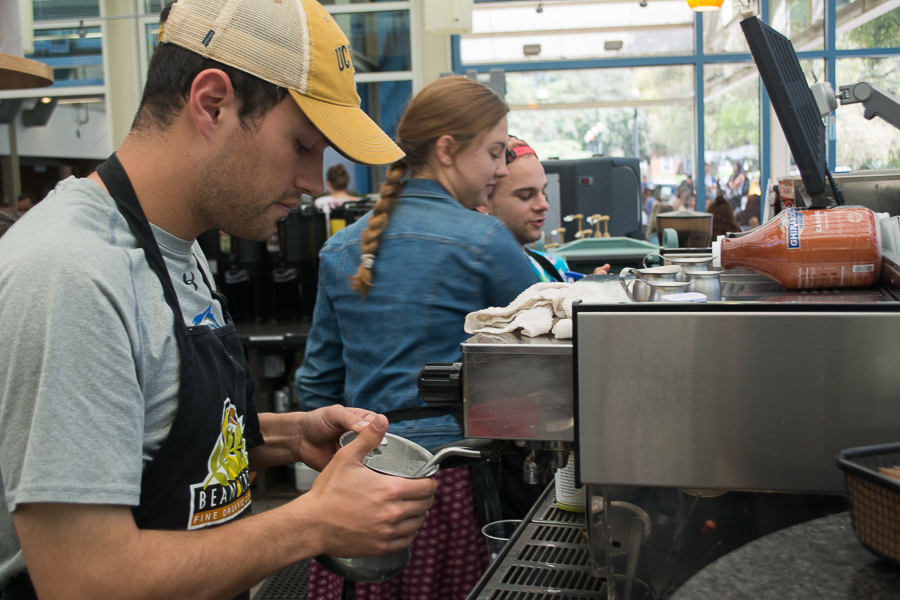
Best Place to Work on Campus: The CoHo

THOMAS MA / AGGIE

With over 250 students making up the staff of this popular dining facility, students are eager to be part of the CoHo and everything it has to offer. With 80-100 job opportunities offered each year, the CoHo tries to provide as much employment as possible for students in need of work. Darin Schluep, the food services director, oversees the CoHo and has the pleasure of seeing his young staff gain skills that will benefit them in their later careers.

“The CoHo’s student-focused business model is challenging yet extremely rewarding,” Schluep said. “The entire management team really loves mentoring and coaching the students, and I know that working with the students gives me energy and definitely keeps me feeling young — although they often remind me just how old I am.”

Over 7,000 customers pass through this popular site daily, and the success can be easily attributed to the staff who either work full or part-time at this caffeine-crazed spot.

“The best part of working with so many students is seeing their growth in the time they spend with us,” Schluep said. “Whether it’s through positional growth —from employee to student supervisor to student manager — or just growth as an individual, it’s rare that we don’t see some sort of transformation in the folks that spend significant time working with us here.”


Written by: Lauren Tropio — city@theaggie.org
Best Mode of Transportation: Biking

JULI PEREZ / AGGIE

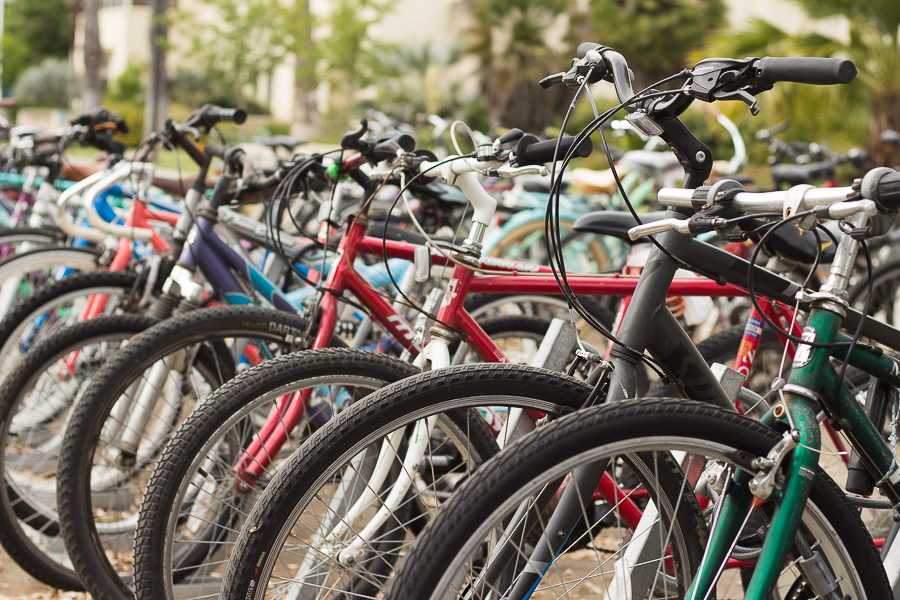
Biking once again took the crown for Best Mode of Transportation. Of course, the popularity of the bike likely comes as little surprise to any student who has braved the busy bike circles during rush hour.

According to the Downtown Davis website, Davis is recognized as the most bicycle friendly city in the country by the League of American Bicyclists. The map of the city of Davis shows over 100 miles of bike paths, lanes and trails.

Additionally, the city is home to the U.S. Bicycle Hall of Fame, numerous biking competitions and various bike rentals and bike shops ready to fulfil the Davis resident’s every bicycle-related need.

“What I like the most about biking is that it’s quick, you can take your bike wherever you go and it’s good for the environment,” said first-year biological sciences major Ismael Delgadillo. “It’s also good exercise.”

Meanwhile, some students, such as first-year international relations major Julieta Torres, simply enjoy the experience of biking.

“You get where you’re going pretty fast and it’s also really fun,” Torres said. “I like going in the roundabouts, and you get to see a lot of people you know when you’re biking.”


Written by: Clara Zhao — features@theaggie.org

Best On-Campus Animal: The Tercero Cows

KAILA MATTERA / AGGIE

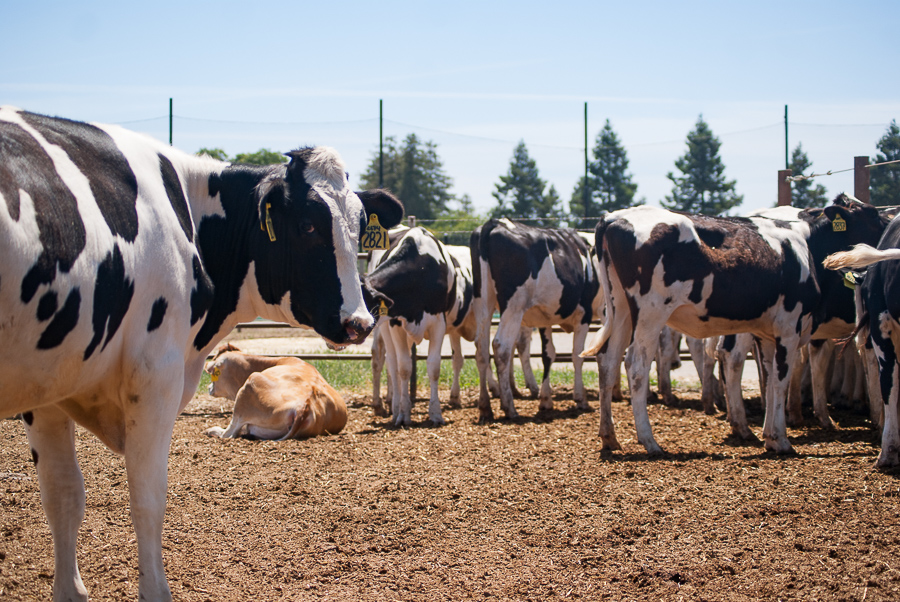
Davis loves dairy cows, as seen in the consecutive winners of the Best On-Campus Animal Award in 2016 , 2017 and now 2018. If you’re near the Tercero area, it’s hard to miss the bovine herd as they mull around, socialize in their pens and blanket the nearby dormitories in their aroma.

The Tercero herd is found on Dairy Road, opposite the herd of freshmen in the Tercero dormitories. During the winter, the cows are boarded inside pens to avoid the cold rains. In the spring, they return to the pasture to graze and enjoy the sun. Pedestrians and cyclists can pass by and moo to the curious, friendly herd.

Out of 334 cows, 105 of them are milked daily, while the others are either dry or too young. To the untrained eye, the cows may actually all look similar, but assistant facility manager Maria Patino explained that there are two types.

“We have Holsteins, the big black-and-white ones, and then we have Jerseys, those little brown ones,” Patino said. “The Holsteins produce a lot more milk. The Jerseys make a little less milk, but they make a lot of protein and a lot of fat in their milk.”   

All the milk produced by the cows makes its way down to Hilmar Creamery in Modesto to be crafted into cheese.

As for the infamous — or famous, if that’s your cup of tea — smell of the cows, Patino offers her own take.

“I just get used to it.” Patino said. “I honestly don’t even smell it anymore.”

For the real cow lovers, Patino touched upon the various internship opportunities available with the Tercero herd. Every quarter, students can learn about managing a dairy herd or directly feeding and working with the cattle. For credit, ANS 49C is a class created to teach students proper techniques for handling dairy cows. New interns and students are always welcome.

To learn more about the Tercero cows, you can always stop by and wave howdy to the mooers or follow the dairy facility on Instagram: @ucddairy. When asked for their opinion on the win, the cows responded with a unanimous, “MOOO!”


Written by: Nicolas Rago & George Ugartemendia — features@theaggie.org

Best Burger: Burgers and Brew

JORDAN KNOWLES / AGGIE

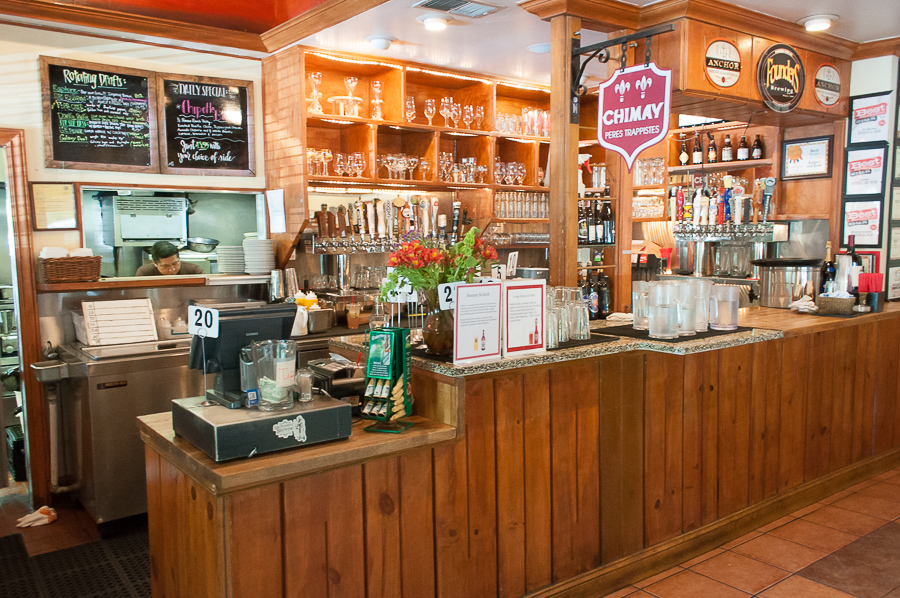
You can often see it: the crowd of hungry students, families and out-of-town visitors swarming around, waiting for a spot to eat at the ever-busy eatery on the corner of 3rd and C streets. Burgers and Brew is one of the most iconic dining destinations in downtown Davis. It’s not much of a surprise, then, that the popular restaurant with “burger” in its name happens to serve the best –– you guessed it — burger in all of Davis.

Even with several other local spots and fast food chains all competing to satisfy the Davis community’s craving for a good burger, Burgers and Brew stands out. According to Burgers and Brew manager and bartender Joel Loza-Medina, it all starts with a tradition of using satisfying, high-quality ingredients.

“It’s the freshness,” Loza-Medina said. “We get all of our meat from Dixon and it is all local. I think people like the family chain-style restaurant. All the food is no GMO, it’s all good meat, and all of our burgers are half-pound burgers so people come hungry and leave happy.”

Each burger is cooked fresh and served up with mouthwatering flavor, and the menu lists about 20 different varieties of burgers. Whether you go with the classic original hamburger, cheeseburger or patty melt, or if you go for the more unique spice guacamole cheeseburger, bacon fusion burger or lamb burger, Burgers and Brew has a little something for everyone.

It’s no wonder that Burgers and Brew has emerged as a staple of the Davis eating experience. In a market often oversaturated with cheap, low-quality options, Burgers and Brew gives customers a burger crafted with care within a fun and lively dining environment.

“I think that Burgers and Brew is cool because there is a lot of fast food joints,” Loza-Medina said. “But as far as going out with your friends or on a date, everyone loves burgers and shakes and people can come here and have a good night out while still eating the comfort food that they enjoy.”

A burger is a food that many people can make, but not everyone can make a burger exceptionally well. Burgers and Brew sits in that coveted upper echelon of burger-making, serving the Davis community with good food and good times for over a decade.


Written by: Dominic Faria and Ryan Bugsch — sports@theaggie.org

Best Boba: T4

ZOË REINHARDT / AGGIE

Milk tea has become a big business in Davis over the last few years. With several boba shops in downtown alone, the bar is high for both quality and convenience. This year’s Best Boba, T4, or Tea 4 U, satisfies on both levels.

T4 opened in Davis last spring and is located on E Street, tucked away from the street traffic, but centrally located behind Mishka’s. A steady stream of customers keep up an easy hum of chatter and music, adding to the fun, warm vibe of the cafe. T4 is often packed in the evening with students lounging around tables, playing games like Jenga and giant Connect Four.

“I think it’s a very versatile place,” said Steffie Guan, a fourth-year managerial economics and communication double major. “You come here to study or to hang out with friends. And if we’re in the mood for more than boba, then they also have food and snack options.”

While the most popular tea is earl grey milk tea, according to Allan Tren, the owner of T4, the shop offers a wide range of drinks from passion fruit smoothies to roasted oolong milk tea to chocolate milk with sea salt cream. Multiple batches of tea are brewed every day, providing the fresh flavor that won this year’s contest. The snacks are unique as well.

“T4 is known for their popcorn chicken,” Tren said. “Most popular would be either our calamari or the egg puff.”

T4 is located on E Street and is open 11:30 a.m to 11 p.m. on weeknights, and 11:30 a.m. to 12 a.m. on Fridays and Saturdays.


Written by: Kira Burnett — science@theaggie.org

Best Day Trip: San Francisco

JORDAN KNOWLES / AGGIE

The big city lies just an hour and a half south of Davis

Most UC Davis students and staff know the feeling all too well: living in a smaller city can feel limiting, and sometimes residents need to break free and experience something new. Often times, this comes in the form of day trips to larger metropolitan areas. Courtesy of the annual Best of Davis poll, a consensus has been reached, and the beautiful coastal city of San Francisco has been voted as the Best Day Trip from Davis.

San Francisco is both iconic and accessible. The metropolis can be reached by way of a short car ride or trip with Amtrak. Upon arrival, there are a plethora of options for food, museums and the outdoors.

“My favorite things to do in San Francisco are things like getting Boba Guys, hanging out in downtown San Francisco, or going to places like the Academy of Sciences, Golden Gate Park, Ocean Beach and Land’s End,” said fourth-year managerial economics major Michael Wong. “A lot of people from Davis are from the Bay Area, so going to San Francisco always gives us the opportunity to spend time with friends from high school or from our hometowns.”

Locals like Wong have a good grasp on the big city, but for many first-timers, San Francisco can be overwhelming. For newcomers, it’s key to embrace the amount of options, because that’s exactly what separates Davis from the big city.

“There’s a lot more exploring you can do in San Francisco,” Wong said. “In Davis, where it’s a small town, there’s not as much to do.”

Next time you and your friends are looking to bust out of Davis, look no further than San Francisco. This is a day trip that’s sure to go above and beyond expectations.


Written by: Rowan O’Connell-Gates & Alyssa Hada  — features@theaggie.org

Best Snapchat Filter: Cursive “Davis, CA”

BRIAN LANDRY / AGGIE

You’re sitting in the Arboretum. It’s a classic Davis day. The sun dances off of the water, and anywhere between ten and a thousand ducks are waddling about. As the sun finally settles into its “golden hour” position, you make the decision:

“I’m going to Snapchat this right now,” you think. It’s a surefire move to make sure your Davis pals know that you’re not stressing over the intensity of midterms and that your not-Davis pals know that you live in a painting. What filter do you use to claim this location as your own?

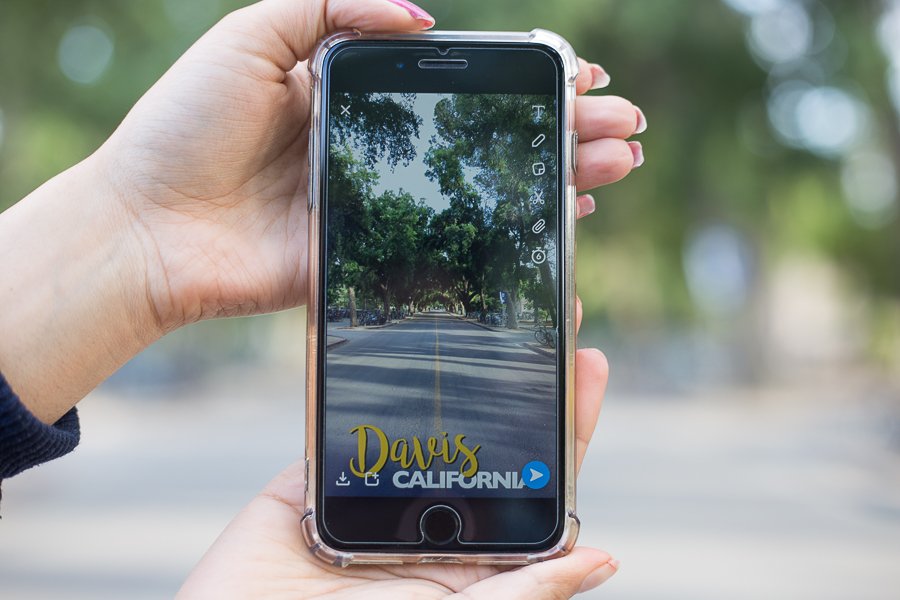
The cursive “Davis, CA” filter, of course. Why? It’s a classy way of claiming your college town. It gives all of the details. It’s got that beautiful Aggie blue and gold color scheme. It’s at the very base of the photo so it doesn’t distract from what you’re trying to showcase (be it that “golden hour” or your golden face).

“That’s the prettiest filter,” said Talia Basma, a fourth-year English major. “I like the font on this. It looks professional. This one is at the bottom, and I can take a picture in peace.”

Peace. Professionalism. Class. These are what Davis students love to decorate their memories with, and that’s why the cursive “Davis, CA” snapchat filter is the MVF (Most Valuable Filter) of our campus.

Written by: Olivia Luchini and Jess Driver — features@ucdavis.edu

Best Late-Night Snack: In-N-Out

IAN JONES / AGGIE

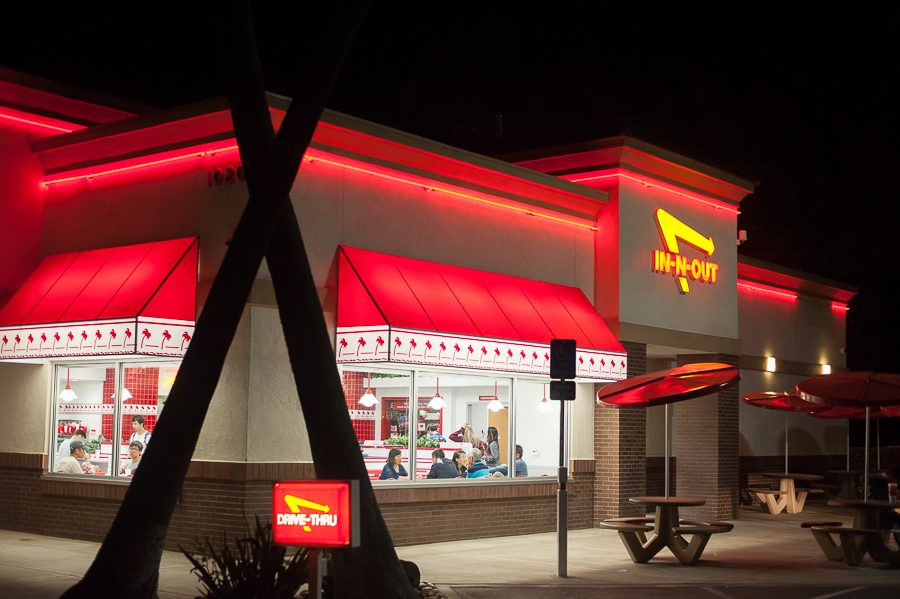
Late at night, while much of Davis is fast asleep, the students at UC Davis are often just getting started after a long night of studying, procrastination or unwinding from the long day behind them. While Davis is home to many options for the hungry late-night dweller, In-N-Out remains the favorite.

Between its basic menu (and not-so-secret menu), brightly-decorated interior, quick and friendly service and 1 a.m. closing time, In-N-Out offers the perfect treat for those who need to cure that late-night hunger. For first-year neurobiology, physiology and behavior major Sascha Recht, In-N-Out has gained her loyalty.

“I love In-N-Out.” Recht said, “They have affordable, high-quality delicious food, excellent customer service and an amazing business model.”

That business model, which values quality of ingredients over quantity of options, has proven to be a hit with the people of California (and an ever-expanding slate of states) for nearly 70 years, and its presence keeps expanding. The burger options are basic: a hamburger, a cheeseburger or a double-double for those who need a little bit more meat. Aside from burgers, other options include french fries, milkshakes and fountain drinks, but any person who frequents In-N-Out will tell you about the bountiful secret menu options, such as an animal-style burgers and fries, protein style burgers, a low-carb burger without the bun, and grilled cheese.

In-N-Out’s reliable, minimalist take on the classic burger and fries is perfect for those who do not want to wait at a sit-down restaurant, mess up their kitchen before they go to bed or settle for a lesser fast-food burger. For Recht, this is all a person needs after a long day.

“It’s always the best place that’s open late and there’s nothing better than a burger and fries before bed,” Recht said.


Written By: Sneha Ramachandran & Bradley Geiser

Best Asian Grocery Store: Kim’s Mart

ANH-TRAM BUI / AGGIE

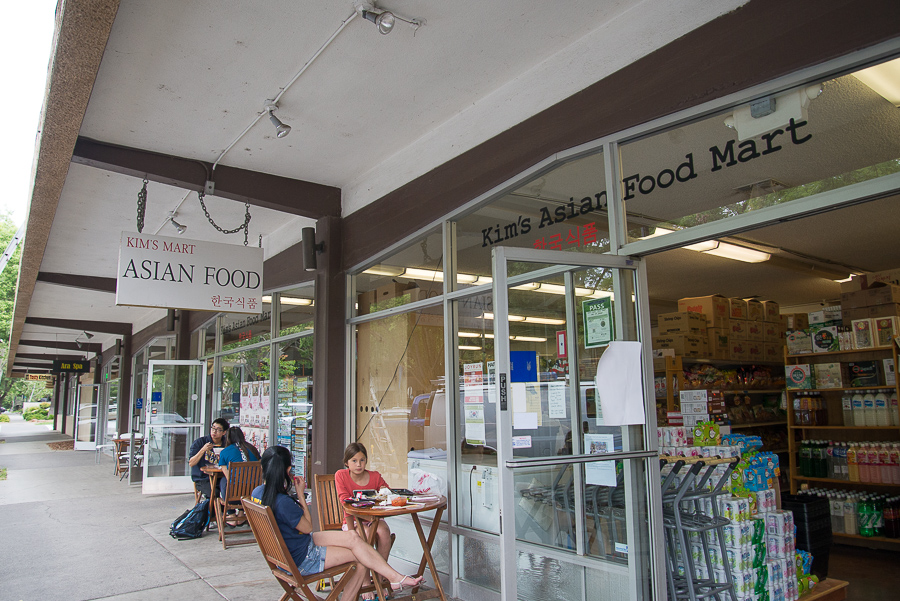
If you ever need eight-and-a-half pounds of chili garlic sauce or dried miso, Kim’s Mart is the place to go. Located downtown near the corner of 4th and F Streets, this market was voted best Asian Grocery Store. While the store has been open for around 31 years, Kim’s Mart moved to its current location in 2008.

“At that time [of opening], there were a lot of Korean students, especially graduate students who had to go to a shop in Sacramento,” said Jon Jun, the current owner. “The previous owner who opened this store was a graduate student at UCD, so he decided to open an Asian grocery store in Davis.”

The store has two tables on its sidewalk for those who want to enjoy their Korean sushi outside. Inside, one can find everything from roasted seaweed to shredded cuttlefish.

“This is an Asian [store] — we have a variety of Korean, Japanese, Chinese, some Filipino, Thai [products],” Jun said.  “A lot of Asian students who go to UC Davis come here instead of going to Sacramento. We also provide sushi rolls and we also do hot food to go, so students can come in and grab what they like and they can eat front of our store.”

Although the store’s main focus is Korean cuisine, one can also find green tea ice cream, preserved duck eggs and other delicacies. One aisle is dedicated to many different types of ramen, such as the famous spicy chicken ramen. Other staples include oolong tea, dried soups and rice porridges.


Written by: Rachel Paul and Hannan Waliullah

Best Sandwich: Ike’s Love and Sandwiches

VENOOS MOSHAYEDI / AGGIE

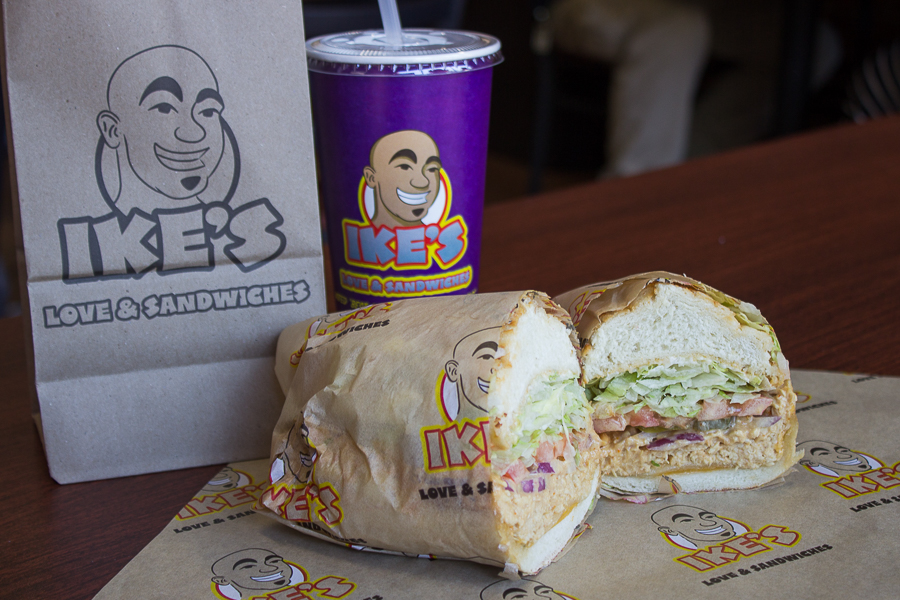
Ike’s Love and Sandwiches, the popular sandwich shop in Davis, has won Best Sandwich once again. The chain opened its first location in 2007 on Halloween, and the eatery has since expanded to multiple locations all over California. The goal of Ike’s is to make every experience memorable to people who set foot in the popular eatery. With identifiable sandwich names from “Your Sorority or Frat” to Davis exclusives like “Picnic Day,” this sandwich shop has been making a name for itself since its opening day.

Written right outside the front door of Ike’s above a wall of sandwich options reads a quote from Ike Shehadeh himself: “Many of my sandwich recipes were concocted in my old apartment on J Street, and now I get to share them with you! The sandwiches below are my favorite at Ike’s. I also added a few exclusives just for UCD.”

When Nicole Walter first went to Ike’s, she was overwhelmed by the number of options the sandwich shop offers.

“My friends down in Santa Barbara love it, so when I went down to visit them, we went [to Ike’s], so I started coming here once I moved to Davis this year,” Walter said. “I remember reading the mission statement about ‘love before anything else.’”

Accompanying Walter was Myles Bridgewater-Jackman, who also shared what he remembered about his first experience at Ike’s.

“I think I remember how overwhelmed I was with all of the choices,” Bridgewater-Jackman said. I’m still a newcomer, so I’m still trying to get myself acquainted with the menu.”

Scott Judson, a first-timer at Ike’s, had positive reviews for his experience. The familiarity of one of the sandwich names, “Damon Bruce,” prompted him to try the sandwich.

“This is actually my first time here,” Judson said. “It was great […] I just heard [about Ike’s through] commercials and figured I’d check it out. I ordered the Damon Bruce with no cheese. [Damon Bruce] is a broadcaster in the Bay Area.”

Whoever dares take the crown from Ike’s will have to be a tough contender, as Ike’s has been a two-time winner for Best of Davis.


Written by: Stella Tran & Kennedy Walker


The American Teen in Davis

MTV INTERNATIONAL [(CC BY-SA 3.0)] / YOUTUBE
R&B Artist Khalid Performs at the ARC Pavilion

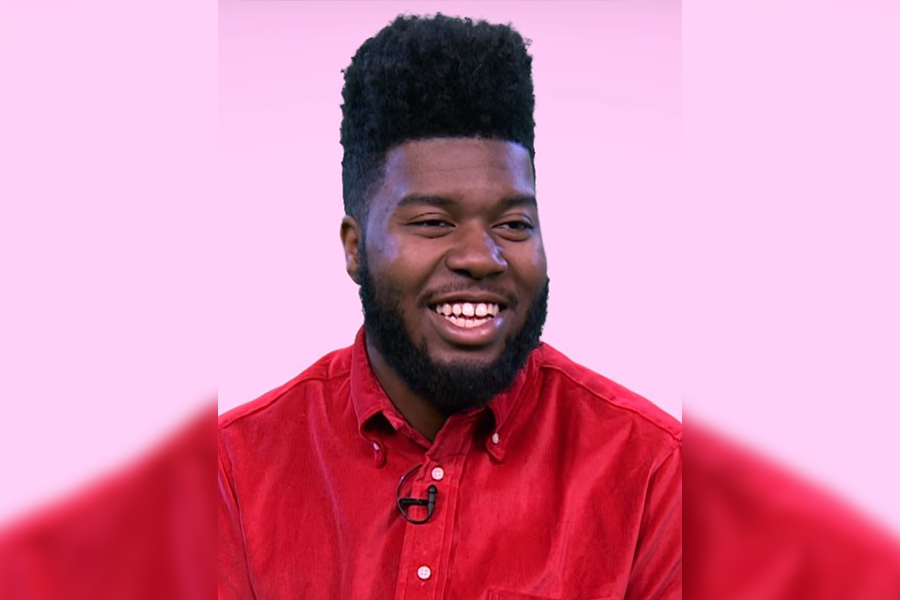
There’s something undeniably charming about 20-year-old R&B singer Khalid. Whether it’s his authentic lyricism or his soothing voice, Khalid relates to his listeners in the most refreshing way possible. With the 2017 release of his debut album “American Teen,” audiences young and old found themselves enjoying Khalid, reminiscing about days past of being “young, dumb and broke.”

On May 7, the R&B sensation made his way to the Activities and Recreation Center Pavillion to perform a sold-out show, thanks to the efforts of the ASUCD Entertainment Council. A self-proclaimed hopeless romantic, the Texas-born artist brings the same feelings of closeness and warmth that fans appreciate in his music to his live performance. He started the night off with “8TEEN,” a song that embodies Khalid’s brand so flawlessly, encouraging audiences to “do all the stupid sh** that young kids do.”

Taking breaks between each song to chat with the audience, reciprocating shouts of “I love you” to passionate fans in the crowd and dancing goofily across the stage apparently without a care in the world, Khalid was visibly having the time of his life. And the best part of it all? The audience was having the time of its life, too. High school kids and college students alike sang along to every lyric, hung on to every word and didn’t leave a single moment uncaptured by their iPhones. This is the generation that Khalid seeks to represent in his music, and he succeeds.

Over the course of the night, the young artist ran through nearly every song off his album, along with a few snippets of tracks he’s recently been featured on. The crowd was also treated to three new songs that Khalid claimed will be on his next album, set to be released in the fall. But despite the excitement of his eye-catching backup dancers and aesthetically pleasing light effects, Khalid’s greatest strength still lies well within the music itself. Khalid is talented — indisputably so — and what he lacks in stage presence, he makes up for with the sheer power of his voice, not to mention killer songwriting abilities.

Although at times the show felt a bit repetitive or drawn out over the course of the hour and a half, audience members can appreciate the fact that Khalid still has the rest of his career to master the art of performance. While watching his live show, you are reminded of how young he really is, fresh out of teenhood and dressed in a T-shirt and colorful shorts. Looking around the room, I realize that Khalid could be any one of us in the crowd. He’s not just Khalid. He’s also you, me and anyone else who has ever resonated with being an “American Teen.”


Written by: Sydney Odman — arts@theaggie.org


The (Orange) Juice is Loose!: Is Trump the new OJ?

ALLYSON KO / AGGIE

How the Trump Era evolved out of the OJ Simpson saga

If the OJ Simpson ordeal had not occurred and was instead a work of fiction produced decades from now, people might say something like, “You know, I think this might actually be a rough allegory for the Trump Era.”



Of course, this wouldn’t be possible, because without The Juice, we wouldn’t have The Donald. After finally watching “American Crime Story: The People vs. OJ Simpson,” I realized that today’s circumstances are more than just analogous to the OJ saga — they are directly derived from it.

Many of the same elements from the OJ moment, like aggravated racial tensions, are now being carried to parody-level extremes. During the trial, prosecutor Marcia Clark experienced much of the same sexism and unjust criticism that Hillary Clinton faces, even long after the election. We also witness an endless stream of strange, recurring side characters, like Spicoli-in-vivo Kato Kaelin, Dr. Harold Bornstein and Rudy Giuliani. Lawyer Alan Dershowitz actually pops up in both stories, first as counsel to OJ and today as a dinner pal of Trump, but always as a talking head on the news shows — albeit a bit less ginger and “mustachey” than he was two decades ago.

Today’s extreme absurdities are possible because the frenzied fervor with which America ate up the OJ saga, a tasty appetizer for today’s all-consuming chaos, did nothing except scream, “WE WANT MORE OF THIS.” Our fixation on OJ heightened our demand for numbingly absurd entertainment, cultivating the new media environment that would allow Trump to stick. More importantly, it created a precedent for the notion of an iconic hero synonymous with success standing up to the perceived corrupt establishment.

The moment that TV producers put the NBA Finals in the corner box in order to broadcast the Bronco chase forever changed our relationship with the media. Networks had to cover the chase, as well as the many months of the murder trial. It was the first time on the national stage that our collective obsessions with celebrity, crime and sports were fused into an easily digestible form of 24/7 entertainment.

After the OJ trial, our demand for this continued to grow, creating a type of sensation inflation that devalued our discourse, fueled reality TV and cable news and made celebrities out of undeserving people. The Kardashian siblings are only famous because their father, Robert, was OJ’s best friend and legal counsel. So obviously we need to “keep up” with his kids, right?

This leads to Donald Trump. Before the 90s, Trump gained fame for making the Forbes 400 (lying about his assets to inflate his wealth), writing hit books like “The Art of the Deal” (being shadowed by a ghostwriter), succeeding (and failing) as a real estate mogul (while discriminating against black renters) and being an oddball, outspoken talk show guest (getting incessantly mocked by David Letterman). Trump had a reputation, but his business-themed reality show “The Apprentice” provided the crucial final ingredient in crafting his aura. Here, Trump could sit around looking like an expert and serve as a powerful symbol of success, which helped give him a type of fame similar to that enjoyed by OJ in his post-football acting career.

The respective sociopolitical environments were also pivotal in developing strong supporter bases for each figure. OJ was a popular and successful black man being tried for murder in post-Rodney King Los Angeles, while Trump entered politics as a reactionary force in Obama’s “post-racial” America, garnering some of his earliest political support by propagating the racist birther lie.

The contradictory racial attitudes that Trump and OJ symbolize complicate this comparison, but examining their defense tactics and their supporters’ perception of them shows how Trump fulfills the role of a modern OJ. Based on facts and evidence, OJ was clearly guilty, but his legal team exploited emotion over rationality, obscuring and discrediting facts, just like Trump does today. Trump and his surrogates lie with impunity and are trying to smear Robert Mueller, while OJ’s team disputed the DNA evidence and exposed detective Mark Fuhrman, a key witness, as a blatant racist (bizarrely enough, he’s a semi-frequent guest on “Hannity”).

Supporters came to view Trump and OJ as folk heroes standing up to “corrupt” institutions intent on framing them. With so much doubt, the trial became about the black community getting a win over the LAPD (or today, MAGA supporters over the “Swamp”) instead of about the actual crime.

It’s quite ironic that the primary defense strategy in both cases has been to distract, confuse and exploit, but that today, these tactics are part of the alleged collusion crime itself. This proves just how many levels deep into parody we now find ourselves and makes it clear that this comparison fits like a glove.


Written by: Benjamin Porter — bbporter@ucdavis.edu

Disclaimer: The views and opinions expressed by individual columnists belong to the columnists alone and do not necessarily indicate the views and opinions held by The California Aggie.

Students pay the price

CAITLYN SAMPLEY / AGGIE

UC fails to meet deadline, noncompliance could result in tuition hike

A 2017 audit outlined that the University of California had not disclosed $175 million to the public — an amount the University of California Office of the President says is incorrect — showing that UCOP exercised misleading budget practices while continuing to request more funds from the government. The news came in the midst of a battle between students and the Regents surrounding a possible tuition increase — a possibility that has yet to be knocked off the table.

Based on the audit, the California State Auditor issued 33 “recommendations” that are to be met in increments until 2020. It was recently revealed that the UCOP has not fully implemented four of the 10 recommendations due by April 2018.

In other words, UCOP has turned in a late assignment that had a year-long deadline. If this is unacceptable in the classroom, it’s surely unacceptable from the UC’s highest officials.

The UC Board of Regents has discussed a potential tuition hike in the event that the Legislature does not approve a 3 percent budget increase for the public school system. The increase in the budget, however, is influenced by UCOP meeting the one-year response by the State Auditor, to which the Regents and UCOP previously agreed. The apparent carelessness of UCOP in addressing the recommendations has left students vulnerable to a tuition hike while the UC expects the government to act like a professor who extends the deadline.

The Editorial Board is perplexed and frustrated at the UC jeopardizing the financial well-being of its students — an issue that could increase student debt and prevent some students from attending a UC.

The mission of the UC is “to serve society as a center of higher learning.” But in this case, the UC has shown that we must hold it accountable as it continues to demonstrate poor judgement and insufficient consideration of the society it is serving.

The office of UC President Janet Napolitano, who receives an annual base salary of $570,000, failed to act on the recommendation that they should “restructure salary ranges […] to make certain the ranges encourage employee development and ensure pay equity.”

With a possible tuition hike on the horizon, the Editorial Board asks Napolitano whether she understands the gravity of the situation. We ask if she is willing to reassess the allocation of funds between student services and salaries of top UC officials.

As the UC faces an April 2019 deadline, the Editorial Board asks UCOP to simply look at the syllabus and do the assigned work. We, the nearly 240,000 students of 10 UCs, are paying the price for an institutional mistake made by the 26 Regents and the president herself.


Written by: The Editorial Board

The pain project at UC Davis

DiPi / COURTESY

How design might help the opioid crisis

Depression. Migraines. Broken bones. Pain can take many different forms. When one considers the ways in which age, gender and culture can affect the perception of an individual’s pain, it can be very difficult to communicate effectively what they are feeling. This is especially true for those who suffer from chronic pain. Often without a cure, their primary recourse is to manage their condition with painkillers, such as opioids. Just last year, the U.S. Department of Health & Human Services declared a public health emergency about the widespread misuse of opioids.

If there’s an epidemic of opioid misuse stemming from pain, the question that arises is: how do we effectively talk about the crisis when we struggle to communicate about the pain we are feeling to begin with? This is the question that drove the team at the UC Davis Center for Design in the Public Interest to create “the pain project”. Using what they call “democratic design,” a process akin to dialectical problem solving, the interdisciplinary team of designers, computer scientists and writers work in concert with doctors and clinics to address medical needs through clear information design.

“We begin with really trying to get to what is the coordinate, like what is the issue and what is the need?” said Susan Verba, an associate design professor at UC Davis and lead designer behind DiPi. “Working with the doctors in a number of meetings, we try to ask a lot of questions and think together. We then propose some possible solutions, hear their responses and then further evolve the idea.”

The physicians at Hill County Health and Wellness Center began this process by designing a product that would effectively present alternative treatments to opioids for patients’ consideration. One product the team settled on was a poster that, in plain text and simple ideograms, presented 16 possible paths a patient could take. But this was just one form the idea took.

“We take content, like the poster, and we play with the form, because every patient is different, and different things work for different patients,” said Zoe Martin, a design student and DiPi member. “We turned the poster into cards, and there’s a video that they can watch if that communicates better with them.”

In simple language and images, the video informs viewers of the various pros and cons of individual opioid treatments. A booklet was made to accompany the video, in case patients have limited access to the internet. Another booklet helps patients taper off opioids or other painkillers if they are addicted. The newest booklet is about properly addressing a situation in which someone has overdosed on painkillers.

Accessibility in any form might be the defining element of DiPi’s design philosophy. It is not surprising, then, that they have addressed the complicated language of medical forms that might make it intimidating or challenging to visit the doctor. More than simplifying and making the language clear, the documents are made to be more visually engaging. A good example of this is their redesign of the pain-treatment folder from the Hill County Health and Wellness Center to an easy-to-read comic strip.

Translation is also a huge issue in receiving accessible and proper medical care, especially in California, where Spanish is spoken by nearly 40 percent of the state’s population.

“Whenever I look at medical literature, it’s never translated for the average person, nor is it ever translated for Spanish speakers, which is like such a common language in California, and it frustrates me,” said Hannah Hill, a student in the Textiles and Clothing Department and a project support intern for DiPi. “So I thought it would be great to get involved with DiPi and help make their material even more approachable for even more populations.”

DiPi is currently working on translating its designs into as many languages as possible. It will continue working with medical professionals to create more accessible and effective modes of communication between doctor and patient.

“Usually designers are at the tail end of the process and they’re asked to come in and give form to other people’s content,” Verba said. “You can’t have the kind of impact you’d like to have [as a designer] and you can’t learn as much as you’d like to learn by loading up other people’s problems. So that’s what we really try to do here is flip that inside out and say ‘Hey, yes, we’re not doctors, but we have something to bring to the table.’”

While DiPi does not provide answers to the opioid crisis, it is offering useful and creative means to help mitigate the severity of it by making medical treatment more accessible and clear to larger populations.


Written by: Matt Marcure — science@theaggie.org

Team Gunrock competes in Amazon’s Alexa Prize Challenge

ALLYSON KO / AGGIE

UC Davis students build improved social bot

Currently, most chatbots are task-oriented. They can answer questions or complete a task, but they can’t necessarily hold a long conversation. Team Gunrock, a team of UC Davis students selected to compete in Amazon’s 2018 Alexa Prize Challenge, wants to change that.

We are hoping to build a social bot that is different from the traditional ‘task-based’ bot,” said Arbit Chen, a first-year computer science graduate student. “We are not building a bot to open a music player; instead, it should have the ability to find some topics and chat with people for minutes.”

The goal of the project is to build the best conversational dialogue bot by looking at the coherence of the response, end-to-end dialogue flow and the length of the conversation itself. To meet this goal, the team is designing a personalized dialogue bot that can provide valuable insights through an entire conversation. The social bot will be judged on its ability to converse and engage with people for 20 minutes.

The best dialogue agents provide a balance between capability from task specific questions and answers and non-task compliant responses that advance the conversation,” said Kevin Jesse, a first-year computer science graduate student. “Currently many dialogue bots are focused on specific tasks by redirecting requests to different submodules. This makes the conversation choppy and answer-driven. We are hoping to improve this balance between task specific and advancing the dialog with submodules like our ‘social’ bot.”

This experience gives the team members valuable insight into what it’s like working on a large team, where intra-group communication can be a challenge.

The most valuable thing that I had with this challenge is the experience to cooperate with a big group with a diverse background,” said Mingyang Zhou, a first-year computer science graduate student. “Each one of us will need to be responsible for some subsystems in the chatbot, and we all need some help from each other in order to accomplish this big project together. Communicating with different group members who have different backgrounds requires us to spend time learning about what they work on and how their work will affect ours.”

In May, the team will receive customer feedback on the bot it has created. The bot will then be judged by an Amazon panel and Amazon Alexa customers in July, after which two social bots will make it through to the final. The winning team will receive a $500,000 prize and $1 million research grant for its university.


Written by: Kriti Varghese — science@theaggie.org