45.6 F
Davis

Davis, California

Saturday, December 27, 2025
Home Blog Page 528

A Picnic Day to Remember

RAUL MORALES / AGGIE

Women’s tennis, water polo, lacrosse shine in senior send-offs

Picnic Day: arguably the best day of the year in Davis. The entire UC Davis experience is on display for visitors and students alike. The parade is rolling, the sun is out and the community is buzzing with excitement –– on campus and off. For UC Davis student-athletes who have events scheduled, however, the Picnic Day experience is a little different from that of the general student population.

There were seven home UC Davis sporting events scheduled throughout the day this past Saturday, meaning that six different teams had to forgo the festivities, at least for a few hours. The women’s tennis team, for example, had an early start to its Picnic Day as the Aggies squared off in a causeway battle against Sacramento State. Being the final match of the season, this picnic day contest also served as a send-off ceremony to honor the team’s three seniors. Kristy Jorgensen, Lani-Rae Green and Jessie Lee played in their final match.

“Of course, as anyone, I’m a little sad –– you know, my last match on these home courts, but I’m excited to hopefully beat Sac State,” Jorgensen said before the match. “Honestly, this is the best season I could have asked for for my senior season, so even though I’m sad, I can’t really focus on being sad because I’m so pumped.”

Head coach Bill Maze said before the match that he looked “forward to honoring [the] seniors” and anticipates another energetic picnic day atmosphere –– something that has become somewhat a tradition for Maze’s teams.

“There’s a buzz, we love it,” Maze said. “It’s definitely different and that’s why I try to schedule on Picnic Day as often as I can. I love playing on Picnic Day and I hope we get a good crowd […] I can’t remember the last time we didn’t play on Picnic Day.”

Coming off a tough shutout loss to Nevada on Friday, the Aggies edged out Sac State 4-3 on Saturday morning. The Aggies were successful in doubles play, sweeping the one and two matches 6-3 and 6-2, respectively. After securing the doubles point, the Aggies held on to clinch the match in singles play. Green and sophomore Nikita Pradeep each earned straight sets victories, while Jorgensen suffered defeat at the one spot after taking her opponent to three sets. It was freshman Sara Tsukamoto who earned the clinching point with her three-set victory at the five spot.

The added dynamic of Picnic Day seemed to fuel the Aggies, rather than hinder them. Even Jorgensen admitted before the match that picnic day tends to attract a bit more noisier of a crowd, which can be detrimental for a lot of tennis players.

“For tennis, you always want a quiet environment, so it takes a lot of being ready for that and accepting it,” Jorgensen said. “Honestly, it’s not that much different [than other matches]. You get the occasional drunk friend that rolls through and wants to cheer you on, but they’re drunk so they don’t really know what they’re saying, the opponents get upset. Other than that, it’s a really good time. We get more fans on picnic day and after –– after a win –– we get to walk around and see all the festivities. Work hard, play hard.”

Although it’s this batch of seniors’ final Picnic Day match, they, along with the entire team, still have the Big West conference tournament to look forward to this weekend. Maze admitted that physical fatigue and injuries have hindered the Aggies at times during the season, but the team is still “raring to go.”

“We’re excited,” Maze said. “Six and two is the best conference record we’ve ever had. We were six and two in 2011 and we were seeded second in the tournament. We got a shot at being seeded second again.”

In Jorgensen’s opinion, she believes that the Aggies have a legitimate shot of winning it all at Indian Wells this year.

“I think this is the best season that I have had on the team,” Jorgensen said.

She said that every match is competitive, and that the Aggies will be preparing for the “slower” courts at Indian Wells by adjusting their game styles to be better suited to win “down south.”

After Saturday’s results, UC Davis women’s tennis team finished the regular season with a 15-6 overall record, earning the team a three seed heading into the Big West tournament this weekend. The Aggies will take on their first opponent in the Big West tourney at 11 a.m. on April 27 at the Indian Wells Tennis Garden in Indian Wells, Ca.

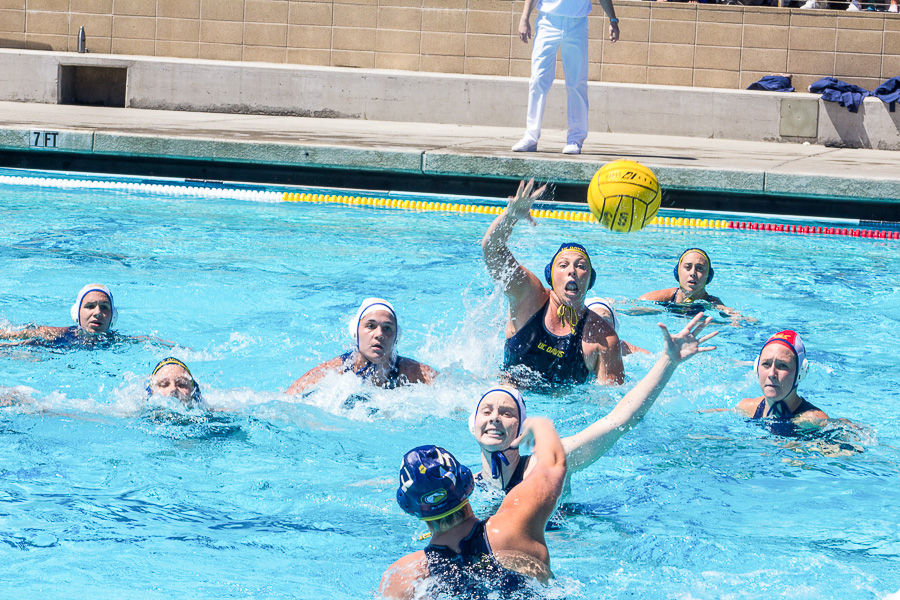
Across campus at the Schaal Aquatic Center, the UC Davis women’s water polo team also played in its final home contest of the season with a tilt against third-ranked California. Like the Aggie tennis team, the water polo team took the opportunity to recognize its six senior athletes. Among the seniors being honored was center Greta Kohlmoos, who finished yet another stellar season with 43 goals and 46 overall points.

Prior to her final home game, Kohlmoos shared how “surreal” the whole situation felt, given how emotional it has been watching the seniors of previous years honored at their final home games.

“Now I’m going to be the one up there,” Kohlmoos said. “There will be tears, for sure.”

In light of all of the emotions, Kohlmoos said that the seniors viewed Saturday’s game as an exciting final challenge to leave their final mark on the program.

“I feel like I can’t even begin to put into words what it has meant to be on this team,” Kohlmoos said. “Because it has given me so many opportunities that I never even thought of before I came here. Being a part of a team of really strong, smart women and learning from them.”

Kohlmoos also took time to praise her senior co-captain, utility Paige Virgil, who had a career year in the water, netting 53 goals and 14 assists for 67 total points. According to Kohlmoos, Virgil injured her elbow and was in a sling for the team’s games against Hawaii and Irvine.

“The fact that those were our two toughest conference opponents,” Kohlmoos said. “She was still on the bench cheering, giving advice and doing everything she could with the best attitude for her situation. I think that was really great to see –– it definitely pumped up the team. We wanted to win those games for her […] She’s the kind of player and person that everyone on this team looks up to and wants to be.”

As a senior member, Kohlmoos has participated in several games on past picnic days. She admits that it’s “kind of been a bummer” to not be able to participate in all of the fun events going on across campus and in the community, but understood that this is one of the sacrifices she willingly makes for the sport she loves.

The Picnic Day games themselves, Kohlmoos countered, are a blast to be a part of in their own right. According to her, there is “not really any other game that’s quite like it.”

“It’s really cool too, because it’s Picnic Day, a lot of [alumni] come back to see those picnic day games, so it’s really cool to see that community,” Kohlmoos said. “Although I wouldn’t mind being able to go on campus and see some of the other cool stuff going on. But we have our own cool thing going on at Schaal.”

California turned out to be a challenge for the Aggies on Saturday, defeating UC Davis 15-6 despite two goals from Virgil. With an overall record of 18-10, the Aggies will be seeded second in the conference tournament this weekend, meaning that the team will have a bye on the first day of action. It’s an asset going into the tournament, but Kohlmoos is also “disappointed” because it means that she has one less game to play. Nevertheless, she is confident that she and the team will make the most of the opportunity to win it all.

Elsewhere on Saturday, the Aggies were turning up wins all over campus. The UC Davis softball team earned a pair of victories against UC Riverside in the day’s double-header games. Also victorious over the Highlanders was the UC Davis men’s tennis team, which won its match by a convincing 6-1 score. UC Davis baseball defeated UC Santa Barbara 5-3, and UC Davis women’s lacrosse crushed Fresno State 23-12.


Written by: Dominic Faria — sports@theaggie.org
 

49th Annual La Gran Tardeada

DANZANTES DEL ALMA / COURTESY

Festivities showcase vibrant Chicanx/Latinx community

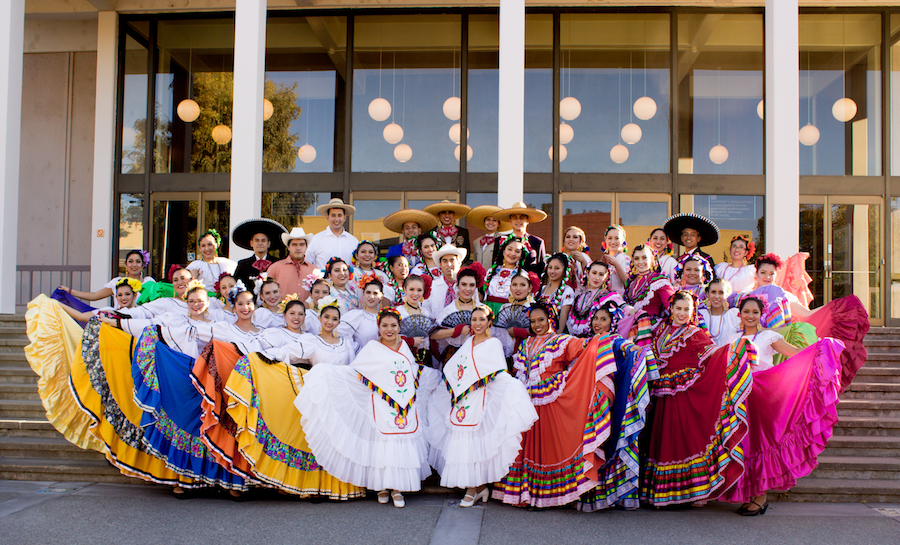
On April 28, the Cross Cultural Center will be hosting a cultural day for the Chicanx/Latinx community through an event called La Gran Tardeada. Taking place on the Quad from 11 a.m. to 6 p.m., La Gran Tardeada is an opportunity for the Chicanx/Latinx community to feel celebrated and come together to enjoy food, music, vendors and dance performances.

Crystal Romero, a fourth-year mathematics and Spanish double major, described via email how the origins behind every cultural day hosted by the Cross Cultural Center are different. For the Chicanx/Latinx community specifically, she discussed how it got started.

“[…] La Gran Tardeada initiated as a response for the need of increased representation and retention of Latinx students on campus,” Romero said. “It is a historic celebration where community members gather to celebrate their identities and culture.”

Romero continued on to discuss the theme of this year’s Gran Tardeada, chosen by the planning committee.

“This year our theme is ‘Together We Thrive, Keeping Our Roots Alive,’” Romero said. “We decided on this because it signifies that, even though there are many identities within the Chi/Lat community, when we express solidarity with each other, we thrive together.”

Carlos Leal, a fourth-year human development and Spanish double major, also explained his take on the theme while tying in the official graphic art for the event.

“What [the theme] entails is how we want to encompass the beauty and resilience of the larger Latinx community, with the flower and plant imagery expressing our appreciation for nature, our roots and our ancestors as we thrive.”

Both Leal and Romero decided to become co-coordinators of this event for different but ultimately similar reasons. For Leal, it’s because La Gran Tardeada is able to bring communities together in a positive way. For Romero, it’s because she sought to be involved with not only the UC Davis community, but the Chicanx/Latinx community as well.

Romero said that students should attend this event because it would be a fun “de-stresser” and a “big celebration of Latinidad.” Leal highlighted the ability of La Gran Tardeada to make students feel welcomed and wholesomely represented.

“We wanted to affirm how, within the Chicanx/Latinx community, oftentimes the Mexican narrative takes precedent. Therefore, we wanted to include performances that highlight our diverse identities within the community,” Leal said. “It can be difficult for students of color and Queer Latinx to find community on-campus, and we want attendees to feel at home surrounded by fellow community.”

Given the current political climate and state of the world, Leal addressed the importance of events like these even happening.

“Like the fellow Quad events PowWow (for the Native/Indigenous community), Black Family Day and Asian Pacific Culture Night, La Gran Tardeada is still a powerful event, especially in a time period that these communities are under attack and we must be more visible and united than ever.”

Romero first experienced La Gran Tardeada when she performed with her dance group, Danzantes del Alma. She explained how surprised she was at the community turnout and how these types of events can really impact people.

“I think it’s important that events like these at UC Davis continue to happen because it lets students who might not feel like they fully belong on a big campus like ours celebrate their culture and their identities,” Romero said. “Just being around a big group of people all gathered to celebrate the day with each other can be a really empowering experience.”

She’s excited to see Los Nuevos de Teran, a performance group featuring a UC Davis custodial worker.

“[…] one of the performers I’m most excited to have is Hilario,” Romero said. “For those of y’all who don’t know, Hilario works as a janitor here on campus in Hart Hall and Everson. Him and his brothers all form part of a band called Los Nuevos de Teran, and we were able to book them for this year.”

Pita Piña, a second-year human development major, is looking forward to the dance performances as well as the really good food (notably the tortas, tacos and chicharones) which she recalls from attending the event last year.

“I’m really excited to see la danza azteca,” Piña said. “It’s so beautiful to see what our ancestors used to do in terms of rituals. I just love watching them.”


Written by: Cecilia Morales — arts@theaggie.org

UC Davis conductor accused of misconduct returns to campus after quarter-long unpaid leave

UC DAVIS DEPARTMENT OF MUSIC / COURTESY

Statement from Department of Music in response to concerns over Christian Baldini’s return refers students, faculty to existing resources

Content Warning: This article contains descriptions of sexual harassment which some readers may find disturbing. 


Christian Baldini, 39, a UC Davis symphony conductor, has returned to campus after being temporarily removed without pay after misconduct toward a female undergraduate student. A university investigation was conducted and a disciplinary letter of censure from Chancellor Gary May was sent to Baldini in September of 2017.

The letter discussed a Title IX investigation report into Baldini after alleged inappropriate behavior was brought to the university’s attention. His behavior toward the student subsequently led to her departure from UC Davis. Baldini was placed on unpaid academic leave for the duration of Winter Quarter. He was not permitted on university property without the written permission of Associate Dean Claire Waters and did not receive salary from Jan. 1 to March 23.

“[Investigators] found Dr. Baldini to be in violation of our Sexual Harassment and Sexual Violence policy which was a violation of the Faculty Code of Conduct and so he agreed to discipline of being suspended for the Winter Quarter with no pay,” said Dana Topousis, a UC Davis spokesperson.

The letter of censure, which was sent to The California Aggie by Topousis, confirmed Baldini “engaged in conduct that included touching this student’s hands and shoulder, dancing with her alone (including touching her waist and spinning her, leading to her buttocks being held against [his] body), and kissing this student’s cheek.”

It was also concluded that Baldini created a hostile environment by making inappropriate comments, calling her a “bad girl” and sending her messages “reasonably interpreted as being sexual in nature.”

The letter will not be placed in Baldini’s academic review file.

Further sanctions urge Baldini to refrain from the behavior described and any subsequent incidents would be met with potential termination.

“[I] am likely to pursue your dismissal from your faculty position should you be found to have engaged in similar misconduct again in the future,” May wrote in the letter. “At the same time, I believe that you are capable of amending your behavior and of conducting yourself in a way that complies with the Faculty Code of Conduct. I trust that your future career at UC Davis will be successful and without any further incidents.”

Baldini’s explanation for his behavior is that of a case of misunderstanding between his intentions and the student’s interpretation.

“Even though nothing sexual was intended, I deeply regret that over time this was perceived by my student in such a way,” said Baldini’s prepared statement, which was sent via email to The California Aggie. “My faults are failing to recognize that my behavior could have a reaction in her that was unintended. I feel contrite and remorseful that one of my students would have felt this way by something I did, and I deeply apologize for any stress and pain this may have caused.”

He referred to his Argentinian heritage as a cultural justification for his actions and comments to the student involved.

“It never occurred to me that calling someone a ‘bad girl’ in this context could be perceived as a sexual type of comment,” Baldini said in the statement. “I obviously need to be a lot more careful and considerate, and I must make sure to prevent anything like this from ever happening again.”

The California Aggie approached UC Davis Communications regarding the university’s response to students’ concerns to Baldini’s return to campus. Spokesperson Dana Topousis provided a statement via an email written by Henry Spiller, an associate professor and chair from the Department of Music.

“The Department of Music takes its responsibilities with respect to Title IX and sexual harassment very seriously,” the statement read. “We work closely with the campus’ Title IX Office and the Office of Academic Affairs to ensure we are providing our students and all members of our community with a safe and welcoming work and learning environment that is free of harassment. When UC Davis learns of sexual harassment, we take immediate and appropriate action consistent with the University’s Sexual Violence and Sexual Harassment policy.”

Spiller described a meeting he conducted with faculty members of the Department of Music during Winter Quarter in which they reiterated the university’s resources regarding sexual misconduct to faculty and students and “reaffirmed our individual and collective commitments to promoting a safe and nurturing environment in which to study and make music.”

Baldini did not respond to requests for comment regarding student concerns over his return to campus.


Written by: Elizabeth Mercado — campus@theaggie.org

Editor’s Note: A version of this story appeared in print which credited Taylor Lapoint. The author is Elizabeth Mercado. The story has been updated to reflect this change. 

Veterinary Medicine Central Services stores to close

MARINA OLNEY / AGGIE

Over 1,400 sign petition in protest of planned closures

The university recently announced that the Veterinary Medicine Central Services Life Science Supply Stores in Haring Hall and VM 3B will be closing. Initially, the closure was planned for June 1, 2018. According to a letter from Provost and Executive Vice Chancellor Ralph Hexter, however, the closure has been postponed for three months.

“The VMCS currently operates at a significant loss each month and has a substantial accumulated deficit,” Hexter’s letter states. “We are grateful that the School of Veterinary Medicine has operated Central Services to the benefit of the entire campus for more than 50 years, but […] it is unreasonable to expect that the School should continue to subsidize this service for the rest of the campus.”

A 159-page petition that protests “the recent decision to close the store” and calls “upon the UC Davis administration to find a way to preserve this important resource” has been circulating among labs and individuals throughout campus and has been signed by over 1,400 UC Davis faculty, staff and students.

“Vet Med is an on-campus store where people can get what they need for research and where they can get office supplies, too,” said Hung Doan, a graduate student researcher pursuing a Ph.D. in the plant pathology department.

The center also performs other services. For example, Tanya Chilcote, a fourth-year environmental toxicology student who works as a lab technician and manager in the plant pathology department, said that she has her pipettes calibrated and cleaned there.

Supporters of the petition say they want to keep the center open for a number of reasons, including the fact that the VMCS is a critical resource for purchasing supplies.

“We buy probably about 40 percent of our lab supplies there and I’m the one who does the purchasing for the lab,” Chilcote said. “I know some people who buy all of their stuff from there, if not most of their stuff. [The center] provides a centralized location. I believe they buy stuff in bulk, and then we can buy smaller amounts of tubes, reagents and everything from office supplies to acid.”

When asked how often they use the center, several individuals said they rely on it daily, particularly because they often run out of supplies they need during experiments.

“One of the nicest thing about [VMCS] is you can get stuff delivered and you can get stuff really fast,” Chilcote said. “If you’re in the middle of a project and all of a sudden you realize that you’re out of 1.7 millimeter tubes, you can’t stop working. You need to keep going because you’ve got time sensitive stuff, so you run over to Vet Med to get them. Otherwise, you’d need to redo your experiment, which could be weeks of work just because you ran out of tubes or all sorts of reagents.”

Tera Pitman, a staff research associate in the plant pathology department, also emphasized the need for items in a time-sensitive manner.

“We have something that runs out that we need right now — and, yes, we could order it online, but we need it right now — so we run over to the stockroom, and we buy it so we can continue our research,” Pitman said. “If you’re in the middle of a cloning reaction, and you don’t have the right enzymes to do that, then you need those to be able to finish your experiment. Otherwise, you would throw everything away, and everything you’ve used up to that point is a complete loss.”

Doan explained that workers in labs often don’t know whether supplies have been used up or not.

“It’s a lab and everyone shares stuff,” Doan said. “When people use stuff, and it’s gone, they don’t really post it up, so no one knows when it is gone. Many times, as a graduate student, if I’m running an experiment, and I don’t have what I need, I can go to Vet Med and they’ll have it.”

Several individuals said they signed the petition because they consider the center to be very important to both them and their research.

“[I signed the petition] because if that place closes and we’re no longer able to use that, it’s going to be an extreme hardship for, I would think, all the labs on the campus, but certainly the ones in our department for a multitude of reasons,” Chilcote said. “If everybody is ordering everything through the purchasing system instead of getting a large percentage of their stuff from Vet Med, that’s going to make everything slow down.”

Chilcote explained that orders from places other than Vet Med would need to be put into a pre-purchasing system and get approved by a number of people.

“If, all of a sudden, everybody is having to switch over all the stuff they get from Vet Med and have to put it in the pre-purchasing system, that’s going to slow that down so much because they’re going to get this glut of orders everyday that they’re not getting right now,” Chiclote said. “All of the supplies are going to have to be delivered to this tiny office, where, right now, it’s already filled up with boxes everyday. It’s going to slow down work without a doubt. That’s just the supplies — there are other services they supply. Where are we going to be getting our lab coats and stuff? It’s hard enough to get people to wear lab coats if I don’t have nice, clean ones that fit them.”

Sandra Vu, a junior specialist in the plant pathology department, said that the closure of the center upset a lot of the workers who use it.

“All of us just relied on this thing to be there, especially in emergencies when we really do need something and we can’t wait a week for it to get here,” Vu said. “We don’t really know why it’s closing, because everyone really uses it.”

Pitman said that the closure was a clear signal to her that the university does not support its researchers.

“I feel like the closure of Vet Med means that the university isn’t supporting us in our research capacities,” Pitman said. “[The center] was one of the things that the university provided space for that is incredibly useful for us on a daily or weekly basis, and that they announced the closure without speaking, it seems like, to anybody who actually does research […] is like pulling the rug out from under us. All of a sudden, we don’t have this thing that we relied on for years.”

Sources say they are confused about the particular reasons the center is closing and have expressed frustration about being left out of the decision to close it.

“They made this decision to close Vet Med without letting any of us know,” Doan said. “It wasn’t open for discussion. It is a university store and people who use it should have some input in it.”

Chilcote also mentioned that she believes there will be a number of problems that will arise if the center does close.

“Hopefully, [the petition] puts an end to this nonsense of closing this place down, because I think that’s really short-sighted,” Chilcote said. “I think that, if they close it down, they’re just opening up a whole lot of problems. There’s also safety issues: now, I’m not just buying one bottle of acid, I’m buying a whole case of them. Where would I store all that stuff? I heard that [the closure] was for financial reasons and it seems to me that if that’s the case, there’s going to be even worse ones down that line from all these problems it’s going to cause.”

Chilcote called for the university to “do whatever needs to be done” to keep the center open. Pitman expressed the same thoughts and also mentioned that the university receives a significant amount of money from the grants researchers bring in.

“Our overhead is pretty high, so I don’t see why the university can’t support it,” Pitman said. “We bring in grant money and the university charges us a percentage of every grant we bring in, and if it’s not a federal grant, [they charge us] 50 to 55 percent. I think the university makes a fair amount of money off of grants, and if they need 5 percent of the operating cost to keep Vet Med afloat, I don’t see why that’s a big deal.”

Hexter announced that a working group will be appointed to find possible solutions.


Written by: Sabrina Habchi  — campus@theaggie.org

Athletes in Action combines sports, faith in campus Christian group

JORDAN CHOW / AGGIE FILE

Northern California Christian group provides small group meetings, Bible studies, supportive atmosphere

For students and student-athletes alike, college can be a juggling act of activities and responsibilities; for religious students, faith may take a backseat to other priorities. Athletes in Action offers athletes and students the opportunity to meet new people, have a Christian fellowship on campus and learn to balance faith and college life.

Athletes in Action is a part of Campus Crusade for Christ, a Christian fellowship group found on most college campuses across the nation. The UC Davis chapter comprises Northern California athletes from a variety of schools.

AIA utilizes sports as a foundation for connecting a diverse range of people across campus with the ultimate goal of answering any faith-driven questions and directing students and community members towards becoming followers of Christ. AIA also makes time during the week to hold separate men’s and women’s Bible studies as well as time to pray as a group for its members and the UC Davis community. The group’s website describes its mission statement as “We want every athlete to know someone who truly follows Jesus and to work together toward the common goal of furthering God’s kingdom.”

Rachel Brennan, a third-year defensive midfielder for women’s lacrosse, shared how AIA brought her back to her faith while introducing her to new people and opportunities.

“Starting in middle school and high school, I started becoming less involved in my faith just because everything was starting to get so busy, and AIA helped me see that I could be involved in academics, sports as well as religion,” Brennan said. “AIA has opened my eyes a little bit from the ‘stereotypical athletes’ to see that there are so many different kind of people, aside from faith, that have different interests, passions and goals but all love sports. I think it’s awesome how accepting everyone is and how supportive people even if you’re not on the same team, don’t know each other or if you are new to AIA.”

Alisha Miller, a first-year diver for swim and dive, opened up about how AIA helped her get through a rough patch in her athletic career.

“To be honest, I had a rough first season here at Davis mentally, and after the diving season ended in February, I found myself looking for answers to why,” Miller said. “So I tried to renew my faith through AIA. Since joining, it has definitely had a positive impact on my mental state and given me a more optimistic approach when it comes to my sport. I don’t get as frustrated as I used to when a dive goes wrong, and it feels easier to ask God to help me with whatever trials and tribulations come with each practice. Hopefully with this new mindset comes better results in the future.”

Brennan agreed with these sentiments as she explained how AIA assisted her in working through her own trials in the form of athletic injuries.

“AIA [has] helped me get back to my faith, which has helped me in all aspects in my life, [and] I have seen effects in my athletic career,” Brennan said. “I have had three significant injuries and surgeries so it hasn’t necessarily affected my playing, but it has helped me with the fact that I was injured and couldn’t play and helped me keep faith that everything would be okay. It also kind of gave me an outlet.”

Miller shared her favorite aspects about being a part of AIA in addition to her future plans to stay involved in the group.

“People always told me before college that maintaining your faith away from home and at universities is really difficult, but by having this community of people telling you that I’m not alone in what I believe and that others have similar issues in sports, life, and faith is really comforting,” Miller said. They have been so welcoming to me so far in a way that is pure and beautiful, and I am so glad that I made the decision to join. I really hope to stay with AIA throughout my time here at Davis. I want to continue to grow, love and learn more about my faith with the wonderful athletes who make up this small community.”

Athletes in Action also provides jobs and internships for those interested in combining faith and sports in their career paths. Husband and wife Andrew Ahr (‘15) and Rachel Smith Ahr (‘16) met through AIA in their time as student athletes at UC Davis and both work for AIA as full-time staff members in Davis. Andrew explained some of the responsibilities that staff members hold.

“We meet regularly with a number of students, either one-on-one or in small groups, and we really try to reach out to the athletic department as a whole and different teams to be a resource for them [and] to serve them,” Ahr said. “We’ll meet with teams sometimes and just share about AIA, and then we have a large group meeting once a month where all of the AIA community comes together. We also help kind of coach students or we lead small groups –– we call them ‘total athlete groups’ –– that are catered to each team or multiple teams [where] people get in small groups and can meet regularly. That’s a lot of what our focus is.”

Smith Ahr shared how AIA has affected her life and her view of athletics in general.

“I think coming in as an athlete, I had been surrounded by athletics, it’s been my life, and now I see that even more so that athletes have this incredible influence and incredible platform, and how they use it is super impactful,” Smith Ahr said. “We see the brokenness in sport culture, and I love that we get to be a part of an organization and a group that tries to find a solution for that and uses their influence and platform in good ways and, ultimately, for the glory of God.”

Ahr rounded out his and his wife’s thoughts by stating some of his favorite elements about being involved in AIA inside and outside of college.

“I think that was one of my favorite experiences, just hanging out with great people and doing awesome things,” Ahr said. “AIA is international, so what’s cool is that there are people like us that are on college campuses all around the country and all around the world, and so it’s something that feels like a tight-knit community here that’s also part of a larger community across the world.”

On top of being invested in UC Davis’ Intercollegiate Athletics programs, AIA also forms and competes with its own intramural sports teams, and it organizes different bonfires and retreats for its members. AIA meets in a large group on the first Wednesday of each month at 8 pm in Hunt 100 and is open to including members outside of the athletic community. Students of all religious backgrounds and faiths are welcomed by the group.


Written by: Kennedy Walker — sports@theaggie.org

Third Thursdays at the Manetti Shrem: a review

ZOË REINHARDT / AGGIE

Sweet confections and paintings galore

A long line of students trailed across the museum, each waiting patiently for a single scoop of ice cream at the Jan Shrem and Maria Manetti Shrem Museum of Art. April 19th’s theme coincidentally aligned with Wayne Thiebaud’s exhibit, full of treats like the ones illustrated in his work.

Thiebaud is recognized for his pop art, mostly consisting of deli foods, pastries and ice cream. Through a technique called halation, particularly by casting a blue shadow around an object, the Sacramento artist was able to distinguish himself from other well-renowned painters of his period.

Kayleigh Becker, a second-year international agricultural development major, gushed about Thiebaud and his work. At her museum job, she learned immensely about the life of one of UC Davis’ first art faculty members.

“He was a really prominent artist in the Sacramento area for years,” Becker said. “He’s 97, still alive, still painting, still teaching and very involved with the Sacramento art culture. We’re focusing specifically on this 10-year window of time when he started working at Davis, met and married his wife and found his signature style of painting, which is what we have in this main gallery.”

The endless rows of cake with globs of paint swirled on top like real icing could make anyone crave a slice. Although this Third Thursday at the Manetti Shrem was not themed around Thiebaud’s exhibit, it seemed too perfect to be an accident.

The studio room provided mounds of cake, frosting, sprinkles and candied toppings for visitors to decorate. People of all ages excitedly swarmed around the table to grab some for themselves.

The cake-decorating workshop was in conjunction with Thiebaud’s exhibit and, although unintentional, revealed the beauty in something as mundane as food. Maybe that was the point of Thiebaud’s paintings, after all — each piece pleasing to the eye and good enough to eat. However, there is still question regarding the inspiration behind his paintings.

Dante Golden, a third-year community and regional development major, heard various theories behind Thiebaud’s art from some visitors. The main theory, however, is that these paintings are political statements highlighting America post-WWII.

“A lot of Thiebaud’s paintings are political,” Golden said. “At the rise of corporations, when Thiebaud was coming up, he was seeing all this bread and cake. Every corporation had its own little place in food, because this was right after World War II, and that’s when a lot of money was being made. Everything was becoming standardized. The fact that everything was so much more isolated [due to corporations], he wanted to take you back to the day where you can stop by a deli counter or a truck stop and get an all-American meal without looking like a type of product.”

Third Thursdays at the Manetti Shrem are meant for visitors to immerse themselves into the exhibits through interactive workshops. Each one hosts a new theme, hoping students and locals will come inside and learn something new.  

Liz Quezada, a UC Davis alumna and coordinator of student engagement at the Manetti Shrem, wants to get students and the community engaged because art isn’t just exclusive to people studying it. There is always something about it that can resonate with anyone, and Third Thursdays aims to do just that.

“I was a transfer student and I wasn’t an art major,” Quezada said. “I was a communication major. I didn’t really think about art at all. We definitely want to reach out to other majors and the whole university community by inviting them to our Third Thursdays through advisors.”

More information on Manetti Shrem events can be found on its website.


Written by: Becky Lee arts@theaggie.org


Hold fraternities accountable

CAITLYN SAMPLEY / AGGIE

Syracuse University, others punish Greek organizations for despicable behavior

Syracuse University has permanently expelled its Theta Tau fraternity chapter after videos revealed its members spouting racist, sexist, homophobic and anti-Semitic language and acting out the sexual assault of a person with disabilities. In one video, which the fraternity has defended as “a satirical sketch” of a politically conservative brother, a member is asked to repeat: “I solemnly swear to always have hatred in my heart for…” — which he then concludes with racial slurs of black, Hispanic and Jewish individuals.

The video, while shocking and disturbing, is just one link in the long chain of inappropriate and downright harmful behavior exhibited by fraternities over the years. At Cal Poly San Luis Obispo earlier this month, Lambda Chi Alpha came under fire when one brother wore blackface and others donned stereotypical gangster costumes and flashed gang signs at an event — resulting in the suspension of Interfraternity Council organizations at the school.

These are not isolated occurrences. Every year, careless hazing leaves students dead and fraternities become embroiled in controversies over sexual misconduct and other insensitive actions — and these are just the cases that have been publicized.

For decades, Greek life has been viewed as a staple of “the college experience” and therefore often wields considerable leverage over universities. As a result, an overwhelming lack of oversight at both the national and university level has allowed fraternities to engage in behavior that can range from morally questionable to criminal.

Only recently have colleges like Syracuse begun taking a stricter position against such violations. Multiple schools, such as Ohio State, Penn State University and the University of Michigan, have suspended fraternities indefinitely, while others like Harvard University are contemplating following suit.

Given such offenses, the Editorial Board doesn’t necessarily recommend banning Greek life across the board. For many, fraternities help bolster careers, forge friendships, raise money for charity, fortify qualities like leadership and improve communities through public service.

Yet a pattern of reckless and offensive conduct demonstrates a crucial need for systemic and cultural reformation. After all, is a brotherhood rooted in distasteful behavior, humiliation through hazing and bringing pain to others really a brotherhood?

Colleges must stress that Greek life is a privilege that comes in exchange for productive, healthy and principled organizations. The Editorial Board calls upon universities to strictly and swiftly enforce the rules of Greek life, and not only when another student dies during hazing, the lurid details of another sexual assault case goes public or more members are caught on camera spewing bigoted speech. The tired attempts to excuse the repercussions of despicable conduct as a horrendous accident, “just a joke” or plain ignorance will no longer suffice. Universities must properly hold fraternities accountable, even if that means being willing to ax their Greek life organizations when they jeopardize the physical and emotional health of other community members.


Written by: The Editorial Board 

This Month at the Box Office

JAMIE CHEN / AGGIE

What’s good, what’s not, what experts are saying — and what’s making money

Despite a multimillion-dollar budget, top-notch production quality and a star-studded cast, sometimes that’s just not enough for the “perfect” movie to do well in the box office. What differentiates an unsuccessful movie from a profitable one? Check out the trends of the box office this past month for what’s selling best.


“A Quiet Place”

In its opening weekend, “A Quiet Place” topped box office charts with a domestic opening of $50.2 million — that’s the second-largest weekend opening of the year behind the record-shattering “Black Panther.” Less than a week after its release, “A Quiet Place” managed to rack up a domestic total of $63.4 million as of April 11. And with a production budget of $17 million, John Krasinski’s directorial debut seems well on its way to being one of the most successful films of its genre in 2018.


“Ready Player One”

Two weeks following its release, “Ready Player One” is still dominating the box office, now coming in behind “A Quiet Place.” In its opening weekend, the Spielberg film accumulated $41.7 million, and has since accrued $102 million domestically as of April 11. These impressive stats make the sci-fi thriller Spielberg’s best opening in a decade. As of late, Spielberg’s works seemed to be leaning toward a different genre, exemplified in projects such as “The Post” and “Lincoln,” in contrast to the previous box office hits of his career like “Jurassic Park” and “Jaws.” But “Ready Player One” may have restored Spielberg’s reign as a big-time box office contender.


“Rampage”

Set for release on April 13, Dwayne Johnson’s most recent undertaking, “Rampage” is expected to bring in around $35 to 45 million for Warner Bros. With a production budget of nearly $120 million, the film’s thrilling supernatural premise is sure to attract a steady audience. However, with “A Quiet Place” expected to continue its success throughout the month of April, “Rampage” could face some heavy competition in its first few weeks.


“Blockers”

Seth Rogen and Evan Goldberg’s latest venture, “Blockers,” delivered an estimated opening weekend of approximately $20 million, similar to that of Rogen and Goldberg’s last film, “Neighbors 2: Sorority Rising”. With a current rating of 83 percent on Rotten Tomatoes, “Blockers” is expected to continue its strong opening at the box office in the coming weeks.


“Black Panther”

Set in the fictional African country of Wakanda, Black Panther has shattered box office records of all kinds since its February debut. Nearly two months later, “Black Panther” is still raking in a consistent cash flow at the box office. “Black Panther” skyrocketed to achieving the third-largest domestic film gross of all time, surpassing “Titanic” and just behind “Avatar,” with a total of $667.8 million as of April 11. In its opening weekend, “Black Panther” accumulated $202 million, making it the largest ever debut for a black director and the highest-grossing film with a black cast ever. Box office analysts are still predicting that “Black Panther” will continue its ascension through the box office ranks in the month of April.


“Isle of Dogs”

Wes Anderson triumphs with “Isle of Dogs” coming in as the biggest box office opening of the director’s career. With $1.6 million accrued in the opening weekend of its limited release, Anderson’s stop-motion is sure to impress audiences upon its national release on April 20. At a domestic total of $13 million as of April 11, “Isle of Dogs” is well on its way to surpassing Anderson’s highest grossing film, “The Grand Budapest Hotel” (lifetime domestic gross: $59.3 million).


Written by: Sydney Odman — arts@theaggie.org

Finding sustainable work-life balance

SHEREEN LEE / AGGIE

Making time for school, extracurricular activities, self-care

It is not unusual for college students to seek out employment and participate in extracurricular activities during the course of their collegiate careers. In fact, it is quite common for full-time students to engage in non-school related activities, which can include clubs and organizations, internships, Greek life, jobs and research positions. With such a varying list of obligations to tend to, some students find it difficult to manage their time accordingly.

Bailey Boka, a third-year genetics and genomics major, an employee at the Segundo Services Center, a member of Delta Gamma sorority and an intern at the MIND Institute, said that college is a prime time for students to branch out and explore different interests. Students thus have a desire to experiment with multiple extracurricular activities.

“I think that now is the time to find things that are interesting to you [to] see what you would want to do for your career,” Boka said. “I got an internship at the MIND Institute because it seemed like something I’d be interested in and would possibly like to pursue.”

With the costs of attending college at an all-time high and still continuing to soar, many students also choose to work one or more jobs while engaging in their studies. Boka decided to get a job to help alleviate current college expenses as well as the future costs of living.

“I decided to get a job to help out financially,” Boka said. “The cost of college is really hard on my parents, and I also have a younger sister who’s going to be in college next year. I knew that I really needed to start saving money to live off of after college.”

Other students seek out employment as a way to gain more work experience or just out of interest. Alix Mahon, a second-year human development major, a campus tour guide and member of Alzheimer’s Buddies, wanted to get a job to keep herself more actively involved on campus.

“I had a lot of gaps in between the day, and getting this job allowed me to fill in those gaps and make my day a little bit more structured,” Mahon said. “I liked the on-campus job because then I could work with my peers and get to know some more people on campus and make the community a little bit smaller.”

Trying to maintain adequate grades is difficult as is for some students, but having a job and actively participating in extracurricular activities can exacerbate the problem. Boka finds that trying to manage all of her different commitments can sometimes become too overwhelming.

“I would say that probably 25 to 30 hours out of the week [are dedicated to non-school related activities],” Boka said. “It can definitely be difficult to balance out work and school because sometimes, you have three midterms all in one week but you still have work and internships. It’s all a balancing act, and I feel like it can be hard to adjust to.”

In college, students often feel that time is only valuable if used efficiently. If students are not keeping themselves occupied every minute of every day, they are not maximizing productivity and are thus wasting precious time. This prompts students to take on heavier workloads, which sometimes prove to be more than they can actually handle.

Mahon believes that students can be productive without feeding into this mentality that the busier they are, the more efficiently they are using up their time. According to Mahon, students can achieve balance between work and leisure by allocating a certain amount of time in the day for things that make them happy.

“I think you can also have productive free time,” Mahon said. “A lot of productivity is measured by school work or actual work, but I think you also have to keep in mind that you need to be doing stuff for yourself. You can be productive by setting a time boundary where you can do other things besides work.”

Elisa Gomez is a first-year cinema and digital media major, a Coho employee, an upcoming board member of the Mujeres Ayudando La Raza and a member of the Adventist Christian Fellowship and Davis Christian Fellowship. Gomez believes that amid all the stress that builds up from trying to balance out their hectic schedules, it is imperative for students to take care of their minds and bodies.

“I don’t think the stigma [regarding self-care] is healthy,” Gomez said. “It’s always good to self-care, and I think that goes along with mental health as well. You need to make time for yourself, and sometimes that means just being alone or doing whatever you like instead of trying to do everything all at once. I like to keep myself grounded by making time to do stuff that I actually like to do.”


Written by: Emily Nguyen — features@theaggie.org

Inside UC Davis Crew

KAILA MATTERA / COURTESY

Rowing’s dedicated leaders explain one of campus’ most unique club sports

There are a wide variety of club sports programs offered at UC Davis. With nearly 40 student-run organizations affiliated with the university, there’s a club sport that fits practically every type of recreational and athletic preference. While each organization is unique in its own way, the men’s and women’s club crew teams are particularly fascinating.

For starters, the vast majority of crew athletes have no experience with rowing prior to coming to UC Davis. This is common among both the members of the women’s and men’s teams. Rather than acting as a barrier to success, the team enjoys a roster that possesses a diverse array of athletic skill-sets. According to fourth-year chemistry major and president of the women’s rowing team Kelly Gullett, this is what makes rowing so special.

“The novice squad is all people who have never rowed before and so you get to learn a brand new sport together, everybody is on the same pace,” Gullett said. “We have people of very different athletic abilities who will come in with either playing soccer or volleyball or basketball in high school and then try a new sport, or people who have never played a sport before coming out and learning to row.”

Third-year cognitive science major and men’s rowing vice president Aidan Sandhoefner agreed, and mentioned that only one member of the men’s team this year has experience with rowing before college.

“This leads to an interesting dynamic,” Sandhoefner said. “Since there are generally no superstars who have been rowing for years to outshine their less-experienced teammates –– everyone starts with a blank slate and learns the sport together. I joined the team after talking to some current rowers at the ‘How Do U Rec’ event at orientation, and they really sold the sport and made me realize that I’d rather try something new and unique instead of playing baseball like I did in high school.”

The concept of the sport of rowing is not all that complicated –– the athletes pack themselves into a very skinny boat and row in unison in a straight line toward the finish line. At the collegiate level, teams can race in a boat made up of eight, four or two athletes at a time. Races are typically 2,000 meter sprints, and a “good” finishing time is just under seven minutes. The eight-man and four-man boats are also led by a coxswain, an athlete who sits at the end of the boat and leads the rowers as they race.

While the concept of rowing is not hard to understand, the real difficulty comes in perfecting the rowing technique and balance required to be competitive. Regardless of athletic background, each new member is not only charged with the task of learning the sport, but also getting used to a remarkably grueling practice schedule — which sets sets it apart from most other recreational clubs. Athletes must consistently wake up well before sunrise and travel 25 minutes to the Sacramento River, forgoing sleep for an intense workout in the cold, wet early morning darkness, until the sun finally peeks over the horizon.

It might be difficult for non-rowers to imagine voluntarily doing such a thing even once, but the members of both the women’s and the men’s team follow this exhausting routine nearly every morning during the spring season. For Sandhoefner, this is his one of his favorite aspects about the sport.

“It feels fantastic to know that I get my workout in before most people are even awake — it’s the ultimate feeling of productivity,” Sandhoefner said.

Having such an early practice time enables members to have the entire rest of the day to focus on academics, as opposed to following the normal pattern of other student-athletes who must switch in and out of the “athlete” mode when practices are scheduled in the middle of the school day. Sandhoefner also explained that most people “don’t realize how quickly our bodies adjust to changes in our sleep schedule.”

For others, particularly newer members, the process of getting themselves acclimated to the intense schedule is more of a struggle. As a new member of the women’s novice squad, first-year food science major Rita Huang admitted that adjusting to the rowing schedule and waking up at 4:30 a.m. was difficult in the beginning. Just when she felt used to her new schedule, the intensity of the practices picked up.

“At first rowing was not that physically challenging for me since the track practice in high school was more harsh than that,” Huang wrote. “But as the season went through, practices became harder and harder, and I have to say it reshaped me physically and mentally.”

Huang admitted that there were “a lot of moments” when she felt like giving up on rowing, but was able to persevere thanks to the help of the friendships she forged.  

In disciplining themselves to committing to such a harsh practice regimen, the men’s and women’s crew teams have become quite good at what they do. UC Davis rowing is in its 40th year of existence, and for the majority of those years each team has been completely student-run. Both teams have also consistently competed in Georgia as national finalists in recent seasons, including a host of top-10 finishes and a first place finish by the women’s novice squad in 2016.

When not on the national stage, both teams compete in local and regional races throughout the year, with things really picking up during the months of spring. Around the same week as spring break each year, the team ventures south to compete in the San Diego Crew Classic, an event full of team bonding and fierce competition as nearly 700 teams consistently enter. Later in April, the Western Intercollegiate Rowing Association holds its regional race just across the causeway in Sacramento. According to Gullett, this is the women’s team’s most competitive race because “every member of the team has a race at WIRA.”

This high level of success has been sustained over the years due to the teams’ understanding of the importance of perfecting their craft as well as a passion for racing and developing strong bonds of friendship.

“One of my favorite things about rowing is that it is the ultimate team-building sport,” Sandhoefner said. “When you have eight rowers in a boat, it is essential that everyone is doing the exact same thing, at the exact same time, in the exact same way.”

Not only does each rower have to remain in sync with the others in the boat, but also utilize a technique that adequately balances finesse with raw strength. The members of the men’s team are considered smaller in terms of physical size than most programs, but the team has been able to remain competitive thanks to its adherence to rowing with proper form. Sandhoefner added that, in his opinion, “one of the best feelings in the world” is beating a team of larger athletes because it means that he and his teammates rowed better than their opponents.

This drive to compete as one unit and to out-row other teams naturally results in the formation of incredibly strong friendships.

“The trust in our teammates transfers off the water into our personal [and] academic lives as well,” Sandhoefner said. “We spend a lot of time with each other on campus because we’re like a big family, and in the past when I’ve been stressed out due to school or personal problems, my teammates are the first ones I turn to for support.”

Even outside of racing, Gullett believes that the student-run “club” aspect of the rowing program is what makes her participation in it so much more rewarding.

“Being a student-run organization is so amazing, you learn so many life skills,” Gullet said. “It’s being responsible for something that’s bigger than you and making sure you’re leaving your legacy. It made the campus smaller for me. So I really like having that core community and the people and the fact that we’re doing this for ourselves and no one else.”

The men’s and women’s teams are separate organizations. They have separate practice schedules, coaches and executive team members, but the program as a whole shares many aspects. The teams share a boat house where they both practice and they share certain equipment and travel costs.

The men’s and women’s teams also share something intangible as well, and that’s passionate, dedicated leadership. An excellent illustration of the type of selflessness and devotion comes from the men’s team president, third-year economics and philosophy double major Stevie Benko.

“The part of my role that really makes me feel like I’m making a difference […] is being able to set some sort of example to the team,” Benko said. He explained that last year he sustained an injury that kept him out of rowing for nearly 10 months.

“Every second of being on land while my friends were out on the water was awful,” Benko said. “But I did my physical therapy, I waited for my injury to heal, and I showed up at the boathouse for practices I knew I could not participate in. I truly loved the sport enough to where just sitting there watching everyone else row could make my day; a vicarious experience. I hoped that people saw my determination to get better, that people saw my love for the sport – and I hope that it helped some of my teammates see just how worth it the whole thing was.”

Gullet, a graduating senior who plans on pursuing a Ph.D. in organic chemistry at the University of Illinois, reflected on her past four years, explaining what her experience with the team has taught her.

“Mental strength and confidence.” Gullett said. “Confidence in my leadership skills, confidence in who I am as a person. I feel like I have learned so much about myself through this because when you’re out on the water and it’s cold and you’re tired and your coach is yelling at you because you don’t have good technique, you’re out there with all of these other strong women and you’re just like, ‘I can do this, I can do anything.’”

Led by exemplary student-athletes, UC Davis men’s and women’s club rowing is a shining example of how sacrifice and love for a craft leads to true success and lifelong friendship.  


Written by: Dominic Faria — sports@theaggie.org

Last week in Senate

HANNAH LEE / AGGIE

Senator Jake Sedgley elected pro tempore

Vice President Shaniah Branson called the ASUCD Senate meeting to order on Thursday, April 5 at 6:10 p.m. Senator Atanas Spasov was absent, and Senator Alisha Hacker was late.

The meeting began with the election of Senator Jake Sedgley to the position of pro tempore. With no objections voiced, Sedgley was elected to the position.

The meeting was characterized by the confirmation of several students as committee leaders and interim committee leaders. Second-year environmental policy major Lois Kim was confirmed without objections as interim chair of the Environmental Policy and Planning Commission. The changes that Kim intends to make as chair include making UC Davis a fair trade university, holding an environmental week to raise awareness about environmental sustainability and increasing leadership roles within the EPPC.

“After going to other commission meetings, I saw they’re good at leading their own projects,” Kim said. “I’ll be increasing leadership within the commission so they feel more proud of the work.”

A new unit director for Housing Advising for Undergraduate Students was sworn in, and third-year international relations and economics double major Rina Singh was confirmed without objections as interim chair of the Ethnic and Cultural Affairs Commission. Singh stated that ECAC intends to continue organizing events for students in order to facilitate student-ASUCD relations.

“In week three, we’re having Pass the Plate, a great way to have many different communities and organizations get together and have conversations,” Singh said. “Other projects include the Tunnel of Resistance, which is supposed to happen the last week of May and first week of June.”

Fourth-year statistics and economics double major Damien Amzallag was confirmed without objections as the interim chair of the Business and Finance Commission. Amzallag noted that he will only hold the position of interim chair for a short period of time until a new chair is selected.

“I’m looking for someone responsible and accountable because we had an issue with that two chairs ago where they signed up to be chair and never showed up to meetings,” Amzallag said. “I want this person to have a record of showing up to things on time and to know what they’re doing.”

Second-year psychology major Rodney Tompkins was confirmed without objections as the interim chair of the Elections Committee. Prior to his confirmation, Tompkins accepted a suggestion from ASUCD President Michael Gofman regarding the improvement of student voting procedures.

“The physical polling station would probably have to be digital, but if you could create a way to swipe in with your card and then you’re done and leave, we can save people some time and attract more people,” Gofman said.

Academic Affairs Commission Chairperson Abigail Edwards, a third-year sustainable agriculture and food systems major, delivered the commission’s quarterly report. A range of changes were detailed which would benefit UC Davis and its faculty and students. These changes include creating a degree map, or a more user-friendly application for adjusting one’s schedule and making academic plans.

Also proposed in the quarterly report was a reallocation of unused empty courtyards as study spaces, a parking app that would better inform students of where they can park and advisor evaluations in the form of short surveys for students to fill out after appointments with academic counselors.

The Senate also discussed ASUCD Senate Resolution #11, which proposes the construction of 10 additional Blue Emergency Lights, and Bills #48 (allocation of additional funds to traffic paint and exterior floor paint), #49 (allocation of funds for storage totes) and #50 (allocation of additional funds for storage totes).

The Judicial Council Report was represented by Internal Affairs Commissioner Ryan Gardiner, a second-year political science major.

Three new bills were introduced — Senate Bill #57, which would create a Picnic Day restricted reserve, Senate Bill #55, which would authorize the Vice President to speak the oath of office to new Senators and Senate Bill #56, which would allocate funds to financially support a student delegation to the UC Irvine Mental Health Conference.

Justin Yap, a second-year biological sciences major, submitted a report to the Senate that included a range of proposals meant to improve ASUCD relations with students as well as student life. One of these proposals involved expanding the Pantry Project to include homeless members of the Davis community.

Public announcements were given, during which time Senator Sedgley announced that the quarterly ASUCD Town Hall would be scheduled for earlier in the quarter. Next were ex officio reports and elected officer reports. The meeting adjourned at 9:50 p.m.


Written by: Jacqueline Moore — campus@theaggie.org

ASUCD Constitutional amendment proposes one general election, increase in number of senators

MEENA RUGH / AGGIE

Proposal introduces senators to represent each UC Davis college, transfer, international students

Nick Flores, an English and political science double major and former ASUCD Internal Affairs Commission chair, and Rahi Suryawanshi, a fourth-year international relations major and former ASUCD senator, co-authored a constitutional amendment which proposes shifting from two legislative ASUCD elections to one and modifying senators’ constituencies.

The amendment, referred to as Constitutional Amendment #2, was conceived by Flores and supported by Suryawanshi as a response to a continuous lack of voter turnout from students to legislative and executive elections and disproportional institutional memory.

“The Winter 2018 ASUCD General Election saw under 10% voter turnout, and the Fall

2017 ASUCD General Election saw under 5% voter turnout,” the amendment states. “Given historical turnout figures and lack of widespread engagement and representation in ASUCD, this Amendment seeks to engage with historically underrepresented students and increase voter turnout.”

If passed, a singular general election would be held during the seventh week of Winter Quarter to elect 16 senators to the table instead of the current 12. The increase in the number of senators would come from a decrease in at-large senators — senators who currently represent the entire undergraduate student body — and the creation of collegiate and special interest senators.

As the amendment reads now, four senators would be elected on behalf of the College of Letters and Sciences, three for the College of Agricultural and Environmental Sciences, one for the College of Biological Sciences and one for the College of Engineering. Flores referred to a majority of ASUCD senators within the College of Letters and Sciences.

“Forcing slate leaders to recruit outside of those spheres, outside of traditional ASUCD spheres — into the College of Engineering, the College of Ag — will bring people who aren’t really in the conversation traditionally into the ASUCD conversation,” Flores said.

Special Interest senators would be designated to represent transfer students and international students with one senator each.

Flores said the number of collegiate and special interest senators would be open to deliberation and the present numbers in the amendment “aren’t set in stone.”

“I found many problems with the proposed amendment,” said Rodney Tompkins, a second-year psychology major and the ASUCD Elections Committee interim chair, via email. “It would further complicate the coming year and cause more problems than it attempts to solve. Would current sitting senators be forced to resign before terming out? What would result from all future senators terming out at once, since there would be no guarantee of anyone with prior institutional knowledge remaining on the table?”

Flores’ conception of the amendment was carried out under ASUCD’s previous table and executive and he has acknowledged his unfamiliarity with the newly-elected table as one obstacle to the amendment’s approval.

“My intent with introducing it now was not that I wanted it to pass,” Flores said. “Because I don’t think that ASUCD is necessarily ready for this big of an overhaul at this state.”

Constitutional Amendment #2, if passed, would shift ASUCD’s legislative makeup for the first time since the criteria for 12 senators was implemented in 1996. Flores compared Davis’ student government to that of other UCs, citing UC Berkeley’s Senate of solely at-large senators, elected in one election per year and a table of 20 individuals.

The likelihood of the proposed amendment passing on the table and being subsequently placed on a ballot in Fall Quarter 2018 for students to vote upon is not high, according to both Flores and Tompkins.

“The amendment is not wholly favored by many, if any, members on the table,” Tompkins said. “If it truly was created to start conversation, it has accomplished its goal.”

Its presentation to the Senate table was scheduled for March 8, but it was unable to go under review as that Senate meeting failed to meet quorum.

The last scheduled presentation would have been April 5, but it was rescheduled. Senate pro tempore Jake Sedgley, a third-year economics and environmental policy analysis and planning double major, said via email that the amendment was tabled.

It will continuously be rescheduled for the next week’s Senate meeting until a representative is present to advocate for it to the table. Suryawanshi termed out of office at the end of Winter Quarter and Flores has taken a year off from school — he will return in Fall Quarter 2018.

“This is not going to happen overnight,” Flores said. “And this isn’t the end-all be-all bill that’s going to cure ASUCD low voter turnout, low engagement, low transparency. But I think this is a step in the right direction.”


Written by: Elizabeth Mercado — campus@theaggie.org

The Smart Farm Initiative: the future of precision agriculture

UC DAVIS PHOTO / COURTESY

UC Davis transforms technologies, provides STEM education to farming communities

Technological innovation propels society forward in leaps and bounds, and one area that this is particularly true is in agriculture and farming. In the not-so distant future, highly-advanced drones and tractors, as well as other technologies, will be running farms and putting food in the mouths of billions.

At UC Davis, a team of professors have kicked off the Smart Farm Initiative. Lead by biological and agricultural engineering professor David Slaughter, the initiative strives to utilize and progress technology in agriculture to increase productivity and transform farm work to a STEM-based industry.

“We call it smart farm, which some people call it precision agriculture, and others call it agriculture 4.0,” said Ray Rodriguez, a professor of molecular and cellular biology at UC Davis. “And the reason I call it agriculture 4.0 is because people feel now we were in the fourth iteration of the industrial revolution.”

The third industrial revolution was defined by the pioneering of automation. What separates the fourth iteration is that not only is the technology automated, but it is interconnected and has the capacity for machine learning and artificial intelligence.

“It’s a hot topic,” Rodriguez said. “It relates to the future, it’s very important, it’s going to impact society in many different ways. We’re working with David with what we call a transformation of the agricultural work force from stoop labor, low pay, what I called life-shortening employment, to more of rewarding employment such a STEM-based workers that supports precision agriculture.”

One key part to this new wave of technologically driven agriculture is the development of the cyber physical environment.

“We want to bring digital fluency to K-12 to community college, to four-year institutions like the state colleges and universities,” Rodriguez said. “We can introduce new avenues and give them digital fluency which will allow them to work in this cyber physical environment.”

This cyber-physical environment consists of the connection between technologies and humans and how they work together. The technology, like the highly-advanced tractor Slaughter has pioneered, will have the capacity to learn and grow in certain environments which will greatly increase productivity and minimize costs.

Another key member of the Smart Farm Initiative team is Mary Lou de Leon Siantz, a professor at the Betty Irene Moore School of Nursing and the founding director of the Center for the Advancement of Multicultural Perspectives on Science. De Leon Siantz has dedicated much of her career and research to the wellbeing of the farmworker and agricultural community.

“I saw this as a tremendous opportunity for this population and the research I’ve done over time to strengthen the resilience of this population because they are working in rural parts of the United States, not just California, so this is going to have an impact across the country,” de Leon Siantz said. “I think the smart farm is a revolutionary concept that’s going to change how farm work is done permanently because we are using technology at a whole different level now.”

Though smart farm models consist of new technologies, displacing many manual labor jobs, the Smart Farm Initiative aims to prepare the community currently working in agriculture through reskilling. The vast majority of these communities are of Mexican heritage and live well below the poverty line. Through partnerships with many community colleges and four-year state colleges, they are creating a pipeline of STEM focused education, beginning with K-12, to elevate the farm workforce.

“We are aiming to prepare these children to participate in this kind of workforce and help the parents support the education of the next generation,” de Leon Siantz said. “And for parents themselves to retool, the opportunity to have certification, degrees, pre-college preparation, pre-school preparation.”

The program strives to integrate STEM curriculum into the current farming communities to reskill and prepare them for this major technological shift in agriculture. This proactive approach will adapt overtime to the specific needs of the families for current and future generations.

“We would like to establish a platform that can eventually be utilized by the state in the long run because the state is responsible for providing communities with the ability to become resilient and successful as this transformation occurs in their industry,” said Linda Katehi, a UC Davis engineering professor and the principal investigator for the Smart Farm Initiative. “I think it is the responsibility of the state from the moment we develop that platform with curriculum and assessment tools to take it on and try to sustain it.”

The initiative is expected to have a huge impact due to the current lack of educational opportunities in the Central Valley. With multicultural, interdisciplinary and multigenerational focuses, this hands on approach to the program creation aims to assure maximum effectiveness and retention.

“We also would like to have measurement methods, assessment methods for the curricula outcomes that are consistent, so we can measure consistently from one step to another,” Katehi said. “Then we can gather data that is compatible so that we can see exactly what is happening from this training and education and whether the programs we provide, we are able to see positive outcomes.”

UC Davis leads this initiative with about 20 partners, which include several California State Universities, community colleges, the Agricultural Natural Resources network and 4H. The 4H program teaches middle school and high school students about agriculture, rural and urban, through hands on experience.

“Our 4H program here at UC Davis has impacted almost 200,000 students in the last few years,” Katehi said. “Food is something so important and it’s something that people understand. Agriculture is not just about farming, it’s also about food processing, food transportation, food delivery. It’s such a huge industry and you don’t have to be a farmer to participate in it, and the whole industry is changing because of technology.”

As part of a collaborative process, Katehi hopes to integrate internship opportunities for students.

“Our goal is to go to foundations in the industry,” Katehi said. “In addition to the education and training and certificates, we want to have internship programs for the students. Experience is so important, if not more important than educating them.”

The goal is to be able to provide 50 internships by the end of the five-year program and use this to eventually grow a major internship center.

The future of precision agriculture through the Smart Farm Initiative aims to transform the manual agricultural labor to a high tech, STEM-based industry. Autonomous technologies and the educational programs proposed will provide opportunities for greater quality of life for these poverty stricken communities.

“This created the impetus motivation and the emotional buy in to connect smart farming and the transformation of the agricultural workforce,” Rodriguez said. “Putting these together is a win-win for everyone.”


Written by: Grace Simmons — features@theaggie.org

Why a sequel to “The Social Network” is becoming an increasingly necessary historical document

ALLYSON KO / AGGIE

…but must expect far more from its audience to be an effective one

After seeing “The Social Network” in 2010, its phenomenal acting, writing and directing convinced me that it indeed deserved to be a major awards contender. It wasn’t the overly hyped portrait of college life, Silicon Valley and a stupid website that I feared it might be. Nonetheless, I didn’t think of it as the type of movie I would ever make an effort to watch again. This is a movie that I once jokingly mocked when told it was “possibly the greatest ever made” because of its “use of a non-linear narrative.”


However, Facebook has since become increasingly powerful worldwide, exemplified in its unwitting role in spreading Russian propaganda during the 2016 U.S. elections. After the Cambridge Analytica scandal broke last month, rewatching “The Social Network” became one of my top spring break priorities. Rewatching the film with hindsight exposed its flaws more clearly, convincing me that it’s absolutely necessary to make a sequel that addresses these flaws, the most serious of which is shared by the film’s subject, Mark Zuckerberg: a lack of foresight.

“The Social Network” becomes too much about the story’s characters and events and not enough about asking questions that would make the audience really think about the potential power and dangerous implications of this new tool. The only part of the film that stood out as being especially sharp and prescient occurred during an argument between Zuckerberg and co-founder Eduardo Saverin about whether they should start selling advertisements on the newly launched site (ironic enough in itself). Zuckerberg rejects this idea, saying, “We don’t even know what it is yet […] We don’t know what it can be, we don’t know what it will be, we know that it is cool. That is a priceless asset that I am not giving up.”

Obviously, this touches on quite a few issues that have arisen over the last decade and allows today’s viewers to let out a dark chuckle. Despite a few other pointed moments that have gained significance over time, the movie is mostly a self-contained, masterfully written, character-driven drama, sometimes sacrificing fact for fiction (or maybe not?).

One of the best ways to evaluate the impact of a film is to think about the questions it asks, especially the ones it leaves unanswered. Unfortunately, most of the questions asked in the movie don’t extend beyond itself, showing that it doesn’t expect much from its audience. The complicated motivations behind the lawsuits, bitterness and backstabbing often make the film unfold more like a dense fiction novel than a seminal work asking some of the most important questions about the future of privacy, social interactions and American democracy.

Because of this, the film invited an intellectual laziness from the audience that may have allowed the Facebook hype to overshadow the film’s merits. I recall many classmates wanting to see “the movie about Facebook,” showing that some of the movie’s commercial appeal resulted from an obsession over the website. Zuckerberg’s self-alienation and tough decision to send his ex-girlfriend a friend request briefly demonstrate Facebook’s social power and role in facilitating pseudo-intimate social interactions online, but its growing political power is entirely absent.

After finishing my rewatch and hitting the “last” button on the remote, I instantly found myself in the middle of a 20-minute news segment about Zuckerberg and Cambridge Analytica, reminding me just how much I crave a film that educates Americans on more than just the drama between Facebook’s founders. We’ve seen the ambitious and entrepreneurial Zuckerberg; now we must see the deer-in-the-headlights Zuckerberg struggling to meet the responsibility that he has brought upon himself like a curse.

In his recent testimony to Congress, Zuckerberg brought up points that would be essential to make viewers contemplate in a sequel. He said Facebook is undergoing a “psychological shift” in how it understands its responsibility in society — that they must not just “develop tools,” but also ensure that their tools are not being used for harm, whether that’s misinformation campaigns, terrorism, hate speech or mass data harvesting. He apologized that the company had not taken a “broader view” of its responsibilities, saying “I’m sorry.”

Zuckerberg said that his company is idealistic and optimistic and wants to reach as many people as possible. However, it’s entirely possible that he isn’t idealistic, just greedy. What do Facebook’s history of scandal, inability to self-regulate and sketchy actions, like its willingness to develop censorship tools for China, reveal about the company’s priorities? Is Facebook’s choice to expand at all costs, even when it compromises safety and free speech, an idealistic choice to connect as many people as possible, or a pragmatic one, to get data from as many people as possible? A recently disclosed memo suggests the latter.

Zuckerberg initially said that Russian manipulation of Facebook’s tools was a “pretty crazy idea.” Now, he is apologizing for not recognizing the threat sooner because not taking any responsibility would be the same as admitting that buying ads on Facebook does not work.

In essence, a sequel (can we call it “Mark Hindenburg?”) would need to focus on Zuckerberg’s struggle to temper Facebook’s power — and whether he even wants to. It now seems quite ironic that “The Social Network” focused on the legal battles over who deserved the most credit for developing the site. Even though the Winklevoss twins signed a non-disclosure agreement, are they legally allowed to laugh their asses off about this mess?


Written by: Benjamin Porter— bbporter@ucdavis.edu

Disclaimer: The views and opinions expressed by individual columnists belong to the columnists alone and do not necessarily indicate the views and opinions held by The California Aggie.

The abandonment of the Palestinian people by Arab nations

TRAVEL 2 PALESTINE [CC BY 2.0] / FLICKR
The oldest unsettled refugee population didn’t come to be solely at the hands of Israel

If you think Israel is the only nation guilty of violating the human rights of Palestinians, then you are sorely mistaken. For all the condemning of the Israeli-Palestinian conflict by Arab states, these countries are far from blameless when it comes to the mistreatment of the “world’s oldest unsettled refugee population.”

Even Jordan, a country recognized for its integration of Palestinians within their society by affording them citizenship, is guilty of discrimination. Jordanians of Palestinian origin are denied equal rights in the military and in obtaining college scholarships and admittance to some public universities. There are also limits to the number of Palestinians allowed in parliament (less than 10 percent). Despite the fact that they can call themselves Jordanians, they are still subjected to laws intended to marginalize them. And yet, for a Palestinian refugee, Jordan is comparably favorable to the treatment they would face at the hands of their Arab neighbors.

In Syria, Palestinians are not allowed to attain citizenship but can be employed. Even Palestinians who have called Syria home for years still suffer from statelessness; they cannot, for example, vote or run for office. Similarly to Jordan, upwards of 200,000 Palestinian refugees are placed in camps. And the situation has only worsened in recent years with the Syrian Civil War.

In Lebanon, Palestinians are the victims of state-sponsored apartheid laws. The hundreds of thousands of Palestinians in Lebanon have been denied citizenship and over half reside in camps in which the population is at triple capacity. 50 job categories are banned for Palestinians — a favorable situation to the previous 73 bans prior to 2010 — including employment as a physician, journalist, pharmacist or lawyer. They cannot build or own property nor reside beyond their military-guarded camps, which are not allowed to expand. These camps also lack sufficient basic services like electricity, sewage and waste disposal.

Aside from legal discrimination, Palestinians are also the victims of brutal mass violence.

After the Gulf War, Kuwait experienced the exodus of approximately 400,000 Palestinians. In Iraq, after the fall of Saddam Hussein’s regime, Palestinians in Iraq were  subjected to ruthless violence by both the Iraqi government and militia groups, and in 2010, 10,000 Palestinians remained of the 25,000 who were there in 2003. The Sabra and Shatila Massacre in Lebanon was an unjustified mass murder of mostly Palestinians and Lebanese Shiites in the Sabra neighborhood and Shatila refugee camp. Descriptions of the horrific treatment of the Palestinians in an array of countries throughout the years could fill pages upon pages, but a simple question remains: Will it be recognized and, therefore, atoned for?

The Palestinian diaspora has been internationally ignored for years, being reduced to simply “Israel or Palestine: Whose side are you on?” But the situation is far from this simple. Generations of Palestinians have had to raise children in countries and camps with no hope of bettering their situations and fear for their survival. All the while, their hardships are being reduced by the media, to the extent to which we’ve arrived at a world that no longer cares. The Arab League has stated that the decision not to grant citizenship to thousands of displaced refugees is an attempt to preserve the Palestinian identity — which is a ridiculous notion. The fact of the matter is that most Arab countries don’t want to afford refugees the same rights as their own citizens. Issuing countless statements reprimanding Israel is intended to make Arabs feel good while simultaneously failing to take action, ultimately creating complacency.

By denying citizenship or placing limitations on employment, these countries have effectively imposed a cap on social mobility for Palestinians. Beyond Jordan, they hold no representation in government — they can only hope that those in power will choose to represent their issues, which, thus far, has been a catastrophic failure for countries like Lebanon.

Of the total Palestinian population, which encompasses 9 million people, 74 percent are displaced. Around 6 million individuals of Palestinian origin are stateless — and this means something. Statelessness indicates that all of those 6 million people are essentially left vulnerable to the discrimination and violence of both Israel and their Arab neighbors. Arab states can condemn Israel as much as they please, but to suggest that they are not perpetrators of incredible human rights violations would be a gross injustice to the Palestinian people.

Despite years of oppression, Palestinians across the region continue to protest and fight for their right to be recognized as human beings. But if the world is against them, then what they’re fighting for will be forever out of reach.


Written by: Hanadi Jordan — hajordan@ucdavis.edu

Disclaimer: The views and opinions expressed by individual columnists belong to the columnists alone and do not necessarily indicate the views and opinions held by The California Aggie.