45.6 F
Davis

Davis, California

Saturday, December 27, 2025
Home Blog Page 529

Police Logs

NICKI PADAR / AGGIE

That’s a lot of ‘subjects’

April 3

“Front bedroom window, male subject looked into window through the cracked blinds. Subject saw reporting party look out and left on foot toward Rutgers.”


April 4

“Reporting party has some ammo to be destroyed.”

“Vehicle blocking reporting party’s mailbox and fire hydrant.”

“Reporting party received suspicious call from male who is on his way from West Sacramento wanting to purchase a phone but wants reporting party to have everything ready for him to quickly come in and leave. Reporting party concerned because she is alone and thinks it was suspicious.”


April 5

“50-plus subjects inside and outside.”


April 6

“In front of business, two subjects involved, throwing chairs around.”


April 8

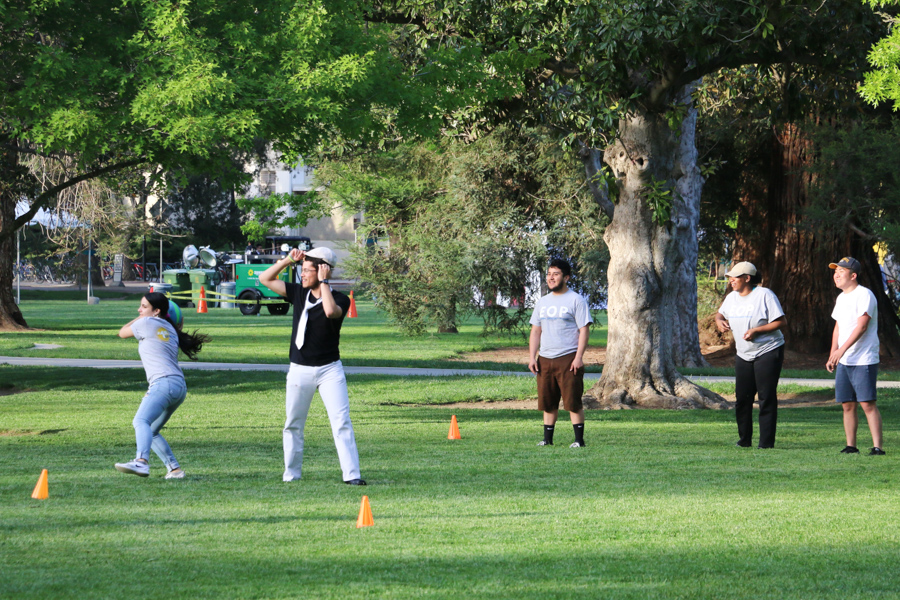
“12-plus subjects playing ‘slosh ball.’ Amplified music.”

“Neighbor’s dogs broke the fence and fell in the pool, have been rescued but are running around in the backyard and appear aggressive. They continue to fall in the pool, dog owners are not home, reporting party wants them taken away.”


April 10

“Roommate prevented reporting party from leaving the kitchen area after reporting party sent her message saying she didn’t want to be friends anymore.”


 

Kali Uchis releases debut album “Isolation”

ALLYSON KO / AGGIE

Journey through regret, empowerment, loss, love

For Kali Uchis, a rising Colombian-American singer-songwriter and producer, introducing and capturing new listeners with her talent has happened primarily through being featured on songs by more widely known artists. Does the dreamy, disarming, soothing, fitting voice accompanying Daniel Caesar in “Get You” ring a bell?

It’s no surprise these songs immediately garner much acclaim and popularity after being released. Uchis’ voice is special — almost childlike (in a good way) in its high pitch — and successfully executed in the way she moves through vocal ranges. Her voice also brings with it an element of passion and genuinity to whatever she sings that can’t be matched by any other artist. “See You Again” and “F—KING YOUNG / PERFECT,” both by Tyler, the Creator, demonstrate just how perfectly she balances out and strengthens a song.

After releasing her nine-track EP, “Por Vida,” in 2015, Uchis finally presented her debut album, “Isolation,” on April 6.

Overall, the album has more of a produced, fine-tuned feel to it. As with most artists, their pre-being-signed-to-a-record-label music, or even just the music that kickstarts their career, can feel more innocent and raw. For me, “Isolation” is different from the melodic, honest tracks on “Por Vida” that I was first introduced to. But this is not to say it’s worth disregarding. Uchis still keeps some of that sentimentality and high-pitched coos in “Isolation,” but this time with upbeat, electronic and reggaeton sounds that make for a more groovy and pop-sounding album as a whole.

“Just a Stranger” features Steve Lacy, a young hip-hop producer who has worked on albums such as “DAMN.” by Kendrick Lamar and “4 Your Eyez Only” by J. Cole. The track also boasts writing and production input from Romil Hemnani, the producer of “BROCKHAMPTON.” The song illustrates a well-executed collaborative effort that culminates in a newer sound (clearly evident in the production efforts by Hemnani and Lacy) while still staying true to Uchis.

Other notable mentions include “Your Teeth In My Neck,” “Tyrant,” “In My Dreams” and “Nuestro Planeta.” “Your Teeth In My Neck” is a mellow, danceable track, “Tyrant” features the soulful and powerful Jorja Smith and “In My Dreams” is a light pop track with electronic notes reminiscent of an ‘80s song. “Nuestro Planeta” is worth highlighting mainly because it is entirely in Spanish and features a Colombian reggaeton singer-songwriter — not the only Latino musician featured on a song either, as BIA, a Puerto Rican rapper, joins Uchis on “Miami” — demonstrating that Uchis celebrates her roots.

Uchis is dreamlike every time she sings. This dreaminess is heightened even more so through this album’s lyrics. The first nine songs pass in a blur and arrive at “Gotta Get Up,” which is a lamentful interlude. She begins the interlude with, “I’m getting tired of sleeping in / But you’re much better in my dreams” and continues to tell herself that she needs to get up and get something real. The album continues on with “Tomorrow” (partly sung in Spanish), which is a last call for being wild, as she yearns to burn like a comet together with her former lover, claiming she will never return.

Another interlude, titled “Coming Home,” is more cognizant but still dreamlike. She is coming to terms with reality, her mistakes and her break up, and she is stronger because of it. “After The Storm” features Tyler the Creator and Bootsy Collins. It isn’t the last song on the album, but has the closure of it. This track is a positive, uplifting anthem reminding us that life still goes on after rough times and the sun is always there to meet us: “The sun’ll come out, nothing good ever comes easy / I know times are rough but winners don’t quit / So don’t you give up, the sun’ll come out.”

It also emphasizes the power of being confident, not just in oneself but in the ability to help oneself: “So if you need a hero (if you need a hero) / Just look in the mirror (just look in the mirror) / No one’s gonna save you now / So you better save yourself.”

Experience Uchis in her isolation, her feelings and her thoughts surrounding the loss of a past love. According to Uchis, “This album is dedicated to the people who feel trapped in their position, in hopes that the music will enable you to change it.”


Written by: Cecelia Morales — arts@theaggie.org

From the California Chronicles

CHRISTIE NEO / AGGIE

Frankly, it was difficult to yack…

I tried pushing my back against the door. At first, lightly, and then very aggressively as if the door was going to bend at my will. I wanted to be a mature college student in that instance, so I prioritized. I knew I needed to get back into my room at some point, but right then, I could feel myself needing to yack.

I crawled to the bathroom not caring who saw me (thankfully, no one did) with my head hanging inside the bowl of the handicapped toilet. I’m usually opposed to gun violence, but in this instance, I pulled the trigger. Frankly, it was difficult to yack because of my weak gag reflex.

I closed my eyes, but by the time I opened them, two hours had passed. There was also a giant red mark imprinted on my face from the toilet seat. My put-together self remembered that the RA lived on the other side of the hall. (I saw her moving in earlier that day). I cleaned myself up and propped my body rag-doll fashion against my RA’s door — and knocked.

When the door opened, her immediate facial expression read, “I didn’t sign up for this.” I smiled as widely as I could and said, “Hi, Gina! Funny thing, I locked myself out of my room and my roommate isn’t home.” Luckily, she had a key (“for tonight only,” according to Gina). She opened the door for me and wished me a good night. I just smiled because my stomach hurt every time I spoke.

I collapsed on my bed, face planted into my phone, and promptly fell asleep. I awoke the next morning and, as I pulled away to allow my vision to come into focus, I found a text message on my phone: “I CANNOT BELIEVE YOU DID THAT.”

Next week: The return


Written by: Terry Hudson — arts@theaggie.org

Disclaimer: The views and opinions expressed by Terry Hudson are completely fictional and do not necessarily indicate the views and opinions held by The California Aggie. The story is fictionalized, as is Terry Hudson.

Cartoon: First Prize

DIANA OLIVARES / AGGIE

By Diana Olivares — deolivares@ucdavis.edu

Disclaimer: The views and opinions expressed by individual cartoonists belong to the cartoonists alone and do not necessarily indicate the views and opinions held by The California Aggie.

Veterans Memorial Center closed for renovations, will reopen in August

ALEXA FONTANILLA / AGGIE

Project to update, modernize community space

The Veterans Memorial Center started renovations on March 26. The renovations are mostly focused around modernizing the center’s interior. During construction, the neighboring Veterans Memorial Theater will remain open.

The VMC is a community space that hosts recreational classes, exercise classes and summer camps. Additionally, it serves as a rentable event venue for quinceaneras, birthday parties, Davis Joint Unified School District fundraisers and many other events.

The VMC building was originally constructed in 1972, and while there have been some small-scale renovations in the past, this is the first major rehaul of the center. In 2012, City Council authorized a feasibility study to be completed to look at the general conditions of the facility — namely, expanded space for the programs in the recreation center.

“The renovations are critical — I mean we’re talking about an ancient building that needs upgrades and needs to be upgraded into this century in terms of infrastructure, so this was a longstanding need that we finally found resources to fix,” said Mayor Robb Davis.

The study, conducted by Hibser Yamauchi Architects, was completed in 2013. The company recommended several different components and phases; however, the city did not have the funding necessary to complete the proposed project.

“The city did not have the full amount of funding to complete the project as it was proposed, and so the city explored some options with the [HY architects] to look at a reduced scope of work that was more in line with what the city budget had available,” said Christine Helwig, the assistant director of the Parks and Community Services Department.  

In May 2016, a modified project was proposed, and HY architects were able to proceed with their modified plan. The majority of the funds were obtained when the former Teen Center near Central Park — currently the Bike Hall of Fame — was sold for $1.4 million. The renovations will cost approximately around $1.6 million. However, according to Helwig, this number is not final, as the final cost of the construction may be different.

The renovations will mainly be focused on updating the interior to make it more modern. While the neighboring theater is still open during the renovations, there will be some additional storage that is being built on the outside of the building.

“[They’re updating the] carpeted flooring, all the lighting to be more more environmentally friendly,” said Kristina McClellin, the supervisor of the City’s Park and Community Service Department. “We’re getting rid of the old lighting and updating the carpet linoleum. Some of the kitchen fixtures will all be replaced, so it’s really just the interior parts of it. There’s also some additional storage being built on the exterior of the building.”

Additionally, the city is looking to provide more space for teen programs, as the former Teen Center was sold in order to fund this project. According to Helwig, there have been accomodations for classes that are usually held at the Community Center. During the renovation period, these classes will be relocated to nearby high schools, the VMC and the Davis Senior Center. Some summer camps and classes, however, will be cancelled.

The center is set to reopen in August 2018. By this time, the Parks and Community Services Department hopes to have updated all of the outdated infrastructure.

“The fundamental issue here — and I think this goes for a lot of our infrastructure — is we have this amenity that we paid for years and years ago and it’s heavily used and to continue [using] it requires needed upgrades so that we can continue to benefit from it for another 30 to 40 years,” Davis said. “This is the meat and potatoes of city government: making sure that the assets that we have are maintained in a way that allows their benefits to continue into the future. Building new structures, new centers — some people may think that [that] is the answer, but my own conviction is that we need to contain what we have. [The VMC] is an asset that’s worth maintaining.”


Written by: Hannan Waliullah — city@theaggie.org


Supreme Court Justice Sonia Sotomayor to speak at School of Law commencement

GAGE SKIDMORE [(CC BY-SA 2.0)] / FLICKR
Sotomayor will host interactive commencement experience for graduates

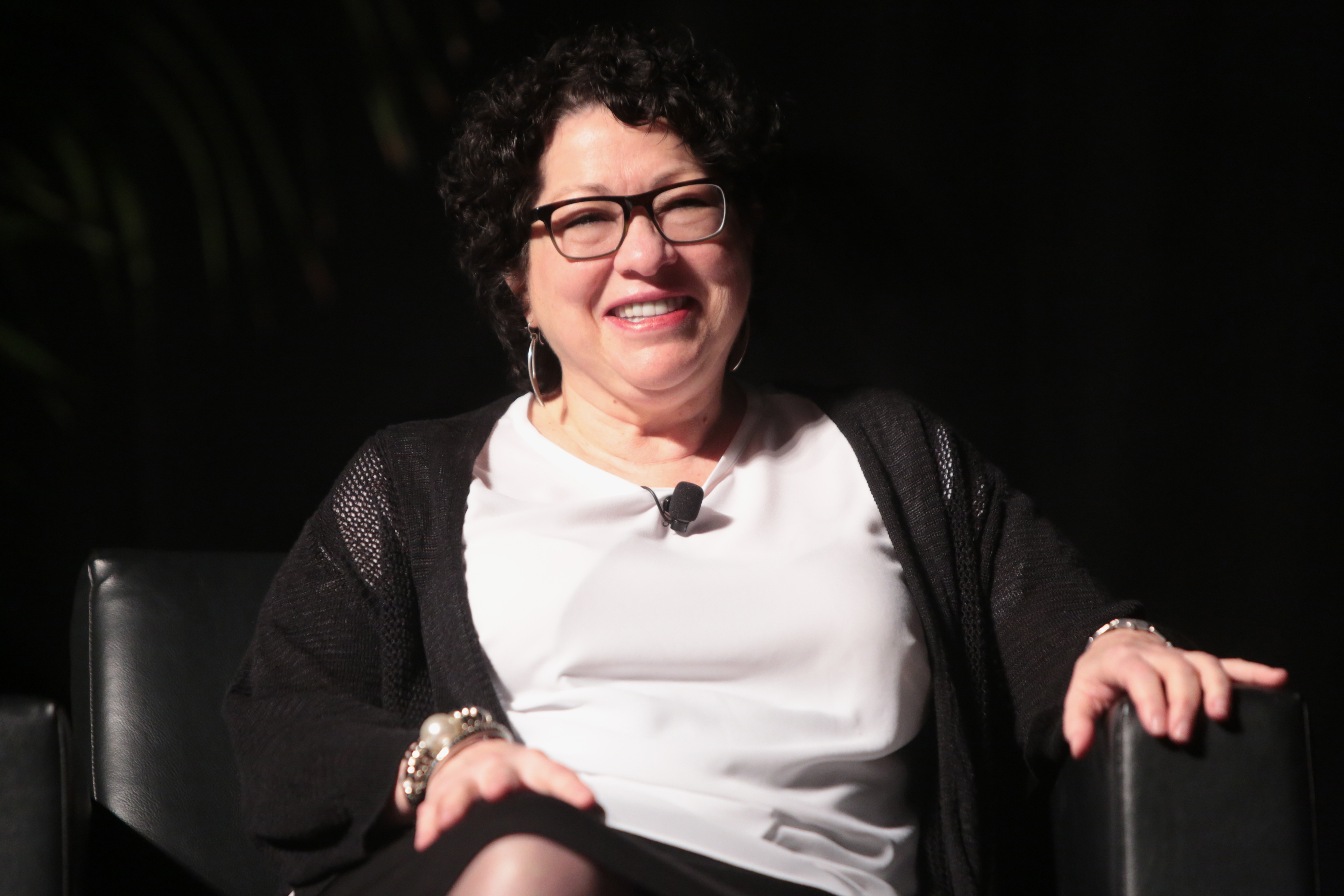
Supreme Court Justice Sonia Sotomayor will speak at UC Davis’ School of Law’s 2018 commencement on May 19. Instead of delivering a traditional commencement address, Sotomayor plans to engage the graduates in her remarks.

Sotomayor will format her address around the graduating class, fielding questions from audience members themselves.

Sotomayor is the third woman ever to serve on the Supreme Court and the first Latina. Throughout her career, she has been a pioneer for women of color in the legal field. After graduating from Yale Law School, she worked as assistant district attorney in the New York Court District Attorney’s Office. She was nominated as an associate justice for the Supreme Court in 2009.

Kevin R. Johnson, the UC Davis Law dean and Mabie-Apallas professor of public interest law and Chicana/o Studies, expressed excitement regarding Sotomayor’s upcoming appearance for the commencement speech.

“A pathbreaker, Justice Sotomayor is the first Latina on the U.S. Supreme Court,” Johnson said. “It is especially meaningful that she will visit UC Davis School of Law, known for its majority-minority faculty and commitment to excellence and diversity.”


Written by: Ally Russell — campus@theaggie.org


Bartending in a college town

CAITLYN SAMPLEY / AGGIE

The Aggie sits down with Red 88 bartender, Davis alumnus

Working at a bar is full of diverse experiences. Bartending in a college town is full of adventures. Ricky Lee, a server and bartender at Red 88 Noodle Bar, knows a lot when it comes to surviving the nightlife of Davis. Working there for the past year and a half, Lee has witnessed many 21st birthdays — and has some advice for being prepared to step into a Davis bar.


The California Aggie: What is it like bartending in a college town?


Lee: Bartending in a college town is a great experience. You see regulars that pop in every weekend and you also get some people’s friends that come and visit them from other colleges and want to see what the nightlife scene is like in Davis. One of the other things about being a bartender in a college town is that you see a lot of 21st birthdays, so you see a lot of people come to the bars for the first time ever.


TCA: What is the best bang for your buck?


Lee: When ordering drinks, I always recommend the daily specials or what’s on happy hour because they usually feature some of that establishment’s specialty cocktails or drinks. For Red 88 Noodle Bar, FMLs are $6 on Wednesdays, and we have beer tower specials on Sundays.


TCA: What should people be ordering?


Lee: I usually recommend drinks to people based on what they like to drink [type of alcohol] or if they’ve had something that I served them before that they liked. At Red 88, I feel like our Red Rocket doesn’t get as much attention as I think it should. It’s a cocktail with blueberry and raspberry vodka, citrus vodka, sweet and sour, Sprite and a dash of grenadine. It’s garnished with a cherry and a lemon wedge, and it’s a nice refreshing cocktail and it’s also one of our happy hour offerings.


TCA: What gives someone away that it’s their first time in a bar?

Lee: I’ve noticed that a lot of people who are coming to a bar for the first time don’t know that they have options on the type of liquor they can have in their drinks. A good example would be when someone orders a Moscow mule and I ask them what vodka they want and they give me blank look. Another dead giveaway would be people who have their foreheads marked with a sharpie from another bar or if they’re wearing a sash that says “21st Birthday.” So when I see that it’s their 21st birthday it’s always a safe bet that they’ve never been to a bar to order drinks, but they usually come with a group of friends that have been around the bars already to show them around.


TCA: What is the best advice you could give someone walking into the bar for the first time?


Lee: For anyone walking into a specific bar for the first time or going to one for the first time in general: try their signature cocktails and drinks. Some bars have drinks that they’re known for that you won’t find being served anywhere else. Some examples would be bar-specific drinks like Red 88’s FML, Bistro 33’s Devastator, Cafe Bernardo’s Wiki Wacky Woo, etc.  Another thing would be to find out which nights they have specials on drinks. Some bars have theme nights, trivia nights and discounted drinks.


TCA: What do you personally enjoy about being a bartender?


Lee: I definitely enjoy the social aspect of being a bartender. In a college town like Davis, I run into people I lived in the dorms with, people from my lectures and discussions and getting to know new people that come out to the bars a lot. Over time, you start getting to know people pretty well just from them visiting your bar. It’s like talking with your favorite local barber and talking about the stuff going on in your life.


TCA: Can you tell me a funny anecdote from working at the bar?


Lee: Red 88 has a birthday wheel for people to spin on their birthdays, and when they can’t reach the wheel from the side of the counter, we offer them a chair to stand on to be able to reach and spin it. Not to long ago, a birthday girl thought it was the prime opportunity to dance on the chair while the wheel was spinning and her friends were recording and she lost her balance and fell. As much fun as she seemed to have, not to mention how much her friends enjoyed watching her drunkenly dance on the chair, I definitely discourage people from dancing on chairs, tables or any other elevated surfaces when you’re at the bars. Time has proven that gravity always gets the last laugh.


Written by: CaraJoy Kleinrock — arts@theaggie.org

Connected horses connecting people

ELAINE CHAN / COURTESY

Connected Horse Project works to help dementia patients, caregivers

Dementia affects about 50 million people worldwide, and is expected to reach 82 million in 2030. Unlike other global health priorities, dementia itself is not a disease. It is a term describing symptoms such as a decline in memory and other thinking skills severe enough to interfere with daily life. Alzheimer’s disease is the most common form of dementia, accounting for over half of all cases, followed by vascular dementia. It’s a condition with no cure, whose causes are variable and still under research. Those with dementia are not the only ones affected by its symptoms.

“When a loved one is affected with Alzheimer’s disease, it creates a lot of stress on their family, particularly their primary caregiver, which is usually their spouse but can be an adult child or somebody else, even, in the family,” said Dr. Sarah Farias, an associate professor of neurology at UC Davis. “And so one of the aims of the program is to facilitate communication between the person with dementia and the caregiver and then also to help alleviate caregiver stress.”

Caregivers are often people close to the patients, and it can be difficult, emotionally and sometimes physically, to take care of a loved one with dementia. The relationship between the caregiver and the person with dementia is vital for the mental health of both, and it is this balance that the Connected Horse Project focuses on.

The Connected Horse Project brings together people with dementia and their caregivers by teaching them how to take care of horses. The program began as a pilot study at Stanford, and is now collaborating with the Alzheimer’s Disease Center and Center for Equine Health at UC Davis to provide research-based evidence for their therapeutic program for dementia patients and their caregivers. The study evaluates both the caretaker and person with dementia for different emotional and behavioral measures such as anxiety, depression, behavioral changes, sleep, and self-perceived stress both before the workshops and several months afterwards.

“That’s what’s really important about this project; not only is it assessing whether or not the dementia patients have long-term, positive outcomes from this type of collaborative experience, but it’s also assessing whether caregivers benefit,” said Claudia Sonder, the director emeritus of the Center for Equine Health. “And what I mean by that is this interaction involves teamwork, and the hope is that when these dementia patients and their caregivers have this experience around a horse, that there are lasting benefits to their relationship when they’re not around the horse.”

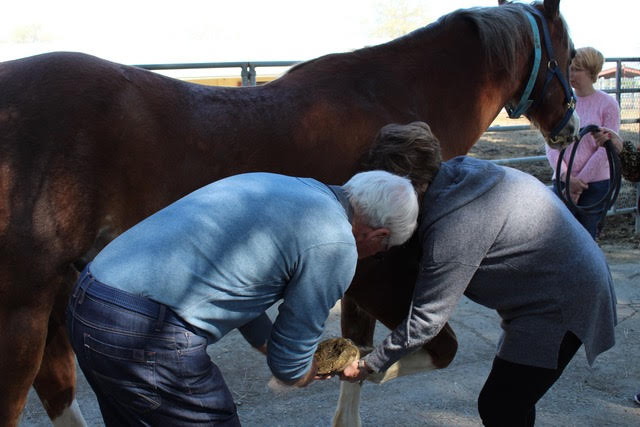
The program consists of a series of workshops where people with dementia and their caretakers come together, practice mindfulness and learn to take care of a horse. At one session, an elderly couple was brushing a calm, whiskery old horse named Joe. When they tried to clean Joe’s front hooves, however, he wouldn’t budge. After a few tugs on his forelock, he shifted — only to delicately raise his back hoof. The woman scolded him lightly for his mischief, but saw that Joe didn’t want his feet cleaned and decided to let him be, taking him for a walk with her husband instead. An experienced horsewoman may have known that Joe’s feet were sore that day, but the woman had little-to-no experience with horses. She had made the decision by reading Joe’s body language. This attention and intuitive cooperation is what the program hopes people with dementia and particularly their care partners will take away from these sessions.

“[There’s] an acceptance and an awareness that their relationship has shifted,” said Paula Hertel, the co-founder and president of Connected Horse. “And at least for me — and this is just observational, not necessarily in the data — the pairs tend to come in with these really rigid roles of ‘I’m the caregiver and therefore this is my role, and you’re the person that has this disease and therefore this is your role,’ and very quickly those roles diminish, because they’re doing something new together. The horses don’t define them by those roles.”

While interacting with animals is known to be therapeutic, this program goes beyond stress relief or short-term emotional benefit. The care partner and their loved one with dementia practice mindfulness, spend time with others like them, and learn how to communicate nonverbally. Horses are highly intelligent, sensitive animals and respond to the body language and attitude of the people they interact with, rather than their words. The fact that many people are unfamiliar with or nervous around horses isn’t a problem for the program or its participants; it’s an advantage. It inspires confidence to approach a 1,200-pound animal and interact with it. And the horse in turn will pick up on the fear, calmness, or confidence of whoever approaches it and give it back to the person.

“The physicality involved with approaching a horse, the sort of mental focus involved with reading the horse, being able to reach down and pick up a foot for example,” Sonder said. “We watch dementia patients come in minimally verbal and they leave this program speaking full sentences.”

Programs like these not only benefit the patients but also the horses. Outside of sports and ranching, owning a horse is rare. When a horse becomes too old for activities like racing or dressage, he must retire. Horse therapy programs could help support barns and give retired or injured horses new purpose.

“There’s no other animal that we have in domestication that can do for a PTSD patient, someone who’s lacking confidence or leadership, or a dementia patient what a horse can,” Sonder said. “So my hope is that this is a way for the unwanted or elderly horse to become relevant again in today’s society. It’s the geriatric horse helping the geriatric human.”

Younger and younger people are being diagnosed with dementia, leaving them with few options for care. The age group most at risk are 85 or older, but the youngest participant in the program was only 53. Connected Horse members hope that the research results from their study will further validate the program so that they can teach it to other barns and facilitators, making help for people affected by dementia more readily available.

“We’re hoping that this early intervention will tie in with the science where we’re getting diagnosed earlier,” said Nancy Anzelmo, the co-founder and educational director of Connected Horse. “And then having those tools to take them into the journey, hopefully someday it’ll be paid for by insurance as an activity that they can do together.”


Written by: Kira Burnett — science@theaggie.org


Davis Swimming

RAUL MORALES / AGGIE

Five local swimming opportunities in light of UC Davis Rec Pool closure

As the northernmost school in the UC System, UC Davis is not exactly known for its beaches and surf culture. However, like much of the world, Davis students still need a place to throw on a bathing suit and hop in the water — regardless of their proximity to the ocean. For years, the UC Davis Rec Pool has served as that outlet for the student body and Davis community. Unfortunately, any Spring Quarter Rec Pool plans anticipated by eager undergraduates were derailed this past year when students were informed of the renovation and subsequent closure of the Rec Pool, a project that will likely spill into the summer of 2019. As we enter into another beautiful Spring Quarter, the Davis community is understandably at a loss for where to spend its aquatic time. Not to worry; here are five local swimming areas that are sure to please.


Hickey Pool

Many students may not even realize that a solution to the problem lies in the heart of campus. Nestled next to the Memorial Union, Hickey Pool is a seven-lane lap pool, complete with heated water and showers. It’s free for UC Davis students and is open all year long.


Lake Berryessa

By now, most of us know about Lake Berryessa. The area serves as Davis’ most accessible area for hiking, camping and swimming. As the temperature rises over the next few weeks, Lake Berryessa’s cool waters become all the more enticing. Grab some friends, find a hike and, on the descent, make your way toward the lake. You won’t regret it.


Lake Solano

Similar to Lake Berryessa but perhaps less utilized, Lake Solano lies in the city of Winters. Much like Lake Berryessa, the area is perfect for camping, hiking and swimming. Unlike the other locations, Lake Solano offers kayak rentals, providing visitors with a brand-new way to get in the water.


Putah Creek

Putah Creek, which cuts through the cities of Davis and Winters, offers opportunities to swim, kayak and hike. However, many Davis residents swear by the rope swing located in the Winters section of the creek. The swing offers a fun-filled day for those looking to fill the Rec Pool void.


Yuba River

An hour north of Davis lies the Yuba River, which has many of the same qualities as the previously mentioned swimming spots. However, it is set apart by its plethora of swimming holes and jumping rocks. Students wishing for an adrenaline-filled day are sure to enjoy backflips and cannonballs off of the river’s towering rocks.


Written by: Rowan O’Connell-Gates — arts@theaggie.org

Cleveland Indians retire Chief Wahoo — sort of

KEITH ALLISON [(CC BY-SA 2.0)] / FLICKR
Controversial mascot will no longer be on in-game gear, will remain on merchandise

After years of controversy regarding the use of Chief Wahoo, a Native American caricature which has drawn the ire of baseball fans and members of the indigenous community, the Cleveland Indians have decided to retire their controversial mascot. Chief Wahoo, whose blood-red grin face has slowly become less prevalent on the team’s on-field gear, will officially go away at the start of the 2019 MLB season,

The appropriation of indigenous imagery and culture is nothing new to the world of sports. It is an issue which affects not only the world of professional sports, but schools across the nation. Up until 2011, Colusa High School, located an hour north of Sacramento, bore the controversial Redskins name and mascot, while the NFL team of the same name continues to draw criticism for refusing to change its name. Of the four major American sports, only the NBA is void of teams who use indigenous iconography. In college sports, the NCAA has tried cracking down on imagery which could be viewed as offensive. The Florida State Seminoles are in an unusual situation as compared to other NCAA teams with controversial mascots because they have the blessings of the tribe from which their name derives.

Though the Cleveland Indians are not alone in flaunting a controversial Native American mascot, the controversy has followed the team for many years, specifically during their World Series run in 2017, where the team fell short. For some, retiring the logo from the all in-game gear is a small but significant step in the right direction to some, while others see it as needless censorship. To appease the latter, the Cleveland Indians maintained that not only will the logo be allowed inside the stadium, but the team will continue selling merchandise which bears Chief Wahoo prominently.

“While we agreed with MLB to remove the logo from our on-field uniforms,” the Indians said in a statement on their website, “we understand the connection many in the Cleveland community have with Chief Wahoo, and we will support that relationship by continuing its presence on merchandise in our market. This will maintain the Indians’ ownership of the trademark as well, which we would risk losing to another organization if we ceased all use.”

To others, however, the wounds caused by the name will not be healed until the team officially does away with the mascot and offending logo both on and off the field. Countless petitions and articles have been turned out throughout the years begging for not only a change of mascot, but a change of name and brand. However, the Indians do not appear ready to take further steps to distance themselves from the name and mascot, stating simply that “the team name Indians will not be changed.”

Though the controversies surrounding the Indians name and logo will continue for as long as they allow both to be used in any capacity, retiring it from the game is a significant step. However, until the name and logo are wiped away for good, more controversy can be expected from supporters and detractors alike.


Written by: Bradley Geiser — sports@theaggie.org

Humor: Student realizes that the cat she’s been caring for is just a regular cat, not her professor’s Animagus

JORDAN CHOW / AGGIE

Mittens has a long history of grifting students for treats

Kimberly Upton, a second-year comparative literature major, was found by authorities last Tuesday in a fragile state with a feral tabby cat near the Voorhies fountain. The cat, identified by the alias “Mittens,” had been using Upton for treats in exchange for A’s since the beginning of the quarter. Upton admits that she was skeptical about the appropriateness of her relationship with Mittens, but she felt intimidated and afraid to seek help.


“On the first day of Spring Quarter, I followed one of my teachers from a distance and watched them turn behind the Voorhies building,” said Upton, whose voice was distorted through a vintage Talkboy, the electronic device made popular by the 1992 film “Home Alone.” “But when I followed them around the corner, I only saw this cat. I made the only logical conclusion: This cat was my professor’s Animagus, their animal form.”


“You don’t have to use the voice changer,” I assured Upton. “Everybody knows your name.”
“Whatev,” said her voice in exaggerated slow motion through the Talkboy.


Upton explained how Mittens bribed her with good grades in exchange for an endless supply of catnip. She even abandoned her studies to tend to Mittens and resorted to panhandling to earn money to support Mittens’ catnip habit. When Upton’s grades still didn’t improve, she started to worry. It was then that she tried to escape, but Mittens resorted to blackmailing, threatening to “detract 1,000 points from the comparative literature house.”

Upton was rescued by Officer Randy Weiner, who used forensic footprint analysis to track down the student in his minicar after she parked her scooter in a three-hour parking spot and outstayed her parking welcome by two full minutes.


“When I found the student, she appeared to be exhausted,” said Officer Weiner, who had to break the news to Upton gently that Mittens was in fact a regular cat and not a magical beast with origins in Hogwarts. “There were bits of chocolate chip banana cake in her hair and coffee stains down her blouse. She looked like she was held captive by the suspect for weeks.”


Mittens has been incarcerated on multiple occasions in the past by the Davis pound for grifting teachers and students.


“She lured me into a dark corner and forced me to give her scritches for 90 minutes,” said one student, who wished to remain anonymous.


Police have yet to locate Mittens’ current whereabouts. He is described as bookish and often wears an elbow-patch blazer. Suspicious-looking tabbies should be reported.


Written by: Jess Driver — jmdriver@ucdavis.edu

(This article is humor and/or satire, and its content is purely fictional. The story and the names of “sources” are fictionalized.)

A closer look at Zuckerberg’s testimony

JD LASICA [CC BY 2.0] / COMMONS
Social media isn’t simply about connecting with others

Facebook C.E.O. Mark Zuckerberg testified in the United States Senate from April 11 to 12 on his company’s actions during the Cambridge Analytica data breach that took place more than a year ago. Most controversially, both Zuckerberg and Sheryl Sandberg, his chief financial officer, were aware that Cambridge Analytica was harvesting private voter data from users’ Facebook accounts as a source of information for the then-nascent Donald Trump and Brexit campaigns. After discovering this, Facebook requested that the Analytica team stop harvesting the information and considered the issue closed. Now, their controversial choice not to delve deeper into Cambridge Analytica’s actions has come under fire in one of the most extensive Congressional testimonies of the digital age.

Social media, as we now know, has tremendous potential to affect the ways in which people vote and choose to view complex topics including racism, economic inequality and foreign policy. The influx of provocative advertisements and posts on Facebook from Russian troll farms during the Trump and Brexit campaigns speaks to the fact that other governments have recognized the capability of these online tools to control elections and are, unsurprisingly, taking full advantage of it. In particular, Russia’s deteriorating relationship with the U.S. has been one of the driving forces behind the emergence of online groups seeking to create political divisions among social media users. The revelation of Russian involvement in these troll farms, coupled with the Cambridge Analytica scandal, has served to create an environment of mistrust and apprehension in the American public sphere that’s not likely to be assuaged in the near future.

Zuckerberg may fully grasp the situation at hand — his uncharacteristic public apology was well-received by most media outlets and his contrition has every appearance of being sincere. But the recent data breach is a turning point not only for his company but also for political campaigns to come. It’s nothing new to average Facebook users that what they post, while seemingly private, is actually public to most individuals. What they didn’t count on, however, is the fact that their posts may be useful political fodder and information for firms like Cambridge Analytica, which has been linked with the recent conservative movements in the West. The so-called openness and transparency of social media has thus backfired in more ways than one: Individuals must face the fact that anything they write, post or “like” could potentially be of interest to people with a specific political agenda of undermining the democratic process. Naturally, no one wants to be associated with this particular misfortune, and Facebook’s typically indifferent attitude toward user privacy breaches has changed as a result.

While it’s unlikely that Cambridge Analytica would have stopped the data harvesting even if their actions had been made public — they were contracted out by two of the most controversial political campaigns in history — Facebook’s failure to warn users about it signifies a disturbing misstep on the company’s part. We can no longer believe that connecting with people — a recurring motif in Zuckerberg’s testimony — is the sole purpose of social media. Rather, social media has been exploited for uses that many either naively failed to grasp or ignored as it seemed too detrimental to the company’s ever-changing reputation. Zuckerberg and Sandberg’s admitted failure to pursue this line of reasoning is clear evidence of a naiveté and indifference that have long pervaded millennial tech culture and the American belief in the democratic process.


Written by: Rebecca Bihn-Wallace — rbihnwallace@ucdavis.edu

Disclaimer: The views and opinions expressed by individual columnists belong to the columnists alone and do not necessarily indicate the views and opinions held by The California Aggie.

Soon-to-be graduates share excitement for final Spring Quarter

MARINA OLNEY / AGGIE

Seniors reflect on time at UC Davis, how they hope to enjoy their last quarter

“I’m looking forward to spending my free time with people who don’t have free time, that’s the most fun,” Joo said. “Watching people stress out while you have nothing to worry Spring Quarter tends to be the most anticipated quarter of the UC Davis school year for many students. The sunny weather and plethora of events contribute to students’ excitement. But for many graduating students, this is the last spring quarter they have the chance to experience at UC Davis. During this time, many seniors reflect on what they anticipate most, and how their imminent graduation may change their outlook on the next few months.

Wesley Yu, a fourth-year managerial economics major, looks forward to using spring quarter as a last opportunity to take advantage of the tools that UC Davis offers soon-to-be graduates.

“I am looking forward to using campus resources to help bolster my resume,” Yu said. “I’m also looking forward to continue applying for jobs and hopefully hearing back from companies about job opportunities. I’m hoping to start fresh after graduation.”

While graduation implies leaving a college career and entering into an often unfamiliar experience in the workforce, it also offers students their last opportunity to take advantage of a freer schedule with less structure and fewer obligations. Yu noted his excitement regarding events exclusive to Spring Quarter.

“There are more activities to look forward to like Lawntopia and Picnic Day,” Yu said. “It’s even more enjoyable because the weather is slowly getting nicer; the days are becoming more sunny and much longer. It honestly elevates the vibe and the mood of the quarter so much more. Being a senior also means having an easier schedule to enjoy all of the upcoming activities.”

Daniel Joo, a fifth-year design major, reflected on his stressful college experience. Upon finishing his collegiate obligations, he has the opportunity to relax and fully enjoy his time during his final quarter at UC Davis.

about is the best feeling. I’m already done with all of my classes for both my major and my minor and I already have a job offer lined up post-graduation.”

The last quarter for students also implies the opportunity to take GEs and other fun or filler classes while waiting for graduation day.

“This is the most relaxed quarter I’ve had out of my five years at UC Davis,” Joo said. “I’m taking an easy online class and another class pass/no pass, since I’ve finished all of my main classes for my major and minor. This really is the easiest quarter I’ve ever had at UC Davis.”

Daisha Paringit, a fourth-year design major, is prematurely nostalgic for her college years, and hopes to utilize her spring quarter to reflect on her time in college and appreciate her friendships she’s made during her time at UC Davis.

“I’m looking forward to all the fun events and spending time with my friends,” Paringit said. “I’m trying to enjoy every single second that I can while I’m still in college. I know this is my last quarter so I’m trying to live life to the fullest and go to every event that I can. I’m really looking forward to hanging out with as many friends as I can before everyone goes their separate ways and I go down my own path.”

Paringit noted that after college, she and other soon-to-be graduates will lose opportunities to enjoy events and free time the way that they can as current students.

“I won’t have as much free time [after I graduate] and I’ll be working a lot and be more tired,” Paringit said. “I think my relationships with people will definitely change but I’m going to try and keep the relationships that I have. It’s my last time doing certain things so I’m trying to enjoy it while I can.”

For seniors unsure of how to best spend their final quarter at UC Davis, events for the spring include Lawntopia, Picnic Day and Whole Earth Festival. Spring Quarter at Davis offers many opportunities for students to keep busy, have fun and spend time with their friends and peers before graduating.


Written by: Alyssa Hada — features@theaggie.org

Floating islands in Arboretum for cleaner waters

KAILA MATTERA / AGGIE

Waterway project is seeking to enhance Arboretum through creative means in phase four

A project to enhance the waterway in the Arboretum is currently underway. It seeks to improve water holding capacity and flow, to provide more wildlife habitat and to reduce the amount of algae build-up on the water’s surface.

“It is a big project,” said Nina Suzuki, the waterway steward at the Arboretum and a leader of the enhancement project.

Designed in four phases, the project is a massive undertaking that will take many years to complete.

Phase one began in June of 2017 in the eastern end of the Arboretum and was recently finished, Suzuki explained. The phase brought new, more accessible pathways along the waterway as well as many adjustments to the waterway itself. Sediment that accrued over the years at the bottom of the waterway was removed to increase water capacity. Native plants with strong root structures to hold soil together replaced broken rock gabions that were installed as erosion control measures many years ago. Weirs, low dams built into a river to regulate its flow, were installed in addition to pumps to improve water flow and to increase the levels of dissolved oxygen in the water.

Suzuki explained that all of these adjustments will be present in each distinct phase of the project, with the phases representing sections of the Arboretum that will be addressed one at a time. The second phase will begin sometime in 2019 at Spafford Lake.

The enhancement of waterflow is a significant part of the project as the Arboretum waterway is a static environment with little natural flow, explained Gregory Pasternack, a hydrologist at UC Davis. This allows for a lot of nutrient build-up, such as nitrogen, that also comes into the water from manure use on the surrounding grounds and waste from birds and other species in the Arboretum. There is no true water source, with the water only having a discharge point into the live Putah Creek, explained Suzuki.

“The waterway hasn’t been clean since it was cut off 80 years ago,” said Truman Young, a professor in the Plant Sciences Department who specializes in restoration.

Young referred to the historical relocation of the river channel due to recurrent flooding on campus and the damming of Lake Berryessa. This has turned what once was a natural river into a manmade one.

“As you see the waterway today, it’s not a functional stream setting,” Pasternack said. “It’s just an entirely artificial setting. That’s not not to say that a lot of important ecological things don’t happen there, but it’s not a natural environmental setting.”

This presents unique challenges to the waterway enhancement project. One way the team is attempting to address this is in phase four, which is unique in the project for its creation of a wetland environment in the western end of the Arboretum near the Putah Creek Lodge. Within this phase, the team will install floating islands that will help with the nutrient build-up issues of the waterway.

“The floating island functions like a wetland, where plants take up nutrients like nitrogen and phosphorus and use them to grow, which in turn means that there are less excess nutrients for undesirable algae to grow,” Suzuki said. “The shade provided by these plants and the floating island as a whole also reduces algae growth.”

The algae growth is notorious in the summer as a foul-smelling and sickly green covering on the waterway. It thrives in stagnant waters and is often found coupled in the Arboretum with duckweed, a California native plant that the project is also seeking to reduce with improved water flow and the floating islands.

“Duckweed has been a problem in the Waterway in the last few years because it can reproduce vegetatively very quickly,” Suzuki said. “This very tiny plant with two leaves and two roots that floats on the water can quickly take over the entire surface of a stagnant pond.”

While serving beneficial functions for the health of the waterway, the floating islands will also bring more resting places for the native turtles and various birds that live in the Arboretum. They also serve a aesthetically-oriented purpose, reinforcing the fact that the Arboretum is a park.

“All of our parks are probably playing the tension between wilderness and civilization,” Young said. “If we wanted just civilization, then we would have Times Square. What we have instead is our lawns, and golf courses, and our Arboretums; they give us a little bit of both wilderness and civilization, and we find comfort and refreshness from that mix.”


Written by: Matt Marcure — science@theaggie.org

King Hall panel remembers 50th anniversary of MLK’s death

TREVOR GOODMAN / AGGIE

Dr. King’s memory celebrated amid new civil rights challenges

On April 3, 1968 at the Mason Temple, Church of God in Memphis, Tenn., Dr. Martin Luther King Jr. delivered a speech titled, “I’ve Been to The Mountaintop.” During the speech, King foreshadowed a threat on his life but said the work that he started must continue.

“And then I got to Memphis,” King’s speech read. “And some began to say the threats, or talk about the threats that were out. What would happen to me from some of our sick white brothers? Well, I don’t know what will happen now. We’ve got some difficult days ahead. But it really doesn’t matter with me now. Because I’ve been to the mountaintop. And I don’t mind. Like anybody, I would like to live a long life. Longevity has its place. But I’m not concerned about that now. I just want to do God’s will. And He’s allowed me to go up to the mountain.”

It was the last speech King gave before his death; he was assassinated the next day at the Lorraine Motel in Memphis.

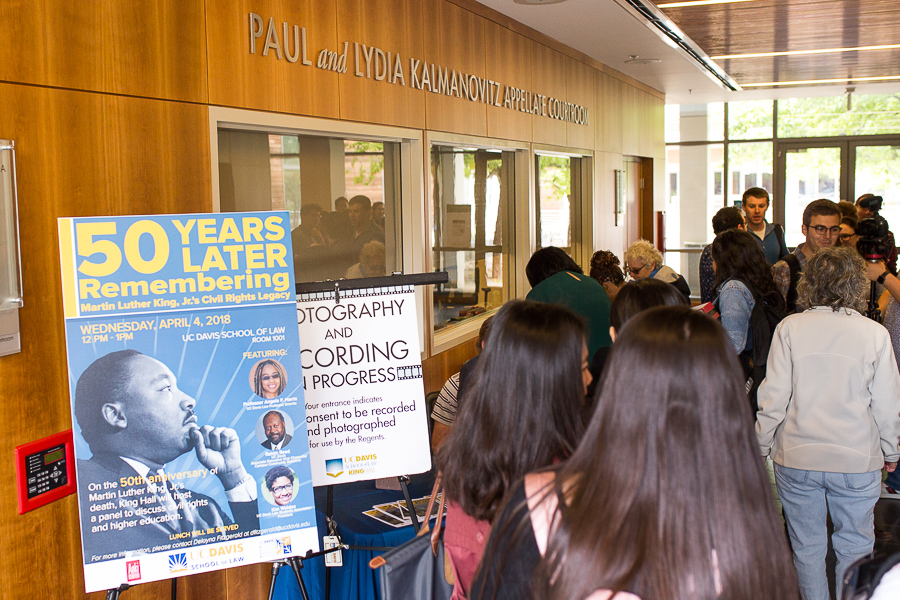
The UC Davis School of Law, also known as King Hall, conducted a panel conversation on April 4, titled “50 Years Later: Remembering Martin Luther King, Jr.’s Civil Rights Legacy,” to remember the 50th anniversary of Dr. Martin Luther King, Jr’s death and to honor his legacy.

The panel started with emotional spoken word speeches by students from Sacramento Area Youth Speaks and then proceeded with introductory statements by King Hall panelists. The panel included UC Davis Law Professor Emerita Angela Harris, UC Davis Associate Executive Vice Chancellor for Campus Community Relations Rahim Reed and Kim Waldon, a third-year law student and president of the King Hall Law Students Association

Harris began her introduction with a revelation on how King was not universally accepted at the time of his death, but instead was criticized for stances he had taken on civil rights. Harris discussed the threat to his life, and said it was a time of turmoil and struggle which continues today. Harris also emphasized the importance of thinking critically about the purpose of education and searching for truth at the current moment.

Reed attributed his education as a recipient of the work King did and his continued legacy. He also spoke on the importance of the landmark Supreme Court decision Brown v. Board of Education (1954), mentioning the recent death of Linda Brown, the daughter of the petitioner in the case.

Reed spoke on the historical challenges that African Americans face when applying into law school. He also contrasted the difference in past courts sympathetic toward civil rights with today’s courts.

Waldon focused on King’s legacy and said the aims of his work are not complete and must continue. Waldon suggested that there is a need to be actively involved in the struggle for equality in education.

The panelists continued the conversation on the life of King and current challenges. The event also included a question and answer session where conversations about current challenges facing civil rights in the United States took place.

Carina Novell, a second-year student at the UC Davis Law School, gave her thoughts before the panel conversation began.

“Martin Luther King Jr. is a really big part of the culture here at King Hall,” Novell said. “I thought it [would] be important to come and spend this lunch hour remembering him. It is the 50th anniversary of his death, and 1968 was a very tumultuous year, with a lot of civil rights leaders being assassinated.”

Novell said the anniversary of King’s death day is “a day of remembrance and looking back at Martin Luther King Jr’s effect on both the United States and on the world.” Novell also said she was looking forward to the comments from the event’s panelists.

In an email interview conducted after the panel occured, Dana Scott, a second-year student at the UC Davis Law School, gave her impression of the event.

“The concept of implicit bias and understanding its connection to how far our society has come/still has to go was very compelling and left an impression on me,” Scott said. “It is something that we often know exists, but we don’t fully acknowledge its impact as much as we need to.”

Scott also gave her thoughts on the climate of civil liberty protection today and what lessons can be learned from King’s advocacy.

“The need for continued advocacy and work is extremely present,” Scott said. “As a society there is always something that we can all be doing, and we have to be active in finding our role to support others and better ourselves as a whole.”

In an email interview, Waldon shared her personal thoughts on the event. She stipulated that her responses were not a reflection of the UC Davis Law Students Association, the Black  Law Students Association or any other organizations in which she held a leadership position in.

“Violence, as I see it, is any kind of peaceful resistance,” Waldon said. “When you are hindering a person’s ability to get home by marching on a highway, or when you are preventing a person from going to work by protesting in front of their building, that’s violent. But I think that type of action is called something else depending on who’s acting. When black people exercise their right to peaceful resistance, when they protest or march to show their unrest or disapproval of government systems, it becomes violent in the most negative sense […] because society, as a whole, still doesn’t understand what we are resisting.”

Waldon offered a poignant remembrance of King’s legacy.

“To remember Dr. King’s legacy, I looked at the Letter from Birmingham Jail,” Waldon said. “I think that’s a quintessential reminder that Dr. King wasn’t the most beloved figure in his time. As a whole, I think people put a rose-colored cloth over his legacy not realizing he was a beautiful and necessary revolutionary that was also troublesome. I don’t think we look enough to the type of challenge he brought to government structures and social structures. Rereading the Letter from Birmingham Jail put me back in a place where I recognize the type of unwanted revolutionary he was in his time.”

Waldon spoke on the important work that law students can do to advance civil rights.

“Law students have the unique and privileged position to challenge laws that don’t make sense, and make ones that do,” Waldon said. “When the average person engages in civil unrest and challenges the laws, lawmakers and prosecutors have a tendency to silence their voices by saying, ‘You don’t know how the law works, you don’t understand.’ Law students do. They can be a part of protests and marches and other challenges, and [they] cannot be dismissed for their ignorance. They are confronted with the law every day and are in the best position to call out hypocrisy and fix discrepancies so that we can finally realize Dr. King’s dream.”

A full video transcript of the panel event can be accessed on the UC Davis Law School website..


Written by: George Liao — campus@theaggie.org