48.5 F
Davis

Davis, California

Friday, December 26, 2025
Home Blog Page 527

Denim: Not Just a Fashion Statement

KYLA ROUNDS / AGGIE

Spreading awareness about sexual assault prevention with denim

In 1998, the Italian Supreme Court overturned a rape conviction on the justification that because jeans cannot be easily removed, the victim of the sexual assault case, who happened to be wearing jeans at the time of the incident, must have helped her perpetrator remove them. Denim Day was thus internationally established in an effort to reform the systems that undermine the victims of sexual violence and to empower survivors to speak out — any and all individuals can choose to wear denim on April 25 as an act of protest against the stigmas surrounding victims of sexual assault.

The Center for Advocacy, Resources and Education and the Women’s Resources and Research Center collaborated to promote Denim Day on the UC Davis campus to highlight the significance of establishing April as Sexual Assault Awareness Month.

“Denim Day, a protest that started in the 90s, is all about combating victim blaming,” said Allyanna Pittman, an education and outreach specialist for CARE. “Since we are the prevention, intervention [and] advocacy service provider for sexual assault, domestic violence and stalking here at UC Davis, we wanted to use this as an opportunity to raise awareness on campus.”

Sarah Meredith, the director of the CARE program, said that Denim Day encompasses CARE’s overarching mission of eliminating sexual harassment and sexual violence in any way, shape or form.

“Deconstructing myths about sexual assault is an integral part of what we do, [and] it makes Denim Day important to the work that CARE does,” Meredith said. “We see that the UC Davis community is not immune to the myths that are still held by a large portion of society — we have community members who minimize and make excuses for the behavior of the perpetrator, community members who are unsupportive of victims who want to come forward.”

Many would say that we live within a culture that fails to hold perpetrators of sexual assault accountable for their actions. This problem can be further exacerbated on college campuses, where incidences of sexual misconduct are sometimes normalized and often go unnoticed. According to Jenna Rutledge, a third-year biological sciences major, this lack of accountability wrongfully shifts the blame from the perpetrators onto the victims.

“I know people would rather not dwell on it, but the fact of the matter is way too many of us have been or know someone who has been a victim of sexual assault,” Rutledge said. “And of those victims, way too many of them blame […] themselves for their assault. ‘If I hadn’t worn that, if I hadn’t said that, if I hadn’t had a drink, if I went home instead of spending the night, if I hadn’t put myself in that situation.’”

Kathy Pham, a third-year psychology and sociology double major, community organizer for the WRRC and member of Asian and Pacific-Islander Queers, believes that patriarchal attitudes have caused victim-shaming and victim-blaming mentalities to manifest themselves in society, giving rise to the rape culture that is internalized on so many college campuses.

“It definitely has a lot to do with the patriarchy and toxic masculinity,” Pham said. “Rape culture has been so prevalent on college campuses. Folks aren’t willing to report [their sexual assault cases] because they’re afraid that everyone they trust is just going to be like ‘Oh, that was your fault.’ You hear so many people coming out with their [sexual assault] stories, but the media will think they’re faking it or they’re just trying to get attention. It’s not a guarantee that [survivors] will get the justice that they deserve.”

Pham sees Denim Day as a starting-point for individuals to learn more about sexual assault awareness and prevention.

“I feel like Denim Day is such an important day, especially for Sexual Assault Awareness Month,” Pham said. “Denim Day is a great start because it’s subtle but also powerful, because it gets the message across. Just the act of wearing denim starts the conversations around victim blaming, [which] are conversations we should be having not only in April, but throughout the year.”

Shellan Saling, a fourth-year international relations major and the co-founder of Eye-to-Eye, decided to participate in Denim Day because she appreciates the feelings of empowerment and solidarity that the event provides for sexual assault survivors.

“I think Denim Day is such a great yearly event for survivors,” Saling said. “I like the focus of empowerment. To have something that shows recovery is really positive. Yes, all of us [survivors] have had terrible situations, but we’ve overcome them. Wearing denim as [either] a survivor or as an ally shows empowerment; people who are willing to organize and speak out to let others know that they’re not alone can break down stigmas.”


Written by: Emily Nguyen — features@theaggie.org

 

Film review: “Blockers”

CAITLYN SAMPLEY / AGGIE

Raunchy is the new normal

A film about three high school girls who make a pact to lose their virginity on their prom night and their parents who find out and subsequently try to stop them, “Blockers” is undoubtedly entertaining. It turns the norm of men losing their virginity on its head, with the film’s focus on three girls and their flat-out desire to lose their virginity. No special planning, it’s just something they want to do.

The women aren’t objects of desire, they are the ones in control, and this was an empowering movie because of it. The girls are taking control of their bodies, wants and desires. The men are chosen based on chemistry — not a bet or by convenience.

“Bridesmaids” (2010) was the beginning of such explicit female raunchiness, which led the way for this movie and similar ones to succeed. It helped give women the freedom to act boldly and express who they truly are.

This movie is strong on two fronts: the girls having fun at prom and losing their innocence and the parents who are trying to stop them. The parents (played by Leslie Mann, John Cena and Ike Barinholtz) are holding onto their daughters’ childhoods. The three of them are hilarious together. The chemistry they have leaves the screen, and their friendship is believable to viewers.

The three girls, Julie (played by Kathryn Newton), Kayla (played by Geraldine Viswanathan) and Sam (played by Gideon Adlon) have been friends since kindergarten. Throughout the night, the girls go from prom to a house party to a hotel party — all with their parents on their tail. The parents keep showing up at all these parties, seeing what high school students are actually doing when they aren’t supervised.

The banter between all the different characters and the precarious situations they find themselves in are exactly what makes this movie great. Whether that be spontaneous vomiting in the limo or watching John Cena butt chugging, this movie is full of laughs.

The girls actually seem like real high school students, drinking and doing drugs behind their parents’ backs and dealing with where to go to college. Their parents, on the other hand, are comedic versions of real parents. Cena wavers between hysterics and anger for most of the movie, Mann is overprotective and Barinholtz is the divorced, disgraced father who happens to be the most sensible of the trio.

I personally felt connected to this movie — as I imagine, so will many of my peers — because of the realistic relationship between Julie and her mother (played by Leslie Mann). In the beginning of the movie, the camera pans over to Mann’s license plate, which reads something to the effect of “Juliesmom.” My own mother’s license plate read “Taxi4CJ” — so I guess you could say I relate.


Written by: CaraJoy Kleinrock — arts@theaggie.org

Record Store Day at Armadillo Music

ALLYSON KO / AGGIE

Local record store celebrates annual holiday

Many of those involved in the unique community that has emerged around the sale of vinyl records were excited for Record Store Day, a celebration conceived of in 2007 to celebrate the nearly 1,400 independent vinyl retailers in the United States.

On this day, record stores across the U.S. often have special deals and celebrations for vinyl collections, which are becoming notoriously expensive. Also, exclusive content only available on Record Store Day is released to the public across many stores.

This year, Armadillo Music in downtown Davis held its own special celebration to commemorate the holiday and offer customers a range of exclusive deals and content for their favorite and soon-to-be favorite vinyls.

In recent years, vinyl records have experienced a resurgence of popularity unparalleled by any other music medium. For fans of records, there is nothing like listening to some of your favorite tracks on vinyl.

“I think the appeal of records is being able to connect with something that is not from our generation,” said second-year human development major Karen Lopez. “Listening to records gives a different feeling to the music.”

According to an article by Fortune Magazine, vinyl record sales reached a 28-year peak in 2016. Even after such an unprecedented rise in popularity, record sales have continued to increase even into 2018.

“We’re gonna being doing sales on new and used vinyls,” said Paul Wilbur, a manager at Armadillo Music. “There are 300 more releases coming out this year than there has been in previous years.”


Written by: Isaac Flores — arts@theaggie.org

Interdisciplinary endeavors of feminist research

MICHELLE GORE / AGGIE

UC Davis Feminist Research Institute calls for seed grant proposals

The Feminist Research Institute defines feminist research as inclusive, intersectional, justice-oriented and transformative. The Institute promotes these values through the promotion of deeply collaborative research.

We are invested in growing the depth and breadth of feminist research at UC Davis,” said Sarah Rebolloso McCullough, the associate director of the Feminist Research Institute. “We want people to see UC Davis as a leader in feminist research. Our goal is to make UC Davis a place that is proactively trying to undo systems of gender and racial oppression, rather than just being reactive.”

To this end, the Institute is providing seed grants to selected UC Davis faculty to continue to encourage collaborative projects that apply feminist approaches to interdisciplinary research.

The seed grants are great opportunities for cross-disciplinary teams interested in research questions and their social and ethical impacts in the world,” said Amanda Modell, a graduate student researcher at the Institute. “If professors want to pilot an idea and aren’t sure that it would get support from a traditional research institute because of how it grapples with its social context and inequalities, the seed grant is for them. And more broadly, the seed grants have the capacity to catalyze interdisciplinary research that works toward a more just world, so in the world I’d like to live in, everyone would apply for them.”

Projects that received funding have included research done by Jessica Moret on the correlation between race, class, power and post-sexual assault treatment, specifically whether it was offered, accepted and completed. Research by Claire Napawan and Sahoko Yui is also underway and focuses on linking traditional domestic practices associated with women to cultural practices, food waste management and community sustainability.

If you look at our past grantees, you will see that feminist research is as diverse as any other area of interdisciplinary research, with the added benefit of the potential for transformative social/cultural impact,” said Kalindi Vora, the director of the Institute at UC Davis. “By encouraging new collaborations, FRI seed grantees find novel approaches and innovations that inspire future collaborations and grant applications, as well as energizing new cross-campus research connections.”

This Institute shows the importance of understanding how knowledge is gained.

Feminist research is not just about gender, it’s about the way that knowledge is produced and the impact it has in the world,” Modell said. “So even if you think your project has nothing to do with gender, race, ethnicity, or social class, it can still benefit from a feminist approach.”


Written by: Kriti Varghese — science@theaggie.org

Set in Stone

SCOTT MORFORD / UC DAVIS

UC Davis study shows bedrock is major nitrogen source for terrestrial ecosystems

The atmosphere has long been regarded as the main source for nitrogen in the environment. Microbes and other organisms fix the nitrogen gas into a form available for plants to use while the rest is recycled in surface soils. In the ocean, plankton fix nitrogen, then carry it down to the sea floor when they die, storing some of the Earth’s nitrogen in the mantle. A new study from UC Davis shows that about 19 to 31 teragrams of nitrogen are weathered from rocks annually, providing 6 to 17 percent of the nitrogen going into natural systems. This source accounts for an excess of the mineral that scientists had previously attributed to inaccuracy or limited understanding of our global systems.

“Where did people think the nitrogen was coming from? They would say that maybe we can’t fully measure the atmospheric processes well,” said Benjamin Houlton, a professor of land, air and water resources and director of the John Muir Institute of the Environment. “‘We’re not just quite good enough, that must be it.’ But study after study said that there’s all this nitrogen accumulation in soils and plants that we cannot explain, and it turns out — not in every case but in a lot of cases — we think the rocks are the major reason why that was going on.”

While the sea floor was already established as a nitrogen sink, it was uncertain what happened to the nitrogen after it was buried. The authors determined that, according to the mass conservation model, what went into the crust had to come out as well. Volcanoes weren’t emitting nearly enough nitrogen to balance the equation, so there had to be another terrestrial source.

“You go over to Arizona and large areas nearby that were underwater not too long ago, millions of years ago, that were former seafloor,” Houlton said. “Well now that’s got the relic of ancient nitrogen that was trapped by biology and has been converted solely over to rocks, which can then now resupply that rock nitrogen to the living part of the planet today.”

The amount of nitrogen available from rock may vary depending on the region and climate. In wetter climates, stone weathers more rapidly, but if the rock is low in nitrogen then little will become available. Mountains and bedrock formed from sedimentary and metasedimentary layers contain the highest amounts of organic nitrogen. These regions of the world often have higher rock nitrogen in the plants and soil, unlike the tropics and agricultural and urban areas, which rely on atmospheric fixation or other sources for nitrogen.

“Rock has the biggest impact on nitrogen budgets in mountainous and colder regions of Earth,” said Scott Morford, the co-leading author and former postdoc at UC Davis, in an email interview. “In these places, rock could contribute 50% or more of the total nitrogen to land ecosystems. By accounting for these inputs in our various models, we can better project how intact forests and grasslands can help mitigate climate change.”

Global climate models tend not to consider nutrients, including nitrogen and its influence over carbon fixation. Plants are growing quickly with the high levels of carbon dioxide, but nitrogen enables them to grow. Predictions for carbon fixation in trees in response to climate change also don’t take into account that many environments are nitrogen-limited, creating a rather optimistic overview. However, being able to count bedrock as a “new” source of nitrogen may help improve climate models or targeted conservation efforts. Ecosystems with high rock nitrogen could be protected as carbon storage reservoirs or be included in monitoring calculations to better determine nitrogen pollution in surface or groundwater. Iris Holzer, a graduate student in the Houlton Lab, is currently studying rock nitrogen weathering on a regional scale to determine how much nitrogen becomes available to terrestrial ecosystems.

“Ultimately,” Holzer said in an email, “by better quantifying rock nitrogen weathering at a regional scale, we aim to update global models of the carbon cycle and carbon sequestration to reflect this globally widespread but not fully accounted for pool of nutrients.”


Written by: Kira Burnett — science@theaggie.org

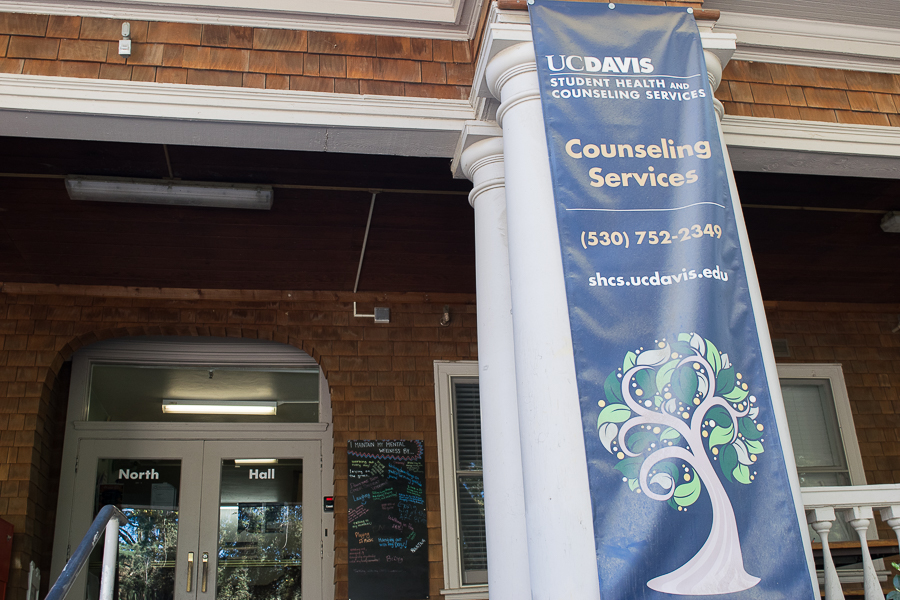
UC counseling psychologists vote to authorize strike

ALEXA FONTANILLA / AGGIE

Strike would result in UC-wide shutdown of services

Recently, UC counseling psychologists voted to authorize a strike after months of bargaining negotiations with the UC Office of the President. 122 counseling psychologists total voted and 121 voted in support of striking — a 99.4 percent majority.

Bargaining negotiations took place between UCOP and the University Professional and Technical Employees over terms relating to employment under the job titles Counseling Psychologist 2 and 3 — previously unrepresented positions being added to the pre-existing healthcare contract. After negotiations failed to result in an agreement reached between UCOP and UPTE, which represents counseling psychologists, an impasse was declared.

According to official documentation of the impasse declaration obtained by The California Aggie, the issues that remain in dispute are “salary increases,” “bonus and incentive programs” and “workplace committees.”

“The strike is occurring because the Office of the President has utilized illegal tactics in its bargaining, they have done direct dealing with employees, they terminated contract workers in the midst of negotiations, which is a change in working conditions that they’re not allowed to do, as well as impasse prematurely,” said Jamie McDole, the vice president of UPTE. “The university needs to be held accountable.”

The two parties are currently in mediation, a required step in the impasse process.

“A state-appointed mediator will go back and forth between two rooms, so the parties don’t interact directly, […] trying to see if they can bridge the gap in negotiations to an agreement,” McDole said. “It’s mandated that you show up, but it’s not mandated that you actually have to try and get to a deal.”

According to McDole, the support for a strike from UC counseling psychologists gives UPTE leverage going into mediation because UCOP knows support for a strike means the possible shutdown of services provided by counseling psychologists on campuses. The reality of a strike actually occurring depends on the success of mediation.

UC spokesperson Stephanie Beechem said via email that the “UC has offered multiple proposals that would provide our counseling psychologists with fair wages, continued quality health care, and excellent retirement benefits that few other employers offer.”

“We are disappointed by UPTE members’ decision to authorize a strike against UC,” Beechem said via email. “In UC’s view, strikes unfairly impact students and should not be used as a negotiating tactic.”

AFSCME Local 3299, which represents over 25,000 UC employees, also recently approved to authorize a strike with a 97 percent majority. Potentially, AFSCME workers, counseling psychologists and other workers represented by UPTE could join forces.

“There are other unions who are also able to strike in solidarity, so for our department, it’s pretty much everyone except the physicians and the administrative staff,” said Margaret Walter, the executive director of health and wellness at UC Davis. “We’re talking about nurses, medical assistants, receptionists, physical therapists, labs, x-rays, counselors — all of these people. We are expecting to have staff joining and participating in the union action.”

Walter said she and other UC Davis management support “staff participation” and have a contingency plan in place.

“The union will give dates in advance so we can let students know ahead of time, but we will have counselors available for crisis services,” Walter said. “We’ll also open up our protocall system, which is an after-hours line — we’re going to have that open all day.”

On April 11, a question-and-answer letter was sent from UCLA Employee and Labor Relations to staff members regarding the strike vote. Of the eight hypothetical questions listed, three focused on pay. One question asked: “Will I lose pay for participating in a strike?”

“[Answer:] If any employee does not report to work as assigned, UC will presume — absent prior authorization or medical certification — that her/his absence from work during a declared strike period is strike-related,” the letter read. “Employees who are absent from work without authorization during a strike will not be paid for the absence.”

McDole said letters such as these do not cross legal boundaries, but “if they start individually asking people if they’re going to go on strike, if they’re pressuring people, they could get charges for bullying” or “for union busting.”

“The counseling psychologists at UCLA have charges against them for direct dealing, which is a pretty significant charge,” McDole said. “They should be cautious about what they do, but I don’t make any guarantees that they will.”

If mediation goes well, a strike could be avoided.

“The best-case scenario is UCOP willing to agree to parity with the med. center and then we can work out the logistics of how to make the budget work [and] to settle on a wage that both sides would find market competitive and agreeable,” said Aron Katz, a counseling psychologist at UC Davis and the university’s bargaining representative. “If we could just have the conversation, resolution wouldn’t be far away.”

If a strike were to occur, Walter said management and non-represented staff members would be “available to serve students.”

“We will have a little bit of a reduction in services, but we’ll make sure that that’s communicated out to the students,” said Cory Vu, the assistant vice chancellor for Divisional Resources. “We’ll try our best to meet the needs of the students as they come in the door.”


Written by: Hannah Holzer — campus@theaggie.org

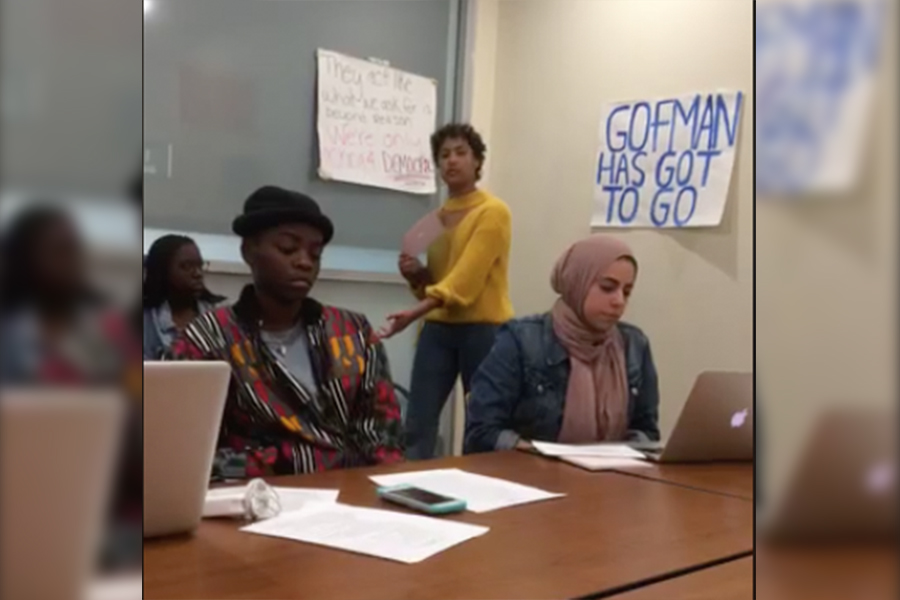
At third meeting between students and administration, students discuss solutions to UCPD militarization, racialized targeting

SCREENSHOT FROM SDS FACEBOOK

Meeting framed around Stephon Clark Remembrance Week preceding Picnic Day in relation to police de-escalation

On April 13, Students for a Democratic Society held a third meeting with administration in conjunction with other student organizations. The meeting discussed the targeting of Black students by police in relation to the recent Sacramento police shooting of Stephon Clark.

Stephon Clark Remembrance Week, organized by the Black Leadership Council, Black Lives Matter Sacramento and the Pan Afro Student Organization, was held from April 9 to 12 and included events from the Black Student Union, including a die-in on the Quad to visually draw attention to police violence.

The officers who shot an unarmed Clark 20 times in his grandmother’s backyard and muted their body-camera 16 times have returned to work. Students in attendance related Clark’s killing to the militarization of UC Davis police and their own lack of body-camera usage. One example of this violent militarization, according to attendees, was the Picnic Day five.

The “Picnic Day 5” refers to a group of five individuals of color who were engaged in a brawl with undercover police officers on Picnic Day in 2017. The police officers have been accused of engaging with the individuals in an provocatory and aggressive way.

Students framed the meeting’s narrative around addressing how UC Davis administration can work to de-escalate police presence and at the very least around communities of color. This includes the removal of weapons on campus and increased training.

Meeting attendees from the student groups BSU, SDS, Student Workers Ending Racial Violence and other organizations held a printed itinerary with goals and an outline of topics to address, titled “Update on Student Needs.”

First-year sociology major AJ Ballesteros, the current leader of SDS, talked about the basis for the meetings with administration.

“These meetings with the administration organized monthly are […] to address student concerns, primarily with marginalized communities, to make sure that the administration of the UC is being held accountable to these communities,” Ballesteros said.

Ballesteros said the BSU came up with the list of needs through collaboration with Students for Justice in Palestine, the Muslim Student Association, El Movimiento Estudiantil Chicana/o de Aztlán, SWERV and the Davis College Democrats.

Everyone in the room then read the needs. The largest focus was working on police de-escalation, increased mental health and cultural competency training and de-weaponization on campus. Students argued that a higher education institution does not need officers with guns, and this does not prevent violence but adds to it.

Demands on the sheet related to police de-escalation included adding the establishment of a police-free zone on campus, the removal of officers from Picnic Day and encouraging UC Davis to make a statement about the Picnic Day 5. Another need that many attendees spoke about was the removal of police from residence halls, especially floors that house African American students. Ballesteros acknowledged how these are needs asked by one marginalized group on campus and that there are many others with their own specific and individualized needs.

Students said that police targeting students of color over other white students can reconfirm statistics of police profiling.

According to “an analysis of the available FBI data,” it was found “that U.S. police kill black people at disproportionate rates.” The analysis discovered that “Black people accounted for 31 percent of police killing victims in 2012, even though they made up just 13 percent of the U.S. population.” And a study conducted by the University of Chicago found that violence against civilians by police officers is “an extremely or very serious problem according to nearly three-quarters of blacks,”  but “less than 20 percent of whites.”

Student attendees also said police officers are not trained to handle people going through mental crises, which could result in escalated outcomes. Amara Miller, a Ph.D. student in sociology, said that when she was an RA, an individual tried to jump out of the window due to a suicidal mental health crisis. Miller’s coworker had to talk that person out of the window, a task far beyond the job requirements of an RA.

“It is not the job of RA’s to be mental health professionals, and it’s also not the job of police to be mental health professionals,” Miller said. “They do not have the skills to talk people out of those situations.”

Attendees discussed increasing mental health funding and bolstering Community Advising Network counselors who are culturally trained. Students found cutting initiatives like the Mind Spa unacceptable, especially without administrative notification.

Miller said that administration should demand police officers be trained in cultural competency, mental health and de-escalation skills, which could address institutional racism.

“How are you hiring them?” Miller asked. “What training are you requiring them to have? What actions are they being asking to do on Picnic Day and how does that impact black and brown bodies?

Kelechi Ohiri, a third-year organizational studies major and a student assistant to the chancellor, spoke about the intense racial targeting she has experienced as a black woman.

“I have never been more profiled in my life than on Picnic Day,” Ohiri said. “There are [police] everywhere.”

Another student talked about seeing around 40 officers in front of a black fraternity throwing a party.

“If black folks are having a party, they’re at the house,” Ohiri said. ”That’s not really a UCPD as much as a Davis PD issue, but there should be a message to the Davis PD saying, ‘OK, our students are here with their family and friends.’ The aggression that gets shown by police officers on Picnic Day is very concerning.”

Ohiri mentioned how an overarching issue is the institutionally racist and micro-aggressive policies and lack of cultural training for police officers. According to Ohiri, administration needs to look at what the purpose of a university police department is at a public learning institution meant to prop up marginalized communities, not target them.

Students in attendance also discussed redistributing funds in order to restructure policing, citing a community in Colorado that has been helped by replacing the police force with social workers. Replacing officers with social workers was a need listed.

Students talked about how a bare minimum would be a restriction on undercover police. According to one student, it is not just Picnic Day that contains undercover officers, alleging they saw a plain-clothes police officer at the recent Mental Health Town Hall last quarter.

Ballesteros asked everyone on the table what students can do in working with administration to de-escalate police presence, a presence that students of color say has largely been on them. Sheri Atkinson, the executive director of Community Resource and Retention Centers, admitted “Davis City Police” have long been accused of targeting Black students and other students of colors.

According to a student at the meeting, it can be triggering for students of color to see white students intoxicated and acting raucous on Picnic Day avoiding any consequences.

The end of the meeting pertained to the last Regents meeting and revisited topics discussed in the second meeting with administration, where SDS advocated for university-paid busing of students to UC Regents meetings.

Mayra Llamas, the interim executive director of the Community Resource and Retention Centers, said that, by the end of the process, only one student attended the Regents meeting. This student received university-sponsored travel, hotel and food. SDS members wanted further explanation as to why more students who signed up didn’t go.

Students then asked how administration reached out to marginalized students centers about going to Regents meeting. As was mentioned at previous events, some SDS members and other campus group members revisited goals of sending out campus-wide emails. Atkinson and Llamas said that only the Chancellor’s office and a few others have access to campus-wide emails.


Written by: Aaron Liss — campus@theaggie.org

Constitutional amendment proposing one ASUCD general election, increase in senators withdrawn

MEENA RUGH / AGGIE

Author states plans to reintroduce amendment in future

Nick Flores, an English and political science double major and former ASUCD Internal Affairs Commission chair, and Rahi Suryawanshi, a fourth-year international relations major and former ASUCD senator, co-authored a constitutional amendment shifting from two legislative ASUCD elections to one and modifying senators’ constituencies.

The amendment, referred to as Constitutional Amendment #2, was conceived by Flores and supported by Suryawanshi as a response to the continuous lack of voter turnout from students to legislative and executive elections and disproportional institutional memory. It was recently withdrawn from consideration.

“The Winter 2018 ASUCD General Election saw under 10% voter turnout, and the Fall

2017 ASUCD General Election saw under 5% voter turnout,” the amendment reads. “Given historical turnout figures and lack of widespread engagement and representation in ASUCD, this Amendment seeks to engage with historically underrepresented students and increase voter turnout.”

The amendment would reform the elections process so that only a singular general election would be held the seventh week of Winter Quarter to elect 16 senators to the table instead of the current 12. The increase in number of senators comes from a decrease in at large senators — senators who currently represent the entire undergraduate student body — and the creation of collegiate and special interest senators.

As the amendment reads now, four senators would be elected on behalf of the College of Letters and Sciences, three for the College of Agricultural and Environmental Sciences, one for the College of Biological Sciences and one for the College of Engineering. Flores referred to a majority of ASUCD senators within the College of Letters and Sciences.

“Forcing slate leaders to recruit outside of those spheres, outside of traditional ASUCD spheres — into the College of Engineering, the College of Ag — will bring people who aren’t really in the conversation traditionally into the ASUCD conversation,” Flores said.

Special interest senators would be designated to represent transfer students and international students with one senator each.

Flores said the number of collegiate and special interest senators would be open to deliberation and the present numbers in the amendment “aren’t set in stone.”

“I found many problems with the proposed amendment,” said Rodney Tompkins, a second-year psychology major and the ASUCD Elections Committee interim chair, via email. “It would further complicate the coming year and cause more problems than it attempts to solve. Would current sitting senators be forced to resign before terming out? What would result from all future senators terming out at once, since there would be no guarantee of anyone with prior institutional knowledge remaining on the table?”

The amendment’s initial presentation to the Senate table was scheduled for March 8 but was unable to go under review as that Senate meeting was cancelled for failing to meet quorum after the Senate’s prior Town Hall public forum on the same date.

Prior to its withdrawal, Suryawanshi termed out of office, leaving both authors absent.  According to an email from Senate pro tempore Jake Sedgley, a third-year economics and environmental policy analysis and planning double major via, the amendment was tabled until representation for it could be provided by the authors at a subsequent Senate meeting.

Flores’ conception of the amendment was carried out under ASUCD’s previous table and executive. He marked his unfamiliarity with the newly elected table and his own absence from UC Davis for a year as reason to withdraw the amendment from consideration until his return to campus in Fall Quarter 2018.

“I don’t feel the current Senate or exec are tenured or experienced enough to debate and consider these crucial and nuanced organizational overhauls that require advanced legislative literacy and an extensive understanding of ASUCD’s current operations and structure, as these reforms can potentially and fundamentally shift how ASUCD interacts within its own branches and with students,” Flores said. “I plan to reintroduce the bill when I return to Davis in order to ensure that it is given fair and transparent consideration.”

Constitutional Amendment #2, if enacted, would shift the legislative makeup of UC Davis student government for the first time since the criteria for 12 senators was implemented in 1996. Flores compared Davis’ student government to that of other UCs, citing UC Berkeley’s senate of solely at large senators, elected in one election per year and a table of 20 individuals.

“This is not going to happen overnight,” Flores said. “And this isn’t the end-all be-all bill that’s going to cure ASUCD low voter turnout, low engagement, low transparency. But I think this is a step in the right direction.”


Written by: Elizabeth Mercado — campus@theaggie.org

The dwindling newsroom

CAITLYN SAMPLEY / AGGIE

The Sacramento Bee lays off journalists, employees

The Sacramento Bee laid off 15 journalists and eight employees from its production team this Tuesday. The announcement joined the list of other major publications that executed mass layoffs in 2018 — among them the Chicago Tribune and the Denver Post — highlighting the reality of financing print journalism in an online world.

The most recent layoffs at The Sacramento Bee are only one example of a large-scale sustainability issue in the news industry — and the loss to local news organizations is tremendous. Many of those laid off have experience that spans decades, and their absence puts the future of journalism in peril.

Local reporters set the groundwork for bigger and farther-reaching stories, often doing the brunt of the investigative work without the recognition or the limelight. The Sacramento Bee is an example of such renowned local journalism, and their most recent layoffs are a huge detriment to these efforts.

Though The Sacramento Bee has not yet announced the full list of those laid off, a few have been made public: business reporter Mark Glover, who worked at the paper for 34 years; and real estate writer Hudson Sangree, who worked there for over a decade.

Stephen Magagnini, a senior writer of ethnic affairs, race relations, immigration, tribal issues and faith will also be leaving the Sacramento Bee after 32 years at the paper. He is dedicated to sharing the stories of unheard people and will continue doing so. In addition to reporting for the Sacramento Bee, Magagnini teaches journalism courses at UC Davis and serves as the faculty advisor for The California Aggie and University Writing Program internships.

He is known by the Editorial Board for his enthusiasm and journalistic wisdom and insight and, more importantly, for his dedication to providing aspiring student journalists with real-world knowledge and experience.

In many ways, Magagnini has held an open door policy. Whether that includes inviting students to visit The Sacramento Bee’s newsroom or providing career advice in office hours, Magagnini has helped numerous UC Davis students in their writing endeavors.

We stand in solidarity with Magagnini and journalists across the country, especially those laid off from publications facing budget crises like The Sacramento Bee. These are our mentors. And, of course, we stand with the aspiring writers and newsmakers, the young people who are fighting to build a career in a shrinking newsroom.


Written by: The Editorial Board 

Baseball’s next Babe Ruth?

SHIP1231 [(CC BY-SA 3.0)] / COMMONS
Shohei Ohtani is turning heads early in his American career

Ever since the American League adopted the position of designated hitter in 1973, baseball leagues from around the world have adopted the concept largely as something of an insurance policy to protect against the historically weak hitters from the pitching position. While baseball legend Babe Ruth started his career as a top-tier pitcher before making his name as one of the greatest hitters in history, exceptions to the perceived rule that pitchers cannot hit have been few and far between.

Currently, in the National League, one of the last remaining leagues where pitchers are required to hit, San Francisco Giants pitcher Madison Bumgarner is considered one of the best hitting pitchers despite a career .185 batting average and only 17 career home runs. Back in the American League, however, the Los Angeles Angels believe that they have found another exception to the rule that “pitchers cannot hit” by bringing in rookie pitcher Shohei Ohtani and using him as a designated hitter on select days when he is not pitching.

The mere notion of a pitcher who is used as a designated hitter has become non-existent in the modern American League. Before Ohtani, a pitcher had not been used as a designated hitter since June 12, 1988, when the New York Yankees used Rick Rhoden as a designated pitcher in a 5-3 loss to the Baltimore Orioles. To Ohtani, however, his new role with the Angels is not very different than the one he had in the Japan Pacific League playing for the Hokkaido Nippon Ham Fighters.

In five years playing in the JPL, Ohtani not only amassed solid numbers as a pitcher, but also spent much of his first two seasons manning the outfield on the days he was not pitching. Despite his versatile resume, however, the Angels will only ask for his bat on days he is not pitching. All they ask in return for his at bats is that he not slide head first into bases, after teammate Mike Trout lost seven weeks of action last year trying to do just that.

Despite some early struggles in spring training, Ohtani has turned heads both on the pitchers mound and in the batter’s cage since the season has officially begun. As of April 19, Ohtani has pitched three games, amassing a 2-1 record with a 3.6 ERA. On the offensive side of the field, Ohtani has been a consistent bat for the Angels, hitting .324 on a .676 slugging percentage after 34 at bats in nine games.

Though his career is still young, Ohtani, who was highly sought after by teams from around the league when he announced his intention to play baseball in America, has proven to be an intriguing storyline for Major League Baseball in his young career. With a three-game home run streak earlier in the season and a near-perfect game against the Oakland Athletics, the hype surrounding Ohtani’s entrance into American baseball appears to be well-deserved, as the 23-year-old Ohtani is already garnering comparisons to Babe Ruth. Only time will tell if these comparisons are fair or not, but regardless of whether or not he lives up to such lofty expectations, Shohei Ohtani is putting on a show for fans across the globe.


Written by: Bradley Geiser — sports@theaggie.org

Kylie Minogue’s “Golden”

CAITLYN SAMPLEY / AGGIE

Australian pop icon celebrates golden age with 14th album

Kylie Minogue, known as the Australian Queen of Pop, released her 14th album, “Golden,” on April 6. On “Golden,” the pop icon reinvented herself by drawing inspiration from American country music and merging it with her familiar electro-pop style. Minogue enters the golden age of her career as she line dances to new feel-good and insightful lyrics about where she has been and where she hopes life will take her.

Minogue recorded her album in several locations: London, Los Angeles and Nashville. This makes sense considering the eclectic value that the album holds: most of the songs start with an acoustic guitar, and as the layers build, the engineered melodies emerge. Minogue’s style adds a little glitter to old and dusty boots that feature on the album cover.

The lead single on the album, titled “Dancing,” showcases the album’s country-pop sound in its euphoric optimism toward life. The Australian singer learned how to line dance for the music video and admitted to BBC that it wasn’t as easy as she thought it would be. She also pointed out that she was able to write lyrics that she normally wouldn’t be able to with a pop album.

The title song, “Golden,” (my personal favorite) talks about “the hopeful hearts of the human race” and everyone’s capability to shine. This track makes me want to throw on a pair of shades and drive in a convertible down the coast — you know, that vibe.  

As a woman that’s been in the business for as long as she has, Minogue has some insight for all the lovers out there. “A Lifetime to Repair” and “Stop Me From Falling” give words of wisdom about the heart. Minogue sings that love is complicated and treacherous territory, but that’s also what makes it worthwhile.

Minogue wanted to create an authentic feel to the album. Her career spans 30 years and includes seven number-one singles. As she approaches the age of 50, the singer doesn’t show any signs of slowing down. Adding a bit of country to her new album offered up something new and risky, but this risk has been reaping lots of praise, especially from me.

“Golden” is available on all streaming services as well as vinyl and cassette.


Written by: Josh Madrid — arts@theaggie.org

Sacramento International Airport considering pet hotel

MICHELLE GORE / AGGIE

Airport looking for developers to bring amenities

A pet hotel, among other amenities, may be in the works for Sacramento International Airport. Currently, the airport is looking for developers and proposing various additions.

Laurie Slothower, a spokesperson for Sacramento International Airport, stated that the airport is considering a plaza, as well as other commercial uses.

“Sacramento International Airport seeks developers for an amenities district which will serve current airport customers with a variety of possible commercial uses, and a travel plaza which would offer gas, food and other services to vehicles,” Slothower said via email.   

The Request For Proposal, or RFP, will then lead to more changes within the airport.

“The RFP offers ground leases of airport property by the I-5 interchange,” Slothower said via email. “The developer will be responsible for build-out.”

Other uses include meeting centers, restaurants, convenience stores and a pet hotel — or a regular hotel — among other possibilities.

“Potential target uses are not limited to these selections,” Slothower said via email. “We’re open to other business developments as long as they are consistent with the airport’s master plan.”

Nevertheless, the airport is striving to have a cell phone lot.

“It is recommended, but not required, that the developer adds a cell phone lot so that customers can grab a bite to eat or get a soda while waiting to pick up their friends and family members from the airport,” Slothower said via email.

Slothower then directed more information to be found about the airport’s plans in the RFP.

The RFP document stated that the “Sacramento County Department of Airports (Department) is issuing this Request for Proposals (RFP) to allow firms to submit their qualifications and proposals to develop and operate hotel(s), travel center, and commercial mixed use development along the Interstate 5 corridor at the Sacramento International Airport (SMF or Airport).”

The RFP is also allowing firms to submit their ideas to develop and operate the hotel, travel center and other developments along the Interstate 5 corridor at the airport. They are considering the developers are most responsible for determining the best use for the land with a conceptual design for up to 30 acres of development.

The document also mentioned that “the Amenities District is approximately 98 acres located at the ‘front door’ of the Airport, situated at the main entrance and is intended for retail, office, food and beverage, and hospitality. The SMF South District is located within approximately 295 acres conveniently located along the south side of Interstate 5 allowing for high visibility and access for a travel center.”

In addition, airport passenger levels hit a high in 2017, at around 10.9 million fliers. According to The Sacramento Bee, John Wheat, the local airport chief, elaborated on how the airport can expect an increase in ridership; however, he expects them to go up in the next few months and then drop to the 3 percent range in a few years afterward.

“Airline flight plans indicate ridership could be up 12 percent in the first half of 2018,” Wheat said.

The push for more developments to attract customers is now on the agenda, as a hotel can have many uses, according to Slothower. It is not specific, however, to the airport’s focus, as it’s open to other business developments aligning with the master plan.

“The goal is to bring amenities to customers who are already on airport property,” Slothower said via email.


Written by: Stella Tran — city@theaggie.org

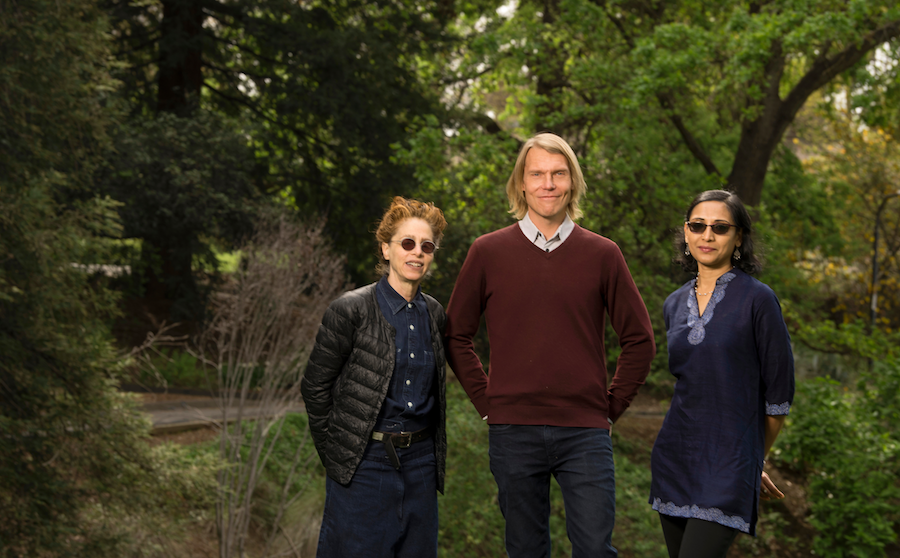
Three UC Davis faculty named Guggenheim fellows

KARIN HIGGENS / COURTESY

Professors Pelo, Rosen, Venkatesan will receive grants for creative work

The John Simon Guggenheim Memorial Foundation named three UC Davis faculty members as Guggenheim fellows on April 5. Associate professor of music Mika Pelo, professor of art Annabeth Rosen and associate professor of religious studies and comparative literature Archana Venkatesan are three of 175 scholars who were selected out of a pool of nearly 3,000 candidates.

The Guggenheim Fellowship is a grant given to fellows for a six to twelve month period. It is designed to offer fellows a period of unrestricted creative freedom so that they may pursue a project in their field. The fellowship is awarded to individuals who have made exceptional contributions in the fields of creative arts, humanities, natural sciences or social sciences. One must apply to be considered for a fellowship, and only citizens and permanent residents of the United States, Canada, Latin America and the Caribbean are permitted to enter the contest.

Mika Pelo is a composer who teaches music composition at UC Davis. He received a fellowship in the category of creative arts in honor of his work in the field of composition.

Pelo earned a doctorate in composition from Columbia University and also holds several other degrees in music from five institutions of higher education in Europe. Pelo has been commissioned to compose music for the Royal Academy of Music in London, the Swedish Arts Council and the Prague Moderne, among other ensembles.

The composer draws inspiration from French spectral composition, which involves using technology to visualize the spectra of sound in order to determine the timbre of acoustic or synthetic music.

“Spectral music is much more sensual [than modern music] in a way,” Pelo said. “It’s not afraid of being beautiful. For me, when I heard it, it provided me with a kind of, ‘Okay, this is where I belong.’”

Music from other countries similarly influences Pelo’s artistic inspiration. Pelo himself is from Sweden, so Scandinavian music, specifically lyricism, shapes his compositions.

“You’ll find a lot of folk music influences in classical music in Sweden,” Pelo said. “That’s what I was brought up with, and that’s still influencing me.”

Currently, Pelo is working on a composition for an orchestra in Latvia and making preparations for his project as a Guggenheim fellow: writing an opera. This task is of an immense scale with many complexities and components to visualize and create, so Pelo is unsure of how long it might take to complete the entire project.

“There are so many moving parts to it,” Pelo said. “It’s not just the music, it’s the drama of it, it’s the staging, and it’s very expensive to do.”

Pelo’s opera will include several modern and traditional operatic elements and music. Similarly to how he uses computers to assist his music composition, he intends to integrate technology into his proposed opera.

“There are so many possibilities these days with using big screens to project stuff — maybe dream sequences could be projected on screens,” Pelo said. “You can involve electronic music as well, it doesn’t just have to be traditional instruments.”

Although other writers and composers have incorporated modern music and technology into their operas, Pelo is focused on making the simultaneous existence of classic and modern components as seamless as possible.

“Very often, it comes off as quite gimmicky, and I would like to try to make it feel integrated,” Pelo said. “I think in a successful opera, all of these things are integrated.”

Rosen, a co-chair of the Department of Art and History at UC Davis, was honored by the Guggenheim Foundation for her ceramic sculptures. Her art has been shown across the country. Most notably, some of her pieces are currently on display in the Los Angeles County Museum of Art. In 1992, Rosen was named a Pew Fellow, and in 2016, Rosen was honored as a fellow by United States Artists, a Chicago-based philanthropic organization that supports American artists.

The artist’s sculptures are very intricate, and many of her pieces center around combining small, often unrelated objects into larger structures.

“I make my own found objects, and then pack them together to make shapes, to make sense of disparate things,” Rosen said. “Even with disparate things, things that don’t have logic or belong together, sometimes their sheer proximity makes a kind of logic because you comprehend and see them in the same field of vision.”

Rosen noted that as an artist, she draws from new wells of inspiration every day, and that it can be challenging for her as an artist to constantly find unique sources of inspiration for her work.

“You know what you did yesterday and you kind of know what you’re working on today but you can’t say, ‘That worked yesterday, so I’ll do it again,’” Rosen said.

Rosen intends to use her fellowship not for an upcoming project or proposed creation, but to find inspiration and knowledge abroad. She will be traveling to Beijing, Shanghai, Hong Kong and other parts of Asia to learn more about Asian art. Rosen may also hold a lecture or art show while abroad.

“I’ve had a long term interest in certain Chinese artists who I’d like to talk to,” Rosen said. “I may go once, I may go twice, I don’t quite know yet.”

Venkatesan is an author, researcher, translator and associate professor at UC Davis. She earned her Ph.D. in South Asian studies, which is closely related to her current research interests into South Indian literary texts.

Most specifically, Venkatesan translates and researches texts in the Tamil language. Her interest in this language stems from her undergraduate study at UC Berkeley, where she took a life-altering class on Tamil literature and translation.

“It was like a whole world just exploded in front of me,” Venkatesan said. “I had no idea that there was poetry and there was literature and drama and all of these kinds of things. It just changed my life.”

Venkatesan has devoted nearly 10 years to her research into the Adhyayana Utsavam, or the Festival of Recitation. The 20-day festival revolves around the recitation of verses from a revered poem in Tamil as well as a dramatic and complex visual performance of the text.

“I started this project interested in one temple, but this temple is actually embedded in a network of other temples,” Venkatesan said. “It’s taken me ten years to actually understand what’s happening in this festival, like what is going on.”

She described the festival as exciting and intoxicating to experience. Even after having attended the festival for 10 years, she believes there is still more to learn about the festival itself as well as its implications and effects on its audience. Her research details several components of the festival, delving past the literal form of the poem and into the meaning of the poem itself.

“There are some very deep patterns that reveal themselves, sort of very complex ritual things,” Venkatesan said. “The poetry has all these dimensions, so it’s poetry that is visualized; it’s poetry that is shown through the ornamentation of deities, it’s poetry that’s used to transform space — just by reciting this poetry, this ordinary space is transformed into Heaven for that duration.”

Venkatesan intends to use her Guggenheim Fellowship to continue her research on the festival. The grant will support her annual observation of the ceremony.


Written by: Jacqueline Moore — campus@theaggie.org


Picnic Day rally letdown for candidate Eric Gudz

GENESIA TING / AGGIE

Eric Gudz run for Davis City Council

Eric Gudz, a candidate for Davis City Council, planned to host speaking rallies during Picnic Day to further their campaign and bring to light issues such as the housing crisis. However, these plans took a turn when their rally was shut down due to a power outage.

Gudz elaborated on how the event may have been sabotaged, as they could not get their message out during the rally.

“We had a speaking rally that was planned,” Gudz said. “We had a couple bands with local artists or musicians that we sponsored, and we wanted to promote local creativity. We found out that morning that the stage was sabotaged. The power was cut. There was something or someone that was inhibiting us from speaking the truth, telling people about the crisis, talking about the affordability in Davis and talking about how hard it is for our generation to make it in this town. That message was denied on Saturday. We weren’t able to do it because there was no power. Unfortunately, we weren’t able to speak what we had to speak.”

Even though the rally did not pan out as Gudz expected, they still remained motivated to spread their message to the public.

“We were able to get the message out in other ways,” Gudz said. “I spent a little bit of time with the parade and did work with the veterans. I was spending a lot of time with those folks trying not to focus too much on the incident. That’s what we’re up against. We’re fighting for our lives here in Davis — to be heard, to be seen, to be recognized, to be validated. It’s a big drive for me and our community to have the ability to bring that voice to council.”

Gudz emphasized how they want to advocate for renters, as they believe that this is a recurring issue in Davis and one which prompted them to run for council.

“What made me decide to run simply was the voice of the renter and the voice of those circling off the margins, [which are] not nearly represented on the council as I felt it should be,” Gudz said. “Renters in this city make up at least 50 percent of the community of those that rent versus those that own. Renters make a considerable portion of the community […] we’re talking about the issues with landlords, we’re talking about the rental increases, we’re talking about the way students and young folks as well as senior citizens are getting strung onto these lease agreements to the point where this is something that is accepted — that this is the price you pay.”

While the Picnic Day rally did not go as planned, Gudz will have another rally coming up on May 21 and will be advocating in other ways as well.

“We’re in the process of confirming everything,” Gudz said. “May 21 is the last day to register to vote. We will ring our message loudly and proudly to the folks that need to hear it from us. We have happy hours every Monday at Woodstock’s at 6 p.m., and this is an opportunity for folks to get involved. We also have a number of economic developments or workshops to bring different people to share their ideas.”

Gudz wants the public to know that the people’s voices matter in a time when there are changes to be made.

“Above all else, I would encourage every single Aggie or person who is here to try and better themselves and find a place and space in the world, to see and be present for the moment that we’re in, to recognize and understand,” Gudz said. “We are in a moment in this country, in this state, in this city that is going to fundamentally change a lot of the future ahead of us. We’re coming on the moment here across all different lines. It’ll test a lot of us. We have opportunities here to change the course of where we are in Davis and where we fit in as a community within society. I would just encourage every single person to be involved with their local civics to engage with their local political process to understand the issues to actively be part of the voting process.”

According to The Davis Enterprise, a news release recognized what Gudz intended to advocate for in upcoming rallies.

“Eric will share personal stories reflecting a lifelong commitment to the public good, and exemplify a long history of leadership initiatives, bridging divides and nurturing collective resolve,” the release said.


Written by: Stella Tran — city@theaggie.org

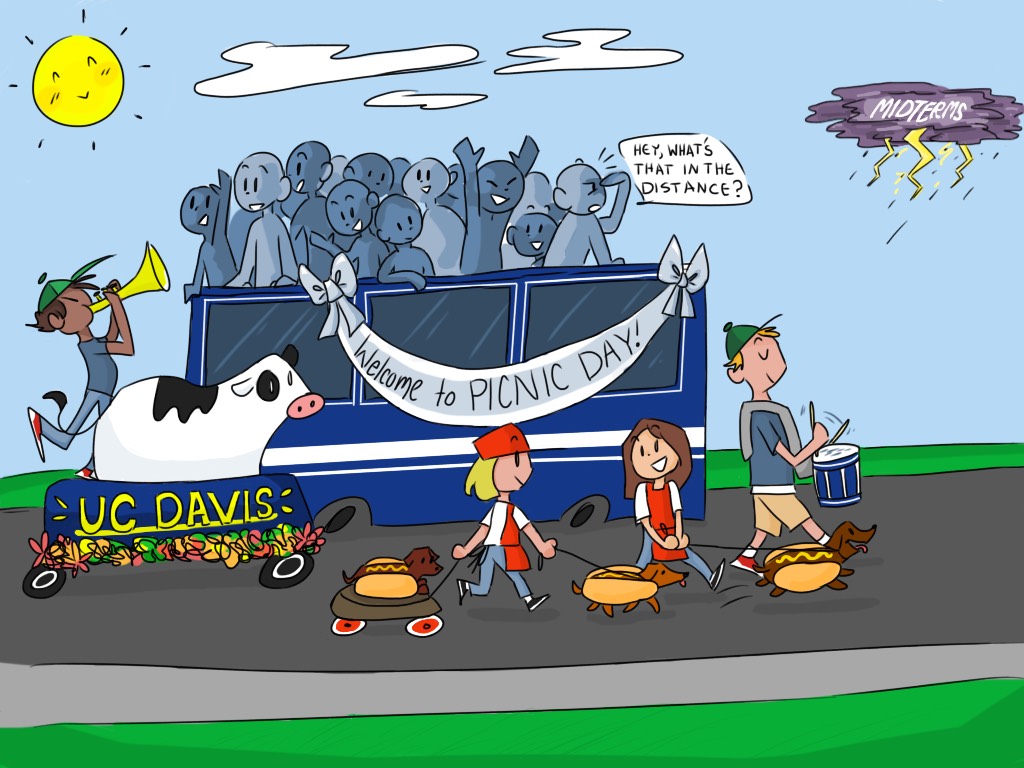
Cartoon: Picnic Day: Impending Doom

By: Diana Olivares — deolivaresvalencia@ucdavis.edu 

Disclaimer: The views and opinions expressed by individual cartoonists belong to the cartoonists alone and do not necessarily indicate the views and opinions held by The California Aggie.