52.7 F
Davis

Davis, California

Friday, December 26, 2025
Home Blog Page 526

The Sponsored Speech Paradox: Bill Maher has a point about the Laura Ingraham advertiser boycott

ALLYSON KO / AGGIE

Boycotting is a perfectly valid form of speech, but the left must consider its implications
Recently, on “Real Time with Bill Maher,” the political-comedy program’s outspoken host angered his fellow liberal panelists by defending Laura Ingraham. Ingraham is in the midst of an advertiser boycott following her controversial mocking of Parkland shooting survivor (excuse me, “paid crisis actor”) David Hogg’s college rejections.

Hogg seemed to point out that these rejections don’t matter when compared to his and his classmates’ inspiring actions to catalyze a nationwide movement against gun violence. Or, in the words of lifelong paragon-of-sincerity-humanitarianism-and-positivity Laura Ingraham, “David Hogg Rejected By Four Colleges To Which He Applied and Whines About It.”

Hogg fired back by urging a boycott of companies who advertised on Ingraham’s Faux News program “The Ingraham Angle,” a show in which I assume she breaks down the day’s news while going fishing with her guests (I don’t watch it, so don’t quote me on that).

The news of advertisers ditching Ingraham in droves gave many of her critics strong feelings of schadenfreude because of her history of nasty comments. But Maher argued that, despite the many valid reasons for being against Ingraham and taking joy in the boycott, there’s also an important, principled argument for opposing the boycott.

Maher called Ingraham “a deliberately terrible person,” but also said that if Hogg is “going to be out there in the arena” then “people are going to have the right to argue back.”

It’s difficult to argue that taunting teenage mass-shooting survivors is not in poor taste. But it plays to her audience, meaning it’s indeed a form of arguing back, even if it’s an unprofessional one. Thus, Maher thinks that it’s wrong to attempt to deprive Ingraham of her platform.

The studio audience and panel pushed back against Maher when he said of the boycott, “Really? Is that American?” Maher then cited his utterly ridiculous 2002 firing from his ABC show “Politically Incorrect” after he made a controversial comment that led to an advertiser boycott.

“It is wrong. You shouldn’t do this by team; you should do this by principle,” he said, jokingly sticking out his tongue at his audience.

Nonetheless, boycott is a valid form of speech, allowing people to protest and demonstrate dissatisfaction. Maher’s panel rightly pointed to the bus boycott during the Civil Rights Movement as one of the best examples of this, although this boycott targeted an entire culture of systematic oppression rather than one individual.

In today’s political reality, however, money is even more directly linked to speech. The 2010 Citizens United Supreme Court decision allowed outside groups to spend unlimited sums on political ads. Critics say that the decision gives those with more financial resources greater ability to spread their message and thus greater free speech power. If this is the case, wouldn’t denying someone the financial means by which they are able to support their platform for speech be the inverse of this situation?

“Effectively it is the modern way of cutting off free speech,” Maher said, speaking of the ability of people to drive sponsors from the slightest controversy. He’s not wrong about this. It’s a dangerous precedent for commentators across the political spectrum if just a few angry individuals can get someone kicked off the air.

However, it’s also not wrong to boycott, and, as one of Maher’s guests put it, the First Amendment by no means guarantees one’s right to run “soap commercials.” A successful boycott could be seen as the proper functioning of the invisible hand in the free market of ideas, or as something that wrongly gets someone fired, as in Maher’s case. Since Ingraham’s angle is in demand from a large audience who likes her, Maher would argue that actively attacking her sponsors is not the work of an invisible hand, but analogous to regulation or censorship, and that a true liberal should simply not watch her show and convince others why they shouldn’t, either.

Seeing the boomerang of karma finally hit Ingraham in the face distracted many joyful onlookers, myself included, from potential free speech implications. An interesting video essay by The Nerdwriter explored the idea of schadenfreude and how the nastiness and polarization of the Trump Era has ushered in a concerning and unhealthy type of “guilt-free schadenfreude,” to which, it can be argued, many on the left fell victim in this case.

Despite the boycott and a week-long hiatus, Ingraham returned with some of her highest-ever ratings. Thus, it looks like Ingraham will continue to have a platform from which she can fish for conservative outrage and dangle upon her angle the bait of airtime for her fellow trolls.


Written by: Benjamin Porter — bbporter@ucdavis.edu

Disclaimer: The views and opinions expressed by individual columnists belong to the columnists alone and do not necessarily indicate the views and opinions held by The California Aggie.

Humor: How I’ve trained my whole life for the Quad Stack Challenge

MACLEAN HARTFORD / AGGIE

A personal essay

When I was a little girl in Russia, my mother used to say, “The shrimp cobbler must have tiny hands,” and I would reply, “Shrimp don’t wear shoes, Mother.” And we would settle our funny, little differences with raf coffee and bean sandwiches. But my affinity for cornbread did not develop for another two years.
When I was 5 years old, I traveled to America as a stowaway aboard a ship delivering, ironically enough, chili beans to orphans. For three weeks at sea, I ate nothing but beans, beans, beans. When I arrived in America, I found employment at a shoelace factory in New York. From sunrise to sunset, I worked as a machinist, pushing a little cart of tools and stopping to talk with the women at the machines.


“You must be hungry, Pooshky,” one woman would say. “Here, take a little bread.” I was starving, so I accepted the bread and devoured every crumb, pressing my dirty fingers to the sweet morsels that landed on my overall bib.


“They call it cornbread,” said Shiva, one of the workers. From that moment on, I thought only of cornbread. Where could I find more of this delectable manna? What varieties might I try? I was never satisfied.


10 years later and now living in Elsbury, Missouri, I was passing through my high school’s bake sale, when I met eyes with the corn farmer’s son, Boon. He stood leering over a pan of freshly baked cornbread. I approached him, hoping to purchase a slice, but he only nodded in vague apprehension. He was a simple boy. He let me take the entire pan. So, I left town and headed west for California!


I arrived in Sacramento with a suitcase containing a sock and a buffalo nickel. But I was determined to find a helping of chili beans and cornbread that would once and for all satiate my strange hunger. I traveled out into the fringes of the city, talked to people on the streets, learned the seedy underground networks and hitchhiked my way to Davis — where I began working as a janitor. When everyone left campus in the evenings, I would sneak into the math building and solve complex proofs left on the chalkboards, because I was secretly a genius. It was just a diversion, though. Something to keep my mind off of my real goal: ingesting an unhealthy amount of chili and cornbread.


Last week, while walking aimlessly through campus and meditating on how I could use my answers to the Millennium Prize Problems to buy a lifetime supply of johnnycakes, I passed the CoHo South Café. I smelled something familiar: cornbread. I pressed my nose against the glass window, ignoring the students inside. That’s when I saw the sign for the Quad Stack Challenge — and the photos of the smiling, happy people who’d conquered the golden, legume-strewn behemoth and I knew.

I was ready.


Written by: Jess Driver — jmdriver@ucdavis.edu

(This article is humor and/or satire, and its content is purely fictional. The story and the names of “sources” are fictionalized.)

Unknown health impacts of urban fires

MICHELLE GORE / AGGIE

Historic wildfires in Northern California inspire public health research

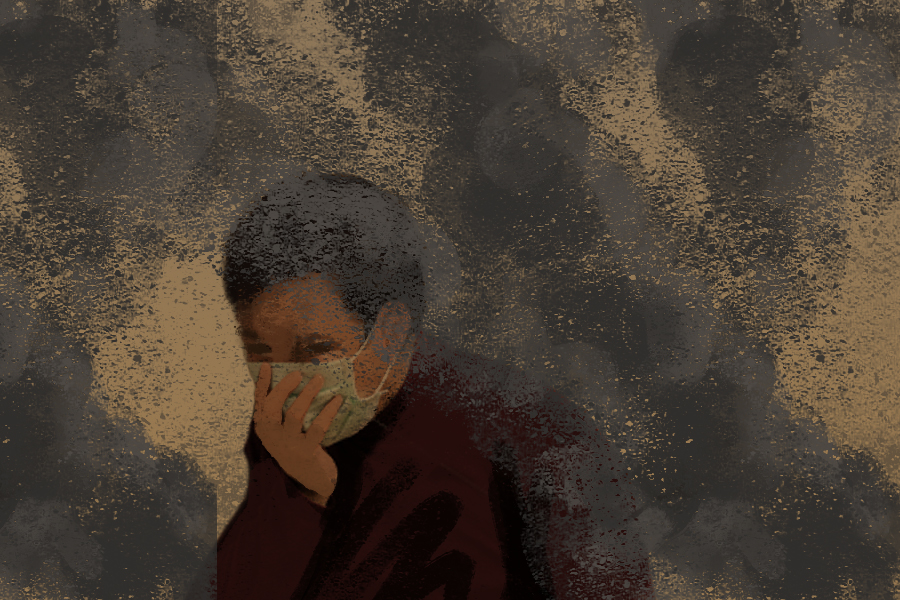
2017 is the most destructive year on record in terms of fire damage to structures, with at least 10,000 structures affected overall. Many structures were razed by fire, as in both the Tubbs and Nuns fires of Northern California. Both fires rank in the top ten most destructive fires in California history, with Tubbs taking the top spot.   

“The sky was filled with flames and fire, with ashes falling like snow,” said Rachel Kreager, a resident of Santa Rosa who was there when the Tubbs fire broke out. “You couldn’t see anything in front of you. I just remember thinking it looked like a movie set.”

Public health researchers at UC Davis felt compelled to help residents of the many afflicted counties in Northern California.

“When the fires were breaking out and raging, especially the first few weeks after Oct. 8, quite a few of us who have lived in this area for a long time felt this very strong motivation to try to address what was going on and what some of the environmental impacts could be, on health in particular,” said Irva Hertz-Picciotto, a professor of epidemiology and environmental and occupational health at UC Davis.

Hertz-Picciotto is currently leading a team of researchers interested in the public health consequences of the historic devastation in Northern California. Called “Wildfires and Health: Assessing the Toll in NorthWest California” (WHAT NOW California), the research will be looking at how smoke from burned debris has affected survivors of the fires.

One component of the project will be to compare various ash samples from destroyed homes and parks in the affected counties. As these fires were largely urban, as opposed to forest fires, where primarily organic vegetation is burned down, many unknown pollutants from buildings were likely released into the air. Through the ash samples, the team will characterize the various pollutants.

“I think we’re going to be answering a few kind of new questions like the issue of urban or synthetic materials that are in everything now, like the particle board in lots of buildings that has lots of formaldehyde and solvents,” Hertz-Picciotto said.

Even modern furnishings inside homes may pose a serious health risk, not only in regards to smoke, but also in the spreading of wildfires.

“If I were to do a fire study and take a couch from 1950 versus a couch that’s built today, the couch from 1950 is going to take longer to burn,” said Nathan Trauernicht, the fire chief at UC Davis. “Today’s furnishings are predominantly synthetic and those burn fast, and a lot of them have petroleum products.”

Such synthetic products might pose a serious health risk to survivors. But any smoke, including smoke from organic vegetation, can be dangerous to human health.

“The byproducts of combustion, even naturally burning items — a tree — has carcinogens,” Trauernicht said.

The second component of the research is first-hand data collection through an online survey directed toward survivors of the wildfires. The survey, which is currently going on, collects information about where the survivors lived when the fires broke out, how many times they were forced to evacuate and what their immediate experience was after the fires were put out. It also clarifies any pre-existing health issues a survivor might have and any symptoms they might have experienced after the fires, explained Hertz-Picciotto. In the future, a second survey will be conducted to check for long-term health impacts.

The survey is in part a collaboration with local health agencies in the various counties.  Epidemiologists from Napa and Sonoma counties contributed questions that are about understanding the needs of survivors, which is an important part of the research, explained Hertz-Picciotto.

“I think that’s part of it, learning a little bit more about what kinds of needs people had and what things people had to do without and helping them plan for future events,” Hertz-Picciotto said.

When Trauernicht was asked about possible preventive implementations for future wildfires, he said he doesn’t believe a simple answer exists.

“Nature uses wildfire to create new life,” Trauernicht said. “When a fire doesn’t have the ability to burn as it was intended, we stop it but we’re interrupting what nature wants to have happen.”

He believes that a combination of an increase in fire-prevention resources, better fire education and public health research will improve our abilities to fight and manage wildfires. However, where we live and where we build might be something the state needs to address.

“The reality of it is that as long as humans choose to live in the wildland — in the interface [of nature and cities] — the same problem is gonna be coming up,” Trauernicht said. “And this idea of living in the interface requires homeowners to make sure the houses are safe, but even with that has to come a basic understanding you’re assuming a certain amount of risk.”


Written by: Matt Marcure — science@theaggie.org


Picnic Day and beyond

SHEREEN LEE / AGGIE

Here’s how UC Davis can continue the fun for the rest of Spring Quarter

Recurring Weekly Events:

Mondays:

What: deVere’s Irish Pub Quiz

When: Every Monday at 7 p.m.

Where: deVere’s Irish Pub

Description: Grab a group of up to six and make sure to get there early to snatch a table.

Category: All ages


Tuesdays:

What: Trivia Night at Sophia’s Thai Kitchen

When: Every Tuesday from 9:30 to 11:30 p.m.

Where: Sophia’s Thai Kitchen

Description: Bring a team of three to six and test your knowledge to win some cool boozy prizes.

Category: 21+


What: Dollar Scoop at Baskin Robbins

When: Every Tuesday 6 p.m. to close

Where: Baskin Robbins

Description: I scream, you scream, we all scream for $1 ice cream! Expect long lines

Category: All Ages


What: $6.50 Movie Tuesday

When: Every Tuesday all day

Where: Regal Cinemas Davis Stadium 5 and Regal Cinemas Davis Holiday 6

Description: $6.50 movies all day!

Category: All ages


What: $8.50 Movie Tuesday

When: Every Tuesday all day

Where: Varsity Theater

Description: “Movies are shown all day for $8.50.”

Category: All ages


Wednesdays:

What: Trivia Night at UoB

When: Every Wednesday at 8 p.m.

Where: University of Beer

Description: Think you know your Facts? Bring a team, enjoy drink specials, and come take ‘the exam’.

Category: All ages


What: Picnic In The Park

When: Every Wednesday from 4:30 to 8:30 p.m.

Where: Central Park

Description: Bring your friends and a blanket and enjoy the farmers market, food vendors and live music performances.  

Category: All ages, free


Thursdays:

What: Salsa Night

When: Every Thursday at 9:30 p.m.

Where: The Davis Graduate

Description: Learn to Salsa and dance the night away.

Category: All ages


What: Trivia Night at Woodstock’s

When: Every Thursday from 9 to 11 p.m.

Where: Woodstock Pizza

Description: Grab a team of three to six and head to Woodstock’s for a good time.

Category: All ages


Fridays:

What: Birdstrike Theatre

When: Every other Friday from 8 to 9 p.m.

Where: Kleiber Hall

Description: Birdstrike Theatre, the UC Davis comedy improv team, performs every other Friday for around a dollar. Come early to grab a seat because they fill up quick!

Category: All ages


Saturdays:

What: Davis Farmers Market

When: Every Saturday from 8 a.m. to 1 p.m.

Where: Central Park

Description: The beloved Davis Farmers Market is one of the most popular markets in the region — come find out why.

Category: All ages, free


What: Local Live Music at Woodstock’s

When: Every Saturday at 10 p.m.

Where: Woodstock’s Pizza

Description: Come hear the talented musical members of the Davis community every Saturday.

Category: All ages, free


Sundays:

What: Food Not Bombs

When: Every Sunday at 1 p.m.

Where: Central Park

Description: Free vegetarian food for all who believe that eating nutritious food is a right, not a privilege.

Category: All ages, free


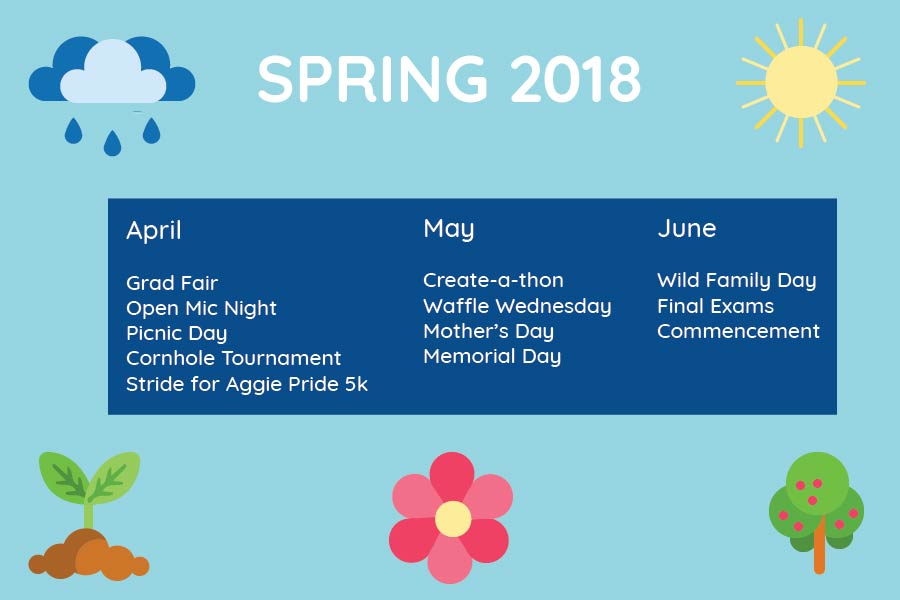
APRIL:


What: Sonic Sessions

When: April 26 from 6:30 to 8:30 p.m.

Where: Manetti Shrem Museum of Art

Description: Come listen to a group of talented DJs from the Bay Area and San Diego: Yugi Boi, Technick and Bred, and enjoy a slice of free Woodstock’s Pizza. Hosted by Manetti Shrem and ASUCD.

Category: On campus, free


What: Ideathon

When: April 28 (no time posted)

Where: ARC Ballroom

Description: Come experience the latest technology: VR, AR, 3D printing, drones and more. Full of great ideas? Enter the idea contest to win prizes and learn from experts how to implement and develop them.

Category: On campus, free

What: Guys and Dolls

When: April 20 to May 13

Fridays at 8 p.m. (April 20, April 27, May 4, May 11); Saturdays at 8 p.m. (April 21, April 28, May 5, May 12); Sundays at 2 p.m. (April 22, April 29, May 6, May 13)

Where: Davis Musical Theatre Co, 607 Pena Drive

Category: Art


What: “Gutenberg! The Musical!” at Sudwerk Brewery

When: April 26th – Sudwerk Brewing – 7 p.m.
April 27th – Sudwerk Brewing – 8 p.m.
April 28th – Root of Happiness – 8 p.m. (FREE!)
April 29th – Sudwerk Brewing – 7 p.m.
May 3rd – Watermelon Music – 7 p.m.
May 4th – Watermelon Music – 8 p.m.

May 5th – Watermelon Music – 8 p.m.
May 6th – Super Owl Brewing – 8 p.m.
May 13th – The Pence Gallery – 7 p.m.

Description: Presented by Bike City Theatre Company. Students/Seniors: $10; GA: $15. Tickets available at: http://www.bikecitytheatre.org/

Category: Arts


What: Star Wars Day at Sacramento Zoo

When: April 28 at 9 a.m. to 3 p.m.

Where: The Sacramento Zoo

Description: Enjoy a day at the zoo in a galaxy far far away. Dress up and wander the Star Wars-themed park filled with activities and surprises. Special tickets required, see saczoo.org for more details.

Category: All ages


What: Plant Sale

When: April 29, 9 a.m. to 1 p.m.

Where: Arboretum

Description: Meet your fellow green thumbs at the UC Davis Arboretum Teaching Nursery. Want to get a discount? The Plant Clearance Sale will be on May 12, but hurry — they go fast.

Category: All ages, on campus


What: Stride for Aggie Pride 5K

When: April 29 at 9:30 a.m.

Where: Quad

Description: Run with your fellow Ags to promote a healthy lifestyle, physically and mentally. $20; all proceeds go to ASUCD Award Endowment and We Are Aggie Pride.

Category: All ages, on campus


What: Classic Film Festival

When: April 29 at 6:30 p.m.

Where: Odd Fellows Hall, 415 Second Street

Description: Free showing of 3 episodes of “Alfred Hitchcock Presents”.

Category: All ages, free


MAY:


What: Createathon

When: May 4-5 (no time posted)

Where: Kemper Hall

Description: Hosted by the College of Engineering, channel your inner entrepreneur, form a team, and develop the technology of the future. Judged by mentors and experts in the field, compete for a grand cash prize of $1000 and a chance to move on to the finals: Sharkathon to pitch your winning idea to possible investors. To sign up and find out more visit: http://creatorchallenge.io

Category: On campus, free


What: Khalid

When: May 7 @ 8 p.m.

Where: UC Davis ARC Pavilion

Description: Khalid visits UC Davis on his Roxy Tour

Category: Music, On campus


What: An Evening with David Sedaris

When: May 9 from 8 to 10 p.m.

Where: Mondavi Center

Description: Reading and signing from his new book: “Theft By Finding: Diaries”

Category: Arts, On Campus


What: Dixon May Fair

When: May 10 to 13; Thursday 4 to 10 p.m., Friday 12 to 11 p.m., Saturday 11 a.m. to 11 p.m., Sunday 12 to 10 p.m.

Where: 655 South First Street

Description: 143rd Annual Dixon May Fair features rides, activities, food; including a bronc and bull ride, truck and tractor pull, and demolition derby. Tickets available for pre-sale until May 9 ($8), or at the gate ($12). For more information visit: http://dixonmayfair.com

Category: All ages


What: Whole Earth Festival

When: May 11 to 13; Friday 12 to 5 p.m., Saturday 10 a.m. to 10 p.m., Sunday 10 a.m. to 6 p.m.

Where: UC Davis Quad

Description: The 49th annual Whole Earth Festival is a student-run arts event featuring various vendors on the UC Davis Quad. Bring your mom this Mother’s Day weekend!

Category: Arts, free, on campus


What: Second Friday Art About the Arboretum

When: May 11, 5 p.m. to 7 p.m.

Where: Arboretum

Description: A special edition of the city’s monthly self-guided artwalk: the ArtAbout, for the 10th annual National Public Gardens Day. There will be a display of UC Davis’s advanced sculpture students’ work and music by Greek Beats, The Spokes and more!

Category: All ages, on campus


What: Celebrate Davis Day

When: May 17 at 4:30 p.m.

Where: Community Park

Description: Celebrate the city of Davis with food, beer, wine and fun for all ages. Ending with a bang at 9pm with fireworks, this is an event you don’t want to miss!

Category: All ages


What: Therapy Fluffies

When: May 18 from 11 a.m. to 1:30pm

Where: Shields Library Courtyard

Description: College is ruff — come get some puppy love on campus in between classes courtesy of Student Health and Counseling Services.

Category: On campus


What: Davis Pride Festival and Run For Equality

When: May 20 at 8 a.m.

Where: Central Park

Description: Run with pride in the morning (1K, 5K or 10K) and then join the LGBTQ community and enjoy an all-inclusive free festival afterwards. For sign-up information visit: http://mwqdesign.com/davispride/

Category: All ages


Written by: Grace Simmons — features@theaggie.org

May is Mental Health Awareness Month

NICKI PADAR / AGGIE

Month of events aim to engage diverse campus communities

During the month of May, the UC Davis Mental Health Initiative will host empowering workshops, panels and interactive activities for students to participate in.

Different days and events will feature a wide range of topics, including addiction, mental health in the face of violence and trauma, different cultural approaches to mental health, issues of masculinity and body positivity and many others.

From its founding in 2016 as an ASUCD Senate project, UC Davis’ MHI has grown to include UC Davis Mental Health Awareness Month and the UC Davis Mental Health Conference. The MHI has also influenced other campuses to create their own initiatives.

This year, the MHI has joined forces with the CoHo and the Campus Store to promote events. Students visiting the campus store can find MHI merchandise and self-care items.

Fourth-year English and Asian American studies double major Sam Chiang is the founder of the MHI and is working closely with preparations to organize the second-ever Mental Health Awareness Month at UC Davis. With a team of event leaders, team members and board members, Chiang is looking forward to the evolution and growth of the month-long initiative.

“This year, we have themed days as opposed to isolated events,” Chiang said. “Each of these days consists of a casual drop-in activity at the MU patio and a related event.”

Themed days like “Body Positivity,” which will take place on May 7, will have events during the day where students can design their own T-shirts and learn about body dysmorphia and fatphobia while also hosting an event later in the evening at 7 p.m. at the Women’s Resources and Research Center entitled, “Ed-ucating Allies.” This interactive workshop delves deeper into issues surrounding eating disorders and becoming more mindful of the signs.

Tabling events will vary over the course of the month. All tabling events will be held on the Quad from 11 a.m. to 2 p.m.

Radhika Marwaha, a first-year global disease biology major, is the Addiction Day event leader. Marwaha hopes to engage more of the student body in the conversation about mental health.

“We will be asking folks questions about how addiction is linked to the college culture and its effect on mental health,” Marwaha said.

Marwaha is teaming up with Aggie RISE, Smoke and Tobacco Free Ambassadors and the Joan Viteri Memorial Clinic to host the day’s events.

Kealani Beltran, a fourth-year psychology major, is this year’s Native American Day event leader.

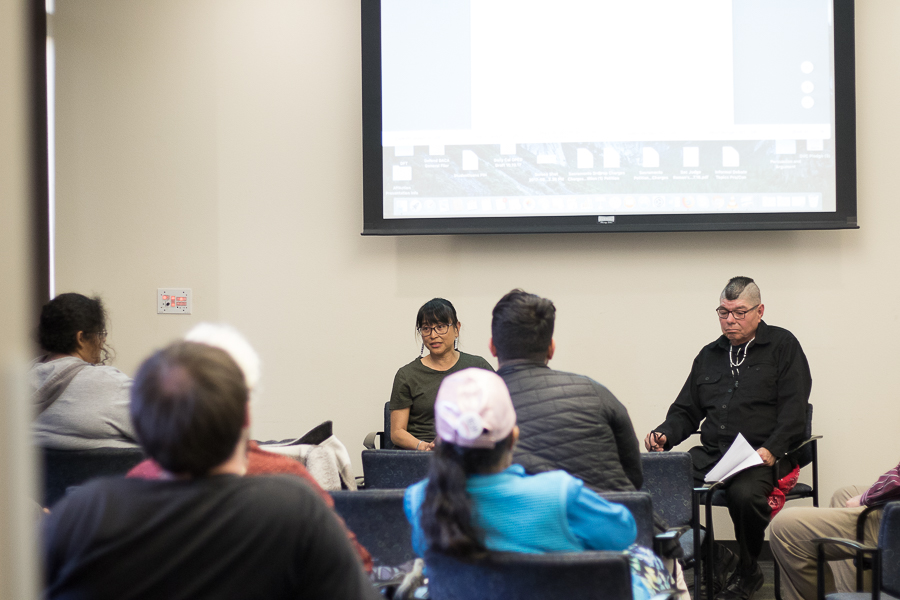
Beltran will be spearheading events on April 24, including distributing prizes and encouraging student involvement. Later in the evening, Beltran will be helping facilitate a dialogue called Decolonizing Documentation. Hailey Ferroni, from the Dry Creek Rancheria of Pomo Indians, will be speaking and sharing her experiences.

“I hope that everyone is able to understand how intersectional experiences affect all communities in different ways, and that mental health needs to be a priority to not only UC Davis, but all universities,” Beltran said.

While some days are organized to tackle different mental health issues, the MHI team has also worked to highlight different communities throughout the month including days focused around the LGBTQIA+, Chicanx/Latinx and disabled communities.


Written by: Ally Russell — campus@theaggie.org


Swimming into the unknown

CASEY PHILLIPS / COURTESY

Freshwater turtles face deadly threat of rising sea levels

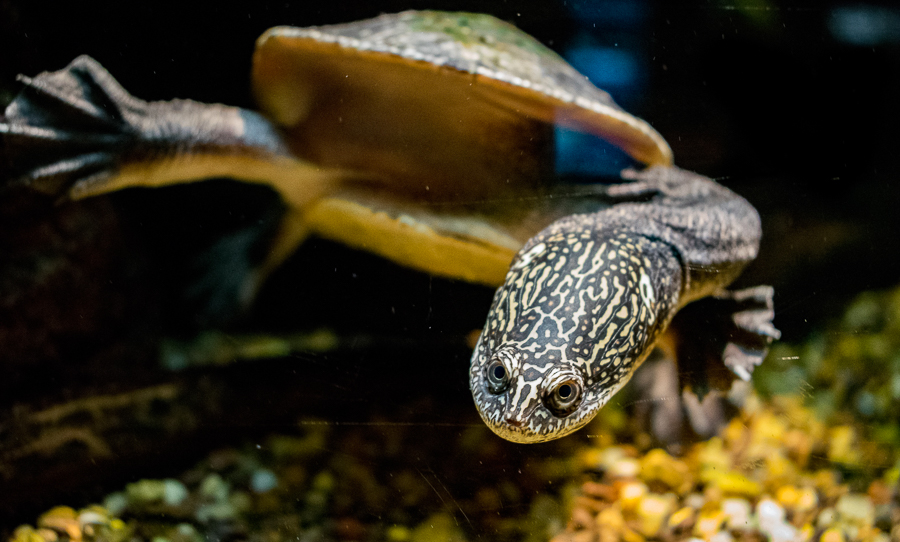
The threat of sea level rise is concerning for many animals and plant species, as an untold number of organisms could be affected. One particularly vulnerable group is freshwater turtles, since many of them live near oceans or in areas where saltwater and fresh water meet. These areas, called brackish water, will change dramatically if sea levels rise, according to a new study.

“It’s an important project because it takes a step back and looks at turtles globally,” said Josh Ennen, an aquatic conservation biologist at the Tennessee Aquarium Conservation Institute. “And from the paper you can tell that turtles in general aren’t doing well. Over half of them are threatened with extinction or are already extinct.”

Not to be confused with sea turtles or tortoises, freshwater turtles mainly live in the water but can go on land to eat, lay eggs or just to sun themselves. Types of freshwater turtles include red-eared sliders or turtles one can see in rivers and ponds.

The paper examined what effect sea level rise would have on freshwater water turtle habitats. Since most freshwater turtles live near the ocean or in brackish water, a majority of them will experience more sea water in their ecosystems in the future.

“We were stunned that a Western Pond turtle, extremely sensitive to habitat change and declining across its range, was inhabiting a highly managed, tidally influenced brackish water ecosystem in the San Francisco Estuary,” said Mickey Agha, the main author of the paper. “We found that 90 percent of coastal freshwater turtles may see a part of their range inundated by seawater by the end of the century. If they are unable to adapt fast enough to changing water salinities, they may lose that part of their range forever.”

Using a combination of global informations systems and phylogenetic analysis, the study was able to determine which species of turtles were especially vulnerable. Like Google Maps, GIS can analyze the Earth’s surface, but with more sophisticated tools. Phylogenetics is the study of determining the relatedness between species. Using this, researchers could see if many species responded similarly to changing habitats due to their genetics.

“In terms of the conservation, the most important aspect of the paper is, it gives us an initial picture of which species are likely to be most at risk of exposure to future sea level rise and increased salinity that comes with that,” said Justin Nowakowski, a co-author of the study. “Although it’s a broad strokes analysis, it should help us direct future research in monitoring, by giving us an idea of the relative risk for different turtle species.”

Understanding which species are at risk for extinction is important, but another major factor is often overlooked. Most researchers do not know how freshwater turtles fit into the ecosystem. This means that no one knows what will happen to those areas if the turtles disappear.

We just don’t have a lot of knowledge on the functional roles of turtles in the environment, there’s just not much out there,” Ennen said. “And I think as a freshwater biologist, we’re just now touching on what we know the role of freshwater turtles in their environment [is].”

Studies have shown that sea turtles are essential for their habitats; when taken away from seagrass beds and coral reefs, the areas suffer. However, there is very little research on the importance of freshwater turtles to their ecosystems.

“So this paper could just be another foreboding analysis saying these turtles are in trouble and we need to know what their roles are in the ecosystem,” Ennen said. “We don’t know enough to know what’s going to happen to the ecosystems if turtles disappear and it’s quite likely that a lot of these communities and these ecosystems will lose turtles if half of them are already threatened with extinction.”


Written by: Rachel Paul — science@theaggie.org

The story behind farmers market avocado toast

DANIELLE MOFFAT / AGGIE

Family-owned business dedicated to serving Davis community

Everyone’s favorite Instagram-worthy snack is now at the Davis Farmers Market: avocado toast. For all the foodies out there looking to try the latest food trend, look no further than downtown Davis. At the Davis Farmers Market, residents can treat themselves every Saturday morning to a variety of fresh and delicious avocado toasts at WestToast, served by Zumapoke and Lush Ice.

“I’m so happy that we have a place in Davis with really high-quality avocado toast,” said first-year psychology major Gavi Sonntag. “FarMar avo toast is the best, and every week I really look forward to trying a new item on the menu. My favorite is the Bees Knees!”

The craze for avocado toast swept the breakfast scene by storm not too long ago, but has quickly become a staple among most restaurants and cafes. Despite its simple ingredients, avocado toast has become known for its delicious taste, healthy benefits and prime aesthetic appeal. In addition, nearly all of the ingredients used at Zumapoke’s stand are conveniently sourced from vendors at the Davis Farmers Market. That includes salted rosemary bread courtesy of Upper Crust Baking Co., jam from Sunblest Orchards and the avocados themselves.

“I had heard of avocado toast and thought it was such a perfect market food,” said Farmers Market manager Randii MacNear in an interview with The Davis Enterprise. “Customers love the stand.”

Over the past year, Zumapoke has brought its locally sourced avocado toasts to the farmers market, quickly gaining traction as a FarMar staple. Zumapoke, located at 3rd and G streets, is typically known for its poke bowls in downtown Davis. However, owners Dustin and Rachael Ryen elected to broaden their horizons and expand their business. Due to popular demand, Zumapoke brought the avocado toast from the farmer’s market into the main store on a regular basis. The menu features a unique variety of toasts, such as the Poke-cado toast, which includes the usual avocado topped with fresh poke. However, as of late, Zumapoke avocado toast is only available at the farmers market on Saturday mornings until 1 p.m.

Zumapoke has been a lifelong dream of ours, made possible by the generosity of our parents, the sale of a family farm, and our life savings,” said the Ryens on their restaurant’s website. “By opening in Davis we have become stakeholders in a community very dear to us.”

In turn, the family-owned business of Zumapoke has made itself dear to the community of Davis as well. With the Ryens originating in the Sacramento and Yolo County areas, their dedication to serving high-quality foods to the local community is demonstrated in the presentation of the food itself and also in the couple’s happy and welcoming customer service.

Zumapoke and Lush Ice is located at 730 3rd St. WestToast can be found at the Saturday morning Davis Farmer’s Market until 1 p.m.


Written by: Sydney Odman — arts@theaggie.org

Davis inspires entrepreneurs, CEOs

SAHAS KATTA / COURTESY

Davis alumnus explains his experience running a successful startup company

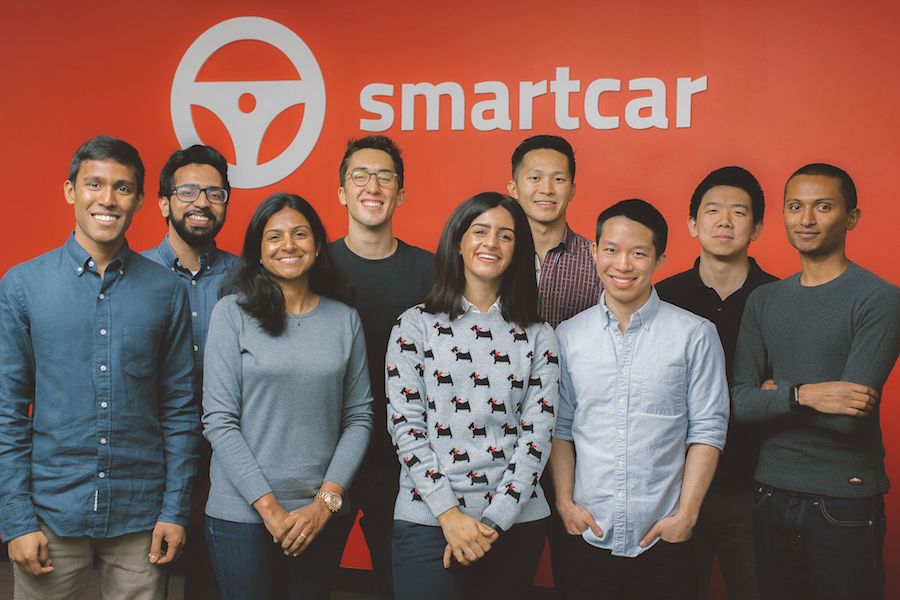
Eight years ago, Sahas Katta, a former UC Davis student, dropped out of college to start his own company alongside his brother, a UC Berkeley graduate. Today the alumnus has not only become the CEO of a successful and innovational business, but also recently received $12 million in funding from Andreessen Horowitz and New Enterprise Associates.

The company, named Smartcar, was started in 2015. Smartcar is essentially a platform for developers to build web and mobile applications for vehicles. The platform allows people to read vehicle data and send commands to vehicles of any brand through an extensive engineering process. For the past three years, the company has enabled app developers to create unique experiences for customers through car applications such as smart parking and car sharing. Today the company is located in Mountain View, Calif. and has 15 full-time employees.

Katta explained how the idea for his company came about and where is success can be traced back to.

“I was actually trying build an application for a car myself,” Katta said. “I realized that there wasn’t really an easy way to build apps for cars and there was no developer platform available. I wanted to build something that would help make applications for cars […] I wanted to build a standardized connected car platform so that people could build apps for any car of any brand easily.”

Katta described the purpose of Smartcar and his mission for the company for years to come.

“When you look at the whole transportation industry today what we kind of see is that the automobile made people’s lives a lot easier and it was great for the middle class,” Katta said. “But it left a whole group of people behind, people who are in a lower class or people who are disabled have a very difficult time accessing transportation, which has now become a necessity. We think that with this platform all these app developers have kind of made mobility more accessible to the masses and we think that it’s really going to change the way that vehicles are used, which is is something that we’re really excited about.”

Katta dropped out of UC Davis during his third year as a computer engineering major to pursue a full-time dedication to starting his own business. According to Katta, eight years ago Davis did not hold Hackathons, have a startup center or bring in a lot of investors, all of which Katta explained would have made a significant difference in his experience at Davis. Katta explained how he felt that Davis did not provide the environment he desired in order to become a successful entrepreneur.

“Part of why I dropped out was because I unfortunately did not find the support I needed at Davis,” Katta said. “Davis at the time didn’t have a supportive entrepreneurial community of culture and I had a lot of other friends at schools like Stanford and Berkeley who were starting companies and building apps. I was hungry for something similar and I simply was unable to find that excitement or enthusiasm while I was at Davis.”

Today Katta is the CEO of a successful startup, but his success was not immediate. After dropping out of college, Katta worked on his first project, which failed soon after. However, the idea for Smartcar developed while Katta was working on his original idea.

“If you don’t try (even if you fail), then you will never go any further,” Katta said. “I had to learn how hire and fire people, which was very challenging and I didn’t do a good job of managing people in my first company or properly manage finances. I also wasn’t very good at selling the product for customers, but all the trials and failures from my first company made it very clear on what I would have to do differently to make a company successful, so if I hadn’t  tried I wouldn’t really be where I am today.”

Katta offers his advice for any students aspiring to start a company based on his experiences over the past decade.

“Starting a company is a very lonely job and I would say quite honestly going to school would have been a lot easier, so unless you are absolutely 100 percent certain that you’re willing to go through way more trouble than necessary I would not encourage people to drop out,” Katta said. “Most people talk about starting their own business, but always find a way to not try and if you aren’t comfortable with failure and you don’t try then there is an absolute zero chance of you starting your own business. It’s all about focus, if you’re working on ten different side projects and campus leadership, classes and extracurriculars it’s challengeing to focus on doing really well on one thing so if you’re interested in starting your own business you really need to put every spare minute into it.”

Samarth Sandeep, a first-year materials science engineering major, aims to start his own company in the alternative energy field some day. Sandeep explained in further detail what skills are needed to run a successful business.

“To start a business I think you need to be able to lead people and to do so you need to have really good interpersonal skills,” Sandeep said. “You also need to have some sort of skill that you are selling because initially when you are trying to start your own company the investors look for those skills. Your product may never be in the full stage where it is ready to sell, but the investors will be a whole lot more interested in you and that might be because you’re a really good leader or you have really good technical skills.”

But is having a college degree necessary to obtain these skills? For Katta, having a college degree was not absolutely necessary, but that might not be the case for all aspiring entrepreneurs. Sandeep explained why a college experience might be beneficial to starting a company.

“I don’t think having a college degree is necessary to start your own company,” Sandeep said. “But I think being in an environment where you are leaning different skills is important I think for most people being in a college environment is the best way to get those skills. Being at a university gives you access to research funding from the federal government and opportunities to work with corporations which is good way to get the skills and validity you need to run a business, but it definitely isn’t the only way.”

But the value of college does not just stop at gaining said skill, Sandeep said. Other factors, including academics and club work, also play a huge role in the skills you gain when attending college.

“A lot of people forget that Tesla was a small startup,” Sandeep said. “After 10 years the founders were both Ph.D. students at Stanford who had a lot of engineering experience over nine or 10 years and before that they were still interested in projects through the school.”

Today, to many people attending college, it is almost a necessity to work and earn a decent wage. Sandeep explained why he thinks students opt to drop out of college to start their own businesses.

“The idea of a college education is that it is supposed to give you a very comprehensive look at everything you might need in your career,” Sandeep said. “I think college isn’t really doing that recently so that’s why we see a lot of people that think dropping out of school would be good for them. By dropping out of school they are able to work on a project that might give them a good income so they aren’t in huge debt and on top of that they can attend classes or work on their own projects to help them gain knowledge on what they want.”

Saahil Patel, a second-year managerial economics major and employee of ASUCD Creative Media, explained his experience while working at various companies. In the past year, Patel has worked as an intern at startups including Bounce, Journey Hop and Givebutter. With his extended knowledge of the analytical side of startup companies, Patel offers his advice to students who are considering becoming an entrepreneur.  

“Being an entrepreneur is really risky and if you read any articles even successful entrepreneurs are not going to recommend you drop out of college, no one is going to recommend that,” Patel said. “I think college teaches you skills that you can’t really learn by yourself and it might be very book savvy related skills, but it is necessary if you really want to run a successful business. A startup could be really successful in the beginning, but after a while it might plateau and that’s when the skill you might have learned in college will come in handy.”

Patel detailed what attributes he believes catalyzes a successful business with regard to having a college education in business or economics.  

“The key to running a successful business is having skills and expertise in a variety of things, but having a backbone in a specific field,” Patel said. “I think the value of college comes in hand when you’re majoring in something. The managerial economics major here is very broad and doesn’t get very specific […] I like that because that way when you graduate you kind of have a background in everything and if you want to do something specific you can always pursue a minor.”

Davis is a school known worldwide for its agriculture and veterinary medicine programs. While business might not be as well known, it remains one of the most popular majors among Davis students. Patel expanded on his experience as a student pursuing a major in business.

“To be honest I think the business major at this school is kind of small and I think at a lot of other schools the business majors are very specific,” Patel said. “Students at those other schools are given the opportunity to connect with people and professors who are strictly business management, whereas at Davis it’s more of a managerial economics focus. So even though you are learning the business side you are also learning the economics and research and if you want to learn things about businesses in the long term, then the managerial economics major here is really good for that.”


Written by: Sneha Ramachandran — features@theaggie.org


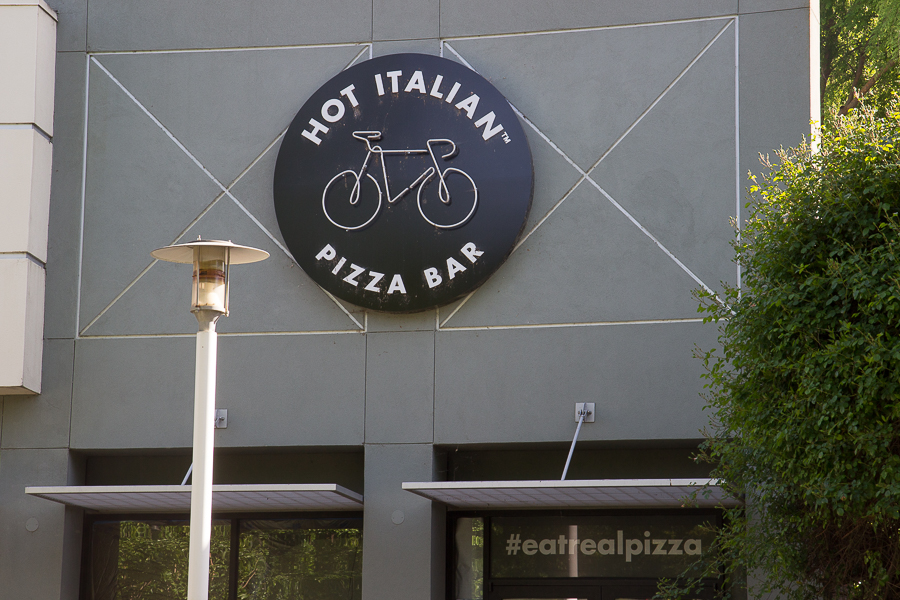
Davis’ Hot Italian closes its doors

SHANE COONEY / AGGIE

Davis Commons loses another tenant

The Davis Commons at 1st and E streets has had a revolving door of tenants open up and close shop in the location for the last few years. Whole Foods, The Habit Burger, Ben & Jerry’s, Papyrus and Jamba Juice are all among the many businesses that have recently come and gone. Now, Davis’ Hot Italian is also on the list of defunct Davis Commons’ restaurants and storefronts.

“The Davis Commons just seems to have had a run of bad luck,” said Luke C., a longtime Davis resident. “For me, it seems like it’s just difficult for the Davis Commons to retain their tenants […] You’ve got a lot of competition, especially when it comes to pizza or things like that. It’s just difficult to do business like that.”

With Hot Italian closed, there are now six spaces listed for lease and one space listed for sublease within the Davis Commons. Whole Foods still holds the lease to its former spot as anchor tenant and has made the 21,609-square-foot space available for sublease. The Halal Guys, a Middle Eastern restaurant, is set to open its doors in May, taking the previous space of The Habit Burger within the Davis Commons.

“There are so many things that can go wrong with business,” said Andrea Lepore, the cofounder of Hot Italian. “We have to evaluate each location — each location is subjective and fits different needs […] We offer something other Italian restaurants and pizzerias don’t, and that’s food made of the highest-quality ingredients and the highest-quality service. People need to understand that comes at a price.”

Lepore mentioned that the primary reasons for the restaurant having to close its doors were location, business and market. She mentioned how honored and thankful the group felt to be a part of the Davis community and that the company was sad to leave.

“It was pretty tasty, but also really expensive,” said Joseph Critzer, a UC Davis undergraduate student. “Part of me thinks there just wasn’t a place or a market for something like that here […] Davis students aren’t willing to pay 15 or 20 bucks for a pizza like that.”

Hot Italian opened its doors in January 2016, so it’s been open in Davis for a little over two years. Although closed in Davis, Hot Italian still has its original two locations in Sacramento and Emeryville, serving the same food that was sold at the Davis Commons.


Written by: Ahash Francis — city@theaggie.org

Anti-fascist activists host “Drop the Charges” event

TAYLOR LAPOINT / AGGIE

Two activists arrested in 2016 Sacramento riot ask for support from community to get felony assault charges dropped

On April 12, anti-fascist activist and organizer Yvette Felarca hosted a “Drop the Charges” event at the Student Community Center. Felarca’s goal was to gather community support for her campaign to get assault charges against her and two other anti-fascist protesters dropped in Sacramento court. The charges were issued after an incident in June 2016 at the California State Capitol where an estimated 300 anti-fascist protesters and 30 members of white nationalist groups Traditional Workers Party and the Golden State Skinheads clashed, leaving 10 injured.

The LGBTQIA Resource Center’s community coordinator and a fourth-year chemical engineering major MK Chan opened the event by welcoming attendees to the Student Community Center and explaining the purpose of the event, which was to go over Felarca’s motion to dismiss in an attempt to garner support for her hearing on April 20.

Felarca, a member of the Coalition to Defend Affirmative Action, Integration & Immigrant Rights and Fight for Equality By Any Means Necessary, thanked the approximately 20 people in attendance and had each person introduce themselves. Attendees included fellow protesters from the Davis and Sacramento areas as well as a few students and members of BAMN. She said that she hoped to persuade everyone in attendance to come to the hearing on April 20 and recruit them for BAMN.

Michael Williams, one of the other anti-fascist activists charged for felony assault in this case, was also in attendance. He and Felarca said that the case is important because their liberty is at stake, as conviction could see the protesters facing “real time.” They also mentioned the current political polarization in the country and how they feel it is important for people to make stand up against injustice.

“It is not a hyperbole to say that we are probably in the middle of a parallel of Germany in the 1930s with the rise of Hitler,” Felarca said. “We can draw lessons from the mistakes of those who did not stop those atrocities. We’re in that position [to change things] and we [BAMN] are willing to take on that responsibility.”

Felarca had attendees read the motion for the dismissal of the charges. She alleged that there is evidence of the Sacramento police and the District Attorney colluding with TWP, GSS and other “Nazi” groups that pitted them against the anti-fascist organizers. While discussing the evidence, Felarca told attendees to notice that many of the police reports were written long after the June riot and often by police officials who were not in attendance at the riot itself.

They also provided evidence that showed members of TWP and GSS holding knives in their hands that Felarca and her attorney believe were used to stab her and the nine other people injured in the riot.

“You don’t bring knives to something like this without intention to do something,” Felarca said.

Felarca drew attendees’ attention to various parts of the discovery that suggested collusion between the police department and the white nationalist groups, including a transcript of a phone call between a member of the Sacramento Police Department and a member of TWP, in which the officer said “We’re pretty much going after [BAMN leaders].”

Felarca told attendees it was very important for people to show up to the courthouse. She said that attendance has grown with each hearing, and a mobilization of public support “makes [the judge] nervous.”

Sacramento artist and activist Jim Prigoff said that it’s important to pack a diverse group of people into the courtroom because the judge needs to realize the importance of the case, echoing Felarca’s earlier statement about the times seeming like early Nazi Germany.

“This affects us all,” Prigoff said.

“We’ve got proof now that supremacist society governs how people are treated in the courts,” Williams said. “We need to get these people out of office.”

Felarca and Williams also talked about an increasing prevalence of white nationalism on the UC Davis campus. Felarca mentioned Richard Spencer, founder of the alt-right movement, who was interviewed by KDVS in February.

“To give air time and a platform to that person, that Nazi, just gives him a chance to try and recruit,” Felarca said.

She also said that whether or not the interview successfully recruited anyone, giving airtime to someone with “dangerous” views only serves to normalize white supremacist ideas.

Felarca and Williams said they were proud of UC Davis for shutting down the Milo Yiannopoulos event last January. Felarca also mentioned Jeremy Donohue, creator of the alt-right Youtube Channel “Weekly Narrative,” who she believes either lives in or works in Davis.

“Take [the white supremacists’] picture, document what they’ve done and organize a campaign,” Felarca said. “We can drive them underground.”

One of the anti-fascist protesters at the Sacramento riot, Steve Gerome-Wyatt, criticized UC President Janet Napolitano and the UC Davis administration for past actions toward student protesters. He accused the administration of intimidating students who participated in the most recent Mrak Hall sit-in, encouraging them to “fall in line” and threatening them with academic probation.

“The administration of this campus is now under the auspices of […] Napolitano who […] has come from the Department of Homeland Security, as one of their directors,” Gerome-Wyatt said. “To me it’s not surprising in the least that in the last two or three days that the student protesters at UC Davis — any student protesters — have been put on notice that ‘You step on a line, you’re going to suffer for it, so fall in line. We’re going to have sanctions against you. You want to protest at Mrak Hall? […] You’re not going to do that no more, ‘cause we’re going to go after you. We’re going to put you on student probation, if you screw up on that, you can be expelled.’”


Written by: Taylor LaPoint — campus@theaggie.org


Daniella Aloni confirmed as interim senator

MACLEAN HARTFORD / AGGIE FILE

Aloni hopes to empower transfer, re-entry, veteran students, students with disabilities

Third-year communication major Daniella Aloni was recently confirmed as an interim senator at the April 12 Senate meeting. Aloni will serve out the remainder of second-year economics major Andreas Godderis’ Senate term, which was left vacant after his recent resignation.

Before her confirmation, there was contentious discussion over the validity of her nomination given the absence of other senators at her initial interview. However, she was confirmed with six yes votes, two no votes and four abstentions.

Aloni’s two major platforms include empowering transfer, re-entry and veteran students and providing representation for students with disabilities.

“As a transfer student, I have seen my peers struggle to make the same connections and have the same experiences as non-TRV students,” Aloni said.

In order to help TRV students feel a greater sense of belonging and have their voices heard, she is pushing to revive the Transfer, Re-entry & Veteran Committee.

Additionally, Aloni plans to collaborate with the Disability Rights Advocacy Committee and other student groups on campus to strengthen the connection between student communities and create a more informed and respectful environment for students with disabilities.

“One way I hope to create a better place of acceptance on our campus is to work with the administration to create mandatory training for professors,” Aloni said.

Prior to her confirmation as an interim senator, Aloni was a committee member on DRAC and a commissioner on the Business and Finance Commission.

“I was lucky as a transfer student to get exposed to ASUCD Senate and realized the importance it holds to everyday campus,” Aloni said. “As someone who belongs to multiple communities on campus, I saw the opportunity to represent and serve them through the Senate table.”


Written by: Clara Zhao — campus@theaggie.org


Humor: Davis Bike Museum might as well be filled with beans

ZOË REINHARDT / AGGIE

Why aren’t we cherishing this monument?

This is a joke article, alright? Okay, great. Now that we have that out of the way, when was the last time you went to the Davis United States Bicycling Hall of Fame? Never. Never is the answer. You have never been to the United States Bicycling Hall of Fame. Let me ask you another question: What is wrong with you?


Don’t you know that you attend a second-tier University of California? Do you not care about your education? Are you content with disappointing your parents? The United States Bicycling Hall of Fame is literally one block away from your university, and you have never gone even once.

I’ve seen you at Sam’s Mediterranean. You have no problem laying down $11.50 on a lunch combo, but you’re unwilling to walk literally across the street to contribute to one of the United States’ most important Bicycling Halls of Fame?  

I get it. You want to know as little as possible about what you put between your legs.  Guess what, mama? Life is gonna catch up to you. It’s gonna hit you hard and fast, and it’s going to hurt. Let me hit you with one fact maybe you haven’t considered. The longest “tandem” bicycle seated 35 people… it was more than 20 meters long… a modern Moby Dick.

Oh, you didn’t know that? Wow, I’m floored. You seemed so invested in your education.  Well, even if you didn’t know that, I’m sure you knew that the smallest adult bicycle ever created had wheels made from silver dollars. Oh, you didn’t know that either, eh? Sorry, I assumed you must already be a bike fact expert considering you’ve never even put one foot inside The United States Bicycling Hall of Fame.

Look, I’m not here to judge you. You go ahead and live your best life, but just know that somewhere there is someone who doesn’t have the opportunity to go to the Davis United States Bicycling Hall of Fame and you are throwing this opportunity away. Throwing it away and right into their face.


Written by: Parker Nevin — phnevin@ucdavis.edu

(This article is humor and/or satire, and its content is purely fictional. The story and the names of “sources” are fictionalized.)

Local students join national walkout

JEREMY DANG / AGGIE

Protest against gun violence, for stricter gun control laws

Since the Parkland shooting in February, students have been rising in numbers to protest for stricter gun ownership laws. One such recent protest was the March 14 walkout. Students left their classrooms to protest against gun violence and for stricter gun control laws. Shortly after, an advisory was sent out by Superintendent John Bowes for the Davis Joint Unified School District, marking students who left the class to protest with an unexcused absence.

“We, the board and the district, are aware that the students do have first amendment rights and that they maintain those when they walk on the school campus,” said Tom Adams, the president of the Davis Joint Unified School District Board of Education. “What we make sure is that they [the students] stay on campus for their own protection.”

The subject of the advisory has caused dispute in terms of not recognizing students’ rights and marking them with an unexcused absence.

“The issue of unexcused absence was really nothing that at this point we hadn’t dealt with — in terms of how to actually treat this — and we have to fall back on existing policies and rules,” Adams said. “If you’re not in class on scheduled time, we have to mark you as unexcused absence.”

The district has successfully put a safety task force meeting in order and has adopted Resolution No. 37-18 to address this matter with urgency.

The issue of school safety is not something we face alone as a school district, and DJUSD has invited staff, parents, students and our broader community to engage in safety task force meetings to identify risks and find ways to implement safety improvements in a timely manner,” Adams said.

These meetings are open to the public, and more information can be found at the Davis Joint Unified School District website.

“We are not only educating our public and advertising these meetings to get as much public and parent input as possible, but we are also taking those notes and putting them on the website so people understand what is happening at the meetings and can be informed about it,” said Maria Clayton, the public information officer for DJUSD. “All of the information from the meetings will be distilled and will become a part of the conversation for the facilities master plan that we are in the process of doing.”

In addition to the safety task force meetings, the district has been voicing its opinion on importance of stricter gun laws to the government.

“We sent a formal letter to our congressional representatives saying we want stricter gun laws,” Adams said. “We are adamant in saying that arming teachers was a preposterous solution.”

DJUSD is also advancing with efforts to minimize the effects of such incidents of gun violence on students’ mental health.

“One thing we have done is to ensure that student mental health is addressed early,” Adams said. “With adding up counselors at the elementary level, with the sensitivity to the growing issue at the middle school and high school level, we know that this is a fragile thing.”

According to an article written by The Sacramento Bee, Sacramento Mayor Darrell Steinberg called the Planned National School Walkout “a vital part of students’ education.”

Additionally, the mayor said he would “march beside (the students), or maybe even behind them.”

Adams has a final message for the students:

“I want to thank all students who have participated in protests — they have been very good about it,” Adams said. “I want to support them in doing that. This is the time when you have to speak up and teach us — the adults — about the right direction to go to.”


Written by: Rabiya Oberoi — city@theaggie.org

Davis Makerspace hosts Earth Day repair cafe

JEREMY DANG / AGGIE

Volunteers teach people how to fix common household electronics

On April 22, the Davis Makerspace held an Earth Day repair cafe, where volunteers repaired electronics for free. During the repair cafe, volunteers and participants of the cafe collaborated together to learn how to fix household electronics.

Nestled behind Tim Spencer Alley, the Davis Makerspace is a creative workspace where those who enjoy making projects can come together in a collaborative community. Builders, makers, hackers and programmers came together in this space to work on their robots, trebuchets or any other projects involving hardware. One of these members, Tobias Alrøe, joined the makerspace three months ago when he moved here from Denmark.

I wanted to join a team of cool people, and Makerspace was one of these opportunities,” Alrøe said. “I haven’t been involved in any of the projects involved here, but I’ve brought in some of my own stuff when I need to fix it — they have the tools I don’t have.”

This was the third Makerspace repair cafe, with one occurring each quarter since the fall. According to Davis Makerspace treasurer Roland Synnestvedt, one of the things that they changed from the previous events is that some of the volunteers brought in their own tools.

“The first time, we were missing some common tools, so this time people are bringing multimeters and maybe a soldering iron,” Synnestvedt said. “We have [those tools] here, but we can bring better ones.”

In the past, the Makerspace has repaired items such as rice cookers, vacuum cleaners and roombas. Once, Synnestvedt recalls, he repaired someone’s rock.

“Someone had this cool crystalline-looking rock and she used it as a meditation rock, and then she dropped it and it split in half,” Synnestvedt said. “We just epoxied the thing back together.”

Following the cafe, Synnestvedt hoped visitors learned that it’s not impossible to fix their common household items by themselves. If people can learn how to fix their own things, less waste will be produced.

“There’s a lot of waste, and a lot of people don’t have the tools or knowledge to fix something that maybe isn’t too far gone,” Synnestvedt said. “So we just want to provide a resource for people so they can come salvage useful things that they may have [or] that they might not want to throw away but might not know how to fix it.”

According to board member Aaron Van Slyke, taking an item apart and putting it back together is how people can get a better understanding of the toys they have and become more conscious of the materials these appliances are made of. Van Slyke called reparation the fourth R in the common phrase “reduce, reuse, recycle.” He explained that there are many items that are simple to fix, but people might just not know how to do so.

“This would be a fourth R in terms of repair,” Van Slyke said. “Repair instead of replace. There are some household items that you can literally just take apart and clean them up and sometimes add a little bit of grease and it works like it’s brand new.”

Van Slyke hopes that the repair cafe will be one step in helping lessen the damage that the human footprint has been leaving on the earth.

“Sometimes it’s very beneficial just to let people know that, ‘Hey, these things aren’t just magic things — they do work on mechanical or electrical principles,’” Van Slyke said. “And depending on the items, sometimes it can be easy to fix. [The repair cafe will help] provide that little bit of courage to actually say, ‘Well, if I’m going to throw it out anyway, then why not just take it apart and see if I can save it.’”


Written by: Hannan Waliullah — city@theaggie.org


Profile: Professor Elizabeth Constable

ELIZABETH CONSTABLE / COURTESY

Fortune cookies, feedback and film and literature

Elizabeth Constable, a professor of gender, sexuality and women’s studies at UC Davis, visits The New World Bakery at the end of each quarter — not to pick up cookies for herself, but for her (sometimes very large) classes. The New World Bakery, a small business located in Sacramento, makes fresh fortune cookies every day and even takes special orders allowing for specific fortunes. Constable visits them not only to support the business, but to continue a tradition practiced by a former colleague.

“She was one of the most innovative, imaginative teachers in the classroom that I knew, and so we would share ideas, and one day she and I often drove to campus together and she insisted that we went to the Sacramento Cookie Company and I said ‘Why are we, why are we going here,’ so she then explained that on the last day of her class she would pick up these freshly baked fortune cookies,” Constable said. “I thought this was such a great way of both sort of continuing the conversations that are ongoing in a class, tying in the work we’re doing and also celebrating. We’ve reached the end of a journey and now were looking ahead and you’re receiving a fortune — turn it into a feminist fortune. It’s a nice way of turning an ending into a new beginning: sort of a collective and symbolic shared act that says ‘This is ending, but we’re also going forward.’”

Constable’s appreciation for the tradition of the feminist fortune cookie, or rather the academic fortune cookie, could be tied to her beliefs in education as a dialogue and learning as a journey. Constable can surprise any student who has taken an introductory course in a large lecture hall by responding directly to index cards filled out by each student with their questions and responding to them over email. In the first weeks of Spring Quarter, Constable was still contacting students over email with reflections on their final writing assignments from Winter Quarter.

“The conversation, be it face-to face or virtual through work you’re submitting online, that conversation is the very, the most alive part of the learning because some of you don’t recognize your own strengths, and so some part of that dialogue that I have with you is telling you ‘this is so strong, you may not realize it’ and also just helping you relate to feedback as feedback — not criticism or grading, but feedback,” Constable said. “Here’s a response, here’s a question, could you think about that this way? So it’s just sort of shifting away from criticism, grading and into this is feedback.”

Constable reflected on her stance on word counts, a stance which stems partly from her formation in European education systems and partly from her work in the University Writing Program. She offers detailed and thoughtful expectations and necessary touchstones of each assignment. Though it requires more intellectual labor for her, she understands it is productive for students.

“I think that a word count puts an idea that there’s a norm and norms are always ideals, there’s a norm that somehow the right writing response to this would be about 500 words long,” Constable said. “But I’d rather not give that norm, although I do want to give the guidance of saying you need to touch on these aspects in your writing, you need to include responses to these types of questions. I’m wanting students not to learn bad habits or continue bad writing habits, but also because each of you is on an individual journey in your learning experience.”

Providing thoughtful responses and detailed expectations pertaining to each writing assignment, in addition to abundant fortune cookies, characterizes Constable’s teaching. A depiction of her identity as a professor is incomplete, though, without her thoughts on author and feminist bell hooks’ “radical openness” and her own formative experiences as an English as a Second Language teacher in a north London suburb.

“I think one of the most important principles or values for me is the effective environment in a classroom, in other words, how can an instructor create a community where there is what I’m calling radical openness,” Constable said. “This is not my term — it comes from bell hooks […] she invites us to think about, or to rethink, the classroom as a place where we should be able to generate a radical openness that allows learners to explore and think around topics rather than feel they have to pick up concepts and so for me the classroom environment is one where if we can build a sense of a community of learners that shares this open mind, open-mindedness that is an affective environment that’s conducive to learning.”

Not only because a gender studies course necessitates personal inquiry and investment as relevant to the content, Constable generates an almost quotidian conversation in her classroom. Given that many feminist theorists respect the subjectivities of the individual as informing their political and intellectual positions, Constable seeks the lived experiences of her students. It may feel foreign to share an anecdote or an emotion in a lecture hall, but Constable leaves room and space for speech that cannot be wrong.

Constable’s openness, in some cases to change, has helped her to evolve as a teacher. As an ESL educator in London, she acknowledged her need to learn about the cultural and linguistic differences between herself and her students. In recent years, Constable has been receptive to the knowledge of friends, which informs a new approach to student engagement.

“My first teaching practice was actually in Southall, which is a North London suburb,” Constable said. “And Southall was a majority Asian population, Punjabi and Gujarati speakers and in the late 1970s and early 1980s there had been some really very painful and violent race riots. I think that environment where the issues of equity in the classroom and the ways in which classroom practices could exclude students unintentionally that was my everyday experience because very few of the teachers, including me, spoke Gujarati or Punjabi, the language of the majority of the students. These students were also living through a fairly difficult period of their community’s history and so I think I was acutely aware that I had to learn a lot.”

One of the learning curves Constable has more recently followed is her assumptions around body language and student engagement, which she has rendered obsolete pausing on reflections of people on the autism spectrum.

“So now I’ve learned never to make any assumptions about how a student manifests that they’re paying attention, I just trust,” Constable said. “I’ve learned so much in the process and it makes my own experience in the classroom much more enjoyable, because you’re more comfortable.”

Some of Constable’s research outside of the classroom is on social affect, which can operate within the classroom. Constable’s research has been further touched by students while working on an article about sexual assault legislation and social realities surrounding it. Looking at a film by Catherine Breillat, Constable had a different impression of a sexual encounter that was not entirely consensual than her students did. The interaction in the classroom inspired her to open up her interpretation of the scene and the intention of the filmmaker. Her writing took place amid sexual assault prevention initiatives on the UC Davis campus which sometimes don’t take account of the blur in social, sexual encounters.

“The spirit of that no blurred lines is one we want to agree with, we want to be […] and yet the reality indicates there’s a lot of blur,” Constable said. “I think part of my goal in this particular article is to make the case that others are making that sex education has to really change so that young people are aware of the different scripts in their heads that are prompting them to act one way, or think that they can’t act another way.”

The film screened by Constable depicts a violating sexual encounter between an older boy and a younger girl.

“Their responses indicated that where we might think of violation in very simplistic terms — you must know when you’re being violated — we must think of, if you think about there are many different levels of being violated there’s emotional violation, there’s sexual violation,” Constable said. “And both of those enter into play in a sexual encounter. So their responses that made me realize, ah, there’s something that’s happening in this scene that I need to look at differently, it’s not hyperbolic, this scene is not an exaggerated representation to make a point. It’s actually more interesting to look at the blur and how people who are the age of the characters on screen also experience that sense of not entirely recognizing the place where violation is taking place. So it was students responses to the film that then I have integrated into my own thinking and into the way the article developed.”

Constable sees the potential in film and literature to capture the ‘blur’ that can be a part of sexual assault. She reflected on a short story in the New Yorker entitled “Cat Person” which, detailing sexual encounters that the protagonist realized in retrospect were not desired on her part, received a flood of reception from readers echoing the author’s sentiments.

“The short story has elicited so many people responding saying ‘yeah,’” Constable said. “So to that extent I’m very interested in seeing the ways in which literary representations, or the space of the imagination in cinema and literature can actually be a really helpful tool in opening up the more difficult questions around consent.”

Since 2008, Constable has worked in the Gender, Sexuality and Women’s Studies department, which has recently welcomed new educators and broadened resources on transnational feminisms. These professors include Rana Jaleel, Sara Giordano and Kalindi Vora, who expand the breadth of the department’s specializations. Jaleel is expanding the sexuality studies minor, while Giordano specializes in feminist science studies as a neuroscience Ph.D. and Vora focuses on feminist science and technology studies. Constable is enthused about these additions and looked to the future.

“We would love to hire somebody who specializes in trans studies,” Constable said. “So those are the areas, transnational feminisms, feminist science studies, sexuality studies and trans studies.”

While the department expands, so does Constable’s understanding of the evolving student body.

“The center of teaching and the center of student learning is relationships,” Constable said. “And so whatever an instructor can do that fosters trusting relationships I think it’s our responsibility to try to do that.”


Written by: Stella Sappington — features@theaggie.org