52.7 F
Davis

Davis, California

Friday, December 26, 2025
Home Blog Page 525

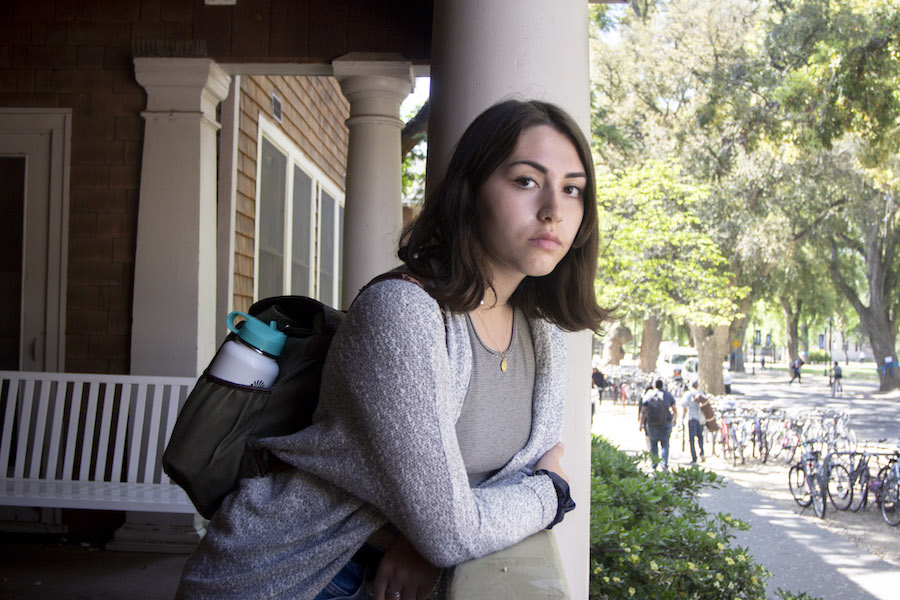
Students need mental health care, struggle to find it

DIANA LI / AGGIE

UC Davis students share common concerns about difficulty accessing care; administrators respond

This article is the fourth in a four-part series examining issues in the UC system related to the availability and accessibility of mental health care.


At the recent Town Hall on mental health held at UC Davis, first-year student Francesca Iacono held back tears as she shared her experience of attempting to access the university’s mental health care services during her first quarter on campus. “I needed to see someone,” Iacono said, “but there was no one to see.”

Iacono is an out-of-state student from New Jersey. She noted that her nonresident tuition could pay for her to attend a private university — which would offer her the mental health care she needs — and wonders where her money is actually being spent.

Since the eighth grade, Iacono has struggled with depression and anxiety. In high school, she was put on medication for depression and saw a counselor her senior year who she stopped seeing when she began school at UC Davis last fall. A few weeks into fall quarter, “things started to act up again.”

“It was overwhelming — I would just have all of these racing thoughts and all of these depressing thoughts,” Iacono said. “I was so far from home, and I had no one here to go to.”

Iacono saw a counselor through UC Davis Counseling and Psychological Services three times before she was referred to a UC Davis primary care doctor at Student Health and Counseling Services. When she described her symptoms, she said her doctor would not prescribe her antidepressant or anti-anxiety medication because she was also experiencing aspects of bipolar disorder, which could be worsened with those medications. She would need to see a psychiatrist.

But psychiatry was booked at the time — the next available appointment was over a month away, during finals week. There was nothing she could do but wait, which she did, only to have her appointment cancelled two days beforehand.

After the cancellation, she was referred back to her primary care doctor who, yet again, told her he could not treat her. So Iacono went back to on campus psychiatry.

“I couldn’t make an appointment then for psychiatry because they said they weren’t taking any new patients until mid-January,” Iacono said. “I said, ‘I was supposed to be a new patient two months ago.’ Then, come January after break, I called, made an appointment and then maybe two or three weeks after again, two days before, they cancelled.”

Eventually, Iacono was able to find a psychiatrist in the Davis community whom she sees consistently. But the struggle to receive care and the last-minute phone call cancellations have largely defined her initial introduction to UC Davis.

“The last people who should be treated like that are the ones struggling with their mental illness, especially people who have been pre-diagnosed — they know they’re not doing well, they’re trying to get help” Iacono said.

Like Iacono, other students have voiced concerns about wait times and the availability and accessibility of counseling and psychiatric services.

According to Nan Senzaki, a senior staff psychologist at UC Davis, during this past Fall Quarter the university was hoping to stay within two weeks for wait times, but “quickly, by about mid-quarter” the wait time “was three weeks or more.” Joe Spector, a counseling psychologist in the Student Disability Center, said he is concerned about wait times.

When asked about her response to students who have voiced frustration with wait times for appointments on campus, Vice Chancellor of Student Affairs Adela de la Torre said that “part of it is who you asked in that context,” but that she could “see if it’s a week and you feel it’s an [emergency].”

We could have counselors seeing students every day, but the root cause is not the access to the mental health counselor,” de la Torre said. “Public health is about transportation, food security, being able to pay your rent. It’s so many different dimensions. If we’re really talking about caring about mental health, it is a holistic environmental approach. It is the investment that we put into the Cross Cultural Center or the retention centers or into the Student Academic Success Centers. The investment now — food security and housing issues — those are huge. Those are the stressors that create the need and create anxiety and depression.”

Ironically, the Cross Cultural Center’s budget was cut for the 2017-18 school year by $77,000 by the Division of Student Affairs, which de la Torre oversees. De la Torre later clarified her original statement, saying via email that the Division of Student Affairs was “faced with a budget reduction” and, after allowing “for maximum input of staff and students,” she is confident

the reduction in the CCC’s “operational budget and select programming” and decision to make a contract position permanent “represents the best use of those funds.”


Meeting diverse student needs

There are multiple entry points into counseling services and mental health services across campus. The Community Advisor Network counselors focus on outreach efforts to different student populations. Senzaki said she believes “this model of community mental health is admirable yet also problematic.” It becomes problematic, she said, if there is no “strategic plan on how to sustain services” and “attention to limited resources and sustainable staffing.” Currently, SHCS is operating without a strategic plan.

According to Margaret Walter, the director of student health and wellness, last year Counseling Services served 13 percent of all UC Davis students with around 23,000 client appointments. Students seek out mental health services for a variety of reasons, but Walter said, “depression used to be the top reason students came,” but nationally, “over the past few years, anxiety has really overtaken depression.”

“We certainly don’t want students to think they have to have a diagnosis to come to counseling,” Walter said. “We want all students to know they can come for issues such as stress.”

CAN counselors provide services to students within “specific identity groups,” de la Torre said. Groups include the LGBTQIA community, the Chicanx/Latinx community and the Asian community. Sam Chiang, the UC Davis Mental Health Initiative director and a fourth-year English major, said accessibility of care depends on the “subcategory of student you fall into.”

“There are increased risk factors for students of color,” Chiang said. “I feel like the students who need it most may be the ones who have the least access and awareness of it. At the end of the day, students who are involved have a huge support system and a huge risk factor is not having a support system.”


Taking the initiative

Before she knew she had ADHD, Hao Hao Pontius was struggling to pay attention in her first upper-division course her sophomore year at UC Davis — “I could not focus for more than 20 minutes at a time,” she said. Pontius, now a fourth-year animal biology major, talked to a housemate whose sister has ADHD about what was happening.

I went and researched it and [I thought], ‘Maybe I should see someone about this?” Pontius said. “I went to go see someone in North Hall — someone in CAPS; I made a couple of appointments. We were talking about it and she [said], ‘You have a couple of options: if you think you could manage it by yourself, here are a couple of strategies.’ I was like, ‘That’s what I’ve been doing my whole life, that’s not really helping me anymore.’ And she said, ‘Okay we can move on, we can get you officially diagnosed.’”

Pontius was then referred to a provider in the city of Davis. But upon making an appointment with the provider she was referred to, he wasn’t working in Davis anymore. She returned to CAPS and was told she could get her diagnosis through the SHCS.

“And then they never referred me for two quarters,” she said. “In the meanwhile, I’m like suffering.”

Pontius eventually went through a testing process to get diagnosed after she called. Afterwards, however, she was not contacted by SHCS with the results. After again taking the initiative, she was told she could see a psychiatrist through UC Davis to figure out medication.


Struggling to find access in Davis

Kate Bartschat, a third-year psychology major, had a similar experience when she received a referral for a provider in Davis. Bartschat said the she had ongoing problems with anxiety and depression since freshman year and was not satisfied with the counseling she was receiving at UC Davis.

“I would go in in crisis, feeling really bad, and they would make an appointment and see me right away — because if you go in and you’re having a breakdown, they’ll see you,” Bartschat said. “The appointments always seemed a little bit rushed and they would just tell me to exercise more, eat healthier, etc. I eventually realized I needed to find a therapist on my own. I sought someone out in the community, and I actually started improving once I saw someone. Unfortunately, she moved away. That’s when things got worse again, and I was still trying to find a therapist.”

Bartschat said she received long lists from UC Davis of community referrals, but after calling every name listed, everyone was “completely booked up.” Iacono also received an outside referral from the university for a community psychiatrist and scheduled an appointment, but that appointment was cancelled before it took place.

After a year looking for a provider, Bartschat found the closest place she could go for care was the Kaiser in Vacaville. Because she had access to a car, Bartschat was able to drive to Vacaville, but she recognized that many students do not have the means to transport themselves outside of Davis. Senzaki recognized this as an issue.

“Most of our students need providers in proximity of walking distance or a bus ride,” Senzaki said via email. “There are enough obstacles to try and seek treatment much less having to drive to Sac or elsewhere. As many students have limited mobility or transportation, we are fortunate to have a sizable community of off campus providers but not enough. In the last few weeks of this fall quarter, many of the off campus providers were no longer able to take new students.”


Accepting UC SHIP

UC Davis, like most UC schools, operates on a brief counseling model, meaning there is a session limit for students. According to Senzaki, “many students would benefit from far more services” than the university is equipped to provide.

“We have increasingly become dependent on off campus therapists (private practice, counseling centers, SHIP/insurance referrals) to support our students who need longer term or specific kinds of counseling,” Senzaki said via email. “WE have increasingly become more dependent on off campus resources as we often reach capacity and rely on off campus resources as we become overwhelmed.”

The UC Student Health Insurance Plan is provided by Anthem Blue Cross this year. Judy Moore, a licensed marriage and family therapist in the Davis community, accepts UC SHIP. The majority of Moore’s clients are UC Davis-associated — she sees a large number of faculty and staff members and about 10 students a week.

Moore explained that in order for therapists to accept students with the UC SHIP insurance, therapists must be on the Anthem Blue Cross insurance panel.

You have to apply just like you would for a job,” Moore said. “You apply to the insurance company, you fill out an application, you have your resume, you show proof of your credentials and then they decide whether to take you on their panel or not. That can take anywhere from a month to six months.”

Moore also explained why some providers do not accept UC SHIP.

“[Reimbursement] is through the contract that is struck through the university and whatever insurance they’re going to call out for that year,” Moore said. “For the students this year, it’s California Anthem Blue Cross. But for the university staff it’s Optum, and Optum pays us a total of $60 a month, the client pays $20 of it. Blue Cross pays $74 a month and the student pays $15 of it. For private pay, people can charge anything they want, up to $125 dollars an hour. If you see 20 clients a week that are insurance clients [vs.] 20 clients a week that are private pay, it makes a huge difference in your income.”

Socioeconomic factors may limit a student’s access to community providers. While there are many local therapists, according to UC Davis Counseling Psychologist Aron Katz, the number of those providers accepting UC SHIP “is shrinking.”

“The other option would be to pay out of pocket for a provider and submit for reimbursement,” Katz said. “It would be an additional out of pocket bill. If they’re willing to front the money and then apply for reimbursement, they would have greater options. That does favor our students who are better resourced.”

Moore has worked as a mental health care professional since the 1980s. She spent the past five years in Davis with her own private practice, and many of her clients are students who have either sought her out on their own or who were directly referred to her by the university. Moore said she sees room for improvement in how the university operates in terms of providing mental health care.

“I think that referring clients out to licensed therapists in the community is a good solution, provided that there’s enough people on the insurance panels to meet the need,” Moore said. “In order for more therapists to go on the insurance panels when the university bargains with the insurance companies, it would be in their interest to bargain for a higher pay rate for the outside providers — that’s what at the root of this.”


Consistency of care

Currently, there are 28.5 counselors and 3.5 psychiatrists at UC Davis. According to Assistant Vice Chancellor for Divisional Resources of Student Affairs Cory Vu, having three and a half psychiatrists is “really a luxury” due to the cost of psychiatry, although Walter said they “would love to have more availability.”

Bartschat and Pontius both said they had formed relationships with their psychiatrists on campus. Bartschat, however, did have one negative experience.

“In order to first see [a psychiatrist], I made an appointment two weeks in advance and I was 15 minutes late because I got confused,” Bartschat said. “And I had to wait another two weeks to see someone. With medication, it takes a really long time to kick in, like with antidepressants, so it’s really important to be able to go in and see someone right away and start working with them consistently on that.”

Pontius described her psychiatrist as “great” and “very helpful” and said it’s important to have a good relationship with your mental health care provider. In the past, she has called to schedule an appointment with a provider and found they had left the university — which is not uncommon, given UC-wide recruitment and retention issues.

Other students have also had beneficial experiences with their on-campus providers. Third-year cell biology major Daisy Carrillo started seeing a counselor after she began feeling stressed for no reason. Carrillo said she used the services at least once a month in Fall Quarter of 2016 and twice during the following Winter Quarter. During that time, she was able to see the same person — a psychology graduate student — and said she thought “it was a really good experience.”


Plans for the future

Since the Town Hall of Mental Health last quarter, changes have been made and there are plans in the works to address student concerns.

Vu said work is being done to increase transparency with regard to the allocation of funds and Chancellor May recently announced the creation of a task force on mental health care. A case manager was also just hired with the hopes of reducing the time counselors spend on non-clinical work to free up more time to focus on clinical care. Since the publication of an audit on Counseling Services by the university in February, Walter said “counselors are seeing more students each day than they were” when the audit was released.

Diana Davis, the clinical director of SHCS counseling services, said meeting student needs is a game of catch-up.

“The growth of the university is always going to be greater than we can meet,” Davis said. “I think there’s this kind of sense about never catching up. For example, there are a lot of international students on this campus — more and more all of the time — […] and they have unique needs. Unless you specifically target bringing resources to campus to meet these needs, you’re kind of always behind in trying to figure out how to meet that need. But there are so many different needs, you’re kind of like, ‘Which need do you aim for?’”


Written by: Hannah Holzer — campus@theaggie.org


Editor’s note (updated 5/9/18 at 8:45 p.m.):

An earlier version of this article stated Judy Moore has worked as a licensed marriage and family therapist since the 1980s. Moore has worked as a mental health care professional since the 1980s. The article has been updated to reflect this change. Although the quotes are correct, Moore later clarified that Optum pays $60 per session, not $60 per month, and that a contract struck through the university is referred to as a “carve out,” not a “call out.”

Fight to increase wages, end discrimination

CAITLYN SAMPLEY / AGGIE

53,000 UC workers to participate in three-day strike

The American Federation of State, County and Municipal Employees has announced its plans to go on strike from 4 a.m. on May 7 to 4 a.m. on May 10 at all University of California campuses and some hospitals.  

A combined 53,000 employees are estimated to participate in the strike. Two additional unions, University Professional & Technical Employees and the California Nurses Association, plan to support the objectives of AFSCME through a sympathy strike during a portion of the three days.

After years of negotiations between the unions and the university, AFSCME-represented employees voted with 97 percent approval to carry out a systemwide strike. The plans to strike come after recent research commissioned by AFSCME exposed that women and people of color working at the UC have been receiving unequal pay compared to their male and white counterparts, respectively. The research also revealed increasing racial and gender disparities in the UC workforce.

By going on strike, AFSCME aims to increase its employees’ wages and raise awareness surrounding the concerns addressed in the report. A noteworthy concern includes the widening income gap between the UC’s highest-paid workers, which include a higher proportion of white people and men, and the lowest-paid workers, consisting largely of people of color and women.

Strikes of this scale rarely occur on our campus, and it’s important not to underestimate the impact that this event will have on university operations. AFSCME represents the grievances of over 25,000 low-wage UC employees whose jobs are essential to the daily operations of the UC system. More than 4,000 of these employees work at UC Davis.

From assisting nurses at the Student Health and Wellness Center to simply unlocking the classroom doors each morning, these patient-care and service workers are integral to the everyday function of and experience at UC Davis.

The Editorial Board supports the security guards, groundskeepers, custodians, counselors, nursing aids and all other service and health care employees the strike represents. These individuals set the groundwork, provide imperative mental health services and help keep our campus beautiful every day.

As a leader in higher education and proponent of diversity in the student body, the UC has a responsibility to be a leader in equal treatment — and payment — of its employees.


Written by: The Editorial Board

After injury, Supreme Court Justice Sonia Sotomayor cancels law school speech

KELLEY WEISS / COURTESY

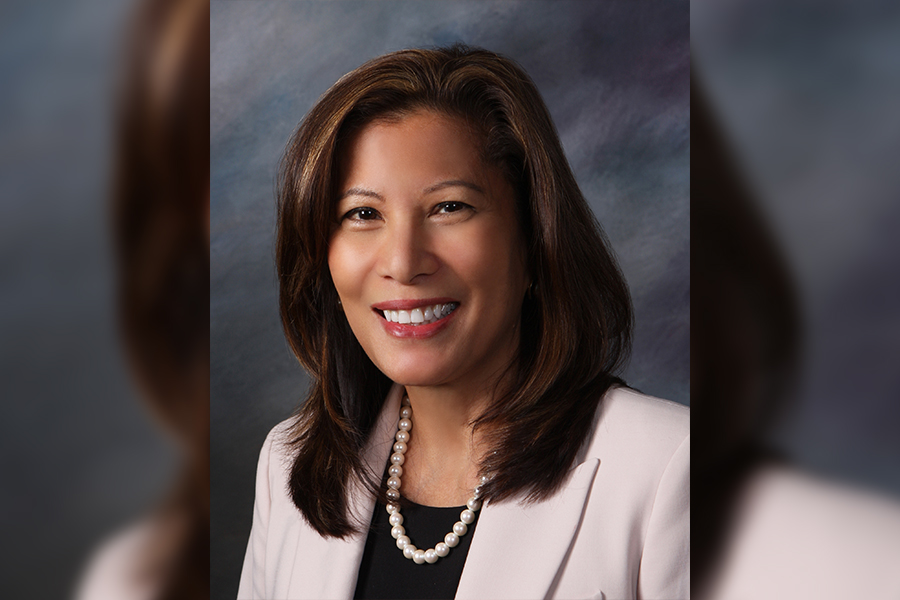
New commencement speaker will be California Chief Justice Tani G. Cantil-Sakauye

Initial plans for Supreme Court Justice Sonia Sotomayor to speak at the UC Davis School of Law 2018 commencement have been cancelled. After a fall at her home, Sotomayor sustained a broken shoulder.

The cancellation was confirmed in a statement sent out to the King Hall community by law school Dean Kevin Johnson and obtained by The California Aggie.

We learned late yesterday […] that Justice Sonia Sotomayor, who suffered a broken shoulder earlier this week, will not be able to attend our 2018 commencement,” said the statement from Johnson. “She had hoped to participate even with the broken shoulder but her doctors advised her that the injury was worse than initially believed.”

The statement also wished Sotomayor “a speedy and full recovery” and hopes “she can visit UC Davis School of Law in the future.”

The new keynote speaker is Chief Justice of California Tani G. Cantil-Sakauye. According to a release from the UC Davis School of Law, Cantil-Sakauye is “a member of the UC Davis School of Law class of 1984” and she was “the first Filipina American and the second woman to serve as the state’s chief justice” when sworn into office in 2011.

“Since receiving both her undergraduate degree and J.D. from UC Davis, the Chief Justice has been a long-time supporter of the law school and campus,” the release stated. “Her sister is a graduate of UC Davis, her daughter is currently an undergraduate student at UC Davis, and her niece is graduating this year with the School of Law’s Class of 2018.”


Written by: Hannah Holzer — campus@theaggie.org

Campaign for connections

HA’AM NEWSMAGAZINE / COURTESY

Muslim, Jewish students campaign for more halal, kosher food options on campus

Last week, Arielle Zoken felt a wave of joy wash over her at the sight of a leftover box of matzo on a counter of the dining commons. It was symbolic of Zoken’s efforts to introduce kosher food at the UC Davis DCs for Passover.

“The issue that we were having was that there was no kosher at all in the dining halls,” said Zoken, a second-year economics major. “Passover, even for the most reform, non-observant Jew, means something more than other holidays. A lot of reformed people who don’t keep kosher throughout the year will keep, to some level, kosher for Passover, like they won’t eat bread, pasta, things like that.”

As someone who is more observant, Zoken is very limited in what she can eat during the week of Passover. From pasta to legumes to corn, there’s practically nothing she can touch in the DCs except for fruit. Last year, when she was a freshman, her mother sent her two whole grocery bags of kosher food to sustain her for the week.

“Two of my roommates are not Jewish, and last year, I didn’t really see them for a whole week because I was cooped up in my dorm, eating my matzo and like fruit and meat that was in my mini fridge,” Zoken said. “That was embarrassing and also wasn’t fair because I had all these meals that I wasn’t using.”

Zoken and other Jewish students are not the only ones who face this problem. Muslim students on campus who follow a halal diet have also run into obstacles in terms of adhering to their faith when eating at the DCs.

“Halal usually refers to the meat […and] one of the most important things [is that] Muslims don’t eat pork, we don’t have alcohol, so if you were to, say, put alcohol in the [halal] chicken, that completely defeats the purpose — we can’t eat it anymore,” said Hasna El-Nounou, a second-year community and regional development major. “There were some people who were just really sad because the cookies were used with vanilla extract, and vanilla extract has alcohol in it. It was heartbreaking.”

Out of this problem arose an effort among these students to create a halal/kosher food campaign. El-Nounou, who is a board member for the Muslim Student Association, and a few other MSA members decided to recruit Zoken and her community for the campaign. Together, they have been coordinating meetings with the DC staff to implement more kosher and halal food options for students during religiously significant times of this school year.

“I went in with the mentality that like, ‘Okay, there’s probably a lot of halal food on campus, I know that the dining commons sometimes offers halal chicken,’” El-Nounou said. “[We went] in and kind of figured out ‘Can we increase the amount of food on campus?’ and ‘Ramadan is coming up, how can we increase [halal options]?’ Then as a board we also took note that there aren’t that many kosher options, there’s actually less kosher options.”

Halal can be found on campus in various places like at TexMex in the CoHo as well as various popular food trucks like Shah’s. But kosher options are few and far between on campus as well as in the community. In some cases, students have to make the extremely difficult decision to give up keeping kosher altogether just because of how challenging it is in Davis.

“I eventually had to give up being kosher full time,” said Sarah Goldberg, a second-year biochemistry and molecular biology double major, in an email interview. “I also tried to be vegetarian in the dining halls so that I could loosely adhere to the laws of kosher, however that didn’t work for me health-wise. Eventually, I just had to give up keeping kosher besides on Passover. There is little to no kosher food sold in Davis, and the meals that are sold are boxed/packaged items, no meat or dairy products really. Emotionally and mentally, it was really hard to have to give up my religion in order to survive and keep my physical health.”

Goldberg had grown up abiding to a certain set of laws her entire life, and to give up kosher in college was an overwhelming decision to make as a freshman. In order to keep kosher during Passover, she had to get her meals from a local rabbi and his family, but even this was a challenge.

“Basically, last Passover I almost fainted because I didn’t have easy enough access to Passover food and I wasn’t going to be able to go to the rabbi’s house to get food until six PM that evening,” Goldberg said. “So I had planned to just attempt to do a full day of classes and work on no food. Having access to food that you can eat seems like such a small thing, but it can make the [biggest] difference in a person’s daily life. Not having to go all the way to the rabbi’s house, far up Anderson Rd, to get my meals this year was such a blessing.”

This was the first part of the campaign that Zoken decided to tackle specifically with Goldberg in mind: Passover is too important for students not to have access to kosher food.

This year, Passover occurred between March 30 and April 7. After one external kosher kitchen fell through delivering meals for the week to the DCs, Zoken was overjoyed when she got the good news that a kitchen she recommended from Oakland would be providing kosher food for UC Davis students. With this method, students could swipe in or, if not a freshman, buy a meal plan for the week so they had access to kosher food.  

“I literally started crying when the texts started rolling in of like ‘I got my food’ and pictures of [students] with their food,” Zoken said. “I don’t think Dining Services realized how many people there were either, but there were options like shawarma, chicken, vegetables, pound cake, there was a really pretty flier that went up and I sent out and shared, and there was matzo. Jewish students, for the first time in awhile, started feeling like ‘hey we matter here.’”

One reason UC Davis might not have a kosher kitchen is because of the specific rules as to what is required to keep one. Zoken has also heard from a DC chef that there aren’t enough Jewish students at UC Davis to justify maintaining a kosher kitchen. This is the catch-22 of the situation, as Zoken pointed out there are not enough Jewish students at UC Davis largely because there is no kosher kitchen.

“I would like Davis to have plenty of different food options for all students’ dietary restrictions,” Goldberg said. “I think a kosher restaurant on campus would be an amazing thing to have as well as regular kosher meals provided for those with meal plans.”

According to Zoken, what this campaign meant was that students were not losing their money by not utilizing their swipes during this religious holiday. In the past, students who kept kosher would be losing out on those swipes and essentially wasting money, or were having to pay extra to get food plans at local synagogues, but an aspect of the campaign’s message is that students shouldn’t have to pay to keep their religion.

This also rings true for students who eat halal and observe the Muslim holy month of Ramadan, which occurs from the middle of May to the middle of June this year. A component of Ramadan entails a fast from sunrise to sundown, which means no eating or drinking.

“Last year was difficult because the the early morning meal, which is at 5 a.m., the dining commons isn’t open, and I think the dining commons were actually closed when students could break their fast, so basically there was an entire month where none of the students could eat anything,” El-Nounou said. “So I went into the dining commons with everyone and I was like ‘listen, we can’t have that happen because they’re basically losing an entire month’s worth of swipes, and they don’t have food, they don’t have a kitchen to cook, they don’t have the dining commons, like, we have to figure that out.’”

Despite the change in DC hours to being open all day long this year, the weekends will still prove problematic because on Friday and Saturday evenings doors close at 7:30 p.m. or earlier, which is too early for students who are breaking their fast at roughly 8 p.m.

“I’m actually going to be meeting with [DC staff] tomorrow to discuss regulations, what we want to do for the month of Ramadan,” El-Nounou said. “Hopefully we can do something where students can have a take-out box and swipe it out, so that they can eat whenever they want, something along those lines. But to kind of work around that, maybe to offer more halal meat options around those times for students, during that month especially.”

El-Nounou also pointed out that it would be economically advantageous for UC Davis to adopt more halal options for its students because it will attract students who previously couldn’t eat there to finally do so.

“There’s a huge population of Muslim students on this campus, it’s absurd, like we can’t even tell you how many there are it’s such a big population, that’s why all the food trucks now, the majority of them are halal,” El-Nounou said. “They’re getting so much business because you actually make more money if you offer halal meat because people who don’t really eat halal don’t really care, people who eat halal obviously are going to care and it just doesn’t harm your business in any way.”

According to El-Nounou and Zoken, some people who eat halal will also eat kosher. Although the debate stands and this is not a universal decision by any means amongst people who eat halal, it illuminates the greater message of the campaign.

“Us having more kosher food on campus, hopefully in the long-run, some people who keep halal will eat the kosher food because it was killed by a God-fearing person — it all comes down to a connection, there is a solidarity there,” Zoken said. “I really hope that through this campaign, work can continue of us coming together rather than being further apart, because we live in a world right now that is so divisive.”

Ultimately, the halal/kosher food campaign is about increasing dietary options for students and bringing together people in a way that enables them to focus on their similarities rather than their differences.

“Nationally, people want to paint this big hatred that Jews and Muslims can have toward each other, but when it really comes down to it, there’s a lot of overlap there,” Zoken said. “You can have connections be achievable if you do more things like this and we can understand each other better.”


Written by: Marlys Jeane — features@theaggie.org

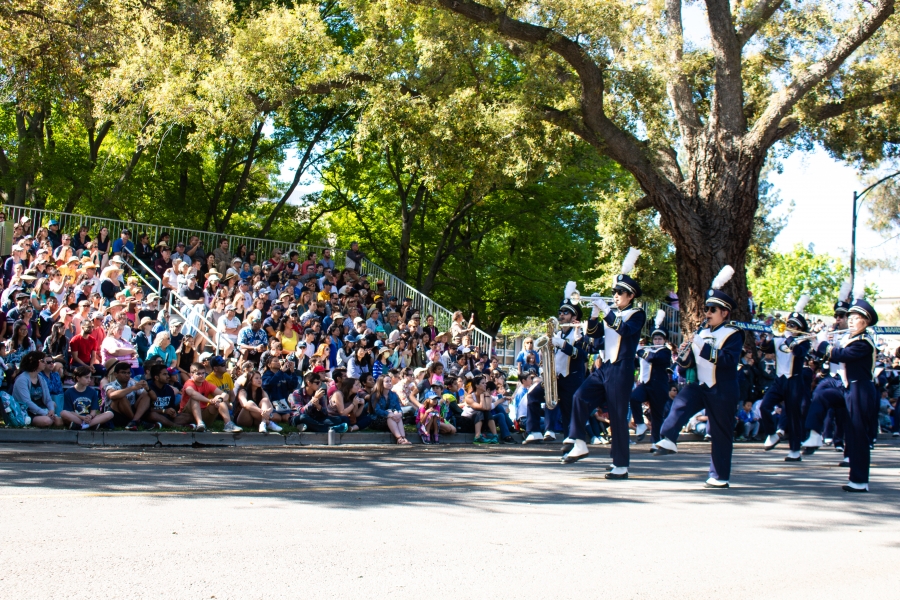
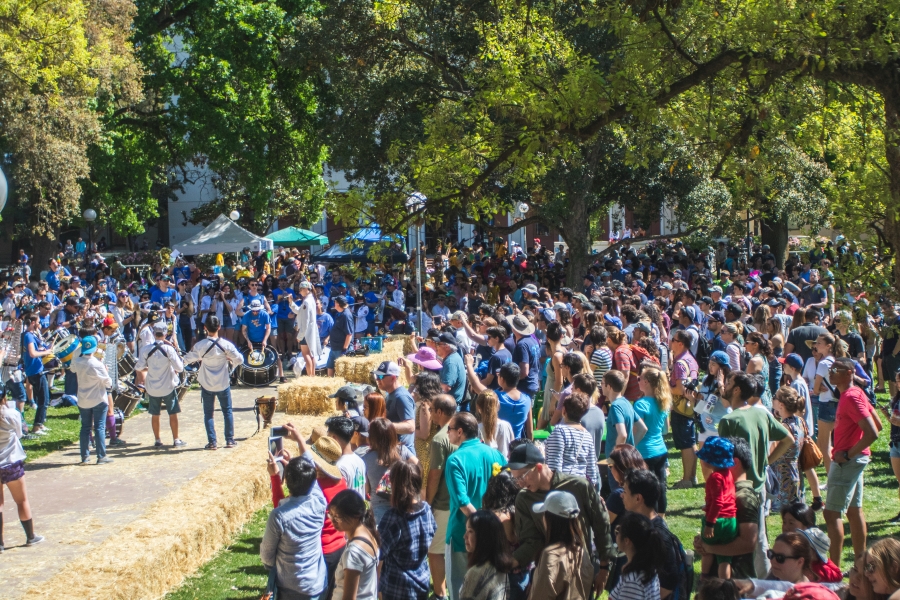
Picnic Day 2018 in Photos

A visual recap of UC Davis’ premier event

Dog going, dog going, doggone. (DIANA LI)


(DANIELLE MOFFAT)


(TAYLOR LAPOINT)


(TAYLOR LAPOINT)


Methane and dish soap create fire at the Chemistry Magic Show. (KAILA MATTERA)


Had an egg-cellent time at Picnic Day. (ANH-TRAM BUI)


(JORDAN KNOWLES)


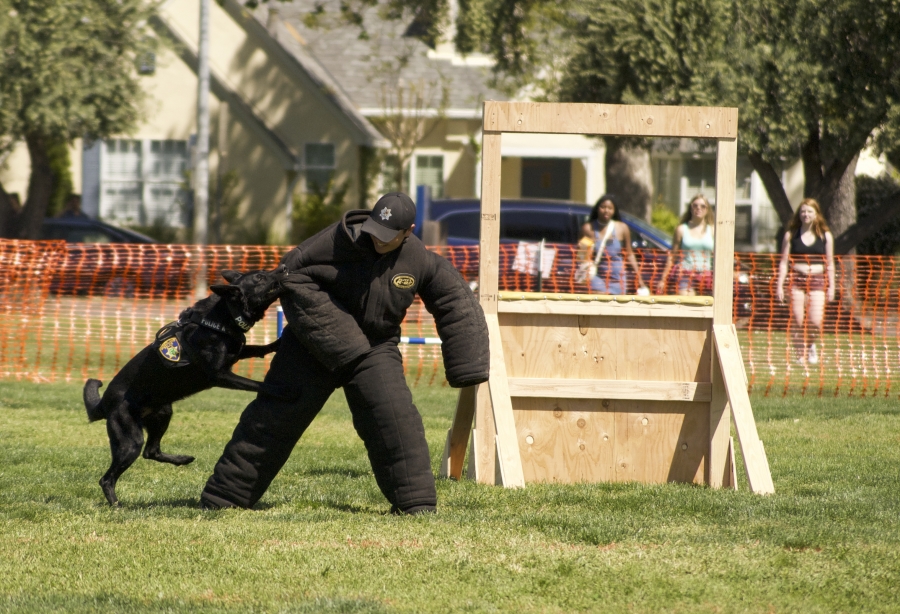
Demonstration of K-9 apprehension of a suspect. (KAILA MATTERA)


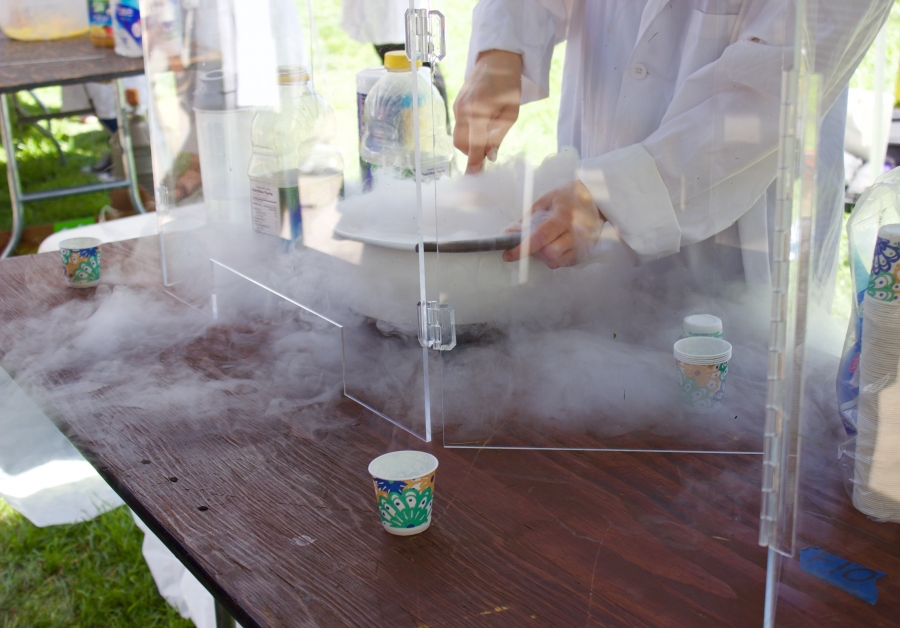
A great combination with the amazing weather on Picnic Day was the sorbet that was made from liquid nitrogen. (VENOOS MOSHAYEDI)


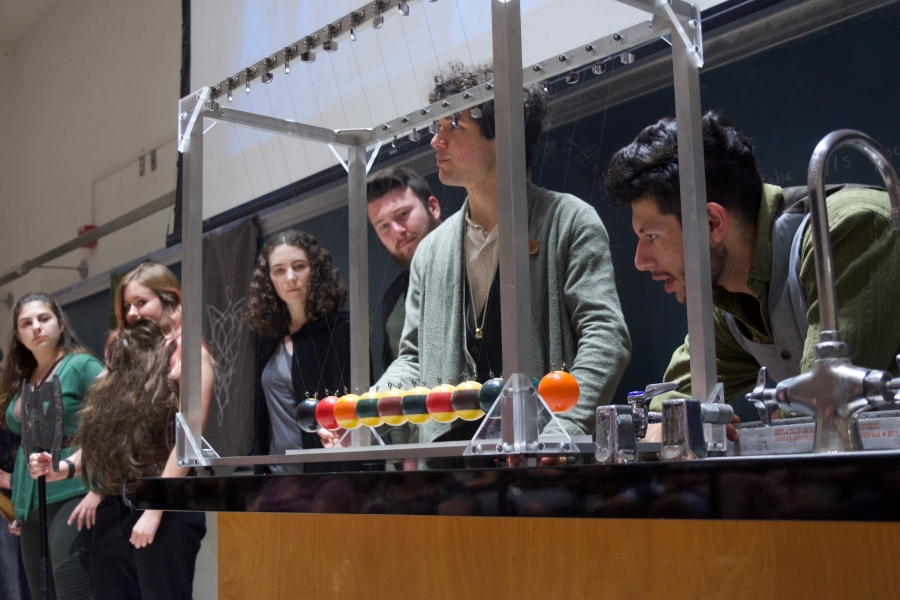
Students demonstrating conservation of momentum and energy using Newton’s cradle. (ALEXA FONTANILLA)


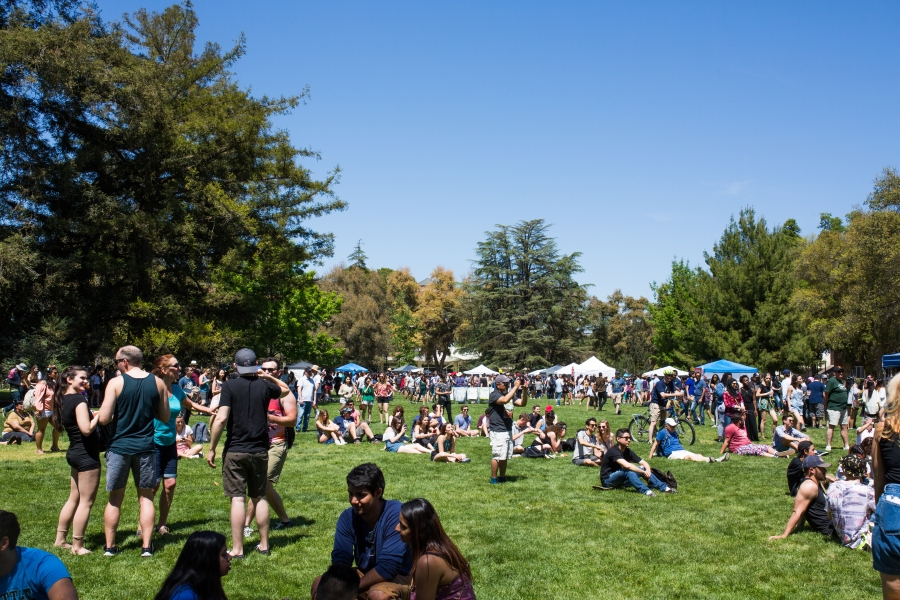
Families and friends rejoicing in the fine 80-plus degree Picnic Day weather. (TREVOR GOODMAN)


Lo & The Mix played an incredible set for hundreds of families and students on the Quad. (TREVOR GOODMAN)


(JULI PEREZ)


Models show off students’ best work. (ZOË REINHARDT)


LeShelle May shows off a dress from the Red Dress Collection. (ZOË REINHARDT)


By: The California Aggie Photo Desk

Cartoon: Tariff Fight

Written by: Ariel Hilomen — abhilomen@ucdavis.edu

Disclaimer: The views and opinions expressed by individual cartoonists belong to the cartoonists alone and do not necessarily indicate the views and opinions held by The California Aggie.

From the California Chronicles

CHRISTIE NEO / AGGIE

A forkful of omelette was in my mouth when my friend came storming in…

I didn’t know what was meant by that text. Was I successful in finding trouble? My highly dramatic self is always on edge because of the ambiguity of text-based communication, so I was at a standstill.

I looked over and saw Paul looking at his phone while lying on top of his bed. I ever so slightly twiddled my fingers, and he amazingly understood that I was trying to say hello, so he waved and said, “Hey.” I asked him how the family time was, and he immediately said, “Hated it.” I liked him even more at that point, but not in that way, although I do play for the same team.

The night before did get me wondering about how I was going to find a bull in cow town, but there were more pressing matters in front of me. I unplugged my phone (I managed to actually plug it in the night before) and turned onto my back. I replied to the text my friend had sent and waited for a response.

I checked out the dining commons that I was going to be eating at for the next nine months. If I had to say anything about it, I’d say it wasn’t bad. A forkful of omelette was in my mouth when my friend came storming in and sat down next to me. “Remember that guy from the party? The one you went up to and told that I was into him?” I nodded my head in agreement, curious to see where this was going. “Well, I’m seeing him this weekend,” she replied.

I congratulated myself for being so bold, but I was worried about what else I forgot from the night before. On the bright side, we had a date to plan.

Next week: Oh, men.


Written by: Terry Hudson — arts@theaggie.org

Disclaimer: The views and opinions expressed by Terry Hudson are completely fictional and do not necessarily indicate the views and opinions held by The California Aggie. The story is fictionalized, as is Terry Hudson.

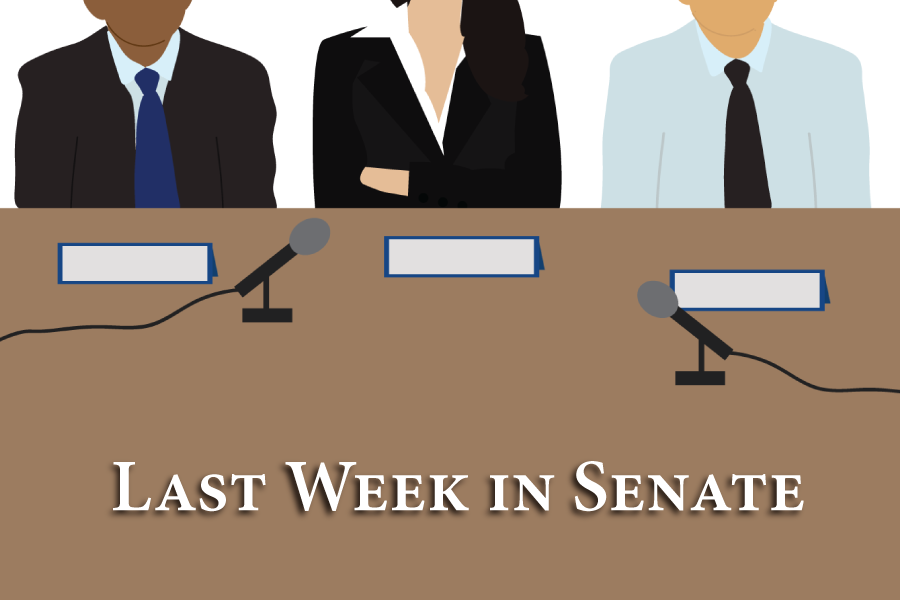
Last week in Senate

HANNAH LEE / AGGIE

Daniella Aloni confirmed as interim senator

Vice President Shaniah Branson called the weekly Senate meeting to order at 6:10 p.m.  on April 12. Senator Danny Halawi was late.

First on the agenda was a quarterly report from the Mental Health Initiative. Fourth-year English major Sam Chiang, the founder of the MHI, spoke about Mental Health Awareness month occuring in May. Chiang said approximately a quarter of all adults currently live with mental health issues and suicide is the second leading cause of death among college students. The awareness month will include tabling on the Quad every day as well as events and activities.

Next, the Committee on Student Affairs and Fees gave a presentation. COSAF representative Jessica Sandoval offered the committee’s purpose as being to “advise the Chancellor through the Vice Chancellor of Student Affairs on the use of student fees in Student Affairs units” and “advise on the use, management and capital improvements to student fee-funded buildings and facilities.” The committee is composed of 10 voting undergraduates, four voting graduate or professional students, one voting faculty member and two voting staff members.

Of the fees overseen by COSAF, the Facilities and Campus Enhancements Fee and Legal Education Enhancement and Access Program supports on campus maintenance. It is  $427.83 per current undergraduate and graduate student.

In the allocation of the separate Student Activities and Services Initiative/Student Services Maintenance Fee, 8 percent went to Student Community Centers, 22 percent went to financial aid and 34 percent went to Student Athlete Grants in Aid.

In light of a recent change to oversight power, Sandoval said COSAF hopes to have more oversight over units on campus “and have a better understanding on how they’re using the money.”  

A contentious conversation followed regarding the confirmation of the nomination of third-year communication major Daniella Aloni into the interim senator position left open after Andreas Godderis resigned as a senator. Aloni, who ran and lost in the Winter Elections, was nominated by ASUCD President Michael Gofman. Gofman said he “chose her because of her experience working in commissions and committees and her experience running for Senate.”

“I decided to run for this position after actually losing in the elections,” Aloni said. “As a transfer student, I really wanted to get involved and make a positive impact on communities. I want to focus on my platforms.”

Questions from the table followed. Senator Ko Ser Lu Htoo expressed concern over the absence of other individuals at the interviews for interim senator — “Are you aware there should be two more Senators at the [interview] meeting?” Htoo asked Aloni.

Gofman responded that these inquiries should be directed to him and although a link to sign up to help with interviewing was posted, no one responded.

“She showed up and I didn’t want to interview anyone alone so I reached out to Greg Ortiz to interview her so there would be multiple [perspectives],” Gofman said.

Htoo said Gofman could “either withdraw the nomination or I motion to postpone the confirmation until the interview is seen by two senators as it’s not fair for the other candidates.”

Controller Jin Zhang gave her insight on the situation.

“I wanted to clarify that there’s an interviewing committee for interviewing senators,” Zhang said. “However, the only person who really needs to be there is Michael. However, at the same time, the Table can always decline the nomination and another process will be held after this week. The vacancy will be reopened.”

A 10-minute break was proposed, to which Htoo objected. Pro Tempore Jake Sedgley motioned to divide the house. The divided house voted to proceed on Aloni’s confirmation vote which resulted in seven yes votes, three no votes and two abstentions. Senator Jesse Kullar then motioned to confirm Aloni. Aloni was confirmed with a vote of six yes votes, two no votes and four abstentions.

Senator Htoo voted no on Aloni’s confirmation. Htoo clarified to The California Aggie that this vote was due to unfairness in the interviewing process and a “lack of experiences.”

A break was then held from 7:25 p.m. to 7:35 p.m.

Old legislation came up after the break. Senate Bill #55 would authorize the Vice President to administer the oath of office to ASUCD Senator instead of the Elections Committee Chair. The bill passed in the Internal Affairs Commission on a 4-3-2 vote. Opposition said that they were not sure why the change was necessary and believed the work of the existing Election Committee sufficed. Sentiments in favor of the change said that the new committee is non-partisan and “they shouldn’t be administering the power”

Notable questions about the bill followed. Senator Htoo said the Elections Committee was not in favor of the bill as it changes ongoing procedures that have worked in the past. After continued debate that merged toward a resolution, a vote was taken on SB #55. It failed with four yes votes, five no votes and three abstentions.

The next bill was Senate Bill #58, which would allow commission chairpersons to make motions, second motions, motion to confirm and object to motions throughout the Senate agenda. It passed in the IAC unanimously.

“I just really enjoy motioning us into public discussion and this bill would prevent me from doing that,” Gofman said. “I enjoy motioning and seconding stuff. This bill creates an exception for committee chairs to do that but it doesn’t create the same exception for the president.”

A member from the public said that it was their understanding that the bill would save time during Senate meetings.

Academic Affairs Commission chair Abby Edwards said “making it so we can motion in and out of things allows us when we’re getting a completely new Senate Table to push things forward and let them learn.”

ASUCD Senate Bill #57 was subsequently tabled.

Next was the introduction of new legislation. A Senate Bill to allocate $2,556 for covering Entertainment Council’s sound and lighting expenses from Lawntopia 2017 was proposed and sent to the Business and Finance Commission.

Another proposed bill would allow students to serve on no more than three subordinate bodies of the ASUCD Senate. This was sent to the IAC.

Next was the status of passed legislation. All past legislation was approved and signed.

Next was public discussion.

“There’s been a difficulty getting in touch with Kelly Ratliff,” Gofman said.

Ex-officio Reports and Elected Officer Reports were delivered. Past meeting minutes on April 5 were unanimously approved and the Senate meeting adjourned at 9:46 p.m.


Written by: George Liao — campus@theaggie.org

Disabled, or differently abled?

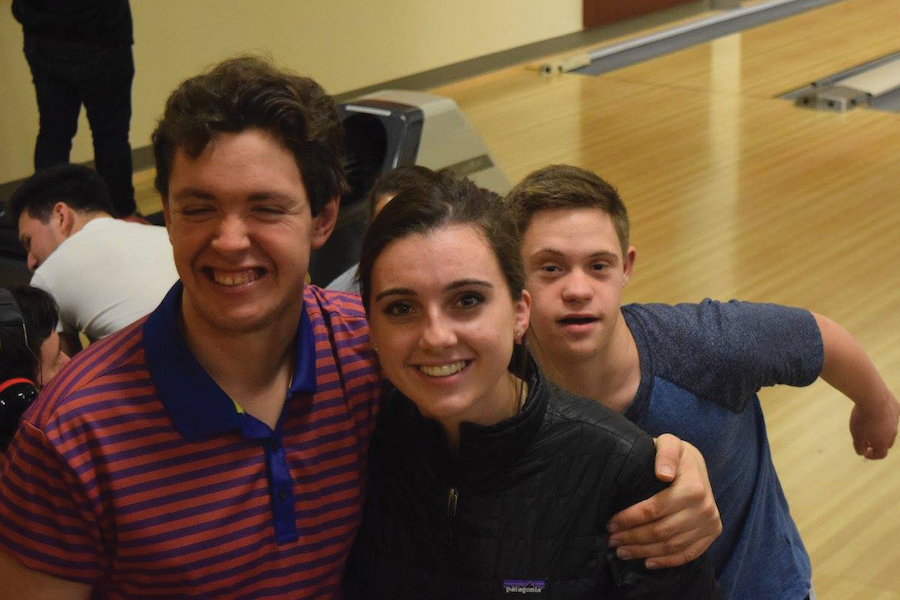
BEST BUDDIES AT UC DAVIS / COURTESY

IDD community, Best Buddies, Special Olympics, students with disabilities

Best Buddies is a student organization on campus that works to link the community of intellectual and developmental disabilities with UC Davis students. This organization is also present in high schools and several countries. It involves a wide spectrum of people, including individuals with epilepsy, autism and cerebral palsy.  

“We cover a very wide range of disabilities, because a lot of these buddies don’t have friends outside of their families, so they’re very secluded,” said Paola Vidal, a second-year neurobiology, physiology and behavior major. “So our point is to create [an] inclusive environment, but our ultimate goal is to not have a club like this. We want the world to naturally provide inclusion for these buddies because they are very sweet […] a lot have been bullied but their spirits are very, very high.”

Best Buddies pairs a college student with someone from the IDD community, called a buddy, and they are encouraged to keep in communication and hang out a few times a month. Best Buddies also hosts a range of events including dances, like the mini prom the club recently co-hosted with another club, along with smaller social events such as their own pool day.

Vidal is in charge of the Global Ambassadors division of Best Buddies, where she focuses on strengthening the soft skills of the buddies. She does this by helping them work through the writing process, focusing on details such as paragraph structure, along with just discussing ideas and encouraging buddies to present if they are comfortable in doing so.

“It basically just helps strengthen the communication style of these buddies, [through] writing, speeches, et cetera,” Vidal said. “Because a lot of them don’t know how to […] carry out a conversation. My style of [approaching] that program is presenting a prompt. So for one of the prompts in the beginning of the year, I [asked], ‘if you could write a letter to your future self, what would you have to say?’”

Vidal joined Best Buddies during her freshman year. She didn’t in the dorms, which made it more difficult for her to find friends.

“I remember looking around to find a club based on friendship, so when I found this club that serves the IDD — and I wanted to serve to a minority group, and I know that IDD is underserved unfortunately — so I got in touch with the president and got involved,” Vidal said. “I know what it’s like to feel alone, and I think one of the most powerful things is how friendship can minimize the discrepancy between two people.”

Vidal got paired with her buddy Wesley, who is nonverbal and low-functioning. The distinction between low-functioning and high-functioning, as Vidal explained, is mainly based on how independently someone can function without a caretaker. Some buddies that are high-functioning have jobs, and work in various places such as Safeway and at the ARC. Some have also pursued higher education.

Vidal mainly communicates with her buddy through fist-bumps and handshakes. They bond over food, use “yes or no” questions, and often go to the farmers market together.

“I got paired up with Wesley because he really likes walking around,” Vidal said. “I think his favorite thing is just walking around the Arboretum. We [also] got matched up because I’ve had previous experience with IDD. Because he is nonverbal, you have to be very affirmative. He has a tendency to walk around […] but when he sees that I’m getting left behind, he’ll wait.”

Special Olympics is another club on campus that works to serve people with disabilities, by using sports as a vehicle for community building.

Suraj Pathak, a fourth-year NPB major, founded a branch of Special Olympics at UC Davis in order to help break some of the stigma around people with disabilities. Pathak believes that athletes with disabilities have enriched his life and the lives of the members more so than they can ever provide to the athletes. Special Olympics aims to host one event per quarter that focuses on the sport of the season. This season, on May 19, they are putting on a huge clinic to bring out the football team and coaches, and invited different areas of Special Olympics in California to come join them on the UC Davis football field.

“[Our student club members] that came up to me right after our basketball game event were just fascinated as to how amazing these athletes are, how they are as people, and how funny [and] outgoing they are,” Pathak said. “Those experiences really hit home for me, because that is exactly what I wanted to see out of the club. The people that came up to me and expressed their joy in seeing the athletes, and how [the athletes and members] responded to one another is the only thing that I could ever take away from this — and that’s all that really mattered to me.”


Written by: Sahiti Vemula — features@theaggie.org

Police Logs

NICKI PADAR / AGGIE

Yes, fireplaces make smoke

April 12

“Two males going door to door.”

“Vehicle red convertible Chevy, driving slow, not using blinkers, not able to maintain lanes, reporting party believes possibly under the influence.”


April 13

“Hour ago — reporting party found black jacket hanging from his water meter.”

“Black motorcycle with male rider with neon green helmet going up and down F Street doing wheelies — requested officer.”

“Female walking northbound in traffic in the tunnel and appears disoriented.”

“Reporting party’s friend stated that she is home alone and that someone is in the kitchen.”


April 14

“Maroon 4-door parked facing the wrong direction for last several hours — request vehicle be cited.”

“Two males punching each other.”


April 15

“Two males out in the plot setting off fireworks.”

“Male outside yelling and urinating on front steps of house. Reporting party is scared and does not want to enter house with subjects on site.”


April 17

“Smoke from fireplace.”

UC Davis professor Frank Zalom wins lifetime achievement award

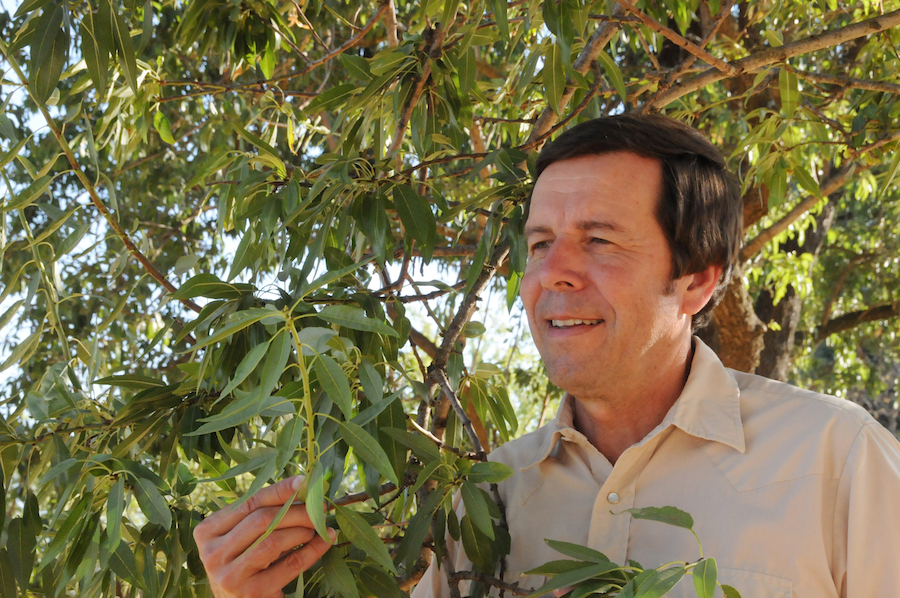
KATHY KEATLEY GARVEY / COURTESY

Zalom recognized for contributions to pest management

UC Davis Professor Frank Zalom won a lifetime achievement award at the 9th International Integrated Pest Management Symposium held from March 19 to 22 in Baltimore, Md..

A distinguished professor of entomology and an extension entomologist at UC Davis, Zalom was recognized for his contributions to pest management and the development of major agricultural IPM programs.

“[Zalom] is one of the few agricultural entomologists and works directly with growers and grower groups,” said Lynn Kimsey, a UC Davis entomology professor and the director of the UC Davis Bohart Museum of Entomology. “He’s the go-to person for insect problems.”

The lifetime achievement award was one of the two major awards that Zalom received at the symposium.

Zalom and his team won a team award for their contribution to the eradication of the European grapevine moth — a pest known for causing great damage to berries and other plants in the US.

“There were a number of members of this team, and I feel like I was only one cog in the entire wheel,” Zalom said in an email. “I give most of the credit to Dr. Lucia Varela who is the UC Cooperative Extension Area IPM Advisor for the North Coast, who actually put the team together and did a lot of the work in coordinating all of our efforts.”

According to an article by Kathy Garvey, a senior writer in the Department of Entomology and Nematology, Zalom was also a former president of the Entomological Society of America, a co-founder of the International IPM symposia, and directed the University of California Statewide IPM Program for 16 years.

In addition to his own work and research, Zalom believes in the importance of educating the next generation of of IPM practitioners through effective undergraduate teaching and graduate student mentoring.

“He’s done great quality of work and helped trained some very great students,” Kimsey said.  


Written by: Clara Zhao — campus@theaggie.org

Davis comes together for softball in support of Camp Kesem

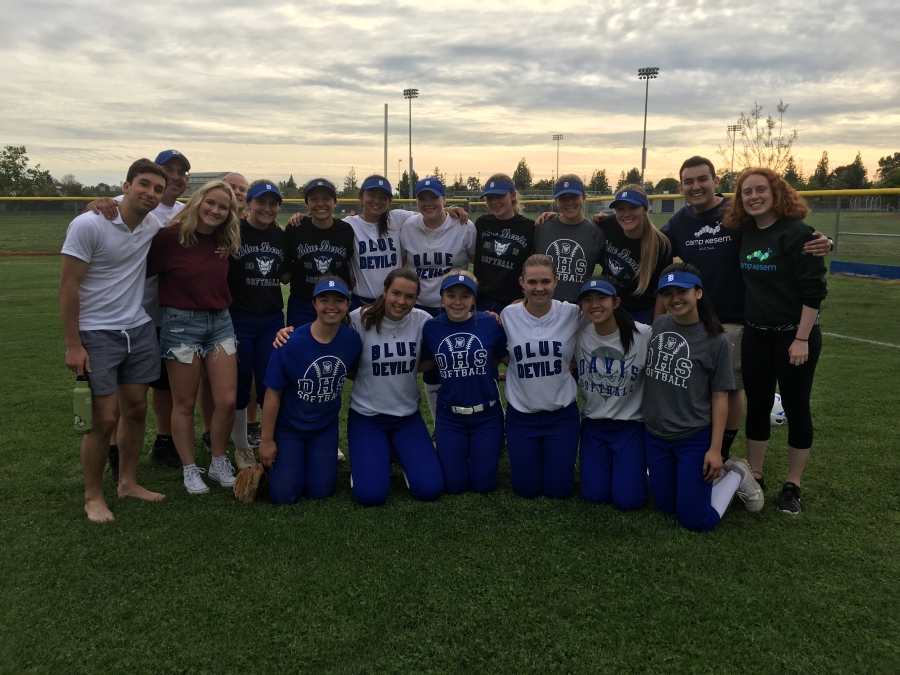
CAMP KESSEM AT UC DAVIS / COURTESY

Cancer’s far-reaching impacts creates shared connections in Camp Kesem

Spirits were high at the Davis Senior High softball field as the Davis Blue Devils’ girls softball team hosted Camp Kesem Day in a special gathering of the Davis community. The softball team gifted supplies for the upcoming summer camp and defeated the Monterey Trail Mustangs 11-0 on April 19.

Counselors and campers from the UC Davis Camp Kesem chapter filled the stands as they cheered on Blue Devils. Davis Blue Devil girls softball head coach Lyn Christopulos lost his brother to cancer last year and wanted to host Camp Kesem Day to honor the organization and its impact on his family.

Camp Kesem hosts free summer camps for children whose parents have been impacted by cancer. UC Davis’ chapter is run primarily by UC Davis students, a group of around 100 counselors who host 260 campers for a week-long camping session. Campers and counselors create nicknames that speak to their personality.

Nathan, or “Alleyoop,” a Davis High junior and Kesem camper, got his nickname because he played basketball.

He thinks the Davis community coming together for this occasion is a good thing.

“I think that’s honestly amazing,” Nathan said. “I think it will spread the word even more and get more people involved in the camp, which is always awesome to help people get through experiences like what I have gone through.”

Nathan’s mother battled breast cancer for three years before passing away. His experience at Kesem has inspired him to become a camp counselor as he is now a counselor in training. He will be attending the camp this June in Grizzly Flat as a camper, but will also mentor younger campers.

“The first year, I went and it was like the second or third day and we were down by the campfire area, and two of these counselors, had this one skit that they did,” Nathan said. “It was really funny and it kind of showed me what Camp Kesem is all about. It’s all about having fun with people who know what you’ve been through which I thought was awesome.”

Fifth-year history and international relations double major and co-director of Kesem’s UC Davis chapter John Dolan, nicknamed “Hobbes” for his fascination with Calvin and Hobbes, says the chapter just hit its fundraising goal for the year.

At the most recent Camp Kesem fundraiser, Make the Magic, around $90,000 was raised. But Dolan wants to break last year’s record. With two months until camp, he is optimistic they will break last year’s fundraising total, and hopes the extra funds will benefit his campers.

“We do a lot of events throughout the year going to different schools and school boards,” Dolan said. “And talk about what Kesem is and trying to help as many kids in the area as possible.”

The Blue Devil girls softball team split up into three groups to see who could get the most donations for Camp Kesem’s supplies this year. The supplies were mustard, ketchup and chocolate sauce for the camp’s “messy olympics.”

For the messy olympics, campers get their choice of condiment to spray the counselors. Dolan recalled the experience of getting sprayed with ketchup and mustard, and the feeling of condiments baking in the summer heat.

Fourth-year global disease biology major Kevin Coral, nicknamed “Apollo” for his love of boxing, has been a camp counselor for three years.

Coral recounted one of his most moving moments as a Kesem counselor at a parent memorial.

“Some of my campers asked me to go, I went and there were about 60 or 70 people in this little room and they went around in a circle and shared a memory of their parent,” Coral said. “It was a heartbreaking and humbling experience to hear a 6-year-old saying. ‘I miss my mom, but it’s okay because I have [Camp] Kesem,’ I was crying the whole time.”

After the game, Kesem counselors and campers were invited on the field to share their experience as counselors. The counselors then started singing camp songs, and everyone joined in.

“Uh-huh! Oh-yea! One more time,” chanted the counselors as they led everyone. “Race car style! I said a vroom shifta vroom!”

Christopulos’ brother, George, was diagnosed with stage four glioblastoma six years ago. Lyn recalled that his niece and nephew struggled with their father’s diagnosis at first, and that the diagnosis weighed heavy on their minds. Kesem was not on their priority list.

“They were not really excited about going it first, they were struggling with the diagnosis to begin with,” Christopulos said. “But when they went and came back, they were beyond excited and empowered by their experience.”

Camp Kesem has had a contagious effect on the Christopulos family, Christopulos’ daughter is now a counselor at University of Oregon’s Camp Kesem chapter, and his nephew is the director at UC Berkeley’s chapter.

As the Blue Devil girls played duck-duck-goose with campers on home plate, Christopulos reflected on the team’s experience of collecting donations for Kesem.

“We were all in from the first moment,” Christopulos said. “This is a perfect way to get them involved, and look at them all, they’re all in, and I love that my girls dove in and embraced it.”


Written by: Bobby John — sports@theaggie.org

Editor’s note: A version of this article in print stated that Nathan is a sophomore. Nathan is a junior. The article has been updated to reflect this change. 

The gravity of the Iran Nuclear Deal

CAITLYN SAMPLEY / AGGIE

Leaving the deal could result in yet another war in the Middle East

Iran-U.S. relations have been characterized by overt hostility for decades, with both countries affirming rather antagonistic positions with one another. In Iran’s eyes, the U.S. is a powerful and aggressive force in the Middle East. In 1955, the U.S. assisted the U.K. in overthrowing a democratically elected leader in favor of strengthening the monarchical rule of  Shah Mohammad Reza Pahlavi. The U.S. has also propped up a multitude of dictators in the Middle East, aside from the royal dictatorship of the Shah. From the perspective of the U.S., there is reasonable fear of Iran’s extension of power, as they have funded Hezbollah, backed Bashar al-Assad’s regime, declared destruction upon Israel and conducted relatively frequent street demonstrations in which they chant “death to America.”

One substantial hallmark of the Obama administration was the Iran Nuclear Deal, which was, and is, widely believed to be the first step to an amicable relationship. Given that Iran is a formidable presence in the Middle East, successful developments in their nuclear weapons program would likely result in catastrophic consequences, with a ripple effect on an international scale. Under this agreement, the U.S., U.K., France, Russia, China and Germany have agreed to lift sanctions on Iran and, in return, Iran has discontinued its nuclear program. The deal limits Iran’s enrichment capacity and research and development of uranium for 15 years. The deal also allows for routine and intrusive inspections conducted in Iran to ensure it uphold its end of the deal. Inspectors from the International Atomic Energy Agency will continuously monitor Iran’s nuclear program as well as ensure that fissile material isn’t secretly taken to an alternative location to build a bomb. If there is any failure to comply, sanctions will be re-imposed.

With the inauguration of Donald Trump, however, no deal made under Obama is safe. Withdrawing from both the Paris Agreement and the Trans-Pacific Partnership, Trump’s eyes are now fixated on abandoning the nuclear deal.

In all fairness, this agreement is riddled with flaws. While Iran has respected the agreement through the discontinuation of nuclear developments, it has emerged as a threat in alternative ways. After the deal was secured, Iran continued to engage in hostile activities, including swarming U.S. navy ships — which is not technically a violation of the deal. Recently, however, Iran has discontinued, to a degree, engagement in such activities, and some credit this to Trump’s tougher approach with the Middle East, contrasting to what some believe was a weak approach to the region by Obama.

But this may not be enough. Former Secretary of State John Kerry previously stated that part of the agreement entails Iran forgoing its hostile position toward Israel — which it has not honored.

Presently, Iran appears poised to combat Israel as evidenced through its attempts to turn Syria into a forward air base against Israel. Prior to this, it had used its proxy, Hezbollah, to fight Israel for the nation. It has also continued to develop and test ballistic missiles and plans to unveil new missiles in its annual military parade.

That being said, the deal is working. Thus far, inspectors haven’t found Iran to be in violation of the terms. Furthermore, withdrawing from the deal could yield severe diplomatic repercussions. Abandoning the deal would insinuate to the rest of the world that respecting our international agreements is dependent on who holds presidential office. Seeing as we live in a democratic society with a new president every four to eight years, we would essentially send the message that our word is tempermental — likely making future deals more difficult to forge. If the deal is discontinued, the outcome has already been guaranteed by Iran: the immediate recommencement of its nuclear program. Rising tensions in the Middle East, specifically between Iran and Israel, also make for an incredibly volatile environment in which nuclear weapons are not beyond the possibility of usage.

It’s possible that we, in the West, are pretending we’re at a peaceful resolution, while Iran is preparing to fulfill what it believes is God’s desire to destroy Israel. It’s also possible that an abandonment of this deal, and, consequently, Iran’s recommencement of its nuclear program, could lead to yet another world war.

It’s crucial that one key aspect of Iran is recognized: Iran is more than just its regime. Iran is its people, who are notably pro-Western (despite death chants). It has been argued that the Iran we see in 15 years will be far more liberal. If this is the case, then abandoning the deal could curtail potentially liberal developments in Iran. When the time comes to renew the agreement, under a hopefully more liberal rule, preferable and more peaceful terms may be reached, which could significantly alter the fate of the war-torn region. After decades of meddlesome intervention, it’s time we give the Middle East a chance to thrive. That being said, harsher enforcement of the terms unrelated to nuclear developments should be instituted.

It’s imperative that, in either decision Trump makes, we understand that we are discussing a possible war. Throwing away a deal such as this does not come without consequence. Forsaking the deal could result in both diplomatic and security issues, which Trump currently appears unprepared to deal with. This deal is not like that of the Paris Agreement or the Trans-Pacific Partnership — this is about inhibiting the use of a weapon that guarantees catastrophe, by a country that guarantees instability. There’s no plan for the aftermath of this possible fallout, no guarantee that Iran will not continue its nuclear program. If Trump is going to terminate the agreement on May 12, he must come prepared.


Written by: Hanadi Jordan — hajordan@ucdavis.edu

Disclaimer: The views and opinions expressed by individual columnists belong to the columnists alone and do not necessarily indicate the views and opinions held by The California Aggie.

Humor: My professor mispronounced my name, so I stole his wife

MEENA RUGH / AGGIE

Know basic Italian or reap the consequences, buddy

This quarter started how every quarter starts. Professors struggled to take attendance as they read off of a roster full of nightmarish names. With every new student, you could hear the tightening of a sphincter and the quivering of a voice, both belonging to a grown man with a doctorate who just can’t figure out what an “ñ” sounds like. With my pasta-esque last name, the first week is made up of me man-spreading with utter confidence in the front row, as I await the professor to mispronounce my name. This year, I was pushed too far.
“Olivia Loo-chee-knee-knee?” this schmuck said.

Loo? Chee? Nee? Nee? Twice? Huh? Who? Where did he pull the second “ni” from? The aforementioned sphincter?

I knew I had to take action. I stood up from my desk. Well, first, I said, “Here,” because I need that participation credit, and then I stood up from the desk. Infuriated, I ran to his office and found the keys to his Honda Civic. It had a keychain on it that said, “I love Transformers.” That was the final straw. I was going to steal his wife.

I drove to his house and it was not hard to find. It looked like something out of a Family Circus comic, or perhaps a Brady Bunch wet dream. There was a white picket fence, a golden retriever frollicking around and me, about to steal his wife.

I walked in the way any fox would: on four legs, holding a bunch of roses. She was a little off put by the four legs thing, so I stood up.

“Hey, girl,” I said. “What’s your name?”

“Brianna,” she said. “It’s pronounced Bree-anne-uh, but whatever you say is fine.”

This bozo had wronged his own wife. She had been hypnotized into thinking she was a common Bree-aw-nuh. No way, toots.

“Oh, my sweet Brianna Banana, you don’t deserve to be disrespected like that,” I said.

After I put the period on that sentence, she was already completely naked.

We started our happy life together. It was just Brianna, me and a Honda Civic that once belonged to a man who now has to spoon his degree at night. So remember this, professors: If you’re going to mispronounce my name, make sure you cherish your spouse first.


Written by: Olivia Luchini — ocluchini@ucdavis.edu

(This article is humor and/or satire, and its content is purely fictional. The story and the names of “sources” are fictionalized.)

The best spots to nap on campus

SHANE COONEY / AGGIE

Check out one of these spots next time you want to nap on campus

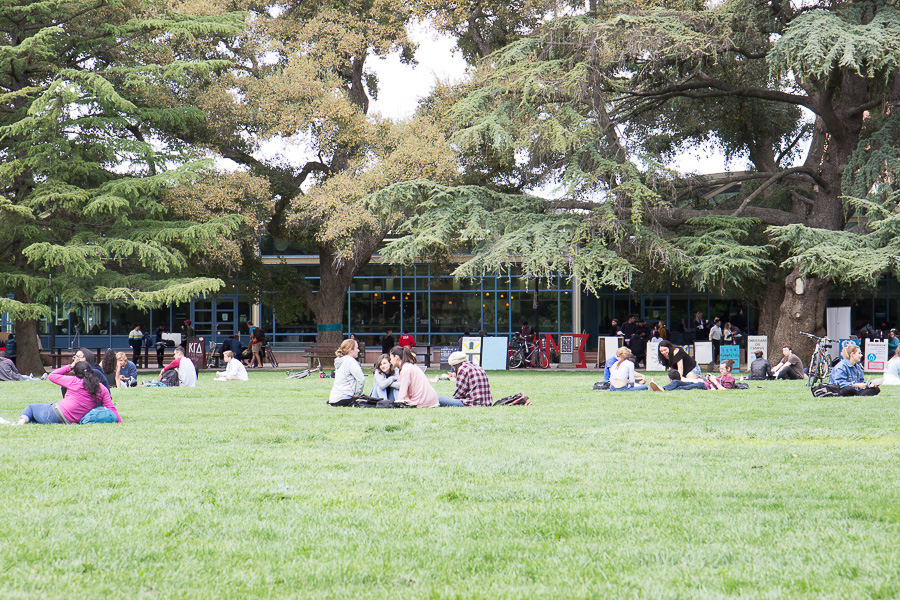
Spring Quarter means warmer weather, sunnier days and more time spent outdoors. Students often take advantage of this by lounging in the sun, spending time with friends outside and taking seasonal spring naps. The Aggie has compiled a short list of the best spots to nap on campus this spring.


MU Hammocks

If you’re lucky enough to land a spot on the elusive blue MU hammocks, use the opportunity to take a quick nap before a class. The hammocks are out nearly every day of spring quarter due to the nice weather, so keep your eye out if you’re looking for one of the most relaxing and spacious places to nap on campus.


Grass on the Quad

There’s a reason why so many people sit outside on the grass when it starts to get warmer out. The weather makes it a perfect place to sit in between classes and enjoy the sun, and the grass is one of the most comfortable spots to rest during the day. Use your jacket or backpack as a pillow and the quad makes the perfect bed away from home.


Arboretum

If you have some extra time, make the trek over to the Arboretum for a comfortable and quiet spot to nap. Aside from the occasional runner or family of ducks, the Arboretum is an extremely peaceful place to get away and have an opportunity to enjoy the peace and quiet.  


Library

While the library is usually where students go to in efforts to be more productive, the quiet space also makes for a good place to rest during the day. Students have many comfortable options to choose from, including nooks overlooking the library courtyard and personal desks to comfortably rest your head in.


MU Sofas

Thanks to the new renovations, the MU is now filled with comfortable blocks of colored sofas. If you’re lucky enough to grab yourself an entire sofa, don’t hesitate to spread out and take a nap before your next class. This is probably one of the spots that most resembles taking a cat nap in the comfort of your own home.


Happy napping!


Written by: Alyssa Hada — features@theaggie.org