57.7 F
Davis

Davis, California

Sunday, December 21, 2025
Home Blog Page 546

Davis City Council candidate exits election race

BRODY FERNANDEZ / COURTESY

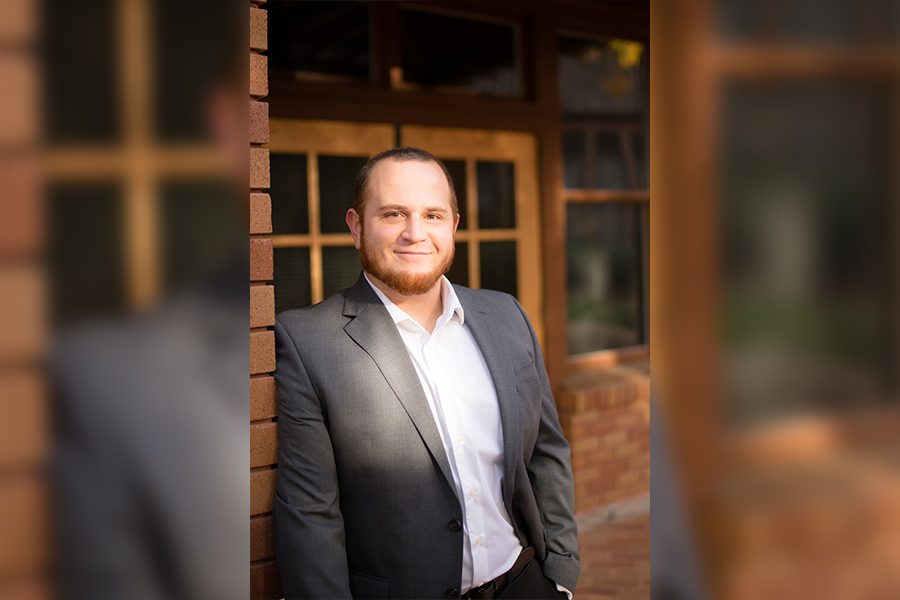
Brody Wayne Fernandez bows out, leaves message for city

In early November of 2017, Brody Wayne Fernandez officially announced his candidacy for Davis City Council. However, he recently announced that he will not be filing nomination papers with the city and will be resigning from the 2018 election.

“I want the citizens of Davis to know that I am unable to invest the time and resources I know they deserve in an election as important as this one,” Fernandez said in a written statement. “I’ve had the privilege to meet so many people in this great city, and I’m so grateful to call them my neighbors.”

While he may have been the youngest candidate at 28 years old, Fernandez wanted the city to know about his campaign regarding Davis’ current housing crisis. The vacancy rate has barely been above 0.2 percent, and he wanted to resolve the divisions between students and longtime residents.

“This is becoming a serious problem and may be the most prominent issue facing the city,” Fernandez said. “A single mom moving to Davis who works at the local hospital as a nurse is competing with mostly college students for a slim pick of available housing options. That’s not an appropriate living situation for either party involved.”

Mayor Pro Tempore Brett Lee is unsure if Fernandez’s leave will impact the race for Davis City Council.

“I’m not sure that it will affect it much, as the council race has nine other candidates for two seats,” Lee said. “I’m not sure that dropping out of the campaign will have that much of an impact. It’s hard to know what kind of campaign he would’ve run.”

However, Lee emphasized that gaining a new perspective from a former UC Davis student would have been a good addition to the race.

“It would be nice to have a UC Davis student in the race, but it’s hard with the practical matters,” Lee said. “Many candidates have already had kicked off their events such as at the Farmer’s Market, and I don’t believe Brody had done that. At this point, there has not been much difference, but having said that, he could’ve run a very robust campaign.”


Written by: Stella Tran — city@theaggie.org

Humor: The trials and tribulations of being a coffee shop in downtown Davis

JORDAN CHOW / AGGIE

A tale of alliances and betrayal

Coffee shops come and go. And while some people have personal attachments to certain cafes, the rest of the Davis population has come to accept the nature of the coffee shop industry in Davis. What does this mean? It means $7 for an espresso drink mixed with weird rules about [insert: bathroom, seating, Wi-Fi, studying or a combination of all of the above] and probably not enough space to seat half of the people who come to buy drinks. That’s just the way it works, I guess. But if that’s the case, then what determines how successful a coffee shop will be?

I guess the good thing about Davis is that it turns out there aren’t as many coffee shops as there probably should be, considering we are a college town filled with students whose hobbies include studying and surviving on caffeine. I think there’s a simple way to know if a coffee shop is going to survive. It includes a lot of different factors, and I’m probably not qualified to speak about any of them, but as someone who spends her $7 proudly every day, I will give it my best (espresso) shot.

Coffee shop survival has nothing to do with the quality of coffee you serve. At least, it doesn’t for me. It’s deeper than that, and much more personal. It has to do with ambiance and aesthetic. Some examples of this: How pretentious is the couple next to you and, more importantly, are they screaming about it in your ear? How long does it take for you to be asked to leave if you don’t order anything? Can you afford the artwork they are selling on the wall? Would you take your TA here? And, most importantly, can you see yourself developing a relationship with the barista?

While I can’t speak for everyone, these questions are important when considering where you want all your money to go until the next best thing comes along.


Written by: Rosie Schwarz — rschwarz@ucdavis.edu

(This article is humor and/or satire, and its content is purely fictional. The story and the names of “sources” are fictionalized.)

Russia and America, naked

ALLYSON KO / AGGIE

A relationship that requires a deeper cultural view

It’s a common thread in travel writing: how we can learn about American society by immersing ourselves in a foreign culture. The relationship between Russia and America is obviously fraying, if not completely fried, so the complex web of cultural differences needs to be uncovered and hopefully appreciated if things are to improve. This is a country clearly distinct from America, and more observations of the society that created Tolstoy, Lenin and Putin should fine-tune my understanding of what makes Russia tick — and hopefully yours. Here’s what I’ve learned so far.

The cold is real

Ah yes, the notorious cold. And while I haven’t yet traveled to Siberia, the literary and pop-cultural buzzword for “coldest place on Earth where nobody wants to go,” St. Petersburg is still frigid — temperatures with wind chill can hit the negative teens — compared to the relatively mild winters of the American West Coast. The city’s proximity to the Gulf of Finland moderates the temperatures a little, meaning Moscow is usually colder despite being farther south. But wind and high humidity ensure the icy air will be felt down to the core of your bones.

One of the chief complaints among the Russians I know is the weather. They don’t like it one bit. And it seems to affect them just as much as the Americans who usually wear shorts starting mid-March (re: this guy). It’s not recommended to forget your hat — I’ve been reprimanded by multiple babushkas for doing just that, showing just how much Russians respect the cold.

Good fashion is mandatory

If you want to experience the pinnacle of fashion and you can hurdle the tricky visa process, come to St. Petersburg. Sweatpants don’t seem to exist. Gym attire reflects the flashy, bare-skinned look of fitness gurus who implore us to buy the latest ab-shredder in the U.S. There are very few university students who walk around in beat-up jeans. Middle-aged women are often decked out in fur coats and high-heeled boots, carrying handbags with fancy labels.

Preserving the latest fashion even in the bitter cold makes this all the more impressive. The past few weeks have seen temperatures drop to zero or below, with the pavement caked in slippery ice and snow that make walking and maintaining dignity difficult — and still, the average Russian looks good while doing it.

Americans are loud — and obvious

There appears to be a stark difference between what I call the “culture of public interaction” in the U.S. and in Russia. I’ve alluded to this before, and the observation still holds — smiling at strangers on the street is weird. Crowded metro-speak is not speaking at all, but more of a stoic eye-lock or grunt that lets people know you need to leave at the next station. It is, of course, a generalization, and there are plenty of (mostly) younger Russians I know who will exude a toothier and more audible existence in public, but that isn’t the norm.

And we know the mirrored stereotype of Americans — that they are loud, generally obnoxious and like to smile. This is largely true. We are much louder than native Russians. We tend to smile at random people more and have to suppress this urge when we don’t want to draw attention. American students’ tendency to travel in large and rather conspicuous packs sets us immediately apart from the Russians around us. We may as well be fully enshrouded in American flags, carrying boomboxes pumping out our national anthem.

PC culture feels very, very American

Please don’t shoot the messenger — the PC culture so prevalent in America is almost nonexistent in Russia, and it’s rather refreshing. In the States, there exists a tendency to label and shut down viewpoints that offend certain sensibilities. (I’m aware the Russian government has its own tendency to shut down certain viewpoints and political opponents, but it does so for reasons of self-preservation, not out of perceived hurt feelings.)

American PC culture requires walking on eggshells to avoid one of the notorious “isms” thrown around the debating table. The popularity of combatting so-called “microaggressions” on college campuses, as just one example, can distract from larger — and more important — issues, such as the epidemic of gun violence.

The people I’ve talked to and the popular culture I’ve seen in St. Petersburg, by contrast, focus on larger topics of discussion. Relations with America, the economy and the upcoming presidential elections are more pertinent than the types of offendable actions that are indicted by young people in the U.S. But even more important than these topics is daily life itself — long commutes, extreme cold and bantering with friends take priority over some of the squabbles making headlines at American colleges.

I’ve noted only some of the most obvious points of inter-cultural interest. There are many more. If we are to make progress mending the rift between two historically relevant nations, we need to adopt an open mindset that allows cultural difference to flourish and cooperate. Is that not what liberalism is all about?


Written by: Nick Irvin — ntirvin@ucdavis.edu

Disclaimer: The views and opinions expressed by individual columnists belong to the columnists alone and do not necessarily indicate the views and opinions held by The California Aggie.


Women aren’t asking for approval for their place in tech

NICKI PADAR / AGGIE

It’s 2018, and this is still the hill men want to die on

James Damore, a former Google employee, published a scathing memo in July 2017 accusing the tech giant of engaging in discriminatory activities. Buried inside his bitter manifesto were several claims that maybe women weren’t interested in coding — which according to him is why there aren’t so many of them in the tech industry. The reason for the gender disparity, according to Damore, is situated in the interplay of biological differences and social ones. Titled “Google’s Ideological Echo Chamber,” Damore made several accusations against his employer that resulted in his firing. But is there any truth in Damore’s claims? Are women intrinsically drawn to subjects with more feeling than engineering or science?

Surprisingly, many women in tech were not enthusiastically denouncing Damore’s memo. Megan McArdle, a journalist for The Chicago Tribune described her reasoning for leaving her job in technology and finance.

I liked the work. But I was never going to like it enough to blow a weekend doing more of it for free,” she said. “Which meant that I was never going to be as good at that job as the guys around me.”

McArdle wasn’t disputing Damore’s claim that women are uninclined to tech — she herself acknowledges that, while she liked her job, it wasn’t something she could be overly passionate about.  Many women like her enter STEM fields because of the security it provides. The prospect of landing a career that would mean a lifetime of financial independence is undoubtedly enticing. But the draw to stability isn’t a female trait — because if it is, then all men like to take risks. That’s certainly not true.

The reason the Google memo became so important was because Damore tried to make a scientific argument. Despite a disclaimer that it’s not right to make assumptions about individuals based on generalizations, that’s what people drew from it. The memo was pointed, but no one knew against whom. And that’s what’s so interesting about the fiasco. Damore did a lot of research — there were plenty of facts, statistics and other data that could support why men were drawn to the industry. It could have worked. But what lessened his argument was the use of negative emotional indices while writing it. And once you mix science and emotion, the gut reaction is to question the evidence that’s being used — more so if one disagrees with what it’s saying.

Yet, the more I tried to find evidence countering Damore’s claim, the less concrete it became. Psychologists Gijsbert Stoet of Leeds Beckett University and David Geary of the University of Missouri conducted a comprehensive study analyzing women in male-dominated industries all over the world. They found that “[countries] that minted the most female college graduates in fields like science, engineering, or math were also some of the least gender-equal countries, [positing] that this is because the countries that empower women also empower them, indirectly, to pick whatever career they’d enjoy most and be best at.” So fewer women in the tech industry might actually be a good sign, if you want to look at it that way.

Coming out of the gates enraged about Damore’s entire argument, that’s a bit disappointing. But there’s nothing to be ashamed about. Young women educate themselves to gain agency — and, depending on the country and the individual, there’s a different amount of agency one must secure. And once again, these are general trends. Plenty of women were sampled in this study, and surely some of them are truly passionate about their work, regardless of where they come from. So, while Damore had a point, his generalizations (or lack thereof, because of his disclaimer) rubbed a lot of women the wrong way.  

Maybe it’s fair to say that not all women study STEM because they want to. However, that’s not an opening for our male friends to suggest the reason they lost out on that job opportunity was because a woman snatched it away from them. It’s also not an opportunity to dismiss an individual woman or suggest a female employee benefits because of her gender. That’s called sexism. And while diversity for diversity’s sake is wrong, there’s also enough evidence to show that women are routinely passed over for promotions, raises and other leadership positions. Women do not want charity — but a certain level of privilege still exists in being a man. Men like Damore should check it.


Written by: Samvardhini Sridharan — smsridharan@ucdavis.edu

Disclaimer: The views and opinions expressed by individual columnists belong to the columnists alone and do not necessarily indicate the views and opinions held by The California Aggie.


Nishi 2.0: student perspective

MACLEAN HARTFORD / AGGIE

New Nishi proposal is headed for the ballot, but what do students think?

Earlier this month, the Davis City Council voted unanimously to put the revised proposal for developing the Nishi Property on the June 2018 ballot. While the measure that failed in 2016 included space for residential housing and research, the new project would provide student housing exclusively, which could give it an edge.

As discussed in last month’s article in The Aggie, the Nishi project remains controversial because of conflicting views about the potential health risks at the location, prompting numerous opinion pieces in The Enterprise and The Vanguard, including those by Dr. Tom Cahill, a longtime Nishi opponent, and Dr. Charles Salocks, who questions Cahill’s argument.

However, since the project is intended to help students the most, it is also important to hear how they evaluate the potential risks and benefits of the project. Davis is experiencing a severe housing shortage, so students in need of housing may gain from a development that could provide around 2,200 beds.

“I am tentatively and cautiously in support of the Nishi Project,” said ASUCD President and fourth-year political science and economics major Josh Dalavai. “Student housing is one of the most salient issues in our community but I also have concerns over the environmental impact and safety of the project.”

Due to the housing crisis in Davis, efforts to tackle the problem have been one of ASUCD’s priorities. Senator Jacob Sedgley sits on the GSA-ASUCD Joint Housing Taskforce and has been heavily involved with addressing housing issues in Davis. He discussed some of his goals related to housing in general and discussed Nishi specifically.

“This issue is multifaceted in that student housing comes from more than one place in Davis,” Sedgley said. “By that I mean that both the University and the City of Davis have obligations to provide housing for the students coming in. Along with that, sources of housing can also come from other places [including] units rented out by private residents. I have targeted these three groups to try to add more housing in Davis.”

Sedgley, who supports the Nishi project, has spoken at Davis City Council meetings to support developments that could provide additional student housing, like Nishi and Lincoln 40. He has also met with local developers and plans to work to provide emergency funding for students experiencing housing difficulties resulting from the actions of their landlords.

ASUCD Senator and President-elect Michael Gofman also voiced his support for the project.

“I am personally very in favor of the Nishi development, and I know that most of the senate table is as well,” Gofman said. “Although the development is obviously not perfect, we are currently facing a dire housing shortage, which is why I’m in favor of any extra housing that we can build, anywhere in the Davis area.”

In 2016, ASUCD officially endorsed the mixed-use Nishi project, but is yet to endorse the revised project.

“At the moment, we have no plans to endorse the project but that is subject to change,” Sedgley said. “However, if we do decide to endorse the project, I do not see it having a significant impact on the outcome of the vote on June 5. At the moment, I think it is probably best to let the two different sides of the story work themselves out and see what our options are after the vote is held.”

Despite the air quality concerns, both Gofman and Sedgley think that the mitigation measures in the revised proposal and the vehicles taken off the road as a result of conveniently located housing both provide good reason to support the project.

“If we don’t build this, more people will drive to school instead of bike, increasing cars on the road, traffic and idling time, all of which will also lead to more air pollution,” Gofman said. “That’s why it needs to be a priority to build more housing near campus, housing such as Nishi.”

Sedgley also went into detail about some of the mitigation measures included in the new proposal.

“The Nishi developers have taken extensive measures to mitigate what pollution there is off of the highway,” Sedgley said. “[This includes] a 100-foot thick tree barrier between the property and the highway, a widened building layout to make room for large trees between the buildings to further mitigate any pollution that may drop to ground level in the atmosphere, and I have been told that the project will include air scrubbers in the units to provide for a healthy indoor living environment.”

Sedgley isn’t opposed to the suggestions from Dr. Cahill and UC Davis philosophy professor Roberta Millstein that more studies should be completed at the Nishi site to determine the severity of pollution from diesel fuel and ultra-fine metals from brake pads, but he remains confident that the mitigation measures will be sufficiently effective.

“More numbers are never a bad thing,” Sedgley said. “[However] I can say with confidence that the measures the Nishi developers have taken to ensure the safety of the students in the long term are far superior to that taken by any other housing development in close proximity to the freeway or the railroad tracks.”

Continuing his comparison with other housing locations, Sedgley suggested that the Nishi project has possibly encountered more problems than other sites because of Measure R.

“Due to Measure R, pretty much all development projects that do not fall onto the lands of the University, have to be voted on if they re-zone agricultural land into the Davis city limits,” Sedgley said. “This means that most development projects have to be infill projects in Davis, otherwise they will hit the significant obstacle of being voted on by the public. I personally think that the Nishi project is a much better option for students than most of the projects that have hit the table, including others close to the highways, yet Nishi has hit more problems than all of them due to the fact that it has to be voted on. In fact, if you look at the [environmental impact reports] for other developments, I would be willing to bet the issue is the same, if not worse, in other locations near the highways.”

Sedgley also explained why Nishi is such an ideal location to actually address the housing shortage in a significant manner.

“Most of the possible infills in Davis, with the exception of a few such as Lincoln 40, are small properties that really won’t have a significant impact on the housing situation here,” Sedgley said. “As a homegrown Davisite, I honestly can’t think of any areas that would be better than this one that are both not on the UC property and would not require a vote by Measure R.”

Sedgley thinks that the policies of the city and the university have somewhat restricted the possible options for addressing the housing crisis, making developing Nishi the most utilitarian option, despite the flaws that the project does have.

“Students are forced to live in cars, in living rooms, some even rent out small closets as rooms,” Sedgley said. “The lack of new housing has also led to very high prices that are way too high for students to pay for. If there were better options and better locations to build, developers would be there in a heartbeat. However, those locations do not currently exist due to policies of the City of Davis and the stubbornness of the University when it comes to building more affordable places for students to live.”


Written by: Benjamin Porter — features@theaggie.org

Creating positive change through fashion: Onus

JORDAN KNOWLES / AGGIE

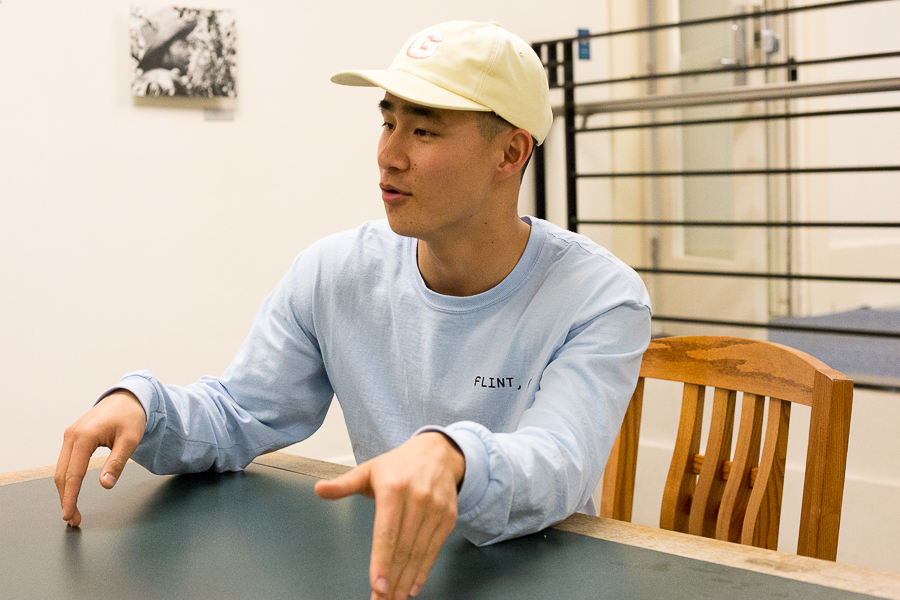
UC Davis student enacts positive change through clothing brand

For many, fashion is a means of communicating sincerely held beliefs and values. For third-year textile and clothing design major Shoei Shibata, fashion has become a vehicle for creating positive change.

Shibata created his own clothing brand, Onus, which seeks to confront the issues facing society through this very mechanism, providing consumers the option to support a brand which donates 100 percent of its profit to charitable causes.        

For Shibata, in the context of modern consumerism, many clothing brands offer customers the opportunity to use their buying power to enact positive change within their community and abroad. He feels that while such clothing brands are fulfilling an important role within society, there are just as many brands that are devoid of any purpose or direction other than amassing profit.

Working through distinct series of shirts stemming from the tragedies experienced by people in America and abroad, Onus seeks to confront societal problems in a sustainable and responsible manner. It is a brand that gives consumers an opportunity to use their spending power as a powerful tool to help support those affected by national tragedies.

The brand’s first series was inspired by the ongoing water crisis in Flint, Mich. While the news cycle may have moved on, many in Flint still do not have access to clean drinking water. Working through the Flint Water Fund created by the United Way of Genesee County, customers of Onus can help fund continuing restoration efforts.

More recently, the brand has started a campaign to address the tragic school shooting in Parkland, Fla. Amid the flurry of heated debate on gun control and safety, many families have been left with medical and funerary expenses. All proceeds of Onus’ Parkland, Florida shirt series go to the Stoneman Douglas Victims’ Fund, which provides relief and financial support for victims and families involved in the shooting.

“I want to make something that inspires the next generation to truly be themselves, because that is more important,” Shibata said about the brand’s future. You can browse the selection of shirts on Onus’ website.

For Shibata and others collaborating with the brand, this work is invaluable for encouraging others to use all tools at their disposal to support one another in the face of adversity. Brands like Onus demonstrate that clothes aren’t simply about how you look but also, often, about what you think.

Those interested in collaborating with Onus and its mission can contact the brand through its website.


Written by: Isaac Flores — arts@theaggie.org

“Three Billboards” Review

CAITLYN SAMPLEY / AGGIE

A highly enjoyable, brutally sad gift

This film review contains spoilers.


“Three Billboards Outside Ebbing, Missouri” is a tough movie, but a masterfully crafted one at that. If someone graphed the emotional arc of this film, it would, without a doubt, resemble the Great Depression. Things just love getting worse in this movie. While the content is morbid, possibly to an excessive degree, the film itself builds a compact story that lands with resonance, moved forward by character motivation and the resolution.

“Three Billboards” is undoubtedly a character-driven story, as is shown in the trailer. The origin of the plot comes from Mildred Hayes (played by Frances McDormand) when she sets up her infamous billboards. For a story to be good, the actions performed by the characters must be believable; they must have motivation. And motivation is something “Three Billboards” locked down.

The film’s proficiency in establishing motivation is evident in one of its later scenes, when Mildred torches the police department with Officer Dixon (played by Sam Rockwell) still inside. Mildred’s motivation is clearest and actually fairly consistent throughout the film: She wishes to gain notoriety so her daughter’s rape and murder will be solved more quickly.

The motivation of Dixon (caught inside the police department) isn’t revealed until the last moment. Once he recognizes the danger of the nearing fire, he leaps through the burning window with one item to save: Mildred’s daughter’s case file. This unveils his motivation: to save the file and solve the case, parallel to Mildred’s motivation.

The significance of these motivations and how they complement the film as a whole comes from their juxtaposition. Mildred, in order to solve her daughter’s murder, justifies violence toward the police. Dixon, in order to solve the murder, is willing to put himself at great risk for the accrued evidence. This creates empathy for Dixon, established through his selflessness, and an overall air of tragedy, since Mildred is unknowingly harming her chances of resolution. This is what makes the film’s usage of motivation so impressive: the origin of tragedy is directly related to the actions of its characters. No third party or contrived reason is needed for tragedy; the characters create their own.

Much of the movie deals with the idea of searching for closure where, possibly, none exists. Endings that aren’t truly endings constantly appear in this film.

When Dixon and Mildred find themselves driving to the house of the supposed murderer, the film ends. It doesn’t resolve that conflict. It is not even known if they will kill this unnamed character for revenge or not. This ending was crucial for the question the movie had been asking: How does one find closure where none is to be found? Whether or not Dixon and Mildred kill their targeted man or whether Mildred’s daughter’s killer is found simply doesn’t matter. What does matter is finding closure regardless — and now, with the given ending, the audience also faces this dilemma.

“Three Billboards” is nominated for seven Oscars. Whether it comes away with all or none of them is soon to be decided, but nonetheless, the film is worth a watch. It may not be a happy film, but it’s one that has a lot say, in an eloquent way, about foul and sad days.


Written by: Nicolas Rago — arts@theaggie.org

Proposed California bill to ban tackle football in children under 14

MICHELLE GORE / AGGIE

Coaches, experts express pros, cons for young athletes

A proposal was announced by assembly members Kevin McCarty (D-Sacramento) and Lorena Gonzalez Fletcher (D-San Diego) to ban youth organized tackle football on Feb. 8, which could have an impact on collegiate level playing.

It’s too early to tell the specifics of the proposed legislation, but its purpose is to establish a minimum age of 14 to play youth organized tackle football, meaning high-contact elements in football programs would begin at the high school level.

The press release states that the bill “would follow the advice of medical professionals and allow high contact elements from football programs only at the high school level.”

Researchers from Boston University have suggested there is a link between youth football and cognitive impairments later in life.

If passed, California would become the first state in the country to set a minimum age for youth organized tackle football. California is one of four states considering limits, alongside Maryland, Illinois and New York.

ASUCD Senator Jake Sedgley played high school football for the Davis Senior High School Blue Devils varsity football team and thinks that youth need football for the camaraderie the sport build and parents should understand the risks involved.

Sedgley recounted a play where he was defending a kickoff return that resulted with a cracked helmet and a concussion.

“The pads and gear kind of give you a false sense of security,” Sedgley said. “I know our high school took specific measures to deal with [injuries] because our team had a problem with it.”

Programs have been implemented to handle the dangers of tackle football in youth programs. Heads Up, funded by the NFL Foundation, provides coaches with various tools to make the game safer for youth and high school players. Tools include courses built by health professionals, concussion recognition and response protocols along with Heads Up-style Tackling and Blocking which enforces techniques to reduce helmet contact.

These efforts intend to make the game safer, according to Jason Ingman, who has been coaching Sacramento area youth football for seven years. Ingman started a change.org petition in response to the proposal that gathered almost 40,000 signatures in 10 days.

Ingman played for UC Davis football in 1998-99 as a walk-on offensive lineman under coach Bob Biggs.

In fact, Ingman contends that banning the youth from being able to tackle will decrease the safety of the game when players enter high school football programs.

“It’s like being told that you cannot get your driver’s license until you’re 21, then you start out racing in NASCAR,” Ingman said. “Kids miss out on the opportunity to build skill sets that will make them safer players in high school.”

Ingman thinks that football is unfairly targeted by the proposal, where other sports like soccer, karate, lacrosse and wrestling also can result in concussions.

Other football coaches agree that football is safer today than it was before it came under scrutiny.

Davis Senior High Blue Devils head coach Stephen Smyte coached football on multiple levels, including assistant coach at UC Davis and Boise State, and worked with the Davis Junior Blue Devils to help grow the program.

Smyte pointed out that the tackle style taught at the program is the hawk style tackling that the Seattle Seahawks Assistant Head Coach Rocky Seto introduced to the Seahawks 2010 to reduce the risk of injury among NFL players. The Seahawks produced multiple videos on hawk style tackling that have been sent to over 8,000 youth football programs across the country.

“There has been a lot of movement in football circles to make football safer, more than any other sport,” Smyte said.

The Blue Devils have added technology to increase safety on the field, using Riddell helmets with sensors to detect potential head impact.

“Our new Riddell InSite helmets have a sensor inside of them so if a player gets hit in a certain way, they don’t even have to be concussed,” Smyte said. “It registers immediately and that player comes off the field right away.”

Blue Devils football trainers look at these readouts and determine whether the player should stop playing at that point.

UC Davis economics professor Scott Carrell, who coached the Davis Junior Blue Devils from 2011-16, thinks there is a positive social outcome for kids that play football.

“The one thing about football that is different than most sports is that it takes a group of kids — a large chunk of them are low-income kids — and it gives them structure and discipline,” Carrell said. “We have to think about the benefit that football provides to young kids, and weigh that against what happens when kids don’t have structure in their lives.”

Carrell thinks it is still too early to tell what effects this will have on the skills of California’s youth and high school football players, but speculated that it may put some of California’s kids at a disadvantage when it comes time for them to pick a college.

Clinical professor of medical pathology and laboratory medicine at UC Davis Bennett Omalu, who rocked the football community with his groundbreaking research that identified chronic traumatic encephalopathy in Pittsburg Steelers’ Mike Webster’s brain in 2002, is an advocate of banning the sport for children under the age of 18.

Omalu believes the choice is clear.

“No brain damage is worth the excitement of a touchdown,” Omalu said.

In his new book, “Brain Damage in Contact Sports,” Omalu claims that helmets do not prevent concussions or sub-concussive blows to the head. Omalu believes that whether or not the brain suffers a concussion, there is still the possibility of active unseen brain damage.

Omalu and other public health experts have given parents of young football players quite a bit to think about.

On the one hand, football builds camaraderie and discipline, and as Smyte put it, “football is the fabric of American society.” Conversely, brain damage may be too risky now that researchers have uncovered the effects of football on the human body.


Written by: Bobby John — sports@theaggie.org

Health and honey

JAMIE CHEN / AGGIE

Population genetics, farming practices can create healthier, hardier honey bee

Health and honey go hand in hand. It is often suggested that those who suffer allergies eat wildflower honey from local bees. Honey can also kill various bacteria, such as Escherichia coli. But we often don’t think about the health of honey bees, the producers of that honey.

A recent study done by the Ramirez Lab at UC Davis in the Department of Evolution and Ecology brings this question to light. The study looked at the population distribution of different types of honey bees, or apis mellifera, in California since the species first introduction to the state in 1863. Numerous lineages have emerged; the two prominent ones are the M group, which includes a. mellifera, more commonly known as the European honey bee, and the A group, which includes a. mellifera scutellata, or the African honey bee. But there are more groups, such as the C, which includes italian a. mellifera, or the Italian honey bee.

Looking at specimens from museum collections, the research was able to map out the species’ evolution and genetic distribution over the past 105 years. Significantly, they found that the honey bee population in southern California stems from the A lineage of the African honey bee. While notorious for its aggressive behaviour, this lineage is of increasing interest. Earlier research has shown that the African honey bee is more resistant than others to the varroa mite, a parasite to which the honey bee is highly susceptible.

“It is a small mite that can attack adult mellifera and can transmit viruses,” said Santiago Ramirez, an assistant professor of evolution and ecology and one of the lead researchers of the study. “This is by far the most important cause of mortality of the honey bee in the U.S.”

A single infected bee can affect the whole colony, as the infected may transfer the viruses and weaken the colony overall. Unfortunately, varroa mites are everywhere. As a farmer in the United States, dealing with issues related to varroa mites is unavoidable, explained Ramirez. A farmer is forced to kill them, weaken them, or wait for winter, when the mite colonies die off.    

However, if all the agricultural honey bees are Africanized, or bred with the African honey bee, it is possible that a stronger, healthier honey bee may be created that is more resistant to the varroa mite, as suggested by Ramirez.

But mites are not the only problem that honey bees face.

Honey bees are currently the primary pollinator used by farmers in large-scale crop production. In industrialized agriculture, you can think of them as a type of mono-pollinator.

“Honey bees are by far the most widely used pollinator, because they have very large colonies and can be deployed in large numbers in large agricultural crops,” Ramirez said. “There is a convenience to honey bees.”

This places a lot of stress and dependence on a single pollinator species. Moreover, it exposes honey bees to factors that compromise their health.

“The honey bee has survivorship issues relating to various pathogens and parasites in industrial agriculture,” said Brian Johnson, a professor of agricultural entomology and bees at UC Davis.

While a more genetically resistant bee could be the solution to the threat posed by these pathogens and parasites, Johnson does not believe it is the answer.

“Bee breeding has been and will be less effective a means of ensuring the health and productivity of honey bees than is the production of better treatments for the parasites that abound in them,” Johnson said.

One way to address this threat to the honey bee is in providing greater diversity in pollinators for farming. Johnson noted that the exclusive use of honey bees only makes sense in an agricultural model that prioritizes productivity and economic output. Such a model does not take into consideration the health of the ecosystem and its operating components, like the honey bee as a pollinator.

“There are definitely drawbacks to using them as a main pollinator when the species is already suffering from high mortality rates,” Ramirez said.

For a healthier and hardier honey bee, the question is not only how to make a honey bee more resistant to certain pathogens and parasites, like the varroa mite, but how we can improve pollination practices in industrial farming. It might not only make for a healthier honey bee, but a healthier ecosystem overall.

And there are things students and families can do to help honey bees, as Christine Casey, the academic program management officer at the Häagen-Dazs Honey Bee Haven, explained.

“The take-home message for the campus community is that no matter the bee species, access to adequate, nutritious food flowers is essential for bee health,” Casey said. “While an extensive bee garden is great, even a single sunflower in a pot on your front porch is great for bees.”


Written by: Matt Marcure — science@theaggie.org

Electric buses coming to Sacramento

KYLA ROUNDS / AGGIE

Volkswagen scandal funds to be used for zero-emission bussing in Sacramento, Davis

By 2040, the California Air Resources Board will require transit buses in California to be zero-emission or electric. Changes are now starting as the Yolo County Transportation District looks to partner with the City of Sacramento, City of Davis, City of West Sacramento, University of California, Davis and the Sacramento Regional Transit District to provide zero-emission buses funded by the Volkswagen diesel scandal. As part of its punishment for the air pollution scandal, Volkswagen will be spending approximately $44 million promoting electric vehicles in California, having won approval from the California Air Resources Board.

Mark Lonergan, the deputy general manager and the chief operating officer for SacRT, proposed how these zero-emission buses would function.

“These zero emission buses would operate on 15-minute intervals with fast-charging units proposed at both ends of the route,” Lonergan said. “The UC Davis Medical Center in Sacramento currently employs more than 13,000 students and faculty. Providing a frequent connection between the university and the Medical Center just makes good, common sense as we work to provide public transportation that will have a significant impact on traffic congestion and air pollution.”

The buses will provide a more sustainable and efficient way for UC Davis students in particular to access the campus and the city of Sacramento.

“The City of Sacramento Mayor Darrell Steinberg and UC Davis Chancellor Gary May announced in December that they had formed a task force to explore the construction of a new technology and education campus in Sacramento as well as reimagining transit service between the two cities,” Lonergan said.

Lonergan also emphasized how beneficial and eco-friendly the transit vehicles will be, considering they may be accessible by 2030.

“We think zero-emission transit vehicles will help to reduce the amount of pollution generated not only by reducing the number of private vehicle trips, but also by the transit vehicles themselves,” Lonergan said. “SacRT was a leader in clean-fuel transit vehicles with a conversion to compressed natural gas that started in 1993. We are ready for the next step with a total conversion of the SacRT bus fleet to zero-emission buses as early as 2030.”

However, there are a number of different conditions necessary in order to execute the zero-emission plan.

“In order to facilitate the operation of zero-emission vehicles, it is imperative that charging infrastructure be installed,” Lonergan said. “We are proposing to install 12 charging stations in SacRT’s bus yard for overnight charging after peak usage times, when electricity is less expensive. We are also proposing to install fast-charging units at both ends of the route to provide additional battery life and increased range while the electric buses are in revenue service.”

Jose Perez, the senior transportation planner for YCTD, explained how YCTD is involved in bringing zero-emission buses to Yolo County.

“The team has participated in multiple meetings and discussions as well as working with Electrify America to determine the best approach,” Perez said. “It is YCTD’s goal to ensure that the Yolo County jurisdictions and residents are able to directly benefit from the opportunity and to leverage it to help bring YCTD to the forefront of innovative and environmentally sound transportation.”

Perez added that these funds must also be well protected.

“Allocating these funds to safe, reliable and environmentally sound transportation for the region is a very important goal,” Perez said. “YCTD strongly believes the greatest value from this funding source will be obtained through enhancing public transit and transportation, which will lead to increased ridership, reduced congestion and improved air quality.”

Not only will the opportunity benefit YCTD, but it will also serve to accelerate the district’s plans to upgrade and enhance their service fleet.

“YCTD was at the forefront of using compressed natural gas buses to reduce GHG emissions, [as they have been] applying for grant funds [since] 1989, and has always been determined to meet or exceed environmental and health standards and goals,” Perez said. “Zero-emission vehicle technologies will help YCTD further improve its efficiencies, and YCTD will continue to seek opportunities to procure and place into service these types of technologies.”

SacRT and YCTD have similar goals and will be working together to bring the technology to the county.

We consider SacRT to be an early adopter of environmentally friendly propulsion, and we look forward to the advancement of zero-emission vehicles, not only in transit, but in all industries,” Lonergan said. “Conserving environmental resources is of critical importance for our current population and for future generations to come.”

According to The Sacramento Bee, Sacramento Mayor Darrell Steinberg said in a written statement that he believes the buses will be especially helpful for students looking to commute between the UC Davis campus and Sacramento.

“This will hopefully be a big step toward connecting the UC Davis campus with Sacramento,” Steinberg said. “I look forward to the day — sooner rather than later — when thousands of UC Davis students will have ready, easy and clean transportation options to Sacramento’s urban technology lab.”


Written by: Stella Tran — city@theaggie.org

Analyzing UC Davis textbook market

VENOOS MOSHAYEDI / AGGIE

UC Davis tackles textbook controversies, affordability

Handing over that credit card with a wince is the painful feeling many students have experienced when buying textbooks. While many campus bookstores across the country are for-profit corporations, the UC Davis Bookstore operates as a non-profit entity whose goal includes finding the tools for students to get the least expensive materials possible.

In fact, in the spring of 2010, UC Davis became the first university in the entire country to adopt a program students frequently use and appreciate today: price comparison services. This means that students don’t have to exclusively buy their textbooks from the UC Davis bookstore, but can buy from any vendor that offers the product at a price the student wants.

“We used to say that our mission was ‘to provide the tools of education at the lowest possible cost,’” said Jason Lorgan, the executive director of Campus Recreation, Memorial Union and UC Davis Stores. “Now we say, over the last 10 years or so, ‘we provide the tools of education at the lowest possible cost even if it’s not through us.’ We just want the students to have the lowest possible cost. It just seemed like the right thing to do, ethically.”

On the website, students can click on the “compare prices” button when searching for a particular textbook. Sometimes UC Davis books end up being the cheapest option, but sometimes those being sold through external vendors like Amazon can be cheaper.

“We’re able to do that because we operate our bookstore, profit is not our incentive,” Lorgan said. “If everyone thinks we have the highest price, and I think sometimes we have the lowest price, the only way I can prove that is to [demonstrate] this. So if you have five classes, and it shows three were higher [prices] and two were lower, maybe I can get those two sales. That was sort of the thought process that we went through […] just seemed like the right thing to do, ethically.”

UC Davis bookstores were actually sending so much business to Amazon that the corporate giant took notice.

“I got this phone call one day from Seattle and it’s like ‘hi my name is John Alexander from Amazon’ and I thought I was on a radio show or somebody was doing a prank call or something,” Lorgan said. “He said he noticed we were sending him all this business and why we are doing that, and I kind of went through [explaining the store’s mission] and he said ‘we’re interested in entering the college market and would you be willing to talk to us’ and ‘we want to open on college campuses.’”

And so not only did UC Davis become the first college in the country to adopt price comparison software for its students, but also the first in the entire world to open an Amazon location right in the middle of its campus store.

“So we did price comparison, we did Amazon, then we went big into rental which peaked a long time ago, it’s not as big as it was,” Lorgan said. “I guess the point that I’m trying to make is we’re always trying to come up with a new program.”

Despite UC Davis’ efforts to promote textbook affordability, the cost can still add up for students who are taking up to four or five classes a quarter. One way to get around the high cost for new books is to purchase rental books or used books.

“In general, I’m typically a little hesitant about buying books,” said Emily Hain, a fourth-year Spanish and agriculture and environmental education double major. “I feel like every quarter a lot of professors say you have to buy the textbook, and I’ve definitely bought textbooks and not used them really at all. That kind of frustrates me. So usually I’ll try to wait and see, and if the professor says it’s required, and especially if there’s going to be material on exams that comes from the textbook, I usually try to buy it used.”

Sometimes students find themselves spending money on textbooks that they open maybe once or twice for its class, leaving them feeling like they didn’t get their money’s worth out of the purchase. For Jennifer He, a second-year pharmaceutical chemistry major, this was the case when she took the popular class Nutrition 10: Discoveries and Concepts in Nutrition.

“For nutrition I don’t know if it’s just me or it’s for most people, but you don’t actually need the textbook,” He said. “You only need it for one assignment because [the professor] posts everything online and then before the exam there’s a review session and the PowerPoint that [has] all the information that’s going to be on the exam. I barely used the textbook except for that project.”

NUT 10 is an extremely popular class at UC Davis, with multiple thousands of students enrolling each academic year. While the workbook for this class has remained at a steady price of $54 since 2011 according to the author of the book and professor of the class, Dr. Liz Applegate, in an email, the book poses a predicament for students who rely on buying rental or used books.

There has been an air of controversy surrounding the textbook for NUT 10 for a number of years, with students, including He, not only wondering why it’s required, but why it’s formatted in a way that doesn’t allow them to sell it once the class is over.

“There’s only one assignment [in the book] and there’s like one extra credit, but that’s like [a few] pages from the textbook you have to rip out and hand it to the professor, so from that you can’t reuse the textbook,” He said. “For most of the textbooks I can resell them, but this textbook because you have to rip [the pages] out, you can’t reuse them. You just keep it to yourself, that’s the only way to do it. There’s obviously easier ways to do it, because even for the project, you don’t need the textbook, there’s like a form and then that’s all you need. We can easily print it out online.”

For every student who enrolls in NUT 10, a brand new textbook has to be purchased. It’s an example of a class at UC Davis where some students find the book a useful supplement while others who find it less helpful question why this book can’t be bought in cheaper formats. Although He didn’t find herself using the textbook much for the class beyond one assignment, Hain found the book a helpful supplement while she was taking the class three years ago.

“The book had a lot of really, I thought, valuable information for just doing well in the class,” Hain said. “It was easy to read, and I definitely used it a lot to study, and it had a lot of information I needed to do the assignments. I felt like it was very helpful to get the book to do well in the class, not just because it had this one assignment in it.”

For the most part, Hain believes the textbooks she’s bought in college have been advantages to her education. However, occasionally she realizes that she’s purchased a hard copy of a book when online versions are available. Online books, or e-books, have become increasingly popular the past few years, and even NUT 10 has recently offered one that Applegate claimed will be less costly than buying a hard copy. Applegate declined to comment further on the subject.

Since each student has their own learning style, the option of ebook opens the door for more affordable access to course content and a breadth of formats for students to choose from.

“I think textbooks can be really expensive and it deters students from wanting to buy them, it’s kind of preventing them from learning in a way,” Hain said. “If I see a book and it’s really expensive, it definitely makes me more hesitant to buy it, and I mean, my goal with my college experience is just to like learn and expand my knowledge. So I think if high costs of textbooks is preventing that, then it should be something that should be addressed.”

Lorgan noted that a lot of research has shown that students who have access to their content do much better in their coursework. While this may be well understood by researchers, textbook economics operate very differently than other types of books.

“[Textbook affordability] has been a pervasive problem for decades upon decades and because of the economics of it, it’s hard to solve a problem that has that supply demand imbalance,” Lorgan said. “Once you’re out of college you’re never going to buy a textbook again, so it’s not like a regular consumer product where you can sell it to everybody. You have such a small market.”

While UC Davis is making positive adjustments for its students by offering prices and formats of textbooks to fit a multitude of student preferences, these preferences keep changing and there is always growing room for improvement. Efforts toward equity can be seen through the various tools and resources available to students as well as textbook format shifts in classes with high enrollment like NUT 10.

“We just keep attacking it bit by bit because we realize how important it is,” Lorgan said. “It’s been such a longstanding problem that we hope will be eventually solved so we just keep attacking. As the industry changes we morph with the industry like the digital thing. We’re very dedicated to innovate our programs, to adapt to the changing marketplace.”


Written by: Marlys Jeane — features@theaggie.org

UC Davis student protester arrested at Yiannopoulos talk last year awaits trial

NOAH BENHAM / COURTESY

Noah Benham faces four charges

On the night of Feb. 13, 2017, Noah Benham, a fourth-year comparative literature major, was part of a group of students who protested alt-right figurehead Milo Yiannopoulos’ visit to and speech at UC Davis. He was arrested that night and faces four charges, including resisting arrest and battery of an officer. His next hearing is scheduled for March 5.

Yiannopoulos was accused of planning to dox undocumented students by full name at UC Berkeley. Last December, Yiannopoulos singled out and publicly mocked a transgender student at the University of Wisconsin, Milwaukee. Yiannopoulos has condoned pedophilia and rape on video, saying “We get hung up on this kind of child abuse stuff,” in reference to an “arbitrary and oppressive idea of consent.” Those words lead to his firing from Breitbart and publishing house Simon and Schuster.

In September of 2017, Yiannopoulos posted Instagram pictures identifying transgender student and ASUC Senator Juniperangelica Cordova-Goff and campus doctoral student Adam Jadhav from UC Berkeley to followers. Following this, the two were harassed online, receiving transphobic, xenophobic and Islamophobic slurs hurled their way.   

Benham and other students say there were seeking to prevent the same discrimination  from being allowed at UC Davis. Benham stood by glass doors of the lecture hall that Yiannopoulos was scheduled to speak in, among fellow protesters and hundreds of Yiannopoulos supporters waiting in line.

According to Benham, he was protesting Milo’s appearance on campus but not trying to forcibly shut down the event. Benham stresses that he and other students were voicing their anger at Milo being on campus, but did not intend to forcibly shut down the event. The UC Davis Police canceled the event after large protests and counter-protests, ushering Yiannopoulos off campus instead of into the scheduled talk.

On March 23, 2017, charges were first raised against Benham by the Yolo County District Attorney — felony battery on a UC Davis police officer, a felony obstruction of officer by use of force, a misdemeanor battery on an officer and misdemeanor resisting arrest.

Benham says that while the DA pursued these four as felonies after he refused to take a plea deal forcing him to admit guilt, the judge has minimized all charges to misdemeanors. According to Benham, even over a year after he was charged, the Yolo County court will likely reschedule his trial day due to an overbooked courthouse.

“As of now, I’m still facing four charges — all four of which were felonies,” Benham via email. “But, they’ve all been reduced to misdemeanors by the judge, although the DA wanted to pursue as felonies. My trial date is supposedly March 5, lasting 3-4 days, but it sounds like the courthouse will be full that day, so I’ll likely be rescheduled.”

Benham and his lawyers maintain that there is zero evidence for claims of battery, and that this is a “he-said, he-said” case based on the improper use of body-cameras by involved officers. According to Benham’s legal team, it was convenient for the body-cameras of three surrounding officers to be turned off, with only one non-involved officer’s camera capturing the end of Benham’s encounter.

The battery charge was added after one of the officers that arrested Benham, UC Davis police officer William Beermann, alleged that he discovered a “half-inch scratch on his hand” following the arrest.

On Nov. 6, 2017, the law firm Morrison and Foerster partnered with Benham’s Yolo County Public Defender Peter Borruso to serve Benham for free after reading about his case. The lack of body camera use led Borroso to request the court look into Beerman’s personnel file for any prior incidents.

Beermann was not using his body camera, and therefore the charges against Benham are hearsay, lawyers claim.

Borruso said that other officer’s body cameras show that Benham did not run into Beermann, who claimed that Benham lowered his arm and ran into him. Beermann wrote in his police report that he “didn’t know how [the injury] occured.”

In a Davis Vanguard article, Borruso said that portions of video from another office presented by the DA show “Mr. Benham calmly and politely informing officers that he did not run into them.” Borruso also said that the video of the arrest does “not show any struggle or fighting by Mr. Benham while several officers surround him.” Additionally, Borruso maintains Benham “did not cause any injuries to Officer Beermann’s hand.”

Students and community members have created a petition to drop Benham’s charges. The petition’s author related Benham’s case to the predatory and counter-protester nature of the Yolo County courthouse, which leads in California per-capita trials by city, and adjusting for population, has the highest jury trial rate in the state.

The Davis Vanguard found that the DA office is bolstered by five times the amount of investigators and clerical staff as the PD office — 82 compared to 21. In turn, the arm of the prosecutorial force is much stronger than the arm of defense based on increased access to personnel and resources, The Vanguard posits.

Tom Jara, a member of Students for a Democratic Society and a second-year biochemistry major, believes there has been an unjust legal burden placed on Benham who “got dragged out by the police” for “blocking a door.”

“I think it is absurd that Noah was arrested and is being prosecuted when there was no violence, no broken windows and no laws broken,” Jara said. “It is completely ludicrous and we hope that the charges be dropped soon because in reality there is nothing to charge him with.”

Donald Dudley, the director of the Office of Student Support and Judicial Affairs, responded to the Aggie’s request for comment.

“The University does not have a comment on this matter,” Dudley said via email. “The privacy of a student’s education records is protected by law and University policy.”


Written by: Aaron Liss — campus@theaggie.org

Following the Script: Women and Crying in the Workplace

ALLYSON KO / AGGIE

Recent paper analyzes gender dynamics in the office

Professor Kimberly Elsbach from the UC Davis Graduate School of Management and Beth Bechky of the Stern School of Business at New York University analyzed interviews of 65 full-time working professionals to show how employees evaluate women in the workplace using cognitive scripts.

The study consisted of data from 41 female and 24 male professionals. The average age of the professional they interviewed was 39.87 with an average work experience of 17.7 years and had diverse roles in the workplace. The study extended the theories of Ad Vingerhoets, which focused on answering crying-related questions.

There are four scripts for four common situations in which women cry at work: dealing with personal problems [like death in the family or divorce], receiving critical feedback at work, like a negative performance appraisal, dealing with work stress and being involved in a heated meeting,” Elsbach said. “In each of these situations there are certain behaviors that are typical and allowed, like showing some emotion, and others that are not, like crying extensively and interrupting the work of others.”

The power dynamic in the workplace assumes different roles for men and women. If women don’t follow the script, they are seen as unprofessional. Women are told to behave in a certain way before they even enter the workplace.

“Before becoming an academic, I worked in the field for over 10 years,” said Jeanette Ruiz, a lecturer in the Department of Communication. “One of the first pieces of advice my mentor gave me was don’t cry at work, don’t let anyone at work see you cry. It is also information I share with my students in my interpersonal communication course — women and men are still expected to behave, engage, and interact differently in the workplace. It’s unfortunate but we have a very long way to go.”

Office dynamics are both cultural and context-specific; dynamics in the workplace are a part of the organizational and social cultures in which the workplace resides.

In a masculine culture such as the U.S., qualities such as being strong, assertive, competitive, and self-reliant are highly valued,” said Bo Feng, an associate professor in the Department of Communication. “Women who cry off script in the workplace may thus be assigned negative attributions and may even jeopardize their career. The same behavior, however, may elicit very different responses and outcomes in a feminine culture such as Sweden, where gender roles are more fluid and flexible and quality of life is the sign of success. In this cultural context, it wouldn’t be surprising if a female employee crying off script receives empathetic, supportive responses from her coworkers and manager.”

This study highlights the importance of understanding office dynamics to prepare women entering the workplace and also make employees more aware of the fact that such a dynamic exists.

“It’s important for managers to know that crying is just another way of expressing emotion and that it shouldn’t be penalized,” Elsbach said. “Women who are prone to crying at work should understand the scripts and try not to violate them, to keep the negative effects to a minimum. It’s important to know that I don’t believe that women should have to follow the scripts — but that is what we found in terms of how they are perceived.”


Written by: Kriti Varghese — science@theaggie.org

Humor: Score! Arboretum algae gone thanks to one large ShamWow

CAITLYN SAMPLEY / AGGIE

UC Davis resorts to as-seen-on-TV ads to solve its age-old debacle

Like a tween with a face full of acne and a million hormones doing the can-can, the arboretum’s algae holds it back from achieving true confidence. No amount of cleaning has been able to alleviate its surface flaws. However, one brave economics minor, Chad Falcon, has found a solution to bring this curvy waterway’s groove back.


Chad strutted into a lecture hall filled to the brim with scientists, environmentalists and Leonardo DiCaprios, ranging from “Titanic” ones to “The Revenant” ones. They chittered and chattered on about how they could possibly solve the arboretum’s flaw. Some suggested putting a machine in to keep a current constantly going to prevent standing water, but that could never work. Well, it couldn’t possibly work better than what Chad was bringing to the table.

“So, like, we get a ShamWow,” Chad said. “Yah, brah.”

The whole audience stood up, throwing bouquets of roses and money at Chad. He threw up two hang-loose hands and stuck his tongue out for the mass of news cameras diving toward who can only be described as the Albert Einstein of his generation.

With this, they called 1-800-SHAMWOW and told the one packaging guy who still worked at the old company to STEP ON IT.

“What size would you like?” the sole employee said. “We have small, medium, la-”

“BIGGEST BIG,” the masses shouted into one iPhone 5C. “THE BIGGEST BIG THAT YOU CAN BRING.”

Understanding the seriousness of this task, ShamWow dude grabbed all three of the remaining towels and stapled them together. He had done it. The Damnwow was born.

The team unloaded the DamnWow out of ShamWow bro’s Kia Soul and got to work.

“Y’all, my name’s Keith,” ShamWow kid hollered from the driver’s seat.

“Nobody gives a rat’s buttocks, sugar,” shouted all 300 people in perfect unison, with harmonies.

“D’oh,” Shamkeith said.

The team threw the mighty DamnWow across the waters of the Putah Creek channel, like a beautifully gigantic Biore pore strip (for you lame biscuits, that’s one of those nose strips that looks like a bandaid and pulls your skin harder than Chad pulls ladies at the club). They let it soak for five minutes.

“Pretty good weather we’re having,” said one member of the pack.

“Yeah, I agree,” said a distant voice in the back of the gathering.

“It’s a little brisk for my taste!” shouted Gary May from the top floor of Mrak Hall.

“They didn’t even solve my riddle to be able to cross this bridge,” grumbled the pepper spray cop.

At last, the DamnWow had sat for just long enough. The team lifted it to reveal stunning blue waters and a family of dolphins singing the soundtrack from “The Sound of Music.” They all had matching sweaters. Beside them, Sebastian and Ariel from “The Little Mermaid” were decorating the water with flower petals and those hip floaties that are shaped like avocados or whatever the kids like these days.

“Is this really what the arb was meant to look like all these years?” the group said as it marveled at the beautiful sight.

“No, it’s a damn creek, bro,” the dolphins said.


Written by: Olivia Luchini — ocluchini@ucdavis.edu

(This article is humor and/or satire, and its content is purely fictional. The story and the names of “sources” are fictionalized.)


The Patriarchal Arena: The competition between women that destroys the feminist movement from within

JEREMY DANG / AGGIE

We need an environment where women are not pitted against each other

“Mean Girls” was the movie that defined my adolescence. Every girl wanted to grow up and become Regina, Cady or Gretchen — sassy, mean, vicious and supremely self-confident. The vague, cheesy ending that attempted to somewhat reconcile the differences between the various groups of very angry girls didn’t outweigh the toxic message the movie sent about the heartlessness and cruelty of girls. The worst part is that this dynamic seems to frequently appear in our daily lives.

Throughout my life, many of my relationships with my closest female friends have existed in a dichotomy. I would either thrive on the unconditional support and love my friend gave me through every stage of my life, or I would experience the toxicity of another woman dragging me down. From my perspective, most friendships between men seemed to be much simpler with significantly less drama, but I also constantly encounter situations in which they shy away from emotionally relying on each other — their friendships subsist in a balance instead of a dichotomy.

Call me old-fashioned, but I want a man who will protect me like I’m the reputation of a guy he’s never met,” said comedian Kate Willett, referring to the tendency of men to defend each other unconditionally, whereas in many cases, women may not readily defend women they don’t know.

Girls tend to be loving and supportive of their friends, but there are also so many negative interactions and so much hate between groups of women placed in stressful social environments — something that can be attributed to a power struggle.

I see women dragging each other down constantly in response to one other’s success and happiness. I’ve noticed that girls will swoop in to provide short-term encouragement for another girl, perhaps through fawning over her Instagram selfie, and offer emotional support if she’s feeling upset or insecure, but will rarely support her when she’s genuinely happy and content with the substantial achievements in her life.

We live in a society where women are pitted against each other without remorse. We constantly need to prove that we are flawless to receive admiration, recognition and respect from others. There are so few spots for women at the top in STEM, in business and in many other fields, and this encourages competition between women. Women are constantly placed in positions where they are directly compared to the women next to them — in workplaces, in academia and in daily situations.

There is so much pressure for women to be perfect: perfect bodies, perfect leaders, perfect daughters, sisters, mothers — the list goes on. With intense pressure comes various insecurities about not being good enough. In a society that constantly emotionally beats down women who do not fit the image of perfection, it’s awful to see that the systems in place make some women feel lesser than others. We are constantly judged for our actions and decisions in a way that many men aren’t.

Women are told to give complete attention to their appearance to validate their self-worth, but if they care too much, they are seen as vain and narcissistic instead of confident and powerful. Women are seen as prudish and boring for not talking to any men, but labeled as irresponsible — and many other vulgar words — for talking to too many. A woman is expected to fight her way to the top of the chain at work, and if she’s too friendly she’s disregarded, but if she’s too strong-willed, she’s labeled “bossy” or “bitchy.”

Perhaps a woman will feel the need to conform to the patriarchal standards in order to fit in and finally reach a position of respect and power. Perhaps a woman needs to prove herself time and time again to finally be respected, and she spurns the successes of other women because she’s constantly labeled as inferior if she doesn’t meet the same level of success.

In 2016, the YouTuber Superwoman created the #GirlLove challenge to encourage positive interactions between women and diminish girl-on-girl hate. This movement makes it easier to realize that women already struggle with unequal pay, sexual harassment, constantly being put down, meeting the expectations of society and dealing with the various other plights of female citizens around the world, so girls hating on other girls simply destroys the feminist movement from within and takes us a step backward. We can live in a world where women support each other and build each other up instead of gossiping out of jealousy and judging other women for their decisions. We need to create an environment where women are valued just as much as men in order to end this toxic girl-on-girl competition. If we really want to see positive progress for women around the world, we need to start building each other up and seeing every win for a woman as a win for all of us.


Written by: Akshita Gandra — agandra@ucdavis.edu

Disclaimer: The views and opinions expressed by individual columnists belong to the columnists alone and do not necessarily indicate the views and opinions held by The California Aggie.