55.7 F
Davis

Davis, California

Saturday, December 20, 2025
Home Blog Page 578

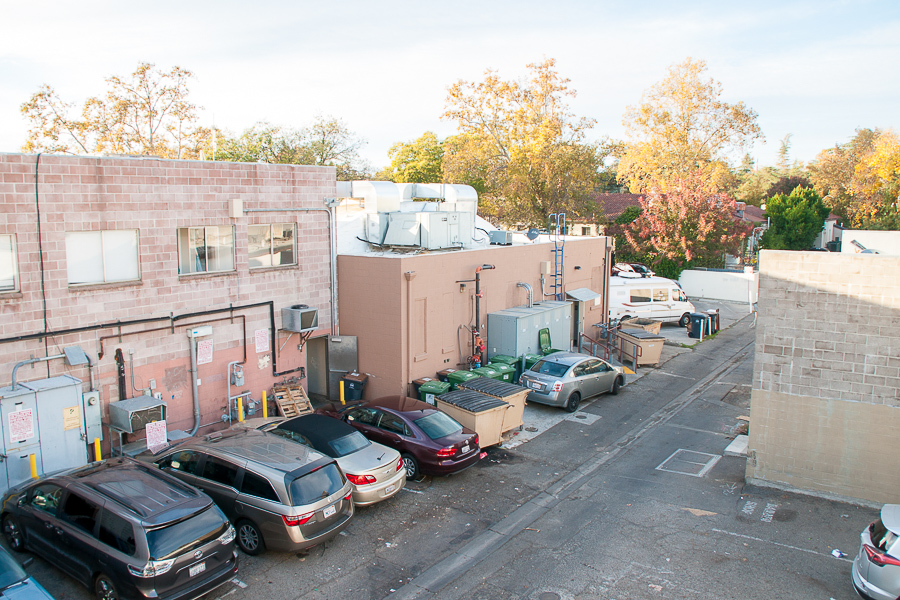
Improvements coming to downtown Davis alley

0
JESSE STESHENKO / AGGIE

Officials seek to ease upcoming construction inconveniences

The city of Davis is planning on making improvements to the section of Tim Spencer Alley that connects 2nd Street to 3rd Street between F and G streets.

On Nov. 8, Davis Downtown’s Visioning and Community Relations Committee organized a Brown Bag meeting at the Palm Court Hotel to discuss the Tim Spencer Alley Reconstruction Project and how it will impact downtown businesses as well as to have a conversation of how to best mitigate those impacts. City staff were on hand to provide an overview of the project plan and answer questions.

The purpose of the alley reconstruction project is to update utilities and resurface the alley. The closure of the alley during reconstruction will impact parking, utilities, deliveries, trash service and access.

The project will dig up and replace the water main, water services and water meter; rehabilitate the sewer by lining it and replacing sewer services and remove the existing asphalt pavement, replacing it with concrete.

Reconstruction is being done on the south end of the alley, which is sandwiched between businesses such as Davis Beer Shoppe and Woodstock’s Pizza on G Street and Bistro 33 and The Posh Bagel on F Street.

“Hopefully the project gets done quick so I don’t have to deal with the noise and lack of parking,” said Kristin Simon, who lives and parks her car near the alley in downtown Davis. “Once it’s finished though, it’ll be nice to see what they’ve done with an alley that has been sort of a sore spot for the neighborhood.”

The alley is going to be completely closed over the duration of the project. Construction is expected to occur from June 18 to Sept. 18 of 2018. Construction hours are going to be from 10 p.m. to 6 a.m., beginning Sunday nights and ending Friday mornings. Parking will be relocated off-site.

“As with all construction work, there will be temporary disruption to daily routines, noise and dust and inconveniences,” said Terry Jue, the project manager and an associate civil engineer for the city of Davis. “We hope to minimize these inconveniences as best as possible by working with the business community, taking input and responding with a construction effort that minimizes impact to businesses.”

City staff visited and distributed project information and a questionnaire to surrounding businesses on Aug. 28, Aug. 30 and Nov. 2.

Davis Downtown Executive Director Stewart Savage indicated that the alley is more of a service alley for employee parking, deliveries and cleanups rather than a destination for pedestrians.

“The alley is not going to be an activated place,” Steward said. “It is utilized by local businesses rather than a spot for visitors.”

City representatives from the city manager’s office and Public Works Department plan to visit and speak individually with tenants and owners regarding the project. Group meetings may also be set up to discuss the project.


Written by: Dylan Svoboda — city@theaggie.org

Conversations with a Podcaster: Andrew Cope

NICKI PADAR / AGGIE

An article about podcasts, interviewing a podcaster who podcasts

Andrew Cope, a fourth-year computer science major and co-host of podcast “How Do You Feel About That?,” loves podcasts. It comes as no surprise, then, that one of his episodes is about — you guessed it — podcasts. That episode alone has thousands of listens, as it’s one of his show’s most popular episodes.

“We’ve thought about making a second episode, just by popular demand,” Cope said.

What started as a reaction to seeing renowned podcaster and host of “Serial,” Sarah Koenig, speak at the Mondavi Center, transformed into acting on one of Cope’s passions: starting his own podcast with co-host Myah Daniels.

Indeed, Cope seems to be a good expert on the subject of podcasts; if you listen to as many podcasts as he does — roughly 40 hours a week, to be exact — you can’t help but think about the underlying implications that make this medium so intriguing.

One such concept is the authenticity of podcasts. The “likes” and “ums,” the conversational speech that imbeds itself in the form “lessens the abstraction between the podcaster and listener,” according to Cope.

It must be noted, however, that multiple types of podcasts exist. For example, one type is the more heavily produced, scripted and “story-telling” style, like those found through NPR; the other is more conversation-based, like what Cope records in his living room once a week. No matter the format, there is an idiosyncratic character that fosters itself in each podcast.

“Say you are writing an article — you have to have an angle and have it be in a certain format,” Cope said. “But when you are talking about a topic in a podcast, your confusion is allowed to show because that’s how people talk, and that’s why it’s fun to listen to. ‘The Weeds’ is a podcast that has three people who are really knowledgeable and competent writers, and they talk about things like the tax plan. They say things like ‘I don’t even know what that is’ and talk through weird jargon they don’t know. It is an authentic way how people grasp ideas. That is more interesting to me, almost seeing the first draft and getting to know a human being.”

Even one of the most famous podcasts, like “Serial,” follows the same principles. Koenig isn’t afraid to let her various confusions show, to stutter her words and express her frustrations as she tries to piece together the murder of a high school student.

“If Sarah Koenig had a podcast where she just told what happened [in the murder] it wouldn’t be interesting,” Cope said. “What made it so good was that we saw her naturally through the whole process.”

Indeed, Koenig did not record each of her episodes in advance. Rather, each episode was done week by week as new revelations in the case emerged in her investigation of the case. Therefore, a definitive conclusion (spoiler alert: which she never even got to by the end of Season 1) was not necessarily the point of the podcast as a whole. Maybe the point is to get to know her.

“When you are getting to know someone, you won’t get to know them by this prepared speech that they have,” Cope said. “You want to be friends with them through a conversation over lunch, getting to the core of that person. Some of the podcasters I listen to I feel like I know really well even though I never met them before in my life, but I have these anecdotes that they have given me […] There are podcasts I’ve listened to that have had recorded people going through crazy things and crying. That’s a really intimate moment I got to share with that person who I don’t even know.”

While different types of podcasts exits — conversational, storytelling and everything in between — they seem to work toward this specific purpose: understanding human narratives and human experiences. There is inherent value in getting to know people.

Beyond that, there is merit in understanding someone else’s point of view or a perspective that you would not have otherwise had the opportunity to hear.

“There is so much value to hear the private conversations of others,” Cope said. “The hosts of ‘Another Round,’ a Buzzfeed podcast, don’t need to sit me down and say, ‘this is what I’m feeling about white privilege.’ […] Maybe if I heard the ideas about white privilege on paper, I may not get it as fully as I would being told by two black women. It is a lot about how it is presented to you. Hearing it from the human being can be more compelling and worthwhile. There can be more information hidden in between the lines in someone’s voice that you may not be able to get on a black and white piece of paper.”

Podcasts, therefore, may not express completely refined anecdotes and ideas. However, that does not diminish the significance of what a podcast can offer.

“I think for a reference piece, podcasts are not a good fit,” Cope said. “They are not researchable, you can’t really Google the content of a podcast. You have to be aware of which information is best stored in a podcast. But there are still wonderful things that a podcast can do that other forms cannot do. In podcasts, you have people’s voices and their inclinations. You only convey more information, not less.”

Podcasts express what other mediums can’t — the human element.

“I think that is the most important thing of all,” Cope said.

Podcasts are able to offer this plethora of interactions and information because of how accessible they are. Podcasts demand the attention of only one physical sense — audio — to convey their ideas. This physically isolates the listener; there is nothing to get in the way of the quasi-human connection fostered by the podcast.

“If it wasn’t audio, I would maybe not have the time to invest to these ideas,” Cope said. “But since it only demands one sense, I can be doing other things while I am listening.”

Isolation in podcasts is not just auditory, but in design as well. Podcasts as a medium have a freedom and autonomy not often found in other forms of media.

“In theory, a video of someone and an audio of someone is basically the same,” Cope said. “In theory, the more senses you have, it would be better — it’s more information. But a TV news interview has a lot of other factors that it has to be aware of: time, viewership, ratings. Because of how podcasts work industry-wise, they don’t need to have those same constraints. On a TV interview, it just ends up being that when you are limited on time and can only cover the crazy extreme stuff, you don’t get to talk to someone for two hours.”

Moreover, content owned by the podcast producer and not another external entity.

“[…] a podcast is a text on someone’s website with mp3 files and download links,” Cope said. “There are therefore no networking constraints [as there are] with TV channels or things like that. You are hosting your own files on your own website. No one can take it down; it’s just there. That is the freedom of podcasts.”

Cope’s podcast “How Do you Feel About That?” can be found here.


Podcast co-host Myah Daniel is employed by The California Aggie.

Written by: Caroline Rutten — arts@theaggie.org

Humor: Broken clock in classroom not only thing whose soul has stopped ticking

TAYLOR LAPOINT / AGGIE

The time god will have his way with us all someday

I lie on the wall all day, tick-tock, tick-tock. Time is not only an abstract concept, but also a living part of me. It rules my movements, mercessily trudging on into eternity. But what happens when you break? What happens when the evil time god, whose physical form is more or less like a gremlin from the classic 1984 movie of the same name, decides to date your sister, even though you had explicitly told him not to, since we clocks are not eternal beings like these petty gods, and the age difference would never work?

Well I’ll tell ya what happens: The time god will decide to wage an endless war on the only purposeful function that you have: to tick. Why does the time god hate me? Is it because I use double colons casually in sentences? Is it because I told him not to bang my sister? Is it because he relishes the suffering of mortal ticking beings? Fill in the bubble for the right answer: it’s all of the above: good job you did well on this test.

I look out at the puny human students in my domain. They write, they type, they sleep. Ah, if they even knew a little bit about the tiny gremlin that ran their lives, they would cease to sit here in lecture and ramble about the ways in which “Gatsby is like, so much like, relationship goals. Like I would give it up for Gatsby ‘cause like, he knows how to treat a woman.” They would cease to speak in such ways, because not only would they realize that they misunderstood one of the most central points of that novel, but also because they would become aware of the fact that the only thing that rules their short and meaningless lives is a time god that looks like a furby crossed with a gremlin that has a second-hand fetish.

My soul: it is separate from me now. When the time god has chosen to wave his little tiny wand (which comes with furbies, sold for $9.99 at your local Target, or perhaps even Amazon. I understand that the one-day shipping is a great convenience. It’s really only a matter of time (get it?) before most brick and mortar shops are fully replaced with websites. That’s just the stage of capitalism we are in, which is why I liquidated most of my stock in Target and Walmart and moved it to more abstract investments like Amazon and PornHub) and strike your puny, mortal souls out of existence.

Think about it, the only thing between you and the grave is a tiny lil’ furby who likes to bang clocks.


Written by: Aaron Levins — adlevins@ucdavis.edu

(This article is humor and/or satire, and its content is purely fictional. The story and the names of “sources” are fictionalized.)

Innovators of Tomorrow showcases power of creativity

POPULAR SCIENCE / COURTESY

PopSci, UC Davis, Toyota work together to host innovation event

Innovation arises from all sources of inspiration, regardless of a person’s age, background or specialty. Popular Science hosted the Innovators of Tomorrow event on Nov. 9 at the Mondavi Center at UC Davis, where the creative ideas of two high school students were showcased. Afterward, there was a short panel regarding the future of innovation, as well as a discussion of how to hand down important skills to the next set of students and thinkers. The event was streamed on Facebook and drew in 8,000 viewers.

$10,000 scholarships were also presented to high school seniors Jade Woods and Ann Nguyen from Saint Joseph’s Academy in Baton Rouge, La. for providing their ideas to combat concussions and coastal erosion. Woods’ plan involves creating glasses that can accurately detect eye injuries so that concussions, which are most common in athletic injuries, can be detected faster. Nguyen wants to battle coastal erosion with “nanograss,” which may mimic the natural processes of seagrass and help be a “natural barrier” to coastal erosion. Both Woods and Nguyen visited California for the first time to present their ideas, and the judges had not noticed they were from the same AP Physics class.

According to Corinne Iozzio, the managing editor at Popular Science, a complicated procedure isn’t necessary to solving a problem, as Woods and Nguyen demonstrated in their projects.

“It’s really just about not overthinking things as often,” Iozzio said. “A simple, elegant solution might not seem as impressive in a schematic diagram, but if you can do something with a dollar instead of a hundred dollars, that’s a really big deal.”

Following the presentations, Iozzio hosted a panel with UC Davis Chancellor Gary S. May, Jackie Birdsall, a senior engineer at Toyota and Ross Fabini, the founder of XYZ Ventures. Key aspects of the discussion included the value of mentorship in self-growth, the need of diversity to drive innovation, and the importance of bouncing back after every failure.

“I think everyone has experienced failure at some level, and my advice is to fail quickly and learn from the failure,” May said. “You’re going to fail, and the vast majority of startups fail. The people who have been successful have failed multiple times before they’ve hit the big success. So what is common among them is the perseverance to keep going, to solve that next problem, and the willingness to learn from that failure and improve the next times.”

The event was also sponsored by Toyota, and Birdsall shared her views on how to turn an idea into a physical product.

“There are maybe three ways that, personally, I found you can break down an idea and see if you can make it into reality,” Birdsall said. “And the first step is to confirm the need. [For example, with the Toyota Mirai […] about 20 years ago, Toyota Management saw that burning gasoline in the internal engine was not a sustainable option for transportation, and so we had a need to move toward zero emission vehicle technology, so 20 years ago — well I recently joined 10 years ago — to bring out the Toyota Mirai. Similarly, we’ve seen demonstrations from these two innovators today [Woods and Nguyen] where they’ve identified a need, confirmed that there’s a gap that needed to be filled, so that’s kind of the first step of an idea — the need. The second is to vet it. I’ve always found it very helpful to find someone that is smarter and wiser than myself, and take my idea to them and really vet it through them. And the third is my personally favorite aspect of generating an idea, as an engineer, and that’s experimenting.”

The Toyota Mirai is one of the first commercial vehicles vehicles that is powered by a hydrogen fuel cell, initially released in 2015, with its most recent iteration released earlier this year.

“It’s an all-electric vehicle, but instead of plugging in, you refill it with hydrogen,” Birdsall said. “It takes about 3 to 5 minutes to refill, and it goes 300 miles on a fill. Instead of storing the electricity in the battery, like a battery-electric vehicle, we’re creating the electricity real time.”

As the driver steps on the accelerator pedal, the hydrogen tanks, which are mostly located in the trunk, release hydrogen, which combine with oxygen. It is one of the simplest chemical reactions, where oxygen and hydrogen form water, resulting in a byproduct of heat and energy used to power the vehicle. Because of the abundance of hydrogen, this type of energy productive is more environmentally friendly than internal combustion engines, and hydrogen fueled cars are not limited by how much energy can be converted into motive power.

Such innovations are driven by having diversity in the workplace, whether it’s people from different backgrounds, cultures, ages, genders and field of study. An important aspect of advancement is mentorship.

“I see this a lot, even if I just think about my own experiences with editors who are senior to me,” Iozzio said. “One of the most valuable things that a mentor can do is push you out of your comfort zone. Not just push you off the cliff, but be there with you while you work your way through the process.”


Written By: Jack Carrillo Concordia — science@theaggie.org

Winter registration opens for online version of Nutrition 10

JEREMY DANG / AGGIE

Course offers pre-recorded lectures, online extra credit, exams

Starting the week of Nov. 7, Winter Quarter registration opened for the entirely online version of Nutrition 10, called Nutrition 10V.  

Nutrition 10: Discoveries and Concepts in Nutrition is a popular lower-division course for students looking to fulfill general education requirements in the Science and Engineering category.

According to the UC Davis course catalogue, the course instructs students about nutrition as a science. It also discusses historical development of concepts related to nutrition and the basic properties of nutrients and foods.

“I think [Nutrition] 10 is a very informative course and it’s fairly simple,” said second-year economics major AJ Seymour. “It offers a lot of extra credit opportunity and is overall stress-free, but at the same time it actually teaches you a lot.”

The online version of the course was developed by UC Davis graduate student Debbie Fetter and Professor Liz Applegate. Fetter received her Bachelor of Science in nutrition science from UC Davis and joined UC Davis’ Graduate Group of Nutritional Studies to continue her interest in nutrition education. Her research focus includes using technology in school-based nutrition programs to generate interest in nutrition.

Applegate is a nationally-renowned expert on nutrition and fitness and a faculty member of UC Davis’ Department of Nutrition. She will be instructing the course for the coming Winter Quarter.

“I’ve always tried to use current technology and I wanted to try out the online course system for myself,” Applegate said.

Nutrition 10 was first offered virtually as a pilot research study in the summer of 2012. According to Applegate, the results from that project were good and students enjoyed the online class.

“Many students on campus have expressed interest in enrolling [in] online courses and were especially drawn toward courses that would also offer online exams,” Fetter said.

Nutrition 10V for Winter Quarter 2018 is 100 percent online and offers extra credit and exams online. Additionally, lectures for the class are pre-recorded and gives students the flexibility to watch the videos on their own time.

The course will answer many nutrition-related questions such as: Should you go gluten-free? Is coconut oil healthy? How do I reduce my cancer risk?

The CRN number for Nutrition 10V is 75323 and students of all majors are encouraged to register.


Written By: Clara Zhao — campus@theaggie.org

Third Street Improvements Project affects residents, small businesses

0
JORDAN CHOW / AGGIE

Construction to continue on Third Street until completed resurfacing in late 2018

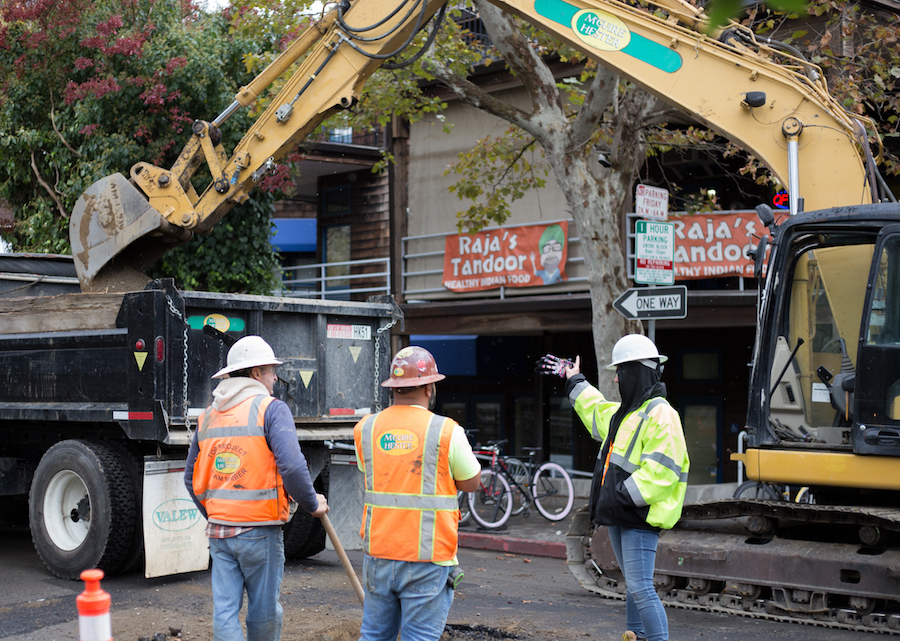
The current construction on Third Street, which affects the two-block area between A and B streets, will continue until the end of 2018. According to the City of Davis’ website, the goals of the construction, known as the Third Street Improvements Project, are to improve bicycle and pedestrian safety, upgrade infrastructure, improve storm water drainage and localized flooding, establish a UC Davis gateway and beautify the street.

Project planning began in 2006, and construction officially broke ground in 2012. The project is being conducted in phases, all of which will contribute to the ultimate goal of resurfacing and beautifying the Third Street entrance to downtown from the UC Davis campus.

Michael Mitchell, the principal civil engineer for the City of Davis, spoke about the series of preparation projects that have been ongoing since 2012.

“We first replaced a water main that was deteriorated over on Third,” Mitchell said. “Then with the cooperation of PG&E — it was actually PG&E’s project — [we undergrounded] all of the electrical in that area, which took a couple years to get going. Then we had to put in temporary street lights because all the lighting was underground and the poles were gone.”

Phase IV of the project is currently underway. Access to Third Street between A and B streets is closed off because workers are replacing a sewer main in that area and also installing a new storm main between A and D streets. The original deadline for the completion of Phase IV was early November of this year, but it was pushed back due to funding delays.

“We didn’t get awarded fast enough,” Mitchell said. “The contractors have been very good, actually ahead of schedule. We wanted it awarded earlier, but it just didn’t happen due to issues outside of our control. The current project should be done by the end of the calendar year, before Christmas. And then we should have the main project — the main event — out to bid and awarded in the early part of next year in time for a spring construction.”

Since Third Street is heavily populated with small businesses and apartment complexes, some of its residents are feeling the construction’s effects. Hayley Chung, a third-year landscape design and architecture major who lives above 3rd and U Café, said that the Third Street project has impacted her everyday commute.

“I walk and or bike to school and right now that street is shut off, so I have to start my bike a block away from where I could actually start it because of the construction.” Chung said. “Right where campus starts is where the construction ends for me. I walk my bike to A because I can’t bike on Third.”

Chung also noted that a lack of parking due to street closures could have an impact on access to popular Third Street restaurants, which include Raja’s Tandoor, Ali Baba, 3rd and U Café, Sharetea and Pho King 4.

“There are already a lot of one-way streets in this area, and it’s already kind of complicated, so I’m sure that the business there aren’t super happy,” Chung said. “But they still get the foot traffic from campus, so I’m not sure if they’re hurting that badly. But it cuts down on parking spots on Third. There are like four or five parking spots on the road there, and they are no longer accessible.”

Meral Basit, a fourth-year biochemistry and molecular biology major who also lives on Third Street, said that the construction disturbs her daily routine.

“I often get woken up by the construction because it’s right outside my window and it’s really loud because they’re jackhammering concrete,” Basit said. “It normally starts between 7 and 7:30 a.m., and it’s just incessant for half an hour, so I normally get less sleep because of it.”

The construction has also created some dangers for bikers since detour warning signs make it difficult for cars to see oncoming traffic.

“If you’re going down Third toward campus and you’re on the right, on the left there are those little poles — they’ve put signs in front of those poles so bikers have to go around them,” Basit said. “But that takes them right in front of a car, and you can’t see them because they are behind the sign until they peek around.”

Mitchell said that the city has worked with local businesses and Unitrans to make sure that people are aware of blockages and rerouting. Other than a few minor complaints, most people have been cooperative with the goals of the project.

Davis residents can expect to see mockups of the final resurfacing project within the next few weeks and a completed product by the end of 2018.

“The future [project] is going to be a beautiful corridor with pavers set into a pattern and specialty lighting, furniture and bicycle locks and all that,” Mitchell said. “We’re actually manufacturing two signs to go up very soon at the limits of B and A to show a nice rendering of what it will look like after it’s complete. You know, construction always has its nuisances during construction like dust, noise, congestion, having to detour, but it will look really nice once it’s done.”


Written by: Olivia Rockeman — city@theaggie.org

Climate change skeptics deny protection for endangered species

U.S. GEOLOGICAL SURVEY / FLICKR

Despite what the DOI says, walruses can’t save themselves

Last month, Pacific walruses were among the 25 animals to be denied endangered species status by U.S. Fish and Wildlife Service. Although environmental groups have petitioned for the walruses’ protection, the U.S. Department of the Interior defended the decision:


“While the Pacific walrus will experience a future reduction in availability of sea ice […], we […] do not have reliable information showing that the magnitude of this change could be sufficient to put the subspecies in danger of extinction now or in the foreseeable future.”


But the DOI previously mentioned the walrus in an undated blog post that discussed animals and climate change.

“Polar bears in many ways have become the symbol of climate change […] The primary cause of their decline: loss of sea ice habitat attributed to Arctic warming,” the DOI said. “Walruses and other Arctic species are facing similar challenges as summer sea ice continues to retreat.”


The department’s inconsistency is troubling — especially since scientists report that summer sea ice will become nonexistent by the 2030s. While the DOI claims that walruses are adapting to ice melt, the animals will lose critical habitat.
More embarrassingly, the DOI insinuated that walruses could figure out climate change problems on their own.


“Pacific walruses are intelligent, adaptable, and able to make the necessary adjustments needed to persist,” said the DOI. “Pacific walruses are not being negatively impacted in a significant way at this time.”


Once walruses determine how to adapt to climate change, maybe they can pass the information along to the rest of us.
Walruses weren’t the only animal associated with climate change to be denied protection. The Florida Keys mole skink, affected by rising sea levels, was among several other animals who remain threatened by climate change impacts and were refused endangered status last month.
The American Pika was also denied endangered species status in 2016 when U.S. Fish and Wildlife claimed that pika were adapting to climate change. Pikas, who thrive in cool mountaintop regions, are threatened by rising temperatures and — studies have shown — could become extinct within the next 100 years.
Climate change deniers pose the greatest threat to animals affected by climate change since offering endangered species status to animals becomes a political decision for policymakers who refuse to accept climate science.


“It’s spectacular cowardice on the part of the Fish and Wildlife Service, who don’t have the courage to do what they are charged with doing, which is to evaluate the scientific evidence, and not kowtow to undue political pressure,” said Stuart Pimm, a scientist specializing in endangered species and biological diversity at Duke University.


Animal extinction is a sad consequence of climate change denial. We’ve improved our lives and made them more convenient with industry and technology, but in the process we’ve destroyed habitats and resources for animals. And the threats we’ve introduced to wildlife are often disregarded or outright denied. How can we continue to look at dwindling species and ignore that we’ve changed their world forever?


The World Wildlife Federation (WWF) discussed the “bleak” outlook for Canadian polar bears in 2009. They hoped “to reach out to the general public using the polar bear as a flagship to clearly demonstrate the importance and negative impacts of climate change” and to “build awareness of climate change impacts on polar bears and other key Arctic wildlife species.”


Eight years have passed since the group made the goal to educate the public about the threat of climate change to wildlife, and we’re no closer to solving our climate change problems — or helping to protect species threatened by climate change. Debating whether climate change affects animals is a diversion we cannot afford.
But we should remain hopeful that people still care enough to help save threatened species by coming together to create solutions that will solve our environmental problems. That’s the message WWF offers the public.

“When it comes to the fight against climate change, there’s reason to be hopeful,” said WWF. “America’s cities, companies, universities and individuals are leading the clean energy revolution — and momentum is on our side. When governments do less, we need to do more. Together we can make a difference and change climate change.”


Written by: Jessica Driver — jmdriver@ucdavis.edu

Disclaimer: The views and opinions expressed by individual columnists belong to the columnists alone and do not necessarily indicate the views and opinions held by The California Aggie.


High-profile claim for potential diabetes cure refuted by UC Davis paper

JEREMY DANG / AGGIE

UC Davis study discredits paper’s claims of simple path to diabetes cure

A key tenet in the scientific method is showing that an experiment, holding all other variables equal, will yield the same result every time. Any paper published in a peer-reviewed journal will come under scrutiny from the scientific community, even more so if the article comes from a world-renowned publication like Cell.

When Cell first published an article in January stating that a commonly available treatment for malaria could reverse the effects of Type 1 diabetes, Mark Huising, an associate professor in the Department of Neurobiology, Physiology and Behavior, expressed a mixture of excitement and skepticism.

“My first reaction was ‘wow, this would be great if this was true’,” Huising said. “What this paper suggested you could do is that they could tap into a process that had been described by a couple of different labs, ours included, where alpha cells in the pancreas can turn into beta cells.”

Diabetes is a disease in which the body cannot produce insulin, the hormone that signals the body to uptake sugar from the bloodstream. Insulin is produced in the pancreas by beta cells. In the case of Type 1 diabetes, the immune system attacks beta cells, so the body can no longer regulate blood sugar levels. The challenge in restoring beta cell mass is that they are difficult to grow in lab, so researchers have attempted, instead, to convert alpha cells, the counterpart to beta cells and unaffected by diabetes, to beta cells.

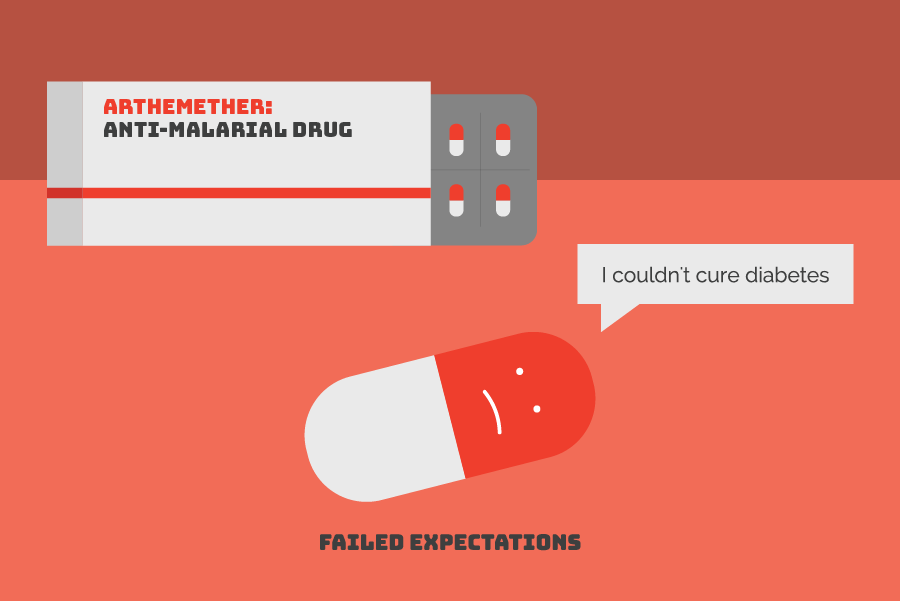
The Cell paper, published by a consortium of European and American researchers, claimed that the antimalarial drug Artemether could do just that, providing hope that a new diabetes treatment, or even a cure, was just around the corner. However, the drug failed to live up to expectation.

“We never saw any alpha to beta transdifferentiation [conversion],” Huising said. “In fact, what we found was that really high doses of the drug that this study used […] completely blocked the function of any beta cells that were there. So not only did the drug not turn alpha cells into beta cells, as was suggested, it completely blocked the function of beta cells that were still around.”

The original paper sourced its samples from cell lines, cell cultures that reproduce indefinitely due to mutation, and therefore can be easily grown. They then screened the cultures for chemicals indicating insulin production. The problem with this method, Huising said, is that, because of the immortalizing mutation, the biological properties of cells from cell lines are far removed from those one would find in the cells of a living being.

And since the cells the paper used were cultivated in a lab rather than harvested from a fresh source, the study ignored the effects Artemether could have on other cells in the body. Sharon Lee, a second-year graduate student in the biochemistry, molecular, cellular and developmental biology graduate group, said that there is more to disease treatment than the cells being targeted.   

“In the human body, you don’t just have alpha cells,” Lee said. “In a cell line, then yes, there are only alpha cells. If you were to give this to a human as a therapeutic treatment, then you are injecting into an environment where there are all different cell types.”

In the paper, Huising and his team aimed for a more grounded methodology, one which tried to get as close to using and observing real pancreatic cells. They used pancreatic cells from living mice, Lee said, more difficult to work with than cell lines, but which more closely mirror real life interactions. Rather than using high-throughput screening of chemicals, that while time-efficient, does not directly observe the cells, the lab manually counted cells.  

The oversights in methodology on the part of the original researchers left Huising with mixed feelings about what has been dubbed the “replication crisis”, wherein large scientific claims are unable to be verified by the scientific community. On one hand, errors and incorrect conclusions are inevitable. On the other hand, the rush to publish studies can lead to experiments that are fundamentally flawed, or lacking in procedural rigor, eroding the credibility of the scientific establishment.

“Every time our field or any medical type of big story [comes out] and doesn’t hold up, the general public sees these big, splashy stories […] they think ‘oh, maybe this will be beneficial to me’,” Huising said. “Then [afterward], they hear nothing about it.  Nothing […] will ever trickle down to people who, in this case, have type 1 diabetes.”

Talitha van der Meulen, an assistant project scientist in the Department of Neurobiology, Physiology, and Behavior and co-author of the paper along with Huising and Lee, stressed that while reproduction papers don’t always get front-page news, it is an important facet of the scientific process.

“It is important to scrutinize data published by others,” van der Meulen said. “What we did here is not common practice and not glorious, but we [felt] that it was the right thing to do.”

Despite the negative results of the study, Huising, Lee and the rest of the group continue to work to find ways to convert alpha cells to beta cells, and hopefully develop an effective cure for diabetes.


Written by: Dylan Hendrickson — science@theaggie.org


December Event Calendar

JEREMY DANG / AGGIE

What to look forward to in the coming month

Double Dose of Jazz, Nov. 30

Where? Ann E. Pitzer Center

When? 7 p.m.

What is it? For a night of smooth melodies and lively performances, join the jazz bands of the UC Davis Music Department as they perform two concerts: one in the afternoon and one in the evening. The night will feature a variety of classic jazz pieces, all composed by saxophonist and jazz band director Jacám Manricks. For more information, visit the event page.


UC Davis Free Stand-Up Comedy Show, Dec. 1

Where? Wellman 2

When? 7 p.m.

What is it? This month, the UC Davis Stand-Up Comedy Club is giving back by hosting a benefit performance for the victims of the recent California wildfires. Although the show is free, the UC Davis Stand-Up Comedy Club will be accepting donations from audience members for a night filled with laughs to be had by all — and for a great cause.


Alottacappella, Dec. 2

Where? Sciences Lecture Hall 123

When? 8 to 10:30 p.m.

What is it? This year, The Liquid Hotplates will host their annual event in the theme of “A Gatsby Winter Night.” A variety of student groups will perform, including The Spokes, The Lounge Lizards, The Afterglow, Cleftomaniacs, Levels of Vocal Expression, Cloud 9 A Cappella, Acquire and GGN. Take a break from finals studying and stay entertained with these UC Davis a cappella groups.


Dixon’s Annual Tree Lighting Festival, Dec. 4

Where? Downtown Dixon

When? 4 to 8 p.m.

What is it? Get in the holiday spirit this year for a beautiful tree lighting ceremony that’s just a short drive away. Dixon’s Annual Tree Lighting Festival is a family-friendly event, funded solely by donations from the community. The festival will feature free carriage rides, a visit from Santa Claus, children’s crafts and activities, entertaining performances, free desserts and more. The night will culminate with a ceremonial lighting of a grand Christmas tree to kick off the holiday season.


Electric Christmas, Dec. 7 and 8

Where? Golden 1 Center

When? 7 p.m.

What is it? Presented by Radio 94.7 and Sprint, Electric Christmas will feature performances by The Lumineers, Portugal. The Man and Walk The Moon. With The Lumineers’ folk sound, Portugal. The Man’s indie vibes and Walk The Moon’s upbeat style, the night is sure to be one to remember. Tickets are still available and can be found at Ticketmaster.


Poetry Night Reading Series, Dec. 7 and 21

Where? John Natsoulas Gallery

When? 8 to 10 p.m.

What is it? Hosted by Dr. Andy Jones, Poetry Night at the Natsoulas Gallery often features seasoned performers who have had many works published, including award-winning poets. Jones is also a UC Davis UWP professor. Following the performance, Poetry Night also offers an opportunity for members of the community to read their own works in an Open Mic segment. The Natsoulas Gallery is located at 521 First St. in downtown Davis. For more information, visit the event’s website. Can’t make this event? The series takes place the first and third Thursdays of every month.


Written By: Sydney Odman — arts@theaggie.org

Perspective in Politics: Democratic Party must fix weak turnout, infighting for 2018 elections

SHEREEN LEE / AGGIE

The party can come together in opposition against the president

Just last week, the Democratic Party successfully won various elections across the country, especially in Virginia and New Jersey. In both states, the governor’s race ended with resounding majorities in favor of the Democrats. The tide now seems to be turning against the Republican Party, while the Democrats seem very confident in victory in the coming years.

The Trump factor seems to be a significant influence in the high turnout in places like Virginia. If the Democratic party can take advantage of heightening disdain towards this presidency, then they can get people out to vote on election day. According to polling data released by The Washington Post, 51 percent of respondents in Virginia said that the president influenced how they voted, with two-thirds of these people voting Democrat to counter Trump.

Turnout will be critical to any Democratic success next year, even more so considering how midterm elections traditionally have much lower turnout than presidential elections. In last year’s election, Hillary Clinton lost in Pennsylvania, Michigan, Wisconsin, Ohio and Florida, five states that voted for Barack Obama in 2012. Rather than seeing a major surge of people voting Republican, four of these five states witnessed either a decrease in the Democratic vote tally or a very slight increase. The inability to even reach Obama’s popular vote in these states guaranteed Trump’s close victory in all of them.

But ever since the beginning of his presidency, Trump has repeatedly garnered widespread disapproval from the public. A 20-point gap in approval now exists, with 55 percent of people disapproving and just 35 percent approving — surpassing Obama’s previously bad ratings. This predicament discourages Republicans who don’t see Trump as an electoral asset from seeking the president’s endorsement.

Ed Gillespie, the Republican candidate for governor in Virginia, tried to distance himself from the president while appealing to as much of the population as possible. Despite how many political commentators argued that Gillespie would win with the strategy, his efforts fell short, and he still lost the election. Had it not been for the widespread disapproval of the president, the governor’s race could have been a lot closer. The Democrats can therefore tie Republican candidates nationwide to Trump, regardless of their views toward the president, as they did in Virginia last week.

Yet in many ways, the infighting in the Democratic party continues on — not just in the party’s leadership, but also among its candidates throughout the country. Marked divisions continue to show in the presidential race or Congress and even between candidates running in local and state offices.

Nancy Pelosi, the top Democrat in Congress, faced some challenges in her district in eastern San Francisco. A candidate named Preston Picus aligned himself with Bernie Sanders last year, running on a progressive platform in an attempt to beat Pelosi. Although he lost in a landslide, the Bernie versus Hillary fight still rages on.

In Virginia, Democratic voters chose Ralph Northam over Tom Perriello to run for governor against the Republicans. Here as well, Perriello, the candidate whom Sanders supported, eventually lost to the mainstream candidate supported by the Democratic leadership and many of its state lawmakers.

The Democratic party must also find a way to reconcile these differences between the left and moderate wings of the party. The best approach is for everyone in the party to find common ground in opposing all Republican candidates. This is easily understandable in the eyes of regular people but less so in the eyes of Democrats at all levels of politics.

Considering how the president creates his own negative press, the Democratic political machine doesn’t have to do much. A coalition just has to be created between usual Democratic voters, independents who ended up voting for Trump and those who stayed home on election day last year.


Written by: Justin Chau — jtchau@ucdavis.edu

Disclaimer: The views and opinions expressed by individual columnists belong to the columnists alone and do not necessarily indicate the views and opinions held by The California Aggie.

PDA ALERT: The American Flag: Patriotism doesn’t stop at flying the flag

JUSTIN KERR SHECKLER [(CC BY 2.0)] / FLICKR
Solely flaunting the flag shows insecurity, not unabashed patriotism

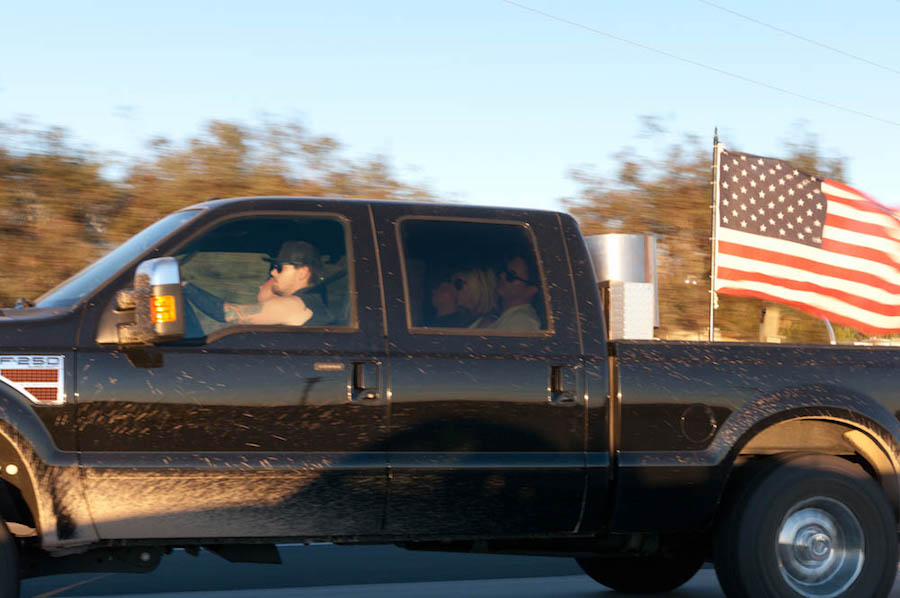
A few months ago, over summer break, I was walking through my neighborhood when I saw a raised flatbed truck with filthy exhaust streaming out the back end. As it turns out, this is not uncommon to find in Arizona suburbs. Often packaged with, well, a strange looking scrotum-type thing hanging off the bumper, these trucks display the textbook definition of fragile masculinity.

This particular truck, I remember distinctly, carried another accessory — one that is quite common in this country. On that fine summer day, as if flaunting its colors would earn brownie points from God, the driver of this spectacle-on-wheels had left his driveway with an American flag fastened to his hood.

Given the sheer audacity of this “patriotic” PDA, I was reminded of how popular such flag-zealotry is in American life. The flag adorns shirts, socks and extra-small men’s underwear. Red, white and blue boardshorts and sunglasses decorate the crowds on beach holidays. The flag waves on front porches, white-picket fences and yes, the vehicles of insecure men with self-esteem issues.

In the grand scheme of things, this alleged affection for the flag may seem harmless. After all, who cares what people display or wear? Everyone has the same right to individual self-expression, and what certain men fasten to their trucks is of no consequence to other drivers on the road.

Except it is. You see, what these drivers argue — whether consciously or not — by brandishing the American flag so obnoxiously is that they are better Americans than the guy sitting at the intersection next to them. By flaunting the flag in this manner, people like my friendly neighborhood cowboy pass a stinging judgement on those who aren’t as flashy: “I’m more of a patriot than you are.”

In more mainstream discussions, the same judgements are passed on anybody who fails to display certain actions or sentiments deemed necessary to be a proper, patriotic American.

Consider, if you will, the false military narratives hurled at Colin Kaepernick’s anthem kneeling and the resulting political fallout; the unapologetic skewering of kids who express their constitutional right to remain silent or sit during the Pledge of Allegiance and the unhealthy worship of the armed forces, in which anyone who fails to cheer for a soldier — often fresh out of bootcamp — during a halftime show is castigated as unpatriotic or even anti-American.

And this is just the tip of the iceberg. A Harwood Institute poll in 2002 found that 86 percent of Americans believed simply displaying the flag was a patriotic activity. 12 years later, in 2014, a Fox News poll showed that 94 percent of Americans believed that flying the flag indicated patriotism. Fewer people thought the same about voting in elections or joining the military.

These are startling figures, and they leave little room for dissent. Merely displaying the flag is a good sign of patriotism? In that case, any Joe Schmo can brandish a flag and wag his tail in blind loyalty and be called a patriot by a public none the wiser. Whatever happened to actions with substance, from which patriotism is delegated to those who actually do something that is borne from love of country?

Waving a flag and calling it a day is not patriotism. It’s called superficiality — and it ignores the patriotic contributions made by everyday citizens to help this country prosper economically, diplomatically, socially and yes, militarily.

Joining the Peace Corps or Foreign Service is patriotic. Voting is patriotic. Participating in jury duty is patriotic. Criticizing government policies or tweets because they threaten the American values you hold dear is patriotic. Doing your part to make this country better than it was yesterday — through storytelling or activism or leadership or education or parenting or empathy — is patriotism.

Wearing a pin of the American flag is not inherently patriotic — nor is flying it over your manicured lawn or plastering it on your truck.

By all means, flaunt the flag in whichever way you choose. There are many who do just that and have patriotic track records to show for it. But flapping a piece of cloth around on a stick does not automatically align with the patriotism the greatest Americans have envisioned. Let’s not forget that.

I think it’s time to tell your local honky-tonk truck drivers to find a new piece of decoration — or get out of (their) Dodge.


Written by: Nick Irvin — ntirvin@ucdavis.edu

Disclaimer: The views and opinions expressed by individual columnists belong to the columnists alone and do not necessarily indicate the views and opinions held by The California Aggie.

Stranger Things 2: A Review (Spoiler Alert)

CAITYLN SAMPLEY / AGGIE

It’s bigger, better, darker and spookier.

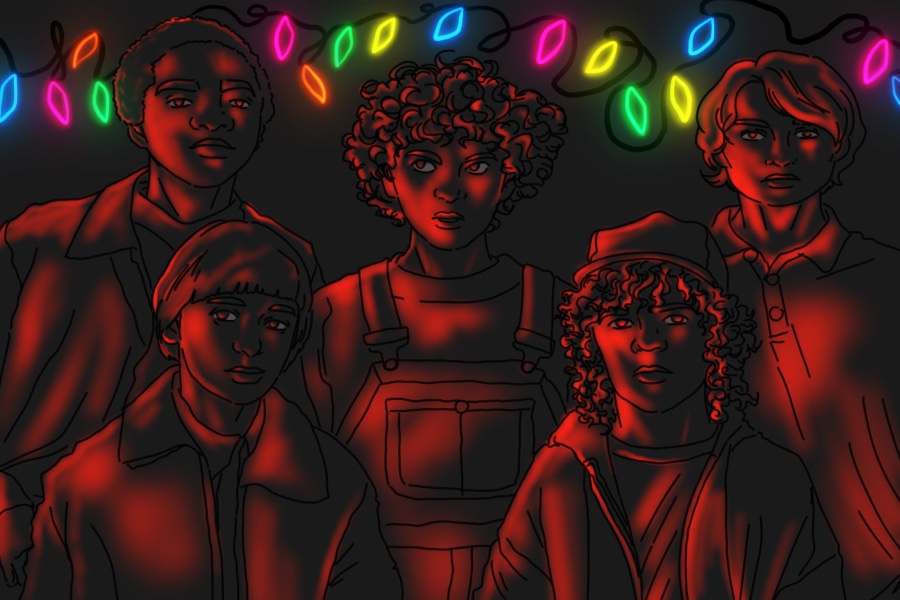
It’s Halloween time in 1984, and “stranger things” are still happening in Hawkins, Ind. Released to Netflix on Oct. 27, the second season of “Stranger Things” provides nine new episodes, or “chapters,” fully equipped with everything a good sci-fi sequel should contain. It’s bigger, better, darker and spookier, but still manages to stay grounded in the roots of its first season.

The Duffer Brothers allowed Season 1 to be left off on a satisfying yet anxiety-filled note as viewers yearned for more time to be spent in the world of the Upside Down. The audience was left wondering about the whereabouts of the beloved Eleven (played by Millie Bobby Brown), who previously sacrificed herself to save her friends at the end of the last season. Of course, the young telekinetic is back, with an unlikely ally in police chief Jim Hopper (played by David Harbour), who acts as a father figure to the angsty teen.

This time around, Mike, Dustin, Lucas and Will are simply trying to fall back into a state of normalcy. You know, Dungeons and Dragons, arcade games, walkie-talkie conversations, Ghostbuster costumes — typical 1980s teenage nerd stuff. But a vicious shadow monster, nicknamed “the Mind Flayer” by Mike (played by Finn Wolfhard) and his team, has other plans in mind, thrusting the city of Hawkins back into a battle against the dreaded Upside Down.

Similarly to its first season, “Stranger Things 2” offers a form of escapism and refreshing originality that most shows are lacking these days. The second season strongly delivers in terms of its nostalgia, unique cinematography, great music, innocent humor and well-developed characters.

The plot thickens as the Upside Down still lingers throughout the town, haunting Will Byers (played by Noah Schnapp) who is plagued by visions of swirling red storms, dark shadows in the sky and an unshakeable feeling that remnants of the Upside Down continue to linger inside him. His mother, Joyce (played by Winona Ryder), along with Chief Hopper, work together to help Will through these struggles, but the poor kid can’t catch a break.

Much to the satisfaction of its viewers, “Stranger Things 2” wraps up several open-ended ties left from the last season. Beyond that, we get to see our favorite characters — and even our not-so-favorite characters — dig deeper as they redeem themselves and learn fascinating truths about their pasts.

Eleven goes on a search for her birth family, discovering that she may not be as truly alone as she thought. Despite his heartbroken antics, Steve (played by Joe Keery) steps up as a strong ally and “babysitter” to the young team of ghostbusters, growing especially close to Dustin (played by Gaten Matarazzo) throughout the season. Mike continues his dedication to destroying the Mind Flayer while he still romantically hopes that Eleven will return to The Party someday. Lucas (played by Caleb McLaughlin) comes into his own, gaining more screen time and a stronger sense of self, while also growing a complicated relationship with Max (played by Sadie Sink), the new girl at school.

Despite its many strong suits, Season 2 of “Stranger Things” prompts some concerns regarding the future of the series. “Stranger Things 2” successfully, but predictably, manages to live up to the hype, still continuing to exist within its own comfortable sphere. Although predictability often hits upon exactly what viewers want to see, this season didn’t seem to take as many risks as the first did. If the third season were to follow suit with a similarly formulaic structure to its predecessors, will that strike a chord or leave viewers feeling burned out over the same-old, same-old once again? So far, co-creators the Duffer Brothers have done an extremely impressive job incorporating the perfect amount of nostalgic vibes, romantic moments, jump-scares and spooky monsters into the show. But it still remains to be seen whether or not the director duo will manage to shake things up in the town of Hawkins well enough to keep the hit series new and relevant.

As we anxiously await the third season and what is to come, there are several questions to be answered in the coming episodes. Is Will free from the Upside Down? How will the Mind Flayer attack next? What will happen between Eleven and Mike? The second season wraps up with what appears to be a happy ending, with an unsettling level of teenage normalcy. While Mike and his team mingle together inside the school dance, the image of the Mind Flayer looms over the ending scene, leaving audiences in bubbling anticipation for the exciting, new adventures sure to come.

Until next time, Hawkins — see you in Season Three.

Written By: Sydney Odman — arts@theaggie.org

Teacher strike averted

0
HANNAH LEE / AGGIE

Sacramento teachers reach bargain with district, avoid strike

On Nov. 6, the Sacramento City Teachers Association (SCTA) and the Sacramento City Unified School District (SCUSD) came to an agreement for a 6-percent increase in teacher salaries. The resettlement came shortly after the growing threat of Sacramento educators to strike in overwhelming numbers. The resettlement brings closure to the past 13 months of negotiations between the union and the district.

“The overwhelming support for our public schools is what keeps us as educators standing up for our students,” said SCTA president and Sacramento teacher David Fisher in a press release. “We believe this tentative agreement will help move us in the direction necessary to ensure each and every one of our students has a qualified educator in every classroom, resources they need and programs that will ensure their success.”

SCTA began its discussion with the district in June 2016, stating that the district withheld $81 million in reserves, which equates to a 320 percent increase in reserves over a four-year period. SCTA proposed using this money to fund the Destination District, an educational initiative to increase educator salaries, reduce class sizes and provide greater opportunity for Sacramento students to engage in arts, music and physical education, among other objectives. However, on several occasions, the district refused to reach an agreement with the union due to discrepancies and misunderstandings regarding the SCUSD budget.

Alex Barrios, the chief communications officer for SCUSD, believes that two important factors prompted both parties to reach a final contract agreement.

“I think the mayor’s involvement helped a lot,” Barrios said. “The other thing that changed was that the state had concluded its fact-finding report, which agreed with the district’s assessment that the amount of money we were putting on the table was fair, reasonable and within our means. When the public saw that there was not, in fact, $86 million available to spend, I think that helped moved the discussion along as well.”

In a statement regarding the details of the tentative bargaining agreement, the district declared that the teacher contract offer will require a $25 million investment. The investment will be used to support educators, school psychologists and impaired-learning specialists. Additionally, the district will improve lifetime health benefits and access to free family health insurance for Sacramento educators.

The resettlement agreement negated the union’s move to strike at the last possible moment. According to SCTA, Sacramento educators had previously voted to participate in a teacher strike with 97.2 percent approval. There was minimal progress in the bargaining process as of mid-October, and if a strike had occurred, it would have been the first Sacramento teacher strike since 1989.

Sacramento Mayor Darrell Steinberg expressed his opinion toward the agreement and evasion of the teacher strike in a statement to the Sacramento Bee.

“Forty-three thousand students, parents, teachers and our entire community can breathe easy this afternoon,” the mayor said. “Let this be the beginning of a new day of partnership that puts old wounds behind. Together, let’s make Sacramento City the best school district in the state.”


Written by: Eliana Sisneros — city@theaggie.org

Downtown Davis lights up for the holidays

0
ALLYSON KO / AGGIE

Sixth annual Window Decorating Contest to begin Nov. 30 with 23 participating shops

Downtown Davis looks forward to hosting its sixth annual Window Decorating Contest, beginning Nov. 30. The competition will last until Dec. 17, and displays will stay up through Christmas Day, giving the community a chance to relish the holiday spirit and enjoy its favorite decorations.

This year, 23 stores will be decorating their windows during the holidays. Stewart Savage, the executive director of Davis Downtown, will designate certain community members to be secret judges, who will meander through the streets and determine the winner.

“One of the things I wanted to do was to add an extra holiday feel to the downtown,” Savage said. “I grew up in a town where during the holidays there would be a lot of decorations outside, and I noticed that people weren’t doing that here. So this is my effort to bring back some of my childhood memories.”

The winning business will be awarded a Davis Downtown gift card, which they can choose to either gift to employees or use as a promotion for their business. Additionally, there will be a People’s Choice Award, which further involves community members by enabling them to vote online. In return for voting online, they will be entered into a drawing for Davis Downtown gift cards.

“I think that the window decorating contest is a great opportunity for the businesses in downtown Davis to show their spirit and it allows the community to be able to get into the holiday spirit,” said Lauren James, the coordinator of ArtAbout. “I think it’s a great way to connect with the community.”

Brett Maresca, the manager of Boheme Clothing, one of the participating stores, explained the contest.

“We like the fact that downtown Davis is putting it on to inspire creativity,” Maresca said. “Everyone really seems to enjoy it, and I think it adds something to the holiday season.”

The contest’s kick-off date, Nov. 30, has been paired with the annual tree lighting that is held downtown, and Savage explained that he hopes people will show up in downtown for the tree lighting and then proceed to shop and admire the decorations.

“With so many wonderful windows, downtown will be a fun, exciting and colorful place to shop for that perfect holiday gift,” Savage said.


Written By: Hadya Amin — city@theaggie.org


“It’s Okay to be White” fliers found on UC Davis campus

KYLA ROUNDS / AGGIE

Chancellor, Vice Chancellor condemn white nationalist sentiments

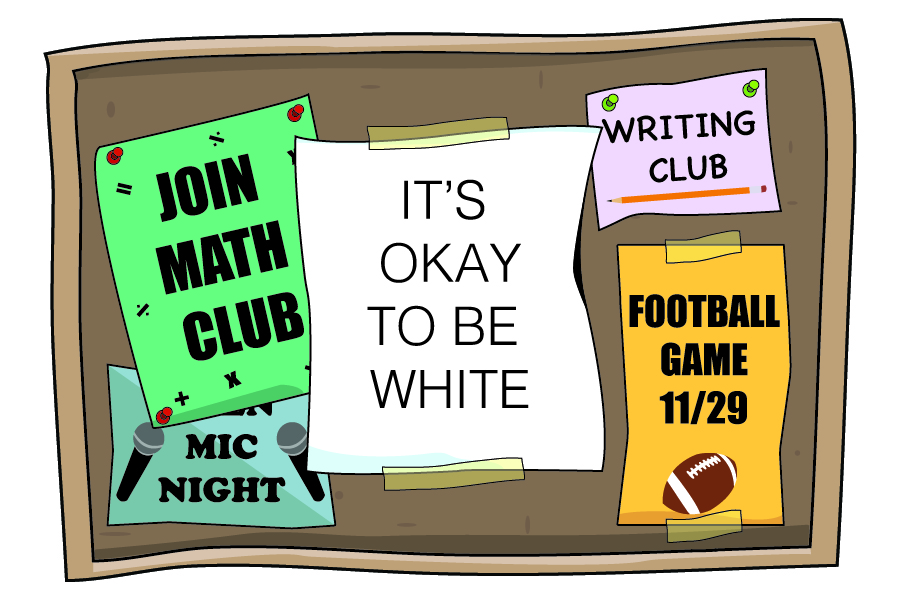
On the weekend of Nov. 4 and 5, fliers with the single sentence “It’s Okay to be White” were posted around campus. Chancellor Gary S. May rejected the white supremacist message and explained that the fliers were part of a nationwide campaign. The fliers were also found at Harvard, Concordia College, Tulane University, UC Berkeley and Princeton as well as the Canadian University of Alberta.  

According to Andy Fell, the communications manager at UC Davis News and Media Relations, the fliers were found “in the Women’s Resources and Research Center and the Student Community Center.” According to The Sacramento Bee, the fliers were also found near the Center for African Diaspora Student Success.

The concept of the fliers was spread through 4chan, an online imageboard “where anyone can post comments and share images.” Users posted threads asking for these fliers to be hung in public places, claiming that the phrase “It’s Okay to be White” is innocuous.

On Nov. 9, Chancellor May wrote an op-ed for The California Aggie, stating that the fliers were “seeking to goad us” and aiming “to provoke a reaction and portray it as evidence of growing anti-white discrimination on college campuses.” Chancellor May confirmed that white-nationalist groups like those responsible for the flier are appealing to white-nationalist anxieties.

“The posters were part of a national campaign of provocations intended to divide our country,” May wrote.

May also rejected the notion that a top 10 research university like UC Davis, which “prides itself on diversity, inclusion and civil discourse,” would make an ideal site to “persuade people to accept the concept of ‘white victimhood.’”

Vice Chancellor Adela de la Torre’s email to the UC Davis community included a link to a Washington Post article. The Post wrote that investigators at the Southern Poverty Law Center found that “white nationalist organizations regard colleges as spaces where millions of young Americans, without their intervention, will be inculcated with ideas of valuing diversity, seeking and creating inclusion and equity.”

May stated in his op-ed that the fliers were in violation of a campus posting ordinance, and weren’t removed because of the subject matter.

“We removed the signs on Sunday (Nov. 5) wherever we found them,” May said. “All were in violation of our campus posting policy, which generally prohibits postings on buildings, walls, windows and trees — whether it’s for a political cause or a blood drive.”

De la Torre put forth options in her email for diversity-initiated Community Resource and Retention Center programs which would  “strengthen community bonds and dialogue” that “emphasize common ground.”

ASUCD President Josh Dalavai, a fourth-year political science and economics double major, responded to the fliers and condemned white supremacist rhetoric at UC Davis.

“These actions were bigoted and, quite frankly, I believe any individual who resonates with this message is either not very intelligent or outright racist,” Dalavai wrote via email. “No one is literally denying that it is okay to be white; it is okay to be anything on this campus except hateful. The fact that some individuals felt that the mere existence of the Center for African Diaspora Student Success warrants a threat to ‘being white’ speaks volumes.”


Written by: Aaron Liss — campus@theaggie.org