55.7 F
Davis

Davis, California

Saturday, December 20, 2025
Home Blog Page 579

Zebrafish making waves in ovarian cancer research

BRUCE DRAPER / COURTESY

Gene found in zebrafish may advance cancer research

A tiny fish is making a whale of a contribution toward cancer research at UC Davis. In a paper published in PLOS Genetics by Bruce Draper, a UC Davis associate professor, recent research may propel the discovery of a cause of ovarian cancer.

While it may seem strange to use a fish as a model system for a disease found in humans, zebrafish and mammals share many similarities. The fish, no larger than a fingernail, have a liver, brain and eyes, among other organs. Moreover, 84 percent of the genes related to ovarian cancer are present in zebrafish, making it an ideal model organism.

Within months, the species can procreate three generations. Embryos develop outside of the womb, so the mother is not harmed. The reproductive and ethical efficiency of using zebrafish makes for exemplary research methods.

“Reproduction to sexual maturity is only three months, which is much faster than a monkey or other primates,” said Sydney Wyatt, a graduate student researcher. “A pair of zebrafish can produce hundreds of offspring whereas mice can produce about ten at most.”

Certain researchers have also preferred zebrafish for similar reasons. However, the Draper Lab at UC Davis is unprecedently studying the gonads of this minnow.  

Draper’s lab focuses on how the gene fgf24 affects production of another gene, etv4, as well as the signaling pathways in between. The gene etv4 is believed to be responsible for ovarian cancer. In the recent paper, the lab showed that a deletion of fgf24 resulted in an absence in etv4.

“Cancer is often times the reverse of what happens during normal development,” Draper said. “We’ve shown that if you take the gene away you can’t proliferate, but if you over activate it then that should potentially drive a proliferation.”

Though the gene fgf24 is not present in humans, proving that fgf24 relates to etv4 may lead to finding a protein in mammals which performs likewise. The next phase of research would move to studying mice in an effort to find a gene similar to fgf24. If found, this could drive finding a cure for ovarian cancer.

“Several fgfs, their receptors, and their downstream targets are linked to many cancers, including ovarian,” said Dena Leerberg, a UC Davis postdoctoral scholar.

“This particular gene [fgf24] is not in mammals, but genes very closely related to it are,” Draper said. “All the other components of the pathway are present.”

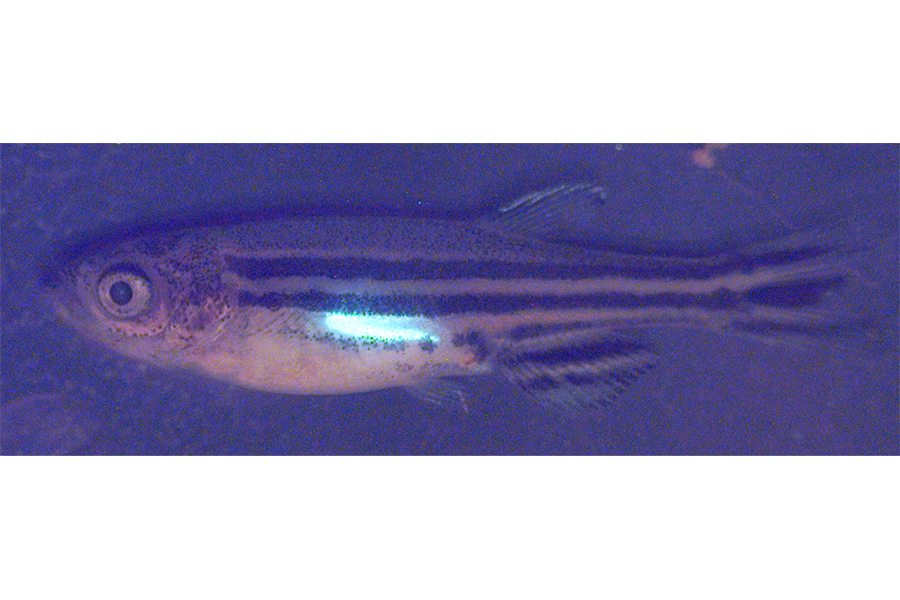
Researchers conquer the zebrafish’s size limitation by genetically engineering the fish to have florescent gonads. Under a microscope, the fish are studied with blue light, making the gonads radiate through the skin. This way, genes contained in the gonads can be studied with less of a headache.

Recent results from the lab may catapult a sea of advancements in cancer research.


Written by: Natalie Cowan — science@theaggie.org

Art to help reduce stress

KAILA MATTERA / AGGIE

How students benefit from practicing art

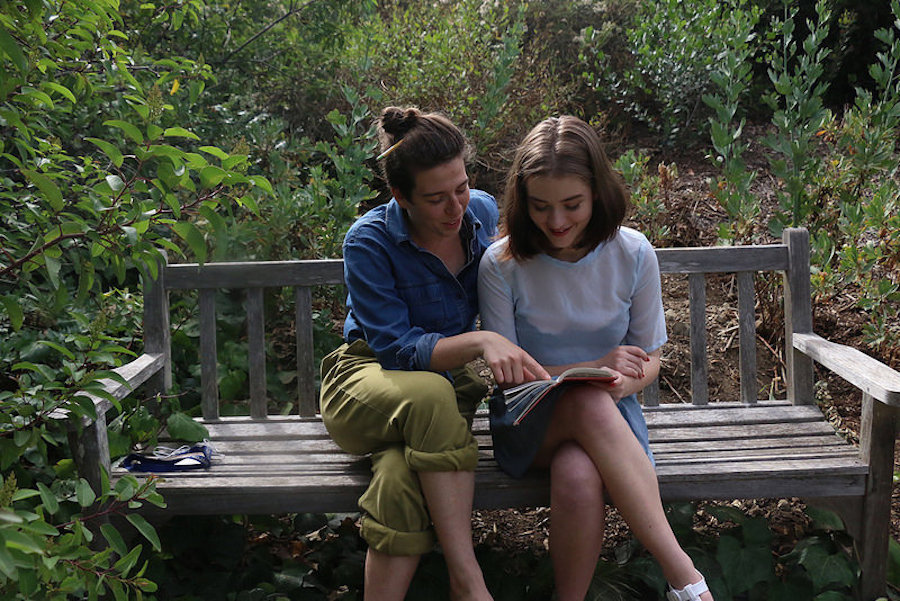
It is no mystery that college students lead stressful lives. Balancing work, friendships, internships, sports, etc. on top of college-level curriculum often takes a toll on sleep schedules and sense of peace. For many students, watching the new season of “Stranger Things” serves as a good escape from worries brought on by busy schedules and challenging classes. In this way, Netflix can provide a brief refuge from the difficulties of college life, but there are also other platforms of art that can help students relieve stress.

The diversity of art mediums and forms available to help destress is immediately clear. For Julie Lobrutto, a third-year animal biology major, and Michelle Gin, a fourth-year wildlife fish and conservation biology major, their preferred mediums are very accessible. Gin recently started typography and hand lettering. Although Gin had already discovered oil paints, this was something new to Lobrutto.

“I mostly draw using pens or colored pencils, but last quarter I took an oil paints class which introduced me to a whole new world of mediums,” Lobrutto said.

Fayanne Kirkpatrick, a third-year neurobiology, physiology and behavior major, utilizes graphite alongside watercolor and acrylics.

“I draw people and add elements of surrealism,” Kirkpatrick said.

Layla Al Asadi, a second-year psychology major, similarly draws with ink and colored pencil, but also plays the piano and paints with acrylics and watercolor.

“Over the past couple years, I developed a unique relationship with the piano,” Al Asadi said. “Although I did not enroll in any classes, I think a big part as to why I consider the piano a form of art is due to my experience as a self-taught pianist. I started practicing Turkish melodies, and ever since the piano has been a resort for peace and relaxation and an instrument I will always treasure.”

Al Asadi is not alone in being self-taught, as Kirkpatrick also falls under that category.

“I was self-taught, so [I’ve been playing] ever since I could hold a pencil,” Kirkpatrick said.

While Lobrutto’s mother was more of a pushing agent by signing her up for classes in the summers so she wouldn’t be bored, Al Asadi’s mother was more of an inspiring source for her interest in art.

“My mom was an artist […] she used to have sketchbooks in her drawers, and I always found her art intriguing,” Al Asadi said. “When I was young I also had multiple of sketchbooks, and I used them to creatively communicate with myself. I think having a relationship with oneself allows one to know themselves better and thus the world around them.”

When you first start out, it takes time to go from stick figures to more developed art. Kirkpatrick admits she has evolved with age.

“The people I draw look more like people now than they did when I used crayons to draw in kindergarten,” Kirkpatrick said.

Even if stick figures turn out to be your maximum level of achievement in art, just remember that every form of expression is a valid one in its own right, as Lobrutto mentioned, and that it is no reason to give up.

“People think that because their drawings look like stick figures, they don’t have a creative bone in their body, but that is not true,” Lobrutto said. “I try and encourage my friends to doodle and not criticize themselves because art is just another way of expression.”

There might even be something else you would be more adept at, as Gin proposed.

“Art can be incredibly calming because it allows you to focus on something that  you can control, which can be especially valuable in a student’s stressful life,” Gin said. “I am a firm believer that everyone has some form of artistic talent (whether it’s drawing, singing, sculpting, etc.) and that there is no wrong way to create art. Finding something you think you’re good at and not comparing yourself to others can be an incredibly rewarding and self-fulfilling process.”

If all this isn’t enough to motivate you to relieve your stress through the arts, Al Asadi mentions a Ken Burns quote that may just change your mind: “Insist that we support science and the arts, especially the arts. They have nothing to do with the actual defense of our country — they just make our country worth defending.”


What makes art calming for each of these students?


Lobrutto: “I love how art can transcend though differences and resonate within everyone because it can be interpreted in so many directions. It has the ability to heal, tell a story and educate, which I believe is extremely powerful.”

Gin: “This may sound a bit cheesy, but I love that when I create art I forget the rest of the world. I can focus only on the lines and strokes I am creating and know that I am in control. Any standards or expectations are my own, and so I don’t have to worry about creating things that other people like; I can instead focus on what makes me happy.”

Kirkpatrick: “There is something about drawing that separates me from my current problems. Whenever I am under a lot of stress, all I want to do is paint or draw and get away from it all. The act of creating makes me feel accomplished.”

Al Asadi: “Art allows me to transform my intangible emotions into tangible emotions- knowing so calms me down. I turn to art to reflect on the world around me, and it also helps me answer my own questions about the universe. It sometimes pleases me, and at other times it frustrates me, but this is the beauty of art — it transcends emotion.”


Written by: Cecilia Morales — arts@theaggie.org

Inside the game: Mahalia White

RAUL MORALES / AGGIE

The California Aggie sits down with freshman outside hitter to discuss outstanding first-year performance

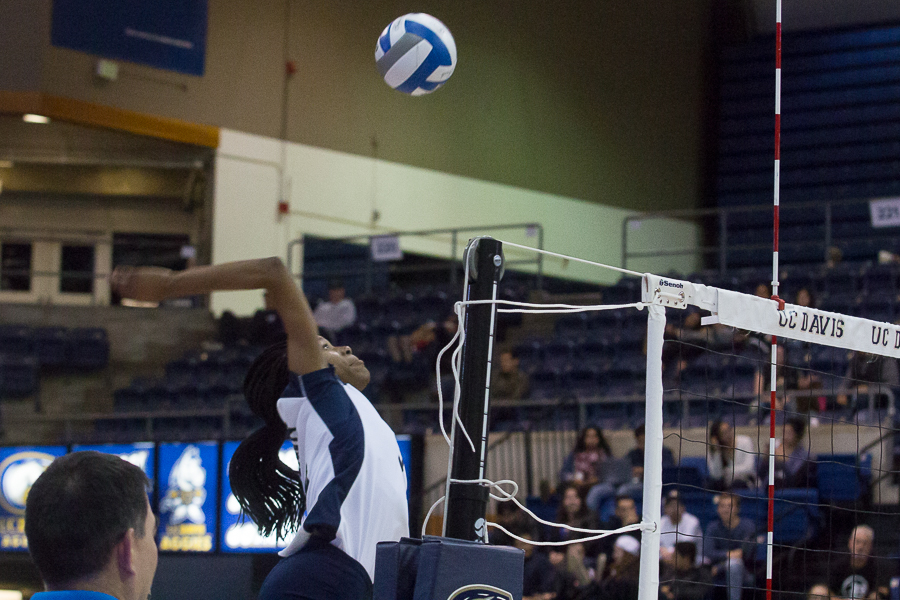
Some may call her a volleyball killing machine, but her teammates simply call her Mahalia. Mahalia White is a freshman outside hitter for the UC Davis women’s volleyball team who has been dominating the game with her offensive performance in kills. White is an organizational studies major from Canoga Park, Calif. In her senior year at Chatsworth Charter High School, White was a two-time All-Los Angeles City Section and all-area honoree, while ranking 19th in class of 496, being one of 20 valedictorians. Currently, White ranks in the Big West Conference top five for total season kills and ranks in the top ten in kills per set. Her incredible performances in conference matches, such as her career-high 27 kills against Long Beach State on Oct. 27, have earned her four Big West Freshman of the Week accolades, the week of Nov. 6 being her second consecutive award. Did I mentioned the team has only been in conference play for seven weeks?

The California Aggie had the chance to sit down with White to discuss how she started playing the sport as well as her feelings on her incredible performances and honors.


How long have you been playing volleyball? What got you into the sport?

I actually tried out for my first volleyball team my freshman year in high school, which is kind of considered late. I moved to an outside [hitter] my sophomore year, and started playing club that same year.


What was the process like to play for UC Davis? Were you recruited, did you go to open tryouts?

I got recruited near the end of my [high school] junior year and had a couple of other schools, but Davis was the best fit for me and I am really happy I chose Davis.


Why did you choose to play at UC Davis?

I really liked the team when I met them my first visit and I liked the tour. I came to the tour with my family and we all loved the school and the college town. It is also just a great academic school.


How does it feel when you see that over the period of about seven weeks in conference play, you receive the Big West Freshman of the week three times?

It is very exciting and keeps telling me to continue to move in the direction that I am going in and keep getting better. It just keeps pushing me to move forward and keep playing better.


I’m sure people are wondering what the secret is to your success is at such a young point in your collegiate career. Is there any?

I think it is just working hard and being open to all feedback, not just to coaches but to other players. I just am open and listen to what other people tell me and really try to implement it in my game.


How does the team react to all of the records you have been breaking and the accolades you have received? What is the level of support from them?

They really hype me up. Especially after like a good kill they are really very supportive of anything I do, and it really does help my overall performance.


How do you feel the team is doing right now currently being 7-6 in conference and you still have three more conference games to play?

We started off the season knowing it was going to be a learning process and so starting to see those results is really rewarding but we still have work to get done and keep going for the rest of our season.


What is the ultimate goal for you to achieve athletically and academically at UC Davis during your next few years?

Sports wise, conference champs and NCAA playoffs. Academically, I just want to graduate with my major and figure out what I want to do in life. Personally, I want to keep bonding more. I think that we already have a great bond but I want to really just keep growing with my team.


Written by: Ryan Bugsch — sports@theaggie.org

UC Davis veteran groups offer support

0
JERO REAL / AGGIE

Veterans Success Center holds events for Veterans Week, offers year-round resources

For students who have served in the military, the college experience can be radically different than that of other students. One challenge faced by student veterans, though, is something that a lot of new students might relate to.  

“Most [student veterans] are transfer students, transferring from community colleges where they’re under a semester system, and then coming to a quarter system here at Davis,” said Earl Raehsler, the coordinator of the Veterans Success Center (VSC). “They’re kind of getting that shock of, ‘Wow, we’re in the third week and we’re already at midterms, are you kidding me?’”

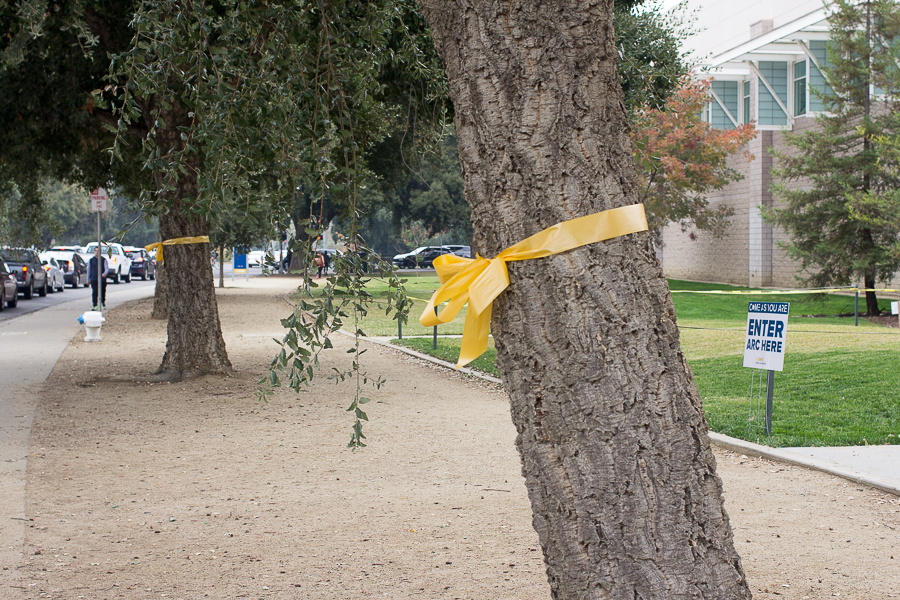
Veterans Week took place from Nov. 6 to 11, culminating on Veterans Day with the “Salute to Heroes” Aggie football game. On the Nov. 6, the VSC held an event in which they tied yellow ribbons to some of the trees on the Quad, in recognition of service members and veterans.

Many students might not know about the VSC, which is tucked away on the second floor of the Memorial Union. But it serves several important roles for student veterans. It helps with administrative problems and paperwork, provides a quiet space to get away from the crowds of campus and offers a way to connect with other veterans. Many students receive benefits from the GI Bill, and the VSC is there to help them work through the technicalities.

“For the GI program that we’re in, there’s a lot of paperwork you have to do,” said

David Mott, a third-year plant science major and a peer advisor at the VSC. “There are a lot of moving parts, and [the VSC staff] know everything about it, so it’s a great resource to have.”

But beyond this technical help, the VSC can help students with adjustments to college life, and to some of the specifics of life as a student veteran.

“Some of it is just adjustments to balancing life,” Raehsler said. “[Veterans] are a little bit older, some of them have families, some of them are commuting to school, they have different stuff going on in their lives compared to a freshman coming in straight from high school.”

Raehsler also cautioned against some of the stereotypes and assumptions that exist about veterans, which can create tension.

“There are some struggles when it comes to […] UC Davis being a very liberal school, and the perception that’s out there that all military members are conservative, or we all think a certain way,” Raehsler said. “We’re not necessarily conservative, we’re not necessarily liberal, we don’t have the luxury while we serve to really look at it that way […] so when [veterans] come here, and they’re coming as students, and they get labeled a certain way without faculty or staff or fellow students really knowing how they feel. It’s difficult for them.”

These challenges mean that many student veterans appreciate the VSC as a place where they can be with others who share some of the same difficulties. The VSC office, which is entirely open to student veterans, provides them with a place to study or to talk.

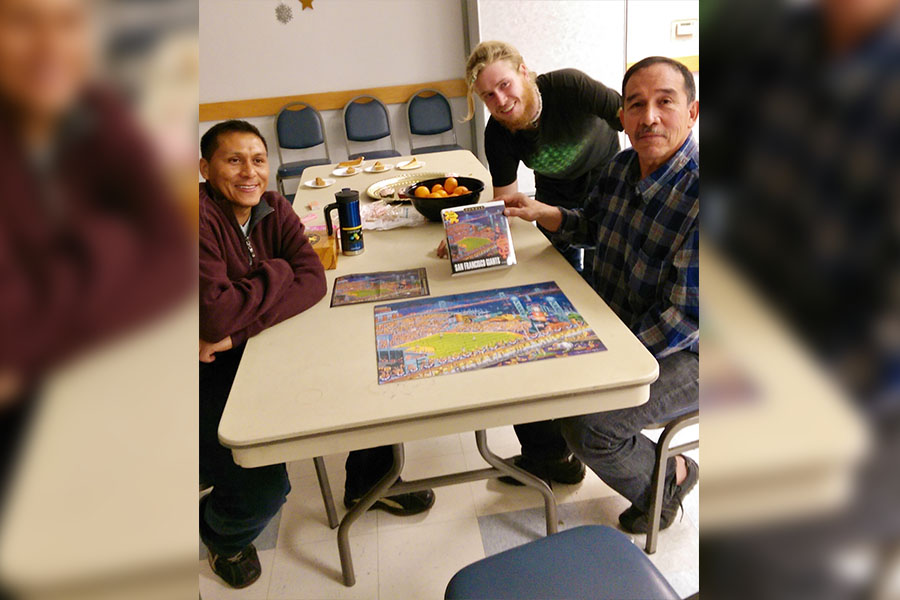
“I use [the VSC] for coming in and relaxing,” said Alex Johnson, a third-year chemistry major. “I do homework next door in the study room, the kitchen that we’re able to use is really helpful when I bring my lunches. Being able to connect with other students that aren’t necessarily older is a little more difficult, which is why I spent most of my time here. It’s really important for me to have a connection with other students that are going through the same things.”

Another venue for connections between student-veterans is the Davis Student Veterans Organization (DSVO), a student-run club which is the local chapter of Student Veterans of America.

“We do philanthropy and get-togethers and events […] it’s really about the sense of community,” said Edgar Garcia, a fourth-year biological anthropology major and the president of the DSVO.

Cody Bynes, a third-year political science major, said that both the DSVO and the VSC can help with the difficulties of being a student-veteran.

“Davis is good to us, with [the VSC], and other resources and financial aid,” Bynes said. “I won’t say we have it harder than anyone else, but we definitely have some challenges […] it’s good to have a place where we can use some of our military lingo, and hang out with other veterans who might understand what we’re going through.”


Written by: Gabriel Mulcaire — features@theaggie.org

Senate Best Practices Meeting discusses room for improvement

RAUL MORALES / AGGIE

Presentation highlights trends of unexcused absences, lack of communication

ASUCD Senator Pro Tempore Julie Jung, a second-year political science major, led the Senate in a Best Practices meeting on Nov. 9 after the weekly Senate meeting in the Mee Room of the Memorial Union adjourned.

The goal of the meeting was for current and future senators to present to “better understand the responsibilities and duties of an ASUCD Senator.”

Absent from the meeting was Senator Michael Swalberg, who was excused during his time out of the country. He will attend a makeup meeting on Friday, Nov. 17.

Four of the six candidates of the Fall 2017 ASUCD Senate election were present: Andreas Godderis, a second-year economics and computer science double major, Jacob Sedgley, a third-year economics and environmental policy analysis and planning double major, Bryan Perez, a second-year political science and managerial economics double major and Gaven Kaur, a second-year psychology and communication double major.

The two candidates on the UC Davis Unite Slate — Danny Halawi, a second-year computer science major and Jesse Kullar, a second-year chemical engineering major — were both absent.

Jung spoke to the table about general trends that ASUCD units, committees and the executive office have noticed with regard to the Senate’s performance. Trends included a high number of absences from weekly meetings. Senators had not given proper notice of absences beforehand and higher attendance at weekly meetings was demanded.

Certain instances of noteworthy senatorial absences included Senate meetings in which members from the general public sitting in outnumbered the senators present.

Vice President Adilla Jamaludin said that stricter disciplinary actions will be taken toward senators who do not communicate their reasons for absences ahead of time. Missing more than three meetings in a quarter would result in a closed session to review job performance.

Tech checks, instances when senators were on their phones or computers during presentations, were another common observation. The meeting’s itinerary also mentioned a lack of senatorial communication with ASUCD commissions and committees.

Other behavior issues included senators partaking in interpersonal arguments with fellow senators over social media, interacting with units based on predetermined biases, and not being proactive enough in attending meetings or events held by commissions and committees. Mandatory reports of communication between elected officials and units at weekly meetings were offered as a response.

“I am not excluding myself from the problem,” Jung said.

Jung went on to state that she thought the meeting was productive and hoped to see results.


Written by: Elizabeth Mercado — campus@theaggie.org

Local advocate on climate change leaves for Washington

0
TERRY BEGGS / COURTESY

Citizens’ Climate Lobby continues to advocate for Carbon Fee and Dividend in Washington

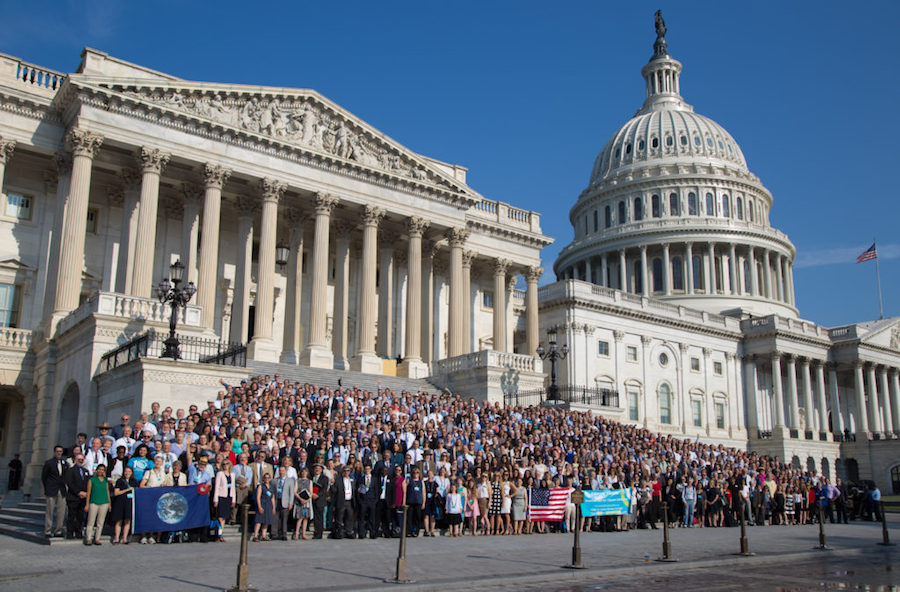
On Nov. 10, Michael Russell, a member of Yolo County’s chapter of Citizens’ Climate Lobby, departed for Washington, D.C. Citizens’ Climate Lobby is a national organization celebrating its 10th anniversary this year.

Elisabeth Robbins, a co-leader for Yolo Citizens’ Climate Lobby, noted how dedicated the volunteers and people in the organization are to the environment.

“It’s a group of very enthusiastic and dedicated people who care deeply about the environment to find a solution,” Robbins said.

Robbins explained that there is a yearly conference in Washington which Russell will take part this year.

“Every June, they have a national conference in Washington for the opportunity to lobby for members to represent the district from all of our chapters,” Robbins said. “They will also talk to their constituents in other ways than they would talk to the press. We take all our reports from last spring, and our national staff analyzes them looking at the trends.“

The organization hopes to build and gain momentum concerning the environmental legislation it is advocating for such as Carbon Fee and Dividend in Washington. The plan is a national revenue-neutral system that would place a predictable price on carbon and be returned to households as a monthly energy dividend.

“This is a chance for us to get feedback about what Congress is actually saying about Carbon Fee and Dividend,” Robbins said. “I think we’re working for a longer term, but not necessarily, as there are a number of steps that need to happen and those are happening now. We’re not waiting until the time is perfect.”

Ammon Thompson, a volunteer for Citizens’ Climate Lobby, elaborated on how the organization is taking action to solve problems with climate change.

“I like this approach best because we’re not going to solve this problem in a partisan way,” Thompson said. “There are diverse people with diverse values in this country, and I think the solution that will work will appeal to both conservatives and liberals.”

While Russell is taking action by leaving to Washington, Thompson is continuing to advocate in Davis.


“Just talking to citizens by setting up tables at the Farmers Market here in Davis has been pretty good,” Thompson said. “There’s diverse ways we volunteers advocate for this type of policy. But the message is consistent no matter where in the country. We try to get organizations and citizens to put more and more pressure on our Congress to act.”

Terry Beggs, the other co-leader for Yolo Citizens’ Climate Lobby, explained what Russell will be doing when he visits members of Congress as a representative of Yolo County’s chapter.

“[Russell] will be visiting members of Congress in the House including John Garamendi’s office,” Beggs said. “We have an international conference in June, and we lobby. We gather concerns and explain how viable Carbon Fee and Dividend will be. Then we go back in November and see if they have more questions. It’s an education day, so we can follow up.”

While Citizens’ Climate Lobby is a large organization, each chapter still advocates for the same idea concerning Carbon Fee and Dividend.

“Every chapter addresses a problem with the same information because Citizens’ Climate Lobby is a national organization with the same direction advocating for Carbon Fee and Dividend, which is a market-based solution.” Beggs said. “We work toward the same goal.”

Beggs elaborated on climate change and its effects.

“My great concern is that climate change is a huge issue, and we have to address it,” Beggs said. “I don’t regard it as a political issue. It’s an issue that affects everybody no matter your political background and no matter who you are. It affects everybody worldwide. It’s a big enough issue that we can’t ignore it, and we need to take positive action on it, rather than just expressing that we are concerned. I like that this group is working towards a solution.”

Carbon Fee and Dividend remains a policy proposal. Beggs noted the importance of keeping members of Congress up-to-date and educated about the plan.

“We are developing relationships with our members of Congress,” Beggs said. “We also educate the public on Carbon Fee and Dividend, and a lot of it is education for the Congressmen and women regarding solutions and important information about what their constituents think. Even though this is not a problem of politics, it’s a problem that will have take some part with the government, and the government will have to take action as well as all of us.”


Written by: Stella Tran — city@theaggie.org

Body found in University Lodge

0
NICHOLAS CHAN / AGGIE

Hazmat situation in downtown Davis

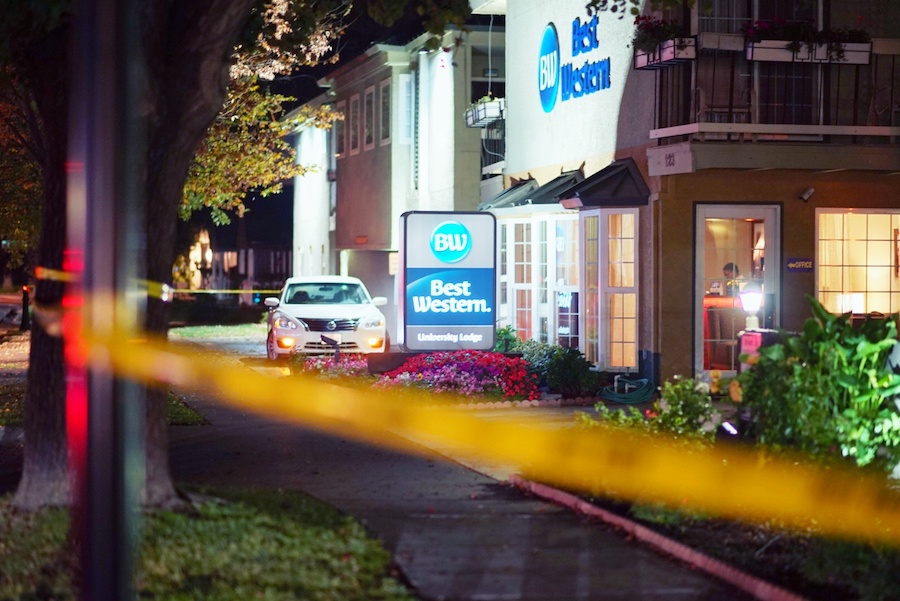
On Nov. 21, local firefighters and police officers blocked off and evacuated the west side of the University Lodge at First and B streets. The evacuation came as a result of a strange smell emanating from one of the rooms after an employee placed a call to the police department at approximately 1 p.m. Firefighters initially determined the strange smell was the result of some gaseous substance released in the lodge, and police evacuated and vented the rooms of the lodge prior to entering. When the police entered the room, they discovered a deceased adult male.

“We’re currently investigating this further as a suspected suicide,” said Lieutenant Paul Doroshov, a spokesman for the Davis Police Department. “Right now it’s a bit complicated with the collection of evidence and the cleanup. But, for public safety, right now the deceased suspect is the only person involved in the investigation. We don’t believe anyone else is involved.”

According to Sacramento CBS, hotel management said the deceased suspect checked into the room on Monday and was supposed to check out before 11 a.m. Wednesday. The gaseous substance is still under investigation, but the evacuation order has been lifted and the Best Western University Lodge is open again, according to Fox 40. Police stressed that there is no reason to fear damage to the area and that it was likely an isolated incident.


Written by: Ahash Francis — city@theaggie.org

Humor: Guy Fieri to high-five all Davis cows, then turn them into kickin’ burgers

CAITLYN SAMPLEY / AGGIE

America’s most treasured food fanatic will come to UC Davis to treat our cows right

America’s sweetheart, Guy Fieri, is on a new quest: Diners, Drive-Ins, Dives and Davis. That’s right, you swaggy Aggie. The flaming bowling shirt himself is coming to this cowtown to bless our cattle.

When Guy Fieri was born out of a bucket of fried chicken back in 1968, he was gifted several superpowers. One of these powers is the ability to detect where the best beef on the globe is. Ladies and gents, we have been chosen. Guy Fieri is on his way to our campus as we speak, riding on a flaming Razor scooter and wearing one of those helmets that has a rubber mohawk on it (some would call it the peak of fashion).

“My nephew’s cousin’s girlfriend’s best friend’s hairdresser was all like, ‘My kid is heading to UC Davis, so I’m getting her a cow PillowPet. It’s a pillow and a pet, as we all know, that has velcro so that you can make it into a pet, but then also —’ and right about at that point while she was talking, I kicked in the door and screeched, ‘WHERE’S THE BEEF?’” Fieri rambled.

The hairdresser pointed Mr. Fieri in the direction of California, vaguely pointing westward. Fieri, with his nose to the ground like a bloodhound, sniffed out a path all the way to UC Davis. Doing some donuts with his scooter, he skidded down Dairy Road and caressed the cheeks of the cows.

“Alas, these are milkshake cows,” he whispered sweetly into their ears. “I’ll appreciate you at a later time.”

He jumped on the back of a random bike, giving one student a fright as he grabbed his waist and screamed, “Mush!”

“He just kept on shouting with joy in my ear,” the student said. “I have never encountered such pure and unbridled joy in all of my years…and it gave me hope.”

The two finally got to the beef cows and Fieri began his ritual. He took a knee in front of their enclosure and spoke “The Beef Prayer.”

“All-powerful Beef King, please bless these moo-moos with the most tender beefies of all,” Fieri proclaimed. “Allow them to live a life so good and happy that I can consume their joy by eating their sweet burger babies that will come after their earthly time is up. Together, let us be awesome. Amen I say to thee.”

Fieri stood up and, with gusto, ran down the row of cows, high-fiving each one before he sent them off to assemble the most kickin’ burger ever. The cows marched there, feeling confident, though confused. Of course, these two emotions are the only ones you can feel in the presence of Guy Fieri.

“I love this cowtown, I love these cows and I love this trip to FLAVATOWN,” Fieri hollered into the sunset.

A statue of Fieri will be made in front of the cows, reminding them of the day that one of the Beef King’s disciples came to profess the good news of juiciness and flavor.

Let’s all pour out a glass of lard for the homie.


Written by: Olivia Luchini — ocluchini@ucdavis.edu

(This article is humor and/or satire, and its content is purely fictional. The story and the names of “sources” are fictionalized.)

Guest: The case for female friendship in college

MARINA OLNEY / AGGIE

Looking past the narrative that “boys are way less drama”

There’s an all-too-common narrative among young women claiming that boys are just so much easier to hang out with — way less drama. Even I fell victim to this narrative when I was a teen. I was raised in a household with three older brothers, so I was and still am comfortable around boys and sincerely appreciate my male friends. However, not only was I lying to myself when I claimed I liked hanging out with boys more, but I was also feeding into what I now realize is one of the most absurd fallacies that plagues our generation of young women. I’ve grown to appreciate the unique power of female friendship and the crucial role it plays in my life.

I had the good fortune of spending my childhood and adolescent summers at a sleepaway camp, living in cabins with upwards of 10 other girls my age and two to three college-aged counselors. The friends I made at camp gave me a confidence I’d never felt before. At camp I was constantly surrounded by an eclectic group of girls, and although we were all on disturbingly different stages of puberty, we understood each other.

This was my introduction to the power of strong female friends. My cabinmates made me feel confident and comfortable with my changing body. They taught me that it was okay to have body hair, that it wasn’t a taboo topic for us to discuss, that I didn’t need to hide my razor under my shampoo bottle in my shower caddy. We made up secret code phrases to inform each other that we were on our periods, bonding over our scary hormonal changes and supporting each other throughout them all. Of course we discussed our crushes all day long, but it was just another catalyst to our bonding as young women. We celebrated our womanhood, sometimes even literally. It’s a tradition at camp that, if a girl gets her period for the first time, her counselors and cabinmates throw her a party to celebrate. These experiences provided me a foundation to continue seeking strong and rewarding friendships with other girls.

Fast forward to college, a time of identity crises for many of us, myself included. I’ve begun to redefine myself and refocus my attention on what brings me true joy. I’ve discovered that my most fulfilling and empowering moments have been during wholeheartedly good times with my friends. My friends are the ones who pick me up on the dark weeks of the quarter system, delivering me coffee cake in the library, joining me on a long gossip-filled run or being my shoulder for a much-needed cry. I found my friendships so fulfilling lately that my previously more urgent desire to find a romantic partner has decreased significantly. My friends constantly inspire me and make me feel supported, loved and confident. Although we’re told that college may be the time you fall in love, it also may not be. It is, however, definitely the time to foster and embrace your strong female friendships.

A study at UCLA suggests that female friendship has an evolutionary role in helping women cope better with stress. The study suggests “that women respond to stress with a cascade of brain chemicals that cause us to make and maintain friendships with other women.” It’s also proven the hormone oxytocin is released in response to stress for women, the hormone responsible for our tend and befriend behavior. And researchers suspect that this befriending, or spending time with close female friends, causes more oxytocin to be released, which actually calms and counteracts stress. Hence, female friendship is actually “an ancient survival mechanism.”

I’ve found this to be true in my own life. In times of deepest distress, my close friends always know what to say or do. Whether I was facing three midterms in one week or the loss of a loved one, my friends have been there with a new pair of funky socks, a pizza in hand or a hug to help me battle my stress.

It’s important to recognize how joyful your friendships are — to soak them up and live unequivocally in the goofy times with your best friends and worry less about finding a significant other. We must recognize how fun it is to pile into a dirty fraternity bathroom stall to pee and quickly debrief the night’s events; how fun it is to sit at the pool for hours reading and tanning; how fun it is to have a spontaneous catch-up session on the quad; how fun it is to watch early 2000s films and reminisce on our first celebrity crushes; how fun it is to complain about our menses with heating pads on our stomachs; how fun it is to run home together from a party and watch a movie instead; how fun it is crawl into bed and solve our relationship problems or watch the latest “This Is Us” episode; how fun it is to try every Trader Joe’s snack on the shelf; how fun it is to swap clothes; how fun it is drive around belting out throwbacks; how fun it is to revel in each other’s accomplishments; how fun it is to be the ridiculous friends you are.

So I encourage young college-aged women to appreciate friendships that are fulfilling,

rejuvenating and empowering a little extra. Don’t get me wrong — boys give an undeniable dimension to our lives. But it’s important to not overlook the beauty that is female friendship.


Anna Kurzrock is a third-year psychology major at UC Davis.


Written by: Anna Kurzrock

Disclaimer: The views and opinions expressed by individual columnists belong to the columnists alone and do not necessarily indicate the views and opinions held by The California Aggie.

Conserving genetic diversity of ancient, towering California trees

ALEXA FONTANILLA / AGGIE

Coast redwood, giant sequoia tree genomes to be fully sequenced by UC Davis, Johns Hopkins research partnership

Scientists are going to learn much more about the coast redwood and giant sequoia trees over the next five years. Save the Redwoods League is partnering with UC Davis and Johns Hopkins University to fully sequence the genome of these two colossal California trees. The completed genome would be the longest assembled.

Coast redwood groves stretch along much of the Pacific coast of California. These trees are the tallest organisms in the world, with some individuals reaching over 100 meters in height. Giant sequoias live in much smaller habitats in the western portions of the Sierra Nevada mountain range. They are considered the largest trees by measure of mass or volume, with heights over 75 meters and diameters over 7 meters. Both live long lifespans and can thrive for centuries, with some remarkable trees known to have lived for over 2,500 years.

The two trees under study are close relatives among the order Pinales, comprised of conifer trees like pines which produce cones for reproductive purposes. Although the coast redwood is present in greater numbers than the giant sequoia, both are considered endangered species. Conservation efforts are being made to restore the old-growth forests which were cut down to create wooden structures for human civilization, especially in San Francisco.

“For conservation of the redwood forest, protecting genetic diversity is key and the sequences generated through this partnership will provide a new perspective that will enable us to ensure we are protecting genetic diversity throughout the forest ecosystems,” said Dr. Emily Burns, the director of science at Save the Redwoods League and one of the research project partners, in an email interview.

The initial phase of the project is to sequence the genome of an individual redwood and sequoia to serve as a representative model.

“The first reference sequence will come from leaves and seeds from one giant sequoia (from Sequoia National Park) and one coast redwood (from Butano State Park),” Burns said. “In the second year of the project, 10 more sequences will be generated of each species from trees ranging in seed origin and physical traits. These trees have not been selected yet.”

The best reference trees will be healthy and actively producing cones and seeds for collection purposes. Trees showing evidence of disease or insect damage would be avoided.

“We can look for genes, but figuring out variants which are drought tolerant or disease resistant is really the next step — where we use the reference genome, then just sample specific potential target areas in many different trees to see what variation there is in the genome and how it’s associated with these phenotypes,” said Dr. Winston Timp, a professor of biomedical engineering at Johns Hopkins and one of the research project partners, in an email interview.

Working with a complete genome of the coast redwood and giant sequoia will help the researchers plan and maintain diverse groves when planting or culling trees.

“Having a genome sequence of an organism is essentially the parts list,” said Dr. David Neale, a professor of plant science at UC Davis and one of the research project partners. “Why do we sequence the human genome? Now we have the parts list. We understand all the genes that make up life. The more you understand, the better you can do in terms of treating this organism.”

The initial sequencing will be completed at UC Davis. Johns Hopkins researchers will be performing other types of sequencing work, compiling millions of genetic puzzle pieces together to form the full genome assembly.

“The team at Hopkins, their specialty is bioinformatics, and they do what is called the genome assembly,” Neale said. “We take DNA, we put it in a machine, we generate sequences, but it’s all these little pieces that have to be put together to get a continuous structure. This is a big computationally heavy exercise that they’re some of the best at the world at.”

Only recently has the technology existed to perform such complicated analyses. Nanopore sequencing feeds DNA strands through pores on the scale of a nanometer in size to analyze genetic sequences. Illumina sequencing uses dyes and fluorescent lighting to identify each base pair. Depending on the sequencing technique used, the scale of the genetic puzzle can be drastically different.

“If the redwood genome is ~39Gb, or 39 billion bases, and we break it into pieces about 10,000 bp long to sequence on the nanopore, we need about 4 million fragments to cover it even once!” Timp said. “But it’s even worse when you use the more conventional Illumina sequencing where the reads are only on the order of 100 bases long — there it’s ~400 million pieces”

Just 10 years ago, the redwood and sequoia genomes would be too tough to tackle. Improved automation of sequence methods have made this project more reasonable.

“Prof. David Neale at UC Davis and his colleagues are the world’s experts on sequencing conifer genomes and were bold enough to tackle the large coast redwood genome – no small task given it’s 10x larger than the human genome and will be the largest genome sequenced once done,” Burns said.

Although redwoods and sequoias are now only found in restricted habitats in California, physical evidence shows these trees were more widespread in previous millennia.

“If you look at fossils, you can see there was once a great diversity of redwoods, and that redwoods used to live all over the Northern Hemisphere,” said Dr. Alison Scott, a postdoctoral researcher in plant science at UC Davis working on this project. “But over time, their ranges have shifted, and those lineages have shrunk to the point that now there’s only one representative species and three lineages.”

Complete sequences will be needed for the next phases of the project, which involve identifying small differences in genetic structure which may have beneficial effects in the trees.

“In theory, we’d be able to not only look at the genetic diversity, but we’d be able to also say something about, ‘this genotype is more drought tolerant than this one,’” Scott said.

The end goal of the project is to use the completed coast redwood and giant sequoia genome to better understand how to boost genetic diversity and help preserve the forests for the future.


Written by: George Ugartemendia — science@theaggie.org

Holiday Pop-Up shop

ZOË REINHARDT / AGGIE

Guilt-free shopping at Akasha Yoga

One way to support local small businesses is by participating in Shop Small Saturday. A holiday pop-up shop hosted by Do Good Shop and Akasha Yoga will take place on Nov. 25 from 12 to 3:30 p.m. at Akasha Yoga’s studio at 140 F Street. The event falls between Black Friday and Cyber Monday, so it’s a perfect day for shopping locally.

Jamie Testa, the co-owner of Akasha Yoga and co-host of the event, is an active supporter of the Do Good Shop.

“Akasha Yoga is happy to support The Do Good Shop this holiday season,” Testa said. “This is our third collaboration, and for the first time, Akasha will also be offering some yoga goods for sale.”

The Do Good Shop is a nonprofit social enterprise boutique founded by Jennifer Biggs. Mostly running from online, they occasionally have pop-up shops. Their main goal is to employ people who otherwise wouldn’t be able to get a safe and fair job.

“We actually work with over 10 organizations from all over the world and in the U.S.,” Biggs said. “At every pop-up shop, we bring almost all of our stuff.”

There are many other websites that support fair trade, but they are not cohesive — instead, they are spread out on various platforms.

“That’s why I started this; there are so many people doing this but they all have separate websites, so I decided to make a website that has everything together,” Biggs said.

The Do Good Shop is a curation of all the fair trade items. All of these items can be found in-person at the holiday pop-up.

“If they can work at a sewing center where they are doing a counseling and have a place to stay, they have a better chance of staying out of the trafficking world.” Biggs said. “The problem is if they want to sell their items there aren’t a lot of people in the country they live in to buy what they make, so if we can get their product to Australia, the U.K. or the U.S., then people will buy them.”

Holly Snyder Thompson, who is on the board of directors for the Do Good Shop, supports the mission of this company with high regard.

“The Do Good Shop is a boutique I trust to source beautiful and ethical products,” Thompson said. “And I shop it frequently.”

Most of the business comes from the online website, but whenever the shop does events in person, there is a steady stream of people who come in.

“For me and people my age it’s a great way to have guilt-free shopping,” Biggs said. “It’s different and unique.”

There are so many people who want to help with the issue of shopping locally, and this is a great way to help. It’s a win-win type of shopping.


Written by: CaraJoy Kleinrock — arts@theaggie.org


Giving thanks by helping the homeless

0
MARY ANNE KIRSCH / ST. JAMES CATHOLIC CHURCH

Interfaith Rotating Winter Shelter to open after Thanksgiving

Davis’s annual Interfaith Rotating Winter Shelter (IRWS) is gearing up to open on Nov. 26, the Sunday following Thanksgiving. Every year, the shelter opens its doors to Davis residents who might need shelter for the night, particularly members of the homeless population, who may not have any other place to go.

“It’s always good when people of different faiths and backgrounds come together to work towards a common goal,” said Shoshana Zatz, a shelter facilitator for Congregation Bet Haverim. “It benefits us because we are doing the good work through this shelter […] also, I find it’s really helpful to have the kids, as well as adults, members of the congregation, interact with the guests. It dispels a lot of the fear and distrust of them comes from not knowing, not having interacted with these homeless people.”

The shelter emphasized that their goal is not to fix their lodgers, but to serve them in any way they can. Sleeping outside poses a health hazard to those who don’t have any place to go for the night. Rain and bitingly cold weather are problems homeless people face at all times of the year in Davis, but winter nights magnify these uncomfortable conditions. The shelter seeks to serve Davis’ homeless population by giving them a short respite from sleeping on the streets.

“We have 10 congregations that host the guests in the 15-week season,” said Mary Anne Kirsch, a member of St. James Catholic Church and one of the founders of the IRWS. “Some of the congregations host for two or three weeks, and some for one week. It goes around the city […] Last year we served about 2,000 meals and provided about 2,000 shelter spots during the 13 weeks, and that served about 124 individuals, because a lot of them come back for multiple nights.”

Kirsch also stressed that the shelter doesn’t consider sobriety or cleanliness when accepting guests. The shelter takes in potential residents at an intake center on D Street, separate from whichever church or congregation is hosting the shelter. There’s a short screening process where volunteers record some information about the guests and ensure that they will be respectful. Those who have completed the screening process before go through a shortened process. After passing the screen test, volunteers then drive the visitors to whichever church or congregation is hosting the guests for the week. There, patrons are given warm food and shelter provided by members of that church.

“There’s a lot of involvement — a lot of people in the community who care about this service,” said Michael Coleman, who supervises the high school interns involved in the program.

The shelter employs both high school and college interns and volunteers to intake and host its patrons. The intern application process for the shelter is closed for this year, but those interested can apply to the program next year.

“The spirit of the program is to provide a bridge between those with shelter and those without,” according to the shelter’s website. “We want to provide shelter in the physical, emotional and spiritual sense of the word.”

The Interfaith Rotating Winter Shelter will be up and running from Nov. 26 to Mar. 11. Hundreds of volunteers work at the shelter to take in, drive, feed and house guests over the four months it will be running. To find out more about the shelter, readers can visit its website, and potential volunteers can visit the IRWS’s online sign-up site to learn about the various volunteer roles the shelter needs to fill.


Written by: Ahash Francis — city@theaggie.org

Bus christening welcomes new Unitrans bus

KAILA MATTERA / AGGIE

Unitrans celebrates 50th anniversary of receiving first buses

In celebration of its upcoming 50th anniversary, Unitrans welcomed a new bus to its fleet at the Memorial Union terminal on Nov. 9.

50 years ago, on Nov. 10, 1967, Unitrans received its first two double-decker buses from London. According to Jeffrey Flynn, the Unitrans general manager, ASUCD Presidential nominee Robert Black decided to bring bus service to UC Davis and the city of Davis as part of his campaign in 1966.

“[Black’s] initiative and his foresight and vision to do that culminated in him getting elected and then doing what he [said he would],” Flynn said.

To commemorate the arrival of the first buses in 1966, UC Davis alumna Lola Hogan christened one of them by smashing a bottle of British beer over the bumper. Unitrans began to serve university students and surrounding community members on Feb. 28, 1968.

“Initiating bus service, especially a student-run bus service […] was a big deal,” Flynn said. “[It provided] a great service that led to where we are today.”

In celebration of the expansion and longevity of Unitrans — currently providing nearly four million rides a year on its 50 buses — Hogan returned to UC Davis on Nov. 9 to re-christen the original, now vintage, double-decker London bus. ASUCD President Josh Dalavai also christened a new single-decker bus to commemorate the anniversary.

“[Unitrans] is one of the most crucial community services, and it is a shared service between the students and the city and community members at large,” Dalavai said. “It is important to celebrate the 50th anniversary of [Unitrans] and the fact that is has been around for so long.”

To commence the event, the Cal Aggie Marching Band-uh! performed, followed by speeches given by Flynn, Hogan and Dalavai. Davis Mayor Robb Davis was in attendance.

“No one ever dreamed that Unitrans would be this successful or get this big,” Hogan said during her speech. “We had two buses [and] we were trying to get back and forth to town. But really, the congratulations go to the Unitrans group for keeping it going. I couldn’t be prouder to have been part of the origination.”

Using bottles of locally-brewed beer, Hogan re-christened the original Unitrans double-decker bus while Dalavai christened the new bus, officially welcoming it to the university. Band-uh! played once again as the ceremony came to an end, and as more students continued to arrive on Unitrans buses at the university terminal.

“Let’s celebrate what the students have done, and what we can do going forward,” Flynn said.


Written by: Rodney Tompkins — campus@theaggie.org

In Conversation with Samantha Bee

JUSTIN HOCH [(CC BY 2.0)] / FLICKR (changes made)
Comedian Samantha Bee speaks at the Mondavi Center

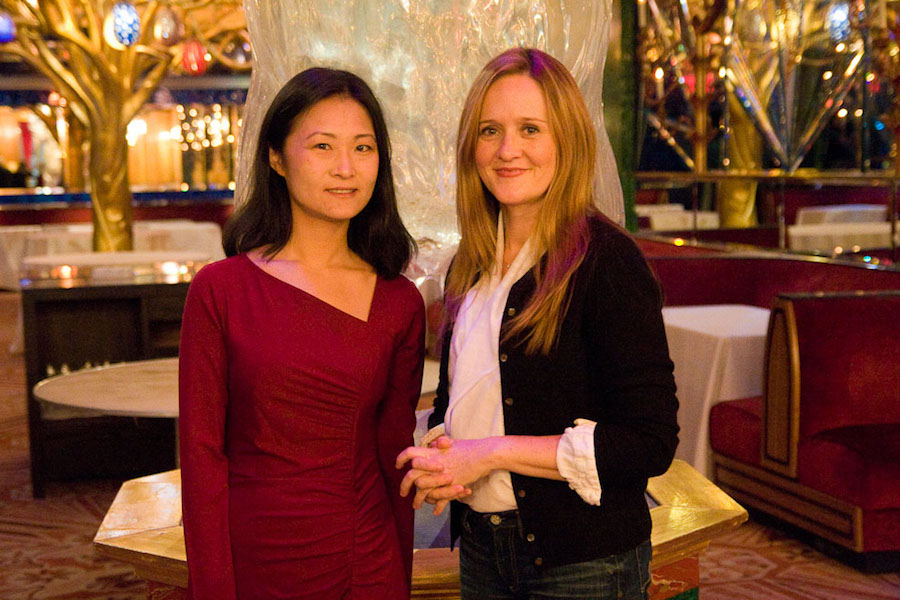
On Nov. 11, comedian Samantha Bee was featured in a 75-minute conversation and audience Q&A at the Mondavi Center, hosted by Scott Syphax, a Sacramento-area entrepreneur.

“The eagle has landed,” Syphax announced to the thunderous applause of the sold-out Mondavi Center. The crowd leapt to its feet as Samantha Bee bowed and waved her way across the stage.

Delani Klein-Lane, a third-year managerial economics major, said she attended because she likes Bee’s humor.

“I really admire her politically, as a public figure, [and as a] comedian […] I think she’s really funny,” Klein-Lane said. “I have been following her [commentary on] recent political news and I’m a fan of hers.”

Professor Sally McKee from the UC Davis Department of History said that she looked forward to Bee’s commentary on the present political climate.

“I want to hear and channel her anger at this misogynist, lunatic narcissist,” McKee said with regard to Bee’s position on Trump. “I am so mad [and] so angry, and I adore Samantha Bee because she is so funny. She has a very acute analysis as a woman and I think she has a very sharp satiric take on the politics.”

McKee also mentioned what she believed students could gain from Bee’s speech.

“I think students will learn about satire and how to do satire in a way that energizes people and is constructive rather than destructive — […] that motivates people to say, ‘I am really pissed off and I’m gonna do something about it,’” McKee said.

McKee attended the event with Emily Albu, a friend and fellow staff member in the Department of Classics. The two described what they were most looking forward to. McKee said she was looking forward to “a little levity in the midst of really depressing news.”

“I want her to bring a punch into really sharp analysis that makes us laugh and gives us a little hope,” McKee said.

Albu said that she admires Bee’s feminism and, given the chance, she “would’ve asked her […] how she is maintaining any sense of tranquility in the midst of this insane, awful circumstance we find ourselves in.”

Throughout the evening, Bee covered a large variety of topics, including the night of the 2016 Presidential election, sexual assault in Hollywood, the Virginia Elections and her travels to Iraq with her show “Full Frontal.”

Bee initially responded to Syphax’s inquiry about what happened on Election Night with a long sigh.

“Well I didn’t vote for Trump.” Bee said. “I think that there is a deep, deep vein of misogyny that is not exclusively perpetrated.”

She continued on to describe the environment in the studio that evening.

“When I thought that [Hillary Clinton] was going to win, we knew in our office that we would face a tsunami of misogyny and there would be a horrible backlash and it would just be investigations and shutting her down and it would be nearly impossible for her to do anything for a really long time but we would still be really happy,” Bee said. “I didn’t expect this to happen, but I do feel that [misogyny] so acutely now — not that I ever doubted it was there, but I feel it is so exposed now, it’s just so raw. I can’t tell you the way people come at me with such hatred and vitriol, it’s really remarkable.”

Syphax moved onto the topic of misogyny in the workplace and the number of sexual harassment claims and accusations that have been flooding the media, namely with Harvey Weinstein and Roy Moore.

“Listen, we’re all really happy and grateful that you guys are getting woke, but you do need to believe us [women] when we say these things,” Bee said to the men in the audience. “It’s good you’re coming around.”

Syphax contradicted Bee by stating, “you gotta give us a little bit of a break, my friends don’t come and say, ‘Hey, you know I masturbated in a plant this morning, just thought you should know.’” Syphax was interrupted by the rumbling of the audience and Bee immediately provided her take.

“Yeah, you guys have gotten enough breaks,” Bee said, igniting a wave of cheering and applause from the audience.

Bee expanded on the issue of sexual harassment and the lack of consent that has been so apparent in the recent cases brought into the eye of the media.

“By the way, I pretty much can guarantee that 99 percent of the women in this room have been masturbated in front of at some point in their life against their will,” Bee said. “It‘s so done, it’s so typical, we’ve all experienced it. There are so many versions of masturbating into a potted plant that we’ve been dealing with forever.”

Later in the evening, Bee described her current perspective on the state of the country and where she believes America is headed.

“In all of this slog and mire that we are in, I somehow feel more powerful and hopeful about the future than I ever have before,” Bee said.

Bee mentioned the recent election of Virginia’s governor, Democrat Ralph Northam, and the high voter turnout despite the weather as her reasoning.

“In Virginia, there’s this tidal wave of people […] that are just as outraged as we are and people are taking action,” Bee said. “People are engaging in their community and women are running for office and they’re winning. [But] we have to vote! Voter turnout is the key to everything.”

Bee continued to hit on topics that related to the international reaction to Trump’s presidency and gun control throughout the show.

Bee also discussed her visit to Iraq in August with her show “Full Frontal.”

“We went to Iraq because […] we were observing coverage of the war and it’s obviously very male-dominated,” Bee said. “The women in those stories always look sad and scared and they’re always scuttling around trying to hide and we thought, ‘Wouldn’t it be interesting to tell this war story by talking to the women who are on the ground there?’”

Bee described what she called a life-changing and remarkable experience with the female peshmerga soldiers in Iraq.

“These women soldiers went into a hospital, they were fighting ISIS, they are trained, they do the same work on the front lines as the men do [and] they use the same weapons,” Bee said. “It was such a uniquely women story.”

The highlight of her conversation with a peshmerga woman, however, came when she asked what made the women’s experience as a soldier different than that of the men. Bee said the women, upon entering a hospital in disrepair, “put their weapons down and they cleaned up the whole hospital.”

Alex Dillabaugh, a first-year neurobiology, physiology and behavior major, talked about what he most enjoyed about the event.

“[Bee] says she feels like there is progress in this country,” Dillabaugh said. “If someone who is looking at the news all the time — which is pretty depressing to look at — [says that], I think that’s a pretty good take away, that there is hope”


Written By: Priyanka Shreedar — campus@theaggie.org

UC Davis California Women’s List chapter hosts third panel event

JORDAN KNOWLES / AGGIE

Panel of Powerful Women included local, state government officials

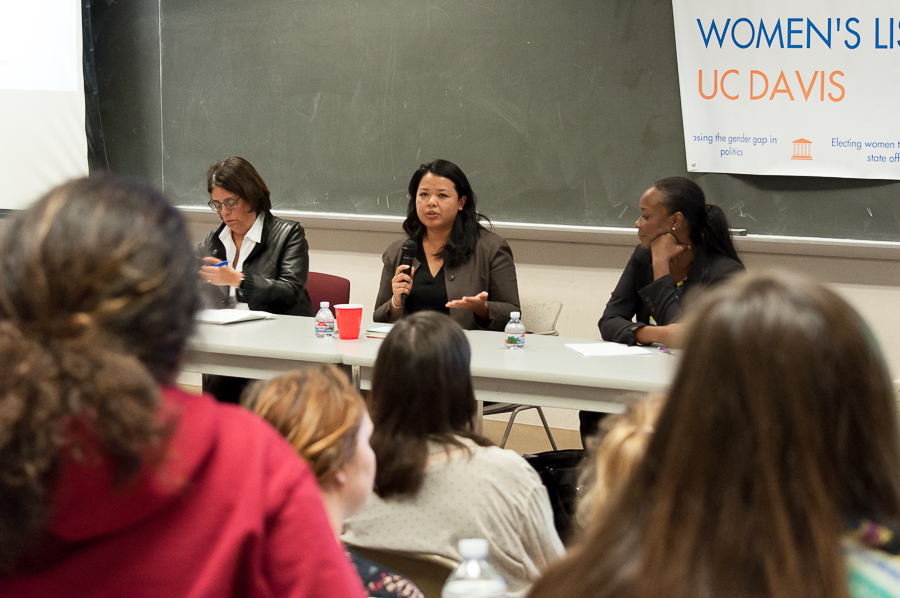
On Nov. 14, a group of three female government officials spoke on a panel moderated by the president of UC Davis’ California Women’s List chapter. The speakers were Mayoral Candidate Tracie Stafford, Board Chair Catherina Nou and Assemblywoman Cecilia Aguiar-Curry.

The UC Davis chapter of the California Women’s List strives to bolster the Women’s List Political Action Committee by supporting endorsed candidates through lobbying, fundraising and campaigning. Currently, women make up 17 percent of the state legislature. The chapter invited Stafford, Nou and Aguiar-Curry — three women in local and state governmental positions — to speak at the panel event.

Tracie Stafford is a mayoral candidate for the City of Elk Grove, a delegate for the Democratic Party and president of the Women Democrats of Sacramento County. She also chairs boards including the California Small Business board and The National Association of Women Business Owners. She talked about her unconventional and tumultuous path toward a career in government, sharing how she rose through the ranks in her career.

“My path wasn’t […] normal,” Stafford said. “I grew up in the East Bay and I was raised in poverty, and didn’t expect to go to college. I ended up working my way through school, and I worked my way up from data entry operator to senior management in high tech — I was working with Silicon Valley for many years. I had a job where I was making six figures and raising three children, and I lost my job in the dot-com bust.”

According to Stafford, racial and gender stereotypes can act as workplace obstacles.

“Being African American, there are certain assumptions people have about us,” Stafford said. “That we’re lazy and, especially as black women, that we’re difficult and angry. There’s things that I can’t say that women of other ethnicities can. If a man says it, he’s just assertive. If a woman says it, she’s out of control, or hysterical.”

Stafford talked about how the same women erased from policy making are often already providing community labor and advocacy.

“I got to a place where I got tired of begging legislature to understand my plight, and realized I actually needed to be at the table,” Stafford said. “For most women, their transition to politics is organic. There’s [a] need, you’re already fulfilling it in someway, and you decide, ‘I need to take it to the next level.’”

In running for mayor of Elk Grove, Stafford has faced verbal abuse in the form of racism and misogyny.

“I was told that an ‘n’ ‘b’ will ‘never be my mayor,’” Stafford said. “You know what the ‘n’ word is, and you know what the ‘b’ word is. There’s never been an African American women elected to anything in the history of Elk Grove.”

The second panel member, Catherina “Cat” Nou, serves as the chief consultant for the Asian Pacific Islander State Caucus. She is also the chair of the board of directors for the Southeast Asia Resource Action Center. Nou has received recognition for her humanitarian work with Cambodian women from the Courage and Leadership Award by the Devata Giving Circle.  

Nou spoke of how her ethnicity impacted her upbringing.

“My path is very much grounded in community,” Nou said. “I grew up in Modesto. I moved here and went to school at UC Davis. My very first class here was an Asian American studies class. Up until then, I had never recognized I never had a non-white teacher — K-12, all white teachers.”

She explained the importance of politics in the creation of gender equality, specifically through establishing help for marginalized communities.

“I’ve seen how clearly policy impacts communities,” Nou said. “It could tear apart families, it could take away healthcare — it has [a] tremendous impact, and if we are not able to help provide our perspectives or help to form the debate, we’re risking our lives and our communities’ lives. That’s why I came into the realm of policy.”

The third panel member was Cecilia Aguiar-Curry, a California assemblywoman representing California’s 4th District.

“I never thought in my wildest dreams that I’d be sitting and telling you that I’m an assemblywoman,” Aguiar-Curry said. “I just introduced 24 bills —14 […] went in front of the governor. I had no vetoes.”

Aguiar-Curry spoke about how important sectors of America are gendered, in both technology and government. Her experiences of not being afforded the same raises and promotions that men received were shared by Stafford.

“I learned to be tough as nails,” Aguiar-Curry said. “Many of the roles I’ve been taking on are generally male-dominated. I didn’t get the raises that I should have and I didn’t get the bump-ups in different position because not only was I a women, I [also] had children. That was really frustrating. I have a figure here that says women lose $39 billion in income because of unequal pay.”

Sexual harassment, an issue getting higher exposure in the entertainment and political sphere, was addressed by Aguiar-Curry at the end of the student Q&A portion. She mentioned witnessing examples of sexual harassment in California state government.

“When you go into the workforce, you’re required to take some sexual harrasment classes,” Aguiar-Curry said. “Make sure you take those seriously. Because I have sat in a meeting of the legislature where they did not take it seriously, and now they’re being hung out to dry for not being kind to women and [engaging in] some very inappropriate behavior. We need to protect all the victims, whether they’re lobbyists or staffers.”

Before being elected to the State Assembly, Aguiar-Curry had government experience at the local level as mayor of Winters.

At the local level, she began to notice an erasure of women’s visibility and voice within policy and city planning. She didn’t see any women included in the city-planning boards she was joining.

“I jumped in with two feet, did planning commission for a couple years and then realized there wasn’t one woman on any commission in Winters — not one,” Aguiar-Curry said. “They’re men and mainly conservative. I thought our voice was not being heard. The only way your voice can be heard is if you’re at the table. If there’s anything you take away today — and I want to honor the men here too — get to the table. If you’re not there, you’re left behind.”

Kimia Akbari, a third-year cognitive science major and the UC Davis California Women’s List chapter president, said in an email interview that she appreciated the campus reaction to the visit from the women in government.

“I was personally so blown away by the accomplishments of these women and how relatable their stories were about finding their path,” Akbari said. ”In planning this event, we hoped that students and womxn who are dealing with similar situations would hear the right advice that would help them on their way to find their path.”

Akbari talked about her experience of watching UC Davis students get excited about gender equality advocation.

“I had a number of students approach me at the end to thank us for organizing the event and mentioned how inspired they were and it just made all the time and effort we put into planning really worthwhile and rewarding,” Akbari said. “I hope to plan similar events through California Women’s List that will continue to empower and inspire womxn and folx of all gender identities.”


Written by: Aaron Liss — campus@theaggie.org