55.1 F
Davis

Davis, California

Saturday, December 20, 2025
Home Blog Page 577

Jell-O Potentially New Superfood

DR. DANA MARIE LIS / COURTESY

Study shows that gelatin strengthens tendons, ligaments, bones

Kale, acai, quinoa… and now Jell-O? After conducting research on how to strengthen connective tissues like tendons, cartilage, bones and ligaments, Keith Baar, a UC Davis professor in the Department of Physiology and Membrane Biology, found that when it came to impacting tendon strength, gelatin outranked every other food.

Because almost 70 percent of sports injuries are musculoskeletal, it’s important to think about connective tissue. These injuries could impact long-term exercise abilities. With so much attention being given to muscular strength, it’s easy to forget how important the connective tissue can be, especially considering that connective tissue used to be considered static.

If the tendon doesn’t work well, the muscle will fail. But for many years, tendons were thought to be static, undergoing little to no change. However, Baar found that tendons are actually quite dynamic and regenerate quickly.

“They turn over as quickly as our muscle does — a tendon you load a lot like the ACL would turn over in about 60 days,” Baar said. “Same thing with the muscle, it turns over every 60 days. Even the protein in the brain turns over every 60 days. Look at your right arm. In three months, every cell in your right arm will be different. It’s still your right arm, but all of the proteins within it have been turned over.”

To figure out how Jell-O fits into all of this, you have to understand how ligaments work. Baar engineered ligaments to understand how to make them stronger.

“When we first started making [the ligaments], they were really weak,” Baar said. “So we looked to see what we could do to kind of make them better. The protein that makes up the backbone, the collagen, what’s in your tendons, cartilage, bones and ligaments, is a repeating amino acid sequence of glycine, any amino acid and then usually a proline. So every third amino acid is either a glycine or a proline.”

The ligaments Baar engineered already had a lot of glycine but had limited amounts of proline. Proline is an essential amino acid, which means that the only way to obtain it is through diet. And it turns out that the food with the highest amounts of proline is gelatin, by a landslide.

To further study the effects of gelatin in humans, professor Baar worked with the Australian Institute of Sports to conduct a double-blind trial. Greg Shaw, the head nutritionist for Australia’s olympic swimming program, recruited eight people, primarily swimmers, and had them jump rope. For the swimmers, this was essentially an unaccustomed exercise with the landing. Their bones would go through a dramatic response, which would increase the production of collagen.

“What we did is we gave them either a placebo or 5 grams or 15 grams of gelatin,” Baar said. “The goal was to make sure they didn’t know which one they were taking, and all of them did every trial.”

The trial found that when the swimmers jumped rope, collagen production increased. 5 grams of gelatin showed no significant results, but 15 grams led to a further increase in collagen synthesis.

“What that told us is you get an increase in collagen synthesis as a result of the loading,” Baar said. “When you’re jumping up and down, that’s going to provide a stimulus to give you more collagen synthesis.”

Adding 15 grams of gelatin an hour before exercise doubles collagen synthesis. This impacts muscle strength, speed and general health. The quicker and better you turn over collagen, the healthier your body is going to be.

However, not everyone agrees with the idea of gelatin being a superfood. Part of the reason for this could be that there just hasn’t been a lot of research done through randomized control trials.

Well, I’d like to think that the touted benefits will eventually be supported [by] well designed, human-based RCTs,” said Dana Marie Lis, a postdoctoral researcher in the UC Davis Department of Neurobiology, Physiology and Behavior and a high-performance sports nutritionist who worked with Baar on this research. “So far, work on engineered ligaments seems promising — but that is only one part of the picture and we still don’t have enough evidence to conclusively determine the best dose and whether all athletes would see benefits in terms of increased collagen synthesis in connective tissue. In sport nutrition we’ve jumped all over this, but I am keen to see if we can replicate and also see if collagen rather than gelatin would have the same effect. Collagen is way more palatable. That is exactly what we are trying to prove.”

La Trobe University professor Jill Cook does not believe that gelatin is really going to make a big difference in tendon strength.

There is plenty of collagen in tendon pathology,” Cook said. “It is just not structured properly, so adding more is not going to make a difference.”

While Baar believes that increased intake of gelatin paired with exercise could really make a difference, Cook maintains that it doesn’t change the abnormal structure at all.

“Professor Cook doesn’t think that giving cells more amino acid is going to make [the damage] any better and I agree with her,” Baar said. “The difference is what we do together with the gelatin is we give enough of a load to get load in the right direction of those cells.”

Unfortunately, this doesn’t mean that Jell-O has now moved to the top of the healthy food pyramid. Nor does it mean that consuming gelatin is enough. But pairing an increased intake of gelatin with the right kind of isometric exercise may lead to stronger, healthier tendons.


Written by: Kriti Varghese — science@theaggie.org
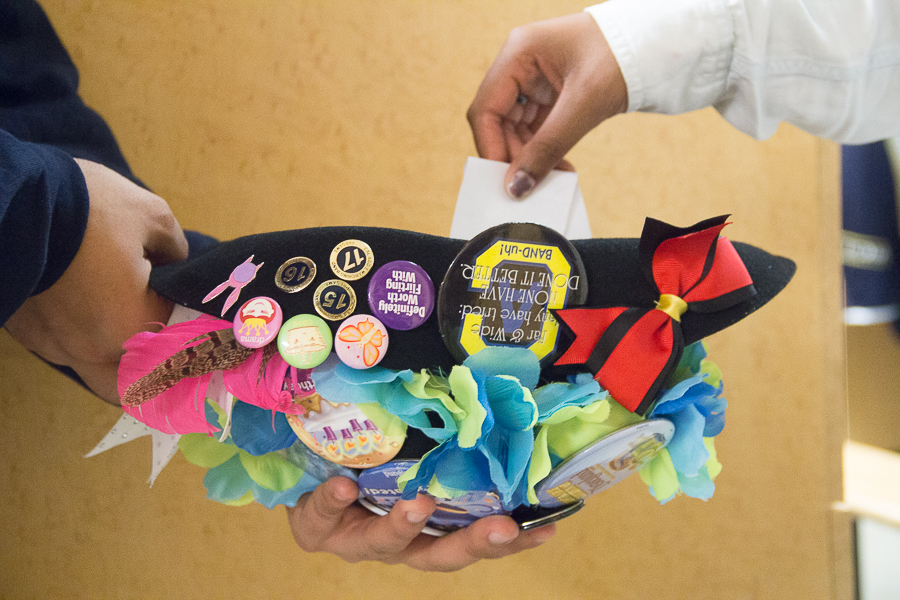
Humor: Schedule Builder to undergo construction, students forced to pull schedules out of a hat

LAURA LONG / AGGIE

The nightmare before pass times

As the month of November began to eerily creep up on everyone, the usual talk of midterms and “I’m so stressed over how many things I have to do” dialogue slowed to a stop for a quick moment, when pass times were projected to come out. Students began to stress over things like units, Rate My Professors and, most importantly, their finals week schedule.

Everything was going dandy, when suddenly the booming and powerful voice of Gary May rained down on the campus to announce that yet another thing at UC Davis was going under construction. Most students ignored this initial call of chaos because May had not finished his announcement, and when things don’t pertain directly to one’s own personal gain, it’s easy to drown them out. But when his next sentence followed with: “that thing is Schedule Builder,” that was when the campus lost it. Murmurs of “it’s like SmartSite all over again” rang throughout the CoHo because, of course, something like this has already happened at Davis outside of the satirical world.

While most students assumed it would be kind of similar to SmartSite, they quickly realized that Schedule Builder is different because it’s nothing like SmartSite at all. Although there were many ways to approach this hectic and probably avoidable situation, UC Davis decided to go with its favorite method, the least practical and most time-consuming — forcing students to pick their schedules out of a hat.

Unfortunately, since Schedule Builder was down, Davis had no way of creating any type of order that would help anyone. So once again, like all things at Davis, it became a free-for-all.

“I think we have 40,000 students here, but I’m not sure,” said an anonymous student whose name has been reduced to a number after this stunt. “We seem to keep changing up the numbers every year, but either way it’s gonna be a pretty long line.”

“I just don’t see how this is fair to people who went to good public schools and came in with 30 AP credits,” said a worried first-year, who came up with their four-year plan in high school. “I mean, doesn’t that count for something?”

UC Davis responded, telling the student to “get in line and chill.”

This situation didn’t have to happen, and nobody is sure why it did. But it probably had something to do with grant money, or maybe just a scheme to screw students over so that they’d stay longer because UC Davis is deeply attached and cares dearly for each and every lovely Aggie and their student debt.

People are likely going to be too preoccupied with waiting in these lines to go to class, setting them even further behind. So hopefully OASIS will go under construction next and everyone will be able to start over with new GPAs.


Written by: Rosie Schwarz — rschwarz@ucdavis.edu

(This article is humor and/or satire, and its content is purely fictional. The story and the names of “sources” are fictionalized.)

Writing my way through mental illness

FARAH FARJOOD / AGGIE

A coping mechanism supported by well-known authors

From my own experience, writing has been a significant coping mechanism. Someone once told me that writing is for those who can’t articulate, and those words have stuck with me. Writing is a way to let the suffocating thoughts out of my head. Most of the time what I’m trying to say is better understood after I write it down for people to read. A close friend of mine pushed me to try keeping a journal to write in whenever I have an anxiety attack. I ask for his help, but when I try to explain what’s going on in my head, I can’t. My thoughts spin in circles and they don’t even make sense to me, but they affect me without my control. Writing provides a way to get my thoughts out onto a piece of paper — anywhere but inside of my head.

Famous authors can say the same thing about using writing as their escape. In John Green’s new book, “Turtles All The Way Down,” he incorporates his personal experience with obsessive compulsive disorder into his protagonist, Aza. Spoiler alert: There’s a part of the book with a graphic description for the imagination to visualize. He discusses this part with his protagonist feeling extremely anxious about the possible infection of a bacterium. Aza repeats in her head, “do you want to die of this do you want to die of this because you will you will you will you will.” She then proceeds to scoop hand sanitizer into her mouth, making herself sick as her mother tries to stop her.

Although difficult to write for Green, incorporating his mental illness into his fiction was something he wanted to do. He wanted “to find some kind of form or expression that would shake it out from within me and allow me to look at it.”

Green isn’t the only author to tie his mental illness into fiction. Modernist author Virginia Woolf, who struggled with what would today likely be called bipolar disorder, incorporated her illness and symptoms into Septimus, a character in her novel “Mrs. Dalloway.” They both experience hallucinations, and Woolf attempted to jump out of a window (spoiler alert), as Septimus does in the book.

Slam poet Neil Hilborn also discusses his relationship with mental illness in his poem “OCD.” Hilborn has used poetry as a personal therapeutic outlet, saying, “When I write down my feelings I’m literally making my internal state external.” In the video recording of his poetry performance, he fully expresses his emotions, holding nothing back — because living with an illness is a fight.

It’s important to remember that coping mechanisms can only do so much to help and should not serve as a substitute for professional help.

The people I’ve mentioned are famous for their artistic abilities, but they write or have written to cope with their mental illnesses. Whether they unload their racing thoughts onto paper or into their fictional characters, they create content with which readers and fans can connect. A blank piece of paper or document is a paradise to release the stress and overwhelming words that clutter their minds. However, writing doesn’t have to be produced for anyone else. Anyone can write for themselves and can choose to not share it. The blank paper is a place to regain control of consuming thoughts and can provide us with a way to understand our mentalities.


Written by: Jolena Pacheco — mspacheco@ucdavis.edu

Disclaimer: The views and opinions expressed by individual columnists belong to the columnists alone and do not necessarily indicate the views and opinions held by The California Aggie.

… And he never left

ELLIOT WHITE / AGGIE


By: Elliot White — opinion@theaggie.org


Disclaimer: The views and opinions expressed by individual cartoonists belong to the cartoonists alone and do not necessarily indicate the views and opinions held by The California Aggie.

A Campus of Global Proportions

0
BONNIE SHEA / COURTESY

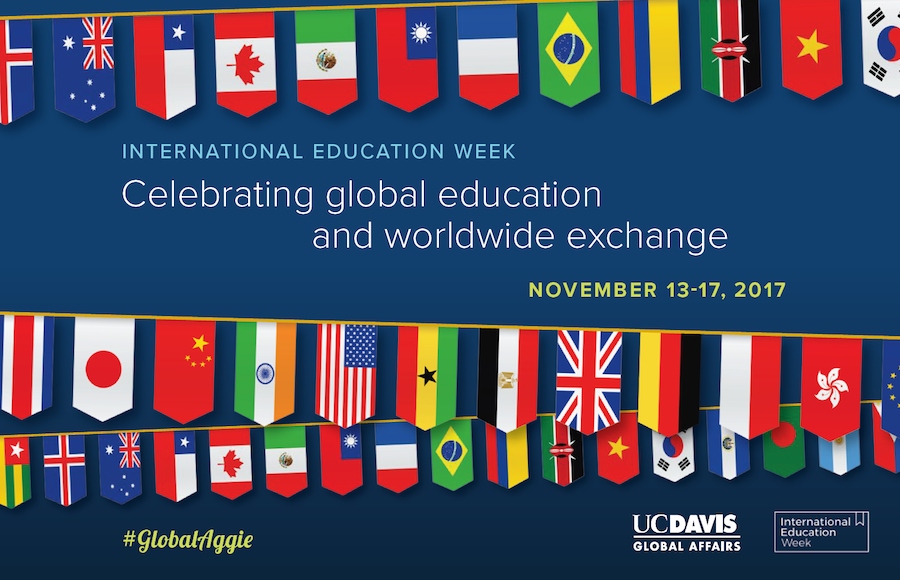
International Education Week sparks worldwide engagement, international student awareness

Last summer, while Jami Miller, a fourth-year international relations and Spanish double major, was taking a business writing class, she had the opportunity to do a cultural diversity project with two of her classmates, both of whom were from China. The experience allowed Miller to get to know people she most likely wouldn’t have met otherwise.

“I hadn’t realized how many international students we have [here at Davis] because I feel like I was one of a handful of native students in that classroom,” Miller said. “It’s cool though because you don’t realize that you don’t need to just study abroad to get a completely different experience, sometimes it comes to you. You have to be open to it because it could be really cool.”

UC Davis is home to more than 8,400 international students and scholars, a number that far outweighs the 1,300 or so students that study abroad each year. Not only that, but UC Davis maintains around 150 partnerships with institutions in 45 countries around the world.

The internationally-focused intentions of UC Davis fall under the responsibility of Global Affairs, which encompasses programs including Study Abroad and Services for International Students and Scholars. This year, Global Affairs hosted its 15th International Education Week.

“International Education Week provides an excellent opportunity for international students at UC Davis to share about their home countries, experiences and perspectives of being in the United States,” said Joanna Regulska, the Vice Provost and Associate Chancellor of Global Affairs and a professor of gender, sexuality and women’s studies. “In return, they also get to meet with and hear from other international students and students from California and around the U.S. about their experiences and perspectives.”

International Education Week, which ran from Nov. 13 to 17, is set by the U.S. Departments of State and Education to celebrate the benefits of global education and international exchange.

“This year, we have events ranging from international grant writing and career workshops to international game and karaoke nights,” Regulska said. “There is a film screening, language fair, storytelling workshop, study abroad information session, calligraphy class, potluck dinner and even an international fair to wrap up the week at the International Center with food, student performances and cultural exhibits.”

Miller, who is currently a student assistant for Global Affairs, is no stranger to engaging with new cultures. She previously spent time studying abroad in Peru and plans to study abroad again in Chile to finish up her Spanish degree. She notes that International Education Week isn’t just for international students to come and learn, but domestic students as well.

“It’s hard to reach the entire student body here, [and] we still kind of see a divide between international students and students who are from the United States,” Miller said. “I think this week and these programs in general will really help push people together and show them that there are ways to learn about each other and learn about each other’s cultures and everything.”

Another student who appreciates International Education Week is Edward Xia, a second-year economics major who is also part of the Global Ambassador Mentorship Program. Edward, an international student from China, was a mentee his freshman year and is now a mentor for the program.

“We have five mentees for each mentor,” Xia said. “Basically we will introduce [them to] the UC Davis community, the diversity on campus, the American culture and the Davis local activities and lifestyle before they come to Davis. When they arrive at Davis we prepare many events for them such as the kickoff event, or a Halloween party, or the current International Education Week for them to get more involved into the UC Davis community.”

Xia mentors students from all over the world: one from Mexico, two from China, one from Indonesia and another from India. He has hosted activities with them like hang out sessions where they drink tea and chat, and has even taken them to the iconic Black Bear Diner downtown, which he says was quite the hit.

“Anyone, any race, any gender, any background can apply to be a mentor [or mentee] in this program,” Xia said. “We are a really diverse group.”

UC Davis International Education Week and the Global Ambassadors program are just two programs run by Global Affairs that help foster understanding and engagement between different people from different backgrounds in an increasingly interconnected community and world.

“[The] world is becoming more globalized, and society is more diverse,” Xia said. “We really need to introduce to the whole campus culture from all over the world, because we have students from all over the world.”


Written By: Marlys Jeane — features@theaggie.org

Police Logs

0
NICKI PADAR / AGGIE

Yes, dogs bark

Nov. 8

“Occurred overnight — window smashed, nothing taken.”

“White newer model van with black rims parked for 30 minutes, vehicle not running, subject sitting in the driver seat.”


Nov. 9

“Subject trying the lock. Possible intoxicated person.”

“Unknown knocked on the front door three times, reporting party not expecting anyone, checked front and no one there, requested drive by only.”

“Open line from elevator phone with nothing heard.”

“Complaint of subjects singing in the area.”


Nov. 10

“Subject tried lock on front door. Then began hitting the front door. Currently outside apartment.”


Nov. 11

“Male subject in the middle [of] street with a bat.”

“White grocery bag containing approximately 100 syringes left in the middle of sidewalk.”


Nov. 13

“Dog barking heard in the neighborhood.”

City Council to increase paid parking

0
CAITLYN SAMPLEY / AGGIE

Council voted 4-0 in favor of expansion of paid parking

On Nov. 7, City Council finalized the expansion of paid parking in downtown Davis. This was a result of the Downtown Parking Management Plan, released in 2014. The outcome of this plan was 19 recommendations for the city of Davis, which have been worked on over the years.

“From 2014 to now, we’ve been implementing as many of those recommendations as we can,” said Davis Mayor Robb Davis. “The topic of paid parking was always part of the plan. The council just hadn’t given direction to implement paid parking. Back in December of last year, the City Council did give direction to establish paid parking in all the city-owned off-street lots and garages, but we started to hear over the course of the year that they were interested in perhaps reconsidering that. So last week, we brought that back to the council for discussion, and they gave direction for staff to establish paid parking for both the on-street as well as the off-street lots in the southeast quadrant –– First to Third Street and D to G Street.”

The city has been facing a parking management problem, due to which the council decided it was time to establish paid parking. Although there are spaces available on the periphery of downtown and in the off-street lots, this could pose as an inconvenience to those who want to park on-street right next to their destination.

“The basic philosophy of paid parking is that it’s not a major revenue generator,” said Brian Abbanat, the senior transportation planner of the Public Works Department. “It’s designed to better manage the supply. It encourages people to make their purchases and move on and free up parking. By attaching a small financial contribution to the parking, you encourage people to use it in a more parsimonious way.”

Although Council voted to increase paid parking, some free parking spaces will still remain. The staff has recommended maintaining paid parking in the E Street parking lot and establishing paid parking in the southeast quadrant.

“The other thing is, you maintain free parking further from the most desired areas, so people who are price-sensitive can park there for free and they just have to walk a little bit more to get where they want,” Abbanat said.

The Boy Scout cabin lot and the Davis Commons will continue to have free two-hour parking. The city staff has also recommended providing free two-hour parking in the F Street lot and free three-hour parking in the parking garages near the F and G Street theaters, with additional hours paid. The staff is currently working on researching methods to introduce paid parking, including metering and having payment kiosks.

“I think it’s a great idea to organize the parking situation in the city,” said Shreya Deshpande, a second-year cognitive science major at UC Davis. “I brought my car to Davis so that I could go around the city at my convenience. I’d rather pay $2 for parking than circling around trying to find space. Plus, there’s still going to be free parking for the days that us college students are broke, which is pretty often.”


Written by: Prachita Chawla — city@theaggie.org

Teacher placed on leave after protest

0
ANDREA GONZALEZ / COURTESY

Woodland High School teacher knelt for anthem during school rally

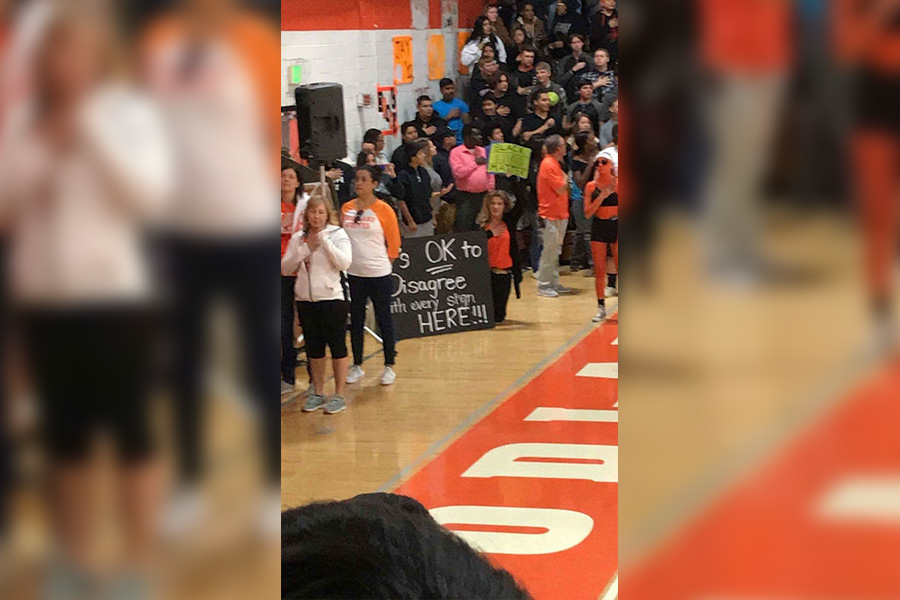
On Friday, Oct. 13, a Woodland High School teacher was placed on paid leave after she knelt down during the national anthem at the school’s rally.

Windy Pappas, a chemistry teacher at Woodland High, held up signs during a rally reading “Black Lives Matter” and “it’s okay to disagree with any signs here.” Monse Gonzalez, a student at Woodland High, recounted the event during the pep rally.

“The national anthem started playing and she just took a knee,” Gonzalez said. “She held up a poster saying ‘Black Lives Matter.’ She was opposite of the flag, and it was pretty visible. She was the only one who kneeled down, but you couldn’t join her because people were on bleachers.”

When a picture of Pappas kneeling during the anthem was later posted on Facebook, several comments ensued regarding the issue.

“She had her hand over her heart and everything,” Gonzalez said. “While the choir was singing, one of the students yelled ‘stand up,’ and a lot of people seemed shocked. It wasn’t until after, on social media, when people started saying stuff about it.”

The rally continued afterwards, and the school later addressed the issue through a letter explaining the situation to both parents and students.

“The principal sent out a letter about what happened and mentioned that counseling services were available and that other teachers would help with any discussion if needed,” Gonzalez said.

Gonzalez is a student in Pappas’ chemistry class, and she recalled that Pappas told the class before the incident occurred about her plans to kneel during the rally.

“She had told us previously as a class, since she was my chemistry teacher,” Gonzalez said. “I was fine with it because it was her opinion and not mine.”

Gonzalez was surprised to see the outpour of responses on social media about the issue.

“It was shocking to see that a lot of people felt offended by it on social media,” Gonzalez said. “It wasn’t obvious until social media took over. Social media just turned it into a bigger deal and a trend.”

Lizbeth Figueroa, another current student at Woodland High, described the scene at the rally. In addition to Pappas, some students also held up signs.

“I looked around and some kids in the stands had signs saying that ‘Black Lives Matter’ and ‘it’s okay to be gay’ and things like that,” Figueroa said.

Figueroa noted that Pappas held a politics club on campus that allowed students to talk about their political views.

“She has a politics club and it was a pretty safe environment — kids can come and talk about whether they agree or disagree with each other about their political views,” Figueroa said. “This is how they decided to hold up signs during the national anthem.”

Figueroa said that there were some negative responses to the incident after the rally as well.

“I felt proud of her because it takes a lot of bravery, especially as teacher,” Figueroa said. “One of the students even ripped up her sign. Personally, I went into her classroom that day just to see if she was okay, and a lot of kids were talking about her and called her names and how it wasn’t right.”

Nancy Bravo, a second-year biological sciences major at UC Davis and former student at Woodland High, described Pappas’ positive character.

“It was just shocking to see all the comments, and it’s not how they should be talking about her,” Bravo said. “She’s so kind [and] energetic to everyone she is teaching […] you get this comfortable vibe [around her].”

According to The Sacramento Bee, Woodland High Principal Karrie Sequeira issued a statement over email and phone saying that teachers are expected to adhere to the Tinker Test, allowing students to express themselves freely without impeding others’ rights. However, she noted that teachers have certain limitations.

“While teachers do retain certain First Amendment rights in their capacity as an instructor, such rights are limited by Education Code and case law,” Sequeira said. “Their personal, political or religious beliefs are not appropriately expressed at school or in the classroom. Instead, the appropriate and legal instructional role is one of neutral facilitator — one who facilitates student discussion and intelligent analysis of current events.”

Pappas returned to teaching on Oct. 17 after four days of paid leave.


Written by: Stella Tran — city@theaggie.org

Khalid to perform at UC Davis in May

ASHLEY LUGO / AGGIE FILE

Entertainment Council announces performance earlier this morning

ASUCD’s Entertainment Council wowed the student body after bringing Chance the Rapper to UC Davis’ ARC Pavilion last October. After the announcement earlier this morning that Khalid will be performing on campus in May, EC is two for two.

The 19-year-old singer-songwriter made waves with his 2017 album “American Teen” and has since been touring the globe. His catchy songs are pop, but also draw from deeper influences along the lines of Frank Ocean, Sam Smith and the lesser-known Daniel Caesar. Khalid’s own music is a reflection of his age: some parts are modern and some parts retro — tied together with the catchy melodies and sing-along lyrics that appeal to young listeners.

“He was the top artist in the survey we sent to university students,” said Liz O’Neill, a third-year psychology and managerial economics double major and the EC director.

EC has partnered with Live Nation and Another Planet Entertainment to host the event. The show, which will take place in the ARC Pavilion on May 7 at 8 p.m., is expected to draw a sold-out audience. Tickets will go on presale this Friday, Dec. 1 from 10 a.m. to 10 p.m. and are only available to students via an access code available on Entertainment Council’s Facebook, Instagram and Twitter. On Saturday, ticket sales will become open to the public.

After last year’s controversy over ticket sales, EC hopes to be more clear with ticket sales, especially the difference between upper and lower level tickets.

“We tried to move forward from [last year] and create a seating chart so no one gets confused what is floor and GA [General Admission],” O’Neill said.

Consistent with last year’s regulations, upper level ticket holders will not have access to the lower level and vice versa. Both upper and lower level tickets will be $47.50.


Written By: Ally Overbay — arts@theaggie.org

Dreaming of More Sleep

0
JESSE STESHENKO / AGGIE

A look at how students can reevaluate their sleep habits

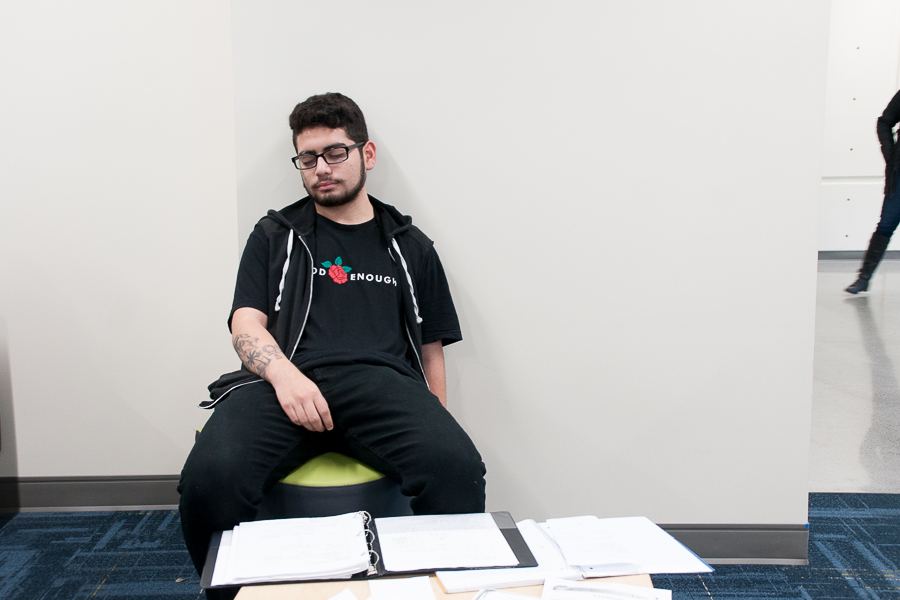
Students across the UC Davis campus can all too often be found melting into uncomfortable chairs for their scheduled or impromptu midday naps.

While it could take an especially taxing week to rattle the rigid sleep schedules of some students, other students may regularly have difficulty getting enough sleep, either due to behavior and stress or because of a diagnosable sleep disorder. To address these problems, UC Davis has several outlets for helping, treating and counseling students who are seeking to correct unhealthy sleep patterns.

The most readily accessible options are offered by Student Health and Counselling Services (SHCS) within the Student Health and Wellness Center.

“Our medical providers help screen for medical conditions that may interfere with restful sleep and take a careful history to help identify possible contributing factors,” said Dr. Cindy Schorzman, a medical director for SHCS.

Schorzman emphasized that students can be most successful in developing healthier sleep patterns when they direct their attention to small variables that they can control. However, this type of self-evaluation may prove difficult for students to conduct objectively, which is why seeking input from medical providers may be a useful step for students looking to influence their sleep with behavioral changes.

“They often start to address these [problems] by recommending sleep hygiene techniques, which include getting up the same time every day, avoiding substances that can interfere with sleep and avoiding the use of electronic devices while in bed,” Schorzman said.

Meeting with these medical providers or the counselors at North Hall can help students find the help they are searching for in assessing their sleep patterns. However, Schorzman clarified that the help offered through these channels is mainly catered toward students who are experiencing sleep troubles as a result of external factors, such as midterms and finals, rather than sleep disorders.

Since sleep issues can negatively impact many aspects of someone’s general health and productivity, considering how other physical and mental health complications either cause or worsen sleep deprivation is an important factor to study. In other words, it is a process of discovering what came first, the chicken or the egg.

“Sleep issues may be secondary to other conditions, including mental health concerns such as anxiety or depression, or physical health concerns such as pain disrupting sleep or sleep apnea,” Schorzman said. “Primary sleep disorders are less common and suspicion of these will often lead to a specialist referral.”

With these more serious cases involving actual sleep disorders, patients may require more specialized treatment through sleep medicine professionals. This is available through the UC Davis Health System at the Sleep Medicine Consultation Clinic in Sacramento, which deals with sleep disorders like obstructive sleep apnea, restless leg syndrome, narcolepsy, sleepwalking and REM sleep behavior disorder. The clinic’s Sleep Disorders Laboratory conducts sleep studies to help diagnose these disorders.

“In sleep studies, we measure several physiological parameters and take video recordings monitoring breathing, heart rate, or physical movements as someone sleeps,” said Dr. Matthew Chow, an assistant clinical professor of neurology and sleep medicine. “We look for disruptions in these parameters, which can be associated with various sleep disorders.”

Meanwhile, on the third floor of the Student Health and Wellness Center, Emilia Aguirre, UC Davis’s mental well-being and health promotion specialist, works to provide resources for students seeking input on the many health problems that can permeate into every aspect of daily life, including sleep.

“My focus is to foster a health-promoting campus environment that enables students to succeed academically and achieve life-long mental well-being,” Aguirre said. “For sleep health, this means advocating for a campus environment which supports student sleep. At Health Education and Promotion, we provide students with the education and resources so that they can aim to get seven to nine hours of sleep each night.”

Aguirre listed several of the information pages and resources that are available for students online. These include lists of tips for healthy sleep habits, blogs on sleep-related topics, an online program for conquering insomnia, the UC Davis Nap Map and even a power nap class that is offered at the ARC.

Camilia Zaher, a fourth-year psychology major and a Health Education and Promotion student coordinator, works closely with Aguirre and is involved with campaigns that help promote sleep health.

“This year, our Sleep Campaign [‘Be Wise, Shut your Eyes’] was held on the week of Oct. 30 to Nov. 3,” Zaher said. “Our main goals are to increase awareness among students about the importance of getting seven to nine hours of consistent, restful, sleep and to encourage students to make sleeping a priority in their schedules by reducing use of technology and exposure to blue light before bed.”

Zaher has worked on many projects, including collaborating with the Yoga Club to promote before-bed relaxation methods, increasing messaging at locations like the dining commons and residence halls and even having professors give talks on the matter.

“We held two crash course events about sleep that were lead by psychology professors,” Zaher said. “Professor Adele Seelke […] spoke to students about the neurobiology of sleep and how it changes across development [and] Professor Camelia Hostinar […] spoke to us about sleep and its role in health, emotional well-being, and academic performance.”

By this time of the quarter, stress and anxiety levels among students are hitting their peak, which can only accentuate poor sleep habits and negatively impact their academic performance. If students feel that they need to reengineer their routine from square one, it is important for them to know that there are resources available, but it is their job to decide that they want to make a change.

It is important for people to take a self-inventory,” Chow said. “If your sleep situation is causing daytime dysfunction, or if in a boring situation, if you fall asleep, it’s because your body is going to the way it wants to be. You should be bored and awake, not bored and asleep […] Sleep is truth.”


Written by: Benjamin Porter — features@theaggie.org

Unitrans, circa 1910

JULIE TORRES / AGGIE


By: Julie Torres — opinion@theaggie.org


Disclaimer: The views and opinions expressed by individual cartoonists belong to the cartoonists alone and do not necessarily indicate the views and opinions held by The California Aggie.


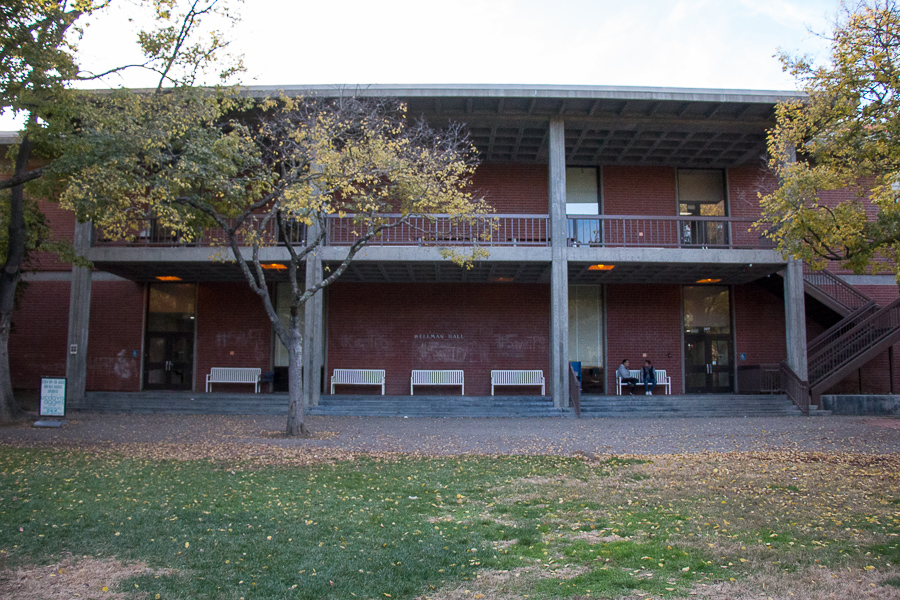
Humor: Aww! Student, professor bond: both exposed to Wellman asbestos

TAYLOR LAPOINT / AGGIE

The most contagious disease at UC Davis is friendship

It’s a beautiful thing when two very different people can come together and forget their differences. Though we wish we were talking about Linda Katehi and Gary May, we’re actually  referring to a student and professor duo who realized they had one inspiring thing in common: They were both exposed to equal amounts of asbestos in Wellman Hall during Spring Quarter.

If you don’t know the asbestos drama, we can give you a rundown. Basically, asbestos is bad. Like, really, really bad. We don’t really know the details, but we do know that it’s not a very good thing. Now that you have a comprehensive understanding of the situation’s magnitude, we would like to indulge you with a heartwarming tale.

Last Spring Quarter, oblivious first-year Grace Hackie realized during office hours that her chronic cough was nearly identical to that of her underwater basket weaving professor’s.

“I knew something was up,” Hackie said. “I was like, wait a minute. I recognize that chronic cough. That’s my chronic cough.”

Not long after, Hackie made the startling connection.

“At first, I didn’t want to believe I had anything in common with a guy who went to grad school for underwater basket weaving,” Hackie said. “But the more I coughed and the more he coughed, I think we really started to vibe.”

Hackie’s professor, Dr. A. S. Bestos, was just as stoked to learn he could finally relate to one of his students.

“Initially I thought my severe chest pain was something I had to go to the doctor for. Luckily now, I know that feeling is just the feeling of building a long lasting connection with a student.”

Truly an Earth-shattering story. We should all be so lucky to be infected with the contagion that is true friendship. Luckily, if you stop by Wellman Hall today, you just might be able to.


Written by: Lara Loptman — lrloptman@ucdavis.edu

(This article is humor and/or satire, and its content is purely fictional. The story and the names of “sources” are fictionalized.)

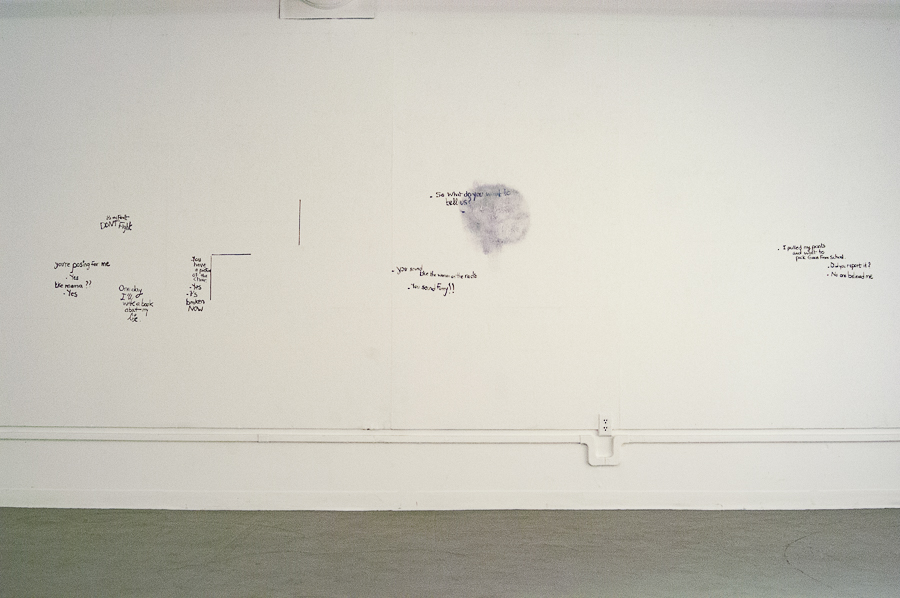
Basement Art Gallery showcases Remedy exhibit

ZACK ZOLMER / AGGIE

Artists use work to confront harsh obstacles in lives

We all possess intimate coping mechanisms to push through personal hardships. Whether it is a family strain or another gut-wrenching worry, it’s easier to escape those negative emotions. Some face them head-on and use these obstacles to create something beautiful. Each of the five participating artists in the upcoming Basement Gallery exhibit, Remedy, have experienced such adversity — and art became their ultimate source of self-empowerment.

Sabrina Castaneda, a fourth-year animal science and studio art double major, used mixed-media materials such as acrylics, oils, paper, charcoal, sand, plants, wood and yarn to convey her message. She believes her wide range of mediums will best explain the emotions she’s felt through her personal journey.

“My piece is inspired by the many years searching for my absent father. During this time, I have accumulated many pieces of information about him and our culture, some of which will be evident in this particular piece itself,” Castaneda said. “This piece is the most recent component of a series I have been working on for nearly a year now. It has really helped me cope with the many intense, mixed emotions that I have experienced on this journey searching for him and has helped me learn more about myself and my roots in a way as well.”

Wendy Liu, a fourth-year design and studio art double major, used silkscreen, charcoal, sumi ink and graphite as her mediums to make sense of her grandmother’s recent health situation and its effect on people close to her, including herself.

“Honestly, over the summer I made a pretty big and immersive piece about my grandmother, but I was given the time and space to do it in the art building because it was over summer session. Now that school has started, classes are filling up rooms and other resources at the art building,” Liu said. “I’ve been itching to work on this current piece right now, which is an expansion of this other piece I did over the summer. I just needed the space to install it, and I realized that the Basement Gallery wasn’t being used at the moment. After I was able to get permission, my vision for a show was becoming closer to a reality.”

This exhibit was made possible through strong collaborative effort. Friends first and foremost, the artists gathered their experiences, passion and creativity to kickstart what would become the exhibit. Each masterpiece is inspired by an incident or emotion that is relatable to everyone in some way or another.

I suspect that our exhibit and its topics will be very relatable to the public because our experiences, while unique and to each our own, are still universal, and I believe many can connect with our individual topics, or concept for Remedy as a whole, on some level,” Castaneda said.

The Basement Gallery creates opportunities for budding artists like Castaneda and Liu to showcase their work. Although it’s an unofficial gallery, the space allows students to gain the experience of organizing a real gallery and for artists to exhibit their work.

Helena Zittel, a fourth-year English and art history double major and the public relations and marketing director of the Basement Gallery, has learned the steps required to transform a space into an exhibit.

“The gallery is definitely an opportunity for all artists, not just for art studio majors. Even though it’s not really an official gallery space, it does give students this opportunity for students to just have a show, almost at a beginner’s level. As the basement gallery team, we’re learning how to run a gallery and how to coordinate events and prepare a space for the artists,” Zittel said. “In the same way, artists are able to gain experience in having an art show and working with a team to get an event going. We also get a lot more freedom because we’re not selling art or getting paid. It’s lower stakes because it’s solely for the experience.”

Prior to Remedy, Liu didn’t realize how complex the exhibiting process was and now anticipates the final results of all her hard work.

“I’ve learned a lot. There’s many small factors you don’t think about when going to an art show: things can range from the limited dimensions our pieces can be to what kind of food should we have at the reception,” Liu said. “I’m honestly most looking forward to the reception day […] I feel like this show in and of itself is a work of art I’m working on right now, and I can’t wait until I get the finishing touches done and share it with the world.”

The Basement Gallery directing team is continuing to work on making it an open space for the entire community.

“We’ve been trying to get student art on the walls and make shows that students of all different types of disciplines and majors would want to go see. There’s still a lot of growth we’re trying achieve to make it even more of a place that’s on people’s radar,” Zittel said. “Actually, before the quarter ends, I’m hoping to organize a kind of forum meeting that anybody can come to and get suggestions for events people would want and things that they’d want to see there for free.”

The upcoming exhibit is a particularly inclusive space because the artists reveal deeply personal experiences in their work and simultaneously share their coping mechanisms with an audience that may be enduring similar struggles.

“There’s a kind of vulnerability that we’re all putting out on display in this show,” Liu said. “Each of our topics are things that are extremely personal and something we’ve pondered and struggled with for a while. There’s a kind of self-discovery and self-acceptance that we are creating through our pieces. I think we want the audience to get personal with us, and hopefully in their own way and own problems [they] can find a sense of ‘Remedy.”


Written by: Becky Lee arts@theaggie.org

Last week in Senate

HANNAH LEE / AGGIE

Proposed resolution to condemn former chancellor Linda Katehi withdrawn for rewrites

On Nov. 9 at 6:12 p.m., Vice President Adilla Jamaludin called the ASUCD Senate meeting to order in the Mee Room of the Memorial Union. Senator Michael Swalberg had given advance notice of his absence because he was out of the country. Senator Michael Gofman and Gender and Sexuality Commission Chair Becca Nelson both arrived late to the meeting.

Third-year English major Sofia Molodanof, from the Student Mental Health Coalition, spoke to the Senate about the coalition’s goals for the future, which include uniting other mental health groups on campus under the coalition.

Liz O’Neill, the Entertainment Council director, addressed questions from senators about issues with back pay as well as inclusivity, in reference to cases of anti-Black rhetoric on social media in response to a Chance the Rapper concert held at UC Davis.

O’Neill said that Entertainment Council is changing its bylaws to avoid complications with employees and back pay and that there was no official response by Entertainment Council in condemnation of the racist comments. Nelson proposed a meeting with O’Neill to discuss sensitivity training.

Naeema Kaleem, the chair of the Election Committee, then spoke about the Senate Candidate Debate held on Nov. 13. She encouraged sitting senators to vote and discouraged insincere write-in nominations.

New legislation authorizing $500 to the Bike Barn’s budget — originally delegated for paid staff training — will now be reallocated for publicity. This legislation was passed with no objections. The bill was favored for its responsible distribution of funds within a unit.

During the Refrigerator Services report, the Senate called for the creation of a bill to provide more workers to the unit.

Next, second-year political science major Naomi Reeley was confirmed as a commissioner for the Academic Affairs Commission.

New commissioners for the Ethnic and Cultural Commission were confirmed without objection.

The Office of Advocacy and Student Representation spoke about efforts to work on campaigning for the upcoming gubernatorial election in their quarterly report.

SB 11, granting $1,300 to the Board of Regents for Picnic Day, was passed and amended with no objection.

A discussion was held about SB 10, a resolution written and introduced by Senator Gofman over the Senate’s official condemnation and call for resignation of former chancellor Linda Katehi. Time was allotted for linguistic proofreading. The resolution criticized Katehi’s salary for being disproportionate to the one-unit seminar she currently teaches.

Senators discussed the extent to which they wanted to condemn the ex-chancellor and whether their legislative body was qualified to dictate what the size of her salary should be. After discussion, Senator Gofman motioned to withdraw the bill to take time for rewrites.

The meeting moved on to SB 12, legislation dealing with granting money to the Aggie Reuse Store to reimburse a Chromebook the store had purchased. The bill passed with no objections.

The Senate took a 10-minute break at 8:58 p.m. and reconvened at 9:08 p.m.

During ex officio reports, Alex Mirov announced he will be stepping down as the Business and Finance Commission chair. One of the commissioners within the unit will be chosen to take his place.

The minutes for Senate the prior week’s meeting were approved, and at 10:07 p.m., the meeting adjourned.


Written by: Elizabeth Mercado — campus@theaggie.org


Aggie Profiles: Professor Tobias Warner

0
JORDAN CHOW / AGGIE

A Multilingual Look at Radical Literary and Educational Innovation

“Une Si Longue Lettre,” a novel by Senegalese author Mariama Ba, is often referred to as a “liberatory feminist classic” in the words of Tobias Warner. Warner, a professor in the UC Davis Department of French and Italian, has researched this novel extensively, tracking its translation from the original French into Wolof, a comparison which yields more complex takeaways than the English text alone. It is precisely in the space between languages and geopolitical boundaries, applying this comparative, and often radical, literary methodology that Warner finds his academic niche.

“Une si Longue Lettre” is more easily interpreted as a feminist liberation from polygamy and patriarchy, but in a class with Warner, one may believe they have discovered a more nuanced and elusive feminism and prerogative in general. This novel and the experience of coming to one’s own conclusions on it is a rich lens from which one can learn about Warner. Although he earned a Ph.D. in Comparative Literature, Warner has found himself working in the French department.

Almost all of my teaching is in the French department because that’s where I’m housed […] that’s very typical for people who train in comparative literature and in language departments,” Warner said. “I teach a lot of texts, I teach some of the texts that I write on but I teach some texts from North Africa, from West Africa, from the Caribbean.”

As a Ph.D. student at UC Berkeley, Warner chose to focus on texts in French, English and Wolof and is fluent in all three languages. Wolof is spoken by 80 percent of the Senegalese population, although French is the nation’s official language. As French is the language of government and some institutions, Warner identifies fertile grounds to research on the politics of language.

“My work looks at the politics of language in Senegalese literature,” Warner said. “So I look at the history of a debate between writers who are working in French and those who are working in Wolof and I look at that in a kind of longer time frame. So I look at how that debate traces back to the colonial period, particularly colonial education, the uses of French literature in colonial education and I trace the history of this tension all the way up to essentially the present. So what makes the research interesting is that it’s not a phenomenon that’s unique to Senegal.”

Warner identified two tendencies in the Senegalese literature that he researches. One is, in his words, more normative. In this tendency, authors endeavor to create a standardized literary history similar to those found elsewhere in the world.

“One of the ways in which it’s often framed is that it’s about cultural authenticity, about decolonization and I affirm all of those things, but I also suggest that what’s at stake is really the definition of literature itself,” Warner said.

The other tendency is more radical, according to Warner. In this one, writers experiment with alternate modes of iterating their work.

“They could take a novel and they could explore something new with it,” Warner said. “They could write a work that isn’t just in one language but is in a couple different languages. They could shoot films that were multilingual. They could makes works that were for radio as well as for print […] what the politics of language does on the one hand, it sort of makes a literary tradition that is very similar to others but on the other hand it’s great space for writers and translators to just really experiment with what literature is, who it’s for, what kinds of discursive practices can be literary.”

Warner is engaged in a deep critical study of the nature of literature along the lines of post colonization, cultural production and the linguistics that illustrate it. Because of his research, he often finds himself interacting with primary sources and archival documents. Among these documents of colonial education, Warner is fascinated with the debates engaged with by colonial educators around instructing on literature. Teachers in the colonial period assigned to students under the imperial regime went so far as to question these students’ capacity for literature. Their discourse was manifested in an incredibly authoritative educational regime, something upon which Warner has reflected considerably.

“I often think about my teaching as shaped by a reaction to [studying colonial education],” Warner said. “Saying, rather than thinking about how to impose a particular view on students, from above, how can I take the classroom and create more space in which students can come to their own readings, their own conclusions? So sometimes that means that I’m a little bit less directive than other professors and I recognize that but for me that’s where that comes from. So it comes from studying closely a very, very authoritarian system of education causing me to reflect too on what my role is as a teacher in systems of power as well.”

It may now be clear why reconsidering the goals of the text “Une si Longue Lettre” in Warner’s classroom is the best way to get to know him as an educator. He is rigorously anti-authoritarian and entrenched in a politics of language that is often unclear and blurry, as traditions and histories become when sullied by imperialist forces. Warner enters the classroom eager to learn from his students, resistant to lecturing and an almost painfully attentive listener. He extracts original thought and committed engagement from his students through rich discussion. Although it’s often difficult to deeply study African languages due to a lack of institutional presence, Warner finds his 10-year commitment to studying Wolof and his research abroad to be a more honest investigation into the field of comparative literature.

“It’s more of a dialogue between and across languages that interests me,” Warner said. “I think that studying it as a dialogue is probably more faithful to the way in which that debate has actually happened.”

This dialogue is essential to the nature of colonial projects from their beginning stages until indirect rule. As colonial regimes insisted on divisiveness within the colonial state, compartmentalization of religious and ethnic groups through standardization of language took place. In Senegal, similar forms of Wolof were spoken among Animist and Muslim groups.

“The ability to say this is Wolof and this is distinct from French, that distinction too is a historical one,” Warner said. “So even the distinction between Wolof and other closely related African languages is at least partially the result of missionary linguists who wanted to maximize the differences between communities, one of which was Islamic and another was Animist, and so they called them different languages and studied them as different languages[…]to be sure there were differences, but often the distinctions between our ability even to speak of where Wolof begins is part of the history we’re studying. So it’s tricky to then say, ‘this is entirely different or we can entirely tell.’ Language is messy, but that’s what’s interesting about it.”

When Warner was 20, he traveled to Senegal as an exchange student. Speaking French, he thought he would be equipped in the classroom and abroad. However, he vividly remembers his first experience in a university class.

“I remember being in my class […] and before the lecture began, the professor would be talking about a famous Senegalese novel written in French and discussion before that was mostly if not entirely in Wolof,” Warner said. “Both among the students and among the professor as well. So once class began it switched over from Wolof to French.”

For Warner, this was the spark that ignited his academic and professional goals up until this present moment.

“I became curious about the history of [language switching] and how literature came to be written in French and how institutions such as universities and educational systems contribute to that,” Warner said.

Warner manages to be at once committed to his research and his classes in the French department. He makes efforts to incorporate the comparative methods from his research to the texts read in his French classes, whether through looking at colonial documents or reading North African, West African, Caribbean or French literature with the breadth of historical and geopolitical awareness they require. These more technical approaches are maintained without loss of the emotional and social lessons Warner has learned from the social realities of colonial education.

“It’s about creating situations where students kind of engage with texts and come to their own conclusions, their own readings,” Warner said. “I think there are ways you can bring that expertise in but I think it’s important to do so in a way that supports student learning and supports student insight and analysis rather than dropping a preformed idea.”


Written by: Stella Sappington — features@theaggie.org