57.9 F
Davis

Davis, California

Monday, December 22, 2025
Home Blog Page 587

Humor: Katehi memoir: “I would’ve gotten away with it, too, if it weren’t for you meddling kids”

AARON JUAREZ / AGGIE FILE

Criminal who’s inexplicably still an educator found yet another way to scam students

After Linda Katehi became unemployed (re: “fired,” except in a nice way that preserves her already flimsy reputation), she needed to find a new hustle. The whole moonlighting-at-textbook-publishers thing wasn’t gonna cut it now that she didn’t have a position of power to exploit. So Linda thought long and hard. What are things that people love? Well, they sure do love pop culture, especially beloved children’s cartoons. What else do they love? Autobiographies written by washed-up public figures who scrape by looking for any way to monetize whatever life situation they find themselves in. Aha! A lightbulb went off.

“I can totally use my infamous name to sell books!” Katehi mused. “And guess what? I’ll write a semi-autobiographical detective mystery that riffs off of people’s love of that silly dog cartoon. What was it again? I can’t remember things these days because my brain has begun to rot from the unethical plotting I’ve been doing all these years.”

So here it comes, something all of us never wanted! A Katehi autobiography. Looks like Christmas came early this year. I’m sure that, considering all of the legitimate achievements that Linda Katehi has made throughout her life (she is an accomplished scholar and a woman in STEM), everyone will be able to look past the way in which she represents a large ugly symptom of public education and higher education in general, where the administrative class of the university system gladly gleans cash off the backs of hardworking, often starving, students. Surely we will be able to ignore the festering sore that is public figures like Katehi, whose self-interest and greed are the reason most things are shitty in the first place.

I don’t know about you, but I can’t wait for Katehi to write her semi-autobiographical detective Scooby Doo fiction. I’m sure we will get a wonderful snapshot of all the ways in which public figures try to manipulate us — and the way in which Katehi represents just one among many who seek to take advantage of students or the working class or the poor or the minorities or any other group of people who find themselves constantly under the boot of a corrupt leader.

And I hope in the end we meddle enough to foil their plans.


Written by: Aaron Levins  — adlevins@ucdavis.edu

(This article is humor and/or satire, and its content is purely fictional. The story and the names of “sources” are fictionalized.)
Interfaith Walk informs Davis community

KAILA MATTERA / AGGIE

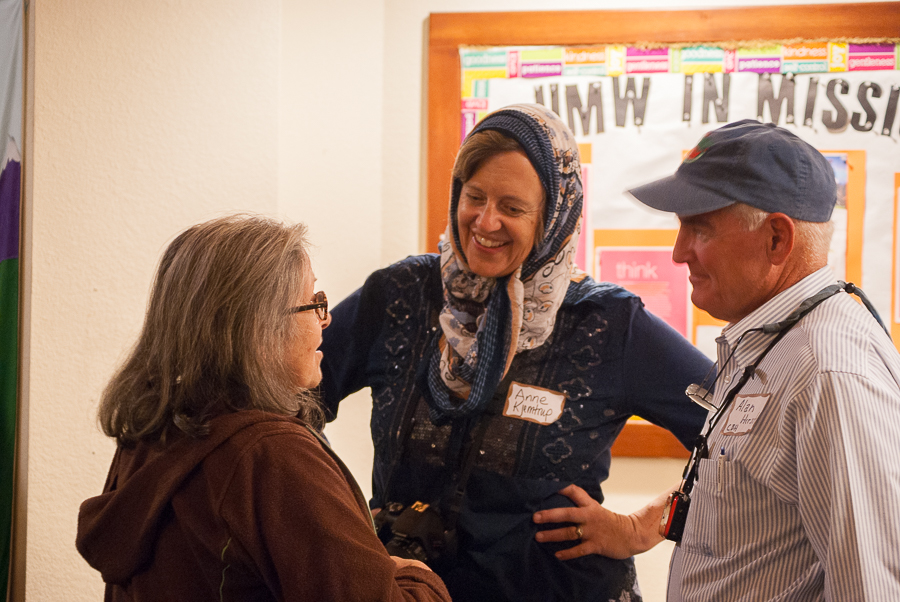
Over 200 participants walked together to places of worship of Abrahamic religions in Davis

On Sunday, Oct. 22, the Celebration of Abraham hosted an Interfaith Walk in Davis. Participants had the opportunity to learn about the three Abrahamic religions — Judaism, Islam and Christianity — as they walked to each place of worship. Participants enjoyed refreshments and snacks while learning about the common interests of the different religions.

The idea of the walk sprouted from members of the Congregation Bet Haverim, who recently visited Oxford, England and participated in a peace walk. They brought the idea to Rabbi Greg Wolfe, who then presented it to the Celebration of Abraham, and within a short couple of months, the idea became a reality.

“When some of the stuff happened this summer, I thought it would be a great idea to build solidarity and a nice opportunity to help people get to know each other in our community,” Wolfe said. “Each clergyman talked about their traditions, but the theme was what [do] our traditions say about living together with others who aren’t us, and how do we live in a society with lots of different religions.”

The day started at Bet Haverim, where everyone listened to Rabbi Wolfe speak about Judaism and the elements of the religion that promote a sense of community among all people of different faiths and backgrounds. People then made their way over to the Islamic Center of Davis, where Imam Amar Shahin echoed this theme of community in his talk. Finally, they ended the day at the Davis United Methodist Church as Reverend Brandon Austin concluded the event.

“I think people were very pleased with the experience of the walk and really having an opportunity with people that they don’t run into in their day-to-day experience,” Wolfe said. “It was really interesting to be able to break down some of the walls and even misperceptions.”

This generally positive feedback came from people of all backgrounds. Helen Roland, the president of the Celebration of Abraham, explained that approximately 250 participants took part in the event and helped make the event a success by bringing such a diverse array of backgrounds.

“There were people who were not from a particular religious tradition who came,” Roland said. “There were people who don’t identify as religious but came. So it was broader than just the three Abraham religions.”

Roland also noted that what was most interesting were the interactions between people as they walked together to each place of worship. People had the opportunity to interact with each other and learn from each other, which was a unique experience for everyone involved.

“I think when people don’t interact with each other and don’t see each other as people, it becomes easy for them to start thinking in stereotypes and start to presume things about people they don’t know, and it then makes it easy for people to build on fears,” Roland said. “And it leads to a degradation of the whole community.”

The day concluded with event-organizers giving participants the opportunity to donate to fire victims. As a result, they were able to raise $515, demonstrating the positive effects of efforts in community building.

“Especially nowadays, it seems that people have retreated into their various tribes,” said Mairaj Syed, a professor of religious studies at UC Davis. “People think, ‘I’m going to live by my tribe, and I’m going to die by my tribe.’ And there isn’t much communication between people who have found their tribe, so any kind of dialogue that crosses those boundaries is good in my opinion.”

The Celebration of Abraham is currently preparing for its annual January event, which it hopes will be particularly successful this year, due to the positive feedback from the community. The event, “Embodying Hope: A Call to Action,” will be held on Jan. 29 from 3 to 5:30 p.m. at the Saint James Catholic Church, located at 1275 B Street.


Written By: Hadya Amin — city@theaggie.org

New club on campus: Aggies for CureDuchenne

KAYLE ABAD / COURTESY

UC Davis forms first university-based organization to raise Duchenne awareness

Duchenne, a fatal muscle disease in children, is a form of muscular dystrophy. Primarily affecting boys, Duchenne leaves most patients in wheelchairs by the age of 12. Cases of boys who have Duchenne all show that they experience social isolation and that most do not live past their mid-twenties. Around 15,000 boys have Duchenne in the United States and around 300,000 worldwide.

Currently, Duchenne does not have a cure.

CureDuchenne is a nonprofit organization that spreads awareness about the disease and raises funds to find a cure for Duchenne muscular dystrophy.

“CureDuchenne has funded nine research projects that have gone onto human clinical trials, and we were an early funder of the first drug that has been approved by the FDA for the treatment of Duchenne, which was approved a year ago,” said Karen Harley, the vice president of market communications at CureDuchenne.

CureDuchenne hosts two different types of events: fundraisers and outreach. Funds raised go toward Duchenne research. The outreach events are focused on building a community for children who have Duchenne and informing communities with guest speakers and other events.

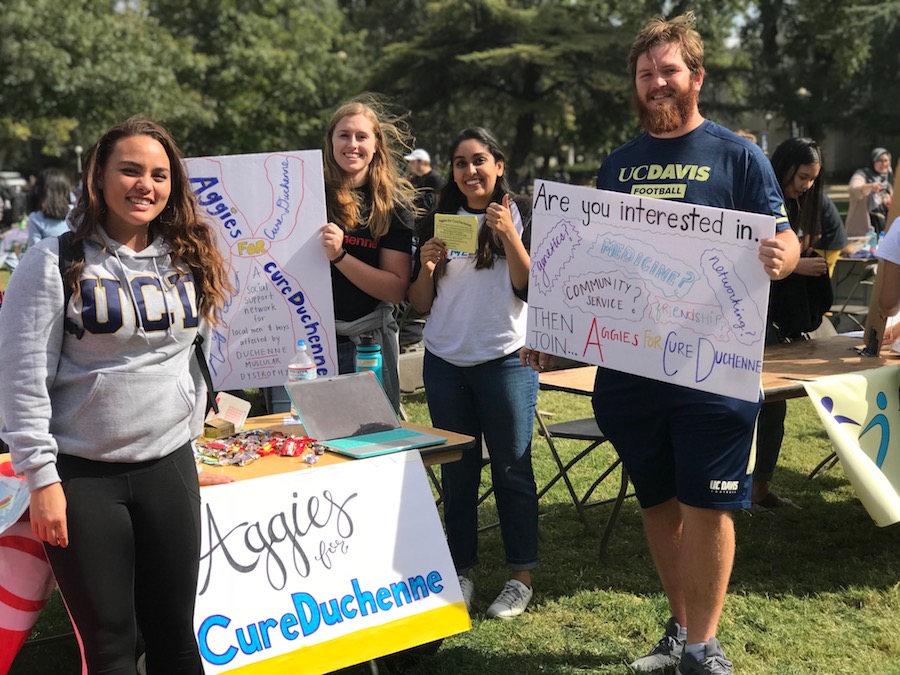
Aggies for CureDuchenne (ACD) is a new student organization at UC Davis that centers on building a community for children with Duchenne.

“We help put on fundraisers for CureDuchenne charity to help them find a cure, and the unique part of the club is we are setting up a social support network for local boys and men who have Duchenne muscular dystrophy,” said Alyssa Valentine, a third-year genetics and psychology double major and the president of ACD. “We are basically going to try to make them feel as normal as possible, hang out with them, just set up fun events like movie nights and video game tournaments to give them a sense of belonging that sometimes they don’t get from their peers because of their physical disabilities.”

ACD personalizes its events and activities to individual interests.

“Each person who has Duchenne is different, and what their wants are changes, like if they like sports we try to get them out to football or basketball games. We tailor it to each person,” said Ramsey Hufford, a fourth-year religious studies major and the vice president of ACD.

ACD is currently on the lookout for new Aggies wanting to join.

“You’re going to make a difference in somebody’s life and you’re just going to be having fun and hanging out with somebody, but at the same time it’s going to be making a huge impact,” Valentine said.

ACD is currently working with a power soccer team that consists of people who are in power wheelchairs. Based in Sacramento, the team holds practices in Davis.

Along with raising funds for CureDuchenne, Aggies can get involved by spreading awareness and empowering people with Duchenne

“There is something for everybody,” Hufford said.

More information can be found on the club’s Facebook page.


Written by: David Soltero — science@theaggie.org

Guest: An outside perspective on the importance of journalism

FARAH FARJOOD / AGGIE

Journalists are crucial in the fight against anti-intellectualism, falsehoods

In the most adroit of times, the pen consistently proves itself mightier than the sword.

Two tenacious young men with a damn-near death wish brought down Richard Nixon. Had it not been for an undercover writer in the trenches of Chicago’s meat-packing plants, there would be no Pure Food and Drug Act. McCarthy would have scourged falsely-accused “communists” from the State Department had a brave Washington Post writer not resisted and unearthed the lies inspired by rampant hysteria.

It has never been more prudent of a time for a Woodward and Bernstein, Sinclair, Marder or any archetype of the defenders of truth and dismantlers of propaganda who we’ve seen in generations past to step up to the plate. There’s something to appreciate in the fact that, within the moment of journalism’s gravest existential threat, there also resides its most powerful capacity to restore justice and to restore truth in a period of rapidly-deteriorating intellectualism.

I am no journalist — hell, I’m not even a writer in any capacity. But that’s why I will unequivocally defend painstakingly derived and definitively honest writing. Like news reporting or public service, journalism is a duty-bound by the time poured into it by its contributors — time that the everyday person does not have. I trust my news sources to uncover primary details, provide astute analysis and subsequently help me formulate my own opinion. This is what gets lost in today’s “fake news” environment. Good journalism does not dictate your own disposition (as is the fear surrounding “fake news”); it leads you there. Sure, the influence of political elites in media is corrosive to democracy and the integrity of journalism, but this problem (albeit very real and very serious) cannot be the sole disintegrator of public trust in the field. There are many writers — both rogues from major corporations and those who have formed their own publications for the specific purpose — who challenge this harmful political influence in media every day. The individual pieces are not reflective of the damaged system as a whole. There’s still a lot of “real news” out there.

This is where our job as the public comes in. We cannot let anti-intellectualism prevail. Contrary to what Donald Trump wants you to believe, journalists are not some self-serving shadow branch of anarchists — that is what a fascist would have you believe. And that very fear of a free press from the White House should show you why it’s worth believing in, worth investing in. It is the safeguard against authoritarianism, it is the defender of justice and it is the disseminator of the main source of public strength: knowledge. It sounds melodramatic, I know, but it’s the gospel truth. Good journalism is the gatekeeper to a healthy, well-informed public.  

As I said earlier, the pen has proven mightier than the sword, time and time again, in the direst of moments. And right now, that sword is swinging. Let’s get the ink flowing.


Josh Dalavai is a fourth-year political science major with a minor in economics who serves as the President of the Associated Students of UC Davis.


Written by: Josh Dalavai

Disclaimer: The views and opinions expressed by individual columnists belong to the columnists alone and do not necessarily indicate the views and opinions held by The California Aggie.

Humor: Drinking Davis water ruined my financial, physical and emotional wellbeing

GIDEON [(CC BY 2.0)] / FLICKR
An investigation of the drinking culture in Davis

I will preface this by saying I am in no way a science major, nor do i intend to do anything science-related ever. But from time to time I like to dabble in the idea of it. Over the last three years, I have conducted extensive case studies and experiments to test just how capable Davis water is of wreaking havoc on the student body. I will try to describe my findings in the best way I can to convey just how special Davis water actually is.

While my practices were slightly unorthodox — and by that I mean they didn’t follow the scientific method (a thing I learned about once but then forgot the details of) — they led to results. I’m here to expose them to the world, or at least to my parents’ friends who read these articles. Anyway, here are some things I managed to contract from the Davis water and some reasons why I have personally chosen to stop drinking it.

Lowered IQ: Davis water is the only way I can explain why I’m not doing as well at college as I was while I was drinking the pristine mountain runoff water from my hometown. Once I realized it was the Davis water that was affecting my academic habits, I made the switch to caffeine and alcohol. While this hasn’t improved my academics at all, at least I know that I’m not destroying any more brain cells by drinking Davis water. I also drink Smart Water™ .I heard that helps.

Pink Eye: This is something nobody wants to talk about, but it happened. All I did was wash my face with the water from my sink, and both my eyes contracted pink eye. While this only happened once and I wash my face every day, I’m sure it was the water and nothing else.

Freshman 15 (apply this to every year): Every time I eat, I wash it down with water, and it’s certainly not my diet that’s sponsored by Trader Joe’s and Peets. They’re corporate, but they appeal to the average healthy American, and I trust them. Davis water? Not so much.

Student Debt: Simple as this: The longer I’ve been here, the more debt I’ve acquired and the more Davis water I’ve drunk. I heard all about “correlation equals causation,” and I’m using my own inference to support my hypothesis. (Sorry if I lost you there, I can’t help that I set the curve in O-Chem). Honestly this water makes you poor. Go buy some Voss™ or something — or, even better, move back home and watch your debt begin to shrink as you switch back to your home system of drinking water that provides you with home-cooked meals and minimal stress.

Study Concluded: Davis water is dangerous and should be dealt with carefully.


Written by: Rosie Schwarz — rschwarz@ucdavis.edu

(This article is humor and/or satire, and its content is purely fictional. The story and the names of “sources” are fictionalized.)

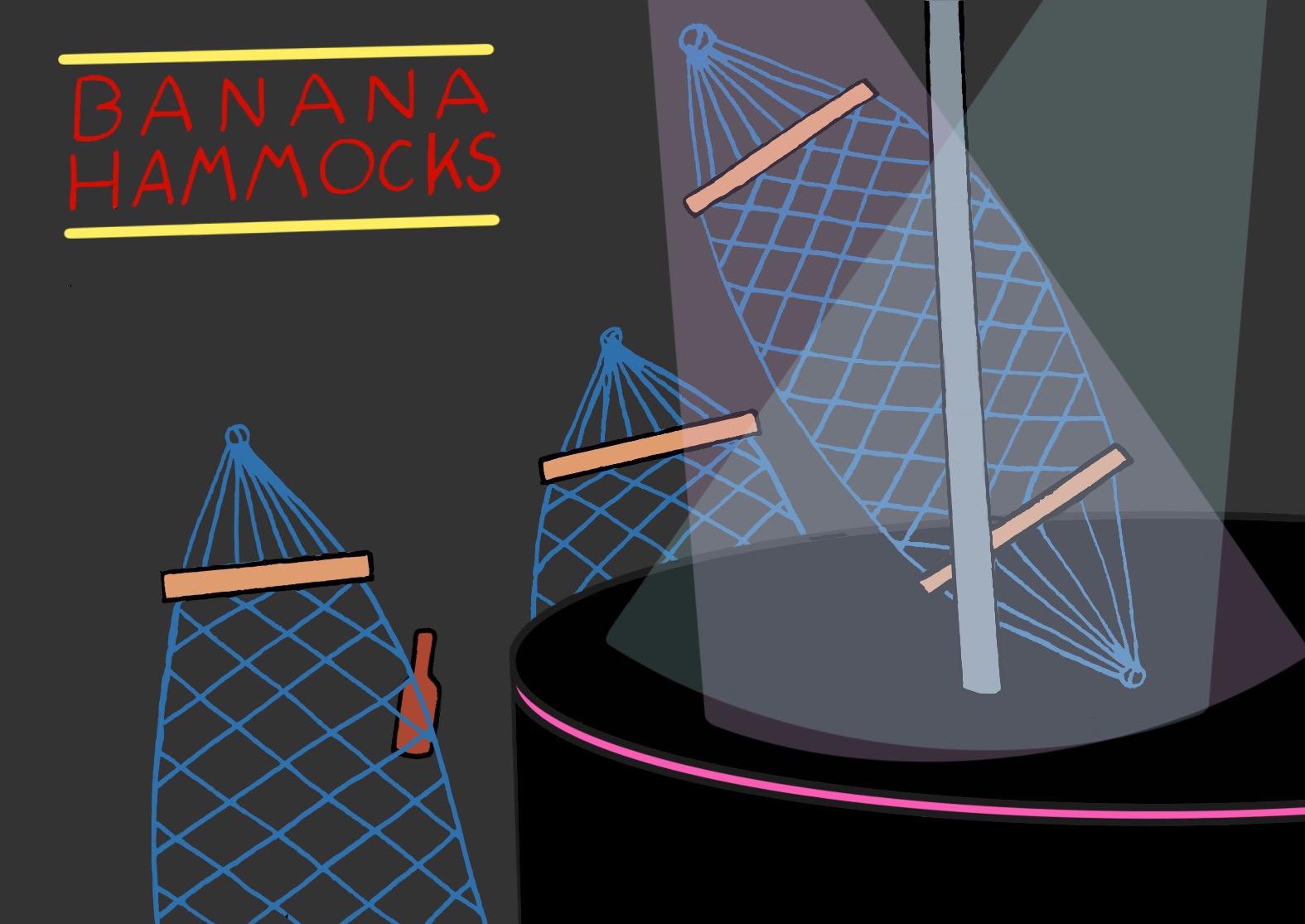
Cartoon: Where the hammocks go at night

JULIE TORRES / AGGIE


By: Julie Torres

Disclaimer: The views and opinions expressed by individual cartoonists belong to the cartoonists alone and do not necessarily indicate the views and opinions held by The California Aggie.

Squash the condescension: In defense of the liberal arts

JAMIE CHEN / AGGIE

The humanities provide skills vital to a well-rounded, functioning society

“This is what the real, no-bullshit value of your liberal arts education is supposed to be about: how to keep from going through your comfortable, prosperous, respectable adult life dead, unconscious, a slave to your head….”


So said David Foster Wallace, the author of “Infinite Jest,” in “This is Water.” His attempt at justifying the liberal arts shows just how ingrained criticisms of the discipline have become. As many literature, history and philosophy majors will attest, one of the most persistent questions thrown at them is this: What do you plan to do with it?

College is awash with various major and minor degree programs. The problem is some garner more respect than others — based on perceived employability or earning potential.

It wasn’t too long ago that Mark Cuban, the billionaire owner of the Dallas Mavericks, argued in an interview that the liberal arts would make a comeback after decades of overhype surrounding STEM majors. He reasoned that, as future jobs become increasingly automated, there will be less room for technical jobs and more room for workers with alternative forms of training — those with liberal arts degrees, for example.

Cuban praised the critical thinking skills cultivated by a liberal arts education, citing organizations like Americorps, which use these skills to great effect in grassroots communities.

Cuban argues from an economic standpoint, but a business-focused approach isn’t the only way to see the liberal arts in a positive light. Society is weakened if we ignore the benefits of a well-rounded liberal arts education.

Such an education generally involves reading, writing, discussing and a lot of critical thinking. These are skills vital to an educated public, through which creative ideas flow continuously.

STEM and the liberal arts represent two sides of the same coin: while STEM fields provide a means of figuring out how the world works using empirical data, the liberal arts offer a way to communicate that knowledge to others.

If the sciences rely on discovering truth to create a better world, the liberal arts provide a means of creativity and questioning that becomes necessary when the world has no truthful answers to give. Where STEM gives us data and ostensible solutions, the liberal arts give us ethics. Where STEM gives us roads and vaccines, the liberal arts give us culture and meaning.

Meaning is subjective, of course, but it plays an important role in balancing a world where the objective truth gets center stage. Musical performances and stories can provide meaning or analysis in their purest forms. A landscape painting or a documentary that offers unique interpretations of war can elicit certain emotions that transcend the objectivity of science. These are all rooted in the liberal arts.

Of course, the world needs science and technology. Scientific discoveries have generally made the world a better place to live. But we need the flipside as well. A world without literature, language or logic lacks the creative spirit vital to bridging differences and enhancing our way of life beyond the reach of science.

Diplomacy, as well as the world’s legal codes and systems of government, traces its foundation to the thought processes inherent to the liberal arts. In an otherwise disorderly society, the disciplines of creative thought and rhetoric can help keep things in check.

The sciences and the humanities are complementary, a sort of yin and yang that falters when one takes precedence over the other. If Cuban is right — that the liberal arts will experience a resurgence in the coming years — perhaps not all is lost. The flight path will correct itself, if you will, and the “no-bullshit” view of the liberal arts will once again receive proper recognition. It’s the best way forward.


Written by: Nick Irvin — ntirvin@ucdavis.edu

Disclaimer: The views and opinions expressed by individual columnists belong to the columnists alone and do not necessarily indicate the views and opinions held by The California Aggie.

Bacterial DNA simplifies in stepwise fashion

CAITLYN SAMPLEY / AGGIE

Computational modeling reinforces biological hypothesis of DNA-unlinking mechanisms

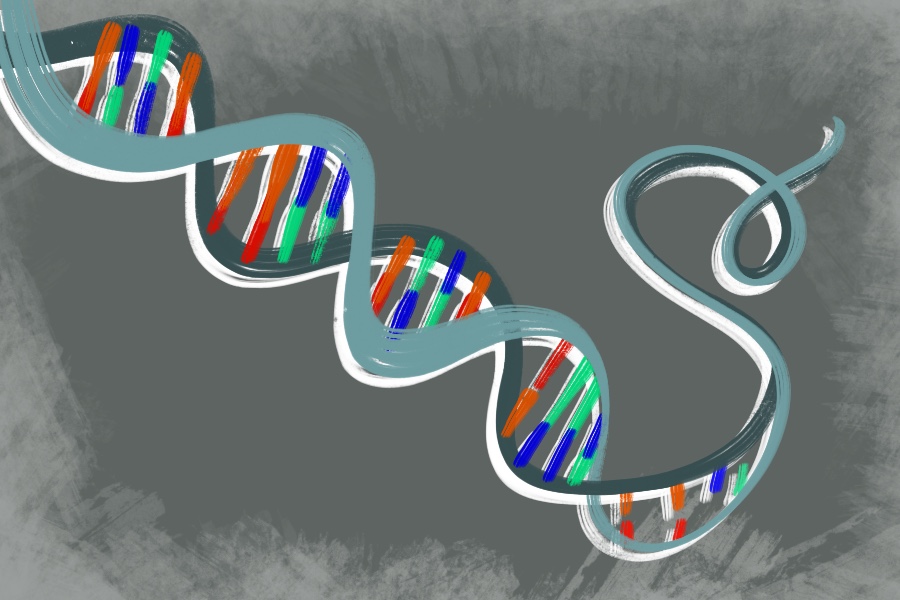
A team of international scientists have provided compelling evidence of how complex chains of bacterial DNA can unwind from interlinked states. A paper in Scientific Reports compiled the student’s findings, which build on previous work performed on the bacteria E. coli by this team in Japan, the United Kingdom and the United States over the last decade.

Biologists assumed there existed a unique pathway which methodically unlinked knots one by one to separate replicated strands of genetic material in the minimal number of steps. More evidence was needed to back up these assumptions, and mathematical data from this research team supports the shortest possible pathway hypothesis.

E. coli is a model organism used in scientific experiments due to its quick generation time and ease of use. Scientists have mapped the entire genome of the bacteria. Although DNA differs greatly in size and structure between living organisms, cells share remarkably similar processes and machinery to uncoil knotted strands. These similarities allow the results of the experiment to transcend beyond the mechanisms E. coli uses to unlink DNA.

“When you look at the bacteria E. coli, the bacterial chromosome is a circle — big and all crunched up inside the cell, but it’s a circle,” said Mariel Vazquez, the senior author of the paper and a professor of both mathematics and microbiology and molecular genetics at UC Davis. “Before the cell divides into two cells, this circle needs to be copied.”

DNA exists in a coiled state within living cells. During replication, DNA is copied by certain enzymes before the cell can divide, which leaves each daughter cell with genetic instructions for normal processes.

“As a cell replicates its DNA, the cell volume increases in proportion, so at least roughly the concentration of DNA in a cell is always the same,” said David Sherratt, a professor of biochemistry at the University of Oxford and one of the authors of the paper.

Molecular machinery unzips portions of the chain to expose the code to be transcribed, which builds up tension. Complicated knots are relaxed downstream by other enzymes, but the copied DNA structures are interconnected and need further coaxing to be separated.

“Instead of having two newly replicated circles that are separate, so that each one of them can go to separate cells, they are interlinked in very complicated ways,” Vazquez said.

The long chains of DNA have multiple enzymatic methods of unlinking. One process uses enzymes called topoisomerases, which cut the backbone of one or more DNA molecules and feed a strand through the break to reduce supercoiling. In another process, an enzyme called recombinase chops both strands at a specific site, unwinds them and reseals the break.

“The two strands of duplex DNA are interlinked — one link per 10 base pairs,” Sherratt said. “This means to copy the E. coli chromosome, around 450,000 links need to be reduced — every single one if the newly replicated sisters are to separate from each other!”

To simulate the genetic knot complexes, the team created models representing DNA chains with possible sites where enzymes could snip and reconnect the chains. Hundreds of different spatial orientations, or topologies, were considered and millions of possibilities were simulated. Vast computing power was necessary in order to calculate the probabilities of the different unlinking pathways to determine which was most likely under certain mathematical assumptions.

“We were very fortunate to have access to a new cluster that we built at UC Davis fairly recently, called CRICK,” said Robert Stolz, a third-year Ph.D. candidate in integrated genomics and genetics at UC Davis and the paper’s first author.

After organizing the data and investigating the probabilistic pathways of DNA unlinking, the interdisciplinary team compiled evidence to support the hypothesis of the biologists.

“What happens is the that the unique shortest pathway identified under the strongest assumption is most likely,” Stolz said.

The team focused on macroscopic conformations of DNA strands for their analysis. Modeling each base pair of a DNA strand, even relatively small ones, and then simulating knot topologies is beyond the current computing power of researchers.

“I am most interested in studying DNA structure — not at a very high-resolution level, but rather at the large scale,” Vazquez said. “When you look at the DNA molecule, there is an extremely long chain that fits in a very small environment. What is the geometry that this chain adopts?”

Knot theory is useful in understanding how DNA can unwind in living systems, but also generates interest in diverse fields such as engineering and astronomy. Smoke rings, liquid phenomena and the flashes of solar corona exhibit similar reconnection characteristics as DNA.
“It turns out that the work that we’re doing is of a lot of interest to people doing fluid dynamics because the same sort of networks of different topologies that we observe in our study also emerge in other systems,” Stolz said.


Written By: George Ugartemendia — science@theaggie.org

Sac City teachers approve strike

KYLA ROUNDS / AGGIE

Educators anticipate District’s decision toward a proposed educational initiative

For the past year, Sacramento teachers, students and parents have rallied for the acceptance of an educational initiative to make Sacramento a Destination District for California. The Board of Education’s rejection of the proposal moved educators and other Sacramento Unified School District faculty to approve a strike with 97.2 percent endorsement.

“It’s the last thing we want to do,” said Nate Starace, a social science teacher at C.K. McClatchy High School. “We get into teaching for the students, but the process has been so long. There’s been every opportunity to avoid a strike. At some point, you do have to take a stand.”

Proponents of the Destination District proposal call attention to the initiative’s potential to positively impact Sac City students and teachers. The Destination District plan proposes to lower class sizes, ensure credentialed educators for each classroom, improve psychologist- and nurse-to-student ratios, better resource special education programs and increase student accessibility to arts, music and physical education, among other district goals.

While the district has rejected the proposal on multiple occasions, citing financial stability concerns, the Sacramento City Teachers Association (SCTA) continues to point out that the district is more financially secure than it has ever been, making now the perfect time to fund the initiative. According to statements from the SCTA, the district’s reserves ballooned 320 percent over the past four years, reaching over $81 million. While the district continues to hire new administrators with increasing salaries, Sacramento has the lowest average salary for veteran teachers in comparison to all other California school districts.

In Calaveras County, teachers recently went on strike for four days before securing a deal with the Calaveras Unified School District to improve student and teacher prospects. In a statement released on Oct. 24, the Calaveras Unified Educators’ Association stated that a new contract with the district will help reduce class sizes, resolve school safety issues and alter teacher salary schedules in order to enhance recruitment and retainment of qualified educators.

David Fisher, the president of the SCTA and a teacher and parent of Sacramento students, equates the District’s rejection of the proposal on the grounds of financial stability concerns to financial misappropriation.

“This is what we say, ‘It’s great in your family — you should save for retirement. But not before you’ve fed your kids,’” Fisher said.

Sacramento educators will wait until Nov. 1 for the fact-finding panel to make a “non-binding recommendation, which either party can reject or accept.” SCTA members hope that the proceedings of the panel will negate the necessity for teachers to strike. However, with an overwhelming majority of educators in favor of a potential strike, a final rejection by the district would likely result in the closure of many Sacramento classrooms before a resettlement in favor of the Destination District proposal is reached.

Written by: Eliana Sisneros — city@theaggie.org

Street Smarts calls for improvement of transportation system

CAITLYN SAMPLEY / AGGIE

Promoting student transportation safety through survey, grant

Street Smarts, the City of Davis’ bicycle, pedestrian and car safety program, recently surveyed local grade-school parents for their input on Davis’ transportation system regarding how their children are getting to school.

The survey was administered by The National Center for Safe Routes to School, which uses the data to better understand how children are getting to school and if cities are doing their job in getting them there safely. According to Loretta Moore, the Street Smarts coordinator for the City of Davis, Street Smarts is funded by Safe Routes, a locally-based organization.

Street Smarts collects data on the various modes of student transportation in order to get a better sense of the overall distribution. This tally is conducted by the schools themselves and is then sent to Street Smarts.

“[The tally] is to both increase our knowledge about how students travel between home and school and to determine where changes need to be made,” said Seth LaJeunesse, a research associate at the National Center for Safe Routes to School. 

The parent survey is used to give parents a voice in their child’s transportation options and is offered in both English and Spanish.

“It’s encouraging to see a local organization attempting to get parents’ input in their children’s transportation options,” said Courtney Newton, a Davis resident and mother of two grade-school children. “These types of initiatives are what makes Davis one of the most walk-, bike- and transit-friendly cities in the country.”

According to the last tally in 2015, approximately 46 percent of grade-school students used green transportation (walking or biking) to get to and from school. This is much higher than the national average, which is 13 percent. Despite Davis’ “neighborhood-school” concept, about 50 percent of students still travel to and from school by car. Just 1 percent of grade-level students in Davis travel to school by transit.

“[Officials] anticipate interest and engagement in walking and biking among students to increase significantly for the foreseeable future,” LaJeunesse said.

Organizations and events such as Vision Zero and National Bike to School and Walk to School days and the emergence of community-level activity plans are dedicated to pedestrian and bike safety in cities across the world.

The tally and survey are being conducted in 18 Davis grade-schools: four private elementary schools, four public junior highs and 10 public elementary schools.

According to a press release from the city, the California Transportation Commission awarded the city a $3.54 million grant on Oct. 18 to design and construct a bicycle and pedestrian bridge connection between the Highway 40 multi-use path, which runs along East Olive Drive and the Pole Line Road overcrossing. 

The project emerged from the city’s recently completed Walk Bike Audit Report conducted by Street Smarts, which identified infrastructure safety needs for the City’s 14 elementary and four junior high schools. By doing so, Street Smarts hopes to improve student transportation options and their safety.


Written by: Dylan Svoboda — city@theaggie.org


Dog days of fall

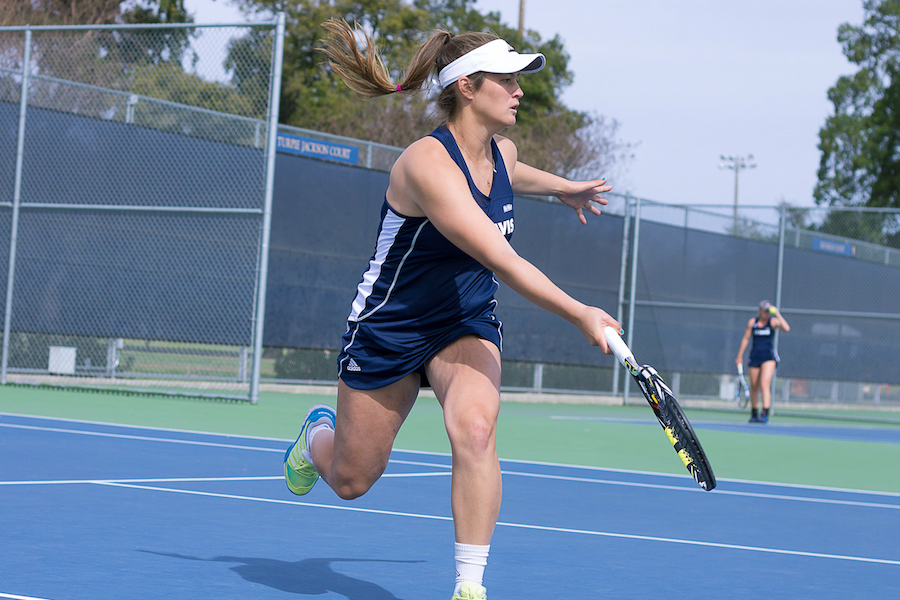
MEENA RUGH / AGGIE FILE

Women’s tennis completes fall tournaments, looks forward to new season

October is not usually considered the height of the tennis season. For the UC Davis women’s tennis team, however, playing autumn tennis is not such a strange concept, and is in fact an integral part of gearing up for a competitive regular season.

Over the course of October, the Aggies competed in three separate tournaments, all taking place in the Bay Area: The Cal Nike Invitational in Berkeley, the Saint Mary’s Invitational in Moraga and the International Tennis Association Northwest Regionals in Palo Alto. While the regular season is still almost three months away, these fall events were the first opportunity for teams to gather invaluable, in-game experience for new players and to recalibrate into a competitive tennis mindset.

The Aggies, led by co-captains Lani-Rae Green and Kelsie Bryant, were largely successful in all three tournaments. The highlights for the Aggies, however, came in the Saint Mary’s tournament. In Moraga, sophomore Kristina Breisacher defeated top seeded singles player Elizaveta Volodko of UC Santa Barbara in a hard-fought three sets. Green also had a chance to defeat Volodko, as the two went head-to-head in the flight A singles final, but came up just shy of victory.

It was in the flight B doubles draw of the same tournament where the Aggies collected a finals victory. Breisacher and her fellow sophomore Nikita Pradeep completed a run through the tournament and defeated the number two seed tandem from UC Santa Barbara in the final match. This doubles crown was the team’s most significant feat in October, but head coach Bill Maze was pleased with the overall performance from his squad as they took on opponents from across the country.

“It’s the best we’ve been in a long time,” Maze said. “The team played a ton over the summer, they’re raring to go. The seniors are leading the way. It’s just a great vibe and the tournaments show it […] I can’t wait for the season to start.”

The matchups and victories against conference rivals during the tournaments are especially significant to Maze. He acknowledged the high-caliber players that typically flock to Big West conference schools like Santa Barbara, admitting that “it’s always fun to win” against such formidable teams. Maze is eager to see how this Santa Barbara rivalry will unfold in the regular season, confident in his team’s ability to compete with any powerhouse program. Green also shared her similar feelings about how the team competed this October, adding fuel to Maze’s belief that the team can play tough against any opponent.

“Everyone had really good matches,” Green said. “Everyone really competed and put everything out there any given day. We’re just as excited for the season as [the coaches] are, if not more excited. Fall tournaments are always interesting to figure out the new players and who other people have, so it’s nice to see that we were out there competing with some of the top players in the country. We were right in it.”

As Green pointed out, the fall tournaments also served as an opportunity for new faces to establish their place on the team. The Aggies added two freshman to the roster this offseason: Shirley Hall of Chico, Calif. and Jessica Walker of San Diego, Calif. The two competed alongside each other in the doubles draw in all three tournaments while also being able to gather some confidence-boosting victories on the singles side as well.

“[The freshman] are great,” Maze said.  “They’re fun to be around. They’ve got the right attitude, they’re soaking it all up. They’re good in both singles and doubles. I think they’re really going to help us. It’s going to be tough for them to make the starting lineup but they got shots [to do that] for sure.”

As a senior and a co-captain, Green plays a major role in facilitating the development of these younger players –– a role that she embraces. She remembers when she was in Hall and Walker’s shoes just a few seasons ago; a young collegiate athlete who “looked up” to the experienced members of the team. Green is now one of those experienced players who hopes to shape the freshman into better versions of themselves. She realizes that best way for her to achieve this is by representing UC Davis well and “leading by example.”  

“Honestly, I think our freshman are very good,” Green added. “They’re very self-sustaining people. It’s not much of a challenge [to lead them]. It’s just steering them, saying ‘Okay, this is what we’re doing today –– this is how we treat this situation, this is what we do on these occasions.’ They’re ready for any sort of challenge we throw at them, they’re fitting right in and they’re ready to go to. It’s really fun when your freshman come in ready like that, it makes our job easy.”

Green and her fellow seniors, Kristy Jorgensen and Jessie Lee, will have plenty of time to lead their younger teammates over the next several months. The period between now and January is what Maze calls the “dog days.” Maze knows that with no tournaments coming up and December finals looming, it can be a challenge at times for the team to remain sharp on the court. But with this particular team’s work ethic and passion for tennis, Maze feels “the most comfortable” he has ever felt.

“The challenge the last several years, for me personally, has been to look at it as a growth period,” Green explained. “You have a solid month of practice to really work on getting better at something before the season starts, because once you hit season, it’s more about maintaining […] Like [Maze] said, our team is going to have zero problems playing. We’re all very competitive people. We don’t want to come back [from break] and realize, ‘Man, I’m a little out of shape, I’m not performing as well as I used to and this person next to me is beating at all these things they didn’t beat me in before.’ There’s always that friendly competition, we love competing with each other.”

With players who possess a mindset like Green’s, it is easy to see why Maze is so excited about the upcoming season. The atmosphere of hard work and competition surrounding his team this year has led Maze to buy into this squad’s potential to compete at a high level. Maze, who has over two decades of coaching experience, explained how his team’s love for the game is extreme.

“I’ve been here a long time, but [this is] unusual,” Maze said. “I think now we can be in the top half. What is that thing? It’s an intangible. It’s sort of an attitude and I can’t really tell you what it is, but it’s there. I know it when I see it […] I’m chomping at the bit.”

This year, the Aggies aim to build off last year’s 15-10 record –– the program’s first winning season since 2011. The way that the team has performed this October is certainly a step in that direction. The competitive drive, along with the mix of young and experienced players, will make this team one to watch come January.


Written by: Dominic Faria — sports@theaggie.org


Andrew Bird displays eclectic music style

TREVOR GOODMAN / AGGIE

Singer-songwriter performs folky pop with multiple instruments

On Sunday, Oct. 22, Andrew Bird’s tour stopped by UC Davis at the Robert and Margrit Mondavi Center for the Performing Arts. Bird, an acclaimed violinist and whistler, presented a three-part performance with a visual solo act as well as a complete band and acoustic set.

As I took my seat in the Mondavi Center, I overheard the couple in front of me apprehensively discuss whether they should have taken a chance on Bird. A unique artist in his own right, Bird is certainly not for everyone. But by the end of the night, the couple (much like the rest of the audience) had little reason to doubt the musician.

As the lights dimmed, Bird didn’t waste time establishing his style and winning over the crowd. He began the performance with his signature violin plucking, an unorthodox style in which he plays the violin like a guitar. Just as the crowd adjusted to his rhythmic plucking, Bird added another intriguing element.

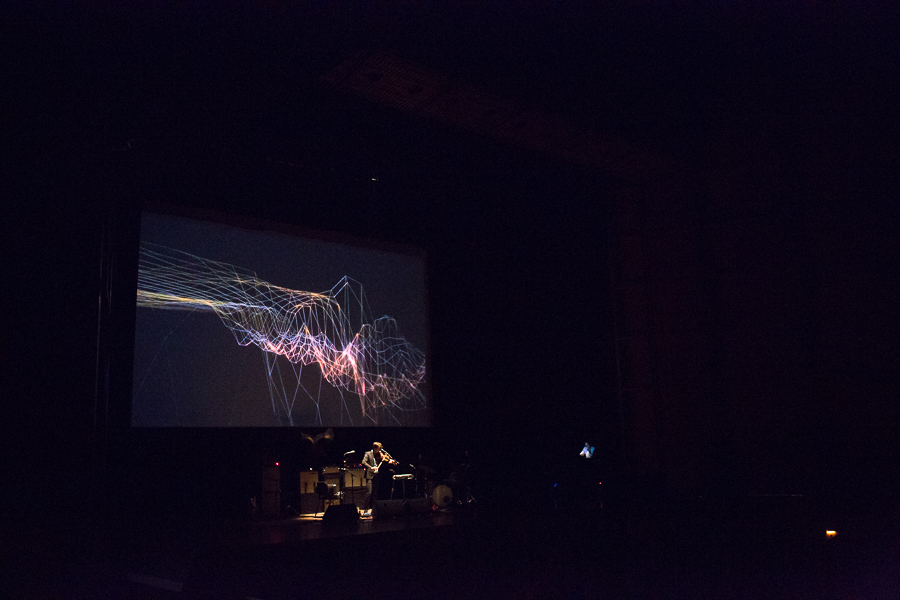
A series of short films were projected behind Bird as he played. The films, titled “Echolocations,” consisted of Bird playing songs from his instrumental album of the same name in various locations such as the Los Angeles River and Coyote Gulch in Utah. The films combined real-time shots with scenes of a linear topographical map of the area in which Bird was playing, creating a psychedelic experience.

Bird, who played both guitar and violin during his set, is a man of many instruments. In addition, he consistently implemented whistling into his songs. His live performances emulate his studio work through his use of music looping. This allows him to start a plucking bass line, loop it, and add whistling, conventional violin or even guitar. This effect sets Bird apart from many other artists.

After establishing his solo presence, Bird invited out his band to play songs from his new album “Are You Serious.” Bird also brought out Jonathan Richman, a close friend and a famed songwriter. The two performed three acoustic songs together. With this new infusion of musicians, Bird upped the energy — and the crowd loved it.

Coupling his unique picking and classical violin skills with up-tempo drum beats and great bass, Bird captivated his audience for the next hour — only stopping to unplug and perform acoustically.

Much to the delight of the crowd, Bird capped off the night with an enlivened rendition of his hit single “Pulaski at Night.” The song injected new life into the onlookers, who implored Bird and his band to perform an encore. After the obligatory walk off stage, they happily returned with more music. In his final song of the night, Bird left the audience as he had first greeted them, with a picking of his violin.


Written by: Rowan O’Connell-Gates — arts@theaggie.org

Putting our minds to mental health

MENTAL HEALTH INITIATIVE / COURTESY

UC Davis Mental Health Conference sparks conversation, awareness

Earlier this year, UC Davis saw the conception of a new event on campus known as the Mental Health Conference. Spearheaded by Samantha Chiang, a former ASUCD senator, the conference turned out to be quite a hit, and this year it’s planning to be even bigger and better.

“This year […] it’s going to be a two-day conference instead [of one day like last year],” said Maria Bundang, a fourth-year psychology major and assistant to the deputy director of the Mental Health Initiative. “It’s January 20 and 21 and we’re going to be hosting a bunch of workshops again and have more panels of people to talk about [mental health].”

Bundang is part of the Mental Health Initiative, a movement that grew from the Mental Health Conference last January. The initiative is made up of a group of students passionate about bringing the platform of safety, communication and healing to the entire UC Davis campus.

“We want to make sure that physical pain isn’t the only thing being talked about, that people talk about mental illnesses and disorders,” said Shrishti Tyagi, a third-year biological sciences major and the team coordinator for the Mental Health Initiative. “We’re giving every student a space to come and talk.”

According to Tyagi, studies show that one in four college students actually goes through a type of mental disorder — therefore it’s a topic that more people should be talking about.

“Unfortunately it’s just not talked about, there’s still huge stigma around mental disorders,” Tyagi said. “So as a community, we want to make sure people feel safe, that they can come to us [or] to a counselor [or] their friends. [The Mental Health Initiative] is about making sure that we have a platform [to talk about mental health], so that people aren’t suffering alone.”

Bundang, who plans to pursue a career in clinical psychology, pointed out that rates of depression and anxiety have been increasing over the past few decades.

“A lot of people tend to come into college either having had mental illness problems, or [are experiencing] the onset of it,” Bundang said. “And whether it’s having something really severe or just having trouble navigating the system and getting tired and taking care of yourself, mental health is really important. [But] if you look at rates of seeking out help, they’re very low. People don’t even know what the resources are that we have on campus, so it’s important to have a conversation about it.”

Fourth-year biology and psychology double major Bhavya Panuganti spoke from experience, having noticed throughout her time at college that the challenges of schoolwork can take a toll on people’s mental states.

“I’m in a pre-health sorority, so everyone’s going to have a mental breakdown at some point with their classes being pre-health or pre-med,” Panuganti said. “I always tell them they can come talk to me, and I know people [they] can go talk to. It gets overwhelming, I’ve been there, I’ve needed to ask for help. [I] don’t want anyone to ever feel alone.”

Panuganti has also watched friends from her South Asian community keep quiet about the mental health struggles they’ve faced in the past. She’s been a team member for the Mental Health Initiative for two years now and wants to make a change in the way people think and talk about mental health.

“Mental health is stigmatized a certain way, but I feel like it’s especially stigmatized in South Asian communities where people don’t talk about it,” Panuganti said. “I’ve experienced it with my friends who […] have actually had to go through mental health illnesses and did not want to tell their parents, [which was] ultimately worse for them because they weren’t getting help.”

This is part of the mission of the initiative — to spark conversations and raise awareness on the importance of mental health, especially in college student populations. This year’s Mental Health Conference will feature panelists and guest speakers to discuss all topics related to mental health awareness.

But the Mental Health Initiative offers more resources than the conference in January. It is also responsible for an entire month’s worth of workshops centered around healing, understanding and self care in May, which is the national month of mental health awareness.

“Every single day [in May] we have multiple workshops,” Tyagi said. “There’s the LGBTQ workshops and there’s just workshops oriented toward women. We’re trying to incorporate and make it more inclusive for the male-identifying gender as well, because we realize there’s not enough talk for them. There’s [also] ‘knowing your rights’ [and] healing workshops. You can do Question, Persuade and Refer training, which is suicide prevention, and mental health awareness training, which is open to anyone.”

While the Mental Health Initiative may be a new group on campus, it is bringing positive awareness to a topic that affects many students at UC Davis through the Mental Health Conference. The team members of the initiative hope to see mental health become a normalized conversation in the future, something that anyone can talk about intelligently and comfortably.

“There [are] so many workshops happening, a lot of people are actually learning about the student health and counseling center,” Tyagi said. “We’re reaching out to freshman and making sure that they’re aware of [mental health], so that if ever in the future they need to go to [counseling], they can. It’s really motivating to see that people are talking about mental health.”


Written by: Marlys Jeane — features@theaggie.org

Keeping the Arboretum healthy

0

A look at the effort to re-engineer the Arboretum’s waterway
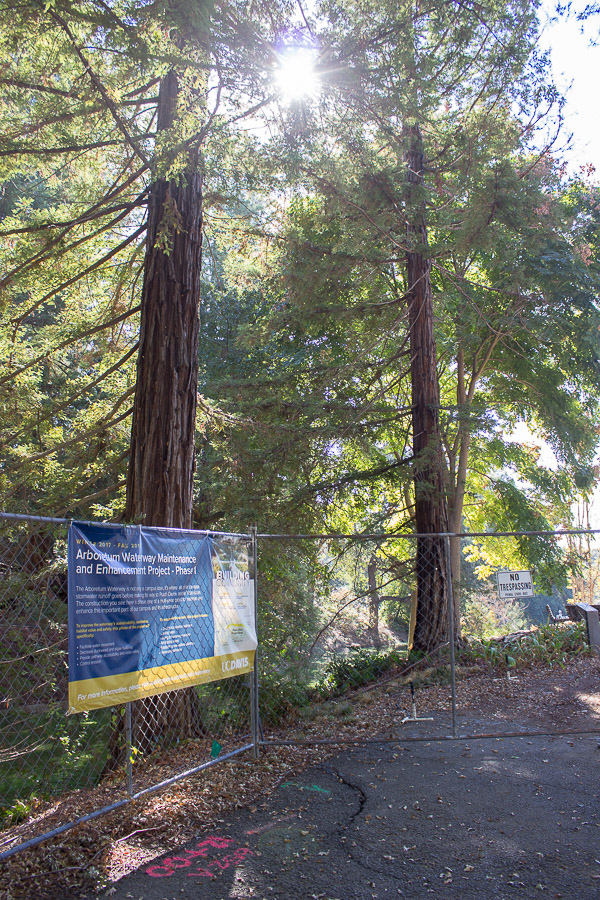
The UC Davis Arboretum’s diversity of trees, plant and animal life has made it a favorite place for community members and students alike to escape. However, the Arboretum’s calmness was partially inconvenienced when its eastern portion, from the Wyatt Deck to its eastern end, was fenced off, drained and dredged last spring. This was the beginning of the first phase in a multi-year Arboretum Waterway Maintenance and Enhancement Project.

Every 20 years, the waterway is dredged to remove sediment deposits, but the current project also includes additional measures intended to keep the many habitats in the Arboretum healthier by re-engineering the water’s flow. For years, algae and duckweed have thrived in the low-oxygen levels of the stagnant waterway, but architectural modifications to the waterway aim to solve this problem.

“By introducing flow into what had been a stagnant system, we are creating new conditions where mats of algae can’t form,” said Andrew Fulks, the assistant director of the UC Davis Arboretum. “[Algae] like stagnant water, so we are removing the stagnation. By drawing from water at Lake Spafford and pumping it to the east end of the waterway, we are pulling water with higher oxygen and keeping it circulating through the system.”

According to the Waterway Project’s website, this new flow will be accomplished by installing pumps and creating water level gradients. Since the campus stormwater system drains into the Arboretum waterway, sediment accumulation is a constant issue, but the increasing flow will simplify waterway management in the future.

“We incorporated some design elements in anticipation of future removal needs […] that would allow us to flush sediment and organics to Lake Spafford,” Fulks said. “I suppose we’ll see if we helped matters in 20 years.”

In the meantime, new water and vegetation management strategies will be developed to ensure that the Arboretum’s habitats remain healthy after this drastic alteration of the channel.

“I think we’ll have to figure out how best to manage flow rates, and how to manage weeds that will grow on the banks,” Fulks said. “Now, we’re going to be growing emergent marsh plants, but that will also mean weeds will come in as well. That’s probably the biggest challenge I foresee.”

As Fulks said, each section of the Arboretum presents its own unique management and construction-access challenges throughout the project.

“On the east end, the paths are close to the water so you can’t let the water get too high,” Fulks said. “In the Redwood Grove you don’t have a lot of sunlight, so you have to find wetland plants that can handle shade. Lake Spafford is more like an urban pond, so the vegetation needs to look more manicured […] Adaptive management is key.”

Even with these known challenges, Fulks and the management team are continually learning how to adapt and better prepare for future phases.

As the sustainability and aesthetics of the Arboretum are improved, the Waterway Project has also opened up new involvement opportunities for students.

“Now, with Nina Suzuki as our waterway steward, we have the Waterway Internship,” Fulks said. “Students learn how to monitor water quality, [do] habitat enhancement plantings along the banks, come up with outreach programs and [work] with faculty on studies.”

The Waterway Stewardship is a three hour per week internship that gives students hands-on water management and habitat restoration experience.

“The Learning by Leading Waterway Stewardship [student] team is learning about urban watershed management and will soon be planting thousands of native sedges and rushes on the banks of the Phase 1 project area,” Suzuki said. “With active management, we can transform the Arboretum Waterway into a campus amenity that complements the beauty and educational value of the plant collections, increases water quality and supports native wildlife and plants.”

Giving students these opportunities to engage in maintaining the Arboretum’s many habitats ensures that the park will remain a vital escape to find inspiration and serenity. Despite the construction going on in the park, students are still able to relax in this part of campus and explore different activities.

“I think that painting in nature can sometimes yield a lot more variety than just buildings or still lifes that we set up,” said Emily Clark-Kramer, a graduate student in the Art Department who took her painting class outside to paint in the Arboretum. “Because you’re painting outside everything is constantly changing. Having to deal with constantly changing shadows and light provides a different type of painting experience that I think is valuable.”

The array of easels perched on the grass above Lake Spafford is emblematic of that unique blend of tranquility and invigoration that nature can stir in people. As the Waterway Project progresses, this generation’s stewardship of the park will allow its beauty to be enjoyed by generations to come.


Written by: Benjamin Porter — features@theaggie.org

Yolo Food Bank works to alleviate hunger

ALEXA FONTANILLA / AGGIE

The Walmart Foundation provides Yolo Food Bank with grant

The Yolo Food Bank has started a county-wide food drive. The food drive has just received a $25,000 grant from the Walmart Foundation, and the food bank continues to reach out to other nonprofits to provide healthy food for those in need.

Zane Hatfield, an agency relations coordinator for the Yolo Food Bank, described the organization’s goals and mission.

“Our organization is about ending hunger and malnutrition in Yolo County,” Hatfield said. “We have several direct services where we give foods for free at certain times. We also work with several nonprofit workers, and we received the Walmart grant because it was available through Feeding America and they have corporate partnerships with entities like Walmart. We saw that the grant was available, and we applied for $25,000.”

As one of the coordinators for the food drive, Hatfield elaborated on how his work helps contribute to this organization. The program has benefited a diverse group of people who are unable to provide themselves with proper nutrition.

“I am the agency relations coordinator, so I work with all our nonprofit partners,” Hatfield said. “Some of them include family resource centers and nonprofit organizations contracted with the county to work with youth and fostering, along with rehabilitation programs and low income after-school programs.”

The program is constantly trying to improve its food quality because health is a crucial part of one’s diet. Grants like Walmart’s will help alleviate the financial cost of providing healthy foods.

“So we have our programs that we are currently developing; we just expanded a fresh produce program that is distributed twice a month, and we expanded it to the rural parts of Yolo County where people may not have access to grocery stores,” Hatfield said. “We are also close to renovating the building, which will increase our capacity to find new and creative ways to package foods brought in from the farms.”

Kevin Sanchez, a campaign and project director, explained his role at the food bank and the organization’s upcoming events.

“I was charged with trying to build the capacity of a food bank to strengthen its image within the community,” Sanchez said. “We are building out the warehouse we have now into the food bank of the future — as we like to think of it — to serve the community for the next 20 to 25 years with this new facility.”

The food bank, with the help of funding, will broaden its scope to provide the best possible foods for those who really need it.

“We hope to expand from a passive, charitable organization to a more proactive and sustainable model,” Sanchez said.

Linda Zablotny-Hurst, a director of development for the organization, explained how the Walmart grant will impact the community.

“Walmart has several different grant or giving opportunities,” Zablotny-Hurst said. “Not all grants are going to be in interested in food security or nutrition […] one of [Walmart’s focus] areas was on health and nutrition for children. We have our kids’ farmers markets, for example, and we are exploring funding for those programs, so we wrote for a grant asking for money from them to help support the kids’ farmers markets.”

Not only does the food bank have to consider the amount of food it gives out, it must also make sure the food it receives helps benefit the community as much as possible.

“We’re always looking for ways to serve our clients better to help them get healthy and nutritious foods,” Zablotny-Hurst said. “In the last few years, our focus has been increasing the amount of fresh produce we make available. In the next few years, we hope to keep increasing that amount. We are also pursuing […] a way to renew our food drive. Instead of accepting all types of food, we will be concentrating on 12 to 15 items that are particularly nutritious and needed, like canned tuna, peanut butter, fruits, vegetables [and] beans.”

The Yolo Food Bank offers many people a chance at finding themselves again amid difficult situations.

“Helping people really gives purpose to my life, and I think we need more compassion in the world to help people to at least level the playing field so they have the opportunity to get a better life,” Zablotny-Hurst said. “Getting people food is the most basic need […] which can allow them to concentrate on getting a better job or being engaged in their kid’s school. When you don’t have to worry about where your next meal comes from, you can then turn your attention to doing a lot of other things that help make your life better.”


Written by: Stella Tran — city@theaggie.org