55.7 F
Davis

Davis, California

Monday, December 22, 2025
Home Blog Page 588

History Department holds “Ask A Historian” forum

TAYLOR LAPOINT / AGGIE

In response Charlottesville riots, seven professors engage in discourse with students

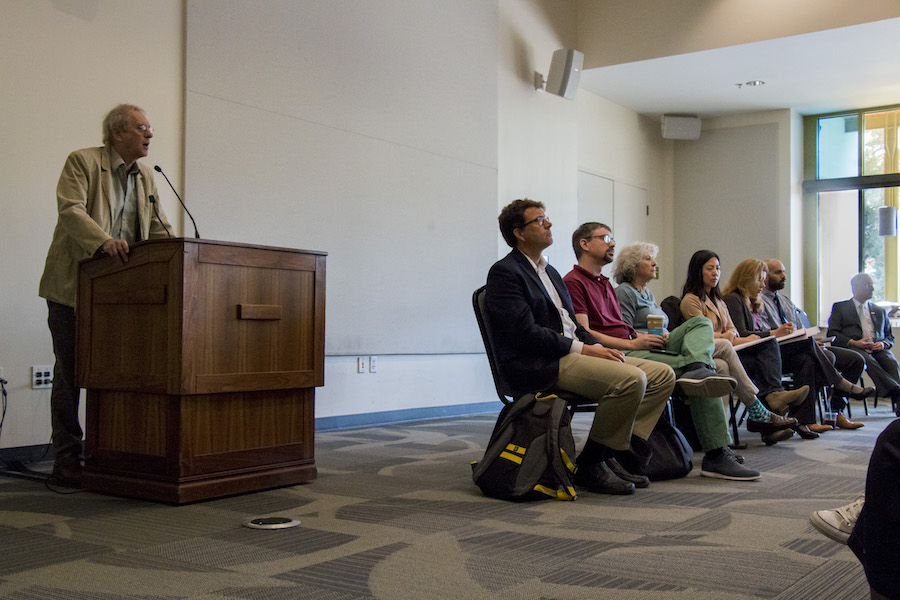
On Oct. 18, the UC Davis History Department hosted the event “Ask A Historian,” a forum in the multipurpose room of the Student Community Center. Seven professors from the department volunteered to deliver five-minute speeches on issues related to the white nationalist rallies that occurred in August in Charlottesville, Va. After the speeches, the presenters participated in group discussions with students and community members in attendance to further explore the ideas presented.

“We decided pretty early on that we didn’t want to do the ‘stand up and lecture’ mode,” said Sally McKee, a UC Davis history professor and an event coordinator. “We wanted to engage with students and talk to them. We wanted to make it a […] small group experience so that students feel like they’re really talking to faculty rather than just receiving what faculty has to say.”

Provost and Vice Chancellor Ralph Hexter reached out for a response from the Department of History following the demonstrations of white nationalism in Virginia and President Trump’s lack of immediate condemnation. According to Hexter, the purpose of the “Ask A Historian” event was to create student-led discourse on how “history, even in the distant past, affects us today.” On the day of the event, attendees filled in each seat of the multipurpose room as Hexter introduced the speakers.

The forum kicked off with David Biale, a professor of Jewish studies, who touched on the presence of fascism in the United States and its traces in the country’s past. He offered his opinion that a group of neo-Nazis rallying in Virginia isn’t the sudden reappearance of fascist ideas in this country.

“There’s a tendency we have [to think] about ourselves as an enlightened country,” Biale said. “I think it’s really important for us to be aware of the dark chapters in our own history.”

Current political disputes, such as the controversy over preserving Confederate statues, were discussed by history professor Gregory Downs. An analysis into the hatred of minorities throughout history was discussed by history professor Susan Miller.

Conversations over the government’s treatment of refugees and Mexican immigrants were also addressed and then explored further in group discussions following the talks. Groups were composed of small clusters of roughly 10 individuals, including at least one of the speaking professors.

“I think the number of students that came shows that there are a lot of students interested in these questions,” Downs said. “My hope is that there are a range of ways that students are working out to talk to each other.”

McKee also said she was pleasantly surprised by the turnout and hopes to see more opportunities for peaceful dialogue between students and faculty in the future.

Biale, Downs, Miller and McKee all spoke to the importance of meaningful communication with students in a time when hatred toward minorities and the mishandling of history has become increasingly prominent.

Faculty members involved made themselves available to answer ideological questions in a way a classroom setting might otherwise not have provided.

“Professors in my day were not interactive,” Miller said. “Having this kind of open discussion where students and faculty are at least accessible to each other was really, very special.”

The four professors also stated their observations about the willingness of students to approach and condemn racism, xenophobia and white nationalism.

“This is the way we send a message that the university and its students are taking all these issues very seriously and are going to resist,” Miller said. “We want to give them the tools so that they can go out and debate.”


Written by: Elizabeth Mercado — campus@theaggie.org
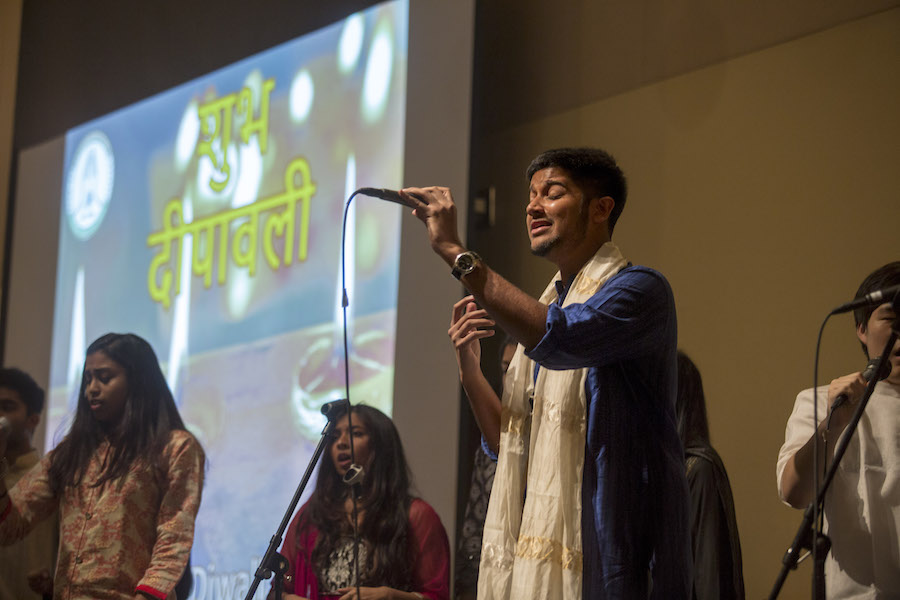
UC Davis Indian Graduate Student Association hosts Diwali Night

DIANA LI / AGGIE

Annual Diwali festivities light up the ARC

On Oct. 21, the UC Davis Indian Graduate Student Association kicked Diwali festivities into high gear when it brought the vibrant colors and luminosity of the Indian festival of lights to the ARC Ballroom.

According to IGSA’s website, the organization caters to the “Indian and Indophile population at UC Davis.” Plant science professor Sham S. Goyal started the organization in the 1980s with the goal of bringing the Indian community closer and celebrating its culture.

Diwali, or Deepavali, is an extremely significant and widely observed event in India and many Indian communities globally. This Hindu-originated event is marked by the lighting of diyas, or clay lamps, to celebrate the triumph of good over evil.

IGSA President Satyabrata Sarangi, a fourth-year Ph.D. student in electrical and computer engineering, detailed the extensive planning behind this popular event.

“We started our preparation around August,” Sarangi said. “I submitted the application on Aug. 5, and then it took a month for overall approval [since] we had to talk to [the] venue and food [catering]. We have our IGSA board meeting every week, […] so we started to think about who to invite. We thought [to] invite some of the renowned artists from [the] surrounding areas, […such as] LA and [the] Bay Area.”

Preethi Indian Cuisine provided catering for the event, which included boxes filled with spicy chana masala, a chickpea curry, vegetable korma, a coconut-based mixed vegetable curry and vegetable biryani, a mixed rice dish.

“This is Diwali, so people love to eat good food,” Sarangi said.

The lineup for the evening totaled nine acts — Sunatya, Rita Sahai Ji and her accompanists, the IGSA Girls Dance Group, Ayal Vishnitzer, the Mona Khan Dance Academy and Bombay Jam, Miran Solanki and the GSM Dance Group.

As the melody of Ed Sheeran’s “Shape of You” flooded through the speakers, audience members looked around, bewildered at the relationship between the famous pop star and the Indian festival. However, their confusion was short-lived as Sunatya’s performance included a fusion of the beats and style of classical Indian dance, Bharatnatyam. The group was followed by Rita Sahai Ji, accompanied by the tabla — a South Asian drum — and sitar, an Indian string instrument.

Jhankaar, UC Davis’ only co-ed South Asian a cappella group, gave a performance that had the audience clapping along. The group fuses Bollywood music with South Asian and Western music.

“We are an a capella team, so basically all the sounds that we make are all vocal,” said Kirthana Srikanth, Jhankaar’s co-captain and a fourth-year neurobiology, physiology and behavior major. “We have no instruments [on stage], and we just come together, compose and produce the music ourselves and compete around.”

Srikanth and co-captain Daivik Dinesh, a third-year computer science and engineering major, both said performing was a “great experience” and emphasized the responsiveness of the crowd to their act.

Members of the Mona Khan Dance Academy and Bombay Jam, marked by their colorful sashes and gregarious personalities, provided a different interpretation on the typical Hindi movie dance moves. The group of women soon had the stage overflowing with people after inviting audience members to participate in a demo filled with a medley of popular remixed Hindi songs.

Ayal Vishnitzer, a Los Angeles-based composer, treated the audience to an eclectic performance on the electric guitar. The renowned musician performed for the first time here at UC Davis and was met with an enthusiastic round of applause.

“The initial goal was [to] invite some of the performers to perform some Indian dance or Indian music, and then we thought of [going] toward the Western [side of] things, so we invited Ayal,” Sarangi said.

Toward the end of the lineup, solo artist and current UC Davis student Miran Solanki, a third-year design and computer science double major, sang three well-known Hindi music songs.

I performed at a number of […] other IGSA events before,” Solanki said. “[The audience members] were amazing. They all came to support, and I knew a lot of them, so it was great to see everybody having a great time. The highlight for me [was] the last song where I saw people clapping and dancing.”

Sarangi said that overall, the event was a success based on positive feedback from the audience.

“We had a feedback form [which] everyone submitted […and] most of the people liked the event,” Sarangi said. “There [were] some […] technical glitches with the sound, […] but otherwise [the audience] was super happy with the performances, and it was a variety of performances.”

The IGSA hosts Diwali Night annually and plans to hold next year’s event in early October 2018. Its next major event, Holi, the Indian festival of colors, will take place in early March 2018.


Written by: Priyanka Shreedar — campus@theaggie.org

Guest: UC Davis remains silent in wake of anti-Semitic sermon

BRIAN LANDRY / AGGIE

The school fails to address hate speech directed at Jewish students

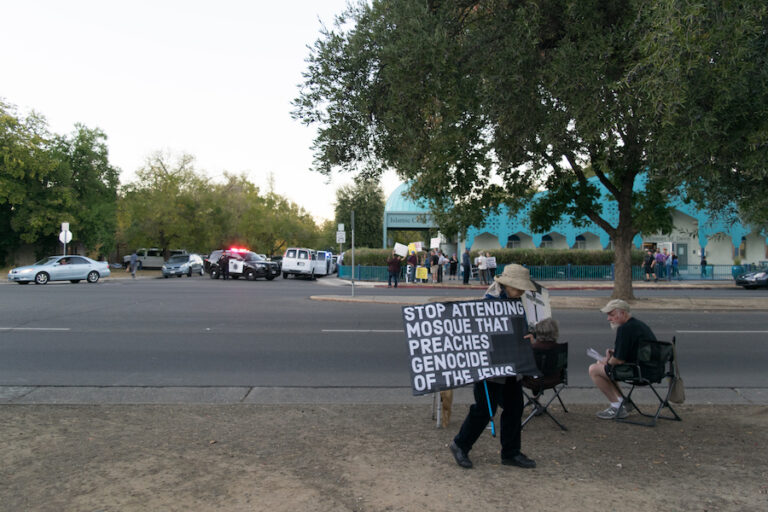
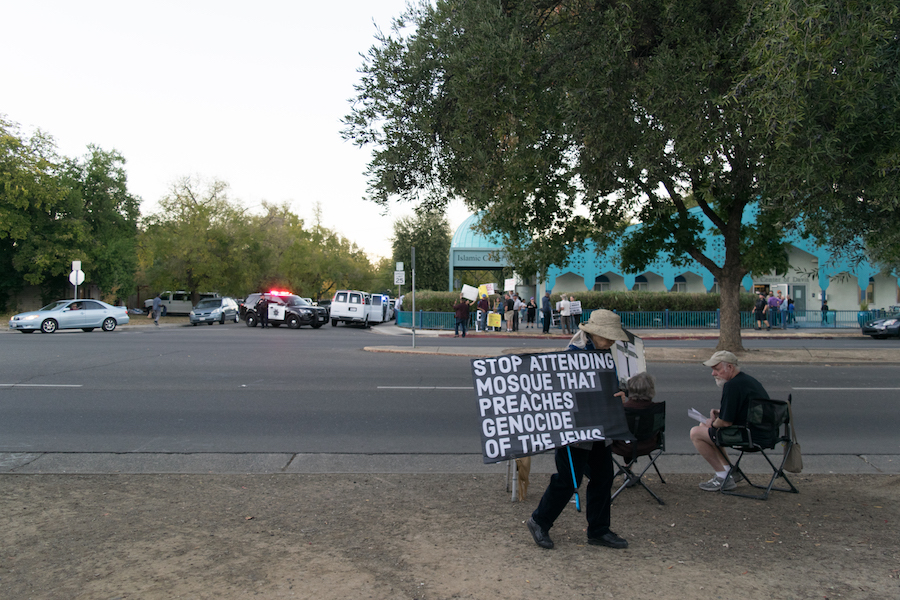
On July 14 and 21, Imam Ammar Shahin from the Islamic Center of Davis gave anti-Semitic sermons praying for the annihilation of the Jews. The anti-Semitic rhetoric began on the 14th, talking about the events that occurred at the Al-Aqsa Mosque in Jerusalem and how the “wicked Jews” are prohibiting prayer at the Mosque. He went on to say, “Oh Allah, count them one by one and destroy them down to the very last one. Do not spare any of them. Oh Allah, destroy them and do not spare their young or their elderly. Oh Allah, turn Jerusalem and Palestine into a graveyard for the Jews.”

The hatred and anger toward the Jews didn’t stop there. In his next sermon on July 21, he continued: “Judgement day will not come until the Muslims fight the Jews.” Throughout his speech, he prayed for Allah to “count them [the Jews] one by one and annihilate them down to the very last one, do not spare any of them … Let us play a part in this. Oh Allah, let us show in words and in deeds.” There are no clearer words to imply the death of Jews than the words Imam Shahin proclaimed on this day.

As a Jewish student, I have seen my fair share of anti-Semitic actions on campus. I’ve had foul and intolerable words yelled at me while I’m studying because I had a sticker of Israel on my laptop. When Arab-Israeli Diplomat George Deek came to speak on campus, anti-Semitic students shouted, “Death to Jews” at my friends and me. I’ve known Jewish students who are afraid to speak up in class against anti-Semitic professors because they’re afraid of what might happen to their academic reputations. I’ve seen the clear and blatant anti-Zionist newspaper clippings that were in Hart Hall for at least two years, even after multiple complaints by Davis Faculty for Israel and Aggies for Israel.

What I haven’t seen is an open statement from the school about any of these events, let alone the events that happened on July 14 and July 21. I’ve yet to receive an email from the Chancellor showing his deepest sorrows regarding the Imam’s sermon. This lack of concern and condemnation against hate speech from the university makes us students feel as if the community and school do not recognize our issues and the struggles that we as Jewish students face on campus. But what’s more frustrating is that, due to the lack of exposure and punishment for these acts, other students don’t know what happened. They’re blind, not only to the harassment of Jews and Israelis during my tenure at Davis, but also to the Imam’s sermon.

When the Islamic Center was vandalized, Jewish organizations wrote letters to the Center expressing their deepest sorrows and condemning any acts of violence. In another effort to show their condolences and solidarity, Sigma Alpha Epsilon Pi, a Jewish interest sorority, delivered cookies and pastries to Epsilon Alpha Sigma, the Arab sorority on campus. Interim Chancellor Hexter sent an eloquent message to the community stating, “We want to express the disgust, outrage, and sadness we feel over this incident. We know that it has caused, and continues to cause, great distress and fear among members of the Muslim communities at UC Davis and in the City of Davis. We extend to both our deep sympathy and unwavering support.” This was just a brief portion of the email that was sent to all Davis students. None of these actions were reciprocated to our community when words of hatred were thrown at us.

Despite the silence by the administration, those of us who deem it necessary to expose the hate that has been expressed against Jews on our campus have shared these traumatic experiences with others. Many students have wondered, upon hearing Imam Shahin’s statements, why they are only just now hearing about them, and were angered by the school administration’s silence. Hate should not be accepted by any person or any community. Now, more than ever, we have to stand with one another, regardless if they’re Jewish, Muslim, pro-Israel, pro-Palestine, gay, transgender, black, Hispanic or white. A person is a human, and that should mean something.


Written by: Charline Delkhah

CAMERA Fellow and Aggies for Israel Vice President


Disclaimer: The views and opinions expressed by individual columnists belong to the columnists alone and do not necessarily indicate the views and opinions held by The California Aggie.

Humor: Amazon to offer same-day delivery on books, pencils, will to live

CAITLYN SAMPLEY / AGGIE

Amazon becomes the saving grace of the quarter system.

Amazon has been upping its game lately, whether it’s through buying Whole Foods (RIP) or, more recently, becoming the Superman for sad quarter system boyz everywhere. Yes, you heard it here first: Amazon is offering same-day delivery on a will to live.

Everyone was dazzled when the announcement was made. Even those weird little buttons that you can have in your home to press when you run out of toilet paper mid-“making a deposit in the porcelain bank” are going to be offered this new product.

“Gee-whiz!” second-year Penny Wiseman said. “I used to have to order my wills to live on eBay, and you really never know what you’re going to get from them. One time they sent me a will for thrill, and then I wound up at Six Flags instead of at my midterm. You live and you learn.”

UC Davis thankfully has a partnership with Amazon, as noted by the Amazon lockers scattered across campus. Students can get their boxes of wills to live right at the MU.

“I ordered a jumbo box the day of my O-Chem midterm,” second-year Pete Zaria said. “I used two of them beforehand and then just went ham on the rest after I took it. Thanks, Amazon!”

Some alumni are not as pleased with this new speedy method of obtaining a will to live. They find it is the epitome of Millennial privilege.

“Back in my day, you had to earn your will to live,” alumnus Harold Oldman said. “I’d walk 42 miles once a week to get my wills fresh from the factory. Sometimes I’d have to go for weeks without a will to live when the bills were slim, but that was life in the old-time years! You’re all weak, little kitty-cats now! Argh!”

There are several different types of wills to live available online today. “Hey, I got into UC Davis, so I must be doing decently” and “College is a social construct” are some examples, but the most popular is “Thanksgiving break is near, so let’s just hold on tight and prepare for impact.”

“Honestly, Amazon is leading this nation down a better path than any president could,” Melania Trump said, as she ordered seven wills to live to last her until December.


Written by: Olivia Luchini — ocluchini@ucdavis.edu

(This article is humor and/or satire, and its content is purely fictional. The story and the names of “sources” are fictionalized.)

Alleviating food insecurity

HANNAH LEE / AGGIE

Donate time, money, food to those in need

As cold weather and the holiday season approach, The Editorial Board asks that UC Davis students, faculty and community members consider donating food and other essential items to those who need them most.

Davis has a 15 percent hunger rate, according to an official in Yolo County’s Department of Health and Human Services. This is a massive number made all the more relevant due to the fact that UC Davis students comprise roughly half of the city’s population.

This is not a new problem for the city of Davis; university, city and county programs have been established in previous years to push back against food insecurity.

One such program is the Holiday Food Drive hosted by UC Davis Mail Services. This program will run through Friday, Nov. 17 and is an opportunity for ASUCD units to donate food — canned or otherwise — to the Yolo Food Bank.

ASUCD units exist to serve the UC Davis community, and The Editorial Board calls for each organization to participate in this effort. No donation is too small, and every contribution has the potential to help. A list of suggested foods and items to donate is available here.

On an individual level, there are other ways for UC Davis students to get involved. One such opportunity is to donate meal swipes to the ASUCD Pantry, Aggie Meal Share or the Yolo Food Bank. During the 2016-2017 academic year, donations to the UC Davis Swipe Out Hunger program totaled over $30,000 and were used to purchase food and other necessities for those in need. Dollar amounts via Aggie Cash, cash or credit card are also accepted at any location operated by Student Housing and Dining Services. This drive will take place during the second half of the month, from Nov. 15 to 30.

If financial donations are not feasible, volunteer opportunities take many forms, and there is a place for anyone who wishes to give their time to the community.

More than 35,000 people experience food insecurity in Yolo County, according to the Yolo Food Bank. If participating in donation drives or volunteer events helps to alleviate that number, even for a moment, then the effort is worth it.

The Editorial Board knows that not everyone at UC Davis is able to donate, which is why it is even more important for those who are able to do so. We have no doubt that the Davis community will come together to contribute to a secure, meaningful and inclusive holiday season. A collective movement of small efforts, no matter the time of year, can have a large impact on others’ lives and situations.


Written By: The Editorial Board

Perspective in Politics: Muhammad Ali, racial separation and diversity

TULLIO SABA

How Ali’s views still exist in today’s multicultural society

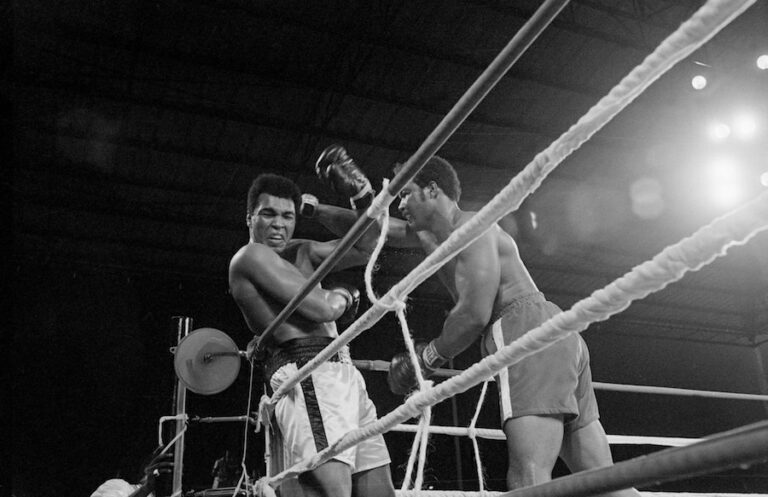
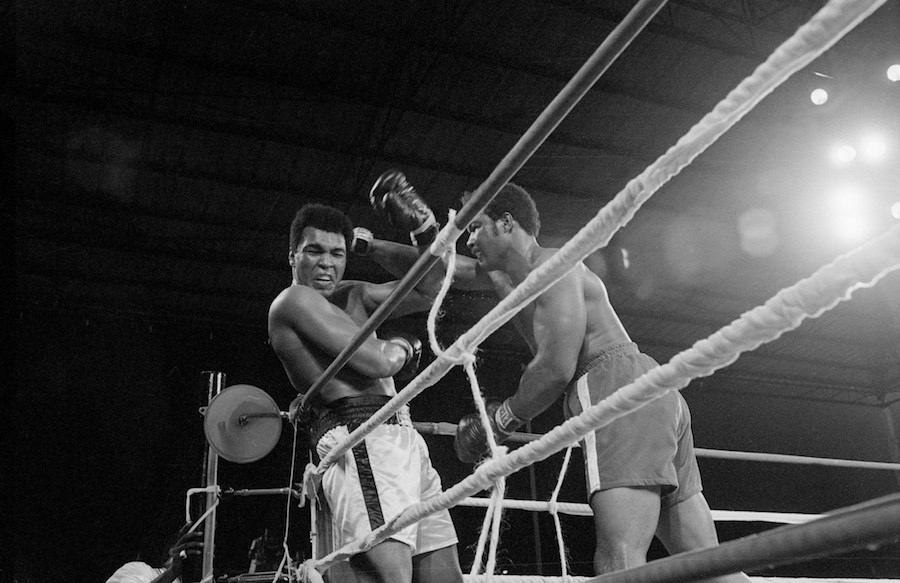
Muhammad Ali is known for his achievements and actions both inside and outside of the boxing ring. What he said outside of the ring remains the most criticized part of his life. With his fame, Ali chose to publicize and fight for his views. These views often derive from his mentor Malcolm X, who is well known for his advocacy in the 1960s.
In the 1970s, Ali’s views changed significantly. He stopped advocating for racial separation, instead encouraging people to come together. But he will forever be remembered for his more controversial views, since they have had the most influence on modern political thought.

Ali was a polarizing figure known for his confrontational attitude against racial integration and white domination while at the same time supporting black separatism.

Ali’s views mostly derived from his foundational belief in the natural separation of the races. In an interview, Ali said, “There ain’t nothing wrong with being with your own kind. What’s wrong with me wanting to be with my kind?” In a modern context, his views would receive a lot less praise than they did over 50 years ago.

His words seem to go against the now prevailing narrative of diversity, which consistently advocates for people of different races and ethnicities to live together. This coexistence, to the many people who believe in multiculturalism, is the best method in ending racism.

We may wonder how Ali could be fighting against racism and white dominance if he advocated for voluntary separation of different races. To clarify, he was against racial integration, which entails the coexisting and inclusive nature of modern multicultural society. Cultural differences are celebrated, maintaining the belief that people can live peacefully with one another.

Being against integration, Ali favored what Malcolm X called racial separation, which is now associated with white nationalists who want to create their own state in the potato fields of Idaho. Ali’s perspective lay in the belief that putting people of different races together didn’t work. He ultimately believed that, if people voluntarily separated themselves from each other and worked to achieve self-sufficiency and self-empowerment, it would solve the problem of racism. This type of society based on black pride does not particularly require any participation from sympathetic white liberals.

With the current emphasis on multiculturalism, this type of language is not necessarily unacceptable, but often considered irrational and impulsive. In the moment we are now in in the United States, it’s clear that having a desire to live exclusively with your “own people” is now often considered intolerant and unintelligent.

Yet people still question the extent to which Ali’s racial views have been absorbed in the context of today’s multicultural society. We may also wonder how Ali and Malcolm X became symbols of black liberation from white oppression through voluntary racial separation by the same people who advocate for diversity.

Many of Ali’s and Malcolm X’s ideas still exist in spirit within the ideology of diversity. This may sound contradictory, but modern society does not eliminate racial distinctions. Race is firmly entrenched in our multicultural society. Rather than being color-blind and treating everyone equally, modern advocates for diversity make sure that racial distinctions are noted. The clear differentiations between races are then used as a means of creating inclusivity and tackling racism. Although these views are not directly associated with physical racial separation, they are connected very much to Ali’s belief in maintaining strong distinctions in culture, identity and skin color.

Instead of using these racial distinctions to separate people, multiculturalists hope that people can come together through proper understanding of racial issues. This includes understanding who are the oppressed and who is the oppressor and understanding why racial prejudices exist and how they have come about.

Created in this understanding of the world are differentiations between the oppressed, allies, oppressors and race traitors, terms we now often use in our daily language. It’s not uncommon to hear arguments that there have been 400 years of white oppression or that racial color-blindness is a form of racism. That is why there is still a debate over whether white liberals can be treated as allies in the social justice movement. Opinions are divided over whether they can help in the struggle against oppression.  

The people today who are advocating for multiculturalism may not be trying to advance a society physically separated by race, but in spirit they maintain many of Ali’s ideas that race should be distinguished and recognized.


Written by: Justin Chau — jtchau@ucdavis.edu

Disclaimer: The views and opinions expressed by individual columnists belong to the columnists alone and do not necessarily indicate the views and opinions held by The California Aggie.

San Francisco Giants infield reporter Amy Gutierrez comes to UC Davis

0
ZACK ZOLMER / AGGIE

UC Davis alumna speaks to students about career

NBC Bay Area sports reporter Amy Gutierrez, better known as Amy G., returned to her alma mater, UC Davis, to talk with students about her life and career on Friday, Oct. 27. Gutierrez is a sideline reporter and covers the San Francisco Giants. She is also the author of the Smarty Marty children’s book series and owns a social media business that helps Petaluma business owners navigate their social media accounts.

In the Art Annex, students of all majors, some decked out in their San Francisco Giants gear, had an open discussion with Gutierrez about how she got to where she is today. Gutierrez gave advice and shared personal stories as she spoke.

“I came to see Amy G. because I am from San Francisco and I grew up there my whole life, so I have been an SF Giants fan for a really long time,” said Deborah Kagan, a third-year communication major. “I always see Amy G. on their social media platforms, as well as the news, and I think what she does is really cool. Being a communications major, seeing the many opportunities out there is interesting to me because I can shape my career in the direction I pick. Amy G.’s career path was so great to learn about.”

The event didn’t just attract communications or athletics-related majors with an interest in following Gutierrez’s footsteps. Gutierrez also drew in students who admired her because she is one of the faces of the San Francisco Giants.

“When I heard that Amy G. was coming, I was so excited.” said Ruth Garcia-Espino, a second-year political science major. “I always see her from a distance at the Giants games and the only time she was close to my seat, she was live on camera so I didn’t bother calling her over. My family and I are huge Giants fans and we have followed the team for years. I actually found out through my mother, who is an alumna, that she was coming. I quickly adjusted my schedule and put the date on my calendar.”

Gutierrez graduated from UC Davis in 1995 with a B.A. in communication. A Bay Area native, Gutierrez chose to attend UC Davis because it reminded her of home. At UC Davis, she had the opportunity cultivate her passion for television. She participated in the UCDC program and interned for CNN in Washington, D.C.

“I just really liked how I felt when I was here,” Gutierrez said. “I had the opportunity to play volleyball here, and honestly at that time, I did think about television. My mom will tell you how I used to play pretend news anchor in my room.”

Gutierrez just finished her 10th season and 11th year as an ingame reporter for NBC Sports Bay Area, but getting to this point in her career did not come easy or quickly.

JEREMY DANG / AGGIE

Before receiving an offer from Larry Baer, the chief executive officer of the San Francisco Giants, to cover the team, Gutierrez had worked retail, moved multiple times and worked for KFTY Santa Rosa, NBC, Fox News L.A., and then NBC Sports Bay Area, all in producer roles. Her new position as an ingame reporter allowed Gutierrez to combine all of her skills.

Gutierrez reminisced about her favorite interviews to date.

“For so many years, I have said Jonathan Sánchez’s 2009 no-hitter [was my favorite interview],” Gutierrez said. “It was my favorite for so long because of the elements surrounding it. Most people do not know that Jonathan Sánchez was given that start as a final try to see if they were going to keep in the rotation; he was having a horrible season. His father flew in from Puerto Rico. He had never seen his son play in a Major League game and then watched him throw a no-hitter. And he ended up being an absolute hero. That moment launched his forever success as a Giant and it was my first milestone interview.”

“But I think I’ve trumped [the Jonathan Sánchez interview] with Matt Cain this year,” Gutierrez said. “[It] was one of the most emotional interviews I’ve ever conducted. Matt does not show emotion often, so to watch him be that vulnerable and tender about how he felt about the perfect game and the people around him… I thought he was exceptional in his reflection about that game.”

Gutierrez also addressed issues that women face in the sports broadcasting field.

“[There is] the pressure to be perfect in your delivery,” Gutierrez said. “I do not have the room for error. There is not a margin of error for me. I have enough respect now that if I mess up, I mess up, but it’s social media that crushes you. If I make the same mistake as a man, if I say the wrong name, I am crushed. That’s the issue we’re still tackling. That is where I would like to see it be more equal.”

She also discussed the issues that many professional women face: being a working mother. Because of the long hours that her career demands, Gutierrez prioritizes being there for her children and chose to write her series of “Smarty Marty” books as a way to stay connected to her family and children, who inspired the characters in the books.

“My philosophy on balance as a working mother is you better really love what you do,” Gutierrez said. “Because you have to leave the most precious people in your life to go do it. And there is nothing worse than them holding your leg when you’re trying to get to work. [But they] saw that I loved what I do. It is being present, being in the moment.”

The struggles and issues that a lot of women, Gutierrez said, face in the workplace resonated with the students and faculty at the event.

“She is so inspiring to me because she is a woman in a career where men dominate,” Garcia-Espino said. “Not only that, but she is also a wife and mother off of the field. With Amy G. being an alumni of UC Davis and in a career that is so fulfilling, this makes me feel like with hard work I can aspire to achieve my dreams even if I am a woman.”

Gutierrez ended the event by answering the question that is currently at the forefront of every baseball fan’s mind: who is going to win the 2017 World Series?

“I actually think the Dodgers are going to win,” Gutierrez said, much to the displeasure of the Giants fans in the room. “But I would like Houston to win for their community. It’s going to be a great series.”


Written by: Liz Jacobson — sports@theaggie.org


Golden Horseshoe comes home

0
WAYNE TILCOCK / AGGIEPHOTO.COM

UC Davis football defeats Cal Poly 31-28 on homecoming weekend

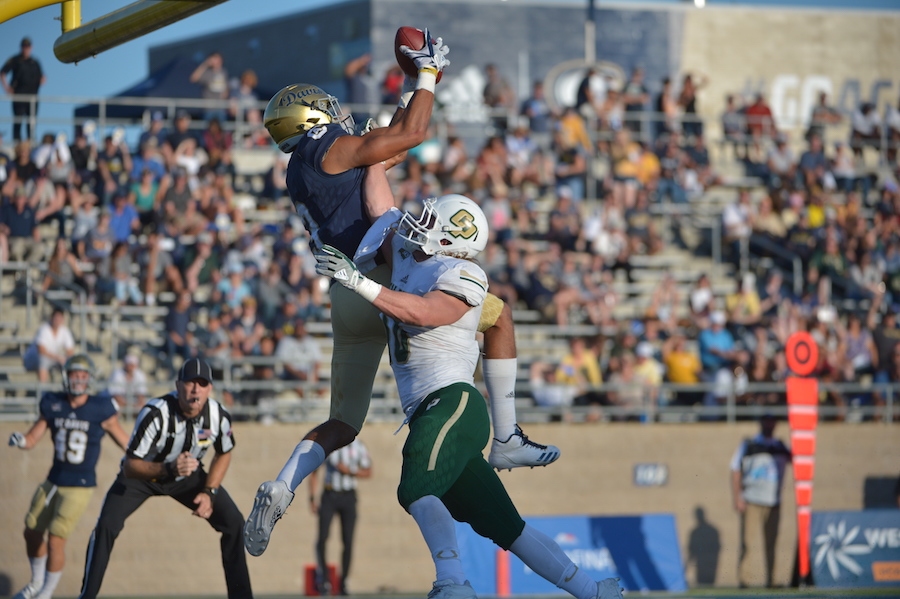
In front of the fourth-largest crowd in Aggie Stadium history, the UC Davis football team battled past the winless Cal Poly Mustangs, 31-28. The Aggie offense hummed early and the defense was able to fend off a late Cal Poly surge, securing UC Davis’ fourth win on the season. After losing to Cal Poly in each of the last two seasons, the Aggie victory also meant that UC Davis won back the Golden Horseshoe –– the rivalry trophy given to the winner of the UC Davis-Cal Poly clash each year.

The game kicked off in the middle of an unusually warm October afternoon. But the temperature did not interfere with the UC Davis offense, which found the endzone on each of its first three possessions. In fact, the Aggies scored on just the third play from scrimmage, when sophomore quarterback Jake Maier completed a 24-yard pass to his wide-open sophomore tight end, Wesley Preece. Maier found Preece streaking up the seam again, off a similar play-action fake, on the next UC Davis possession. The 28-yard hookup completed a two-play drive and was Preece’s second touchdown on the afternoon, putting the Aggies up 14-0 after only three minutes of play. Preece finished with five catches for 96 yards, garnering praise from head coach Dan Hawkins.

“[Maier] has got a couple guys here that he can really go to,” Hawkins said. “And he knows that he can count on [Preece] to really make a play. He’s a really solid blocker as well and we missed him last week. He’s a good blocker on the edge and a big, tall target and he’s very reliable with his hands. We’ve been fortunate to have a lot of guys play in the National Football League that have played for us, and this guy is as good as those guys for sure. He’ll be another one.”

It took a third UC Davis score for the Mustangs to finally awaken. On the Aggies’ third possession, sophomore wideout Aaron Moore caught a ball from Maier on a hitch route, shook off his defender and dashed 50 yards down the sideline to the house. The Mustangs responded three drives later, completing a deep pass play to set the offense up on the UC Davis one yard line. Cal Poly ran the ball into the end zone two plays later, cutting the Aggie lead to 14 at the end of the first quarter. Cal Poly would score again on its next drive, as senior slotback Kyle Lewis caught a pass over the middle, broke away from a pair of missed tackles by UC Davis defenders and finished the 42-yard score.

After two straight punts, the UC Davis offense scored on a six play, 59 yard drive. Maier completed the drive when he tossed his fourth touchdown pass of the game, dropping a lofted ball in between defenders to allow Moore to make a diving, 30-yard touchdown grab.

“It’s funny cause sometimes the best plays in a game aren’t exactly how you draw them up,” Maier explained. “It’s just playmakers making plays. That’s something that Aaron Moore is really, really special at. He makes some of the most unbelievable plays I’ve ever seen, in practice and out here he puts on a showcase every now and then. That’s just me trusting him.”

A fumble on the next Cal Poly possession set up a 31-yard field goal from sophomore kicker Max O’Rourke, giving the Aggies a 31-14 lead. Facing this 17-point deficit, the Mustangs decided to start pounding the UC Davis defense with their misdirection running game. Cal Poly ran the ball on 13 of its 14 plays on its next drive, but again ended up coughing up the football –– this time on the UC Davis nine yard line. This second Mustang turnover preserved UC Davis’ lead going into the break, but the Aggies had an opportunity to add to their lead just before the half. Maier, staying aggressive as he often does, tried to force the ball downfield on the Aggies’ next possession, but was picked off in the endzone by a Cal Poly defender.

At the outset of the contest, UC Davis looked as if it was going to run away with the game. But the Aggies’ 21-point lead slowly evaporated as the game progressed, especially in the game’s second half.

Cal Poly opened the third quarter with a seven play, 75-yard drive that culminated in the team’s third touchdown. Just two plays later, Maier threw his second interception of the game and momentum really looked to be tilting in Cal Poly’s direction. The UC Davis defense, however, quickly shut down the next Mustang possession, forcing a punt after three plays.

The Aggies then drove 87 yards on their next drive, sparked by another big catch-and-run by Moore, who juked defenders and sprinted down to the Cal Poly eight yard line for a gain of 56. But UC Davis would come away with no points on this possession, as the team failed to convert on fourth and goal from two yards out instead of electing for the short field goal try.

This third quarter drive would be the last genuine scoring opportunity for UC Davis, as Cal Poly’s defense tightened up for the remainder of the contest. The Mustang offense continued to play tough as well. On their ensuing drive, the Mustangs looked as if they were going to be forced to punt backed up in their own end, but a 15-yard unsportsmanlike conduct penalty by the UC Davis defense kept the Cal Poly drive alive. The fresh start allowed the Mustangs to mount a 17-play, 99-yard drive that spanned into the final frame. Cal Poly’s senior fullback, Jared Mohamed, rumbled his way into the endzone from 12 yards out to cap the drive and make it a 31-28 ballgame with 14 minutes to play.

While the UC Davis offense struggled to move the ball in the fourth quarter, it was the defense that kept the Aggies ahead. The Aggies stopped the Cal Poly offense on downs in each of the Mustangs’ final two possessions. Pass break-ups from junior defensive back Isiah Olave and senior defensive back Keleen Culberson were key in halting Cal Poly’s attempts to at least tie the game. It took a fair amount of drama –– perhaps more than expected –– but the Aggies walked off the field Saturday night with the win. While acknowledging that this was not his team’s cleanest game, Hawkins was satisfied with the victory.

“I was really happy that we were able to win and learn, instead of lose and learn,” Hawkins said. “There are lessons always from every game. It’s not an art contest. At the end of the day, we scored more points than they did and that’s kind of what we were trying to do. It’s been awhile since we got it done against those guys, so I’m just happy for the seniors to go out on a positive note that way.”

Junior wideout Keelan Doss, despite not scoring, finished the game with a team-leading 14 catches for 145 yards, putting him over 1,000 yards on the season. His fellow receiver, Moore, had a career-high 159 yards and two TDs. Maier completed 33 of 43 passes for a UC Davis Big Sky-era record 459 yards. On the defensive side, senior linebacker Ryan Bua also set a Big Sky-era record with 16 total tackles.

“I just want to say, about those 16 tackles,” Bua said. “Some guy’s job is to sacrifice and take on a double team or submarine the blocks, so there’s a lot of sacrifice that goes into that.”

Currently ranked eighth in the Big Sky with a conference record of 2-3, UC Davis has some ground to cover in its final three games if it wants to move up in the standings. The Aggies will travel to Idaho State next Saturday and then return home for senior night against Southern Utah on Nov. 11. The kickoff for this final home game is set for 4 p.m.


Written by: Dominic Faria — sports@theaggie.org

Sports writer Brendan Ogburn contributed reporting.


Men’s water polo grounds the Sunbirds

0
ANH-TRAM BUI / AGGIE

Aggies extend winning streak to eight in final home game

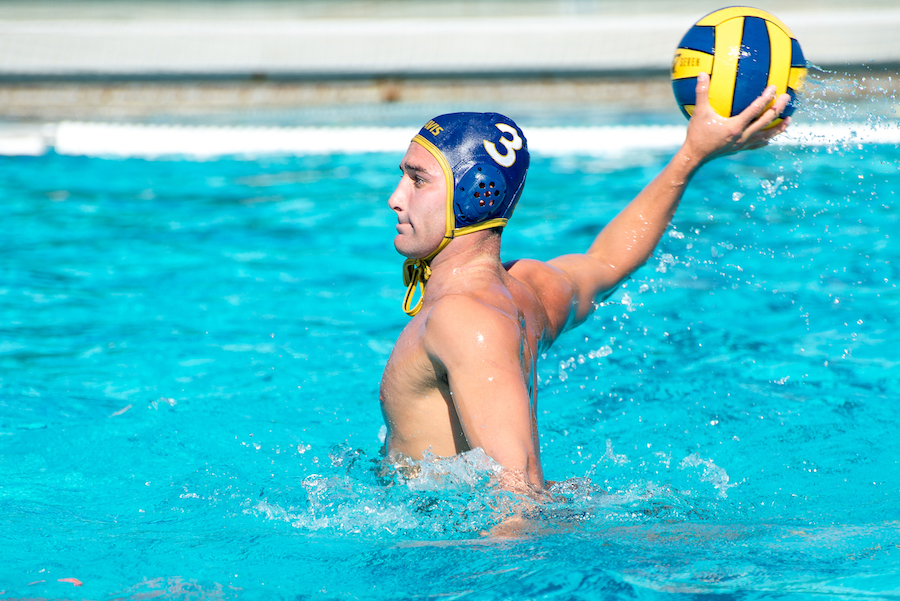
Coming into its final home game against Fresno Pacific University, the UC Davis men’s water polo team was hoping to extend its seven game winning-streak as it headed into its final three games on the road before the Western Water Polo Association Championship. With the extra motivation of senior day and a large crowd behind them, the Aggies responded with a flurry, scoring 24 goals while allowing just two. It was an emotional day at the pool, especially for the seniors, as this would be the last time they performed in front of their home crowd. Head coach Dan Leyson heaped praise on to his team, acknowledging the heavy hearts.


“It’s a sentimental day,” Leysen said. “On one hand it’s great — the victory today was great — on the other hand I’m really going to miss these guys, so it’s a little bit — there’s kind of like some melancholy associated with it.”


That melancholy mood was not evident once the ball was dropped. The Aggies came out strong, and after four straight goals to kick off the first four minutes, the outcome was never in doubt. Sophomore center Eric Martel and junior attacker Marcus Anderson led the Aggies with three goals apiece, with Anderson recording a hat trick. It was overall a team effort, however, as six other Aggies scored multiple goals themselves. This sort of offensive domination is a welcome sight for first-year goalkeeper Jonah Addington, who split time in the goal with junior R.J. Quigley. Addington, who had three saves of his own, praised his team’s relentlessness in going after the other team’s goal, shooting the ball 38 times to get 24 goals.


“It makes things so much easier,” Addington said. “The game was flowing really well, and we were firing on all cylinders, so it was great.”


Though senior day is typically the final game for seniors such as center Morgan Olson-Fabbro, there’s still a possibility that the Aggies take their home pool one more time.


“Hopefully we can get one more if we can beat UOP and get that play-in game here,” Olson-Fabbro said. “But that’s looking a little far ahead.”


Senior day still added motivation for the Aggie team. Olson-Fabbro loved seeing the crowd fill up the stands and noted the benefits of having such a great support behind the team, noting that while it was bittersweet to know this could be the last time, it was a great way to close out the home season with such a dominant win.


“It’s always fun to play for a crowd, and play for people cheering you on,” Olson-Fabbro said. “It’s always a good time, and when you get a good crowd like that, you’ve kind of got to play up and perform well.”


Reflecting on his time playing with the seniors on his team, Addington praised his teammates for all their years of hard work and relentless attitude toward building a winning culture which would spread throughout the team.


“They’ve stuck through it four years — five years for some of the other cases,” Addington said. “They just come to practice, grind every day, put it all out there, and they’re just awesome guys.”


Despite all these festivities, and the sentimental goodbyes to their home crowd, the season is not over. The Aggies have three more games on the road before they head into the postseason, and Leyson hopes to build off their now eight-game winning streak going forward into the final three games of regular season, two of which are against their conference opponents.


“There’s always things we can get better at,” Leyson said. “Our goal is to win, and that’s what we want to do, and there’s a lot of things that we can work on.”


The Aggies will travel to Loyola Marymount today and will play at UC San Diego on Nov. 4.


Written by: Bradley Geiser — sports@theaggie.org

Sponsored research funding aids UC Davis in taking on major challenges

NIGEL WALKER / COURTESY

UC Davis receives $760 million in funding, allowing faculty to tackle some of world’s most pressing issues

Think about a world that identifies potential pandemics before they even occur, or a world where there’s a reduced risk of obesity. With $760 million in funding, programs like the multi-institutional PREDICT and the University of California CalFresh Nutrition Education Program might just make that a reality.

PREDICT contributes to global surveillance for zoonotic diseases, diseases that exist in animals but can infect humans.  Operating in 35 developing countries, it focuses on diseases emerging from wildlife.

“With additional funding, a global consortium could identify 99 percent of all high-consequence viruses in wildlife hosts that are most likely to carry the next pandemic so that we can characterize the ones most likely to become zoonotic,” said Jonna Mazet, a principal investigator and global director.  

This new initiative, called the Global Virome Project, would offer a proactive approach to potentially deadly viruses before an outbreak occurs.

Another major program tackling the challenges that come with helping people make dietary choices is the University of California CalFresh Nutrition Education Program.

“We’re funded to provide nutrition education for obesity prevention to help transform  low-income communities and individuals, to improve access to healthy foods, to reduce food insecurity, to increase physical activity and to reduce obesity,” said David Ginsburg, the director of UC CalFresh.

The funding will allow the program to reach even more communities and create a supported system of providers and buyers. The more accessible healthy food is for families, the more demand there is, helping growers and agricultural providers.

“We work in tandem with our state all the way down to the local level so we can really work on transforming the community,” said Andra Nicoli, a UC CalFresh program analyst.

Here’s to another year of UC Davis achieving success with creativity and ingenuity.


Written by: Kriti Varghese — science@theaggie.org

Sacramento Arts Festival celebrates 20th anniversary

KYLA ROUNDS / AGGIE

Festival to showcase variety of local art

Just in time for the holiday season, this year’s 20th annual Sacramento Arts Festival, with 225 vendors and over 15,000 original works, will feature a selection of elaborate and one-of-a-kind artworks, including jewelry, ceramics, clothing, furniture, woodworks, drawings, paintings, sculptures and photography. Artists come locally and from across the nation to showcase their talent and hardwork.

“People come by my booth and we just talk about travel and share that love,” said local photographer Darlene Riel. “My photos remind them of where they’ve been, which is really the reason why I do these shows.”

Riel has been showcasing her photography for over 30 years, participating in a variety of local art shows and events. Her work can be found in places such as Davis’ Avid Reader and the Auburn Old Town Gallery of Fine Art. Riel is also a retired employee of UC Davis, having worked at the UC Davis School of Veterinary Medicine as a registered veterinary technician for over 20 years.  

“The thing I’m most looking forward to is seeing the artists do well,” said Sacramento Arts Festival producer Warren Cook. “It’s hard to be an artist these days.”

Also featured at the festival will be local woodworker David Levy. Levy has been involved in woodworking for over 40 years and is no stranger to art shows. Throughout his career, Levy, who is based out of Woodland, has participated in many art festivals in Sacramento, Mill Valley, Sausalito and beyond.

“I like to make functional artwork that can be enjoyed in the home but also allow the person that buys it to be creative with it,” Levy said. “For example, the Trivet Susan set that I make allows the customer to create their own design.”

In addition to the various art booths at the event, the Sacramento Arts Festival will also feature live music and food of all kinds. Bands such as the GG Amos Blues Band and The Kurt Ribak Jazz Quartet will provide live entertainment for all visitors throughout the event. Attendees will also get a chance to participate in a raffle to win special works and prizes from the artists.  

The festival will take place from Nov. 3 to 5 at the Sacramento Convention Center. For ticket information, visit the festival’s website.


Written By: Sydney Odman and Josh Madrid — arts@theaggie.org


Processing pain inflicted by fires

0
JESSE STESHENKO

Northern California counties devastated by fires, UC Davis students affected

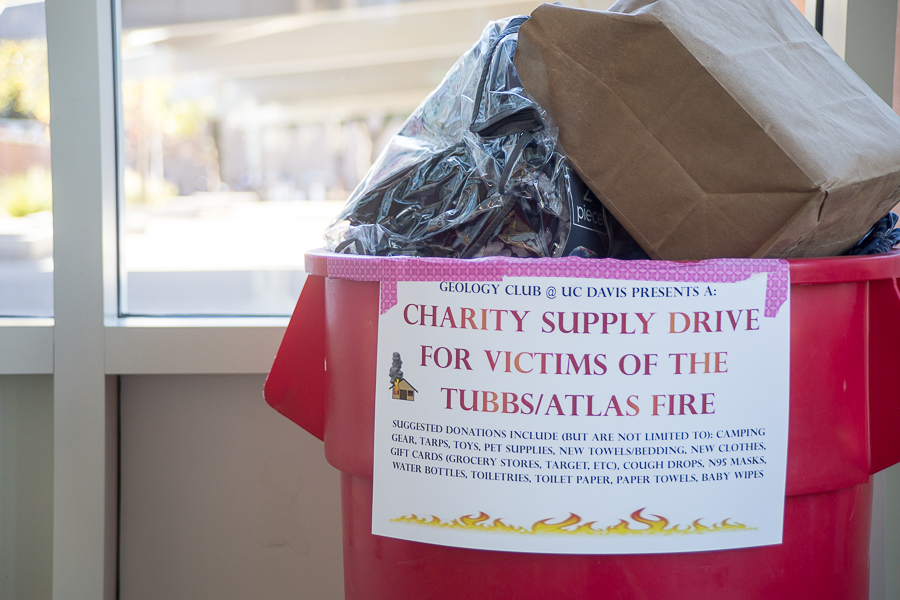
Quinlan Kezer, a third-year managerial economics major, was woken up to his mother’s frantic warning that there was a fire and they had to get out. He was forced to flee to Davis, leaving his family in Santa Rosa behind to cope on Monday after the fire began.

“We were out of control of the fire, but the fire was very in control of what it was doing,” Kezer said. “It looked like it was alive, it looked like it was methodically bouncing through a house, dropping the house and then moving to the next one. I mean, you could see the fire going from one house to the next, and in just a couple minutes it was studs or nothing, and it didn’t take long. And so it kind of looked like it was alive, like it was methodically just moving.”

The Northern California fires have ravaged much of Sonoma, Napa, Solano, Mendocino, Butte, Yuba, Nevada, Orange and Lake counties. These fires are different from previous California wildfires because of their unusual impact on suburban areas. UC Davis and City of Davis fire chief Nathan Trauernicht understands this impact.

“We’ve seen a lot of wild land fires in moderate to sparsely populated areas,” Trauernicht said. “What separates this one I think for most people was the amount of homes — the amount of homes, structures, commercial businesses. It’s been a long time since we’ve seen a fire get into a suburban area with the population density that this one did. And it’s pretty devastating.”

The devastation did not end at structures. As of October, the death toll from these fires stood at 42. UC Davis environmental science and policy professor Mark Schwartz works with management teams of national parks and forests to develop land management strategies that take into consideration climate change and wildfire risk. Schwartz’ research has lead him to speculate on the cause of the fire’s high death toll and its vast physical destruction.

“Certain amounts of changes in land use management in California have changed ecosystems such that they’re more likely to sustain high-temperature fires now than they were in the past,” Schwartz said. “Once that fire got going under [the] dramatic conditions, it [was] very, very difficult to stop that fire.”

Schwartz said he is surprised by the damage, since suburban areas do not burn easily, as they are not rich in fine fuels necessary for fire to spread. However, unusual conditions enabled the fire to spread rapidly, and Governor Jerry Brown declared states of emergency on Oct. 9, 10 and 17 for all of the affected counties. This led to increased support and resources from the state and country with the UC Davis Fire Department among those who contributed.

[The department worked] 36 hours straight because there just weren’t enough resources and the fire was moving so incredibly fast,” Trauernicht said. “The UC Davis fire department [is] a part of the California Mutual Aid System […] the concept of it is that whenever there’s a major disaster or a major fire somewhere in the state, other places in the state send resources knowing that someday, you may need them. So it’s kind of a reciprocal system of help and support.”

While most students can’t provide support on the front lines, Trauernicht encouraged the Davis community to donate to reputable organizations like the American Red Cross. As a student from the Sonoma County area, Kezer noted the consistent contributions from Redwood Credit Union’s fundraising effort to benefit Sonoma County.

Kezer, who was asleep at his childhood home near a devastated neighborhood of Santa Rosa on the night that the fires encroached, emphasized the importance of both monetary donations and communities for healing. Kezer actively initiated this kind of support system through his creation of a rideshare page on Facebook for students with families in the Santa Rosa area.

“[Students from Santa Rosa] could talk to each other and communicate and know that people are on the move, people are aware of what’s happening and they can at least care more than someone that might not be from the area could even potentially care,” Kezer said. “It was kind of just more or less a place where people could know they weren’t alone.”

While grassroots support systems like the rideshare page developed, UC Davis Student Affairs has resources for those seriously impacted by the fire, whether monetarily or emotionally. Evacuation centers also populate the affected counties where organizations like the American Red Cross are providing practical resources.

Kezer recounts driving by a major evacuation center in his hometown which was ridden with tents and the suffering of recent disaster.

“You could feel the emotion, you could feel the community coming together, which was really great,” Kezer said. “Then when you were in areas that weren’t really affected it felt so eerily normal […] I think everyone’s kind of doing what they can to help everyone else that was affected more so than they were, but you have to get back to work, you have to get back to school, you just kind of have to move forward.”

Erica Larson, a third-year managerial economics major, had returned to Davis from her home in Sonoma the day before the fires began and woke up Monday around 4 a.m. to a barrage of missed texts and calls.

“My house didn’t get hit or anything, but just from where they were there was a fire probably like half a mile away,” Larson said. “They could see it when they were evacuating.”

While the impact of the emergencies was inevitably felt in the counties affected, it is difficult to be as aware of the tragedy from a distance. Larson expressed being shocked by the normalcy of her Monday morning in Davis, a sentiment echoed by the sometimes isolated voices on Kezer’s rideshare page.

“It’s hard,” Larson said. “You don’t know how it feels and there’s nothing you can really do or say to give them back their house.”

This disconnect between bystanders and victims is mirrored by the experience of those from Northern California counties affected compared to the general UC Davis community. Kezer recounts returning to Davis the morning after the fires began. He went to class following a shift at work and expressed regret for his uncharacteristic behavior to colleagues, admitting he was distracted by the fires. They responded, to his surprise, with ignorance of the tragedy.

“I think everyone’s kind of doing what they can to help everyone else that was affected more so than they were, but you have to get back to work, you have to get back to school, you just kind of have to move forward,” Kezer said.

Although his memories of the fire and its devastation are haunting, Kezer believes that the community will rebuild itself. To aid in this, UC Davis has counseling available for students and professors are ready to alert crisis management teams on students in need of support. If the way in which local organizations, such as Larson’s sorority and Kezer’s rideshare page, have rallied together is any indication of the momentum toward change, counties will recover.


Written by: Stella Sappington — features@theaggie.org

Investiture of Chancellor Gary May kicks off Homecoming weekend

JESSE STESHENKO / AGGIE

Gary May confirmed as UC Davis chancellor at formal ceremony on Oct. 27

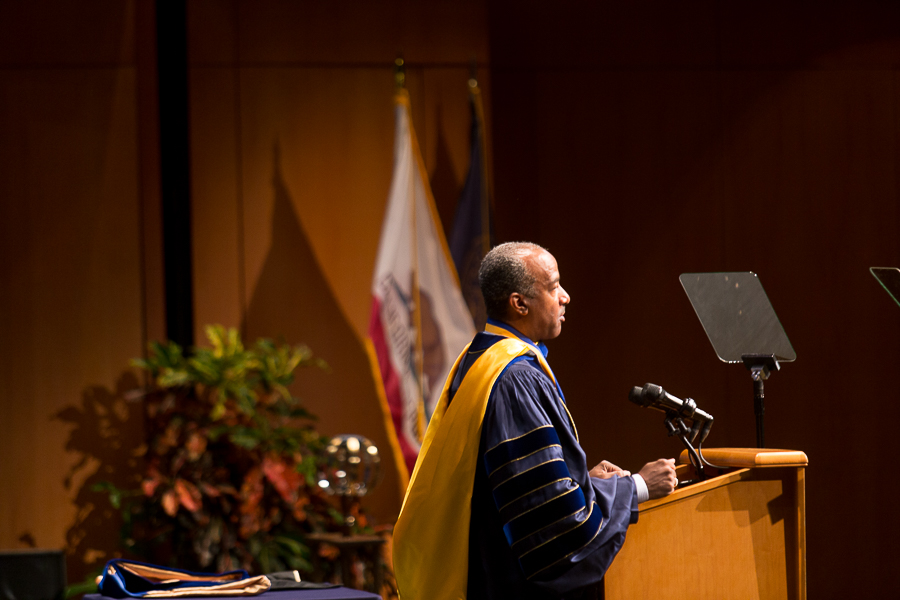
The Investiture of Gary May as the seventh chancellor of UC Davis took place on Oct. 27 in the Mondavi Center, the first event in UC Davis’ annual Homecoming weekend. The ceremony consisted of musical performances, speeches by UC community members and the presentation of the Chancellor’s Medal by UC President Janet Napolitano, officially inaugurating May into his new position. Speakers repeatedly mentioned May’s community and academic spirit, desire to promote diversity, sense of humor and, of course, his love of Star Trek.

Guests were welcomed into Jackson Hall by a musical prelude from the UC Davis Concert Band, which was followed by an academic procession of UC chancellors, regents, faculty representatives and other senior leaders. Andy Jones, a UC Davis writing professor and a two-time Davis poet laureate, was the master of ceremonies and presented opening remarks after the procession and national anthem.

“The investiture is a public recognition, an acknowledgement of the faith and confidence we have in a leader,” Jones said. “It bestows on that leader the official mantle and trust of the university. It instills as well our confidence and belief in the Office of the Chancellor, most specifically in Gary S. May as the new chancellor of UC Davis.”

George Kieffer, the Chair of the UC Regents, followed Jones’ remarks with a welcome speech that discussed the unofficial founding of UC Davis in 1906 and recognized how the university has become “the world’s preeminent university for agriculture, veterinary science and environmental sustainability.” He also emphasized May’s reputation for fostering diversity and advocating for the success of all students, which has the potential to influence the future of UC Davis and California as a whole.

A video presentation then reflected on May’s childhood, his background as an electrical engineer and former dean and his appreciation for his family. It also showcased May’s accomplishments at UC Davis thus far and highlighted his goals for the future, including plans to develop Aggie Square — a technology and innovation hub in Sacramento.

Next, UC Davis students, staff, faculty, alumni and other community members delivered remarks, wishing May well in his future as UC Davis chancellor. Speakers included ASUCD President Josh Dalavai, GSA President Roy Taggueg, UC Davis Staff Assembly Chair Kate Shasky, UC Davis Academic Senate Chair Rachael Goodhue and Cal Aggie Alumni Association President Debby Stegura. Each speaker expressed their confidence in May’s ability to work with their respective branches of the UC system and to help UC Davis grow.

“Chancellor May has already been a great partner to the Academic Senate,” Goodhue said. “His energy, his enthusiasm and his ambitions for UC Davis match the faculty’s own. He has brought to his first months an eagerness to learn and engage, which is essential to understanding the complexity and the depth of UC Davis and its impact on California and the world. In addition, Chancellor May recognizes that the story of UC Davis remains, in many ways, unwritten.”

Audience members also heard from May’s family — his wife LaShelle and daughters Simone and Jordan. LaShelle delivered a heartfelt letter to her husband in which she said “the bottom line is [that in] my very short time here at Davis I have realized this is a family community, and in my eyes, UC Davis is getting a remarkable family man.”

During the event, Fred Taverner, a board director of the Cal Aggie Alumni Association and a UC Davis alumnus, commented on his impression of May thus far.

“I met [May] yesterday and spoke with him about his projects during a meet-and-greet session,” Taverner said. “[May] is from Georgia Tech and turned around their College of Engineering there. I found him to be very personable [and] very intelligent, and I think he will be a good addition to this campus.”

G. Wayne Clough, May’s longtime friend and colleague from Georgia Tech, presented after the May family. Clough, the President Emeritus of Georgia Tech and former secretary of the Smithsonian Institution, said that May’s experiences in Georgia will help the him adapt to “opportunities and challenges” that UC Davis will face going forward.

Napolitano gave a short address before presenting May with the Chancellor’s Medal: “We are indeed fortunate to gain a chancellor whose accomplishments, breadth of academic and administrative experience and distinguished record of public service [will contribute] to the role of UC Davis chancellor.”

May’s inaugural address came directly after the presentation of the Chancellor’s Medal. He spent time thanking friends, family and colleagues from UC Davis and Georgia Tech for standing by him in his career. To recognize the support he has received throughout his life, May referenced a Southern saying that reads, “If you see a turtle on a fence post, it didn’t get there on its own.” The new chancellor also talked about his belief in a strong work ethic, the power of education and the importance of diversity.

“With diversity comes a wider and more interesting range of experiences, ideas, opinions and perceptions,” May said. “The greater the mix, the more likely we will make discoveries and solve problems — the hallmark of academic excellence.”

The address continued with May’s recognition of UC Davis’ world-renowned reputation and its potential for continued worldwide impact.

“I have heard many alumni and others describe Davis as kind of a ‘sleeping giant,’ a powerful institution that is yet to show the full extent of its power,” May said. “Well I’m here to tell you it’s time for this giant to wake up. Whether it’s our record fundraising, our record research expenditures, our athletics teams making campus history, our noteworthy achievements in scholarships or our overall ranking as a top-10 public research university, UC Davis is unmistakably on the rise.”

In closing, May delivered his slogan: “I am ready to help UC Davis go boldly, as no university has gone before.”

After May’s speech, attendees stood for the performance of the UC Alma Mater “Hail to California,” which was followed by the recession of the UC deans, chancellors, regents and senior leaders. Guests were then invited to a reception outside of Jackson Hall, where they could meet other attendees and UC Davis community members.

Jones’ words from the beginning of the ceremony summed up the Investiture’s common theme — “Chancellor May has made an immediate impact on our campus and on our region. His openness, his candor and his sense of humor have appealed to everyone he’s met.”


Written by: Olivia Rockeman — copy@theaggie.org

Last Week in Senate

HANNAH LEE / AGGIE

Two interim senators sworn in on Oct. 12

The ASUCD weekly Senate meeting was held in the Mee room of the Memorial Union on Oct. 12. With nine senators present, a quorum was established.

Two interim senators were confirmed — Michael Swalberg, a fifth-year political science major, and Manasa Gogineni, a first-year international relations major. Senators then asked the new interim senators questions. When asked about concrete plans for campus improvement, Swalberg said Chapter Four of the elections committee should be streamlined and bylaws should be made more clear. Gogineni said she plans to increase safe drinking information for first-years.

The interim senators then discussed how they plan to increase student outreach. When asked about actions they’re taking as part of their new positions, the interim senators said they have been reviewing bylaws.

ASUCD senators had no objections to the interim senators or their answers, and the two were confirmed after taking the official oath.

The platform was then opened to a member of the public.

Paul Medved, an alumnus and the father of a former student affected by water sports budget cuts, cited that former chancellor Linda Katehi removed four UC Davis sports teams that had no state funding to begin with. Since then, the budget for athletics has increased and Medved called for a re-institution of historically inexpensive water sports teams. Medved also urged for an independent audit on all student fees since 2010, claiming that $3 million had been illegally mishandled by Katehi from 2010 to 2012.

Medved, who has presented to the Senate four times in the past, questioned the integrity of this decision, claiming it was purposeful in order to allocate money for higher-earning UC Davis sports teams like men’s basketball and men’s football.

“It was a typical Katehi move, if I do say so myself,” Medved said. “Because of the high-profile nature of those sports, it was a great chance to increase the profile of the university, perfectly consistent with everything else she did as chancellor. I maintain that in no uncertain terms that’s fraud.”

Greg Ortiz, the promotions director for UC Davis Athletics, publicly spoke up and told the senators to always fact-check information they are presented with.

Next, the elections chair confirmation was held. Out of five applicants, Senator Julie Jung said Naeema Kaleem, the elections committee chair, was the strongest candidate due to her vast experience in student government. Senator Michael Gofman asked about her plans to increase voter turnout and, in response, Kaleem said she would focus on streamlining communication, stating that a media marketing committee could help.

After the confirmation, senators took part in a moment of silence for the victims of the California wildfires and other natural disasters that have affected other states.

Committee assignments were then given. Gofman was assigned to the Housing Task Force, Gogineni was assigned to the Food Security Task Force and Senator Rahi Suryawanshi was assigned to the Sexual Assault Awareness and Advocacy Committee.

The bylaws, which mandate attendance at the Fall Summit, were called into question due to low turnout. The summit, a meeting of ASUCD unit members and directors, commissioner and committee chairs and members as well as senators and other staffers, took place on Oct. 28. According to the agenda posted on the event’s Facebook page, the summit discussed matters related to hiring and payroll, presented an elections update from Kaleem and facilitated a session on writing bills, among other sessions and presentations.

Controller Jin Zhang argued that the bylaws were needed, saying “it’s a copout answer to drop a summit because of low attendance.” Other senators agreed that attending the summit was important as a brainstorming session to create new legislation.

No new legislation was introduced, leaving room for consideration of old legislation. Senate Bill #3 was first reconsidered, regarding the dissolvement of the Department of Outreach and Recruitment and transferring its duties to Creative Media — this unanimously passed.

Senate Bill #2, to establish an ASUCD controller, was unanimously passed. This bill also allows the ASUCD president to designate another individual to attend the meetings in their place.

Senate Bill # 4 to move the secretary of outreach’s salary into Creative Media was passed unanimously.


Written by: Aaron Liss — campus@theaggie.org


Pajamarino: a UC Davis tradition since 1912

TAYLOR LAPOINT / AGGIE

Celebration takes place on Oct. 27, brings downtown Davis to life before Homecoming football game

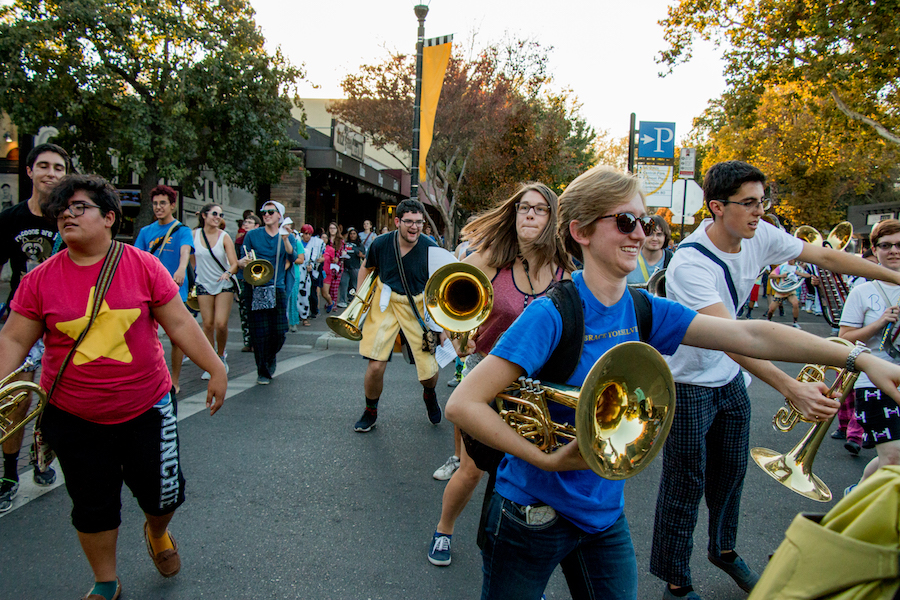
On the evening of Friday, Oct. 27, police blocked the roads of downtown Davis, loud chanting was heard in the distance and attention on Second Street was turned to the C Street intersection. A UC Davis fire truck pulled around the corner, and following behind was a massive, pajama-clad crowd — the ensemble was celebrating UC Davis’ annual Pajamarino.

Pajamarino is a UC Davis Homecoming tradition planned and executed by the Student Alumni Association. With over 500 people in attendance Friday night, the annual festivity has transformed since its inception in 1912.

“[105 years ago], the alumni were returning for the homecoming celebrations and a group of freshmen [snuck] out of their dorm rooms back when there was a curfew,” said Daniel Erenstein, the SAA traditions director and a third-year undeclared student in the College of Biological Sciences. “[They] met [alumni] at the train station in their pajamas, and, since then, the tradition has been carried on for over a century.”

UC Davis students, alumni, faculty and community members gathered in Central Park at 4:30 p.m. before the parade.

“[Pajamarino] bridges that gap between the Davis community and students,” said Samantha Teshima, the president of SAA and a third-year pharmaceutical chemistry major. “[It promotes] the fact that Davis is not just a college that [we] attend, […] it’s also the whole community as well.”

The Cal Aggie Marching Band-uh! and Alumni Band — decked out in pajamas — put on a show before the parade commenced at 5:15 p.m. The fire truck that led the parade carried the parade marshal, the current business manager of ASUCD, Janice Corbett, and Morgan Hashimoto, a student representative and the SAA vice president of outreach.

Upon arrival at the train station, the celebratory crowd was welcomed by UC Davis Chancellor Gary May and head football coach Dan Hawkins. Bakuhatsu Taiko Dan Club, the Popping Club and the Liquid Hotplates put on performances for the audience as the Sacramento train pulled in.

“I love Pajamarino and my kids love it too, because it’s getting to be part of the UC Davis spirit and [listen] to the Cal Aggie Marching Band and the Alumni Band,” said Janna Tolla, the Memorial Union director, who attended the event with her family. “That’s probably our favorite part, plus seeing the [student performances].”

As the pep rally came to a close, the packed crowd began to disperse into downtown Davis.

“[Pajamarino] has evolved into an event that celebrates the connections between alumni and students,” Erenstein said. “[It has turned] into an event that welcomes alumni back to our community and [bridges] connections between students and alumni while also celebrating homecoming and the football team and Aggie pride.”


Written by: Rodney Tompkins — rdtompkins@ucdavis.edu