
55.7 F
Davis

Davis, California

Tuesday, December 23, 2025
Home Blog Page 589

Keep national parks affordable

HANNAH LEE / AGGIE

Federal budget, not entrance fee, should cover increasing expenses

Recently, the National Park Service announced an increase in entrance fees at 17 of the most popular national parks including Yosemite, Yellowstone, Grand Canyon and Grand Teton National Parks. The proposed fees would be “$70 per vehicle, $50 per motorcycle, and $30 per person” from May to September — the busiest months of attendance. This fee increase would double the pre-existing fee per vehicle at places such as Grand Canyon and Yosemite National Parks and would triple the existing fees at others. At Grand Canyon National Park, for example, the price per cyclist would quintuple and the price per pedestrian would triple.

According to the NPS, the fee increase will result in an additional $70 million of “badly needed revenue for improvements to the aging infrastructure of national parks.” A record of 330 million people visited national parks in 2016 alone, a 7 percent increase from the previous record of 307 million visitors in 2015. Of the 417 park service sites, 118 have implemented an entrance fee. 80 percent of the revenue generated by these 118 parks is used for the maintenance of facilities, projects and general upkeep, while the other 20 percent is allocated toward the remaining park sites free for public use.

The Editorial Board recognizes the necessity of the currently-implemented entrance fees for the upkeep of America’s beloved national parks, as well as the importance of heightened fees to match inflation over time. The proposed fee increase, however, would exclude those who do not have the financial resources available and, in effect, privatize these 17 national parks for nearly half of the year.

The Obama administration increased the national park entrance fee in 2015 during the summer season from $20 to $30. At the same time, a new program was implemented that allowed for fourth-grade students and their families to visit national parks for free in an effort to promote exposure to the great outdoors. The Trump administration’s proposed fee, on the other hand, would discourage new visitors.

We take issue with the reasoning behind the fee increase, especially in light of Interior Secretary Ryan Zinke’s approval of the Trump administration’s proposed $1.6 billion budget cut to the Department of the Interior, which oversees the NPS. Zinke said, “This is what a balanced budget looks like” –– an ironic statement from someone asking park visitors, most of whom pay taxes, for an additional $70 million. It is the opinion of the Editorial Board that the majority of the funds needed to maintain park infrastructure should come internally, from the federal budget.

Additionally, the majority of the 17 national parks in question are located in the West — Sequoia, Kings Canyon, Yosemite and Joshua Tree National Parks are all located in California. For many UC students geographically situated near these national parks, a $70 fee per vehicle could be a deterrent.

A 30-day period has opened for the public to voice their opinions about the proposed fees on an online forum on the NPS website. The forum is accessible here and will close on Nov. 23 at 11:59 p.m. We urge community members to challenge this proposed fee hike to keep public lands accessible.


Written By: The Editorial Board

Addressing the controversies of “13 Reasons Why”

ALLYSON KO / AGGIE

Content about mental health and suicide shouldn’t be restricted just because it’s on TV

Coming to the end of 2017, it’s safe to say that almost everyone has seen or at least heard of the Netflix series “13 Reasons Why.” For those who don’t know, before the series was released, it was a book, published in 2007. The show was added to Netflix on March 31, 2017, and it was a popular subject of discussion on social media thereafter. Not even a month later, critics and mental health professionals were calling it dangerous, saying the series glorifies suicide.

The story focuses on the hardships of its main character, Hannah, who was suicidal. Real people have faced similar experiences, which can severely impact their mental states. It’s possible for mental illness to develop due to one specific conflict. There are issues with this aspect of the show that have been discussed in several articles.

We don’t get a feel for her internalization until she kills herself,” Dr. Victor Schwartz, the medical director of the JED Foundation, said in an NBC article detailing mental health experts’ objections to the show.

Although viewers may not get a clear statement from Hannah about feeling depressed or suicidal, they do see changes occur in her behavior and personality. In the beginning of the series, she’s a cheerful teenage girl. She’s smiling, laughing and enjoying life with her close friends. But as the series continues, we see a gradual change. Her facial expressions slowly drop so that she hardly ever smiles anymore. We watch her cry frequently, and we can see that she’s hurting.

Of course, we don’t get a straight answer from Hannah about how she’s truly feeling, but we don’t get a clear answer like that in real life, either. Mental illness isn’t something that can always be seen from an outsider’s perspective, but we can see signs that someone isn’t feeling like themselves. Their body language, their tone of voice and even the words they choose can all hint to those on the outside that something isn’t okay. Characters in “13 Reasons Why” could see that Hannah was hurting and being poorly treated — but no one thought to ask how she felt. This leads to the next controversial issue in the show.

When someone takes his or her own life, it’s no one else’s fault. Critics have issues with the fact that Hannah leaves behind tapes to be passed between the people who caused her pain. Experts say that this romanticizes suicide, giving the audience the idea that a person has the power to impact others’ mental health after death — merely out of revenge.

Hannah’s harsh language and angry tone pin the blame on other people, which isn’t the way to go about the issue. However, these tapes can also be interpreted as a death note — a way for Hannah to sincerely explain how the situation she was put in had a heavy impact on her life. With that said, suicide shouldn’t be looked at as the solution.

“We wanted it to be very clear that there is nothing, in any way, worthwhile about suicide,” said Brian Yorkey, the show’s creator.

Mental health professionals have also criticized Hannah’s death scene for being “taken too far” and being excessive for television. But her suicide isn’t meant to be easy to watch — nothing about mental illness is easy. The scene is not something to be taken lightly, and the reality of suicide shouldn’t be censored. No one deserves to die alone, in that amount of pain, and that’s what should be taken from the scene. The show reminds us that there are ways to prevent this decision from being made and that it’s important to pay attention to ourselves and the people around us.

The show’s story is meant to raise questions and open up the dialogue on many topics, including overall mental health. The comments it has received have been more on the negative side, and I think it’s because of stigma: how graphic the show is, and how this makes viewers uncomfortable. That uneasy feeling comes from growing up in an environment that avoids the topic of mental health in conversation. Look past the surface of the story, and dig deeper for what it’s trying to communicate.


Written by: Jolena Pacheco — mspacheco@ucdavis.edu

Disclaimer: The views and opinions expressed by individual columnists belong to the columnists alone and do not necessarily indicate the views and opinions held by The California Aggie.

History of Gunrock answers questions about mascot

0
ALEXA FONTANILLA / AGGIE

UC Davis agricultural legacy kept alive in mascot, community

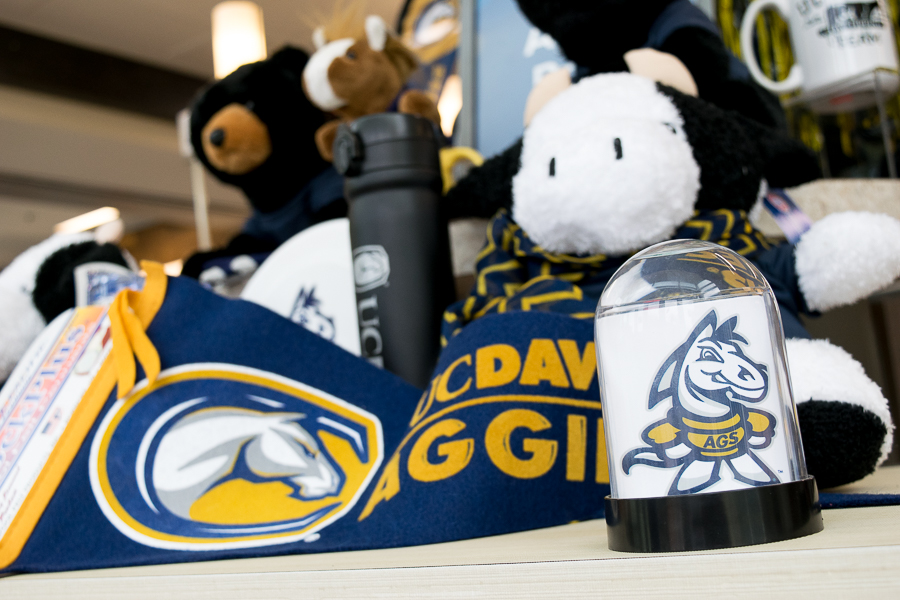
Go Aggies! Go Mustangs? Go Gunrock? The UC Davis mascot is Gunrock the Mustang, but UC Davis students and alumni are better known as Aggies. The California Aggie sat down with Athletics Marketing to figure out what exactly an Aggie is.

UC Davis was originally founded in 1905 as the University Farm, an extension of UC Berkeley. In 1959, UC Davis was declared by the Regents of the University of California as the 7th UC campus. In honor of its agricultural heritage, UC Davis students referred to themselves as Aggies. Gunrock the Mustang is also an homage to UC Davis’ rich agricultural history.

“It’s really confusing,” said third year psychology and political science double major and Athletics Marketing intern Kasey Carlson. “Everyone is always like, Go Aggies! But then they try to say, oh there’s the Aggie, and I’m like no, it’s actually Gunrock. Sorry, guys.”

Gunrock is named after an Army thoroughbred studhorse who arrived at UC Davis in 1921. Gunrock was the offspring of English Triple Crown winner Rock Sand and race mare Gunfire, making him royalty in the racing world. Gunrock made a lasting impact on California’s agriculture and veterinary advancements.

Gunrock died in 1932. To show respect and keep his legacy alive, the mascot for UC Davis was named and modeled after him.

Gunrock the mascot is a staple at all athletics and campus events. Unlike at other universities, there is no one designated person to be inside the Gunrock suit at every event. Anyone that is interested in checking it off their bucket list can reach out to the Mascot Coordinator and give it a shot. The only requirements are being taller than 5’2” and shorter than 6’3”.

And of course, anyone inside the suit needs to bring their outgoing Aggie spirit and get the crowds excited, which can be hard because being inside the suit takes a lot out of the person wearing it.

“It is extremely hot and sweaty,” Carlson said. “[It is] difficult to see and difficult to move around in because it has a lot of fake muscles.”

A few years back, Gunrock was more navy blue and lean, while the new Gunrock is more royal blue and sporting new muscles and a more aggressive grin. Some students think the new Gunrock is too scary, but most students like his makeover.

Even though the suit can be heavy and hard to maneuver in, those who have donned the Mustang costume have loved every feeling that comes with it.

“I was actually Gunrock for March Madness, so I got to go with the team to Ohio,” Carlson said. “That was just a really amazing experience. Being inside of the suit is really fun, especially when there’s kids around because they’re either absolutely terrified of you and want nothing to do with you or they’re super into it and they want to hug you, high five and play games with you. It’s just a fun experience because people don’t know it’s you, so you can kind of just do whatever and dance around. Gunrock has kind of a free pass, he can wander into any situation and people are excited.”


Written by: Liz Jacobson — sports@theaggie.org

Blade Runner sequel claims its own identity

JEREMY DANG / AGGIE

“2049” manages to escape from underneath its predecessor’s shadow

“Blade Runner” recently celebrated its 35th anniversary, still one of the more memorable ‘80s movies. Its defining aspect is design: “Blade Runner” is renowned for its spectacular sound and lighting. Its sequel, “Blade Runner 2049,” had big shoes to fill, but it managed well. “Blade Runner 2049” is a good movie, and it clearly took inspiration from the original (as any sequel should). To viewers’ relief, it didn’t try to emulate the design of “Blade Runner.” In short, “2049” pulled inspiration from the original, but it didn’t try to be the original. “2049” was not a regurgitation of the design of “Blade Runner,” but instead its own take on the semi-dystopian future of replicants.

A main difference between the two films is in its lighting. The original “Blade Runner” played with lighting on both small and large scales. On a small scale, there are umbrellas with glowstick-like handles that illuminate the user and a small portion of the world around them. On a large scale, there are dark shots punctuated by only a few long shafts of light that illuminate a small portion of the shot.

“Blade Runner 2049” plays with light in a similar way; it claims its own identity in the color palette. The original lives in a neo-noir-esque world of lighting. The shots are typically dark and deal with colors such as blue, green and, sometimes, dark violets. These colors and how they’re used help to create the desired eerie sci-fi, neo-noir feeling of “Blade Runner.”

At some points — especially in scenes dealing with Jared Leto’s character Niander Wallace — “2049” evokes that dark neo-noir feeling, but for much of the film stays away from it. Shots consist of much bolder colors: sharp purples, oranges and a larger presence of just plain white. This turns the overall feeling of “2049” toward sci-fi rather than neo-noir. These bold colors create a more vibrant world, which falls in line with the sci-fi genre differing from its predecessor’s tendency to move toward a neo-noir palette and lighting.

The score in “2049” is similarly noteworthy. The original’s score was developed by Greek composer Vangelis. It was predominantly sharp, loud and synthesized noises. The unique style of that score added to, as it was meant to, the strangeness of the movie — the absurdity of the sci-fi world. The score in “2049” has a large presence of synthesizer as well but includes much more percussion — a staple in most film scores. The addition of percussion changes the utility of the score. Instead of being used to highlight the absurdity of the movie’s world, it is used to foreshadow important events in the story. For example, in an action scene, the score crescendos parallel to action-building and swelling, then exploding as the action peaks. The scores gear the movies toward different genres. The stranger, more synthesized score of “Blade Runner” highlights the oddness of the setting, playing toward the sci-fi side of the original. The semi-synthesized score of “2049” foreshadows coming moments of action or discovery, playing toward the action side of the new film.

While the two films are sequential, they are not the same film. Hollywood tends to copy and resell movies and franchises. Take the “Star Wars” series, for example. “Force Awakens” hits the same notes, beat for beat, as “A New Hope.” The refreshing differences between “Blade Runner” and “Blade Runner 2049” makes them stand alone as their own movies. Sure, as with any sequel, there are similarities — as there should be. Nonetheless, “Blade Runner” and its successor “Blade Runner 2049” stand out as two different, but equally interesting films. Their unique styles make for two movies that will stand out for years to come.   


Written by: Nicolas Rago — arts@theaggie.org

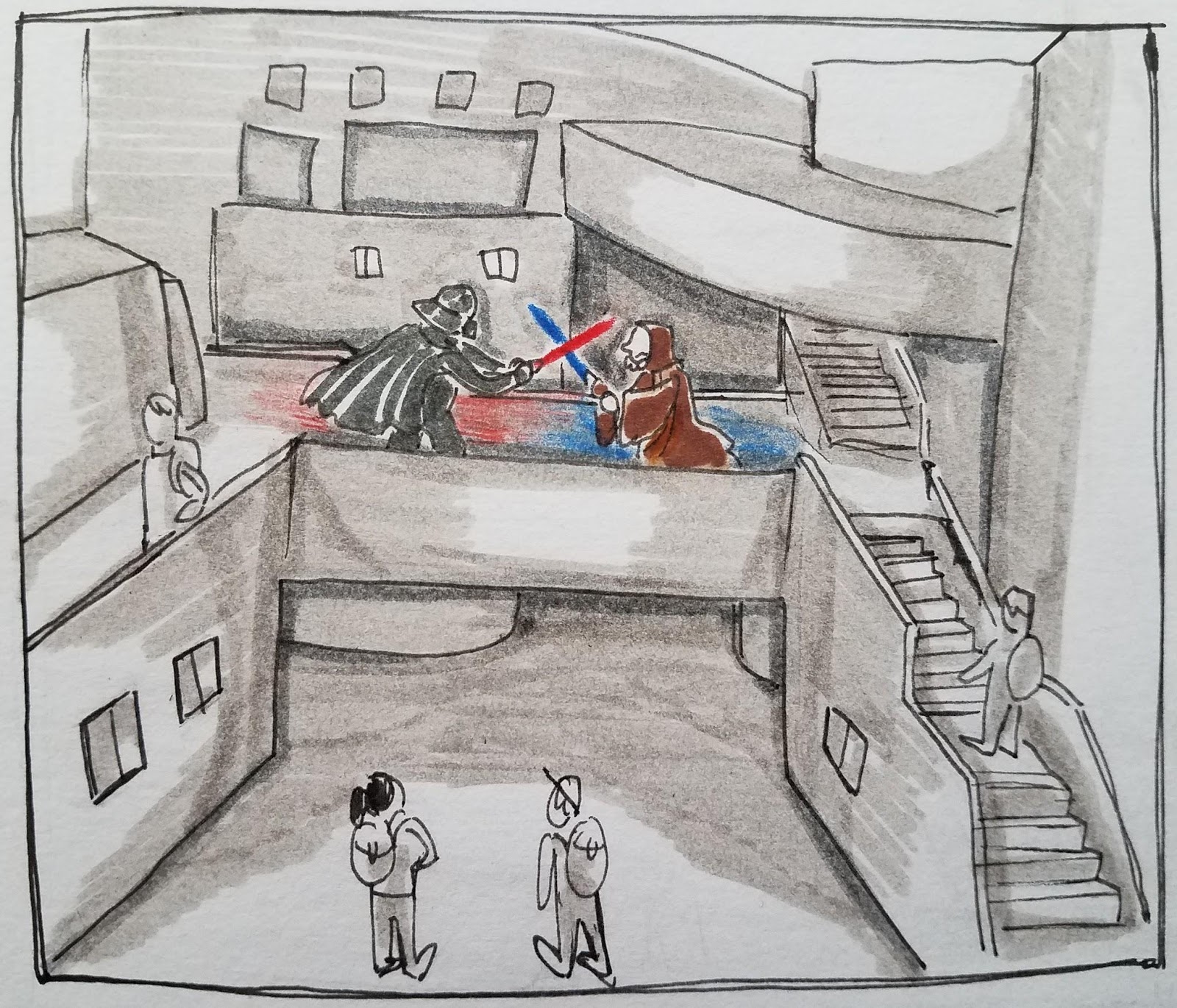
Everyday events in the Death Star

ELLIOT WHITE / AGGIE


By: Elliot White


Disclaimer: The views and opinions expressed by individual cartoonists belong to the cartoonists alone and do not necessarily indicate the views and opinions held by The California Aggie.

Butterfly gardening relieves stress, provides homes for declining species

ZACK ZOLMER / AGGIE

UC Davis students, professors provide butterfly gardening tips, tricks

Butterfly gardening can be a relaxing and rewarding experience for people across all ages and backgrounds. For students, it may seem like a hassle and unwanted expense to find the right materials and proper equipment for gardening. However, with enough information and many resources to consult on campus, students can still tend to a small garden.

Butterflies are majestic and intricate creatures, especially when provided the chance to look at them up close without worrying about one flying off immediately. They are also pollinators, which are vital to keeping ecosystems running.

One of the most important aspects to keep in mind when butterfly gardening is knowing the environment, as well as the types of plants that will thrive and attract butterflies. Many guides exist on the internet, but do not necessarily pertain to the Davis and Sacramento areas and weather patterns. If space is a problem in a dorm or apartment, getting a window box on a balcony with enough sunlight and the correct plant can still provide a great habitat for butterflies.

“If you plant the right resources, they’ll stop to feed and then you can watch, photograph and enjoy them,” said Art Shapiro, a UC Davis professor of evolution and ecology. “It’s probably a lot easier to provide nectar sources than to provide host plants. The nectar resources are quite pretty, while the host plants mostly are not — they’re weeds. I find weeds to be quite attractive, but not everyone does.”

Host plants are for breeding, while nectar plants provide food and nutrients. Shapiro recommends lantanas, buddleias and asters, as they are easily obtainable, extremely common in Davis and attractive to both humans and butterflies. Some of the most well-known and common butterfly species in the Sacramento Valley include monarchs, pipevine swallowtails, cabbage whites, gulf fritillaries and California dogfaces, which are California’s national insect.

While it’s exciting to set up a butterfly garden, newcomers tend to make many common mistakes.

“Number one: don’t expect to get rare or endangered species,” Shapiro said. “You will get what’s available in your neighborhood. Number two: keep seasonality in mind. That is to say, here in the Valley, most butterflies are active in the summer and the fall. In the [Sierra] Foothills, nearly everything is active in the spring. If you have mainly spring flowering plants here in Davis, you won’t get much. You want to plant for what’s actually flying.”

Consulting an expert or refining searches, as well as hearing personal stories from others, helps immensely when first starting out.

“People, when they start doing butterfly gardening and they plant a host plant like milkweed or cassia or fennel, may see the plant getting destroyed,” said Peter Varas, a fourth-year sustainable agriculture and food systems major. “They freak out, but [the plant being ‘destroyed’ is] a good thing because it means the caterpillars are eating it. A lot of the time, once [the plant has] stripped down, you can cut it back, and it’ll regrow.”

For beginners, Varas recommends milkweed and Mexican sunflower as host plants, which both attract monarchs. He also stated the importance of going to a pre-established butterfly garden on campus and learning from what others have already done.

“Something I’d encourage people to do who are interested in butterfly gardening is to go to the ecological garden here at UC Davis right next to the Student Farm,” Varas said. “It’s a learning space about gardening, and there’s people there all the time who are friendly and willing to talk to you about butterflies and plants.”

The Student Farm, which includes the ecological farm and market farm, is a 20-acre area that provides a space for students to learn about and practice sustainable agriculture. Nearly every inch of the Student Farm is covered by a wide variety of plants and species.

“I feel like [the Student Farm] is a really special spot on campus,” said Katharina Ullmann, the director of the Student Farm. “If you’re just having a coffee at the MU or eating your lunch on the Quad, you might not even know that just a 5 to 10 minute walk away, you can access a space like this that may not seem as ‘wild’ as the Arboretum, but still has all sorts of wildlife and plants.”

Another resource on campus for people interested in butterfly gardening, or more generally in horticulture or sustainable agriculture, is the Arboretum.

“When I first started working at the Arboretum, there was only four of us,” said Ellen Zagory, the director of public horticulture for the Arboretum and public garden. “But now the Arboretum has grown, and so has the campus.”

While the Arboretum is home to many different species of plants, trees, small animals and insects, there are still concerns about the declining number of butterflies and other animals important to the ecosystem.

“When I moved to Davis during my first full year in 1972, I routinely got 20 to 30 species of butterflies in my own garden,” Shapiro said. “Now I’m lucky to get a dozen.”

For example, the monarch, one of the most iconic butterfly species and a symbol for immigrants all over the United States, has become the centerpiece of conservation efforts.

“The monarchs have been declining for the past decade, which is due to a number of factors,” Varas said. “It’s mostly loss of habitat and that’s because of people, who are mostly in the midwest, who are planting more corn and soy, and taking out these native milkweed plants that are part of the monarchs’ migration route. Even if it’s just one [plant], you’re doing something to provide habitat for monarchs.”

Though numbers are dwindling, endangered butterflies and other pollinators can still be protected.

“There are three things that people can do,” Ullmann said. “One, to provide food and nesting resources or host plants. Second, limit the use of pesticides, and the third is to talk to other people about them. If everything looks like a flying bug, then you don’t know the cool stories behind those insects and what the services they provide look like.”

Shapiro has a page on his website outlining plants perfect for attracting butterflies in the Sacramento Valley area.

The Arboretum’s fall plant sale on Nov. 4 provides the perfect opportunity to apply these ideas to create your very own butterfly garden. For the upcoming seasons, there will be spring plant sales at the Arboretum, where you can find a relaxing ambiance and plants perfect for attracting spring and summer butterflies and other pollinators.

“I think that getting outside, being in nature, and giving yourself a break is important,” Zagory said. “It’s a lot of pressure being a student and trying to get good grades. It’s pretty relentless. It’s refreshing to get outside and go look at some flowers, take a walk and give yourself a chance to recover. It’s very healing.”


Written By: Jack Carrillo Concordia — science@theaggie.org


Last Week in Senate

HANNAH LEE / AGGIE

First Senate meeting of year takes place on Oct. 5

The Senate was called to order by Vice President Adilla Jamaludin at 6:10 p.m. on Oct. 5 on the third floor of the Memorial Union.

Senator Rahi Vijay Suryawanshi was absent. The remaining eight senators were present. The Senate had three open seats from previous resignations which will be filled by interim senators until either the upcoming Fall Election or the Winter Election.

The meeting began with Senator Simran Grewal nominating Senator Julie Jung for pro tempore. Jung received the nomination with no objections.

Next, senators spoke about possible ways to update Aggie Job Link to make the platform more user-friendly.

Senators then met with a representative from Lincoln40 to discuss plans to develop student housing on Olive Drive. The complex itself will be 20 percent below market renting rates and around 30 percent below renting rates for double bedrooms. The representative estimated a monthly cost of $900 to $1,250 for a double bedroom. The project aims to keep rent 30 percent below market value regardless of market fluctuations. Because this project is located so close to the train tracks, developers are looking to install trees as a natural sound insulator as well as focusing on window design and sound cancellation.

The Senate then voted to confirm Janin Rodarte, a third-year environmental analysis and planning major, Daniel Feinberg, a fourth-year environmental policy analysis and planning major, Jose Flores, a third-year community and regional development major and Emma Newman, a second-year managerial economics major, to the Environmental Planning and Protection campaign. The four were confirmed with no objections.

Representatives from the Peter J. Shields Library gave a presentation which included updates about reorganizations and renovations for the new school year. The library is in the process of hiring new personnel to aid in research and scholarship opportunities. New furniture will be added and plans are in place to increase areas with 24-hour access to students.

Senators discussed the possible reinstatement of the Library Committee to address student needs for studying.

Sabrina Castaneda, a fourth-year animal science and art studio double major, and Monica Dwight, a fourth-year political science major, were confirmed as directors of the Whole Earth Festival. Both students plan to implement staffing changes for the upcoming festival. Both said they hope to educate their staff and vendors to create an inclusive environment free from cultural appropriation for students. Senator Grewal motioned to confirmed and the motion was seconded by Senator Meneses.

The Senate took a recess at 7:49 p.m.

After the break, senators assigned units and committees that they will be overseeing.

Senators updated one another on their upcoming projects for the year and discussed the upcoming Senate elections. Controller Jin Zhang reported that the previously voted-on 2017-18 budget was approved.

Projects senators are working on include creating a microwave center in the Coffee House, developing a platform to connect underclassmen students to upperclassmen and working to establish free cooking classes for students.

The meeting adjourned at 8:52 p.m.


Written by: Ally Russell — campus@theaggie.org

Architectural History of College Park

FARAH FARJOOD / AGGIE

Famed street holds important place in Davis history

Sitting just off the UC Davis Campus, nestled among picturesque trees and a sprawling grass field, is the city of Davis’ premier neighborhood. Established in 1923, College Park’s distinctive, egg-shaped street has been home to countless UC Davis professors and local personalities. However, the true star of the show is the area’s exceptional architecture.

Dennis Dingemans, a former UC Davis professor, and his wife Robin Datel, herself a UC Davis alumna and a professor at Sacramento State University, are well-versed on the neighborhood. In 1992, the city of Davis announced its search for distinguished volunteers with knowledge of historical architecture for the city’s upcoming inventory, which aimed to catalogue Davis’ historic buildings. Although many vied for the possibility of studying College Park, the opportunity was ultimately awarded to Dingemans and Datel.

“We found ourselves writing maybe 150 words for each house in College Park,” Dingemans said. “Most towns, even small towns, have neighborhoods with relatively large lots with very attractive homes that have staying power.”

Davis is no exception. The College Park neighborhood boasts over 40 properties, each of which appeal to passersby in different ways.

“There’s an international-style house in the northwest corner,” Dingemans said. “A saltbox house in the New England style is there as well.”

65 College Park is one of the more eye-catching properties: designed by famed architect William Wurster, the former dean of both UC Berkeley and MIT’s schools of architecture, this house is characterized by its “steeply pitched roof,” “oversized red brick” and “exposed rafters,” according to the City of Davis’ 1996 Cultural Resources Inventory and Context Statement. The house was built in 1932 for none other than the first UC Davis Chancellor, Stanley B. Freeborn.

“Wurster was a very, very influential Bay Area architect,” Datel said. “This is quite a wonderful building. It’s sort of medieval revival a la Bay Area shingle style. It’s just quite charming.”

In addition to Freeborn’s home, the street contains houses that were built for the likes of Max Kleiber, the famed biologist and namesake of UC Davis’ Kleiber Hall, and George A. Hart, of UC Davis’ Hart Hall. Kleiber’s house at 34 College Park is characterized by CRICS as a “medieval revival” that has not one but two chimneys. The roof shares the distinct use of shingles found on many other College Park homes. Lastly, the house is equipped with two sets of doors. Hart’s home at 52 College Park is built in the Tudor style. According to CRICS, the house has “three chimneys” as well as “wood shingles” and a fancy “two-foot-long wrought-iron [door] hinge,” seemingly in an attempt to outdo Kleiber’s home.

“There’s quite a few people that you could directly pair up their house in College Park with their building on campus,” Datel said. “It’s a really nice kind of memento of that early era of the development of the campus.”

Despite all the luster and excitement surrounding the history of College Park and its buildings, the neighborhood does have a checkered past. Kara Brunzell of Brunzell Historical was hired by the City of Davis to update a historical context statement in 2015.

Brunzell explained that a historical context statement attempts to understand why a building may be eligible for historical status. While College Park was not the focus of Brunzell’s update, she did brush up on its past, revealing an unsettling set of guidelines that are sadly not surprising for the time period.

“It was a restrictive subdivision, meaning that the deed specifically stated that you had to be white to live there unless you were someone’s servant,” Brunzell said. “That was actually very common up until the ‘60s in California.”

Today College Park is representative of the communal acceptance and natural beauty that Davis is known for. The UC Davis International House — a symbol of diversity — lies at the front of College Park. This addition symbolizes the neighborhood’s physical and social changes since the area’s first plans in 1923.

After all these years, you’ll still be hard-pressed to find another neighborhood in Davis that combines the same stunning landscape and architecture as College Park.


Written By: Rowan O’Connell-Gates — arts@theaggie.org

Humor: Trump’s plan to end homelessness and poverty: legalized cannibalism

JEREMY DANG / AGGIE

Trump issues 32nd executive order of the month

Donald Trump, POTUS, or, as he calls himself, “Poitus,” has issued a royal decree to end homelessness and hunger through legalized cannibalism — a dynamic and progressive approach that he believes will clean up the streets.

“I don’t see why these problems took so long to get handled,” Trump said during a dinner party last week. “Sometimes you have to stone two birds with one kill. Sometimes you have to be a martyr for the greater good.”

“Sometimes you are what you eat,” said Trump, after taking a bite of chicken.

911 dispatchers are now trying to determine which calls are actually emergencies and which calls are pranks, with calls such as, “Oh my god, he’s eating me out!” becoming very confusing and hard to assess.  

It’s illegal to be homeless in most of America, with many down-and-out people being arrested, resulting in jail time in which they’re provided food, shelter and job training with opportunities for employment after leaving, which is more than what most universities offer.

“You’ve got all of these people who are human,” said rights activist Richard Spencer. “They have skills, dreams and aspirations just like you and me. They need love and tenderness. Push one in front of a bus and they’ll be quite tender. You’ll love it.”

“Trump is delivering on everything he said he would and then some,” said Richard Hicks, a second-year history major sporting a homemade hat that read “Make America Ate Again.” “Trump is my spirit animal, the kind of guy who, if given the chance, would turn most animals into spirits. He’s a tiger: fierce, unforgiving and orange.”

Antifa has shown great resistance to this executive order, as many of their members have been eaten alive after being mistaken as homeless.

“Our motto used to be, ‘All for one, and one for all,’” said Antifa member Commu Nick. “It’s not supposed to be one Antifa member for all of their hunger needs.”

“It’s a shame that these Antifa members have been getting eaten alive,” Officer Dick Grimes said. “Arresting them has been a huge source of profit for us. Their actions, along with the actions of other supremacy and social justice groups, help perpetuate pointless race and ideology wars that keep the American people from seeing that the 1 percent is the real problem — 1 percent milk, that is.”

“It is easier to clean the streets than it is to clean up these people,” said Trump, monitoring the installation of golden showers in his presidential suite. “You know how much it costs to give them a shower, some clean clothes and help them get back on their feet? Almost nothing. But letting them eat each other? That actually costs nothing. The best way to clean these people up is to send bath salts to every homeless shelter in the U.S. They can clean themselves up Florida-style. It’s a faceoff.”

After hearing about this new plan, Hillary Clinton has announced her run for presidency in 2020 under the motto “Make America Stagnate Again.” We could not reach her for further questions since there’s no reception so deep in the Earth’s crust.


Written by: Drew Hanson — andhanson@ucdavis.edu

(This article is humor and/or satire, and its content is purely fictional. The story and the names of “sources” are fictionalized.)

Humor: UC Davis to improve dorm life by pushing Cuarto somewhere else

FARAH FARJOOD / AGGIE

Just when you thought campus couldn’t get any better

After much heated debate, UC Davis has decided that it will complete the construction of Cuarto Area by doing the exact opposite — not completing it and pushing it somewhere else.


“Yeah, we thought about not doing anything with the property, considering there’s technically nothing wrong with it,” said Rosie Cuartoz, who was probably involved in the decision. “But then we were like, ‘Nah, that place has got to go.’”

While it might seem sad that Cuarto had to be pushed away so soon, we think it might be a good thing. Rumor has it that everyone who lived there was a social reject with a low-key La Croix addiction anyway.

Not to worry, though: UC Davis is planning to make use of the extra space.

“We were thinking about making a UC Davis Men’s Resource Center a while back, and now with all this open space and no one to stop us, it would be a shame if we didn’t use it,” said Aaron Mevins, a man with a bad opinion and too much power.

Well, there you have it. You know how the saying goes: If you give a mouse a cookie, it’s going to want to perpetuate misogyny.

Now, you might be wondering how UC Davis plans to physically push away an entire building, which is a good question.

We think people are really overthinking this, though. Pushing away a building is a lot easier than it seems. All you have to do is put your hands on the building and push. If you think this doesn’t work, you’ve probably never tried it before.

There’s a few things we can all learn from UC Davis’ attempt to physically move Cuarto from its current location to somewhere else. The first is how to push a building from its current location to somewhere else. The second is, more importantly, that there is never a problem too big to just push away.


Written by: Lara Loptman — lrloptman@ucdavis.edu

(This article is humor and/or satire, and its content is purely fictional. The story and the names of “sources” are fictionalized.)

The Tuskegee legacy remembered

REV. ROGER GRAY / AGGIE

Descendants of Tuskegee Airmen host event in Davis

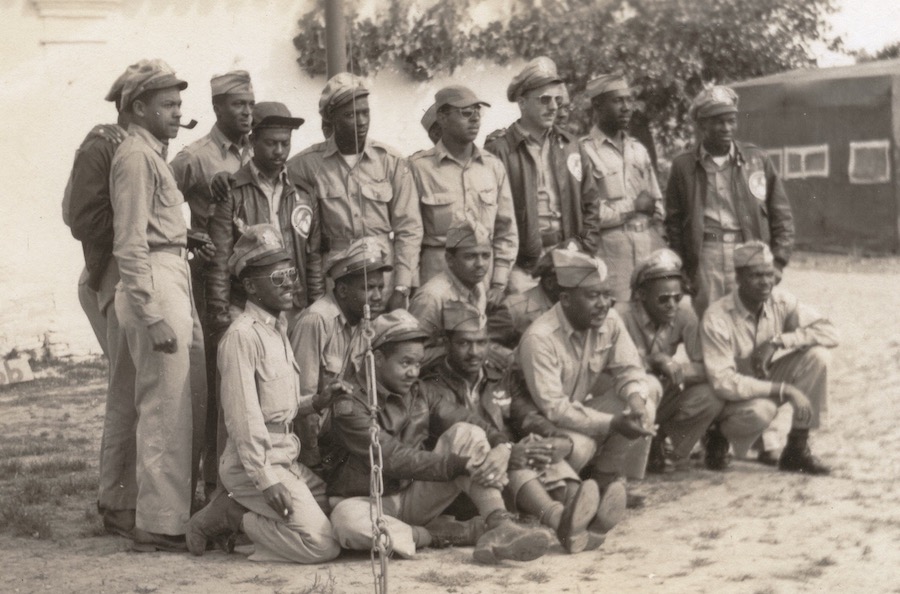
On the evening of Oct. 10, a small panel gathered at the Davis public library to share the legacy of their fathers.

“It’s one of the most untold stories there is,” said Betty Lawson Davis, an event panelist and the daughter of Tuskegee Airman Herman ‘Ace’ Wallace.

This often-overlooked segment of history centers around a group of determined African-American college graduates who would shape the events of World War II. These young men and their support network of doctors, nurses, cooks and mechanics became collectively known as the “Tuskegee Airmen.” Also known as the 99th Fighter Squadron, the Tuskegee Airmen were the first African-Americans to serve as military aviators in the U.S. Armed Forces. The squadron is remembered for its deployment overseas, flying from North Africa to Italy during the war. The airmen faced institutional racism and exhibited great courage and are thus deeply respected by those who know their story.

The Tuskegee legacy was represented at the Davis panel by four descendants of the Tuskegee Airmen, all of whom are members of the Tuskegee Airmen Heritage Chapter of Greater Sacramento. Each descendant shared memories of their father while inviting questions from the audience.

Lanelle Roberts Brent, the daughter of Colonel George S. “Spanky” Roberts, lead the discussion by providing a background of what is called the “Tuskegee Experience.”

“Our goal is to continue the legacy and tell the truth,” Roberts Brent said.

The Tuskegee Airmen Heritage chapters aim to preserve accurate history and engage the community with the legacy of the Tuskegee Airmen. According to Leigh Roberts, the public relations officer for the Greater Sacramento Chapter, the local organization was certified in February of this year and has already involved heritage members from all over California and Nevada. The chapter hosts large informational events, occasionally attended by members of the 99th Fighter Squadron. Additionally, the local chapter fundraises for a scholarship program aimed at college-bound high school seniors and single parents.

At the Davis informational event, attendees learned a detailed array of historical facts. Panelists emphasized the unmatched success of the Tuskegee Airmen, the original Top Gun crew which maintained the lowest loss of life during WWII and earned over 150 awards for its endeavors as the “red-tailed angels.” However, the speakers did not hesitate to remind the audience that the success of the Tuskegee Airmen defied rigorous segregation and extreme racism, a topic that transitioned into a more general discussion about the history of racism in America.

“They were one of the most successful squadrons during WWII, but they were supposed to be a failure,” Roberts Brent said during the discussion.

What was intended to be a failure later became an inspiration for the Civil Rights Movement and similar discussions of black rights movements today.


Written by: Eliana Sisneros — city@theaggie.org

World Series 2017 Preview

0

KEITH ALLISON [(CC BY-SA 2.0)] / FLICKR
Astros, Dodgers will compete in Fall Classic

The Fall Classic is upon us once again, showing us that there is nothing quite like postseason baseball. The Houston Astros and the Los Angeles Dodgers will square off in the World Series –– an intriguing matchup between two franchises with very different title-game experience.

Each postseason, it is tremendously difficult to predict which clubs have the talent, the luck or the willpower necessary to pull off a magical playoff run. Each October, fans pay witness to new heroes, a new team that gets hot at just the right time or simply a dominating run by an overpowering ballclub. Fortunately for fans, this year’s postseason has combined all three of these storylines and more.


The team from LA:

The Dodgers are returning to the World Series for the first time since 1988, when the franchise won its sixth title, thanks in part to Kirk Gibson’s magical, walk-off moon-shot that sailed into the Dodger Stadium bleachers and landed among the iconic moments in MLB history. 29 years later to the day, Dodgers infielder Justin Turner launched a ball over the center field wall in the same building for a walk-off homerun of his own, giving the Dodgers a 2-0 series lead over the Chicago Cubs in the National League Championship Series. L.A. finished off the Cubs just three games later, defeating them at Wrigley Field behind Kiké Hernandez’s three-home run evening.

Los Angeles has lost only one postseason game so far this year, sweeping the Arizona Diamondbacks in the division series and conquering the Cubs in the NLCS in five games. This dominant run through the playoffs is mysterious compared to the Dodgers’ track record in recent years. The club has competed in the postseason in each of the previous four years, and each year the Dodgers have come up heartbreakingly short, including two NLCS losses over that span. This season, L.A. has finally found a way to get over the hump that has haunted it for so long.

But will the Dodgers getting over their NLCS woes culminate in a World Series victory? It would seem that this team certainly has the motivation and the talent to do so. The club won a league-leading 104 games during this year’s regular season and at one point looked to have a legitimate chance at challenging the 2001 Seattle Mariners’ MLB-record win total of 116. The Dodgers fell short of that mark, but more importantly geared up for a deep playoff run by bolstering an already impressive pitching staff.

L.A. made several moves before the trade deadline, improving its bullpen by bringing in relief pitchers Tony Watson and Tony Cingrani. But the team’s most high-profile trade was in acquiring right-handed ace Yu Darvish from the Texas Rangers. Darvish has indeed lived up to all the trade deadline hype; in his 11 and one-third innings pitched this postseason, Darvish has struck out 14 batters while giving up only two runs. A stronger relief staff and Darvish’s excellence combined with the skill of longtime Dodgers star Clayton Kershaw has proven to be a winning postseason formula.

Of course, the bats for L.A. have continued to remain active as well. Turner leads all players in the postseason with 12 RBIs and outfielder Yasiel Puig has the top postseason batting average (.414) among players with at least 20 at bats. The Dodgers have even found consistent hitting from lesser-known position players like Charlie Culberson and Chris Taylor.


The team from Houston:

While the Dodgers have appeared in the World Series nearly 20 times, the Houston Astros are playing in the Fall Classic for only the second time in franchise history –– the first since the team moved to the American League in 2013. The team made its first World Series appearance back in 2005 as champions of the National League before being swept by the Chicago White Sox.

After recent seasons of disappointment, Houston has constructed a formidable team around all-star second baseman Jose Altuve and Cy Young-winning pitcher Dallas Keuchel. Filling their roster with proven veterans like catcher Brian McCann and outfielder Carlos Beltrán, the Astros were able to win 100 games for the second time in franchise history. Carrying their regular season momentum into the playoffs, the Astros were able to defeat two perennial American League powers by first fending off the Boston Red Sox in the division series and then slipping by the New York Yankees in seven games to win the American League pennant.

Much like Los Angeles, Houston also prioritized improving its pitching staff before the trade deadline, as the team brought in another Cy Young winner, right-handed pitcher Justin Verlander. The pitching combination of Keuchel and Verlander has combined for 49 strikeouts this postseason, while only allowing nine earned runs.

With these two leading the defensive charge, the Astros have also clicked offensively. Altuve and his fellow infielders, Yuli Gurriel and Carlos Correa, are the top three postseason leaders in hits, with 16, 15 and 13, respectively. Altuve has also hit five home runs this postseason, the most among all players.

Both the Astros and Dodgers are teams built on shut-down pitching and consistent offense. Will defense rule the day? Or will offense overpower these formidable defenses? The depth of the lineups on each side will make it intriguing see which team’s bats will find the most success against the high-level pitching. Runs will most likely be hard to come by against the starting rotations, so late-game situations against the bullpen is what this series will really hinge on. Nonetheless, this should prove to be a fantastic finish to an exciting year of Major League Baseball.


Written by: Dominic Faria — sports@theaggie.org

Police Logs

NICKI PADAR / AGGIE

What is going on?

Oct. 13

“*Front counter* wants to talk to officer for advice. Did not want to provide further information.”

“Loud music/stomping/party.”


Oct. 14

“Male student on the roof of small South gym.”


Oct. 15

“Five minutes ago, heard footsteps in the backyard, main garage door is open and was closed earlier.”

“Traffic lights out in all directions.”

“Occurred earlier today, rear license plate taken from vehicle.”

“Brother vs. brother. No weapons.”


Oct. 16

“Leaf blowers.”

“Open line, shuffling noises heard only.”


Oct. 17

“Vehicle with open door.”

“ID check.”

Guest: Wildfires ravage California as climate apocalypse looms

CALIFORNIA NATIONAL GUARD [(CC BY 2.0)] / FLICKR
Lawmakers continue to turn a blind eye despite glaring climate changes

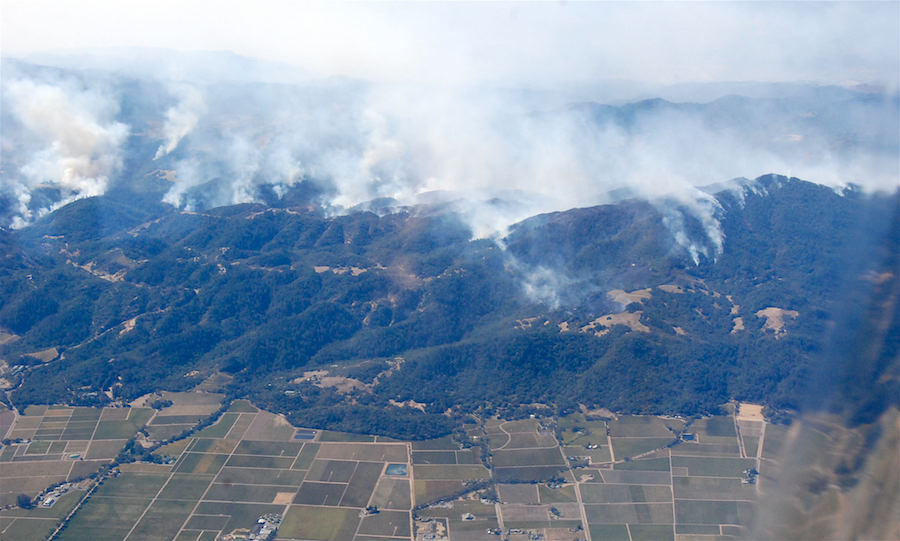
The smell of sulfur and burned metal hung in the air last week as ash rained down on search crews and cadaver dogs. So far 13 people have been identified out of the 42 confirmed dead — resulting in the deadliest week for California wildfires in history.

One Sonoma County couple tried hopelessly, against the apocalyptic backdrop of a reddish-purple sun and orange skyline, to hose down the raging fire that would soon engulf 5,700 buildings across California, including their lifelong home.

“We lost our house,” said Jessica Rodriguez, a third-year sociology major and Napa Valley College transfer student, as she fought back tears. “It completely burned down. We lost everything you can imagine.”

Rodriguez’s family, who was forced to evacuate to her aunt’s house, is now among the thousands of California climate refugees in a state already struggling with a rampant housing crisis.

“This is one of the greatest tragedies California has ever faced,” Governor Jerry Brown said after touring destroyed neighborhoods in Santa Rosa this weekend. “The horror is something none of us will ever forget, but it’s not over yet.”

Just one week after the fires first ignited in Northern California, the scope of the damage has reached 220,000 torched acres, over 100,000 evacuees and a few hundred missing people across 10 counties.

Battling these fires are a small army of aircraft, state officials and 11,000 firefighters (of which 35 percent are nonviolent prison inmates, including a couple hundred women, earning $1 per hour). Although the fire could still behave erratically in the coming days, several evacuation orders have been lifted, and firefighters are hoping that incoming cool weather and potential rains in Sonoma and Napa counties will help extinguish the flames for good.

Representatives from Cal Fire, the state agency employing the inmates, profess that these wine country fires are nastier than and largely unrecognizable from those of just a couple decades ago. And based on what we know about the link between warming and wildfires, the same will be true 30 years from now if global temperatures continue to rise.

“This is the new normal,” said Michael Brauer, a public health professor at the University of British Columbia, in reference to the increasing levels of wildfire induced by the fatal air quality. “It’s not a happy story, but we just need to learn how to respond to it.”

The ferocity of this year’s wildfire season is due in part to high-speed winds combined with grasslands fed by heavy rains in the winter and spring made very dry by California’s hottest summer on record.

While the western United States is literally burning, President Trump’s EPA, led by a notorious climate change denier, continues to repeal Obama-era regulations aimed at curbing national greenhouse gas emissions.

Meanwhile, even our own liberal state legislature recently failed to pass a measure that would require 100 percent renewable energy by the year 2045 amid what climate activists are calling “Decade Zero.”

California is heralded as a global leader of the environment. But at best, we’re merely reacting to this fiery man-made crisis instead of being proactive. At worst, our government is complicit in fanning the flames of a blaze that has scorched a landmass the size of over 40 UC Davis campuses in one week.   

A report by Consumer Watchdog titled “Brown’s Dirty Hands” revealed that Democratic Governor Brown has received nearly $10 million in donations since 2010 from fossil fuel interests, including PG&E — the company whose fallen power lines are allegedly responsible for the wildfires.

In addition to being a symptom of climate change, these wildfires have also created pollution equal to a year’s worth of traffic in just two days, including the worst air quality ever recorded in the Bay Area.

For any Californian still skeptical about the need for urgent climate action — and for state lawmakers who engage in back-door dealings with the worst polluters — this is our wake-up call.


Written by: Francisco Ferreyra

Disclaimer: The views and opinions expressed by individual columnists belong to the columnists alone and do not necessarily indicate the views and opinions held by The California Aggie.

Silo Review: Missing Starbucks or Loving Peets?

0
CAITLYN SAMPLEY / AGGIE

Student reviews of Silo changes and renovations, fast food chains vs. local chains, study spaces

Campus has been undergoing various constructions and renovations recently, from the opening of the Memorial Union last spring to the current Activities and Recreation Center renovations to the recently renovated Silo and South Silo.

Major changes to the Silo include swapping out Starbucks for Peet’s Coffee and replacing all fast food chains owned by Sodexo, including Taco Bell, Carl’s Jr. and Pizza Hut, with food options run by UC Davis Dining Services, such as Spokes, a burger joint, and Crepe Bistro. In addition, the market area that sold salads, bagels, yogurt and other to-go products is now being housed separately in the South Silo.

Kristina Ivanova, a second-year biochemistry and molecular biology double major, enjoys the new space created by the renovations.

“I really love all the new space,” Ivanova said. “It used to be jam packed in here, so I love that there’s more space to breathe and walk around.”

Tessa Hansen-Smith, a second-year psychology major, appreciates the trade-out of fast food chains and their calorie-filled meals.

“I like that it’s not chain, fast-food restaurants anymore because [those] just forced you to gain fifteen pounds,” Smith said. “I do kind of miss Starbucks though. Peet’s is okay, but I definitely like Starbucks a lot more.”

On the contrary, Anna Rita Moukarzel, a second-year mechanical engineering major, put in a good word for Peet’s.

“I come to the Silo a lot because most of my classes are nearby,” Moukarzel said. “I really miss Taco Bell because it was my before-class food. [But] I kind of like Peet’s more so I’m not really complaining.”

Adding more points to team Starbucks, Taruna Neelakantan, a second-year pharmaceutical chemistry major, regrets its loss and the gold card rewards program that she used to benefit from.

“I have mixed feelings about the renovations in terms of Starbucks and Peet’s,” Neelakantan said. “I like Starbucks because I can use my gold card and get rewards to use for free drinks later, so I’m not a huge fan of [the switch] — but maybe with time.”

Anaiah Ramirez, a first-year English major, shared her fresh perspective on the Silo, without having seen the older version of it.

“I really like how there’s different varieties of food,” Ramirez said. “You have halal food and you have American fast food, and then you get to have desserts [at the] Crepe Bistro, [or even] something a little bit more healthier like a smoothie.”

Coming in as a freshman living in the dorms, Ramirez was concerned about her food options and if she would be limited as to where she could access meals.

“I was actually pretty impressed because I thought the only food source I was going to get was from the dining commons or off-campus,” Ramirez said, “but [the Silo] helps me acclimate to the campus much better, [and it] is my favorite area of [campus].”

The South Silo’s marketplace, housed in the building to the left of Gunrock Pub, hasn’t been noticed by many students yet.  

“I really like the two separate buildings,” Ivanova said. “I love how if you just need to get something to-go, it’ll be over there.”

While Ivanova admires the separation of the two food places for reducing crowdedness, Claudia Carillo, a third-year animal science major, offered a critique of the separation, and the replacement of Sodexo’s previous chains.

“I feel like there’s really no options [now], because it’s only Spokes, the Crepe Bistro and Peet’s now,” Carillo said. “I feel like there were more options before and it was really convenient just to have the little market over here.”

Carillo did, however, appreciate what she found to be pretty cheap and reasonable prices at the Spokes burger joint.

It is yet to be seen how many more renovations will be made by UC Davis and what student’s reactions to future changes will be.


Written by: Sahiti Vemula — features@theaggie.org