
55.5 F
Davis

Davis, California

Tuesday, December 23, 2025
Home Blog Page 590

Perspective in Politics: Can we fix polarization?

SHEREEN LEE / AGGIE

Appealing to diverse moral values is vital to uniting people

Polarization in politics affects not just discussions in Washington and Sacramento, but also those at the dinner tables of ordinary families. It seems common for people of differing opinions to speak right past one another when they talk. When opinions voiced are based in values different than our own, we’re unlikely to attempt to understand their underlying principles.

Researchers Robb Willer and Matthew Feinberg have tried to study the basis of polarization, focusing on the messages used by politicians to spread their viewpoints. Willer and Feinberg’s research is concentrated on understanding the principles upon which our opinions are based, which is is key to solving the problem of polarization. They advocate for a “moral reframing” of politicians’ arguments as a way to create a type of politics in which people of differing values can come to agree on the same issues.

Willer and Feinberg found that politicians were much more able to sway people who held different opinions on a certain topic if they appealed to that target audience’s moral values. For their tests, they had liberals and conservatives craft a message to convince people on the other end of the spectrum. Liberals usually tried to appeal to their own moral values of equality and fairness, even when trying to sway conservatives who were against gay marriage. This proves that, since people assume that others hold principles similar to their own, the target audience may not be swayed. They may not be thrilled by the underlying values in the argument and may not change their minds as a result.

In other tests, they found that conservatives were much more willing to support greater environmental protections if moral values of purity and care were utilized. This would mean using language such as “beautiful,” “disgusting,” “harmful” and “destructive” when talking about the environment. It is, therefore, entirely possible to convince Democrats and Republicans to support positions held by the other party, as long as the right language is chosen to make the argument.

The research is not just talking about politicians and their rhetoric, but regular conversations as well. If an argument’s underlying values appeal to your target audience, they’re much more likely to agree on any subject. Willer is clear that it’s hard enough without polarization to get people to abandon their own moral values and agree. In this current political environment, people feel the need to stand firm in their beliefs and not concede whatsoever.

We must understand that polarization makes political debate unnecessarily alienating  and unproductive. There are no quick solutions, given the bickering between Democrats and Republicans, not to mention the ever-divergent perspectives in different parts of the country.

Slowly but surely, though, a culture of compromise can be built. This compromise would be based upon agreeable issues that hold widespread support. To bring people together, politicians must utilize moral values that appeal to people in both the left and right wings of politics. This will not make politicians unprincipled, especially considering that politicians make U-turns on policy all the time.

What is being encouraged here is not flip-flopping, but rather adopting a strong stance on an issue while selectively picking language that appeals to a diverse range of viewpoints. Politicians utilizing this inclusive rhetoric remain firm in their positions but are simply adopting more diverse arguments that are supported by a large range of principles.

There is one issue that Republicans and Democrats can get behind: closing tax loopholes. Democrats want to close tax loopholes because they mainly benefit wealthy people and large companies, while Republicans want them closed to pay for tax cuts. Democrats can appeal to liberal principles of fairness and equality, as closing loopholes will make sure that more people pay their fair share in taxes. Republicans can appeal to conservative principles of smaller, more limited government, as cutting taxes allows people to exercise economic liberty with their untaxed money.

If the two parties can find topics that they agree on, then there’s no concession on principles. This is a compromise in which people can maintain their own values while also accepting and promoting other values that support the same position.

This heightened sense of bipartisanship will eventually trickle down to everyday discussion, in which regular people will see the benefit of getting more people to agree if they appeal to a diverse set of supporting principles. This, however, can only be done if politicians utilize these methods to unify public opinion. In doing so, the culture of politics will change for the better, making it less divisive and less partisan than it is now.


Written by: Justin Chau — jtchau@ucdavis.edu

Disclaimer: The views and opinions expressed by individual columnists belong to the columnists alone and do not necessarily indicate the views and opinions held by The California Aggie.
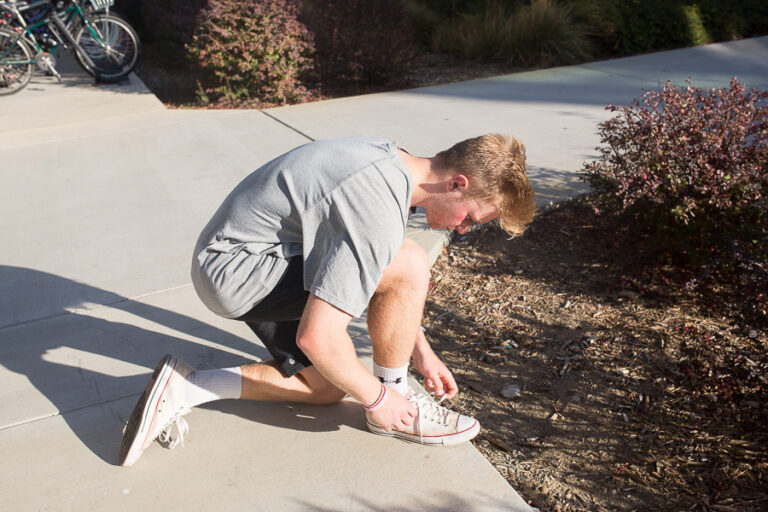
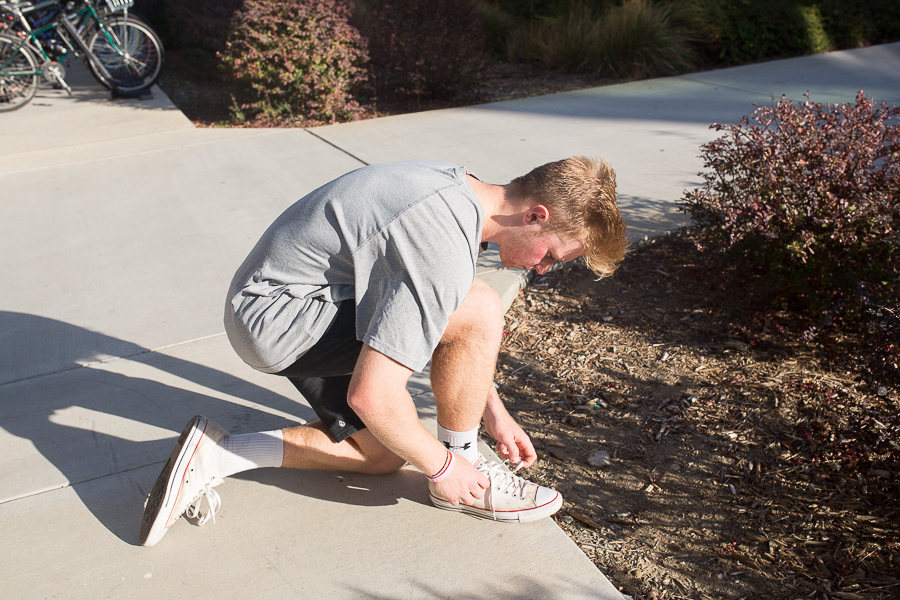
Humor: Extremely unpatriotic person kneels to tie their shoes

TREVOR GOODMAN / AGGIE

Get up off that knee and respect the troops, a-hole

Content warning: This story contains sexual content and profanity. 


Dear reader,

Now I don’t know if you’ve heard of Colin KaperDICK, or maybe one of these other darn fangled “footballers,” but wait till I tell you about them. They were disrespecting the Founding Fathers themselves. During a football game that some of these guys were gonna play in, the national anthem came on. And what did these lousy, yellow-bellied, no-willy-havin’ sons-of-bitches do? They didn’t stand. They KNEELED. They’re all thugs, and they have no respect for our Lord and Leader, Mr. Cheeto Man. Speaking of Mr. Cheeto Man, allow us now to take the time to sing to our Lord and Savior:

“Tweet us this day our daily tweets,

And grab us by our pussies,

Lead us not into racism racism,

But do lead us into subtle racism,

In the name of The Wall,

Amen.”

Now I think you know exactly how to respond to news like this. We have to make the NFL mandate that they have to stand for the national anthem. It’s only fair; how else could we possibly protect freedom if we don’t make them stop protesting? According to the national anthem, “No refuge could save the hireling and slave/ From the terror of flight or the gloom of the grave.” And in my estimation, these footballing sons-of-bitches are slaves and hirelings to the NFL. Gotta love capitalism and the commodification of human beings, baby!

And to take it a step further, I don’t think any proper real American should ever be kneeling. At all. Like the national anthem said, “O thus be it ever when freemen shall stand.” I think it should thus be that the “freemen” of this country (you know who you are) should always be standing. All the time. Any kind of kneeling, even to tie your shoes, is unpatriotic and wrong. Getting down on one knee and proposing to the love of your life? It’s out. Kneeling to weed your home garden? Hell no.

You need to get yourself into the mindset of the flag. When you see the flag, is it ever not standing up high on that flagpole? To help my son Lil Johnny understand what the flag goes through, I put him in a nice, comfortable leather climbing harness and hang him 20 feet high in my front yard for a week and fed him through an IV I’d strung up to him. Now if suspending your son in your front yard like a flag isn’t American, I don’t know what is. I myself did some time proudly flying high in my father’s front yard myself. We have to find ways to anthropomorphize the flag, and what better way to do that than role-play as one! God bless that piece of cloth, and God bless anyone who looks like me.

Signed,

American Aaron


Written by: Aaron Levins  — adlevins@ucdavis.edu

(This article is humor and/or satire, and its content is purely fictional. The story and the names of “sources” are fictionalized.)

Aggies take down rival Sacramento State on senior day

NICHOLAS CHAN / AGGIE

Men’s soccer heads into playoffs on a hot streak

UC Davis men’s soccer closed out an exceptional regular season with a 3-0 victory over visiting Sacramento State on Sunday afternoon at Aggie Soccer Field, pushing its overall record to 10-7-2, including a 7-2-1 mark in conference play. With the Big West North Division title and the top playoff seed already locked up, the Aggies came out on senior day and put forth an all-around effort against their rivals, winning their third straight match and fifth in their last six games.

“The best thing about the team right now is we started to hit our peak like three or four games ago, and I feel like we’re just at a high level right now,” said head coach Dwayne Shaffer. “On any day, I feel like we can win any game.”

The Aggies will have the home field advantage throughout the Big West tournament, in addition to a first round bye.

“Coming to Davis is a difficult place for teams,” Shaffer said. “They don’t like coming here and we want to make sure that they don’t like coming here.”

The first playoff match is scheduled for next Saturday, Nov. 4, at 2 p.m. UC Davis will face either CSU Northridge or Sacramento State, who face off on Wednesday night in Northridge.

“We’ll have a good week of training, we’ll watch some video, and get a lot of recovery in and set up our tactics,” Shaffer said. “I feel pretty good about both of those teams, so hopefully we’ll show well on the day.”

Despite the fact that there wasn’t too much on the line Sunday, the Aggies felt it was imperative that they keep their strong momentum going as well as put on a good performance for the team’s eight seniors.

“We were talking before the game and we were saying that no matter what we accomplished or what we will accomplish, today was about those group of seniors,” said redshirt sophomore goalkeeper Wallis Lapsley. “They’ve given a lot to us and we wanted to make sure to go out and give them a good win at home.”

Senior defender Kyle Higgins echoed these sentiments as well, reiterating the importance of taking every single game seriously regardless of the circumstances.

“As a team, you just want to keep your hot streak going, and every time you step on the field you’re looking for a win,” Higgins said.

The Aggies put the pressure on Sacramento State throughout the entirety of the first half, and finally broke through in the 36th minute when senior midfielder Michael Acevedo fired a rocket from just outside the top of the box that banged off the right goal post and deflected into the net for a goal.

“To me, it looked like my guys were ready to play,” Shaffer said. “After scoring the first goal, it kind of felt like we picked up our intensity and motivation altogether, and I think we kept getting better as the game went on.”

UC Davis put the game away early in the second half, thanks to a pair of goals by Higgins.

In the 49th minute, senior midfielder Onah Power dribbled down to the bottom righthand side of the box and chipped the ball into Higgins, who promptly volleyed the ball into the back of the goal amongst a crowd of traffic in front of the net.

Less than 10 minutes later, in the 57th minute, redshirt sophomore forward Adam Mickelson intercepted a pass at midfield and dribbled back the other way, passing the ball back and forth to Higgins two times, before finding Higgins wide open in front of the left side of the net for an easy tap-in goal.

Higgins had a few chances to record a hat trick later in the second half, but came up just short.

“My teammates we’re telling me to go for it and I wanted it, but it just didn’t come,” Higgins said.

Lapsley recorded his fifth shutout of the year for the Aggies, making a highlight-reel save in the 31st minute. With the Hornets threatening to score, Lapsley leaned to the right in anticipation of an oncoming shot, but the ball was deflected on the way so he outstretched his left leg the opposite way and managed to barely poke the ball away from the goal.

“The ball was sort of just getting bounced around in the box and I was just doing my best to stay ready and help my teammates out and make a save, and keep the score tied at 0-0,” Lapsley said.

The Aggies are just two wins away from a conference championship, with confidence and optimism surrounding the program at an all-time high.

“We’re hitting our peak — mentally, physically, socially, and everything,” Shaffer said. “We’re in a good spot right now and hopefully we’ll keep it going.”


Written by: Brendan Ogburn — sports@theaggie.org


Humor: What to wear to office hours

RAUL MORALES / AGGIE

Attire that says you care

If you’re a student who has ever been to office hours, you probably haven’t put much thought into what you were wearing. You probably showed up in whatever outfit you designed to sustain you in the three different climates you experience in a day at Davis. However, I urge you to dress differently. Fashion is expression, and what you’re wearing will probably give your professor a clearer idea of the type of strong individual you are. And you want that, because it’s your professor who grades your assignments. You want to leave lasting impressions, so here are some things you can wear to office hours to make sure your professors never forget you:


  1. Bike helmet: I think bike helmets really represent precaution and maturity. If you have a question in week eight about something you were supposed to understand by week one, go in with the helmet. While you’re admitting to your professor that you’ve been behind for nearly the whole quarter, the bike helmet with reassure them that you’re usually on top of things.
  2. Lab coat: If you’re an English major, you might want to try out this method. Borrow something sciencey like a lab coat and goggles from your pre-med roommate. It’s important you let your English professor know that you’re busy with other things like “lab.” They will grade your essay with the understanding that you’re an eclectic person with many skills.
  3. A shirt with their face on it: If it’s a professor who thinks highly of themselves — and most of them do — show up with a customized t-shirt with your professor’s face on it. Bonus points if you include a list of their published research on the back. This will let your professor know that they’re respected and loved, and that’s probably enough to get away with asking any idiotic question.
  4. Full tuxedo: If you’re someone who only wears pajamas to your 8, 9 and 10 a.m. lectures, really wow your morning professor by wearing a full-on tux to their afternoon office hours. This will show your professor that you’re committed to waking up early for their class — but outside of the class you’re a professional who dresses like one, too.
  5. Relatable clothing: This one is for all you people who go into office hours without any other reason than just saying hi to your professor. It’s a method that is likely to hook you up with plenty of internships and job opportunities in the future, but the initial move towards befriending your professor can be rather awkward. While this one requires some background research, I suggest you find out where your professor grew up, his alma mater or favorite band and get some apparel to match your professor’s interests and hobbies. It will be a nice conversation starter, but after that it’s up to you.


Written by: Rosie Schwarz — rschwarz@ucdavis.edu

(This article is humor and/or satire, and its content is purely fictional. The story and the names of “sources” are fictionalized.)

Failing to reach the World Cup reveals questions about America’s winning ways

ERIK DROST [(CC BY 2.0)] / FLICKR
In a country so used to winning, what does losing to minor nations say about our national character?

If you missed the final whistle amid all the natural disaster coverage and political scandals, the U.S. men’s national soccer team lost in devastating fashion to a set of 11 players from a country many Americans would have trouble locating on a map. The American team was whipped into submission by none other than Trinidad and Tobago — the same tiny nation that the United States defeated in 1989 to earn its first World Cup berth in 40 years. It’s a shameful moment for our sporting history.

But let’s not kid ourselves — this event is maddening from a sports perspective, of course, but it also reveals a type of American mentality that transcends the world of sports and latches onto facets of our global reputation. In other words, such a defeat has the potential to jolt American sports fans into thinking of more existential questions.

We are a country used to winning in sports and otherwise, although soccer tends to be an exception. This defeat runs in stark contrast to our general narrative of “winning” and provides an interesting case study on America’s unique vision of its place in the world order.

America’s narrative of winning is not a false one, per se. Our gold medal count at the Olympics blows every other country out of the proverbial water, and our overall medal count is higher than the next two countries combined. We pride ourselves on demonstrating the most advanced military capabilities known to exist. We are still the only nation to have shuttled men to the moon, and our global influence remains the gold standard for envious rivals.

Since winning is paramount to the American psyche, defeat at the hands of an underdog team from a tiny island nation can be seen as a profound embarrassment. It provides a reason to lambast the deficiencies of the American men’s soccer program and its lack of meaningful progress compared to a multitude of countries we have historically bullied time and time again.

Soccer is the world’s game, and the unique way in which it can bring people and nations together for 90 minutes on a grassy field is a testament to its validity and longevity. Missing the World Cup — hosted by the contentious Russia, no less — reinforces, however tacitly, America’s growing isolationism under this new era of global suspicion.

Even if soccer is sometimes ridiculed as un-American, how can we not regret that the “beautiful game” has left us reeling in its global wake? Perhaps soccer lags behind the more popular sports in the United States because we lack the means of attaining victory when held against nations with more robust soccer traditions.

When the likes of Panama and Iceland qualify for the World Cup and we don’t, heads roll and changes are made to curtail the bleeding of America’s ruptured ego. (Even Syria advanced further in the qualifying process, securing a playoff match with Australia before finally losing on aggregate.)

Any reminder of how tiny these qualified nations are and how (generally) insignificant they are to world affairs surely twists the knife indefinitely until the next occasion to prove our sporting mettle arises. We revel in maintaining an image of strength in the games of geopolitics and sports, a force to be reckoned with when the reputational stakes are high.

Today the American public has relatively high expectations for the World Cup, demonstrating a substantial shift from the indifference paid to soccer for much of the last century. Only time will tell if America’s soccer tradition grows to a level on par with our historical reputation as a sporting and international superpower. For now, at least, try to refrain from reliving the horrific experience of qualifying. It’s just not worth the embarrassment, geopolitically or otherwise.


Written by: Nick Irvin — ntirvin@ucdavis.edu

Disclaimer: The views and opinions expressed by individual columnists belong to the columnists alone and do not necessarily indicate the views and opinions held by The California Aggie.
Seeing Eye-to-Eye

0
JEREMY DANG / AGGIE

New student organization seeks to empower students with learning disabilities

Sitting in her chemistry class this past summer, Isabella Johnson was casually browsing through her emails when she saw one from the Student Disabilities Center. After scanning the message she practically jumped out of her seat in excitement — it was a notification for a new student organization called Eye-to-Eye that addressed something close to her.

“Eye-to-Eye is a national movement for students with learning differences who focus on empowering each other with the one in five who learn differently,” said Shellan Saling, a fourth-year international relations major and a UC Davis Eye-to-Eye chapter coordinator. “It’s a national organization; we have over 60 chapters across the whole entire United States.”

Eye-to-Eye is an art-based mentorship program run by students for local elementary and middle school children who have learning disabilities. Johnson, a second-year neurobiology, physiology and behavior major, is one of fifteen or so mentors the chapter has already recruited since the beginning of Fall Quarter. However, this wasn’t Johnson’s first time getting involved with Eye-to-Eye.

“My high school already had an established chapter,” Johnson said. “So when the time came around as sophomores [my high school] started recruiting people, and so I was recruited then as a mentor. Then from there, I was chosen to be a coordinator […] and I was chapter leader for my junior and senior years.”

Students who become mentors for Eye-to-Eye have learning differences themselves. These can be neurological-based learning disabilities, including dyslexia, dysgraphia, dyscalculia, auditory processing disorders, nonverbal learning disabilities and ADHD.

In fact, one out of every five people in the world has a learning disability. According to Saling, of the students who start college with a learning disability, only about 50 percent graduate. This is one of the influencing factors for why Ben Gurewitz founded the UC Davis chapter of Eye-to-Eye.

“I felt very isolated by my education experience,” said Gurewitz, a second-year political science major and a chapter coordinator. “I felt that my education system wasn’t built for me, that it was working against me. It was very challenging. I realized that no one should have to endure these challenges, because in reality we all learn differently. We all have different traits, hair color, eye color, skin complexion, whatever, but our education system is designed to assume we all learn the same and that’s actually a very false assumption.”

It wasn’t long after Gurewitz came to UC Davis that he connected with Saling via a mutual friend who faced similar challenges growing up and wanted to get involved with the project. Together, they want to help erase the stigma against students with learning disabilities and also empower these students.

“I still think there’s a lot of stigma on campus, and having people in Eye-to-Eye will release that stigma,” Gurewitz said. “It will help students understand in their own selves, and [help] the community […] understand that students with learning disabilities are some of the smartest, strongest people in the world.”

Johnson recounted one of her most memorable personal experiences concerning her learning disabilities. Coming from the Bay Area, she was required to take entrance exams in order to enroll in certain high schools. While she was touring one of the more prestigious schools in her area, she was deeply turned off by a counselor who made her opinion clear that Johnson would not belong there due to her learning disability.

“I went on to actually smoke the entrance exams and get accepted there, but I didn’t want to be at a place that didn’t value me for who I was […] and [would have] to shove my learning disability under the desk,” Johnson said. “That’s something I want to change on campus. I don’t want learning disabilities to be something that is just a disadvantage. I want people to recognize that with learning disabilities, it has made me into who I am today. I am incredibly determined, strong and rather stubborn and part of that is because I had to push so hard to learn how to read.”

Every chapter of Eye-to-Eye uses the same curriculum, which is focused on using art projects to help the students it serves. One such project is a “utility belt,” in which students can put on their figurative tools that help them learn and feel empowered in the classroom. Another project is the “superpower costume,” where the students can dress up in a costume showcasing whichever superpower or strength they possess.

“With Eye-to-Eye, it’s focusing on empowerment,” Saling said. “I notice there’s this constant theme with disabilities. There’s almost this pity party here, in a way, of victimization, and that’s the opposite of what Eye-to-Eye is. It’s something to celebrate your learning difference, something to celebrate how you think differently.”

Saling, Gurewitz and Johnson are excited for the bright future of the program and encourage other students to get involved. As a student group that reaches all facets of campus, it’s a great leadership opportunity for those who want to empower others and themselves and get connected with fellow students.

“There’s been statistics from Eye-to-Eye that show that the mentor is also equally as empowered as the mentee,” Saling said. “Just to have this wonderful, close-knit community [is] really special and we can share our own struggles [and] accomplishments. Having this community and reminding you that you’re not alone with your own struggles can lift you up when you need to be lifted up and help you push through when you’re having a hard time. I think that’s really meaningful.”


Written by: Marlys Jeane — features@theaggie.org

UC Davis cross country reflects on past, prepares for championships

0
ALLYSON KO / AGGIE

Coach Barbosa, runners ready to finish season on high note

Entering his first year as head coach of the UC Davis cross country team, Jose Luiz Barbosa vowed to create a winning culture of hard work and discipline. It started with strenuous training — training which, according to Barbosa, starts with a rigorous routine that is meant to prepare the team for its ultimate goal of not just competing on a conference level but a national one. According to Barbosa, it is a 40-day process of grueling workouts that not only require dedication and perseverance but a passion for what they do. No stranger to high-stakes competition, Barbosa, a four-time Olympian, believes that hard work and a positive mindset are key to going far.


“First of all, I’m glad to be here, and I like challenge,” Barbosa said. “What I’m learning is how, mentally, to prepare them better than they’re supposed to be and where they want to go, because a lot of the kids come to me in my office with high goals, but then mentally you need to prepare to achieve their goals.”


Barbosa and his staff have been a valuable presence for all of his team members, implementing a system that helps his runners stay in shape and, according to senior men’s runner Oscar Abundez-Dominguez, adds variance to a regimen which could often seem monotonous in the past.


“I think something we’ve all learned this season is putting faith in our coaching staff above everything,” Abundez-Dominguez said. “It’s like […] they know what they’re doing and they’re the most qualified people to be here coaching us. And, we’re very happy with the changes that have happened.”


Junior women’s runner Megan MacGregor also praised her coaches for their dedication to the team and their willingness to work with each individual runner to improve both their individual and team performances. This was where Megan saw the most improvement with her team.


“This season more than anything, we’ve been communicating a lot more with each other, and just like, trying to be on the same page for every workout, for every race,” MacGregor said.
Barbosa prides himself on his ability to work with all of his runners as a team, noting that one fast runner isn’t going to help if they do not work together. If the team is performing better as a whole, the runners all see the benefits of their hard work.


“When you are alone, you are strong,” Barbosa said. “When you’re united, you’re unbeatable. You need to learn that concept, and I think I brought that concept for them, and they understand that.”
While both the men’s and women’s teams have not shot up the rankings since their initial first- and second-place finishes respectively in their first match at home, the Big West Conference Championships will be the 40th day in Barbosa’s process, and he is not letting his runners settle for less than what he believes should be their ultimate goal.


To MacGregor, this means putting everything together, knowing that everything that happened in the previous meets, both good and bad, has gotten her to where she needs to be.


“I think that trusting in our fitness and knowing that I’ve had good workouts and good races, I can apply all of that to the championship race,” MacGregor said. “Also, just working together with the team and trusting in what we’ve done.”


To Abundez-Dominguez, his motivation is what drives him, a motivation that pays off when he gets ready for his competition.

“When I line up for a track race or a cross country race, I want to put myself in a position where no one’s worked as hard as I have and no one’s been through what I’ve been through,” Abundez-Dominguez said. “I want to do the little extra — I want to put my body through to the point where I deserve to be on the line with everyone else. So, it’s like, if I deserve to be on the line with everyone else, why not try to win this race?”


Barbosa is happy with where his team is headed. Whether or not they go far, he is proud of what he has done in his first year, and hopes that the culture which he establishes not only helps his current runners, but future runners as well.


“I want to make my distance an example to be followed,” Barbosa said. “An example of tenacity, dedication, personality, determination, perseverance. But, then also as well, I think that’s what I’m expecting. That’s the type of legacy that I want to leave here.”


The Big West Conference Championships will be held on Saturday, Oct. 28 in Riverside, California.


Written by: Bradley Geiser — sports@theaggie.org

Pumpkin Patches near Davis

JAMIE CHEN / AGGIE

Places to celebrate the fall season

It’s fall, so that means your Instagram feed is composed entirely of pumpkin patches. As kids, pumpkin patches were meant for actually picking out pumpkins. But times have changed, and now these places have many other activities to take part in. Especially in Yolo County, corn mazes are a go-to fall event.

To keep on-trend, here are a few local pumpkin patches to enjoy.


Bobby Dazzler’s Pumpkin Patch and Milo Maze

Open weekends from 10 a.m. to 7 p.m. and weekdays 12 to 7 p.m, Bobby Dazzler’s carries over 150 varieties of pumpkins, squash and gourds. It has a petting zoo, a cow train, face painting and even pony rides. This is a great place to relive all your favorite childhood fall memories. The maze generally takes around 20 to 40 minutes to complete. The farm closes after Oct. 31, so try to go soon. It is located at 23300 County Road 99D in Davis.


Impossible Acres Farm

For a closer location, Impossible Acres is open every day from 9 a.m. to 6 p.m. The barn animal area is open from 11 a.m. to 6 p.m. weekdays and from 9 a.m. to 6 p.m. weekends (with 9 to 11 a.m. as reservation-only). It is located at 37945 County Road 31 in Davis and also closes after Oct. 31.


Cool Patch Pumpkins

Home of the world-record corn maze, Cool Patch Pumpkins is sure to be worth a visit. For $5 per person, ticket holders can participate in the “fun zone,” which includes the mini maze, corn bath, trikes and a hay castle. They also have a hayride around the patch for $3. Entrance to the record-winning corn maze is $15 and has two different paths that you can take; one is an intermediate level and the other is advanced. On weekends they serve food, including tri-tip sandwiches, hot dogs, fries, soft serve and more. They also have a coffee cart that offers hot and cold drinks, pumpkin pie, kettle corn and cookies. This must-see stop is located at 6150 Dixon Ave West and closes after Oct. 31.


Uncle Ray’s Pumpkin Patch

Located in Sacramento, Uncle Ray’s is open 10 a.m. to 6 p.m. every day until Oct. 31. You only have to pay for the pumpkins, which means both admission and parking are free. Though a farther drive, the corn maze is also free. The pumpkin patch is located at 5610 Garden Highway near the Sacramento airport.


Written By: CaraJoy Kleinrock — arts@theaggie.org

Here for the Laughs: Comedy as Art

CAITLYN SAMPLEY / AGGIE

Davis comedians straddle border between funny, offensive

Fourth-year history major Roman Spinale had his first stand-up comedy show when he was in fourth grade. Well, at least a version of such.

“I remember there was a substitute teacher, and I was talking in class trying to make my friends laugh, so she told me if I was quiet for the rest of class she would let me come up for a couple minutes to make jokes,” Spinale said. “[I] went up for two minutes, killed it. Now I guess I’m doing the same thing at Davis.”

Aspiring student comedians with humble beginnings may find themselves in a variety of places, including UC Davis. Comedy is indeed not exclusive to the eager audience of elementary peers and a frustrated substitute teacher.

“We really had to create that community on campus from the ground up; there are not a lot of places for comedians to perform in Davis,” said Rebeca Nava-McClellan, a third-year communication major. “I helped start the stand-up club my freshman year to make such a community.”

The fact that Davis is not a major comedy-hub city can limit the options for those who want to pursue comedy.

“It is hard for people to commit to comedy in general,” Nava-McClellan said. “It is a lot of collaboration, it is a lot of working with people with a lot of different styles and you won’t often have the same perspective. It is hard to follow through with comedy as a career — you have to be really strong-headed to do so. So if you’re just having fun and not intending on pursuing it further, teams and clubs will eventually dissolve on their own.”

Comedic minds nonetheless find themselves congregating on campus, so the art of comedy finds itself relevant. Yet something as involuntary as a laugh can be difficult to explain; good comedy is ambiguous and often misunderstood as an art form.  

“I have known people who think that comics don’t think out what they are going to say,” said continuing lecturer Karma Waltonen, who teaches a first-year seminar on stand-up comedy. “Unless that person is doing crowd-work, which is a very specific subset of comedy, of course they have thought about it. Some people can get really upset when they find something like this out about comedy — but you don’t get mad about a pianist reading notes while they play. I think that comedy, especially conversational-style stand-up artists, make it seem like they are just talking to you. There is a special art to comedy as well.”

Comedy can be a very personal experience for the audience and often equally as much for the comedian themself. For Waltonen, the success of a comedian — either that night at a club or as a whole — is largely based on the audience.

The comedian stands on a tightrope, as there is an instant reaction from the audience, with little time to analyze the success of their own material. The audience holds a lot of power in their reaction.

“When I show stand-up to my students, they tend to judge if they liked a comedian more based on how they related to the comedian and what their material is about,” Waltonen said.  “But they are judging relatability on art, and that doesn’t necessarily make it good or bad. People often forget that it is art.”

In the same vein, however, comedians can make a perfectly successful career by not catering their work to the audience’s desires.

“There are some comedians known as comedian’s comedians, who are getting more respect from the people in their field than they are getting recognized by audiences,” Waltonen said. “The comedians can see that they are doing something really new and different and brave, and the audience is like, ‘They are weird.’”

Subjectivity thus comes into the mix; there is no formula for the perfect comedian. The comedian must then decide whether to follow their intuition or the judgement of the audience.

This issue is not reserved for only comedians with a different performance style. The audience’s concern with subjectivity — a comedic catch-22, if you will — is not unheard of among all kinds of comedians.

“There is no audience in that everyone is going to love everything you do to the highest degree,” Spinale said. “But it would be boring if it was that easy. There are some jokes that you will tell and only a few people will laugh, and you can’t help but think these are the smart ones. And there is a weird source of pride that comes with that. Of course I would love to have mass appeal, but you never want to compromise your material and what you think is funny for the sake of what the audience may be into that night.”  

It cannot go unnoted that art, comedy included, has the ability to hurt. Indeed, comedy can include pushing social boundaries for the sake of making a point or a joke, but the line between offensive and progressive is up for debate.

“I’m an advocate for accessible comedy versus offensive comedy,” Nava-McClellan said. “‘Accessible’ comedy is when everyone can laugh at it and no one has to feel bad. ‘Offensive’ is that one marginalized group is going to be offended in some way by the joke or bring traumatic experiences back to the audience.”

The comedian is then, once again, placed in a important position in distinguishing the emotional charge of their material.

“It is the easiest thing to make jokes about racism, as the stereotypes they are based on are is still strongly supported, sadly, in the community,” Nava-McClellan said. “You as a comedian are in a position of power, and it’s not going to negatively affect you to make those jokes, and those stereotypes are widely known in the community. So stereotypes are an easy way to make people feel like they can relate to what you are saying since they have prior knowledge. But you can go in the marginalized position. You can be a white person but be poor and talk about classism. Everything is part of a suppressive system, and it is all intersectional. And you can talk about other people’s oppression, too and how you affect it, and that’s the intersectionality. That’s where you can make fun of your own shame.”

Addressing these sensitive issues is inevitably complicated. Using stronger language and more intense jokes could offer a shock factor or offer a powerful message. Yet the same can be accomplished without offending others. The way in which these issues are provoked is ultimately at the discretion, power and ability of the comedian.

“Comedy can push the lines, and people don’t quite understand that a joke about racism is not the same as a racist joke,” Waltonen said.

The audience is therefore the deciding factor of where such sensitive boundaries lie.

Comedians are further restricted by the regulations associated with on-campus performances. Therefore, UC Davis offers a specific niche audience that comedians must consider.

“There are certain spaces on campus because of our [intention] to be a safe space, [so] it can be hard to perform,” Waltonen said. “People can take jokes out of context and get you in trouble. […] Being in a college town can sometimes be stifling. But on the same token, you have a much more liberal and politically aware audience in a college town.”

Comedy has a complicated status as art. It must push but be careful as to how much; it must stay true to the comedian but be aware of its audience. No matter the complexity that surrounds this art form, comedy remains an important art form.  

“[When] you make a joke and the entire audience laughs, it does two things,” Spinale said. “It tells you that the audience likes your joke, but it also tells the audience that […] they all agreed on something. Through this uncontrolled response, [they] confirmed that they are all on the same page […] Everything else they don’t agree on doesn’t matter for at least that moment.”


Written by: Caroline Rutten — arts@theaggie.org  

Cognivive shows how video games are more than just entertainment

PATRICK HUGGINS / UC DAVIS MIND INSTITUTE

UC Davis startup uses digital neurotherapeutics to help with cognitive deficits

UC Davis excels at research and takes pride in its sense of community. Startups in Davis combine research, innovation and community pride by commercializing research to provide social benefits. They’re also a great example of innovation and creativity in Davis. UC Davis startup Cognivive, a digital therapeutics company, is a perfect example. Creating video games that are designed for individualized cognitive benefits is potentially making therapy more accessible and effective.

“Particularly, we are making video games that exploit different aspects of the video game medium to provide cognitive benefits for people,” said Ted Aronson, Cognivive’s chief creative officer.

Cognivive wants to create games that essentially act as treatment for people with different cognitive impairments.

“I can see ‘new-age’ therapies, like video gaming and VR, as a more accessible and engaging way to start the rehab process early with patients of varying ability levels,” said Sara Howard, Cognivive’s business development manager.

Venture Catalyst, a division within Technology Management Corporate Relations that supports robust startups and new ventures focused on commercializing university-based research, provided support and resources for the company when it was just starting out.

“Cognivive is a very good example of the support that we’ve provided through Venture Catalyst very early on. I remember meeting way back with Tony Simon, the founder at the MIND Institute probably four years ago. He was doing some interesting research that he thought would have commercial potential but he wasn’t sure,” said Dushyant Pathak, the associate vice chancellor of Technology Management Corporate Relations and the executive director of Venture Catalyst.

When Venture Catalyst was launched, Simon applied in the first round of the STAIR grant program and was selected as a finalist.

“As a finalist, Simon was assigned a mentor and then he reapplied [after making] all of that progress and his proposal was ranked number one. So it’s a perfect example of our program and the mentoring and the facilitation we provided, helping [with his success],” Pathak said.

Cognivive isn’t done yet. As with any startup, the team still has a lot it hopes to achieve, specifically making this particular form of therapy more commonplace.

“I would be happy if in the next five years, we had a series of products that are FDA-certified prescription treatments […] and that we can actually get a lot of people using this,” Aronson said.


Written by: Kriti Varghese — science@theaggie.org


Three Ladies Cafe opens in downtown Davis

JORDAN KNOWLES / AGGIE

Davis families, students rejoice in having healthy option downtown

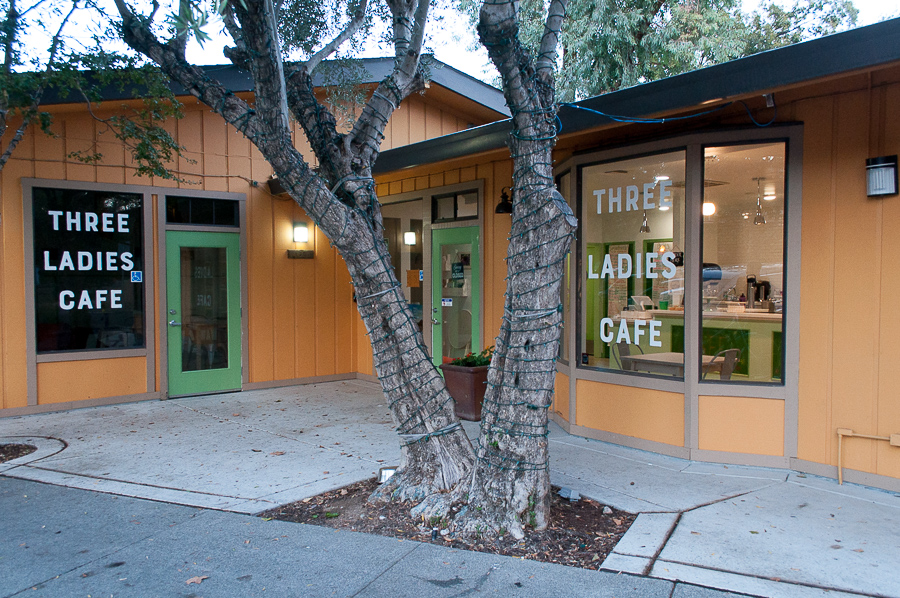
On Friday, Oct. 13, the Three Ladies Cafe opened on G Street in downtown Davis. The new restaurant promotes healthy eating and local ingredients. Members of the Davis community came together at the grand opening to enjoy this brand-new space.

Three Ladies contains a family room where children are welcome to play and move around, making it especially accessible to local families. They also provide wifi and tables where students can study.

“Everyone seems to really enjoy the healthy options here and the fact that there are vegan and vegetarian options,” said Rachel Greenlee, an employee at TLC. “We pretty much make everything in-house — fresh — and we are very kid-friendly.”

Greenlee also voiced her concerns about the lack of healthy options that Davis eateries provide, making this restaurant unique. Davis Whole Foods, which previously offered several healthy, organic options downtown, closed on Feb. 12 of this year.

“I don’t know many restaurants that I would go to and consider it being a very healthy option,” Greenlee said. “I think pretty much the healthiest option would be to stay home. But here we try to make everything as healthy as we can.”

Lia Perroud, the operations manager at TLC, also emphasized the excitement she has witnessed in the Davis community as people discover a restaurant downtown that offers vegan options and a smoothie menu.

“We’re seeing a lot of health-conscious community members really happy about seeing a menu that is based off a lot of whole foods, a lot of health-conscious cooking recipes,” Perroud said. “We also have a full smoothie menu which is unique to the downtown area. Smoothies are very central to our menu, and we haven’t seen a smoothie shop in the downtown area since Jamba Juice left, so that is exciting for people.”

Perroud also described local families’ enthusiasm when they learn about TLC, since they often feel unwelcome in places in downtown that primarily cater to students.

“A lot of families come into TLC really happy and grateful to have this place where they can come and have brunch or lunch with their kids,” Perroud said. “They can really kick back and not worry so much about making a little noise and feeling welcome as families.”

Since the cafe is still in its early stages, the managers of TLC are still working on perfecting their menu and figuring out ways to incorporate the public’s desires. Perroud noted that TLC staff members hope to use the cafe’s extra space as a venue for special events, as they have already hosted a special event dinner for the Vegan Club in Davis and are open to other events as well, such as birthday parties and baby showers.

Neha Jain, a fourth-year economics major, explained that she has been eagerly waiting for a healthy, vegetarian option in downtown Davis. She has felt there are a lot of vegetarians, and vegans who have also been seeking a local, healthy option.

“It’s pretty hard to find a place that has good options for people with vegetable-based diets in Davis,” Jain said. “This is really great for vegans and vegetarians, and hopefully having healthier restaurants will encourage people to eat healthier as well.”


Written By: Hadya Amin — city@theaggie.org

ALS: more than ice bucket challenge

CATHY SPECK / COURTESY

ALS walk in Sacramento raises awareness about disease

When people think about amyotrophic lateral sclerosis, they might associate it with the ALS ice bucket challenge. However, drenching oneself in ice water is no comparison to the daily challenges faced by those fighting the disease. This disease affects the nerve cells in the brain, which affect everything in a person’s day-to-day life. In efforts to raise more awareness and bring in resources, the ALS Association has been organizing walks for the past 30 years. This past Saturday, Oct. 14, the ALS association in West Sacramento raised awareness and fundraised to combat ALS.  

Cathy Speck, an ALS advocate who is also battling the disease and has had loved ones affected, spoke about her journey. Speck also represented Davis with her team “The Specktaculars” on the walk.

“It was completely life-changing; what I knew about my day-to-day had totally changed,” Speck said. “For me, it’s a process […] My mantra is to ‘adapt, adapt, adapt,’ and what that means is that I can’t control what’s happening to my body physically, but I just adapt on how to do things differently every time something changes. The first thing I did was walking on my own; I used a walker, and it’s totally decorated with stuffed animals and happy noise-makers, and the reason I did that is so that people wouldn’t be nervous or afraid to talk to me. My walker is so welcoming, and it helps when people can come talk to me.”

In addition to battling ALS, Speck is also battling cancer. However, she views her diseases as an obstacle to overcome, as she strives to look on the brighter side of life.

“I choose to always find something good in whatever situation,” Speck said. “Since I can no longer work, I have time to be really introspective about what’s important to me and what I want to spend my energy on, whether it’s my physical energy, emotional or spiritual energy.”

Even though Speck’s energy is drained by her diseases, she still tries to make the most of her time by advocating for cures, including going to the ALS walk in Sacramento.

“Awareness and fundraising is important to me so that everybody who is affected with ALS will have hope for a cure, as there is not a cure now,” Speck said. “I’m motivated for everybody since I know how much it can devastate a family.”

Speck urged others who battle ALS to find peace.

“Find peace […in] every moment, as much as you can; try to remember that everything changes and to stay open to the changes, and breathe whatever positive moment you may have,” Speck said.

Amy Sugimoto, the executive director of the ALS Association, explained how the walk started.

“When you see the patients and you know firsthand the dire needs they have, it’s very motivating as there is a lot of needs, and this is our largest fundraising we do every year,” Sugimoto said. “It’s what allows us to offer our programs and services to the ALS community; without this walk, we will not have the patient services that we do, so that’s very motivating.”

The walk has been going on for a number of years and will continue until a cure is found.

“This is a national event, so every single community that has a chapter in them will have a walk to defeat ALS, and it’s been around for about 30 years,” Sugimoto said.

After watching her friend fight the disease, Nadine El Khoury was inspired to make a documentary in order to help promote recognition of the disease.

“It started with a close friend of mine,” Khoury said. “It’s a big shift, so I decided then that I wanted to know more about the disease. Eventually, it turned into me wanting to do a documentary about it after a couple years.”

In hopes of spreading awareness, Khoury explained that ALS is a complex disease; however, it does not take a lot for people to learn the basic background and understand in order to help support the cause to find a cure.

“It was a very long process; it took seven years to do the documentary,” Khoury said. “It became a lot bigger, because I understood that it was important to include the science of the disease. I don’t have a biological background, and I realized that most people don’t, so if I can understand it then I know others can too.”

Khoury’s experience watching her friend inspired her to keep advocating for the disease as well as show others the reality of ALS through her documentary.

“It changed my life and what I knew about living,” Khoury said. “I would go home and cry thinking about how it is possible that now he is stuck in bed, and I go and think that it’s so unfair. In the end, I can do whatever I want, like I can travel, rest [or] shower while he’s stuck in bed. He can’t do anything even though he wants to so badly because he is so full of life. It’s so frustrating […] He continues to write, and he wrote three books. He’s still trying to do everything, and I’m thinking ‘Wow… It’s so inspirational.’ It changed my perspective, and you can’t not be inspired.”


Written by: Stella Tran — city@theaggie.org


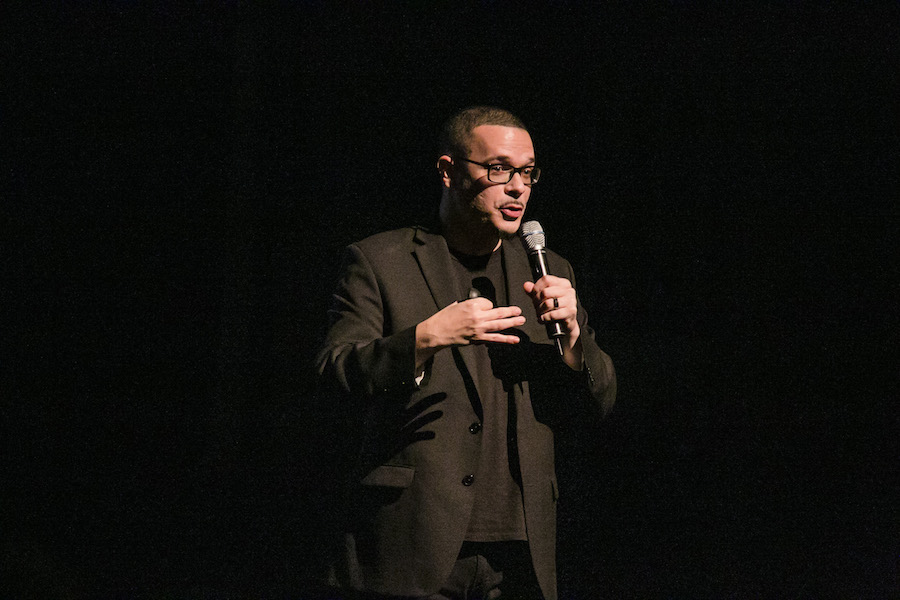
Shaun King speaks at Wright Hall

TAYLOR LAPOINT / AGGIE

King discusses police brutality, current political moment

On Wednesday, Oct. 18, writer and activist Shaun King spoke to over 400 students at Wright Hall. The 40-year-old is known for using social media to talk about social justice issues such as police brutality and racial discrimination. He is also the senior justice writer for the New York Daily News and a commentator for the YouTube program “The Young Turks.”

“I decided to come because I want to see what’s changed, what’s evolving and how we can continue our growth,” said Hisani Stenson, a second-year political science major who attended the event. “[As well as] see the right way to protest […] and how we can combat stereotypes.”

King started off his speech by telling his audience about the incident that sparked his initial passion for activism. In 2014, he was sent a video of a police officer choking a person of color to death.

“I made up my mind that I [was] going to do something about it,” King said.

In the following months, more instances of police brutality against people of color occurred, including the death of Tamir Rice, an African-American boy who was 12 years old when he was shot by a police officer in November of 2014. Like many others who were disturbed by the violence, King protested.

“They didn’t even care about our protests,” King said in response.

At around the same time, King was enrolled in a history class where he learned that while technology consistently improved over time, humanity as a whole did not. According to King’s diagrams, humanity continuously goes through cycles of peaks and troughs.

King then asked his audience where they thought they are in history. King stated that under the Trump administration, we are definitely not at a peak, but the question is how far down along the trough we are.

“It is hard to know where you are in history when you’re in it,” King said.

King then discussed the sharp increase in incarceration rates in recent years and said that the increase was not a mistake but a conscious effort by those in power to “criminalize blackness.” According to his speech, while a higher percentage of white people sold drugs, black people were prosecuted 800 percent more.

King also said that the downward trend we may be currently experiencing will not end when Donald Trump’s presidency expires, and the fact that he was elected president is a manifestation of deeper issues.

In the next part of King’s presentation, he answered questions from the audience that were passed up to him on index cards during his speech. When asked whether he thought that current law enforcement can be fixed, King expressed that he felt the current system needed major changes, but these changes are more likely to happen bit by bit, by getting to the point where men fight sexism as if it were their own problem and white people combat racism as if it were their own problem.

“We are just beginning to scratch the surface of what could happen,” King said.

He concluded by listing four groups necessary for change: people, plans, energy and money.

“I feel that I’m at a loss of words,” said Mahtab Danai, a second-year medical student at the UC Davis School of Medicine. “He really made a point that when we see people fight against injustice, it’s mostly people who are affected by it. We need to learn that you don’t have to be a victim to speak out against injustice.”


Written by: Clara Zhao — campus@theaggie.org

Don’t be trashy: Recycle

HANNAH LEE / AGGIE

UC launches #MyLastTrash campaign to reduce waste

Alongside global and state efforts to combat pollution, the University of California has implemented the #MyLastTrash campaign. This campaign brings attention to the overall UC goal of zero waste by 2020. So far, 69 percent of waste from the universities has been diverted from landfills by recycling and composting.

The #MyLastTrash campaign calls students to action to reduce waste by recycling, composting, reducing food waste or using reusable bags or containers. People can pledge to show their dedication to protecting the environment and helping the UC obtain its zero waste goal.

The Editorial Board supports this move by the UC to implement the campaign on its campuses. This is a good stepping stone in establishing a culture of sustainability and promoting life-long habits of proper waste disposal.

Mini-grants, funded by UC vendors and the Global Food Initiative, are also offered for those interested in spreading awareness by sharing their experiences and ideas to promote waste reduction. The deadline to apply is Nov. 8 at midnight.

UC Davis has been actively committed to reusing, reducing and recycling. Students and other volunteers took part in UC Davis’ eighth Green Move-in Recycling Drive from Sept. 17 to 18, which entailed recycling foam packing material that would be reused to create picture frames, among other items. This year, UC Davis collected and recycled a record of 826 pounds of foam packing.

The UC system recently received an Excellence in Green Power Use Award on Oct. 23 from the Environmental Protection Agency. Beyond receiving this award for setting a “compelling example,” the UC system is also working on a Carbon Neutrality Initiative, which pledges that the universities will become carbon neutral by 2025.

Students on campus have every opportunity to make environmentally-friendly decisions. Dining facilities on campus do their part by using eco-friendly products, such as compostable plates and utensils. In addition, Student Housing and Dining Services provides many resources, such as bins for reusables, mixed recyclables, cardboard, organic waste, electronic waste, hazardous waste and landfill. There are also Waste Diversion Guides that provide exact locations for waste disposals. There is no excuse to not recycle and prevent waste from ending up in landfills.

The Editorial Board commends UC Davis and the UC system for being leaders in green power and being proactive in sustainability. We encourage readers to recycle The California Aggie and for every student, administrator, faculty member and resident to do their part by being mindful of their waste.


Written By: The Editorial Board

Humor: Silo chicken strips now made with 25 percent less capitalism

JORDAN CHOW / AGGIE

Without Carl’s Jr., UC Davis gets some #fresh strips

With the recent renovations of the Silo, several changes were made to the food supplied there. Recipes were altered to cater to the new independence that UC Davis feels by slapping in Spokes Grill in place of Carl’s Jr. and Pizza Hut — and the students are tasting the difference.

“You can TASTE the lower amounts of capitalism in the chicken strips,” third-year Beth Boop said. “This is dope because I’m actually on a diet. Trying to cut those pounds down so I can wear my dream Halloween costume: Slutty Gunrock.”

Boop was unspecific in how one would dress as a “slutty” Gunrock, stating that it was about carrying “horse-elf” with confidence, which is a terrible pun that no one needed. Other students are equally enthusiastic about the changes to the recipe, and the chefs are quite proud.

“It’s the secret recipe that gets ‘em in here!” chef Girl Fieri said. “I just put in a quick dash of capitalism, but I substitute in a tidbit of school pride and a tractor ride for the rest! Additionally, I put about two tons of salt and lard in each batch.”

Some students are not as impressed with the recipe. One student stands stationed outside of the Silo every day just to inform passersby of his concerns and complex thoughts on this matter.

“I’m a vegan,” second-year Kale Williams whispers in the ear of every guilty chicken-mongler in sight.

Faculty members are also a little sick of the hype over these new “Low Cap” strips. One professor began a rant in front of his freshman seminar called “The Nintendo DS: Science’s Greatest Accomplishment.”

“What’s this ‘Low Cap’ crap I’m seeing around campus?” Professor John T. Chair said. “Back in my day, we were thankful for capitalism in our foods! That meant that Momma didn’t pull it from the trashcan of our neighbors! Back in my day, we were happy to have Pizza Hut because option two was a piece o’ butt! Back in my day, everyone was dying from the plague! You Millennials make me sick! Not quite as sick as the plague, but SICK!”

Despite this attitude, students are still hyped to have chicken strips available on campus, as they are historically the safest item to order at any establishment.

“You could go to a restaurant run by cockroaches and somehow ordering chicken strips would make you feel safe,” fourth-year entomology minor Paul Thatjazz said.

“Wow. Rude,” one bilingual cockroach said.

All in all, these strips are here to stay and one thing’s for sure: Your consumer heart’s arteries will get blocked a little slower with the aid of this snack.


Written by: Olivia Luchini — ocluchini@ucdavis.edu

(This article is humor and/or satire, and its content is purely fictional. The story and the names of “sources” are fictionalized.)