53.5 F
Davis

Davis, California

Tuesday, December 23, 2025
Home Blog Page 591

Aggies eradicate Eagles

BRIAN LANDRY / AGGIE

UC Davis men’s water polo team wins 20-2 against Concordia in conference play

Fans filled the stands at Schaal Aquatics Center in Davis, Calif. on Oct. 15 as the UC Davis Aggies men’s water polo team took on the Concordia University Irvine Eagles in a Western Water Polo Association (WWPA) conference match. The Aggies were ranked number 10 by the NCAA and were 3-0 in conference play coming into the game against the Eagles, winning the previous day 11-5 against Santa Clara, also in a conference match.

The match started off strong for the Aggies, when junior attacker Marcus Anderson put one in the back of the net on a powerplay to give them the 1-0 lead (5:54). Junior utility Ido Goldschmidt added to the Aggies total shortly after at 4:57 on a second Davis powerplay to increase the lead to two. The flurry of goals did not stop for UC Davis when sophomore attacker Yurii Hanley placed a floater in the net, further extending the Aggies lead 3-0 (3:00). Freshman attacker Jack Stafford added to the Aggies lead, scoring at the two-meter mark at 0:40. UC Davis led the Eagles 4-0 after the first, the team also producing a very impressive seven combined steals heading into the second period.

Concordia put a goal on the board in the second period of play on an even strength goal at 5:08, bringing the score to 4-1. On an impressive goal from almost the half distance line, the Eagles scored a second unanswered goal to bring the Aggie lead to only two (4:25). The Aggies were able to answer with a goal of their own, when junior attacker Colter Knight placed one in the net at 2:08 to extend their lead 5-2. Seconds after (1:46), Anderson scored his second of the match on a powerplay goal, bringing the score to 6-2. The Aggies seemed to find the scoring rhythm they produced in the first period, as Goldschmidt smashed one in the back of the net around the two-meter mark to give UC Davis a five-goal lead (0:34). Going into halftime, the Aggies had the 7-2 lead.

UC Davis started strong in the third period, when senior center Morgan Olson-Fabbro scored a behind-the-back goal at 7:04. Senior utility Cory Laidig continued to add on goals for the Aggies, scoring on a powerplay around the 3-meter mark to give them the 9-2 lead (5:35). The goals did not stop for UC Davis, when Goldschmidt earned back-to-back goals, his third and fourth of the match, at 4:53 and 4:30, extending the Aggie lead to an impressive nine goals. Sophomore utility Keenan Anderson scored again for UC Davis at 2:22, bringing the score to 12-2. Stafford was able to put one in the back of the net for the Aggies with a behind-the-back shot, shortly followed by Keenan Anderson’s second at 0:59 and 0:22 respectively, giving UC Davis 10 unanswered goals. After the third period, the score was 14-2 in favor of the Aggies.

“Water polo is a team sport so I feel like my teammates helped me a lot to get me the passes they did,” Goldschmidt said of his four goals scored. “It doesn’t really matter what I scored, I am happy that we won. Compared to yesterday I feel we realized what we didn’t perform as well and tried to fix it.”

Beginning the fourth, on a UC Davis powerplay, sophomore attacker Holden Tamblyn squeezed one through a crowd of players to extend the Aggies’ lead 15-2 (7:09). Senior attacker Spencer Galli added onto the many UC Davis players who scored on the day, scoring his first at 6:22. Marcus Anderson picked a corner and placed the ball in the back of the net for the Aggies, completing his hat trick at the two-meter mark (4:49). Continuing on an absolutely dominating goal-scoring performance, sophomore attacker Max Somple scored at 4:27 to extend the lead for UC Davis to an incredible 16 goals. Concordia could not answer the overwhelming number of goals by the Aggies as Keenan Anderson scored his third at 1:08. Adding fuel to the fire, Somple put his second past the Eagles goalie, the game ending in a 20-2 Aggie victory. There was no question that UC Davis dominated the game, scoring 16 unanswered goals out of their 20 total. Freshman goalkeeper Jonah Addington had an impressive eight saves in the game. The win brought the Aggies’ conference record to 4-0.

“I think that it was a better performance than yesterday and we were a little bit sharper,” said head coach Dan Leyson. “We have been training really hard and pushing our guys for the final push of the season. I wish execution [today] was a little bit better, but still areas for improvement. I still feel like there are two or three crucial plays where we didn’t have the execution that we needed, but compared to before it was better.”

The Aggies then faced four more non-conference teams in the Julian Frazier Memorial Tournament the weekend of Oct. 22 and 23, winning all four of their games. This brought the Aggies overall record to 16-5 on the year. As far as conference play goes for the Aggies, one more home game Saturday Oct. 28 at 12 p.m. and two more away games remains in their attempt to repeat last year’s undefeated conference record.

“I think that we have a lot of room to get better,” Leyson said. “We will watch film and going to continue to just hammer down on ways that we can get better.”


Written by: Ryan Bugsch — sports@theaggie.org
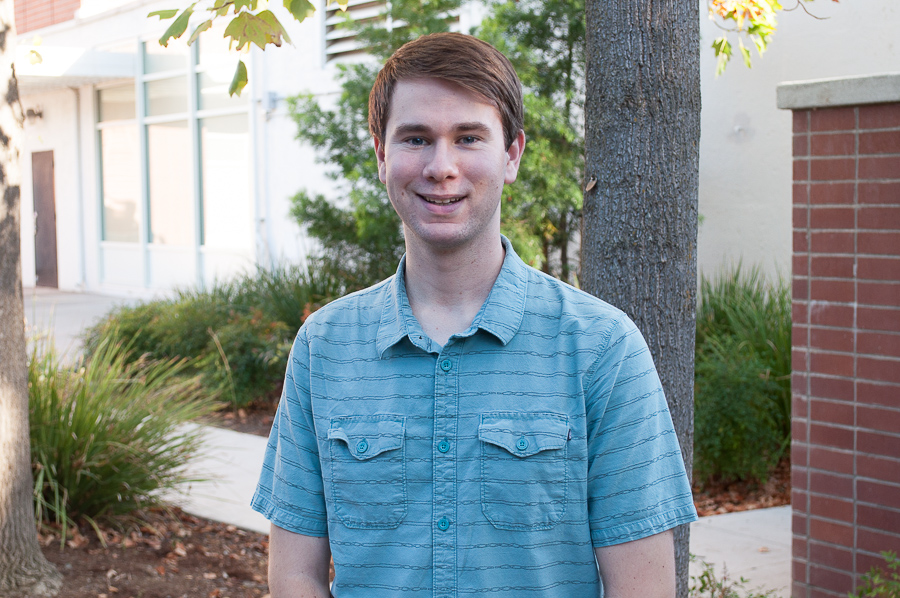
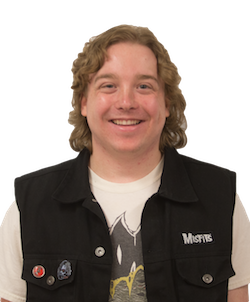
Michael Swalberg sworn in as ASUCD interim senator

FARAH FARJOOD / AGGIE

Swalberg plans to improve elections processes

Michael Swalberg, a fifth-year political science major, was sworn in as one of two new interim ASUCD senators on Oct. 12. Swalberg filled one of the two open positions from the 2016 Fall Election.

Swalberg transferred to UC Davis last year and served on the Elections Committee for ASUCD. During the 2017 Winter Elections, Swalberg also filled in as interim chair of the committee.

“Through that process, I had first-hand experience with the election bylaws and realized they needed cleaning up,” Swalberg said.

During his short time as an interim senator, Swalberg said he hopes to “streamline the bylaws, rethink the elections process [and] help expand and improve the elections committee.”

Instead of running for reelection for ASUCD Senate after his interim term ends in November, Swalberg will be interning in Washington D.C. and graduating in the spring. Although his time in the Senate will be brief, Swalberg said he is looking for ways he can help improve Senate election processes that will benefit all units of ASUCD.

Students looking to get in contact with Swalberg can reach him during his office hours Tuesdays and Thursdays in the CoHo from 4 to 6 p.m.


Written by: Ally Russell — campus@theaggie.org

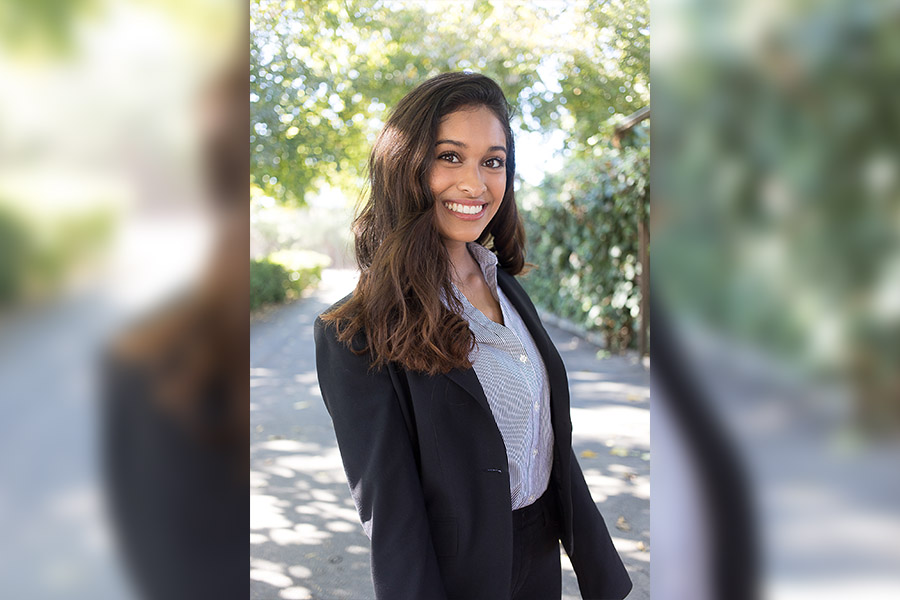
Manasa Gogineni sworn in as ASUCD interim senator

ZOË REINHARDT / AGGIE

First-year student plans to create resources on safe drinking, consent

First-year international relations major Manasa Gogineni was sworn in as an ASUCD interim senator at the Oct. 12 ASUCD Senate meeting. She is replacing one of the two senators elected in the 2016 Fall Election who resigned at the end of the 2016-17 school year.

After finding a vacancy on ASUCD’s website, Gogineni applied for the position and was approved by the Senate.

Gogineni will hold the position of interim senator for just under two months. During that time, Gogineni said she hopes to focus on “creating resources for first-year students relating to safe drinking and sexual consent, consolidating announcements from clubs” as well as “figuring out how to increase lighting on and around campus.”

Following her time on Senate, Gogineni said she plans to join an ASUCD commission. Additionally, for the rest of her first quarter at UC Davis, Gogineni said she looks forward to becoming a member of the Delta Gamma sorority and joining clubs on campus.


Written by: Ally Russell — campus@theaggie.org

LGBTQIA Resource Center hosts National Coming Out Day event

RAUL MORALES / AGGIE

UC Davis graduate delivers keynote address, followed by student open mic

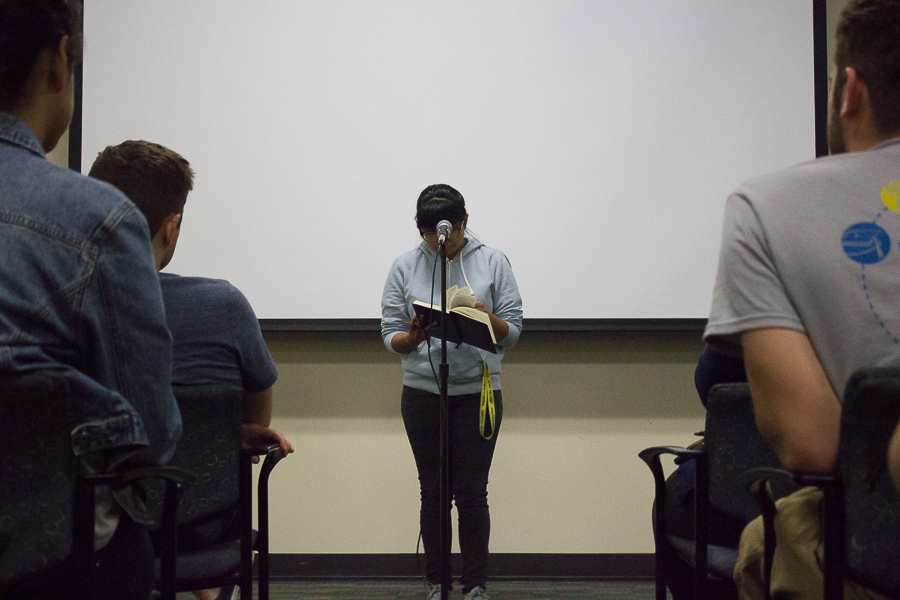
National Coming Out Day on Oct. 11 was celebrated by the UC Davis LGBTQIA Resource Center with an open mic night for students to express their coming out experiences. Before the student open mic commenced, UC Davis alum Bee Curiel delivered insight into their own experiences and shared their poetry. As the center stated in its Facebook post, the event was intended to “respect and honor individuals with varying degrees of ‘out-ness.’“

Curiel, who identifies as a “first generation, non-binary, fat, queer UC Davis alum,”  talked about being a community coordinator for the Center while at UC Davis.

“I was lucky that my job at UC Davis fostered queerness,” Curiel said. “School was kind of my escape.”

In a smaller room within the Student Community Center, Curiel told the audience of about 50 that they were outed to their parents at age 18 by other parents. Coming from a Catholic and Mexican family, Curiel explained how their parents did not provide the healthiest forms of support.

Curiel also spoke about how varying situational outness is a reality for many people.

According to Curiel, coming out can often cause problems based on an individual’s personal situation — identifying as LGBTQIA can still be unsafe and can change how they are viewed by others in their everyday environments. In reference to their own personal experience in their workplace, Curiel said they “want to work somewhere where [they’re] valued.”

Angelo Quiroz, a third-year double major in gender, sexuality and women’s studies and psychology as well as a community coordinator for the center, introduced Curiel and coordinated the open mic presenters. The event went from 7:30 p.m. to about 9:30 p.m. When asked, Quiroz talked about the importance of National Coming Out Day.

”I think it’s really powerful for our community to come together, especially when coming out is a privilege,” Angelo said. “[Coming out] can lead to abuse, it can lead to murder — it isn’t always safe for everyone. Days like this are really important because it allows us to declare our identities and existence, because they’re often erased by institutions and people in power.”


Written By: Aaron Liss — campus@theaggie.org

Safer passages to relieve genetic pressure needed for California mountain lions

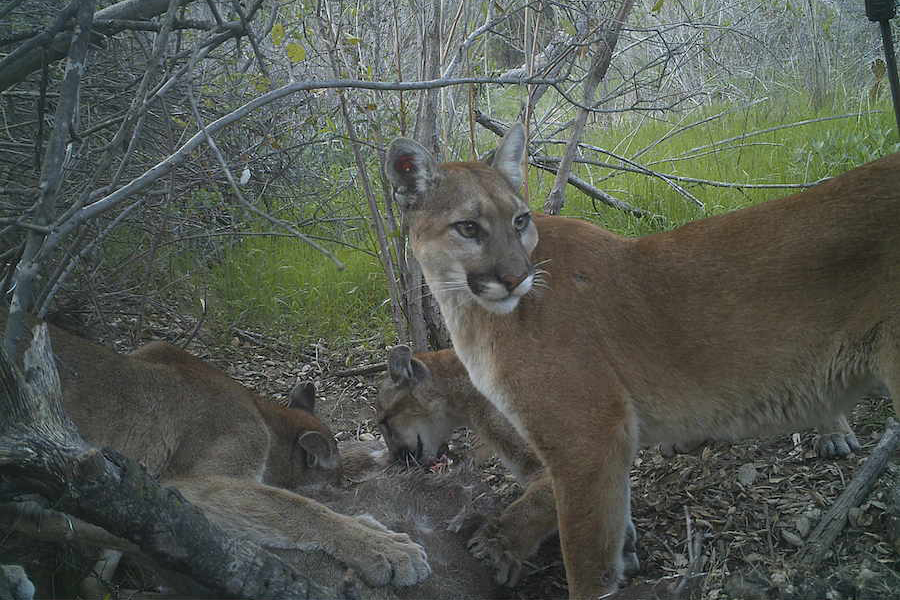
Mountain lion F92 and her kittens dining. F92 is a partner and daughter of M86, a male mountain lion who crossed I-15 and relieved some genetic pressure in the Santa Ana populations. (THE WILDLIFE HEALTH CENTER SOUTHERN CALIFORNIA MOUNTAIN LION PROJECT / COURTESY)

Researchers provide genetic evidence for conservation policy change

A 2017 paper published by the Royal Society described the genetic diversity of mountain lions in Southern California and suggests methods to conserve their space for protection. A team of University of Wyoming and UC Davis scientists analyzed biological samples of mountain lions collected near Los Angeles and San Diego since 2001 to create a genetic structure and pedigree of the populations.

Mountain lions, also called pumas or cougars, are large cats living in the forests and mountain ranges of the Americas. Pumas serve as apex predators in their habitats, hunting most other moving animals, especially deer and small mammals. Cougars, particularly the males, roam in large areas and live in solitude until seeking partners for mating. About 5,000 pumas live in California.

Pumas living in Southern California have been dealing with human developments intruding into their habitats in recent years. A particular problem has been Interstate Highway 15, which sliced a mountain lion habitat in half, leaving the Santa Ana mountain lion population vulnerable to inbreeding. The fragmented habitat reduces the ability of the felines to freely move, mate and create new offspring.

Kyle Gustafson is a postdoctoral conservation geneticist in Dr. Holly Ernest’s Wildlife Genomics and Disease Ecology Laboratory at the University of Wyoming. Gustafson was in charge of the data analyses and writing the research paper. Mountain lions are named in this project by their sex (M for male, F for female) along with an identifying number.

“Although 7 males have crossed I-15 over the last 15 years, only a single male (named M86) was successful at mating,” Gustafson said. “He sired 11 offspring, reduced inbreeding and increased the genetic diversity of the Santa Ana population.”

The pumas on the Santa Ana side have become significantly inbred due to difficulty mating with the more diverse mountain lions in the Eastern Peninsular Range across the highway. The bright lights and noises from vehicles and human activity near the freeway disturb animals who wish to cross.

“Overall, mountain lions are doing well in California,” said Patrick Huber, a conservation scientist at UC Davis who researches land use plans for animals such as mountain lions but was not involved in this project. “It’s these specific populations we are worried about”.  

UC Davis researchers have been trapping pumas to affix them with tracking collars for years. Monitoring where mountain lions travel helps scientists understand their range and how cougars move between populations in their lifetimes. Scientists detected M86 crossing I-15 in 2010 from the Eastern Peninsular Range to the inbred Santa Ana mountain lion population because of a tracking collar.

Dr. Winston Vickers is a wildlife veterinarian at the Karen C. Drayer Wildlife Health Center at UC Davis and has been involved with mountain lion research at least 15 years. Vickers has extensive experience trapping and collaring pumas in the field and is one of the authors of the paper.

“The males are the critical element to spreading genes through the landscape,” Vickers said.

Tissue samples of 146 animals were used to create a genetic structure of the mountain lion population. Gustafson’s analyses concluded that mountain lion M86 significantly improved the genetic metrics of the Santa Ana population over a few years with an infusion of diverse genes through its offspring. Allelic richness increased in the samples Gustafson investigated.

“Pumas in the Santa Ana Mountains and Eastern Peninsular Range, which are biologically capable of traveling for miles, are being inhibited from mating by I-15, which is only 8-10 lanes,” Gustafson said. “Essentially, we are finding distinct populations on either side of I-15, which is only the length of a football field. This is highly surprising based on the fact that pumas have been documented to cross major areas, including the entire Central Valley of California.”

M86 was killed by a vehicle after contributing some new genetic material to the Santa Ana mountain lion population. Another puma who successfully crossed the highway to the Santa Ana side was legally shot and killed before mating due to preying on domestic animals.

“Over time, we discovered, through following them around, these animals had shorter lives and worse mortality rates than we had imagined,” Vickers said.

Most mountain lions die due to car strikes from crossing interstate highways. Male mountain lions roam far between populations to mate, which helps to keep genetic diversity among groups at reasonable levels. Creating healthy offspring strengthens the local populations, but males journeying across highways such as I-15 or I-10 don’t always make it across alive. Vehicle strikes not only kill large and important animals, but contribute to human fatalities and millions of dollars in property damages every year.

Pumas are also threatened by humans with firearms. Californians can apply for permits to kill mountain lions if livestock or pets are attacked. Last year, over 100 mountain lions were killed by depredation permits issued by the state. Changes in animal husbandry tactics could prevent mountain lions from preying on domestic animals.

“Concerned citizens could be cautious of pumas while driving and keep their domestic animals protected from any potentially hungry pumas,” Gustafson said.

Creating safe ways for animals to cross over or under freeways and away from human developments is one way to reduce the impact of habitat alteration on genetic diversity. Erecting a green passage over a highway for mountain lions could improve travel for other species, such as bear and deer, who also fall victim to vehicle strikes.

“People are getting creative about certain types of crossing structures,” Huber said.

An area just south of Temecula is a prime location for a wildlife corridor to connect the Santa Ana and Eastern Peninsular Range mountain lions over I-15, but funding for the project is uncertain. Another project to the west near Liberty Canyon would cross US 101, allowing the Santa Ana pumas to travel north more safely, but would probably not improve genetic diversity as much as the Eastern Peninsular corridor. Funding for the Liberty Canyon Wildlife Crossing is more optimistic due to local philanthropists and nonprofit organizations such as the National Wildlife Federation. The estimated costs of the Liberty Canyon project, including construction and land purchases, would be $57 million.

“The National Wildlife Federation has committed to raising a large amount of money to create a crossing, so it’ll be privately funded,” Huber said.

The genetic pedigree created using 15 years of blood and tissue samples from multiple generations of California cougars gives a status update on how the felines are faring in their fractured habitat. The research collected over several years gathered data from many animals who were trapped, tracked and sampled with follow-up visits.

“An underappreciated difficulty is the establishment of long-term ecological studies,” Gustafson said. “This study spanned nearly 20 years. Without this long-term data, our ability to understand these populations and individuals would be extremely limited.”

Data from long-term studies is more convincing than cross-sectional studies at one point in time. Policy updates can help conserve and connect mountain lion territory while cutting down on the economic burdens of vehicle strikes and domestic predation.

“Citizens can be active politically in supporting fiscal policy which takes into account wildlife needs,” Vickers said.


Written by: George Ugartemendia — science@theaggie.org

Aggies’ first conference loss to Gauchos

0
NICHOLAS CHAN / AGGIE

UC Davis women’s soccer team loses tough 1-0 match

With an overcast sky and windy weather, the UC Davis women’s soccer team was looking to extend its unbeaten conference record for the 2017 season against the UC Santa Barbara Gauchos in conference play on Oct. 19. The Aggies came into the game with an overall 4-9-1 record, a 3-0-1 conference record and were tied for second place in the Big West Conference. UC Davis was looking to be unaffected by the dreary weather, wanting to walk away with another conference win.

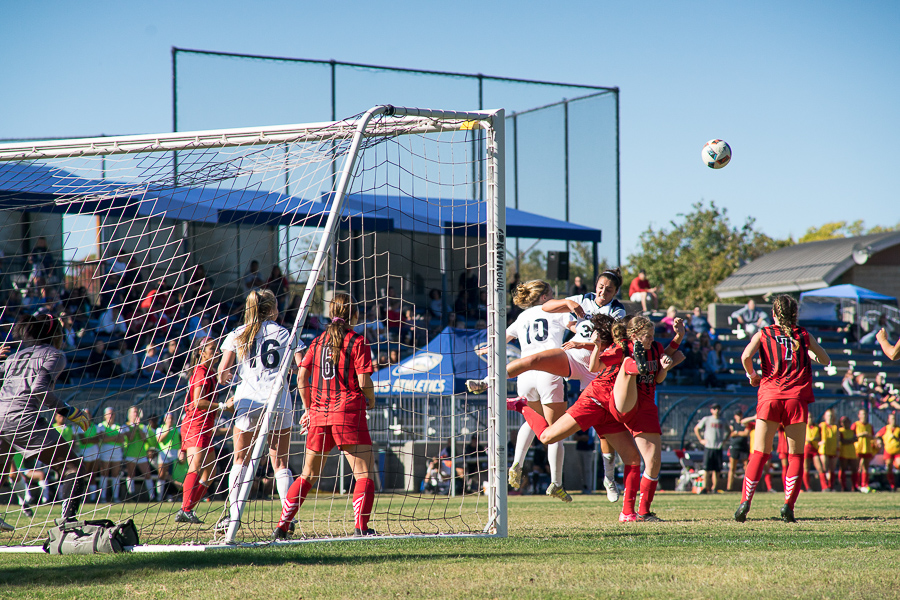
The first half started off with back-and-forth possession by both teams, neither team managing to get a shot in the first seven minutes of play. However, in the eighth minute the Gauchos found the back of the net on a header from a cross into the box, giving them the 1-0 lead. With three minutes left in the first, UC Santa Barbara nearly added another goal to its lead, but a shot off of the crossbar kept its lead to one, as the second half ended with the Aggies trailing. In the first half, UC Davis took two total shots, with the Gauchos taking four. The Aggies knew that they would have to put something together to try and get the comeback victory in the second half.

UC Davis outshot its opponents in the second half six to five, and almost the entire half was Aggie offense on the Gauchos half, but the Aggies could not put one in the back of the net, and the game finished with UC Davis taking the 1-0 hard fought loss. Junior goalkeeper Alexis Smith had two saves on the day with the team having produced eight shots and 10 corner kick opportunities.

“Our second half performance was really good,” said head coach Twila Kaufman. “We were getting numbers forward and closing that gap. I don’t know if the stats were even indicative of how much we were in their half in the second half and I am really pleased. We have come back from that deficit before so I was just telling the team throughout the end that it was gonna come and I thought that was gonna happen.”

Kaufman was proud of her team and how hard they worked with the absence of a few players due to injury, and has full confidence the Aggies will produce another win in the future.

“I really think this just comes down to crossing t’s and dotting i’s,” Kaufman said. “I don’t think there was necessarily a moment that lost that game for us, it comes down to a lot of tiny moments and I think we dropped to many of those little moments in the first half. I can say I am confident that if soccer was a three-quarter game we would have won because we would have had them.”

The Aggies now have a 4-10-2 overall record and a 3-1-2 conference record. They currently hold third place in the Big West conference. Their final home game of the season was played this past Sunday adding a tie to their conference record after going into double overtime where a last-chance shot by sophomore midfielder Emma Hasco was blocked in the final minute of overtime play and secured the 0-0 tie. UC Davis only has two remaining conference matches, both away, to climb to the top of the Big West.


Written by: Ryan Bugsch — sports@theaggie.org
The Enchanted Cellar Costume Rental returns

MARINA OLNEY / AGGIE

Costumes reflect this year’s theme: “Heroines with Heart”

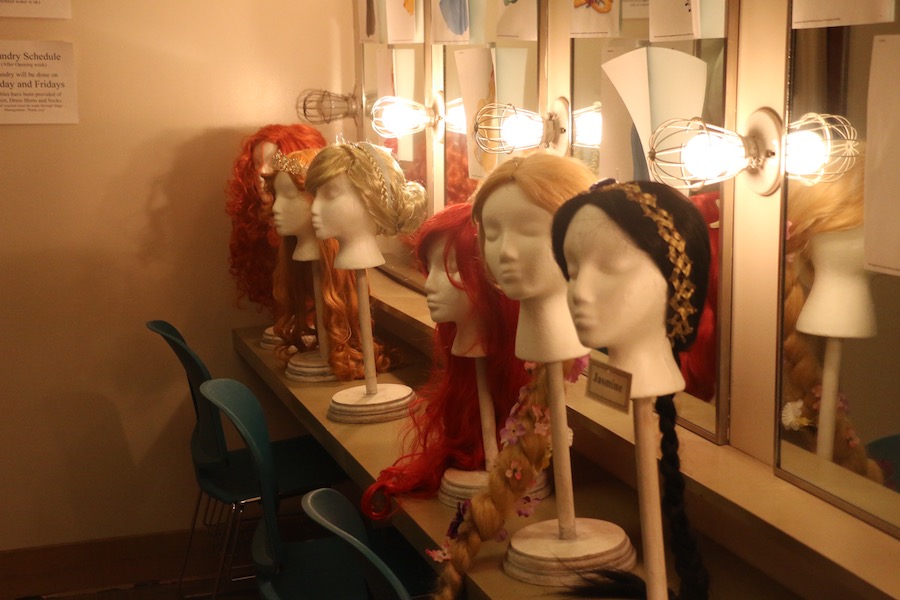
Located in the basement of Wright Hall, the Enchanted Cellar Costume Shop provides an assortment of elaborate costume rentals of all styles — and just in time for Halloween. Open all year long, the Enchanted Cellar has been providing the Davis community with a vast selection of costumes since 2004. This year’s theme, “Heroines with Heart,” celebrates female figures in folklore and literature, according to the Cellar’s website.

Coordinated by costume shop director Roxanne Femling of the UC Davis Theatre and Dance Department, the Enchanted Cellar is devoted to bringing everyone’s favorite characters to life.

“It’s great to help people out with their costumes,” said Enchanted Cellar costume consultant and fourth-year international relations major Natalie Guzman. “It’s really fun to see people try them on.”

Each year around Halloween, the Enchanted Cellar gathers widespread attention from the community. In its first year of business, the store managed to raise a total of $10,000, all of which went back into the costume department to support upcoming shows, new costumes and more.

“This time of year can get busy sometimes,” said first-year design major and Enchanted Cellar costume consultant Keilah Lim. “Sometimes we can have up to 10 people down here at a time.”

The Enchanted Cellar is open throughout the year by appointment, but the store also allows for walk-ins during the Halloween season. They offer a variety of “kits” for different costumes. According to Femling, the Enchanted Cellar is attempting to work with more personal requests this year, depending on the preferences of the customer. From “Game of Thrones” to “Star Wars,” the Enchanted Cellar has nearly any iconic character costume a customer could think of.

“We’ve accumulated a lot of costumes over the years, but we’ve also bought a couple of things, and then make them better after the fact,” said Femling. “For example, when the new ‘Star Wars’ film came out, we put together some kits for Rey and Finn, all from pieces we already had in our stock. We even got a Kylo Ren kit together!”

The Enchanted Cellar is located on campus in Wright 17. Students and faculty receive a discount on all rentals. For more information and the Cellar’s hours, visit its website.


Written by: Sydney Odman — arts@theaggie.org

Halloween cover show at The Morgue

MICHELLE GORE / AGGIE

The Morgue brings back teenage memories with upcoming house show

If there’s one thing that pulled me through my middle school angst, it was late ‘90s punk music blasting loudly in my bedroom — and I imagine most college students can relate. Local venue The Morgue is hosting a cover show for just that reason. They will be featuring songs by some of the most beloved punk bands: Against Me!, My Chemical Romance, Blink-182, Black Sabbath and Green Day.

Rest assured, The Morgue is simply a house, its name inspired by the its close proximity to the Davis Cemetery. Its residents have been throwing house shows since 2013, but this will be their first year hosting a cover show to celebrate Halloween.

Hosts Marisol Ramirez and Melissa Schiller first decided to cover Blink-182. Other performers followed suit, planning to perform songs by their own favorite punk bands.

“Halloween cover shows have been a Davis tradition over the years, but I’ve never hosted one,” Schiller said. “I’m really excited to host and play in it. […] Most of the bands that are playing are a group of friends who just assembled themselves to play these songs […] I think Halloween is a popular time for cover shows because they’re like costumes, but playing songs from different bands. It’ll be a fun night of nostalgia and pop-punk emo-ness.”

Ramirez and Schiller wanted to host a cover show featuring songs by these groups so that attendees could relive high school memories, but most importantly because they’re relatable.

“We wanted to cover Blink-182 because we thought we knew the songs well enough [to] play them and started working from there,” Ramirez said. “We chose those ‘90s emo bands because everyone knows the lyrics, and the guy from our last show said he was in a Black Sabbath cover band. ‘First Date’ by Blink-182 has been really difficult to play but fun once I get in the groove of it.”

Corey Gough, from the band Rex Means King, is coming to Davis from Vacaville to perform songs by My Chemical Romance. Similarly, Paul Collier of the band VVomen is covering songs by Against Me!.

“We’re from the Fairfield area and played at The Morgue a handful of times as well as G-Street Wunderbar, Sudwerk, Third Space,” Gough said. “I’ll be playing in a My Chemical Romance cover band. The bass player, Jason, wanted to play My Chemical Romance and kind of recruited me. I normally play drums, but he needed a guitar player so I said, ‘Sure, why not,’ […] I think it’s going to be hecka fun, and it’s just nostalgic. It’s going to be a blast.”

The appeal of these cover shows is largely their sense of familiarity. Reviving these “emo” bands may remind college students of some cringy adolescent memories, but it also opens a space where everyone can laugh about it together.

“We only have three instruments and the singer, so we’ll be trying to play as closely to the originals as possible,” Collier said. “Our music style is in the same vein, so it’s not really going to be deconstructed. Hopefully everyone will have a good time and we’ll be playing songs that they can sing along to.”

The Halloween cover show will take place on Saturday, Oct. 28 at The Morgue, located at 1919 Wahl Way in Davis. More information can be found on the Facebook event page.


Written by: Becky Lee — arts@theaggie.org


Davis Odd Fellows Lodge holding Children’s Sunday Movie Matinee

RAUL MORALES / AGGIE

Local charity organization provides family fun

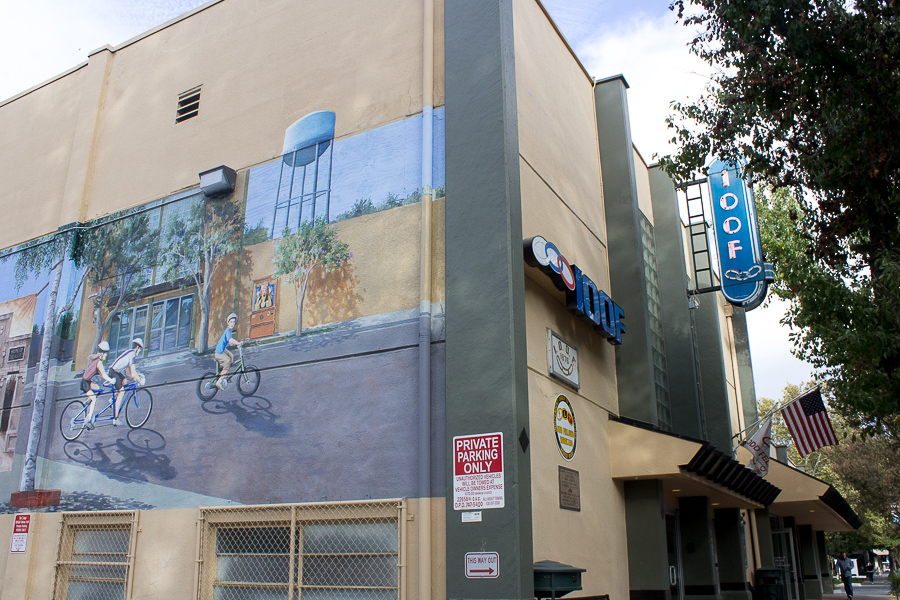
On Oct. 29 at 12:47 p.m., the Davis Odd Fellows Lodge is holding a Children’s Sunday Movie Matinee at Odd Fellows Hall, located on the corner of Second and D streets. The Lodge will be playing the movie “Monsters, Inc.” for anyone to come and enjoy.

“They’re kind of like a frat organization within the community,” said Kelli Ann O’Day, a UC Davis alumna. “Their goal is to organize a lot of charity events to raise money for different foundations and donate to different things […] This is going to be our second [movie night]. We had our first one in September, and our second one is going to be close to Halloween […] It’s free! It’s just for the children.”

The Davis Odd Fellows Lodge has organized many charity and community events since its formation in 1870. With nearly 300 members ranging from ages 20 to 90, the Lodge is the oldest organization in Davis, predating the university and even the city itself. Among other charitable events, it’s provided support to foster children and young adults who have aged out of the system, held free local concerts at the lodge and organized highway cleanups.

“One of the things we started about five years ago is a classic movie festival,” said Dave Rosenberg, the former grand master over all of the Odd Fellows in California. “Twice a year, we put on classic movies on three successive Sundays. It’s very popular. People love it, […] and it’s free. And so we thought, why don’t we bring back the old time Children’s Sunday Movie Matinees? There’s quite a few adults that come to this as well; [“Monsters, Inc.”] is funny and heartwarming for both kids and adults.”

Rosenberg stressed that the movie matinees are for people of all ages and that parents and other adults are welcome to join their children in watching the movie. The lodge will provide free popcorn and snacks for everyone to enjoy along with their movie and provide kids with coloring pages that depict the characters from the movie. There will also be a short cartoon segment before the movie with some classic animations. The cartoons and the movie will be displayed in the upper lounge of the Odd Fellows Lodge on its sophisticated display.

“My husband and I have lived here since ‘94. […] We’d walk by there and we didn’t know what was going on,” said Beth Dovi, a Davis resident and member of the Davis Odd Fellows Lodge. “We went down there and stumbled upon this wonderful group of people. Everybody was very nice. If you’ve never had an opportunity to visit the lodge or attend any of our events, I would highly encourage anybody to come on down.”

The Odd Fellows’ Lodge is located at 415 Second Street in downtown Davis. The movie will be shown Oct. 29, but the Lodge holds many other events and is always welcoming new members. More information about the fraternal organization can be found on its website.


Written by: Ahash Francis — city@theaggie.org

Tuition hikes should not support exorbitant pensions

HANNAH LEE / AGGIE

$26 million of new tuition increase to fund pensions

The University of California system has seen a 2.5 percent tuition hike this fall after the UC Board of Regents voted in January to raise tuition for the first time since 2011. While gradual tuition increases are necessary over time, these new funds are grossly going toward UC faculty’s growing pensions and comfortable retirement funds. Evidently, students’ wallets are the worker bees generating these funds to support UC retirees’ glamourous pensions.

In a Regents meeting this past September, officials discussed next year’s budget and the idea of yet another tuition increase to support even higher pensions and retiree healthcare. UC retirees who have dedicated decades of their careers to bettering the system and enhancing their respective academic fields rightfully deserve their pensions. These new, excessive sums of money, however, are starting to go toward those who have spent less than 10 years in the system.

Former UC President Mark G. Yudof receives a $357,000 annual pension after working for the system a mere seven years. According to the LA Times, a standard UC employee working for Yudof’s old salary for the equivalent amount of time should receive an annual pension of approximately $45,000. Yudof receives nearly eight times this amount.

In Yudof’s words, “That’s the way it works in the real world.”

In 2017, we can’t expect to pay the same $200 in tuition our grandparents paid. The Editorial Board understands tuition increases over time and that pensions are well-deserved for those who dedicate their careers to higher education. However, a hefty $26 million from this tuition hike will go toward bloated pensions for officials who already receive substantial salaries via the public education system.

This dollar amount ought to decrease and feed into professors’ salaries and support tenure-track faculty. Currently, the 2017 tuition hike is allocating $56 million to professors’ salaries and basic needs such as electricity on campus. Given that an amount nearly half this size will serve only to increase pensions, the Editorial Board urges the university to focus its spending directly toward students and faculty. Professors are the people who interact with students and directly influence students’ education. Without them, we lose the backbone of the university.

California students understand the trade-off of attending a UC school. Overpopulated universities with high student-to-faculty ratios can be tolerated to an extent when we receive such a prestigious and renowned education at an affordable price. When tuition becomes less than affordable in the interest of exorbitant pensions, public school students should no longer be as tolerant.


Written By: The Editorial Board

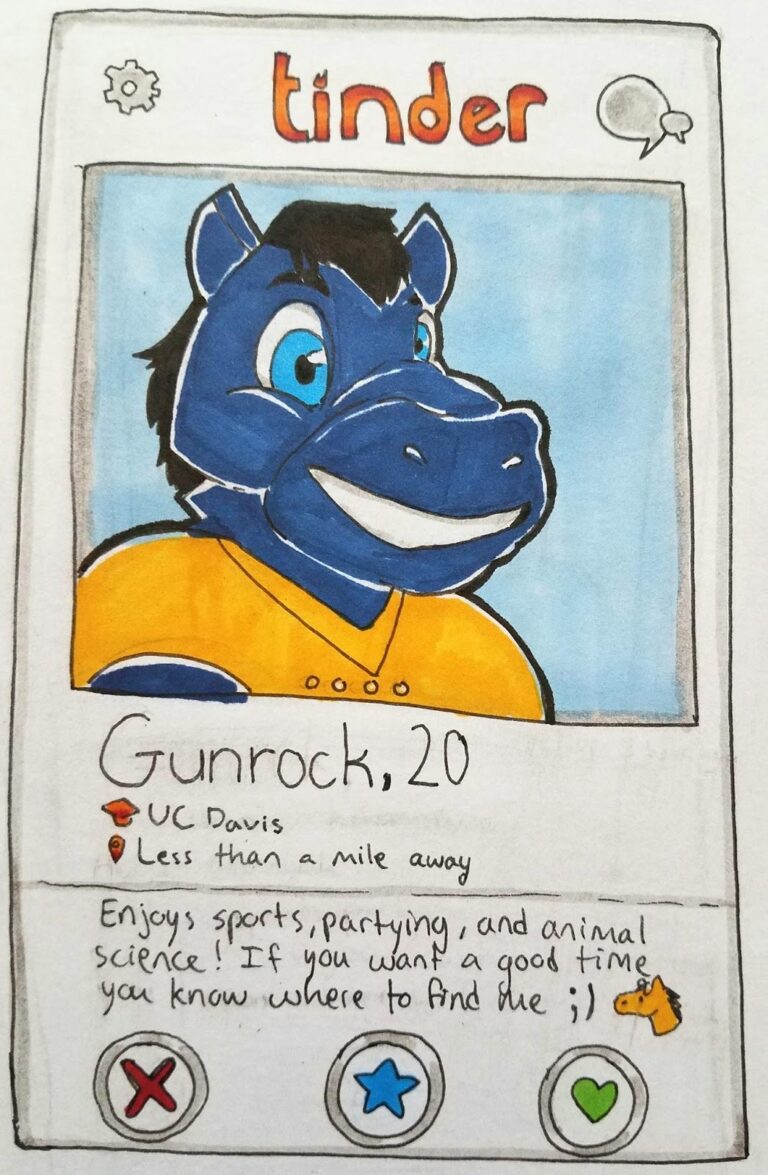
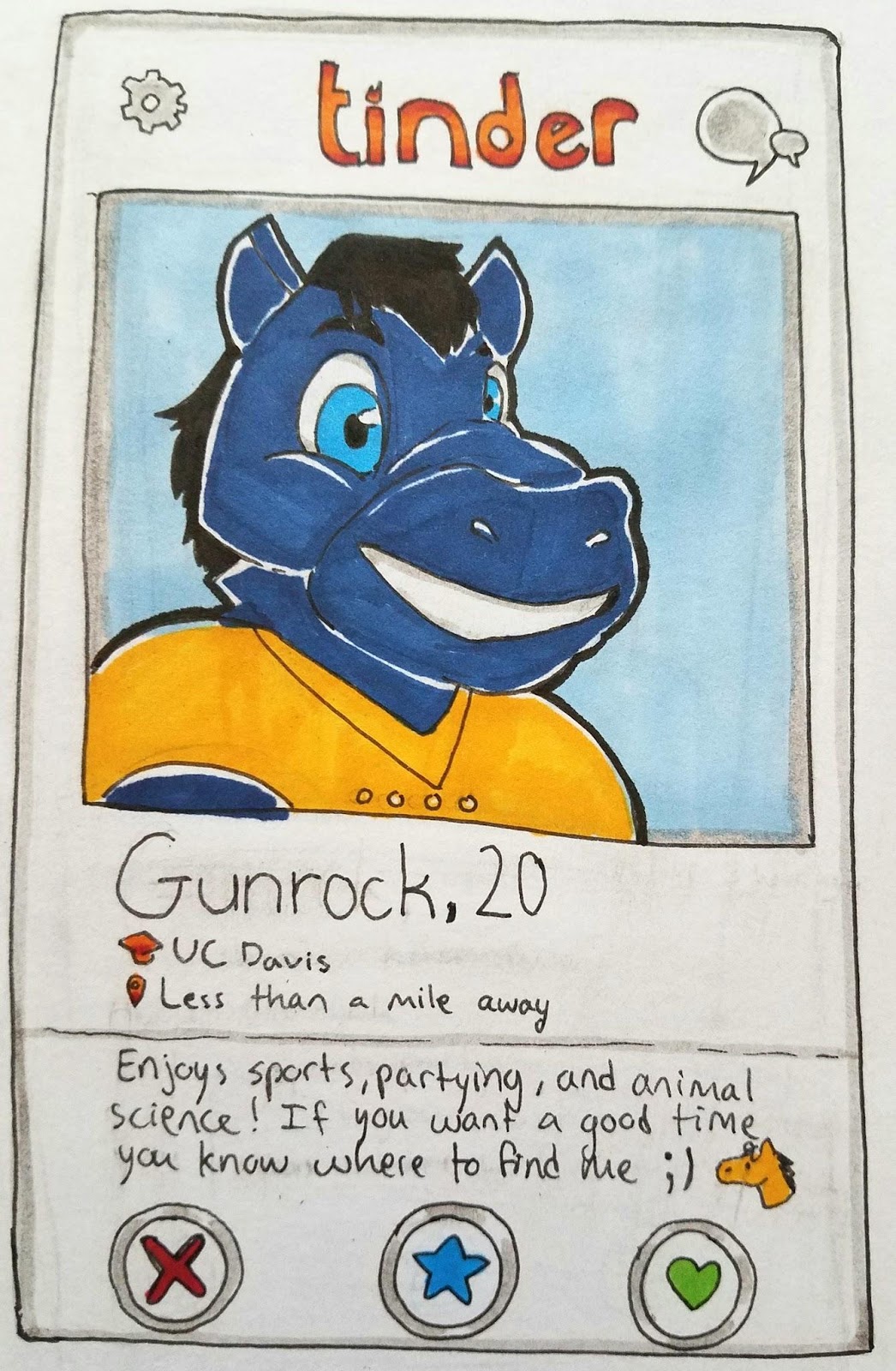
Cartoon: UC Davis finds new way to make Gunrock relevant to students

ELLIOT WHITE / AGGIE


By: Elliot White


Disclaimer: The views and opinions expressed by individual cartoonists belong to the cartoonists alone and do not necessarily indicate the views and opinions held by The California Aggie.

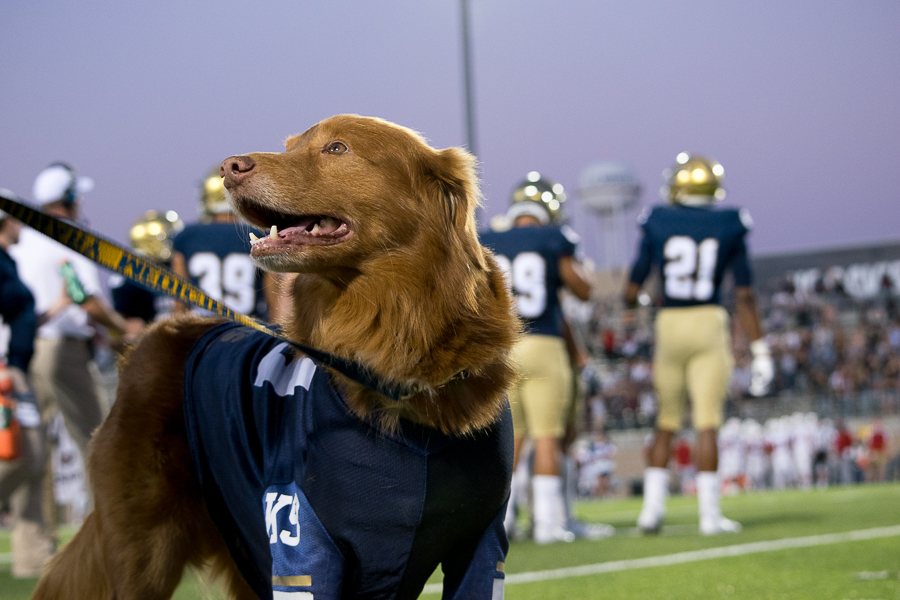
Meet Pint, the tee retrieval dog for the UC Davis football team

0
ALEXA FONTANILLA / AGGIE

Pint makes history, inspires Aggie pride

If you’ve gone to a UC Davis home football game over the past five years, it is no doubt that you have seen Pint, the Nova Scotia duck tolling retriever who collects the tee after kickoffs. Pint is a favorite with the crowd, and hearing the gasps and shrieks of cuteness from the fans whenever they see him run onto the field has almost become a UC Davis tradition in itself. While many come to Aggie football games and see Pint collect the tees, some may wonder what his story is, and how he got the job. Was it a rigorous interview process? Did he have to take any stressful exams?

The California Aggie’s Ryan Bugsch had the chance to speak with Danika Bannasch, Pint’s owner and a professor here at UC Davis, to find out how Pint got to where he is today. Bannasch works in the Population Health and Reproduction Department at the School of Veterinary Medicine, specializing in animal genomics.


How long have you owned Pint and how long has he been doing this job at UC Davis?

He will be seven years old in December [2017] and I have owned him his whole life. He was born at my house and his mother was born at my house so I am also his breeder. This [football] season is his fifth season.


How did Pint get into retrieving tees for the football games?

Scott Brayton, who was the assistant athletics director with Business Partnerships, lived next door to our veterinary medical teaching hospital director and they started talking about what could be done between the Vet School and athletics and they came up with the idea to have a dog retrieve the tee. The hospital director contacted me and asked if I could do it, so that is where it started.


Was Pint trained before doing this job, and if not, what goes into the training process to teach Pint how to do this [tee retrieval], so he doesn’t get distracted?

I just want to say that Pint is a really remarkable dog. I remember when my husband and I walked into the stadium for the very first game where he was going to retrieve and there was so much going on and I looked down at him and he was cool as a cucumber. I had been training him to compete in hunt tests and agility trials since he was a puppy, so he had lots of training in the sense that he knew how to pick up something and bring it back if I told him to. It was really pretty easy to teach him to pick up the tee compared to what he has to do in his real job [hunt tests]. The only hard part is that it [the tee] is a little hard to pick up because it is meant to stay on the ground. We are actually leaving for Texas soon for the Master National Hunt Test Competition.


What is your reaction to Pint being featured on ESPN and getting recognition for what he does for the team?

It is really exciting. I know a lot of the fans love having Pint there and they think he is an exciting part of the game so it was neat to have him acknowledged.


What is your favorite part about going to the games watching Pint do this, and what do you think Pint’s favorite part is?

I think that my favorite part is that it really makes me feel part of the community of UC Davis. I hadn’t actually gone to any football games before we started this, and I was an undergrad here and now it is really exciting. Watching the team grow and develop is also very exciting, thinking about and watching them growing up and doing other things as they are playing college football. So for me, it has given me more Aggie pride. As far as Pint is concerned, I think that it is a tossup, because there is two things he absolutely loves. One is belly rubs from little kids and the other is cleaning up the food in the stands.


Any additional comments?

I just wanted to say that Pint’s grandmother was saved at our vet school hospital, and she used to do some work promoting the vet school. Pint wouldn’t be here if our hospital wouldn’t have saved his grandmother so I just wanted to promote awareness of how great our vet school is with the campus community. Also, I want to say the football team are great guys and great students and they do well in school while playing football and I really want to give support to them.


It is never too late to see Pint grab that tee at a football game, so if you are interested in watching a cute and cuddly dog run onto the field during the game, then make your way out to a game to see Pint do his thing.


Written by: Ryan Bugsch — sports@theaggie.org
Farm-to-fork in the Capay Valley

JEREMY DANG / AGGIE

Farmers and chefs form symbiotic relationship, increasing impact of northern California farms and cuisine

46 years ago, a young woman with a passion for food opened a small establishment in Berkeley, California. Today we know her as Alice Waters, a world-renowned chef.

Waters’s flagship eatery, Chez Panisse, is synonymous with the farm-to-fork movement she helped create. While much of the credit for the start of this movement goes to Waters, little could have been accomplished without the produce provided by local farms.

Nowadays, Yolo County and its Capay Valley are home to some of the most prominent players in the farm-to-table business.

Riverdog Farm, located in nearby Guinda, has been supplying produce to numerous farm-to-fork establishments, including Bay Area restaurants Nopa, Penrose, Pizzaiolo, Zuni Cafe and Chez Panisse, since it was founded in 1990 by Trini Campbell and Tim Mueller. Their produce also finds its way to the prominent Sacramento restaurants Waterboy and The Kitchen.

When it comes to the Capay Valley, Campbell can’t help but gush about its environment.

“Our climate, where we are in Yolo County, it’s really hot in the summer, and it infuses things with sweetness,” Campbell said. “Then in the winter we have a lot of frost, so the broccoli and carrots and kale and chard, all that winter hearty stuff, actually tastes better once it has frost on it.”

Laurence Jossel, the head chef and founder of the San Francisco restaurants Nopa and Nopalito, shares Campbell’s sentiments.

“I’ve cooked in many other places, many other countries, many other states,” Jossel said. “In my opinion — and I’ve stated it many times — we are cooking in the best place to cook in the world.”

With the mutual respect that both these chefs and farmers have for their environment, the only thing left to do is streamline restaurant and consumer access to the fresh produce. While the majority of the public might assume that farms deliver directly to neighboring food and drink establishments, in reality, the process is much different. Although farms and restaurants have very close, long-tenured relationships, the majority of produce deliveries are achieved via the less intimate, yet more communal vessel of farmers markets.

Full Belly Farm, an even older Capay Valley establishment founded in 1985, is based in Guinda, just down the road from Riverdog Farm. Judith Redmond, a UC Davis alumna and one of the farm’s owners, knows the farmers market process very well.

“Many chefs come to the markets to pick up from multiple farms,” Redmond said. “They’re at the market. They’re seeing the produce. They’re thinking about how they’re going to cook it and what they’re going to do with it.”

For Jossel, a chef at Nopa for over 12 years, the farmers markets are key to his creative process.

“It’s a great place to talk to another chef about a recipe,” Jossel said. “We’re all shopping for the same stuff, but then we get to go back and [prepare] it in different ways.”

In addition to drawing inspiration from their fellow chefs, many cooks also look to farmers for well-received advice about their products.

“Just by making suggestions,” Campbell said. “‘Oh these Tokyo turnips! It’s the first week of the harvest. You got to try one of these: they’re so good raw, and you can grate it on a salad or you can just barely sauté it, and it’s just delicious — it tastes like a scallop.’”

At Nopa, Jossel has the luxury of a menu that changes daily based on what’s the best produce at the farmers markets that day. Jossel personally picks up all of the produce for him and his employees, allowing him to taste and touch the products prior to writing the menu.

“Today I picked up really good green beans from a farm called Tomatero,” Jossel said. “That influenced tonight’s menu; they will be on that menu, as are their tomatoes and some beautiful peppers that I found. Our style is ‘If it’s not in the market, we’re not cooking it.’”

This loyalty from big-time restaurants has cultivated a caring culture among farmers and chefs. Jossel is the first to admit that he feels a loyal obligation to the farmers he interacts with.

“When I started Nopa 12 years ago, there weren’t a ton of chefs at the market, and now there are so many. We are a big group of buyers at these markets,” Jossel said. “According to the market managers, we need to show up; we need to help these farmers out.”

Campbell feels similarly about the communal caring: she considers the farmers markets to be the highlight of her work.

“I like going to the farmers markets the most, every Saturday,” Campbell said. “The customers — I’ve come to know them — I’ve basically seen their children grow up on our food. I see them every week. I develop friendships, and it’s a way to take a break from the farm.”

This strengthened relationship between farmer and chef demonstrates the impact of the farm-to-fork movement. By creating a joint community, both sides have grown exponentially. While this is a business, it’s clear that farmer and chef alike both rely upon and care about one another.


Written By: Rowan O’Connell-Gates — arts@theaggie.org

How can UC Davis get the attention it deserves for mental health awareness?

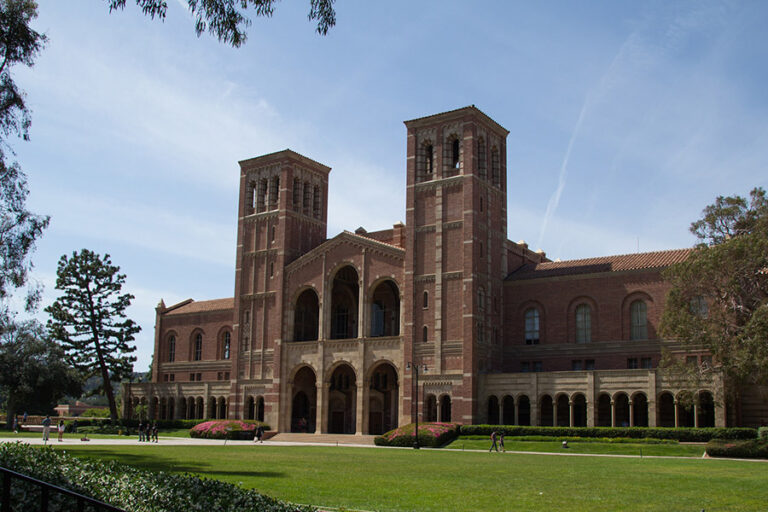
EVELYNQUEK [(CC BY 2.0)] / FLICKR
UCLA’s study on depression receives both praise and publicity

College students have a high risk of developing a mental illness. With this in mind, I ask the question: What are universities doing to bring awareness to the topic of mental health?

UCLA recently revealed a study it will be beginning with its incoming first-year students addressing this concern. Upon their arrival to campus, first-years will be asked if they’re willing to be screened for depression. A screening entails a quick questionnaire to help gain a sense of a person’s mental state. If a person seems to be exhibiting symptoms on the surface, further guidance would be offered. The school hopes to gain the participation of at least 10,000 of its new students.

The researchers will encourage some participants who are at the lower end of the spectrum to utilize an online program, designed in Australia, to treat and prevent anxiety and depressive disorders. More severe cases will be directed to campus counseling services. From there, researchers hope to gain the approval of some students to monitor their mental states as they progress in their college careers. The goal of this study is to bring attention to mental health and to show the community that it’s a topic that matters to the school administration. Depression is a major health concern on campuses across the nation. That said, are there other campuses in the country shining light on the sensitive topic?

According to the aforementioned article, a few more universities are pursuing their own unique methods of confronting mental health issues. UC Berkeley provides online training and workshops that discuss ways to manage stress and inform students about relevant campus resources. Stanford University informally screens new students as well and requires its dorm resident advisors to look after their students by watching out for signs of mental illness. San Jose University offers mental health training as well as training in suicide prevention and how to help someone who may be suicidal.

Is UC Davis doing anything to provide similar resources for its students? Like these other campuses, our school is working toward mental health awareness — but it’s not receiving the attention it needs.

In the fall of 2016, ASUCD Senator Sam Chiang established the UC Davis Mental Health Initiative in hopes of raising awareness and providing resources for students who don’t know what UC Davis offers. I have mentioned the initiative to many people, and a lot of them had never heard of it or known what the goal of the group was. The initiative provides workshops on journaling techniques and holds events every day in May for mental health awareness month. They’re holding their second annual Mental Health Conference in January of 2018, where there are informative workshops, student panels and a resource fair. Although it’s still new to the UC Davis campus, the Mental Health Initiative’s name should be popular among the student community. When they’re tabling, the initiative’s members typically don’t have as many people approaching them as Greek life tables or other clubs do. Even walking up to a tent with the words “mental health” on it makes people nervous.

The campus also provides Mental Health First Aid Training and Question, Persuade, Refer training. Both are designed to address mental health concerns and offer ways to positively and effectively support and engage with others who are struggling.

Our campus and others are beginning to take important action in ways that stand out to students in hopes of catching the attention that this stigmatized issue deserves. These events are created to help bring the community together. The topic of mental health should not divide us into groups of who’s “normal” and who’s not. Most of these events are free to students, which makes them that much easier to attend. I will be attending the mental health events put on by our campus this year. Will you?


Written by: Jolena Pacheco — mspacheco@ucdavis.edu

Disclaimer: The views and opinions expressed by individual columnists belong to the columnists alone and do not necessarily indicate the views and opinions held by The California Aggie.

Humor: Trump vows to save the planet after learning it has salvage value

CAITLYN SAMPLEY / AGGIE

Researchers find Earth would sell for more in a less-destroyed state

After hours of complex calculations done by a team of experts President Donald Trump called “some of the best math heads I know,” it has been revealed that the earth’s salvage value is worth more now than if it were destroyed further.

“It would be a shame to lose all of that profit,” Trump said. “So I’m afraid that much to my foreskin” — [Pence whispers something to Trump] — “much to my chagrin, we’ll have to start aiding the EPA again.”

The initial EPA cuts proposed by Trump were in the ballpark of $2.6 billion, but the House proposed a much lower cut of $528 million, much to Trump’s disappointment.

“I don’t know where the House is,” Trump said. “All I know is they’ve got 435 people in one House. You know why that is? Because we haven’t built the wall yet. It’s coming. I’ve seen ‘Game of Thrones.’ It’ll keep them out. They say the House always wins, but I’m not going to let them. Just because we realize we have to save the earth, doesn’t mean I’m going to do it the EPA way. I’ll do it my way. It’s my way or the highway. The highway to hell.”

“What the hell are you talking about?” Pence whispered to Trump, appearing confused and distraught.

“I used to believe in God, but now I believe in Trump,” said Richard Hicks, a second-year biochemistry major. “When Trump announced his plan for saving the earth, it made sense. America’s ability to be a superpower is directly related to crushing everyone, even some of our own people. Trump gets that.”

In order to preserve the earth’s salvage value, Trump has announced his new plan on how to save the planet: ManInfest Destiny.

“We’re not going to be like Rocket Man,” Trump said. “You shoot nukes, and you know what you get? Nuclear winter. You ever seen green snow? It’s not pretty. It’s not. All this EPA money is going straight into Hellfire missiles, and we are going to level those enemies of freedom. You know what that’ll do? Flat land means building, and building means jobs. It’s ManInfest Destiny.”

Trump pretended to launch a missile into the air and exclaimed, “Hey missile, you’re fired!

“We have already destroyed the outer layer of the earth,” Pence said. “So that’s why Trump is pushing for coal mining so much. He told me, ‘We’re going to employ so many minors that Santa won’t have coal to give to the naughty kids,’ to which I replied, ‘Do you mean miners or minors?’ He stared at me for a minute before saying, ‘Does it make any difference? We’re talking about jobs.’”

Hillary Clinton has been an adamant opponent of coal mining jobs in recent time. Rumors suggest she’s worried that, if they dig deep enough, they’ll find the hole she crawled out of.


Written by: Drew Hanson — andhanson@ucdavis.edu

(This article is humor and/or satire, and its content is purely fictional. The story and the names of “sources” are fictionalized.)