54.1 F
Davis

Davis, California

Tuesday, December 23, 2025
Home Blog Page 611

Last Week in Senate

HANNAH LEE / AGGIE

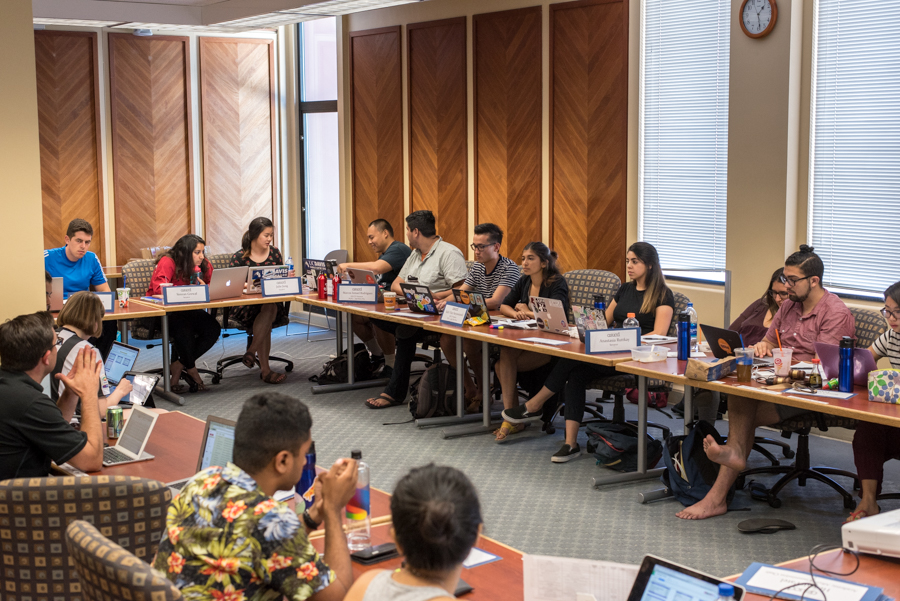
ASUCD Vice President Adilla Jamaludin called the ASUCD senate meeting to order on May 18 at 6:10 p.m. 10 senators were present and two were absent.

The meeting opened with an Aggie Public Arts Committee report that discussed the Whole Earth festival, the possibility of placing a piano where the MU hot dog cart is and Manetti Shrem collaborations.

The Bike Barn then presented and discussed how sales have been the largest ever this year. Controller Jin Zhang asked about how the Bike Barn could increase rentals over summer, and Business and Finance Commission Chair Alex Mirov asked about their plans to utilize an allotted $4,500 marketing budget.

The Aggie presented next and Editor-in-Chief Scott Dresser explained how the staffers have received two new computers and how a concert was filmed in The Aggie’s Lower Freeborn office. Dresser told the table how The Aggie will have put $100,000 into its reserves by the end of the year.

The Gender and Sexuality Commission then gave an update, discussing its genitalia fair and mental health open spaces.

Itamar Waksman and Jacob Ganz from the Internal Affairs Commission updated ASUCD with their continual plans to scrub and update bylaws for proofreading errors and to check for consistency.

In the public announcements, President Josh Dalavai talked about setting up a reservation system for booking the ASUCD service desk due to high demand.

Senator Daniel Nagey and Jamaludin introduced the idea of their upcoming food security task force platform. Senator Michael Gofman raised concerns over unclear standards of “low” or “very low” food security, in response to which Jamaludin cited documented and definitive UC Office of the President language that defined each of these terms.

Following a 10-minute recess, the meeting resumed at 9:23 p.m., and ASUCD bills being sent to commissions the following week were introduced. These included bills to allocate $900 for the ASUCD volunteer award and to make the budgetary seminar mandatory in the bylaws.

A consideration of old legislature then proceeded. Jamaludin proposed discussing Senate Bill (SB) 97 to purchase outreach materials like pens, shirts, banners and a pop-up tent for tabling and this bill carried. SB 98 proposing a mental health initiative committee also passed. SB 99 was raised to codify a summit training seminar, which carried. SB 100, a law shifting the hiring of the secretary of Department of Outreach and Recruitment to the cabinet hiring schedule,  also passed. SB 101, a long range plan for the Entertainment Council to add a photographer and a photography intern as well as unfreeze the large show fund, passed.

Senate Resolution #15, an emergency legislation regarding sexual assault education, was then discussed and carried.

The meeting concluded with ex-officio reports and elected officer reports. At 10:30 p.m., Jamaludin adjourned the meeting.


Written by: Aaron Liss and Lindsay Floyd — campus@theaggie.org

Foster youth of UC Davis

NICKI PADAR / AGGIE

Highlighting the presence, importance of foster youth programs in college

Walking down the hallways of her dorm two years ago, Ariella Grozbord, a third-year community and regional development major, often heard the excited chatter of other freshman sharing stories of their personal accomplishments — how they were valedictorian in high school or traveled abroad to France after they graduated. But Grozbord realized she just couldn’t relate.

As a foster youth, Grozbord has walked through life facing many struggles, and freshman year was no different.

“I came here and I thought I was the only foster youth on campus,” Grozbord said. “I was going to go see my major advisor because I was worried I’d have to take a quarter off or a year off because […] I was about to get kicked out of the dorms. I had an outstanding balance of $1,000, but I couldn’t pay that because I didn’t have anybody supporting me.”

After visiting her major advisor, Grozbord learned of a program on campus specifically designed to address her needs: The Guardian Scholars Program.

“It turns out there’s a financial aid liaison […]  just for the Guardian Scholars, so they […] really helped with that,” Grozbord said. “[The Program] gave me all these resources that I didn’t know about, and I think they’re available to most students but when you’re worried about housing and food, you don’t really have time to go out and explore what there is for you. So they helped me get connected and figure all my stuff out.”

National Foster Care Awareness Month concluded at the end of May. According to Valeri Garcia, a Guardian Scholars coordinator and a retention specialist for the Student Academic Success Center, students who have been in the foster system at some point in their lives make up less than one percent of all students in the UC System. When the Guardian Scholars Program first started at UC Davis in 2007, there were only about fourteen students involved. Today, though, there are more than 100 verified foster students on the program’s roster.

“As you can imagine, everybody’s experience with foster care is going to be different, they were in foster care at different times of their lives or different lengths of time, for different reasons, but all of them have that displacement,” Garcia said. “Having them know that there’s other students have really helped a lot of them to be here, there are some who truly, truly believe that they were the only ones at UC Davis, and so to have that connection with other students, they really felt empowered and feel connected.”

The Guardian Scholars Program has three main focuses: transition, orientation and graduation. Students in the program are given pathways to achieve these objectives through workshops, mentorships, events and activities, counseling and individual appointments.  

“We have a transition seminar in the Fall Quarter, and then in the Winter Quarter we have what we call a post-graduate life seminar, which [is] a lot of the exploring and asking the deeper questions,” Garcia said. “There are certain points in the quarter where they need to come see me […] and I get an idea of how they’re doing in school, what their concerns are, and what other stuff they want to get involved in, and that’s when I do a little bit more of that individual success planning.”

UC Davis is not the only school in California to host a program for foster youth. In fact, almost every UC and CSU has a similar program — all part of the greater movement in recent years to address the challenges that foster care youth face in college and to assist them in overcoming these obstacles.

“I consider this a movement, especially throughout the state of California, to really support the foster youth and former foster youth that make it to college,” Garcia said. “Statistics […say] that approximately half graduate from high school, and about one out of 10 make it to college — whether that be community college or a four-year. And of those, three percent are graduating. I think that this is a population of students that have really been invisible, I think that not many people had seen [college] as an option. I don’t think many foster youths themselves saw it as an option.”

Beyond the Guardian Scholars Program is the Guardian Professions Program, which is meant for students throughout the state of California who were former foster youth and want to pursue advanced degrees.

“[The Guardian Professions Program is] the first that I know of in the United States that has any kind of program that is specifically directed to help students go to graduate school,” said Sylvia Sensiper, the director of Guardian Professions Program. “The undergraduate programs try, but Valeri has one hundred students so she has a lot. And yet, getting a B.A. or a B.S. these days is not enough, […] so helping students go to graduate school seemed like a good thing to do.”

As someone who understands what admissions officers and faculty are looking for in an application to graduate school, Sensiper is a useful resource for those going through the application process. Over the course of the past four years, Sensiper has assisted 73 students in their efforts to further their academic careers, and although some of them don’t follow through with submitting applications, of those that do, the acceptance rate is about 80 to 85 percent.  

“It doesn’t matter if you’re in foster care or not in foster care, […] all young adults need adult assistance and help,” Sensiper said. “That’s who I try to be for my students, is that adult that can help them, that wiser — hopefully — person who knows how things work a little bit better than they do from their position and can help them.”

Grozbord is now involved with the Guardian Scholars Program as a program assistant, helping to coordinate events aimed at the scholars, and also as a cohort leader for second-year students in the program. Just like Garcia, Grozbord meets with the members of her cohort individually on a quarterly basis and has built relationships with many of them in the process. She went from feeling like she was the only foster youth at Davis to realizing she is not alone.

“I believe there’s about 3 or 4 other youth with me [in the Guardian Scholars Program] that were in foster care until age of 21 in the state of California, so it’s kind of cool to be like, ‘Oh! You’re here and you graduated.’” Gorzbord said. “Just to see somebody else, […] even knowing two other people on campus […in a] unique predicament […] is comforting versus knowing you’re going out into the void [alone].”

One issue on Grozbord’s radar is not about the academic side of life for students who have had foster care experiences, but that of housing — especially for freshmen who have nowhere to go when the dorms close down over breaks.

“There’s a lot of barriers that I don’t think [are] brought to the attention of the administration, for instance the dorms close during winter and spring break, and I had no place to go,” Gorzbord said. “So for foster youth, or even LGBT youth who don’t have a welcoming home, it’s like ‘where do they go?’ type of thing.”

Grozbord hopes that more students at UC Davis can learn and become aware of the foster youth presence on campus, a population that may be small, but is incredibly important.

“[I want] to raise [awareness about] these unique things that, even though it’s such a small portion of the population, […] that [have] a huge impact,” Grozbord said. “If every Aggie matters, that should be something that should be addressed.”


Written by: Marlys Jeane — features@theaggie.org

Back to the Glory Days: Scott Carrell

SCOTT CARRELL / COURTESY

UC Davis professor talks sports, opportunities athletics provides

Ever wondered if any college professors once played collegiate athletics? This second article in a series of three continues to follow and question different UC Davis professors to talk about their collegiate athletic playing days and why they decided to take a different path from athletics to become a professor.

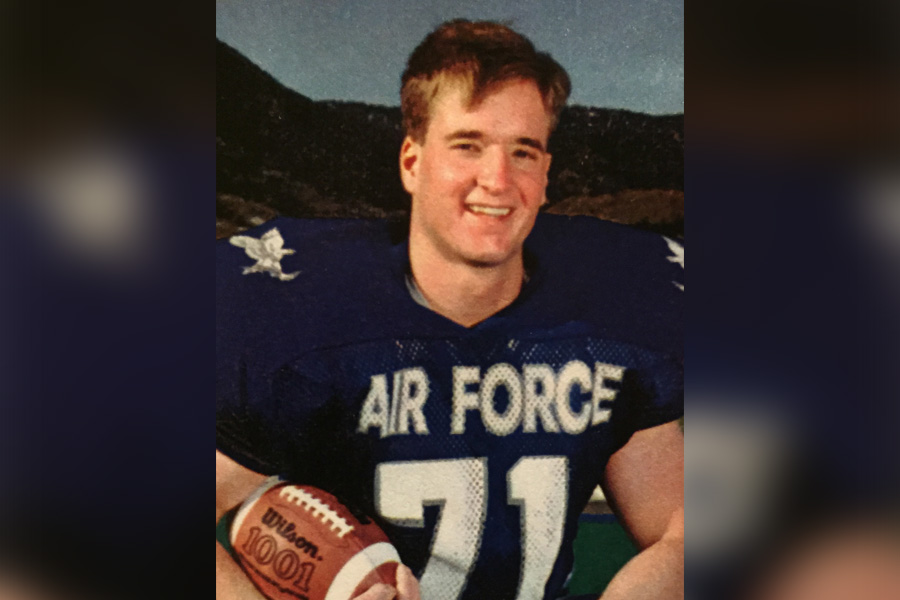
This week, The California Aggie had the chance to sit down with Scott Carrell, a professor of economics and the Faculty Athletics Representative at UC Davis. At the graduate level, Carrell teaches public finance, and at the undergraduate level, introductory microeconomics. He played college football for the Air Force Falcons.


Have you spent your whole life playing football, or was it something you just started playing in college?

I first played tackle football when I was seven years old. I played in second and third grade. I moved to Iowa and they didn’t have tackle football until seventh grade, so I had a three or four year period where I didn’t play, then played since seventh grade all through high school. I was then recruited by a number of teams to play and ended up going into the Air Force Academy.


How was your experience in collegiate athletics?

I want to start by saying that I grew up in a small town in Iowa with 11,000 people and the default was not to go to college or go to community college. What being recruited to play football did was open my eyes to going to different places. I had never thought about serving in the military until those schools started recruiting me. One thing that athletics does, even at UC Davis, is it brings students here who may have never thought about going here, which is unique. My playing career was relatively short-lived — I entered the Air Force Academy in 1991 and was doing quite well. The Air Force requires you to do basic training when you arrive and I lost a bunch of weight, which made me even more undersize then I was, and it became very hard for me to regain that weight, so I got cut the beginning of my sophomore year.


Why did you choose to become an economics professor after your collegiate football was done at the Air Force?

I am an economics professor by accident, so to speak. I was an economics undergraduate major so once I was cut from the team I thought about transferring to get another opportunity to play, but ultimately decided to stay. I ended up an economics major because it was the class I liked the most and we had to declare majors. My GPA rose quite a lot when I stopped playing football, which is also why I admire the high level of academics of the athletes here at UC Davis. The Air Force Academy contacted me in the future and said that they needed instructors to teach and if I wanted to go to grad school. I went to the University of Florida and actually fell in love with the field of economics and the economics of education. I left the Air Force in 2005, spent two years at Dartmouth College and been at UC Davis since 2011.


Why did you choose to come to UC Davis to teach?

Growing up in Iowa and living in Colorado, even as a professor, I had never even heard of UC Davis. A job opening came up in a unique job market and so it was one of about 100 jobs I applied for. I went to the interview and learned a lot about the place [UC Davis]. I came out to visit in my on-campus interview and thought this was a really special place, and it’s a shame more people don’t know about it.


Do you ever miss playing football?

Absolutely. I still have some regrets about choosing not to go back and play when I had the opportunity. I have been a longtime youth football coach here in Davis, and last year was my last year of coaching the eighth-grade team. I was also the president of the Davis Senior Davis Youth Football Program. I love the game and it is very much a large part of who I am and became. I do not think I would be here as a professor if it wasn’t for the opportunities that athletics gave me.


Being a former athlete, do you have any general advice for current and/or future student athletes?

Athletics is just a pathway to success, it teaches you teamwork, discipline, etc. The skills that you learn in becoming an athlete are those skills that make you successful in life. I like athletics because it is a gateway for learning opportunities and brings people to places, like UC Davis, that wouldn’t otherwise be here.


Written by: Ryan Bugsch — sports@theaggie.org

Why “The Walking Dead” appeals to Rust Belt voters

How the Trump team used Facebook data to exploit the fears of the Midwest


Since last November, much has been written about what went wrong during the election. While it looks increasingly likely that the Russians played a big role in securing Trump’s presidency, he did earn a significant number of legitimate votes, particularly across rural America and the Rust Belt. Many of these were won due to the Trump campaign’s unsettling method of targeting potential voters, which included using Facebook likes and TV ratings to appeal to an untapped political audience.  

One of the biggest groups the Trump campaign targeted was fans of AMC’s hit zombie show The Walking Dead. Shortly after the election, Jared Kushner said that the campaign found that frequent viewers of The Walking Dead tended to be concerned about immigration and were more likely to be conservative. The Trump campaign appealed to this group with pro-Trump messages, to obvious success.

The campaign was one of the first to find voters — especially on Facebook — based off of psychometrics, the study of people’s personalities. Researchers compared participants’ personality scores with the pages they liked, such as The Walking Dead, and their demographic information on Facebook. As trends were observed and more data came pouring in, researchers could predict with about 90 percent accuracy a person’s skin color, sexual orientation, political affiliation, intelligence and even religious views just through public Facebook data.

Here’s where it gets Orwellian: Campaigns, particularly those for Brexit and Trump, were able to use this information to gain a bigger edge than if they used typical neighborhood-based demographics. Instead of bombarding a majority-Republican neighborhood with advertising, they reached individual people whose profiles made it seem likely they were Republicans — even if they were disinterested in politics or living in heavily blue areas.

It’s easy to see why Trump voters, particularly in the Rust Belt and rural America — two major sources of his legitimate votes — might relate with The Walking Dead characters. Though obviously not to the extent of the show, parts of the Rust Belt seem relatively post-apocalyptic. Factories that once propelled the growth of towns have closed and sit decaying in city centers, serving as a reminder of what once was. The infrastructure is falling apart, the education standard for schools is well below par and the land value is hitting rock bottom. There may not be zombies, but for the people living there, their world is slowly crumbling and looking more and more like the show.

The Walking Dead is a show about survival — not only from the zombies that have taken over the planet, but also from other humans. The characters are on their own, moving from location to location without promise of any government coming in and helping them. They scavenge whatever they can to live while defending themselves with violence whenever necessary. They only hope to someday find somewhere safe where they can settle down and finally escape their threats.

Rust Belters must also take care of themselves because of how spread-out rural America is. Modern amenities like hospitals, grocery stores and police departments exist, but getting to them is inconvenient and oftentimes not worth the hassle. Rust Belters, like characters in the show, frequently have to heal, defend and feed themselves with whatever they have. In many cases, survival is one of their biggest priorities, as blue-collar labor declines and wages don’t increase to match inflation.

The correlation between The Walking Dead and immigration concerns is less clear, though still understandable given the Rust Belt’s homogenous history. As America’s workforce diversifies and different types of people flood into formerly isolated and homogenous areas, people might start to feel a lot of cultural anxiety. Although this attitude is xenophobic, someone who has spent their entire life around the same type of people might incorrectly relate this influx of diversity to the concurrent economic decline of their towns. Like the characters of The Walking Dead, Midwesterners might feel that they’re being invaded.

Zombie fiction like The Walking Dead might appeal to right-wing voters due to its emphasis on survival in the face of decay and invasion that can parallel the decaying condition of a once-prosperous rural America. One of the Trump’s team’s few smart moves was exploiting the audience’s fears and interests to their advantage. Let’s just hope the real world doesn’t reach Walking Dead-levels of post-apocalypse before his term is all said and done.


Written by: Noah Pflueger-Peters — napfluegerpeters@ucdavis.edu

Disclaimer: The views and opinions expressed by individual columnists belong to the columnists alone and do not necessarily indicate the views and opinions held by The California Aggie.

“Master of None” entertaining, yet disjointed

TAYLOR RUNNELLS / AGGIE

Season two showcases different narrative than previous episodes

From the get-go, the second season of Master of None gave off a very different vibe than the previous season. For starters, the first episode of the season is featured in black and white and is set in Modena, Italy, with everyone speaking Italian. However, those jarring changes are eased with subtitles, and the color change does not last throughout the whole season. The storyline picks up pretty much where it left off, with Dev attempting to bury his romance woes by fleeing to Italy and working in a pasta shop. After a couple of fun Italian-themed episodes, the show then follows Dev back to New York as he navigates his new dating life and career.

Season two has a different feel for multiple reasons. First, it’s very artistic. All of the shots are beautifully set up, especially in the episodes that take place in Italy. The picturesque scenery coupled with the close-up food shots are enough to make anyone put Italy at the top of their travel list.

Another difference is that the episodes are less focused on Dev and his friends as a group and more on each of their individual stories. Each one of his friends, besides Arnold, who is folded into Dev’s episodes, is given their own vignette episode. I found these episodes to be some of the most enjoyable of the season, especially Denise’s episode, which focuses on her difficulties expressing her sexuality to her family. Awkward Thanksgiving meals sounds familiar to anyone? If so, watch this episode for some déjà vu. I definitely appreciated this storyline as a queer woman of color myself, as it is still such a struggle to find accurate portrayals of these types of narratives.

Another enjoyable episode of the show was “New York, I Love You,” episode six of the season. Even if you don’t watch Master of None, I recommend watching this particular episode. Instead of focusing on the main characters, it tells the stories of different marginalized people in New York.

But other parts of the show weren’t as powerful. I don’t know if this is just me, but I find Dev’s character rather unlikeable. It might be because he reminds me of some of my exes, or I might just find him annoying in general. I find his fixation on his love life to be particularly irritating, although maybe that’s out of fear that I will be in the same position in my later 20s, going on pointless date after pointless date. Also, the woman he is primarily interested in calls him “curry man” several times, and although Dev calls her out on it, it made me feel extremely uncomfortable. I would have liked to see him question how her identity as a white woman complicates their relationship.

I also found that, although I liked the different vignettes the show had, overall I felt it made the season feel a bit disjointed. I also missed having Dev, Denise, Arnold and Brian all hanging together as friends, watching their banter unfold. They had a really good dynamic in the last season, and this time it seemed like it was just Dev hanging out with them individually.

Altogether, season two is still an entertaining watch with some bright sparks, but it suffers from being too fragmented.


Written by: Abigail Wang — arts@theaggie.org

Humor: All Starbucks on campus to be replaced with a man named Peet standing in an empty room

AARON KEOKHAM / AGGIE

School to replace popular coffee establishment with something actually useful

Big improvements are coming to the UC Davis campus.

With Silo renovations beginning in June, the university will be replacing all Starbucks locations on campus. After much deliberation, it has been decided that the Silo Starbucks, as well as all other locations on campus, will be replaced with a man named Peet standing alone in an empty room. It’s unclear whether there will just be one Peet who rotates between the locations, or if each will get its own unique Peet. The deciding factor will ultimately be how many men named Peet — a variation on the popular “Pete” — can actually be located.

Students were obviously thrilled at the idea that a place that serves the caffeine they rely on daily is being replaced with a Peet.

“I’m really excited about Peet,” said Brittney Spleen, a third-year computer science major who spends a majority of her time making covers of Taylor Swift songs in which she only hisses over the track instead of singing. “I can just go to CoHo South for my coffee. This campus was really missing a man standing in an empty room that was formerly the location of a popular international coffee chain. It’s going to be so comforting knowing that Peet is always going to be there on campus just standing in that room.”

Just who are these Peets who will be standing in empty rooms? That’s a great question.

“I’m not here to make friends, I’m here to become America’s Next Top Model,” said one of the Peets, who before taking the position as man in room was a part-time human staple gun. He didn’t appear to have a thorough grasp on what the position entailed. “I can pose, I can walk and I’m great in front of the camera. I’m here to win. And to find my son.”

Construction of the project is expected to take several years, as one would expect. But the final product will undoubtedly be worth the wait, and will be much more useful than a popular coffee establishment.


Written by: Brian Landry — bjlandry@ucdavis.edu

(This article is humor and/or satire, and its content is purely fictional. The story and the names of “sources” are fictionalized.)

Brynton Lemar’s hoop dreams aren’t over

DANIEL TAK / AGGIE FILE

Graduating senior lands workout with NBA Sacramento Kings

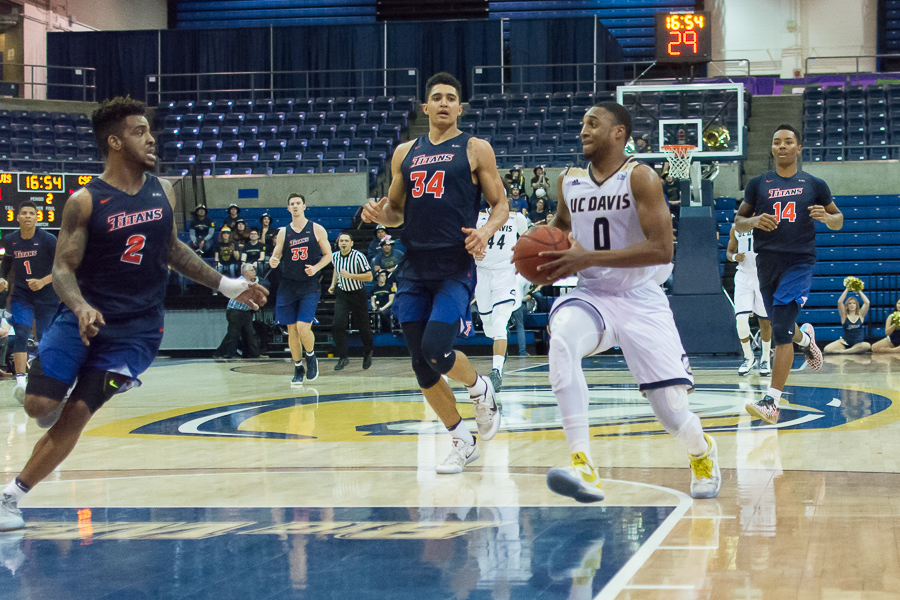
For many outgoing seniors who are competing in NCAA basketball, their final game at the college level marks the end of their basketball careers. For others, like UC Davis’s own Brynton Lemar, it was simply another step on his journey to the next level. While the future remains uncertain, Lemar got a much-needed boost when he landed a coveted workout with the NBA’s Sacramento Kings. It was an opportunity that Lemar was certain not to waste.

Right now, workouts are in full effect and I have to be ready, I have to be in shape,” Lemar said. “I have to be mentally ready and also physically. So there’s really not a break between this basketball stuff, 24/7.”

In 2015, Lemar’s teammate Corey Hawkins received a similar opportunity. Hawkins also worked out for the Kings and was invited to play for their Summer League squad. The NBA Summer League is a showcase not only for those young players who have just been drafted, but also for those who went undrafted and are hoping to make it in the NBA. Hawkins, who was unable to participate in that season’s Summer League due to injury, reached out to Lemar and gave him advice for his ongoing journey.

“[Hawkins] really helped me realize what they’re going to do,” Lemar said. “He gave me the rundown about what’s going to happen, and what to mentally prepare for.”

Lemar also got to meet with some current NBA players, with young Kings players Willie Cauley-Stein, Skal Labissiere and Georgios Papagiannis offering advice to prospective colleagues like Lemar. According to Lemar, opportunities like this help prepare him for his stressful journey to the ranks of the NBA.

The workout is brief; just one hour and fifteen minutes according to Lemar. In that hour, he is matched up against some of the top college players in the nation, all of whom have the same goal that he does. Lemar accepts this challenge, as he knows that these are the players whom he will have to get through in order to achieve his NBA dreams.

I was excited to showcase my skills in front of the front office of the Kings,” Lemar said. “I felt good about it. I know I can compete at that level — I compete every day. I feel like I’m an NBA player, it’s just a matter of opportunity. Going to a small school, we’re not on that national skill like Kansas or Kansas State, but I had the opportunity to showcase what I had against those players.”

It is with this optimism that Lemar enters life after college. He is taking his final weeks as a student at UC Davis to reflect on all he has learned during his last four years at the school.

“I know that all good things come to an end,” Lemar said. “My career here at Davis has been fun. I’m going to miss it, but I know that I’m on to bigger and better things.”

As graduation rapidly approaches, there will be no rest. Lemar is hoping to get in on a few more workouts and see what happens from there. Whatever it is, he is approaching it with an open mind and competitive thirst.

“Draft, Summer League, maybe going to Europe in early August,” Lemar said. “It’s going to be an exciting summer.”

Lemar should know his immediate NBA future by the time NBA Summer Leagues begin in early July.


Written by: Bradely Geiser — sports@theaggie.org

Aggie Style Watch: Summer Edition

REBECCA RIDGE / AGGIE

Dressing for fluctuating weather

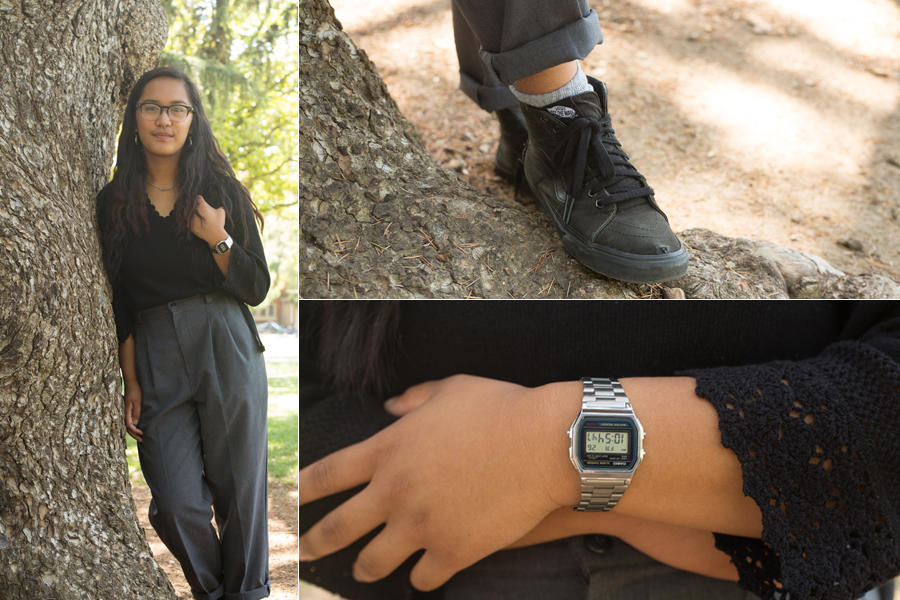
Amihan Redondiez, a first-year gender, sexuality, and women’s studies major, values the art of thrifting and especially layering for the strange spring-to-summer weather transitions. With 50-degree mornings and 90-degree afternoons, it’s impossible to wear one outfit the entire day. Redondiez has the answer to this dilemma.


ASW: What is your style inspiration?

Redondiez: I watch a lot of fashion Youtubers for some inspiration, but the main goal is to stay comfy for class.


ASW: Where do you get your clothes?

Redondiez: I mostly thrift my clothes because I like how it’s more unique and cheaper, too.


ASW: With the weather changing throughout the day, how do you stay versatile with your clothes?

Redondiez: I still try to layer. For example, I knew it would be cold so I have this sweater but also a short sleeve underneath. My pants right now are long enough to keep me warm but still breathable. I’ll keep a cardigan or jacket in my car, just in case.


ASW: What summer hack would you like for others to know?

Redondiez: I keep a pair of pants in my bag. If I’m wearing a romper or shorts, I’ll keep a pair of long pants in my bag because I’ll usually be out until night when it gets colder. Just make sure it matches with your outfit and put it on when you need it.


Written by: Becky Lee arts@theaggie.org

The culture of (re)application

HANNAH LEE / AGGIE

Pre-health applications often require second attempts

Every Aggie had to apply to gain a spot at UC Davis and thus knows that the application process can be emotionally and monetarily demanding. However, sometimes the act of applying can also include reapplying.

Narges Maskan, a fourth-year biological sciences major and the director of membership for the undergraduate American Medical Women’s Association chapter at UC Davis, is a pre-med student taking a few gap years to teach elementary school biology before going to medical school. She wants to take time to grow and become the best applicant she can be.

“Wait to apply until your application is in the best possible condition,” Maskan said. “I think really the mistake that some people make is they apply because they are kind of impatient [and] they want to get into medical school.”

However, according to Maskan, this impatience comes at a price.

“It’s an expensive process, and emotionally it’s very draining,” Maskan said. “For the whole year you’re checking your email and your mailbox, hoping you get a response.”

Regardless of this, graduate programs still see a substantial number of reapplicants. As Maskan highlighted, the important thing is to improve the application from the first round.

“There’s nothing wrong with being a reapplicant, but the problem with being a reapplicant is that you didn’t take time to work on your application,” Maskan said. “I think if you don’t get accepted the first round, medical schools aren’t going to want to see you re-apply that same following year with nothing new to add substantially to your application. Maybe you need to do a post-baccalaureate [program], or just even take a couple classes at a local college, get your GPA higher, [or] maybe take time off and study for the MCAT full time.”

Maskan also pointed out some of the minor details that make a major difference in the final results of one’s application. For instance, it is really useful to analyze whether the application’s weakness lay in test scores, personal statements or the interviews. Sometimes applicants don’t pay enough attention to the requirements of different schools and what they are looking for. Some schools strongly prefer in-state students, and applying as an out-of-state student to such schools may be limiting.

“Looking at their average GPAs and their average MCATs and seeing where you really match on the 10th and 90th percentiles [is something] people don’t end up doing,” Maskan said. “When you stay limited and you’re not really looking at their match and acceptance rates, you kind of shoot yourself in the foot. I’ve known people that have not gotten in literally because their school list wasn’t right.”

From the opposite perspective, Zahra Samiezade-Yazd, a fourth-year global disease biology major, shared her experiences as an interviewer, recruiting members as undergraduate volunteers for her student-run Joan Viteri Memorial Clinic.

“A lot of people were really proactive [as] they would […] email us back and [ask for] feedback on what [they] could’ve done better,” Samiezade-Yazd said. “A lot of them were freshmen and sophomores, and a lot of them […] had room for growth. We could see that maybe not this year, but definitely next year it would possibly work out. It was really good to hear that students were like interested in learning how they could improve next time,”

Samiezade-Yazd recently committed to pursuing a degree in public health at UC Berkeley. She advises applicants to articulate why they are choosing a particular school, program or clinic as opposed to another institution that may provide similar opportunities.

“Especially for med school, a lot of students will say, ‘the reason I want to go to med school is because I want to help people.’ Well why can’t you help people by being a garbage man?” Samiezade-Yazd said. “Why can’t you help people by doing [something else] instead? You have to figure out why you have to be a physician in order to help people. I think that makes a really huge difference.”

Samiezade-Yazd argued that there is a way to express one’s feelings that may be cliche in their intent but unique in their presentation, setting the applicant apart.

“Its very easy to say I just want to help, but you have to honestly say what really drew you to this issue,” Samiezade-Yazd said. “Even if it seems cliche, as long as you say it in your own words and as honestly as you can, it’ll sound unique.”

Dr. Hwai-Jong Cheng, a professor and advisor for neurobiology, physiology and behavior students, deconstructed the standard definition of “reapplication” and reframed it in the context of constantly having to retry throughout one’s professional and personal life.

“At your stage, you apply for college or later apply for medical school — you call it reapplication simply because you apply this year and it doesn’t work, and you work on that and you try again next year, and you call that reapplication,” Dr. Cheng said. “In the future you are going to the job market […] then you’re just looking for a job until you get a job, so that’s like multiple reapplications. I think for anyone at some point they all re-apply for stuff.”

Even after earning a double doctorate (an M.D. and a Ph.D.), Dr. Cheng still goes through the reapplication process.

“For example I’m doing research, so we apply for grants and a lot of different things to support my lab,” Dr. Cheng said. “We need to reapply again and again, so I don’t think that it’s such a scary concept, reapplication.”

Sometimes a rejected application can be a chance for self-improvement and more preparation for the position.

“Even for a small internship or summer internship, you need [to] apply, right? Maybe this year you apply for that and you don’t get it, but next year you apply and you get in — is that reapplication?” Dr. Cheng said. “If we are going to all these professional jobs, application is the norm, maybe a constant.”


Written by: Sahiti Vemula — features@theaggie.org

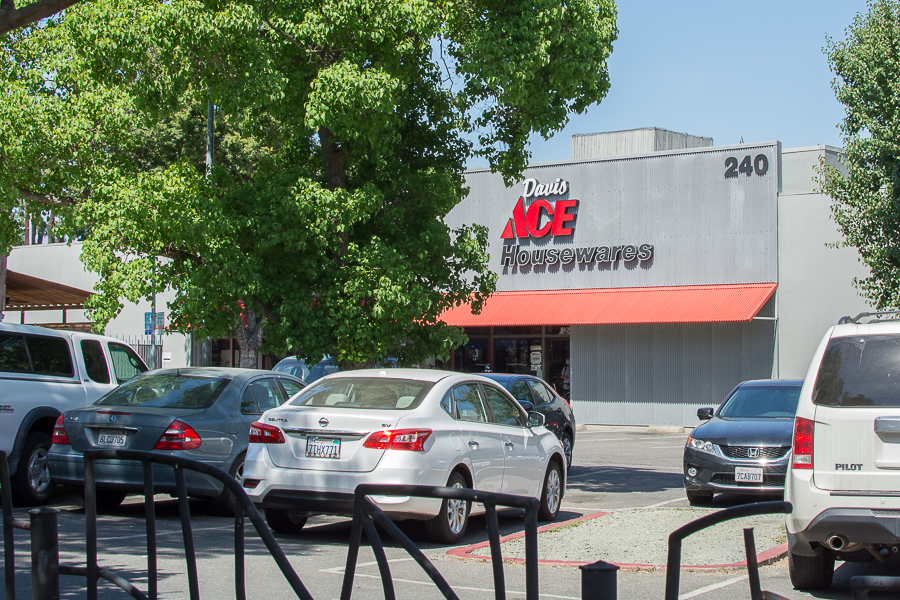
Davis Ace Hardware to renovate parking lot

NICOLE WASHINGTON / AGGIE

Renovation to include customer parking spots, handicap access

Although Davis may be considered a small town, it is always bustling with people strolling around and checking out downtown; parking does pose an issue during Davis’ “rush hours” around lunch and in the evening. Like many downtown businesses, Ace Hardware struggles with a lack of parking, causing customers to park farther away or take their business elsewhere. Subsequently, Davis Ace Hardware has decided to renovate their parking lot to provide more customer parking spots, including handicap access.

Original plans for extra parking included demolishing several small warehouse sheds and building a new two-story commercial building to provide more office space. However, this plan was deemed unfeasible, as it was financially unstable.

The revised plans call for a 2,000-square-foot overhead parking lot structure. This would also include solar panels, which would be a much more environmentally friendly way of harvesting energy, not to mention much more cost efficient in the long run.

This new parking lot structure would also allow for easier access for suppliers to unload and transport inside, seeing as the facility lacks a back entrance to the alley.

“It’s really important to have accessible parking for unloading; it provides flexibility for our customers,” said Ace Hardware owner Jennifer Anderson.

In addition, it would be very beneficial to customers, who would no longer have to struggle to find parking.

“We came up with a solution –– we have a lot in this open space, and we’re just trying to make it open to the public and handicap accessible,” Anderson said.

Anderson went on to explain that Davis doesn’t have enough parking downtown, so adding to existing parking would solve some of the issues. One new parking lot structure is now on 4th Street, a location that doesn’t have a large curb and therefore allows handicap access.

“I think a lot of customers would be really happy [with the new parking lot],” said Brittney McClain, an employee of Davis Ace Hardware for the last five years. “The thing I hear every time is ‘Oh my gosh, I was driving around for 20 minutes looking for parking.’”

With the addition of this parking lot structure, Ace is hoping to appeal to more customers and provide them with quicker service, while also benefiting suppliers. The current, narrow lot would be transformed into a bigger covered area, which would also help protect from weathering. Products transported into the building would be protected from the rain, as to ensure the best possible quality for their customers.

“We don’t have enough parking downtown,” said Ryan Hatmaker, a first-year neurobiology, physiology and behavior student at UC Davis. “I think it’d be beneficial to have more [parking].”


Written by: Kaelyn Tuermer-Lee — city@theaggie.org

ASUCD Senate holds annual budget hearings

JAY GELVEZON / AGGIE

Senators approve units’ budgets for the 2017-2018 year

With many hours of debate and discussion to come, the 2017-2018 ASUCD budget hearings opened on the evening of May 19 with an inspirational address from Associate Vice Chancellor Milton Lang. He expressed his hopes that the ASUCD members “be civil [and] be respectful” during the difficult work ahead of them.

He further addressed his hope for Student Affairs to not have to become involved in the budgetary process. His department has not been involved in the past and he expressed that he wanted this to remain the case.

Before starting discussion about units, ASUCD Controller Jin Zhang remarked that ASUCD begins with an operating budget total of $549,389. As budgets are approved, depending on if the unit will be giving or receiving a subsidy, this amount will increase or decrease.

The body then moved to address the budget for Creative Media. The proposed budget from Creative Media Director Alexander Park was approved unanimously.

The budget for Unitrans was then considered. Director Anthony Palmere remarked how important wages are to his budget, as he is trying to keep wages for bus drivers around 20 percent higher than minimum wage in order to retain employees. The Unitrans budget passed unanimously.

AS Dining Services was the next unit budget discussed. Director Darin Schluep also spoke about wages and how the the gradual minimum wage increase to $15 per hour is affecting his budget.

Discussion of the Coffee House budget then began. ASUCD Senator Daniel Nagey proposed increased discounts for students at the Coffee House, but Schluep said lines are already too long to distinguish between students and non-students. Schluep responded that Aggie Cash sales made up of 14 to 16 percent of overall sales when asked about Aggie Cash. ASUCD Senator Samantha Chiang motioned to approve Coffee House Budget for the year. The motion was seconded and budget was approved, and Chiang opened discussion of BioBrew budget. Schluep talked about how BioBrew was a new unit, but is doing fairly well and will return $35,000 this year. He projected a 5 percent growth for BioBrew including summer income. The BioBrew Budget was approved.

Discussion of Coho South budget began. Schluep said the CoHo South is also doing well, projecting a 5 percent growth and return of $20,000. Nagey motioned to approve CoHo South budget, which was seconded and approved, and Chiang motioned for a 15-minute break. After the break, admin general budget discussion began. The administrator general’s income stayed relatively the same as last year. Copy and printing was kept relatively the same, mail expenditure had gone up greatly, and transportation expenditure had decreased. Chiang motioned to approve the admin general budget and the motion was approved.

Chiang then opened discussion of the executive office budget. The executive office expenditure has increased due to mandatory salary increases but they have cut many of their special projects. Their budget was soon approved. Chiang started discussion about making the secretary of outreach and recruitment position a paid position. Chiang opened voting for whether to keep Picnic Day luncheon budget at zero or increase it to $1000, and the Senate voted to keep at the budget at zero.

Shortly after 8 p.m., Chiang motioned to approve the ASUCD president’s executive office 2017-18 income and the 2017-18 president’s executive office expenses. There were no objections to her motion, so the income and expenses were approved. Afterwards, there was discussion about executive office salary for a few minutes, but at 8:15 p.m. Nagey motioned to transition out of the executive office budget and move into a presentation for the 2017-18 STS Tipsy Taxi.

The unit director for Tipsy Taxi mentioned that the unit uses drivers from Unitrans and currently has a shortage of drivers. Chiang motioned to pass the budget and, with no objections, the budget is passed.

At 8:30 p.m., the presentation for the 2017-18 Bike Barn budget began. According to the director, the Bike Barn has an average of 10 mechanics at any time. Chiang asked if it is possible to reduce the number to 9, but the director said that it was not possible. Chiang then motioned to approve 2017-18 Bike Barn budget and the budget was approved.

At 8:45 p.m., the senate moved into the Picnic Day 2017-18 budget. As the senate motioned to approve the budget, Chiang objected. Because every other unit has been asked to cut positions, Chiang wanted Picnic Day to do same. She asked the unit to cut a position’s pay on the spot and make it a volunteer position.

“What’s going on with most units is that the total amount that we spend on salaries needs to decrease by 12.5 percent but each position will increase by 12.5 percent,” Nagey said. “So it’s the idea that you don’t, the idea being that right now most units have literally like two to three positions and it’s just tough because obviously we want to pay as many people as possible so I guess what we’re asking you is what position would you feel comfortable making a volunteer position just because every other unit is bare-boned and if we increase your total amount spent on expenses then we just have to cut every units even more because you’re not adhering to the 12.5 percent decrease of expenses like every other unit.”

After much deliberation, the unit was not forced to choose any position and Chiang motioned to approve the president’s proposed salaries, which passed 10-1-0, with Nagey voting no. After the unit director left, several senators took issue with having asked Picnic Day to cut a position on the spot.

Shortly after 9 p.m., the Internal Affairs Commission Chair Nick Flores spoke about deciding whether to pay Chief of Staff position. Flores brought up the previous Chief of Staff, Tiffany Lung, and argued that the only reason senate decided to cut her pay the previous year was because of her relationship with former ASUCD President Alex Lee. Flores advised that the senate should not let who a person is decide whether the position gets payed or not. Still, Flores suggested that the chief of staff position be unpaid.

“I don’t think the chief of staff of the executive office […] should be making as much as any commision chair on our table,” Flores said. “We all know the work that commission chairs do outside of senate. We have to hold office hours; chief of staff doesn’t have to hold office hours. They have to reply to emails occasionally. In my opinion, whether they want to make her do more work or not, it’s up to the position, like look at it as position-wise, not who holds it at the time.”

Afterwards, Chiang rebuked Flores’ argument that the previous senate decided to cut the position’s pay because of Lung.

“With all due respect, Nick, I completely disagree,” Chiang said. “Okay, let’s validate the argument that we didn’t want to pay last year’s chief of staff, Tiffany Lung, because of who she was. I was the one chiefly advocating for her to get paid because I worked under the chief of staff previously, and I stand by that. The chief of staff does so much work. They take the meetings when the president and vice president aren’t present. They go and help with every single thing.”

The senate motioned to decide whether the chief of staff position should get paid and the vote was 12-0-1, with Senator Marcos Rodriguez abstaining.

Afterward, the senate motions to approve the executive office 2017-18 president’s salary, and with no objections, the salary passed.

Next, a presentation for the Whole Earth Festival (WEF) 2017-18 budget began. With quick deliberations, Chiang motioned to approve the president’s 2017-18 WEF budget, and with no objections, the budget was approved.

The senate then moved back into 2017-18 executive office budget. The senate motioned to approve line items A and B for 2017-18 president’s budget, and with no objections, the motion was passed.

Shortly after 10 p.m., the senate motioned to move out of 2017-18 budget. With no objections, the meeting was adjourned.
On May 20, the budget hearing began with discussions about the $25,000 left over from senate reserves. The floor discussed how this money could be allocated to a unit of its choosing or put back into the net revenue. Senator Anastasia Ruttkay was absent and Senator Matthew Yamaguchi came in late.

The Aggie Reuse Store 2017-18 budget was approved with the hopes of implementing new positions.

Senator Julie Jung discussed the possibility of further discussing the salary for the position of chief of staff, questioning whether this position should be paid nearly as much as the commission chairs. ASUCD President Josh Dalavai mentioned that the amount of money that would be taken away from the chief of staff pay would have an inconsequential financial impact. Jung suggested meeting with the chairs of each comissions and hearing their point of view.

Next, the Housing Advising for undergraduate students’ presidential budget for 2017-18 was approved. Following that, the Refrigerator Services budget was also passed.

Next the floor entered a lengthy debate over the reduction of the Club Finance Council (CFC) funds. Discussion displayed that the members were very divided in their understanding and opinion on the matter so Vice President Adilla Jamaludin suggested a break during which the senators could informally discuss what each individual’s opinion was on the matter.

Topics discussed were whether CFC should receive more funds even though it reported having a surplus of funds left over. Other issues brought up were that CFC has displayed signs of not proceeding with their guidelines; however, they do provide grants for student clubs, and reducing their budget may not be beneficial to student organizations who would have to seek sponsorship from Pepsi instead.

The floor discussed that the money cut from CFC could go toward sponsoring culturally specific graduation ceremonies. However, Grewal pointed out that it is not necessary to cut CFC funds in order to give money to the graduation ceremonies. $45,000 was approved to be allocated to CFC, in addition to the $3,000 that they had left over, and $10,000 was distributed to support culture days.  

The KDVS budget was then called into question by Chiang, who noted that the budget had been amended. General Manager of KDVS Olivia Henderson explained that the change in budget would allow for more students to be involved in the news director position, an opportunity at KDVS for students to gain radio journalism experience and travel to Sacramento for reporting. Ultimately the KDVS budget was called into question for further review.

After a brief break, the ASUCD Experimental College’s (EC) budget was considered. Stacy Wong, director at the EC, came to the budget hearings on behalf of the EC. Immediately, senators and executive noted a discrepancy in funding, particularly a $10,000 decrease from the previous year’s budget. Wong attributed this decrease to the fact that two classes were cancelled due to insufficient enrollment. Mirov examined the past seven years worth of EC budgets and concluded that achieving $40,000 in course fees over the next year should be an attainable goal. Wong felt closer to $30,000 was more realistic. The table voted on what budget amendment they felt most comfortable accepting. Nagey proposed a compromise and moved to change the course fees budget to $35,000 which was unanimously passed. The budget with the amendment was passed.

The Campus Center for the Environment presented its budget proposal. The unit director explained how from last year, their income had increased and they successfully slashed their expenses. Nagey made a motion to approve the budget proposal. The motion was seconded, and the proposed budget passed unanimously.

Senate then took a lunch recess until 1 p.m..

After the lunch recess, The Aggie’s Editor-in-Chief Scott Dresser presented the 2017-18 budget for The Aggie. The budget had already been approved by the media board. Dresser began by explaining the changes from last year’s budget. Because The Aggie hired a full-time business manager, the projected income is higher and expenses have increased. There is more investment in advertising, printing costs have also increased and The Aggie is aiming to have two summer issues.

Business and Finance Commission Chair Alex Mirov asked about the discrepancy shown in online income reflected on the accounting system. Dresser explained there was a distinction made between national and local income and the money shown was money generated from local advertising revenue. The online ad revenue is projected to be higher for next year. Dresser also clarified that there was an error in the system and the income for April was not reflected, so May’s income would be inflated. April brought in $12,000 of revenue and May brought in $10,000.

Senator Michael Gofman asked whether The Aggie had any money in its reserves. Dresser said The Aggie has no reserves because of past debt. The Aggie is working towards debt repayment and Dresser estimated it should have $84,000 in reserves for next year.

Chiang motioned to approve The Aggie’s budget and the motion was seconded. The budget was unanimously approved with Ruttkay abstaining.

The Senate then took a 20-minute recess.

Experimental Community (EC) Garden gave their budget proposal. The ASUCD presidential budget was more generous than the EC Garden’s proposed budget. Unit Director Nick Campbell offered to take a salary cut, but the salary and maintenance budget was increased by $700. Campbell proposed $500 higher in projected income which was approved by the President, Vice President and Controller.

Chiang motioned to approve the president’s budget and the motion was seconded. The budget was unanimously approved with Ruttkay abstaining.

On May 21, the budget meeting was called to order at 11:29 a.m.  The meeting began by addressing The Pantry’s budget. In previous years The Pantry has not been asked to create revenue; however, since last year, the ASUCD unit has been working to become profitable. Rosy Martinez, a third-year human development major and The Pantry’s unit director, spoke about the Pantry’s need for a new hired position. The new position will be in charge of local food resources, fresh produce, running the social media accounts and overseeing intersectional workshops that aim to address the needs of students that The Pantry caters to. The new position will also be in charge of applying for grants to help further fund the Panty. Chiang vouched for the practicality of the Pantry’s budget increase, claiming that ASUCD’s budget had not allowed for any increase to the Pantry’s budget last year. Chiang moved to call the budget into question and was seconded. The Pantry’s budget was passed with no objections. The budget hearing took a 20-minute break to wait for the student Office of Advocacy and Student Representation (OASR) representative to arrive.

At 12:05 p.m.  the recess ended and the senate began discussing the 2017-18 OASR budget. The OASR representatives proposed a budget plan that included $10,825 for staff salaries, $31,000 for special projects and $17,002 for transportation. The proposed budget was substantially higher than the previous year’s budget, and as such numerous senators expressed concern about such a large budget increase for a relatively new campus organization. One senator stated that their proposed expenses were four times larger than the previous year’s budget. The OASR representatives countered by noting that they were the lowest funded OASR club out of any UC school by far. The representatives also listed off some of the projects they had organized from last year, which included the tuition hike protest and the sexual assault awareness campaign. The representatives stated that organizing club trips was extremely expensive due to numerous travel expenses such as food and gas. The OASR unit director Georgia Savage stated that many of the students participating in these trips were not very well-off and as such the expenses should be covered in the allotted budget.

The senators then took a vote with six voting for the proposed budget, four voting for the precedence budget and two, Gofman and Senator Simran Grewal, still undecided. Grewal stated that she voted for neither because she still had many questions regarding the large budget increase, and specifically the large increase in staff salaries. The OASR president responded by stating that the OASR staff was being paid less than minimum wage despite the fact that they dedicated a large portion of their time and energy to the job, and that many of the staff members were working other jobs. Another vote was conducted and this time the two undecided senators both voted for the precedence budget, rendering  the vote to a deadlock with six senators voting for proposed and six voting for precedence. Gofman then expressed his distaste at the $3,000 in the proposed budget allotted for food expenses, saying that the money should go to the food pantry for students actually in need of food everyday. He stated that when he went on school sponsored trips he would pay for his own food. Nagy interjected, stating that Gofman had privileges that many other students did not have. The moderator had to calm the senators down.

Chiang and Grewal agreed to some of the OASR commission’s goals while their budget was discussed, such as a food budget for lobbying and traveling conferences.

OASR members compared UC Davis’ OASR small budget to student advocacy groups on other UC campuses. However, Rachel Meyer of the Entertainment Council and other senators disagreed, citing the structural difference and size of UC Davis’ OASR.

The new special projects budget, $28,500, was ultimately approved with seven in favor, three against and two abstentions.

The Entertainment Council then presented its proposed budget, which passed. Meyers talked about May 20’s free concert for students called Lawntopia, which compounded $14,000 in expenses, but only earned $350 in sponsorship funding.

Gofman said he supported allotting the Entertainment Council more money to provide for more student-enriching concerts. Other senators disagreed and felt that student advocacy groups were more important and pivotal to helping the vast and sometimes marginalized student population.

The president’s budget for the ASUCD executive office was proposed and approved, with a representative mentioning how they need to maintain a strong budget to pay the secretaries they are currently in the process of  hiring. Gofman mentioned low voter turnout in the most recent ASUCD elections of “7, 8 [or] 9%” of students. Other senators agreed that more outreach will be needed to increase this low voting pattern, proving the office deserving of a strong budget.


Written by: Kenton Goldsby, Clara Zhao, Ivan Valenzuela, Lindsay Floyd, Jayashri Padmanabhan, Kimia Akbari, Eddy Zhu, Ally Russell and Aaron Liss — campus@theaggie.org

Rally Against Rape Culture demands radical reform to UC Davis’ policy on sex crimes

JAY GELVEZON / AGGIE

Students present list of demand to administrators

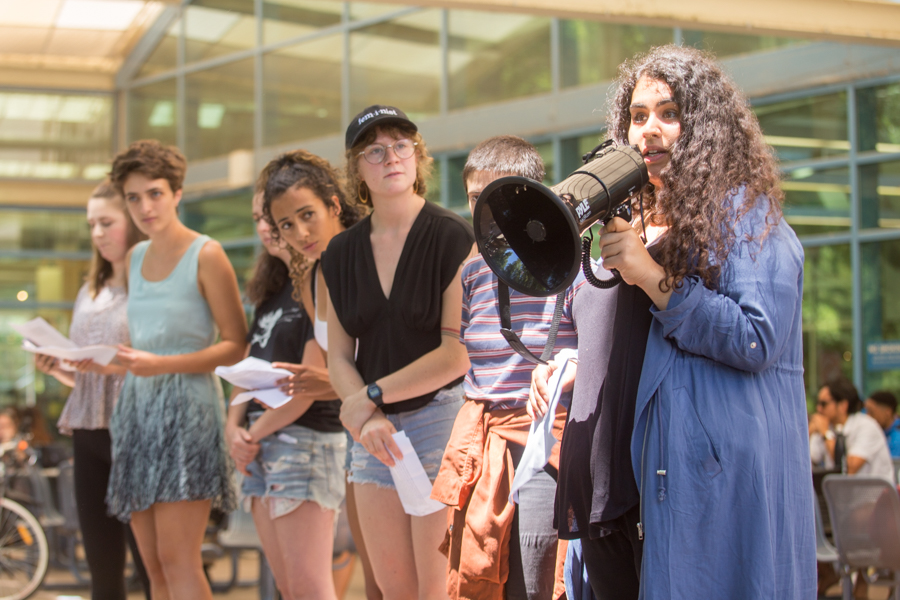
In response to a recent article published by The California Aggie, UC Davis students gathered to demand change at the Rally Against Rape Culture on June 2 at the Memorial Union. The article brought attention to UC policies that appear to protect and dismiss misogynistic culture and silence survivors of sex crimes.

At the rally, student survivors shared their stories and testimonies in the hopes that their experiences could help destigmatize the reporting of sex crimes and contribute to the creation of a campus intolerant of such crimes. Representatives from the Center for Advocacy Resources and Education were present at the event to offer support for anyone in attendance.

The article also explored the experiences of survivors of sexual assault and the inability of the survivors to link their perpetrators to any organization they belong to, such as sports teams or fraternities. With multiple reports filed against the fraternity Theta Xi, the Panhellenic community banded together to carry out their own form of unofficial justice and chose to disaffiliate with the fraternity.

Much of the article surrounded the experience of Kelsey Pitman, fourth-year bio-psychology major, when reporting her rape case to UC Davis. Pitman’s case was extended by the school five times and turned into a 199-day process almost four times longer than the 50-day period these cases are supposed to last. Pitman has remained a steadfast voice for survivors who some feel have been systematically silenced by UC Davis’ policies.

With her time at UC Davis coming to a close, Pitman encouraged attendants at the event to join the fight to end sexual assault and violence on college campuses.

“Stay angry and stay passionate about this injustice until our university makes a change,” Pitman said.

Sophie McGuinness, a third-year economics major and the co-author of the article, berated UC Davis in a speech at the rally for allowing Greek life to function without supplying the students involved adequate training, education and information to prevent sexual violence from occurring.

“The university allows Greek life to exist, but they simply do not have the funds to facilitate it correctly,” McGuinness said. “There are two people tasked with training all of Greek life. That is literally not enough to make anyone understand the true causes of sexual violence or even what consent truly is.”

Students were also outraged that an alleged rapist found guilty by the university was only suspended a few months more than the minimum sentencing requirement.

“A two-year suspension is not [a] remotely adequate consequence for a sex crime that will affect the survivor for the rest of their life,” the Rally Against Rape Culture’s Facebook page states.

According to the Facebook page, students are now demanding that UC Davis update and reform its policies concerning the reporting of sex crimes.

“Organizations with multiple associations with sex crimes must not be allowed to operate at UC Davis,” the Facebook page states. “By doing nothing to prevent these organizations from perpetuating misogyny, UC Davis is complicit with the continuous and predictable problems in these spaces.”

Additionally, the article demanded that the UC and Title IX track organizations with reports of sexual assaults and make that information available to the public.

Event organizers drafted a list of demands, which included improving access to sex crime prevention training for all students as well as promoting continuous training for campus organizations. Organizers presented the list of demands to Wendi Delmendo, the Title IX chief compliance officer, and Donald Dudley, the director of Student Judicial Affairs, during the rally.

Sarah Shemery, a fourth-year gender, sexuality and women’s studies major, was one of the student organizers of the event who hoped the rally would provide a safe space for survivors and allies to gather and discuss the epidemic of rape and sex crimes on college campuses.

“It’s our attempt to create dialogue in which we, as a community, acknowledge that the systems currently in place are broken and in desperate need of being dismantled and recreated to protect survivors and bring them justice,” Shemery said.

Written by: Ally Russell — campus@theaggie.org. Aaron Liss contributed reporting.

Harmonious Greeks: Greek Beats

JAMIE CHEN / AGGIE

UC Davis sorority women sing for philanthropy, personal development

Claire Ongaro, a first-year communication and design major, is a natural singer — she’s not formally trained in singing, but has a natural voice. In high school, Ongaro channeled her musical expression by walking through her house, singing to the audience in her kitchen or living room.

Maybe it was the condensed floor plan, but in college, a dorm room couldn’t satisfy Ongaro’s desire for a musical outlet. That’s where Greek Beats came into play.

“I just wanted to get my singing energy out in a space that is appropriate,” Ongaro said. “Back home I would sing all the time in my house, and it felt kinda weird to just being singing in my dorm with my roommate. Being a part of Greek Beats is meaningful because it is a space where I can just sing.”

Greek Beats is an all-women a cappella group made by and for women in the Panhellenic Greek Community on campus. While the group is limited to a specific category of women at UC Davis, the group embodies a welcoming environment for a variety of women to join.

“The auditions were really scary because I never auditioned for singing before,” Ongaro said. “But being a new member is really cool. One of the older members painted all the new members these Greek Beat plaques — it was kinda like some of the crafts we get from sororities, but it makes it really welcoming.”

Similarly for Julia Rateaver, a fourth-year communication major and the music director for Greek Beats, joining the group gave her an outlet for performing.

“I have always been into music ever since I was little, and I wanted to have a musical outlet when I came to Davis,” Rateaver said. “What I liked about Greek Beats was that it had a fun casual vibe about it where you could still put sorority, school and everything first, but have a fun outlet for your music talent.”

Because Greek Beats caters specifically to the Greek community on campus, there is an understanding about time commitment and the overall busy nature of the Greek system. Nevertheless, this similarity among the girls fosters a collaborative environment and gives them the opportunity to perform.

“The whole mindset of Greek Beats is that we are a bunch of girls who want to do something musical, but don’t necessarily have the time to commit to something really big — we just want to sing together,” said Andrea Martinez, a fourth-year economics and design double major and the president of Greek Beats. “Being in a sorority stuff takes up a lot of time, so we all have a mutual understanding that we have other important things in my life. We do a good job catering to everyone’s other activities, which I think is really important in a college atmosphere — balance is everything. Being involved in other things is really important and having this organization that understands that and wants to work with you and achieve all those goals is great.”

Similarly, the fluidity of Greek Beats was a factor that attracted her to the organization in the first place for Rateaver.

“It is a balance to support our sorority chapters and other things we care about, and if we were in a different a cappella group it might have to make us miss our philanthropies or other sorority events,” Rateaver said.

Aligning with the welcoming nature of the group, a person’s level of a cappella experience does not necessarily impact their acceptance into the group.

“The cool thing about Greek Beats is that a lot of girls come in not having a lot of singing experience,” Rateaver said. “I didn’t have much musical background either. A lot of girls have a lot of musical talent for not having much experience.”

Especially for Ongaro, who is not musically trained, Greek Beats gave her the opportunity to develop her musical skills.

“When we auditioned they asked us if we had any a cappella experience, but it wasn’t necessary to join,” Ongaro said. “It allows for people to grow musically because maybe I will be able to know chords in the future, there’s nothing that can limit me. I had to spend some time learning how to sing a cappella, especially since I never did a cappella before. People in Greek Beats have tips like closing your eyes, focusing on the overall sound and blending your voice to match other tones. It’s about softening your voice, making it not about you. It’s pretty humbling.”

Despite the spectrum of previous training, the group is nonetheless able to create a cohesive sound.

“Since you are in a group rather than just a soloist, you have to work together to make an even, balanced sound — it is a team effort,” Rateaver said.

This unity of sound is used to support a greater cause: Cal Aggie Camp, which pays to send children in the foster care system to camp run by UC Davis students every year.

“A big step for us was adopting Cal Aggie Camp, which is Panhellenic’s philanthropy, and I really want to build on that,” Martinez said. “We are so focused in our own sororities and philanthropic service to others, so I think it is important to do that in all aspects in life. And I want Greek Beats to be part of that and to help out as much as we can since Cal Aggie Camp is such a small organization. To raise money, we do a combination of bake sales, Yoloberry fundraisers and Blaze Pizza fundraisers. Also at the end of the year we do a senior showcase where it’s free but people donate money to us and we donate all that money.”

Adopting Cal Aggie Camp has allowed the women of Greek Beats to immerse themselves into something other than music while still supporting the Greek system.

“Since we are a Greek group we want to donate to Cal Aggie Camp, so we can further integrate ourselves into the Greek community,” Rateaver said. “We also perform at a lot of Greek philanthropies like TKE Sweetheart, Chi O Casino and Arrowjam.”

However, Greek Beats is not limited to solely the Greek system — talent and practice of their caliber has granted them equal standing among other a cappella groups.

“This past weekend we did a show in Central Park in Davis with the Columbia Kingsmen who are from Columbia University,” Martinez said. “It wasn’t anything to promote the Greek community; they just reached out to us through Facebook and wanted to do a show with us. It was super random, but it was so much fun.”

Such expansion is a testament to the amount of growth Greek Beats has experienced since its creation.

“We have come such a long way since it started,” Rateaver said. “We have always had musical talent, but as we become more well known in the Greek community we have attracted a lot more talent to join. People have stepped out of their comfort zone and come to us, a lot more musically-talented people have decided to join so our sound has really developed.”

Likewise, Greek Beats is looking for other routes to expand the organization, like performing at more non-Greek events and even possibly adding Greek men into the group, Martinez said.

Furthermore, growth of Greek Beats itself parallels the personal and musical growth of its members.

“My singing has gotten so much better and now I have so much confidence,” Ongaro said. “I never wanted to sing in front of people before, but now that I got in and have people to support me, I feel a lot more confident in my singing abilities.”

Martinez experienced a specific example of musical growth, testing her abilities to realms she didn’t know she could accomplish.

“We have been trying to find a beatboxer for so long — you don’t know how hard it is to find someone who is a girl, in the Greek system and can beatbox,” Martinez said. “One day at practice, I just kinda went for it and it sounded actually okay. I can only do four beats but they sound decent. I think in the future we are going to try and train our girls to beatbox and try to find some when we do auditions, but I never knew that I could do something like that.”

To Martinez, that grit and willingness to try new things embodies the people who make up the Greek community on campus. Greek Beats has helped develop a new realm of the Greek system.

“I think Greek women are awesome because we tend to do a ton of things; we are not just an a cappella group, we have a variety of interests,” Martinez said. “I think it says a lot about the Davis Greek community. Our group does a good job about integrating everyone. I don’t see a girl in Greek Beats as someone not in my sorority, but as someone who is my friend and that I do a capella with.”

For Rateaver, the moral character Greek Beats embodies has made it a defining part of her college experience.

“Coming in as a freshman, I only really knew girls in my sorority, Delta Gamma,” Rateaver said. “Greek Beats was a good way to get out of that bubble and meet other girls in the Greek community. I wish I could stay in it longer; it made a huge impact on my college experience.”


Written By: Caroline Rutten — arts@theaggie.org

Class reunions: Reconnecting and reminiscing

UC DAVIS SCHOOL OF LAW / COURTESY

Aggie alumni create new memories

It has been a little over a week since Kelly Healy graduated from the UC Davis School of Law, and she is already finding new ways to stay involved with the university as an alumna. Healy got to know many of her classmates while serving as the former vice president of the Law Students Association, and she is looking forward to reconnecting with them at future class reunions.

“It’s really kind of a fun place to do law school because we have this camaraderie,” Healy said. “Knowing that you have such great friends and wonderful classmates really helps get you through it. Being able to come back and visit […] is a cool thing.”

45 years ago, Rex Hime was similarly involved in extracurricular activities during his time at UC Davis for both his bachelor’s and his J.D. Since graduating from the UC Davis School of Law in 1972, he has managed to keep in touch with many of his classmates but said class reunions provide a more intimate get-together. Hime is currently serving on the reunion planning committee to help organize his 45th class reunion in October.

“Even though you try to stay in connection with a lot of people, life moves us all accordingly,” Hime said. “Reunions [are] a chance to catch up for all of the years of absence.”

University-coordinated reunions are held for the School of Veterinary Medicine and the School of Law. Celeste Borelli is the manager of external relations for the School of Veterinary Medicine and she begins the coordination and planning of class reunions nine months in advance. Planning is already underway for the 50th reunion of the Veterinary Medicine class of 1967.

“Our oldest classes […] are at the stage in life where they’re reflecting on their career,” Borelli said. “The stories they share are very emotional and they show their gratitude for their education.”

Both the School of Veterinary Medicine and the School of Law organize one combined reunion for all of the classes reaching five year milestones, from five years to 15 years to 45 years. Usually, each of the classes will also coordinate a separate get-together. Borelli said watching the classes interact is one of the most memorable moments of a class reunion.

“When we have the 20th class come back to celebrate their 20th reunion and they see the 50th class here, there’s a huge amount of respect and pride,” Borelli said. “They see themselves in 30 years. It’s really seeing that they’re following in the steps of leaders before them. At the same time, for the 50-year [class], they see the next generation coming behind them and they start to serve as mentors.”

Serving alongside Hime on the class of 1972’s 45th reunion planning committee is John York, who decided to help out as an excuse to contact people he has not talked to in a while. York said he has attended every previous class reunion.

“I knew everybody in law school, some far more intimately than others,” York said. “Law school is an intense experience. You spend a lot of time with people late at night, early in the morning, weekends. You have memories that last a lifetime — I’m watching it in my own son.”

The class of 1972’s reunion will occur during Homecoming weekend. Plans are currently underway for university-led tours of the law school, both combined and class dinners as well as attendance of the Homecoming football game.

In addition to reconnecting with classmates and revisiting the campus, class reunions promote the continuation of the progress and success of the university, according to Jin Kim, the associate director of alumni relations and annual giving for the School of Law.

“Without our alumni, our university would not be where it is today,” Kim said. “Our alumni are a huge support for our recent graduates [and] they’re a huge support for our current students. They are engaged in different ways — they give talks, they provide career advice, they provide jobs, they provide referrals.”

Kelly Healy said a lot of her classmates have received jobs through alumni and the large presence of alumni involvement is one of the reasons the School of Law is so special. According to Kim, combined class reunions allow alumni to look back and appreciate their experiences at the university as well as look to the future.

“Bringing [classes] together fosters a very comprehensive spirit of appreciation for the school and a sense of camaraderie, as well as a high level of pride for what they’ve contributed to the school,” Kim said.


Written by: Hannah Holzer – features@theaggie.org

Stranded in Davis for a day

HANNAH LEE / AGGIE

Students share experiences of time spent in between leases

It’s 5 p.m. on the sweltering last day of August, and fourth-year animal science major Kyra van der Zalm has exactly 24 hours to move all of her belongings into a new apartment. Her apartment lease for the year is up, and her new one doesn’t start until 5 p.m. the next day. With nowhere to go, van der Zalm is left to her own devices to find shelter for herself and her possessions.

Van der Zalm is not the only UC Davis student who has experienced this dilemma when moving from one place to another. Because of the way that leases work in Davis, many students find themselves with a gap day between the end date of their old lease and the start date of their new one. For example, some leases may end at the end of August, while others may not start until the a few days into September.

“It was a bit of a nightmare,” van der Zalm said. “I wish there was a way for students in Davis to [avoid] the whole 24-hour turnover. “

As a solution to the gap day problem, van der Zalm and her father rented out a U-Haul to move her belongings. However, for van der Zalm, the experience of moving from one apartment to another was particularly challenging because she not only had 24 hours between leases, but also 24 hours with the truck.

“While my dad went to go get the U-Haul, I was moving all my stuff out of the apartment complex,” van der Zalm said. “Luckily, there was a patio outside of my apartment, so I could put everything outside on the patio, because we were worried […] he wasn’t going to get back with the U-Haul until after 5 [p.m.], which was when I already had to have the keys handed in.”

Once they packed up the U-Haul truck, van der Zalm and her father found shelter at a Motel 6, where they spent the night. At the motel were various other moving vans, indicating that van ver Zalm was not the only victim of the gap day dilemma.

The next day, van der Zalm once again had to coordinate her timing. The U-Haul, rented from a company in Sacramento because rental places in Davis were booked, had to be returned by 4 p.m., so van der Zalm unloaded her possessions onto the grass area around her new complex.

“I waited with my stuff while my dad brought the U-Haul back [to Sacramento],” van der Zalm said. “I had to just sit out here for a few hours, until I got my key at 5 p.m. The office had literally closed the door and put a sign up that said, ‘We’re not going to be issuing keys until 5 p.m.’”

Van der Zalm was especially irritated that her new apartment was so strict on the timing of her move-in.

“It was pretty annoying,” van der Zalm said. “I saw [the managers] walking around when I was waiting [on the grass]. I mean, the room was ready. The reason that I guess we had to wait was to be fair to everyone.”

Like van der Zalm, Rachel Preeg, a fourth-year viticulture and enology major, experienced a similar situation when moving from one apartment to another.

“Our lease ended on the 31 [of August],” Preeg said. “We couldn’t move in till September 1. Basically, we took all of our furniture [and] packed it all into a U-Haul. We slept on my buddy’s couch for the night.”

According to Preeg, she was lucky to find a friend who was not moving and who had a place with garage space to store her belongings overnight.

“[It’s like] Being Homeless 101,” Preeg said. “There’s kind of that gap day. Everyone is kind of on their own terms, trying to figure out what to do that day in between [leases].”

For both Preeg and van der Zalm, the process of moving out of one apartment and into a U-Haul, and then out of the U-Haul and into the new apartment was especially difficult given the time frame of the transition.

“It’s just a nightmare in the summer when it’s 95 degrees and you have to move couches and all of your belongings upstairs, downstairs,” Preeg said. “Who likes moving? No one. It’s never fun. I don’t really know what the solution would be, unless you were able to arrange ahead of time [with] the place you were moving out of and the place you were moving into.”

This solution that Preeg mentioned, however, is exactly what Noah Ekstrom and Kenneth Gath, both fourth-year chemical engineering majors, were able to do when it came time for them to move.

“I was looking at overnight storage places, but […] there was not a single place available,” Gath said. “They were all full [in Davis], so we were going to have to go all the way to Sac[ramento]. We were like, ‘Screw that.’ We could just get a U-Haul overnight, but then we were like, ‘Screw that also.’ We asked [our new apartment], ‘Yo guys, we’re screwed, there’s no where to put all our furniture for the night. Is it okay if we move in early?’ And they were like, ‘Yeah.’”

After talking with staff at their new complex, La Salle, Ekstrom and Gath were able to complete the usually laborious move-in process within the span of a day.

“For us, it ended up being really painless, because we were able to just move out and move in,” Ekstrom said. “[La Salle] was really nice. They gave us extra days that were not included in the lease.”

In the moving process, however, not all students get as lucky as Ekstrom and Gath, or even as lucky as Preeg and van der Zelm, for that matter.

“I’ve heard of people saying that they’ve literally slept in their U-Haul,” Preeg said. “That was just their home overnight, I guess. Everyone just has to fend for themselves. You just deal with it [and] couch surf for a night.”

For students facing the gap day dilemma in the future, Gath gave advice from his own experience.

“Figure it out early, at least like a month in advance,” Gath said. “When we tried to figure it all out when our lease was ending, everything was full. It was way too late. It’s a pretty common issue.”


Written by: Allyson Tsuji — features@theaggie.org