53.5 F
Davis

Davis, California

Tuesday, December 23, 2025
Home Blog Page 612

UC Davis holds third annual Out of the Darkness Campus Walk

BRIAN LANDRY / AGGIE

Walk seeks to raise awareness about suicide, suicide prevention, mental illness

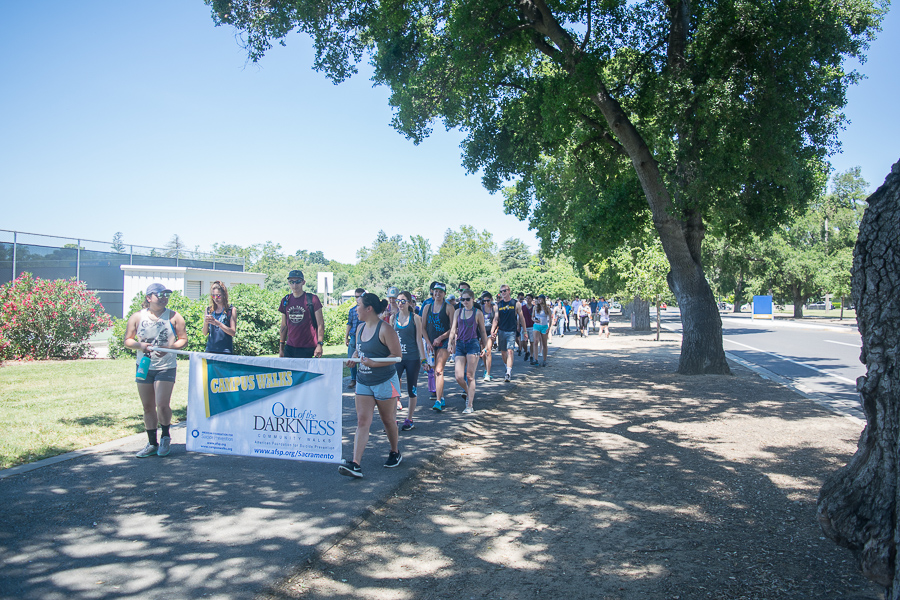
The third annual UC Davis Out of the Darkness Campus Walk to raise money and awareness for suicide prevention was held at Russell Field on May 20.

Students Against Suicide, a student organization on campus that works with the American Foundation for Suicide Prevention (AFSP), hosted the walk. The AFSP was founded in 1987 and is the leading national non-profit organization dedicated to preventing suicide and reaching out to those with mental disorders and those impacted by suicide.

In her opening speech to the participants of the walk, Christine Gutierrez, a fourth-year human development major and the ambassador of Students Against Suicide, said more than eight million people in America seriously considered suicide this year, while one million acted on the thought and made an attempt.

The latest data from 2015 shows that 45 thousand people died by suicide that year in the United States, which translates to one death by suicide every 11.9 minutes. 90 percent of these people had diagnosable and treatable mental disorders at the time of their death. These suicides take a serious toll on family, friends, coworkers and the community as a whole.

The participants started off on Russell field and embarked on a five-kilometer walk through campus, looping around the Arboretum where they took part in creating an art project. Participants were able to write supportive statements for themselves as well as other people and pin them on clothespins.

“It’s just nice to see a lot of positive affirmations everywhere and it creates more of an uplifting vibe,” Gutierrez said.

Before and after the walk, participants took part in various activities such as art projects and games. There were also raffle prizes and a group T-shirt design competition.

The AFSP has been holding these walks for decades all over the country, according to Gutierrez. It also hosts a variety of other events such as Survivor Day events to show support for those who suffered from depression, stomp out the stigma relating to mental illness and hold workshops for suicide prevention.

Several other organizations on campus were there to support the walk including National Alliance on Mental Illness at UC Davis and MindSpa, a division of the Student Health and Wellness Center.

Eori Tokunaga, a third-year human development major, is a wellness ambassador from the Mind Spa. According to Tokunaga, the Mind Spa helps improve the mental health of students by providing a variety of de-stressing services such as massage chairs, relaxation podcasts and Cognitive Behavioral Therapy for insomnia.

The event was also made possible through the efforts of many student volunteers.

“I’m doing this because I think suicide is a really deep topic that needs to be addressed, and doing the walk will help bring attention to the topic,” said Louie Shi, a second-year computer science major and volunteer at the walk.

Last year’s walk raised about $5,000. Donations from this year will go toward the AFSP for new research, educational programs, advocacy for public policy and support for survivors of suicide loss.


Written by: Clara Zhao — campus@theaggie.org

The question of intellectual property

GENESIA TING / AGGIE

Universities prevent researchers from taking complete ownership of ideas

From the modern-day elevator to social media worlds like Facebook, America prides itself on promoting innovation and invention. However, coming up with a new and useful idea can be extremely expensive, difficult and time-consuming. For this reason, many Ph.D. candidates and professors dream of working at prestigious research universities that will provide researchers with the resources they need, such as money and technology, to pursue their inventions and ideas.

“A lot of professors who have had successful pasts will be able to get a job at a university like this, use its facility, develop their [studies] and get grants to their department or school and also to himself or herself,” said Ryan Ko, fourth-year biochemistry and molecular biology major. “There are professors in the field that are motivated to keep getting ahead and find that big breakthrough.”

Since his sophomore year, Ko has worked in a lab studying structural biology of proteins — even conducting his own independent research project — and has seen many cases of the interaction between industry and research.

“A professor who has had that big breakthrough and starts selling [a discovery] to industry needs to consider the fact that it is intellectual property of the university and you can’t make additional money off of their facilities,” Ko said. “The school’s opinion is that if you develop an idea, it becomes the school property if you use their laboratory or their process of hiring undergraduates or graduates […] you’re using the school as a way to get to where you are.”

In a recent lawsuit over the ownership of a strawberry breed invented at UC Davis, two former UC Davis scientists were found guilty of breeding what was considered to be the university’s intellectual property. This is where the catch of the university research system comes in.

According to a Forbes technology article from 2012, all UC campuses require that graduate students who have been hired to perform research each sign a contract that acknowledges their obligation to fully disclose potentially patentable inventions to the university-authorized licensing office. This holds true in the case of professors as well (as seen in the strawberry suit) because the majority of creations, inventions and discoveries made at the university belong to the university. Researchers may be receiving ample funding and capital for their projects, but are they really their projects?

For political science graduate student Matt Lesenyie, this system does not deter his creativity nor his drive to conduct research. Actually, Lesenyie feels he is able to do his research specifically because of the university’s support.

“I do research using lab experiments and samples of students that examines differences in campaign finance disclosure in advertisements,” Lesenyie said. “It’s been about four years of research using lab equipment and convenience samples that I couldn’t do it without the resources that we have here[…]I simply don’t have that many people and computers.”

If this is the case for Lesenyie, how is it that some faculty find themselves going against the university in an effort to exploit what they deem is their rightful intellectual property?

Intellectual property refers to the creations of the mind from physical inventions to ideas, which is how faculty might become stuck in the grey area of who has rightful ownership. According to the economic principle of rivalry, ideas — whether they be for a pest-resistant strawberry or new iPhone app — are non-rivalrous, meaning that one person’s use of an idea does not prevent another person’s use of that same idea. Professors may fall into the trap of believing that their ideas belong to them and only them, when in fact the university must take ownership of this idea in order to prevent it from exploitation.

“When you sign your contract, it says whatever you bought with research funds at Davis stays [at the university], but when you come up with an idea it’s much more difficult because the idea is out there now for everyone to use,” said economics professor Athanasios Geromichalos. “You can see that both sides have a point. In the one hand it was [the professor] and his hard work that helped make the idea come true, at the same time [his idea] not only physically took place inside UC Davis facility but it also took place with the financial and research support from UC Davis.”

Geromichalos studies modern monetary policy and how the central bank affects aggregate microeconomic activity, a topic that he hopes would eventually be relevant for monetary policy. Even though Geromichalos will probably not find himself in a situation akin to that of the strawberry lawsuit, he stresses that it is important for faculty to stay humble and remember the sources of their success.

“I think the university helps you conduct research under excellent conditions,” Geromichalos said. “You want the university to help you come up with good ideas but you don’t want to forget that the university had a role to play in this contribution.”

Despite his confidence in not having to face a challenge of ownership against the university, Geromichalos believes that the university could do more to educate its professors and graduate students on the subject of intellectual property.

When researchers know that ideas they worked so hard for will be taken away from them, this creates disincentives for people to be innovative and work hard, according to Geromichalos. As a result, he argues for more of a middle-ground solution for deciding who has rights to intellectual property.

“We need to maximize efficiency by having a mechanism in play that makes sure there is no loss of good ideas because of disincentives,” Geromichalos said. “But, at the same time, there should be a fair split of the fruits of discoveries between the university and the researcher. Having a more clear framework and understanding of what happens in cases like that can definitely not hurt.”


Written by: Gillian Allen — features@theaggie.org

Memorial Union holds grand opening

KELSEY GREGGE / AGGIE

After almost two years of construction, Memorial Union is open to the public

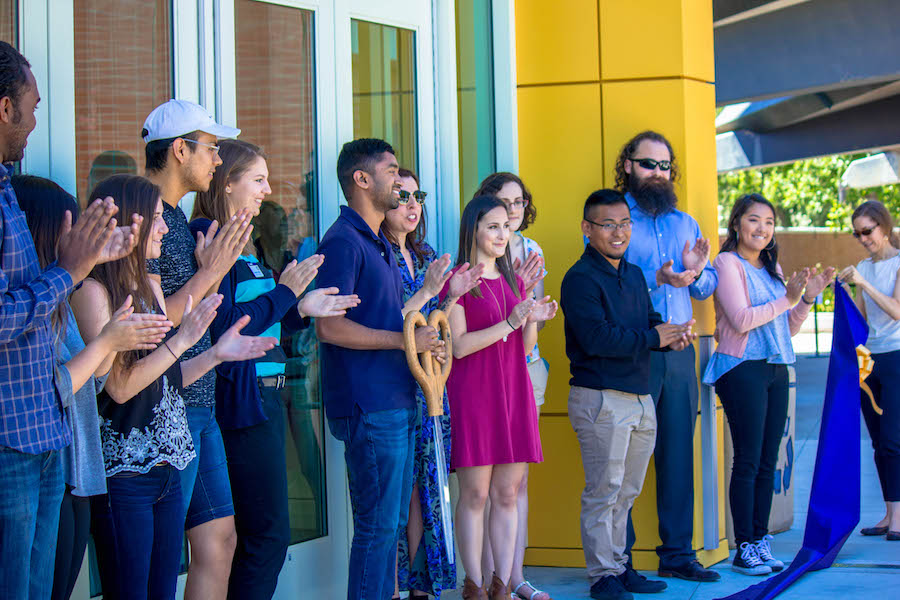
After almost two years of construction and renovation, the Memorial Union (MU)  officially reopened to the public on May 18.

After an energized performance from the UC Davis Cal Aggie Marching Band, students and guests were welcomed to the event by ASUCD President Josh Dalavai.

Before introducing the event’s main speaker, Dalavai reminisced with the crowd about the past several years, during which the MU has not been open to students. With its official grand reopening, Dalavai looks forward to the role the space will play for students on campus.

“The MU serves as the living room of campus where students gather between classes to socialize, study, eat and hang out,” Dalavai said.

Dalavai went on to introduce the event’s guest speaker, Emily Prieto-Tseregounis, assistant Vice Chancellor and chief of staff to the Vice Chancellor of Student Affairs. Prieto-Tseregounis spoke to the crowd about the Memorial Union’s original founding and its history of four renovations over the years.

When the MU opened in 1955, the space hosted only a dining commons, kitchen, faculty club, student lounge, alumni association offices, soda fountain and student store. Since then, the space has undergone major renovations to ensure the MU remains a utilized central hub for students on campus.

“This comprehensive renovation took the historic Memorial Union and celebrated its history as the home of ASUCD and it being a dynamic on-campus destination for students and the campus community,” Prieto-Tseregounis said.

The MU was originally named and dedicated to commemorate the UC Davis students and alumni who lost their lives during World Wars I and II. Prieto-Tseregounis urged students and guests to come back to the MU on May 25 to be a part of the annual Memorial Day Ceremony, where the new Gold Star Aggie Wall will be revealed.

Among additions to the Memorial Union, Prieto-Tseregounis welcomed the Veterans Success Center as well as the Center for Chicanx and Latinx Academic Student Success, which will be located on the second floor.

Following her speech, student groups including the Liquid Hotplates performed for those in attendance.

Students fighting for a Fossil Free UC Davis came to the event to protest UC Davis’ continued reliance on fossil fuels. At noon students joined in chants and drew words of protest with chalk in front of the MU to show the UC regents they are committed to a future that is not reliant on harmful fossil fuels. On the event’s Facebook page, students demand to know which side of history UC Davis intends to be on.

According to the event’s Facebook page, “by not divesting, our universities have turned their backs on our generation and the scientific community to side with the fossil fuel industry. It’s far past time that our colleges and universities make the choice between the fossil fuel billionaires, and the futures of its students.”

While older UC Davis students eagerly anticipated the reopening of the MU, younger students were excited for their first chance to experience the space. Hetal Patel, a second-year cognitive science major, looks forward to the new study spots that the MU will provide.

“The [Coffee House] is really small and a lot of people like to study there so I think the MU is really nice,” Patel said. “It gives you a nice place to study not in a food opens up a lot more seats and there’s space for group study.”

With the official grand reopening of the MU, students are invited to enjoy the open floor plan with additional spaces to study, relax, game and spend time with friends.


Written by: Ally Russell — campus@theaggie.org
Humor: Big Bad Wolf saddened by news that newly-renovated Freeborn cannot be huffed, puffed and blown down

ASHLEY LUGO / AGGIE FILE (left), DENNIS MATHESON [(CC BY-NC 2.0)] / FLICKR (right)
Man in costume dressed as legendary childhood villain less than thrilled with safety of lecture hall

UC Davis saw a visit from a famous fairytale villain after Memorial Union renovations were completed last month. The Big Bad Wolf, from The Three Little Pigs, stopped by the campus in order to test out the new building’s ability to handle the elements.

Matt Wolff, a fourth-year economics and landscape architecture major, dressed as the famous character and walked around the lecture hall blowing on all four sides. He then went into the basement and blew upwards to test the status of the floor of Freeborn Hall.

“I see this as a senior prank of sorts,” Wolff said. “I’m graduating, and I felt like this would be a good way to go out. I won’t get to see the new Freeborn. I know it’s been retrofitted, and that the only changes that still need to be made are on the inside. Come on, you know this was funny.”

Wolff admitted to getting the costume when he was little after he heard the story of The Three Little Pigs in second grade. On account of age, he continues to buy the same costume from the same online store. The Freeborn prank has earned him the nickname “The Big Bad Wolff.”

Wolff’s antics caught the student body off-guard but entertained just about everyone that saw him.

“I get it,” said Ben Green, a fourth-year environmental policy and planning major. “I’ve been here a while. It’s obvious that Freeborn is made of bricks. The kid dressed as a wolf and blew on it. He did it for a while, so as to catch as much attention is possible. Hilarious stuff, really.”

Through the heat and stress of finals, Wolff has become a hero. Memes detailing his exploits have appeared on the UC Davis meme page. He has lightened the mood just as UC Davis gears up for a new chancellor, week nine and the looming threat of finals. Here’s Wolff, brightening the days of students.

It can be easy to get down during this trying time of the quarter, but a little bit of lighthearted humor can always help. As the year winds down and nerves increase, Wolff’s message to the university of enjoying yourself extends beyond that of pretending to be a fictional character. So treat your life like Freeborn — still standing tall despite Wolff and the elements.


Written by: Ethan Victor — ejvictor@ucdavis.edu

(This article is humor and/or satire, and its content is purely fictional. The story and the names of “sources” are fictionalized.)

Two new staff members appointed to UC Davis volleyball team

MARK HONBO / UC DAVIS ATHLETICS (left), CLEMSON UNIVERSITY / COURTESY (right)

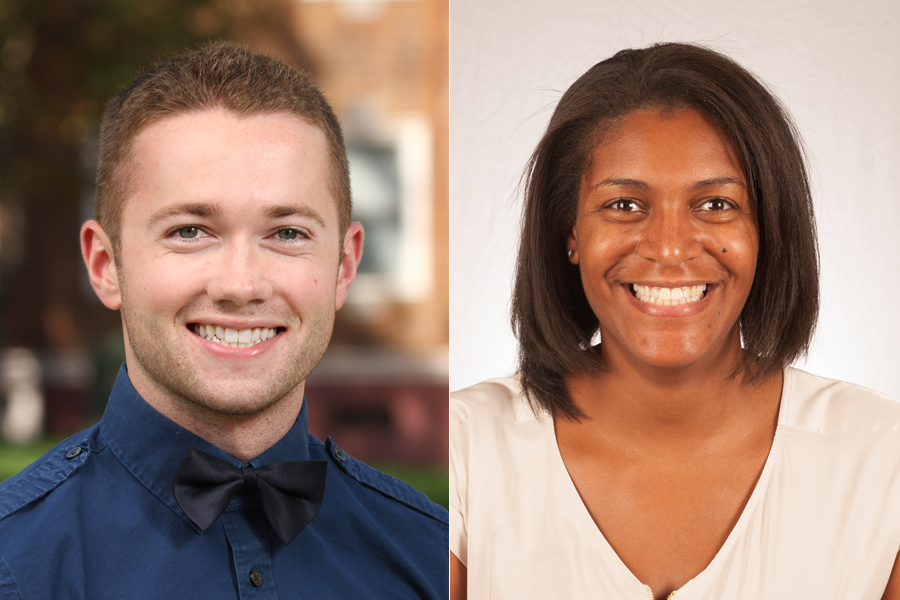
UC Davis volleyball welcomes Nicole Miller, Bryce Williams

The UC Davis volleyball team has a bright few seasons ahead of it with the recent addition of Nicole Miller and Bryce Williams to the coaching staff. Head coach Dan Conners’ contract has also been extended through 2021.

Conners is looking forward to improving all aspects of the UC Davis volleyball program alongside both Miller and Williams.

“We want the program on an upward trend,” Conners said. “So wins, losses, performance, academic performance, what we’re doing in the community. We just want all aspects of the program improving all the time and that’s the primary goal. I think we want players to see that as well and learn from that.”

Conners previously worked with Miller and was excited to bring her on as an assistant coach.

“With Nicole, we worked together briefly in the past,” Conners said. “She had quite a few people talking to her ability as a coach, so then the timing worked out well and it was an opportunity to get her home.”

Miller originally hails from Stockton, Calif., and enjoyed a collegiate athletic career at University of South Carolina from 2002-2005. Miller has spent the last 10 years making a name for herself as a coach and is coming back to northern California after spending two seasons at Clemson University, where she was assistant coach and recruiting coordinator.

Miller was first attracted to UC Davis because of the opportunity to work with Conners and Williams, and is excited to start working with, and improving, the UC Davis volleyball program.

“I think working with Dan and Bryce was one of the big factors,” Miller said. “Especially since I’ve had a previous relationship with Dan and I remembered some of the things that he said to players when we were working in Italy and then I had some friends reach out to me about Bryce and they spoke very highly of him. Davis is close to home, which is nice, but I also saw it as an opportunity to help the program grow and be better. I always like a challenge, so I definitely think we can do some really good things here, so I’m excited about it.”

As a neurobiology, physiology and behavior major from the UC Davis class of 2013, Williams was a member of the coaching staff first as a volunteer manager and later as a student assistant. After graduating, Williams worked Northwestern, Montana State, Team USA and as Director of Volleyball Operations at Texas Christian University.  

“I’ve always been an advocate for this program,” Williams said. “Anywhere I’ve gone and coached, I’ve always followed the Big West and where Davis is in the standing and the recruits they have coming in. So I always kept track of this job […] so I’m glad this opportunity has come and I’m excited to, like Dan said, take this program on an upward trend and to be at the top of the Big West. That’s the goal. I think we have a great group of people on staff to do that and accomplish those goals.”
Conners was eager to bring Williams back to UC Davis.

“I think with Bryce, he has a good level of experience,” Conners said. “He wants to be at Davis. He’s an alumni of Davis. [There were] a ton of people of talking about the quality of coach that he is, so it was not a tough thing to bring him back on board.”

Both new additions have already started working with the team. Miller and Williams have been stepping in occasionally to learn about how the team works and operates. The UC Davis volleyball team just finished its spring training period with a final game against Stanford, the defending national champions. Now, Conners is looking forward to working with his new staff for the 2017 season.

“I’m really excited to have both of them here,” Conners said.


Written by: Liz Jacobson — sports@theaggie.org

What to do with an empty campus

AMY YE / AGGIE

Youth Program camps provide students with closer bond to Davis community

After the final class is let out and students make their way off campus to their summer plans, UC Davis becomes a land devoid of the mass of undergraduate and graduate Aggies. According to

Bekah Weimer, a third-year psychology major and camp counselor, the environment downtown and on campus changes because of the few students still in town.

“During the summer the campus is very dead,” Weimer said. “There is not as many people so we really didn’t see many college students around as much. It’s a weird Davis, [the vibe] definitely changes. It seems more of a family town more than a college town during the summer.”

Davis having a different vibe is not necessarily a negative. For 10 weeks over the summer, UC Davis Youth Programs, a student-run summer camp for kids, takes place on the UC Davis campus. There are many different specialty themed and general camps, attracting kids of all ages. According to Erin Cloughesy, a fourth-year cognitive science major and a specialty camp manager, many of those enrolled in Youth Programs are children of professors or international graduate students.

While their parents are on campus working, researching or studying, the kids get to enjoy parts of campus during the day.

“It’s a pretty popular camp,” Cloughesy said. “There are a lot of parents who are both working or the parents are going to school so they drop their kids off at camp. There is just a bunch of different general camp activities.”

When most of the students are gone, the campus no longer feels like a bustling, studying zone. Instead, the campus feels more laid-back, a place for kids and counselors to have fun.

“[The camp] is a lot of fun,” Cloughesy said. “You’re with 40 other people and you end up getting pretty close to a majority of them because you spend time outside of camp together because there is not that many other people in Davis, […] you do a lot of fun things during the day.”

Meghan Nevarez, a fourth-year sociology and Spanish double major, and a staff member of Youth Programs, finds the energy the staff brings is an important aspect that makes Youth Programs unique from other summer programs in the area.

“The staff are super awesome,” Nevarez said. “Everyone on staff are students and they are all super passionate about their jobs.”

Cloughesy finds Youth Programs runs so well because of the staff that puts the camps on.

“I haven’t had a year where it isn’t 40 great people who want to spend their summer with kids, who bring new ideas and always have positive attitudes,” Cloughesy said. “I think that’s what makes our [camp] unique enough because it’s completely student run in that there’s a sense of professionalism but also a group of young people who have a lot of energy.”

While the majority of UC Davis students are home enjoying their time off, kids enrolled in camp use the recreational facilities the campus has to offer. According to Cloughesy, the camps not only bring kids on to the UC Davis campus but they also bring the camp counselors closer within the Davis community.

“A good chunk of kids are just repeat kids that come all 10 weeks,” Cloughesy said. “You also get to know the parents really well, and it also connects you to the community of Davis because you’ll meet Davis residents and you’ll meet people that you wouldn’t have had the opportunity to meet without the camp.”

According to Weimer, working with children gives the staff a different perspective on life.

“Working with the kids, I mean, it kind of puts your priorities into perspective because they’re more interested in ‘am I going to get an otter pop today’ rather than worrying about school,” Weimer said. “I really liked being in that environment of kids and you know just having fun […] was their main priority. It’s a nice world to go into when you’re so stressed out about school.”

Youth Program camps not only provide counselors with a fresh perspective of Davis and a closer bond with the community, but Nevarez also finds that, overall, it is a highly rewarding experience.

“The most rewarding part about working with the camp is seeing the kids grow and seeing them really break out of their shells,” Nevarez said, “Seeing how some kids are super shy or super nervous or cry on the first day or kids who are on the first day they just want to go home and seeing throughout the week. Just seeing how they start to get comfortable and really just start to have a lot of fun — that’s the thing that’s the most rewarding for me.”


Written by: Elizabeth Marin  — features@theaggie.org

Catch The Tricky Part at the Mondavi

JOAN MARCUS / COURTESY

An Inside Look with Martin Moran about his play

Content warning: Sexual abuse

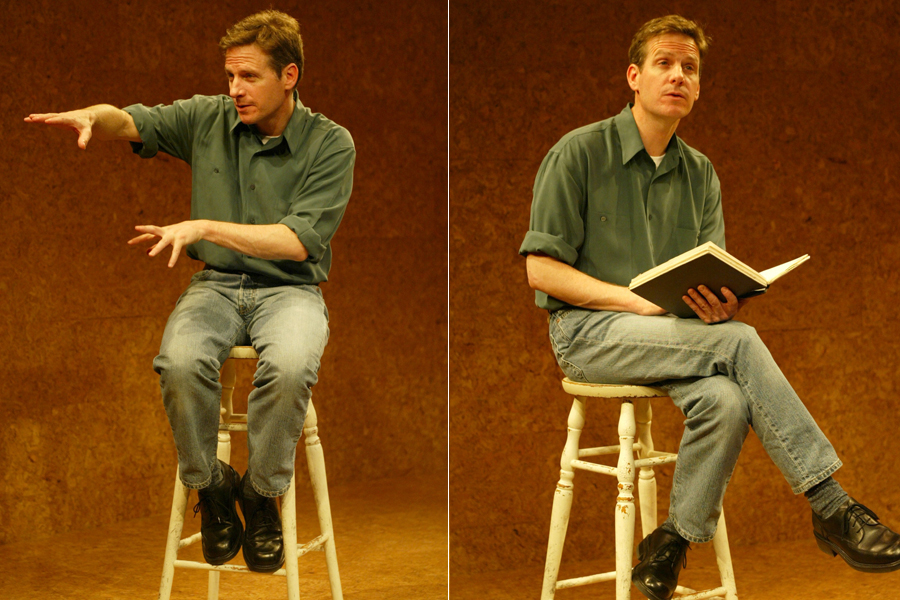
Martin Moran, an Obie award winner, has written a captivating tale about the harsh realities and how to deal with them. The Tricky Part is about the issue of the complications of childhood sexual abuse. Moran wanted to encourage people to deal with their abusers, literally or otherwise. Although his experiences were very specific, he discussed how he wants his show to be about the human experience.

The Aggie asked Moran, “What are some things that led you to writing a one-man show? What led you to be so open about such a personal experience?”

Moran answered, “When writing memoirs, there’s a way in which it’s not so much an idea as an imperative, meaning that there was a sense within my soul […] that I needed to tell this story — that I needed to sort it out in some way. And of course, it was very,very private at first […] In the case of The Tricky Part, I think writing this story led to understanding something about the nature of forgiveness, and that felt important.”

Moran’s answer highlights the fine line between writing and journaling. He shows how he attempts to write about the human experience through the lens of something that happened to him, but ultimately, he writes a story for all people, no matter their trauma.

“It’s really a lot more than about sexual abuse,” Moran said. “It’s really the question of how we deal with the sense of being damaged […] It’s about the tricky part of moving on when we perceive something has traumatized [us]. The play has a lot of universality: how we deal with being wronged and how we make sense of those who have wronged us.”

This play has won an Obie Award and was nominated for other prestigious awards. It’s a play about what it means to be a child, an adult, a liar, a cheater and how all of these identities intersect with these people. It’s a play very much interested in coming to terms with pain and one’s tormentors, abusers and problems.

While describing what he wanted to people to get from his play, Moran said, “Liberation from the past, liberation from the things we think that hold us to the past.”

Moran’s writing comes at a much-needed time. His story is about more than forgiveness and coming to terms with ourselves and others; it’s about how we survive the world despite its toxic environment. Moran is not attempting to lecture his audience the importance of forgiveness and how to live in this scary world. Instead, he wrote a one-man show that illuminates a tricky issue through the lens of theatre. The Tricky Part will be a night of entertainment at its core, while discussing the importance of forgiveness.

When asked what an audience should expect from Moran’s play, he said, “It is an evening that is utterly not what you expect. It’s filled with humor, it’s filled with humanity, it’s filled with vivid storytelling and beautiful language. I say that with some modesty. It’s a strong piece of theatre. It’s a gripping evening that is much more than just sexual abuse. It’s about the tricky part of being a human being on the planet  when people bomb each other, hit each other and hurt each other.”

The show will play at the Mondavi Center June 1 to 3 from 7 to 8:30 p.m. Tickets cost $10 for students. To buy tickets, please visit the Mondavi Center website.


Written by: Akaylah Ellison — arts@theaggie.org

ASUCD’s abysmal voter turnout problem

HANNAH LEE / AGGIE

Student officials fail to effectively promote important special election

ASUCD held a special election from May 24-25 to vote on the re-establishment of the ASUCD judicial branch. Students had voted to approve a constitutional amendment to dissolve the branch in November, after various ASUCD officials campaigned for the amendment’s passage.

However, after ASUCD realized this quarter that the UC Office of the President requires student governments to have an unbiased court system, student officials drafted another constitutional amendment — one that would establish both an impartial ASUCD Judicial Council and an ASUCD Judicial Council Oversight Committee, which would not be required to be impartial.

In last week’s special election, roughly 68 percent of voters approved the new amendment, surpassing the 60 percent affirmation required for its passage. But this measure of the amendment’s support is entirely misleading. 198 students voted in the election. Yes, you read that right: 198 students. 127 students, which is roughly the attendance of a poorly-attended lecture in Rock Hall, were able to determine the future of the judicial branch of our university’s student government.

This isn’t to say that the Editorial Board is not pleased with the election results; we urged students prior to the election to vote and to support the amendment. But the voter turnout in this election is laughable, embarrassing and a complete farce. The Aggie has long called for ASUCD to work harder at increasing voter turnout for its elections, and ASUCD officials and candidates have often stressed the association’s pressing need to better engage with the campus community.

Granted, because this election was not one of ASUCD’s two regularly-scheduled elections during the academic year, one would not expect a staggeringly high voter turnout. But a total of 198 voters is indicative of a lethargic, complacent association, potentially burnt out from its inability to pass legislation earlier this year to create an effective system for judicial review of ASUCD. Social media outreach was scarce and sometimes non-existent from the student leaders who were elected to represent and inform their constituents. There is not one mention of the election on the ASUCD Senate Facebook page prior to May 24. ASUCD’s official Facebook page made a grand total of one post about the election.

The Editorial Board urges ASUCD and its student government to once again to reverse the trend of low voter turnout in student elections. We hope that student officials use the summer months to develop streamlined, specific strategies for increasing student engagement with the association. Higher engagement leads to higher participation, which leads to more interest in ASUCD and in student government. This interest should translate into higher voter turnout. The process is simple and straightforward, and we urge our student leaders to once and for all hold themselves accountable and do more than the bare minimum to accomplish these goals.

Double Take: Are we in a world where GMOs need to stay?

GENESIA TING / AGGIE

YES — Camille Chargois

Genetically modified organisms need to remain a part of the multiple food systems they already inhabit simply because, without them, the already-deplorable state of food insecurity will worsen. The advent of this new technology has made food production exponentially easier, safer and cheaper. It has saved the livelihoods of countless organic and conventional farmers on whom we rely to produce our daily meals by providing them with disease and pesticide-resistant crops. GMOs are simply the beautiful products of either genetic engineering or the modification of agricultural products to replace unwanted or harmful traits with more useful ones.

GMOs solve one of the most persistent problems in farming by controlling diseased crops.

“When nothing seems to be working, you have to think of alternate solutions,” said Professor Dennis Gonsalves, a plant pathologist at Cornell, when he was modifying the rainbow papaya to be resistant against the ringspot that nearly drove the species extinct.

The papaya industry is now booming and Hawai’ians are reaping economic benefits. None of this, including the products you consume containing papaya, would be possible without GMOs. In another case, GMO technology played a vital role in eradicating the gene causing wilt rot in bananas on a sustenance farm in Ghana. By collaborating with scientists to genetically modify the bananas to resist wilt rot, the family was able to combat severe food insecurity that would have otherwise persisted on their farm and throughout the country.

GMOs are not limited just to food, and their benefits extend beyond agriculture to industries such as medicine and environmental management. A common misconception about GMOs is that they have adverse health risks, when in reality they are the reason diabetics who need insulin — a GMO — are able to live healthy, comfortable lifestyles. If you believe in the validity of science, you should also believe in the validity of its most recent revolutionary technology: the GMO.

We also have to be responsible about the way we discuss GMOs. Negative effects of confirmation bias and vilification of GMOs perpetuated in Western media have already spread misinformation worldwide. Just as America’s political actions have severe global consequences, so do its scientific communications.

Written by: Camille Chargois — cachargois@ucdavis.edu


NO — Brody Wayne Fernandez

What do we really know about genetically engineered food? Not as much as we should, according to leading scientists. This uncertainty doesn’t mean we should get rid of them entirely. However, we also shouldn’t be so dependent on something that we don’t yet fully understand.

High-fructose corn syrup, chemical-resistant apples and insect-resistant vegetables are among the genetically modified organisms that prompt us to question what’s really going inside our bodies. According to recent research, there are certain genetic compounds and antibiotics found in most genetically engineered foods that are harmful to our digestive system because our bodies cannot yet identify and digest them.

Additionally, most Americans don’t even know what a GMO is. Until we know whether GMOs are something we should avoid putting in our bodies, I think we can agree that regulating GMOs in a more ethical way would better serve the longevity of our health. After all, we’re not yet sure whether GMOs will kill us along with all the Bisphenol A and other chemicals found in just about everything. Less regulation and dependence on GMOs can ensure the American people that what they’re eating “might” not kill them instead of “will definitely” kill them.

Think about it: Is corn that’s genetically altered to excrete a toxin that kills all insects that touch it really healthy for humans? Last time I checked, we’re also living organisms that feed off these genetically modified crops. At least the bugs suffer a quick and painless death — something I can’t say humans will experience 40 to 50 years down the road.

There’s enough evidence to support both sides in the GMO debate. Regardless of the answers, I implore people who are generally concerned about this issue to seek out solid, research-based findings that were not conducted by scientists working for Monsanto. Challenge the status quo of our agricultural system, even if rooting out all GMOs is impossible.

When I go shopping these days, I’m not looking for fat-free yogurt or sugar-free ice cream (which is a felony), nor am I looking for something with an organic label. Rather, I’m looking for one little critter that’s tucked away on the corner of nearly every food item I buy: that sweet, tender little butterfly that indicates “non-GMO.”

That, in the end, has me sleeping better at night.  

Written by: Brody Wayne Fernandez — bwfernandez@ucdavis.edu


Disclaimer: The views and opinions expressed by individual columnists belong to the columnists alone and do not necessarily indicate the views and opinions held by The California Aggie.

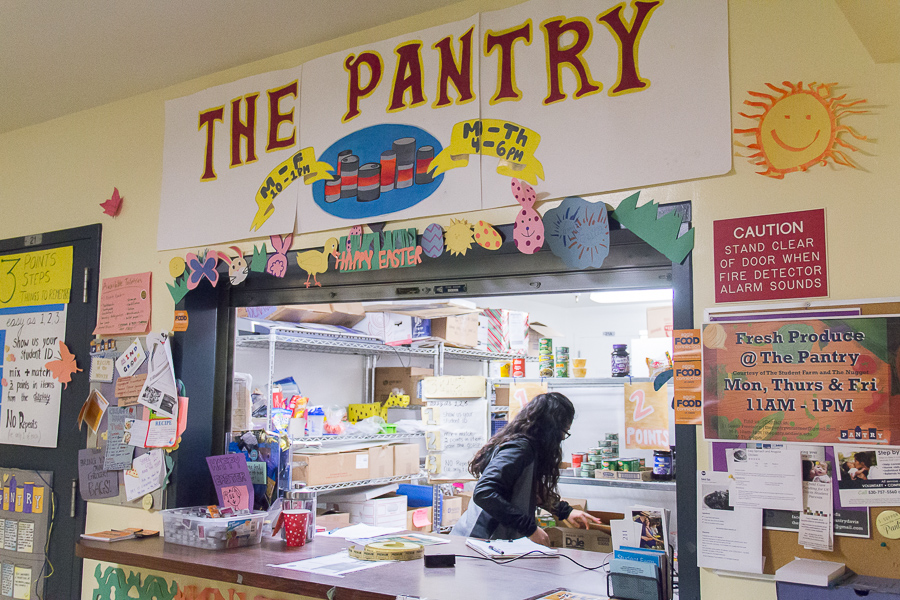
ASUCD Food Pantry to hold 2nd Annual Benefit Show

LAURA LONG / AGGIE FILE

Event will showcase live performances to benefit a great cause

The ASUCD Food Pantry will be hosting its second annual benefit show on June 1, with the theme “Life’s a Beach,” in order to raise money for the cause. It will take place in Sciences Lecture Hall 123, and will be feature a variety of different student groups on campus, including a cappella groups, dance groups and cultural clubs.

Some of the organizations performing include Danzantes del Alma, Na Keiki ‘O Hawai’i Polynesian Dance Group and The Liquid Hotplates. All the proceeds from the event will go directly to the Pantry to further aid it in its mission to create a healthier campus environment. Justin Hu, a fourth-year biological sciences major and an intern at the Food Pantry, works closely with the students who benefit from the Pantry’s services.

“[As an intern], we help with stocking the Pantry and making weekly trips to the food bank,” Hu said. “You get to see familiar faces that come in everyday, and it’s really nice to know that you’re helping them and that they want to continue using us as a resource.”

The ASUCD Food Pantry is often considered one of the most beneficial resources on campus to students in need. The goal of the Food Pantry is to ensure that no student ever goes hungry or lacks the basic necessities needed in order to successfully pursue a higher education. The Pantry does more than just provide daily meals to students in need; it also holds food drives and provides scholarships to students in the form of grocery certificates or even gift cards to the Coffee House on campus.

“It’s always been so humbling to work at the Pantry because we get to work directly with the people that we’re helping out,” said Bianca Miguel, a fourth-year psychology major and intern at the Pantry.

Additionally, working at the ASUCD Food Pantry is great network to be a part of on campus. Staffers meet multiple times a week in meetings and at their respective shifts in order to ensure that the Pantry is doing all that it can to continue to provide for students.

“For me, [working at the ASUCD Food Pantry] is more of a de-stressor,” said Jia Yi, a third-year managerial economics major. “Its focused solely around helping people, and you get to get away from the stress of school while you’re there.”

The Food Pantry Benefit Show will be June 1 from 8:30 to 10:30 p.m in Science Lecture Hall 123. Tickets are $5 and can be purchased at the MU Bookstore.


Written by: Sydney Odman — arts@theaggie.org

Tube polo: Water polo, but with tubes

RAUL MORALES / AGGIE

A look into a UC Davis original intramural sport

When it comes to UC Davis intramural sports (IMs), there are a multitude of different options to choose from. The selection of sports varies from quarter to quarter, offering a diverse selection of games and competition levels as to satisfy nearly anyone’s athletic interests. Many are simply recreational versions of more traditional sports, such as eight-on-eight soccer, flag football and grass volleyball. On the intramural schedule for Spring Quarter, however, there is one sport that is unique from the rest: tube water polo.

It’s traditional water polo with a fun twist geared for the more casual sportsman. Instead of requiring players to keep themselves afloat, tube polo eliminates the arduous work of treading water by allowing participants to float atop inflatable inner tubes. Much of the rest is the same. The game still uses a water polo ball that can be passed back and forth between teammates, there are goalkeepers and the goal of the game is identical: score as many times as possible.

Tube polo was invented at UC Davis as an intramural sport. The late Gary Colberg, longtime associate athletics director of UC Davis intramural and club sports, is credited with inventing tube polo back in 1969 as a way for students with little water polo experience to play a less physically demanding version of the game.

On the surface, tube polo may seem simple and even relaxing by nature, but make no mistake — there is still plenty of difficulty involved.

“I’ve done sports in the past, but nothing aquatic,” said Ingrid Hernandez, a third-year microbiology major. “[Tube polo] is much harder than anything I’ve done. It’s harder to move, it’s harder to go fast, you have to plan everything when you’re playing.”

While the inner tubes allow an escape from physical exertion, they make it much more difficult to maneuver oneself in the field of play. Players must balance themselves on the tubes and use mainly their arms to row themselves in any direction or to spin themselves around. This makes it slightly harder to manufacture quick movements across the water or to place oneself in the correct place to receive a pass.

But the surprising difficulty of tube polo is what creates the silliness involved in playing. The amusement brought by watching someone struggle to move while floating on a tiny tube, combined with rising Spring Quarter temperatures and the draw of competition, is what attracts many UC Davis students to the sport.

“This is actually my first time playing tube polo,” said Daniel Arreola, a fourth-year political science and history double major. “I played IM soccer my freshman year. Tube polo I guess is a lot more difficult for me because I don’t have any experience with water polo or anything like that before. But it’s really fun learning the sport — it’s a lot like soccer.”

Tube polo is a simple, fun, yet competitive game open for almost anyone to play. Didn’t get the chance to play this quarter? Be on the lookout for team sign-ups come next spring. For those interested in viewing tube polo, games are played every Sunday, Tuesday, and Thursday evenings at Schaal Aquatics Center up until the championship games on June 8.


Written by: Dominic Faria — sports@theaggie.org

UC regents meeting canceled after protests erupt

NICKI PADAR / AGGIE

Regents vacate room prior to the start of the meeting

In light of recent tuition hikes as well as the state audit that found $175 million dollars in hidden UCOP reserves, UC student and worker protesters gathered outside the UC San Francisco Mission Bay campus building where the May 17 regents meeting was scheduled to take place.

Workers and students displayed protests signs and chanted for the university to “put students before profit.” Meanwhile, dozens of police officers armed with batons and handguns circled the premises and used metal detectors to search individuals before allowing them to enter the conference room.

The services workers union in the UC System, AFSCME 3299, organized several groups of protestors from all nine UC campuses. Students from the southern California UC campuses coordinated a collective carpool, leaving their campuses around midnight making stops along the way to pick up student protesters from several UC campuses. AFSCME provided food and financial compensation for student transportation.

Amara Miller, a graduate student in the sociology department at UC Davis and member of Student Workers Union (UAW), worked in collaboration with ASUCD Senator Daniel Nagey, and an AFSCME representatives to facilitate the transportation of UC Davis students.

Chloe Pan, the newly elected student government external vice president at UCLA, described her personal reasons for protesting against the administration.

“I come from a low income single parent family and I wouldn’t be here without financial aid,” Pan said. “I don’t want to say the news about the audits was surprising, but I do want to say that as a student I’ve had to skip meals to pay for textbooks or sleep on campus because I didn’t have time to go back to my dorm […] [it’s unfortunate] to see those who are in power abusing their power when students are struggling just to survive every single day on our campuses.”

In the meeting room, 38 students and workers lined up for public comment. Each were given 60 seconds to introduce themselves and express their concerns. Comments were made regarding the raise of student fees in conjunction with the lack of improvements on student resources.

A student from UC Merced addressed the lack of resources for minority students and pointed out that, of the nine campuses, UC Merced has the highest population of students of color, yet it recently established a cultural center that can only accommodate 20 people and is recognized as a “temporary space.”

Julia Schemmer, a second-year student from UC Riverside, was among the public commenters that spoke about the lack of transparency in the UC administration.

“I’ve travelled in the dead of night to come here because I’m upset,” Schemmer said. “I’m upset that students are having to choose between paying for food and paying for textbooks when there are millions of dollars in hidden funds […] I’m upset that even when I’m here and [we’re] speaking about transparency there are still regents on their iPad while students are [stating] their concerns.”

Kathryn Lybarger, AFSCME 3299 president, was also among the public commenters.

“In the past UC has justified the rise in tuition and housing costs and exploitation of low wage contract workers largely by citing the decrease in state support now we know that was simply misleading,” Lybarger said. “In fact the [audit findings] seem to confirm the systemic problems that student and workers have raised over the years. An evidence of unprecedented abstraction during the audit calls UCOP’s integrity in dealing with students and workers issues into question.”

Several students used the opportunity to urge administrators to divest from the fossil fuel industry. UC Davis students Kevin Horng, Evan Steel, Daniela Palacios and UC Santa Cruz student Loretta Johnson made comments with regard to the issue.

“I think that when you have the top team of investors that can find out how you can divest this money over seven years and make a public politicized statement […] we know the divestment can change things when you cause social and institutional change and right now you as regent as representatives have that power to make that change,” Johnson said.

Horng criticised the regents for not reacting to student activist pressure.  

“[Students are] sacrificing so much unpaid time and energy just to simply get you to listen,” Horng said. “Instead of listening, you ask us to learn your language, work without compensation on your terms while you sit comfortably in a position of power avoiding the responsibility that you owe us at presumed leader of this [university system].”

Following the termination of the public comment segment, protesters began chanting about the UC’s greedy tendencies. At 9:15 a.m. the administrators got up from their seats and vacated the conference room without starting the meeting which was scheduled to end at 11:30 a.m.

While the chanting was still going on, police officers stated that everyone who does not leave the room within five minutes will be arrested. Miller expressed her frustration with the response of the regents and the number of police present, who have a history of arresting student protesters.

“I think [their reaction] showcases the lack of accountability and accessibility of the Regents, and how completely disconnected they are from the needs of students and workers in the UC system,” Miller said. “The difficulty getting in, the lack of transparency about where to sign up to speak […]  the fact that within minutes of students disrupting the meeting to point out all the problems with the Regents ‘public comment’ theater act they have rows of cops wielding batons demanding we leave within five minutes or will be arrested […] I think it all shows the way in which the Regents are supported by a militarized police force that targets, harasses, and silences the valid concerns of the UC communities they are meant to serve.”

Miller further added that that the reaction from the administration emphasizes certain implications with regard to the system as a whole.

Written by: Kimia Akbari — campus@theaggie.org

Humor: UC Davis opens Men’s Resource Center

LUCY KNOWLES / AGGIE

Just when you thought the Silo was the best renovation

Among the many things UC Davis is currently renovating, the university decided last week to follow its series of innovative and necessary changes by opening a Men’s Resource Center. Though many female faculty seemed opposed to the idea, it’s clear that they really don’t know what’s best for them and should know that things like this just kind of happen.

It was later mansplained to these women that the UC Davis Women’s Resources and Research Center will be torn down in order to make room for the incoming Men’s Resource Center.

“We don’t really understand how irony works,” said Eli “The” Misogynist, the leader of the construction project and an all-around awful person. “So I’m okay with this.”

Female students seemed concerned about the renovation, too, but “The” Misogynist was sure to address their worries by detailing what the project is really about.

“Men are a minority which is targeted every day. We need resources available to us on campus to remind women that not everything is about them. It is really self-centered to have a center dedicated to your gender.”

Other male students agree with Misogynist, and added their unsolicited opinions to the conversation.

“Men go through a lot of struggles. For example, a woman will never understand the pain of being separated from the boyz, or being called ‘sexist’ for catcalling women. These things hurt, and we need coping mechanisms,” claimed an anonymous student who doesn’t think women are people.

There really is no arguing with that logic. If women are actually equal to men, then why do they keep demanding equality? Also, why did they fight so hard in the early 1900s to keep suffering? It just doesn’t add up. Maybe because women can’t do math or because they don’t have boyfriends or husbands to teach them. Luckily, with the added resources for men, women might finally have a chance to learn.


Written by: Lara Loptman — lrloptman@ucdavis.edu


(This article is humor and/or satire, and its content is purely fictional. The story and the names of “sources” are fictionalized.)

Humor: Gary May brings lunchbox, matching thermos instead of briefcase on first day on job

JAY GELVEZON / AGGIE FILE (left), DEE SPEED [(CC BY 2.0)] / FLICKR (right)
New chancellor goofs up again when he brings fruit snacks instead of paperwork

The lovable young chap Gary May made an “uh-oh” on his first day of the job when he walked into a very important meeting holding his brand-spanking-new lunchbox rather than a briefcase like his fellow co-workers. He attempted to play it off by sitting down with gusto and confidence, but he was eventually shot down when they asked him about his thoughts on administration, which he misheard as “a minestrone.” He then pulled out his little thermos, thinking that the conversation had shifted to soup-related affairs.

“Ugh! I really heckin’ did it this time,” May said. “I didn’t even have enough Oreos to share! Just two, the labeled serving size.”

The UC Davis administration team had planned this meeting to go over the parameters of letting more students onto campus next year — a matter with which May was hardly familiar.

“I near spit out my juice!” May said. “That many kids? We only added two rows of bike parking to the Silo. Where will they all go?”

May wanted to stress-eat, like we all do. But he was once again embarrassed when he had to open his tin lunch box during a quiet lull in the meeting, as tin is the least forgiving of all lunchbox materials when it comes to discrete openings.

“This is actually a collectable, so I can’t get too cross with it,” May laughed. “It’s from the 1982 class Star Trek II: The Wrath of Khan. I really cherish it.”

Members of the meeting were not as pleased with this blunder. One person in particular, who was sitting at the farthest corner of the table, had some firm opinions.

“I just think that some of us could have taken this a little more seriously,” said the person, who upon further investigation was discovered to be Linda Katehi in a fake mustache and sunglasses. She was promptly booted back to her perch in the CoHo.

Gary May has stated that he’ll definitely invest in a real briefcase before the next meeting. He’s looking into online suppliers that might be willing to customize his new digs with a subtle starfleet insignia right across the front.

Oh, and he’d like one with a pocket for his thermos of minestrone.


Written by: Olivia Luchini — ocluchini@ucdavis.edu


(This article is humor and/or satire, and its content is purely fictional. The story and the names of “sources” are fictionalized.)

Women’s Health for the Win!

NICKI PADAR / AGGIE

Health is more than just a one-week observance

During the week following Mother’s Day, The Wardrobe helped promote women’s health and education through daily activities in downtown Davis in observance of the 18th annual National Women’s Health Week.

From education on cardiovascular health to free giveaways, The Wardrobe’s website states the reason for the observance of the week was to encourage “Women to make their health a priority. The week also serves as a time to encourage women to take steps to improve their health.”

The week of health promotion does not need to end there, though. For students on campus, there are a plethora of resources for addressing health questions and concerns, including the Health and Education Promotion, or HEP.

Located on the third floor of the Student Health and Wellness Center (SHCS), the HEP facility offers safer sex products, and contains staff that help any and all students with questions they may have concerning their health. HEP is open from 8 a.m. to 5:30 p.m. Monday through Friday and opens at 9 a.m. on Wednesdays.

This is just one of many centers that provides health education for women and all students. Meera Madra, a fourth-year global disease biology major; Chloe Tsudama, a fourth-year psychology major; and Emilia Aguirre, a mental wellness health educator, explained some of the resources that are available to UC Davis students.  

“We [Student Health and Wellness Center] are essentially all one center,” Aguirre said.  “We work very closely with the providers [and] counseling services […] We [HEP] do a lot of the promotion, prevention, and wellness […] as a whole.”

For more visual aids, the center also uses demos and pamphlets to help students fully understand their bodies.

“Our content and demos our volunteers give is very inclusive, especially if we’re talking about women’s health, not everyone has a vagina identifies as a woman, is just about health in general, and sexual health and how to be safer when using types of barriers and how to be on top of it when it comes to testing […] getting resources out to folks to make them more accessible,” Madra said.

For those seeking resources outside of the SHCS, Tsudama explained that there are also other options for students.

“Wellness to-go vending machine ARC inside the study lounge,” Tsudama said. “It’s cash only right now but is has really affordable emergency contraception and other safer sex products…including pregnancy tests.”

Tsudama went on to explain that there is also a condom map that provides locations where students can find safer sex products as well as pharmacies that will provide over-the-counter birth control prescriptions.  

For women who have children, there are centers for them too.

“The WRRC [Women’s Resources and Research Center] and other community level programs promoting a lot of social issues and general support,” Tsudama said. “We work closely with them too.”

Aguirre addressed what is most important about the SHCS.

“Know your resources! […] Come here [SHCS] to get your annual exam.  Talk to your providers about questions.”

Health is never a subject to avoid, especially when it comes to sexual health.  There are a substantial number of centers more than willing to help each and every student that feels unsure about any aspect of their health, albeit mental or physical.


Written By: Madison Lyznick — city@theaggie.org