55.1 F
Davis

Davis, California

Saturday, December 20, 2025
Home Blog Page 628

Yeppers host annual “My Resilience is My Resistance” art show

MORGAN TIEU / AGGIE

Youth Empowerment Program presents art, poetry through the lens of youth from juvenile center

People who say that the world’s youth will shape the future oftentimes fail to take into consideration the many incarcerated children and adolescents in juvenile detention centers who don’t feel they have a future. The Youth Empowerment Program (YEP), a student run organization at UC Davis, strives to fix that.

YEP, founded in 2009, visits the Yolo County Juvenile Hall twice a month to connect with the youth through lesson plans and shared experiences about their home lives, families, fears and general beliefs. The purpose of the organization is to show these individuals that their past actions do not define them and to educate them about the effects of racial and class marginalization.

Members of the organization, known as “Yeppers,” are hosting their annual “My Resilience is My Resistance” art show, which will present artwork created by youth in the juvenile detention center to reveal truth behind those closed doors.

Deziana Torres, the president of YEP and a 2016 UC Davis graduate, said that YEP’s primary goal is to break stereotypes and to instill hope in young people’s minds.

“The youth we work with are often labeled as ‘failures’ ‘thugs’ and even labeled by judges themselves as ‘menaces to society.’ These labels have so much more power than we could ever imagine,” Torres said. “It becomes their future because they are constantly reminded of their mistakes and of their [lack of] worth. We say things instead like ‘we need you in this world,’ ‘you have too much potential to be locked up in here,’ ‘you can have a better and brighter future that you desire,’ ‘if no one ever believed in you, we do,’ ‘you’re amazing’ and ‘you’re important.’ We truly mean what we say and the youth know it. Our hope in them breaks the stigmas that would otherwise continue to marginalize them from society.”

Like Torres, Maria Pantaleon, a fifth-year Spanish and Chicanx Studies double major, stands firm in her belief that the youth, especially within these communities, need to be encouraged because they are the face of the future.

“We tell them that once they get out of there they have a future, they can go to college, they can go back to school, it doesn’t mean that they’re bound to failure and that their life is over,” Pantaleon said. “We’re trying to break those stereotypes out of their heads. We need to empower our youth because they’re our future. Everyone has the power to do good in life. Maybe these kids can be the next president or an engineer. Yes they might have had a rough time growing up, but we can direct them to a better path.”

Youth that spend their time in juvenile detention centers are limited in social interactions and activities, making it difficult for them to express their mixed emotions, worries and insecurities. Brenda Baresi, a third-year Chicanx Studies and sociology double major, said that YEP’s lesson plans and discussions are important for both the detained youth and for people who attend the annual art show.

“They’re there all the time, right? And the only things they really do are get up in the morning, shower, get breakfast, maybe go outside for an hour and do whatever they can to make up their time. But a lot of them do art to make time pass by,” Baresi said. “There are so many things that are building up inside of them because they have no one to talk to. For them, art is what helped them get through their time their and gave them the opportunity to put all their thoughts in art. That’s also why we try to do the art pieces every year so that people can see their experiences and to humanize them again.”

A large part of YEP’s visit to the YOLO County Juvenile Hall is the members’ ability to connect with and share personal experiences with the youth.

“Some of the times that we go in there, they don’t want to do the lesson plans. They feel like it’s dumb and that it’s not going to help them,” Baresi said. “What we try to do in those times is we try to move away from the lesson plans we have set for them and just have a discussion with them. The only way we’re going to be able to reach out to them is if we’re vulnerable to them. Every time I go in there I make myself vulnerable and tell them about my experiences.”

One of the pieces featured at YEP’s upcoming art show allows the viewer to see multiple experiences through the lens of the artists.

“One of the ones we did was ‘if you looked into my eyes could you see what I see?’ We gave them an actual picture of a drawing of an actual eye, and in there they wrote or drew about different experiences that they’ve had in the past that have impacted them,” Baresi said. “The different lesson plans we do with them is a form of self-expression, and we want to give them that outlet to talk about some of the things they can’t in that institution. The whole purpose of the art show is to show people in society that the youth that have been detained — it’s not necessarily their fault that they’re there, it’s different institutional barriers and oppressive forces that led them to where they are. We want to show the world that these youth have dreams and futures and are not necessarily bad people.”

YEP’s main goal is to show the world that there are multiple facets to the U.S. criminal justice system, meaning that people should take into account the reasons behind a criminal’s actions. Yeppers also educate their community about systemic and institutionalized racism, as well as social marginalization as two of the factors that lead to the incarceration of youth of color.

Edi Xacon, a fifth-year Chicanx Studies major, wants to see change not only in Yolo County, but also in his community back at home.

“I think programs like this and what we do are important for people of color because in reality there are a higher number of people of color incarcerated,” Xacon said. “In order to reduce recidivism rates, meaning going back in and out [of juvenile detention centers], programs like this and connecting with the youth can serve as a tool to inspire them to do better. I’d like to see YEP expand in other campuses and I want it to be seen as a model for others who are interested in doing similar work. Personally, I would like to be a mentor and someone who can inspire youth back at home.”

The art show will be held on May 3 from 6 to 9 p.m. in the ARC Ballroom. To learn more about the upcoming art show, visit YEP’s Facebook event page or email them at ucdyepcoordinator@gmail.com.

Written by: Becky Lee — arts@theaggie.org

UC Davis celebrates International Center Grand Opening

NICHOLAS CHAN / AGGIE

Center aims to expand UC Davis, foster globally engaged scholars

The UC Davis International Center Grand Opening Celebration took place on on April 21, featuring an introductory reception, an open house and several international activities.

The reception began with a performance by AfroVibes, a student led African dance group at UC Davis. Following that, several presenters spoke about the center and its mission. The formal program of speakers consisted of Paul McNeil, the dean of UC Davis Extension; Joanna Regulska, the Global Affairs vice provost and associate chancellor; Clayton Halliday, campus architect and associate vice chancellor; Interim Chancellor Ralph J. Hexter; Congressman John Garamendi and Daisy He, the student assistant to the Chancellor.

Regulska began with encouraging the attendants to explore and experience the planned activities in order to foster feedback on what variety of programs the center should offer.

“[The center’s goals are to] develop collaborative research, register more international students and scholars but also develop partnerships around the world,” Regulska said.

McNeil spoke next and one by one thanked several of the individuals who were involved in the establishment and construction of the center. He countered the notion that, “the world is getting smaller.”

“The world is getting closer, while some people are still coming to terms with this the reality is that now more than ever our futures are interconnected,” McNeil said.

Mcneil emphasized that the International Center represents an opportunity for diverse people, culture and ideas.

“The more we strive to appreciate our differences, and learn from one another and to work collaboratively, the brighter our future will be,” McNeil said.

According to McNeil, the International Center is a game changer since it provides needed space for international endeavors.

“[This center will] develop […] [and provide] the space, technology and atmosphere to expand UC Davis’s reach as a global university,” McNeil said.

Hexter spoke about students around the world looking to UC Davis as a place of world class education and interaction with researchers at the top of their fields.

“We need to provide [international students] with the resources and support they need to succeed,” Hexter said.

Hexter went on to address President Donald Trump’s executive orders on immigration and their effects on the campus community.

“This is another reason why this international center is so important, so our growing number of international [students and faculty] come together under an international banner that we are so proud to be flying here at UC Davis,” Hexter said.

According to Hexter, 15 percent of the current UC Davis population consists of international students and scholars. This statistic equates to 5,500 individuals, in comparison to 1999 when the international population of the university consisted of just 900 people.

“[These individuals] bring us different ideas, perspectives, and values,” Hexter said. “All of these help broaden our thinking, and spur creativity and discovery.”

Congressman Garamendi was introduced next and spoke about immigration.

“The way our government is going and is treating immigrants and visitors in our country — deserves all of our attention, deserves our push back — there’s no way this great nation will be great in the future if it divorces itself from the world,” Garamendi said.

Garamendi then highlighted what he believes is important for international students.

“[International students need a] welcoming atmosphere as they find [colleagues] who want to know them and draw from their intellectual capacity and the wisdom they brought,” Garamendi said.

He went on to speak about what international students bring with them to the United States.

“We will prosper perhaps financially, but far far more important […] we will become a far better society [through students and scholars who] bring hope for themselves and for their communities for which they have come,” Garamendi said.

Following the introduction, participants were invited to tour the building. The organized activities for the open house included UC Davis International “Human” Library modeled after the Danish Human Book Project, a short film festival hosted by the Center for International Education which is a branch of the International Center, intercultural communication roleplay and ESL Teaching labs among many other eclectic cultural activities.

According to Tyler Babcock, the architect for the building, his team was chosen through a highly competitive design process which is evaluated by the University. Babcock stated that the design took 8 to 10 months to complete, and the construction of the building lasted 18 months.

“I [had] this vision that it is going to fulfill it’s mission [and] the users of the building are going to appreciate all the effort that went into [it],” Babcock said. “[…] [the project focused on] embracing the mature trees […] and then the clever arrangement of all the different parts and pieces from the administrative offices to classrooms to social spaces, which are the most important spaces where that exchange of community can take place.”

Saki Inoue, a third-year Japanese exchange student majoring in English, has already taken some classes offered at the center such as grammar, reading and composition. She hopes that the international center will enable her to participate in American cultural and conversational activities.

“I want more opportunity to communicate with native english speaking students and connect,” Inoue said.

The International Center includes a variety of outlets to facilitate international engagement. Some of these include the Confucius Institute, BCBCB Middle Eastern Universities Consortium, Chile Life Sciences Innovation Center, Services for International Students and Scholars and UC Davis Study Abroad office in addition to several Global Affairs offices.

According to Regulska, the establishment of the International Center has prompted UC Davis to take on “a big idea challenge” entitled “global education for all” in hopes to involve 100 percent of its students in an international experience by the time they graduate.

“[We hope] that student can actually engage with their community and learn what it means to be globally engaged.” Regulska said.


Written by Kimia Akbari — campus@theaggie.org


Don’t wait for disaster to strike

ARTURO PARDAVILA III [CC BY 2.0] / CREATIVE COMMONS
A call to protect MLB pitchers from hard-hit comebackers

In Major League Baseball (MLB), many scouts and pundits have begun to place extreme emphasis on the exit velocity — how fast a baseball is hit off the bat. Exit velocity is an important determinant of a player’s talent because, intuitively, if you hit the ball harder, a fielder has less time to react. Last year, the highest average exit velocity for a single player was 96.8 mph. This hitter goes by the name of Aaron Judge. Granted, he only played in 27 games and had 95 plate appearances and is by no means a household name, but if you look at Judge, you would understand that the sample size of his exit velocity statistics is no fluke.

Aaron Judge is a 6-foot-7, 282-pound goliath. When you see him standing next to other players, he genuinely looks like a grown man playing against tee-ballers. Aaron Judge is the reason Bigfoot is in hiding. Aaron Judge put King Arthur’s Excalibur in the stone, before he drew it out. Aaron Judge has been prohibited from sitting in the first row of your local movie theatre.

Just a few weeks ago, Judge hit a line drive that almost took the head off a pitcher at a ridiculous 116.5 mph. This was the third hardest-hit ball of the 2017 MLB season, and it was just inches away from hitting Tampa Bay Rays pitcher Jumbo Diaz square in the head. Had this happened, it would not have been the first time a batter has struck a comeback liner to the head of an opposing pitcher. It has occurred countless times at all levels of play. Two current Major League starters, Brandon McCarthy and Matt Shoemaker, have both been struck in the head by comebackers and had to undergo emergency brain surgery after. This is scary stuff, and Judge’s powerful line drive is a careful reminder that this could happen at any moment, to any pitcher.

Major League Baseball would surely have to take action if a pitcher died as a result of a comeback liner. It would be absolutely devastating news if this were to happen, and it would be ignorant to suggest that it is not possible because it has not happened yet at the Major League level. In 2003, Aaron Patch, an 18-year-old kid, was hit in the chest by a line drive playing American Legion Ball and later died due to subsequent injuries. This tragedy highlights the importance of protecting pitchers, especially now that we have been able to understand and quantify exit velocity in the last couple of years.

Why should we wait until disaster strikes to have mandatory protection for Major League pitchers?

Ray Chapman, a shortstop for the Cleveland Indians back in the early 20th century, died as the result of an errant pitch that hit him in the head in 1920. 17 years later, another player, Mickey Cochrane, suffered a near-fatal and career-ending injury as a result of another stray pitch. After these incidents, calls for the batting helmet grew louder and louder. By 1941, both the American and National Leagues had adopted the batting helmet as a requirement. Though this sequence of events occurred decades ago, the MLB should learn from its past and take preemptive action to ensure that nobody is fatally injured before the requirement is put in place.

Alex Torres, a relief pitcher who last pitched in the bigs in 2015, is a shining example of someone willing to sacrifice his aesthetic in order to protect his dome. Many pitchers have tested padded caps that provide them extra protection, and while pitchers such as Clayton Kershaw and Brandon McCarthy have been impressed by the technology, they do not think the bulky design will sit well with the players.

Who cares? Make it mandatory.

Do we ever think about how funky an MLB helmet looks?

Do we even think twice when someone wears a football helmet?

If these “ugly” hats become the norm, then there will be no reason to stigmatize a pitcher for wearing one. Implementing this rule will preemptively save a life, and that is reason enough to make it a league-wide mandate.

The hardest thrower in the MLB, Aroldis Chapman, can hit 105 mph on the speed gun, and the batters he faces are forced to wear batting helmets. The hardest hit baseball since exit velocity has been recorded by MLB’s Statcast has reached 125.2 mph, yet pitchers still somehow go unprotected. I may not be a mathematician, but my calculations tell me that 125.2 mph is a lot faster than 105 mph. With sluggers like Aaron Judge around, it’s time to protect the guys on the mound.


Written by: Michael Wexler — sports@theaggie.org

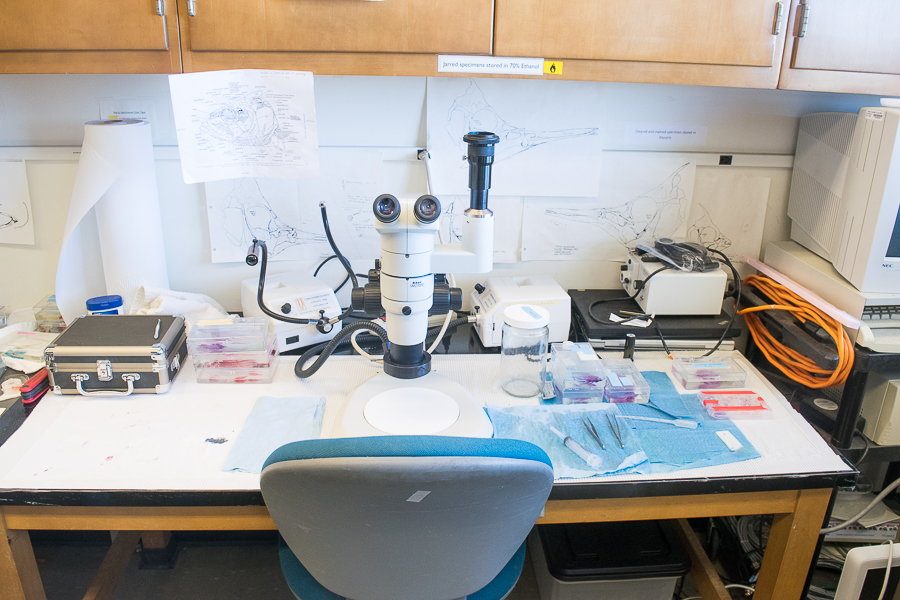
UC Davis makes multi-million dollar investment in instructional equipment

BRIAN LANDRY / AGGIE

Funding given up-front for second year of equipment replacement plan

With new instructional equipment arriving for the 2017-2018 school year, an effort by UC Davis to upgrade, replace and purchase entirely new equipment is already underway.

What was initially planned to be a two-year program has been condensed into one year, with millions of dollars being funneled into equipment purchases.

“The estimated cost for all equipment requested totaled $3.4 million, of which $2.3 million was the proposed campus share and $1.1 million was the proposed unit match,” said Interim Provost and Executive Vice Chancellor Kenneth Burtis in a letter to college deans and vice deans. “Given the significant needs identified, I am pleased to announce that the campus will provide up to $2 million, allocating two years of funding up-front, to support the replacement, repair, and addition of specialized instructional equipment.”

The letter from Burtis also explained who served on the committee to make the decisions about funding allocations. The goal, Burtis wrote, is to serve as many students as possible.

“Funding requests were reviewed by a committee, chaired by Associate Vice Provost [Matthew] Traxler of Undergraduate Education, and consisting of an Associate Dean, Assistant Dean, and a representative from Procurement,” Burtis said in the letter. “The committee recommendations focused on the goal of providing the greatest benefit to the most students and addressing the highest priority needs. The result is that all first priority requests submitted, totaling approximately $1.5 million in campus funds, will be funded. The remaining $500,000 in campus funds will be allocated based on the prioritization level and the number of students served. In total, courses serving over 40,000 enrollments (i.e. total number of students enrolled in each course) will benefit from the use of new equipment, reaching a significant portion of our undergraduate students.”

Traxler, when further explaining the allocation process, described the effort to impact as many students as possible.

“How many students each request would likely affect [was a criterion],” Traxler said. “All things being equal, we gave higher priority to requests that would provide opportunities for more students. If there is a course that 1,000 students a year take, we would consider that a higher priority than a course that 100 students take.”

An exception to the strictly-numbers criterion is that if a course is required of all students in a particular major, that course could also receive high-priority.

        Little detail was given about the funding sources for this effort.

        “The campus is investing two million [dollars] in state funds and tuition revenue in instructional equipment,” said Sarah Mangum, the director of UC Davis’ academic budget and policy.

        Carolyn Thomas, the vice provost and dean for undergraduate education, is excited to see the new and better experiments that students will be able to run using the new equipment.

        “This is a very exciting investment that the colleges and central administration are making in our undergraduate teaching laboratories,” Thomas said via email. “[…] The investment in new laboratory equipment — across several fields — will allow our undergraduates to run the strongest experiments and see the best results. This is important because undergraduate research is one of the things that makes a UC Davis education exceptional. We always want our students to be learning at the cutting edge of their fields.”

Echoing Thomas, Traxler hopes that this new equipment will give UC Davis students the best opportunities to succeed in their undergraduate careers.

“The mere existence of this initiative, it’s important to me personally that students on this campus have the kinds of equipment they need to succeed in mastering their undergraduate disciplines,” Traxler said. “I’m just really excited that we are able to improve, in a tangible way, the experience that students are going to have in their lab classrooms.”

Traxler spoke about what purchases he is especially looking forward to: mass spectrometers for use in chemistry and gene transport equipment for biology.

“What’s cool to me might not seem cool to other people, but the mass spectrometers seem to be, this is a very interesting piece of equipment,” Traxler said. “You can determine the chemical composition apparently of substances by running them through these things. The gene transport equipment I think is fascinating. You can actually go in, and apparently students will be able to manipulate genes inside of cells. That to me, and again I’m not an expert, I’m a layperson, but that just seems like a really interesting and exciting capability. I’d be really interested to hear what biology students themselves had to say about that.”


Written by: Kenton Goldsby — campus@theaggie.org

The genie is out of the bottle

NICKI PADAR / AGGIE

Presentation features new realms of DNA, genealogy

In a world centered around science and its effects on our everyday lives, deoxyribonucleic acid, or DNA, is an especially important component since it is the fundamental unit of life. Genealogy is a vast field of study that enables people to find out more about recombinant DNA and family lineage.

On April 19, the Davis Senior Center held a presentation entitled “Opening Pandora’s Box: When DNA Finds Unexpected, Improper Ancestors” in which speaker James Baker discussed aspects of DNA that most people might not already know. One main concern with DNA testing is that some results may show that a presumed genealogical family member is not truly genetically related. This is due to the fact that there are missing connections along the way. For example, two siblings who are genetically related might not have the same ancestors show up in their DNA lineage. Typically, research is done on an autosomal test, and the data shown is later confirmed with a mitochondrial or y-test.

One common way to trace back family lineage is to use the Ancestry DNA Family Finder test. This provides thousands of matches that help to establish possible familial connections.

“Personally, I’ve had my dad tested; it’s important to try to get the older generations tested as soon as possible because they won’t be with us forever,” said Lisa Henderson, the vice president and program chair of the Genealogy Club at the Davis Senior Center. “So I always encourage our members to have their relatives tested.”

Baker, who gave the presentation on DNA, has presented over 200 times on genealogy in the past five years. Although he mainly gives talks in the Sacramento area, Baker has given several presentations at the Davis Senior Center as well. Having previously taught in both the UC and CSU systems, Baker is now retired and writes for the Sacramento German Genealogy Society Newsletter. The German society in Rockland, where Baker lives, was what first introduced him to the field of genealogy.

“DNA is becoming big in genealogy and is the newest frontier. It’ll do things for you,” Baker said. “I know a few of my matches personally and where they go in the [DNA] tree.”

Many people in attendance at Baker’s presentation were a part of the Davis Genealogy Club, which was established in 1979 and meets on the third Tuesday of every month. The club aims to promote the study of genealogy by assisting others in delving deeper into family history research. They also have a library, located at the Davis Senior Center, which holds over 1,000 volumes pertaining to genealogy and family histories. Glen Erickson, the chair of the Genealogy Library, has looked into his own family lineage, specifically from ancestors in Norway, Sweden and Denmark. He travels frequently to Scotland for vacation and even continues his genealogy work there.

“When I’m over there [in Scotland] and I meet somebody and we find that there is a [genealogy] meeting or a library, we’ll go in for a lunch or something […] we quickly call up the President, who would come over and talk to us about what we do and so on because they don’t get that many who are chasing back family,” Erickson said.

Baker’s presentation captured the interests of not only the Genealogy Club, but also non-members interested in genealogy. Baker himself has also looked into his ancestral DNA and encourages others to do the same.

“I have reached out to people I have matched with because it’s sort of interesting to find a new second or third cousin that you didn’t know existed and related to you,” Baker said. “The genie is out of the bottle, and there’s just no putting him back.”
Written by: Kaelyn Tuermer-Lee — city@theaggie.org

Danzantes del Alma hosts annual showcase

DANZANTES DEL ALMA / COURTESY

UC Davis folklorico dance troupe celebrates 40th anniversary on campus

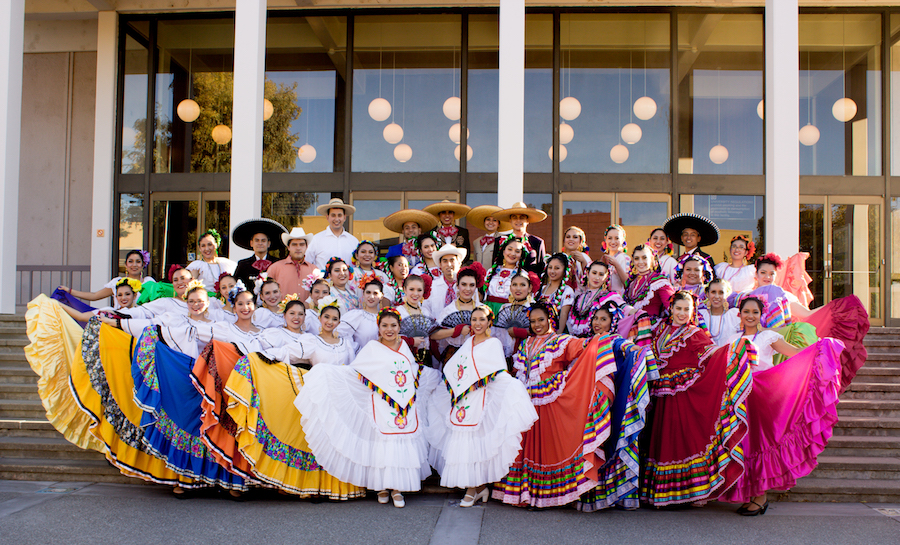
Danzantes del Alma (DdA), the premier folklorico dance troupe of UC Davis, will host its 40th anniversary showcase on May 6 in the Activities and Recreation Center Pavilion. Based within the Cross Cultural Center on campus, Danzantes del Alma was established at UC Davis in 1977. The members of DdA celebrate their Hispanic, Chicano and Latino culture through different styles of traditional and contemporary dance. As an organization that started out mainly as a student activist group, Danzantes del Alma has grown significantly ever since. Over time, they developed a highly regarded reputation throughout the community.

Crystal Romero, a third-year math and Spanish double major and the DdA administrative manager, emphasized the importance of the strong alumni network that comes along with being a member of Danzantes del Alma. As this year’s show approaches, DdA is extremely excited to perform for not only members of the community, but also its esteemed alumni coming from all over.

“We’re a family,” Romero said. “Once you’re in DdA, you’re always in DdA. So it’s not just our show but it’s also for all the past generations, which makes it very special.”

This specific showcase is extremely important to the members of DdA, not only because it is their 40th anniversary as a troupe on campus, but also due to the significance of what it means to celebrate one’s own culture in this political climate.

“We’re really excited to bring back that aspect of social justice to our show, especially at this time, and to see how the audience is gonna react to all of our new material,” said Aurelia Montoya, a third-year biomedical engineering major and the DdA performance manager. “I’m also really excited for our new members to experience what it’s like to perform and be proud of what they learned.”

The importance of this organization to its members and its alumni is proudly displayed through each member’s passion and skill toward their craft.

“For me, DdA has been a home away from home since my freshman year,” Romero said. “It’s one of the few places where I feel like I can express myself in all aspects and find acceptance.”

Danzantes del Alma’s Showcase will be held May 6 at 6:30 pm in the ARC Pavilion. Tickets can be bought online for $10.
Written by: Sydney Odman — arts@theaggie.org

Duel of the DC’s

MORGAN TIEU / AGGIE

Taking a look at the similarities, differences among UC Davis dining commons

Almost every student who has lived in the residence halls at UC Davis has participated in the time-old debate: which dining commons (DC) is the best? The classic rivalry between Tercero, Segundo and Cuarto is a fun outlet for playful competition among students.

“As a resident of Segundo, I have a little bit of a bias toward the Segundo DC,” said Leanne Taylor, a first-year mathematics major. “If I’m drawing comparisons straight off the bat, the Segundo DC is the only DC that doesn’t have stairs as part of its design. So when you go to the Tercero DC you have to climb up stairs, and then when you’re in the Cuarto DC and you want to sit on the top level, then you have to climb stairs. I don’t want to be climbing stairs when I’m about to go eat.”

Each DC has its own unique characteristics. The tall ceilings and large glass windows of Segundo make for a light atmosphere, opening the space and creating a less chaotic dining experience.

“I like [the layout of the Segundo DC] a lot better because it’s spread out and open, it has high ceilings,” Taylor said. “If I’m going ‘HGTV’ with this, I like the open design and the flow of the DC. There’s also a bunch of different seating areas depending on where you want to sit. I have to say I like the amount of windows because one entire wall at Segundo is just windows, so you can sit there and enjoy the weather outside while being inside.”

Tercero has a similar layout and design features, such as large windows along the walls. However, one notable downfall of the Tercero DC, according to third-year political science major and resident advisor Nkem Anene, is the lack of space.

“I personally like Segundo just because my freshman year I lived in Segundo, and it’s not busy like the Tercero DC,” Anene said. “At certain times you can’t go [to the Tercero DC] because it’s like 50,000 people [in there]. It’s annoying to have to stand in line for 30 minutes. There are certain times you literally can’t be there.”

For Anene, going to eat a meal isn’t about working around a school schedule, but rather the schedules of all the other students that use the Tercero DC. Despite this year’s addition of the downstairs seating area in what used to be the main study lounge, Anene still believes the space issue is the biggest nuisance for residents.

“I went [downstairs] once,” Anene said. “I thought it was fine, it can be a cool spot to go, but it’s still out of the way. You still have to come up and down the stairs […] if you want something else [to eat].

Anene attributes this problem to the growing population in the Tercero residential area, as new dorm buildings will house this fall’s incoming freshman class.

“[They] clearly don’t have enough space to house all these people,”  Anene said. “[They’re] accepting more and more students, so [there needs to be] a second DC at this point. Adding a second additional level isn’t going to make the lines any shorter; it’s not going to help with the crowded issue.”

In contrast to Segundo and Tercero, though, is the Cuarto DC. This dining commons comes with a number of different advantages, the first being that it is off campus. This, coupled with the fact that there are fewer residents that live there than in either Segundo or Tercero, means there are not as many problems with overcrowding.

“I like the Cuarto DC because […] it’s really small, so you always see the same people and it’s much easier to find your friends,” said Emma Voit, a first-year undeclared social science major and Cuarto resident. “It feels less like you’re in a dining hall and more like you’re in a family-style dining [establishment] because we don’t have the big 12 to 13 person tables. The biggest table you can get is an eight-person table, and there’s two-person tables too.”

Voit often eats lunch at one of the DC’s on campus because it’s not as far as going back to Cuarto, but, overall, Cuarto is a more positive experience for her due to the fact that there’s never a lonely moment.

“Almost always if you go by yourself, chances are you’re not going to end up eating by yourself because there’s someone that you know,” Voit said. “Because people from campus don’t come to Cuarto, it’s nice and small and not crowded, and there’s never really any lines, which is nice.”

Not only does Cuarto DC offer a homier vibe for many students, but the smaller amount of people means more opportunity for different kinds of foods, including hand-scooped ice cream and, on occasion, sushi. Although Cuarto faces limitations in terms of equipment availability, it makes up for the lack of stations with a robust offer of local, fresh foods.

“Cuarto is mainly set up with the goal of serving as much local product and sustainable food as possible within the operation,” said Felipe Becerra, the assistant director of residential dining. “Cuarto’s ability to do that is a lot easier because of the volumes that they serve. Everything from the way that the building is designed to what we’re serving on the plate is the same mentality and goal, and we’re trying to translate that on with the other locations as well as much as possible.”

Despite these differences, the DC staff make every effort to make the food and dining experiences the same across all DC’s. Whether it’s a themed night or a regular school night, the meals students can find in one DC will be no different than a meal found in another.

“We have a goal,” said Kue Her, senior executive chef at UC Davis. “We have a vision of having consistency with what we serve. We want it to be fair for all the students. If they live in Tercero, they should be able to come over to Cuarto and still have the same food and same environment and same feel. If someone lived at Cuarto and they have class near Tercero, there shouldn’t be any difference quality-wise.”


Written by Marlys Jeane — features@theaggie.org

Inside the Game with Morgan Bertsch

IAN JONES / AGGIE

A rarity in college sports programs: A dual-sport athlete

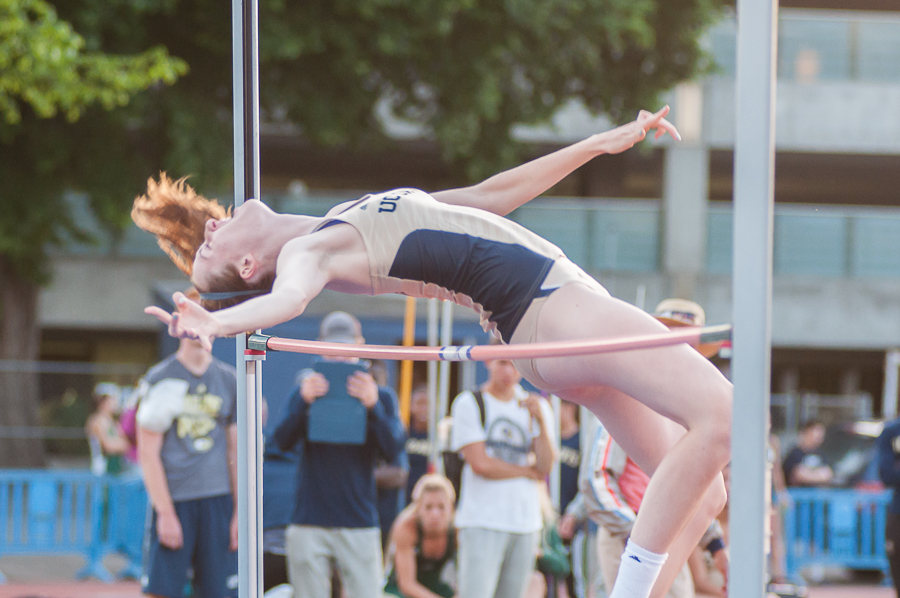
Morgan Bertsch is the UC Davis women’s basketball team’s main offensive weapon on the court and one of the top high jumpers on the outdoor track and field team. As a redshirt sophomore forward on the women’s basketball team, Bertsch recently completed a historic 2016-2017 season for the UC Davis women’s basketball team that culminated in All-Big West First Team Honors and a run to the Sweet Sixteen in the Women’s National Invitation Tournament (WNIT). That would mark the beginning of the offseason for most UC Davis athletes, but for Bertsch, as one season comes to a close, another starts to take form.

While most of her teammates are allowed a well-deserved rest, Bertsch spends her Spring Quarter competing in the high jump for the UC Davis track and field team. After this interview was conducted, Bertsch set a new UC Davis high jump record of 5 feet 10 inches (1.78 meters) in the Brutus Hamilton Challenge at the UC Berkeley this past weekend. The California Aggie had the opportunity to sit down with Bertsch to ask her about both her basketball and track and field careers.


How long have you been playing basketball and what drew you to the game?

I actually started playing basketball when I was about 5. The main reason I started was because my older sister started playing when she was about 9 and I wanted to be like her, so I played basketball. When you first start playing basketball, you don’t really know how it works — you’re out there traveling, picking up the ball and just going for it. It’s always been a really fun sport for me and I really enjoy the whole team atmosphere, it’s like a family and just having your teammates there with you all the time while you’re competing is truly special. I just really love the game of basketball and just the whole aspect of being with your family out there competing.


You’re a forward on the team — has that been the case for your whole basketball career?


Yeah, I’ve always been really tall. Probably a little undersized in the weight department. But yeah, I’ve always been really tall and played the four and the five on the basketball court. That’s just where I’m the most comfortable, down in the blocks, where I can do layups and not have to shoot or dribble much.


You enjoyed a very successful career at Santa Rosa High School. What’s your favorite memory from high school basketball?

Just my entire senior season was pretty impressive. As a team aspect, we went farther than any other [Santa Rosa High School] team had ever gone and we won our conference too. That was special, just knowing that we were the best team my school had ever had was really special for us. The kind of bond that we had as a team was really close, one of the closer teams I’ve been on at that high school.


How did you ultimately decide on UC Davis as the place for your collegiate basketball career?


I didn’t get recruited by anyone for basketball. I mean, there were a couple Division II’s that said that if I came to their school I could be on the basketball team. I was trying to decide between track and basketball and which one I wanted to pursue. I emailed some coaches about doing high jump at some schools, and I had contacted [associate track and field head coach] Marshall [Ackley] here for the high jump and he was like, “Yeah let’s get you out on an official visit.” And I was like “actually, I’m coming on an official visit in three days for basketball!” Then the basketball head coach Jenn [Gross] called me and said “hey, I heard you’re talking to the track coach. I’ll have him come to a meeting and we can all chat together about the possibility of doing both or what your options would be.” It was really kind of unique, the approach that both coaches had to it — we both want her so we should work together. [UC Davis] was the only Division I recruiting me, so I came on a visit and they offered me a full ride scholarship which was huge. I didn’t even expect that coming out of it, I didn’t even know that was a possibility for me. It was perfect in every aspect, I had the possibility of doing track if I really wanted to, but it was a casual “if you want to you can,” [and they] weren’t pressuring me to do it. It was the perfect choice!


Both your sister and your mom played college basketball. Can you talk about what basketball means to your family?


Growing up, it was huge. My grandpa also played basketball, he was a three-sport athlete in college. Basketball has always been a huge part of our family, at one point [me and my sisters were all playing] in high school. [My parents and grandparents] would come to the JV games for me and then go to the varsity games for my two sisters. Growing up, my grandpa was huge on just making sure that you love [the game] when you play it, and that’s the only reason that you’re playing it is because you love it that much. He was really keen on making sure I knew how to use my left hand. He’s taught me a lot when it comes to basketball and that’s something that’s always stuck with me is making sure you know how to use your left hand.


You had a breakout year as a redshirt freshman and followed that with another big year this past season. How have you been able to consistently play at such a high level?

I think the redshirt year was just a huge help for me personally. Coming in, I had a good senior season, but before that I wasn’t really a Division I basketball player. Having that extra year really helped, getting in the weight room three times a week [rather than] the usual two during season, I was [also] on the scout team a lot. [The scout team] was a lot of do your own thing [and] experiment. This person likes to [practice] righty hooks? Alright, today I’m going to be someone who does righty hooks. This person [practices] pull up jumpers? Alright, I guess today I’m doing pull up jumpers. [It became] a way for me to branch out and play against people who were good defenders.


The women’s basketball team recently finished a historic season. What was it like to not only compete in the WNIT but to also make it to the Sweet 16?

It was really important for our team. It was disappointing, [because] our whole year we had our hearts and our minds set on going to the NCAA tournament and especially with the successful [regular] season that we had, we were really confident in ourselves and we knew that we could do it. When we lost that game [against UC Santa Barbara in the Big West Conference Semifinals], we felt a little lost. [It was] something that we’d had our hearts set on since August, or even since the Big West tournament last year. It just got shattered. But the kind of team that we are, we’re all competitors, we want to go out each and every day and win as many games as we can. [When the NIT started] against Utah it was a challenge for us to get our head rights again. “This is our new goal, our new goal is to go as far as we can in the NIT.” It was resetting our goals and refinding the team that we were before that loss. Coming out with the bang we had in that game, I think we went on a 10-0 run, we came out ready to prove we could still do something, even though it wasn’t in the NCAA tournament.


You were named to the 2016-2017 All Big West first team in basketball. How does it feel to get recognized?


Obviously it feels really nice, but when you get those kind of awards you can’t forget the people who got you there. Yes, I did get that award, but honestly without my teammates there’s no way I could do half the stuff that I do. It’s a nice personal thing, but it’s also a team thing.


How do you feel about UC Davis’s 2017-2018 basketball prospects given the success of this past season?


A repeat for the regular season [Big West conference championship] would be awesome and I think that’s totally possible. We’re only losing one senior this year, and we’re gaining three really good freshman. Hopefully they can come on and be instant contributors. We’re the same team — a lot of the teams in our conference have lost people. If we [won the Big West conference championship] last year, than we can do it this year. Obviously, we really want to win the Big West tournament, that’s the one that matters the most because it gets you to the [NCAA] tournament. Being able to do both is really tough, no one has gotten the regular season and conference tournament championship in a while. That’s a huge goal for us and then we can go on to the NCAA tournament and prove ourselves there.


What is it like to be a two sport D-I athlete?


It’s not as horrible as it could be without the coaches being so understanding of each other. They try and make it as easy as they can on me. [For] track my coach only makes me come out here twice a week for an hour and a half, he could be like “I want you out here every day doing your conditioning” but he knows that I am getting conditioning from basketball too. I lift with basketball, [participate in] basketball workouts twice a week and do some open gyms with them. The only track requirement I have is an hour and a half jumping twice a week and then competitions on the weekend. It is a lot of time, but it’s not even as much as I would have for basketball in the winter. It makes it a lot longer throughout the year with always having something but it’s definitely worth it in the long run. Just being able to come out here and get to jumping, something I don’t get to do all that often. It’s just fun to mix it up a little bit.


Is there any overlap for you between the two sports?

The jumping aspect from basketball carries over in high jump, probably not as much for me just because I don’t jump up as much as the normal person. But I definitely see some correlation in your pop and the quick foot speed that you get from doing track and having the quick high claw when you run, it makes the acceleration on the basketball court [more noticeable]. There’s a little bit of overlap that helps from one to the other, it’s a good pairing.


What are your goals for this season in track and field?


I really want to make 5’09” and plus some. In high school my personal best my was 5’09” and I made it to the state meet with that. But I haven’t been able to get it since. I had an attempt at 5’09” and ¾’s last meet, which would have been a school record, a personal best and I also would have qualified for the NCAA regional meet. I’ve been here for two years and I’ve jumped pretty consistently at 5’07” and you need 5’09” to [qualify] for regionals, so thats a huge goal of mine is to hit that 5’09” and be able to go complete in those preliminaries.


What are you plans after graduating?

I plan on playing overseas for a couple years. I don’t really have any plans after that. Right now I’m doing [biomedical] engineering, so hopefully I’ll get a job, get some internships. It’s hard to get internships when I’m on the basketball team and doing track, there’s not much time off.
Written by: Rowan O’Connell-Gates — sports@theaggie.org

Aggies suffer tough home loss to Long Beach State 49ers

BRIANA NGO / AGGIE

UC Davis baseball team defeated 2-10 last Sunday afternoon in conference play

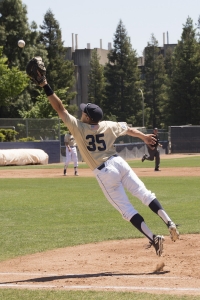
It was a beautiful day at Phil Swimley Field at Dobbins Stadium last Sunday as the UC Davis baseball team took a loss to the Long Beach State 49ers 2-10, going 0-3 on the weekend conference series. Going into the weekend, the 49ers were 10-2 in conference play and ranked No. 9 in the nation according to the latest Baseball America statistics. UC Davis began the series with a 5-7 conference record.

The weekend series against Long Beach began on Friday, April 28, as the Aggies took a tough 9-14 loss. UC Davis and the 49ers hit a combined seven home runs in the game. Junior right fielder Ryan Hooper, sophomore left fielder Ryan Anderson and senior first baseman Cameron Olson each knocked one over the fence for the Aggies. Even though the home runs cut an early 5-0 deficit for UC Davis, Long Beach earned six runs in the last two innings to claim the victory. Hooper’s home run was the 15th of his career, giving him the most career home runs in the UC Davis’ Division I history. This was also the first three-home-run game for the Aggies since 2015.

On Saturday, freshman designated hitter Alejandro Lara finished 3-for-4 and junior center fielder Alex Aguiar hit his second home run of the season, tying the game in the fifth inning. The 49ers didn’t give up, however, scoring six runs over the last four innings for an eventual 9-4 win, giving the Aggies their second loss of the weekend. Going into the final game of the series on Sunday, UC Davis knew that it had something to prove.

The game started off strong for the Aggies, as an initial walk by Hooper and a sacrifice bunt by senior shortstop Jacob Thomas in the first inning led the way for Anderson to drive in the first run for UC Davis with a single to center field, giving the team a 1-0 lead.

In the second inning, a two-run single for the 49ers shifted the lead in Long Beach’s favor, 2-1. Shortly after, a grand slam for the 49ers extended their lead to 6-1 on the day. After two singles in the third, Anderson made an RBI single for the Aggies to shrink the deficit to four. The 49ers drove in four more — one in the fourth and three in the fifth inning to extend the score to 10-2. From that point, the game remained stagnant and neither team scored a run in the final four innings, finishing with Long Beach taking the victory, 10-2.

BRIANA NGO / AGGIE

“We just need to put all the pieces together,” Hooper said. “We have the tools and it’s been frustrating to see but we just need to be patient, stick to the process and take it game by game.”

Anderson proved an impressive outing, going an overall 2-for-4 and driving in two runs on the day, his fifth multi-RBI game of the season. With an impressive overall weekend, Hooper went 1-for-3 on Sunday and his double in the fifth extended his current hitting streak to nine games, tying the longest hitting streak by an Aggie this year.

“It feels good,” Hooper said. “The biggest thing for me is just trying to help the team win by staying hot and getting hits so we can score more runs, because that’s what it really comes down to in games.”

In order to come back and produce wins in the Big West Conference, the UC Davis baseball team will have to cut down on its mistakes, due to the fact that out of the 10 runs scored by Long Beach, six were unearned.

“The six unearned runs in the second took us out of the game and we never found a way to get back in it after that,” said head coach Matt Vaughn. “In big games we give [the other team] an opening and they took it away from us. We did it in every game this weekend, and we can play better than we are.”

UC Davis is now 5-10 in Big West Conference play, and will travel to Santa Barbara for a three-game away conference series, starting on May 5.

“It’s fixing the mistakes,” Vaughn said. “We have had a lot of games where we have done very well but we have done one thing here or there: we don’t finish offensively or we don’t pitch well at the end of the game. We have to turn that around.”
Written by: Ryan Bugsch — sports@theaggie.org

Institute of Transportation Studies student founds Women’s Transportation Seminar student chapter

UC DAVIS WTS / COURTESY

Chapter dedicated to helping young women network, advance professional careers in transportation

UC Davis launched its first Women’s Transportation Seminar (WTS) student chapter to help women advance their careers in transportation in February. WTS is an international organization founded in 1977 with the initiative of building the future of transportation through the global advancement of women. WTS has more than 6,500 members in chapters across the United States and around the world.

Sarah Strand, a master’s student in the transportation, technology and policy program housed in the Institute of Transportation Studies (ITS), initiated the WTS student chapter at UC Davis. Strand was working and living in San Diego following her undergraduate career at UC San Diego when she met a colleague who started the first student chapter in California at San Diego State University. She was then inspired to start a chapter when she went to graduate school.

“There’s still a lot of disparities for women particularly in the field for transportation,” Strand said. “Transportation professionals who are women continue to get paid less on the dollar compared to their male counterparts who are doing the same type of work. As a woman who works in the transportation industry I was driven to bring together a group of other women and create a support system to help advance each other’s careers. It’s really about fostering a culture of supporting women in an industry that’s historically been male-dominated.”

Strand explained that, although it is an organization founded for women, men are also welcome. WTS Sacramento is the closest chapter to UC Davis, but Strand wanted something on campus that would be more consistent, accessible, could fit student schedules and geared toward their interests.

“WTS Sacramento chapter provides a lot of excellent resources, [but] it’s really difficult for Davis students to access them,” Strand said. “[The Sacramento chapter] is more geared towards for working professionals. Just geographically and proximity wise it’s more difficult for students to access.”

Once Strand found other women and students in the program who were interested in participating in a group, she approached the WTS Sacramento board to see if the chapter would be interested in sponsoring the students. After they had gone through the necessary procedures with the Center for Student Involvement at UC Davis, they found professor Susan Handy, the director of the National Center of Sustainable Transportation at ITS-Davis, who offered to be their faculty advisor. Handy has been involved with WTS International on and off over the years and has participated in various activities in the Sacramento region and nationally.

“I wanted to support the students,” Handy said. “I think it’s a great idea that they’re setting up this chapter. WTS International has been a very important organization for promoting women in the transportation field and creating professional networks. I was delighted that students wanted to start up a chapter and wanted to support that.”

The student chapter plans to host events over the next couple months that will be oriented toward early career development and will be holding more educational programs for students to learn about different careers in the field of transportation.

“We’re an event based organization so we don’t have regular club meetings,” Strand said. “It’s a combination of social and professional networking, career development, education and mentorship.”

Tiffany Jackson, the director of membership and chapter development for WTS International, said that the process of adding a new student chapter is fairly simple once local resources are organized.

“New Chapters are added every year (approved by the WTS Board on [a] quarterly basis),” Jackson said via email. “The program was created in 2013, WTS currently has 14 ratified Student Chapter[s] (UC Davis will be the 15th).”

Jackson also explained how WTS International supports its student chapters.

“WTS International provides support including a web-landing page and WTS-branded logo, special opportunities to apply for annual conference travel grant programs, also student chapters may qualify for limited funding on an annual basis, if they continue to comply with annual student chapter requirements (maintain 10 or more members, submit biannual reports and an annual budget),” Jackson said. “Also, the local professional-level chapter (mentoring chapter) may provide additional support and funding for the student chapter.”
Written by: Jayashri Padmanabhan — campus@theaggie.org

NBA second round playoff predictions

KEITH ALLISON [(CC BY-SA 2.0)] / FLICKR
Sports columnist Michael Wexler analyzes the second round of NBA playoffs

The first round of the NBA playoffs has officially wrapped up and round two is ready to take off. The results were mostly as expected; however, I completely botched Houston vs.  Oklahoma City, thinking that the latter would win in seven games, but Houston handled the Thunder, who were not successfully carried by Russell Westbrook. Additionally, a plantar plate toe injury to Blake Griffin turned the tides in favor of the Utah Jazz, and the team was able to send the Los Angeles Clippers home early. Many questions about the future of the Clippers linger now, as they have proven time and time again that they can not get over the hump with their current core of players. Now let’s take a gander at the next round.


Eastern Conference


Boston Celtics (1) vs. Washington Wizards (4): Boston in 7

This series is easily the toughest one to call, and these two teams absolutely detest each other. Their rivalry became very notable once Wizards players wore “funeral” black clothes to their third regular season game, a 123-108 win for Washington, so there is a little added tension in this series. In the regular season, Boston and Washington split four games, and this series should be a similar dog fight. I strongly believe that this series will not be decided in anything less than seven games and, with that being said, I will take the team with the home court advantage. Washington does not play well on the road (19-22 in the regular season) and their defense against Atlanta in the first round was nothing to write home about. The Celtics will switch off between Avery Bradley and Marcus Smart to guard the transcendent John Wall from taking over the series, and with the pedigree those two players have on defense, it’s definitely possible to slow him down. Boston is the better shooting team and they have a deeper roster. It would not shock anyone if Washington pulled off an upset, but the Celtics are in a good position to take this series. At press time, the Celtics won the first game of the series by a score of 123-111 led by a 33-point, nine-assist effort from Isaiah Thomas. Markieff Morris of the Wizards also suffered a pretty ugly ankle injury, which will be of help to Boston as well.


Cleveland Cavaliers (2) vs. Toronto Raptors (3): Cleveland in 6

With how inconsistent and frustrating the Cleveland Cavaliers have been to watch this season, I believed for the first time since Lebron James’ return that they would not be the team coming out of the East. I really thought that Toronto had a very strong case to emerge out of the Eastern Conference, but the Raptors’ play against Milwaukee now has me second-guessing. Milwaukee gave Toronto a run for its money despite the Raptors taking the series in six games. After Game 3, a whopping 27-point victory for the young Bucks, it looked like the sixth seed had a chance at a big upset. DeMar DeRozan failed to make a single field goal in 31 minutes of play, but they ended up righting the ship and taking the next three games to win the series.

Though the Cavaliers swept Indiana, the team could have easily dropped a couple of those games and none of those wins were won by anything more than six points. The Cavaliers have not been particularly convincing, but they have a battle-tested roster, playoff experience, and they beat Toronto in three of four regular-season games. The only loss came on a day in which LeBron James did not play, so absolutely no stock can be put into that victory. Toronto has a more balanced roster, but I do not see a scenario in which a team who just had a shaky first round uproots the King. For all the inconsistencies Cleveland struggles with, Toronto is just as bad, if not worse. You never know what you are going to get. When you’re facing Lebron James, inconsistent play in the playoffs is fatal. Cleveland will take this series in 6.


Western Conference


Golden State Warriors (1) vs. Utah Jazz (5): Golden State in 5

This analysis is going to be short. It is not to be dismissive of a very strong and young Utah team, as they would surely compete with any other team in the playoffs in a seven game series, but they are facing the Warriors. This Golden State team has the most star power of any team in NBA history. Golden State swept Portland in the first round with ease, and it’s safe to say they can do it again. I will give Utah the benefit of the doubt and give them a close win in Game 3, but outside of that, they do not stand a chance. No one does. *sigh*


San Antonio Spurs (2) vs. Houston Rockets (3): Houston in 6

I was wrong about you, Houston. I thought the hype was fake, and I put too much faith into Russell Westbrook’s one-man show. I am inclined to make the safe pick and choose San Antonio to win this series, but instead I am going to overcorrect and choose Houston to pull off the upset. Kawhi Leonard is the second-best player in the NBA. He should be right up there with Westbrook and Harden in the MVP conversation, but he will not win it because his numbers don’t match theirs. Regardless, he is the most efficient superstar I have seen and his game has no holes. When is the last time a wing averaged 25 points per game in the Spurs system? It’s nearly impossible. The problem with this discussion is that it is really starting to look like San Antonio is overly-reliant on him, but more importantly, Houston has the personnel to exploit San Antonio defensively. The Spurs struggle against athletic, mobile big men in pick and roll sets, meaning that Clint Capela is poised for a big series. Even though he struggled in the first round, neither Gasol nor Aldridge have the athletic profile to hang with Capela as their athleticism does not fit the bill. I am thinking that the offensive juggernaut that Mike D’Antoni has created in Houston will be too much for the Spurs to handle, and they will steal the series in the Battle of Texas.
Written by: Michael Wexler — sports@theaggie.org

Construction union holds banner protest in Tercero Parking Lot

RAUL MORALES / AGGIE

Union representatives lash out against tile contractor

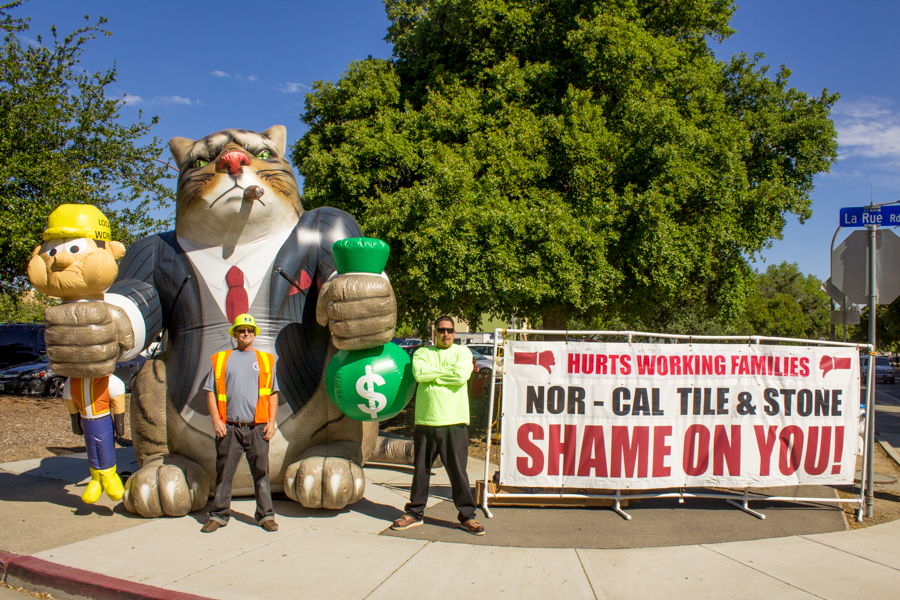
Two union workers stood on the outskirts of Tercero’s southern parking lot on the morning of April 27, and attempted to catch the attention of bikers and cars traversing the intersection of Bioletti Way and La Rue Road. Perched next to them was a banner that read “Nor-Cal Tile & Stone Hurts Working Families. Shame on You!” and a giant inflatable cat wearing a business suit. The cat had a bag of money in one hand and a choking construction worker in the other.

The two protesters were members of the Bricklayers, Tile Layers and Allied Craftworkers (B.A.C) Union, which represents construction workers and craftsmen. One of the protestors, Robert Menke, is the recording secretary of B.A.C’s Manteca chapter. Menke explained that the purpose of the protest, or “bannering” as he put it, was to shed light on the unfair labor practices of Northern California Tile & Stone (NCTS), a Sacramento based tile contractor.

“The bannering is done to let the workers and people on campus know that Northern California Tile & Stone is not paying the proper area wages,” Menke said.

Although there is a considerable amount of outrage toward NCTS, the protest remained fairly low key and tranquil. Most of the commotion came from the construction crew 100 feet away working on the new Tercero residence halls.

“We’re not striking, we’re not causing any fuss,” Menke said. “We’re just trying to let people know what’s going on. It’s just something our union came up with that we can do that’s not as serious as a strike or picketing a place. That way we’re not stopping anyone from working.”

One of the main reasons why the B.A.C protest took place on campus grounds is because UC Davis has NCTS under contract. Currently, the tile contracting firm is working on the Manetti Shrem Museum of Art as well as the UC Davis International Center. The banner protest in Tercero was a part of an ongoing dispute between B.A.C and NCTS, in particular, NCTS’s refusal to work with the union.

“The long term objective of this protest would really be for Northern California Tile & Stone to come on over and be a union contractor,” Menke said. “Then we could help them and they’d have all the manpower they need.”

Most students in the area merely walked by the display, but the two protesters vigilantly remained in the Tercero parking lot all morning, standing proudly by their banner, intending to fight everything their inflatable cat stood for.
Written by: Eddy Zhu — campus@theaggie.org

Yolo County’s Big Day of Giving

NICKI PADAR / AGGIE

$20,000 goal to be raised for CASA

May the fourth be with CASA during Yolo County’s Big Day of Giving. With May 4 just around the corner, cities within Yolo County are striving to reach new charitable heights.

An annual event put on by Yolo County is looking to raise $4,000 more in donations compared to last year, a total goal of $20,000. The money raised by the event will benefit CASA, or Court Appointed Special Advocates.

“It costs $50,000 to support an advocate supervisor” according to a Davis Enterprise article on the event.

The goal this year has been raised due to last year’s events.

According to the Enterprise “Before the clock even struck 8 a.m., there was a regionwide technical failure […] We had donors calling in with credit-card numbers, bypassing the portal […] and physically stopping by the office with checks. In the end, we far exceeded our goal.”

A program designed to help children in need, CASA has been providing mentors for children for the last 40 years. United amongst various counties across California, CASA’s reach spreads across the nation with an estimated 1,000 CASA programs to help recruit and train those seeking to become advocates to help children in need.

The first page of CASA’s website reveals how many children are helped by the organization, yet so many more are still in need of an advocate. While there are 76,756 daily volunteers to help children, only half of abused and neglected children received a CASA last year, leaving 452,000 without a volunteer.

As the CASA website further explains, “CASA/GAL volunteers are appointed by judges to watch over and advocate for abused and neglected children, to make sure they don’t get lost in the overburdened legal and social service system or languish in inappropriate group or foster homes. Volunteers stay with each case until it is closed and the child is placed in a safe, permanent home.”

Amy Atun, a third-year Spanish and animal science double major, recently ran as the Service and Philanthropy Director for Kappa Alpha Theta. She helped put on a charity event to raise money for Yolo County CASA, making $4,080 over the course of a week, concluding with the main fundraising event.

“Winter and fall are when we bring in the most money,” Atun said. “The winter event took two months to plan, starting over winter break.”

Atun was personally involved with the CASA charity.

“The way to help a lot of the time is to be a CASA so the [way] we can help is to raise money,” Atun said. “We do want to partner with them more on events to try to get more familiar with the organization. It was really fulfilling to help […] It’s really satisfying to help them help more children.”

To help raise money for this organization, please donate online at http://www.bigdayofgiving.org/yolocasa for the Big Day of Giving..

Written by: Madison Lyznick — city@theaggie.org

Police Logs

NICKI PADAR / AGGIE

Picnic Day edition

April 22


“Subjects setting off bottle rockets in the backyard.”


“Groups of students gathering in the streets.”


“Male approached RP and whispered to him.”


Party “on Pole Line […] has a bounce house.”


“Intoxicated female in RP’s vehicle refusing to get out.”


“Several subjects in parking lot — dancing on their vehicle yelling.”


“Intoxicated subject came inside apartment.”


“Complaint of dogs barking.”


Written by: Sam Solomon — city@theaggie.org


Cultivating resistance through the co-ops

CIERA PASTUREL / AGGIE

Botanical decolonization on J Street

WestCo is an annual conference where cooperatives along the West Coast meet to exchange ideas and resources. This year, Davis hosted the event. I was super hyped about experiencing WestCo, so much so that I most likely imposed upon it impossible expectations and optimisms about how the programs would run and what conversations would be had. The workshops I attended were based on messy topics like sustainable food systems that don’t have definite answers. Admittedly, as an outsider knowing little to nothing about co-oping and specific approaches to sustainability, these workshops may have seemed unorganized because I had a very shallow understanding of topics being discussed.

Thinking about sustainability is not a linear process. Cooperative living is not as easy as co-opers make it look in their successes, and it’s definitely not a lifestyle choice like choosing to live in the suburbs or a new city. It is inherently political, personal and tied to real-world problems that are hard to solve. Cooperative living extends past theorizing about systemic issues one wishes to solve through a professional career into actually living with those issues as part of day-to-day reality. In practicing botanical decolonization, the co-opers at J Street embody the latter way of life.

When I arrived at the J Street Co-op, I was warmly greeted by Emma Torbert and Katie Fyhrie, the project designers and workshop leaders. They explained where the idea of planting a garden full of native plants came from, and how they ran with that idea to implement their own botanical decolonization, which took a lot of design and research. They stressed that they are learning throughout the process too and are liable to make mistakes — but they are open to suggestions and new knowledge. This was admirable because it’s often assumed that people doing important work should be experts in their field, but usually that only comes through experience, and with experience comes mistakes. Once enough people showed up to help, we were given a basic introduction to planting and then got to work putting native plants into the soil from which they historically hail.

I met co-opers from Berkeley and Santa Barbara who had their own ideas about sustainability. As we talked about the pros and cons of monoculture, we put fuschia, deer grass, wildflowers and purple needlegrass into the ground, selected for their water retention and compatibility. There’s something therapeutically gratifying in planting a garden that’s amplified by knowing that it’s for a specific, revitalizing purpose. I felt a wash of calm serenity as I dug, planted, sifted and rubbed the cool clay-like dirt between my fingers.

The term native is complicated when applied to plants. The text that inspired the workshop at J Street, Botanical Decolonization of Native Plants, explains that discussing native plants has become popular in ecological and sociological academic spheres. It deals with specific contexts concerning “the legacy of settler colonialism, and dilemmas of scholarship and activism in the ‘Anthropocene.’” This is what has informed the specific framework in which the co-opers at J Street are working to decolonize their space. Their vision for the project is not only to be able to identify the native plant species of this region of California and have them planted, but also to utilize the presence of these plants in an interactive way, rather than as mere aesthetic fixtures in the landscape.

This interactive aspect is reflected in the design of the co-op garden, where the plants are placed in circular patterns of various sizes that contain spirals alternating between plants and space for people to sit and relax. A lot of the conversations, hangouts and cooperative plans at J Street are created by gatherings on the front porch. They wanted to extend that conversation, both in theoretical thought and literal practice, to the front lawn.

Botanical decolonization is now part of the physical framework of the J Street Co-op, an idea turned into a reality thanks to the innovative thinking and initiative of the people who live there. Cultivating resistance can be a painstaking, intimidating feat, as it takes a lot of love, time and work to become aware of different forms of oppression and then to unlearn them. But it can also be as doable as planting a decolonized garden on a leisurely Saturday afternoon. The seeds of revolution are sown in seemingly insignificant or discursive ways, but when they take root, they grow into a voluminous plume of foliage.
Written by: Camille Chargois — cachargois@ucdavis.edu

Disclaimer: The views and opinions expressed by individual columnists belong to the columnists alone and do not necessarily indicate the views and opinions held by The California Aggie.