53.7 F
Davis

Davis, California

Saturday, December 20, 2025
Home Blog Page 629

Forum on immigrant rights held at UC Davis School of Law

TAYLOR RUNNELLS / AGGIE

Senator Bill Dodd holds latest in a number of forums aimed at addressing recent immigration concerns

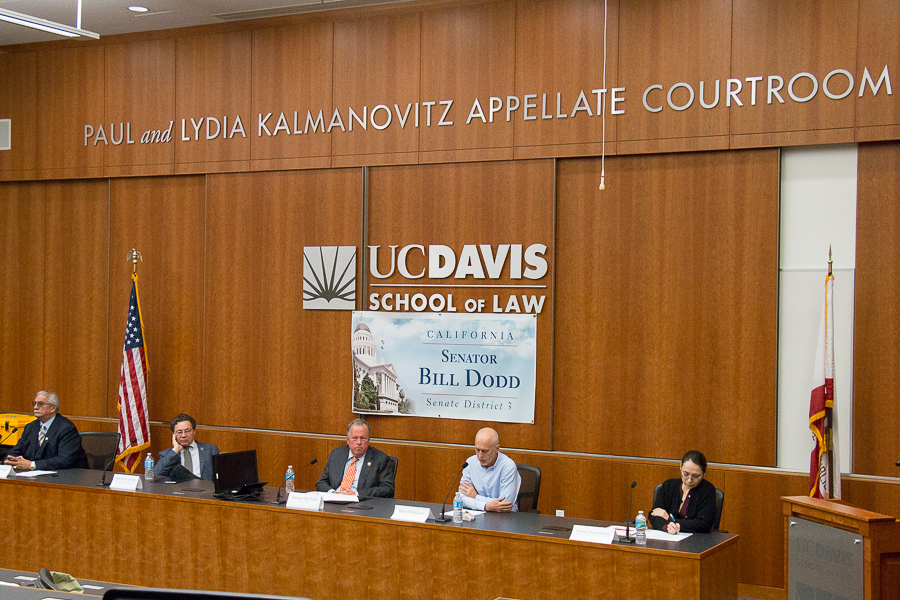
California state Senator Bill Dodd and Assemblymember Cecilia Aguiar-Curry hosted an installment of the Know Your Rights Forum on April 17 that addressed recent concerns regarding immigration policy. The event, which was held at King Hall, was the latest in a number of forums held by Dodd.

“I’m hosting these forums around the district because I’ve heard, really, from hundreds and hundreds of people that are concerned — scared people as I indicated earlier over the last couple of months,” Dodd said. “People are worried about federal immigration policies under this new administration.”

Davis Mayor Robb Davis, who sat on a panel of five speakers during the event, opened the forum with a speech.

“I want to thank Senator Dodd and assemblymember Aguiar-Curry, who could not be here tonight, for providing the opportunity for us to think about immigration,” Davis said. “It’s timely, and I think as we consider the many students and community members who we love and value, with whom we work everyday, whose hard labor brings us many of the things that we value and appreciate about our region, as we think about those things we realize we have to talk about this now and we have to talk about what it means for people to exercise their rights.”

In addition to Dodd, the panel also featured Yolo County sheriff Ed Prieto, Dean of the UC Davis School of Law, Kevin Johnson and professor and co-director of the UC Davis Immigration Law Clinic Amagda Perez.

After introductory remarks from each of the panelists, the floor opened up for questions. Questions covered topics such as search warrants, Deferred Action for Childhood Arrivals, sanctuary cities and President Donald Trump’s recent executive orders on immigration.

Prieto, who is now serving his fifth term as Yolo County sheriff, said that his department would uphold the rights of every resident in the county.

“I think it’s very important to know that most of us in law enforcement do believe in the constitution, at least I certainly do,” Prieto said. “And everybody who works for me, whether they believe in it or not, they’re going to uphold it when it comes to those who are undocumented. So when you say the process, the process is the same for anyone who comes into our facility.”

One of the frequent topics that came up during the forum was the issue of access to accurate information regarding immigrant rights. Davis, who discouraged reliance on rumors, made note of the different resources available in Yolo County.

“I think the City of Davis and I’m pretty sure the City of Woodland or the school districts in those cities have been really good about getting the word out to populations especially in schools where there is a large concentration of children of unauthorized immigrants,” Davis said. “I think the Yolo Interfaith Immigration Network and specific congregations that have large immigrant populations are probably one of the best ways to get accurate information out so, that’s what was sponsored a few weeks ago, and I think we just need to continue to use those venues. Schools and churches in particular I think are two of the best that we have, and we have very strong networks within them.”

Dodd has said that he plans to keep hosting these forums throughout the district to continue to answer questions about immigration laws. Residents with questions are encouraged to reach out to his office.

“It’s really important that we’ve come this far; we’re in this building, I would hate to have you leave here now and not have a question answered that’s important to you,” Dodd said.
Written by Ivan Valenzuela — campus@theaggie.org

Earth Week Sustainability Fair promotes campus sustainability

NICKI PADAR / AGGIE

Fair brings together all facets of eco-friendly organizations

It is only fitting that the world’s most sustainable university would host a fair to highlight the campus’ eco-friendly practices in light of Earth Week. On April 19, students gathered on the Quad to play games, make upcycled crafts and listen to student club ambassadors, all in the name of learning how UC Davis promotes green practices.

The Quad was bustling with students, as both Cowchella and the UC Davis Farmers Market were occurring at the same time as the Earth Week Sustainability Fair. Rows of booths were set up, each highlighting a different campus organization that practices sustainability for the UC Davis Energy Conservation Office-sponsored Earth Week Sustainability Fair.

Among the booths were the Bike Barn, the Aggie Reuse Store, Facilities Management, Thermoostat and Project Compost, along with a campus draining simulation and demos on how to properly dispose of food waste. Many booths offered a gauntlet of interactive games that rewarded participants with candy and prizes, drawing a large number of participants. Additionally, one table, sponsored by Aggie Surplus, offered the chance for students to make upcycled art out of recycled wires.

The fair also offered participants a view of how sustainability is practiced on both the student and managerial levels at UC Davis. Melanie Gentles, a campus arborist from Tree Campus USA, explained that groundskeeping practices green methodology on almost all levels of operation.

“We plant more trees than we take out, and our campus tree canopy is growing over time,” Gentles said. “We use low emission equipment, the landscapes that are going in now around new construction projects are drought-tolerant and as low water as possible.”

On the student level of sustainability, Margirie Dublin, a fourth-year Native American studies major, explained that Aggie Surplus offers students an inexpensive and eco-friendly option of purchasing and donating many necessities. The service essentially acts as a campus thrift store, and even offers items such as lab equipment, mini fridges, couches and desks at student-friendly prices. By providing a location for the UC Davis community to donate unwanted items, Aggie Surplus promotes sustainable business practices.

“We take stuff that are salvageable and we resell them, so we support sustainability on campus,” Dublin said. “Instead of buying something new that you might get rid of, we support sustainability and can help you get a brand new [item].”

The Food Recovery Network (FRN), a national club with a Davis chapter, had a table at the fair where students could learn about food waste management. FRN collects unused food from the Dining Commons (DCs) and recently the football concession stands as well, and donates the properly stored food to the local community in need. They also use information gathered by the quarterly waste audits in the DCs to investigate how to best combat food waste.

“We coordinate with the DC staff on campus, Segundo and Tercero, to take the edible food and take it to the community,” said Annie He, a fourth-year clinical nutrition major. “We want to educate students about how to reduce food waste on campus and also at their home.”

Although it is already the World’s Most Sustainable University, UC Davis took a pledge to be zero waste by 2020. The most recent statistics available say that currently, upwards of 76 percent of campus nonhazardous waste is being diverted away from landfills and instead is being reused in ways such as recycling or compost.


Written by: Lindsay Floyd  — campus@theaggie.org

Overcoming history as a Native American Student

BRIAN LANDRY / AGGIE

The struggles, triumphs of UC Davis’ Native American and Indigenous community

Accounting for just 0.9 percent of the UC Davis student body, Native American and Indigenous students form a small, tightly-knit community that is severely underrepresented despite being one of UC Davis’ most active student groups.

“Western education has always been used as a tool to suppress Indigenous populations,” said Jessa Rae Growing Thunder, a third-year Native American studies graduate student and member of the Fort Peck Assiniboine and Sioux tribes.

According to Growing Thunder, Native and Indigenous students live in the shadow of a dark history in which, throughout the twentieth century, Native American children were forcibly separated from their tribes and relocated to military-style boarding schools in order to “Kill the Indian and Save the Man” by assimilating them into American culture.

For Growing Thunder and the Native and Indigenous community at UC Davis, even just being in school means facing centuries of historical injustices committed against their people.

“Throughout these 500 years, I think that [these injustices] caused a lot of pain and trauma for people on so many different levels and I think it’s learning how to overcome that,” said Gabriela Martinez-Garcia, a third-year Native American studies major and member of the Purepecha tribe of Northwestern Michoacan.

BRIAN LANDRY / AGGIE

However, not only must Indigenous students overcome the traumas that have been passed down over generations through western education, but these wrongdoings central to American history are often overlooked in school curricula.

“They’re not taught, they’re not acknowledged and I think that’s really hurtful because they grow up feeling inferior to society,” Martinez-Garcia said. “Why would they want to pursue a higher education if they’re inferior?”

Martinez-Garcia compared the resources available on campus to that of the community college she previously attended, College of Alameda.

“[Alameda] didn’t have all these resources, they didn’t have all these classes,” Martinez-Garcia said. “Over here, they have a lot more resources and they’re a lot more open-minded to new ideas, and I think that’s a good thing that Davis has because they’re able to go a bit above and beyond.”

The new Native American Student Success Center opened on April 10 has been a landmark advance in providing appropriate resources to Native and Indigenous students on campus.

“Before the center, it was harder to find those hubs where you can come together and talk about your experiences or how somebody was disrespectful to you because of who you are as an Indigenous person,” said Deserea Langley, a third-year Native American studies graduate student and a member of the Paiute Shoshone tribe from Susanville Indian Rancheria, a reservation located in Lassen County.

BRIAN LANDRY / AGGIE

Desiree Negrette, a third-year psychology and Native American studies double major and a member of the Shoshone and Paiute tribes as well as a member of the Te-Moak Band of Western Shoshones of Nevada, added that many new faces have become visible in the community as a result of the center.

As an officer for five different Native American student groups, Negrette said that while she appreciates the resources offered to Native students, she sometimes finds that those within the Native American Studies Department can be isolated.

“We’re in the same jobs, the same clubs and […] it just feels like there’s a lack of support from administration and even a lot of professors,” Negrette said. “The Native American studies department here on campus is very welcoming and supportive but just outside of that it feels like we’re in a weird bubble. I feel like there a lot of people who don’t know that there is a Native community here on campus.”

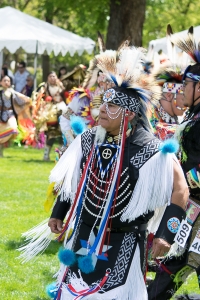
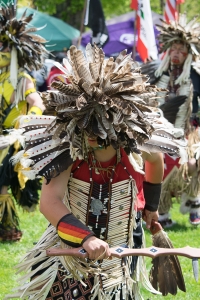
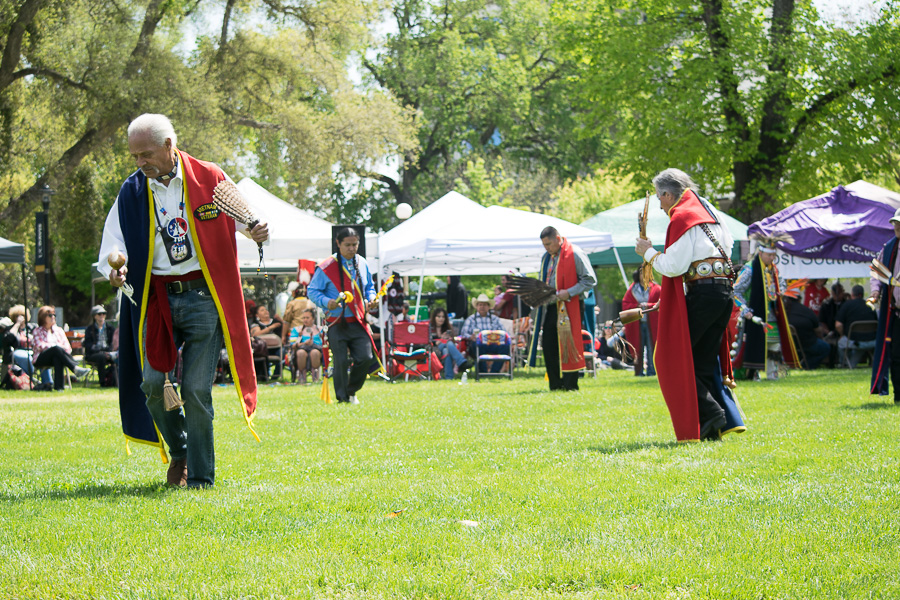
Other Native and Indigenous students agree with Negrette, but believe that their visibility has increased with on campus events such as the Powwow hosted on April 15, the opening of the new center and especially the anti-Dakota Access Pipeline movement.

“The movement with Standing Rock wasn’t just a issue of tribal sovereignty, it wasn’t just an issue of social and environmental justice […] it was a movement for all humans,” Growing Thunder said. “We had so many student activists rise up and challenge capitalism, challenge the oil industry, and really engage in it as our future leaders. Because that’s what we’re doing here. Being at UC Davis is a big deal because we’re the next leaders of this country. Right now, more than ever, we need to be united. We need to support one another, no matter where we come from.”

Langley recalled how during the Standing Rock protests, the presidential election had spurred hate speech on campus, leading to graffiti on Hart Hall that read “Build A Wall.” She said that it was a representation of the type of negativity Native and Indigenous students face on a daily basis.

Langley and other Native and Indigenous students battle the pervasive stereotypes of their people daily, dispelling the common western conception that all Natives are akin to those in Disney’s Pocahontas in courses like NAS 1.

“A lot of times this is the first time people have ever left home and they’ve never taken a Native American studies [class] before,” Langley said. “You’re like, okay let’s talk about stereotypes and then you kind of have them look at you and you’re like, ‘Do I fit this representation? No, I don’t.’ I don’t live in a teepee, I don’t live on the rez. I’m not dressed up in like my buckskins or […] have my hair in braids all the time.”

Martinez-Garcia has been confronted similarly by peers, making her insecure about her Indigenous identity.  

“When I come and tell them I’m Indigenous, then they’ll be like, […] ‘Do you still practice this tradition, do you still do this, do you still do that?’” Martinez-Garcia said. “People always want to question your authenticity, people want to sit there and question you, but sometimes it’s not really about [that]. You kind of feel who you are. You can’t keep questioning them and asking them why.”

Though its members come from a myriad of different backgrounds, tribes and knowledge of their culture’s traditions, the Native and Indigenous community unites over a common struggle to succeed against the odds of history, bearing the diverse experiences of their ancestors not only for themselves, their homes and their families, but for their entire communities.

“I don’t think my journey has been easy, but it’s been workable with the right amount of resources I’ve received,” Martinez-Garcia said. “But I think it’s all about acknowledging where you come from, taking your experiences and creating something that will benefit the future generations and something that will make you feel whole again.”


Written by: Kristen Leung — features@theaggie.org

Aggie Profiles: Taranbir Chowdhury

REBECCA RIDGE / AGGIE

The smiling face of Raja’s Tandoor

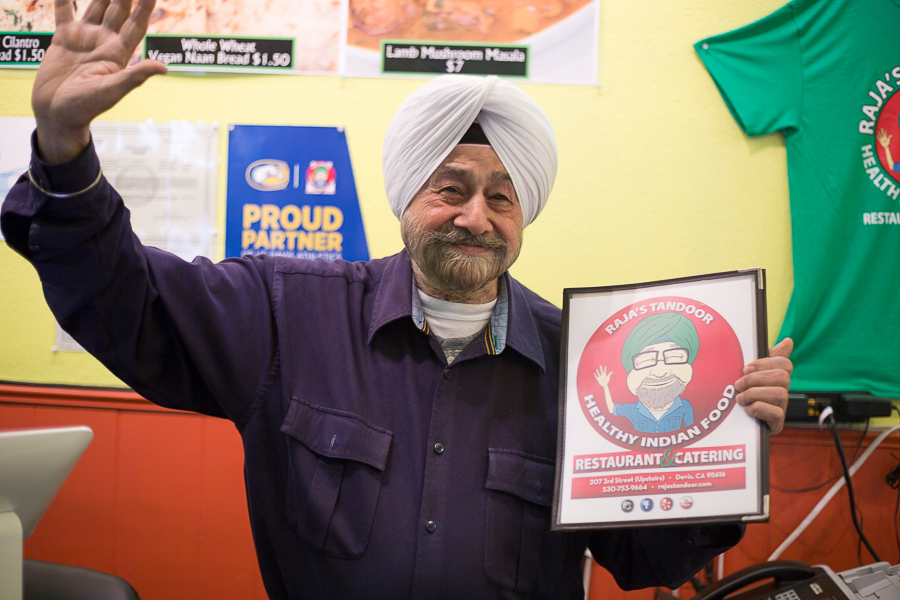
On a busy Thursday afternoon during lunch hour, a young woman approached the cash register at Raja’s Tandoor and was immediately greeted by the warm, welcoming smile of Taranbir Chowdhury, the establishment’s owner. Chowdhury asked how she was and, after she returned the question, he seemed visibly moved, and clasped her arm appreciatively.

“Everybody raves about his hospitality,” Chowdhury’s son said. “Everybody loves it. It’s just the icing on the cake — on top of the good food and the good vibes.”

At Raja’s, Chowdhury engages with every customer, which keeps him constantly occupied. Chowdhury has a weakened voice due to medical complications, so Chowdhury’s son, who preferred not to be named in this article, spoke on behalf of his bustling father.

On Yelp, TripAdvisor and Google Reviews, Raja’s is predominantly characterized by the hospitality of its owner — even the official logo of Raja’s is a caricature of Chowdhury, fittingly displaying a wide, gracious smile.

Chowdhury grew up in a small town in Punjab, a state in North India which borders Pakistan. Chowdhury’s son said that the appeal of Davis as a place of residence and business is due in part to it being a small town akin to the place where his father grew up.

One of four children, Chowdhury’s father worked as a police officer in India and his mother was a stay-at-home mom. Chowdhury’s son said that, even at a young age, his father’s dream was to come to America, which he accomplished at the age of 32.

“His sister was already living here,” Chowdhury’s son said. “My mom went [and] my dad decided to come here too, for the school district, for us.”

Around 2011, Chowdhury saw another dream turn to reality after he took over Raja’s Tandoor from a family who had previously owned the business. Raja’s Tandoor translates to “King’s Clay Oven.”

“Purchasing the restaurant and being able to start that up, that was his dream,” Chowdhury’s son said. “He always wanted to be in the restaurant business. He wanted to have the community try what he grew up on and bring the flavors to the local community.”

Though Chowdhury himself does not do any of the cooking, Raja’s uses his mother’s homestyle recipes.

“He’s gradually made it more authentic, like what he had at home,” Chowdhury’s son said. “[In] homestyle cooking, we don’t use so much cream and oil and butter. That’s what he wanted to implement in this business — the same type of food he grew up on.”

Raja’s markets itself as a healthy dining option, which is largely because of the recipes used to make the food.

“It’s healthier than other restaurants because we’re not using MSG, no artificial coloring [and] no artificial flavors,” Chowdhury’s son said. “We’re not commercializing it, it’s homestyle cooking — that’s why it’s healthier.”

The famous all-day buffet, which runs around $7 from 10 a.m. to 9 p.m., is an attractive option to college students, keeping Raja’s busy around the clock. Chowdhury can be spotted from across 3rd street making his rounds to the tables inside and outside on the elevated wooden patio to check in with customers.

The buffet serves 17 options, 13 of which are vegan. Until recently, Chowdhury himself was vegan, but after suffering a stroke within the last year, his doctor recommended that he include more animal-based protein in his diet.

The Raja’s Tandoor Facebook page uploaded a photo of Chowdhury during his first return back to the restaurant after his stroke. The photo received over 140 likes and comments filled with well-wishes and stories.

One anecdote left on the post by a UC Davis student recounted the student’s “accidental dine-n-dash” at Raja’s in the midst of pre-midterm stress. The student returned to pay after realizing his error, and Chowdhury clasped his arm and told him that the student’s chaos “would soon pass, and that the meal was on him.”

The community support shown in Chowdhury’s time of need meant a lot to him, according to his son.

“There were a lot of good comments from people who were concerned,” Chowdhury’s son said. “It was nothing but love, which was nice.”

Chowdhury’s son said it is important to his father to interact with and give back to the community. Raja’s partners with organizations on the UC Davis campus for over 100 fundraisers a year. However, what Chowdhury loves most is interacting with students.

“He loves the students, they’re like his kids or grandkids,” Chowdhury’s son said. “It keeps him young, keeps him going.”

Chowdhury’s family lives in Davis and his first grandchild is on the way. His future plans are “nothing major,” though Raja’s is planning to open a new location in Sacramento to cater to the UC Davis alumni who have settled nearby, according to Chowdhury’s son.

“It’s important to give back and […] bring good food to the community at a reasonable price,” Chowdhury’s son said.

And, with regard to his father, Chowdhury’s son said “he’s the greatest host in town.”


Written by: Hannah Holzer – features@theaggie.org

Cross Cultural Center Hosts Asian Pacific Culture Week

NICKI PADAR / AGGIE

Weeklong event celebrates Asian Pacific Islander community, culture

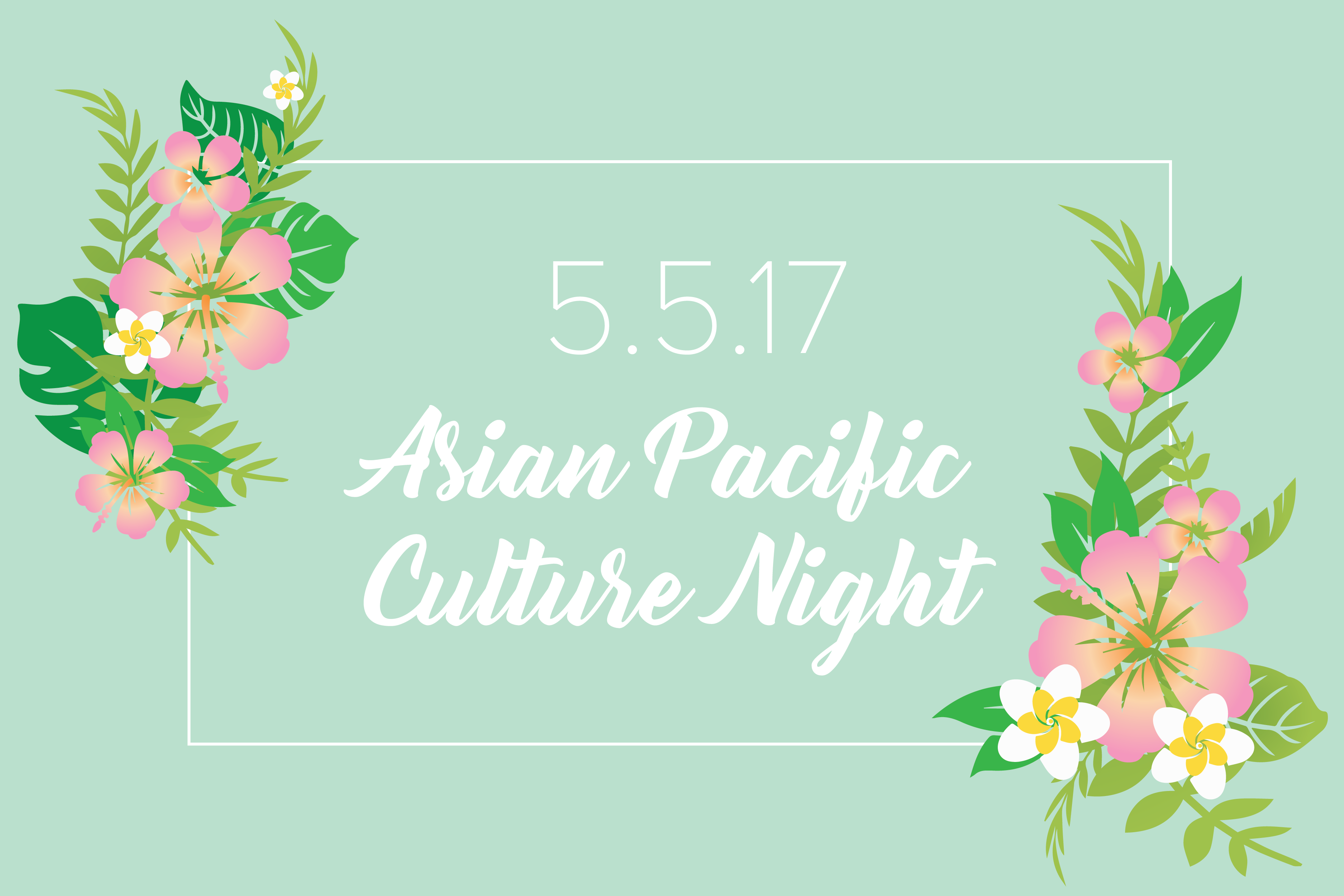
With the diversity that embeds itself into the UC Davis community, specific groups on campus have found ways to celebrate the breadth and depth of such cultural variety. The Asian Pacific Islander Community, a part of the Cross Cultural Center (CCC), will be hosting an Asian Pacific Islander Culture Week from May 1 to 5 at the International Center, with an additional Night Market on May 5.

“The Culture Weeks have been going on for 20 years,” said Kriti Garg, a program coordinator at the CCC. “There will be professors speaking on an academic angle, a lot of workshop held by students and a lot of vendors who are students or people from the community. We will have a large variety of [Asian Pacific] culture, politics, community, food, dance and music throughout the week.”

However, the concept of a concluding Night Market is new for the Asian Pacific Culture Week.

“The Night Market is the culminating event of the week, it is like the grand finale,” Garg said. “We have had other Friday night events like a talent performance, but we decided to be a little more creative and come up with something new. This year we are having the Night Market outside the International Center, which will also have a comedy show inside the International Center.”

There will also be performances from a UC Davis Hawaiian and Polynesian dance group as well as a comedy performance during the Night Market by Jenny Yang and D’Lo from Disoriented Comedy.

“Expect the same [political charge] as Hasan Minhaj from the comedy show,” Garg said.

Volunteers have been recruited for help in preparing for the event.

“I assist the coordinators with anything they need help with, which is mostly a lot of logistical work and general event planning,” said Stephanie Lu, a first-year economics and statistics double major and a volunteer at the CCC. “Mandy [Lew] and Kathy [Vu], the co-coordinators for the event, are really on top of things, so it’s been great getting to observe people who are good at event planning. The application process to become a volunteer intern is super straightforward, you just turn in an application that can be found on the CCC website.”

The Asian Pacific Islander Community is not the only cultural community to hold an event like this; all of the culture weeks share the same purpose of establishing community.

“The International Center has other week long series of programs for other communities,” Garg said. “These are events that have been going on historically with other people of color at UC Davis for decades. I think, broadly speaking, we are all celebrating and uplifting communities and want to share each with each other within our community, but to also share with the larger UC Davis community.”

However, the event has emerged as more than simply a celebration of an established community, but also a way of helping students discover the complexity of their own ethnic identity.

“One of the things I’m excited about this year is our Pacific Islander Symposium,” Garg said. “Some students who identify with the community really wanted to make a space to talk about their culture and community, and to just create a space for people to come together — especially when your community is so small on campus this can be very powerful. We want everyone to explore what their cultural and ethnic background means to them. Not everyone is looking for that or is going to find that but it can help you broaden your community.”

For Zhenxinyi Qiu, a fourth-year computer science major and event volunteer, this event is powerful in its celebration of community and diversity.

“I think this event is going to be powerful in its ability to establish self-love and love for others, and will be a great way to make friends,” Qui said.

This diversity, however, extends itself not only to the Asian Pacific Islander community, but how this community can interact with others as well.

“Asian Pacific Culture Week’s aim is to spotlight the entire Asian Pacific Islander community, rather than just those [Asian Pacific Islander (API)] groups the Davis community is most aware of,” Lu said. “Additionally, Asian Pacific Culture Week will host multiple workshops about Asian Pacific Islander-specific issues, but events like anti-Blackness in the Asian Pacific Islander community can help others more deeply understand problems they probably didn’t even think about and how they connected before going to Asian Pacific Culture Week.”

Moreover, the goal of the Culture Week is to spread awareness of the complexity within the API group, and illustrate the diversity of the community.

“Some of the workshops are also on topic like intersexual identity or mental health,” Garg said. “We are approaching our event with a specific ethnic community, but understanding that we are going to have other events that focus on our Asian Pacific Islander queer community and so on. It is meant to encompass all those stories and all those narratives. When we do workshops about specific topics, they are often led by people who identify as Asian Pacific Islander. The idea is to recognize that our experiences are all different from each other, even within the community — it is broad in itself. It is important to recognize that there is so much diversity in being Asian Pacific Islander. It is challenging to talk as one community, but make a space for a multiplicity of identities and explore the various ways you can interact with them. It is tricky but it is beautiful; we are not seeking to create one Asian Pacific Islander community.”

A full list of events can be found on the Cross Cultural Center’s website.


Written by: Caroline Rutten —arts@theaggie.org

Humor: Student finally builds up courage to shout out wrong answer in class

VENOOS MOSHAYEDI / AGGIE

Meet the student who moved to the East Coast for giving a terrible answer
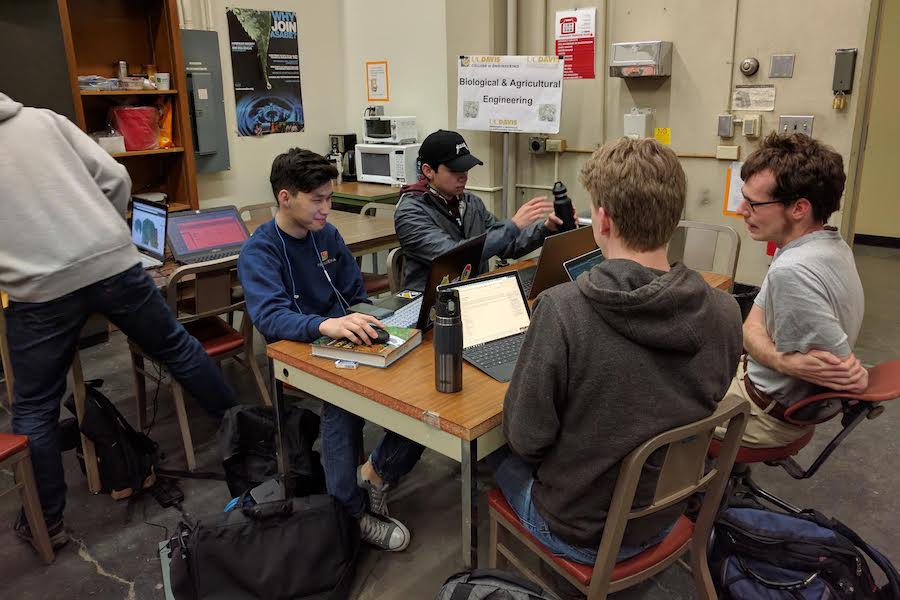
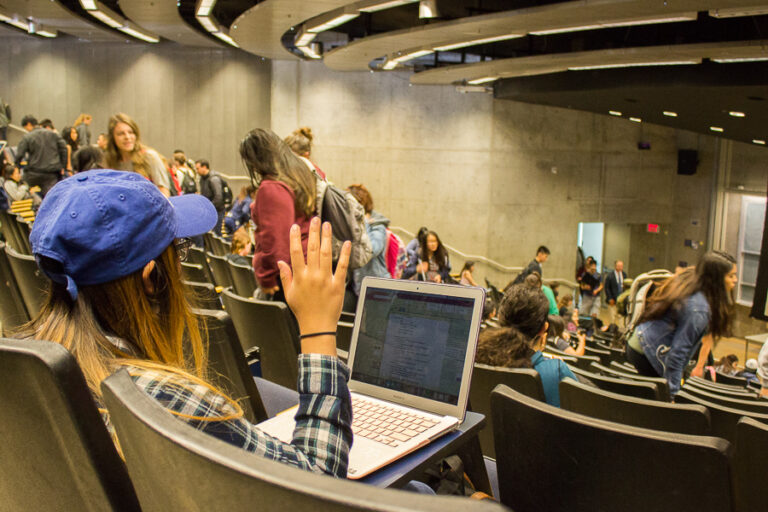
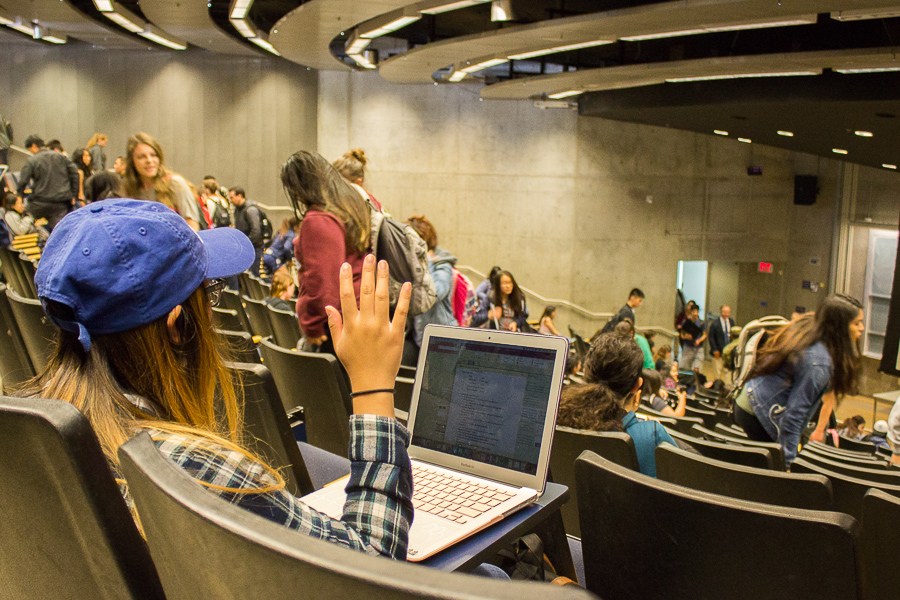
Speaking up in class can be really difficult. Especially when the class is in a large lecture hall with 300-plus students. In an effort to understand this problem, The Aggie sat down with some students who are trying to tackle the scary situation that is participating in class.

“It’s been a long process, but I think I’m finally ready to raise my hand in my chemistry lecture,” said Guy Fieri, a second-year neurobiology, physiology and behavior major and owner of multiple pairs of glasses that don’t actually have a prescription. “The worst thing that could happen is that everybody laughs at my answer and I’m so scarred from the experience that I never speak to anyone again. Which is fine.”

Shortly after being interviewed, Fieri went to his chemistry lecture, raised his hand and gave a completely wrong answer to a question.

“This is why you should never take any risks,” he said. “Just keep doing everything you’ve been doing and you won’t get hurt like I did. Everybody listened to my wrong answer and then they just went back to listening to the professor like I didn’t matter. I’m still shaking.”

Other students share opposite sentiments about speaking up in class.

“I really like speaking up in big lecture halls,” said Randy Dandruff, a third-year biochemistry major and author of a book full of selfies of himself. “I love shouting out answers to every question, even when the professor calls on somebody else. And I don’t care if I’m wrong, because in a way I still win, because I got everybody’s attention for a second.”

After interviewing Fieri again a week after his debacle, he had a slightly better attitude about his situation.

“I realized that I was being a little dramatic about never wanting to speak again. I’ve decided I’m going to try and answer another question in class. Except I’m going to wait a few years until I’m in grad school, and I’m going to make sure I’m at a school on the East Coast.”

Written by: Brian Landry — bjlandry@ucdavis.edu

(This article is humor and/or satire, and its content is purely fictional. The story and the names of “sources” are fictionalized.)

How to get ahead in industry: Co-operative education

NICKI PADAR / AGGIE

Students take advantage of unique career opportunities, programs

The Associated Students, University of California, Davis (ASUCD) currently employs around 1,500 students who work at various units on campus. However, a handful of UC Davis students choose to pursue a less conventional career path during their undergraduate years, prioritizing both academics and real-world industry experience.

“It’s an interesting trade off because you’re up late nights studying in school and that’s your world for those ten weeks of the quarter, but when you’re in the industry, you’re working with products that affect people’s lives,” said Justin Hardin, a third-year biomedical engineering major. “You’re not only held accountable to yourself but you’re also a cog in the wheel that is turning, and if you stop or if you’re late on something you affect the team.”

Hardin is participating in a co-operative education program with Johnson & Johnson. Co-ops enable college students to receive career training with pay as they work with professionals in their major fields of study.

“Internships through Johnson & Johnson are only three months, but co-ops are a full-time, six month assignment, so the timeline of commitment is what distinguishes the two,” Hardin said. “Co-ops give you more time to take away from the experience and work on a project that will leave a lasting impact on the company.”

Waking up at 6 a.m. every weekday, Hardin commutes to the Vacaville plant where he conducts his business excellence co-op — facilitating and supporting the members of the business excellence team. Each day comes with exciting new twists, but Hardin always looks forward to analyzing the plant’s machines and processes in order to decide how to better allocate resources and time in manufacturing Johnson & Johnson products.

“I will eventually create my own project by finding a certain part in the plant to improve, and going through steps and thought processes to implement [that improvement],” Hardin said. “When you go to a co-op or internship, you [could] sit by and get through it by doing the bare minimum, but if you don’t take away any project or implementation that you can really showcase about yourself, then you wasted that opportunity.”

Hardin knows that being able to adjust to such a fast-paced and demanding industrial environment is no easy task prior to obtaining a bachelor’s degree.

“My experiences with student organizations and my major courses at UC Davis provided me with a certain structure and I feel like that’s what Johnson & Johnson really appreciated,” Hardin said. “Putting your knowledge into action is really attractive, and that gives me an attractive piece that I can take to more companies in the future.”

In addition to learning how to apply his diverse skillset to a multi-million dollar company, Hardin is learning valuable tactics applicable to companies across the industry, such as lean manufacturing, a universal method that focuses on how to make processing more efficient by reducing waste and idle time.

The acquisition of invaluable industry experience, however, comes with a price. In order to commit to this caliber of work experience, Hardin put his academic studies on hold until Fall Quarter 2017, setting him back an entire year for graduation. According to Josh McMillin, a second-year chemical engineering major, this scenario is not uncommon for co-op participants. McMillin is also doing a co-op for Johnson & Johnson and had to forgo taking courses until his position ends in the fall.

“I work in the environmental health and safety department where I’m in charge of industrial hygiene, making sure the workers don’t suffer any illnesses because of bad factory conditions,” McMillin said. “I never thought a chemical engineer would do this but [the company prefers] chemical and environmental engineers, because they have an understanding of different toxins and how chemicals work and can help make the process more efficient and safe.”

After working for less than a quarter, McMillin already enjoys worklife better than school life for its absence of midterms and assignments. He admitted that the adjustment period was odd at first, but he later became accustomed to higher-pressure situations and bigger stakes working for a well-established company.

“This is a challenging job because it’s not just filling out papers and doing menial tasks because we actually have projects that we’re required to complete for the company,” McMillin said. “Even though I am being thrown into this intimidating project, I never feel like I’m alone and I always know I have people who have my back. It’s a great learning environment, which I appreciate. […] They let me make mistakes and fix them and I learn way more than just reading something in class.”

As a sophomore in college barely finished with his lower division major requirements, McMillin knows how fortunate he is to have achieved such a prestigious position in the industry. He was inspired by a professor to attend Johnson & Johnson’s co-op information session to get to know the recruiting team who will most likely interview the applicants.

“Taking this quarter off means that I can’t take certain prerequisites for a class only offered next fall, which is a prerequisite for my entire junior year of chemical engineering,” McMillin said. “[The co-op] delayed me a year, but now that I have this experience, this gives me the foot in the door for a lot of other opportunities that are really hard to get. In my eyes, it’s worth the extra year of school.”

Jenna Giafaglione, a fourth-year genetics major, worked for the pharmaceutical manufacturing company Genentech as a paid summer intern, which continued into a part-time position throughout Fall Quarter in which she worked in the purification lab and identified sources of problems in drugs they manufactured. Giafaglione, now a campus ambassador for Genentech, recruits UC Davis students to pursue part-time internships or one of the company’s two-year co-op positions.

“That Fall Quarter I was enrolled in 15 units and working about 18 hours a week, commuting back and forth from Davis to Vacaville,” Giafaglione said. “I worked Monday, Wednesday and Friday from 7:30 a.m. to about 1:30 p.m. I would have to be really strategic with my time and make sure if I had any gaps throughout the day I would study so that at night I didn’t always have to study and I could do things with friends.”

To students who are concerned about part-time industry experience while taking classes, Giafaglione suggests that they analyze their discipline and work ethic before proceeding, because it is extremely important to keep one’s GPA up and not get too overwhelmed. If a student decides that a co-op is the right choice for them, Giafaglione commends the opportunity for giving students something that classes cannot.

“What I’ve gathered from my managers is that experiences are everything because they will diversify you and build skills outside of the classroom,” Hardin said. “For people looking to go into the industry right after school, it’s a great asset to have [a co-op] experience showing they’ve already gotten their feet wet.”
Written by: Gillian Allen — features@theaggie.org

Not your typical mouse

BRADEN RHOADS / COURTESY

UC Davis Robotics Team prepares for upcoming Micromouse competition

Psychologists once dropped mice in small mazes and measured the time it took for the rodents to reach the ends of the mazes. In the late 1970s, engineers took on a challenge to mirror this labyrinth experiment and construct the wandering mice as small, autonomous robots. Today, this challenge is known as Micromouse, a competitive event in which engineers design and program robotic mice to independently solve a 16 cm x 16 cm grid cell maze.

Micromouse competitions are held worldwide and welcome a variety of robot-enthusiasts that range from beginner programmers to expert engineers. New to the competition is the UC Davis Robotics Team, a diverse group of engineering students eager to apply their skills and learn more about competitive robotics. The team is currently preparing for the Institute of Electrical and Electronics Engineers’ (IEEE) Micromouse competition this May, which will be held at UC San Diego.

“The Micromouse competition consists of an autonomous (i.e. pre-programmed) robot that is tasked with solving a maze,” said Braden Rhoads, a second-year electrical engineering major and the Robotics Team captain in an email interview. “The robot must find its way through a maze that is completely new to it, spending the first round solving the maze, and spending the second round going through it as fast as possible by mapping out the fastest route from beginning to end.”

To ensure that the UC Davis mouse has optimal support and successfully reaches the end of the maze, the team has split itself into three sub-teams: computer programming, electrical design and mechanical design.

Naveed Oroumchian, a second-year electrical engineering major, works with the electrical design sub-team to construct a solid foundation for the operating mouse.

“For our part of it, we’re responsible for finding a microcontroller and sensors, and making [the mouse] into one system,” Oroumchian said. “Then we tell the mechanical design team to construct [the exterior], and the computer programming team creates a program to work with it.”

Ben Hough, a third-year computer science and engineering major, described his duties as a computer programming sub-team member.

“As the programming team, our job is to connect the high-level mini-solving algorithms with the low-level motor control so that the mouse can successfully navigate the maze,” Hough said. “To do that, the mouse has several sensors that can help it gain information as to where it is. The mouse has encoders on its motors which measure how many times its wheels rotate, and from that we can get the distance. It also has infrared sensors, which can measure distance from walls.”

The mechanical design sub-team is working on reducing the weight of the mouse, which will ease rapid turning motions, according to Hough.

The IEEE competition will be the first Micromouse event for some Robotic Team members, including Oroumchian. He has so far enjoyed contributing to the team and looks forward to furthering his knowledge of electrical engineering through competitive robotics.

“As a second year, I’m still learning about all of the electrical systems,” Oroumchian said. “Hopefully this will help me gain some experience in the field and I can play a bigger part [on the team] in the future.”

For Hough, the IEEE competition provides an opportunity to improve his programming skills and collaborate with fellow engineers. He entered the competition with his junior college team in the past, but his previous team’s mouse encountered technical difficulties during its maze run.

“We never got it to complete an entire maze, so I’m really hoping that we can get to that stage,” Hough said. “There’s a lot that goes into finishing one maze, so if we could do that, I’d be really excited.”

As the UC Davis Team begins assembling its first robotic mouse, Rhoads has high hopes for the IEEE competition.

“Coordination is key, and thus along with each of [our] sub-teams working on their particular portion of the robot, we are preparing by making sure everything comes together perfectly,” Rhoads said. “Overall, I am very proud of my team and the work we have been contributing, and I believe we will be strong contenders in the upcoming competition.”


Written by: Emma Sadlowski — science@theaggie.org

UC Davis Body Donation Program as an educational resource

HANNAH LEE / AGGIE

Program offers academic means for medical students, support for mourning families

Although many people traditionally opt to cremate or bury their own and loved one’s bodies after death, the UC Davis Body Donation Program proves that giving back to society doesn’t have to stop post mortem. In donating one’s body to the program, the donor provides an educational resource for medical students and researchers.

Since 1968, the UC Davis Body Donation Program (BDP) has received thousands of donated bodies from all over Northern California. The donated cadavers are used at UC Davis, California State Universities and private undergraduate and medical school classes to enhance students’ understanding of anatomy.

“Our goal is to help train future doctors, orthopedics, physical therapists and surgeons,” said Aron Davis, the program’s director. “We help facilitate amazing things; it’s great to see the students grow from their experiences with the cadavers.”

Aside from supplying students and researchers with cadavers, the BDP also assists mourning families by filling out death certificates, tracking the locations of the cadavers and coordinating transportation services.

“Every family calls us during one of the worst times of their lives, when they have lost a loved one,” said Juliet Barbich, the BDP’s administrative assistant. “We’re here to honor the wishes of their loved one.”

A prospective donor can register for the program by filling out an online application, which is reviewed and verified by the BDP administrators. At the time of death, a team sets out to bring the body into the program’s care. Once the retrieved cadaver is evaluated, the staff members decide what plan of action the body will follow. BDP assistant director Kimberly Pipe explained that family members are not informed as to what the loved one’s body will be used for.

“This is our way of giving closure to the mourning families,” Pipe said.

The BDP hosts a memorial service every September at the UC Davis Mondavi Center to pay tribute to the donors, in which UC Davis medical students help to organize.

“At the end of the semester before we prepare the bodies for cremation, the medical students will leave cards and flowers for the cadavers,” Pipe said. “Everything is cremated with the cadaver.”

After the cremation, the ashes of each body are scattered along the San Francisco coastline.

Families must also ensure that donors register in advance (that is, before death) and are committed to the program. The BDP does not accept unregistered donations as the facility does not have enough space for extra cadavers, according to Davis.

“With our current facilities, we’ve maxed out all that we can do,” Davis said.

There are currently 11,000 living people registered with the BDP, according to Pipe, with around 30 to 40 signing up per month. BDP staff believe they can extend their resources and, in turn, advance the program with more funding.

“Not only are we servicing our community, but we’re servicing future doctors and research programs,” Pipe said. “It’s the future of medicine.”

With empathy at its core, BDP’s work deeply affects all those involved and is a valuable resource for both the community and researchers.

“I didn’t realize the impact we have […],” Barbrich said. “It really shows when we get feedback from the families about how pleased they were with our services. They refer family and friends to us, and sometimes family members sign up themselves because of the work we do.”

Most of BDP’s outreach is through word of mouth, however, those who are interested in donating funds or registering as a body donor can find more information at ucdmc.ucdavis.edu/bodydonation/.


Written by: Emma Sadlowski and Ariel Robbins

UC Davis Grad Slam competition features graduate research

NICHOLAS CHAN / AGGIE

Fourth-year doctoral student Sam Westreich to represent UC Davis in final round

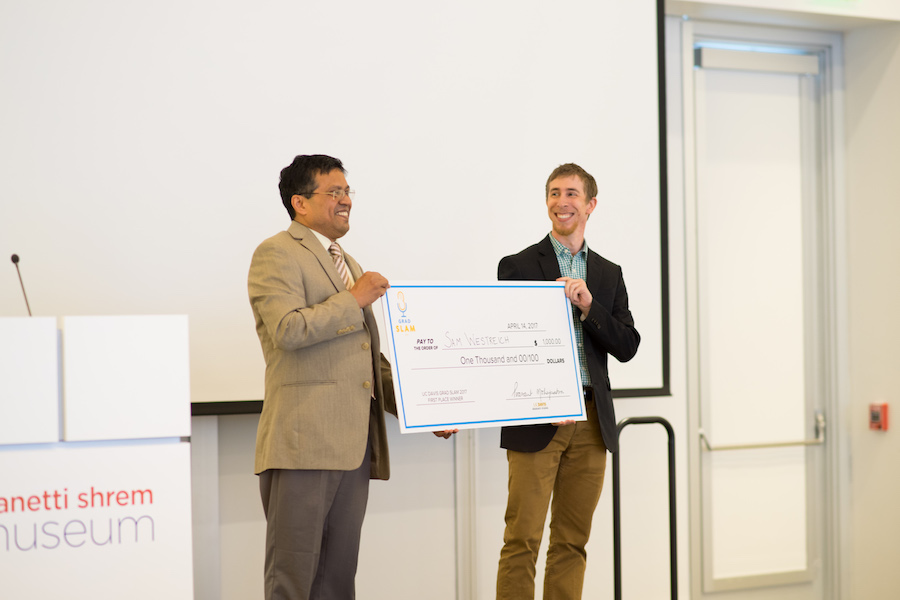
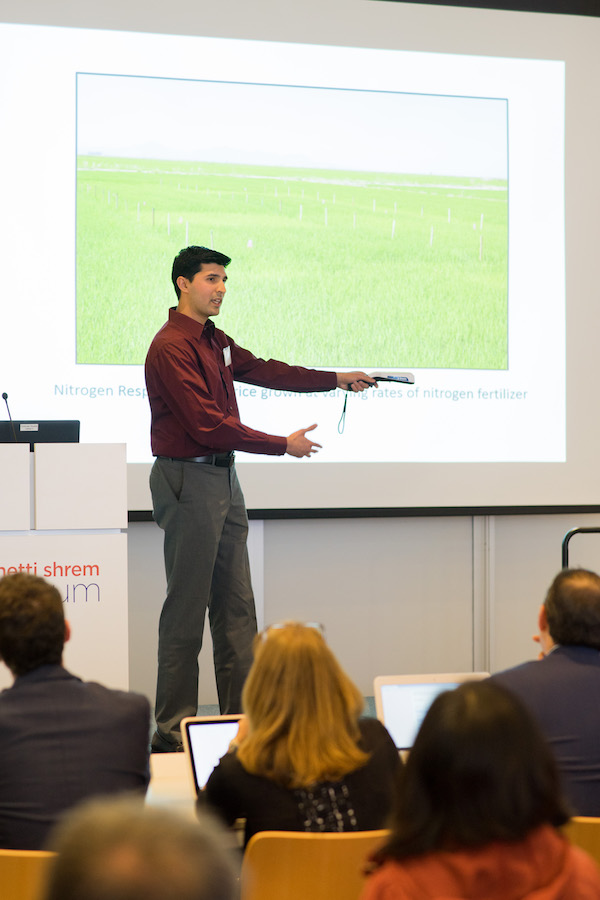
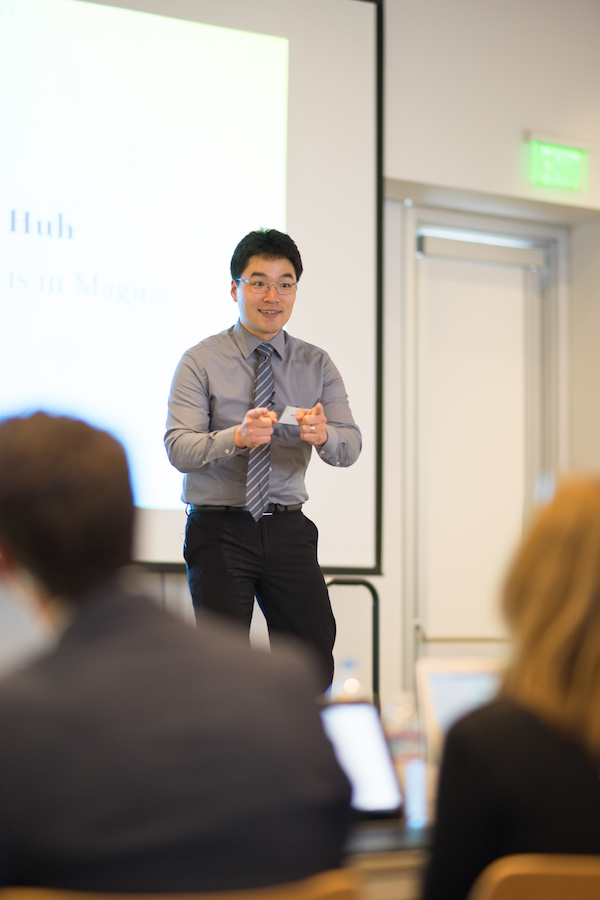
UC Davis hosted its annual UC Grad Slam finalist round on April 14 at the Manetti Shrem Museum of Art, where 10 UC Davis graduate student finalists were given three minutes each to present their research in front of an audience. Sam Westreich, a fourth-year doctoral student in the Integrative Genetics and Genomics program, was crowned the event’s winner and will represent UC Davis in the UC Grad Slam Finals round on May 4.

The UC Grad Slam provides an opportunity for UC graduate students to share their research findings with the general public through brief but lively presentations.

“Grad Slam is a system-wide contest in which UC grad students compete to deliver the best three-minute, jargon-free TED-style talk about their research,” said Stephanie Beechum, a UC spokesperson, via email. “Each of UC’s ten campuses hold preliminary Grad Slam contests of their own, and the 10 campus winners — all PhD or master’s students in any subject — go on to compete for the system-wide title.”

NICHOLAS CHAN / AGGIE

The UC Davis Grad Slam drew over 80 proposals from interested graduate students, more than double last year’s number. A preliminary round in February narrowed the competitors down to the 10 finalists who competed on April 14.

Westreich presented “Understanding the Gut Microbiome with Metatranscriptomics,” in which he highlighted how to maintain a healthy immune system, as well as other disruptions that can occur in the microbiome.

“It’s very difficult to study this environment because it’s super complex and it’s inside of us, so it’s hard for us to reach and doesn’t adapt well to growing in labs,” Westreich said. “A lot of the approaches have been in recent years, and they’re big data approaches where the strategy is to sequence everything and sort it out once it’s all on a computer.”

Westreich’s research focuses on designing programs that help sort this data once it has been collected digitally.

With only three minutes to present, summarizing and simplifying years of research can be a challenging task for Grad Slam participants. Westreich attributes practice as a key factor for his success. Prior to presenting, he would give his pitch to anyone who would listen and revise parts that did not seem clear.

“Whenever anybody asked a question, it tells me that the part where they asked the question isn’t clear enough,” Westreich said. “So I would re-work that part and practice more.”

Carina Fish, a first-year geology Ph.D. student, took third-place at the event and a $250 prize for her presentation of “Surface-Deep Connections: Ocean Acidification.” Fish recalls the competition as an exciting experience that introduced her to new people and research

NICHOLAS CHAN / AGGIE

outside of her department.

“It was great meeting other graduate students who are passionate about their work and and communicating their science,” Fish said. “I think sometimes it can get lost in translation because you get so invested in your own work and you forget to zoom out and connect with other people

around you. It was really nice meeting people outside of my department […] who are doing great things in their fields.”

The UC Grad Slam Finals will take place on May 4 in San Francisco and can be live-streamed on the Grad Slam’s official website. UC President Janet Napolitano will emcee the competition, which will be judged by a panel of leaders in industry, media, government and higher education, according to Beechum. The winner of the final round will receive a grand prize of $5,000.

Westreich’s plan of action is to continue practicing and to revise parts of his pitch that did not seem to flow well during the UC Davis round. He looks forward to representing UC Davis and hopes to take home the event’s grand prize.

“It’s been a really great experience so far,” Westreich said. “I always love not just doing the work, which involves me sitting by myself in the lab, but getting out and sharing my research with people and hopefully encouraging them to get excited about it too.”
Written by: Emma Sadlowski – science@theaggie.org

Mind games: Using videogames to address depression

BRIAN LANDRY / AGGIE

Interactive game designed to engage people with depression

Flashing screens and the soft glow of computers and phones can now help address some of the problems that accompany depression, thanks to research being done in the UC Davis Department of Communication.

Through the partnership of technology and cognitive tests designed for depression, Jorge Peña, an associate professor of communication, and doctoral candidate Subuhi Khan are using a video game to help with depression.

The game takes cognitive tasks that have been previously associated with depression among other mental illness and puts them into a game platform. The video game focuses on tasks that help with the conflict resolution processing section of the brain.

“We tried to maintain everything about the tasks as pristine as possible,” Khan said. “We tried to adhere to the neurophysiological aspects of the tasks and made them games, something that is there on the platform for people to play with.”

The games’ tasks involve looking at a screen with five arrows and determining which way the center arrow is pointing, or matching an emotion to a facial expression in a split second as it flashes on the screen.

“[The tasks] sound very simple to do but when it is adapted to the game it’s very quick, it’s flashing across the screen and people have very short reaction times to respond to so it becomes exciting,” Khan said. “Unlike the cognitive tasks themselves which are long, we adapted [the games] to be only one minute.”

Not only does the program have these tasks built in as a game for participants, but it also sends messages to the player that prompt them to be more inclined to play the game.

“What we were trying to do with this particular study is to get people to being more involved in playing these games,” Peña said.

While reviewing some of the literature surrounding these health video game interventions, Khan found a problem in that people may not choose to complete them.

“In this kind of study, you are showing the messages in the same medium in which they are seeking treatment,” Khan said.

According to Khan, this is different than getting reminded to go to a therapy session because the intervention to help with the depression is right there where the message is popping up.

The study has been over two years in the making and was motivated by the curiosity of Khan who wanted to see if this type of engagement of depression with technology was possible.

“Khan was really interested in the applications of new technologies and how to use new technology to persuade people, to nudge them to be healthier,” Peña said. “[…] We started on this project because I’m interested in the idea of technology and persuasion.”  

Khan and Peña use the Visual Interaction & Communication Technology Lab in the Department of Communication to complete their ongoing research. They are currently testing different interfaces, screen sizes and messages that participants see. Eventually, the team is hoping to get the game to clinical trials and beyond.

Recently, Khan and Peña have enlisted the help of computer science students on campus to help beautify the interface and make the tasks more game-like in nature. My Nguyen, a third-year computer science major who heard about Khan and Peña’s work through UC Davis’ Modlab, is helping with this project.

“I always think that technology can make your life better and I didn’t think that technology could help with depression in your brain,” Nguyen said. “But the researchers realize that technology is valuable, we just need to implement [it] to help make our lives not only get better [but] make it more comfortable, and you can use it to help more people with depression.”

The game is still in the beginning phases of development, but Khan and Peña are hopeful that it will help further the study of both technology and mental health. Khan designed the application and while she has nothing against the medicines used to treat depression, she thinks exploring other options is also important.

“The hope is that if nothing else it furthers knowledge about depression, the fact that depression doesn’t have to be thought of as an untreatable condition or something that cannot be addressed without taking medicines,” Khan said. “[…] I definitely want to promote the idea that there are options out there for people to explore and options that can be pretty accessible as well.”


Written by: Emma Askea – science@theaggie.org

Past romantic partners may have more than one thing in common

LAURA LONG / AGGIE

UC Davis study reveals that romantic exes have matching physical, personality-based attributes

Ever had a new partner who is reminiscent of a former flame? A recent UC Davis study published in the Journal of Personality and Social Psychology finds that a glimpse into a person’s dating history can reveal both physical and personality-based similarities between one’s past partners.  

For similarities in physical attractiveness, the study revealed that people generally dated those who were about as attractive as themselves, thereby following the model of assortative mating and producing a history of exes with relatively the same level of attractiveness. Other physical attributes that showed a tendency to match between one’s past partners were masculinity, femininity and dominance.  

For qualities such as IQ, educational aspirations and religious preferences that are dependent on the social context (i.e. where one lives), a similar trend became apparent.  However, this similarity was attributed to the reasoning that most people dated those that they went to school with or lived near, not because they actively sought out and selected educated or religious people.

“The evidence was a little stronger for the physical than the personality similarities,” said Dr. Paul Eastwick, an associate professor of psychology at UC Davis and primary author on the study.  “But the main difference was that the personality similarities seemed to originate with the social context, a passive selection process, whereas the physical similarities were more likely to reflect an active selection process.”

The article, which is composed of three individual studies, utilizes data from social media sites such as Facebook, questionnaires and interviews of people in over 1000 past and present heterosexual relationships.

“It’s the first study to examine people’s multiple romantic partner choices over time,” Eastwick said. “I think it’s important to bear in mind that people’s romantic relationships don’t exist in a vacuum. They are preceded by other relationships and are often followed by other relationships, and what affects our choices in one relationship may have important impacts on the choices we make in other relationships.”

One of the studies showed that people’s romantic partners tend to “cluster” and show consistency around certain attributes that mirrored those of past partners, such as a great sense of humor and high attractiveness.

“My role was to conduct the initial simulation study,” said Dr. Samantha Joel, co-author on the paper and assistant professor of social psychology at the University of Utah. “We wanted to show that our clustering method was a valid way to detect stable mate preferences across time. We found that yes, if you simulate an environment in which people choose partners according to stable mate preferences, those preferences are revealed through clustering across their romantic partners.”

The studies are conducted and examined under the lens of researchers in specific fields of relationships science, sociology and evolutionary psychology.

“The take-home here goes above and beyond the results and implications of the studies,” said Jennifer Ann Shukusky, co-author on the study and graduate research assistant in the Department of Human Development and Family Sciences at the University of Texas. “It’s that there needs to be more communication between fields that take interest in similar topics, like the three blind men trying to identify an elephant, each has a different set of information that shapes his perspective, [and] when you pull it all together when researchers from different disciplines collaborate then you can get the full picture.”


Written by: Harnoor Gill – science@theaggie.org

Aggies put up fight against Cal Golden Bears

RAUL MORALES / AGGIE

UC Davis softball loses 6-4, all zeros in last four frames

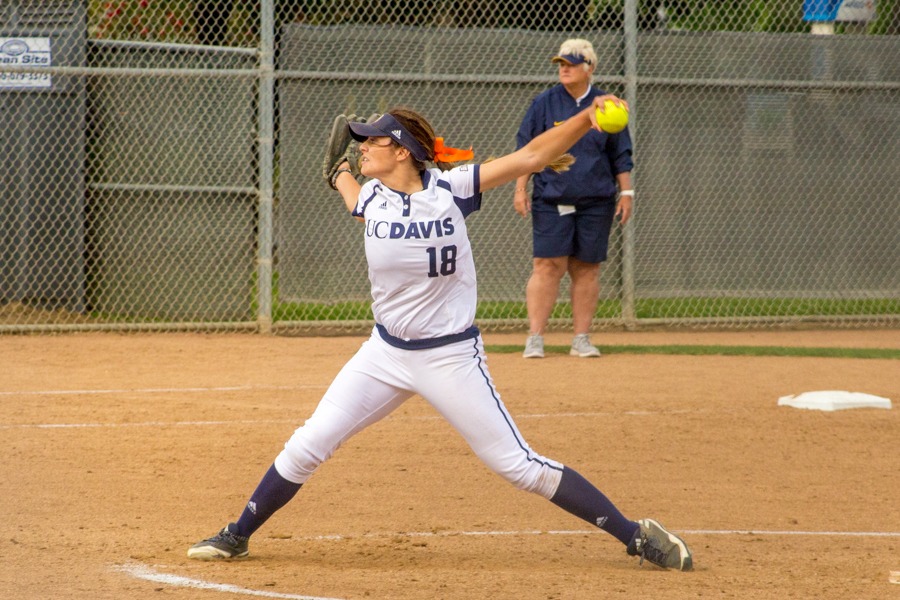
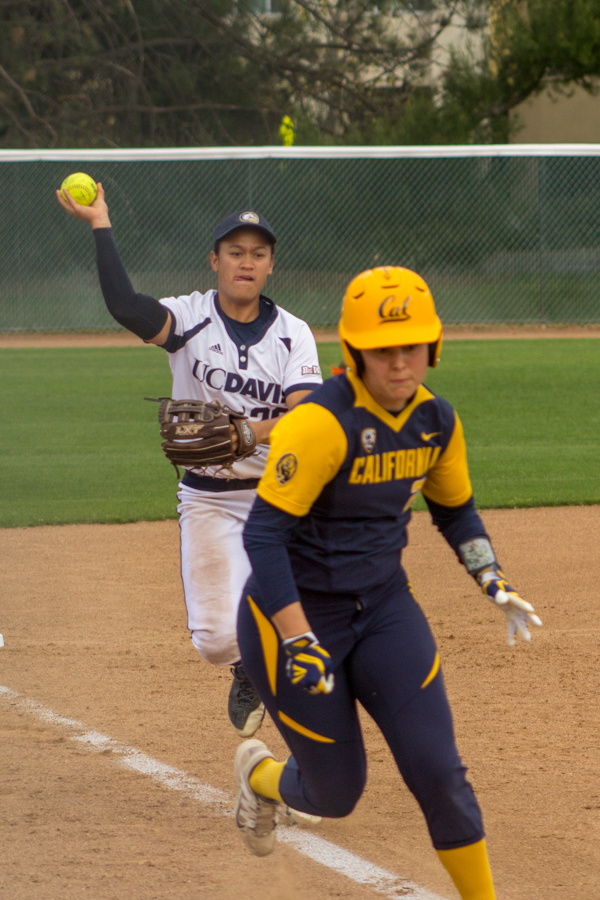
The UC Davis softball team took the field on Wednesday, April 27 for a non-conference game against the neighboring Cal Golden Bears. The Aggies stayed strong throughout the first couple of innings, putting four runs up on the board, but couldn’t come back offensively after the third inning.

The bottom of the first inning saw the Aggies dominate the plate. Junior designated hitter Ashley Lotoszynski gave senior shortstop Christa Castello the opportunity to score off a four-pitch walk. Sophomore second baseman Alex Sotomayor crossed home plate on a pass ball with Lotoszynski not far behind, scoring off a grounder to short by senior catcher Alexis Carney.

Despite a strong defense that included a stellar pickle play by freshman third baseman Isabella Leon, the Golden Bears managed to put up two runs in the top of the second inning.

The third inning, however, sealed the fate of the game. UC Davis’ sophomore pitcher Sara Codona was brought into the game to take the mound with senior catcher Taiya McInnes joining her behind the plate. Unfortunately, a run scored by Cal’s junior first baseman Kobie Pettis and the freak play that followed gave the Bears their game-winning lead.

RAUL MORALES / AGGIE

Cal’s senior right fielder Khala Taylor sprinted home after a dropped bunt to third, but Cadona and Taylor collided as Cadona went to field the bunt. After the collision, Cadona struggled to get the ball back in her hand and was not able to make a play, giving up two runs to the Golden Bears.

Cadona didn’t let the commotion shake her confidence. The pitcher only allowed three hits in her five innings on the field, which shook the nationally-ranked Cal softball team. The Golden Bears weren’t able to put anything more than zeros on the scoreboard in the final four frames.

“I was a little taken out for a sec, but then I was like, ‘okay, let me just throw a couple pitches, slow my heartbreak back down and get into my groove,’” Cadona said. “Those re-warmup pitches were just what did it for me and I just focused on still hitting my spots, focusing on my routine.”

Despite a broken thumb, Lotoszynski responded to the kerfuffle with her fifth home run of the season.

“I was just in the zone,” Lotoszynski said. “I just felt it. It felt great.”

The Golden Bears struggled against Cadona’s pitching for the rest of the game. An astonishing catch by Cal’s senior middle infielder Kylie Reed took away any opportunity the Aggies had to score. Despite being 5’5”, Reed jumped up to field a ball that could have gone over any player’s head. The Aggies were unable to regain the lead, and the final score settled at 6-4.

The UC Davis softball team now stays at home to face Cal Poly, starting with two games on Saturday, April 29, and one on Sunday at 12 p.m.

“We just have to make sure anytime we’re playing one of these top programs that we have to show up with our A game, and we had about a B+ today,” said head coach Erin Thorpe. “We know we’re going to be seeing a good pitcher in Cal Poly, so it was awesome to get to see the speed today that we saw. That’s really going to help us this weekend. And we’re just going to go out and throw blows this weekend and see who comes out with a win.”


Written by: Liz Jacobson — sports@theaggie.org

Show Review: deadmau5 ‘lots of shows in a row’

Canadian-based producer plays three ‘shows in a row’ in Oakland

Toting his iconic mau5head, Joel Zimmerman, a.k.a. Deadmau5 made his return to the Bay Area with three sold at shows at the Fox Theater in Oakland. The electronic music producer is known for sticking to his own style of music and not playing your typical electronic music set with bangers and heavy drops. Rather, Zimmerman is known for his progression of ambient tones and melodic synths, which may bore newcomers to the electronic music scene.

Opening act, Feed Me, started off the night with a bass-heavy set as fans filled with Fox Theater complete with their homemade mau5heads and various deadmau5 merchandise. As Feed Me’s set came to end, a shadowy cube appeared behind a curtain, complete with mouse ears at the very top. When the curtain dropped, deadmau5 appeared at the very top of “Cube 2.1,” which basically was a glorified, monstrous production booth in the shape of a cube, complete with visuals.

“Cube 2.1” is a striking example of how successful producers integrate the stage scenery with their music as many producers forgo the idea of having visuals to complement their set. As Zimmerman played throughout the night, 3D landscape simulations, mau5-creatures and even a game of Rocket League appeared on the cube. Even his signature mau5head came complete with its own visuals as it synced well with the music throughout various parts of the show.

The two hour production came with music off his new album, “W:/2016ALBUM/” with tracks, such as “Let Go (feat. Grabbitz)” and “Whelk Then.” Zimmerman’s classic tunes were also played, such as the infamous “Ghosts ‘n’ Stuff,” “The Veldt” and “Strobe.” Midway through the production, the mau5 decided to drop some 90s hip-hop, which seemed strange for a deadmau5 set, but ultimately showed his wide range and depth as a producer. The crowd seemed to enjoy it as well.

The show closed with deadmau5 jokingly stating that he needed an iPod connector to make the encore work. He played Noisia’s remix of Raise Your Weapon, which garnered much delight from the crowd. Complete with visuals and ‘mau5’ music, ‘lots of shows in a row’ did not fail to disappoint.

Renovated Memorial Union to open May 1

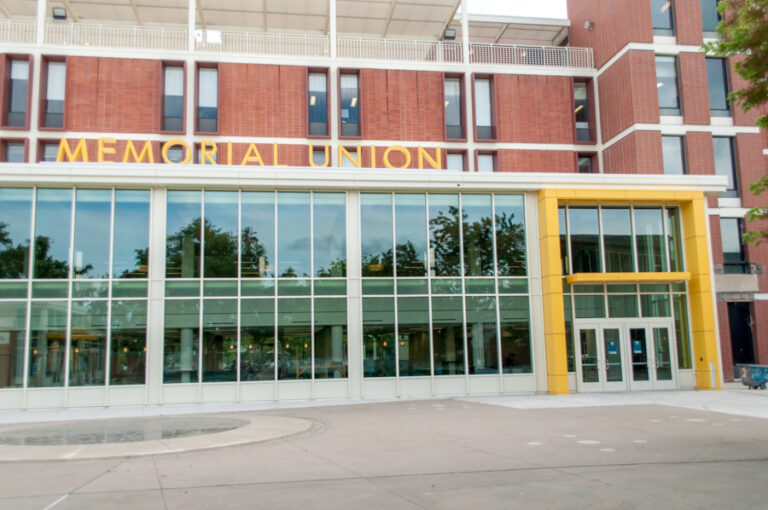
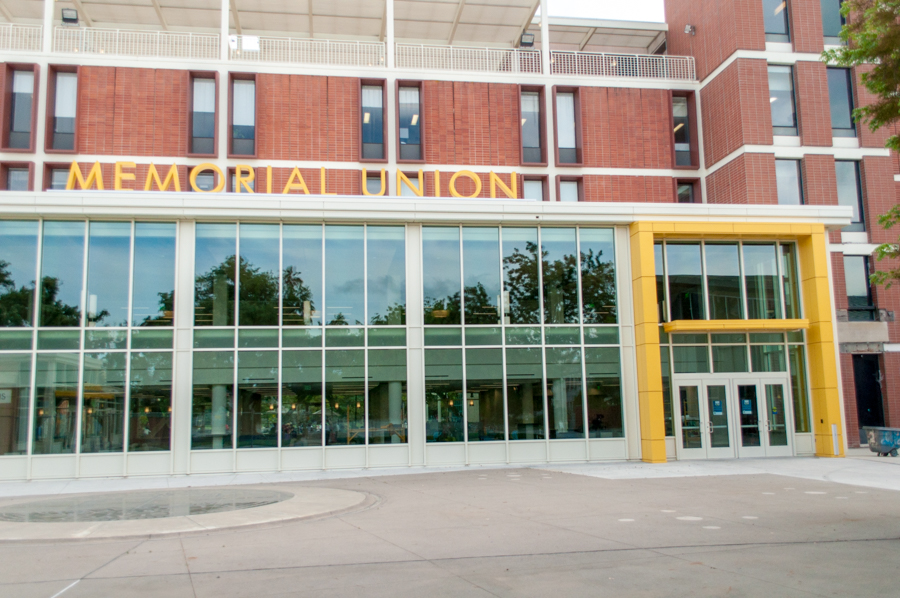
The new gateway to our campus has floor to ceiling windows. (JORDAN KNOWLES / AGGIE)

Renovations include new Games Area, lounge space

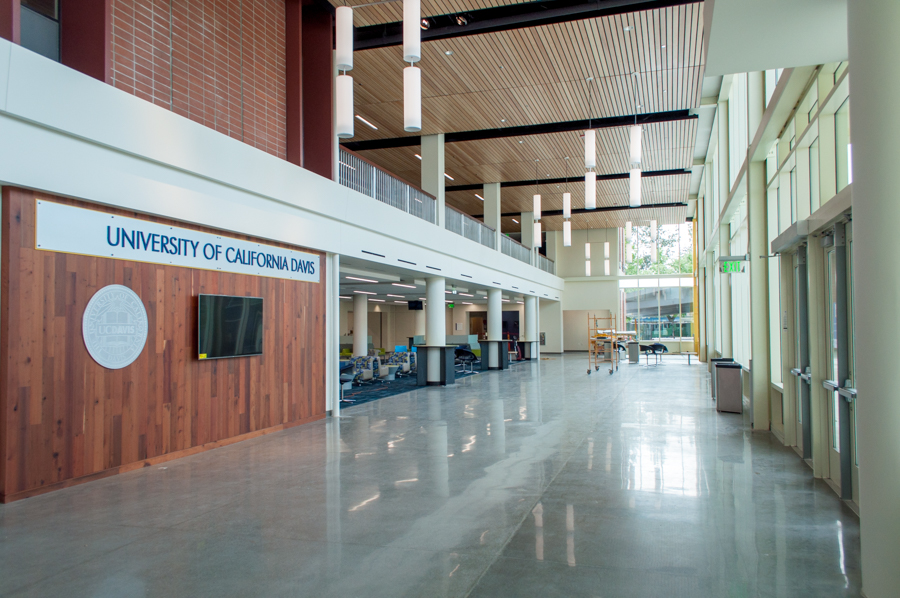
After several delays, UC Davis’ renovated Memorial Union (MU) is set to open this Monday, May 1. The new building features natural lighting, brand new outlets and lots of space for students to study and socialize.

The spacious main entrance of the MU includes study spaces, The Market and the information desk. (JORDAN KNOWLES / AGGIE)

The building includes The Market, where students can buy snacks and school supplies; a new computer lab and the new Veteran Success Center.

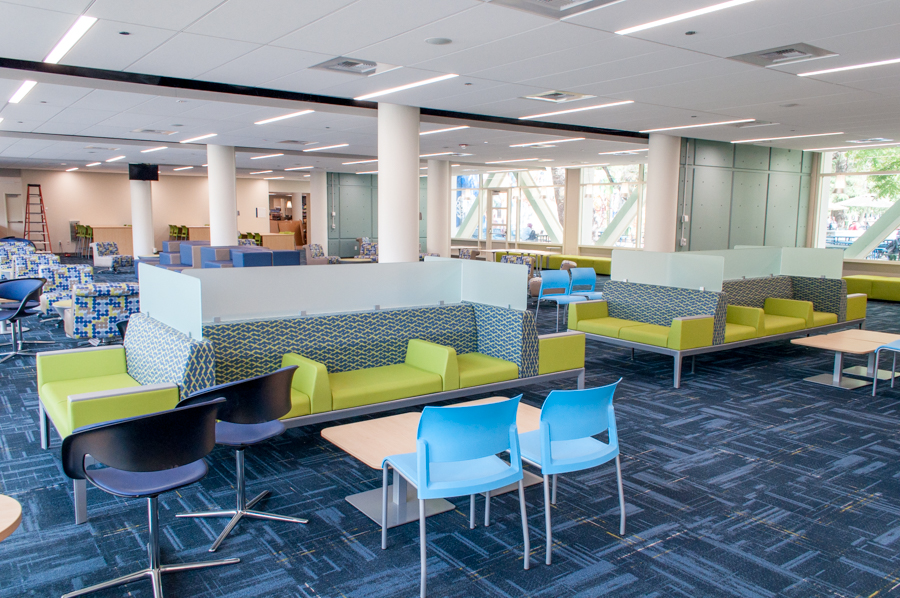
The second floor features lounge space where students can study or hang out with friends. (JORDAN KNOWLES / AGGIE)

A memorial wall to honor the Gold Star Aggies will be revealed on May 25 as part of the Memorial Day Ceremony. The wall will include interactive video screens for visitors to learn more about Aggies who died in combat.

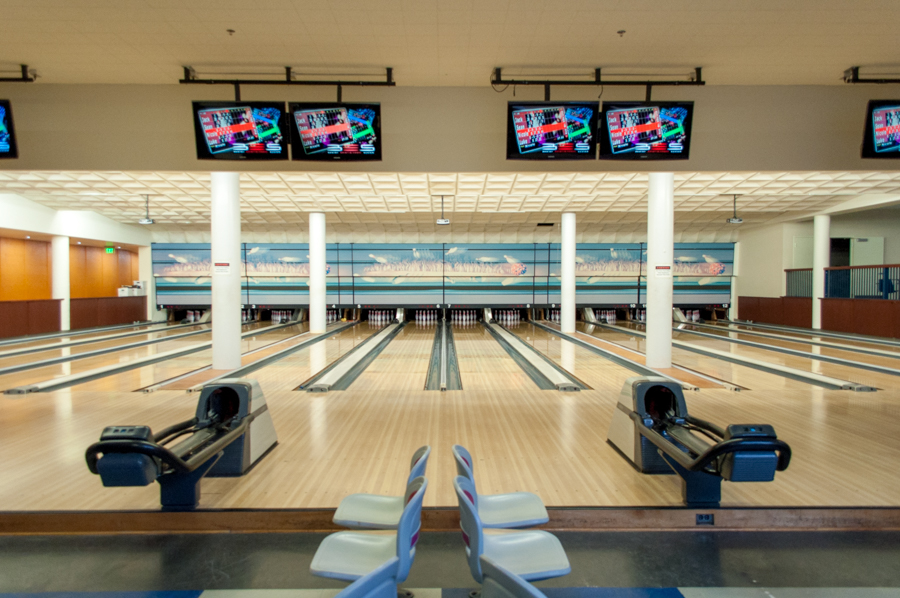
The Games Area, located in the basement of the MU, includes a lounge area, TV screens and a 12 lane bowling alley. The new bowling alley has four less lanes in order to make room for billiards tables. A game of bowling costs $4. There are also six screens through which students can play video games for $2 per hour.

Students can bowl one game for $4. (JORDAN KNOWLES / AGGIE)

The MU grand opening event is scheduled for noon on May 18.

Written by: Alyssa Vandenberg  — campus@theaggie.org