58.6 F
Davis

Davis, California

Monday, December 22, 2025
Home Blog Page 643

UC Davis alumni revolutionize genetic engineering

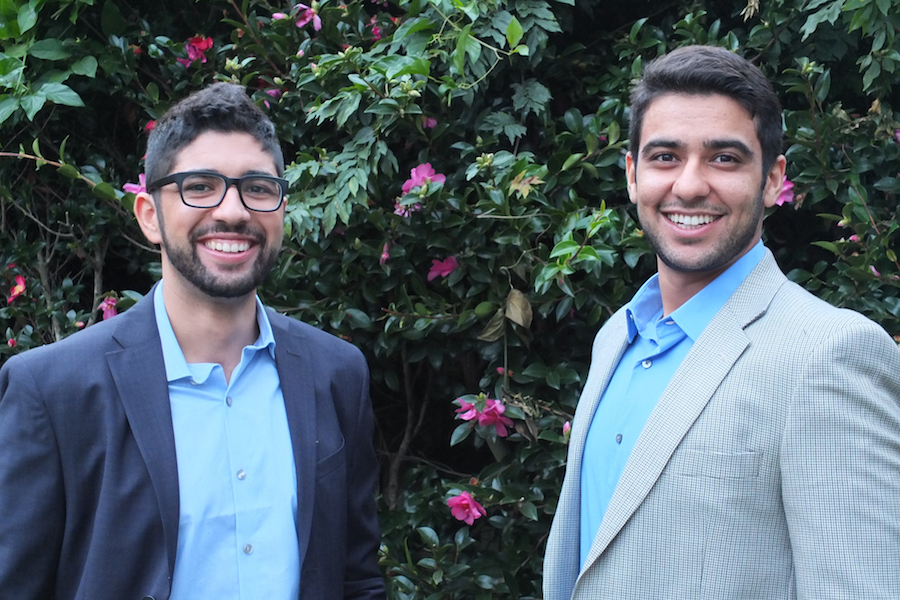
Arshia Firouzi, left, and Gurkern Sufi, right. (COURTESY)

Biology meets engineering to increase production of transgenic organisms

Of the thousands of students that attend UC Davis, Arshia Firouzi and Gurkern Sufi met one another in Tercero Hall in 2011. Bright-eyed freshmen at the time, they had yet to embark on the exhilarating journey that would lead to their founding of Ravata Solutions — a company dedicated to making transgenics, the field of biology that results in genetically engineered organisms, easier for genetic engineering.

Sufi has a degree in biotechnology and Firouzi in electrical engineering — and the intersect between these two sciences is what intrigued them the most. Under the guidance of UC Davis professor Marc Facciotti, they gained a VentureWell grant in 2015 to begin tinkering with their project and conducting basic research in Translating Engineering Advances to Medicine’s (TEAM) Molecular Prototyping and Bioinnovation Laboratory.

“We had put together a lab space and equipment where people can come and explore the various types of technology that are associated with engineering biology,” Facciotti said.  “Connected to that is an award from a foundation called VentureWell, and VentureWell gave some money to help facilitate this general idea, and I’ve been using it to seed projects that students are coming up with.”     

The initial idea revolved around micro-electrical components and biology together, but the application that came out of it was not the original plan.

“We had been working on single-cell electroporation, [using an electric field to increase absorption of foreign materials into cells], for a while with exploring potential applications in a variety of cells,” Sufi said. “We asked, ‘What are some high-value, high priority cells that researchers can’t risk losing large quantities of when they want to do a transformation?’ Naturally, we fell upon embryos.”

And thus, Ravata Solutions was born. Ravata is dedicated to creating a device that will transform transgenics. This automated device would take the place of microinjection, the classic technique used to manually insert DNA into an embryo. While microinjection does ultimately result in the production of transgenic animals, it has critical flaws.  
“A real limitation of microinjection is the time it takes to make a successfully transgenic organism,” Sufi said. “It is also an outdated field [that] you can’t find many skilled professionals in anymore.”

Ravata’s device increases the efficiency and viability of producing transgenic animals with the incorporation of electroporation and single-cell sensing. This new technology results in up to 1,000 embryo transformations per hour with over 80 percent viability and over 80 percent efficiency. This is important because it allows researchers to rapidly conduct embryo transformations and know if they are on the right path.

“The rate-limiting step in creating transgenic animals is embryo transformation,” Firouzi  said. “What Ravata is doing is enabling production of embryo engineering by allowing input of the process of embryo transformation to increase 100-fold.”

Ravata was accepted into the IndieBio accelerator program in San Francisco in October of 2016, and partnered with the Lawrence Berkeley National Lab, VIB Life Sciences and the UC Davis Mouse Biology Program. They are currently testing pilot programs and plan to launch the product in 2018.   

“We are excited to launch and also start exploring the many other applications of our technology in plants,” Firouzi said. “At the end of the day, our device doesn’t transform just embryos, it can transform any cell type with a high efficiency and high viability.”
Written by: Harnoor Gill — science@theaggie.org
Aggies sweep Hornets in Golden State Invitational third-place finish

ANH-TRAM BUI / AGGIE

UC Davis co-hosts second annual tournament with Sacramento State

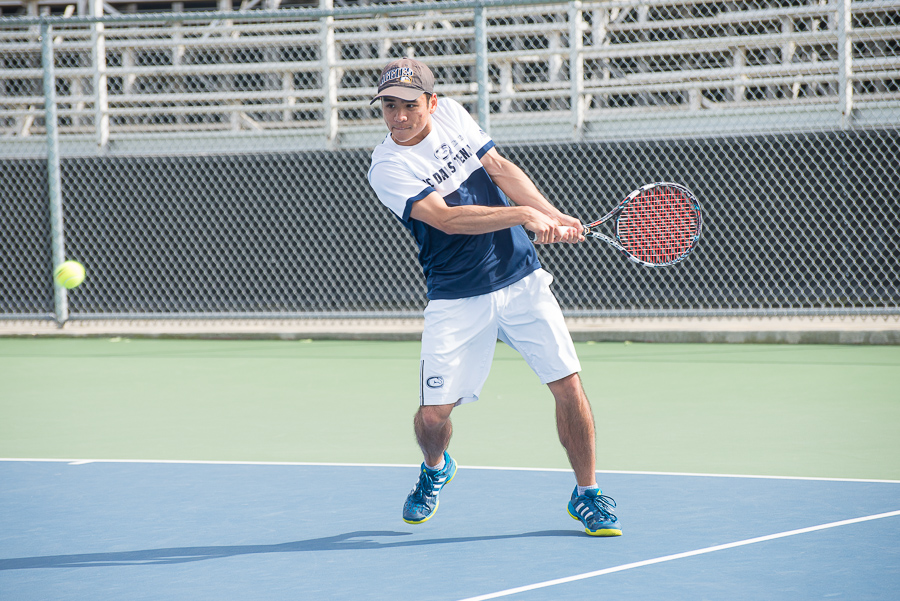
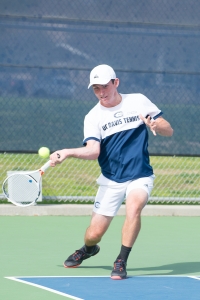
In the second annual Golden State Invitational, the UC Davis men’s tennis team swept co-host Sacramento State, 7-0, in Sunday’s third-place finale at the Marya Welch Tennis Center.

The tournament ran from last Friday to Sunday, splitting teams into two groups of four onto both UC Davis’ and Sacramento State’s campuses with six other participating schools: Grand Canyon, Nevada, Northern Colorado, Portland, New Mexico State and Saint Mary’s.

On Friday, UC Davis opened the tournament against Saint Mary’s, posting an impressive 6-1 victory over the Gaels. With this win, the Aggies kept the magic of the Marya Welch Tennis Center alive, extending their home winning streak to 21 wins since 2014. UC Davis swept in doubles play to get the early lead 1-0. Senior Alec Adamson and freshman Max Pham stayed perfect on the season in doubles play with their 6-2 win.

Going into singles play, five of six Aggies won in straight sets. Freshman David Goulak put the Aggies up 2-0 with his 6-2, 6-2 win. Junior Everett Maltby won his match 6-3, 6-1, senior Bryce McKelvie clinched the match for UC Davis with his 6-1, 6-4 victory and senior James Wade topped off the match with his third straight win overall with a 6-4, 6-2 sweep.

UC Davis went into Saturday play to face off against Portland, where the winner would advance to Sunday’s championship match. It was a close match throughout, but Portland came back to defeat the Aggies, 4-3, after being down 3-2 late in singles play. This loss ended UC Davis’ 21-match home winning streak and put them at 8-5 overall on the season.

ANH-TRAM BUI / AGGIE

The Aggies lost the doubles point early, with Adamson and Pham falling for the first time in doubles play this season. Goulak and sophomore Tommy Lam posted UC Davis’ only win, 6-4, in the doubles sets.

Senior Eli Whittle evened out the competition at one apiece with his 6-1, 6-1 victory. Maltby and McKelvie put the Aggies up 3-2, but Portland pulled through and came back to win the remaining two singles matches, defeating the Aggies 4-3.

To wrap up the tournament weekend, UC Davis faced co-host and rival Sacramento State in the third place match in a 7-0 sweep. With this win, the Aggies improved to 9-5 on the season. UC Davis made it look easy, as all its doubles pairings won their sets, as well as in singles play, with five of six Aggies winning in straight sets. Adamson finished off the match by winning his match in a 11-9 tiebreak.

With this win, the Aggies move to 9-5 on the season and return to the Marya Welch Tennis Center to host Yale on Saturday, March 18 at 12 p.m.


Written by: Nicolette Sarmiento — sports@theaggie.org

Humor: New edition of text to include 26 exhilarating new sentences

NADIA DORIS / AGGIE

What’s an extra $150 anyway?

DAVIS, CA — As a “journalist,” I’m often able to report on stories that have a real fake impact on the population at large. These stories have the power to inform and shape opinion, to transform the world around us. But it’s rare that a story comes along like the one I will weave for you today. A story which pertains to a matter of real groundbreaking importance. A story which may move you to tears. A story about the addition of 26 sentences into the second edition of Brian J. Mattis’ masterwork Essential Organic Chemistry.

Reader, I know what you’re thinking: “how could there be a second edition to something that is already perfect in the first place? There is no second edition to the Bible.” To this I would respond that there is a second edition to the Bible — it’s called the New Testament.  

As hard as it might be to understand how wunderkind author Mattis could possibly improve his magnum opus, against all odds he has done it.

The second edition of Essential Organic Chemistry will include not 24, not 25, but 26 brand new sentences. The majority of these new sentences tie organic chemistry to pop culture references. Although detractors might say that organic chemistry needs pop culture references like a fish needs a birthday party, these pop culture references will knock your socks off.  

Some of the new sentences included in this edition:


  • Sodium bis(2-methoxyethoxy)aluminium hydride is also known as “Red-Al” as it is comparable with LiAlH4. Wouldn’t it be fun if the multi-platinum pop music album “Red” by Taylor Swift was instead called “Red-Al?”
  • With no signs that chemical innovation is slowing, the current pace of substances added to CAS REGISTRY over the next 50 years would suggest registration of more than 650 million new chemical substances. 650 million is also the number of downloads of the popular cartoon collection and mobile battle game app “Pokemon Go.” It’s fun to talk about “Pokemon Go.”
  • Friedrich Wöhler was a German chemist who is well-known for synthesizing urea in 1828.  He is widely considered the father of organic chemistry. Do you remember when Darth Vader said to Luke, “I am your father?” That was fun. This is a fun reference which will make this text much more enjoyable to you and your classmates.


Yes, the second edition is a must-have for anyone serious about taking organic chemistry to complete their major requirement. It’s also a must for the consummate Brian Mattis enthusiast. Although you might be asking, “Do I really need to spend the additional $184.82 for this new edition?,” it’s important to break down the cost into its true value.

Each new sentence will only cost you an additional $7.10. For the price of a salad dressing packet at the CoHo, you can own an additional sentence of knowledge. As any college student knows, debt is only real if you aren’t spending it on your education.

Written by: Parker Nevin — phnevin@ucdavis.edu

(This article is humor and/or satire, and its content is purely fictional. The story and the names of “sources” are fictionalized.)

Aggies dance their way to the round-of-64

CHRISTIAN CUBACUB, MULTIMEDIA EDITOR / FLYER NEWS

UC Davis men’s basketball team beats North Carolina Central 67-63 in NCAA Tournament

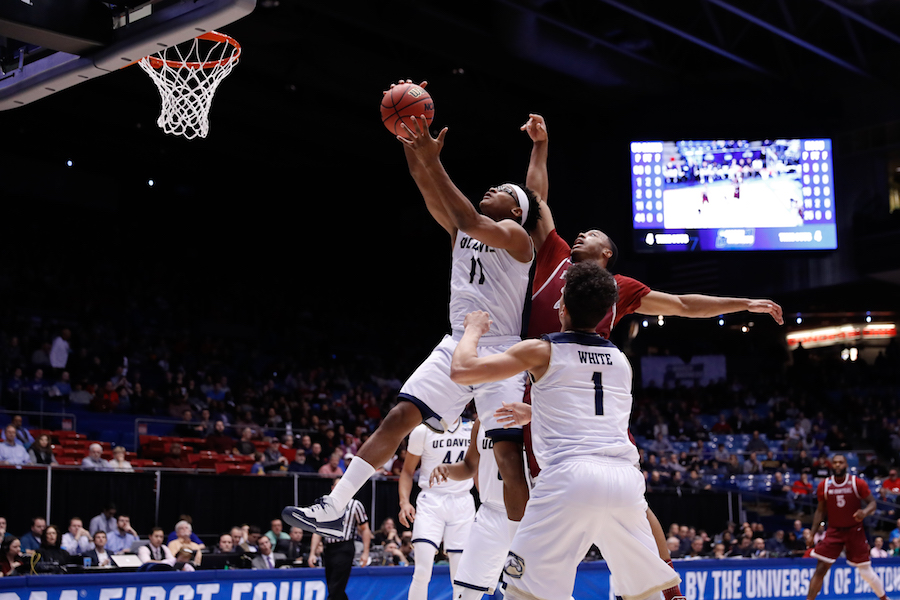
In the first March Madness appearance in the program’s Division I history, the UC Davis men’s basketball team defeated the North Carolina Central Eagles 67-63 in an NCAA Tournament First Four matchup on Wednesday evening.

In a close game that saw the Aggies playing catch-up at the end of the first half, UC Davis quickly gained ground during the second and maintained the lead for the remainder of the game. The Eagles came within one point of the lead with less than two minutes remaining, but UC Davis hit just enough free throws to ensure that the Aggies stayed in front with a safe buffer in place. The Aggies held the edge in defensive rebounds, yet they committed 18 total turnovers.

Junior forward Chima Moneke led both teams in scoring with 18 points, going 6-6 from the free throw line, and he added 12 rebounds for the double-double.

Moneke was closely followed by senior guard Brynton Lemar, who added 15 points points and went 4-6 from the free throw line, and senior guard Lawrence White, who tallied 14 points and knocked down all four of his free throws.

“Before the game we just talked about having a fight,” said head coach Jim Les. “This is a really good, connected team, and we as a staff just asked them to fight to keep it going. This has been an unbelievable ride and we’re not ready to go home, and I can’t tell you how proud I am of them for their resiliency — it was remarkable.”

The UC Davis men’s basketball team is now the number 16 seed in the Midwest Regional, and the Aggies will head to Tulsa, Okla. to play regional top seed Kansas on Friday, March 17.

“Our guys grew up as little hoopers dreaming about playing and having this opportunity, and so it’s special to be here and we’re just going to continue to fight to keep this story going,” Les said. “When that ball goes up on Friday I’m not going to be thinking about what seeds [we are facing] — we’re going to be playing basketball, competing at basketball, and like I said, the chips will fall where they may.”

And of the formidable mountain to climb in facing a number 1 seed with Kansas? Considering that number 1 seeds have never lost to a 16 seed since the round of 64 was created in 1985 — compiling a record of 128-0 — Moneke had an optimistic response.

“It’s going to happen eventually, that’s how I look at it,” Moneke said. “We all can play at this level. I don’t fear anybody, but I respect everybody and I feel like with the way we play defense we can make any game a game.”
Written by: Bryan Sykes — sports@theaggie.org

Photo of the Week: 3/15/17

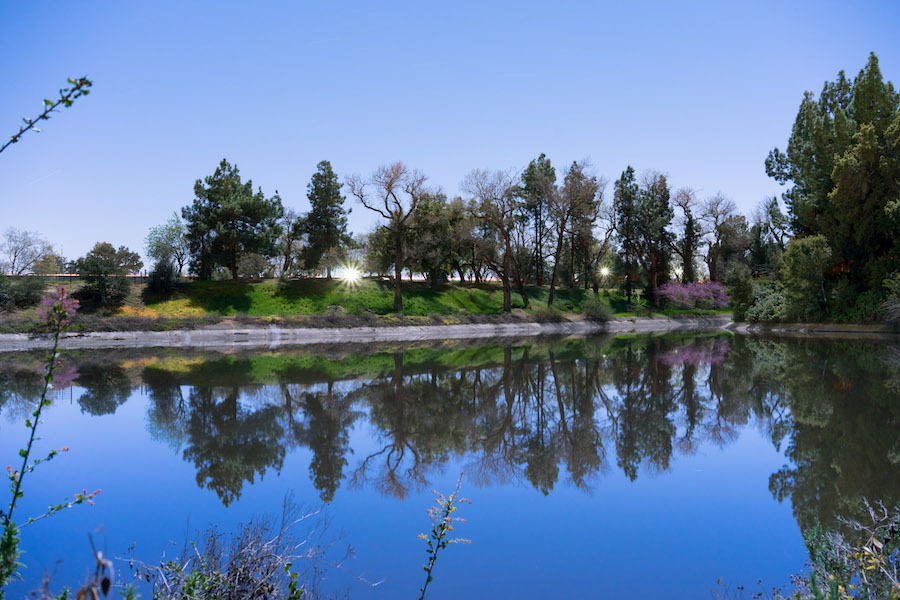
The Arboretum at midnight. (NICHOLAS CHAN)

The magic of Pippin

DRA 143 / COURTESY

Students in Drama 143 stage play as part of class

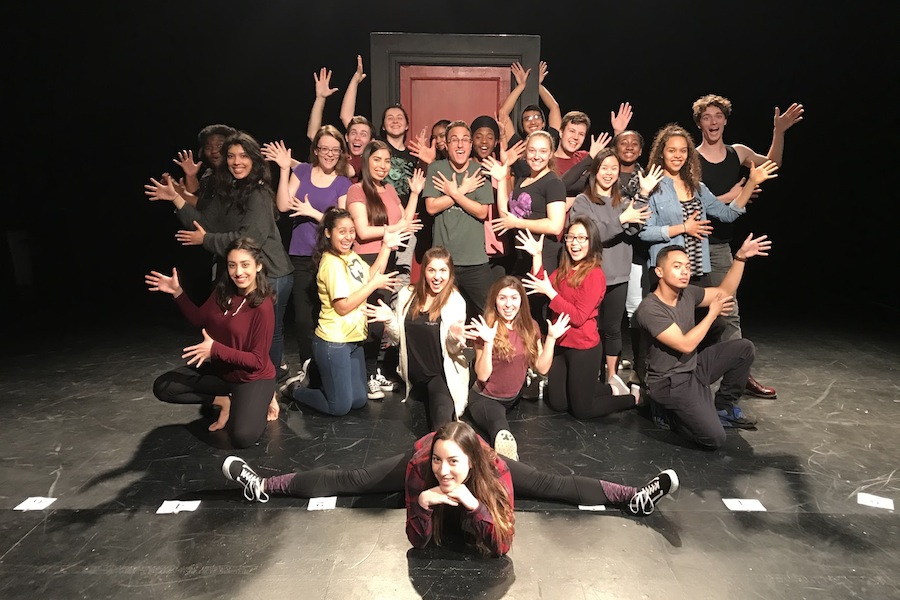
The students of Drama 143 have been working all quarter to put on a special preview of the musical Pippin, and their hard work will soon be visible to the public. The students will be performing the first 20 pages of the production on March 15, with all of the students in the class involved in acting, directing, choreographing or taking part in the technical side. This class provides students with hands-on experience in successfully creating a show and all the facets that go into it.

Mindy Cooper, the theatre department’s current Granada artist in residence and the teacher for Drama 143, believes in the notion of musical theater process production and performance. For her class, the students studied the original and revival script of Pippin and did historical research on the characters. Each student became a collaborator on a team.

“It takes a village and I asked them to become a village,” Cooper said.

The students had to work together to come up with their vision of the first 20 pages. Half of the class served as the collaborators who brainstormed an artistic direction, while the other half will serve as the performers, tasked with bringing the vision to life. The quarter started with table work and discussing all the roles, scripts and historical background research. Then, the second half of the term focused on auditions and actually staging the first 20 pages.

The students felt that the auditions themselves were a great teaching exercise because they were held in class in front of everyone, a process that was a little frightening, but also revealing.

“It became a safe environment where they could all learn from each other,” Cooper said.

Koreena Walsh, a fourth-year theatre and dance major, plays the lead role of Pippin.

“When everyone was in the room to audition, everyone is nervous so that makes you feel better,” Walsh said. “I was totally shocked at the casting because sitting and watching the auditions you have a good feeling as to who will get what part but when it came down to receiving the cast list I was completely surprised.”

Walsh is also a member of the costume design team. Because there is no budget for the class performance, the design team decided to channel the musical’s theme of things lost and found, using things that are already around and using make-believe props.  

Cameron Turner, a third-year theatre and dance major, is one of the three student directors as well as one of the actors. To Turner, one of the exciting parts of the class is the opportunity to adapt the script to the class’s vision and to help make Pippin relatable to UC Davis students.

“We are learning as we are going,” Turner said. “The main theme is bringing magic to our daily lives as students. It’s about when we find our lives boring and how we can bring the magic to our different situations as students and as a collaborative group and create this magical piece of Pippin.”

The play will be staged in the Wright Hall’s Arena Stage on March 15 at 1 p.m. All are welcome, and the cast and crew will hold a discussion about their creative process after the performance.


Written by: CaraJoy Kleinrock — arts@theaggie.org

Design Matters: A Look Inside The Turtle House

CIERA PASTUREL / AGGIE

Well-known co-op coins design aesthetic all its own

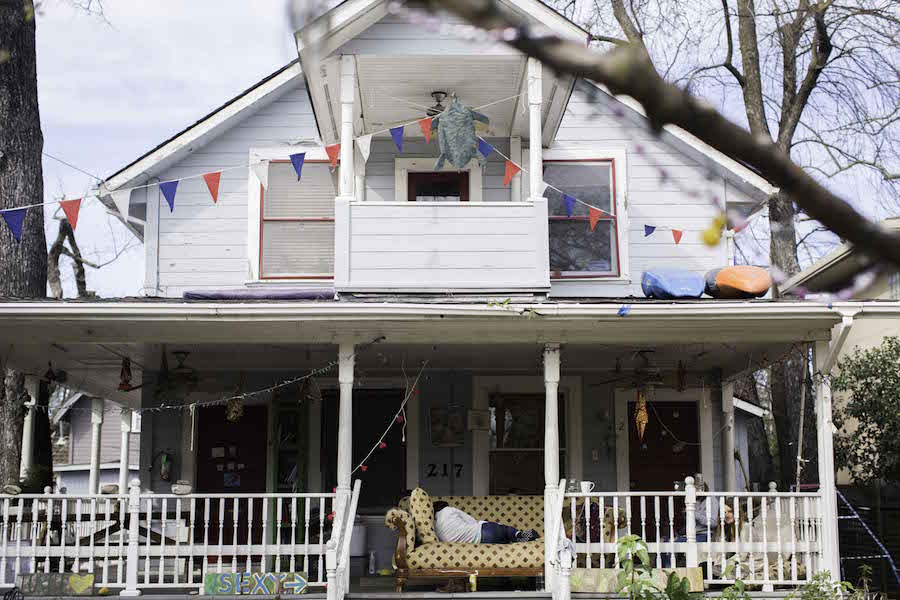
An outdoor study space was the first area to catch my eye at the Davis-famous “Turtle House,” which is located on 2nd Street and gets its name from the large turtle figure that hangs on the top porch. Old, rusting desks surrounded a long table made out of a dinged surfboard while overhanging trees provided a canopy of shade. There are various artifacts across the front yard — among slightly overgrown grass was an antique carved coffee table with a couple of empty craft beer bottles and a heap of lawn clippings placed artistically on top. It’s an odd pick, but there was something enchanting about the setup. These artifacts decorate this massive property, not just the front yard.

The four-unit house, currently housing 18 student residents, has been an oasis for cooperative, creative living since the late 1990s. One can feel the history of the house in every speck of dust and creak of the floorboards. It is chaotic, not out of distress or a lack of care, but rather out of unwieldy genuineness. The Turtle House’s unique living style emphasizes how decoration and the setup of a home directly impacts its inhabitants. There are lessons to be learned in the ways humans intentionally decorate and interact with their living space, and the vibrant entity that is the Turtle House is no exception, grass-heap decorations and all.

One of the defining features of the Turtle House is its close integration with nature and its surrounding environment. This feature, in turn, has made the outside world part of the design, and even the focus of the house. No wonder the beautifully janky study space is among the trees in the front yard.

“We try to make the space available for animals to live in,” said Marco de la Fava, a fourth-year neurology, physiology and behavior major and resident of the Turtle House. “We have a possum, two bluebirds, a small flock of birds, six chickens, two cats, baby squirrels and adult squirrels, a variety of bugs and insects, fish and microbial communities.”

A once-feral cat brushes its back on the sun-stained couch.

Beyond the various animals that live on the Turtle House property, the focus on nature has become integral to the design of the house — a compost area and multiple vegetable boxes take up the majority of space and design of the front yard.

“It’s nice to have a house centered around [nature] and that has so much open outdoor space,” said Mimi Pinna, a third-year international relations major resident of the Turtle House. “It made me realize that I need to have a garden to take care of or a reason to go outside. Being outside allows me to be quiet, and that is my favorite thing about living here.”

Pinna’s comment was almost ironic after considering the design aesthetic of the house — couches, random blankets and pillows filled the space. Various lights, banners and dried flowers were hung on the ceiling. How can a space with so much be so quiet?

“No one knows what’s going on with the design,” de la Fava said. “It is obvious that the Turtle House is unmanageable. But in a house where there are just four people it’s less obvious that it is unmanageable, so people cling to the illusion that they can control every aspect of their area. It’s nice here because it is so in-your-face.”

However, there is a beauty in the disordered aesthetic of the house; the focus of the house is not how one can make the house aesthetically pleasing, but how the design can make an experience of communal benefit to the rest of the housemates.

As Pinna put it, you are “submitting to what is. The style of the Turtle House [simply] is. I felt like a lot of the complications of my life fell away once I moved in here because I got to be my normal healthy self without a lot of distractions,” Pinna said.

For de la Fava, the house has been a practice in his submission to what he cannot control. To explain this, he recited a Serenity Prayer to me that he had memorized:

“God grant me the serenity of the things I cannot change and the courage to change the things I can,” de la Fava said. “Even though I don’t have control in the overall design and the house itself, I can still have fun, small, creative projects that are actually really rewarding. It’s a weird balance — I can’t have it exactly the way I want it, but I can have it pretty close, and I can make a big difference if specifically I am willing to make the difference.”

What makes the house communal is the design as well. Since there is no dictation over design, the design itself becomes a canvas for spontaneity.

“Empty, usable space for people to enjoy is our design,” de la Fava said.

Such empty space is often used for music performances — the basement is one of multiple venues used for informal jam sessions as well as professional concerts. For fourth-year chemical engineering major and Turtle House resident Obin Sturm, such emphasis on music changes the design and the feel of the house, letting fluidity contribute to the creative atmosphere of the house.

“Space isn’t just physical but audial,” Sturm said. “Often the physical space opens up possibilities for audio space. The two together is what makes an overall space.”

Sturm spoke specifically of a free piano he and [Turtle House resident] Noah Rosenberg found on Craigslist, which is an example of the fluctuating design of the house. As seasons change, the piano is moved spontaneously to fit the moment of the jam session.  

“Spaces can change with the seasons, but spontaneous decisions move it,” Sturm said. “They completely alter the effect the Turtle House gives to people. Sometimes the space gets rearranged into a way that I like. Since we have so many people having different projects, things move around and then they accidently are part of the look.”

Simply put, the residents change the house as much as the house determines its visitors.

“Different designs bring different types of people in,” Sturm said. “The fact that it is changing allows for different experiences to come my way, from raucous jam sessions on the cottage porch to quiet basement jams on a winter night in the basement. The very changing space of the Turtle House has given a lot of diversity to experience.”

The Turtle House is proof that design in itself is not always for an aesthetic purpose, but rather a catalyst for personal experiences. While unconventional, the Turtle House is as alive as its residents.
Written by: Caroline Rutten — arts@theaggie.org

New Undergraduate Research Center faculty director appointed

Associate professor Analiese Franz began appointed term Jan. 24

Analiese Franz, an associate professor in the Chemistry Department, began her appointment as the new faculty director of the UC Davis Undergraduate Research Center on Jan. 24.

“Dr. Franz has outlined an exciting, actionable vision for furthering undergraduate research as a key facet of a UC Davis education,” said David Furlow, the associate dean of Undergraduate Education and a professor of neurobiology, physiology and behavior, in a statement to UC Davis Dateline.

The previous director was biomedical engineering professor Angelique Louie. Her three-year term ended last year in 2016.

Franz served on the Undergraduate Council of the Academic Senate and as vice chair for Undergraduate Affairs for the Chemistry Department. Her research, service and teaching in the chemistry department will continue.

As new faculty director, Franz’s duties include working with undergraduates and staff and enthusiastically bringing a vision to the center. With her connections on campus, such as being a part of the College of Letters and Science, Franz plans to interact with other faculty to hear what is best for their students.

She is excited to be working on the upcoming undergraduate research scholarship and creative activities conference, which covers all creative activities that take place on campus. 732 participants are already confirmed, which is the largest turnout so far.  

“Our mission here is to increase the opportunities and awareness of research on campus,” Franz said. “That also includes creative activities so really having it span traditional research like in a lab, and creating and designing based on new ideas and knowledge, so that could include humanities, liberal, arts [and] fashion. It’s a very cool mix of topics.”

Franz also looks forward to finding creative new ways to work with research teams and thinking of new ideas for undergraduate students.

For example, the grad slam, a competition in which graduate students have to present their research in three minutes, is an idea Franz believes could be a challenge and beneficial for undergraduate students as well. She also wants to work on having a research ambassadors program so that undergraduates previously involved in research can mentor new students who would like to get involved.

Tammy Hoyer, the assistant director of the Undergraduate Research Center, believes Franz will be a great asset and leader at the center.

“Dr. Franz brings a rich background of experience working with undergraduate research and great enthusiasm,” Hoyer said. “I’m very happy to have her on board.”
Written by: Demi Caceres — campus@theaggie.org

Men’s water polo team welcomes new assistant coach

BROWN ATHLETICS / COURTESY

Trent Calder, former assistant coach at Brown University, comes to West Coast as new assistant coach for UC Davis

The UC Davis men’s water polo team is currently enjoying the offseason, and, while the team just ended its season with an undefeated conference record, 23 wins on the year, a WWPA Championship (the first since 1997) and an NCAA berth, changes are being made to the coaching staff.

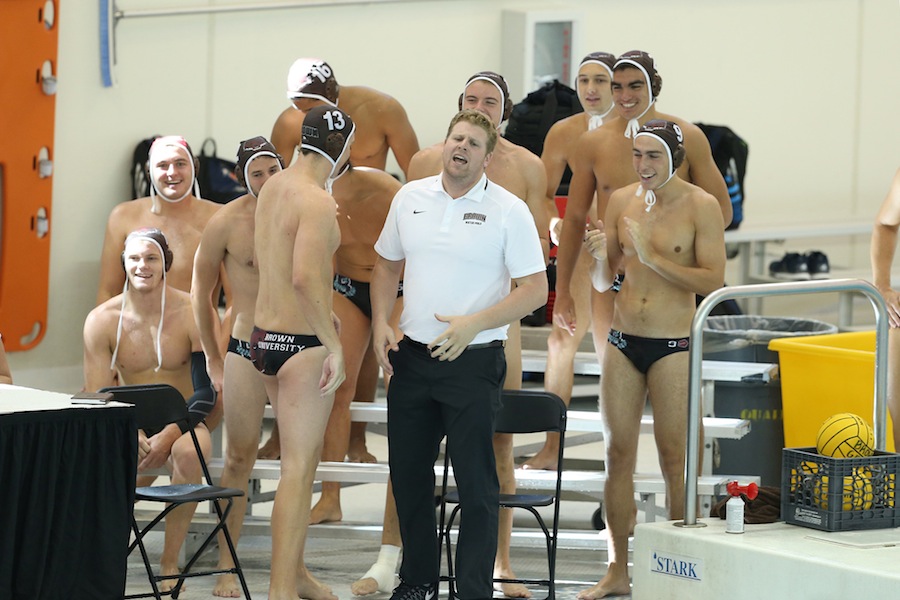
Trent Calder, a 2008 All-American at the University of California, Berkeley and a former assistant coach at Brown University, is now the top aide to UC Davis head coach Daniel Leyson. Calder is replacing former assistant coach Kevin Peat, who spent the last five years on the coaching staff.

At Cal, Calder won championships in 2006 and 2007 and was captain of the team for his final two collegiate seasons. He scored 33 goals and had a team-best 34 field blocks in those two years. In 2009, he played for the USA Senior National Team in Belgrade, Serbia.

Calder served as the director of operations, recruiting coordinator and assistant coach at Brown. During his tenure at Brown, the team won its first Eastern Conference championship in 30 years in 2014. In 2015, Brown won the Ivy League title and went undefeated in league play for the first time in the program’s history. After the 2016 season ended, the program had a 22-8 record and the Northern Water Polo Conference title.

The California Aggie had the chance to sit down with Calder to talk about the Aggies’ upcoming season and what he plans to bring to the program as a whole.


Why did you choose to come back to the West Coast and specifically to UC Davis? What drew you to this team?

There are a couple of reasons. First, the West Coast is close to home; I grew up here and my wife’s family is here. On top of that, there are a few coaches who I have watched and wanted to mold my game after, and Dan [Leyson] has been on my list for a while. I knew there was a lot I could learn from him and it was too good to pass up. There are a lot of good things happening here, and I knew I could help take this program to the next level.


Can you clarify what your role will be as the assistant coach/top aide to head coach Leyson?

Basically my role at this point is that I am a chameleon. Anything that he needs, I am gonna be the guy who steps up and does that. I want to be able to be head coach some day, so anything I can do as an assistant to help get myself and this team better is something I want to be part of.


What do you feel the team needs to work on for the upcoming season, and how is the team going to accomplish making these changes?

Consistency. Everything we are going to do is all about consistency. If we play our games the way we should, and, as a coaching staff, hold the players to a high standard, we are going to be a good team, and that’s all you can hope for.


What is the ultimate goal after this season and maybe a few years down the line? What is the big goal for this team and this program?

A national championship. This team is very talented, and if we bring in a few more recruits, have that senior leadership present and we don’t lose the games we should be winning,  confidence gets high. If we continue to work hard there is no reason we can’t make that jump [to the next level] and turn some heads.


***


Head coach Daniel Leyson weighed in on his new assistant coach.


Why did you choose to bring Trent into the program as an assistant coach?

It was a mutual thing. I was in need of a person, heard Trent was interested and thought he would be outstanding for the position. He has a high level of experience as a player and a coach and to bring in someone who is so successful as a player is something that is really valuable and brings a standard of excellence to the team.


What was the overall reaction of the team when they were told that Trent was coming on board?

Overwhelmingly positive response. Many of these guys know Trent. He has a great reputation in the water polo community, so it was a very positive response.


With the new addition of Trent, do the goals for the team moving forward change at all?

Our goals remain the same every year. We want to be in that conference championship game, be ranked top-10 and have a team G.P.A. above 3.0, so those goals have not changed. We want to be champions of the conference next year, and Trent is really going to help us with that.
Written by: Ryan Bugsch — sports@theaggie.org

UC Davis takes on the Grand Canyon

Group of UC Davis faculty, graduate students explore Grand Canyon through science education each year

When it comes to public education, field trips are no foreign concept. UC Davis has continued to offer courses that take students out of lecture halls and into the real world to apply their knowledge.

The Center for Watershed Sciences on campus offers two courses in ecogeomorphology. These courses focus on combining a wide range of sciences from biology to geology and help students apply topics learned in class in field excursions.

“These [courses] are intensely field based, through experiencing locations for extended periods of time, you are not just near the river, you are in the river,” said Nicholas Pinter, a professor in the Department of Earth and Planetary Sciences and Center for Watershed Sciences.

The ecogeomorphology courses are offered to UC Davis students at the undergraduate and the graduate level. The undergraduate class that has been offered in the past is open to graduating seniors. It encompasses social, biological and physical sciences which are later tied into water sciences in relation to the Tuolumne River. Students participate in multiple field trips in this class and use data collected in the field and apply it to stream management.

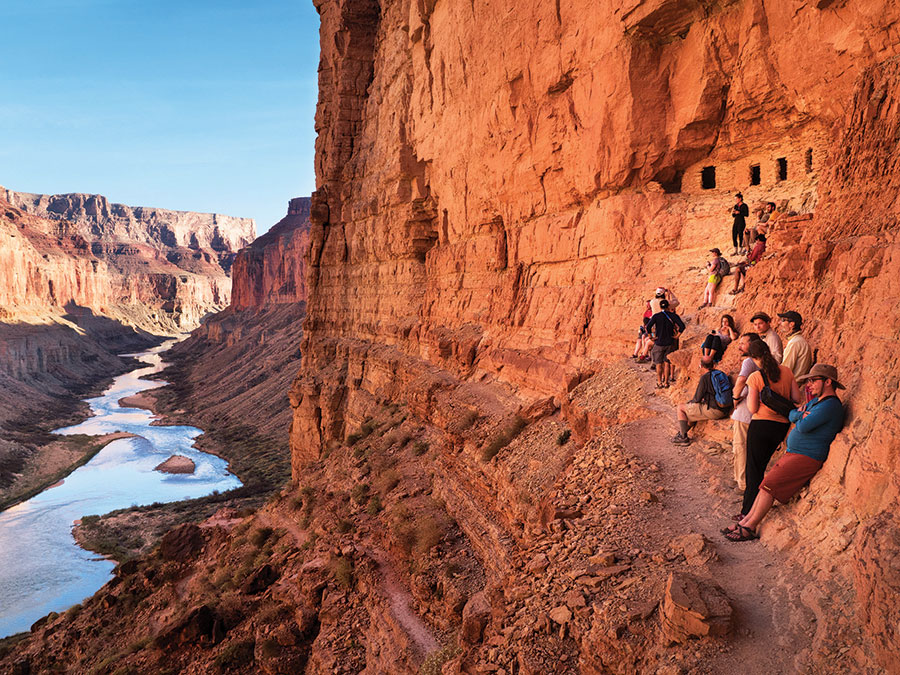
The graduate class has a similar goal in combining multiple science fields and applying those fields to find stream management solutions. Within this class, students take a weeklong trip to the Grand Canyon, rafting in the Colorado River. The Grand Canyon serves as a prime location for educational research because it combines concepts of geology, biology, hydrology and more. Students who take the course get the opportunity to spend a week collaborating with faculty and other students from a wide range of backgrounds.

“We want these classes to be a truly interdisciplinary [experience],” said Sarah Yarnell, a research hydrologist at the Center for Watershed Sciences. “We want them to be as diverse as possible so students have the opportunity to learn from one another.”

Students from a variety of departments, ranging from geology to environmental engineering, have taken these courses. On the Grand Canyon trip, students spend time exploring the national park, coming up with hypotheses and working together in order to understand and interpret topics from class.

The trip involves rafting in the Colorado River, making multiple stops along the way to relate their surroundings to broader science concepts. These trips allow students to connect concepts learned in a class and use them to solve real-world problems. These classes introduce students to possible careers after their time at Davis by placing them in the field.   

“Every year all students that go through the ecogeomorphology classes, both at the graduate and undergraduate level, say it’s their favorite class they have ever taken,” Yarnell said. “They have learned the most from these classes, and some of our students have even completely changed directions with what they want to do after they graduate.”

While these trips are beneficial for students in the long run, they are expensive to operate, and funding is difficult. Unfortunately, because of this, there is only a limited amount of students who are allowed to enroll in these courses.

Although this is the case, many UC Davis departments have been working on attempting to offer more of these types of classes and allowing more people to enroll in the ecogeomorphology courses.

“We’re trying to expand the offerings,” Printer said. “We think that these expeditionary classes (field-based classes) are really what Davis knows best and we’re trying to pull together colleagues in other departments to offer many more of these options.”

With this in mind, more students have found interest in getting involved with science not only outside of the classroom setting, but also collaborating with others outside of their own fields. Through collaborations and experience, students have the opportunity to expand and apply their learning.

For those who work in the natural and physical sciences, there is nothing better than […] hiking, floating, sleeping, eating, living in […] the subject you are studying,” said Jeffrey Mount,  the founding director of the UC Davis Center for Watershed Services.
Written by Molina Hauv — science@theaggie.org

UC Davis receives 29 Awards of Excellence in District VII CASE Competition

More than a third of UC Davis projects entered into the competition won awards

UC Davis won 29 Awards of Excellence in the District VII Council for Advancement and Support of Education (CASE) this year, 16 more than in 2016. The six gold award winners are eligible for the grand gold awards, to be announced during CASE District VII’s annual conference held in March.

According to the CASE District VII website, District VII comprises institutions in the western region of the United States including the states of Arizona, California, Guam, Hawai’i, Nevada, Northern Mariana Islands and Utah. The judging of awards is based in nine broad categories under which specific awards are allocated: advancement services, alumni relations, design and photography, digital communications, magazines, marketing, publications, special events, video and writing.

This year’s gold award winners include: Jan Shrem and Maria Manetti Shrem Museum of Art Legacy Dinner for Individualized Special Events, Centralized Gift Processing at UC Davis — Our Journey to GREATness for Best Practice of Advancement Services, UC Davis 2016-17 Viewbook for Student Recruitment Publications: Viewbooks and Prospectuses (Print), Graduate Student Fellowship Matching Initiative for Targeted Campaign and Grand Canyon Website for two awards — Individual Sub-Websites and Innovative Use of Technology.

Each spring, UC Davis graduate students of geology, ecology and hydrology embark on 225-mile river journey down the Colorado River for an ecogeomorphology class taught by professors emeritus Peter Moyle and Jeffrey Mount, which they documented on their gold award winning Grand Canyon website. A combination of ecology, geology and morphology, the ecogeomorphology class teaches students how to apply scientific thinking and test hypotheses in a natural, outdoor setting.

Nicholas Pinter, a professor in the Department of Earth and Planetary Sciences who joined the 2016 spring cohort, emphasized the value of expedition-based teaching for students studying geology, morphology and ecology.

“It’s an amazing thing that UC Davis does — not just teach about the Grand Canyon, geology or ecology, but actually taking students out into one of the wildest places left in the United States for an intense scientific and wilderness experience,” Pinter said in a podcast featured on the website. “In most places this is not a class, it’s something special UC Davis does. This was graduate students and professors only, doing intense cutting-edge science not in in the classroom but in the field, mile deep down into the Colorado plateau, floating through these intense rapids down the river for up to three weeks at a time.”

The immersive, mobile-friendly website includes interactive elements such as 360-degree videos, audio clips of speakers and a map for users to follow their journey. Joe Proudman, a multi-media specialist at the Office of Strategic Communications, was one of the two videographers who joined the Grand Canyon trip and produced content for the award-winning website.

“Our whole office contributed to the Grand Canyon Project, and the fact that it won two CASE District VII gold awards is a testament to the teamwork, vision and ability we have in Strategic Communications,” Proudman said. “This is a trip in which you are just immersed in the wonders of the Grand Canyon, and we wanted to carry that through by including 360 video, high-quality video and images. Kat Kerlin was able to eloquently capture the trip in her writing, which was more than a fun rafting trip — it was about students becoming better scientists. And interactive web designer Tom Watts was able to find a design that not only combined all that, but did so in a way that helped us tell the story better.”

Another gold award winner, the recently launched Graduate Student Fellowship Matching Initiative, encourages donors to endow more funds for graduate student fellowships. These fellowships seek to benefit students in need by matching them with fellowships they are eligible for in a short period of time, thereby increasing access to higher education.

Michelle Dean, a UC Davis graduate student and participant in the Guardian Professions Program (GPP), has benefited from the new program as she can now focus on school with the fellowship’s financial aid.

“Alumni and donors who give back to UC Davis allow others to follow their dreams and goals that maybe wouldn’t have been a reality without their gifts,” Dean said in a statement on UC Davis Dateline. “The fellowship I received through GPP gives me the flexibility to pursue additional educational interests and the ability to focus on my education and thesis work instead of having to stress as much about financial responsibilities. This allows me to enjoy my time as a graduate student and definitely improves my quality of life.”

The matching program will support more than 90 graduate student programs at UC Davis, opening more doors for eligible students with a clear education path.

More information about all of the awards can be found on the UC Davis Dateline website.

Written by: Kaitlyn Cheung — campus@theaggie.org

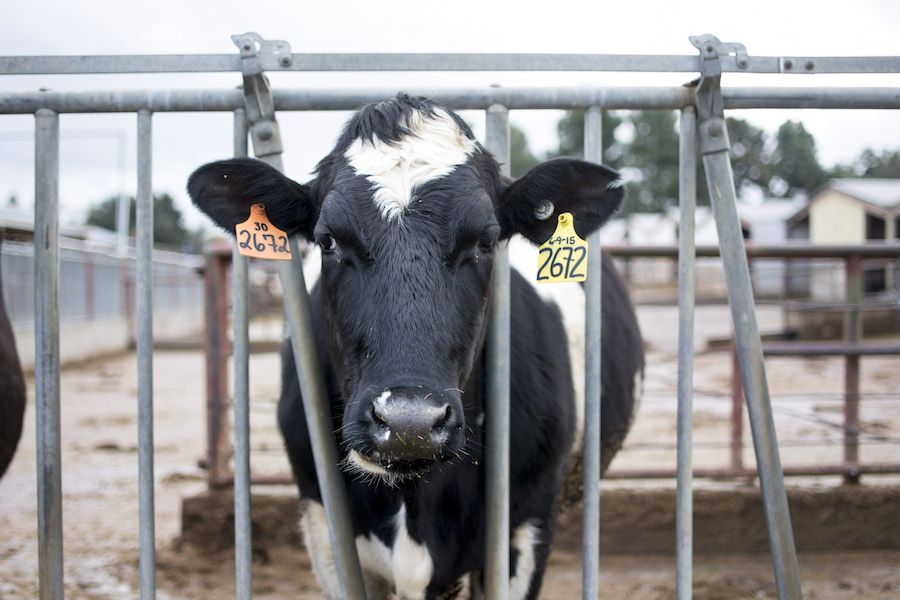
Humor: Edgy cow gets second ear tag after hitting emo phase

DIANA LI / AGGIE

Life became so much darker for Beefy Cowlhoun after he hit those wretched teen years
If you thought that the phase of heavy eyeliner, terrible taste in music and worshipping Hot Topic was exclusive to humans, you’re wrong. Beefy Cowlhoun turned one year old this last weekend, which, as we all know, is 14 in cow years. This birthday came with an extreme shift in personality, which led to an odd wardrobe choice.

“I don’t know what’s gotten into him,” said Beefy’s mother, Moolissa Cowlhoun. “He strutted out with a second tag on his ear this morning. It says ‘Green Day is better than hay.’ I get the rhyme structure, but I don’t even know if he knows who Green Day is. I also don’t think he knows that our tags are not for aesthetic reasons. I’m hoping it’s just a phase.”

Beefy insists that this is the “real him,” not simply a phase. Alongside the extra tag, Beefy dyed his tail and the tuft of hair on his head jet black, which is crazy because he doesn’t even have thumbs.

“It’s not about how I got the tag or the hair dye,” Beefy said. “It’s about the fact that society is so screwed up. They all exist in a herd, losing individuality like a bunch of sheep or something.”

The sheep in the pasture next to Beefy glared at him with the utmost disgust as he commented this. Beefy slowly shuffled away, managing to make it all the way over to his iHome to play the music he has been curating to express his new self.

“It might sound like I’m just screaming vigorously while shaking a cowbell, but it’s poetry,” Beefy said.

Beefy can be found strutting around his section of the barn while flaunting his new tag. Students, more than anything, are confused by the Evanescence and My Chemical Romance posters that keep popping up inside the barn.

“If someone ever tries to eat me, I hope they cook me well-done — just like my heart,” Beefy said, with a swift flip of his jet-black bangs.

Written by: Olivia Luchini –– ocluchini@ucdavis.edu

(This article is humor and/or satire, and its content is purely fictional. The story and the names of “sources” are fictionalized.)

Six ways to motivate yourself on a Monday morning

Wake up feeling refreshed

No one likes Mondays. No one likes mornings. Put them together and you have a recipe for hatred, disdain and disgust. Unfortunately, we will face this every week for the rest of our lives, so you might as well make the most of your morning.

Here are seven tips and tricks that will help you take advantage of Monday mornings when the opportunity to see the sun rise and finish your homework on time isn’t enough of a reason to get out of bed.


  1. Lie to yourself


Title your morning alarm with motivational statements that the sleep-deprived version of yourself will believe at that ungodly hour on Monday morning. For example, if you wake up to an alarm that tells you, “If you get out of bed on time today, calories don’t count!” you may find yourself already out of bed to eat your morning donut. Other options include, “If you get out of bed on time today you will get straight A’s this quarter” and “If you only hit snooze once this morning you will come back a famous celebrity in a second life.” The chance to wake up flawless should be enough to get your day started.


  1. Get a buddy


If you’re a decent human being and the thought of letting someone down bothers you, then this may be the trick for you! Plan to meet someone for breakfast, a workout, study session or whatever it may be that you need to do that morning. Not only would meeting a friend early in the morning brighten your day, but the weight of letting someone else down should help motivate you to get out of bed. No one likes a flake.


  1. Treat yourself


Make a deal with yourself that if you get up on time you can have a special treat. Perhaps a frilly coffee drink for breakfast — or simply that you will have breakfast at all. If you aren’t the breakfast type though, reward yourself with a power nap or time to mentally unwind later in the day.


  1. Punish yourself


Those of you who will treat yourselves regardless of meeting a goal may benefit from a harsher method. If you still press snooze for an extra hour, force yourself to get to class in silence instead of listening to your favorite playlist on your morning commute. If you don’t get up on time on Monday morning, force yourself to get up even earlier on Tuesday to work out. Think of these penalties as time-outs for the college student. Use this time to think about why you couldn’t pull yourself out of bed and how you can improve next time.


  1. Make a list


Create a list of all the things you could be doing instead of sleeping past your alarm. When your alarm goes off, start repeating these out loud to remind yourself why you set the alarm in the first place. For example, tell yourself that if you get up on time today, you could pet a dog before class, call your mom or throw a frisbee with friends. Practical options — not missing your bus, taking a shower or making sure you dress well — could also work.


  1. Get creatively creepy


Get a second pillow and tape a photo of your idol telling you that “you can do it” or “I believe in you.” You won’t want to disappoint your favorite fashion icon, pop star, or supreme court justice by hitting snooze once your alarm goes off. If Beyoncé believes in you, you should too! This should give you that extra boost of motivation you need to get up and face the day.

BONUS:

  1. Remind yourself that it’s about the journey


Sometimes we are so focused on our academic goals that we lose sight of what’s going on around us. Wake yourself up with an encouragement to seize the day; by sleeping those extra five minutes — or two hours — you are missing out on time you could be doing something worthwhile. Get out there and start your week off on the right foot!


Written by: Elizabeth Marin  — features@theaggie.org

A weekend bike ride down Hutchinson Drive

CIERA PASTUREL / AGGIE

Tractors, bee hives and medical research

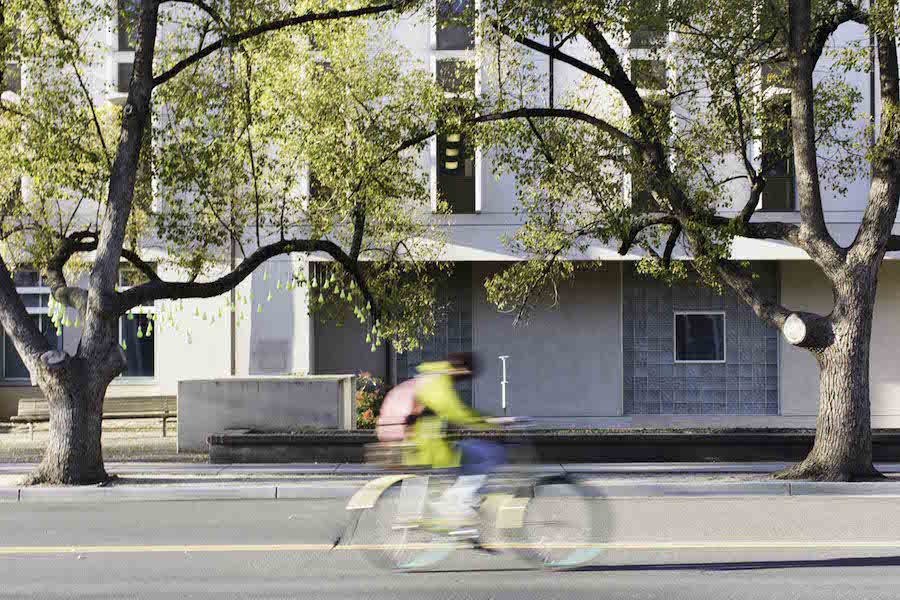
Extending west from the heart of campus toward the very outskirts of Davis, a bike ride down Hutchison Drive can take anyone on a journey through green fields and thriving intellectual hotspots.

First stop along the way is the Western Center for Agricultural Equipment (WCAE), located off of Hutchison Drive just west of West Village. This center, which opened in 2001, is part of the department of Biological and Agricultural Engineering (BAE), a hybrid department that is a part of both the Agricultural and Engineering colleges.

“After a multi-year effort towards fundraising and construction, [the center] in part replaced an old metal building where we hosted many classes,” said Victor Duraj, an associate development engineer at BAE and the outreach and safety coordinator for WCAE. “Our new center was designed to bring that teaching to a modern facility, [while integrating] research and outreach activities in a larger, shared environment.”

The WCAE has continued its commitment to education by offering various courses, serving as a senior capstone field and bringing together resources in the industry from which students can directly learn.

“We even have a school of education course that’s called teaching agricultural mechanics,” Duraj said. “It’s taken by students who are earning their teaching credentials and a masters degree. [These students] become vocational agricultural teachers throughout California.”

Research and outreach are the second half of WCAE’s mission, with faculty members pursuing new technologies and advances in agriculture and allocating a wing of the building to outreach efforts. One of WCAE’s most notable achievements in outreach is its partnership with CNH Industrial, which provides some of the tractors students use in classes.

“Another big thing that people out here work on is safety for farm workers,” Duraj said. “Probably our most exciting recent work has been in researching potential improvements in orchard ladders. An orchard ladder is a three-legged ladder that’s used to harvest fruit. In a field environment the surface is not even, and a three-legged ladder provides a much more stable platform on which to work. We are working on different designs to make them safer for workers to use. I guess you could sum it up as ergonomics for agriculture.”

Stop number two’s colorful and inviting entrance is hard to miss: a mosaic sign depicting a beehive, honeycombs and cherry blossoms. At the intersection of Hutchinson and Bee Biology Road, the Harry H. Laidlaw Jr. Honey Bee Research Facility focuses on bee biology and genetics research, with the larger goal of addressing global bee health. They investigate declining populations of insect pollinators — a phenomenon that could have catastrophic consequences on the global economy and food industry.

Jessica Drost, a fourth-year animal biology major who helps conduct research at the facility, explained that a majority of the research concerns “conserving our pollinators,” and how to manage honeybee populations.

“People are aware that there’s something happening,” Drost said. “They are hearing that we have huge declines of pollinators, which is affecting our food systems. Part of that conversation is how we can plant things in our garden to increase [bee] populations, and people are seeing that there’s things they can do. Planting wild flowers is always a good idea.”

Colony collapse disorder is also becoming a major issue, and certain parts of the world are having to cope with the loss of the pollination service bees provide humans through artificial methods of pollination.

“I know in China that’s definitely happening, especially with apples,” Drost said. “If we keep seeing declines we will have to self-pollinate. We study bees not just because we care about our food systems, but also because we love [our bees] and it would be a sad day to see robots pollinate our crops.”

Next to the facility is the Honey Bee Haven garden, sponsored by Haagen Daaz.  Planted in 2009, this unique outdoor museum is adorned with a giant bee sculpture created by artist Donna Billick and native plants specifically placed for visiting bees and patrons to enjoy.  

“Often there’ll be classrooms of kids that come on field trips to learn about honey bees over there, which is great because I don’t think I learned about pollinators when I was younger,” Drost said.

Next, at the very west end of Hutchinson as it intersects with Lincoln Highway is the Center for Comparative Medicine (CCM). Run jointly by UC Davis’ Medical and Veterinary schools, the CCM’s mission is to use animal models of human disease in order to understand disease processes and to work toward their prevention and intervention.

“This center started in concept about 20 years ago,” said Peter Barry, the director of CCM. “Today we look at influenza, chlamydia, cytomegalovirus (CMV) […] and we use the power of animal modeling to investigate in tractable model systems how we can improve human and veterinarian health.”

Barry’s research focuses specifically on CMV, a virus that is widespread but often hidden due to symptoms not surfacing until the immune system is weakened for another reason.

“CMV is a virus for a most part that our immune system contains,” Barry said. “Some people get mild flu-like symptoms, but most people don’t even know they’re infected. But once you’ve been infected, you are infected for life.”

A vaccine to prevent the virus has been the subject of research efforts for about 40 years now.

No one has [a vaccine] yet,” Barry said. “We’ve been trying to come up with ways to develop vaccine strategies to help achieve the goal of getting a vaccine for this virus because it is a major source of morbidity around the world.”

However, the medicalization of CMV and efforts to prevent it through a vaccine don’t negate the social, economic and political factors contributing to the manifestation of disease.

“If you look at the frequency of CMV, it is inversely related to socioeconomic status,” Barry said. “People lower down on the economic ladder have a higher incidence of CMV infection than people higher up. That becomes important clinically because on average 1 percent of all fetuses [in developed countries] are infected by CMV, but 5 percent are affected in less developed countries.”

Dr. Barry believes there are many factors contributing to this issue, such as poverty, stress or poor nutrition.

“All that could have a role on the immune system,” Barry said. “This all contributes to a whole conspiracy of factors which make CMV a bigger problem in people of lower socioeconomic status.”

Along with a thirst for knowledge in all three of these intellectual hotspots along Hutchinson Road, there is a strong desire held in these research centers to work for the betterment of humanity.

“All of us are working hard on campus to figure out a way to feed 9 billion people in the not so distant future,” Duraj said. “So any of the kind of work that we can do to make agriculture more efficient and safer is very important.”
Written by: Sahiti Vemula  — features@theaggie.org

Imagining America partners with UC Davis, seeks proposals for creativity

NICKI PADAR / AGGIE

Fall conference will inspire community dialogue through arts, humanities, design

This summer, UC Davis will help stir creativity on the West Coast as the new institutional home for Imagining America (IA): Artists and Scholars in Public Life, a consortium of 100 universities and cultural organizations that inspires community involvement in the arts, humanities and design. UC Davis will also host IA’s 17th Annual National Conference from Oct. 12 to 14.

IA will move its headquarters from Syracuse University to UC Davis on July 1 for a five-year renewable term. IA is searching for creative takes on prevailing concerns such as racism, homophobia, labor equality and environmental justice in preparation for the convention, according to its website.

Community, Art, Land and Learning is an invitation for participation that embodies the conference theme. As opposed to a typical academic conference, IA hopes to receive proposals in the forms of workshops, performance and dialogue, media sessions and roundtable. The deadline to submit proposals is March 20.

“[IA is seeking] personal work around activism, community engagement, student leadership or issues that have been important to [students] that they’ve taken initiative to address in a creative way,” said Stephanie Maroney, a graduate student in cultural studies and a co-organizer of the conference.

Proposals from community organizations that want to host a workshop may receive up to $500 in funding from IA. Students and community members have a discounted conference registration rate of $125 for three days, $80 for two days and $50 for one day. The fee covers breakfast, lunch and transportation to off-site workshops. However, Maroney said some events will be open to the public without registration.

Maroney described UC Davis as an excellent choice for IA’s move and to host the fall conference due to the university’s commitment toward improving society.

“[UC Davis has a] really wonderful long-term sustained engagement with community work and community activism,” Maroney said. “Imagining America wants to build on what we’ve already done and continue to extend it in the future.”

Design for America President Meziah Cristobal, a fourth-year computer science major, discussed the mission of IA as a way to strengthen communication and ideas.

“Imagining America is focused on being a place […] where professionals and students alike come together to talk about the state of the union, celebrate the work that exists and collaborate on solutions our communities need,” Cristobal said via email. “Imagining America hopes to be a support system for those whose work are interdisciplinary and focused on engaging the community.”

Maroney added that the conference intends to radiate the mission of IA.

“[The goal is] to think about how the arts, humanities and design can really help to transform our world to be more just and equitable, and to enliven processes of democracy,” Maroney said.

The conference will include university groups, undergraduates, graduates, staff, community groups and anyone associated with the arts, humanities and design from across the nation. Maroney expects there to be approximately 500 to 800 participants.

To expand the conference into multiple adjacent communities, Maroney said it will feature site-specific workshops that will transfer participants to locations around Davis, Sacramento, Woodland and Dixon.

Conference faculty lead Brett Snyder believes the conference is a way to bring “disconnected efforts together” as “a powerful way of building a community.”

“There are so many different kinds of community-engaged projects and research endeavors across the university, but there hasn’t really been a way of […] featuring that component of Davis,” Snyder said. “I see this both as a way of featuring the existing, as well as charting new avenues and new possibilities.”

Maroney stressed the importance for students to immerse themselves in all aspects of their education and to consider their impacts on the world.

“I think that any undergraduate student, no matter what you’re studying here, you should be thinking about […] the knowledge that you’re gaining in this institution that you’re going to take out into the world,” Maroney said. “Anybody who has the privilege of a university education can think about how their work can better serve communities who don’t have the privileges of being here.”

Students are encouraged to submit proposals through the Imagining America website by March 20.
Written by: Jeanna Totah — campus@theaggie.org