60.8 F
Davis

Davis, California

Wednesday, December 24, 2025
Home Blog Page 66

Sugar, spice and holiday spirit

A gourmet gift guide 


By MOLLY THOMPSON – mmtthompson@ucdavis.edu


The hardest people to shop for are always family members. Especially the ones that are just far enough removed that you don’t really know their lifestyles, but close enough that you’re still obligated to get them a Christmas present. Like, what am I supposed to get for my great uncle? I haven’t seen him in years and he lives in Maryland — I have no idea what he wants.

All in search of holiday gifts, look no further, for I have the perfect solution to all of your holiday gift-giving woes: Christmas cookies.

Okay, I know I’m not reinventing the wheel here, but hear me out. I’m not talking about whipping up a batch of Toll House chocolate chip cookies and calling it a day, that’s not going to impress anyone. I’m talking about an all-out, handmade gourmet curation of love and cinnamon and pure Christmas spirit. Ladies and gentlemen, hold on to your Santa hats — allow me to introduce you to my annual Christmas Cookie Extravaganza.

For the past three years, I’ve spent my December crafting a flight of eight unique cookies that I give to my extended family members for Christmas. Every year I come up with new recipes, so it continues to be something they look forward to. There are never-ending possibilities here, so it can always be novel.

To really make it a good gift though, it has to be more than just a casual cookie — it has to be a whole experience. I love finding recipes that intrigue me and altering them to herald festive flavors or figuring out how I can put my own spin on something that’s been done before. You can easily get your gingersnap cookie fix at Trader Joe’s, but chewy ginger cookies with dried apricot and crystalized ginger are best enjoyed from scratch. The plain biscotti in the jar at the coffee shop might as well be purely for decoration, but cherry almond biscotti half-dipped in dark chocolate, when tied with a shiny ribbon, is a delicacy.

The effort you put into it is what gives it value, as much as the product itself. This isn’t an easy gift; It takes hours of time and a lot of ingredients. But the love and dedication that goes into it makes it invaluable. When the cranberry-orange jam that fills the gingerbread thumbprint cookies is made from scratch, it becomes a vessel of thought and care. When you go out of your way to make toffee from brown sugar and butter instead of buying it at the store to mix into sugar cookies with butter pecans, you aren’t just baking — you’re communicating your affection.

Food as a medium can be really effective. It’s often community-centered, and it can evoke poignant sense-memories. We associate certain flavor palates with events, points in time or feelings, so in giving confections as a gift, you’re also giving a deeper experience. You said these were brown butter and persimmon sugar cookies? That’s weird, because to me it tastes like sitting in a pile of torn-up wrapping paper on Christmas morning while my family admires their presents. This one is cranberry and maple? All I taste is Taylor Swift singing about “sweet dreams of holly and ribbon.” It’s truly the gift that keeps on giving.

Beyond the cookies themselves, the Christmas Cookie Extravaganza is about the whole package. Cookies are great for the holidays because they’re easy to pack and ship, which is how I distribute most of mine. I stack them in dollar-store tins adorned with cute, festive patterns, fill in the extra space with tissue paper, put the tins in flat-rate USPS boxes and stuff every spare crevice of the boxes with packing paper so nothing gets rattled around during transit.

To make it feel more polished and cohesive, I also make a bright, fun menu to tie a proverbial bow on the whole shebang. Canva (my beloved) has endless holiday templates, and I always get compliments on how professional the menus look. I take photos of the cookies and erase the background before I put them on the menu, which I think really impresses my grandparents. Seriously, I get more praise on the menus than on the cookies.

In aggregate, the Christmas Cookie Extravaganza all comes together to make the perfect gift (in my humble opinion). It’s clearly curated with care, it’s wholesome and enjoyable, it facilitates sharing and familial bonding, it’s memorable and it allows you to show off your skills. Even if your aunt doesn’t think your dulce de leche gingerbread linzer cookies are anything to write home about, she’ll probably at least think you have a future in graphic design.

Selfishly, I love it because it lets me flex my best creative muscle. Cookies are so versatile; The sky’s the limit when it comes to what you put on your menu. I have so much fun coming up with flavor profiles and the best forms to showcase them, and I enjoy the actual baking process even more. Gift giving is my love language, and this is my favorite way to express it. Yes, it takes a lot of work and energy and time, but more than that — a whole lot of love goes into it. Putting in that effort and creativity is an act of love, and that’s what makes any gift worthwhile.


Written by: Molly Thompson — mmtthompson@ucdavis.edu 


Disclaimer: The views and opinions expressed by individual columnists belong to the columnists alone and do not necessarily indicate the views and opinions held by The California Aggie
 

Yolo Transportation District expands transit options

Yolo Transportation expands its bus routes, restoring Route 44 in South Davis, with goals of restoring transit options post-pandemic 


By ALMA CULVERWELL — city@theaggie.org


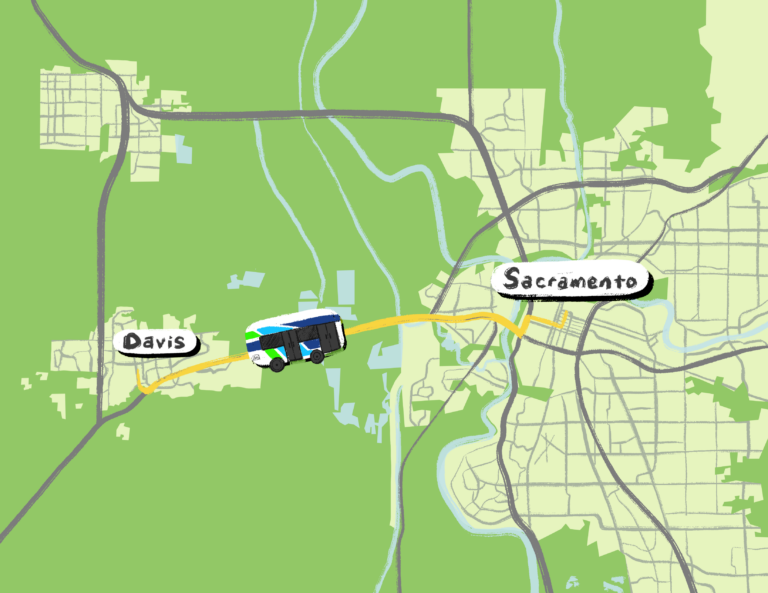
The Yolo Transportation District (YoloTD) recently announced significant updates to its Yolobus services, including additional trips on Routes 43 and 230 and restoring Route 44 in South Davis. This initiative is part of YoloTD’s ongoing effort to rebuild transit services cut during the COVID-19 pandemic and enhance commuting options for Davis residents.

The proposed changes include increasing weekday service on Routes 43 (Central/East Davis), 43R and 230 (West/North Davis) from one morning and one afternoon trip to three morning and three afternoon trips. Route 44, which serves South Davis, is being relaunched in response to increased community needs. The YoloTD Board of Directors voted to approve these proposals on Nov. 18.

Through these changes, YoloTD aims to alleviate overcrowding and improve commute times. Feedback from ride-along and travel surveys helped shape the plan, reflecting the district’s commitment to meeting the evolving needs of Davis residents as more people return to the office.

Community feedback has played a strong role in the YoloTD’s planning and implementation process. Steven Sandhoff, a Davis community member, emphasized the need for clean, efficient transit options, noting that South Davis has been underserved despite population growth.

“Davis is the strongest supporter of clean transit in the entire Central Valley and arguably the state,” Sandhoff said. “South Davis particularly has been neglected or abandoned by elimination or rerouting of lines that used to provide service here despite the fact we are growing three to four new dense living developments as we speak.”

Sandhoff highlighted the important role of the Davis community and the necessity for accessible transit to all areas.

“For one of the most educated and clean transit communities in the entire country, we can and need to do better to connect the capital of the fifth-biggest economy of the world in an efficient way that serves every citizen of our town,” Sandhoff said. “We need to pull every lever we can to empower Davisities, who are the most likely to be a partner in this effort.”

Daisy Romero, the director of transit operations for YoloTD, detailed the reasons behind restoring Route 44 in South Davis.

“There were several factors that went into the decision to restore Route 44,” Romero said. “One reason was the lack of service in the South Davis area into Downtown Sacramento. During our outreach, we heard from various people who used to ride the Route 44 show their support in restoring the service as it would allow them to use Yolobus to commute into Downtown Sacramento instead of their cars.”

Romero also noted safety concerns and ridership demand.

“When the Route 44 was discontinued, residents in the South Davis area had to cross the Mace Blvd overpass in order to board the 42A/B at Mace and 2nd [Street] for their commutes into [Downtown] Sac and Davis,” Romero said. “Another reason for restoring Route 44 was ridership. With Governor Newsom mandating that state workers return to the office and the capacity issues we were experiencing on our Davis express routes, we are hoping to see ridership for Route 44 increase once restored. When it was in service, our Route 44 averaged roughly 2,000 riders on a monthly basis.”

Winters City Council Member Jesse Loren also weighed in on the recent updates, noting the urgency of expanding transit options, especially in the nearby town of Winters.

“[The] Winters community would best be served by restoring both the 220C route to pre-pandemic levels, and expanding BeeLine hours and increasing the amount of BeeLine buses,” Loren said. “Currently, some riders, including those traveling to Winters for work, have been stranded in Winters due to the current limited schedule and limited capacity. Overall, people want transit to get them where they need to go, and that is not currently possible.”

Loren emphasized the further need for practical solutions to address Winters’ unique challenges.

”I hear the riders loud and clear, and I know what it’s like to be transit-dependent for work,” Loren said. “I was a transit-dependent commuter in my young adulthood. I would like to see restored fixed-route services (220 and 220C), more microtransit buses, extended microtransit hours and improved connections to key locations like Solano Community College and Davis Amtrak. These changes would ensure equitable and effective transit options for all Winters residents.”

Romero outlined YoloTD’s long-term vision for restoring and expanding services in Yolo County.

“Right now, YoloTD staff are working on a Short Range Transit Plan (SRTP) to take a deeper dive into what our service should truly look like in the future,” Romero said. “We will examine rider commute patterns, major transportation corridors, traffic patterns and housing developments. Additionally, we are collaborating with our partners at Unitrans and the city of Davis to build a better transportation network for Davis and Yolo County residents.”

With strong public support and engagement, YoloTD hopes to make meaningful strides toward restoring and expanding its transit network. For more information or to provide feedback, email servicechanges@yctd.org or visit the YoloTD website.


Written By: Alma Culverwell — city@theaggie.org

Review: Heretic

 A24’s new thriller blends classic horror with religious discourse


By ELIZABETH BUNT — arts@theaggie.org 


Anyone who spends any amount of time online has probably seen advertisements and trailers for the new horror movie “Heretic.” The film is produced by well known company A24, known for such hits as “Midsommar,” “Everything Everywhere All at Once,” “Moonlight” and “Lady Bird.” With rave reviews from critics and a 91% rating on Rotten Tomatoes, it is safe to say that “Heretic” is the latest addition to A24’s long list of hits; but what is the movie really about and why is it special?

At face value, “Heretic” is about two young women who are tricked inside of an older man’s house. Once inside, they realize that the old man isn’t quite what he seems and that they will have to think on their feet to make it out of his house alive. Any fan of horror will be familiar with this plot; it is the classic cat-and-mouse game of the genre. Where “Heretic” differs is the details. 

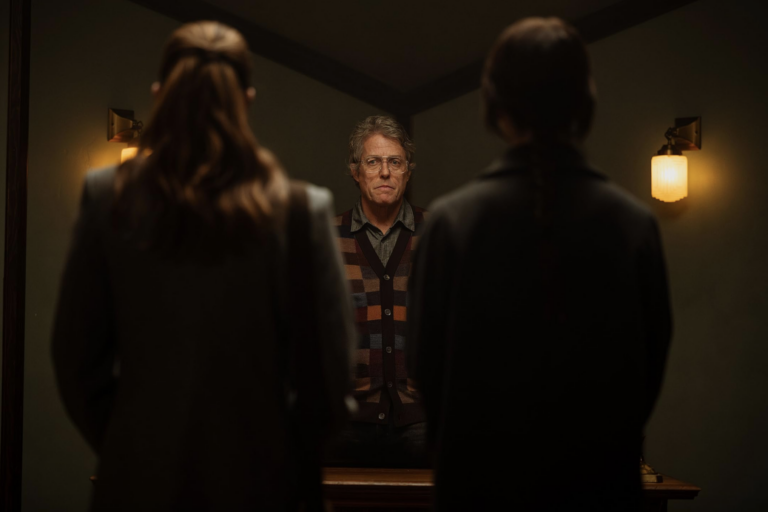
The young women who become trapped in the house are Mormon sister missionaries, Sister Barnes and Sister Paxton. The opening scene of the movie shows the two canvasing houses in the neighborhood, hoping to convert residents. When they meet Mr. Reed (Hugh Grant), they are happy to find someone who not only invites them inside, but seems excited to talk to them about the faith. True to Mormon conventions, the sisters are unable to enter the house unless another woman is present. Mr. Reed tempts them by saying that his wife is just in the other room. 

From this point on, the film takes place almost entirely within the labyrinthine house. But unlike many other horror movies, “Heretic” does not rely on jump scares or unnecessary gore to keep its audience spooked. Instead, it is very dialogue heavy. 

Set in one small house with a cast of only three characters, it relies on long exchanges and thought-provoking monologues to move the plot forward. In fact, it may be more accurate to call “Heretic” a psychological thriller rather than a conventional horror film. When the girls are truly stuck in the house, Reed begins a conversation about religious beliefs that turns into an inquisition. His questions clearly come from an atheist point of view and his goal seems to be to force the missionaries to speak against the Mormon church. Determined to contradict his entrenched beliefs with their own, the young women think on their feet and defend their faith to the end. If there is a critique to be made, it is that the missionaries have perhaps turned into symbols of stubborn belief by the end of the film rather than the three-dimensional characters they began as. 

Despite receiving positive feedback from critics and many viewers, “Heretic” has caught flak from religious organizations. The Church of Jesus Christ of Latter-Day Saints (LDS) has commented that the representation of Mormon missionaries was done in poor taste and their conduct sensationalized. Other Christian publications have raised the complaint that the atheistic Mr. Reed depicts the secular bias of Hollywood productions. 

Religious controversy aside, “Heretic” is a must-see for horror and thriller fans because it takes classic tropes and reworks them into something almost philosophical. It’s odd to think of a horror movie like this as thought-provoking, but that is the best way to describe “Heretic.” A24 has created a creepy fishbowl in which viewers can see religious conviction tested by odd and extenuating circumstances, untainted by cheap scares. Audiences will leave the theater with much more to think about than just how to escape an eerie cabin in the woods.  


Written by Elizabeth Bunt — arts@theaggie.org 

Review: ‘Wicked’ defies more than just gravity

The highly anticipated “Wicked” film adaptation reminds us cinema can be engrossing


By AALIYAH ESPAÑOL-RIVAS — arts@theaggie.org 


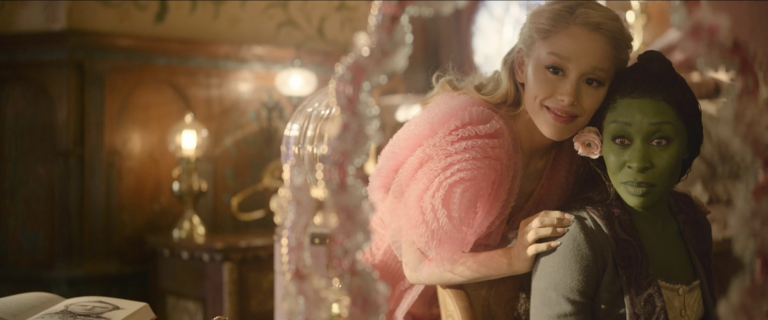
Wicked” has been everywhere. From phone ads, Target commercials and the “Defying Gravity” riff being stuck in everyone’s heads, there has been no escaping the promotion for the film. However, only a movie as grand as “Wicked” needs a promotional run just as big.

The musical “Wicked” is a prequel to the film “The Wizard of Oz” that follows the story of Elphaba, the Wicked Witch of the West, and Glinda, the Good Witch of the South, on their journeys to becoming who they are. Originally adapted loosely from a book by Gregory Maguire from 1995, the musical debuted on Broadway in 2003 and is now the fourth longest-running Broadway show in history. 

The film adaptation of “Wicked,” however, was announced in 2016 and took nearly eight years to complete. Starring Cynthia Erivo (Elphaba) and Ariana Grande (Glinda), the film began filming in 2021 and only wrapped in Jan. 2024 due to the pandemic and the 2023 Writers Guild of America strike.

Part one of “Wicked” was released on Nov. 22, 2024, giving fans the first half of the musical. In an interview with Deadline, director Jon M. Chu described the decision to split the film into two. 

“It was also the most obvious thing to do, because every time we tried to make it one movie, you had to rip out songs,” Chu said. 

As a result, one half of “Wicked” was released this year, and the second half will be released on Nov. 21, 2025. 

The film itself was breathtaking: The costumes, sets and songs built an immersive experience that entranced the viewer to no end. As each song pushes the story forward, the film becomes more engrossing alongside the inevitable emotional connection to each character. Though its runtime of two hours and 40 minutes at first seems like a feat, by the end of the film, it’s bothersome how fast it feels.

Both Erivo and Grande gave jaw-dropping performances that showcase their range as actresses. Erivo, a previous Broadway actress, used her powerhouse vocals in every song she’s a part of, carrying the emotional weight of Elphaba’s character in every note while also doing all of her own stunts. Elphaba’s character growth throughout the film is illuminated by Erivo, showing Elphaba going from timid and insecure to confident and absolutely fearless. 

Grande, on the other hand, breaks through her popstar persona and goes back to her Broadway roots to give the most comedic performance of her career. Overly optimistic and conniving at first, Grande shows the eventual softness and heart Glinda has by the end of the film. Both actresses utilize their facial expressions to the highest degree and show the emotional journey the two go through as they go from enemies to friends. 

The songs in the film are enhanced beautifully with each calculated change. There is no shortage of runs, riffs and falsettos in each song, and the instrumentals synchronize perfectly with the vocals. 

As many fans of the original musical gathered to watch it on screen for the first time, it was apparent that passion was at the heart of this project. From the actors to the production to the promotion, there is no doubt the people involved in the project had nothing short of love for their creation. Not only does “Wicked” defy your expectations, but it changes your life “for good.” 

Written by: Aaliyah Español-Rivas — arts@theaggie.org

Why I love the musical ‘Hadestown’

0

The beautiful meaning behind this musical’s interpretation of a beloved Greek myth


By SABRINA FIGUEROA — sfigueroaavila@ucdavis.edu


The ancient myth of Orpheus and Eurydice is a popular tale in Greek mythology. It is also, perhaps, one of the most tragic and poignant; so much so that it gives Shakespeare a run for his money. 

Every retelling of the myth has the same basic storyline: Eurydice dies and goes to the underworld, and Orpheus, her lover, travels there to bring her back. Hades, the king of the dead and god of the underworld, grants Orpheus the permission to return his love to Earth, as long as he doesn’t look back at her along the way. In spite of the rules (and in the name of his love for her), Orpheus looks back to make sure she’s still behind him, sending Eurydice to the underworld forever. 

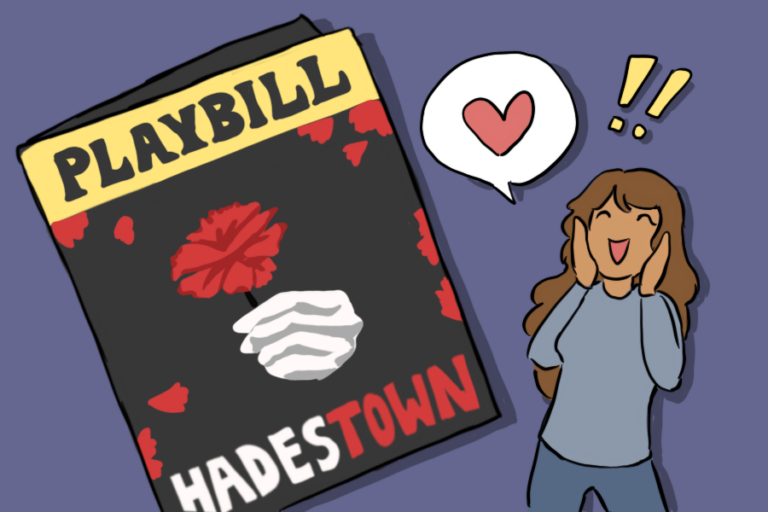
Although there are multiple interpretations of the myth, one of my favorites by far comes from the Broadway musical “Hadestown” created by Anaïs Mitchell. 

Much like other interpretations, “Hadestown” is able to underscore dimensions of the human condition in terms of survival, sacrifice, doubt and love. In this adaptation, Earth and its seasons are plagued by the dying connection between Persephone and Hades. Fall and spring disappear, and winter becomes a deadly force with storms and scarce amounts of food. Ultimately, this is what leads to Eurydice’s decision to go to the underworld. As much as she loves Orpehus, what good is any of it if she’s constantly at war with hunger? What good does love and life serve you if you’re in pain? 

The decision to sacrifice her love for the deception of a “great life” in the underworld is commented on by the Fates in the emotional song “Gone, I’m Gone.” They ask the audience the probing question: “Wouldn’t you have done the same?” The song highlights how, although humans may have morals and principles, we don’t always follow them when it comes to ensuring our chance at a better life. In fact, we don’t actually know what we would do in a situation until we are thrown into it. So, who are we to judge Eurydice for her choice?

Perhaps one of my favorite things about this adaptation of the ancient myth is that it brings on a completely new dimension to the basic storyline. That is, it has a relevant political undertone to it that has been shaped by time. 

Although Mitchell created the show’s music in 2006, she eerily mimics and comments on Donald Trump’s ideologies and the current political climate of the United States through Hades and the underworld he calls “Hadestown.” One of the songs that brings attention to this is called “Why We Build the Wall.” It’s a chant-like song with deep, baritone vocals by Patrick Page (who sings the part of Hades), while the exploited workers in Hadestown respond to questions he asks about why they built the wall. 

This song encapsulates the irony of their so-called freedom. The workers say they are building the wall to keep themselves free, as it keeps those who are starving and impoverished from making their way in to take what the workers have. But if that “better life” is being chained up to do labor for eternity and being isolated from other regions of the world, how is that freedom?

Additionally, if the workers aren’t questioning what they’re told is “true” and aren’t speaking up about their mistreatment out of fear of retaliation from their leader, is it truly freedom? “If It’s True” is another commentary piece sung by Reeve Carney as Orpheus, where he presents this doubt to the workers. He asks them to think about their role and the role that Hades plays as a leader with power, and to remain skeptical of what Hades says is the truth.

At the end of the song, Orpheus tells the workers that they are stronger together and that their opinions and voices matter. They have their own power, strong enough to combat the power Hades wields. 

These aspects of “Hadestown” are relevant to our world today: Human beings have been, are and always will be stronger together. Often, we take each other and our own voices for granted. We don’t question why society or authority figures tell us to live in certain ways as much as we should. We must remain curious about our world. 

This musical, what Hermes calls a “sad song,” is retold over and over again, as most stories are. Even though we know the tragic ending, we continue to retell and relisten to the tales. Why? It reminds us of who we are at our core, as well as what we live and die for. To be able to turn a mirror around to humans — so that we see ourselves in our nature, the weaknesses and strengths we often lose sight of — is the most beautiful thing about art forms such as this one. 


Written by: Sabrina Figueroa — sfigueroaavila@ucdavis.edu

Disclaimer: The views and opinions expressed by individual columnists belong to the columnists alone and do not necessarily indicate the views and opinions held by The California Aggie.

City of Davis unveils new artwork in memory of UC Davis student Karim Abou Najm

Najm’s family, friends and community members met to discuss his life and legacy 


By RORY CONLON — city@theaggie.org


The city of Davis unveiled a new art piece in memory of Karim Abou Najm on Nov. 22 at Sycamore Park. Najm was a 20-year-old UC Davis student when he became the victim of a homicide while biking home in April 2023. 

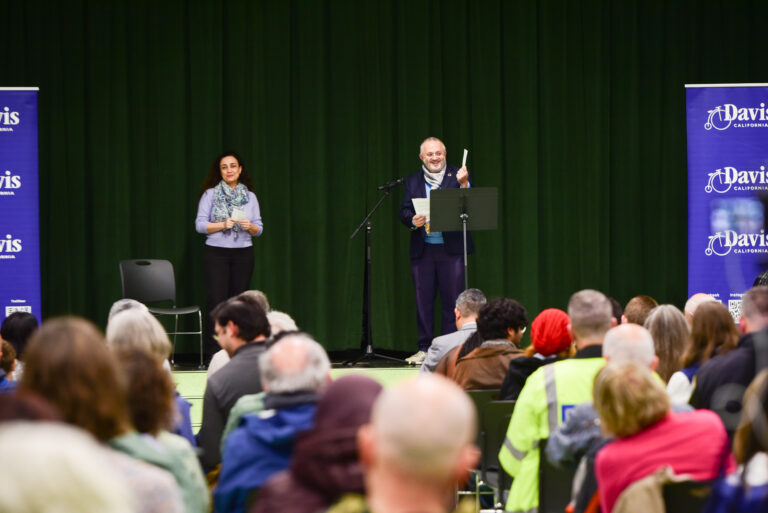
Ahead of unveiling the new artwork, Najm’s family, friends and fellow community members gathered in the Robert E. Willett Elementary School multipurpose room. Davis Vice Mayor Bapu Vaitla spoke about his legacy, recalling words from an essay Najm wrote a year before his passing. 

“The first words of the essay are, ‘I’m afraid of death,’ which by itself is a remarkably brave sentiment coming from a 19-year-old,” Vaitla said. “When you read [his] essays, turning page after page, you realize this was no ordinary 19-year-old.” 

Vaitla never met Karim when he was alive, but he connected with the Najm family after his passing. He said reading Karim’s essays helped him understand what the community lost. 

“[Karim] wrote, ‘I’m scared that one day, the love for my mother will die with me, and her love of me with her,’” Vaitla said. “It’s overwhelming to realize how much Karim loved to be alive and how much he loved the people around him.” 

At the time of his passing, Najm was a fourth-year computer science major months away from graduating. He received a posthumous degree from UC Davis in 2023. 

Pablo Reguerin, the vice chancellor of student affairs at UC Davis, provided remarks at the event on behalf of Chancellor Gary May. 

“Karim was a shining star, a talented student and a devoted friend,” Reguerin said. “He not only had the technical expertise and the intellect to thrive as a software engineer, but he had an open heart as well. He was devoted to his fellow students, from serving as a mentor to simply helping others in their time of need.” 

The art for Najm is titled “Fiat Lux,” which translates to “let there be light” in Latin. It stands on top of a berm in Sycamore Park, the site where he lost his life.

Public artist Nicole Beck created the piece in collaboration with a large team from the city of Davis and other art companies that specialize in fabricating different materials. Beck said she asked an artistic mentor for advice before taking on the project. 

“I asked [my mentor] and she said, ‘Maybe you can be of help,’” Beck said. “It refocuses what I do. It’s for a greater purpose.” 

Beck designed the piece in the shape of a torus, the building block of light, and configured a piece of glass at the top to resemble the constellation Phoenix. Beck said that in addition to stainless steel, she also chose to use a unique type of glass. 

“The glass is dichroic, which is Latin for ‘two colors,’ because it transmits one color and reflects another,” Beck said. “When you go to the piece, be sure to look at the color as you walk around it because the color shifts. It’s meant to embody [Karim’s] light and color, so to speak.” 

Najm is survived by his mother, Nadine Yehya, his father, Majdi Abou Najm, and his younger sister, Jana. The family lived in Lebanon until 2018 when they moved to the U.S. 

In her speech at the event, Nadine recognized the significance of Lebanon’s Independence Day, which fell on the same day as the art unveiling. 

“Karim came from this tiny country,” Nadine said. “It would have broken his heart to see what’s happening […] We Lebanese are ambassadors of peace and prosperity. Our weapon is education and our shield is faith.” 

Nadine also spoke directly to members of the Davis community. 

“I’m here today as Karim’s mom and his voice, but one day I won’t be here, and I trust you will remember him and carry his story,” Nadine said. “‘Fiat Lux’ will be your heart’s compass to love, ambition and strength. May its energy feed your soul and fill your cup.” 

Majdi and Nadine said they have visited the site of their son’s passing almost every day since it happened. There, Majdi said they met other members of the Davis community and shared their grief experiences. 

“We shared stories of Karim, as you also shared stories of your loved ones,” Majdi said. “Every time we came, some magic and powers intervened, and someone from this community would show up, share a story, give us their heart or just ask to join us.”

Majdi said these conversations have turned a painful reminder of their son’s passing into a positive space. 

“With thousands of tears and hearts, and with an infinite amount of love, this berm transformed into a healing space for many, us included,” Majdi said. “Today, as we unveil this beautiful art in remembrance of Karim, I hope you remember all your loved ones, because they are always with us, whether in this physical world or in spirit.” 


Written By: Rory Conlon — city@theaggie.org

‘My gut was telling me something’s wrong’: Multi-level marketing in Davis

0

Multi-level marketing and pyramid schemes, which create a ‘downline’ model of investors, offer schedule flexibility and financial freedom to attract college students


By LAILA AZHAR — features@theaggie.org


Brandon Nguyen, a second-year managerial economics major at UC Davis, had just begun a new job in Davis when a coworker approached him about an opportunity. Connecting over their shared interest in business, she told him about a “business club” she was a part of. 

“I was trying to do club stuff and get more involved and [gain] more experiences,” Nguyen said. 

He attended a meeting with his coworker and her supervisor, where they discussed the world of business, lamenting the corporate cycle of eat, sleep, work, repeat. 

“They were saying, ‘We want to start our own businesses, be our own people,’” Nguyen said. 

After the first meeting, Nguyen decided to attend a second, in which he connected with the supervisor over shared experiences regarding immigration.

“She came from a very similar background as my parents,” Nguyen said. “I could see so many different people that I’ve talked to in her.”

It wasn’t until the third meeting that he heard any details about the business itself. The uniquely structured organization was pitched as a way for entrepreneurs to “be their own boss” and escape the trap of the corporate world. At the end of this meeting, Nguyen was asked to share the contact information of other potential recruits — a request to which he did not comply. 

While he had initially enjoyed discussing the business world with people in the field, he began to notice red flags.

“My gut was telling me something’s wrong,” Nguyen said. “But I felt so bad — they’ve spent like three weeks talking to me and I’m just gonna tell them I’m not gonna do it?” 

A month and a half after he was initially approached, he attended a fourth meeting. It was only then that he was finally told the name of this organization: Amway. Nguyen researched the group online and found a normal-appearing website. But when he checked Reddit, he read post after post accusing the group of unscrupulous business practices. 

“I was reading some of the comments and I was like, you know what, I agree,” Ngyuen said. “I can see how they’re using some of those tactics.”

Trusting his instincts, he decided not to join the group. Were Nguyen to have accepted the offer to join the multi-level marketing (MLM) business, he would have been authorized to sell the company’s health, beauty and home care products and earned money through his direct sales to customers. He would have been encouraged to bring his family and friends into the business, forming a “downline.” His downline — anyone he managed to recruit — would have also received products to sell, and he would receive a portion of money from their sales. 

Nguyen himself would be part of the downline of the person who recruited him. This recruiter would earn money off of not only Nguyen’s sales but also anyone recruited as part of Nguyen’s downline. 


Multi-level marketing and pyramid schemes 


Multi-level marketing schemes, known widely as pyramid schemes, reflect a business model that creates a “downline” of sellers who then recruit more sellers. These schemes tend to target closely-knit groups including religious organizations, sports groups and college students to increase pressure toward members to get involved.  

This business structure is the defining feature of multi-level marketing. When visualized, this structure resembles a triangular, pyramid shape — someone at the top forms a downline, which branches out as they recruit their own downlines, which branches out even more as those downlines recruit their own downlines. 

As defined by the Federal Trade Commission (FTC), there is a distinction between (legal) multi-level marketing and (prohibited) pyramid schemes. In multi-level marketing, the company sells a legitimate product, while in a pyramid scheme, the sale of products is merely a front for the actual goal of recruiting new members.

While this is a seemingly simple distinction, in practice the line between MLMs and pyramid schemes is often blurred. 

Many MLMs, for example, sell overpriced or low-quality products — products that would not succeed in a typical retail market. While this may legally count as selling a legitimate product, it is evident that the real draw of the company is the network behind it. 

Additionally, some businesses are able to pay away their legal troubles. Amway serves as an example of this — the company has paid millions of dollars in settlements, meaning that cases that could have resulted in the company being classified as illegal haven’t been litigated. 

Ultimately, the distinction between the two isn’t indicative of much; an MLM isn’t a particularly safer investment than a pyramid scheme. In fact, a study found that on average, less than 1% of MLM participants turn a profit, and 99.6% end up losing money. 

Despite these statistics, organizations attract potential members through clever marketing strategies. Historically, their promises of financial freedom have appealed to suburban mothers. “Tupperware parties” of the 1950s encouraged women to sell tupperware through a multi-level marketing strategy, allowing them to earn an income while remaining within the domestic sphere.

“The direct-sales pitch is that this woman can run a cottage industry from home in her spare time, on her own terms, without having to pay for a babysitter or a business degree, and surrounded by a like-minded community of effusive salespeople and instant friends,” Jessica Winter said in an article by The New Yorker. 

MLMs often present making money on a flexible schedule, rather than working a traditional 9-to-5 job, as part of their sales pitch — useful both if you’re a stay-at-home mother taking care of a household around the clock or a college student working around a busy school schedule.

College students often feel pressured to earn more money, gain more work experience and make more friends — three promises made by MLMs. 

Nguyen found himself considering these factors when first hearing about Amway. 

“At the time I was still unsure of what I wanted to do in the future,” Ngyuen said. “I felt like I didn’t do a lot of extracurricular activities. I was still a new face at work. I felt like this was also an opportunity to connect with a coworker. And part of it was trying to find a community, because I felt like I didn’t know that many people in the business world.” 

At UC Davis, email scams have exploited similar undergraduate anxieties and aspirations, claiming to offer job opportunities in order to acquire user information.

Students face a wide variety of monetary struggles. But MLMs and pyramid schemes, although they may portray themselves as the key to financial freedom, only benefit the people at the very top of the business chain. UC Davis students in need of work have alternatives to MLMs to turn to, alongside plenty of resources to help them get started. 

The ASUCD Pantry, for example, provides students and faculty with necessities such as food and hygiene supplies.

“Our main goal is to make sure no one is worried about spending all their money on these necessities or meeting their needs and is instead focusing on their academic and professional goals at Davis,” Andie Tarabzooni, a third-year economics and communications double major and The Pantry’s unit director, said. “A lot of people stray away from our resource since they don’t think they fit the criteria, but we’re open to anyone who would want to use it.” 

Jenny Le, a second-year managerial economics major, shared other on-campus resources available to students seeking job or internship options.

“We have the Internship and Career Center on campus which could be really helpful to students,” Le said. “In-person things like career fairs are also probably helpful to make sure that you’re not being scammed by what seems like a good opportunity.”  

Written by: Laila Azhar — features@theaggie.org

How ‘The Eras Tour’ changed the concert game

A reflection on Taylor Swift’s worldwide tour before it comes to an end this December


By NATALIE SALTER—arts@theaggie.org 


It’s impossible to ignore how much singer-songwriter Taylor Swift’s popularity and fame has grown over the course of the nearly two decades she has been on the music scene. Swift is undoubtedly one of the most popular musical artists worldwide, with a massive fanbase and 11 albums under her belt. 

Perhaps one of the most major moments of her career as of late, however, has been her expansive global tour — “The Eras Tour.” With 149 shows across five continents, the tour is easily one of her most important accomplishments, and with the last show of the tour set for this December, it’s the perfect time to look back at what the “The Eras Tour” has done not just for Swift but for the industry as a whole. 

Each night of “The Eras Tour” — all of them in packed stadiums — comes out to a total of nearly 3.5 hours of Swift performing on stage. For those three hours, she goes through numerous outfit changes and entire set transformations. One moment she dons a flowing white dress while lounging on a moss-covered rooftop in the woods, singing to the audience the poetic and flowery lyrics of “folklore”; the next, she’s all sparkles and short skirts, dancing to the infectious pop tunes of “1989.” The “Eras” part of the tour’s name is taken very seriously — almost every one of her 11 albums, with their own unique aesthetics and sounds, are given the chance to shine. 

The performances themselves are carefully crafted to enhance the stories each song tells. For example, “the last great american dynasty” — a song chronicling the life of Rebekah Harkness, the previous owner of Swift’s Rhode Island mansion — is choreographed with spinning dancers in old-fashioned gowns and suits. A mournful ode to feeling unwanted and unappreciated in a relationship, “tolerate it” is portrayed on stage by Swift carefully setting a table and then destroying it while her disinterested lover looks coldly on. This level of cinematic storytelling that she pours into her performances brings them to life and makes each one unforgettable. 

Another standout part of the tour is the surprise song set. Each night, Swift performs two unique acoustic songs from her catalog, giving every show a moment special to them alone. As the tour dates progressed, Swift shifted to singing mashups, combining different songs from multiple albums to create entirely singular performances. 

During certain shows, Swift brought guests on stage to sing alongside her. This star-studded list of cameos includes Sabrina Carpenter, Gracie Abrams and Florence Welch of “Florence + The Machine,” as well as her long-time co-producers, Jack Antonoff from “Bleachers” and Aaron Dessner from “The National.”  

Given that the tour has been running for nearly two years, many achievements have been claimed by Swift during her time touring. She announced and released two re-recordings of previous albums — “Speak Now” and “1989” — during the United States leg of “The Eras Tour” and released 31 new songs with her latest album, “The Tortured Poets Department,” in early 2024. The latter of these events resulted in Swift shaking up her already extensive set list by adding an entirely new section of the concert devoted to the album. 

The economic impact of “The Eras Tour” is not to be underestimated. It has earned itself the title of the highest grossing tour of all time. Local economies felt Swift’s impact — wherever her tour landed, business boomed thanks to the influx of fans and the massive social media coverage that followed. Swift herself made a financial impact at each stop, sending massive donations to food banks in each city she visited. 

Fan collaboration has also been celebrated throughout the course of the tour’s run. Following a lyric on “You’re On Your Own, Kid” — “Make the friendship bracelets / Take the moment and taste it” — fans started a tour-long trend of making handmade friendship bracelets themed after Swift’s various songs and albums. Bracelet making and trading has remained a crucial part of every “The Eras Tour” date from the very first. 

Though the tour has generally been a triumph, it has not been without its hardships. In Vienna, the three scheduled concerts had to be cancelled after local authorities intercepted a plan to bomb and attack the shows. This resulted in heightened security at the following shows and a greater fear presented for fans. 

 “The reason for the cancellations filled me with a new sense of fear, and a tremendous amount of guilt because so many people had planned on coming to those shows,” Swift said on her Instagram after ending the European leg of the tour. “I was heartened by the love and unity I saw in the fans who banded together.”

For those who grew up with her music and those new to her fanbase alike, “The Eras Tour” has provided a safe space to express their love of her music and find community. Every concert serves as a sort of love letter from Swift to the people who made her success possible. 

In no moment is this better seen than in her nightly “22” performance, in which a fan is selected from the audience and taken to the edge of the stage for a special interaction with Swift. Each time, after putting her signed hat on their head, Swift shares a tender moment with the fan, hugging them and exchanging friendship bracelets. This sweet moment carries in itself a clear message: Taylor Swift loves what she does and pours that love into every song and every performance. 

If “The Eras Tour” shows us what happens when she’s doing what she loves, it’s obvious how she has stayed a prominent aspect of the music industry for so long — a trend that fans hope she will continue in the years to come. 

Written by: Natalie Salter—arts@theaggie.org

Davis-based jewelry brand has a furry friend behind the craft

Jewelry by Dozer creates unique pieces for any occasion 


BY SHREYA KUMAR — arts@theaggie.org 

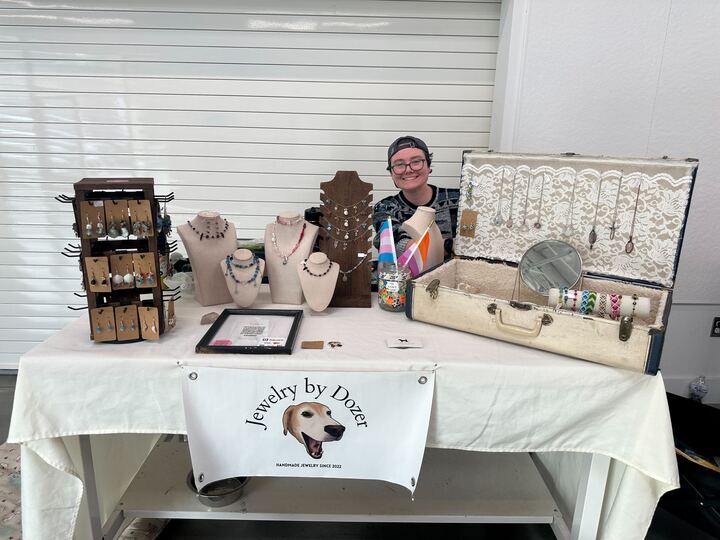
Amid the vibrant buzz of the Davis Craft and Vintage Fair, one booth stands out — not just for its dazzling handmade jewelry but for the warmth and personality it brings. Jewelry by Dozer, a small business known for its eclectic handmade jewelry and fuzzy mascot, has quickly become a favorite among Davis locals.

Lo Chappell, an artist and fourth-year aerospace science and engineering major, is often joined at the fair by Dozer, a cuddly, sweater-sporting beagle and the name behind the brand.

Chappell’s journey into jewelry making began during their first year as a way to handle academic stress. They started by simply making gifts for friends and family, but as their skills improved, they decided that they wanted to try and take their hobby to the next level. 

“The anxiety I felt when selling for the first time was why my emotional support animal Dozer came with me,” Chappell said. “Turns out, people love cuddly dogs in sweaters and they also loved my jewelry. The more I sold, the more recognition I got for my art and eventually it needed a name. It felt right to name it after Dozer because of the courage he gave me to start this business in the first place.”

Balancing their studies with Jewelry by Dozer isn’t always easy. Chappell juggles rigorous coursework, a part-time job and the many responsibilities of running a business. Between getting permits and licenses, organizing markets, advertising and communicating with customers, it’s easy to start feeling stretched thin. Chappell admitted that there are moments when the demands of balancing a small business with being a full-time student can feel overwhelming but finds that the community they have built through their craft makes it all worth it (along with the extra pocket change).

To get a unique piece tailored to your style or as a meaningful gift for a loved once, you can request a custom order by filling out a Google Form on their Instagram page. Each piece from Jewelry by Dozer is crafted with care and Chappell ensures each order is packaged carefully and thoughtfully, always including a little bag with hand-drawn stickers of Dozer that are sure to brighten up anyone’s day.

“I want people to know that every piece is unique and handmade with so much love,” Chappell said.

Despite being in their final year of college, Chappell hopes to continue Jewelry by Dozer and jewelry making as a hobby well past graduation. 

For those eager to see Chappell’s work in person and grab a special sparkle for yourself, Jewelry by Dozer will have a booth at the Davis Craft and Vintage Fair on Nov. 24. It’s the perfect opportunity to pick up a piece of jewelry infused with creativity, passion and a little inspiration from Dozer himself. If you get lucky enough, you may even see Dozer’s best friend and Lo’s newest dog, Kurtis, as well!

To learn more about Jewelry by Dozer and browse their wares, be sure to visit their Instagram or online store. Whether you’re looking for a statement piece or a meaningful gift, Chappell’s creations offer something truly special — jewelry with a story and a heart.

Written by Shreya Kumar — arts@theaggie.org 

The California Aggie hosts its fall Couch Concert

Local band “Your Tax Dollars at Work” rocked The Aggie basement 


By AALIYAH ESPAÑOL-RIVAS — arts@theaggie.org 


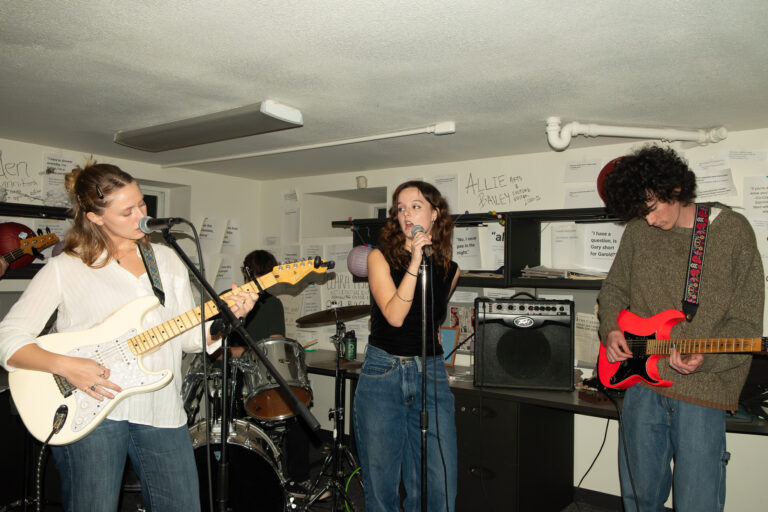
On Nov. 15, The California Aggie hosted its quarterly Couch Concert, which aims to spotlight local bands in the Davis area and put on a free event for students and community members to attend. Members of the Davis community gathered to hear the music from the featured band, “Your Tax Dollars at Work.” The Aggie sat down with several attendees from the concert, as they shared their experiences at the show. 

Chris Crocker, a second-year political science major, heard about the concert from The California Aggie’s Instagram page and decided to check it out for the first time. 

“I saw [the post] on Instagram, and I was like, ‘I should totally check that out,’” Crocker said. “I thought it was super cool, I love live music.”

Katie Lee, a fourth-year community and regional development major, also attended the Couch Concert for the first time and was pleasantly surprised to see the amount of people she knew at the event. 

“My friend brought me to the [Couch Concert], and I [saw] my other friend [was] playing the guitar, and I just thought, ‘This is so Davis, this is so college,’” Lee said. “I’m in the basement of The California Aggie, listening to an indie band where I know people playing.” 

The band’s setlist included numerous songs — some original, including “Hey Baby,” and some covers, including “Fade Into You” by Mazzy Star, “All Your’n” by Tyler Childers and “Kyoto” by Phoebe Bridgers. 

“I liked their originals, they were really good, and I liked their cover of ‘All Your’n’ by Tyler Childers,” Crocker said. 

Nicole Lara, a second-year international relations major, also enjoyed the overall environment of the concert and the setlist. 

“I really liked the harmonies, and it was a really fun and casual environment,” Lara said. “I really liked their last song, the energy was really good.” 

Overall, the concert was able to foster a relaxing but entertaining atmosphere and highlighted the Davis music scene for students who may not have engaged otherwise. 

“Being able to come and check out some live music from a local band this accessibly was really amazing, it was a ton of fun,” Crocker said. 

If you have yet to attend a Couch Concert, The Aggie’s Arts & Culture desk hosts them every quarter, so be on the lookout for who will be featured in our winter quarter show. For more on “Your Tax Dollars at Work,” check out their Instagram and our pre-concert interview with the band on our website. 


Written by: Aaliyah Español-Rivas — arts@theaggie.org 

No. 4-ranked UC Davis defeats No. 7-ranked University of Montana

0

UC Davis football pushes winning streak to nine games


By LUCIENNE BROOKER — sports@theaggie.org


Washington-Grizzly Stadium in Missoula, Montana is a notorious environment for college football teams. The home team, the University of Montana Grizzlies, packs the stands with thousands of loud and passionate fans for every single game and Saturday, Nov. 9 was no exception. A packed crowd gathered despite the chill in the air to watch their team take on the UC Davis Aggies, where they were treated to an unusual sight. For the first time since 2018, the Montana Grizzlies were defeated at home, as the Aggies extended their winning streak to nine straight games. 

Although UC Davis started off the 2024 season on a low note, losing to UC Berkeley, the Aggies quickly bounced back and hadn’t lost a game since. Coming into the intimidating environment in Missoula, the team and new Head Coach Tim Plough knew they needed a win to keep their momentum alive as they approached the postseason. 

It was a rough start for the Aggies as the Grizzlies quickly took the lead, scoring a touchdown on their opening sequence of plays. However, Trent Tompkins, a fourth-year communications major and wide receiver, had a quick answer, responding with a touchdown of his own three minutes later. 

The second quarter was the least climactic of the game, but the Aggies did find an opportunity to pull ahead, pushing the score to 13-9. Hunter Ridley, a third-year communications major and kicker, converted field goals in not only the 40 and 41-yard mark but also the 42-yard mark throughout the game. Ridley was one of two to earn Big Sky Weekly Honors for his performance in this match. 

However, this lead didn’t last as long as they had hoped. Nine minutes into the third quarter, the Grizzlies’ quarterback Keali’i Ah Yat scored, which reinvigorated the home team crowd. With a tight one-point lead, the Montana fans were feeling optimistic, but their lead only lasted a few minutes. UC Davis’ Ian Simpson, a third-year sociology major and tight end, caught a 22-yard pass from Miles Hastings, a fifth-year communications major and quarterback, to send the Aggies back into the lead going into the fourth quarter. 

While the game had been very close up until this point, thanks to stellar defensive work from both teams, the fourth quarter presented the Aggies with several scoring opportunities, most of which they managed to convert. 

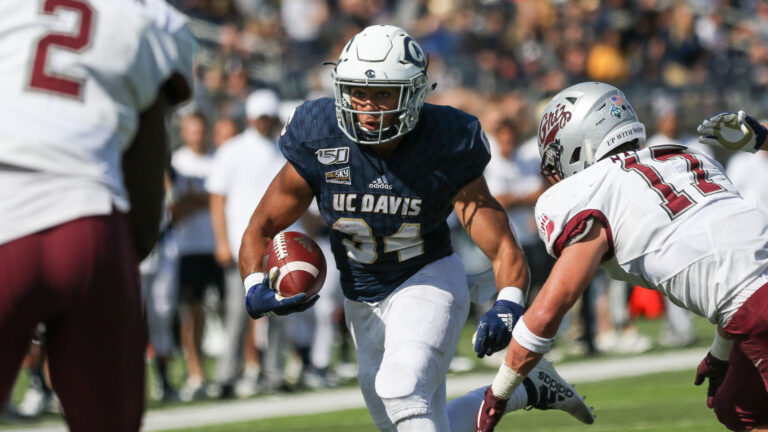
Lan Larison, a fourth-year managerial economics major and running back captain, scored a touchdown early in the quarter. Ridley then converted his second field goal, increasing the lead to 13 points. Although the Aggies failed to score another touchdown, they did earn another three points from Ridley’s final field goal, making the final score 30-14. While Montana fought hard until the end, they were unable to get past a tough Davis defense, who held the Grizzlies to their lowest total offensive yards so far this season. 

This decisive and unexpected victory has propelled the Aggies to a new level of national attention. They hadn’t beaten Montana since 2018 and had only won two of 11 matchups. By not only beating the Grizzlies but also beating them in their home environment, the Aggies showed football fans across the country that they are a serious threat. 

Following this game, UC Davis took on Montana State on Nov. 16 at the UC Davis Health Stadium and lost 30-28. The home match against Montana State, ranked No. 2 in the Big Sky Conference, was the deciding game for the conference championship. The Aggies are set to go against Sacramento State in their final game of the regular season on Nov. 23 at Hornet Stadium in Sacramento. Finally, the Aggies close out their season in the Causeway Classic and will then set their sights on the post-season tournament, where they’re hoping to break program records. 

Written by: Lucienne Brookersports@theaggie.org


Novel CAR-T-cell therapy may be promising treatment for brain cancer

Gene therapy research from UCSF may one day cure glioblastoma multiforme, the deadliest form of brain cancer


By NAREN KRISHNA JEGAN — science@theaggie.org


Immunology is the study of the body’s various defense mechanisms. One main focus in this area of research is how to create defense mechanisms against malignant tumors, such as glioblastoma multiforme (GBM), one of the most aggressive forms of brain cancer. With recent advances through a new form of cell therapy, researchers aim to mitigate the deadly impact of GBMs — which could potentially lead to a long-awaited cure.

The University of California, San Francisco (UCSF) researchers Hideho Okada and Wendell Lim have developed a novel treatment platform that may have successful implications in curing brain cancer.
One of the many types of immune cells in the body is the T cell, a white blood cell whose job is to destroy harmful pathogens. T cells originate in the bone marrow and then move to the thymus, where they undergo a “training camp” to naturally select the strongest and most effective cells. This is determined by their ability to bind onto specific antigens while recognizing and not attacking endogenous antigens. They are critical for the regulation of pathogens and have been studied extensively over the past few decades.

CAR-T therapy is a new form of treatment that utilizes this behavior of T cells. To administer this treatment, first a patient’s blood is drawn to separate the T cells from other immune cells and blood components. These cells are then treated with a deactivated, harmless virus that carries genetic code for the cell to develop a new receptor. 

This receptor, called a chimeric antigen receptor (CAR), is used to train the modified CAR-T cells to recognize tumor cells, markers and pathogens. In comparison to traditional immunotherapeutic methods, CAR-T-cell therapy provides treatment over a longer period of time. Furthermore, the treatment is highly specific to the patient; the endogenous cells provide a higher degree of safety, as they will not interfere with other cellular and metabolic processes.

The researchers have created a treatment platform called E-SYNC, allowing them to control the activity of CAR-T cells by adding an “on” and “off” switch using SynNotch technology.

“A synNotch receptor that recognizes a specific priming antigen […] can be used to locally induce expression of a CAR,” the article, published in PubMed, reads.

Because some healthy cells in the body exhibit certain markers or proteins that are similar to those found in tumor cells, having the CAR-T cells act on all of these cells would damage healthy, viable cells. Instead, Okada and Lim inject the cells while they’re in an “off” state. When they are close to a target tumor cell, E-SYNC activates the cell, initiating an attack on the tumor cell. After the attack, the CAR-T cell is deactivated to protect healthy cells from being attacked until it is near another tumor cell.

Laura López González, a science correspondent from UCSF, commented on the impact and applications of this new research.

“All of this, we hope, will make E-SYNC more effective than traditional CAR-T therapy and with less side effects,” González said. “I think there’s a reasonable chance we can apply similar approaches to other cancers, like HER2-positive breast cancer.”

Written by: Naren Krishna Jeganscience@theaggie.org

Downtown Davis hosts 2nd Friday ArtAbout

0

Pence Gallery, The Artery and Logos Books led the monthly art walk across Downtown Davis in collaboration with fellow local businesses and artists


By GIA LOOMIS city@theaggie.org


On Nov. 8, Downtown Davis hosted 2nd Friday ArtAbout. This art exhibit streams through the streets of downtown every second Friday of the month and hosts local artists and businesses as they put on special events, receptions and performances for the ArtAbout. The free art walk centers around a self-guided art tour that spawns between different art installations, local businesses and art co-ops. Attendees can choose to shop at small businesses, interact with local artists, watch live music and more. 

This month’s ArtAbout featured 10 different events, installations and businesses, from Pence Gallery to Parkside Sports Bar and Grill and Outpost Burger to the Craft and Vintage Fair. Each event drew crowds of all ages throughout the night. 

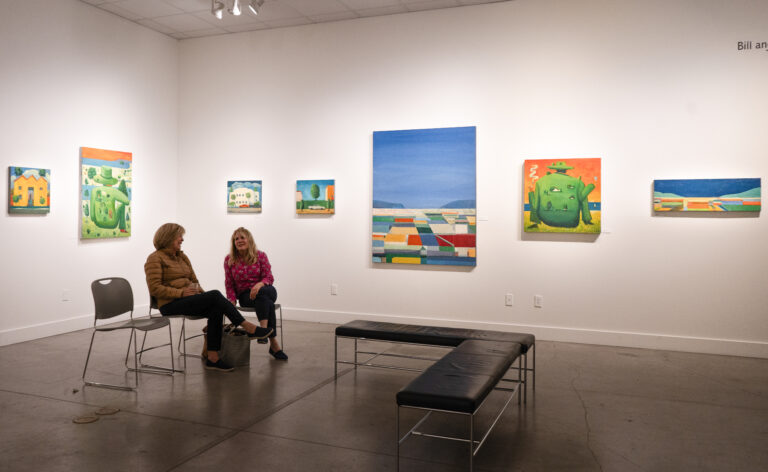
Many attendees began their walk at stop one on the ArtAbout map, the local artists cooperative, The Artery. From 5 to 9 p.m., guests filled the gallery’s reception honoring multiple local artists’ collections. Featured collections by Tom Babb, Rebecca Le-Babb, Jay Schreider, Linda Bird and others centered the art reception. 

The unique artwork hosted by The Artery drew bustling crowds for the event as participants shopped and viewed these special collections centering around woodworks, pottery and glass-blown art. 

After their first stop, many attendees explored the varying stops on the ArtAbout map at their own pace and discretion. One of the most popular stops occurred at stop six at Pence Gallery. As a co-host of the event, Pence Gallery held a lively event framed by live music, unique exhibits and their Holiday Market. 

A highlight of ArtAbout took place at stop four, the Davis Craft and Vintage Fair. Located downtown in the E St. Plaza, the fair attracted interested crowds and onlookers. It boasted multiple micro-business booths selling a variety of goods including jewelry, handcrafted products and vintage clothing along with a background of ambient live music. 

Local vendor Sofia Wildvine runs a small art business and has participated in the ArtAbout events on and off for around two years. Wildvine’s business includes many varying art forms and styles as she enjoys exploring different mediums.

 “I love painting with acrylic, gouache and watercolor,” Wildvine said. “I also do printmaking, such as woodblock carvings, screenprints and some intaglio prints.” 

Community-based events, like the ArtAbout, can be invaluable to a starting artist as it gives them a boost into the local art scene. As a long-term vendor of these events, Wildvine explained how ArtAbout has helped to support her small business and art career. 

 “The ArtAbout, and other events in Davis, were the launching point and starting ground for my small art business,” Wildvine said. “I was extremely nervous to start, but thanks to the support of this wonderful community and my own perseverance, I have been able to succeed in supporting myself solely through my artwork.”

Events like the ArtAbout have not only been beneficial for the artists but for attendees as well. Many students and Davis residents of all ages sprinkled the streets of downtown as they mulled between the different stops along the art tour.

 Free local events like the ArtAbout help people get more involved in their community and learn about the local art scene. First-year Karin Hahn described how attending the ArtAbout served as an open door for her to the Davis art scene. 

“The ArtAbout showed me how bustling of an art scene Davis has,” Hahn said. “I had no idea there were so many local artists and artistic opportunities just in downtown. After going, I definitely want to explore more community and art events.” 

The 2nd Friday ArtAbout is a unique event that allows people to get involved and learn more about the local art scene while supporting local businesses and artists. The monthly event will continue every second Friday of the month across Downtown Davis.


Written By: Gia Loomis — city@theaggie.org 

Davis Joint Unified School District joins cohort to address housing affordability for educators

0

As part of a new effort to address housing concerns for their employees, Davis Joint Unified School District joined an initiative focused on the development of affordable workforce housing


By ALYSSA TORRES  — city@theaggie.org


On Nov. 1, the Davis Joint Unified School District (DJUSD) announced its selection as a participant in the Education Workforce Housing Cohort, a program led by the California School Boards Association (CSBA). This cohort supports California school districts in creating below-market-rate housing options for employees, addressing an urgent need for affordable housing in the education sector.

DJUSD has been working to assess housing solutions for its educators in a community where costs are rising and student enrollment is declining. The average rent for all units in Davis reached $2,372 per month, a 6.6% increase from 2022, according to the 2023 Apartment Vacancy and Rental Rate Survey. As one of the largest employers in Davis, DJUSD has struggled to retain staff due to the high cost of living.

Victor Lagunes, a teacher at Da Vinci Charter Academy Junior High School and president of the Davis Teachers Association, discussed this problem. 

“Very close neighboring areas offer more, either because their benefits are covered more or the actual salary is higher,” Lagunes said. “When you think of what makes really strong communities, you build the best community when you have the educators that teach at schools living in that community.”

Maria Clayton, DJUSD’s chief strategy officer, shared her hopes for the initiative’s impact on retention. 

“It’s getting more and more difficult to have the funding to sustain all of the priorities of programs and compensation,” Clayton said. “Helping teachers and staff find housing would be another way that would make our district attractive to future and current employees.”

In a survey conducted by DJUSD in May, 40% of respondents reported having moved due to increasing housing costs during their employment, and 76% expressed interest in affordable workforce housing options provided through the district.

Following these survey results, the DJUSD Board of Education approved a resolution on Aug. 15, 2024, supporting the DJUSD Workforce Housing Plan. This led to the district’s application to the Workforce Housing Cohort.

As part of the cohort, DJUSD will participate in workshops and tours of successful workforce housing projects organized by CSBA. 

“We are going to learn a lot in a very practical setting,” Clayton said.

Both Lagunes and Clayton emphasized the importance of involving the community throughout the project.

 “It is a community-wide conversation, for sure,” Clayton said. “Any kind of housing development is something that affects a lot of people.”

Lagunes also stressed the need for a comprehensive understanding of educators’ needs to ensure the initiative’s success. 

“You have to do the work of engaging with [educators] to find out what are the things that are going to be most effective,” Lagunes said. “What I mean is, what are the reasons that people left?”

Workforce housing initiatives are gaining momentum across California. CSBA’s Education Workforce Housing Handbook states that 83 sites owned by educational agencies are already under consideration for workforce housing development. Several Southern California districts, such as those in Santa Clara and Los Angeles, have implemented education workforce housing with positive impacts on job retention and satisfaction.

While DJUSD is committed to progressing on workforce housing, Clayton acknowledged the project will take time.

 “I think you’ll see from DJUSD probably some short-term solutions in the next year or so, and then something more long-term that will have more of an impact,” Clayton said. “But it’s going to depend on what we learn and what gets decided by the board”.

When asked about the broader significance of workforce housing, Lagunes responded.

“Everyone deserves a place to live,” Lagunes said. “For educators, we believe that the way to build community is for them to have the ability, if they so choose, to live in the community in which they teach. We also believe that any community has to be able to welcome families that want to be there in order to join their school systems. Addressing housing, even through workforce housing as a small piece of it, is critical to doing that.”


Written by: Alyssa Torres city@theaggie.org

Davis Media Access produces local election coverage throughout election night

0

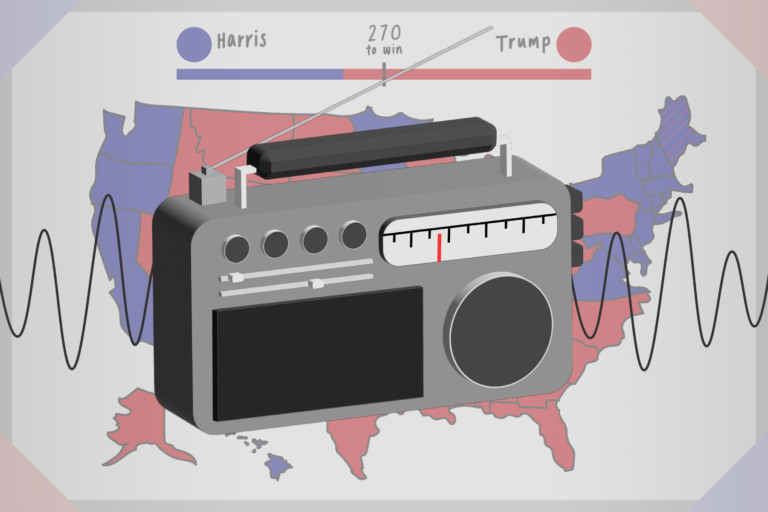
A local, non-partisan media center highlighted candidates and propositions on the ballot that don’t reach mainstream media 


By OLIVIA HOKR — city@theaggie.org


On Nov. 5, a date you might recognize as Election Day, Davis Media Access (DMA) created a program to discuss the local aspects of the election. They hosted interviews with various candidates for local positions, such as the Davis Joint Unified School District (DJUSD) School Board Trustees and Davis City Council, and they discussed the pros and cons of local ballot measures. 

DMA is a non-profit community media center that has been around for over 30 years. They have incorporated projects such as Davis Community Television (DCTV) as well as a low-power FM radio station, KDRT, which just celebrated its 20th anniversary

DMA has always placed an emphasis on strengthening the community and keeping Davis residents informed. As part of this mission, they used this Election Day to highlight the various aspects of the election that wouldn’t be covered by mainstream media. This year’s election night programming was co-hosted by Don Shor and Autumn Labbe-Renault on KDRT. 

Labbe-Renault has been the executive director of DMA since 2007 and has worked as the executive producer on election coverage ever since. She emphasized DMA’s discussion of local elections and the importance of community media.

“National elections get the attention, but typically most smaller communities lack coverage of local races,” Labbe-Renault said. “DMA has prioritized this kind of civic information for more than 35 years. The service is always free. Each election season, we cover contested races for Davis, for county-wide offices, and also for Assembly, State, Senate and House of Representatives. If there are enough local races to warrant a show on election night, we will do that.” 

In her position as executive producer, Labbe-Renault executes the “Meet the Candidates” portion of the program where she plans and helps record various candidates’ statements for their campaigns. These brief videos allow candidates to address the community without a host and simply speak to the people. 

“Election night provides an opportunity to hear from candidates and others about the tenor of the season and to ask questions about their campaign priorities and experiences, and sometimes to tease out issues that have arisen in weeks leading up to the election,” Labbe-Renault said. “It’s also a moment for them to thank everyone who supported them.”

One of the positions on Davis residents’ ballots this year was the DJUSD Governing Board Member Trustee Area 2, with Elizabeth (Lizzy) Griffith running against incumbent Lea Darrah. Darrah has been re-elected to the board, according to the unofficial results uploaded by the Yolo County Elections Office. Darrah took part in DMA’s “Meet the Candidates” and shared a video with voters discussing her platform. 

“It’s my job as a trustee to listen to my constituents,” Darrah said in her video for DCTV. “It’s important to me that people feel heard, acknowledged and validated. When people come to me seeking help, I either direct them to the appropriate resource or I take action myself if appropriate. I want them to know that I understand their desire to help their students [and] I do too.”

DMA plays a significant role in shining a spotlight on local politics and ensuring unbiased production. To help keep citizens fully informed, they provide a platform for candidates to share the goals of their campaign and for different local organizations to discuss the possible impacts of ballot measures. 

“We’re completely non-partisan, and our staff doesn’t endorse or take positions on local issues,” Labbe-Renault said. “I’ve had candidates tell me they didn’t think they’d be treated fairly at DMA because ‘it’s Davis,’ and they’ve been pleasantly surprised by our even-handed treatment. Our job isn’t to play a role in politics, but to use media tools and infrastructure to help illuminate local issues.”


Written by: Olivia Hokr — city@theaggie.org