58.4 F
Davis

Davis, California

Tuesday, December 23, 2025
Home Blog Page 668

La La Land review

GENESIA TING / AGGIE

Damien Chazelle film features knockout performances from Emma Stone and Ryan Gosling

When I first saw La La Land, Damien Chazelle’s modern take on the nostalgic beauty of old Hollywood musicals, I was awestruck. Although I couldn’t quite place every emotion I was feeling at that time, I knew one thing for sure — I just had to see it again. Chazelle, most recently acclaimed for his Academy Award-winning film Whiplash, premiered La La Land this past summer at the Venice Film Festival. Early critics initially shut down Chazelle’s vision for this modern-day musical because many viewed the premise to be uncommercial. However, the film turned out to be an immediate success. With its brightly-colored costumes, breathtaking skylines and vibrant locations, La La Land romanticizes the beauty of Los Angeles, while depicting the struggles that come with living as a dreamer in the City of Angels.

The film opens with an extravagant ensemble performance, as most musicals do, with the group number “Another Day of Sun.” In one unbroken shot, people of all backgrounds sing and dance atop cars amidst Los Angeles traffic at the junction between the 110 and 105 freeways. As an LA native who has sat through my fair share of standstill traffic over the years, there was something relatable and humorous about this scene. It sets the tone perfectly for the rest of the film to come — upbeat, witty and captivating.

La La Land follows the lives of Mia and Sebastian, two struggling artists in Los Angeles who fall hopelessly in love along their journey to achieving their dreams. Mia, played by Emma Stone, is an aspiring Hollywood actress stuck serving coffee in the meantime, while her counterpart, Ryan Gosling, plays Sebastian, a jazz-loving pianist with a passion for keeping his precious genre alive. Stone and Gosling, who have appeared in two other films together in the past, have an intense on-screen chemistry palpable from their first duet, “A Lovely Night,” to the surreal moments of the film such as when they float through stars at the Griffith Observatory.

Stone and Gosling truly sell Mia and Sebastian’s love story, never leaving room for doubt of the rooted feelings they hold for one another even through the poignant ending. And for two actors who aren’t typically known for their vocals or dance moves, they both deliver outstanding performances. Pre-production took place for three months prior to filming, during which Gosling took the time to practice piano in order to be able to expertly play it on screen. Gosling and Stone also learned different styles of dance during this period. The work has seemed to pay off, as Stone and Gosling recently won the Golden Globe awards for Best Actress and Best Actor in a Comedy or Musical, respectively.  

La La Land heartbreakingly conveys the real struggles that dreamers in Los Angeles face every day. The film portrays love that doesn’t always end in the way we might hope, and shows that there are different kinds of happy endings, despite what our hearts desire. This raw emotion makes La La Land stand out from the crowd. Whether you resonate with Mia’s character or with Sebastian, or are simply rooting for their love story, La La Land manages to wow with its colorful and flashy dance numbers while capturing the audience’s heart and mind.

As the movie came to a close, I noticed my eyeliner was tear-streaked across my face, while several other audience members sniffled behind me in the theater. I was frustrated, amazed, satisfied and experienced all kinds of conflicting emotions as the credits began to roll. La La Land is a film worth seeing — maybe even more than once.


Written by: Sydney Odman — arts@theaggie.org

Re-entry Students: navigating the UC Davis campus

0
MORGAN TIEU / AGGIE
MORGAN TIEU / AGGIE

Unique stories of community, real-life experiences

Naomi Barcelo received an unexpected phone call one day from a friend she hadn’t spoken to for quite some time. This person had been her note-taker for a past religious studies class, but he didn’t call to talk about academics — he called to ask her if she would teach him how to cook.

“He was tired of eating frozen food,” Barcelo said. “He was like: ‘My mom cooks all my meals, and when I asked her to teach me how to cook she said I [don’t need to know how to do that].’ So I taught him how to cook his basic meals!”

Teaching a young friend how to cook was an easy task for Barcelo, a 51-year-old part-time student and fourth-year anthropology major, as she has quite a bit of experience. Barcelo is a member of the roughly six percent of the UC Davis student population that is categorized as “re-entry.” A re-entry student is defined as a student who is re-entering the education system after taking a break for any number of years; gaps between high school and the time they come back to school can range from anywhere between five years and 40 years.

“A re-entry student is a non-traditional student in the sense that when you think about a traditional student, even a traditional transfer student who goes from high school directly into college, those are students who start here as 18-year-old freshmen,” said Victor Garcia, an advisor at the Transfer Reentry Veterans Center (TRV). “Typically, [re-entry students] are older, a bit more mature and they’ve had quite a bit of life experience.”

After having learned after high school that she had learning disabilities, Barcelo was discouraged at a young age from pursuing college. At that time in the 1970s, there wasn’t an accommodative culture that aided students with disabilities.

“I didn’t know how to read correctly. I never learned how to sound out words,” Barcelo said. “My father said I was too stupid to go to college and to get a union job [instead], so I went and got a union job, and got chewed up by the world. I really needed something more. I [told myself] ‘I can’t keep doing this.’”

It was this aspect of “getting chewed up and spit out” that sparked a drive in Barcelo to improve her life. She had always chosen jobs that allowed her to hide herself and to hide her disabilities, but this had always taken a lot of time and effort. After she got older, Barcelo decided she wanted to go back to school and eventually found herself at UC Davis, her childhood dream school.

“I’ve always wanted to go to Davis, and if I [was] going to go, the second time around, then I [was] going to do it right,” Barcelo said. “The reason I’m successful now is because I have accommodations: I get extra time; I get programs that will read text to me. But [I] also have the life experience of knowing [that] if I want to make more than $15 an hour, I’m gonna need a better education.”

Reentry students are often quickly identified by their age gap compared to 18, 19 or 20-year-old “traditional” students. What isn’t so apparent, however, is how these unconventional students come to campus with a variety of life experiences, as each individual has their own unique backstory. For example, a large portion of the demographic is made up of those who have children, are married, or have mortgage payments.

“Being a student is only part of their everyday life,” Garcia said. “Once they’re done [with a school day], they have to take off the student hat and put on the ‘mom hat,’ the ‘dad hat’ or the ‘partner hat’ or go to work to make sure they’re paying the bills. The student experience [for them] becomes very different as it deviates from what a traditional student and a traditional transfer student may be experiencing because of all these external factors that occur.”

Manny Carter-Jocelyn, a re-entry student and fourth-year psychology major, is not just a student at UC Davis, but also a mother. After graduating high school in 2008 and spending a couple of semesters at community college, she left the education system until 2012. Then, just two months after having a baby girl, Carter-Jocelyn officially went back to school at American River College in Sacramento and then moved on to UC Davis.

“I came back to school because I had a kid, and I needed to get my life together,” Carter-Jocelyn said. “[I wanted to] show [my daughter] what education was about, that mommy could do education too and that I was a productive member of society.”

Carter-Jocelyn runs the front desk and assists with workshops at the TRV Center, but her most significant role is guiding other reentry students who have children just like she does. She offers advice, as well as financial resources, child care resources, school resources and housing resources for other parents.

Transitioning from community college to a place like UC Davis is daunting in and of itself, since most resources are no longer centrally located but scattered across a vast campus. Navigating the quarter system new classroom settings are challenges for any new student, but these adjustments are especially hard for transfer and re-entry students.

“There used to be transfer services, reentry services and veteran services, [but] around 2008-2009 the services were combined because they realized that the one thing a lot of them had in common was that they were all transfer students [of some sort],” Garcia said. “[These transfer students] are coming in basically on their own, and for them to try and break into these social groups, can be very difficult and intimidating. The main thing that we offer here is opportunities for community building, social networking and mainly resource allocation.”

According to Garcia, it’s common for transfer students to feel isolated, and Carter-Jocelyn has learned through experience that being a re-entry student can sometimes feel lonely. Traditional students often form communicative barriers between themselves and students they view as different than them, especially if a re-entry student appears to be older.

“It’s hard [being a student-parent], but it’s definitely worth it,” Carter-Jocelyn said. “I think it’s helpful [for traditional students] to see another perspective, and that the school isn’t made up of 18,19, 20-something-year-olds — that there are people who are older. People who are exposed to us can learn how difficult it is and how lonely it can be for student-parents. It would be nice if people weren’t so afraid of me.”

Although re-entry students may differ from traditional students in their amount of “real-world” experience, re-entry students are more similar to other UC Davis students than they are different. Re-entry students are driven and engaged and take advantage of opportunities because they often approach situations with the goal of getting the best possible education that they can. Reentry students, no matter the circumstances that got them to UC Davis, are connected to other students through shared goals.

“I’m still young!” Carter-Jocelyn said. “I still like to do the things other college students like to do, I just don’t get to do them as often. I’m a normal college student, too.”

Written by: Marlys Jeane — features@theaggie.org

Humor: Increase in fake news leads The Aggie to shut down humor desk

headshot_evNo remorse shown for quarterly hires as five students get the ax
After a year of writing satirical news about the UC Davis campus, the school newspaper is shutting down the humor desk. In an attempt to save its image and not be a phony news source, The California Aggie has parted ways with five humorists.

As fake news continues to be a problem, the newspaper has elected to move away from tricking its students into believing satirical articles are, in fact, true.

The Editorial Board released a statement on Tuesday outlining its thoughts.

The Aggie, which is over 100 years old, does not want to compromise its integrity in order to get a few laughs,” the board wrote. “That is not our job; we report on news. Falsely telling students that there’s an influx of bike racks is simply not fair to them and ruins our credibility.”

The columnists, while not paid, all share a passion for their work. None of the writers offered a comment, but the student body is split on the decision.

“I’m glad they weren’t paid. I thought what they were writing was not funny. It was silly and childish,” said Larry Rodgers, a fourth-year wildlife, fish and conservation biology major. “This frees up a full page for stories that I care about.”

Others didn’t have the same reaction to the news, feeling as though the voices of the columnist provided insight into the world.

“Honestly, I get the business decision, but the writers made me laugh. They made me think,” said Kelly Rose, a second-year English major. “You realize they’re talking about the world and how it relates to Davis. There is a story to be told with what the humorists are saying.”

The move is one that has been seen before; the satire desk of The Aggie was shut down 10 years ago for similar reasons. In closing the humor desk, however, a different voice is lost. It’s part of the opinion desk for a reason, as it gives students an opportunity to voice their thoughts. Writers have historically used satire to express their beliefs and discontent with the system that they are a part of for as long as the medium has existed.

A group of five students that once stood up to the chancellor and the United States government about self-centered infrastructure are now out of a job because of a fear that the outrageous would be taken too literally rather than examining what is truly being said.

Satire has its place in the news, but fake news outlets that have put the nation in turmoil have ruined it for those that simply want to take a stand on policy, but do so using a different, funnier form.


Questioning the credibility of ETHAN VICTOR? You can reach him at ejvictor@ucdavis.edu. Feel free to help with his followers-to-following ratio on Twitter @thejvictor, because it is pathetic right now.

Preparing for the worst in Joshua Tree National Park

ELI FLESCH / AGGIE
ELI FLESCH / AGGIE

headshot_efStupidity and nature intersect marvelously in the High Desert of California

Few things complement each other with such ease as the National Park System and the Darwin Awards do. Nature has always brought out the worst in man, but it was only since the mid-1980’s that an organization — The Darwin Awards — started formally recording the most forehead-slapping disasters that occur when you put a human in the wild with the unreasonable expectation that they will respect their surroundings. According to the website, nominees for the award are among a select group of individuals who, through death or serious maiming, have improved “our gene pool by removing themselves from it.” Not many creeds are as delightfully morbid.

I found myself in Joshua Tree National Park last December, alone, on a trail marked “unmaintained” (which effectively means no trail at all), stuck between a rock and a 50-foot cliff. I was crouched because the rock hung at an angle over the path, and standing upright would have meant thrusting my torso over the edge. My destination, the summit of Mastodon Peak, was just around the edge. I eventually made it past this obstacle by hugging the rock with the same determination of a barnacle fixed to the leg of a pier. The Salton Sea looked clear and white from the top.

But as anyone who’s ever climbed a mountain or tried hard drugs knows, coming down is the hardest part. And I was vertiginously high, don’t-even-think-about-looking-down high. This was my Darwin moment. And it made me consider all who had come before.

One woman in 1999 died BASE jumping in Yosemite Park because her pull-cord failed her and the parachute never opened. But what elevated it from a tragedy to a Darwin Award level tragedy was her earlier decision to buy discounted equipment. I sympathize with that woman now. People get hurt in nature, in large part, because they come unprepared. Sometimes it’s faulty gear. Sometimes it’s the astonishing lack of common sense that makes you think it’s a good idea to, say, take a quick dip in the vivid, chromatic and boiling hot thermal springs of Yellowstone, as one now deceased Oregon man thought prudent last November.

In my case, it wasn’t being unprepared to get off Mastodon Peak, but a paralyzing fear of heights and a foot that had been severely cramping the last two miles of the hike. Did that qualify me as a certifiable idiot? Only if I fell, I reasoned. Plus, I was somewhat prepared. In my bag: three feet of gauze, rubbing alcohol, bandages (large and small), cotton swabs, paper towels and dry socks. It wasn’t too much. My supplies would have been perfect for the minor idiocies of walking into a cactus or stepping in the one puddle in all of Joshua Tree.

I stayed up there for five minutes. I postured. I stuck my hands out. To someone observing below, it may have looked like a triumphant gesture — the exaltation of someone unburdened by society. I was just trying to see if I had the wingspan to grab a somewhat promising boulder if I slipped off the side of the cliff. My mother, who had her trepidations about me going to the desert alone, would never hear about this experience. I would tell her that I hiked seven miles, stayed on the trail, took great pictures and made sure to say “hi” to any fellow travelers. A wholesome journey of self-reflection — my very own day as Henry David Thoreau. Provided, of course, I made it down.

I came to the segment of the path that caused me great difficulty on the ascent. From where I now stood, it looked impossible. It was one of those crab traps in which the netting allows you in, but seizes up to prevent exit. My hands and feet shook. The wind blew hard and cold. I took off my gloves because they reduced my grip on the granite. Stowed my camera so it wouldn’t get damaged in the case I did plummet off the edge. And then I managed to jump across safely and everything was fine.

It dawns on me now that if Thoreau went to the woods “to front only the essential facts of life,” I went to Joshua Tree to front the essential facts of my own stupidity. I was shaking the rest of the way off the mountain. Never again, I thought. It’s worth noting here that 87.7 percent of Darwin Award winners from 1995 to 2014 were men, according to a wholly unsurprising study by the British Medical Journal. I’m going back to Joshua Tree, and I would encourage any young men reading this to do this same. But prepare for the worst. Prepare to be humbled.


Written by: Eli Flesch — ekflesch@ucdavis.edu

Disclaimer: The views and opinions expressed by individual columnists belong to the columnists alone and do not necessarily indicate the views and opinions held by The California Aggie.

Chinook salmon spawning in record numbers in Putah Creek

MORGAN TIEU / AGGIE
MORGAN TIEU / AGGIE

UC Davis researchers receive funding for salmon study

Record level numbers of Chinook salmon have been spawning in Putah Creek this winter, likely as a result of improved drought and habitat conditions and various management practices in the region.

“Around 1,500 salmon have been recorded spawning in Putah Creek this winter,” said Peter Moyle, a professor emeritus in the Department of Wildlife, Fish and Conservation Biology.

Some researchers have argued that there may even be close to 2,000 salmon spawning there currently, a significant increase from last year’s numbers. During 2016, around 500 to 700 salmon were recorded spawning in Putah Creek.  

Researchers studying the area were surprised and pleased with the increasing numbers of salmon present today. During the 1970s, only a few salmon were recorded in the creek, and, in 2014, numbers were still significantly low, with some 200 salmon observed.

“Since 1999, the species of Chinook salmon present in the Sacramento river region have been identified as a Species of Concern,” according to the National Oceanic and Atmospheric Administration’s (NOAA) National Marine Fisheries Service. Poor habitat conditions, the drought and local dams cutting off adequate spawning habitat for the fish contributed to the lower observed numbers recognized over the years.

Moyle proposed that it is new salmon, likely from hatcheries throughout the region that did not originally spawn in Putah Creek, that are coming into the creek now because of increased river flows. Colder water, adequate habitat and established management and restoration projects on the creek have also improved conditions for successful salmon spawning.

During December 2016, researchers at UC Davis received $125,000 from the Solano County Water Agency (SCWA) for a study that aims to track the number of juvenile salmon that are present in Putah Creek. Through this genetic study, researchers will be able to understand which and how many fish are native to the creek. This knowledge will be able to guide decision-makers about which creek management choices to make for successful salmon survival conditions.

“I think it’s great to have better scientific knowledge about these fish […] Hopefully it can help us shape how we manage the creek so that we can enhance the habitat further,” said Chris Lee, principal water resources specialist for the SCWA.

For now, the improved habitat and the increasing numbers of Chinook salmon spawning in Putah Creek has indicated that this ecosystem is recovering, as are the numbers of other kinds of species local to the area too.

Moyle believes that with a continued rainy year ahead, the creek may hold even more salmon in the future.

Written By: Anya Rehon – city@theaggie.org

Sierra Nevada Brewing owners gift $2 million to UC Davis program

GREGORY URQUIAGA / UC DAVIS

The first endowed brewer will be Joe Williams

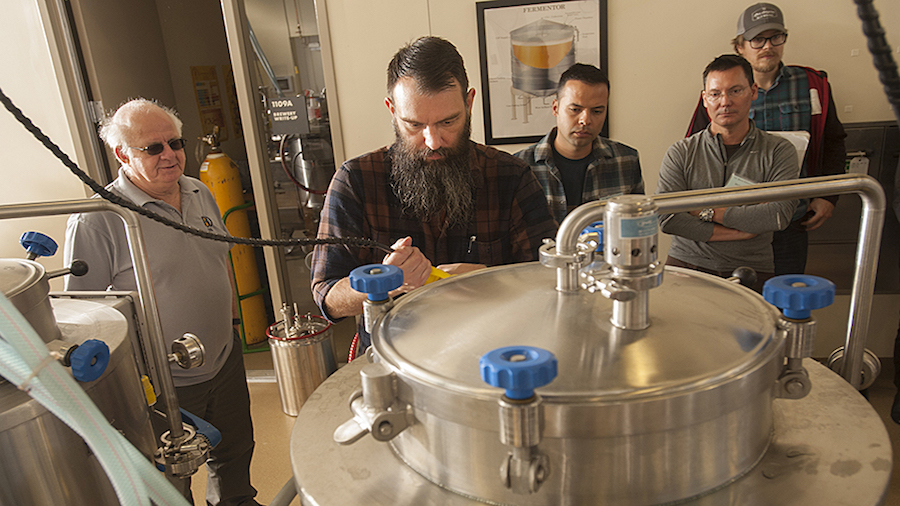
Sierra Nevada Brewing Co. owners Ken Grossman and Katie Gonser gave $2 million to support UC Davis’ brewing science program. The brewing programs at UC Davis are the only North American programs accredited by the Institute of Brewing & Distilling in London.

The individual selected as Sierra Nevada’s endowed brewer will be assisting in course instruction, maintaining the campus brewery and its equipment and mentoring and leading students and teaching assistants.

The first endowed brewer will be Joe Williams, who currently serves as a staff researcher for UC Davis. He will serve as a liaison to the brewing industry for UC Davis and a host for visitors to the campus brewery.

Charlie Bamforth, a professor of food science and an Anheuser-Busch endowed professor of malting and brewing sciences, spoke highly of the Sierra Nevada position.

“We are thrilled to have received this wonderful gift from Ken Grossman and his wife Katie Gonser,” Bamforth said via email. “The Sierra Nevada Brewing Company endowed brewer is at the heart of our mission. Joe Williams, the campus brewer, plays a critical role in ensuring that the students emerging through the program have a thorough understanding of the complex practicalities of making beer.”

UC Davis and Sierra Nevada Brewing have a history with one another. Grossman lectures three times each year in the Introduction to Beer and Brewing course and often hosts Bamforth and his students for tours of the Sierra Nevada brewery in Chico. Bamforth is a frequent guest speaker at Sierra Nevada brewery and a close friend of Grossman.

“[The gift] reflects the close rapport that we enjoy with the Sierra Nevada Brewing Company, which is the epitome of quality in the brewing industry,” Bamforth said via email. “Ken and Katie recognize that we are striving to deliver the very best people eager and ready to get into the industry.”

Grossman expressed similar sentiments regarding the relationship between UC Davis and Sierra Nevada Brewing.

“I have a long relationship with UC Davis, going back to the days of starting Sierra Nevada when I’d haunt the library to read material I couldn’t afford to subscribe to or was out of print,” Grossman said via email. “The goal [of the endowed brewer position] is to allow the program to continue its excellent work in educating brewers who are passionate, dedicated to quality and skilled at their craft.”

Serena Uppal, a third-year economics and mathematics double major, has recently become more interested in taking brewing classes due to the gift from Sierra Nevada Brewing.

“I would definitely be interested in taking a beer brewing class with this new funding,” Uppal said. “I won’t be just getting theoretical knowledge but also firsthand experience [in] the industry itself.”


Written by: Yvonne Leong — campus@theaggie.org

Interim Chancellor Hexter, UC leaders sign letter to urge action against climate change

NICKI PADAR / AGGIE
NICKI PADAR / AGGIE

250 institutions ask new administration to address challenges of climate change

Last month, Interim Chancellor Ralph J. Hexter and other University of California (UC) leaders signed a letter urging President-elect Donald Trump and Congress to take action against climate change.

The letter, compiled by Boston-based nonprofit Second Nature, focuses on three main proposals. The first proposal asks for participation in the Paris Agreement on climate change, the second proposal asks for support for research in academic institutions and federal agencies and the third proposal asks for investments in the low carbon economy to help adapt to changing climate hazards.

The letter also emphasizes the importance of the government’s actions to influence current and future generations. It has been signed by 250 institutions and was sent to the incoming presidential administration on Jan. 13.

Timothy Carter, the president of Second Nature, explained that the group worked with a group of approximately 30 schools to craft and refine the letter in November. Several other institutions’ presidents and chancellors voluntarily submitted additional statements of support.

The intention of the letter was to provide a strong signal from the higher education sector that the sector values the Paris Agreement, thinks continued climate research is critical for informed decision-making and recognizes the importance of investments in a clean energy economy,” Carter said via e-mail.

Janna Cohen-Rosenthal, climate programs director for Second Nature, added that the higher education climate community voices its support for the three proposals as well as introduce the new administration and Congress to ongoing efforts.

“We have worked with the previous administration, so it’s important to introduce this […] during a time of transition,” Cohen-Rosenthal said via e-mail.

Carter and Cohen-Rosenthal expressed the importance of having a reference point for future policy conversations at all levels of government local, state and federal as well as providing the higher education community opportunities to partner with governments both nationally and internationally.

At UC Davis, students and faculty have been supportive of efforts to protect the environment and improve sustainability through education, research and initiatives. Professor Arnold Bloom, from the Department of Plant Sciences, expressed his approval of the effort to help influence policies of the new administration.

“Climate change is likely to become one of the most disruptive issues in the coming decades, and the steps outlined in the letter are critical for mitigating or adapting to such change,” Bloom said via e-mail.

According to Bloom, the campus offers courses about climate change, such as introductory course SAS 25. Bloom teaches a free online course as well. The environmental policy analysis and planning major recently initiated a climate change policy track where students can learn about climate policy, environmental economics and climate science.

Michael Bancroft, a fourth-year environmental science and management major, supports the UC leaders signing the letter.

It is very important that the UC system supports government action on climate change not only as representatives of leading environmental research institutions, but also partially as representatives of California, the state with the most legislative action on climate change in the U.S.,” Bancroft said via e-mail.

Similarly, Mayra Pelagio, a fourth-year environmental science and management major, said that it was important for the UC system to show support for the letter considering many of its campuses were leaders in research in green energy.

Pelagio and Bancroft feel that UC Davis offers many opportunities for its students to get involved in research and in environmental science more generally. There are on-campus clubs, the Green Initiative Fund and several professors who conduct research on climate change.

Both Pelagio and Bancroft also think that there is room for improvement, especially with regard to increasing environmental awareness. Bancroft believes that, while classes can provide a holistic view, it may be necessary to engage with the general population more frequently concerning current events and environmental policy.

“There are some students, for instance, that graduate without having an understanding of concepts such as climate change,” Pelagio said. “These issues should be taught to everyone, for us to be aware of our impact in the environment.”


Written by: Jayashri Padmanabhan — campus@theaggie.org

California schools press Donald Trump to continue DACA as president

CIERA PASTUREL / AGGIE

Higher education leaders stand by undocumented students

With the upcoming presidential inauguration on Jan. 20, leaders of the University of California (UC), California State University (CSU) and California Community College (CCC) have been pressing President-elect Donald Trump to continue the Deferred Action for Childhood Arrivals (DACA) immigration policy for students involved in the program to be able to maintain their higher education in California.

DACA was started under the Obama administration in June 2012 to allow undocumented minors who immigrated to the United States to request renewable protection from deportation. The protection lasts two years given that the individuals meet certain qualifications, according to the U.S. Citizenship and Immigration Services’ website. Eligible “Dreamers” may acquire a work permit and go to school in the United States without being citizens.

Trump has repeatedly mentioned his plans to end the program, which could put many Dreamers at risk of being deported, including students at UC Davis. In response, UC President Janet Napolitano, CSU Chancellor Timothy White and CCC Chancellor-designate Eloy Ortiz Oakley composed a letter to Trump on Nov. 29 explaining why it is essential for him to keep DACA intact.

“These sons and daughters of undocumented immigrants are as American as any other child across the nation, in all but in the letter of the law,” the letter read. “They should be able to pursue their dream of higher education without fear of being arrested, deported or rounded up for just trying to learn.”

Though it is not certain that DACA will be annulled, UC Davis administrators are prepared to protect students’ right to pursue higher education.

“The University will continue to protect the privacy of student records and information, which are confidential under law,” UC Spokesperson Claire Doan said in an e-mail. “The Principles also establish a consistent system-wide policy that campus police departments will not act as adjunct immigration officers, [and] their focus will remain [on] student safety.”

Despite the UC’s plans to support these Dreamers, the Senate Judiciary Committee hearing on Jan. 10 revealed the high possibility of Trump removing DACA, according to online magazine Salon Media Group.

“[DACA] would need to be studied, [but] it would certainly be constitutional, I believe, to end that order,” Trump’s Attorney General nominee Senator Jeff Sessions said in the hearing. “[The Department of Justice] would have no objection to a decision to abandon that order.”

Salon Media Group said that Sessions will potentially recommend that Trump end DACA, but Sessions did not mention the resulting arrangement for the 800,000 DACA-registered immigrants.

However, Andrea Gaytan, director of the AB540 and Undocumented Student Center, said that repealing DACA would mean students could lose protection from deportation, opportunities to work legally, ability to travel for research purposes and, in some states, their driver’s licenses. Gaytan said students should be concerned for themselves, friends or loved ones who are currently involved with DACA.

“We’re trying to make sure that […] students have access to legal information and know their rights,” Gaytan said. “[And] to make sure the greater campus community also knows how to support undocumented individuals.”

Meanwhile, Gaytan reminds AB540 and undocumented students to stay focused in school and confide in the community of people here at UC Davis to help them, especially if they are afraid to share their immigration status.

“The center serves to provide a sense of consistency and normalcy,” Gaytan said. “We hope that students know there are people at this campus who care about them and want to help them, and that we have resources to try to make that happen.”

The future of these Dreamers will soon be in Trump’s hands when he is sworn into presidency on Inauguration Day. Until then, California higher education leaders will work to protect DACA students.

DACA-status students who are currently traveling abroad are instructed to return to the United States before Jan. 20, as they may have difficulty entering the country afterwards. The AB540 and Undocumented Student Center urges DACA students to contact them immediately for legal help, if they have not done so already.


Written by: Jeanna Totah — campus@theaggie.org

UC-wide walkout, teach-ins on Trump’s inauguration day

LAURA LONG / AGGIE
LAURA LONG / AGGIE

UC Student Workers Union hosts walkout, teach-ins protesting Trump, University of California

The UC Student Workers Union Davis participated in a UC-wide walkout on Jan. 20 and hosted on campus teach-ins to protest the inauguration of President Donald Trump. The teach-ins provided an outlet for UC Davis professors and guest scholars to explore President Trump’s potential impact on civil, political, racial and sexual rights. The union also included a list of demands to the University of California (UC) which included denouncing Trump’s presidency and democratizing the UC Regents administration.   

On its Facebook page and website, the union highlights discrimination that its members believe the new president has helped perpetuate.

“We must take action as students, workers, faculty, and staff against the racism, sexism, classism, homophobia, transphobia, xenophobia, and ableism that Trump has normalized in this country, both structurally and rhetorical,” the organization said. “All UCD students, staff, and faculty are encouraged to participate in the walkout and express resistance to the incoming Trump regime in whatever manner they find most appropriate, be it protest, teach-ins, or simply staying at home with a good book.”

The United Automobile Workers (UAW), which houses the UC Student Workers Union Davis, is comprised of 600 nationwide chapters. UAW 2865 represents the 16,000 University of California student-faculty from every UC campus.

Connor Gorman, a UAW 2865 organizer in the Davis chapter, described this inauguration day as an opportunity to protest both the new presidential administration and UC Davis administration.

“We called for a walkout in order to protest the Trump administration, but also to protest the larger structural issues that he’s just the latest manifestation of,” Gorman said. “All of these systems of oppression and the various inequalities created have been around since the formation of the U.S. and in other countries prior to that, so these aren’t new things. It’s a larger structural issue.”

The UAW 2865 also has 11 demands listened on its website and Facebook page. The union describes its demands as advocating for the marginalized, such as undocumented immigrants and LGBTQ+ people, along with restoring a democratic higher education.

“We are also making demands of the UC because there are many things that relate to Trump but also relate to the UC,” Gorman said. “For instance, we are demanding that the UC formally make all of the campuses sanctuaries. We also want to democratize the regents. Right now, the structure of the UC is very undemocratic, it’s very corporate, they don’t listen to students or workers or community members, and we want more say in that.”

The demands include denouncing Donald Trump’s presidency, fully demilitarizing UC campuses and implementing free education and healthcare. The demand of democratizing the Regents’ administration relates back to last year’s Democratize UC movement.  

Tobias Warner, a faculty member in the Department of French and Italian who attended a teach-in, views education as an important and challenging factor amidst the new political climate.

“I think our primary job as faculty is teaching,” Warner said. “At a time when many of the missions of the University are thrown into question by incoming administration and some of its declared policies, the faculty should continue to teach. That’s why I’m here.”

Iris Bloomfield, a fourth-year English major who attended the teach-ins, is worried about the new White House administration but expressed a commitment to maintaining a reparative dialogue.  

“If anyone has been paying attention to the kind of conflicts that have come to the light of day as Trump has campaigned and won, whether we want to contest that title of president or not, I’m concerned,” Bloomfield said. “I know that plenty of other folks are concerned and I think one of the most important things we can do right now is get together and have conversations about where we need to be organizing and what people are most concerned about.”

Bloomfield and other concerned students will continue to bolster disenfranchised community members around them and assist in the anti-Trump movement.

“I’m certainly [interested] in showing up, listening and helping out where I can in order to work to make sure that we have resources and are making an effort to protect the most vulnerable around us right now,” Bloomfield said.


Written by: Aaron Liss — campus@theaggie.org

Welcome to Trump’s ugly America

HANNAH LEE / AGGIE
HANNAH LEE / AGGIE

Obama’s legacy threatened by incoming administration

Many students watching President Donald J. Trump’s inauguration today would understandably feel a deep sense of loss for the departure of one of America’s most respected leaders. President Barack Obama will be remembered, among accomplishments that include reforming American health care, championing a groundbreaking climate agreement and bringing the United States out of deep recession, as an eminently decent man — a role model.

The country is now helmed by the opposite — a braggart whose impulsiveness and peevish constitution pose a real threat to the safety of Americans at home and abroad. Trump’s authoritarian instincts, his empty promises and reckless lies, must not be allowed to remain unchecked to the extent they have by blind partisanship and feckless apologists. A new counterculture must exist to uphold the democratic ideals upon which this country was founded.

What exactly does America stand to lose? Start by looking at schools.

The Obama Administration made it a priority to hold colleges and universities that breached Title IX laws by failing to properly investigate cases of sexual assault accountable. President Trump’s pick to head the Department of Education, Betsy DeVos, could not say in her utterly pathetic confirmation hearing whether she would continue that important policy.

It isn’t entirely surprising that Trump, who has made some derogatory comments about women that border on admissions of sexual assault — and is currently fighting allegations against him — would appoint someone similarly disinterested in taking steps to combat discrimination based on sex on college campuses.

But the consequences of such malfeasance could be dangerous, not least for the countless people of color, transgender, queer and gender-nonconforming individuals who are at increased risk of being marginalized when they face institutionalized bigotry at universities.

At the Women’s March on Washington tomorrow — the largest of a planned set of demonstrations across the country, including in Sacramento — Americans will have an opportunity to show just how forceful the opposition against Trump should be for the next four years.

A series of teach-ins in the Student Community Center at UC Davis today also highlighted the importance of understanding the perils Muslims, Jews, Latinx communities, undocumented persons and LGBTQIA individuals face under the Trump Administration. Students should take advantage of such forums and think critically about how education will be the greatest asset in navigating this new era of disinformation and outright lies.

No matter how much Trump tried to appeal to unity in his inaugural address, the fact remains: His meteoric rise to power was fueled by racist dog-whistles and ingenuous appeals to the baser instincts of a long-maligned portion of the American public. Trump does not deserve a second chance for conning the nation. If the public grants him a pass, it will be just as complicit in whatever disaster his administration is likely to deal this country.

President Obama wasn’t always perfect. His free press record was spotty — Obama prosecuted three times as many whistleblower cases as all previous administrations combined and allowed his FBI and Justice Department spy on journalists — and now Trump has more license to squelch and slander the Fourth Estate.

But Obama — and his predecessors, for that matter — didn’t pose a fundamental threat to American democracy. This is not an extreme statement. If we are to take Trump’s words literally — and we must, so as not to underestimate him — we are looking at a demagogue who would close America to the world and sow internal divisions so deep as to create decades of animus.

The United States has never been an equal country, but the aspiration to ensure that the Constitution will eventually protect citizens of all colors and creeds has always animated the nation for the better. No one man can take that away. But if President Trump does manage to erode confidence in our vital democratic institutions, he will have a chance to unwind the remarkable progress of the last eight years. That would be a tragedy.

A Dip into the Daily Life of the Racially Ambiguous

headshot_yrPeople assume that I’m a whole spread of ethnicities. This is my story.
It’s not that I really like hummus simply because I was raised eating it. I really like hummus because in a way, I am hummus.

A Levantine dish, cherished for centuries by every country in the Middle East, each putting their own spin on it, found its way from the sands of Israel to the grocery aisle of Whole Foods. What was once eaten by Arab villagers in the 14th century using just chickpeas, tahini, olive oil, lemon juice, salt and garlic is now dressed up with basil pesto or peanut butter and jelly or pumpkin spice lattes or whatever heinous combination — sold to suburban Lululemon-wearing Longchamps-toting soccer moms who want to put it in their kid’s sandwich for tennis camp next week.

I write this wearing North Face and Sperries while listening to Odesza, so I’m much more of a Whole Foods-basil-jalapeno-pesto-hum-miss than I am a traditional, ethnic-grandma made choomoos (the correct pronunciation, you cultural voyeurs). But I overheard a conversation at a Bay Area Trader Joe’s that ground my chickpeas a little bit, and made me realize my connection to the dish.

A few older white women saw that hummus was on sale. They then started professing their love for hummus and went on an anthropological journey to determine where their  favorite dip came from:

“Joyce, you gotta love hummus. I just can’t get enough Persian food!”

“Carol, it’s not Persian, don’t be ignorant. I’m pretty sure it’s some form of Latin American.”

“You’re both wrong. It’s definitely Greek. Trust me, I had it with my dolma and gyros the other week.”

At first, I was mildly annoyed. That’s my cultural identity you’re dipping your pretzel slims in, lady, show a little respect. Then, I sort of vibed with it. Wow, they really like hummus! They’ll love visiting Israel.

And then I realized I’m in that conversation all the time. I am the hummus people wonder about.

Not a week ago (at the time of writing), I touched down in San Francisco after spending nearly two weeks visiting my housemate in Colombia. Until I opened my mouth or hit the dance floor, not one time did anyone assume I was a tourist. Waiters and other service people started rapid-firing Spanish at me before I could even muster a weak “soy gringo ingles por favor.” At the clubs, girls were shocked that I wasn’t one of them.

“Surely your parents are Latino and you just never learned Spanish, right?”

Rationalize it however you want, mami, but I’m actually from Israel.

“But why’d you kill Jesus though?”

I must be the first Jewish person you’ve met, too, huh?

I’ve had these interactions my entire life. I’ve had barbers ask me which one of my parents was black. I’ve had an Indian math teacher admonish me for being bad at math “for an Indian.” (Wrong, I’m bad at math for every ethnicity). I had a football coach make a joke about Italians and then look at me to sheepishly apologize. I had multiple Tinder matches ask me if I’m Native American. I’ve been called spicy, exotic and smelly.

When I was younger, I thought it was simply because no one was really familiar with the tan Israeli “look,” at least for males. The only globally prominent Israeli celebrities are Bar Rafaeli and Natalie Portman, and not a soul would mistake us for family. But it’s more than that. I’m genuinely racially ambiguous. I’m ethnically versatile. To your average person who’s never set foot in Israel, I can be anything. Anything! Except for Nordic. No alt-right rallies for me, unfortunately. Racists wouldn’t even know what epithet to use on me, so they’d just call me ALL the slurs.

Sometimes, the questions are annoying. The tone hasn’t always been respectful or sensitive or even simply culturally aware. That’s life. Sometimes, Los Altos soccer moms think hummus comes from Asia. Sometimes, companies like Whole Foods or Trader Joe’s try to piss as many cultures off at once with soy sesame guacamole hummus. But people buy the product. And people feel comfortable enough with me to assume I’m part of their in-group.

They’re not going to learn about Israeli or Middle Eastern culture randomly. Maybe when they’re wiping hummus off their chins while chatting with a guy they think is half-Black, half-Indian, half-Mexican, quarter-Greek, one-third Cherokee, one-fifth Samoan and vaguely Mediterranean-looking, they’ll finally give a s— about the world outside their little bubble. And hopefully they’ll stop calling it “hum-miss”.

Yinon Raviv is a hummus eater, a hummus model and a hummus person who lies to girls at bars by telling them he’s related to Drake. Email him at yraviv@ucdavis.edu for hummus recommendations and follow him on Twitter @YR195 to hear him complain.

Disclaimer: The views and opinions expressed by individual columnists belong to the columnists alone and do not necessarily indicate the views and opinions held by The California Aggie.

Remove the roadblocks to self-driving in California

DLLU [CC BY-SA 4.0] / CREATIVE COMMONS
headshot_SBState imposes unnecessary regulations on Uber’s autonomous vehicle experiment

Most Californians know the Department of Motor Vehicles (DMV) as a bureaucratic dungeon. The DMV has an enormously negative connotation, evoking memories of the hours drivers are forced to waste in its stuffy, beige, odorous offices.

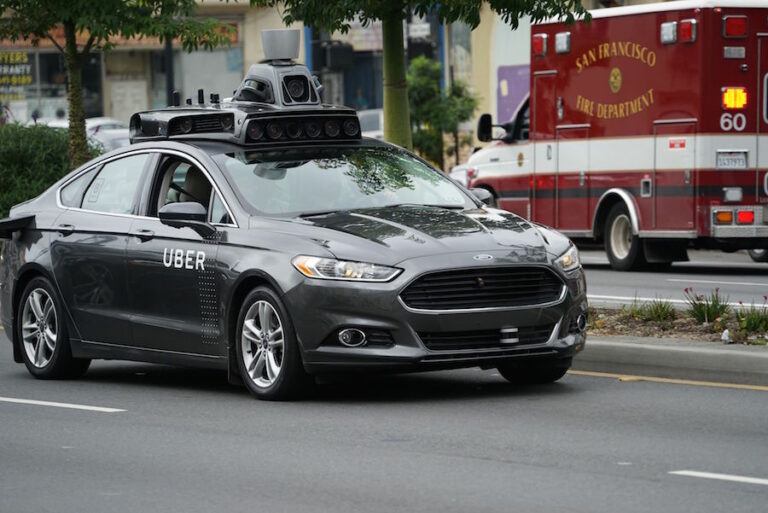
It seems the apparatchiks that head this regulatory hydra have bored of merely tormenting civilians. The agency announced Dec. 21 it would revoke the registration of Uber’s sixteen self-driving cars over the company’s unwillingness to apply for a $150 “autonomous vehicle permit.” Uber has had its self-driving taxis picking up San Francisco passengers since Dec. 14. The company argued that because an Uber driver was present in each of these vehicles, the cars were technically not self-driving, and no permit was needed to operate them.

Why is Uber, a ridesharing company with revenue nearing $2 billion, so averse to purchasing the $150 permit? The issue isn’t price. By having a permit, Uber would be forced to disclose trade secrets, like how it collects data on users and how its self-driving technology works. Such disclosures could allow other ride-sharing services to respond in-kind with their own technological innovation, making Uber less competitive in a rapidly developing market.

Self-driving cars will one day remove the malignant presence of human error in driving. The world will finally bid farewell to angry drivers, blind spots and DUIs — consulting firm McKinsey & Company finds that this could reduce traffic fatalities by 90 percent every year, saving up to 300,000 lives per decade. Self-driving cars will be on par with public health triumphs like vaccines and anti-smoking campaigns in terms of the number of lives saved.

California, home to Uber, Tesla and Google, is on track to reap the economic and cultural benefits of this auto industry disruption. In addition to reaping the jobs and infrastructure that these companies will create, California could be crowned the next auto capital of the world. If the state wants to continue down that road, as it should, it needs to allow these tech companies the breathing room to experiment and innovate. Tying them down with onerous red tape, like the permit they would require Uber to purchase, would drive the budding industry away.

Uber has already highlighted Pittsburg, Arizona, Nevada and Florida in a statement as cities and states which recognize “that complex rules and requirements could have the unintended consequence of slowing innovation.” This is a not-so-subtle threat to move its operations to more business-friendly locales, and with it the tax revenue and human capital essential to California’s growth.

Our politically progressive state should encourage technological progress by loosening regulatory frameworks and burdens like the DMV license. And the DMV, for that matter, whose Sacramento office has a wait-time averaging 105 minutes, ought to take notes on Uber’s innovation and efficiency.
Written by: Sid Bagga — sabagga@ucdavis.edu

Disclaimer: The views and opinions expressed by individual columnists belong to the columnists alone and do not necessarily indicate the views and opinions held by The California Aggie.

Humor: Professors still without answers in understanding projector technology

headshot_PNAggies advised to pray their next in-class video doesn’t also require sound
UC Davis has long been considered a magnet for some of the greatest scientists and engineers in the nation. Advancements in mass agriculture, clean energy and disease treatment can all be attributed to the geniuses, visionaries and prodigies who have graced these hallowed halls in the pursuit of knowledge.

Obviously, understanding is not in short supply here at Davis. But there is one piece of technology that stumps even the most elite professors — overhead projectors.
“I can’t understand it — I can calculate Graham’s Number to 1037, but I’m still trying to  figure out which input I should be using,” an anonymous professor lamented

Experts estimate that faculty holding at least one doctorate lose an average of 10 percent of class time and 40 percent of students’ respect while trying to display a PowerPoint presentation.
Some favorite troubleshooting techniques by these PhDs include: jiggling connections, asking students if they have an adapter for their laptop and pressing buttons on the media cabinet and projector remote indiscriminately.  

The California Aggie spoke with another professor who agreed to anonymously share his protocol in these situations: “The most important part of fixing the projector is looking cool and relatable to students. Say something really funny like, ‘Well, I guess class is cancelled’ or ‘Is it dark in here or is it just me?’ These shining gems of humor really help distract students from the fact that I’m wasting their tuition at a rate of around $77 an hour.”


The Aggie also got an additional perspective from a professor in the Engineering Department.

“Projectors work by filtering illuminated images through a lens,” said Professor Dean Brownlee, who specializes in light. “Seems simple, right? Wrong. Very wrong. Extremely wrong. Projectors involve protons, electrons, neutrons, wires, chips, science, circuits and protons. It’s for these reasons that projectors have been noted by professors as the most cutting-edge pieces of machinery in the world — possibly the universe.”


UC Davis’ motto is “Fiat Lux,” Latin for “Let There Be Light.” Aggies are advised to pray that their next in-class video doesn’t also require sound.

Written by: Parker Nevin — phnevin@ucdavis.edu

Social networking promotes survival in animals

CAT TAYLOR / AGGIE
CAT TAYLOR / AGGIE

Modeling shows how social cues drive animal grouping, fitness

In a world ruled by technology, it’s no secret that social media has a powerful effect on human behavior. While our friends in the animal kingdom aren’t known to share photos on Instagram or update their status’ on Facebook, they have other ways of relaying information that are similarly significant.

Using mathematical simulations, researchers at UC Davis and the University of Florida found that these means of “social networking” promote group formation among animals.

“Several empirical studies have suggested that social information — whether it’s incidental or deliberate — promotes animal grouping behavior,” said Mike Gil, a National Science Foundation postdoctoral fellow in the Department of Environmental Science and Policy at UC Davis.

The advantages of social networking through group formation essentially provide members of the group with an opportunity for increased fitness in various environments. These advantages arise when information shared by one member of the group is observed by others, relaying information on how to survive.

Animals are choosing groups in order for them to be able to get information,” said Katherine Sieving, a professor at the University of Florida and a UC Davis alumna. “Gathering social information in groups drives their formation.”

In addition to providing an explanation for why animals tend to form groups in nature, the researchers also found that the sharing of information favors the formation of small, heterospecific groups.

“What our study also revealed was that it’s most beneficial to be selective in how many individuals you’re grouping with,” Gil said. “We see this instance of smaller groups of information producers, because each individual is going to be a competitor in addition to an information producer.”

Constraints on group size can limit competition, thus leading to increased fitness among group members in a range of ecological contexts. Additionally, groups consisting of members of different species are optimal as they eliminate a margin of niche overlap between species. In these situations where members of a group share predators but overlap less in the kind of food they eat, the chance for survival and reproduction is greatly increased.

“Some group members [of the same species] often compete directly with one another for food. Other group members [of a different species] may only partially compete with one another,” said Zach Emberts, a Ph.D. candidate at the University of Florida who collaborated with Gil on the research. “Thus, depending on the situation, it might be beneficial to have group members that are not solely competing for the same food source.”

In a world where reproduction is essential for the continuation of life, animals seem to have figured out the key to survival. While patterns among these animals are recognizable, a lot of the understanding of their strategies has been largely based on speculation. This study provides a meaningful direction to work toward.

Those of us that actually work with these social groups, we know what’s going on, but it’s really hard in anyone’s study or system to figure out why,” Sieving said. “That’s the beauty of a good modeling paper like this one.”

The paper written by Mike Gil with co-authors Zachary Emberts, Harrison Jones and Colette St. Mary can be found in The American Naturalist.

Written by: Abigail Saenz — science@theaggie.org


Now on to the NFL Conference Championships

0

KEITH ALLISON [CC BY-SA 2.0] / FLICKR
What happened last weekend?

Another weekend of NFL playoffs has come and gone. Those of you who watched from home witnessed some gut-wrenchingly close games that had us gripping our seats until the very end, while others revealed some remarkably lifeless performances from teams who lacked in showmanship and play-calling.

But going into the playoffs, we as fans must remind ourselves that, regardless of what we witnessed during the regular season, this is the playoffs. Here, we get to experience the true essence of what it takes to be a complete team — one that outperforms its opponent through teamwork and the ability to outmaneuver the other’s play-calling in one make-or-break game of physical chess.

The first game on Saturday featured the New England Patriots and the Houston Texans. Going into Saturday’s matchup, Houston boasted the league’s best defensive unit but was still seen as the underdogs, due in part to its record of 9-7, the worst among remaining playoff contenders.

The Wild Card win against the 12-4 Raiders gave the Texans some much-needed swagger for their matchup against the Patriots, who won seven straight games before the postseason. Houston’s quarterback woes during the regular season did not disappear for the playoffs, and it showed on Saturday, as Brock Osweiler threw a dismal 198 yards on 40 attempts and three interceptions.

On the bright side, the Houston defense was able to intercept Tom Brady twice, matching the amount of turnovers he gave up all season. For many fans and experts, the Texan’s “Cinderella Story” was doomed in the winter chill of New England before it had a chance to begin. The final score was 34-16, with the Patriots advancing.

Saturday’s late game between the scrappy Seattle Seahawks and the offensive powerhouse of the Atlanta Falcons was another outmatched contest. Lead by quarterback and MVP hopeful Matt Ryan, the Falcons put on a stellar performance for their home crowd as they trampled over a Seahawk team that struggled to keep their momentum in an ecstatic Atlanta stadium. Seahawks quarterback Russell Wilson turned the ball over twice with two interceptions and tripped in his own end-zone for a safety while his counterpart threw for over 300 yards and three touchdowns with no turnovers. Atlanta ran away with the lead in the second quarter and never looked back, winning 36-20 to reach its first NFC championship game since the team lost to the 49ers in 2013.      

Sunday’s matchups proved to be more thrilling. The Green Bay Packers went into Dallas to face a young and stout Cowboys team. The Cowboys’ miracle season under the leadership of rookie quarterback Dak Prescott and the NFL’s leading rusher, rookie Ezekiel Elliott, were seen by many analysts to be the favorite to represent the NFC in the Super Bowl. But Green Bay and its wily quarterback, Aaron Rodgers, had different plans as the Packers dominated the first three quarters, leading 28-13 going into the fourth. Dak and the boys rallied to come up with 18 unanswered points. But, unfortunately for America’s team, that wasn’t enough to topple the Packers, losing 34-31.

Sunday’s final matchup between the Pittsburgh Steelers and the Kansas City Chiefs played out the way many had anticipated, with both teams duking it out in four hard-fought quarters. The Chiefs’ defense has been one of the top units all year but have struggled against the run, ranking 26th according to NFL.com. It showed as they gave up 160 yards to the Steelers’ tailback Le’Veon Bell. The Chiefs held the Steelers without a single touchdown, but fell short of keeping them out of field goal range, where second-year kicker Chris Boswell helped his team become the sixth in NFL history to win a playoff game without scoring a touchdown. For those of you who devalue kickers, Chris Boswell has six reasons and 18 points why he doesn’t care.

This past weekend’s playoff games separated the contenders from the pretenders. This Sunday, Jan. 22, will lead off with the Green Bay Packers taking on the Falcons in Atlanta at 12:05 p.m. PST followed by the Pittsburgh Steelers heading to Foxborough to take on the Patriots at 3:40 p.m. PST.

Who will represent their divisions in the most anticipated game of the year? Watch and find out.  

Written by: David Flores — sports@theaggie.org