55.4 F
Davis

Davis, California

Sunday, December 21, 2025
Home Blog Page 683

Police Logs

0
DANIEL TAK / AGGIE FILE

More turkeys, more tomfoolery, more accidental calls

Oct. 30

“Turkey in the roadway, vehicles stopping causing a traffic hazard.”

Oct. 31

“Open line –– sounds like it’s in a pocket.”

Nov. 1

“Child playing with phone.”

Nov. 3

“Male subjects pants keep falling down, with his genitals exposed.”

Nov. 4

“Male on a motorized bike pulling a trailer, excessive speed.”

Yolo Food Bank’s eighth Annual Running of the Turkeys Fun Run/Walk

0
CHRISTIE NEO / AGGIE

Participants line up for Thanksgiving 5k before gobbling up dinner feasts

For the eighth year in a row, the Yolo Food Bank (YFB) will host the Running of the Turkeys on Thanksgiving morning at 8 a.m. on Nov. 24 — this annual event features a 5k Fun Run/Walk.

YFB also hired a race coordinator this year to help organize the family (and dog) friendly event. The Fun Run/Walk will begin and finish in Woodland at Heritage Plaza and will take participants through the historic sites in the city.

Prizes go to the top three male and top three female overall finishers, as well as the top three finishers for both men and women in a wide-range of age categories. The “fun” portion of the Fun Run/Walk also presents prizes to the best dressed participant, first dog finisher and the largest team.

The proceeds from this event go toward YFB programs, services and partnerships, including the Kids’ Farmers Market, Holiday Food Distribution and regular food assistance programs.

The money from these fees go directly to the YFB. The nonprofit estimates that every dollar yields enough food for two to three meals. The event helps them work toward their overall goal and mission of ending hunger across the county.

According to YFB’s official press release for the event, “Yolo Food Bank is committed to increasing access to fresh fruits and vegetables, and works to educate the community on healthy eating. We distribute more than 4 million pounds of food annually.”

YFB development associate Becky Beaman is leading the event planning and hopes that the fun run allows for community outreach, including sharing information about YFB programs and services and reaching out to potential donors, volunteers or people in need of YFB’s services.

“There are two main goals,” Beaman said. “[One big goal of the fundraiser is to] raise about $50,000 for yolo food bank. The other big goal is to bring awareness about the food bank and what it is that we do.”

YFB Marketing and Communications Coordinator Kevin Brown worked as a photographer for last year’s Running of the Turkeys; this year, however, he registered for the race and plans to take pictures from a runner’s perspective.

“My best memory was being at the starting gate [last year…] was this big, giant inflatable arch for the starting and finish line,” Brown said. “Seeing all the different people running it, because it’s all different ages […] and seeing the crowd come toward me, it was really electric. It was a beautiful way to start Thanksgiving.”

Lloyd Knox, a professor in the Department of Physics, is organizing a campus team for the Running of the Turkeys fundraiser for the fifth consecutive year — and this year’s team has a new name: The Running Coupling Constants. Knox encourages everyone to join in support for YFB.

“More than 20 percent (44,000) of Yolo County residents do not have enough to eat,” said Knox in a Dateline UC Davis University News article, “Holiday Helping: A Food Drive and Fun Run”.  “One in four children do not know where their next meal will come from.”

Children ages 5 and under, can enter the race for free. Participants ages 6 to 17 can register for a little over $20 and those 18 and older can sign up for the race and service fee of $41. However, the cost of registration increases slightly on Nov. 22. Registration is open on the event website and also includes an event t-shirt.


Written By: Bianca Antunez – city@theaggie.org

Library hosts workshops to shape future space

BRIAN LANDRY / AGGIE

Community consideration taken into account for campus library improvements

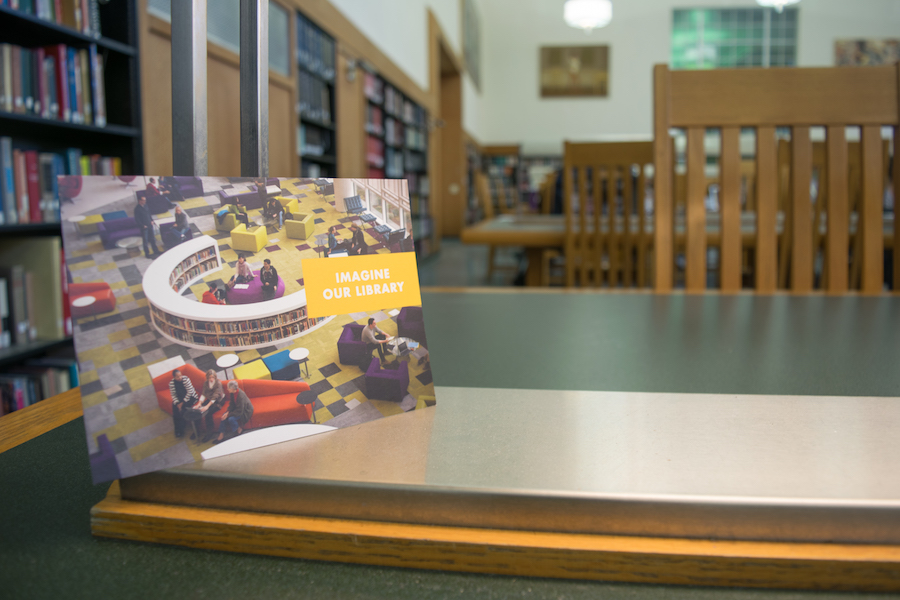
The UC Davis library hosted four workshops from Oct. 24 to Oct. 26 for the UC Davis community in order to further develop the Library Space Planning Project. The project aims to incorporate a variety of new spaces within the three campus libraries to serve the future needs of faculty and students.

During the workshop, attendees were encouraged to think of the library as a place for individual and small group study, for research, a space of collaboration and an academic hub.

“Rather than just start renovating, we are taking our time to consult with students and faculty to find out what […] they think the library does, and how we can change and transform the building to do that,” said William F. Garrity, UC Davis deputy university librarian and chief of staff.

These workshops were collaborative and hands-on, with participants encouraged to suggest ideas during small group activities. In one activity, attendees wrote ideas about how to improve the library on sticky notes, and group members expanded on those ideas. In the end, each participant presented one of their group’s ideas and everyone was given the chance to vote on which were the most innovative and useful.

Jiayi Young, professor in the Design Department who participated in the workshop, enjoyed the activities.

“I think it’s absolutely intriguing to imagine what the library will apply and how to incorporate from the university,” Young said. “I thought the energy that the small group had was incredible. A lot of people had ideas and dreams to write it out, doodle out, sketch it out and exchange. It was fabulous.”

Young hopes that the library will include a mutual space for interdisciplinary research and a materials lab in the future.

Shields librarian Axel Borg believes that the library has shifted to become more interdisciplinary over the years.

“There has been a changed attitude on campus from before,” Borg said. “The library was insular before, and we are now doing a lot to get that out.”

Borg, who attended one of the workshops, recommended that the future libraries include workshop-sized rooms to be used on a rotational and short-term basis.

These workshops are part of phase one, visioning, for the Library Space Planning Project, in which staff, students, faculty and community members can share their visions for  the future of the university’s libraries.

“These workshops are to elaborate on the themes, maybe put more substance to them,” Garrity said. “Because the next step will be to talk in general about what kinds of spaces, for example, we support.”

Midpoint findings after the Spring Quarter 2016 included a desire for more access to food and coffee, more amenities like outlets and white boards, more diverse furniture and ambiance and meeting rooms with display technology.

In December, the library will host a university-wide forum, and it will release a final report in Feburary. The second phase of the project will run from March to October 2017 and will develop specifics of general space requirements so that architects and designers know what is needed. Phase three, design, will begin in November 2017 and will last for an indefinite amount of time.


Written by: Yvonne Leong — campus@theaggie.org

Interim Provost Ken Burtis announces upcoming renovations for Chemistry Complex

ALEXA FONTANILLA / AGGIE

Projects will focus on adding new, safer equipment with more modern design

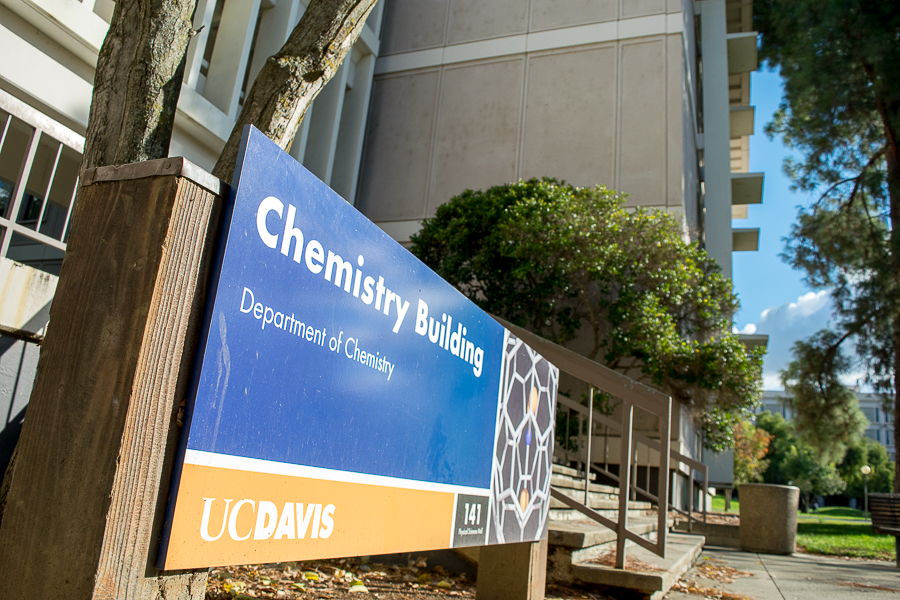
Earlier this month, Interim Provost and Executive Vice Chancellor Ken Burtis announced at a Department of Chemistry meeting that the university is going to begin working on multiple projects to help upgrade many areas within the Chemistry Complex.

Bill Starr, senior project manager at UC Davis Design and Construction Management, said that the university has been considering these renovations for over eight years and decided to finally proceed with the project without state funding.

“For many years the chemistry renovations were on the campus’ plan for state funds, however, the projects were never funded,” Starr said via e-mail. “State funding was eventually provided for seismic corrections, but it became clear to the campus that, absent further state involvement, the campus needed to invest in chemistry for renovation beyond the seismic corrections.”

There will be three active projects funding the renovations: the Chemistry Safety Improvements, Chemistry Addition and Phase 1 Renovation (CAP1R) and the Chemistry Seismic and Life Safety corrections.

The Chemistry Safety Improvements is a $1.5 million campus-funded project that is intended to increase security and safety in both buildings with improvements such as emergency lighting and door access controls.

The $56 million CAP1R project is expected to reshape many aspects of the Chemistry Complex, renovating the first floor to add new research laboratories, office and interdisciplinary collaboration space and improvements to the electrical and exhaust capacities of existing labs. There will also be a three-story addition on the west face of the Chemistry Building that will provide a new front door and increase the area of the building by 20 percent.

The new lab and office space will be able to accommodate growth and provide a new design for more modern, high-capacity labs as well as interdisciplinary collaboration space for chemistry-based disciplines.

There will be improvements to the Chemistry Building’s exhaust and electrical systems, including an increase in fume hoods, access to standby electrical power and complete renewal of the building’s cooling and heating systems.

The $35 million Chemistry Seismic and Life Safety corrections, which is already in the works, will add fire suppression to improve the seismic performance of the Chemistry Complex. It will allow standby electrical power available for critical equipment in the Chemistry Annex, renovate restrooms and provide landscaped ramps for access to both buildings.

The construction of the Chemistry Safety Improvements project is underway now and scheduled to be complete in December. The Chemistry Seismic and Life Safety Corrections will start begin this summer and CAP1R will start in the summer of 2018.

The Chemistry Building and the Chemistry Annex were both constructed over 45 years ago, with much of the lab space designed for undergraduate teaching. Over the years, the buildings and systems have aged, and there has been an increase in faculty and student population. There has also been a need for safer and more energy-efficient laboratories, and the buildings now almost exclusively house research laboratories. This all called for an improved and upgraded facility.

Scott Berg, chemistry facilities manager, said that these renovations are long-awaited due to the accumulating issues within the buildings, and that these changes will lead to reallocations in the coming months.

“The chemistry buildings have a long list of problems and deficiencies,” Berg said. “Inadequate space for teaching and research, electrically underpowered, aging utilities and sinking basement floors are just the top of the list. Chemistry has absolutely no physical space left to continue growing at the rate we have seen in recent years.”

Berg says the Chemistry Department can expect to have research projects and labs disrupted and relocated as the buildings are retrofitted for earthquakes. The department hopes to be able to move the researchers and students into renovated and modernized lab space if given proper funding.

Ace Gita Galermo, an analytical chemistry Ph.D candidate who works for the Lebrilla lab within the chemistry complex, believes these renovations would help improve students’ learning and create an even better image for the campus.

“Not only would scientists have access to the proper means for conducting their research, but it would introduce a whole new level of confidence for our students,” Galermo said. “Since UC Davis has been labeled as one of the top research universities in the world, now it is time for us to look the part. Research has become much more advanced over the past several decades, and we are in need of a building that is as technologically advanced as the scientists and instruments which occupy it.”


Written by: Demi Caceres — campus@theaggie.org

Women’s Basketball Season Preview

CAT TAYLOR / AGGIE
CAT TAYLOR / AGGIE

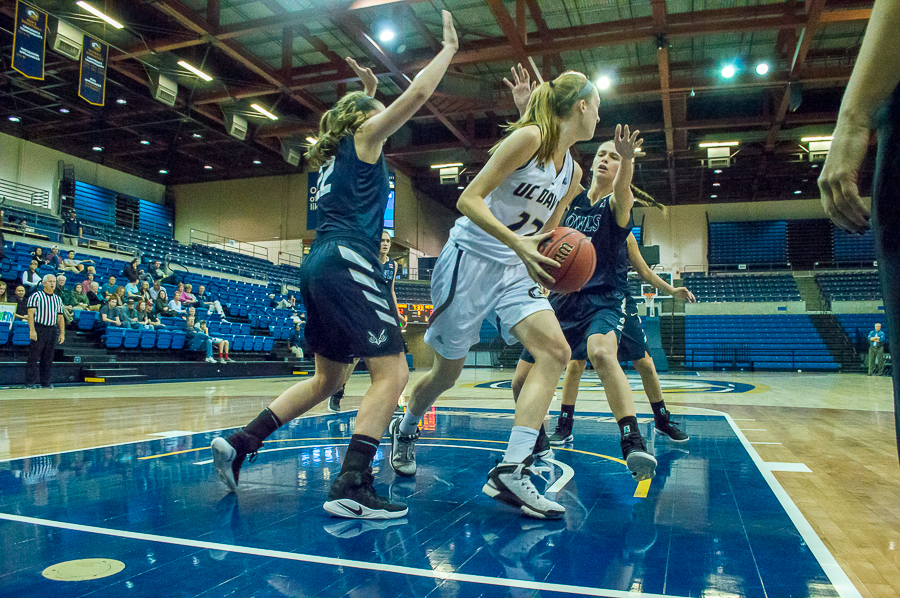
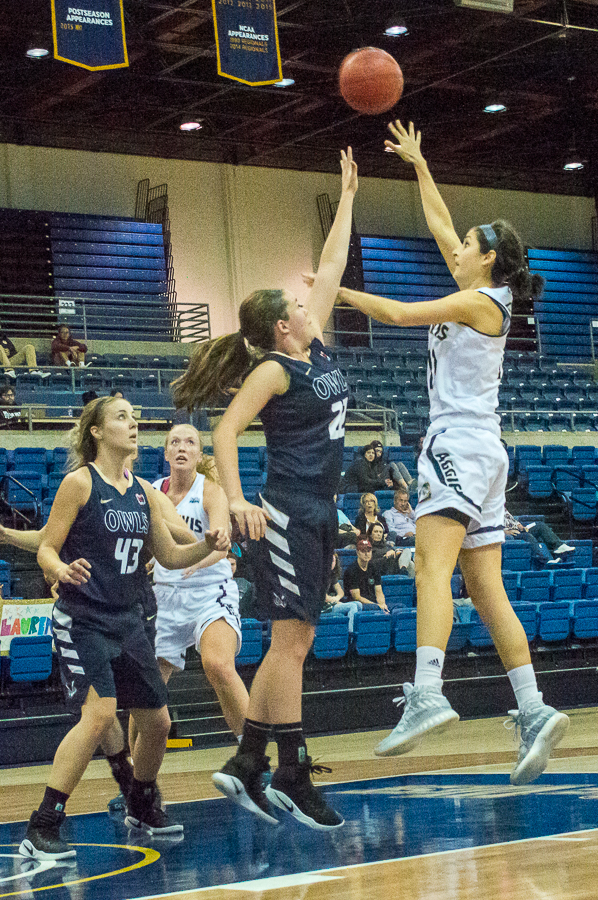
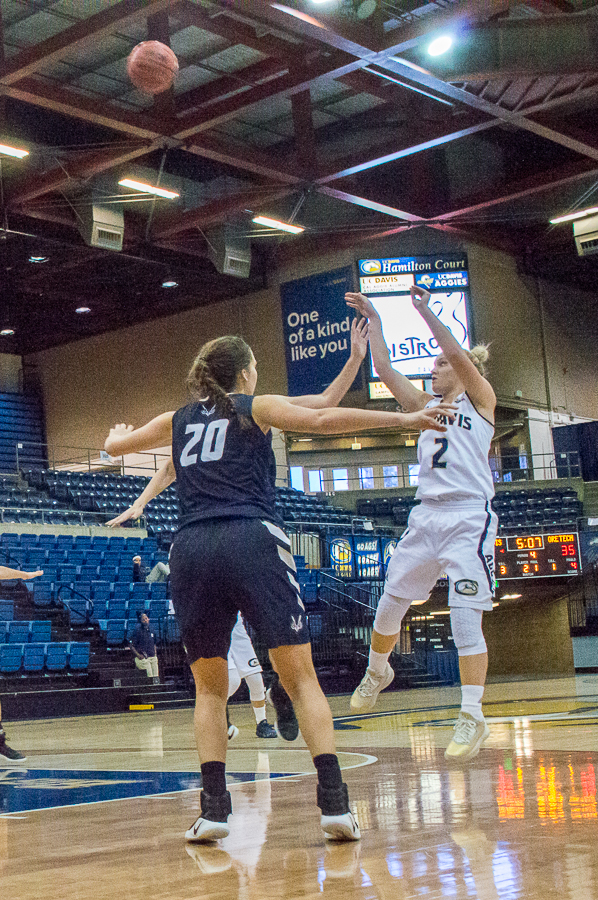
UC Davis women’s basketball is back. The same team that shocked the conference with an upset over undefeated UC Riverside in the Big West Tournament semifinals returns to The Pavilion with the addition of a talented freshman class. The 2016-2017 squad has been on campus since Summer Session Two, taking classes and working together at limited workouts with the coaching staff. Following two successful exhibition games, Aggie basketball now returns with a 7:00 p.m. tipoff against Portland State on Friday, Nov. 11.

CAT TAYLOR / AGGIE
CAT TAYLOR / AGGIE

Five freshmen join the team this season, all expecting to see immediate game action with the exception of forward Emma Gibb, who suffered an ACL injury over the summer. Guard Nina Bessolo is already making a huge impact, scoring 18 points off the bench in a 97-42 exhibition win over Oregon Tech. Fellow newcomer Sophia Song also saw game action as forward, scoring seven points and collecting eight rebounds in her preseason college debut. Redshirt junior center Marly Anderson also joins the team after sitting out last season due to transfer rules after her transition from Eastern Washington.

In the final exhibition game before preseason play, the Aggies annihilated Stanislaus State, winning 84-47. With a 15-point lead at halftime, UC Davis went on a 15-0 run to start the second half, cruising to their second exhibition victory.

“Obviously the tournament championship has been in our minds since the first day of spring practice and what we need to do to get ourselves back in that position,” said head coach Jennifer

CAT TAYLOR / AGGIE
CAT TAYLOR / AGGIE

Gross. “It’s easy for everyone in the country at this point to say, ‘we want to win a conference championship,’ but for us we’re really just trying to focus on today.”

Other than one senior, the Aggies have a young team that is posed to take a shot at making the NCAA Tournament in March. They will be tested along the way, facing two preseason top-25 ranked teams, Stanford and Oregon State, as well as a rigorous conference schedule.

“I think this team is capable of beating everybody on our schedule. Obviously against teams like Stanford and Oregon State, which are tremendous teams, you have to be at your best,” Gross said. “I’m just excited to compete against every team. I feel like there’s not an easy game on our schedule and there’s not a game we can’t be in.”

The team is led by redshirt senior forward Lauren Beyer, as well as a trio of juniors who have taken on unique leadership roles. Redshirt sophomore Morgan Bertsch, who finished top 10 in the nation last season in field goal percentage, is expected to be even better, according to Gross.

“With all these young players, it’s all about moving the program forward,” Gross said. “To have [had] an opportunity to play for a championship last year, even though we fell just short, we know that we are capable of competing at a high level and I think our schedule will give us the opportunity to do that.”


Written by: George McConnell sports@theaggie.org

The heartbreak of the 2016 Cleveland Indians

0

ARTURO PARDAVILA III [CC BY 2.0] / FLICKR
The Indians made it all the way to the World Series but came just short of winning it all  

After last Wednesday’s victory against the Atlanta Hawks, Lakers head coach Luke Walton drifted during the middle of a postgame presser to catch the score of the World Series Game 7 between the Cleveland Indians and Chicago Cubs. After seeing that the Indians were down, he laughed and said with a smile “How’s that feel, Cleveland?” Walton was an assistant coach for the 2016 Warriors, who infamously blew a 3-1 lead in the NBA finals against the Cleveland Cavaliers.

The Indians began the postseason in an an absolutely dominant fashion, in which they ran through the American League in eight games and eventually went up 3-1 against the Chicago Cubs, putting themselves only one win away from bringing another major sports title to Cleveland in the same calendar year. Unfortunately for the Indians, they melted down and let the Cubbies rattle off three straight to bring their first World Series back to Chicago since 1908. Congrats to Chicago, but Cleveland now enters its 68th year of the now-longest title drought in the MLB with no end in sight.

The Warriors can handle the self-deprecating humor about their meltdown in June. They had won in the prior year, they’re probably going to win this year and they will probably be favored again a year after that as well, but this meltdown has got to hurt for the Indians. Competitive balance in the MLB is much greater than in basketball, so the odds are definitely stacked against them to win the pennant once again with the current nucleus of players.

The Cubs could’ve handled defeat, as they are primed to become perennial contenders for the foreseeable future. They have an incredibly young and talented core that is paired with the ability to outspend any other team outside of New York and Los Angeles. But this is Cleveland. Forbes has it listed as the 27th wealthiest team in baseball, so the team’s needs are most likely not going to be met through this free-agent class.

Cleveland’s path to the World Series was incredibly unconventional this postseason. With the season-long absence of Michael Brantley, the midseason losses of starting pitchers Carlos Carrasco and Danny Salazar, the Indians seemed doomed. Once the starting pitching fell apart, the Indian’s own beat writer, Paul Hoynes, exclaimed “On Sept. 17, the Indians were eliminated from serious postseason advancement before they even got there.” Well, he was wrong. Terry Francona brilliantly strung all the right tunes to get every last inch out of his guys, and they were one win away from completing the job, just one. When Rajai Davis homered in the 8th inning to tie the game at six in the 8th inning, it felt like the Indians were destined to stave off fate and finish the Cubs, but they came up short yet again.

The odds of the Indians getting this opportunity once again seems bleak. Their success will be incredibly tough to emulate because of the constantly changing circumstances in the world of baseball.

Cleveland had an incredible run in 2016, and while it might be premature to write them off once again just as Hoynes did in September, I find it difficult to believe that the Indian’s run of brilliance will resurface yet again.


Written by: Michael Wexler — sports@theaggie.org

Fatigued UC Davis swim team splits double-dual at home

0

swimdiveneveda_sp_jay_gelvezon1With two opponents coming into town, Aggies split their matchups to improve to 6-3.

Just two weeks out from an upcoming three-day invitational, the UC Davis swimming and diving team found itself in a double-dual meet versus the Pioneers of Cal State East Bay and the Wolf Pack from Nevada. While the team won big against the Pioneers, scoring 227-67, it struggled to keep up with the Wolf Pack, and fell 169-126. With the Phill Hansel Invitational in Houston, Texas just under two weeks away, the Aggies needed a good showing. Though they did not win, head coach Barbara Jahn liked what she saw from her team.

“It was a good meet for this time of the year. I think the weather really cooperated with us,” Jahn said. “We had quite a few season-best times, so that was encouraging. There are just little things that we need to tweak here and there to get faster.”

Senior Marissa Brown didn’t let fatigue wear her down.

“Everyone’s pretty tired right now, but I think they did a really good job of staying positive and fighting through. I think it’s a good learning meter. We have our big taper meet in a couple weeks, and everyone’s positive. We just have to keep fighting.”

JAY GELVEZON / AGGIE

Brown raced in both of the long freestyle events and placed first in both. She explained what a swimmer does to keep fresh between two long races, and that is by keeping hydrated.

“I warm down very well after the 1,000 and try to drink a lot of liquid,” Brown said. “It feels like I’m collapsing, but I just try to get mentally ready for it. I’ve been doing this for a while, and I’m used to the doubling.”

In the first race, the 1,000 yard freestyle, Brown found herself neck and neck with Nevada swimmer Sita Kusserow for a majority of the race. Rather than let the close race get to her, she credited associate head coach Pete Motekaitis for keeping her on her toes.

“Pete told me to keep it effortless the first 400 [yards]. Once I hit 400 I pushed ahead a little bit and saw how far I could get ahead of her,” Brown said.

Jahn praised Brown for her effort.

“She’s making a very good comeback,” Jahn said. “She took last year off because she’s had some medical issues, and it’s really fun and encouraging and

JAY GELVEZON / AGGIE

exciting to see how well she’s swimming right now. She’s a fifth-year senior, and it’s rewarding to see all her work and dedication to rehab pay off.”

Meeting two teams at once may seem like it would put a damper on preparation, but according to Jahn, the preparation is not much different than any other game.

“In this situation we put our lineup up against UNR and let the chips fall where they may against Cal State, East Bay,” Jahn said.

While the team may have struggled on the boards, placing no higher than fourth on both the one-meter and the three-meter boards, the other side of the pool proved to be a much closer matchup. Aside from the victories in the 1,000 and 500 yard freestyles, the Aggies placed first in the the 200 yard backstroke (sophomore Solie Laughlin, 2:02.92) and the 400 yard freestyle relay (junior Courtney Schultz, freshman Jamie Pincin, sophomore Mia Facey and senior Kirsten Brand, 3:30.50).

All things considered, Jahn knows what she needed to see from her team moving forward.

“We were tired and sick,” Jahn said. “So they need to take care of themselves and get healthy so that we can have a great meet when we are in Texas.”

The Phill Hansel Invitational takes place in Houston, Texas from Nov. 18 to 21.


Written by: Bradley Geiser — sports@theaggie.org

Community through clothing

MEENA RUGH / AGGIE
MEENA RUGH / AGGIE

Asterisk Clothing Fair provides free, accessible clothing for transgender, gender-nonconforming individuals

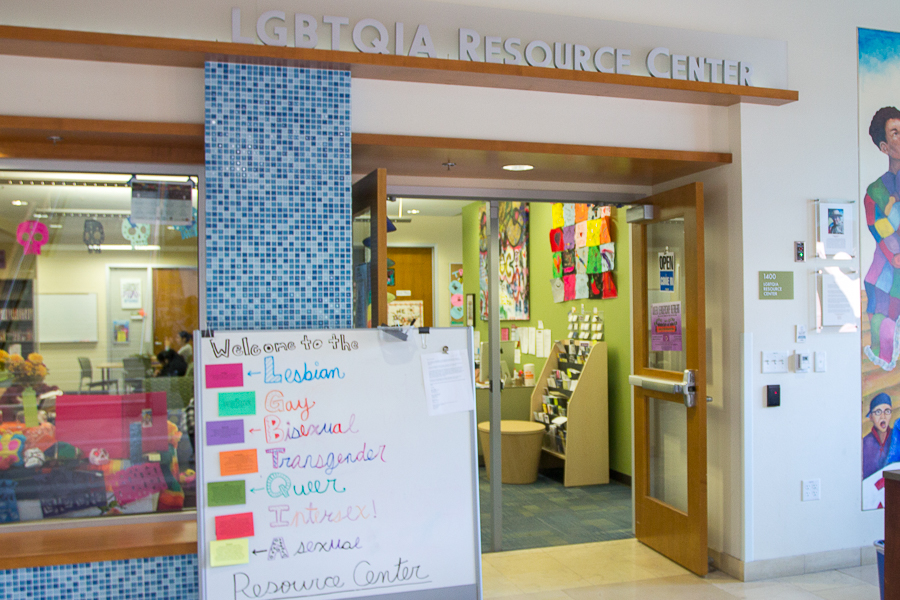
The third annual Asterisk Clothing Fair will be held on Nov. 22 from 3 to 5:30 p.m. in the LGBTQIA Resource Center (LGTBQIARC). The fair intends to provide free clothing for transgender and gender-nonconforming folks, as it can sometimes be both expensive and dangerous to buy new clothing for these communities.

Additionally, the event aims to create a safe space for those individuals without fear of body shaming or transphobia. Mat Talton, a fifth-year genetics major and community coordinator at the LGBTQIARC, is the primary organizer for this event.  

“This is also a great way to come and see a group of people who feel the same way as you and realize that you have a community,” Talton said.

The clothing available depends on donations from the community, and the center will be accepting donations until Nov. 11. In an effort to cater to more sizes, the center will only accept clothes from sizes medium to 3XL, although extra-small and small sizes are welcome for masculine and men’s clothing. Unopened makeup and cosmetic tools can also be donated, in addition to accessories and shoes. The clothing must be wearable, with no stains or rips.

Talton works alongside Gender Group, a closed support and social group on campus for folks who identify as genderqueer, bigender or other identities that fall under the umbrella of trans. Eva Angeli, a third-year physics major who works for Gender Group as a facilitator, has been supporting Talton with this event and has volunteered at the fair in the past.

As Angeli pointed out, the fair offers more than free clothing.

“The Asterisk Clothing Fair not only provides a safe space to find outfits which match the way they want to present, but also lets them see that they are supported and celebrated for who they are,” Angeli said.

The event will also feature sewing classes to alter clothing items that may not fit perfectly. The clothing fair originally started as a project for Trans Awareness Day, but this year it will be on a larger scale. The goal is to have the clothing available year-round in the center and not just during a single event.

“We are trying to make half of our storage room a clothing ‘store’, and our director is currently trying to find furniture for us,” Talton said.

In the past, the center used generous staff members’ offices as dressing rooms and placed a full-length mirror in the hallway. This year the center hopes to get more donations to make the fair even more successful and accessible.

Many UC Davis students believe that this event will promote a more inclusive community. Maggie Chew, a third-year biological sciences major, thinks this is an important event in showing solidarity with others’ identities.

“To have a really big UC campus that’s well known and [an event] a lot of people are going to shows a lot of support, so it feels more comforting [knowing] that people are donating clothes for you,” Chew said.

If interested in donating clothes to the fair or want more information, please visit the Facebook event page.


Written by: CaraJoy Kleinrock and Abigail Wang — arts@theaggie.org

Moonlight is the best film of the year

HANNAH LEE / AGGIE
HANNAH LEE / AGGIE

Barry Jenkins’ film is subtle, gorgeous — and urgent

It can seem flippant, even callous, to write a movie review at a time like this. In the wake of shock and horror, as the nation and the world reel from the realization that it can happen here, as we come to terms with dark and difficult times ahead — aren’t there more important things to talk about than movies, than art?

At the moment, I can’t think of anything more important to talk about than art. Especially when the art in question is as extraordinary as Moonlight, director Barry Jenkins’ critically-acclaimed film about a young black man struggling to understand his sexuality in a rough neighborhood of Miami at the height of the War on Drugs.

Moonlight is told in three acts, titled “Little,” “Chiron” and “Black,” vignettes of Chiron’s childhood, adolescence and adulthood. As a child, played by Alex Hibbert, he is full of wide-eyed innocence yet cagey and taciturn, a too-old-for-his-years product of rough streets and a rough home. He is discovered hiding from schoolyard bullies in a crack house by Juan, played by the incredible Mahershala Ali, who takes him home; Juan’s neat, quiet house becomes a refuge for Chiron — clean sheets, warm meals, a father figure, none of which he has at home.

But this life is a fantasy, a facade, and Chiron has questions that Juan can’t answer. “My mama does drugs?” he asks Juan, over dinner, putting the pieces together. “And you sell drugs?”

Another question, over another dinner: “What’s a faggot?” Juan stumbles for an answer, and Chiron presses him: “Am I a faggot?” It’s the way he asks these questions, his voice flat and his gaze unblinking, that tears your heart out.

Finding the sweet spot between specificity and universality is one of the eternal problems of art: too specific, and you alienate the majority of the audience; too general, and good stories turn into fabular cliches. Moonlight is one of those rare films that walks the line between the two, and although it touches on universal issues, it would be only half-true to call it a coming-of-age film about love, identity and family. This is a film about a queer, Black life.

Moonlight may be one of the best films of the year, but it’s also one of the most beautiful. Film and TV are getting darker — “peak TV” has brought us a bevy of prestige dramas so low-lit and shadowy that they’re almost impossible to watch — but Moonlight is shot in Miami’s sun-bleached pastels and rich neons. The scenes at night are especially striking; rather than the usual black and gray, Chiron’s nights play out in shades of lush indigo, violet and gold. The soundtrack is an eclectic mix of 60’s Motown and soul, 90’s hip-hop and composer Nick Britell’s spare, haunting orchestral score, which fit together with surprising ease.

Coming-of-age films often fall into the same stock narrative, but Jenkins sidesteps the tropes of the genre: in the third act, Chiron is grown, but he’s back at the beginning of the circle, selling drugs in a do-rag like Juan, still adrift and unsure of himself. An out-of-the blue phone call from Kevin yanks him back to Miami — Kevin, a high school friend who kissed and loved Chiron before falling prey to the hunt-or-be-hunted law of high school and beating him bloody after class, and who Chiron says is still the only man who’s ever touched him. Affection between men is rare in film, and between men of color it’s even rarer, but Kevin holding Chiron’s head, stroking his hair, is gentle and tender, a fleeting moment of genuine love in a lonely world.

Barry Jenkins has created a masterpiece — Moonlight is subtle, sublime and as close to perfect filmmaking as you can get — and it couldn’t have come at a more perfect time. In a country bitterly divided against itself, Moonlight accomplishes what all the campaign outreach teams and calls for unity and understanding couldn’t. It’s why we read books and watch movies at all: to feel and know a life and an experience other than our own. Right now, that might be the most important thing in the world.

Written by: Emily Stack — copy@theaggie.org

A rite of passage

0
LUCY KNOWLES / AGGIE

UC Davis bike circles represent campus pride, history

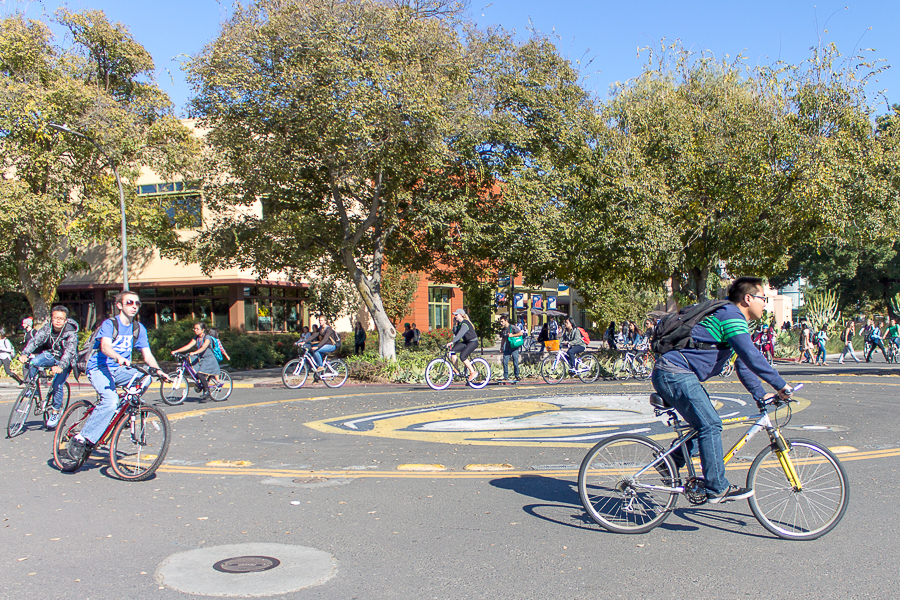
On an autumn afternoon, bikes zoom around campus as students rush to-and-from midterms. Nina Sherwood, a first-year managerial economics major, entered the bike circle at the intersection in front of Rock Hall and the Student Community Center (SCC) on her way to class. However, she didn’t quite make the exit.

“It was so busy that I couldn’t get out,” Sherwood said. “I had to go around twice!”

At one point or another, all students likely hear the statistic that there are more bicycles in Davis than there are people. Inevitably, with so many bikes comes traffic congestion and accidents. Bike circles strategically placed around campus help deal with the extensive daily bike traffic.

Tales of embarrassing crashes and injured egos at campus intersections are hot topics the first couple of weeks of Fall Quarter. Rumor has it that hordes of upperclassmen congregate at the busiest bike circles to witness the accidents of new bikers navigating the roundabouts.

“I heard [that] the seniors always put out lawn chairs around the bike circles and stare at you the first week,” said Kimberly Dinh, a first-year managerial economics major. “People [tell me], ‘Don’t bike the first week or you’ll get in an accident.’”

Although notoriously anxiety-inducing to first-years, these bike circles have served an important role in maintaining efficiency on campus for almost 45 years. The first bike circle was installed in 1972 at the busiest intersection on campus — the same one Sherwood found herself stuck in last week.

“I was actually a graduate student here back in the early ‘70s when the first roundabout was installed on campus,” said David Takemoto-Weerts, newly retired campus bicycle coordinator for Transportation and Parking Services (TAPS). “[Now], the first time [a student] rides through a roundabout during class break [in] Fall Quarter is sort of a rite of passage.”

At the time, Rock Hall had a different name and the SCC was a congregation of temporary buildings. Takemoto-Weerts still remembers the first roundabout installation as if it were yesterday.

“It was pretty chaotic [before] — you’d have this bike traffic gridlock, essentially,” Takemoto-Weerts said. “So somebody […] thought about doing a roundabout there. [The campus] went in there with some old firehose from the fire department and laid [it] out [as] the center circle […] rather than […] putting [in] any permanent structure. Then they marked [the asphalt] with chalk arrows to tell the people ‘this is the way you go around the [circle].’”  

Even though these roundabouts are abundant at UC Davis, traffic circles and roundabouts are far more common on the East Coast and Europe than they are in California. Therefore, it’s not shocking that most students have little to no prior experience using traffic circles before coming to UC Davis. In fact, calling them “bike circles” is a misnomer.

“You sometimes hear them referred to as ‘traffic circles’ and […] ‘roundabouts,’” Takemoto-Weerts said. “What we have on campus [are] all roundabouts, not traffic circles. The ones on campus have no stop signs or signals [when] you’re about to enter [them]. If you have signals or stop signs at the approach to a roundabout, it becomes a traffic circle.”

Roundabout or circle, these mechanisms of efficient traffic flow help thousands of students safely bike to class every day. According to Takemoto-Weerts, the two basic rules to conquering roundabouts are to enter in a counterclockwise direction, and to yield to those already in the roundabout. Right now there are 27 roundabouts on campus, with more planned for the future.

Takemoto-Weerts pointed out that adding a traffic circle to an intersection is easier said than done, with multiple factors involved in planning, development and construction. One location of interest is the three-way junction at the top of East Quad Avenue and North Quad Avenue by Hickey Gym.

“That [location has] always been put off because [of] what we call ‘heritage trees,’” Takemoto-Weerts said. “There’s at least one huge tree […] that would have to go [in order to put in a circle]. There’s a real reluctance on part of the campus to do that, otherwise it would have been done years ago.”

Heritage trees” possess important characteristics or values for a community. They contribute to a sense of pride and camaraderie at UC Davis similar to bike circles. Whether looking up at the leaf-crested branches of heritage trees or down at the face of the school mascot painted on a bike circle, each is an important symbol of the UC Davis community.

Logos in the bike circles are familiar to students who attend the school today, but they are relatively recent additions. In 2007, during an effort to enhance Aggie pride, a team of students and faculty installed UC Davis logos in the most prominent bike circles on campus. The team included Greg Ortiz, now the ASUCD advisor to athletics and administrative advisory committees, Stan Nosek, vice chancellor for administration, Sal Genito of Buildings and Grounds and then-ASUCD President Kareem Salem.

“[The logos add] color [and] a sense of pride in the grounds on campus, and also in the university,” said Scott Judson, a 2009 graduate in political science and communication and Aggie Pack MC from 2005 to 2009. “The main idea was […] to get the marks that represent the university [out there] and get Aggie pride spreading across campus.”

When Dinh first researched UC Davis, the images she saw were aerial photos of Aggie-branded bike circles. Not only are bike circles a symbol of the school, but they are also a fundamental aspect of the Davis lifestyle.

UC Davis bike circles maintain safety and promote Aggie pride. Although bike circles may seem intimidating at first, riding through them a few times can start to feel like second nature for most students.

“I’m way more confident [now]. It’s like getting in a car every morning,” Sherwood said. “There’s bikes around you, but once you get the hang of it, it’s not a big deal.”


Written by: Marly Jeane and Jennie Chang — features@theaggie.org

Seven out of 10 of UC employee subset face food insecurity, low wages

CHELBERT DAI / AGGIE

Teamsters to negotiate with Board of Regents for improved wages

According to a study released on Oct. 17 by The Urban & Environmental Policy Institute of Occidental College in conjunction with a University of California (UC) union, the International Brotherhood of Teamsters Local 2010, seven out of 10 clerical, administrative and support UC workers face food insecurity.

The study focused on clerical, administrative and support workers, who comprise around 14,000 of the UC system’s total 209,000 employees. 13,661 employees were invited to participate in the survey, and 2,890 (21 percent) responded. The survey used the Six-Item Short Form Food Security Survey Module set forth by the USDA.

45 percent of respondents indicated that they went hungry at times, and an additional 25 percent had to reduce the quality of their diets due to budgetary concerns. Over 70 percent of UC employees classify as “food insecure,” which is defined by the USDA as “unable to put adequate food on the table,” according to the results of Occidental College’s study.

“Frankly, it’s shameful that 70 percent of clerical staff live in poverty,” said Rita Lewis, campus union representative for Teamsters. “University of California has failed to provide a wage to compensate for [the employees’] cost of living. They are an integral part of why the university has the reputation it does.”

The average wage among the UC employees is $22.65 per hour, making the average annual salary for these employees around $43,500. A 2013 California Budget Project study found that two-parent households with two children need about a 61,000-dollar annual salary.

“While UC recognizes that the high cost of living in California presents a significant challenge, UC wages for the clerical and administrative group that are the subject of the Teamsters report are competitive, falling at or above the range that other employers pay across the state,” said Claire Hoan, via email, on behalf of Dianne Klein.

According to Dr. Peter Dreier, the lead researcher of the study and politics professor at Occidental College, these wages have made it difficult for UC employees to afford many basic necessities, such as food, housing and medicine.

“Food-insecure UC employees often had to make difficult decisions with regard to paying for medicine or medical care, paying rent, paying bills and providing food for their household,” Dreier said.

Lewis noted that, relative to the cost of living, UC employees’ wages reflected a 24 percent decline.

Currently, the Teamsters are negotiating with the Board of Regents to increase wages. In 2015, the UC system implemented the Fair Wage/Fair Work Plan, which set the minimum wage for UC workers to 15 dollars per hour and allowed for overtime compensation.

“Just several weeks ago, postdoctoral employees represented by the [Union for Postdoctorates] ratified their contract with UC by a margin of 99 percent,” Hoan said. “The University respects the collective bargaining process and believes matters such as wages and benefits should be negotiated at the bargaining table.”


Written by: Lindsay Floyd — campus@theaggie.org

ASUCD Senate calls for more transparency in chancellor search

BRIAN NGUYEN / AGGIE FILE

New resolution voices concerns of student representation to UC Regents

ASUCD passed a new resolution on Oct. 20 calling for a halt in the University’s chancellor search until a more democratic process is established. Resolution #1, which passed unanimously, came just two weeks after the Graduate Student Association (GSA) passed its own version of the demands.

“As the resolution notes, the search committee assembled by Janet Napolitano has many flaws, the most unfavorable being the blatant lack of student representation on the committee,” said ASUCD President Alex Lee in a letter to the UC Davis community after the resolution had passed. “Only one undergraduate student and one graduate student have been placed on a search committee of 17 members.”

The advisory search committee, which was formed in September as part of the search for a new chancellor, falls under UC Regents policy 7102. The resolution includes a condemnation of the policy and calls for a new process that can be “established at the institutional level for all UC campuses.”

Elly Oltersdorf, a fourth-year history major and the undergraduate student representative on the advisory committee for the chancellor search, authored the resolution. In working with GSA, the committee noted the frustration that both undergraduate and graduate student bodies have shared in the search process.

“I think the momentum started with graduate students, because they passed a resolution like this one first,” Oltersdorf said. “So in a way, they […] served as the inspiration to undergraduates who were feeling a lot of the same distrust in this process, but didn’t exactly have a plan yet of what to do about it.”

Lee, who sent the letter to the UC Regents, said that he discussed it with UC President Napolitano and noted her possible reasons for wanting to adhere to some of the demands.

“I think […] Napolitano definitely feels for the cause of wanting more student engagement in this, because, at the end of the day […] this is […] a very political choice because of the incidents that have happened [at UC Berkeley and UC Davis],” Lee said. “If Katehi were any other chancellor that had resigned because they had to retire or something, it’s not a big deal right? But this is a very political landscape with two chancellors who are in the hot seat, so from their perspective, I think they want to change.”

The resolution was co-authored by ASUCD Senators Adilla Jamaludin and Irveen Grewal. Jamaludin, a third-year environmental policy analysis and planning major, believes the need for a different search process is something that most students could agree on.

“It is generally understood that this entire process is shrouded in mystery,” Jamaludin said. “I think it passed because students realize that there needs to be more transparency about this. And we might not fully agree on what that new frame would look like but at least we can agree that the current state […] is not the right way to go about things.”

Grewal, a third-year political science and psychology double major, sees UC Davis students sensing secrecy surrounding the search process.

“Students are very confused on campus as well,” Grewal said. “They don’t know what’s happening. They’re just like, ‘do we just stay with this decision?’ The reason the whole protest happened was so that we can change the system. They need to listen to us for something to happen or we’re going to be in the same situation we’ve been in for the past 10 years.”

President Napolitano is scheduled to present a nominee to the Regents by January 2017. With the date approaching quickly, many have doubted the possibility of a selection by then.

ASUCD Senator Sofia Molodanof, a third-year English major, said that the vote on the resolution represents an agreement about the need to pay close attention to who is being considered for the position and to reevaluate the timeline set for choosing a new chancellor.

“I think that everyone was […] on board with this because we knew how important it is to choose our chancellor, and we want to make the right decision,” Molodanof said. “I think that a lot of people are afraid that if we don’t [take] enough time, we could be pushed into a situation that makes us choose someone that may not be the right fit. And a chancellor is someone who’s not just here for a year. They’re gonna be here for a while, so we want to make sure that they represent the student body so we don’t have to go through this whole thing again.”

Grewal noted that concerns continue to arise which many students had during the previous administration, including former chancellor Katehi’s emphasis on STEM students.

“I understand what she was trying to push for, and she did do a lot for STEM, I’m not saying she didn’t do anything at all, but it’s also the whole balancing thing,” Grewal said. “As a student [in the social sciences], we kind of feel pushed aside. I’m happy that STEM is doing great but we want to be represented too. We want to have a global representation of our majors and what we’re doing.”

Oltersdorf has kept in contact with students throughout the process through mediums such as the Facebook page that was created for students to post input into the selection. Oltersdorf said that students who seem disinterested may not have enough information regarding the chancellor-hiring process.

“People might accuse students of being apathetic because of their lack of interest in who the new chancellor is, but it’s not a lack of interest,” Oltersdorf said. “It’s a lack of voice and it’s a lack of information, which is why the first step that we can take as a student body and that ASUCD did take was to demand more information.”

Written by: Ivan Valenzuela — campus@theaggie.org

HUMOR: School to build one big, really tall building to save space for farmland

DANIEL TAK / AGGIE
DANIEL TAK / AGGIE

headshot_evNew building plan seems to prioritize corn over education
The land surrounding UC Davis is precious because of the school’s reputation as a top farming university. Recent attempts by the school have shown a desire to further increase the emphasis that the school has on farming. The goal: create more land.

While the university does not plan on buying any new property, Dave Crock, the head of campus development, announced the school’s plans to save space. In place where buildings once were, crops will soon stand.

“We have seen the model that schools like NYU and Boston University have set. There is no campus,” said Dave Crock. “We like that; the schools are in the city. Davis is a farm town, so we figured we would bring the farm closer to the students.”

Anything west of the Quad will be torn down and replaced with various crops and livestock, with the exception of any of the athletic facilities and the health center. Classrooms will be demolished and a corn field will stand where Wellman once overlooked the Quad.

The tallest building on campus, Sproul Hall, will soon become the second-tallest building on campus. The school is aiming to begin construction on Napolitano Hall by March 2017. Napolitano Hall is estimated to cost the school $176 million, but it will be home to nearly 400 classrooms. The building will be 46 stories high and will go right behind the ARC, where Hutchinson Field currently exists. Each classroom will have hardwood floors and each lab will have its own eye wash station, among many of the other state-of-the-art amenities.

“Its architectural scheme is meant to replicate that of the New York Public Library. We want that ‘woah’ factor,” Crock said.

Once Napolitano Hall is completed and classes have begun there, the demolition of the other buildings will begin so as to ensure that no classrooms are lost in the time of construction.

Students are skeptical of the decision, as many are confused as to why the layout of the school needs to change.

“Davis is flat. Why change that culture? I like the way the campus is set up,” said Tom Vickers, a third-year international agricultural development major. “The school is doing this to benefit my field, but the cost of this makes zero sense. I don’t need corn across the street from the CoHo. It’s not my top priority.”

There is a clear disconnect between what the priorities around campus are. The school isn’t lacking land. UC Davis owns a lot of the surrounding fields that it already uses for farming. Most importantly, the campus needs to be fit for the students and their preferences. A new enormous building is not at the top of this list of priorities, especially given that space is not an issue in the flat city that is Davis.

Questioning the credibility of ETHAN VICTOR? You can reach him at ejvictor@ucdavis.edu. Feel free to help with his followers-to-following ratio on Twitter @thejvictor, because it is pathetic right now.

New Cell Biology and Human Anatomy course to be offered during Winter Quarter

BRIAN LANDRY / AGGIE FILE

Microscopic Anatomy provides students magnified perspective of human anatomy

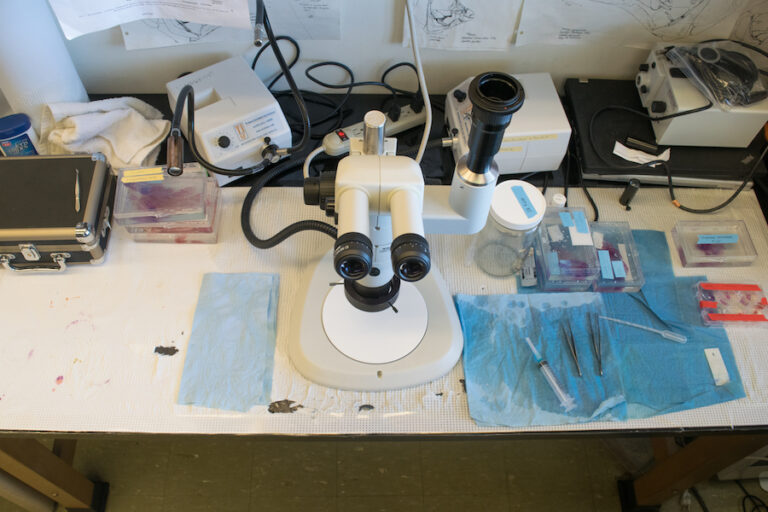
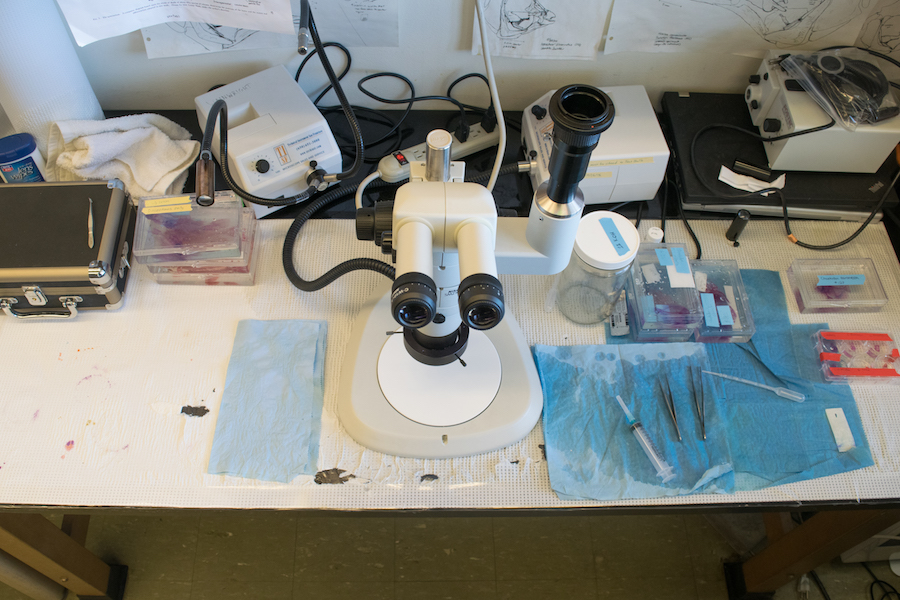
The UC Davis Department of Cell Biology and Human Anatomy will offer a new course  beginning in Winter Quarter highlighting the microscopic components of human anatomy. The new class, Cell Biology and Human Anatomy 102: Microscopic Anatomy, will aim to complement the popular Cell Biology and Human Anatomy 101: Human Gross Anatomy course and prepare undergraduate students for medical school.

Microscopic Anatomy will be taught by UC Davis School of Medicine professor Paul Fitzgerald.

“This class is taught in every medical school, and it’s [similar to] what I teach to the [UC Davis] medical students,” Fitzgerald said. “It’s a really good course to take so at the very least you’ll be able to get a little more health care consumer savvy. If you go into healthcare, whether it’s physical therapy, or dentistry, or medicine or nursing, this will just give you a nice, broad general understanding of how things work and how things are put together.”

While Human Gross Anatomy focuses on organ systems visible to the naked eye, Microscopic Anatomy will take an even closer look at these systems in order to evaluate how their anatomical structures relate to their functions. Students will learn about how organs are assembled from the four basic tissues, and how those tissues are assembled from various cell types.

“Really, it is anatomy at the microscopic level,” Fitzgerald said.

Microscopic Anatomy will feature a virtual lab which will train students in microscopy and how to read microscopic imagery. In doing so, said Fitzgerald, students will have a more precise visual understanding of the relationship between anatomical structure and function.

The course will also aim to prepare students interested in careers in medicine and research.

“We think this course will be helpful for future students of the allied health professions and students interested in biomedical research because so many new discoveries are based on sophisticated imaging technologies,” said Kenneth Beck, a lab instructor for Microscopic Anatomy.

However, biological sciences students are not the only ones who stand to benefit from the class.

“Liberal arts students interested in the course will also benefit from being able to understand how their bodies work at the microscopic level,” Beck said.

As students are selecting courses for the upcoming quarter, some have taken an interest in what the class has to offer.

“I had no idea that [Microscopic Anatomy] was being offered, but it sounds like the kind of course I would love to take,” said Jessica Larbaoui, a second-year biological sciences major. “I feel like taking this course in addition to anatomy will better prepare me for medical school. It could really give me an edge over other potential med students.”

Although Fitzgerald said that his goals for the course are to provide students with the means to understand their own bodies and prepare prospective medical school students, he hopes the course will extend beyond that.

“Ultimately, I would love the campus, in collaboration with the medical school, to develop a human health major,” Fitzgerald said. “I’m working with folks in the College of Biological Sciences to lean toward that goal, and this would be one of the courses that would be a part of that.”

Microscopic Anatomy will be held in Olson 125 on Tuesdays and Thursdays from 2:40 to 4 p.m. The lab portion will be held before lecture from 12:10 to 2 p.m. in the Sciences Lab Building 2020. Students can concurrently enroll in both Human Gross Anatomy and Microscopic Anatomy.

Written by: Emma Sadlowski and Abby Saenz –– science@theaggie.org

Return of the Bern

0
GENESIA TING / AGGIE

Bernie Sanders visits Sacramento to rally for Proposition 61

On the Monday before Election Day, energy ran high as an excited crowd gathered on the steps of the State Capitol building in Sacramento. Bernie Sanders, the Vermont senator who gained widespread national prominence during his run for the Democratic nomination for president, held a rally in favor of passing Proposition 61.

The proposition, which California voters eventually voted down on Nov. 8, would have restricted the state from paying more for any prescription drug than what the U.S. Department of Veterans Affairs pays. Roughly 46 percent of voters supported measure.

“We are the only major country on Earth that does not in one form or another regulate the price of prescription drugs […] For the first time in the history of this country, the American people are going to stand up to the drug companies,” Sanders said at the rally.

Although the main focus of the rally was Proposition 61, many proponents of related causes were in attendance. The Peace and Freedom Party attended the rally to raise awareness for its third party presidential candidate, Gloria La Riva. Esteban Hernandez, the party’s California campaign coordinator, distributed information about his candidate at the rally.

“Bernie called himself a socialist, and the Peace and Freedom Party […] is a socialist party,” Hernandez said. “So in that sense we are similar […] we’re out here today just passing out flyers, voter information.”

Many attendees of the rally were longtime Sanders supporters. Sean Glasson, a student from the California Maritime Academy, was in attendance.

“A lot of people in the area had a lot of enthusiasm for him and I still do […] even though he’s not the nominee, he’s still working to make sure real progressive policies are brought back to American politics and he’ll always have my support for that,” Glasson said.

This is not the first time Sanders has visited Northern California. In June, Sanders visited UC Davis during his presidential campaign and drew a crowd of over 9,000 supporters.

Kelly Baker, a third-year psychology major, praised Sanders as a politician to whom she can relate.

“When I started reading up and hearing his viewpoints it was almost like a dream come true,” Baker said. “[Sanders is] a politician who is for students, for the people of every nationality, gender, anything that you can think of, he is there to support you […]. There was never hatred in anything that he said, he was never bringing anybody down.”

Written by: Raul Castellanos — city@theaggie.org