
55.7 F
Davis

Davis, California

Wednesday, December 24, 2025
Home Blog Page 684

UC Davis women’s volleyball falls 3 sets to 2 against Cal Poly

0
LUCY KNOWLES / AGGIE

Aggies head into extra set against Mustangs in Big West conference match on Nov. 5, but fail to deliver offensively

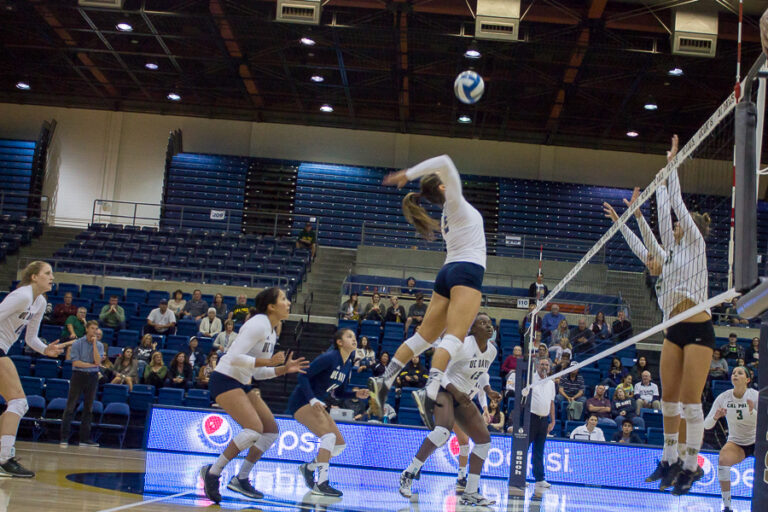
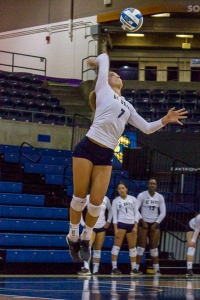
Although UC Davis’ women’s volleyball team held its own against Cal Poly, San Luis Obispo in the first and third sets, the Mustangs’ offense proved to be unbeatable, making 73 kills compared to the Aggies’ 59. The match finished with final score of 25-20, 23-25, 25-21, 21-25 and 8-15.

With a large crowd on hand, the Aggies impressed during the first set. Three Aggies each finished the match with more than one ace, with freshman outside hitter Lauren Matias’ set-winning ace especially lighting up the fans.
LUCY KNOWLES / AGGIE

Coming off the win of the first set, the team focused on aggressive defense during the second set, but even with sophomore libero Malia Bolko reading Cal Poly’s attacks perfectly and leading the team with 25 digs, the Aggies fell near the end of the set after allowing two consecutive points to be scored by the opposing team.

The Aggies did not back down during the third set, staying neck-and-neck with Cal Poly, with four tie scores and four lead changes. The Aggies ultimately won the set after coming back from a deficit.

Cal Poly kept a solid lead throughout the fourth set. Despite an energetic comeback, from 9-16 to 21-25, the Aggies could not keep up offensively, leading them into a losing fifth set for the second time this season.

“You can dig balls when you’re not getting good sets. All you can do is put roll shots or easy balls in your court,” head coach Dan Conners said. “Our setters have to be better.”

The Aggies led in blocks throughout the entire night and had more than double the blocks of Cal Poly, with senior middle blocker Aima Eichie getting four blocks during the fourth set, allowing her to match a career high of 10 throughout the game. Despite the impressive defense, offense was the Aggies’ demise in the deciding set, and they managed only three kills.

“We can’t forget how to set,” Conners said. “If we want to be good on offense, our setter has to put the ball in the right spot.”
LUCY KNOWLES / AGGIE

Although the Aggies were defeated, Matias understands her team’s strengths and looks forward to preparing to face UC Riverside next week.

“We can definitely go up from here. We just need to get after it in all aspects,” Matias said. “We don’t have the biggest hitters, so hard defense will be our focus.”

Though the UC Davis women’s volleyball team played well at times, the team needs to work on its consistency, according to Conners.

“They played their game and we were in and out of ours,” Conners said.

After traveling to UC Riverside on Nov. 8, the UC Davis women’s volleyball team returns home to face Hawai’i on Saturday, Nov. 12 for a 7 p.m. match at The Pavilion.

Written by: Liz Jacobson — sports@aggie.org
Student Sounds: katgrüvs

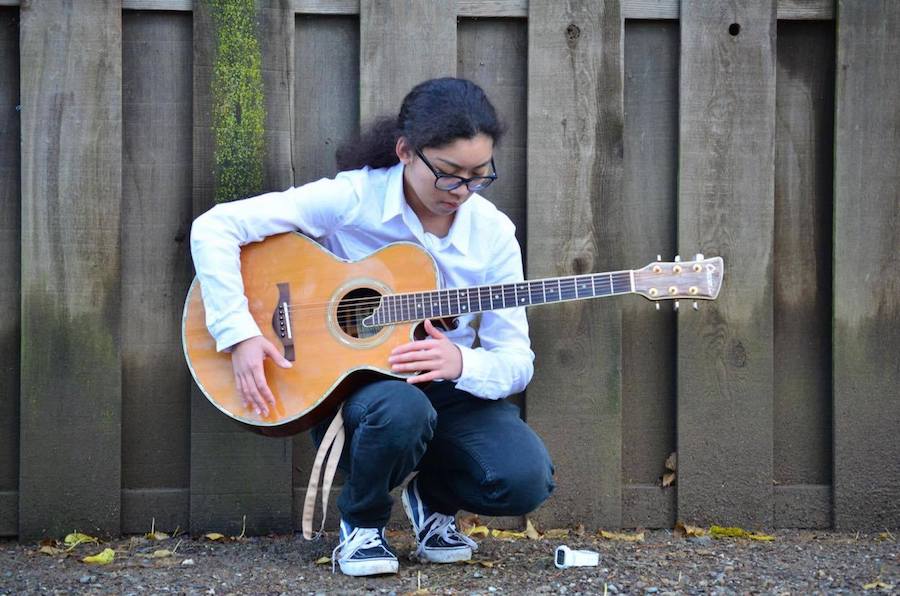
RHONEE DELA FUENTE / COURTESY

Davis guitarists talks fingerpicking, musical technique, midterms  

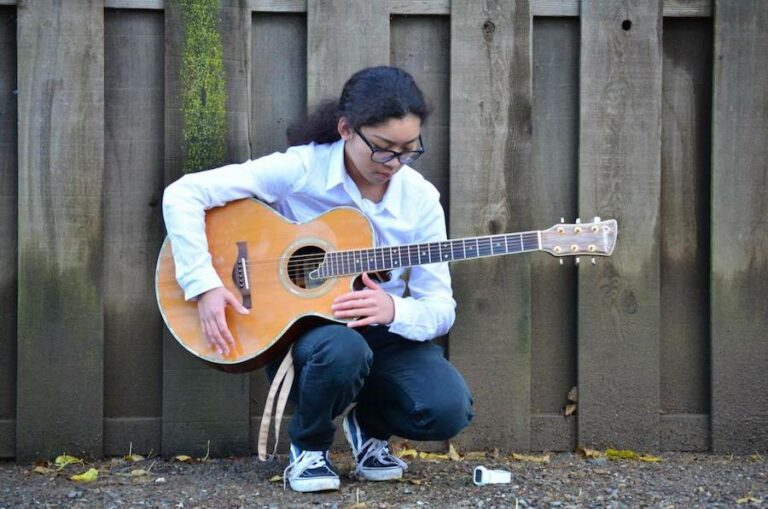
Third-year mechanical engineering major Kat Gallardo — the brains behind the musical project “katgrüvs” — spent the summer recording music in her parents’ walk-in closet. One can imagine the scene: Gallardo shuffling to move her recording equipment to and from her bedroom, a microphone next to a winter coat, an amplifier beside her father’s dress shoes, guitar picks among her mother’s jewelry collection.

“[I had to take] all of my stuff out of my room, and bring it into the closet,” Gallardo said. “It’s a hassle sometimes, but it’s totally worth it. And then my mom would come home and be like, ‘get your stuff out of the closet!’”

But a janky recording setup isn’t exactly reflective of Gallardo’s raw talent. In fact, her summer-in-a-closet was well spent, leading to the finalization of her new EP, Summertime in Suburbia/The Deedle-Leedle Song. The two acoustic pieces on the EP incorporate Gallardo’s distinctive style as she layers notes from her guitar. Especially prevalent in the song “Summertime in Suburbia” is the coexistence of complexity and soft notes, resulting in a sound reminiscent of  suburban nostalgia — the “soundtrack of moms headed to Costco,” Gallardo explained.  

“There are just some things I love about suburbia, because it’s where I grew up,” Gallardo said. “It’s sort of a shout-out to Antioch, California — to both the city and the suburbs and their influences.”

Gallardo’s dad kickstarted her music career. As a guitarist himself, he was Gallardo’s first introduction to the instrument. Gallardo feels that her style later branched from his.

“He would always be there, teach me the basic chords, the basic foundations; I just want to thank him for doing that,” Gallardo said. “Of course I’ve had other influences on the way […] but I can attribute the one main influence to my dad.”

Gallardo was also musically involved at her church, playing in the church choir when she was younger.

“As a strong Catholic, religion really inspires me,” Gallardo said. “God inspires me to do these things. I’m a cradled Catholic [and…] that has played such an essential role in my music. I just admire the beauty of music, and I see God in music.”

Gallardo uses fingerstyle playing, a style characterized by its economic use of the guitar via plucking individual strings or tapping the base of the instrument. She did not adopt this specific style until she was in high school, after discovering musician Andy McKee on YouTube. Gallardo was inspired by the uniqueness of his sound, and adopted the technique.

“Andy McKee did a lot of the tapping and altered tuning — the one-man band type thing,” Gallardo said. “[Watching his videos] was the turning point for me. [He was] playing with his fingers over the [guitar] neck and this tapping kind of stuff […] I just thought, ‘Wow, this is a really well-composed song. This is the kind of sound that I’m looking for.’”

Once she began to master her technique, Gallardo focused more on song composition, taking inspiration from non-fingerstyle artists — specifically ’90s alternative-rock bands.

“In college, I started listening to a lot of alternative rock — Blink-182, Third Eye Blind, The Story So Far,” Gallardo said. “I grab influences from their hooks. Their songs are not as virtuosic in nature, but I do get a lot of the pop hooks from listening to ’90s alternative rock music.”

While in college, Gallardo has immersed herself in other musical projects such as the Newman Catholic Choir and the Davis Jazz Band, both of which have served to offset her solo career.

“[I wanted to] do something that will add to the whole instead of cram everything in at once, which is the tendency for a lot of fingerstyle players like me: to overplay,” Gallardo said. “Jazz is a counter-balance to that. [I have to] listen to what other people are doing first — listen to the horns, listen to the piano and the bass and the drums — that way you can get a feel of how you can add to the sound rather than just overshadow other people.”

In the same way college has expanded Gallardo’s musical maturity, UC Davis has served as the inspiration for some of her music. Such inspiration is most prominent in her track “Down to the Wire.” That’s part of katgrüvs’ charm and relatability: her music feels personal, it’s not too lofty.

“‘Down to the Wire’ tells a story about the quarter system,” Gallardo said. “Like school is starting, everything is chill, and then the song starts ramping up during the ‘midterm season’ because it switches from major to minor keys. The minor keys represent the quarter system, the tests, the midterms — and the major keys represent relaxation, the party stage and then ending it off with the most dramatic part: finals. And it ends up abruptly like okay, now I can rest.”

College has influenced Gallardo’s musical decisions, and these decisions have likewise shaped her career path.

“I felt like Davis was the perfect fit. It just feels so balanced between engineering, which is my analytical side, but [also] gives me the freedom to be my creative self,” Gallardo said. “I felt like if I was a music major or if I went to a music school, I probably wouldn’t have the artistic liberties that I have right now [in Davis].”

Gallardo hopes to intertwine her two passions, possibly using her engineering skills to create more than just music.

“I have a dream of building guitars and combining engineering and music,” Gallardo said. “I felt that mechanical engineering would enable me to use my musical capabilities […] and transmit that to building something that will help others in the music community.”

There is an uncanny relationship between Gallardo’s major studies and the mechanical style of her playing. However, when the subject was presented, Gallardo simply laughed it off, and declared it a mere coincidence. But such an incredible combination of talent and skill is more than mere happenstance; rather, genius seems to be the running motif.

To listen to katgrüvs’ content, please visit her Bandcamp and Youtube, or learn more from her website or Facebook page.

Written by: Ally Overbay and Caroline Rutten — arts@theaggie.org

Take Hollywood whitewashing out of scripts and into the spotlight

BILL EBBESEN [CC BY 3.0] / COMMONS
headshot_jyDiverse directors will increase diversity in roles, characters on screen


Just how white is the film and television industry?

You don’t have to answer that. It’s become obvious in recent years just how pervasive lack of diversity is in entertainment. It seems to be the only unwavering aspect of Hollywood’s constantly changing trends (fashion, actor popularity, silly controversies, etc.). But controversies, like #OscarsSoWhite, seem to subside as soon as the Academy Awards are over.

Lack of diversity has been an ongoing debate on social media for a while now. It’s where #OscarsSoWhite started and morphed into #HollywoodSoWhite. Despite the fact that both of these movements have left the spotlight since last February, the hashtag lives on through Twitter, and for good reason.

Unequal representation of marginalized groups in film and television is still an issue, and it hasn’t gone away just because it has lost traction in the media.

This year, there have been too many cases of Hollywood whitewashing.

One of the most horrifying examples is Birth of the Dragon, a film about Bruce Lee and the fight against kung fu master Wong Jack Man. That’s the premise, at least. The person who narrates the film is actually a white man who stumbles into Chinatown one day and discovers kung fu. If you watch the trailer, there are many other disturbing aspects of this movie. And they follow Hollywood Whitewashing 101 to the tee.

This film takes perhaps one of the most stereotyped aspects of Asian culture, martial arts, drops a white guy right in the middle of it and sells it as authentic. But don’t worry. The fighting choreography — clearly, the most important part of this film —  is “from the martial arts team behind X-Men.” It’s legitimate.

Asian films consistently depict Asian Americans as kung fu masters, but that’s not who we are. That’s not all we do. It’s a stereotype the film industry capitalizes on, but our narratives can’t and shouldn’t be limited to a handful of stereotypes.

This applies to all marginalized groups. To be clear, just because 12 Years a Slave has won three Academy Awards, including Best Picture, does not mean Hollywood is diverse or inclusive. Roles for African American and Chicanx/Latinx actors and actresses should not be limited to slaves or the servants.

Some of these films are amazing works of art. We are seeing more minority groups get screen time, but it’s not enough if social identity is the sole reason for that character’s existence. Stories exist outside the stereotypes given to various groups. While the “I don’t see color” argument is ridiculous, minorities can take on lead roles that are unrelated to their race or sexual orientation without that identity becoming a plot point.

But there can be no diverse lead roles if the people behind the cameras are not diverse.

USC’s Annenberg School for Communication and Journalism reported that films and television series with female directors had 5.4 percent more women and girls in lead roles compared to films and series with no female directors. Stories with female directors also had 10.7 percent more female writers and 12.6 percent more female creators.

They also found a 17.5 percent higher rate of ethnically underrepresented characters when the director was also ethnically underrepresented.

This data says it all. To increase diversity, there need to be diverse creators and directors. So far, that has been Hollywood’s greatest shortcoming. 13 percent of directors are not white, and just 15.2 percent of directors in different platforms are female. Only 3.4 percent of film directors are female.  

Inclusion of minority groups is absolutely necessary.

This doesn’t mean studios should carelessly cast some people of color or a token gay character to increase diversity. Inclusion needs to be purposeful and thoughtful. Otherwise, we end up with the inaccurate portrayals and stories we see today, told through the lens of white experience. How is that in any way true to the experiences of people of color or LGBT+ folks?

Just because the film and television in question is fictional doesn’t mean the stories and characters won’t have real-world implications. Some of these works may be elaborate and complete fantasy, but if monsters, wizards and aliens can make it in, there should be no problem creating more roles for other, real identities. Hollywood is known for being fast-paced, and there’s no reason to slow down now.

Written by: Jeanette Yue — jyyue@ucdavis.edu

Disclaimer: The views and opinions expressed by individual columnists belong to the columnists alone and do not necessarily indicate the views and opinions held by The California Aggie.

Construction of the All Student Center at Davis High begins

0
HMC ARCHITECTS / COURTESY

Indoor facility will provide a cafeteria, classroom, collaborative space

Change is on its way to Davis Senior High School (DSHS) within the next 12 months. On Oct. 25, a ceremony was held in which students and school administrators alike broke ground for the construction of the brand new All Student Center.

Since 2010, the student body at Davis Senior High has lacked a proper cafeteria. The multipurpose room was shut down six years ago due to black mold and various problems. In 2013, the room was finally demolished. While an area outside remained for eating, students were left exposed to the elements. During periods of rain or extreme heat, those who didn’t have the means to leave the campus during lunch were left to eat in the hallways.

Students took notice and began to advocate for their peers, realizing the division among students. They wanted to have an all-inclusive area for students, which is where the name for the new facility was derived. After years of hard work and collaboration with teachers, counselors and the school board, the students are finally seeing their solution come to life.

“This has been the number one issue for students and staff, you know, not having a place to gather or shelter from the weather. So, our students rallied together and put together a video and wrote stories, posted to the board, and talked to the superintendent. […] There was a lot of energy behind this […] I couldn’t be more proud of the student body for coming together for a greater cause,” said William Brown, principal of DSHS.

The estimated $7.93 million facility was largely funded from selling surplus property on Grande Avenue. In addition, there were extra funds left in the budget to help contribute to the cost.

The All Student Center will provide more than just a proper cafeteria; it will double as a gathering space for the school and the greater Davis community.

Madhavi Sunder, Davis Board of Education president and UC Davis senior associate dean for academic affairs, was eager to see the project to come to life.

“There will be learning opportunities that can emerge from this facility,” Sunder said. “It also has a classroom space, a collaboration space, it has space for our student leadership groups and all student groups, and we wanted to build in a teaching kitchen so we could […] build a more robust culinary program in the future.”

The All Student Center will be open before and after school, providing a safe environment for students to work together and community members to gather. It is expected to be completed within 12 months.

Written by: Alana Joldersma –– city@theaggie.org

UC Davis faces inspections, negligence allegations by USDA

ASHLEY LUGO / AGGIE FILE

Investigators find that improper research protocol, veterinary care has injured, killed multiple animals

UC Davis animal testing laboratories and veterinarian facilities have been the recent subject of U.S. Department of Agriculture (USDA) inspections and investigations into animal deaths, injuries and forced euthanizations.

UC Davis animal testing laboratories and facilities currently hold 30 dogs, 419 cats, six guinea pigs, 59 hamsters, 315 rabbits, 125 sheep, 90 pigs, 2,117 other farm animals and 2,719 non-human primates for research purposes. Investigations found that animals have been killed or forcibly euthanized as a result of experiments or inadequate care in 2016 and in past years. Other inspections challenge the cleanliness and quality of animal enclosures.

“The most recent citation is because an animal escaped, was injured and was euthanized because UC Davis staff couldn’t be trusted to close up an enclosure to ensure the animal couldn’t get out,” said Michael Budkie, co-founder and executive director of watchdog group Stop Animal Exploitation Now (SAEN), referencing a recent non-human primate forced euthanization. “Repeat citations for such basic operations have to call into question the competence of the staff at UC Davis. If they can’t close a cage door correctly, why should we believe they can do science?”

After this incident, Andy Fell, associate director of news and media relations, said the staff member responsible for leaving the enclosure open has been properly retrained.

This is not the first time UC Davis has been under fire due to questionable practices with regards to animal care.

In 2006, llamas’ pens were found with dust, sediment and a film of algae in the water, which can breed harmful microorganisms. Six years later, a lamb died after being fallen on by a 233-pound ewe during transportation — the result of an inadequately small cage. That same year, a dog died while playing with another dog, both owned by the School of Veterinary Medicine, likely by accidental strangulation from the other dog biting its collar while unsupervised by staff.

Researchers have also been cited for performing unnecessary surgery on ewes in order to discover pregnancy, due to claims that less invasive methods were too expensive.

According to a 2016 USDA inspection report, a rabbit that was not properly tranquilized before an experiment had to be euthanized.

Michael Budkie said the university should lose its federal funding because of the violations.

“Some of the research they do has nothing to do about human medicine,” Budkie said. “It’s about bringing in the $40 million a year [in federal grants]. The writing’s on the wall for animal research. Currently, we don’t need animal research. We have cell technology and computer simulation now. Use of animals in science is old science, and UC Davis has no use for it anymore academically.”

However, there are still others, like Fell, who believe that animal testing has scientific value.

“Animal research benefits human health and is strictly regulated by law,” Fell said. “There are unannounced inspections by the USDA that we are not notified about previously.”

Denisse Valencia, second-year clinical nutrition major, was displeased to learn about these allegations of animal mistreatment at the university she attends.

“It breaks my heart,” Valencia said.

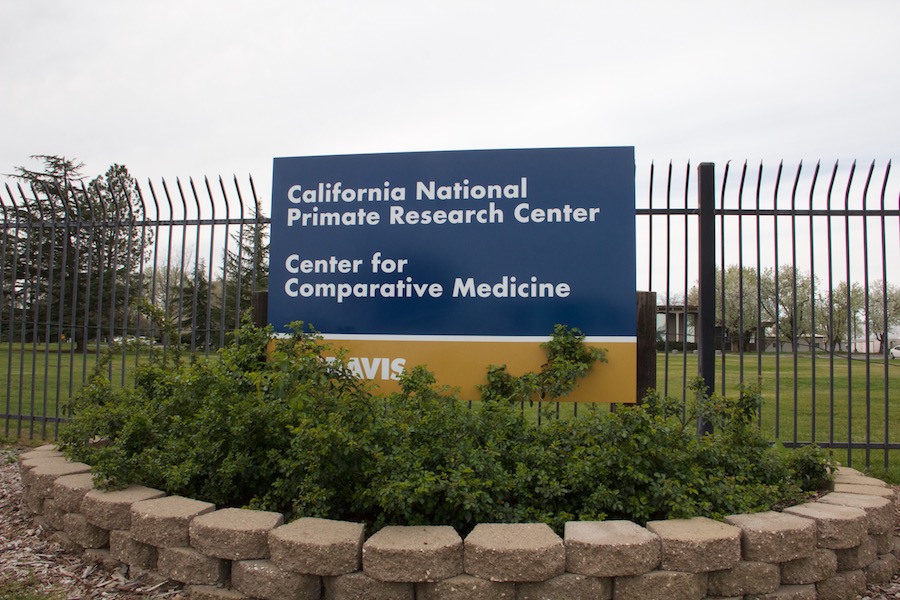
In addition to its other animal testing and veterinary centers, UC Davis also houses the California National Primate Center (CNPRC), which wields autism and Zika virus breakthroughs thanks to tests on animals.

According to Fell, every investigation by the USDA has been closed or corrected. However, Budkie holds a different view.

“When the USDA says that they have an open investigation, this doesn’t just mean they are looking for something,” Budkie said. “They are looking for the purpose of prosecuting.”


Written by: Aaron Liss — campus@theaggie.org

Oh, the places you’ll go (abroad)!

0
AGGIE / HANNAH LEE
AGGIE / HANNAH LEE

Students, faculty reflect on study abroad experiences impact on future careers

When Alissa Alson returned to UC Davis after a year spent on an independent study trip in Ireland, she knew she did not want to continue pursuing her major in biological systems engineering.

“I took about two quarters [for that major] and realized that wasn’t really what I wanted to do,” said Alson, a fourth-year student who now works as an administrative assistant at the Study Abroad Center. “I already knew I was studying abroad […] so I went and I figured ‘I’m going to take whatever classes sound fun.’”

While abroad, Alson took classes on Celtic civilization and Irish folklore. By embracing the opportunities she was presented with abroad, Alson discovered that she “really liked delving into other cultures” and decided to instead pursue a major in international relations.

“[Study Abroad tries] to focus on the life experience,” said Pablo Ortiz, professor in the UC Davis Music Department and Study Abroad instructor. “Being able to experience things face-to-face, without the mediation of a camera or social media or anything like that […] is completely different. It’s […] great to be able to experience things in a more direct way.”

UC Davis has over 300 study abroad programs to choose from, making the boundaries limitless both academically and geographically. In addition to approximately 50 UC Davis faculty-led programs, the systemwide UC Education Abroad Program (UCEAP) offers around 350 different plans of study at host universities around the world.  

Regardless of the program, studying abroad offers experiences that many students do not get to experience at home. Ortiz, who has taught a variety of music classes abroad, takes his students to opera festivals and street art tours.

“I take students to places that are the opposite of Davis –– places where there are […] experiences you would never have in the context of a small town in California,” Ortiz said. “I believe that that makes people acquire a repertoire of behaviors [and] resources. [These experiences] confront [students] with realities that they’re not confronted with here.”

Along with experiencing the world outside of Davis, students who study outside of the country can also add to their “repertoire” by making new connections.

Paula Levitt, a programs manager at the Study Abroad Center who has, according to her online biography, “visited, worked or studied in 45 countries and six continents,” has remained in contact with the friends she met from her time studying abroad through a UCEAP program over a decade ago. In addition to forming  new friendships, Levitt also emphasized the benefits of studying abroad with UC Davis faculty members and how they can provide letters of recommendation or research opportunities in the future.

“That’s what I like about traveling –– those person to person experiences [can help you] learn more about [yourself] and also other people and cultures,” Levitt said. “Staying in hostels and meeting people from all over the world […] who have similar passions, [allows you] to learn about your field from a different perspective. The reason that I’m so flexible and adaptable […] is really due to my travel experiences […] and my ability to get along with all sorts of people from different walks of life.”

Like most great accomplishments, studying abroad is often accompanied by challenges of all sorts, from homesickness to culture-shock. These difficulties test a student’s limits and push them to accomplish even more than they thought they would able to do.

“When you go abroad, what happens [there] is not in any way similar to what happens [at Davis],” Ortiz said. “Your food may not be what you’re expecting, or the train may not leave at the time it’s supposed to leave. You have to adapt to the circumstances and make the best of something that initially may look like it’s bad, [until] it turns out to be one of the greatest things that may have happened to you.”

Levitt also said that she encourages students to start thinking about studying abroad as early as possible, since the “experience is so impactful that they find a way to make it happen again.” Though advising sessions beforehand help students plan for their trips abroad by discussing how to pack and what to bring, nothing can prepare students for the impact the trip will have on their lives.

“I think everybody should go abroad,” Ortiz said. “Most of the [students] I’ve had […] always refer to their study abroad as a before-and-after, completely life-changing experience.”

Megan Perry, a third-year history major, was recently accepted to the Spring 2017 London quarter abroad program during which she will have an internship and be taking two UK-themed courses. Perry applied in early October and said the reality of the trip is “surreal.”

“I grew up in Sacramento so I didn’t go to college very far away from home,” Perry said. “Getting out of that comfort zone and finding out who [I am] as a person and having these new experiences […] can really help [me] grow. It’s kind of nice that I’ll have that experience of being away. I think it will help in the long-term in [terms of adjusting to] new circumstances.”

Alson, after her experiences in Ireland, is now considering about a professional career overseeing study abroad programs. She strongly encourages students to step out of their comfort zone through the opportunities available outside of the country.

“Studying abroad is a great way to figure out, ‘What do I really like? What don’t I like?” Alson said. “Davis is great […], but maybe you’ll find some place that speaks to you even more. Maybe there’s something out there that’s going to speak to you, [and] you haven’t found it yet.”


Written by: Allyson Tsuji & Hannah Holzer — features@theaggie.org

Fashion meets technology on the runway

WILL RICHARDSON [CC BY-NC 2.0] / FLICKR
headshot_tdCollaborations between designers, scientists are important for advancements in both fields
As someone who stapled the bottoms of her flats everyday for nearly three months before finally buying a new pair, I might not seem like the most credible fashion source. But perhaps it’s my lack of professional expertise that makes fashion all the more awe-inspiring to me — especially since the fashion industry has begun taking significant steps to cross the bridge between science and fashion.

One of the leading collaborative forces between scientists and designers is Descience, a global collective that brought together over 60 scientists from around the world in 2014 to creatively channel scientific research into a runway show at MIT’s Media Lab. Working alongside professional fashion designers, the scientists involved helped devise ways to express and bring to a wider audience their abstract fields of study as tangible, stylish pieces of art.

“I was stunned by the similarities between the worlds of fashion and science,” explained Dr. Yuly Fuentes-Medel, executive director of Descience, in an interview with The Fashion Globe. “Scientists, as well as designers, work towards the same direction — that is, to create something unknown and to introduce change and innovation to the world.”

Cytocouture, the winning collaboration between designer Carlos Villamil and biomaterial engineer Dr. Laura Indolfi, presented transformable tunics that mimic Dr. Indolfi’s research in endothelial cells. Because cells adapt to their surroundings, the team created reversible garments that similarly adapt to different body shapes and sizes. The collaborators also challenged standard fashion designs by devising experimental, gender-neutral pieces that defy traditional categorization.

The audience choice winners, designer Candice Wu and bioengineer Christopher Gibson, explored in their dress the joys of finding cures for rare genetic diseases. Besides the dress’ blood vessel-inspired red netting, the look also includes a green cage and black train to symbolize the initial imprisonment of disease and the eventual freedom that treatment brings.

Even beyond Descience, the fashion industry has been embracing the codevelopment of science and technology by constructing pieces of clothing previously unimaginable.

Nokia worked with design label Fyodor Golan at London Fashion Week in 2014 to devise what has been deemed the world’s first interactive garment: an armor-like skirt gilded with 35 Nokia Lumia smartphones that change colors with movement. The shimmering screens, which are synced to a camera in the model’s headpiece, also reflect the wearer’s line of sight, adding to the interactive “fabric” of the skirt.

Designers and scientists at the fashion company CuteCircuit have further invested in wearable technology. Named one of the Best Inventions of 2006 by Time, CuteCircuit’s Hug Shirt allows wearers to transmit a virtual yet detectable hug to a distant loved one. As the wearer embraces his or her own shirt, the shirt’s sensors and actuators capture the duration and intensity of the hug, as well as the hugger’s heart rate and body warmth, to send to the recipient. The Hug Shirt utilizes Bluetooth and clothing to simulate human contact despite physical distance.

Zeiss Smart Glasses blend futuristic technology with the sleek, trendy design of everyday glasses — an important aspect that Google Glass, despite its acclaim, failed to actualize. And while engineers are still fine-tuning the device’s technological elements, Zeiss has perfected its outward design, pioneering smart glasses that aren’t just functionally wearable, but also stylish and modern.

Fashion can therefore act as a vessel for scientific ideas, as in projects like Descience, or as a necessary component in technological innovation, as in “smart” devices like glasses, watches and jewelry. Science also encourages innovative designs within the fashion industry, providing new ideas for fabrics, structures and narratives behind artistic concepts.

In the increasingly digital age, the fusion of fashion and technology is critical for inciting public enthusiasm about inventions in both science and design. And who knows — with enough collaboration, students may one day even sport chic lab coats straight from the runway.


Written by: Taryn DeOilers — tldeoilers@ucdavis.edu

Disclaimer: The views and opinions expressed by individual columnists belong to the columnists alone and do not necessarily indicate the views and opinions held by The California Aggie.

Humor: Dog wonders why owner won’t stop yelling

BRIANA NGO / AGGIE FILE

headshot_blA dog and his peers recount stories of a mysterious man yelling
The California Aggie recently spoke to a local dog who can’t understand why his owner just won’t stop yelling. The unidentified man keeps his dog tied up to tables and benches around the Memorial Union.

“He always does this. All the time. I’m feeling kind of stuck, possibly because I’m tied to a leash and have no control over where I go,” the unnamed dog told The Aggie. “I usually just lie there for the entire day until he gets tired or realizes that nobody is actually listening to him. What’s he even talking about anyways? Who knows. I don’t speak English.”

This dog is not the only being who has had to endure his owner’s constant yelling. The MU flagpole had a lot to say to The Aggie.

“This guy is always here yelling about who knows what,” the flagpole said. “And it’s not really fair to me. I don’t have the option to move. I’m just cemented in place as he drags around his dog and yells at nobody in particular. Does he even feed his dog? I’ve never seen it happen. But I also don’t have eyes or ears, so I guess I wouldn’t really be the one to ask.”

And it doesn’t stop there.

One of the tables across from the CoHo shared a similar experience.

“It’s bad enough that clubs nobody cares about always sit on me during the week,” the table tearfully recalled. “I watch with the eyes that I don’t have while students go out of their way to avoid people tabling or to awkwardly reject a flyer they clearly don’t want. And why do I keep getting asked if I’ve pledged CalPIRG? Why would I care about sea turtles? I never even learned how to swim. Anyway, on top of all of that, now there’s this random guy who sits on top of me after most students have gone and shouts about Jesus. I can’t follow Jesus. I don’t have any legs. Not since the accident.”


Written by: Brian Landry –– bjlandry@ucdavis.edu

The loophole of all gun loopholes

headshot_taPrevent gun violence by closing loophole that allows indirect gun purchases

My dad’s a lawyer, so I’ve grown up hating loopholes. Whether it be a sneakily thrown in one-liner about a custody agreement or working at a job that pays less to avoid spousal payments, loopholes have always irked me. So it’s no surprise that straw purchases — when one person poses as a buyer of a gun meant for someone else — drive me up the wall.

A straw purchase happens when a buyer of a firearm uses a secondary source to fill out the paperwork required to purchase from a federally-licensed firearms dealer. A straw purchaser is usually used when the actual buyer is prohibited from possessing a firearm due to a past criminal record or being underage. Although the Bureau of Alcohol, Tobacco, Firearms and Explosives (ATF) specifically asks firearm applicants if they’re buying for another individual, a straw purchaser will simply lie and break the law when they answer “no” to this question.

There are a lot of nuances accompanying the motivations of these straw purchasers. Most of them are uneducated about guns and the impact they have on illegal gun trafficking in society. In an ATF article written by Special Agent Mark Kraft, he states that straw purchasers usually know nothing about the weapons they claim to have bought. Often times, straw purchasers are the victimized girlfriends of traffickers, women who are so domestically abused and manipulated by their significant other that they feel that they have no option but to do what he says and buy the guns, regardless of legality.

Outreach programs such as Family Tree, which provides professional education and training on how to recognize domestic violence and support those that experience abuse, can help solve one part of the straw purchasing problem. By providing women a safe escape from abusive significant others and traffickers, we as a society can help remove the pawns that criminal traffickers use to obtain guns.

Drugs also play a role in straw purchasers’ motivation to engage in (even more) criminal activity. In exchange for drugs, these individuals will buy guns that the trafficker desires: no questions asked. As long as they get their next high, they don’t care where the guns they purchase go or whose life they could potentially take.

“Where there’s dope, there’s drugs,” said one Florida straw purchaser. His words underscore the need to implement stricter and more inclusive national and statewide drug rehabilitation programs in order to take on the problem of gun violence.

There are so many different factors affecting gun violence and the things we, as a whole society and as an individual, can do about it. However, one of these is spreading awareness to issues such as domestic violence and drug addiction in order to stop the chain reaction that straw purchasers with these backgrounds can set off.


Written by: Tamanna Ahluwalia — tahluwalia@ucdavis.edu

Disclaimer: The views and opinions expressed by individual columnists belong to the columnists alone and do not necessarily indicate the views and opinions held by The California Aggie.

Wild turkeys in Davis

0
ARIEL ROBBINS / AGGIE FILE

Davis turkeys threaten residents, students

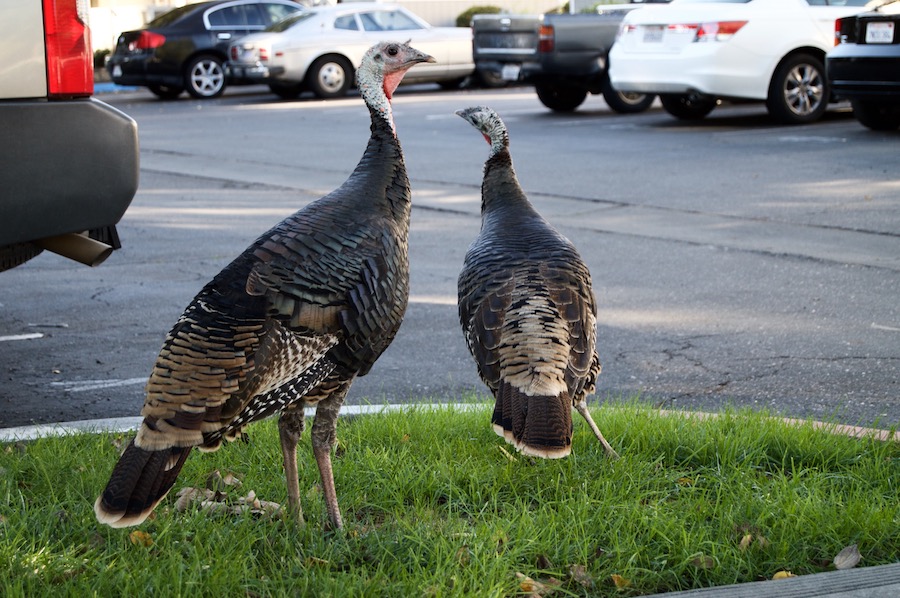
According to the City of Davis Wild Turkey Population Management Plan, the famous turkey flock came to Davis 10 years ago when nine wild turkeys began roosting in Davis cemetery. The turkeys found ample food and few natural predators within the city, and, as a result, their population has swelled to almost 100.

Recently, Davis residents have found the turkeys have become increasingly problematic, and, while some residents find them amusing, others want the birds gone.  

“[It’s] funny that we have this problem,” said Leah Julian, a fourth-year religious studies major and lifelong resident of Davis. “We [had] a turkey that lived in our backyard for a month during Thanksgiving time, so we would always joke that [we were going to] eat it. […] It was kind of annoying, but it’s an animal. What are you going to do about it?”  

Her experience underscores some of the turkeys’ more benign behaviors: defecating in yards and pecking at gardens.

“I feel like they’re more of a nuisance than anything,” Julian said.           

However, some turkeys have proven far more nefarious. Turkey flocks have a pecking order determined by aggression, and one male bird is notorious for showing aggression toward residents. He frequents the corner of 4th and F Streets and has been nicknamed “Downtown Tom”. As a display of dominance, he chases residents through downtown.

Brock Wetzlich, an employee of the Rivers to Reef fish store, which is located on F Street, has experienced the wrath of Downtown Tom first-hand.

“I was leaving the store and the turkey was right there. […] I walk out, and the turkey just starts chasing after me. […] [Someone] had to go shoo it away before I could go outside ‘cause it kept trying to chase me. I don’t know what it has with me,” Wetzlich said.    

Some residents find encounters with aggressive turkeys amusing — others even enjoy them. Ruben Nolasco, a fourth-year anthropology major who works downtown, described an incident in which a turkey stood in front of the entrance to Temple Coffee on G Street and blocked a person from entering.

“[The person trying to enter Temple Coffee] could have gone around to the other door, but he wanted to get past the turkey, so he was also playing along too […] it was pretty funny,” Nolasco said.

Not everyone thinks favorably of the turkeys, however. Aggressive turkeys have prompted numerous calls to the Davis Police. The callers are often terrified and usually at a complete loss as to how to shake the turkeys off. Small children are particularly vulnerable to the birds as they face a real risk of physical injury if chased by a turkey.  

Concern is growing over potential car collisions due to turkeys wandering on roads, and the property damage they cause is starting to extend beyond gardens. In a recent interview with Sacramento news station KCRA 3, a Davis resident noted that the turkeys had scratched his car.

The turkey saga may soon come to an end — or lose steam at the very least. Two weeks ago, the Davis City Council voted 4-1 to revamp the city’s Wild Turkey Management Plan. In addition to implement initiatives to educate residents about scaring off wild turkeys and a “no-feeding” ordinance, the city will begin to euthanize particularly aggressive turkeys and attempt to relocate approximately half of the remaining population — bad news for Downtown Tom.


Written by: Raul Castellanos  city@theaggie.org

Drawing the lines of community ideals

0
BECCA RIDGE / AGGIE
BECCA RIDGE / AGGIE


Davis Manor neighborhood’s newest street addition

What started a couple of years ago as a spark of interest to improve the Davis Manor neighborhood, ignited the idea to create a street mural. Throughout the process, those working on the mural came to the realization that building community relations was just as important as completing the finished work.

About a year and a half ago, the Davis Manor Creative Action Team (CAT) drafted a proposal for a grant to obtain some of the necessary funding to make its mural project a reality. In this proposal, UC Davis alumna and local artist Danielle Fodor was chosen to help out with the mural’s painting. In addition to receiving significant donations from businesses and individual fundraising, the Civic Arts Commission awarded the group a grant of approximately $4,000.

The idea for this mural originally stemmed from Mark Lakeman, head of The City Repair Project in Portland, Or.. While Lakeman was in the area, the Davis Manor Council invited him to speak about his organization, which had goals to reclaim public areas and fill them with artwork which spoke to the community and drew people together.

“I met with community members maybe more than a year and a half ago to talk about the whole concept of community art and localized street design issues that can enhance community,” said Davis mayor Robb Davis. “And I was very supportive about them being experimental and coming to us with ideas, even if it meant changing street configuration.”

After obtaining the necessary budget as well as community support to complete the project, the council began to plan out three workshops during which community members could gather to voice their design ideas. This enabled the public to decide what was really important to them and what neighborhood values they thought were most meaningful.

“At first, the ideas all seemed really different and impossible to put together,” Fodor said. “But what it really comes down to is [that] you end up talking about the core values of your community, and they always end up overlapping. And as we started working together, the design really starts to coalesce.”

An average of 20 people attended each of the workshops, but when it came to the final paint days, there were about 150 people. The mural, which was originally supposed to be 1,400 square feet, ended up at about 5,000 square feet due to the vast number of ideas that residents kept incorporating into the mural’s planning process.

“This is a community that really cares about inclusion, they really care about diversity, they really care about creativity,” Fodor said. “And so it really made sense for them to have a design that had lots of little things going on that were all connected but were also allowed to sing their own song –– to be what they were going to be individually.”

Community members of all ages were allowed to be a part of the painting process, whether or not they had any prior artistic experience.

“There were probably 5-year-olds painting all the way up to 80-year-olds painting, or maybe even older,” Davis said.

Parents, their children and UC Davis students ranging from local to international all helped paint, and other artists even came from as far as Rancho Cordova, Calif..

“People go to being neighbors, rather than people who just happen to live by each other,” said Rachel Hartsough, arts and culture program manager for the City of Davis. “[The mural] affects the people in that neighborhood for sure. It gives people a sense of how we can come together and have a big impact on working collaboratively, whether in arts or other facets in our community.”

A potluck dinner was thrown for the mural that Friday, Oct. 20 and Saturday, Oct. 21, with live music adding to the already jubilant mood. Many were excited about the mural because it would be a place where people could meet, hang out or simply come to enjoy its beauty.

“We missed out on having some of the public parks and other amenities that other neighborhoods had,” said Robin Kozloff, a Davis Manor neighbor who helped to facilitate the mural. “We sort of need a place to gather, and so a mural on the street could actually provide that.”

What was really special about this mural was that a water-based asphalt coating was used, which has a relatively short shelf-life. Comparatively, normal acrylic has a shelf life of a couple years. The use of this shorter shelf-life coating was the first time that this medium had been used for murals in Davis, and will last longer than other paints and prevent it from deterioration due to weathering.

A significant amount of research, planning and time was poured into the street mural project, which served to unify the community.

“These community projects are always really humbling to me because we think that we’re so big and powerful, and that the decisions we make are so important,” Fodor said. “But really, it’s the decisions we make as groups, and it’s when we work together, that we’re able to reach beyond our wildest dreams.”


Written by: Kaelyn Tuermer-Lee – city@theaggie.org

This Week in Senate

HANNAH LEE / AGGIE
HANNAH LEE / AGGIE

The Oct. 27 ASUCD Senate meeting was called to order at 6:09 p.m. Senators Samantha Chiang, Sam Park and Julie Jung were absent at roll call, but Chiang and Jung arrived later in the meeting.

Darin Schleup, the director of the Coffee House (CoHo), gave a report as the first order of business. He announced that, this school year, the CoHo has hired 120 new student employees and has implemented a new point-of-sale system. Additionally, he said that the CoHo will run a coffee cart at the new Manetti Shrem Museum this year and will also run a trial to see if selling coffee in Shields Library in the evenings of finals week will be successful.

After Schleup, a student representative for a mobile app called JoyRun approached the Senate asking if ASUCD could share a JoyRun Facebook post on an official ASUCD page. The Senate did not make a final decision. Some senators then placed a JoyRun order for Chipotle mid-meeting.

From 6:30 to 8:30 p.m., the senate retired to a closed session for Peer Education and Community Empowerment (PEACE) training.

After the training, the senate confirmed Christopher Ortiz as the new Refrigerator Services unit director. Ortiz described his plan to cycle out old fridges that no longer work and replace them with working ones in order to cut down the fridge waitlist.

During the elections committee chair report, chair Sevan Nahabedian explained that he was still in the process of getting candidate statements online. He reported that one senate candidate had dropped out. The senate also discussed creating a polling place on campus for students to use in order to vote in ASUCD elections.

CalPIRG spoke next about improving general election voter turnout through voting pledges.

After a 10-minute recess, Senator Shaitaj Dhaliwal nominated Jung to serve on the Marketing Committee, and Jung accepted.

There was a public comment from a John Li, who, 30 years ago, wrote an article for The California Aggie about coping with stress and what students get out of a college education. He offered to send copies of the article to senators.

Representatives from Aggie Reuse then presented to about their operations. The unit has reached 96 percent of its income goal to make $1,800 during Fall Quarter. The unit plans to earn $2,100 each quarter this school year, for a total of $6,000 each year.

Senator Ricardo Martinez introduced a reimbursement bill for $88.76 for snacks he purchased for Mental Health Fair workshops. Chiang opposed the bill, asserting that this type of bill set a bad precedent for the senate after Senator Sofia Molodonof’s previous reimbursement bill set the senate up for failure. Additionally, she disapproved the purchasing of name-brand fruit snacks and dried fruits, which she believed were unnecessarily expensive.

ASUCD controller Joe DeAngelo, when asked by Senator Dalavai how much the senate had spent out of reserves this year, answered that the body had spent $300 to $400 of the $17,000 in reserves.

After Dhaliwal divided the house to see the reimbursement bill support and saw that the bill would pass, he called the motion into question and the reimbursement bill passed. All were in favor except for Chiang and Senator Parteek Singh. Park abstained because he was absent from the meeting.

Moving to consider new legislation, Senator Adilla Jamaludin sent a bill that would require elected senators to serve for three quarters to the Internal Affairs Commission.

Ex-officio members and senators then gave their reports.

The meeting adjourned at 9:32 p.m.


Written by: Kenton Goldsby — campus@theaggie.org

Men’s water polo places first in conference, defeats UC San Diego

0
JAY GELVEZON / AGGIE

UC Davis Men’s Water Polo wins out over UC San Diego 7-5 to clinch the top seed in the conference, going undefeated

It was a full day of UC Davis sports last Saturday, with women’s volleyball, men’s soccer and football all played on the same day on the UC Davis campus. And at Schaal Aquatics Center, the UC Davis men’s water polo team won a hard-fought match against the UC San Diego Tritons, winning 7-5.

Going into the game, both teams were 5-0 in conference. This victory ensured that the Aggies have an undefeated 6-0 conference season and an overall record of  21-4. As a result, UC Davis clinched the first seed spot in the Western Water Polo Association Championship.

JAY GELVEZON / AGGIE

Sophomore utilities Sasa Antunovic and Morgan Olson-Fabbro, sophomore center defender Riley Venne, sophomore attackers Ido Goldschmidt and Marcus Anderson and junior attacker Cory Laidig all posted goals for the Aggies. Junior goalkeeper Spencer Creed earned nine saves throughout the game.

The Aggies never fell behind in the match, but a hard fought 6-1 lead slowly decreased to a one-goal margin halfway through the fourth quarter. Laidig and Olson-Fabbro each put up goals for the Aggies in the first period of play, while the Tritons put one in the back of the net, bringing the first period to a 2-1 score. Venne and Anderson each scored a goal in the second period to bring the halftime score to a 4-1 Aggie lead.

Approaching the third period of play, Antunovic put the ball in the back of the net for UC Davis at the 3:31 mark, while Goldschmidt placed another one in the back of the net for the Aggies soon after, bringing the team’s lead to 6-1. Even though the Aggies would keep the lead, the Tritons scored two goals of their own in the third period, at the 2:45 and 2:09 marks, shortening the score to 6-3.

The Tritons put two more in the back of the net in the fourth period of play, scoring four unanswered goals for San Diego and reducing the Aggie lead to one. Antunovic ended the eight-minute scoreless period for UC Davis, giving the Aggies a more comfortable 7-5 lead, which they kept for the remainder of the match.

“I think that our team is learning a lot about how to win, but I think we are still capable of playing much better,” said head coach

JAY GELVEZON / AGGIE

Daniel Leyson. “If we put away our six-on-five’s, the lead is more dominant. They are able to stay within range and that gives them momentum, which goes back to our execution to put the ball away.”

The Aggies end their regular season conference play undefeated, and with one game left in the regular season they look to improve their overall record even more.

“We have a good feeling about our team right now because we have proven that we are a good team,” Leyson said. “There is a lot of room for improvement and the teams are only going to get harder.”

This win for UC Davis was the second consecutive season that men’s water polo team has been undefeated in conference. The team also needs one more win in order to tie the school record of 22 overall wins in a season, currently held by the 2007 and 2011 teams.

The Aggies have one more nonconference match at home against Pacific on Saturday, Nov. 12, at 6 p.m.

“We approach every game the same in regards to intensity and preparation. We try to make sure that we don’t change anything in our preparation, just fine tune our abilities,” Creed said. “When we are going into a game, we want to come in with the same mentality. We are going to be ready for it, but at the end of the day we have to prepare for each game the same regardless of opponent.”


Written by: Ryan Bugsch — sports@theaggie.org

UC Davis Diversity and Inclusion Committee holds follow up community engagement forum

CHELBERT DAI / AGGIE

UC Davis aims to review, improve Diversity and Inclusion Strategic Plan

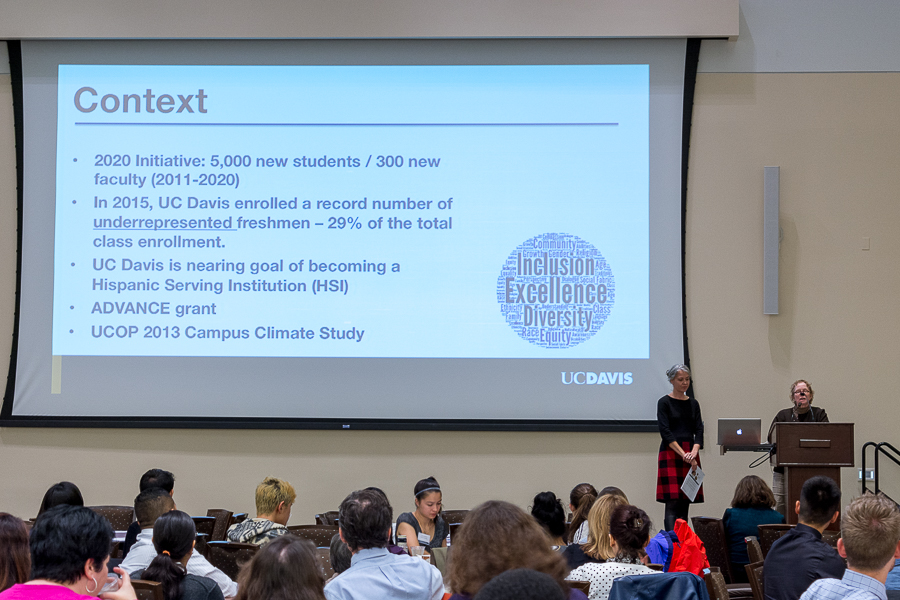
In an effort to review the objectives set forth in last year’s forum to improve diversity and inclusion on campus, the UC Davis Diversity and Inclusion Committee (DIC) hosted a follow-up community engagement forum on Oct. 27 from 5 to 7 p.m. at the UC Davis Conference Center.

The DIC was originally designed by former Chancellor Linda P.B. Katehi in 2014, but has been taken over by Vice Chancellor for Student Affairs Adela de la Torre since Katehi’s resignation. De la Torre said the committee strives to ensure every student and faculty member feels welcome on campus regardless of their individual identities.

The goal of the program was to review the draft of the previous year’s Diversity and Inclusion Strategic Plan with the help of undergraduate and graduate students, faculty members and other community representatives. Vice Provost for Academic Affairs Maureen Stanton began the event by providing background on the importance of inclusive excellence around campus.

“Inclusive excellence […] is fundamentally the belief that eclectic knowledge [of] diversity in culture and belief systems is our greatest asset in our development of new knowledge, new solutions and new opportunities,” Stanton said.

After explaining the history of the draft process, de la Torre asserted that the forums are crucial to establishing a proposal that properly embodies the UC Davis image of inclusive excellence. She also stressed the importance of examining “prior initiatives” and programs from other universities, such as UC Berkeley, to construct a plan.

De la Torre said the plan has been reviewed and revised since the last forum to identify various problems and concerns.

“The plan lacks a sense of urgency, [there is] no real change, […] we need to look at current editions, […] and staff issues weren’t adequately high-minded,” de la Torre said.

The purpose of the follow-up forum was to refine the draft plan by splitting attendees into teams to analyze its multiple objectives.

Laura Cerruti, an analyst for the DIC, led the group activity and summarized the four themes of the plan: pipeline, recruitment and retention; campus climate; research, teaching, public service and training; and institutional commitment, policies and practices.

Cerruti urged team members to keep in mind a quote from scientist Thomas Huxley in their group discussions: “Try to learn something about everything, and everything about something.”

Each group collaboratively brainstormed ideas in response to their first impressions of the assigned objective and what they thought was important or missing from the plan’s focus on diversity and inclusion. Cerruti then told the teams to cluster their ideas and announce their suggestions for improvement to the rest of the groups before bringing the forum to a close.

DIC intends to finalize the Diversity and Inclusion Strategic Plan by February 2017.

The Diversity and Inclusion Strategic Plan Draft can be viewed and sent feedback at studentaffairs.ucdavis.edu.


Written by: Jeanna Totah — campus@theaggie.org

Cross Country runs up excitement for regionals

0
CAT TAYLOR / AGGIE
CAT TAYLOR / AGGIE

Aggies welcome Chico State, individuals to Doc Adams Open for final home meet

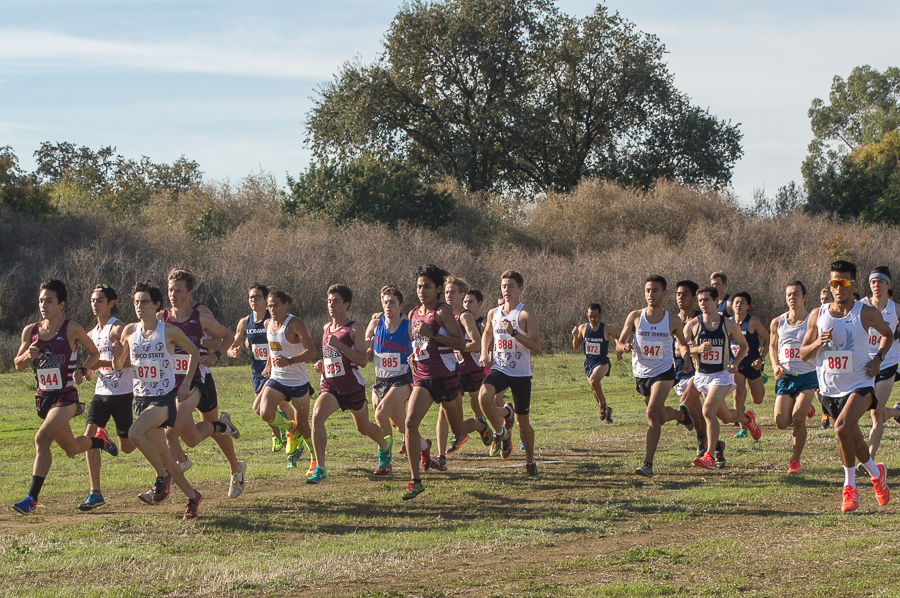
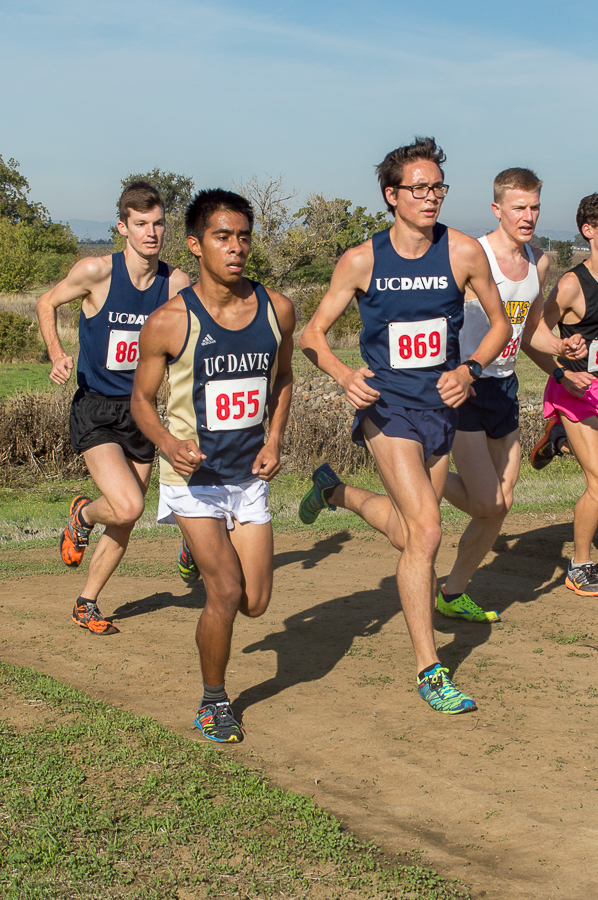
Clear blue skies, 60 degree weather and a light breeze on Saturday, Nov. 5 created the perfect atmosphere for the UC Davis cross country team to host the Doc Adams Open, the final home meet of the season, at the Putah Creek Reserve course. With the NCAA West Regionals looming just around the corner, Saturday’s meet served as both an athletic showcase with standout performances and an energetic precursor to pump up the entire team for the upcoming competition.

The morning commenced with the women’s 6k race, where the Aggies faced competitors from Chico State as well as various

CAT TAYLOR / AGGIE
CAT TAYLOR / AGGIE

unattached runners. Ultimately, a Chico State opponent captured the lead, but an impressive performance by senior Olivia Goins earned her a 22:25.8 third-place finish.

“Eight years of cross country led to this moment and it’s very emotional,” Goins said. “I am so grateful for the team! We work together every day of every week for hours… [and] putting in all that time together really proves how well we do as a team.”

In addition to Goins’ stellar finish, junior Brynna Thigpen, senior Clara Macleod and freshman Emily Antonino all finished in the top 10 of the race, with respective times of 22:44.9, 22:53.0 and 23:56.1.

The mens’ 8k race began promptly after the women finished, with Chico State runners offering tough competition for the Aggies. Two runners from the UC Davis Cross Country and Track Club cracked the top 10, while the four UC Davis men’s cross country entrants did not have timed races.

This lack of placing did not deter the team, however, as both team and club members were cheered along at different parts of the course by encouraging supporters who offered a joyful welcome at the finish line.

CAT TAYLOR / AGGIE
CAT TAYLOR / AGGIE

The beautiful weather, large audience of Aggie supporters and the smiling athletes from all teams set an upbeat and exciting tone for the Aggie runners who will take their best efforts to the NCAA West Regionals.

“It’s good for [the UC Davis cross country team] to see their teammates working hard and then knowing that they represent that group moving forward,” said head coach Devin Elizondo. “We’re looking to improve on our Big West status [and] rankings, and see how close we can come to the top ten on both [teams]. It’s always [our] challenge to improve from one year to the next.”

Though cutthroat competition is in the near future, the UC Davis cross country team is running full speed ahead to its next challenge.

“I hope we do so well in regionals,” Goins said. “This is our chance to really prove to the conference that Davis can do this.”

The UC Davis cross country team heads to the NCAA West Regionals event on Friday, Nov. 11 at Sacramento State University.


Written by: Alex Arechiga — sports@theaggie.org