60.8 F
Davis

Davis, California

Wednesday, December 24, 2025
Home Blog Page 714

Humor: UCD Introvert Club canceled due to lack of attendance

NICKI PADAR / AGGIE
NICKI PADAR / AGGIE

When Groucho Marx said that he refused to join any club that would include him as a member, he was making a self-aware joke about his own eccentricities. At UC Davis, there are dozens of clubs that students can enjoy. Some focus on sports, others take on social issues and a few simply enjoy being fun, quirky and frivolous, like the Star Trek club, the anime club and ASUCD.

Nicky Frasier, a second-year communication major, tried to get in on the club-forming action but failed to get any members. Although it may sound like a sad yet understandable attempt, there was one particular detail about her plan that suggests it was doomed from the start.

It was called The UCD Introverts Club. Frasier’s idea was that introverts needed a place where they could socialize and meet others.

“I was surprised no one else had thought about this idea before,” Frasier said. “So many people these days openly identify as introverted, yet I rarely see them hang out with each other.”

The concept that introverts might not want to socialize was completely lost on Frasier in her months of preparation and promotion. Before the club officially started, Frasier actually did get some interest and her dream of a club for introverts seemed possible. But when the club was first slated to meet, not one person showed up.

“It sounded like a great idea,” said Leonard Rahls, a second-year art major. “But when the day came, I just didn’t feel like I had the energy to go meet all those people.”

This is not the first time an organization has dramatically misunderstood its own premise. Back in 2015, an officer of the Gluten Free Club attempted to treat his members to a free pizza lunch.

So far, Nicky Frasier has shown resilience in the face of her misunderstanding, and she even laughs at the idea of a club whose members would be least likely to enjoy it. She even announced plans to start another club next quarter.

“A club for people to meet was one idea, but I know I can do something better. I’m planning to make the first Donut Club. They have a rich, diverse history, everybody loves them and I think a club for them will surely get some members.”

It should be noted that this interview was conducted while Frasier was tabling for the Donut Club by giving away flyers with free cookies.


You can reach EVAN LILLEY at etlilley@ucdavis.edu.

Battle of the Bands returns to Dixon May Fair

VENOOS MOSHAYEDI / AGGIE

Eight bands competed to win Dixon’s first Battle of the Bands since 1977

The annual Dixon May Fair hosted the Johnny Ruiz Memorial Battle of the Bands, reintroducing the competition that last took place in 1977. The event, which was held on May 6,  is named after Johnny Ruiz, a member of the Stevenson Bridge Band that won the Battle of the Bands in 1977. This year, eight bands from Northern California joined the competition, with hopes of winning the grand prize.

The first place winner was awarded with a $3,000 grand prize, automatic entry in the finals at the San Diego County Fair Battle of the Bands competition, a $2,000 travel stipend to compete in San Diego and a spot to perform in the California State Fair. Second place received $2,000 and third place earned $1,000.

This year’s winning band was They Went Ghost, a rock/reggae/alternative band from Vacaville. They Went Ghost formed three years ago and released their first full-length album at the end of last year. Dan Cagley, the drummer of the band, explained that he initially had hesitations about joining the competition due to the $100 submission fee. He did not expect the resulting outcome whatsoever, for the talent of the other bands exceeded their expectations.

“We were hoping we [would] at least place third. The competition was really steep. It was crazy. There were at least four or five other bands that I was really, really worried about and I’m surprised that some of them didn’t place. And that’s why it was a huge shock to us and we were super excited when we were just looking for third place, we won first place. Every band there was really polished,” Cagley said.

Most of the bands came from Sacramento, making They Went Ghost one of the most local bands, due to Vacaville’s closer proximity to Dixon. The band draws upon a variety of influences, including Deftones, Incubus, Minus the Bear, Matisyahu and Rebelution. They are known and praised for their intriguing stage presence, unique sound and skillfully crafted songs.

They Went Ghost plans to continue to make music, using the Dixon May Fair as a way to further their success. Cagley stated that the band is extremely excited to be able to compete in the San Diego County Fair’s Battle of the Bands.

“We are in the middle of recording a five song EP. Winning the $3,000 for the competition was huge,” Cagley said. “We’re going to record the two more songs that we need to finish the EP and press it and we’re really looking forward to tons of new merchandise, tons of new shirts and stickers, anything you can think of. Basically we didn’t split any of the money. It’s all going back to the band.”

Karen Spencer, publicist for the Dixon May Fair, explains the reasoning behind organizing a Battle of the Bands after almost three decades and the response from the public.

“Each year we try to do something different on that picnic lawn area and it’s a great place for music. We’ve tried ’80s rock and we’ve tried country western and because a lot of people here are great regional bands, that was an idea to try that again,” Spencer said.

Spencer emphasized that people at the fair and the fair administration were very pleased with the quality of the bands that performed. Second place was awarded to Trikome, an avant-garde/indie rock band from Auburn, and the third place winner was The Nickel Slots, an Americana band from Davis.

Gopika Mavalankar, a second-year international relations major, visited the Dixon May Fair and emphasized her enthusiasm over watching the bands that participated.

“I don’t really like bands that I don’t know but it was really cool seeing all the talent that Battle of the Bands had to offer,” Mavalankar said. “Everyone was so talented and it really was a well organized and put together show.”


Written By: HADYA AMIN- city@theaggie.org

Davis Mayor Dan Wolk runs for State Assembly

CHARLES MIIN / AGGIE

Wolk’s campaign focuses on education, environment, equality

On June 7, voters across California will head to the polls to choose their preferred candidates in the well-publicized presidential primaries. However, voters will also be having their say on a number of local measures and nominating their party’s candidate to run in the California State Assembly election this November.

A number of candidates will be running on the Democratic side in the fight for Assembly District 4, which contains Napa County, Lake County, the majority of Yolo County (including Davis, Winters and Woodland), as well as small portions of Sonoma County and Solano County. The Democratic contenders include Don Saylor, Elmer Mark Kropp, Cecilia Aguiar-Curry and Davis Mayor Dan Wolk.

Wolk, who unsuccessfully ran for state assembly in 2014, has served as the mayor of Davis since 2014 and previously served on the Davis City Council.

According to Wolk, while he is extremely proud of his accomplishments in Davis, he feels that he can also contribute to the development of the entire district at the state level.

“I’ve seen a lot of the challenges of the state first hand, whether it’s at the council or whether it’s as a mayor, in these areas. And although I think good things are happening in Sacramento, I think that we should be doing more […] and so I’ve thrown my hat in the ring,” Wolk said.

If elected, Wolk hopes to focus on three areas: education, the environment and LGBT and gender equality.

In terms of education, the mayor has ambitious plans to invest in universal preschool and technical education. In addition to this, college affordability is a priority.

“Tuition has just grown and it’s getting out of reach for a lot of students and families. I think that’s deplorable and we need to ensure that college is affordable at all levels,” Wolk said.

Environmentally speaking, Wolk intends to further build on his previous plan of increasing Davis’  ability to get energy from renewable resources. He wants to see the state lessen its dependence on traditional fossil fuels and focus on renewable energy.

“There’s been some good work that’s been done on that [renewable energy] but we need to be doing more and we need strong advocates on the legislature who are willing to stand up to big oil, willing to stand up to PG&E, to fight hard for renewable energy,” Wolk said.

Wolk is also passionate about fighting for equality and was recently endorsed by Equality California, California’s largest LGBT rights group, for his work fighting discrimination. He is also determined to fight against gender discrimination and has made it a focus in his campaign.

“I want to ensure that my daughters grow up in a world where there is equal pay for equal work and where there is no question about a woman’s right to choose and that Planned Parenthood is fully funded,” Wolk said.

While Wolk has received a number of endorsements, perhaps the most important was from the California Democratic Party where he secured the support of 90 percent of the delegates at the convention. The endorsement helps his campaign gain access to the Democratic Party’s resources and infrastructure.

“I’m very proud to be endorsed by the Democratic Party. I’ve been a Democrat since birth and this is a Democratic District and the representative for this district should be a strong Democrat and I believe that the Democratic Party’s nomination says a lot,” Wolk said.

John Burton, chairman of the California Democratic Party, released a statement to the Davis Enterprise congratulating Wolk and outlining his achievements.

The endorsement is a testament to Dan’s experience, his commitment to creating opportunity for all Californians and strong leadership on issues like public education, water, the environment and creating jobs,” Burton’s statement said.

Apart from having a number of high profile state endorsements, Wolk also enjoys support from within his hometown of Davis. Councilmember Brett Lee has known Wolk for a number of years and explains that the main reasons he supports Wolk are his amiability and cooperative personality.

“I’ve just worked on the city council with him for the past three years and we’ve become friends […] I’ve just found him to be a good person to work with […] I’ve gotten to know him over the past few years and I’ve found him to be a pretty reasonable and nice person and that’s why I’m supporting him,” Lee said.

Voting commences on June 7. Voter registration is open online at http://registertovote.ca.gov/ and more information about the measures and candidates running across Yolo County can be found at http://www.yoloelections.org/.


Written By: JUNO BHARDWAJ-SHAH – city@theaggie.org

UC Davis Strawberry Breeding Program innovates new strawberry varieties

DANIEL TAK / AGGIE
DANIEL TAK / AGGIE

Varieties include drought-resistant, more flavorful, insect-repellent strawberry breeds

UC Davis’ multimillion dollar Strawberry Breeding Program continues to innovate new breeds of strawberries to improve upon taste, quality and disease resistance.

At any given time, graduate students, postdoctoral scholars and faculty members work on thousands of strawberry strains. These scholars are currently growing 68 experimental varieties at Elkhorn Berry Farms in Watsonville, CA. Nine breeds of strawberries developed through UC Davis’ program are grown commercially in Monterey.

The program uses natural breeding techniques to create new strains of strawberries targeting certain traits that the program’s scientists hope to improve, such as flavor or drought-tolerance.

“Part of our charge is to also start bringing other [molecular genetic] tools to strawberry breeding. That could mean fingerprinting and also identifying genes that affect different traits like disease resistance or food quality,” said Glen Cole, staff research associate for the Strawberry Breeding Program.

Strawberries are highly susceptible to soil-borne pathogens, and farmers previously relied on methyl bromide to protect their harvests, which has been recently outlawed. In response to the banning of the fumigant, the Strawberry Breeding Program developed a berry with improved genetic resistance to soil-borne disease. Other experiments will focus on making the berry more drought-tolerant and disease and insect repellent.  

The program also worked to improve the quality and taste of the berries.

“We’ll be conducting consumer surveys and working with sensory panels from the Robert Mondavi Institute to make sure all our varieties are full of flavor,” said postdoctoral scholar Julia Harshman. “Flavor reigns in apple breeding. I want to bring that same attention to taste to strawberries.”

Director of the program Dr. Steven Knapp recently made improvements on the Strawberry Breeding Program, including hiring additional program staff and organizing the construction of a new lab this coming fall to assist with complex DNA work. The revitalization will allow an expansion and even more research to be completed.

Some of the strawberry varieties developed specifically focused on sustainable growth, helping to put UC Davis at the forefront of the industry.

Tom AmRhein, a member of the California Strawberry Commission, noted that the strides UC Davis makes within its Strawberry Breeding Program benefit growers across the entire berry-growing industry.

“Growers are happy about the new focus and positive energy the team is bringing to the program. And because everything they develop is available to all strawberry growers, it protects the viability and sustainability of the whole industry,” AmRhein said in a press release.

Despite lawsuits in the past, the UC Davis Strawberry Breeding Program continues to produce new breeds of berries that work to improve the industry.

“California produces 80-plus percent of the strawberries that are consumed in the United States. The industry is also a world-wide industry and traditionally the UC program has provided genetics and cultivars that are used around the world,” Cole said. “It’s all about impacting and helping the strawberry industry.”

Written by: Lindsay Floyd – campus@theaggie.org

Our most meaningful shot

Photographers of The California Aggie talk about their most memorable shot

I went to visit my best friend in Santa Cruz. We’ve known each other for about six years, and we’ve grown a lot together. On this day, we had been driving along the coast and found an isolated beach, where we saw the most beautiful sunset I have ever seen. Both of us were going through tough times, so it was really nice to watch the breathtaking view together. Despite it being a simple moment, it has to be one of my favorites. (MONICA CHAN)
I went to visit my best friend in Santa Cruz. We’ve known each other for about six years, and we’ve grown a lot together. On this day, we had been driving along the coast and found an isolated beach, where we saw the most beautiful sunset I have ever seen. Both of us were going through tough times, so it was really nice to watch the breathtaking view together. Despite it being a simple moment, it has to be one of my favorites. (MONICA CHAN)
I took this photo with 35mm film in spring of 2014. I remember how invincible I felt in this tiny chapel with huge windows. These were the first photos I took that I ever felt proud to call mine. (BECCA RIDGE)
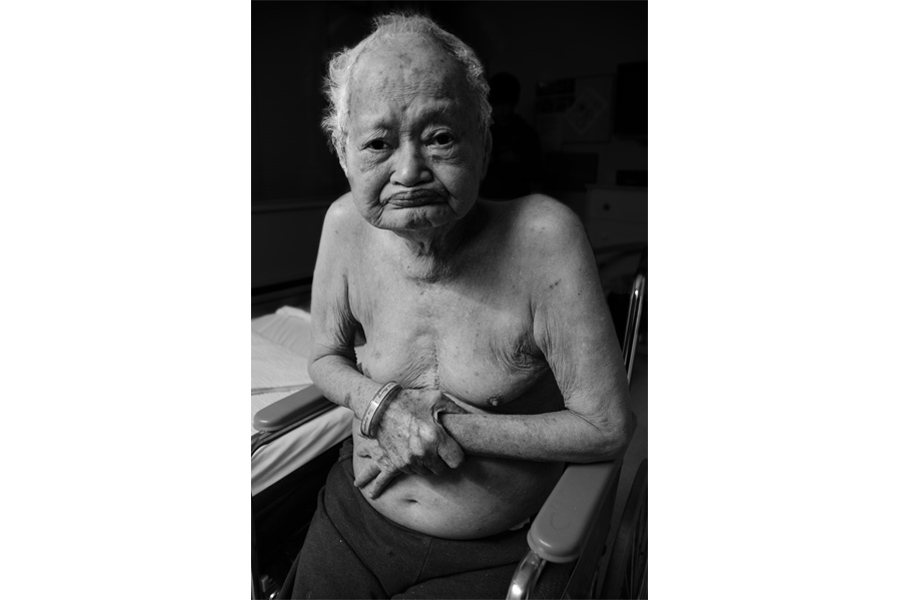
When I was a sophomore in high school, it had become impossible for my family to take care of my great-granddad and we were forced to place him in a nursing home. We visited him once a week but these drop­-ins were clearly not enough to soften my great-granddad's anger toward us. As we neared Christmas, I decided to bring along my camera so that I could somehow share his story and deal with my guilt and idleness. As I photographed him, I could finally freeze his expressions and understand the sadness he felt. Photographing my great-granddad showed me that my camera could do more than just create an image. It helped me to better understand both of our struggles and deal with the situation we were forced into. (ANH-TRAM BUI)
When I was a sophomore in high school, it had become impossible for my family to take care of my great-granddad and we were forced to place him in a nursing home. We visited him once a week but these drop­-ins were clearly not enough to soften my great-granddad’s anger toward us. As we neared Christmas, I decided to bring along my camera so that I could somehow share his story and deal with my guilt and idleness. As I photographed him, I could finally freeze his expressions and understand the sadness he felt. Photographing my great-granddad showed me that my camera could do more than just create an image. It helped me to better understand both of our struggles and deal with the situation we were forced into. (ANH-TRAM BUI)
This was the first really good picture I ever took and it made me realize how much photography could change the way people experience the world. (HANNAH WODRICH)
One summer, I had the privilege of being a team photographer on a medical mission trip to impoverished areas of Peru. In a small health clinic, we set up a simple studio and printer workshop where patients could come in with their families and have their photos taken. People loved this idea. It made them laugh. It made them smile. It gave them a special moment. And in that moment, people were able to forget their illnesses, their economic fatigues and their individual burdens. These people did not take for granted the simplicity of having their photos taken. And in their happiness and gratefulness, my work in photography was validated. (DANIEL TAK)
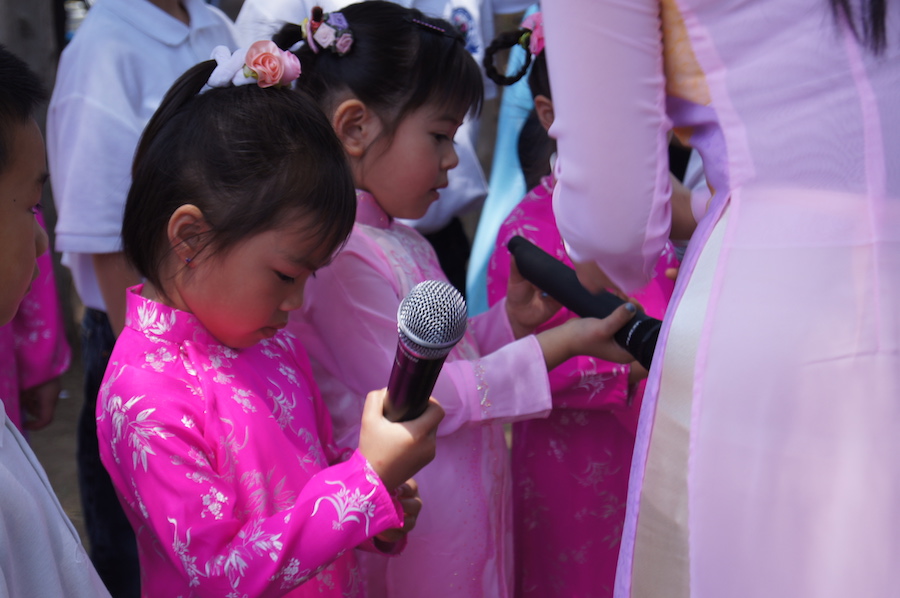
This is my favorite photo because it was from the opening day of a Buddhist temple that my dad built. It reminds me of when my parents would dress me up in traditional gowns, called Ao Dai, for special events, like this one. (BRIANA NGO)
This photograph is memorable to me because I took it when I went to my family’s home country, Iran, in 2013. This is specifically located at a man-made lake in a small town called Dezful. Every time my family and I visit Iran, we gather around at this lake at night with all our friends and family to eat assorted nuts and watermelon and talk and dance the night away. (VENOOS MOSHAYEDI)
This photo was taken in Cambridge when I was in high school. During the punting tour, I was taking photos of people on the bridge and suddenly found this little boy smiling at me. I caught that moment and realized how photography can fix time at a beautiful moment in our life. (ZHEN LU)
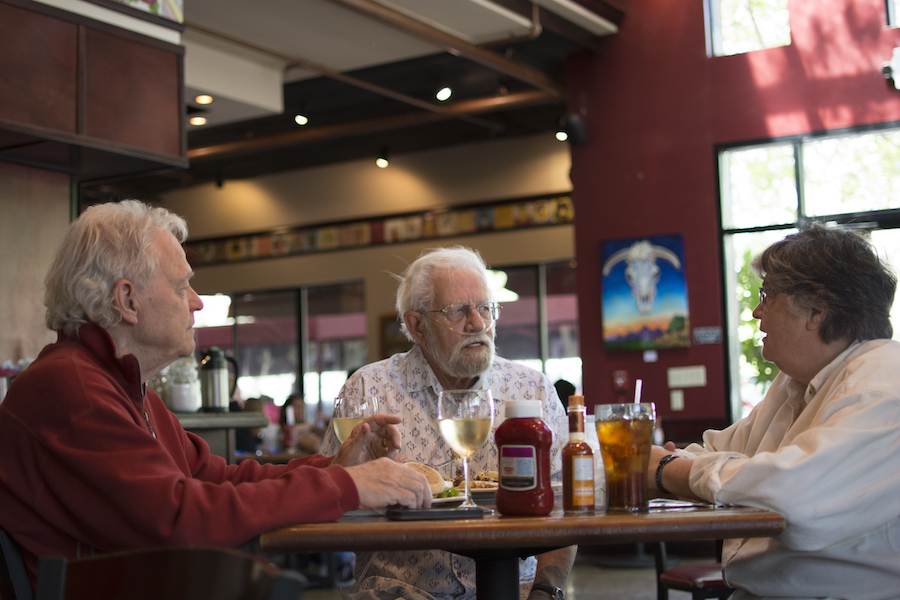
Prior to joining The California Aggie, I rarely approached strangers, let alone ask if I could take their photos. Taking on these newspaper assignments forced me to talk to people who I would otherwise never get to know. Not only did these folks agree to be photographed, but I also found out that one of them used to be a photographer during the Vietnam War, documenting the protests that came along with it. People's stories are humbling reminders — there is so much to learn from and about others. (DIANA LI)
Prior to joining The California Aggie, I rarely approached strangers, let alone ask if I could take their photos. Taking on these newspaper assignments forced me to talk to people who I would otherwise never get to know. Not only did these folks agree to be photographed, but I also found out that one of them used to be a photographer during the Vietnam War, documenting the protests that came along with it. People’s stories are humbling reminders — there is so much to learn from and about others. (DIANA LI)
This is one of the first film photos I ever took. It was during my sophomore year of high school, back when I thought I had a lot of work to do. (BRIAN LANDRY)
Last summer, my mom and I hiked through southern Utah’s national parks. This is a photo from the top of Angel’s Landing in Zion National Park. It was a strenuous hike with a huge elevation gain and the final mile was just on a narrow path with huge drop-offs on each side. I’m really proud of my mom for overcoming her fears and making it all the way to the top. (LUCY KNOWLES)
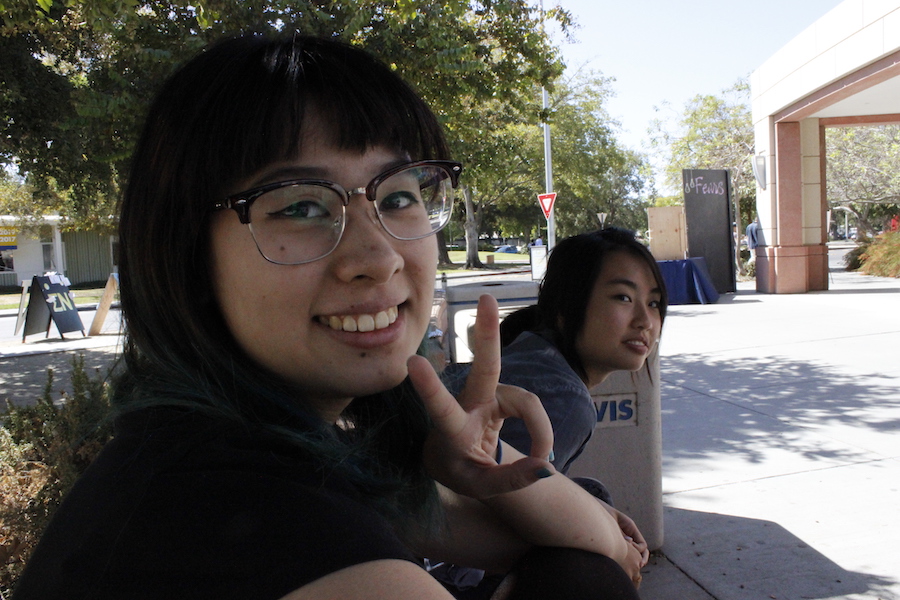
This is one of the first pictures I took with my camera. I had just begun to learn how to shoot in manual mode, and knew nothing about photo editing! After we helped out with a show held by Koinonia Christian Fellowship, I snapped a picture of my housemates and good friends, Jean and Sarah. This is a photo I’ll be looking back to many years from now to see how much I’ve improved as a photographer. (AMY HOANG)
This is one of the first pictures I took with my camera. I had just begun to learn how to shoot in manual mode, and knew nothing about photo editing! After we helped out with a show held by Koinonia Christian Fellowship, I snapped a picture of my housemates and good friends, Jean and Sarah. This is a photo I’ll be looking back to many years from now to see how much I’ve improved as a photographer. (AMY HOANG)
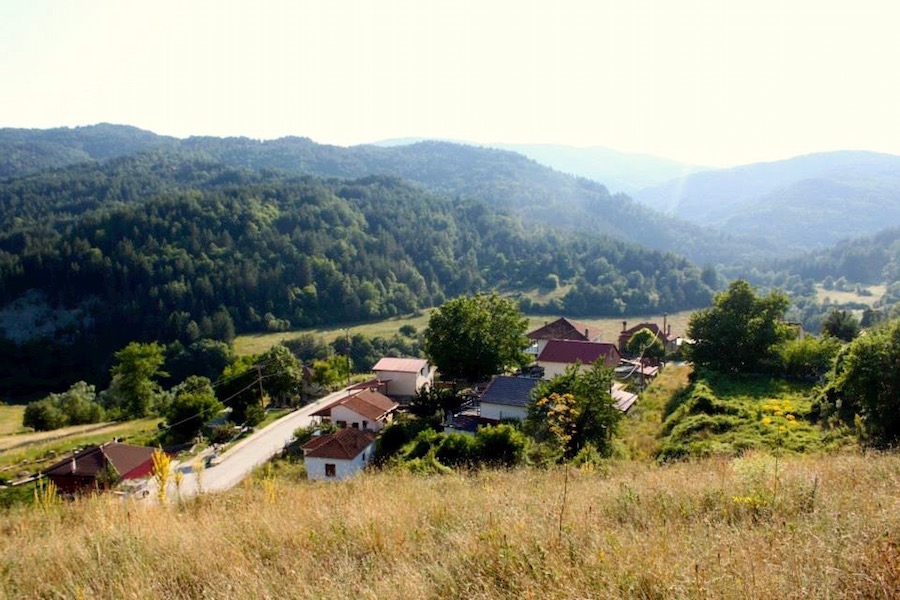
This is a shot of the Greek village my grandfather grew up in. It was bombed and destroyed to end the Greek Civil War that broke out after World War II. Amongst the chaos, my grandfather hid in a tree trunk, and would later find out that his family was taken across borders to Soviet block countries. They were separated for 31 years, until borders reopened. The village has since been rebuilt. It’s hard to believe the hardships that took place here, as it looks so peaceful now. It means so much to my grandfather when we go with him to visit and he speaks of it with great pride. (NADIA DORIS)
This is a shot of the Greek village my grandfather grew up in. It was bombed and destroyed to end the Greek Civil War that broke out after World War II. Amongst the chaos, my grandfather hid in a tree trunk, and would later find out that his family was taken across borders to Soviet block countries. They were separated for 31 years, until borders reopened. The village has since been rebuilt. It’s hard to believe the hardships that took place here, as it looks so peaceful now. It means so much to my grandfather when we go with him to visit and he speaks of it with great pride. (NADIA DORIS)
This is a shot of Charlene, my niece, for a short film we did together entitled “Queen of Earth.” Even though she is ten years younger than me, I learn something new every time I see her! (CHELBERT DAI)

Compiled by: The California Aggie Photo Desk – photo@theaggie.org

Aggies pull off upset with series win over No. 13 UCSB

CIERA PASTUREL / AGGIE

UC Davis baseball defeats nationally ranked UCSB in weekend series at home

This season has not been the best for the young UC Davis baseball team — but that just might change after their upset of the UC Santa Barbara Gauchos in a weekend series at Dobbins Stadium.

The Aggies have really turned it around as they headed into the first game on Friday with a four-game winning streak after defeating rival Sacramento State last Tuesday.

Once again, redshirt freshman Robert Garcia took the mound for the team in the Friday matchup. Garcia gave up two runs in the second inning of the ball game as UC Santa Barbara took the early lead. However, Garcia was phenomenal, allowing only four hits and striking out eight Gaucho batters during the remainder of the game.

Garcia threw six strong innings, but the Aggies were unable to give him any run support, down 2-0.

The Ags found a way to break through in the bottom of the seventh inning, putting three runs on the board to take a 3-2 lead. The team then capitalized on two errors by their opponents to add three more runs in the bottom of the eighth inning.

Heading into the ninth, UC Davis had a 6-2 lead that would stand pat. Freshman pitcher Chris Brown held UC Santa Barbara quiet for two plus innings and he picked up his first win of the season. Brown was pulled in the ninth and sophomore pitcher Matt Blais closed it out.

Senior first baseman Spencer Henderson was the Ags’ best hitter of the day. Henderson drove in two runs on three hits, including a double. Senior outfielder Tanner Bily extended his hitting streak to 11 games and sophomore shortstop Brad Pluschkell pushed his streak to six games.

Friday’s win marked the first time UC Davis baseball had defeated UC Santa Barbara since April 28, 2012. It was the team’s first home victory over the conference opponent dating back to May 22, 2011.

With the upset, the Aggies turned to Henderson to grab another victory in Saturday’s ball game.

UC Davis struck first offensively with a run in the first, but the Gauchos had a big fourth inning. The visiting team strung together four hits for four runs to take a 4-1 lead.

For UC Santa Barbara, that would be all they needed. Each team added a run apiece in the sixth inning for a score of 5-2. The Aggies tried to make their way back into the ball game with one run in the eighth inning, cutting the deficit to two.

But the nationally ranked UC Santa Barbara added two insurance runs in the top of the ninth. The home team failed to make a come back in the ninth inning to lose the second game of the series, 7-3.

Henderson took the loss as the team’s offense was relatively quiet. They only had four hits, and two of the three runs came from walks.

After a tough loss on Saturday, the Aggies still had high hopes of completing the upset for another series victory.

They did exactly that in a huge blowout over UC Santa Barbara. Although the Gauchos scored first, the Aggies were able to take down their opponent.

The Gauchos scored two runs in the second inning but the Ags came back strong, doubling the opposing team’s score for a 4-2 lead. The offense for the home team came in bunches after that.

The Aggies scored two runs in the fourth, fifth and seventh inning and three in the sixth. UC Santa Barbara brought in the final run of the game in the top of the eighth as UC Davis won, 13-3.

With little offense on Saturday, the team had 17 hits and freshman catcher Logan Denholm had a monster game.

Denholm had three hits, including a two-run homer and four RBIs. Pluschkell had three hits on the day and extended his hitting streak to eight consecutive games knocking in two runs.

Senior pitcher Nat Hamby picked up win number three on the season, only giving up two runs on four hits in five-and-two-thirds innings.

After not having won a series all season, the upset over the nationally ranked Gauchos is a great confidence booster for the young Aggie squad.

The team moves to 15-26 on the season and 4-11 in Big West play. Momentum is in the team’s corner as they face off against Sacramento State on the road on May 10 at 3 p.m., a team they defeated on May 3.

Written by: Michael Martinez — sports@theaggie.org

Aggie Style Watch

BRIANA NGO / AGGIE
BRIANA NGO / AGGIE

Whole Earth Festival Edition

Yasa Henson is a well-versed veteran of the Whole Earth festival. She exudes good energy and a free spirit. Henson attends Whole Earth every year because of the community and harmony that are present. Her different outfits during the festival are a perfect representation of what this festival means to her.


ASW: What is your inspiration for your style?

Henson: Love.


BRIANA NGO / AGGIE
BRIANA NGO / AGGIE

ASW: How many years have you been coming to Whole Earth?

Henson: About 20 years.


ASW: Has your style evolved through the years?

Henson: It’s kind of been always what I feel, and is either comfortable or colorful, or something that spreads love, good energy and strength.


ASW: Is this your daily outfit choice?

Henson: This one no, but yesterday I was wearing velvet, which I love. I wear it constantly. Today, I have velvet leggings on, which are very comfortable and good for layering.


ASW: Can you describe Whole Earth in one or two sentences?

BRIANA NGO / AGGIE
BRIANA NGO / AGGIE

Henson: I would say unity, bringing harmony and everyone together no matter what. It’s a place for shy people to dance and for people to be free. I think part of my dress represents that, letting your spirit free.


ASW: Do you have a go-to outfit?

Henson: Always velvet, even in the garden. I feel the most comfortable and spiritual in velvet.


ASW: Is there anything special about your stick?

Henson: Yes! This stick has traveled to many a festival, from High Sierra music festival to many Whole Earth Festivals. On this stick, I have many gifts people have given me at festivals, like little kids have given me necklaces they want me to have. I usually dress it new every year but this year has a lot of old stuff from way back, like this puka shell bracelet that someone gave me at my first Whole Earth. [There’s also] a peacock feather for flare, and this red cloth represents all the deep memories of family members that we’ve lost so we hold their strength, and they can party with us.


Written by: CARAJOY KLEINROCK — arts@theaggie.org

Mako to headline Lawntopia concert

MAKO
MAKO

Entertainment Council hosts annual free concert to bring music, fun to Davis community

The ASUCD Entertainment Council (EC) will host its fourth annual Lawntopia concert on Friday, May 13 at 6:45 p.m. on the Quad. Lawntopia is a free event that is open to the general public. This year’s headliner is Los Angeles-based electronic duo Mako. Mako has played at multiple large-scale musical festivals and events such as Coachella, Lollapalooza and Electric Daisy Carnival.

“We wanted to find an artist who would be fun and upbeat, and still appeal to a larger audience,” said Megan Meza, the EC executive director and fourth-year psychology and communication double major. “They’ve also just released a new song so we felt it was the perfect fit.”

Mako will receive opening support from Sydewaze, a Bay Area based DJ duo. EC hosts free events like these in order to allow students who might not be able to travel to the Bay Area to experience fun musical events.

“It’s safe to say that Sacramento/Davis doesn’t have a music scene that’s close to comparable to San Francisco or Los Angeles,” said Rachel Myers, an EC executive intern and third-year global disease biology major. “Lawntopia is a way to bridge this gap and provide great entertainment for students without having to travel, especially if you don’t have a car.”

According to managerial economics major Tori Davis, Lawntopia will be featuring the Star Ginger and Pizza Guys food trucks this year which she hopes will add to the audience’s experience.

“For me, [Lawntopia] is an event that embodies what Spring Quarter represents: fun, great music, and a bit of freedom,” Davis said. “It’s great to see that the students and community really enjoy what Entertainment Council provides to the campus.”

WRITTEN BY: Jennifer Duong – arts@theaggie.org

Humor: Dining Commons to host “edible food” theme night

VENOOS MOSHAYEDI / AGGIE

After successful Harry Potter and Star Wars theme nights, the Dining Commons (DC) has been under a lot of pressure to deliver another quality theme night. It has recently leaked that they will be putting on a special Edible Food Night.

“We just felt like it was time to switch it up,” said Jay Yeller, a DC spokesperson. “It’s a little exhausting to serve plastic, flavorless food every day. We thought it would be a really interesting idea to serve food that people would actually get excited about eating. It’s quite a creative idea if you ask me.”

The plans for this theme night include a variety of fruit-infused melted ice options, as well as chicken that has only been frozen once as opposed to the usual three times. The DC will also be bringing in a special outside chef for the night, who is rumored to be crafting a dish which consists of a large bowl full of nacho cheese.

“I’ve really loved the theme nights at the DC so far,” said Angela Duncan, a first-year nutrition science major. “What I really like is how they take regular food and give it weird names and dye things unnatural colors. It helps me forget that I’m eating food that’s not seasoned at all. At this theme night, I’m hoping for some food that doesn’t send me to the bathroom right when I get back to my dorm. But I don’t want to be too picky. That’s kind of a lot to ask.”

All three of the dining commons were supposed to take part in the boldly innovative theme night, until the Tercero location alerted the campus community that it had no intention of participating.

“We absolutely do not plan to serve food that could be described by such repulsive words as ‘edible’ or ‘flavorful,’” read a statement released by the Tercero DC. “Tercero is deeply committed to serving the most average food possible and we are offended that the other dining commons do not share the same values as us.”

The other locations could not be reached for comment on the matter.
You can reach BRIAN LANDRY at bjlandry@ucdavis.edu

Humor: Mom pays for average Mother’s Day brunch at Crepeville

DIANA LI / AGGIE
DIANA LI / AGGIE

Shane Grant woke up at 10:44 a.m. this past Sunday with a massive hangover and the feeling that he was forgetting something. Whole Earth? Nah, he doesn’t like that hippy stuff. Homework assignment? Nope. Oh crap. Mother’s Day. Mom was arriving at 11 a.m. and he was in charge of brunch reservations — which he had forgotten to make.

“I freaked out for a sec, but then I looked down at myself and realized I had fallen asleep in my clothes from the night before, so I was already dressed. All I had to do was hide my dru — dirty socks and find a place to get food,” Grant said.  

He called a few places and was startled to find that all of them were booked.

“It’s like everyone and their mother decided to get breakfast today! Sheesh!” Grant said.

His mom, Susan Grant, arrived promptly at 11 a.m., cradling the retainer Shane had left at home during spring break in her two cardigan-clad arms.

Shane gave his mom a quick hug before excusing himself to puke, and then they were off to the fanciest brunch he could afford: Crepeville.

“She had a fruity crepe, something with whipped cream — I don’t know — but it was the most expensive thing on the dang menu! I think she liked it, but I’m not sure — I didn’t ask.”

Crepeville employee Kathy Garcia had this to say about their brunch options:

“It’s average food. That’s what we pride ourselves on. I mean, it’s like $4 for an egg. Our coffee is weak and our tables are always sticky. And yeah, I saw that kid and his mom come in. They had to wait two hours for a table and then she ordered the cheapest thing on the menu because she knew her son was paying, but he ‘forgot’ his wallet. Poor mom.”

Shane tried to redeem himself by gifting his mom with the news that he hadn’t blacked out at a party in three whole weeks. She didn’t know what that meant but smiled at him with pride anyway.

Before Susan left, she plugged in a Glade Plugin and left a little note in the drawer where he keeps his condoms that said “Stay safe honey. Love, Mom!”

Happy Mother’s Day, Susan.

You can reach ALEX GUZMÁN at almguzman@ucdavis.edu and on Twitter @cactasss.

Walks with Warren

ANGELICA DAYANDANTE / AGGIE

Learn more about the the UC Davis Arboretum by taking a tour with the Superintendent Emeritus.

Want to learn more about the UC Davis Arboretum? There’s no better way to do so than to take a free tour. Named after the Superintendent Emeritus of the Arboretum, Warren Roberts, Wednesday Walks with Warren are monthly hour long tours from noon to 1 p.m. that explore the Arboretum’s changing gardens and collections throughout the school year.

“I talk about what the plants are and how they’re useful, focusing on showing things that are seasonal,” Roberts said.

Roberts completed both his undergraduate and graduate studies at UC Davis and became the superintendent of the Arboretum in 1972. After spending 37 years in this position, Roberts retired at the end of 2009 and has volunteered at the Arboretum since. He is heavily involved in donor stewardship, the curatorial aspect of the Arboretum and tours.

Warren said that people from all over the world come for a tour of the Davis Arboretum, with usually 12 to 24 people in each tour. The tour typically starts off at Shields Grove, with the exception of the month of March, where the tour starts from the Arboretum headquarters.

In addition to the monthly tours, Roberts also goes on the radio once a month to talk to Farmer Fred on KFBK 98.1 fm at 8:15 a.m. about the current happenings in the Arboretum.

“He’ll call me up and we’ll talk about what’s happening in the Arboretum, seasonal color [and] a bit about our programs,” Roberts said.

Besides Wednesday Walks with Warren, Roberts also does an additional one or two tours each month to accommodate specific tour requests. Roberts gives tours to university students, children, garden clubs and others, and once even CA Governor Jerry Brown and his wife.

“The Arboretum is one of the main public faces of the campus,” Roberts said. “We have a big volunteer program. I think our volunteers donate something like 30,000 hours a year. And the tours are one of the ways the community can participate directly.”

Wednesday Walks with Warren are not just ordinary tours, because Roberts incorporates a storytelling element that encourages audience engagement.

“He’ll choose a part of the Arboretum he wants to highlight,” said Arboretum Outreach Coordinator Melissa Cruz. “On the tour that I went on, we explored the Oak Grove and he essentially just talked about the history of the oaks and highlighted some of the history of a particular oak.”

Roberts is described by his fellow colleagues as knowledgeable and experienced.

“Warren is just a local treasure,” said Elaine Fingerett, Arboretum academic coordinator. “He knows so much about the plants. He knows about their uses, their context in literature and in history.”

Besides his knowledge and skills, Fingerett also described Roberts as humorous.

“I would say that his tours are fun and he’s a great punster,” Fingerett said. “He has a great and deep appreciation for plants and his enthusiasm and his deep knowledge about plants really comes through. That’s what makes his tours so wonderful and so much fun.”

For Roberts, the most enjoyable part about giving tours is the ability to show off the arboretum as well as interact with attendees.

“I enjoy seeing the plants and how they perform,” Roberts said. “I enjoy the interaction with the people — that’s always fun. And I always learn something!”

The last two Wednesday Walks with Warren will be on May 11 and June 8 at 12 p.m.

Written by: Jacqueline Chufeatures@theaggie.org

Sacramento celebrates the food cycle

ROSIE SCHWARZ / AGGIE

International compost awareness celebration educates community on food sustainability

Green Restaurants Alliance Sacramento (GRAS) celebrated its fifth annual International Compost Awareness Week from May 1 to 7. As part of the event, GRAS held the FoodCycle celebration on Saturday, May 7 at Fremont Community Garden from 11 a.m. to 2 p.m. GRAS is a coalition of restaurants seeking to promote sustainable food practices in the Sacramento area.

“We are celebrating the restaurants, the community gardens and urban farms that help complete the food cycle, the farm to fork to farm,” said David S. Baker, director of GRAS.

Organizations working with healthy soil, gardening and composting were all present at the celebration, including the Food Literacy Center, the City of Sacramento Community Garden Coalition and 350 Sacramento. Assemblymember Kevin McCarty was also at the event and presented awards of recognition to restaurants and urban farms in the Sacramento region.

Attendee Katie Reed said that the program was enjoyable for her entire family because they were able to learn about the importance of farm-to-fork practices.

Farm-to-fork refers to the idea of eating food that is grown directly from a local farm. Green restaurants are built on the idea that their ingredients should be fresh and locally sourced. The celebration had presentations and seminars regarding this idea and stressed the importance of farm-to-fork in relation to nutritious eating.

“I thought the composting activities were really interesting and my son enjoyed learning about farm-to-fork practices and what that means for community health,” Reed said.

The biggest element of the celebration, food composting, refers to recycling organic food waste, a natural process that keeps nutrients in new soil.

“In California, 30 million tons of waste went into a landfill, 30 percent of that can actually be composted,” said Hannah Ulansey, unit director of Project Compost, a subunit of the Campus Center for the Environment under ASUCD.

According to Ulansey, food waste is a huge problem in the United States and recycling food allows the waste to be used again.

Late last year, Gov. Jerry Brown set a statewide goal of recycling or composting 75 percent of waste by 2020. The city of Davis is also planning to have residents separate food waste from trash, sending the compost to special processing facilities. Events such as FoodCycle can help promote implement sustainable food practices through education.


Mashal Ayobi – city@theaggie.org

UC Davis students, staff draw 62-acre loop around campus to model university’s solar power plant

ALEXA FONTANILLA / AGGIE

Project focuses on emphasizing the importance of the solar power plant on campus and educating students on environmental sustainability

In April, volunteers from the Sustainable Resources Operations (SRO) club and staff at the Carbon Neutrality Initiative, the UC system’s commitment to emitting net zero greenhouse gases by 2025, completed a large-scale chalk outline in a loop around campus encompassing 62 acres of land, modeling the size of the solar power plant on the south end of campus.

The chalking consisted of large yellow suns hand-drawn at regular intervals along the path. There were roughly 12 sign designs with questions and answers providing fun facts about the solar farm, which were posted along the route on trees and light poles.

The groups set up a tabling display outside the ASUCD Coffee House by the Quad and invited students to walk at least part of the drawn-out route. Anyone that came back with at least two answers to questions from the signs received a free donut.

The purpose of this display was to spread awareness of the presence and importance of the solar power plant on UC Davis’ campus.

“I don’t know how well known it is among the UC Davis students that our campus has undertaken the Carbon Initiative Program that commits the University to emitting zero-net greenhouse gases from its buildings and vehicle fleet by 2025,” said Monica Gonzales, a second-year environmental policy and planning major who is a member of SRO and helped coordinate the project.

UC Davis’ 16.3 megawatt-sunpower solar power plant has been up and running since 2015, and generates up to 14 percent of the university’s electricity. It is the largest solar installation in the UC system and the largest “behind-the-meter” solar plant on a U.S. college campus offsetting electricity demand. It is expected to reduce the campus’ carbon footprint by 9 percent.

“The solar power plant, a step towards executing this goal, had opened earlier this year but a lot people were still not aware of its existence,” Gonzales said. “So our project was a way of bringing the solar power plant to students, and making them aware of not just the solar plant itself but also how it is that our campus is getting our energy.”


Zachary Ramalingam, a first-year sustainable environmental design major and member of the SRO, believes that the aim of the project was to recognize the size and impact of the UC Davis power plant.

“Our goal was to raise awareness for the solar farm, and do our best to make people care,” Zachary said. “The solar farm deserves recognition as the largest of its kind in the whole UC system.”

Along with other purchases of solar and hydroelectric energy, the plant is part of UC Davis’ plan to obtain 60 percent of its electricity from renewable and carbon-free sources by 2017, which is ahead of a state goal of 50 percent by 2020.

According to Jordan Ramalingam, fourth-year environmental policy analysis and planning major as well as president of SRO, a project like this is necessary to not only encourage environmentally conscious people to help make a change, but also to show that everyone has the ability to take action.

“Energy conservation and water conservation, for that matter, will not have a meaningful impact if only environmentally-minded individuals are taking action,” Jordan said. “Issues of sustainability need to be made practical and inviting to people who otherwise wouldn’t care, and this project was one way to reach this population.”

Written by: Demi Caceres – campus@theaggie.org

UC Davis graduate groups issue letters in opposition of Acting Chancellor Hexter’s appointment

BRIAN LANDRY / AGGIE

Comparative literature and cultural studies graduate groups call for Hexter’s immediate suspension

Recently, graduate groups in the comparative literature and cultural studies departments at UC Davis sent out letters opposing the appointment of Acting Chancellor Ralph J. Hexter. The 21 total signees include graduate students, teaching assistants and doctoral students from all levels.

Both letters specify why Hexter should be immediately suspended and demand a free, democratic election of the new chancellor. The three points detailed in the letters include Hexter’s role in the privatization of UC Davis, his involvement in incidents such as the 2011 pepper spray incident and his undemocratic appointment.

The graduates not only accuse Hexter of condoning the violations that Chancellor Linda P.B. Katehi is being investigated for, but also criticize him for encouraging and supporting actions toward the privatization of public universities like UC Davis.

“We call for the immediate suspension of Hexter’s appointment as chancellor and demand a free election on the basis of equal undergraduate, graduate, and faculty (both senate and temporary lecturers) participation to determine which figure (or figures) most appropriately represent our public community against the encroachment of private interests whose damage to the university’s reputation and public commitment is already so severe,” both letters stated.

Amy Riddle, a doctoral student in comparative literature and a parent of two children, said that she has been affected by the reallocation of Orchard Park to Solano Park. She believes the move is an effect of reduced availability of family student housing under the administrations of both Katehi and Hexter. She said that continually attending organized protests and meetings to keep rent from increasing and to prevent the closure of Solano Park has taken a toll on her teaching, studies and children.

“As a parent of two, my life as a graduate student at UC Davis has been extremely difficult under Katehi,” Riddle said via email. “Katehi and Hexter are responsible for the increased privatization of this university, including the planned redevelopment of family housing that will lead to a significant increase in rent for student families, and most likely more cuts for childcare support for student families.”

Anna Einarsdottir, a graduate student in comparative literature, said that she has not only been financially affected by the closure of family student housing, but also deplores the administration for the direction it is taking toward a less diverse UC Davis student body.

“UC Davis under Katehi’s control has cut down childcare support for student families and completely cancelled all support for undergraduate student families,” Einarsdottir wrote via email. “Katehi’s response to issues raised around the fairness of this has been very negative and she seems simply not to care that this will keep people with children to support away from Davis. This, in turn, will lead to [a] less diverse student population.”

Similar to their criticism of Katehi, the graduates accuse Hexter of criminalizing and suppressing resistance on campus through UC Davis’ policies and actions. Both letters cite cases, such as the infamous pepper spray incident on Nov. 18, 2011 and the prosecution of the Davis Dozen. The letters also detail the graduates’ belief that UC Davis is guilty for failing to address hate crimes and subduing pro-Palestinian speech, while defending university investments to companies that profit from infractions on Palestinian rights.

The comparative literature graduate group also undermined Hexter’s statement that he respects the Mrak Hall protesters rights. The group criticized Hexter’s patronizing and derogatory attitude, citing an email Hexter sent to the student body in which expressed his disdain for the “odors emanating from the protesters’ food and the garbage they leave behind.”

“This itself reeks of the classist language used to demonize and criminalize poverty and homelessness, products of the very structures of financial and social inequality plaguing the privatized model of the university and intensified under Katehi’s leadership,” the letter stated.

The two graduate groups heavily criticized UC Davis for appointing Hexter as acting chancellor without an open and democratic election, which therefore disregarded one of the Mrak Hall protesters’ primary demands.

“I feel that changing Katehi for Hexter is no change at all. Hexter has worked closely with Katehi and so I don’t see how him replacing her changes anything,” Einarsdottir said.

James Straub, a graduate in comparative literature, disapproved of Hexter’s support of the 2020 Initiative.

“The acting chancellor holds an appointment in our department and his support of former chancellor Katehi’s policies, especially the 2020 Initiative — which strikes me as an especially foul document for a comparatist because it shamelessly and boldly declares its intentions to exploit international students — are incompatible with the cosmopolitan and egalitarian values of our discipline,” Straub said via email.

Straub goes on to criticize the UC Davis administration’s treatment of the student body.

“I can understand the need, in an administrative position, to make difficult choices and to not have any satisfactory options. But I could never support an administration that not only accepts the conditions which make all choices bad choices, insofar as they affect the lives of students, but then even congratulates [the administration] on its ingenuity,” Straub said. “Administrative success and student success are no longer complementary goals.”

Carmine Morrow, a doctorate student in comparative literature, expressed the importance and objective of these letters.

“Students have demonstrated their power to affect change on campus,” Morrow said. “To influence broader systemic problems affecting the university system, we must create and maintain communicative infrastructure and use it to look closely at how the actions of individuals in our leadership reflect broader issues.”

Representatives from the University of California Office of the President did not provide a response regarding the graduate students’ letters.

Written by: Yvonne Leong – campus@theaggie.org

Photo of the Week: 5/11/2016

Whole wheat. (CHELBERT DAI / AGGIE)