53.5 F
Davis

Davis, California

Tuesday, December 23, 2025
Home Blog Page 729

Humor: Hillary Clinton to take Picnic Day Jell-O shots in attempt to relate to Davis community

0
BRIAN LANDRY / AGGIE

The former secretary of state will just be chillin’ at the 102nd installation of Davis’ hallmark event

Hillary Clinton will come to UC Davis for this Saturday’s Picnic Day in an effort to increase Millennial approval for her candidacy for the democratic nominee and President of the United States. But she’s not just interested in the parade — Clinton will be making a trip down good ole Russell Blvd to enjoy the finer things Picnic Day has to offer: blue and gold Jell-O shots and tepid beer.

As soon as Hillary’s PR team heard UC Davis would have its own Snapchat story for this annual event, they jumped at the chance to have her appear to be relevant. Can’t you just picture her saying, “I’m just chillin, in Davis, California,” on her Snapchat as her pointy fingernails aggressively tap the iPhone screen?

Imagine Clinton chugging from a beer bong as frat boys yell in her ear, the whole ordeal recorded in a 10-second clip for all Snapchat’s users to see. Precious. But we’re not interested in beer bong. What we really want to see is Clinton go to town on those blue and gold Jell-O shots — a Picnic Day tradition. Will she fit it all in her mouth at the same time? Does she run her finger around the rim before swallowing it whole? Or will one of the local frats have to bust out their least crusty tupperware for her to eat off?

Sally Marvin, Hillary Clinton’s assistant, had this to say about Chillary’s historic visit:

“This is a really big deal to her. We’ve been doing research on what outfit will make her look most approachable and “down-to-Earth” for months. We finally settled on linen trousers from Banana Republic and a crochet bralette from Nasty Gal,” Marvin said.

Some things for Hillary to keep in mind on Saturday:

When a frat boy invites you into his room for “the good stuff” he doesn’t just want to watch you do a handle pull of his Kirkland brand vodka. Watch out. And be careful of the jungle juice — it may taste like Kool-Aid, but it’s dangerous.

And Hills should finally remember that what goes on social media stays there forever: you can’t just hide it away in an email.

Hillary will be live tweeting this entire experience, you can follow the hashtag #TheOnlyBurnIFeelIsTequila for updates.

You can reach ALEX GUZMÁN at almguzman@ucdavis.edu and on Twitter @cactasss, or find her on Saturday shouting “Seven, Seven, Seven!” as Hillary slaps the wine bag.
Poke made my day

DIANA LI / AGGIE
DIANA LI / AGGIE

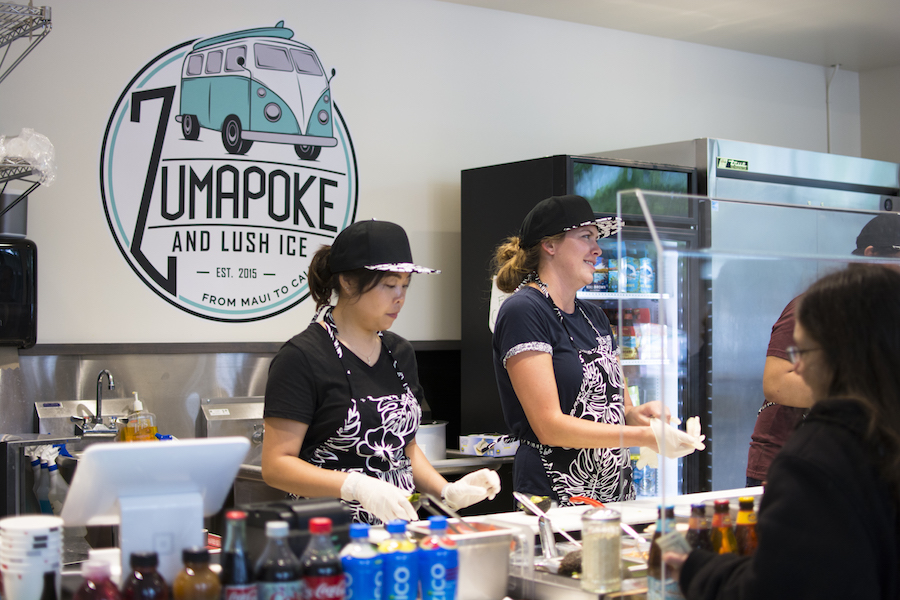
A review of Zuma Poke in Downtown Davis

I was on my way to get a latte from Temple Coffee Roasters before heading to campus to study for that first round of week three midterms when I saw the biggest line of people in Downtown Davis since Woodstock’s had $1 slice nights. Intrigued, and looking for any opportunity to procrastinate, I asked someone what the line was for. “Poke from Zuma Poke & Lush Ice,” she told me, and because I didn’t want to seem dumb I nodded like I understood what that meant and got in line anyway. After five minutes of being bored in line, I was starting to debate whether it might be better to go study and wondering if this poke (pronounced “poh-kay”)  thing was going to be worth it.

And then someone walked out with a bowl.

DIANA LI / AGGIE
DIANA LI / AGGIE

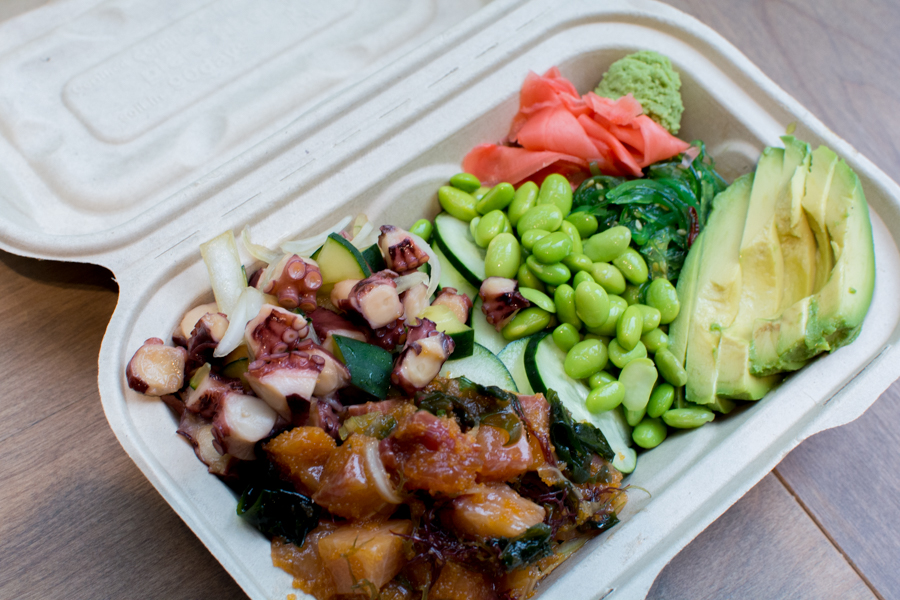
It was beautiful — vibrant oranges and reds of raw fish and some surprisingly delicious-looking green stuff — and I decided that, whatever this poke stuff was, it was definitely worth it, at least for the Instagram opportunity. I was already planning my caption. And, since I wanted all of my Instagram followers to believe that I eat healthy and am culinarily adventurous, I planned to get the most interesting things on the menu.

But when I got to the counter and saw purple suckered octopus tentacles and an orange mush of fish, I panicked and ordered what I was familiar with: spicy tuna, salmon, edamame and rice. Don’t get me wrong, it was still delicious. The fish was fresh and flavorful without sauce, and edamame and plain rice are always delicious, but I left feeling like I hadn’t given poke a real shot and that I couldn’t honestly write a review of it. So, I went to Zuma Poke a second time, and this time I sat down with co-owners Rachel and Dustin Ryen to get their recommendations.

“Our best sellers are the spicy tuna, the salmon would be a close second, and the traditional poke is third,” Dustin said. “But I personally like our yellowtail. It has such an interesting sauce combination.”

He also explained that poke is a different culinary experience, and that people who may not think they like raw fish might like poke.

“Our traditional poke, because it’s covered in sauce, is going to be a very different experience than if you were to get sashimi and eat straight raw fish,” he said. “Especially if you have a problem with the consistency, our poke has a crunch in it because of the onions, so it’s very different on your palate than if you were to eat straight raw fish.”

Rachel added that if you don’t like raw fish at all, they also offer cooked shrimp and octopus.

DIANA LI / AGGIE
DIANA LI / AGGIE

On their recommendations, I tried the yellowtail, spicy ahi (the orange mush I had previously been afraid of) and the octopus. I also got the kimchi and seaweed salad. And wow. The yellowtail was fantastic, with a texture somewhat similar to salmon, and an interesting sauce that had hints of shoyu and maybe sesame. The spicy ahi was also delicious; the spiciness was a flavorful complement to the fish and didn’t feel overpowering at all. And, though I was still skeptical of octopus that wasn’t deep fried, it was great. The kimchi was spicy, salty and crisp and the seaweed salad was crunchy and sweet, a complete contrast to the salty sliminess I was afraid of. All of the menu items that I had initially thought were too odd-looking to taste good turned out to be amazing.

The workers at Zuma Poke put a lot of thought into crafting and perfecting their dishes; whether you stick to the familiar or try something new, you can’t go wrong with the food at Zuma Poke. And trust me, sometimes the weirder it looks, the better it tastes.

Zuma Poke & Lush Ice is located at 730 3rd St. in Downtown Davis. They serve traditional style poke, build-your-own bowl poke and Hawaiian lush ices, described on their website as a “boozy Hawaiian shaved ice.” You can view their full menu online. Check out their Facebook page for more information, and make sure to make your day by trying some poke!

WRITTEN BY — Sofie Bates – arts@theaggie.org

Hawai’i sweeps Aggies in weekend series

0
DANIEL TAK / AGGIE
DANIEL TAK / AGGIE

UC Davis baseball struggles against visiting Rainbow Warriors

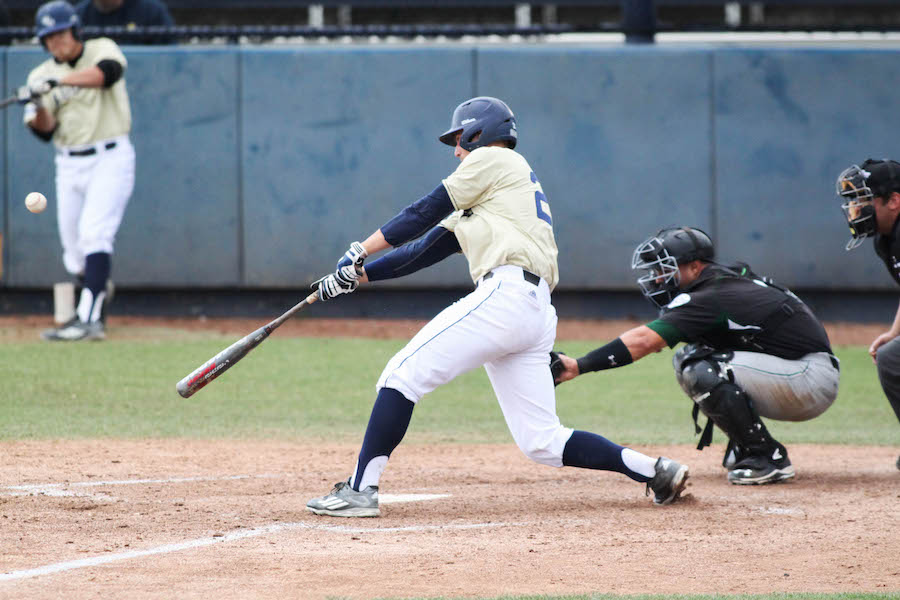
The Hawai’i Rainbow Warriors came to UC Davis from April 8 to 10 to play a three game weekend series against the Ags.

The baseball series began on Friday in a close contest that headed into extra innings.

The Aggies jumped into a quick lead, scoring five runs in the first two innings. Redshirt freshman pitcher Robert Garcia got the start on the mound and allowed only three runs over six innings of work.

DANIEL TAK / AGGIE
DANIEL TAK / AGGIE

By the time Garcia came out of the game, the Aggies still had a 5-3 lead, but Hawai’i found a way to keep chipping into it. While the Ags looked good offensively in the first two innings, the team was mostly dormant at the plate thereafter.

The Rainbow Warriors were able to string four hits together and put two runs on the board in the top of the eighth against Aggies’ redshirt sophomore pitcher Blake Peters. Tied at five, the Ags held their ground during the eighth and ninth innings.

The game headed into extra innings and Hawai’i made sure that it would not go on too much longer. Peters stayed in relief and only allowed one hit in the inning, but an error on a pick off attempt and a passed ball allowed a Hawai’i base runner to advance to third with just one out. Hawai’i hit a sacrifice fly with their runner on third to take the lead and put the go ahead run across the plate.


The Ags looked to make a comeback but went down one, two, three to lose the first game of the series, 6-5.

On Saturday, the Aggies looked for some revenge, but due to rainy weather the game was delayed and a doubleheader was set for Sunday.

In Sunday’s first game, junior pitcher Justin Mullins got the start and pitched terrific in seven innings. Mullins gave up two runs, both in the third inning. Mullins played it conservative and only allowed singles in the inning, but Hawai’i was able to push two runs across the plate.

Unfortunately, Mullins would take the loss in the game as his Hawai’i counterpart, senior pitcher Kyle Von Ruden, pitched even better. Von Ruden got the Aggies to put the ball on the ground all game long and threw a complete game shutout. Von Ruden took the punch out of the Aggies offense, allowing just three hits.

Hawai’i put across two runs in the eighth and one in the ninth to win the game 5-0 and defeat UC Davis once again.

In the second game of the day, the Aggies hoped to put a little more life into their offense, but fell short. Senior Nat Hamby took the mound and pitched well in the first two innings.

However, the third inning is where things collapsed as Hamby gave up four runs on four hits to the Rainbow Warriors.

Hawai’i got another great start out of their pitcher, this time from senior Alex Hatch. Hatch shut down the Aggies through five innings with ease, but the Ags were able to get a little bit of offense going in the bottom of the sixth.

DANIEL TAK / AGGIE
DANIEL TAK / AGGIE

The Aggies had runners on second and third with one out and junior left fielder Mark Cardinalli stepped to the plate. Cardinalli hit a shallow fly ball to right field that looked like it was going to drop and get at least one run across the board, but the Hawai’i second baseman made an excellent over the shoulder, arm all the way extended catch to prevent a hit and any runs.

The Ags would score one run on a tough fielding error by the shortstop, but they could not score anymore. The inning seemed to be promising, but the Ags could not capitalize, down 4-1 through six innings.

The inability to score any more runs hurt the Ags’ chances of winning as the Rainbow Warriors scored three more in the top of the seventh inning, advancing to 7-1. UC Davis did not have much of a chance to win after that, but they managed to string together a couple of hits for a run in the bottom of the ninth.

The final score of the series finale was 7-2, as the Aggies lost all three games of the series.

Senior outfielder Tanner Bily had a good game on Friday as he went two for four with an RBI and scored two runs. Bily reached base in 15 consecutive games with Friday’s performance, but his streak was snapped after going 0 for 4 in Sunday’s first game.

Junior infielder Jacob Thomas had the most RBIs for the Aggies in the series with two in Friday’s game. Other than Friday, the UC Davis offense was fairly quiet.

The Aggies’ pitching staff had a good weekend, but their relievers had a bit of a tough time keeping runs off the board.

The Aggies are now 8-18 overall and 1-5 in conference play. The team will go on the road to Cal State Fullerton to take on the Titans this Friday at 7 p.m.

Written by Michael Martinez – sports@theaggie.org

The sacrifices of raising gifted athletes

CAMILLA DAYRIT / AGGIE

Parent’s are the reason most athletes get into sports, and, more importantly, are the reason they stick with it.

They say everything changes when you have children. Although I do not have any kids of my own, I can definitely speak to my parent’s dedication to my former career as a student-athlete.

I started swimming when I was just four years old, and for the next 14 years of my life, my parents carted me around and were active in my athletic endeavors. Luckily, or unfortunately in my father’s case, for I think he would have liked to brag about having a college-athlete son, my parents were let off the hook when I started college.

According to Sports and Fitness Industry Association, more than 26 million children aged six to 17 competed in team sports in the United States in 2014. The NCAA reports that around 420,000 student athletes 18 and older compete annually in the United States. So roughly 26.5 million children are active in sports, and many of their parents are too.

Being a parent of the student athlete that decides to continue on at the collegiate level is a full-time commitment. Financially, parents need to account for coaches, equipment, travel and time spent at sporting events or practices, not to mention any other children they might have.

“There is a financial component; you can dive in, but you don’t have to,” said Susie Kevorkian, mother to Tess Kevorkian, a junior defender on the lacrosse team. “We chose to because we think it means a lot, [especially] to our daughter — I know that.”

Spencer Creed, sophomore goalkeeper on the men’s water polo team, travels abroad to compete in heightened levels of competition, adding to the financial aspect of his sport.

“I’ve spent two summers in Italy, a summer in Montenegro. I spent a spring break in Hungary and Italy,” Creed said. “He [Creed’s father, Michael] was not [there] but he had absolutely no hesitation to send us [Creed or his siblings].”

One of the largest sacrifices for the parents of a student-athlete is their time.

“We used to be skiers, we are just literally getting back into skiing,” said David Neff, father of Courtney Neff, a senior midfielder on the lacrosse team. “That’s the piece that gets sacrificed pretty significantly, the vacations. A lot of the times it revolves around the sports, just spending a couple extra days wherever we go.”

However, some families do go all in for their athletically-talented children, and the sports they love. The Creed’s are one of these groups.

“He [Michael, Spencer’s father] would do everything in his power, him and my mother, to facilitate [our success],” said Creed. “It was just a constant necessity to be shuffling us around, and it’s all we really ever talk about, I mean water polo really is the main focus [of our entire family].”

Although parents enjoy watching their children compete, they often lose work-related time. In Christine Landry’s case, she had to drive two and a half hours to see her daughter, Elizabeth, play. Both of her children play – Elizabeth as a now-graduated attacker on the lacrosse team, and Chloe, who is a sophomore lacrosse player at Cal. Similarly, the Kevorkian’s left work early and had to take half a vacation day in order to watch their daughter. The Creeds travel just as much and try to make all the games that they can, going as far as Colorado to watch their children play.

Not only is there a financial cost to helping gifted athletes, but there are also some emotional sacrifices for parents. Sometimes, a game might not end favorably, and an athlete is forced to cope with a hard loss.

“It is hard, I don’t think [Chloe] wants to necessarily talk to us about it,” said Landry. “We would never give any feedback, but they would like us to be here.”

In fact, supporting a child after a loss may be the hardest part — there is no exact science for how to help them through the hard times, and seeing them hurt is rough.

“I think that’s just really it, you just support them, whether they had a great game or didn’t have a great game,” echoed Kevin Kevorkian, father of Tess. “It’s just, get over this game, there’s another one coming in a couple of days, focus on the positives, learn from whatever you didn’t do well, and move on from there.”

However this support is often exactly what these athletes need.

“[My father is] at most of our games, and if I’m having or had had a bad first quarter, first thing I’m going to do, or after a bad shot, I’m going to look up into the stands, I’m going to find him, and I know he’s going to be staring right at me,” recalled Creed. “Generally, what he does is he gives me a little gesture, he points to his eyes kind of like, ‘I’m watching you, eyes on the ball,’ and the other one is just a, ‘Calm down, relax.’”

One of the most noticeable aspects of the sacrifices that parents make is when they no longer have to make those sacrifices.

“You realize you have a lot more time,” Kevorkian said. “Like when she got here [UC Davis], or when they can drive, because you are not taking them to practice, picking them up from practice, taking them to games, all that weekend stuff.”

Overall, the sacrifices that most parents make to help their kids are ones that are often not considered sacrifices. They do lose out on potentially doing something that they might have otherwise wanted, but the benefits of seeing their child succeed surely outweigh any drawbacks.

“If you were to ask him, I don’t think he would say he’s sacrificed anything,” Creed said. “He wants to be at every game, it’s his pride and joy to come to this.”

Written by Aaron Sellers – sports@theaggie.org

UC Davis softball falls to Long Beach State as they prepare for road games

0
UC Davis junior catcher Alexis Carney prepares for incoming pitch. (DEBPARNA PRATIHER / AGGIE)

Aggies fall two out of three games to Long Beach State, but aren’t losing hope

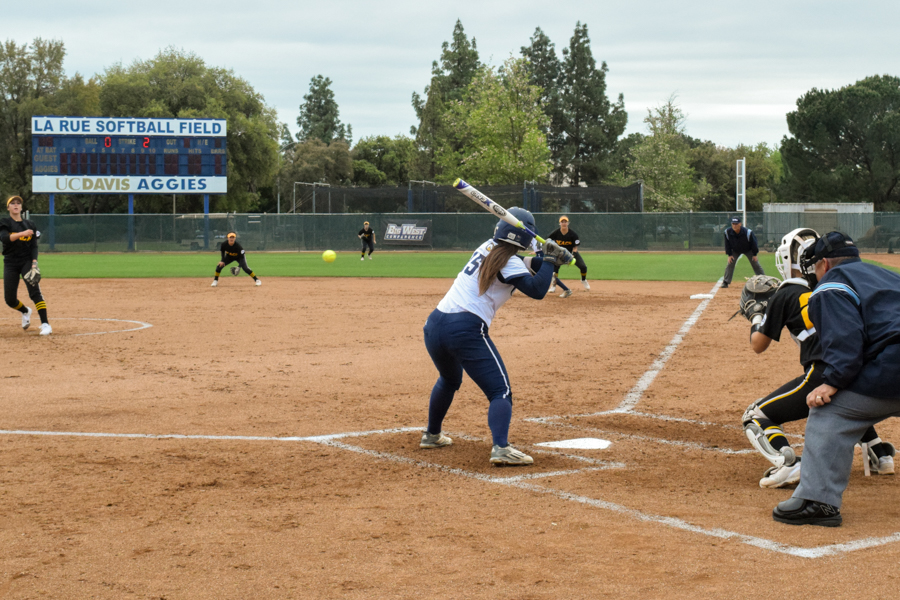
Coming into Saturday’s game, the UC Davis softball team was 2-1 in Big West play, but even with the dominant 4-1 win, the Aggies could not keep their momentum going into Sunday’s double-header against the Long Beach State 49ers. The two Sunday losses would even out their Big West Conference record to 3-3.

Saturday’s game proved very hopeful for the Aggies, as there were no runs on the board until the fifth inning, when UC Davis was able to break the scoreless game and drive in three runs.  Pitching performances from junior starter Andrea Reynolds, who received her fifth win, and freshman reliever Sara Cadona, who earned her third save, helped ensure the victory.

Even though the 49ers scored one in the top of the sixth inning, senior first baseman Kelly Zboralske stepped up in the bottom of the sixth and hit a solo home run to center field to contribute to the Aggies victory.

“I had all the confidence in the world because I knew my teammates knew I could get it done,” Zboralske said. “The moment I hit it, I knew it was gone, and it was such an amazing feeling.”

In their two Sunday games, the Aggies couldn’t gain an edge over the 49ers. Trailing 5-2 in the bottom of the fourth inning in the first game, Zboralske stepped up to the plate, driving in two runs, to tie the game up at 5-5. In the top of the seventh inning, the 49ers’ senior third baseman Darian Tautalafua hit a two run homer, giving the 49ers a 7-5 victory over the Aggies in the first game of the weekend. The Aggies knew, similar to last week, that the third game however, would be critical in gaining the advantage in the three game series against Long Beach.

Reynolds stepped up to the mound to start for the Aggies in game two of the double-header, and brought the 49ers scoreless through three. Tautalafua stepped up to the plate in the top of the fourth inning, and hit a solo home run to give the 49ers a 1-0 lead. After scoring another run in the top of the fifth, Long Beach led the Aggies 2-0, and when Cadona replaced Reynolds after an arguable call from the umpire on a 1-2 count, Tautalafua hit another solo homer in the top of the sixth inning, bringing her weekend home run total to four and giving the 49ers a 3-0 victory over the Aggies.

After the events that transpired over the weekend, the Aggies haven’t lost hope in the Big West conference.

“We played three good games this weekend and are excited to be where we are right now,” said head coach Erin Thorpe. “What we are concerned with is going out there and playing our best softball and improving our game, regardless of wins or losses.”

The Aggies will face Cal State Fullerton this weekend, who are 6-0 in the Big West thus far, for their first away game. Both games on Saturday will be televised on ESPN 3, at noon and 2 p.m.

Written by: Ryan Bugsch – sports@theaggie.org

Annual Davis Dance Revolution to be held on Picnic Day

0
DAVIS DANCE REVOLUTION / COURTESY

Modern and traditional dance groups participate in dance competition

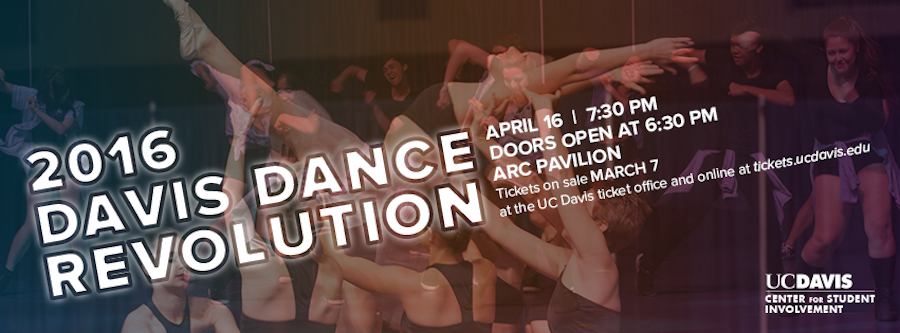
Want to see the best dancers in Davis? Come to the Davis Dance Revolution (DDR) on Picnic Day this Saturday, April 16. DDR is an annual dance competition that features the best dance groups on campus. Since its first show in 2005, DDR is a highly anticipated and popular event on Picnic Day.

The competition includes various styles of dance, from traditional dances such as Chinese lion dancing to modern dance like hip-hop, and reflects the cultural diversity of the campus. The event is subdivided into two main categories: traditional and modern dance. Each includes seven groups and one champion is chosen from each category.

Larissa Saschin, a fourth-year clinical nutrition major, treasurer and co-president of Davis Ballet Company, started dancing ballet at the age of two. This year will be her fourth year competing in DDR and she is looking forward to it.  

“DDR is absolutely amazing, I feel like it’s something from the movies. [It has] a huge audience and all of the dance clubs are amazing,” Saschin said. “There is so much excitement.”

Every performing group dedicates lots of time in preparation for this performance. As DDR is the biggest dance event hosted on campus, dance groups hope to utilize this opportunity to gain more publicity and, more importantly, to showcase their love for dancing and the strong bonds they share with their teammates.   

“We never placed at DDR, but that never stop us from having fun. It’s always a goal to place, to win,” Saschin said. “But that’s not our main focus [in performing] at DDR. We do it because we love to dance.”

Emily Collins, a third-year biological sciences major, is one of the three directors from Agape, a Christian contemporary dance group, and sees DDR as a stage to inspire people to love and live a fulfilled and happy life.

“This year we just really hope that people can see the love that we share with each other out on stage and take that and apply it to their own lives,” Collins said. “That’s the theme for all of our performances — it gives someone hope and gives someone a feeling of love.”

Catherine Nivera, a fourth-year design major and public relations officer of Davis Wushu, hopes to promote Wushu, a form of martial arts originating in China, through DDR.

“I think Wushu is a really powerful sport. You can learn things that are really amazing. You can learn to jump really high and you can learn how to wield a sword. It’s also really graceful because of the ways you move. It’s about performance, and not about fighting,” Nivera said.

For this event, Davis Wushu incorporates dance elements into its performance.

“Because it’s from a dance perspective, we are able to be looser in our interpretations of Wushu,” Nivera said, “Dance choreography is more about movements and feelings, we can add more personality to our movements.”

  For Minji Lee, a fourth-year psychology major from Golden Turtle Lion Dance Association, the competition has a special meaning. She attended DDR her first year at Davis and even though she had no previous knowledge about lion dancing — a form of dance that originated in China and other Asian countries — she was amazed by the astonishing performance of Golden Turtle Lion Dance Association and was determined to be one of them.

“For me, one of the biggest reasons that I want to do DDR is that it is an important event to me and is how I learned about lion dancing,” Lee said.

Lee played cymbal for previous years’ DDR. This year, she will be the head of a lion for the first time and is both excited and nervous for this performance.

“Since we started competing in DDR, lion dancing has always placed in [the] top three, so I feel like there’s pressure on me to do well. But I am mostly really excited because I always [wanted] to be part of DDR,” Lee said.

DDR will be held at the Pavilion at 6:30 p.m. this Saturday. Presale tickets are $14 for UC Davis students and $16 for general admission. Tickets can also be purchased at the door, $16 for UC Davis students and $21 for general admission. For more information about DDR, check the event’s Facebook page.


WRITTEN BY: Betty Wu – arts@theaggie.org

10 Cloverfield Lane review

0
PARAMOUNT PICTURES
PARAMOUNT PICTURES

Not a sequel to Cloverfield but still worth a watch

Many people, like myself, entered the 10 Cloverfield Lane movie showing with the misconception that it was a sequel to the 2008 movie Cloverfield. We were wrong. To be perfectly honest, John Gallagher Jr., one of the lead actors, was the main reason why I wanted to see the movie, but I was actually pleasantly surprised with how captivating it turned out to be. 10 Cloverfield Lane, Dan Trachtenberg’s directorial debut, managed to get everything right.

The acting from all three leads was phenomenal. John Goodman plays Howard, the man who is prepared for and even hoping for an apocalypse. Goodman is known for his upbeat charisma, but in this intense film, he is unrecognizable, and will leave you traumatized. Mary Elizabeth Winstead, who plays Michelle, has the lead role opposite Goodman and is the heroine you’ve been waiting to root for. She manages to persevere through circumstances that go from bad to worse. Michelle is one of the strongest female leads in recent memory and is a character I would definitely like to see more of. Last but not least, John Gallagher Jr. makes you fall in love with his character, Emmett. Emmett experiences a whirlwind of emotions while stuck in the bunker, making him the most relatable character in the film.

The majority of the movie took place in a bunker that was beautifully designed by Ramsey Avery. The bunker looked cozy, yet stiff and a little bit unnerving. The restrictive bunker caused tension to rise between the characters throughout the whole movie. From the beginning, it is unclear whether or not Howard is telling the truth, rendering him hard to trust, and the majority of the movie consists of Michelle’s attempts to figure out what Howard’s true intentions are. The alien attack on the surface is not a huge component of the movie, allowing for real character development growth in this psychological thriller, which is not normally the case. An example of this is the bond that Michelle and Emmett form over the need to escape the clutches of Howard, bringing the movie back to a relatable human level.

The cinematography allowed the bunker to seem much larger than it really was. Surprisingly, I didn’t get tired of seeing the same scenery over and over again, speaking to the true entertainment produced by each of the actors and the quality of set design. The bunker’s common area was at first a place of terror, then became comforting, and finally returned to an unsafe space. The bunker was accented by cool tone filters, which gave life to the cold environment and estrangement of the relationships between the characters.

While watching, I, like Michelle, did not know what circumstance was better — to be stuck with Howard in the bunker or risk going up to the surface to encounter the unknown. This was the underlying theme of the whole movie. Choices.


WRITTEN BY: CaraJoy Kleinrock – arts@theaggie.org

Humor: Fear and Loathing in Las Davis

0
EVAN LILLEY / AGGIE
EVAN LILLEY / AGGIE

We were just outside Davis, on the edge of East Covell, when the horse tranquilizers began to kick in. I remember my editor calling on the cell phone, yelling, “Holy Jesus, where are you goddamn animals? I want an article about the Second Friday ArtAbout by Saturday morning or you’re fired.” I threw the phone out of the car and into a ditch before the bastard could utter another word. My friend and lawyer Pigso had joined me in the mission. Not because he was into art, but because he was hungry and in need of the free snacks and booze offered at every gallery looking to attract patrons.

We reached the Natsoulas Art Gallery at half past five. It was the size of a small castle with a giant blue crystalline head of a dog perched in the

EVAN LILLEY / AGGIE
EVAN LILLEY / AGGIE

front — or maybe that was the horse tranquilizer speaking. It was a pleasant experience until I reached the second floor. Half of the paintings depicted nightmarish scenes of violence, creepy surrealism, apocalyptic landscapes and creatures that looked half-human and half clown toy. The horror reached its climax when one of the heads popped out of the canvas and frightened the bejeezus out of me. I screamed “Agh! Go back to being paint you art-possessing demon!” I turned around to see Pigso looking disappointed. “I think you’ve had too much tranquilizer,” he said. He dragged me out of the gallery, giving a polite nod to the clerk at the info desk who was wondering why an anthropomorphic fat pig was shoving a six-foot blue horse outside.

After taking a break to get some much-needed fresh air, we headed to our next stop: the Pence Gallery. There, groups of people had already arrived and were comfortably sightseeing floral-inspired artworks. As soon as I got into the groove of taking in the soothing imagery of roses and orchids, I heard Pigso getting into a heated argument. Some poor chap made a pig joke about him and his eating habits at the complimentary snack bar.

art2“Who are you calling a pig, you dirty stupid Pig!” yelled the stranger.

“I’m talking about you, ya dumb ape. You got nothing better to do than make smart*ss jokes? I’ll have you know I’m a licensed attorney.”

“Come on buddy, let’s get out of here,” I said, taking Pigso by the arm.

Wrestling Pigso out of the gallery wasn’t as tough as talking the owners out of calling the police. I told them that he had a bad heart and his drug prescription made him irritable.

We continued to the next spot on the Art Walk on hoof. By then it was dark, and the streets seemed busier than ever. Crowds of students prowled about with friends, lovers, co-workers and everything in between. I could see bars everywhere, filled to the brim with people drinking, talking, laughing and staring at their phones. Second Friday was in full swing.

We stepped inside the next gallery to see the cramped office of a guitar maker. In one room was an audience listening to a string performance ofart1 light folk music and in the other room was a workshop filled with wood shavings, tools, half-finished instruments and bottles all over the place. A few people managed to fit themselves into nooks and crannies so they could carry on conversations. Pigso and I helped ourselves to some beer and what looked like store-brand Chardonnay.

Talking with the people was a much more enlightening experience for us. The music was good, the craftsman knew his trade well and just being in his studio made viewing his work feel more special and intimate. You wouldn’t have the same comfy experience meeting whoever built your iPhone or meeting the poor farmer who grew your cheap coffee.

Realizing how much time had passed and how we had to cover the rest of the ArtAbout, I gathered Pigso from a blonde-haired dame he was attempting to chat up and we headed off to the next spot, conveniently located next door.

This place got on my nerves. Aside from the dry cookies and cheap Prosecco, I couldn’t wrap my head around the paintings. They looked like cement surfaces with scratched markings and smeared compost colors. I knew abstract art had to at least be interesting to think about, but this one escaped me. Did not seeing the beauty of these pieces mean I was out of the art loop? Pigso had the right idea to ask the host about the art’s meaning. She simply replied, “That’s a good question. Whatever you think it means.” Needless to say, we both felt cheated and left without anything good thing to say.

Our last spot was further down the road, past another bustling brewery flanked by a line of chain smokers and homeless people in the traditional drab clothing.

We finally reached the place and discovered a gallery that looked like an elaborate gift shop. Everything in sight was either a decoration for sale or an impressive piece of art for the price of $4,115. Nothing was not for sale — with the exception of the guest artist exhibit that was taking place in a significantly smaller room.

Pigso smiled at one painting of a cow: “Hey Gunner, this one looks like Tony. Don’t you think?”

“You know what, I think it does. Didn’t think he had it in him to pose nude.”

By then, it was all over for us. Second Friday was done and there was nothing to do but make our way home. That and drop by a few pubs and frozen yogurt stops on the way. Pigso was sure content after getting enough free samples and enough artist business cards to send his credit card bills. I was still left with my dimwit editor’s Saturday deadline, which I was confident I could finish by Monday.

If there is anything I can praise about the Second Friday ArtAbout, it’s that it got me thinking about ugliness, beauty, hard work, easy money, the price of popularity and the costs of obscurity. If a tourist ain’t interested in confronting the nuances of life, you could just call it a good night out.
You can reach EVAN LILLEY at etlilley@ucdavis.edu

It doesn’t always pay to play

0
HANNAH LEE / AGGIE
HANNAH LEE / AGGIE

U.S. National Women’s Soccer Team calls for fair pay

Last week, members of the U.S. Women’s National Soccer Team filed a suit against the U.S. Soccer Federation, claiming unfair wage discrimination in relation to their male counterparts. The teammates say that, despite bringing in almost $20 million in revenue last year, they make nearly four times less money than the men’s national team.

This is a championship team that represents the United States, and there is blatant discrimination occurring with no reasonable explanation. According to ESPN, the U.S. women’s national team took home “$2 million when it won the World Cup last year,” while a year before in Brazil, the U.S. men’s team “earned a total of $9 million despite going just 1-2-1 and being knocked out in the round of 16.”

These two performances are not even comparable. The women’s performance blew the men out of the water, and they were rewarded $7 million less than the male team.

Wage inequality isn’t the only problem facing the world of professional soccer — there is a glaring lack of respect shown toward women athletes. The 2015 World Cup was played on artificial turf — an injustice that male athletes would never have to consider in a professional setting. Turf can heat up to uncomfortable temperatures and can subject athletes to harsh and unforgiving turf burns.

In another instance, former FIFA president Sepp Blatter has long been criticized for his sexist attitude toward women. Blatter, who resigned his position as president in 2015 following accusations of criminal mismanagement, once suggested that female soccer players wear tighter shorts to bring more allure to women’s soccer.

Examples of this overwhelming disrespect toward female athletes can be seen in nearly every sport. In March, the tournament director for the BNP Paribas Open, a high-profile professional tennis match, said that female tennis players “ride on the coattails of the men” and “If I was a lady player, I’d go down every night on my knees and thank God that Roger Federer and Rafa Nadal were born, because they have carried this sport.”

Serena Williams, the No. 1 ranked women’s tennis player in the world, fired back, saying “I don’t think any woman should be down on their knees thanking anybody like that […] we, as women, have come a long way. We shouldn’t have to drop to our knees at any point.”

WNBA player Diana Taurasi recently commented on the suggestion that the women’s basketball rims should be lowered in order to increase excitement of the game, saying, “Might as well put us in skirts and back in the kitchen.”

This even extends to UC Davis, where, most recently, the women’s club rugby team had a national championship game canceled because the fall championship team had graduation the same day. In an op-ed published by The Breakdown about how women who play rugby consistently battle negative stereotypes, senior captain for the UC Davis women’s club rugby team Caroline Sequeira wrote that USA Rugby knew of the scheduling error, but failed to notify other club teams. As a result, along with a “flurry of microaggressions,” Sequeira addresses what looks to be a societal resistance to accepting women rugby players.

“To put in so much effort and come as far as nationals without the promise of a title feels worse than any injury my players have ever had on the pitch,” Sequeira writes. “[I]t feels as if all of [my teammates effort] doesn’t count.”

Gender discrimination in professional and collegiate sports is a systemic problem that must be addressed. For the U.S. Women’s National team, this inequality can begin to be addressed by compensating them fairly for their work and performance. For the club rugby team, the women should be treated with the standards that men’s teams face.

It’s 2016, and it’s about time for women athletes to be given the same recognition and compensation as their male peers.

Happy 102nd Picnic Day

0
HANNAH LEE / AGGIE
HANNAH LEE / AGGIE

Stay safe and have fun

This Saturday, April 16 marks UC Davis’ 102nd annual Picnic Day.

To some families, this means decades of long-standing attachment to the university, while to others it means a celebration of the campus’ academic achievements over the years. For many students, this day serves as an opportunity to stagger around town inebriated at 6 a.m. Whatever the case, it is important to remember that this Saturday is often viewed as the most important day of the year for the UC Davis community.

With this being said, the Editorial Board urges UC Davis students and community members to keep a few things in mind as celebrations for this weekend are underway.

Firstly, Picnic Day is an entirely student-run event, and is often cited as the largest student-run event in the country. The Picnic Day student organizers work tirelessly all year long not only to ensure that the day runs smoothly, but also to ensure that it meets the expectations of the thousands of attendees that join the celebrations each year.

While a day of alcohol-filled memories (or lack-thereof) might sound appealing for a lot of students, there are over 200 educational and entertaining events held on-campus ranging from the morning parade, to Doxie Derby, to Battle of the Bands, to liquid nitrogen ice cream-making. Take some time to appreciate the diverse events hosted all over campus and take pride in knowing that they are especially unique to UC Davis.

The Editorial Board also wants to remind students to be respectful and responsible this weekend. People from all walks of life, including prospective students, come to join in on the festivities, so be respectful of your fellow Picnic Day-loving friends and remember that your decisions on Saturday might not only affect you, but also those around you.

Last but definitely not least, be safe and have fun! For the most part, these two things go hand in hand. Happy 102nd Picnic Day, Ags!

10 things you didn’t know about UC Davis

0
HANNAH LEE / AGGIE
HANNAH LEE / AGGIE

This past Saturday, UC Davis hosted Decision Davis, a day for admitted students and their families to visit the campus to help decide if this is the school for them. In honor of the incoming class of Aggies, the Editorial Board has compiled a list of things we didn’t know about Davis before we came here — though we wish we had.


  1. It gets cold and wet (for SoCal folks)

If you’ve had the privilege of growing up in Southern California, your idea of cold weather is probably anything that’s under 60 degrees. So please, please, please heed this warning, from one SoCal transplant to another: it actually gets cold in Davis! And not just “oh it’s chilly I think I’ll put on a cardigan” cold but rather “you’re biking to your 8 a.m. class winter quarter and you’re genuinely afraid your fingers are going to get frostbitten” cold. For Northern Californians, Davis might not seem that cold, but if you’re coming to Davis from any part of the state where it rains three times a year, be prepared for actual wintry weather. Invest in a pair of gloves for when you’re biking to class, leave the heater on all day if you’d like (and be glad you don’t have to pay for utilities while in the dorms) and stock up on tea bags and hot chocolate packets for those chilly, rainy days.


  1. Mexican food is good (for NorCal folks)

Picture your favorite SoCal Mexican restaurant. Maybe it’s a hidden treasure that you’ve been frequenting since you were a kid, maybe it’s an authentic, family owned favorite. Whatever you are picturing, nothing in Davis will compare. Your NorCal friends will rave about the carne asada fries at El Burrito and become regulars at El Toro Bravo’s taco Tuesday, while you daydream about the Mexican food you left behind in SoCal.


  1. Fearless squirrels

On an average campus, squirrels are peaceful woodland creatures who frolic among trees and scatter when you come within three yards of them. At UC Davis, however, the furry nut-eating gremlins are far from the adorable animals seen on Saturday morning cartoons. Don’t bank on squirrels getting out of your way as you’re biking through campus. Your best bet is to swerve around them lest you hit one and feel the wrath of a dozen other squirrels gnawing into your bike tire to avenge their friend. If you’re eating, make sure to keep all acorn-sized food in covered containers and if you’re walking under trees, beware of falling rodents. Other than that, the squirrels make cute Snapchat stories.


  1. Allergy epidemic

Think you have allergies? Just wait until spring quarter at UC Davis. By week three, you won’t even remember a time before your clogged nose, itchy, red eyes and inability to breathe. Your inhaler will become your best friend. Your second best friend: Kleenex. In the spring, students and professors become immune to the sound of sniffling noses and wheezy breaths. The worst part about this phenomenon is the fact that these allergy symptoms manifest themselves the same way as a common cold does. It’s confusing and very annoying, but rest assured that those Emergen-C packets from Rite Aid aren’t the cure to your scratchy throat. Try investing in some Claritin. On the bright side, allergies can be used to your advantage. Allergies can be rough, so give yourself a break: take a day off, lay low, stay inside, maybe break out the Netflix. But try not to use allergies as an excuse too often; remember there’s an outside world out there, and it’s beautiful — especially in Davis.


  1. You will get in a bike accident

You think you’re doing everything right — you didn’t bike on the first day of the quarter, you avoid traffic circles during passing periods and maybe even leave for class early to avoid biking with rushed students. But, inevitably, the day will come when you get in your first bike accident. Whether it is your fault, or some other careless biker smashes into you, don’t be embarrassed. Think of it as a rite of passage into the world of UC Davis.


  1. Good place to OD on boba

If you think college is all about drinking, you’re right. Though vodka sodas are common drinks of choice for Friday night, the more frequent beverages are gallon jugs of boba. If you’ve never heard of boba (or haven’t ventured a mere five minutes into Davis), boba is a Taiwanese bubble tea filled with chewy tapioca pearls. The days of Starbucks-carrying college students are long gone. The more modern crowd accompany their 7 a.m. lectures and late-night study sessions with a chilled, tapioca-filled glass of sweet milk tea. With 20 boba shops stationed around the city dishing out drinks to thirsty college students, you never have to walk far to get your daily tea intake. The only problems are choosing where to go and dealing with the boba cup-sized hole in your wallet.


  1. Pressured to take a moment for gay rights/pledge to CALPIRG

If you’ve ever walked around UC Davis for a day, you know to keep your head down, earbuds in and to walk fast and sternly as if you’re perennially in a rush. No, this isn’t to deter potential muggers. Lurking in the corners of the Memorial Union walkway are friendly-looking clipboard holders who will extend their hand as a plea for you to take a moment for gay rights or pledge to CALPIRG. The smiling, T-shirt-wearing individuals look safe enough, but after four years of constant solicitation, you’ll learn to heed our warning. Don’t make eye contact or you’ll turn to stone, or worse, sign up for a $20 monthly plan for the rest of eternity.


  1. We actually have a newspaper

Contrary to popular belief, UC Davis has a daily, student-run, online-only newspaper, The California Aggie. The Aggie serves as the oldest news source on-campus, providing all students, staff, faculty and community members the most interesting information they need to know about Davis. Another surprising fact: there is actually news to report on in Davis. Although local breaking news, like the pepper spray incident, doesn’t happen on a daily basis, The Aggie’s reporters and photographers feature a wide variety of topics and events, including UC Davis athletics, art shows, student organizations and ASUCD meetings. With over 100 staffers working in the deep, dark, windowless depths of their Lower Freeborn office, The California Aggie is your number one stop for all UC Davis news. Check out their website, like their Facebook page for daily updates and subscribe to their weekly newsletter here!


  1. You will get lost in the Death Star

When entering the Death Star, remember to bring your Death Star starter kit: a year’s supply of food and water, sleeping bag, tent, fire-starter kit to cook, sunglasses (it’s bright in there) and flares. By entering the Death Star, you have 10/10 chance of getting completely lost. Nobody knows how many students at any given time are stuck somewhere in its depths; it might take a few months — sometimes years — but they appear again eventually. Just make sure you don’t enter with the mindset that you know where you’re going, because you don’t (and you never will). YouTube is riddled with “How-To” guides on navigating the Death Star, but unfortunately they’re no match for the real deal. Just ensure you say proper goodbyes to friends and family before you decide to brave the Death Star. It might be a while before you see them again.


  1. Ninety percent of your diet will consist of late-night cookies

If you’ve had a well-balanced diet your entire life, prepare for things to change. The freshman 15 is real and it comes in the form of warm, chocolate chip cookies served after 8:45 p.m. in unlimited amounts. Served in clear plastic bowls, the freshly baked delicacies are dished out in twos (or if you’re a cookie connoisseur, dozens) for late-night munchers to fuel up on before all-night study sessions. If you’re not feeling the post-9 p.m. Dining Commons ambiance, swipe out a box of cookies for your private eating pleasure. For vegans, the DC offers delicious animal product-free cookies as well. Yeah, your jeans will fit a bit tighter after week three, but hey, that’s just the way the cookie crumbles.


UC Davis alumnus creates non-profit business incubator Area 52 in Davis

DANIEL TAK / AGGIE
DANIEL TAK / AGGIE

Area 52 to aid engineering and technology-based startups

Area 52 has everything an entrepreneur could ever need: a large facility stocked with business-related resources and tools, professional training in management and a friendly environment that offers university resources and connections.

Developed by CEO Tim Keller, a UC Davis alumnus, Area 52 is an area for people to create, collaborate and invent with a business incubator; a company or organization that helps startup companies by providing different services like equipment and management training.

“I really want [Area 52] to be a core resource for anyone thinking of starting a company or inventing anything in the Sacramento area,” Keller said.

Keller considers Area 52, which is set to open in late spring, to be a “heavy business incubator” where new businesses can create products, get assistance with business strategies and form a complete team of businesspeople while working in the facility.

The new business incubator emphasizes helping engineering and technology-based startups.

“The purpose we are trying to achieve is to enable a strong, core competency in the region for industries including renewable energy, robotics, ag tech, implantable medical devices and UAVs (unmanned aerial vehicle) in aerospace,” Keller said.

Area 52 is the second business incubator of UC Davis’ Distributed Research Incubation and Venture Engine (DRIVE) Network. The DRIVE Network was created under Venture Catalyst, a branch of the UC Davis Technology Management and Corporate Relations (TMCR) that focuses on supporting startups based on university research.

Dushyant Pathak, the associate vice chancellor for TMCR, believes Area 52 will positively impact students interested in entrepreneurship.

“Not only is this something that enables the businesses of tomorrow to get a start at their earliest stages, but it also presents a learning opportunity for students to see how businesses get started,” Pathak said. “Students will find themselves better prepared for whatever career path they follow, whether it be in a startup, an established company or furthering their academic careers in research.”

According to Keller, Area 52 is open to anyone in need of a space for business or hobby projects.

“There’s not much of a collaborative space on campus for students to congregate in and work on projects together, and that’s specifically what makerspaces like Area 52 are meant to do,” said Laurence Feygin, a fifth-year electrical engineering major and the chairman of the Entrepreneurship Fund, an ASUCD-funded branch that supports student entrepreneurs. “I feel like in this space you have the freedom to approach another student or person and ask them what they’re working on. You get to see what other people are working on and use valuable resources within the facility.”

Keller hopes that Area 52 will find success in the Davis community.

“It’s hard starting a company,” Keller said. “I know that Area 52 will be a lot different. What I really hope for is that by being an entrepreneur here, you’re going to be surrounded by other entrepreneurs and in an environment where people help each other, and this will ultimately help those people have a better experience in making their products. I definitely want Area 52 to become a community in a sense.”

Area 52 will hold an open house on April 17 from 1 to 5 p.m. The facility is located at 1222 Research Park Drive in South Davis.

Written by: Emma Sadlowski – campus@theaggie.org

Photo of the Week: 4/13/2016

A classic Davis afternoon. (AMY HOANG / AGGIE)

A revival of a classic love story

0
WOODLAND OPERA HOUSE / COURTESY

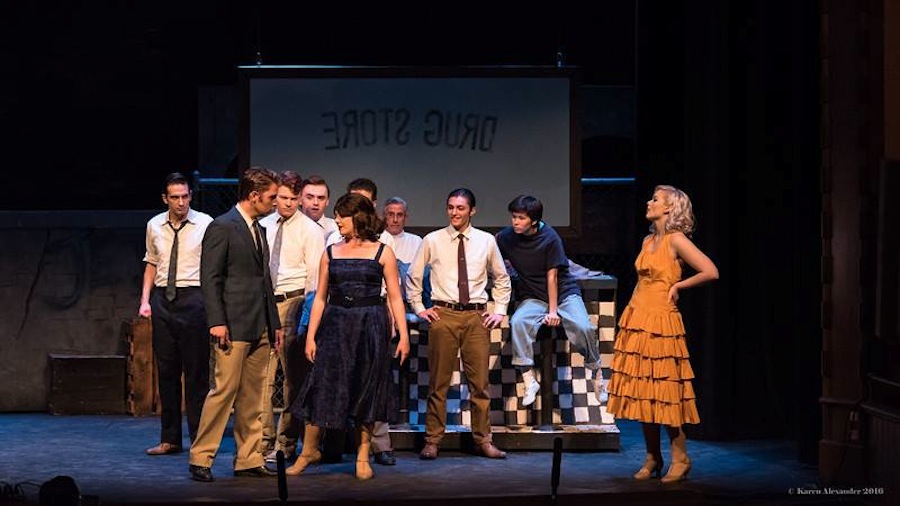
Woodland Opera House presents West Side Story

Fans of the classic musical West Side Story will be pleased to know that the Woodland Opera House will be presenting a rendition of the legendary musical from April 8 to May 1.

The gritty themes, sophisticated music and spotlighted social issues are some of the reasons why West Side Story is one of the most celebrated musicals of all time. This rendition of the story takes place in a blue-collar neighborhood in Manhattan’s Upper West Side and is about a flourishing romance between Tony (a white man) and Maria (a Puerto Rican woman) and the complications that arise because of their forbidden love. The love between Tony and Maria is forbidden because they are both affiliated with respective gangs. Tony’s close comrade, Riff, is the leader of the Jets, a white gang; Maria’s brother, Bernardo, is the leader of the Puerto Rican gang, the Sharks.

Giana Gambardello, a third-year psychology and cognitive science double major, plays the role of Maria; her admiration for Maria contributes to her excitement for playing her.

“She grows a tremendous amount within the duration of the show and it’s so exciting to experience first love in the eyes of her character. Through tragedy, she is forced to face the ugliness of the world, but her strength is incredible,” Gambardello said.   

She explained why West Side Story remains a remarkable piece of work.

“This [West Side Story] isn’t the typical jazz-hands-and-sequins show that people tend to associate musicals with. It’s raw and real, which is both a blessing and a curse. It means that each actor must bring truth to his or her character,” Gambardello said.

West Side Story is often tagged as revolutionary for its depiction of inner city life in 1950s New York and for exploring issues about race and class. Angela Baltezore, the executive director at the Woodland Opera House, explained why the musical retains so much modern-day relevance.

West Side Story is as timely today as when it was first produced in 1957 […] Whether it is feuding families or feuding street gangs, we still see the pain and devastation that is the result of hate and prejudice,” Baltezore said.

Extensive preparations from both cast and crew are undergone before each performance to ensure everything runs smoothly. Actors spend hours perfecting their choreography and vocals, and Baltezore and the crew work hard to maintain the authenticity of the play while also allowing each actor to bring their own personality to their respective characters.

UC Davis alumna, Franchesca Sonoyama, who double-majored in dramatic art and communication, plays the role of Consuelo.

“I love that I get to be energetic, sexy, sassy and blonde,” Sonoyama exclaimed.

She also goes on to explain how, even though she is quite different from Consuelo, she stills finds that Consuelo is an intriguing character to play.

“Although in my life I consider myself more acculturated than assimilated (Sonoyama is the daughter of Filipino immigrants), Consuela is definitely more the Americanized and assimilated one for sure […] She is just plain fun to play,” Sonoyama said.

Both Sonoyama and Gambardello have been acting since they were very young, and both noted how proud they were of this particular production.

“Every night, every scene, my heart is bursting with pride and excitement,” Sonoyama said.  

For information regarding showtimes and ticketing, please visit the following link.


WRITTEN BY: Krishan Mithal – arts@theaggie.org