53.5 F
Davis

Davis, California

Tuesday, December 23, 2025
Home Blog Page 728

Project Prevention empowers teens

DEBPARNA PRATIHER / AGGIE

Local fashion show raises awareness for child abuse prevention

Although April is known for bringing warmer temperatures and pollen allergies, it also signifies National Child Abuse Prevention Awareness Month. Yolo County Children’s Association (YCCA) has been fundraising throughout the month and held their most recent and largest fundraising event, Project Prevention, on April 15.

This was the seventh annual Project Prevention, a fashion show that gives real-world experience to 30 local Yolo County youth volunteer models.

“We had seen other nonprofits do fashion for causes and we thought it would be a fun way to raise awareness and money at the same time,” said Katie Villegas, executive director of YCCA.

In 2014, YCCA collaborated with Project Runway contestant Timothy Westbrook to bring in fashion expertise, helping the show to become the event it is today.

“In our first years, this event featured Yolo’s local celebrities, such as elected officials and community leaders,” Villegas said. “It’s been so fun watching this event evolve over the years.”

In recent years, the fashion show has featured original designs from past Project Runway contestants. This year, 16-year-old Zachary Fernandez, third runner-up on Project Runway Junior season one, designed and showcased a collection. The collection was modeled by the local youth volunteers.

“Project Prevention approached me about doing the show, and I just thought it’s such an amazing cause, and just a great way to shed light on such a serious matter,” Fernandez said. “It’s a really great way to use art as a positive message to encourage teens.”

His collection included looks he designed over his past four years in the fashion industry.

“It’s just a mixture of everything I love and we’re doing almost 20 looks,” Fernandez said.

Fernandez, who showed his collection at New York Fashion Week, was excited for the opportunity to help teens gain confidence through fashion.

Richard Hallmarq, Project Runway season 11 contestant and Sacramento resident, also joined to help the cause.

In addition to teens designing and modeling at the event, students of Bryte Garden Café in West Sacramento helped to prepare and serve culinary creations. The training facility teaches culinary arts and farm to fork education to students of River City High School.  

Adult guests could also enjoy a wine bar courtesy of Clarksburg Wine Co. and Carvalho Winery.

Money raised from the event was donated to YCCA programs that help prevent child abuse. At the event, YCCA Board Chair Jim Provenza explained the benefits of Project Prevention and the importance of donating to the organization.  

“Because we know the harm that child abuse and neglect can cause, we want to prevent children from ever experiencing it,” Provenza said at the event. “We think one of the reasons we are making an impact in preventing child abuse neglect in Yolo County is because of the child abuse prevention programs you are supporting here tonight.”


Written By: Samantha Solomon – city@theaggie.org
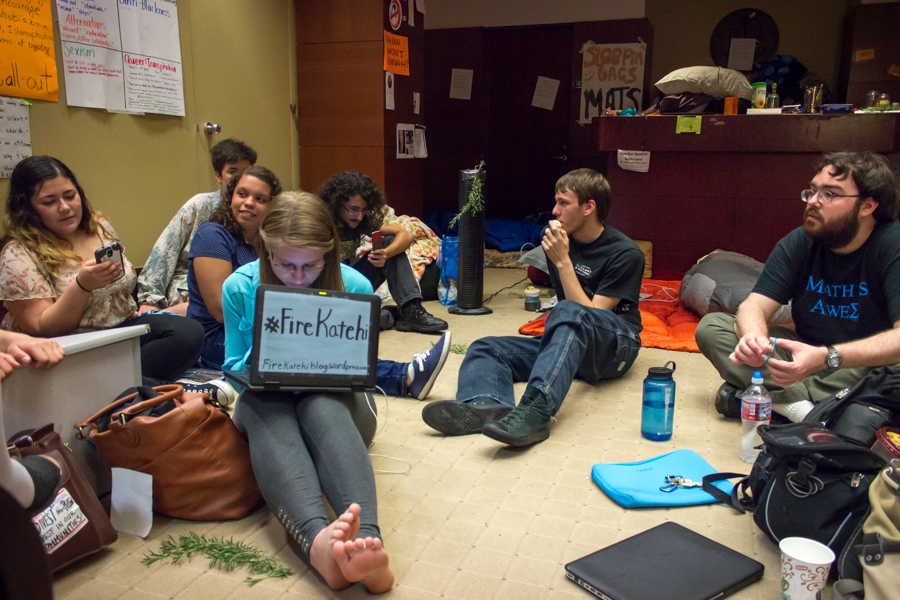
Fire Katehi protesters under fire for alleged disrespectful behavior against Mrak Hall staffers

AMY HOANG / AGGIE
AMY HOANG / AGGIE

Protesters respond to criticism by accusing UC Davis administrators of intimidation

Before the Fire Katehi protesters voluntarily left their sit-in of the fifth floor of Mrak Hall on Friday, April 15, the group faced backlash from several sources who claimed their protest was disruptive and intimidating to others.

Several videos which showed the protesters making insensitive comments to staff became popular, including one posted on the Sacramento Bee website which documented Provost Ralph J. Hexter calling the protestors “disrespectful” after an argument ensued over Chancellor Linda P.B. Katehi’s absence at the #FireKatehi press conference on April 1.

In an email sent out from the Office of the Provost on April 8, the protesters were accused of “challeng[ing] [the university’s] restrained response to a significant ongoing disruption and violations of campus regulations and policies.”

The protesters also faced pressure to move their protest after opposers of the sit-in created a Google doc that accused the protesters of disrespectful treatment to staff members. The document gained over 100 signatures when it was spread through the End Mrak Protest Facebook page and other forms of social media.

Geography doctoral candidate Matthew Palm helped to create the Google doc and wrote an editorial publicly expressing his shift from supporting the protesters to calling off their movement.  

“I can no longer support the protest. This change in perspective began when a staffer in Mrak Hall called me one night [at] about 1 a.m. This staffer has done so much for so many students, including me. This staffer spoke of being harassed and stalked by some of the protesters,” Palm said in an article for The Davis Vanguard.

When faced with these allegations, the protesters responded by justifying their actions.

“Being disruptive is the point, that’s why we are in their office. In terms of intimidation, there is a clear power imbalance inherent to this process,” said fourth-year sociology Ph.D. candidate Emily Breuninger. “They’re coming in here every night and telling us what [Student Judicial Affairs] charges are going to be dropped against us, there’s constant surveillance, we’re being threatened with arrest and expulsion everyday that we’re in here, so I find it ironic that they are framing us as intimidating them when in fact all the cards are in their deck.”

The protesters claimed that many of the slights made against them were misconstrued or altogether fabricated.

After a scheduled meeting between Katehi and ASUCD representatives on March 30 was cancelled due to an interruption from the protesters, the group was first publicly denounced as disruptive by the Office of the Provost in a campus-wide email, which criticized the collective for their unwillingness to participate in the discussion.

Unfortunately, the protesters decided not to participate in the meeting at all. Instead, it appears their primary interest was simply to disrupt the planned conversation, as several of them in fact proudly claimed to staff outside the meeting room,” Hexter said in the email. “Campus leaders are disappointed that the protesters chose not participate in a discussion.”

Breuninger explained that the meeting was unethical and the assumption that the protesters were being unnecessarily aggressive during the protest was false.

“It was a closed meeting, nobody was allowed to bring in cell phones, the list of questions had to be provided a week before it actually happened. Everything had to be vetted and she would not talk about anything that was not on the list that was pre-approved,” Breuninger said. “All the shades were drawn, they moved the meeting location three times, there were cops outside. A dialogue is one where people are on equal footing in terms of power and that was clearly not it.”

Even though the protest has currently moved out of Mrak Hall and onto the “next phase,” as explained in a statement released by the protesters, their cause still creates a divide among students.

“I do not believe for a minute that a change in chancellor will bring about the kinds of changes that people are hoping it will,” Palm said. “The chancellor’s power is bounded by keeping the faculty happy, keeping Napolitano happy, keeping the governor happy, keeping donors happy, keeping students happy.”

By: Lindsay Floyd – campus@theaggie.org

UC Davis establishes Wheelhouse Center to support community college leaders

ASHLEY LUGO / AGGIE
ASHLEY LUGO / AGGIE

Center to bring together community college leaders for training in deeper community college challenges

UC Davis recently announced the launch of Wheelhouse: The Center for Community College Leadership and Research.

The program, designed for community college leaders such as college presidents and chancellors, will consist of four three-day meetings where issues facing the California Community College (CCC) system will be discussed.

“We have planned our first set of institutes which will start in October,” said Susanna Cooper, managing director of Wheelhouse. “It will be a year-long experience for the participants. […] We will be providing them what is designed to be cutting-edge curriculum, lots of thought-provoking presentations, and then also an opportunity for them to talk to and learn from each other.”

Wheelhouse came about after a series of conversations between Brice W. Harris, the chancellor emeritus of the CCC system, and Harold Levine, dean of the UC Davis School of Education.

“I think that this was really born out of frustrations that a lot of us in the community colleges had over the past two or three decades in that there has never really been, in California, an effective leadership development and policy research program for community colleges, even though the largest higher-education program in the nation is located here in California,” Harris said. “I began some conversations with Harold some time ago [about] how I thought it was really the University of California’s responsibility to be supportive of community colleges, and he readily agreed.”

One of the main concerns that those involved in Wheelhouse recognize is the quick turnover rate of community college leaders.

“The average tenure of a college president in our system is less than four years and a chancellor’s [tenure is] only a little more than four years,” Harris said. “With that kind of constant turnover, we really do need a better leadership pipeline and we need to try and elongate the tenure of these CEOs so that they can make real change in the colleges.”

Aside from leadership retention rates, the discussion at Wheelhouse will be focused on deeper issues rather than daily struggles of running a college.

“It’s going to be less about the nuts-and-bolts of running a college, which might involve facilities or collective bargaining. We think there are other places they can get that information. It will be more along the lines of what we call high-level or transformational leadership,” Cooper said. “[Community college leaders] struggle with things like managing their relationships with their elected boards […] We will try to bring them together with some of the best thinkers on that kind of a challenge so that they will have a chance to bring back that expertise.”

According to Levine, UC Davis’ strong community college leadership doctoral program created a foundation for Wheelhouse.

“For many years here, we have had a [doctoral] program that is meant to develop the leadership for the community college system. So I have been involved in community college issues for a long time and have worked closely with the community college chancellor’s office in Sacramento,” Levine said. “[It was] decided that this was an opportune moment to create a center that would do those two things: leadership development and research for policy purposes.”

For Harris, the choice for UC Davis to be the center of this effort was based on both the university’s strong educational history and its proximity to the capital.

“There were multiple reasons. The first is that the Department of Education at the University of California at Davis has a long and really effective history of leadership development and policy research at the K-12 level […] The core of a program was already in existence.” Harris said. “If you are going to try to influence policy development that will shape state legislation, it just makes sense to work with the university that’s right up the street from the capital.”

Cooper, Harris and Levine all have high hopes for the program and recognize the significance of this partnership between the community colleges and the University of California.

“It is so great that the UC system has decided that this is something that it wants to invest in. It is investing in the success of another higher education system, in part because that other system is so important to the entire state, but also because there is such a direct connection to UC’s success,” Cooper said. “It is a recognition that the systems are connected.”

Written by: Kenton Goldsby – campus@theaggie.org

This week in sports


TIFFANY CHOI / AGGIE

UC Davis athletics from  April 11 to 17

Baseball (8-21)

UC Davis at CSU Fullerton (L, 10-0)

UC Davis at CSU Fullerton (L, 3-2)

UC Davis at CSU Fullerton (L, 13-3)

Facing off against Cal State Fullerton, redshirt left-handed pitcher Robert Garcia was charged with five earned runs on six hits, and the Aggies suffered the loss after six innings of pitching.

The next day, senior outfielder Cameron Olson hit two for four on the night his fifth multi-hit game of the year. Junior right-hander Justin Mullins suffered the loss after pitching relief for senior right-handed pitcher Spencer Henderson, who pitched 5.1 innings and allowed a pair of runs on five hits and had three strikeouts.

For the final game, redshirt sophomore outfielder Ryan Hooper hit his first career home run, but it didn’t help top the Titans from defeating the Aggies 13-3. Senior outfielder Tanner Bily hit two for four on the day, as did sophomore infielder Brad Pluschkell. Senior right handed pitcher Nat Hamby earned the loss after three innings where three earned runs came off of five hits.

The Aggies next play at St. Mary’s on April 19 at 3 p.m.  

Track and Field

Mt. SAC Relays at Cerritos College

Woody Wilson Classic

Long Beach Invitational

Both the men and women’s track and field team received two season best marks at the Mt. SAC Relays. In the 5,000 meter race, redshirt senior distance runner Trevor Halsted ran a 14:07.50 and senior distance runner Christine Hoffman ran a 16:48.72. Senior thrower Matthew Bender finished fifth with a score of 170-0, and freshman jumper Erinn Beattie finished fifth in high jump.

Over the weekend, UC Davis won four events at the Woody Wilson Classic. Junior decathlete Shane Ryan won the high jump while senior jumper Basil Okoroike won the triple jump. Freshman distance runner Katherine Gallaher won the 1500 with a time of 4:42.89.

Junior jumper Holly Tokar tied her best score for pole vault at Long Beach with a height of 13 feet, 25 inches to place fifteenth. Senior middle distance runner Cody Nguyen finished 18th in the 800 meter with a time of 1:51.34.

Men’s Golf

El Macero Classic

The Aggies placed third at the El Macero Classic, held from April 15 to 17. Freshman Ryan Knop shot a 3 under-69 while fellow teammate senior Luke Vivolo shot a 71 and tied for 7th place. Knop finished 18th overall while senior Patrick Soli tied for tenth place. The Aggies shot for a total score of 22-over 886.

Women’s Golf

Thanks to junior Paige Lee’s performance at the Big West Championship, UC Davis is currently in second place, right behind Cal Poly. Lee shot 1 under on her way to par-72. UC Davis is currently in a three way tie with UC Riverside and Long Beach State with a score of 20 over-308. They are just three shots back from current leader Cal Poly. Lee is in first place while fellow Aggies, seniors Betty Chen and Andrea Wong are in ninth and twelfth place, respectively.

Men’s Tennis (15-6)

UC Davis at UC Berkeley (L, 6-1)

UC Davis at UC Santa Barbara (L, 6-1)

UC Davis at Cal Poly (L, 4-3)

The Aggies fell to UC Berkeley Golden Bears 6-1 on April 13. This snapped the men’s winning streak at 12 games, and was the Aggies’ first loss since January 30.

Two days later, UC Davis fell to UC Santa Barbara 6-1. Junior Alec Adamson won his match against Nathan Eshmade with scores of 6-4, 3-6, 6-1.  Senior Brett Bacharach and junior Bryce McKelvie fought hard by winning the second set to force a third set before losing.

On April 16, sophomore Tommy Lam came back after a loss in the first set to win the next and to tie the score with the Cal Poly Mustangs, 3-3. Junior Bryce McKelvie won the second set to tie the match against Josh Ortlip but was unable to win the final set, losing the match.

UC Davis next plays UC Irvine on April 23 for the final home game of the season and will honor the graduating seniors at 11 a.m.

Softball (14-22)

UC Davis at Cal State Fullerton (L, 6-1)

UC Davis at Cal State Fullerton (L, 5-1)

UC Davis at Cal State Fullerton (L 8-2)

Cal State Fullerton scored in the first inning, taking advantage of an error early on, but the Aggies responded by scoring in the second to tie the game. The Titans were able to pull away with a four run sixth inning to win the game 6-1. Junior outfielder Brianna Warner drove in the Aggie’s only run with a single to the left side of the field.

In the second game of the series, senior starting right handed pitcher Justine Vela pitched 4.2 innings and only gave up two hits and one run in the first game. Cal State Fullerton scored three runs in the sixth inning, bringing their lead to 5-1 and winning the game yet again.

To wrap up the weekend, the Titans had a 1-0 lead before the Aggies scored in the second to tie the game. Cal State Fullerton came back to score two in the bottom of the second and then three more in the third to defeat the Aggies 8-2. Junior outfielder Brianna Warner stole another two bases throughout the double header, bringing her total to 34 for 34 on the season.

UC Davis next faces UC Riverside on April 23 at 1 p.m. at the La Rue Softball field.

Women’s Tennis (10-9)

UC Davis vs. Nevada (W, 5-2)

UC Davis won against Nevada on April 15, bringing their count to four straight wins. Sophomore Jessie Lee won a hard comeback match against Adriana Gergeloya 6-3, 3-6, 7-5. Senior Tiffany Pham scored the winning point for the Aggies with a win over Blaga Delic with scores of 6-2, 6-3.

UC Davis plays against CSUN on April 23 at 12:30 p.m. at the Marya Welch Tennis Center.

Women’s Water Polo (17-11)

UC Davis vs. UC Irvine (W, 6-4)

UC Davis vs. Cal State Monterey Bay (W, 18-1)

Six UC Davis players scored goals in the win over UC Irvine on April 16.  Senior goalkeeper Haley Cameron had 10 saves while junior utility Hannah Harvey scored the tiebreaking goal and drew a foul to help secure the win. Junior center Carla Tocchini scored the winning goal on a penalty shot after Harvey was fouled.

Read a recap by Veronica Vargo here.

A day later, senior center Allyson Hansen and sophomore center Greta Kohlmoos both scored hat tricks in the Aggies’ win over Cal State Monterey Bay.  Junior goalkeeper Olivia Husted had eight saves and no goals in the first half. The one goal allowed in this game is the fewest allowed by the Aggies since last season when UC Davis faced Sonoma State.

UC Davis will next play in the Big West Conference in Santa Barbara on April 29 against a to be announced opponent.

Six Aggies score, one goalkeeper saves

ZHEN LU / AGGIE
ZHEN LU / AGGIE

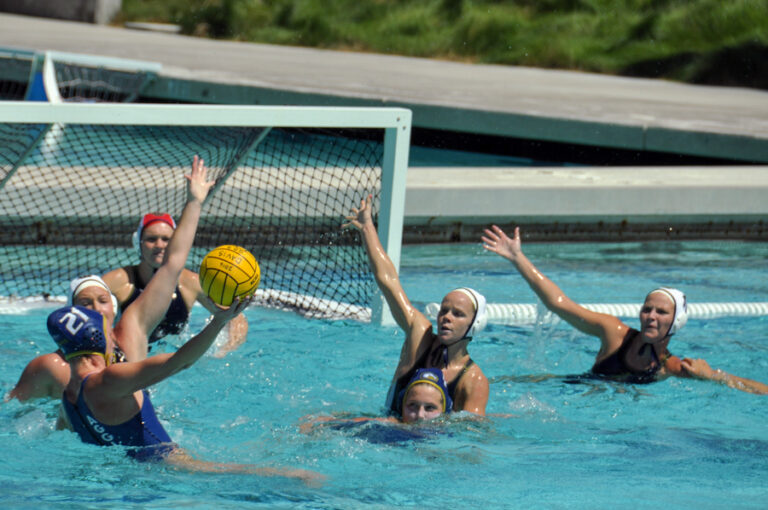
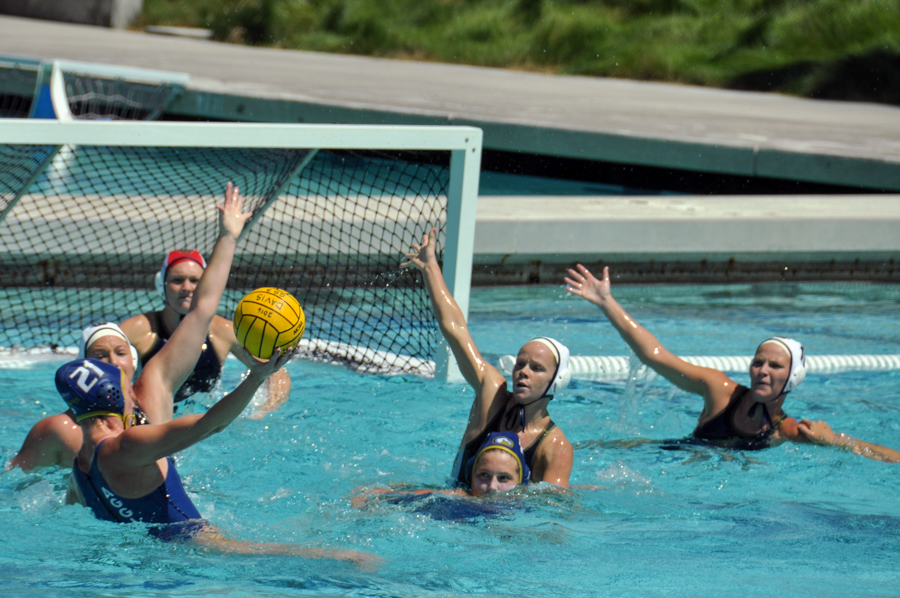
UC Davis women’s water polo team defeats UC Irvine 6-4

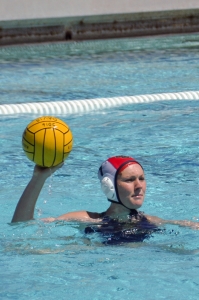
The joyous air of Picnic Day over campus was surely present at the Schaal Aquatics Center this past Saturday, April 16, as the UC Davis women’s water polo team took down UC Irvine 6-4.

ZHEN LU / AGGIE
ZHEN LU / AGGIE

The tie in the first quarter would lead any spectator at the event to think that the Aggies were going to face a tough matchup, and they did. UC Davis went on to tie the Anteaters four times throughout the game.

Freshman utility Annie Kutt made a tremendous impression on head coach Jamey Wright early on in the game.

“Kutt gets a start in the game, takes the first shot, scores it; it just got us going,” Wright said. “It was just really really really impressive today.”

However, Kutt was not the sole star of the game. Six Aggies, including junior utility Bryn Lutz, junior center Carla Tocchini, sophomore center Greta Kohlmoos, freshman center McKenna Hauss and junior utility Hannah Harvey, all shared the pride of scoring against the, now, 3-2 Big West Conference team.

Yet, there was still one player who made the biggest impact on the turnout of the game. Senior goalkeeper Haley Cameron led the Aggies by managing to save 10 total shots on goal, despite the Anteaters’ great strength and precision behind each attempt.

The water polo team had to work hard to get the ball in UC Irvine’s net, making the goal scoring especially noteworthy throughout the entire game.

“Both goalies were on today,” Wright said. “Both goalies played great today and we just had to keep taking our shots and eventually they are going to go in.”

ZHEN LU / AGGIE
ZHEN LU / AGGIE

Wright was right. UC Davis kept pressuring the goal, causing UC Irvine’s Mackenzie Milham to foul a dark cap with seven seconds left in the game. Tocchini took this opportunity to take a shot from outside, hitting the top of the goal post to splash down, skidding the ball against the unsteady water’s surface to score the final point of the game and secure the win.

“Our focus to begin the game was much, much better,” Wright said. “The last time we played Irvine, we played them at 8 a.m. and our heads were not in it […] This game was a very tough conference game from the get go.”

The UC Davis women’s water polo team finishes 2-3 in the Big West Conference and advances their overall record to 17-11 following their final game of the season a day later against Cal State Monterey Bay. The team honored their seven seniors and dominated the Otters, heading into the Big West Conference championship with a confidence boosting 18-1 win.

Humor: Stray hacky sack left at site of Mrak occupation

Garret Voight / FLICKR

A stray hacky sack was found Monday afternoon at the Mrak Hall office where students spent several weeks protesting Chancellor Katehi’s moonlighting activities.The sit-in was abandoned last week when the occupiers planned their move to the next phase of the demonstration. The office was cleaned on Friday, and a picture showed that the protesters had left roses, which the Mrak employees who filed complaints will definitely appreciate and not think of as a pretentious, self-righteous kitsch. For good measure, the demonstrators also left chocolate, nice soaps and free slam poetry:

Roses are red

Violets are blue

Fire Katehi

But these formal gestures were eclipsed by the discovery of the hacky sack, which gave a closer look at the activities of the occupiers. Ronald Dee, a third-year English major and frequent user of the hacky sack, was pleased to hear the small ball was in good shape.

“One of my co-op neighbors hand wove Chloë over there,” Ronald said, referring to Chloë Sevigny, the Big Love actress for whom the hacky sack is named. “Apparently the yarn is made completely from hemp straw and a bit of Willie Nelson’s beard. I thought he was dead. I guess not. It’s great!”

The protesters welcomed the hacky sack back into their community with great jubilation. On Monday night, an interpretive dance party was held at the Domes. The tech-savvy took pictures of Chloë and made memes which they distributed around the Davis campus in zines.

“I like the meme as an artistic medium,” said Lee Rosenwald, a fifth-year history major. “I made one the other day with Chloë. The top said, ‘What do we have when we expose neoliberal pigs?’ and the bottom said, ‘A ball.’ Haha, it was so great. Also, I can’t afford my rent.”

The fate of the hacky sack remains unclear. Chloë, like all items belonging to the occupation, is communally shared and cannot be under one person’s possession for more than one day.

“We don’t believe in no goddamn private property,” said Ramon Aguilar, a second-year sociology major, before kicking members of the press out of his apartment.

A press conference will be held Tuesday to inform the Davis community of Chloë’s future.

Get a little Genghis Khan

STEFFEN WURZEL / WIKIMEDIA COMMONS

Despite all you may have heard about The Great Khan and his “merry band” of loyal Mongols, you can discover a very different history through Jack Weatherford’s fantastical book, Genghis Khan and the Making of the Modern World.

For over 800 years, his name has been almost universally associated with wanton slaughter and outright cruelty on a truly awesome scale within the Western world. Pyramids of bones and burning villages easily spring to mind. But despite all you may have heard about The Great Khan and his “merry band” of loyal Mongols, you can discover a very different history through Jack Weatherford’s fantastic book, Genghis Khan and the Making of the Modern World. In it, Khan and company are rightly described as both destroyers and creators of civilizations and also as people who have generated a staggeringly large variety of good for the world. That being said, they were not “nice” or “sensitive” by any stretch of the imagination.

The Mongolian conquest of Persia and China are some of the more memorable campaigns waged underneath Genghis Khan’s banner, and since Weatherford covers these in such intricate detail, it seems a fitting place to begin.

Weatherford claims that among the peoples the Mongols conquered, they butchered noblemen, soldiery and anyone who they deemed to have no utility to them. As for the rest, they’d be separated into groups that were determined by their specialities. Writers, craftsmen, entertainers and other highly-trained individuals would be divided amongst the empire where they would make use of their talents based upon the Mongol’s needs. Peasants performed manual drudgery for the army: anything from transporting heavy siege machinery to having their bodies stuffed into moats in order to form a bridge for Genghis Khan’s warriors to walk or ride over. (To reiterate: the Mongols, while eminently practical, were not at all “nice.”)

Weatherford also covers Mongolian spiritual beliefs. Surprisingly, he judges it as highly unlikely that the Mongols would have created heaps of human bones of their conquered, as their prohibitions regarding death were incredibly inflexible. (Apparently, these sort of stories and instances were sourced from Tamerlane, a Muslim conqueror who dishonestly boasted of descending from Genghis Khan). Amazingly, the Mongols completely abstained from torturing their captured, despite the practice being popular among many of the “civilized” societies they defeated.

Weatherford boldly ascribes a whole array of monumental innovations to Genghis Khan’s Mongols. They were the first to introduce a global postal service, the first to distribute and enforce paper money and the first to modify Chinese gunpowder so it would blow up instead of burn. Their main contribution to the world, however, was their interconnected cultural trade. For example, as a direct result of their exploits, huge territories of Asia parallel to the Silk Road were freed and actively patrolled, opening them up to—and protecting—global trade. Noodles were introduced to European society and lemons were sold in China for the first time.

Perhaps the most astounding and controversial argument Weatherford makes is that the Renaissance occurred due to acquired Mongol knowledge intermingling with European societies. Another big-picture accomplishment of the Mongols was the implementation of taxes that were, according to the author, comparably lower than those levied by other kingdoms. Also among these achievements is Genghis Khan amassing an empire roughly the size of Africa, with a population about the size of San Jose (1.015 million), with a military not much larger than the population of Davis (roughly 65,000), and freedom of religion protected throughout his entire empire.

Despite the sweeping beauty of Weatherford’s writing style and the originality of his content, there are also major problems with his work. He omits the figures of those who were indirectly killed by the Mongols (who helped introduce the Black Plague to Europe); he greatly exaggerates their use of gunpowder and cannon, particularly during siege battles (from my own research, it would seem there are not many credible sources for his claim); and he fails to properly cite many of his sources.

Ultimately, Weatherford weaves an excellent revisionist history into a refreshing counter-narrative to the frequently told Western story of the “savage” Genghis Khan and his Mongol “hordes” as a purely malevolent, completely awful scourge of the Earth. While they were not big on peace and love, they made giant leaps in culture and broadly contributed to the world in such a way that unquestionably negates the belief that they were “backward” or were without sophistication or nuance.

You can reach RYAN DOWNER at rmdowner@ucdavis.edu.

My world record is…

ANGELICA DAYANDANTE / AGGIE

Students discuss what would place them in the Guinness Book of World Records.

If you were to be in the Guinness Book of World Records, what would you be in it for?
Sean_Babij_rovingreporter_fe_DayandanteSean Babij, fourth-year managerial economics major
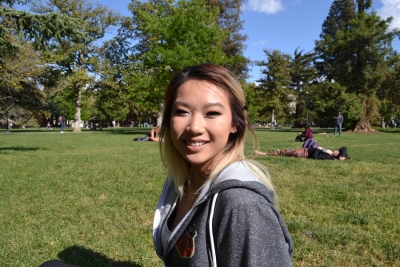
“Rescuing the most animals.”


Mary_Pham_rovingreporter_fe_DayandanteMary Pham, fourth-year psychology major

“[Inventing] the world’s fastest car.”


Michela_Fong_rovingreporter_fe_DayandanteMichela Fong, third-year neurobiology, physiology and behavior major
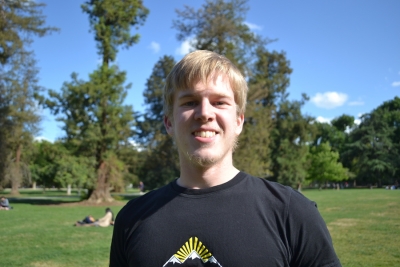
“Best accent impersonator.”


Thomas_Christoffel_rovingreporter_fe_DayandanteThomas Christoffel, third-year neurobiology, physiology and behavior major
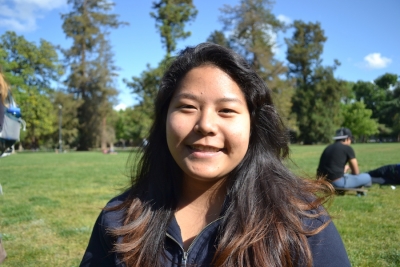
“[Owning] the largest number of UC Davis club T-shirts.”


Ngan_Nguyen_rovingreporter_fe_DayandanteNgan Nguyen, third-year neurobiology, physiology and behavior major
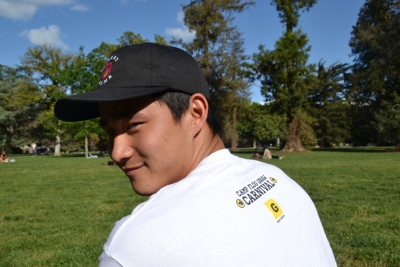
“Adopting the largest number of squirrels who need help.”


Shoei_Shibata_rovingreporter_fe_DayandanteShoei Shibata, first-year textiles and clothing major
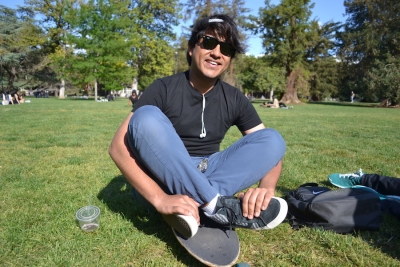
“[Being] the longest Tyler the Creator fan.”


Anant_Singh_rovingreporter_fe_DayandanteAnant Singh, first-year psychology and economics double major
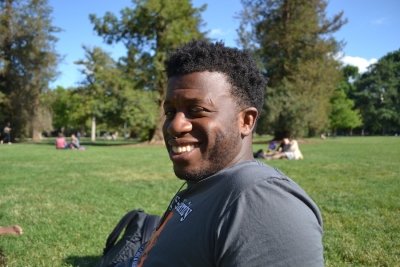
“The most times anyone’s ever fallen off a skateboard.”


Gabriel_Johnson_rovingreporter_fe_DayandanteGabriel Johnson, fourth-year economics major
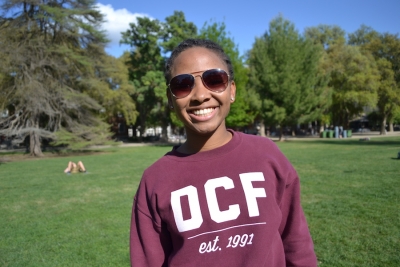
“[Having] the longest laugh.”


Erin_Buckner_rovingreporter_fe_DayandanteErin Buckner, fourth-year genetics and genomics major
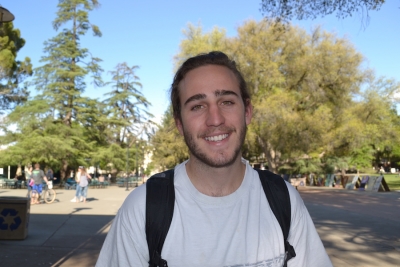
“Most Krispy Kreme donuts eaten in two minutes.”


Cameron_Willment_rovingreporter_fe_DayandanteCameron Willment, fourth-year computer science major
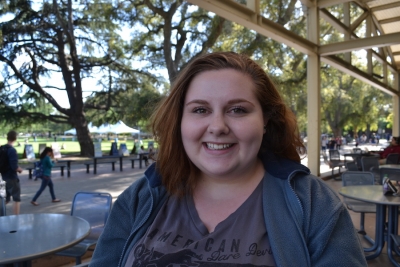
“[Having] been to the most countries.”


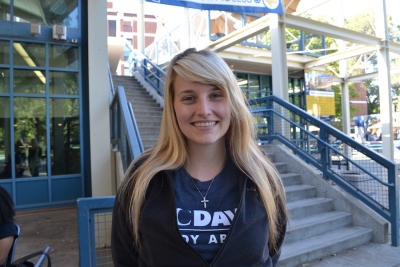
Michelle_Goldina_rovingreporter_fe_Dayandante

Michelle Goldina, second-year genetics and genomics major

“[Having] the most Olympic gold medals ever.”


Dallas_Jordan_rovingreporter_fe_DayandanteDallas Jordan, fourth-year psychology major
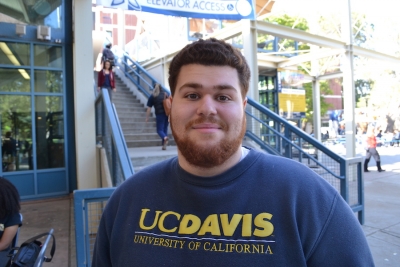
“Longest free fall in sky-diving.”


Oliver_Alexander_rovingreporter_fe_DayandanteOliver Alexander, second-year biological chemistry major

“The most push-ups done within 24 hours.”


Written by: Jacqueline Chu – features@theaggie.org

Documents reveal UC Davis spent $175,000 to erase pepper-spray incident from Internet

BRIAN NGUYEN / AGGIE FILE

UC Davis nearly doubles strategic communications budget following string of negative incidences against the university’s image

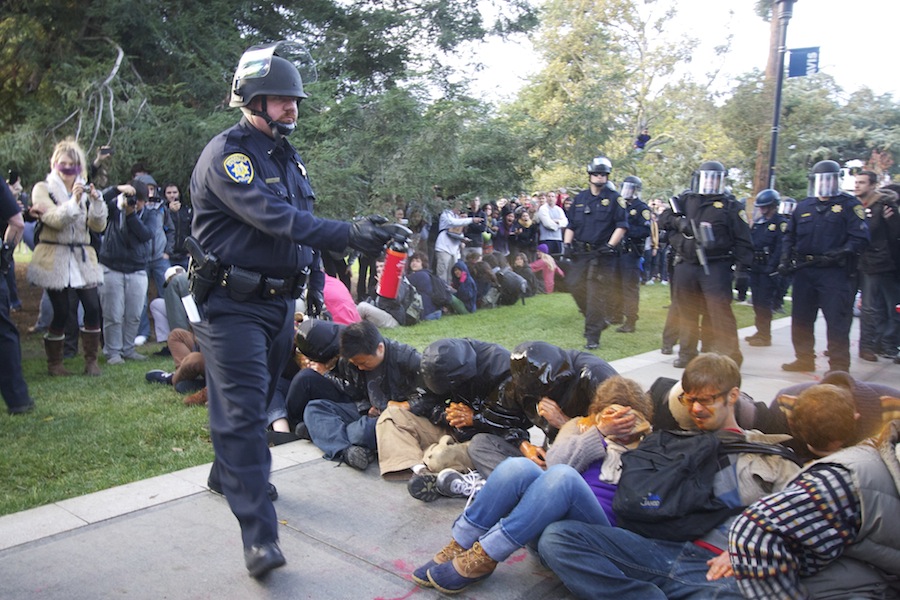
According to documents obtained by the Sacramento Bee, UC Davis spent at least $175,000 trying to repair its image following an incident in Nov. 2011 in which a campus police officer pepper-sprayed student protesters on the Quad.

The aggressive public relations campaign sought to rehabilitate the university’s public image through primarily erasing mentions of the pepper-spray incident and Chancellor Linda P.B. Katehi on online search engines, according to the documents.

The documents revealed that in Jan. 2013, UC Davis signed a deal with Nevins & Associates, a Maryland-based public relations firm, for a six-month long contract. The contract, which paid Nevins $15,000 a month, was signed with the objective “to expedite the eradication of references to the pepper spray incident in search results on Google for the university and the Chancellor.”

“Nevins & Associates is prepared to create and execute an online branding campaign designed to clean up the negative attention the University of California, Davis, and Chancellor Katehi have received related to the events that transpired in November 2011,” the six-page proposal read. “Online evidence and the venomous rhetoric about UC Davis and the Chancellor are being filtered through the 24-hour news cycle, but it is at a tepid pace.”

The documents showed that the university paid Nevins $92,970.73 through July 2013 for the campaign, which included lodging and travel costs for a firm associate.

“The fact that my university, where I receive no financial aid and must pay for out-of-pocket, so easily spent hundreds of thousands of dollars to cover the tracks of their horrendous mistake years ago [is terrible],” said third-year computer science major Pooja Rajkumar. “I have absolutely no faith in our school’s administration, and I am ashamed to call this my university.”

The proposal also noted promoting positive UC Davis-relevant stories.

“Communicating the value of UC Davis is an essential element of our campus’s education, research, and larger public service mission,” said Dana Topousis, UC Davis’ executive director of news and media relations. “As part of this overall communications strategy, it is important that the excellent work underway at UC Davis with respect to educating the next generation of students, pursuing groundbreaking research, and providing important services to the State is not lost during a campus crisis, including the crisis that ensued following the extremely regrettable incident when police pepper-sprayed student protesters in 2011.”

In June 2014, nearly a year after UC Davis’ contract ended with Nevins, the university signed a new consulting deal with ID Media Partners in Sacramento.

The firm, whose business title is IDMLOCO, was signed on for an $82,500 contract “to achieve a reasonable balance of positive natural search results on common terms concerning UC Davis and Chancellor Katehi” through “a comprehensive search engine results management strategy.”

UC Davis signed additional contracts with IDMLOCO in Feb. 2015, for $8,000 a month, and Sept. 2015, for $22,500 a month, to redevelop UC Davis’ social media and redesign the university’s strategic communications department, respectively.

In March 2016, the university received further backlash after news was released that Katehi was hired for seats on the boards of two for-profit corporations, Devry Education Group and John Wiley & Sons. Topousis confirmed that UC Davis has hired one outside consultant since March 1 to work on the university’s image.

Following Katehi’s inauguration as chancellor in 2009, the UC Davis strategic communications budget rose exponentially from $2.93 million in 2009 to $5.47 million in 2015. According to Topousis, the funds to pay consultants came out of the university’s strategic communications department’s budget.

“When students at our campus struggle to pay tuition and go without meals in their pursuit of a higher education it is unacceptable for the administration to spend money in an attempt to cover up their mistakes,” said ASUCD President Alex Lee.”These are thousands of dollars in student fees that could have been prioritized in fixing its flaws instead of hiding its blemishes.”

Written by: Jason Pham and Alyssa Vandenberg – campus@theaggie.org

Quarter-system UCs to have four-week-long winter break for 2016-17 school year

0
NICKI PADAR / AGGIE
NICKI PADAR / AGGIE

University to remove dead days after spring 2016

Winter break at all quarter-system University of California (UC) campuses, with the exceptions of UC San Diego and UC Santa Cruz, will be exactly four weeks long during the upcoming 2016-17 school year, rather than the usual three weeks.

The break will run from Dec. 9, 2016 to Jan. 9, 2017. UC San Diego will start break a day later on Dec. 10 while UC Santa Cruz will begin on Dec. 8. Both universities will end break on the same date as other quarter-system UCs.

Because New Year’s Eve and New Year’s Day fall on a Saturday and a Sunday and will be observed on work weekdays, Winter Quarter will start one week later than usual.

“This year, the New Year’s holidays fall on a Saturday and a Sunday, and as a result, these academic and administrative holidays will be observed on Friday, Dec. 30, and Monday, Jan. 2,” said Ali Marie Cordone, interim associate registrar via email. “With the Winter Quarter always beginning on a Monday, the observance of the holidays pushes the start of the winter quarter out to Monday, Jan. 8, 2017, giving students an additional week before starting classes.”

Daniel Kotlyar, a third-year mechanical engineering major, plans to use this time to travel and explore.

“I think it’s great [having four weeks for break] because it provides enough time for somebody to travel abroad for at least three weeks,” Kotlyar said. “That’s what I’m planning to do for this winter break coming up, so I’m glad.”

Thoughts of family and time back home were brought up by Cathy Quach, a second-year biochemistry and molecular biology major.

“It will be nicer for us to have a longer break where we can just spend time with family and for international students to go home and enjoy their time home more,” Quach said. “[The longer break will] give us more time to reflect on everything that has happened. Three weeks, it seems like a lot, but it goes by really quickly.”

In addition to the winter break extension, a few permanent changes have been made to the academic calendar. After the 2015-16 school year, there will no longer be any final examinations on Saturdays.

“This Spring Quarter will be the last regular academic quarter to have a dead day between the end of instruction on Thursday and the beginning of exams on Saturday. The dead days were eliminated to end Saturday exams,” Cordone said. “Students had been advocating for an end to Saturday exams. Campus leadership worked with representatives of the Associated Students of UC Davis to do just that. About a year ago, UC Davis Chancellor Linda P.B. Katehi forwarded their recommendation to the UC Office of the President, and it was approved.”

Along with the elimination of the dead days starting next year, future Winter and Spring Quarters will be shortened from 50 to 48 days long while Fall Quarter will remain 50 days long.

The longer break is not a one-time occurrence: it will happen again during the 2022-23 school year. However, between 2017 and 2022 winter breaks will remain the usual three-week length.

“The 2017 winter break will only have 23 days between the end of the Fall Quarter and the beginning of the Winter Quarter classes, which is more typical,” Cordone said. “But we will see a 30-day winter break again in 2022-23.”

Written by: Kenton Goldsby – campus@theaggie.org

City of Davis hosts third annual Community Day of Service

0
VENOOS MOSHAYEDI / AGGIE

Local organizations, projects celebrate volunteers in the community

On Saturday, April 23, the City of Davis will be hosting a Community Day of Service in which various projects and organizations will come together to encourage volunteer participation. The city hopes to promote the active involvement of volunteers in the community by hosting a fun event for everyone.

This year will be the third year that the city will host the event. Previously, a similar event, Helping Hand, was hosted by the Davis Latter-day Saints Church. The church approached the city with hopes of a partnership in order to encourage more community groups, faith based organizations and community members to participate in a community-wide day of service.

Kellie Vitaich, volunteer coordinator for the City of Davis and Davis Police Department, believes that the event is effective in promoting volunteers to be active in the community.

“I’ve worked with the city for the past two and a half years and they have been working on expanding their volunteer efforts and utilizing more volunteers. This is a really nice way to have a community day to celebrate volunteers and the community and partner up with different departments, city entities, schools and nonprofits that wanted to have volunteers come out,” Vitaich said.

This year, the city is excited to have a variety of groups and projects involved, exposing the people of Davis to different ways of contributing to the community.  

According to Carrie Dryer, community engagement and cultural service director for the City of Davis, the event will begin with a kick-off pancake breakfast where participants will first come together to get excited about the event and create the spirit of giving back to the community. People will then go out to different projects.

“We’re excited this year to have a large variety of projects working in a couple of our parks, working with the Center for Land Based Learning on the farms that’s incorporated next to the new Cannery buildings. We also have never worked before with the Yolo County Libraries. We’re very excited for that partnership, to actually have volunteer opportunities for folks who might not want to be out in the sun all morning,” Dryer said.

The organizations involved, including the Yolo County Library, also look forward to being part of a community-wide event that will celebrate volunteers.

“We’re always looking for volunteers. We consider the library as a community center, a community meeting point, so anytime we can join in with or partner with any type of community event, we try to accommodate it,” said Glen Uno, co-volunteer coordinator of the Yolo County Library.

Dryer explains the success of the event comes from bringing so many community members together on one day, facilitating a sense of pride and ownership over the community. She states that last year about 225 volunteers participated, with a very wide age range.

“Many families came out, moms and dads with their kids. Last year one of the projects I was at, there were kids just as young as two out there picking up leaves and putting them in bags. It was really fun. And we ask if people are under the age of 14 they bring an adult with them,” Dryer said.

Vitaich adds that the intentions behind the event prove to be extremely beneficial for everyone involved and that only positive effects result from a Day of Service.

“It’s always nice to just kind of celebrate volunteers and the community,” Vitaich said. “There’s obviously volunteer activities going on everyday throughout the year so it’s nice to come out and celebrate that and see a lot going on in one day.”

Written By: HADYA AMIN- city@theaggie.org

City Council lifts nightclub and bar moratorium

0
ZHEN LU / AGGIE
ZHEN LU / AGGIE

Davis City Council implements entertainment permit ordinance in place of previous moratorium

The Davis City Council held a meeting on Tuesday, April 5 to discuss lifting a moratorium put on new and existing nightclubs and bars in Davis. At the meeting, the council, who originally voted 4:1 in favor of enacting the moratorium, voted to lift the moratorium and enact the Entertainment Permit Ordinance (EPO).

The moratorium, which prohibited any new venues from opening and existing bars from expanding, was put in place late last year after the stabbing at KetMoRee downtown. In addition, the council saw an increasing number of violent incidents taking place downtown.

The council and several Davis residents felt that the murder was the last straw in a string of incidents occurring in the town. The moratorium was put in place to allow the council time to draw up a solution to violent occurrences downtown.

“We put a moratorium on any new or expanded bars in the city but we didn’t shut the existing ones down,” said Davis Mayor Dan Wolk. “[Existing businesses] still operated but I will say that […] because of what happened and because of the moratorium, there was a heightened awareness of these problems.”

Once the moratorium was put into effect, the number of instances downtown declined as businesses voluntarily implemented security precautions. Taking these voluntary measures into consideration, the city council created the EPO, which was voted on and passed at the April 5 meeting, replacing the moratorium.

The ordinance requires bars and restaurants to obtain an entertainment permit for their businesses. The conditions for each permit will be tailored for each specific business, at the discretion of the Davis police chief. The EPO applies to both existing businesses as well as any other new or expanding venues.

“Any business engaged in entertainment, live music, concerts DJs, dancing — they will have to apply to the police department to get an entertainment operating permit,” said Davis Police Chief Darren Pytel in an interview with KCRA.

City councilmember Brett Lee feels that the safety in Davis should be greatly improved by the new ordinance.

“In general, what’s going to happen is there will be security screening at the door,” Lee said. “The goal is that no one will be able to bring any weapons inside the bars. In addition, security personnel will be required to meet a much higher standard.”

In addition, bartenders and servers will undergo more thorough training on appropriately dealing with a variety of situations. This includes making sure those who are already intoxicated do not drink more than they should, preventing instances of sexual harassment or assault and ensuring people get home safely.

“One additional thing that we are looking at […] will probably be enacted in a good number of bars, [it] is the idea of soft closure,” Lee said. “That’s the situation where the bar may close to new people entering at say 1 a.m. but the people who are already there are able to stay inside and continue to drink if they choose.”

The council would like to emphasize that they still want Davis to have a fun downtown nightlife. They recognize that many UC Davis students enjoy going downtown on weeknights and weekends to have fun and the council does not want to prevent that from occurring.

“We just want to make sure it happens safely, and that’s what this has been all about,” Wolk said. “We are really just ensuring that it’s done safely and I think that’s what this will exactly do.”

Written By: BIANCA ANTUNEZ – city@theaggie.org

Davis school district staff works to close the achievement gap in elementary schools

0
DEVIN McHUGH / AGGIE

Board of Education discusses current programs, prepares for district-wide strategies to address achievement gap issue

On April 7, the Davis Joint Unified School District (DJUSD) Board of Education met to discuss ways to close the achievement gap in Davis Elementary Schools. Despite having high Academic Performance Index (API) scores, DJUSD still has an achievement gap, or a performance disparity between low-income minority students and students who come from higher-income families.

According to Clark Bryant, associate superintendent of Instructional Services, about 19 percent of the students in the district qualify for free and reduced lunch, a service offered to students from families of low socioeconomic status. Additionally, 11 percent of the students are English learners.

The principals from Marguerite Montgomery Elementary School (MME) and Birch Lane Elementary School spoke to the board and explained the programs they have implemented at their schools to address the achievement gap issue. At Birch Lane Elementary, out of the approximately 600 enrolled students, 23 percent qualify for free or reduced lunch and 15 percent are considered English learners.

Birch Lane Elementary School Principal Jim Knight said staff have implemented Social Emotional Learning (SEL), which consists of a three-tier support system for students.

“Sometimes we get so focused with the academic side or social emotional side and we don’t realize how intertwined they are with each other,” Knight said at the meeting.

Knight explained that school-wide procedures work for about 80 percent of the students but about 15 percent need intervention, such as small group counseling or behavior contracts. Still, about 5 percent may need intensive intervention in the form of supported re-entry or crisis intervention.

“No learning takes place if a student is in crisis. When we have students that come to us with needs in one way or another we have to be able to support them for them to be able to be successful academically,” Knight said.

At MME, out of the 430 enrolled students, 58 percent qualify for free and reduced lunch, and 43 percent are English learners.

MME Principal Sally Plicka explained that their programs focus on literacy and reading. Staff developed a Summer Reading Program (SRP) and implemented the Two-Way Bilingual Immersion Program.

SRP consists of two facets that aim to enhance reading skills. One of the methods under SRP is “Bags Full of Books,” which provides targeted students with 10 to 12 books, of their choice and at their reading level, to take home on the last day of school and read over the summer.

“We know that over the summer our students lose about three months and sometimes about six months worth of their reading achievement from the prior year. When this happens year after year, the research shows that by sixth grade, they’re two years behind in their reading,” Plicka said at the meeting.

During the summer, students tracked their reading time, set goals and discussed their progress with school staff over the phone.  

Out of the 70 students who were selected to participate in the Bags Full of Books  program, 52 students provided useful data that allowed staff to evaluate the effectiveness of the program.

“88 percent maintained or improved their reading level over the summer [and] 12 percent experienced the typical summer slide,” Plicka said.

MME also implemented the Two-Way Bilingual Immersion Program to close the achievement gap for English language learner students. Students enrolled in the Two-Way Bilingual program are in classes are taught in both English and Spanish. In first grade, classes are taught 90 percent in Spanish and 10 percent in English, and by sixth grade, instruction is divided equally between English and Spanish. At MME, 220 students are enrolled in the program.

According to the research found by MME staff, the Two-Way Bilingual program not only closes the achievement gap at an early age, but also ensures that students excel academically.

“A well-implemented Two-Way Bilingual program brings students up to the level of their other English language learner peers who are in English-only programs by the third grade. By the sixth grade, it generally closes the gap completely, and by the twelfth grade, they are excelling and exceeding the expected outcomes for all of our students nationally,” Plicka said.

Plicka emphasized the importance of valuing bilingual students and balancing the number English and Spanish speakers in the program.

“These students who are Spanish-speaking natives are not coming to school with a deficit of not knowing English; they’re coming to school with a gift of knowing Spanish,” Plicka said.

DJUSD board member Tom Adams congratulated both schools for their unique approaches to closing the achievement gap.

“There is no one curriculum, one tool, one technology […] It’s really a community effort and the community is more than just the teachers and the students but it involves the parents and the entire town,” Adams said.

The board will continue to discuss the issue during the first meeting of every month. At the next meeting, the board will address the junior high and high school achievement gap goals and strategies.

Written By: CARLA ARANGOcity@theaggie.org

UC Davis hosts its 102nd Picnic Day

Dachshunds race each other during the annual Doxie Derby which takes place during Picnic Day. (JAY GELVEZON / AGGIE)

Event planners, students anticipate 102nd Picnic Day.

As UC Davis students and community members anticipate the 102nd annual Picnic Day this Saturday, April 16, many look forward to the excitement and animation that comes with the event. However, for some people, Picnic Day is not just a day out of the year. Instead, it symbolizes the importance of the Davis community and all it has to offer.

“During freshman year I got involved as a parade assistant, returned my sophomore year as parade director and have been board chair for two years now,” said Grace Scott, fourth-year plant biology major and Picnic Day chair. “I stayed on the board because I found a community.”

For Scott, Picnic Day has been an integral part of her four years at UC Davis, and represents months of hard work and planning. Dedicating so much time and energy to ensuring the weekend’s success has not only served as a great  way of getting involved on campus, but has also allowed her to grow as a person.

“Picnic Day has defined my career at UC Davis,” Scott said. “It’s been the biggest extracurricular I’ve been a part of and something that has shaped me.”

For third-year political science and communication double major and newly elected ASUCD President Alex Lee, Picnic Day represents the 100 plus years of hard work and dedication that have kept the tradition alive. Lee will give a speech at the beginning of the day to open up the parade, and will later host a luncheon with alumni.

“The whole campus becomes a sort of fairground and everything opens up to become very lively,” Lee said. “Being invited to the fun things such as milking a cow on the Quad and being in the parade are my favorite parts of Picnic Day that make all of the hard work and logistics worth it.”

According to Lee and others on the planning team, the community of Davis is always “at its peak” on Picnic Day. Lee encourages people to experience UC Davis’ uniqueness through the events on campus, such as cow milking, Battle of the Bands, various facilities’ open houses and the morning parade.

“Personally, I can’t top the experience of being in the parade,” Lee said. “The meaning of Picnic Day in a physical experience is riding through less than a mile of Davis and seeing everyone’s smiling faces as everyone watches the parade at the same time in unity.”

Second-year international relations major Elise Wright remembers her first Picnic Day as one of her favorite memories at UC Davis so far, and can’t wait for this year’s event-filled weekend.

“My favorite part of Picnic Day was seeing people out and about and how it brings the community together as a whole,” Wright said. “Picnic Day is a day to celebrate the community, UC Davis and everything it has to offer.”

Although some students tend to opt out of the campus’ events to attend off-campus parties, Wright urges students, especially first-years, to try and experience the day to its fullest.

“I would recommend to try to do a little bit of everything, especially see the Doxie Derby and to try and get out on campus,” Wright said. “It’s one thing that makes Davis even more awesome than it already is because other schools don’t have anything like it.”

For Scott, Lee, Wright and many others, Picnic Day represents more than just a day of fun. It symbolizes the tradition and importance of being an Aggie.

“We are the Ag school and it’s only appropriate that we have a blossom of everyone’s hard work and favorite things about Davis all culminating at once,” Lee said.

For more information and to see the Schedule of Events, visit the Picnic Day website.

Written by: Gillian Allen — features@theaggie.org

The Middle: The pitfalls of clashing stereotypes

0
VENOOS MOSHAYEDI / AGGIE

A couple of days ago, I was webcamming with a childhood friend from another country. We’ve known each other since we were infants, but due to our physical distance from each other (he lives in Taiwan) and the awkward stages of puberty (he didn’t believe in girls until he was 14 — no lie), we didn’t start growing closer until our college years. I’ve always enjoyed talking to him because he connects me back to my own Taiwanese roots. We’d discuss modern day social issues from both of our points of views. Recently, we were discussing his 14-year-old niece’s breakup. I remembered furrowing my brows at my Skype screen, indicating my disapproval of crying over puppy love. My friend raised his eyebrows at my reaction.

“Shouldn’t this be something common for you?” he asked innocently.

I didn’t know what to say. Because I grew up in such a diverse household, my beliefs are mixed between eastern teachings and western dogmas. Since I’m an American, I’m supposed to have liberal thoughts on relationships. I’m supposed to be okay with young relationships. Yet, since I grew up in an Asian household, I’m also supposed to be conservative and hold myself until marriage and be the good girl. I can’t be someone in between, because then I’m not credible as a Taiwanese or American person. I came to realize that if I don’t assume a unilateral identity, I can’t speak my mind. Again, the extremes overshadow the middle spectrum.

Instead of responding to his question, my mind flashed back to a separate incident in which I had a similar discussion with an American friend. When I told him I thought romantic exploration is important for teens, he gave me a funny look.

“Shouldn’t you be the type who is all for waiting until marriage?” he had asked in the same innocent manner as my Taiwanese friend.

I was offended that he viewed me in a stereotypical way. Growing up, I’ve moved to three different countries and received different educational and cultural influences. Though my family settled more permanently in California in my later years, I haven’t forgotten my Asian teachings. I’ve always believed that I have the best of both worlds.

However, these two instances got me thinking that I had to choose a side in order to be someone of importance. My parents weren’t the tiger couples recent literature speaks of, but they had their set rules, especially when it came to dating. Though they never put their feet down on “no dating until you’re 18,” I’ve always known that relationships are not matters to be meddled with carelessly. Both of my friends categorized me. I do not blame them for their ignorance or their comments, but I felt labeled and was caged by expectations.

It had been seconds before my Taiwanese friend waved me back into reality. He peered closer into his camera lens and asked me why I zoned out.

“Nothing,” I smiled back at him. “I was just wondering if this is how you view American culture.”

He laughed and shook his head. He said no, but I think the assumption of liberal American culture makes it easier for him to understand my world, in sunny California where Hollywood glamour promises an exciting teenage love life.

I looked down into my lap. Of course, of course.

You can reach SANDY CHEN at sichen@ucdavis.edu