54.1 F
Davis

Davis, California

Tuesday, December 23, 2025
Home Blog Page 734

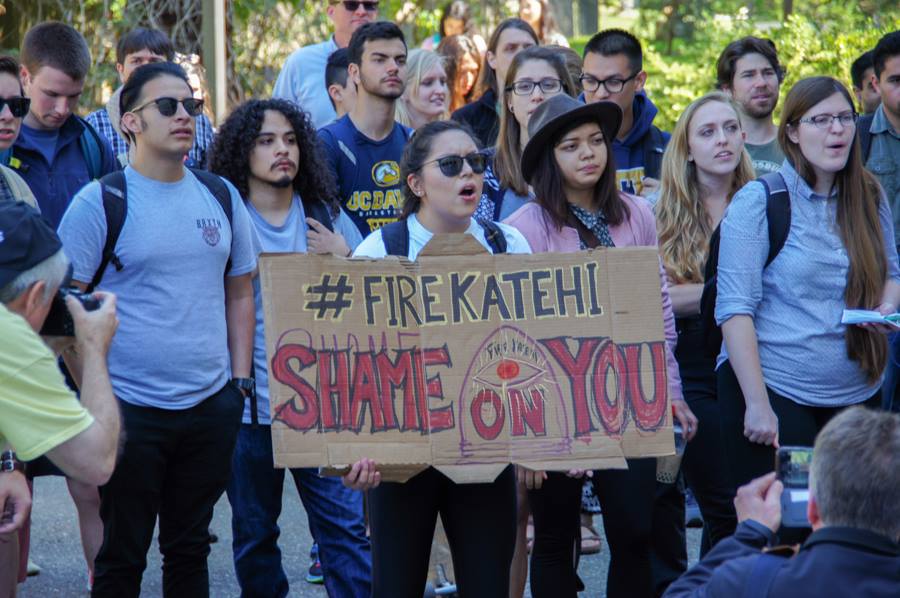
#FireKatehi Supporters hold a three-part protest at the Memorial Union, Mrak Hall

Briana Ngo / AGGIE
BRIANA NGO / AGGIE

Students, faculty, staff and other community organizers gather to demand for Chancellor Katehi’s removal

On April 1, supporters of the #FireKatehi movement gathered together to demand for UC Davis Chancellor Linda P.B. Katehi’s removal. The protest was part of a planned event entitled “Fire Katehi: Katehi Ditch Day, March, Press Conference” which incorporated three planned actions: a walk-out, march and press conference held in front of Mrak Hall.

The walk-out began at 12:30 p.m at the Memorial Union flagpole. From there, protesters shouted various chants demanding for Katehi’s removal. Some of the chants shouted include “Eyes on Mrak! The people fight back!”, “Whose University? OUR university!” and “No justice! No peace! Fire Ka-te-hi!”

Protesters then proceeded to march towards the main entrance of Mrak Hall. They arrived at the steps of Mrak by 12 p.m. The set-up for the press conference included putting up a podium, microphone and two banners held on both sides of the stand.

The press conference featured speeches from a variety of community members including undergraduate students, graduate students, transfer students, professors and community organizers from various campuses and outside affiliations.

Throughout the speeches, there were various references made to Katehi’s involvement in for-profit educational boards. Additionally, there was also mention of Katehi’s alleged failure to appropriately address cases of sexual assault and hate crimes on campus.

Kyla Burke, a fourth-year environmental science and management major, stressed in her opening speech that the press conference represented the protesters’ willingness to be accountable and transparent with their demands. Burke and others believe that Katehi has not been able to offer the same level of transparency to both protesters and the greater campus community.

“They are trying to paint us as a safety hazard while completely ignoring the danger of calling the police on a group like us, [a group] of mostly folxs who live on the margins [of the communities] we represent” Burke said. “Today we want to challenge that narrative. To give you our perspective. We have nothing to hide so we are here explaining ourselves to you at a public forum, unlike the chancellor.”

By 1 p.m, the press conference ended and protesters proceeded to enter Mrak Hall and chant their demands on various floors of the building.

Katehi was not present during the three-part protest. In an email sent a day before, the Office of Strategic Communications explained Katehi’s absence from the protest. The email stated that Katehi’s absence was due to the protesters’ unwillingness to hold a discussion.

“Chancellor Katehi will not attend the protesters’ planned gathering on Friday, April 1, given that the event will not allow for her meaningful participation or the potential for a productive discussion of campus issues,” the campus-wide email stated.

Following the protest, Provost and Executive Vice Chancellor Ralph Hexter sent an email to students concerning the aftermath of the protest. Within the email, Hexter informed the community that several of the protestors left graffiti on the walls of Mrak and that administration will continue to monitor students choosing to occupy after business hours.

Members of the #FireKatehi movement have acknowledged the grafitti and have made  attempts to clean it up. Supporters of the #FireKatehi movement continue to occupy the fifth floor of Mrak Hall since their first day of occupation on March 11.

Written by: KATRINA MANRIQUE – campus@theaggie.org

Rainbow City Play Structure design open to community input

0
HEE-AH YOO / AGGIE
HEE-AH YOO / AGGIE

Workshop held April 2 for residents to voice design ideas

At the City Council meeting on March 15, the council unanimously approved a budget for the renovations of the Rainbow City Play Structure, located in the Community Park at 1405 F St. Community members are invited to participate in the planning process by attending a workshop held by the design firm Leathers and Associates to provide feedback on what they would like to see incorporated into the new structure.

The playground was built in 1991 by community volunteers and was designed with community input. Since November 2014, the playground has been closed due to deterioration and safety concerns.

At the meeting, councilmember Brett Lee asked staff to provide more details about their plans for the renovation and the playground design.

“Rainbow City is a well-loved playground and it’s unique,” Lee said at the meeting.

Project manager David Campbell explained that several community meetings were held to allow project staff to consider many options for the new playground design. Some ideas for the new design include modernizing the structure or making it a natural play area by incorporating natural materials and rocks. Project staff also asked community members if they wanted to see other activities included in the playground.

According to Campbell, people did not want to lose the idea of the old structure due to its sentimental value. They preferred a similar playground that would resemble the current one with essential elements.

“Rainbow City has so much value to the community […] that they wanted a similar type of structure that was multi-level, that you could create different things out of in your imagination,” Campbell said at the meeting.

Councilmember Lee asked his colleagues to consider an increase in funds for the project so that the structure could reflect the residents’ preferences.

“I would hate for us to miss an opportunity to have a really great and wonderful  playground just for the shortage of a hundred thousand or two hundred thousand dollars considering that this playground will be with us for a long time,” Lee said.

Davis resident Richard Garcia visited the playground with his siblings when he was younger and feels an attachment to the park. He hopes the playground can provide the same experience to children once construction is complete.

“I’m excited to see how it turns out and I hope future children can enjoy it like I did when I was a kid,” Garcia said.

The community design workshop hosted by Leathers Associates will take place on April 2 at the Davis Art Center, located at 1919 F Street, from 9:30 a.m. to noon for the community to voice ideas to incorporate into the structure.
Written By: CARLA ARANGOcity@theaggie.org

3-D printed heart model at UC Davis saves life of 19-month-old girl

SACRAMENTO BEE / JOSE LUIS VILLEGAS

Innovative technology uses plastic to create exact replica of complex heart

The UC Davis Medical Center recently utilized 3-D printing technology to construct a three-dimensional model of a patient’s heart to assist surgeons. The 3-D heart follows other plastic printing breakthroughs, such as prosthetic ears and limbs.

The technology is the result of a complicated pediatric heart surgery case from January, where a 19-month-old girl was born with a complex constellation of arteries coming off her heart and only 1.25 ventricles rather than the usual two.

A group of UC Davis specialists consulted with biomedical engineers from Translating Engineering Advances to Medicine (TEAM), a university engineering laboratory that specializes in medical prototyping. Together, they were able to construct an exact 3-D-printed replica of the patient’s heart.

TEAM’s state-of-the-art facilities allowed the heart center to rapidly print the model in a rubber-like proprietary plastic mix that mimics the heart’s pliability. By using previously obtained MRI and CT scans, the biomedical engineers were able to form an image of the heart and send it to the 3-D printers.

“Scans are given to us, and we have to take [those] and we have to define boundaries of what is printed or what is blank space,” said Jerry Hu, TEAM’s principal development engineer for biomedical engineering.

Hu recognized that the 3-D model provided unparalleled detail that cannot otherwise be achieved with only scans.

SACRAMENTO BEE / JOSE LUIS VILLEGAS

“When you see the scans on the monitor, they’re in sections and are flat images. It’s quite different than holding it in your hand,” Hu said. “Playing with [the model] is different than looking at 2-D images or 3-D models on a computer.”

The detail of the 3-D heart model helped pediatric heart surgeon Gary Raff decide on the safest and most effective surgical procedure. Raff successfully performed an aortic translocation and removed the obstruction under the pulmonic valves and aortic valves. The physical model provided Raff the intricate details needed to fully assess the condition of the patient.

This is a tremendous resource and a unique one, something that could only have happened with the collaboration between the Davis campus and the medical center,” Raff said in a press release. “It can really help save lives.”

The technology of 3-D printing has been utilized previously at the UC Davis Medical Center. In a previous cardiothoracic case, 3-D modeling helped surgeons analyze a tumor surrounding a patient’s heart. Surgeons were able to assess the complexity of the tumor, ultimately deciding that surgery would be too complicated to perform. They then were able to proceed with a treatment plan that was less risky to the patient.

This technology has yet to become as common as MRI scans or CT scans, and has only just recently become widespread within the surgical community. Issues of cost and access make this technology underutilized, but Steven Lucero, mechanical engineer and TEAM facility manager, hopes this will change within the next 10 to 15 years and allow facilities like TEAM to become more common.

“Technology like this is still fairly expensive and rare. There are only a few facilities like ours,” Lucero said.

Written by: Lindsay Floyd – campus@theaggie.org

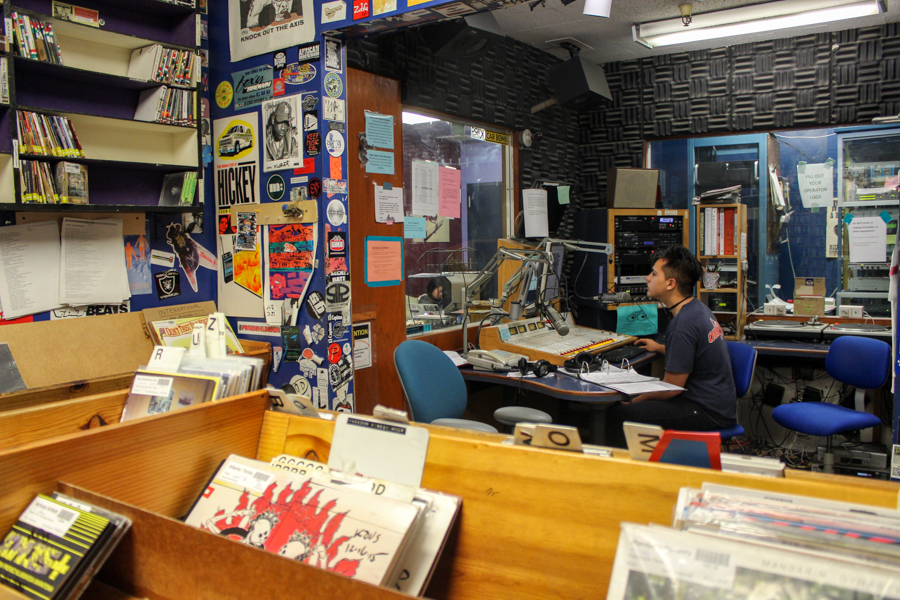
Humor: KDVS starts ‘Sounds of the Library’ themed radio show

0
VENOOS MOSHAYEDI / AGGIE

Let the soothing sounds of a stranger’s cough lull you to sleep

The library, or the “lib,” as many refer to it, is a soothing environment for students to study. Some claim it’s permeated with “stress pheromones,” “not enough plugs” and “loud, uncomfortable chairs.” We have no idea what those people are talking about.

KDVS, UC Davis’ student run free-form radio station, also has no idea what those people are talking about. Starting in spring, they will host a new radio show set to run from 2 to 6 a.m. daily (nightly? whatever) featuring the best library sounds.

The songs they’ve prepared so far are as follows: chip bag crumpling interspersed with backpack zipping, gentle coughing with light chair leg scraping and furious typing with a dabble of a person loudly chewing baby carrots.

Julian Egbert, the show’s lead DJ and a third-year peace and justice major, calls this new program “The Profound Silent Sound,” or TPSS for short.

“We think this new show is really romantic,” Egbert said. “You can listen with your boyfriend, girlfriend, your girlfriend’s girlfriend, cat or even a really big pillow. Just grab something and hold onto it and let the tiny noises wash over you.”

Dylan Michaels, a second-year religious studies major, is the genius who makes these transcendent songs. He had this to say about his process:

“I mean, it’s not that hard,” Michaels said. “Basically I just take an object, say a chip bag, and I hold it in front of the microphone and gently rumple it with my hand. Sometimes my hand cramps up, but other than that it’s pretty easy.”

We wonder: Is this just a new hipster trend, like “eating healthy” or “caring about the environment”? Or will people actually listen?

Egbert and Michaels hope it won’t just be a fad. But they also told me they recycle (gross).

We can’t wait to hear these groovy new songs! Remember to tune in Spring Quarter to TPSS at 90.3FM, and don’t forget to hug something — although please ask permission first. Even of your cat.

ALEX GUZMÁN would like to let you know that a third person does not write these away lines. ALEX writes them like this because, well, she’s not sure why. You can reach her at almguzman@ucdavis.edu and on Twitter @cactasss where she tweets hilarious nonsense. You should follow her. Please.

Humor: Parody Petition to make God an official U.S. citizen unintentionally goes viral

0
KATIE LIN / AGGIE
KATIE LIN / AGGIE

Gary Owen Demille, a second-year student studying law at UC Davis’ King Hall, wrote a fake petition in late January to amuse his fellow legal scholars. The petition, which he initially posted on Facebook, begins as follows:

To Mr. Barack Hussein Obama, 44th president of the United States of America, we the people propose that this upstanding alien resident be granted automatic full citizenship, with complete rights and protections guaranteed by the U.S. Constitution.

Who in God’s name was this “upstanding” foreigner that Demille wanted citizenship for?

Turns out it was God himself.

Yes, someone created a petition to make God a flag-waving, beer-guzzling, gun-shooting American. It’s an idea that could only be conceived by someone stepping out of a Tipsy Taxi on a crazy Thursday night at Bistro 33 (which Demille has not denied). After posting the petition online, Demille got many laughs and compliments from his friends for his humorous take on religion in politics. But in the weeks that followed his initial posting of the petition, he started to get a very large reaction from people outside of his friend group.

Demille’s fake petition went viral and amassed over two million online signatures from all over the country. What began as a joke became a reality. Religious groups and politicians praised it as a sign that people finally wanted to make America a Christian nation, as opposed to one that separates church and state. Other believers criticized the petition for trivializing God. They argued that He transcends all nationalities and documented citizenship.

Setting aside the implausibility of the scenario in which God exists or not, legal scholars weighed the benefits and downsides of God becoming a U.S. citizen.

Pros:

  1. Unlimited Tax Revenue – If God is the creator of all things in existence, (and possibly himself), it’s logical to assume that he would be the legal owner of “everything.” This means the United States could collect an income tax rate of 30 percent of nearly everything in existence, wiping away all US debts instantly. Schools could be fully funded, Medicare would be secured and the residents of Flint, Michigan could finally drink the water.
  1. Civic Duties Like most citizens, God would also have basic responsibilities, such as jury duty and registering for the draft. Jury service will be much shorter, given that God is an omnipotent, all-knowing being who would know the truth and nothing but the truth in all cases. In addition, God will also be able to answer the call of duty in wartime. It’s one thing when soldiers believe that God is on their side, but it’s another thing when they actually have God on their side. Unfortunately, this could also have repercussions when drill sergeants are obligated to yell obscenities at him during training.

Cons:

  1. Prosecution for crimes Although God is believed to be just, forgiving and tolerant to all his creations, he would be liable to face retroactive charges for crimes on a biblical scale. The following are a few of the many witness testaments in a 3,016-year-old investigation:

-Inciting a father to commit murder against his own son (Genesis 22:2)

-Inciting the genocide of the city of Jericho (Joshua 6:21)

-Voter I.D. fraud in ancient Athens (Keith 4:109)

-Environmental destruction through floods (Genesis 6:14)

-Mass murder of a civilian population through fire and sulfur (Genesis 19:24)

-Failing to prevent the Beatles from splitting up (1970)

-Inciting violence against the LGBT community (Leviticus 20:13)

-Attempted genocide of the entire human race (Genesis 6:13)

-Selling unpasteurized dairy products in the state of Oregon (2004)

  1. Country of Origin Aside from the legal issues God may face with citizenship, another challenge would come from dealing with His current status. Since most records of Him originated in the Middle East, He would most likely be rejected as a possible agent working for ISIS. If he were accepted into the United States, Congress would face public backlash from those fearful of foreigners forcing an alien religion upon them.

So far, Demille has rejected any and all claims that accuse him of trivializing or promoting Christianity. He insists the petition was meant to stay within his circle of friends and co-workers. He has also refused all invitations to Sunday church gatherings, talk shows and a correspondent’s segment on The Daily Show with Trevor Noah.

Demille, who regrets creating the petition in the first place, said in an interview, “God help me if this gets any worse.”

You can reach EVAN LILLEY at etlilley@ucdavis.edu.

‘My Big Fat Greek Wedding 2’ and the fine line between comedy and mockery

0
KIRK K / FLICKR
KIRK K / FLICKR

Growing up Greek is a one-of-a-kind experience.

My Big Fat Greek Wedding, released in 2002, embodied the real struggles of every first generation Greek American girl (like me) out there. While some things were exaggerated in this film (like the Greek flag painted onto the Portokalos family’s garage door), I never found any of the content offensive. Actually, almost everything was true of the traditional Greek family as far as I knew it. There was the fiercely protective father, who, more than anything in the world, wanted his daughter to marry a “nice Greek boy” to the over-the-top festivities featuring busy-body aunts, every Greek dish you could imagine and blaring ethnic music.

You can understand why I was so excited for the movie’s sequel, which was released last Friday.

While I sort of knew, deep down, that sequels are never as good as the original film, I held out hope that over the last decade, the film’s writer, Nia Vardalos (who also plays the lead character, Toula Portokalos, in both films), had taken the time to craft an equally hilarious and realistically depicted sequel. But alas, I walked out of the screening with mixed emotions.

Despite some generally comic and heartfelt portrayals of the family dynamic, which were mostly derived from the first film (like the Windex remedy and Toula’s daily carpools with her father), in the sequel, Vardalos took good humor about Greek culture to an obnoxious level.

She tried too hard to entertain, and her effort wasn’t fruitful. It felt like an ugly parody, which was obviously disheartening.

So, to set the record straight, here’s a list of truths and exaggerations in the film:

  • What’s true: Greek families often live in close proximity to each other, even on the same street.

Growing up in the suburbs of Chicago, I lived two houses over from my cousins. And a slew of other aunts, uncles and cousins lived within a five-mile radius. It was perfectly normal.

  • The horrible exaggeration: We don’t engineer our homes to look like Greek island villas (i.e., no white stucco exteriors and giant blue domes).

While the film’s depiction of older Greeks having some, well, garish tastes in clothes and home decor isn’t totally inaccurate from my point of view, Toula’s sister’s home, which featured a white exterior and large blue dome (likely modeled after the blue domed church in Santorini, Greece), was a gross exaggeration.

  • What’s true: We are certainly close-knit, and it’s often difficult to keep any important details under wraps.

Greek parents and children never stop being involved in each other’s lives. For example, even at 21 years old, I pretty much tell my parents everything, because I know they’ll find out regardless (they have their ways).

  • The horrible exaggeration: Greek kids usually don’t worry about 20 or so family members showing up at a college fair.

It’s true that most big milestones in a Greek kid’s life are well-documented because we always have a plethora of relatives standing by (10 of my relatives are scheduled to fly in for my June graduation). Still, families don’t make such dramatic appearances at low-key events, like Toula’s family made at her daughter’s college fair.

  • What’s true: Greek grandmas are always associated with good food.

I can’t really explain this one. It could be that their mastery comes from years of experience, but, in any case, it’s rarely contested that grandmas are culinary sorceresses.

  • The horrible exaggeration: Those same grandmas don’t hide in obscure places or creepily stare at you in silence from the corner of the room.

One of the most irksome parts of the movie? When they show Toula’s grandmother dopily sitting under a table at the college fair with a platter of spanakopita. It felt like Vardalos was making a comment on the lunacy of the Greek elderly, and it was rather distasteful.

More than anything, it seemed as if Vardalos was more interested in channeling comedy, and it came at the expense of her credibility as a Greek American.

Of course, there’s something to be said about exaggeration for the sake of making a point about broad truth, but My Big Fat Greek Wedding 2 exaggerated for the sake of getting a laugh.

You can reach HAYLEY PROKOS at hprokos@ucdavis.edu or on Twitter @haroulii14

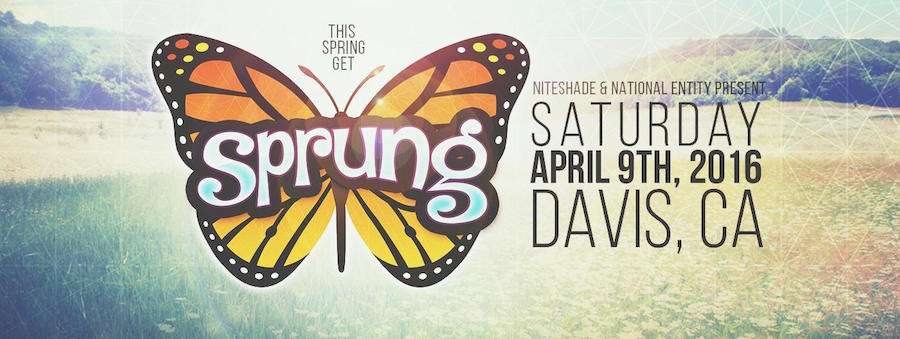
Spring will be Sprung on April 9

NITESHADE and NATIONAL ENTITY / COURTESY

First-ever local EDM show provides a space for bass connoisseurs in the Davis area

Sprung, an electronic dance music (EDM) event featuring music, vendors and performers, is set to stir up the Davis music scene on Saturday, April 9 at the Odd Fellows Hall. This concert marks the first time an EDM night of this size has taken place in the Davis area, allowing students and locals to enjoy a concert close to home. The promoters of Sprung describe the event as “a conscious gathering for the bass connoisseur” and expect to see a high number of UC Davis students at the event.

Sprung is the result of a collective effort from various Davis community members, namely two local companies: Niteshade Nights and National Entity. Niteshade Nights is an event company founded by Aaron Huitt, a fourth-year English major. Huitt said that he had been hoping to create a local event of this kind for some time, and had always been planning on collaborating with National Entity.

“I told [Niteshade Nights] that my life’s goal in the industry is to use everything I’ve learned and bring a solid, legit, consistent event to Davis, to build a scene from the ground up in my hometown,” Huitt said. “Our events are for students, by students […] everyone involved. If we want this scene then it’s up to us to build it together.”

National Entity is a production company based in Davis that specializes in lighting and sound. Adam Peterson, the company’s founder, will be providing high-level audio equipment and lighting.

“National Entity is planning on bringing a small LED video wall, some ambient lighting, and sufficient sound reinforcement for those bass-heavy lows,” Peterson said.  “It will definitely be something that you don’t see everyday in this area.”

Champagne Drip, a tropical/future bass producer whose EP “Radio Bikini” was released by Mad Decent in 2014, will be headlining the event. He is well-versed in the EDM scene and has been producing and performing for over 10 years.

“I’m focused on bringing jazzy tropical vibes to bass music, incorporating Hip-Hop, Jungle and Footwork as a foundation,” Champagne Drip said. “I am aware of a lot of the history in dance music since I’ve been at it for over a decade, but I’m not interested in sounding too similar [to] anyone else, so I draw inspiration from artists outside of my genre, such as Phil Collins, Debussy and many many more.

Sprung is, at its core, a local event; all of the other performers are Davis locals, and some are students. Odd Fellows Hall will provide a small and intimate venue for event-goers, promising to be a space for fans to experience the camaraderie of larger events within the comfort of their own community.

The concert is currently sold out. More information on the event can be found at their Facebook event page.

WRITTEN BY: Sara Williams – arts@theaggie.org

Guest Opinion: Let’s Talk About Sex

0
ASUCD Senator Georgia Savage (JAY GELVEZON / AGGIE)


Sex is a taboo topic in our society.

When we avoid talking about sex, we thwart all students’ ability to enjoy healthy sexuality. Stigmas surrounding the topic still prevent the dissemination of necessary information that includes the definition of consent and the proper course of action to take — like where to go and what to do — when consent is violated. Information regarding sexual health, such as how to gain access to contraceptives and STD and STI testing, as well as discussions about how we talk about sex in different communities and cultures, are further hampered when there is no dialogue.

Sexual assault on college campuses has been referred to as an epidemic. According to the National Sexual Violence Research Center, 1 in 16 males and 1 in 5 females will be sexually assaulted while in college. In addition, 1 in 3 females will be assaulted in their lifetimes. These numbers are significantly higher for gender-nonconforming individuals and those that identify with the LGBTQIA+ community. More than 90 percent of survivors do not report their assaults. This is for a multitude of reasons, including survivors knowing their perpetrator, not trusting the police and/or university to respond appropriately and fear of being exposed as a survivor.

The UC Davis community comes together in each April on Picnic Day to celebrate our campus culture, but we also must come together to promote the safety of all students by being aware of our shortcomings. These issues affect all students, from high-risk communities — incoming freshmen in residence halls and students involved in Greek life — to the average student.

“Let’s Talk About Sex” is a campaign that lasts the duration of April that also needs attention. As part of this campaign, the Students Against Sexual Violence at UCD, Associated Students of the University of California, Davis Senate, Sexual Assault Awareness Advocacy Committee, Gender and Sexuality Commission as well as a multitude of other groups and organizations are hosting events to start a conversation about all aspects of sex. This campaign intends to promote healthy sexuality by discussing these topics — including consent, sexual health, how sex is discussed in specific cultures and communities and ultimately breaking the taboos surrounding sex.

The goal of this month and campaign is to help all UC Davis students break sexual stigmas and provide a platform for students to talk about these issues through the mediums including workshops, spoken word, art and film. Join us in myriad of diverse events, which attempt to include all students of our UC Davis community by providing spaces of education and empowerment for all of these issues.

Find more information at our website and Facebook page.

GEORGIA SAVAGE is a third-year and a double major in Political Science and Gender, Sexuality and Women’s Studies. She is currently ASUCD Senate President Pro Tempore, President of Students Against Sexual and Gender-Based Violence and Misconduct and Chair of the Student Campus Climate Response Team for Sexual and Gender-Based Violence.

Alleged armed assault at UC Davis’ Stebbins Cold Canyon Reserve

NICKI PADAR / AGGIE
NICKI PADAR / AGGIE

Two hikers forced off trail by suspect brandishing handgun

Two women fell victim to an alleged crime while hiking on Saturday, March 26 at UC Davis’ Stebbins Cold Canyon Reserve in the unincorporated Solano County, near Lake Berryessa.

The women, aged 18 and 59, set out for a hike around 3 p.m. At some point during the hike, a man approached the victims and revealed a handgun. The suspect forced the two women off the path and into a more secluded area.

At gunpoint, the suspect allegedly assaulted one of the women and ordered them to give him their money. He then proceeded to flee on foot in an unknown direction.

The women described the suspect as a Hispanic or Latino man in his mid-20’s, approximately 5-foot-5 to 5-foot-6 with short black hair and possibly a light mustache. He spoke broken English with a heavy accent. He was seen wearing a burgundy shirt, black pants and grey and white tennis shoes at the time of the alleged attack.

Solano County Sheriff’s deputies are investigating the case and have reason to believe that the man may live in the nearby area; they caution all hikers to always be aware of their surroundings and to hike in groups.

Anyone with information regarding this on-going investigation is encouraged to contact Detective Hendrix of the Solano County Sheriff’s Office at (707) 784-7058. Any callers wishing to remain anonymous are urged to call Crime Stoppers at (707) 644-7867.

The reserve remains closed to unauthorized personnel due to wildlife preservation and safety concerns sustained last July. The trails and wildlife encountered excessive damages by the Wragg Fire but is expected to reopen sometime this May.

Written By: BIANCA ANTUNEZ – city@theaggie.org

University of California student organizers launch campaign to save plastic bag ban in California

KATE SNOWDON / AGGIE

CALPIRG students advocate for ban on single-use plastic bags after 2014 law was stalled

On March 5, 60 students from the California Student Public Interest Research Group (CALPIRG) gathered at the state capitol in Sacramento to lobby state officials in support of the Save the Ban campaign, an initiative to end the use of single-use plastic bags in California.

The statewide ban on plastic bags in specific stores came into effect in 2014, when Governor Brown signed Senate Bill 270 into law. Shortly after, three out-of-state plastic bag manufacturers gathered the necessary number of signatures to put a hold on the ban and bring the issue to a vote on the Nov. 8 ballot this year.

Madalyn Elliott, a third-year managerial economics major and CALPIRG intern, expressed her frustration with the recent setback the ban has faced.

“The craziest thing about this whole campaign is that we already decided as a state to ban plastic bags in California, [when] Governor Brown signed SB 270,” Elliott said in an email interview. “It feels like a step backwards, but we are determined to continue to spread the word about keeping the ban on plastic bags that we worked so hard to achieve.”

Genevieve Abedon, a waste prevention campaign coordinator for Californians Against Waste (CAW), said that there are potential difficulties in getting people to vote in favor of the initiative.

“We’re looking for a Yes vote to uphold the ban, so that’s hoping that they’re going to vote,” Abedon said. “A lot of people, particularly in a presidential election, don’t actually make it to the end of the ballot, and this ballot coming up November is likely going to have lots of other initiatives on it and propositions and so there might be an even higher dropoff rate.”

Students from eight University of California CALPIRG chapters travelled to Sacramento to host a statewide conference as well as workshops and training for the campaign. Travelling with a 30-foot inflatable turtle, the group seeks to bring focus to marine wildlife threatened by plastic pollution.

“Plastic bags are the fourth most common plastic pollution item that is found all along our oceans, rivers, streams and city streets,” Elliott said. “The problem is that these plastic bags do not biodegrade, but instead break down into small pieces — which our marine life then mistakes as food.”

The initiative has received the endorsement of the California Democratic Party, while 40 percent of California, including 147 cities and counties, already live under their own ban on plastic bags. Last year, the Sacramento City Council unanimously approved a ban after companies spent $3 million to get the referendum on the ballot.

If available at the point of sale, SB 270 also requires stores to sell recycled paper bags for no less than $0.10. Lee Califf, executive director of the American Progressive Bag Alliance (APBA), led the opposition that gathered more than 800,000 signatures.

“SB 270 was never a bill about the environment,” Califf wrote in a press release for APBA. “It was a backroom deal between the California Grocers Association and their union friends to scam consumers out of billions of dollars in bag fees — all under the guise of environmentalism. California voters will now have the chance to vote down a terrible law that, if implemented, would kill 2,000 local manufacturing jobs and funnel obscene profits to big grocers without any money going to a public purpose or environmental initiative.”

The ban on single-use plastic bags has proven effective in cities throughout California that are trying to reduce their impact on the environment. One year after San Jose implemented its own ordinance, a study found an 89 percent reduction of plastic bags in storm drains, a 60 percent reduction in rivers and a 59 percent reduction in streets and neighborhoods.

Elliott, who gave a speech to lawmakers at the event in Sacramento, felt confident that students and California citizens would show support in November.

“The public seems to be on our side, which is great,” Elliott said. “Students care about California and care about protecting our oceans. Banning plastic bags will only help to improve our environment. We shouldn’t let a plastic bag we use for a few minutes pollute our oceans for decades.”

Written by: Ivan Valenzuela  – campus@theaggie.org

Emory goes nuts over Trump

0
CHRISTOPHER OCTA / FLICKR

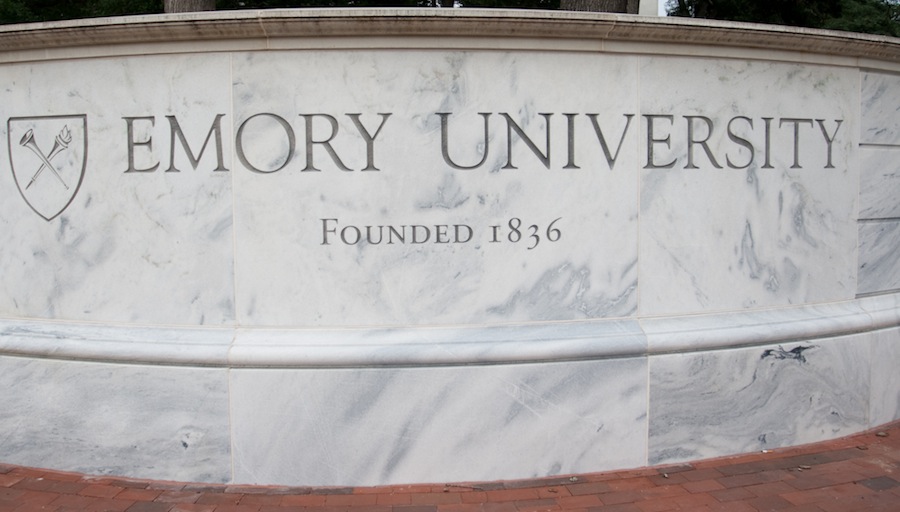
Students at Emory University protested their administration last week after discovering their campus full of pro-Donald Trump chalkings, ranging from “Trump 2016” to “Build the Wall.” It was a well-intentioned protest that was somewhat petty, woefully misguided and frightfully handled.

Though initially reluctant to condemn the chalkings — as would have been the proper course of action — University President James W. Wagner seemed to want to appease the protestors, and he eventually supported an investigation into the matter. He wrote in an email to the Emory community that “immediate refinements to certain policies and procedural deficiencies” would be made.

While he acknowledged the right to dissent in another email, his own actions are remarkably thin-skinned and empower further unsubstantiated protests.

If every school policy regulating practices like chalking, tabling and campaigning were enforced, well-qualified student government candidates wouldn’t be able to send their messages out most effectively. Student organizations would find their outreach hindered. While these rules are important, they should not be used in cases when they have the potential to significantly restrict freedom of expression.

In a university statement dropping the case last Thursday, reference was made to a specific policy at Emory that allows for the chalking of only horizontal surfaces. This does not include walls, benches or staircases — the sites of the pro-Trump slogans — because their “defacement” is considered vandalism. That Wagner supported enforcing such a policy is a de facto prosecution of expression. It shows the extent to which he felt he had to do something to ward off any further trouble.

But boy, did he open up a can of worms.

Ultimately, Emory garnered so much national attention because of the innocuity of the perceived offense, and the utterly confounding response from the university.

It’s hard to imagine a simpler affirmation of a candidate than simply stating their name. That’s why politicians speak of themselves in the third person. What the protesters said about Trump — that he’s racist, xenophobic and sexist — are all true. But it’s also true that Trump is a Republican skeptical of free trade, and that policy position might have been what motivated the chalking.

Or it could be a cynic wanting to make a point about the precariousness of free speech on college campuses.

Or it could be a joke. After all, the entire GOP primary has played out like a cruel joke.

But who knows?

Though Wagner’s response to the protestors suggests otherwise, Emory has no obligation to condemn speech as potentially ambiguous as “Trump 2016.” And it’s a disservice to the progressive movement that some of its members should want to sanitize any alternate opinions.

Emory is a large university, and the 40 or so students who protested should not be considered representative of the whole. But they should realize that they do hold power, and therefore need to pick their battles more carefully. The reaction to their activism has been overwhelmingly negative, and that works right into the hands of Trump supporters, who already believe this nation is too politically correct and who are motivated by the kind of episode playing out in Emory.

The protesters took fair contention with the media narrative played against them, and especially at the perception that they were protesting mere chalkings. They argued that the Trump slogans represented more than just preference for a candidate, but rather an ideology, rooted in hate and discrimination, that ran contrary to Emory values.

Of course, that doesn’t really respond to concerns that their actions are prohibiting speech. It just changes the kind of speech from one scrawled out in chalk, to one with larger, historical consequences. The latter is certainly more interesting to talk about. The protesters should confront the bigotry that has partly helped fuel Trump’s rise not by making demands of their university, but rather of Trump and the voters.

When political slogans are given more attention than the all too frequent hate crimes that even UC Davis can’t escape, or respond to properly, it’s a sign that priorities need to be shifted.
You can reach ELI FLESCH at ekflesch@ucdavis.edu or on Twitter @eliflesch

Ground yourself with astronaut Chris Hadfield

0
NASA / FLICKR
NASA / FLICKR

Reaching the stars is an admirable dream and easily achievable, assuming one has $250,000 to spare for a private trip past the stratosphere through Virgin Galactic. But for those of us (myself included) without the cash to burn, working as a publically-employed astronaut ranks quite highly on the “implausibility scale” of potential jobs. And this is not for lack of desire: the intense combination of required educational training, particular career history and the intellectual (not to mention physical) rigor required to even qualify for the gig makes it seem all but impossible for many would-be spacewalkers. But that doesn’t necessarily mean it isn’t achievable.

Despite the odds, astronaut Col. Chris Hadfield managed to surmount (and float) past every hurdle needed to become a full-fledged member of the space community. While I admittedly  enjoy offhandedly describing him as “the contemporary Neil Armstrong, if he were Canadian,” it is far more accurate to classify him as a superstar: he’s an engineer, accomplished fighter pilot, musician, photographer, frequent public speaker on all things space, the very first Canadian to “walk” in space and author of the sensational book, An Astronaut’s Guide to Life on Earth.

His book is an autobiography as well as a lesson to the reader on what he’s learned throughout his life and travels. And in his particular distillation of ‘success,’ he is wonderfully counterintuitive in his interpretation of common sense. For instance, in his third chapter, entitled “The Power of Negative Thinking,” he explains that by intensely examining the possibility of failure, a person can actually make it become a virtue. He writes, “Being forced to confront the prospect of failure head-on to study it, dissect it, tease apart all its components and consequences really works. After a few years of doing that pretty much daily, you’ve forged the strongest possible armor to defend against fear: hard-won competence.” Another of my favorite examples of this unorthodox (at least outside the space community’s) notion of success can be found in the following chapter, aptly named “Sweat the Small Stuff,” in which he explains how vigilantly and meticulously examining even the most minute detail in a situation could make all the difference, in his case between life or death:

…you don’t need to obsess over details if you’re willing to roll the dice and accept whatever happens. But if you’re striving for excellence whether it’s in playing the guitar or flying a jet there’s no such thing as over-preparation. It’s your best chance of improving your odds. In my [time as an astronaut], it wasn’t even optional. An astronaut who doesn’t sweat the small stuff is a dead astronaut (Hadfield, 61-62).

Hadfield’s tour into the depths of space discovery and the culture surrounding it encourages an intense study of failure. “When [we simulate] deorbit to landing […] dozens of people are [watching], hoping that something new — [a gap] in standard procedure […] a better way of doing something […] will be revealed.”

While what he does in space is awe-inspiring, he makes it explicitly clear that he acts as a conduit for a legion of trained, passionate specialists. He uncovers a culture where the kind of obsession with working together and being prepared might seem ludicrous if not for the severe risks of the profession. Through an obsessive and even-keeled attitude toward scrutiny, he exists within a subculture which sees criticism as just one more thing necessary to ensure their work achieves its goals. And it is abundantly clear he respects and admires the hardworking people within the American, Canadian and Russian space programs where he has worked. He is fully cognizant of the fact he is the representative of their brilliance.

But the work does not simply mean to glorify or sensationalize the profession of space travel, or the various government agencies within the industry. Instead, it’s a startlingly intimate and warmhearted view of an arcane world, one which he makes plain even to those not educated in fields of scientific inquiry. With his strong affection for exploration and uncovering the unknown, he tempers his work with tragic incidents and day-to-day difficulties of the very real, and inevitably flawed men and women who work to make what they do every day a possibility. Sometimes they ascend, sometimes they crash and burn; sometimes they long to be home again; all of them, in their own way (not everyone gets to be one of the astronauts), go into the final frontier to attempt things that have up to that point been unprecedented.

Space is a harsh, indifferent void: as hostile to life as it is beautiful. Back on our planet, life is not simple either. Thankfully, we have Hadfield to thank for so adroitly raising our awareness of how to make our way effectively in both areas.
You can reach RYAN DOWNER at rmdowner@ucdavis.edu.

Rejection of anti-Semitism, step toward more inclusive UC

0
HANNAH LEE / AGGIE
HANNAH LEE / AGGIE

UC Regents revise Statement of Principles Against Intolerance

The University of California (UC) Board of Regents approved changes to its Statement of Principles Against Intolerance on March 23. The finalized statement now specifically condemns anti-Semitism as a form of intolerance. The original statement, which the Regents published in September, did not include anti-Semitism or any other specific types of discrimination.

As the Regents sought to edit the statement during their meeting, they initially included both anti-Semitism and anti-Zionism as acts of intolerance. However, Regent Norman J. Pattiz requested that “anti-Zionism” be replaced with “anti-Semitic forms of anti-Zionism,” according to UC Irvine’s New University.

The Editorial Board commends Pattiz for requesting and clarifying this distinction between anti-Zionism and anti-Semitism. Criticism of Israeli policies or the Israeli government is not inherently anti-Semitic. One can disagree with a policy or an administration without factoring ethnicity or religion into this criticism.

Many members of the UC community expressed concerns about the statement, believing the Regents should have incorporated other specific forms of intolerance — such as Islamophobia, transphobia and homophobia — into the revised statement.

The Editorial Board agrees with the Regents’ revised Statement of Principles Against Intolerance, considering recent anti-Semitic actions across the country, including at UC Davis. The statement was created partly as a result of a request by the AMCHA Initiative, a group that fights anti-Semitism on college campuses.

However, the Board believes that the Regents should have used this opportunity to outwardly and specifically speak out against other forms of intolerance as well, allowing for a safer and more inclusive UC system.

We hope that the Regents will further revise the statement to include other forms of intolerance and specific action steps that individual UC campuses can take to directly enforce these principles. Only then will the statement hold full legitimacy and begin to create a more tolerant, open and safe climate across the UC system.

Historic Yosemite sites renamed

0
YOSEMITE NATIONAL PARK / COURTESY

Battle over trademark causes name changes to historic property sites at Yosemite National Park

On Jan. 14 the National Park Service (NPS) announced that the names of several historic properties at Yosemite National Park will be changing due to a trademark dispute with the previous concessioner, Delaware North. The name changes will affect many iconic landmarks in Yosemite, including the historic Ahwahnee Hotel (which has hosted guests including Queen Elizabeth II, Walt Disney, Steve Jobs and Charlie Chaplin), which will be renamed The Majestic Yosemite Hotel.

Hospitality company Delaware North, which has run the visitor’s services for the park since 1993, lost the contract to Aramark in June 2015. In September 2015, Delaware North initiated a lawsuit against the NPS for failing to force Aramark to purchase the trademark names that Delaware North owned. In response to this, the NPS allowed Aramark to change the names of many historic property sites at Yosemite National Park to avoid paying Delaware North for the names.

At the heart of the issue is a battle over the ownership and value of the trademarks to these properties. Delaware North values their trademarks at $50 million and claims that Aramark should be forced to pay for them. However, the NPS claims that the trademarks are worth $3.5 million and that some of those trademarks for nationally significant sites should not have been approved by the U.S. Patent Office.

One of the most significant trademarks that Delaware North claims ownership of is the use of the name “Yosemite National Park” for commercial purposes. There have been reports that all T-shirts bearing that name have been removed from Yosemite National Parks’ gift store.

Despite the controversy, Dan Jensen, former president of Delaware North at Yosemite, argues that Delaware North has done nothing wrong and that there was no need for the NPS to change any of the names.

“In my view, the Park Service did not have to change the names, [but] they decided they wanted to. We sent them a letter telling them that we would give them unlimited use of the names while this was being resolved; they declined to accept,” Jensen said.

Another argument Jensen makes to defend the company is that when Delaware North originally signed their contract with the NPS in 1993, they had to pay $61.5 million for all the physical and trademark assets of the previous contractor. Jensen argues that the new contractor’s terms should have been the same and that, while the NPS has said that Aramark must buy assets from Delaware North, it has failed to specify which ones.

Jensen also claims that there is a misconception that Delaware North is requesting money from the NPS, rather than from Aramark.

“It’s really a shame, it’s really horrible, and it’s horrible that the names have changed. It’s horrible that the public has to go through this, it’s horrible that Delaware North is being vilified for their role in this,” Jensen said.

He also claims that some of the name changes that took place were deliberately changed to names which were not historically relevant, in order to further stigmatize Delaware North. He notes that the NPS could have changed the name of the iconic camping ground, Curry Village, to its original name, Camp Curry, without infringing on any trademarks. Instead, NPS chose to completely move away from the property’s historic roots, calling the camp ground Half Dome Village.

“I think that that is way more a question of PR than it is of principle… [And] it has nothing to do with the issue,” Jensen said.

Despite Jensen’s claims that this issue is about rightful ownership, the NPS has issued a statement saying that it does not believe that Delaware North’s trademarks for historic properties were done with the knowledge of the NPS. The NPS has since petitioned the U.S. Patent Office to revoke many of the trademarks for Yosemite’s historic properties.

David Freireich, who works in the Aramark Corporate Communications Office, admits that the company was disappointed that the names had to change, but stresses that the properties will retain their historical status.

We would have liked for this matter to have been resolved prior to March 1. However, when it became apparent that that was not going to happen, the NPS was left with no choice but to change the names to ensure a smooth transition for visitors,” said Freireich in an email interview.

This trademark dispute has caused many people to question how it is possible for a private company to trademark the names of historic sites within National Parks.

Katherine Stevenson, a board member of the Coalition to Protect America’s National Parks, a nonprofit advocacy group, also questions the moral legitimacy of trademarking these historic names.

While Stevenson does admit that there are some intellectual property rights that come with the contract that Delaware North signed in 1993, she strongly agrees with the NPS’s beliefs that these historic names should never have been allowed to be trademarked.

“[The properties are] national treasures and we believe that as national treasures, those names ought to remain in the public domain. They’re national treasures, they’re not just ordinary names that could be copyrighted, and they’re not someone’s logo or something like that; they’re the historic names of historic properties within national parks,” Stevenson said.

Stevenson explains that she has also spoken to many members of the public who have expressed concern over the name changes.

“We’ve had a lot of people saying ‘we were married there,’ or ‘we went there as children and we don’t want those names changes,’ and ‘they’re important names to us and the Park Service should not have to pay for them,’” Stevenson said.

While Delaware North’s lawsuit against the NPS continues and the NPS awaits a response to its petition to revoke the trademarks for these properties, many people will have to continue to adapt to the name changes that have taken place. While Stevenson is hopeful that the original names will return, she sees it as Delaware North’s responsibility to allow them to be restored.

“I certainly do hope that they change back, but that will only happen if Delaware North drops its lawsuit or gives up the rights to those names,” Stevenson said.

For the time being, it appears that neither Delaware North nor the NPS are backing down on their claims that they are the rightful owners. It remains to be seen which position the court will take and whether the NPS will change the names back.   

Written by: JUNO BHARDWAJ-SHAH