54.1 F
Davis

Davis, California

Tuesday, December 23, 2025
Home Blog Page 735

Davis gets juiced on cold-pressed fruits and vegetables

0
ANH-TRAM BUI / AGGIE

First local, all-organic juicery now open in Downtown Davis

The City of Davis gave a long overdue welcome to its first juicery in the beginning of March. Sun & Soil Juice Company, located on 527 G St. in Downtown Davis, serves local, all-organic, raw cold-pressed fruit and vegetable juices as well as house-made trail mix, granola and spices prepared using minimal heat.

After their own personal journeys toward health and well-being, co-owners Molly Brown and Tatiana Kaiser founded Sun & Soil in Sacramento in 2014. Brown and Kaiser are dedicated to helping others achieve a healthy lifestyle through their raw juices and plant-based products.

After being diagnosed with colitis, a chronic autoimmune disease, Kaiser borrowed Brown’s juicer in 2012 to help digest and get the nutrients her body needed. Juicing helped Kaiser alleviate pain and quickened her healing process by about three times than is normal for the diagnosis. Soon after, Brown and Kaiser decided to bring their method of treating symptoms of colitis and promoting healthy eating habits to their community.

“We want to educate people on how to eat better, [whether] they are chronically ill or not, so they can prevent becoming sick in the future,” Brown

ANH-TRAM BUI / AGGIE

said.

Sun & Soil offers a medley of fresh fruit and vegetable juices, cashew and coconut milks, which are pressed using high pressure cold plates, as well as cold-brew coffee. Single-flavor juices are available in apple, carrot and orange. The juicery also offers two-ounce juice shots for a quick fix. Flavors include apple, ginger and turmeric as well as apple, lemon, garlic and oil of oregano immune boost for $3.50.

Sun & Soil pressed juices have no processed sugars and minimal fiber, helping the digestive system recover from consuming processed foods. The juicery also offers juice cleanses, which customers can partake in for one day or as long as five days, depending on recommendations from nutritionists or doctors.

“[The point of a juice cleanse] is to just give your digestive system a break. People tend to eat a lot of fast food and processed foods right now, so it’s a good way to reboot your system and clear out some of the processed foods out of your intestines […] and give your body a nutrient-dense drink,” Brown said.

According to Courtney Lee, Productions and Operations Manager at Sun & Soil Juice Company, on a typical bottling day, several hundred juices are bottled. She explains that it takes three days to complete the juicing process, from the time products are ordered, delivered, pressed and bottled.

“In cold-press, the way the produce is ground down, no heat is produced, so it maintains all of the micronutrients and phytonutrients found in the juice,” Lee said. “That’s the cool thing about cold-press. Not only does it not apply heat like your regular centrifuged juicers, it also pulls out more of the juice from the pulp and it allows for a long shelf life, because the juice always stays at an even temperature.”

ANH-TRAM BUI / AGGIE

Sun & Soil Juice Company uses high quality fruits and vegetables from local farmers in Yolo County and other parts of California. All of the products used at the juicery are certified organic and non-GMO. However, according to Brown, it can be more challenging to find organic growers compared to conventional growers because organic farming is expensive and time-consuming.

“There really aren’t organic options in Davis. It’s not as healthy as you might think it is. It’s a hippie town, but we have a lot of ice cream shops, thai food and novel foods. I know that students crave that kind of high salt, sugar, oil and carb food to help get them through finals, but that’s skewed thinking. You can fill yourself with raw, organic nutrients and still get that same energy. Afterwards, you’ll still feel better and you won’t crash,” said Ciera Gaddis, sales associate at Sun & Soil Juice Company.

Sun & Soil also wants to ensure affordability to college students in Davis and offers a punch card for customers to receive their twelfth juice for free. The juicery charges a bottle fee, pricing all the juices at $11.50, but when the bottle is returned, customers receive cash or credit back, equating the bottle of pressed juice to $9.50.

“Even though on the surface it may seem a little pricy […] these juices in a 16-ounce bottle, have a minimum of five pounds of produce,” Gaddis said. “So for one or two juices, you’re getting, depending on the juice, your daily allotment of vitamin C or a huge punch of B vitamins, and that’s what’s going to fill you.”


Written by: SHIREEN AFKARI – city@theaggie.org

Five UC schools rank in top 10 most anti-Semitic campuses in America

On January 31, 2015 two large swastikas were spray painted around the Alpha Epsilon Pi fraternity house. (SCOTT DRESSER / AGGIE)

UC Board of Regents issues statement to tackle anti-Semitism on campus

As of 2016, five University of California campuses ranked in the top ten most anti-Semitic universities in the United States.

The study was conducted by AMCHA Initiative in an effort to target the schools that had the most overall anti-Semitism, the highest incidence targeting, the highest incidence of anti-Semitic expression and the highest incidence of Boycott, Divest and Sanction (BDS) activity.

The study went on to say that UC schools had three times the number of anti-Semitic incidents than the average university in the country. In addition, UC Davis landed in all four categories for the most anti-Semitic universities.

This surge in anti-Semitism comes on the heels of the recent passage of ASUCD Senate Resolution (S.R.) #9, which passed on Jan. 29, 2015 with an 8-2-2 vote. The resolution called for the UC Board of Regents to divest from “corporations that aid in the Israeli occupation of Palestine and illegal settlements in Palestinian territories, violating both international humanitarian law and international human rights.”

Shortly after the passage of this resolution, two anti-Semitic incidents that occurred at UC Davis.

The passage of S.R. #9 is one of many across universities all over the country in support of the BDS movement against Israel. The BDS movement at UC Davis has been endorsed by groups such as Students for Justice in Palestine, Jewish Students for Peace and Davis Stands with Ferguson.

A few months ago, in Oct. 2015, the three groups mentioned above held a demonstration at the quad to commemorate the 1953 Qibya massacre.

Kyla Burke, a fifth-year environmental science major and central organizer of Davis Stands with Ferguson, was one of the students who attended the demonstration.

“Personally, what I spoke about that day was the connection between and the similarities between the Palestinian struggle and the Black American struggle, living in systems of oppression. There are some similarities, but that’s mainly what I spoke about — standing in solidarity for each other,” Burke said at the demonstration.

AMCHA Initiative claims that the increase of anti-Semitic incidents and anti-Semitism as a whole are directly correlated with the promotion of the BDS movement and the denigration and delegitimization of the Jewish state of Israel or anti-Zionism.

“99 percent of schools with one or more active anti-Zionist groups had one or more incidents of anti-Semitic activity, whereas only 16 percent of schools with no active anti-Zionist student group had incidents of overall anti-Semitic activity,” AMCHA said in their study.

Benjamin Shapiro, a UCLA alumnus, echoed this sentiment and argued during a divestment event at UCLA that BDS was just another word for anti-Semitism.

“I have never been more ashamed to be an alumnus of this university to see this divestment petition be considered at this level. To pretend that this is about occupation. To pretend that this is about peace. To pretend that this is about anything but vile and despicable Jew-hatred is a lie,” Shapiro said in his speech. “For us to sit here and pretend that Israel is somehow on a lower moral plane is a direct manifestation of anti-Semitism. To hold Jews to a different moral standard than any other country or any other group on the face of the earth represents nothing but an age-old and historic hatred for the Jewish people.”

Many world leaders tend to agree with Shapiro’s stance of supporting the state of Israel, including Pope Francis and British Prime Minister David Cameron.

“This is a state, a democracy that is recognized by the United Nations, and I don’t think we should be tolerant of this effort at delegitimization,” Cameron told The Atlantic. “I have a very clear view, which is that if you disagree with the policies of Israel, fine, say so, but that is never a reason to take that out on Jewish communities. We have to be very clear about threats — this is a dangerous line that people keep crossing over, that says that anti-Zionism is a legitimate form of political discourse.”

In response to this rise of anti-Semitism at UCs, the Board of Regents recently adopted a statement condemning anti-Semitism and is the first major university to do so since the push to economically divest from Israel.

“Anti-Semitism, anti-Semitic forms of anti-Zionism and other forms of discrimination have no place at the University of California,” the Board of Regents said in their statement.

According to the New York Times, there has been some protest from pro-Palestine groups on UC campuses, claiming that the UC’s position is forcing them to stay silent about their advocacy for the Palestinian people in addition to being a stifling of free speech.

However, there are many pro-Israel supporters who have found some common ground with anti-Israel and pro-Palestine activists. Eugene Volokh, a law professor at UCLA and supporter of Israel, claims that, while he is pro-Israel and does believe much of anti-Zionism is anti-Semitism, it is wrong of the UC to ban or condemn anti-Zionist speech.

“Whether the Jewish people should have an independent state in Israel is a perfectly legitimate question to discuss,” Volokh wrote in The Washington Post. “Sometimes the answer might be ‘Yes.’ Sometimes it might be ‘No.’ Sometimes the answer might be ‘It depends.’ But there’s no uncontroversial principle on which these questions can be decided. They have to be constantly up for inquiry and debate, especially in places that are set up for inquiry and debate: universities.”

Written by: Sangeetha Ramamurthy – campus@theaggie.org

Mental Health Monologues: UC Davis’ HONY

0
AMY HOANG / AGGIE
AMY HOANG / AGGIE

Student Health and Wellness Committee raises awareness about mental health.

Each quarter, ASUCD’s Student Health and Wellness Committee (SHAWC) promotes student health and wellness with events and initiatives created to help students find a healthy and happy academic life. During Winter Quarter, SHAWC kicked off the “Mental Health Monologues” to promote mental health through an unconventional platform.

“The committee is interesting because we aren’t given a script of things to do we were chosen because we care about the health and wellness of students,” said chair of SHAWC and fourth-year biochemistry and molecular biology major Sam Bhatnagar. “We think we can help spread that message to others so one of the big facets that we focused on in Winter Quarter was mental health.”

Mental Health Monologues is a project aimed at overcoming the stigma that surrounds mental health and creating a forum to discuss topics in the mental health realm.

“We want people to feel comfortable in sharing their stories,” said committee member and fourth-year neurobiology, physiology and behavior major Aman Arora. “The hope is that by us sharing other people’s stories, people can say ‘oh me too’ and kind of join in on this discussion.”

This specific project follows the format of the famous blog and book Humans of New York (HONY), which displays a picture of a person followed by a quote. Every Friday, SHAWC uploads a new photo on its Facebook page.

“They really tell people’s story in a unique way and the picture really helps facilitate it,” Bhatnagar said. “The picture is really a reflection of the words and the words are a complete reflection of the picture. It’s something that’s easy to digest and the message can stick with you.”

To gain participants and support, SHAWC reached out to multiple mental health organizations on campus, including Active Minds, National Alliance on Mental Illness (NAMI) and Out of The Darkness.

“We wanted to go to people that we know are very interested in mental health,” said committee member and third-year neurobiology, physiology and behavior major Katianna Chang. “We’ve also reached out to clinics and friends that are interested [but] really, it’s open to anyone.”

Through these efforts, SHAWC hopes to reach people who are dealing with a variety of mental health issues.

“Mental health encompasses really simple things that students go through and it also encompasses really severe things, so we reach out to a lot of people,” Bhatnagar said. “You just have to be willing to share a story. If you have something to say, we’re there to listen.”

According to Bhatnagar, one of the inspirations for this project came from the wide use of social media across college campuses. Additionally, Bhatnagar drew inspiration from schools like UC Berkeley and UCLA who are currently involved in similar projects.

“Everyone is on their phones all the time now,” Bhatnagar said. “We thought ‘how do we reach out to people and try to spread a message?’ and we thought social media [was] one of the best platforms.”

In the future, SHAWC hopes to continue this project, while promoting work on new projects for health and wellness. In the spring, SHAWC will host Wellness Week to ensure students’ physical and mental health is still at the forefront of the campus’ priorities.

“We’re just here to spread different facets of health and help people get connected to the resources that are already on campus — that’s our biggest goal,” Bhatnagar said. “Whether it’s Mental Health Monologues or Wellness Week or […] collaborations it’s all working towards getting other students to realize what’s out there that they can utilize, how they can do it or why they might need to.”

Written by: Fatima Siddiqui – features@theaggie.org

Photo of the Week: 3/30/2016

Wanderlust. (CHELBERT DAI / AGGIE)

Mrak Hall occupiers halt private meeting between ASUCD and Chancellor Katehi

JAY GELVEZON / AGGIE

Pressure increases for Katehi to appear at a final press conference with protesters at Mrak Hall on April 1

At 1 p.m. on March 30, occupiers from the sit-in at Mrak Hall halted a private meeting between Chancellor Linda P.B. Katehi and ASUCD officials at Meeting Room 1 in the Activities and Recreation Center (ARC).

About 15 protesters gathered outside of the meeting room, demanding that Chancellor Katehi either come outside to speak to them publicly or allow the protesters to enter the room and join the conversation.

Marco Antonio Rosales, a history Ph.D. student who has been part of the ongoing 20-day sit-in, said that Chancellor Katehi, as an important public figure, has made mistakes in both her professional career as chancellor and meeting with ASUCD behind closed doors.

“When someone in her position makes a mistake, it is her responsibility to address the concerns of the people she’s supposed to serve; she has failed to do so,” Rosales said. “We have called for her to speak to the protestors and the student body for 20 days now. What she has done instead is to meet behind closed doors with people [ASUCD] who do not represent […] the group of people who have been calling to hold her more accountable, namely the 100 protesters.”

Katehi has tried on a few occasions to address the protesters and the student body, though not directly facing the protestors by herself. On Mar. 15, five days into the sit-in, Katehi, Associate Vice Chancellor Milton Lang and two other faculty members met with the protestors on the fifth floor of Mrak, but left approximately five minutes into the conversation after Katehi deferred to the faculty members to speak on her behalf.

On Mar. 17, Katehi sent out an email to the student body clarifying her resignation from DeVry’s board of education and her past involvements on the board of John Wiley and Sons, a private corporation that produces and sells textbooks, and the board of King Abdulaziz University.

The protesters and many other members of the student body claim that these modes of communication are inadequate ways for Katehi to address their concerns. According to Rosales, the protestors demand a direct, face-to-face conversation with Katehi herself.

During the meeting at the ARC today, Katehi and ASUCD began negotiating with the protesters to join the meeting since they couldn’t proceed with the loud banging on the door.

Both ASUCD and Chancellor Katehi had invited the protesters to join them in the meeting,” said Dana Topousis, the director of UC Davis News and Media Relations, in an email. “They had full confidence that the protesters would engage in a conversation today. The protesters chose not to participate, unfortunately. Chancellor Katehi continues to seek opportunities to have a meaningful conversation with the protesters, as she does with all students.”

According to ASUCD President Alex Lee, who served as the main facilitator of this meeting, two of the protesters were invited to this meeting for the group’s representation, but they did not show up when the meeting began.

When the protesters began banging on the doors of the meeting room, President Lee and two other senators began negotiating with the protesters outside of the room, offering only ten of them to come in due to fire hazard concerns or some of the occupiers to replace the seats of senators.

The protesters rejected both offers, demanding that all of them should be let in.

Finally, President Lee, Katehi and the rest of the administration agreed to allow all 15 protesters to join the meeting under the condition that they could not record the conversation. They declined this final offer and demanded Katehi to appear at a press conference on their own terms.

“There was no point in continuing the meeting,” Lee said. “The protesters told me, ‘If you’re a real student leader, you would walk out of that room and end the meeting.’ […] I said to the administration, ‘This is how they feel. I don’t think we can have a productive meeting at all.”

With all parties agreeing that the meeting could not proceed, Lee first had the administration leave, followed by the Senate, who were ill at ease from the loud banging, according to Lee.

The only items discussed during the approximate 15 minutes of the meeting were the community rules, which are the basic logistics of how the meeting should proceed.

As a final effort to communicate with the chancellor, protesters invited Katehi to join them in a press conference to address the student body on Friday, April 1, according to a video posted on the Fire Katehi Facebook Page.

Written by: Julian Leus – campus@theaggie.org

Get Spoked for HellaCappella!

0
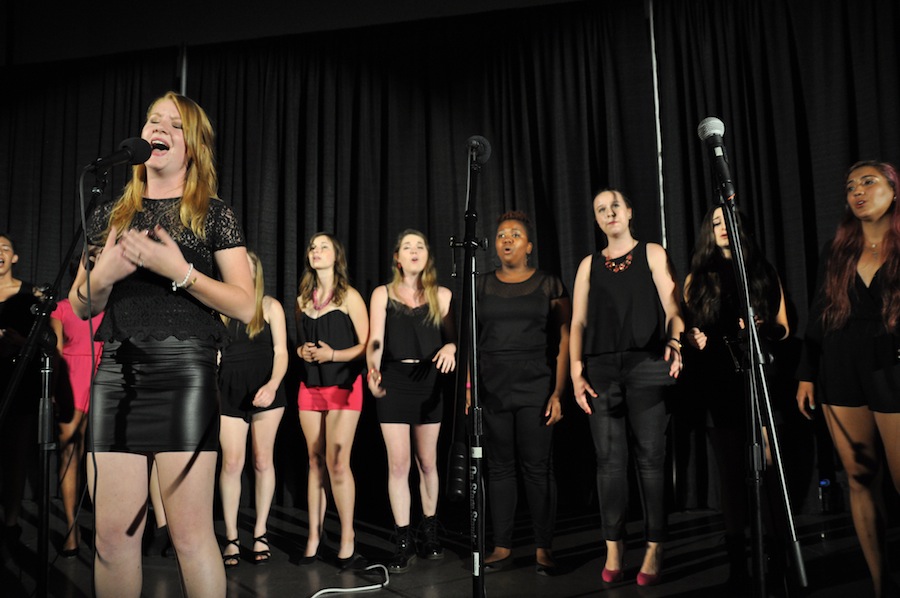
The Spokes previously performed at the LocalTones 2015. (JAY GELVEZON / AGGIE)

The Spokes to host a cappella concert this Friday

Get hella spoked, because HellaCappella is this Friday, April 1! And this is no April Fool’s joke. UC Davis’ all-female acapella group, The Spokes, will be hosting their biggest show of the year, HellaCappella, at 7:30 p.m. in the Mondavi Center.

The show has sold out for the past three years, so The Spokes are encouraging attendees to purchase tickets early. According to Anya Stewart, co-president of The Spokes and a fourth-year political science major, the show sells out because the Spokes invite incredibly talented groups from a variety of campuses to perform at HellaCappella. This year, groups from UC Davis, UC Berkeley, Stanford, UC Santa Cruz, University of Oregon and Oxford University will be performing.

“We try to bring diversity to our showcase every year; so this year we have a new group on the scene,” Stewart said. “We have invited Out of the Blue from Oxford to perform at HellaCappella. They are all-male, all-British and all-FAB, and we are so stoked (‘spoked’) to have them at the show!”

This will be the twelfth annual HellaCappella show, and Lynsie Mason, co-president of The Spokes and fourth year-animal science major, thinks it will be better than ever.

“I’m excited to put on our best show yet; every year, HellaCappella is more and more fun,” Mason said. “This particular group of girls works incredibly well together and I can’t wait to show the Davis community what we have been working so hard on this year.”

Emily Laskin, a third-year biosystems engineering major and treasurer of The Spokes, believes that HellaCappella will be amazing this year because of all the hard work the girls have put in.

“[W]e all love music and are willing to put a lot of work into sounding good,” Laskin said.

Over spring break, The Spokes went to the International Championship of Collegiate A Cappella (ICCAs) semifinals in Portland, Oregon. According to the ladies from The Spokes, it’s basically the competition from Pitch Perfect.

“It was fun to represent our school and be able to network outside of California with other college students that share a common passion,” Mason said.

This year was the first time The Spokes have ever made it to the semifinals, and even though they didn’t place, they had an incredible experience and learned a lot.

“The Spokes has taken our ICCAs experience and brought some new elements to our choreography, music and performing panache,” Stewart said. “Don’t worry, you’ll be able to see it all at HellaCappella 2016.”

Pre-sale tickets are $15 for students and are available on the Quad. Tickets can also be purchased at the door ($18 for students and $25 for non-students) as well as online. Doors open at 7 p.m.

For more information, check out the event page on Facebook or the Spoke’s website. So what are you waiting for? Get your tickets and get hella spoked! And stay tuned for the release of The Spokes’ new album, “23 Hours!”


WRITTEN BY: Sofie Bates – arts@theaggie.org

Instagram accounts every UC Davis student should follow

LUCY KNOWLES / AGGIE

Five Instagram accounts that will make your feed more interesting

Whether you’re a first-year or a graduating senior, here are some Instagram accounts that every UC Davis student should follow.

  1.   UC Davis Study Abroad: @ucdavisabroad

The UC Davis Study Abroad account consists of photos from students who have studied abroad with campus programs. Each photo captures a moment from students’ study abroad experiences while also featuring various cities from around the world. Whether you’re a student who’s interested in studying abroad or simply someone who enjoys traveling, @ucdavisabroad is sure to increase your wanderlust.

  1.   UC Davis Student Life: @ucdavis_studentlife

The UC Davis Student Life account shows peeks into the day in the life of a student. Different types of photos featured include yummy food, beautiful nature, animals around campus and students themselves. What makes @ucdavis_studentlife especially unique is that not all the posts are “typical” UC Davis photos — as you see about a dozen squirrels a day without even logging onto social media, might be a nice break.

  1. UC Davis Arboretum: @ucdavis_arboretum

The official UC Davis Arboretum and Public Garden account is a must-follow for all nature and plant lovers. With a plethora of photos showing bright flowers and trees, the account is sure to brighten up your feed every day. In addition, @ucdavis_arboretum also features photos of various events, such as monthly plant sales and the outdoor reading program.

  1.   UC Davis Aggies: @ucdavisaggies

The official UC Davis Athletics Instagram account includes videos of games, pictures featuring specific athletes, as well as final scores from certain matches. If you want to stay in touch with sporting events around campus, follow @ucdavisaggies and keep up to date with the best athletics on campus!

  1.   UC Davis: @ucdavis

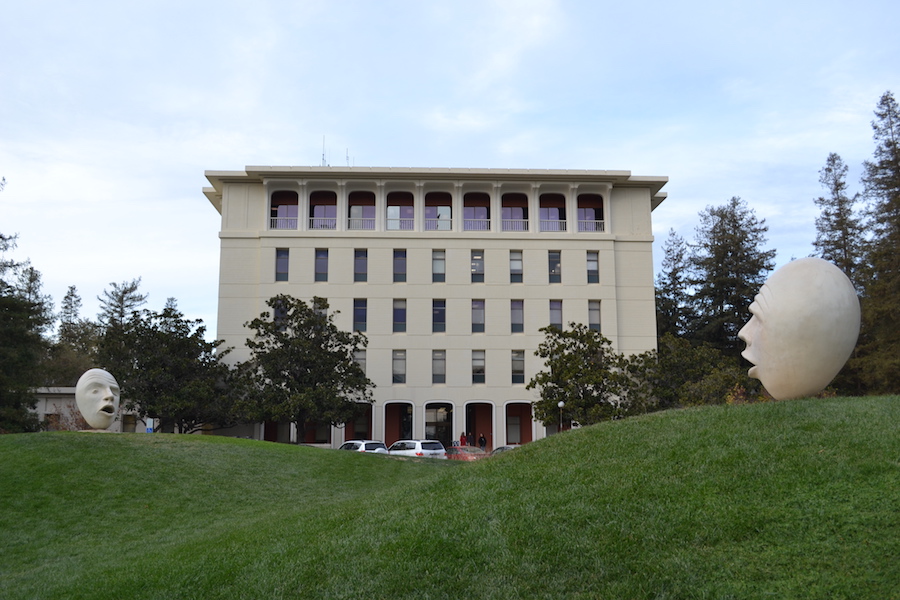
Last but not least is UC Davis’s official Instagram account. With over 25,000 followers and almost a thousand posts, the account’s pictures and videos showcase what the campus is all about. From some of UC Davis’s most popular aspects such as the Arboretum, the ASUCD Coffee House, the egg heads and water towers, @ucdavis has got it all. This is a great account for new students in particular since it gives a glimpse of what Davis is really like.

Written by: Jacqueline Chufeatures@theaggie.org

Chengdu Style opens in University Mall

0
NICKI PADAR / AGGIE
NICKI PADAR / AGGIE

Restaurant serves super-spicy traditional Sichuan cuisine

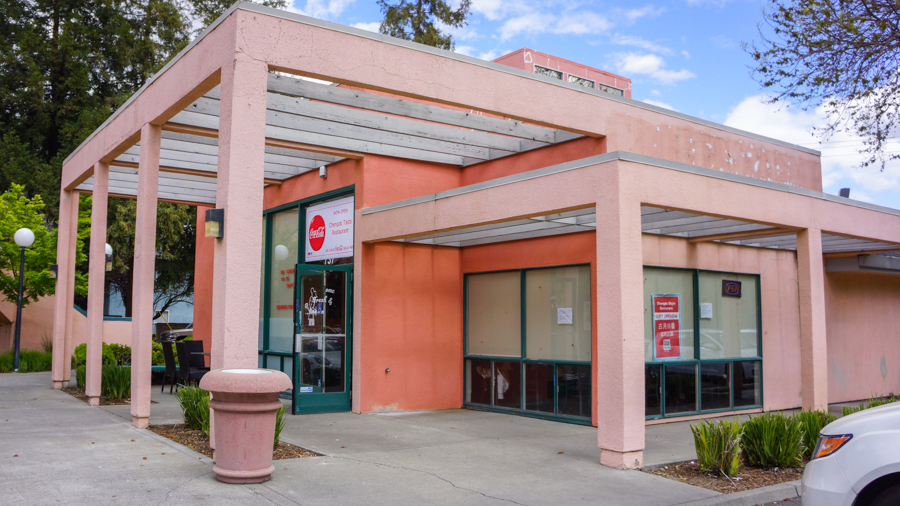
In early March, Chengdu Style opened its doors in the University Mall to serve authentic Chengdu food to the Davis community. The restaurant joins an already existing community of Chinese restaurants in Davis. Chengdu Style is located at 737 Russell Blvd., in the space formerly occupied by Lee’s Deli, and is open seven days a week from 11 a.m. to 3 p.m. and 5 to 9 p.m.

Owner April Hu opened the first Chengdu Style restaurant in Berkeley while she was studying mathematics and statistics at UC Berkeley. She explains that Chengdu Style is unique compared to other American Chinese restaurants; it aims to replicate traditional Chinese food rather than accommodate American tastes.

“More and more local people like real Chinese food. In the beginning, we mostly had international Chinese students, but it is very successful now in the community,” Hu said. “We at first didn’t hire enough employees and had a bunch of people waiting outside.”

The city of Chengdu is located in the Sichuan province of Southwestern China. Sichuan food is known for its spiciness, due to the use of chili oil and peppers. Ginger is also frequently used, and it is included in the flavorful mapo tofu available at Chengdu Style.

Shaokun Meng, a first-year undeclared international student from Guangxi, China, was grateful to have authentic Chinese food within walking distance of the dorms.

“I think this [restaurant] just won for its location, especially for students living in Segundo because it’s only on the other side of the street,” Meng said. “I went there every day since it opened, but I got a little sick of it now since it’s too greasy, even for me. But it’s definitely a good place for Chinese students to get together and people who want to have a taste for real Sichuan-style foods.”

UC Davis statistics graduate student Justin Wang was also very excited for Chengdu Style to open, noting that other local Chinese restaurants felt too Americanized compared to traditional Chinese food.

“I actually think this restaurant is a milestone for Davis,” Wang said. “Many of my peers are international students from China, and just seeing how excited they were about this place further solidified this view. There are a lot of Chinese international students at UC Davis, both undergrad and grad. I think, in general, they’re the ones who would feel most impacted by this restaurant coming to town.”

Wang also commented that some of the menu items might be too spicy for Americans, but thinks that everyone would enjoy the twice-cooked pork and toothpick lamb.

“Chinese students have told me that we are the best in Davis,” Hu said. “When they are eating in my restaurant, they feel like they are home in China.”

Written By: CAROLINE STAUDENRAUS – city@theaggie.org   

From full-time athlete to full-time student: The Untold Story

0
KATE SNOWDON / AGGIE

Each fall, hundreds of freshmen enter campus with the expectation of playing Division I (D1) athletics. Some will go on to live their dream of playing college sports, others will have prolific collegiate careers and even fewer will move on to compete at the professional level.

These tales of triumph are well documented by this newspaper and many others, but rarely do people focus on the athletes who don’t make it, a much larger portion of our student population. What happens to those athletes who sign a Letter of Intent and competed at the highest collegiate level, but for one reason or another are unable to finish out their college days with priority registration?

Like many other high school athletes, I once had D1 ambitions as well. I wanted what all aspiring college athletes wanted: access to the athlete-only gym, early pass times and most importantly, one of those backpacks that all the Intercollegiate Athletics (ICA) students get. The only thing standing in my way was a substantial lack of athletic talent, compounded by back-to-back shoulder surgeries that eventually forced me to settle for the life of a club sport athlete, or more commonly known, a NARP (non-athletic regular person).

For former athletes who start at the ICA level and then find themselves forced to adjust to life as a NARP, the transition can be far more challenging. I spoke to various D1 retirees who explained their transition away from college athletics and toward the life of a normal UC Davis student.

Second-year communication major Hannah Friel, who once wowed crowds in the Aggie Stadium as an attacker for the women’s lacrosse team, now plays club lacrosse and enjoys the extra time in her schedule since hanging up her cleats from the top level.

“When I got an offer, I was really excited because I loved [UC] Davis, regardless of athletics,” Friel explained. “I feel like if you commit to a school just based on a sport, there are so many unknown factors that might happen you might get injured or the coaching staff could change or some other unforeseeable factor could happen. And if you’re stuck in a school where you can’t play the sport you committed to, you have to think of your happiness outside of the sport.”

For athletes who are accustomed to spending the majority of their time each week dedicated to their sport, adjusting back to life without sports can be a major challenge. Second-year communication major Summer Stamates, who played defense for the women’s soccer team last season, explained her experience in transitioning away from soccer.

“Initially, it’s hard to redefine yourself as a non-athlete, but life without athletics opens up a whole new world of opportunities,” Stamates said. “Without soccer, I was able to join a sorority and expand networks with friends, internships and studying abroad which would have never been possible before.”

For many athletes like Stamates, the rigorous demands of practice schedules, team meetings, workouts and games can make sports feel more like a job. The constant demands placed on D1 athletes can burn them out and push many away from the game they once loved so passionately. And although all athletes are forced to stop competing at some point in their lives, those who stop in college often eventually return to enjoy their sport in different ways and at different levels.

“I’ve realized that soccer will always be a passion of mine and something that I enjoy doing,” Stamates said. “And even though I’m not playing to compete anymore, I can still get the thrill out of the game by just going out and kicking the ball around.”

Other athletes, such as third-year economics major Connor Ryan, an ex-water polo phenom and high school Offensive Player of the Year, found a need to compete at high levels almost instantly after retiring from the D1 level.

“I stopped playing because I was too much of a savage,” Ryan said. “So now I play at the club level and just stomp on fools.”

Ryan, who scored 64 goals last season for the UC Davis men’s club water polo team, has done just that, finishing both of the past the two seasons as a top scorer.

The ex-D1 athletes live among us. And apart from dominating the rest of the student population in intramural sports, you probably don’t recognize them around campus. They have climbed to the top of collegiate sports and transformed back to the life of a normal student, finding ways to replace the benefits and thrills of college athletics with some of the other countless opportunities offered around the UC Davis campus.

Written by George McConnell – sports@theaggie.org

New Quarter, New Sounds: Remixing Spring Quarter

0
James Blake at Coachella 2013 (JAMES BLAKE / FLICKR)

Five unique takes on already great sounds

In order to avoid unattainably high expectations, it is within all of our best interests to abandon the idea of “new quarter, new you.” However, thanks to the sunshiny beauty and upbeat environment that is Spring Quarter, the phrase “new quarter, new music” remains exceptionally applicable.

In fact, starting fresh has an appeal even musicians can’t withstand; genuinely well-done samples and remixes are, though a rarity, something everyone can enjoy. But of course, with every reworked sound comes the inevitable debate over which is better: the original or the remix. Unlike last quarter’s grades, however, the older, original versions aren’t necessarily something to be desperately forgotten. Better yet, let me save you the trouble (and the debate that might just push that teetering friendship over the edge) with a list of originals and samples that both happen to be worthy of your attention.

And with that, enjoy these remixes — and their similarly great originals.

  1. Original: “Show Me Love” by Hundred Waters

            Remix: “Show Me Love (feat. Chance the Rapper, Moses Sumney and Robin Hannibal ) [Skrillex Remix]” by Hundred Waters

Discovering stripped down a cappella tunes with perfectly harmonized vocals by bands that, frankly, don’t normally sing anything by the Italian definition of “without instruments,” is a more frequent occurrence than one would imagine. This track (along with Walk the Moon’s “Iscariot” and The Rescue’s “My Heart With You”) has been refreshed with the help of a few other musicians, including Skrillex, Chance the Rapper and Moses Sumney. It’s almost incomprehensible that this late night Unitrans track could somehow transform itself into something that will eventually cross over into a Picnic Day playlist. Yet somehow, it has.

  1.      Original: “Weight in Gold” by Gallant

Remix: “Weight in Gold — Ta-ku Remix” by Gallant, Ta-ku

Christopher Gallant’s smooth R&B synths and Sam Smith falsetto launched his single “Weight in Gold” to sudden acclaim. The song has become so frequently remixed that Gallant soon after released an entire EP worth of mixes. Ta-ku, the talented and underrated musician known for his artistic collaborations Songs To Break Up To and Songs To Make Up To, remasters Gallant’s single with an ease and nonchalance that can be attributed to the hushed vocals, emphasized percussion and that semi-frustrating delayed drop in the chorus. Nonetheless, it does exactly as it should. Ta-ku paints the song in stylistic overtones while maintaining the integrity of the original.

  1.      Original: “Youth” by Daughter

        Sampled Version: “Lonely Lullabies” by Kweku Collins

Best known for her softer rock sound backed by hushed vocals and haunting lyrics, “Youth” is one of Daughter’s most well-known songs. Less well-known and obvious, however,

is upcoming Chicago hip-hop artist Kweku Collins’ rendition of this track. By merely repeating the original’s introductory chords and being armed with a sound that resembles the rock/rap duo Aer, Collins should win many over with his Friends references and “sympathetic bars necessary for humid, rainy, lonely July nights,” according to an interview with Passion of the Weiss. His use of sampling in this track, combined with the ingenuity of his new single, “Death of a Salesman,” marks him high on the list of ones to watch out for.

  1.      Original: “Slow Motion” by PHOX

        Remix: “Slow Motion (Sylvan Esso Remix)” by PHOX, Sylvan Esso

The alternative, folk-influenced band PHOX manages to succeed in both incorporating an oboe solo in a track dominated by heavy drums and keyboard (and somehow not resulting in my laughter), and becoming the only other successful band to originate from Wisconsin — after Bon Iver’s Justin Vernon, that is. Though they have only released a single album, their live shows are abundant (see their NPR Tiny Desk concert here). The contrast of their sound and the sound of electro-pop duo Sylvan Esso is exactly what makes the remixed version so unexpectedly enjoyable. What makes it unique, however, is in its simplicity; Sylvan Esso breaks down the original’s catchy melody, only to piece it together again over the faster paced, abstract sounds that are so characteristic of their own style.

  1.      Original: “Retrograde” by James Blake

        Sampled Version: “Kaleidoscope Dope” by Matt Easton

James Blake’s eery introduction to “Retrograde,” a rhythm mimicked by humming and off-kilter synths, creates a sense of mystery and anxiety. Rapper Matt Easton manages to not only entirely flip the original’s tone, but also add some classy upright bass. His rendition of the repetitive humming, however, is not quite as cryptic as Blake had probably intended. Despite this, Easton’s ability to sample something as simple as a few bars of Blake’s masterful hums says a lot about the creativity put into making the old, once again, new.


If only it was this simple to read and arrange this week’s influx of syllabi. Alas, welcome to Spring Quarter.


WRITTEN BY: Ally Overbay – arts@theaggie.org

Residents cry foul, City forced to take action

ARIEL ROBBINS / AGGIE

Increase in turkey population concerns Davis residents

Turkeys have been seen crossing the street, moseying around town and resting on the UC Davis Quad. Some have even been known to adhere to traffic laws.

But now, turkeys have been labeled as an increasingly pesky problem. A steady rise in the turkey population over the last few years has led to more turkeys dwelling in human-occupied areas.

John McNerney, a wildlife resource specialist for the City of Davis, has been fielding calls on the issue for years now, talking with everyone from homeowners to concerned businesses.

“The local wild turkey population has been on a steady increase since they were first observed in town in 2006,” McNerney said. “Since then, we’ve seen the population within the city limits increase by around eight to 10 birds per year.”

Several factors have contributed to population increase, including reproductive success and immigration from outside areas.

“Turkeys are doing quite well, not just in Northern California, but throughout many parts of the U.S.,” said Roger Baldwin, a UC Davis professor in the wildlife, fish and conservation biology department. “Mortality from hunting practices currently used is far exceeded by reproductive output.”

The turkey population has grown significantly due to limited control by traditional hunting practices. Furthermore, the feeding of these turkeys has notably changed the dynamic between turkeys and city life.

“Direct feeding of wildlife, including turkeys, can encourage wildlife to move into human-populated areas. It also negates that fear that wildlife have of humans,” Baldwin said.

Feeding wildlife is not only discouraged, it is also illegal, as it assists the growth of the turkey population and causes the birds to become less nomadic. This is why residents are now seeing turkeys more concentrated in neighborhoods and densely populated areas. However, Baldwin affirms that unintentional feeding, rather than intentional feeding, likely has a greater impact on the influx of turkeys seen downtown, in neighborhoods and on the UC Davis campus.

“There is an abundance of food for many wildlife species within city limits,” Baldwin said. “All [the turkeys] need to do is overcome their fear of humans, and they can exploit these food sources.”

The increased presence of turkeys has led to a widespread rumor that hunting turkeys within city limits will be made legal. However, McNerney quashed this idea, reporting that the City of Davis is looking into other ways to reduce the levels of turkeys seen on Davis streets.

“The rumor likely came from a recent KCRA news report in which I was misstated,” McNerney said. “The city has been researching multiple management options to control the growth of the population. The other management options that the city is currently researching include mass capture and relocation, cull or sterilization.”

It is, as of yet, unknown which course the city will take. The management options mentioned by McNerney are all effective methods, but they take time and money, and there is no guarantee that this will control the turkey population.

However, Alan Krakauer, assistant project scientist and lecturer in the department of evolution and ecology at UC Davis, stated that this population increase could just be part of a larger cycle.

“While turkey populations have increased over the long term, they also exhibit up and down cycles, so it could be that we won’t always see the population level we have now,” Krakauer said.

Krakauer also suggested that residents try to take an interest in the birds for reasons outside of hunting or controlling their population.

While I understand the potential impacts to humans and to the environment of large turkey populations, part of me is thrilled to have turkeys doing so well,” Krakauer said. “They have incredibly interesting social lives and spectacular mating displays and it is a real treat to get to see this in our own backyard.”

According to McNerney, the city discourages residents from feeding wild turkeys and reminds residents to limit unintentional feeding through bird feeders, garbage cans and other open food sources. Without these food sources, turkeys will resume their naturally nomadic lifestyle and reduce negative impacts to the community. For more information about the turkeys in Davis, visit the City of Davis website.

Written By: Samantha Solomon – city@theaggie.org

UC Davis to offer record financial aid amount for 2016 Summer Sessions

VENOOS MOSHAYEDI / AGGIE

$10.5 million in grant aid to be available to students with need

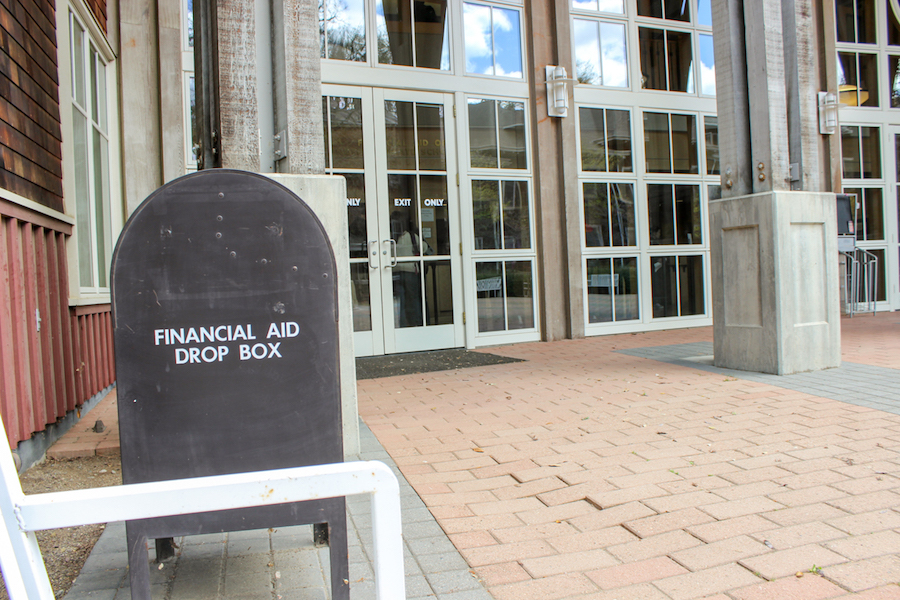
UC Davis will be offering a record $10.5 million in total grant aid to students with financial need for both of this year’s Summer Sessions.

Provost Ralph Hexter approved an additional $1.9 million in aid from the provost budget for the Summer Sessions, bringing the total available to students to $10.5 million.

“What the provost is guaranteeing, and this is first time that we’ve had this, they are guaranteeing that any student who is eligible for aid and is needy, will receive financial aid in the summer,” said Deborah Agee, director of UC Davis financial aid and scholarships.

According to Agee, financial aid was previously distributed on a first-come, first-serve basis, but with the additional funds, all students eligible for aid will receive financial assistance.

“In the past, what would happen is we had this limited amount of funds […] Those funds would get used up pretty quickly maybe within two days,” Agee said. “If we use up that [1.9 million], we will receive additional money depending on the amount of need our students show.”

This funding is an effort on Hexter’s part to see students graduate on time and spend less on their education. Hexter’s hopes are reflected in student opinions.

“I just kind of wanted to get ahead in my classes and not have to worry about them during the school year because a couple of them are kind of trickier,” said Sarina Rodriguez, a second-year neurobiology, physiology and behavior major who will be attending classes in the summer. “I probably wouldn’t do Summer Session if there was no financial aid available, to be honest. It would be too much.”

For Vrinda Gupta, a first-year undeclared student, a lack of financial aid is a deciding factor as to whether or not to attend Summer Session.

“Not having financial aid can be a problem too,” Gupta said. “I definitely considered it. I definitely made sure to go through the process, talk to my parents about it. […] I have a couple scholarships. But they are not a significant amount of money.”

Even though Gupta isn’t receiving any aid from the university, she still thinks that the benefits of taking Summer Session are greater than the monetary costs. For Gupta, summer session allows her to explore her studies without sacrificing time during the regular school year.

“I’m planning on taking Spanish and cultural anthropology because I want to switch to the College of Letters and Science,” Gupta said. “I want to have more experience with courses in the humanities. So I felt like it would be best to get those over with before sophomore year rolls around.”
To qualify for Summer Session financial aid, students must demonstrate financial need, be registered for at least six units across both sessions and meet other general financial aid requirements.

Written by: Kenton Goldsby – campus@theaggie.org

Fire Katehi protest continues through break

ANGELICA DAYANDANTE / AGGIE

Update on the occupation of Mrak Hall, Fire Katehi protest

The end of Winter Quarter did not stop those involved in #FireKatehi from continuing the occupation in Mrak Hall throughout spring break. Since March 11, protesters have been taking turns occupying the fifth floor to pressure UC Davis Chancellor Linda P. B. Katehi to resign.

Over the break, between 5 and 12 protesters held their ground in Mrak at a time, while waiting to regroup and move forward with further plans for the new quarter.

“We have been strategizing ways to continue to put pressure on [Katehi] and the university, […] trying to get her removed,” said protester and third-year physics department graduate student Connor Gorman. “The details of that — we’re still planning.”

Although #FireKatehi is the rallying cry behind the protest, occupiers agree that the protest is also a part of a larger cause regarding a shift toward for-profit education.

“This is partially about Katehi and her various scandals,” Gorman said. “There’s also the larger structural problem associated with universities […] being moved more toward a corporate model that prioritizes profit […] over students.”

According to Gorman, the recent controversy over Katehi’s acceptance of the DeVry Education Group board position simply served as a catalyst for the movement.

“[Katehi] has a history of ignoring the student body,” said protester and fourth-year psychology major Becca Mapa. “[This protest is] symbolic of what is going on in public institutions in the U.S., [which are] moving towards this for-profit model.”

The protesters’ end goal is to begin the democratization of the university structure by ensuring the termination of Katehi as chancellor.

“[We want to give] students a voice on who is going to be their chancellor [and] ensure [that] education and research [are] actually at the center, rather than generating profit,” Mapa said.

On Tuesday, March 15, Katehi made a short appearance on the fifth floor of Mrak, but the meeting — which lasted a few minutes — did not satisfy the occupiers’ needs.

“She was only here […] for three minutes and chuckled at our comments,” said protester and UC Davis alumni Anthony Beck. “It didn’t seem like she was really willing to meet with us here when we were willing to meet, but [she] wanted to set a meeting with her people, on her terms, at her place.”

Although they are ready and willing to meet with Katehi on the fifth floor of Mrak at anytime, most of the students involved dislike the idea of meeting with Katehi in this environment due to the power dynamics involved with an official meeting.

“In her own environment, [she] has more power because she’s the chancellor, and we’re just the students,” Gorman said. “[However], she can always come and talk to us right here [in Mrak Hall].”

To combat the long hours spent in Mrak over the week-long break, the protesters organized small-scale events to encourage those in Davis for break to join the occupation. Some of these events featured a potluck, game night, movie viewing and open mic night.

“Those events are really there just to keep us sane,” Gorman said. “Being cooped up all day […] can take a very physical and academic toll [on people]. In general, some people think that protestors do this for fun, but really we’re doing this because it’s an issue we feel passionate about.”

Mapa, who makes an hour-long commute from home to take her turn in the occupation, noted that the protesters have sacrificed a lot of time that could have been spent at home for break in order to help the cause.

“Personally, I have a child [at home], but I really think this [cause] is important,” Mapa said. “Not only am I putting my time in, I’m also putting in money just for gas to come out here.”

It has been over two weeks since the occupation started. Despite threats of expulsion and a far-from-relaxing spring break, the protesters ensure the occupation will continue until their demands are met.

“I don’t think we need to leave anytime,” Beck said. “If our demands are not responded to […] we will be talking about the appropriate way to escalate [the protest].”

The Fire Katehi protesters have received over 30 letters of support from various organizations within the UC Davis community, as well as reports from staff and faculty who stand in solidarity. With this serving as further motivation, they plan to continue their occupation of Mrak Hall for as long as it takes to make change happen.

“If Katehi doesn’t want to leave, neither will we,” Beck said.

Correction (9:58 a.m.): There were between 5 and 12 occupiers in Mrak Hall at a time during Spring Break, not 50 to 60 protestors as the article originally stated. The article has been edited to fix this inaccuracy. 

Written by: Allyson Tsuji – features@theaggie.org

Sacramento Food Film Festival comes to theaters near you

MARITA MADELONI / COURTESY

Fifth annual Food Film Festival returns offers education and entertainment

The Sacramento Food Film Festival (SFFF) will return for a fifth year from April 7 to 16 at a variety of venues, sponsored by different restaurants and organizations in the Sacramento area. The annual festival is held to help educate the community about food systems, with themed meals served to compliment food related films.

The whole goal was to see documentaries and to teach myself about where my food was coming from,” said Catherine Enfield, the founder of SFFF.

Enfield, a food blogger in the Sacramento region, started the festival in 2011 to screen documentaries that are not typically shown in the area.

What began as a purely educational idea has now bloomed into a ten-day film festival, which was donated and taken over by the Food Literacy Center (FLC) last year.

Enfield decided to hand over the festival to Amber Stott, Founding Executive Director of the FLC. Stott had more volunteers and resources to help the festival continue in its growth while also raising money for FLC.

Stott aims to make learning about food fun for kids and to encourage healthy eating among lower-income students. The FLC educates kids about eating vegetables while also teaching them to cook.

“We apply this same philosophy to the food film festival by inviting folks to come out to a really fun event, where we pair some of the best chefs in Sacramento with various documentary films,” Stott said. “We hope to bring people together to learn something about different [food-related] issues. Hopefully they walk about a little smarter and motivated to help make a change.”

Even after FLC took over the festival, its original goals have stayed constant: to help educate the community about the complexities in food systems. Now, the event also helps fund the FLC as its biggest fundraiser.

The FLC benefits students in eight schools across the Sacramento City Unified School District, serving around 800 students weekly. The non-profit teaches students lessons related to nutrition, reading recipes and cooking.

“We make education fun in our classroom so it seemed like a really good fit for us to be involved [with the SFFF], since education is a really strong mission theme for us. We want our community to be just as educated as the children we teach in our classrooms,” said FLC Community Relations Officer Melissa Granville.

The theme of this year’s festival is global food culture. The premiere night features several short films, each paired with a chef and food that compliments the documentary. According to Granville, a film about Thailand would be followed by food inspired by Thai culture.

Selland’s Market Cafe, a family restaurant in the Sacramento region, hosts the second event of the festival: the family movie night. This year, Cloudy with a Chance of Meatballs 2 will be shown, accompanied by a spaghetti dinner.

“We are a bit different since we offer something geared more toward families. Some of the other events and restaurants are more of independent films and food festival films. It is a family event so it was one of the few events that you can take your kids to,” said Sheryl Trapani, marketing director of Selland’s Market Cafe.

All of the festival’s proceeds will go toward benefiting FLC’s programs and mission. For more information regarding tickets, schedules, locations, prices and films, visit the Sacramento Food Film Festival site.

Written By: BIANCA ANTUNEZ – city@theaggie.org

Shuyi Qi Cartoon: Trumped

0
By Shuyi Qi
By Shuyi Qi