55.5 F
Davis

Davis, California

Tuesday, December 23, 2025
Home Blog Page 736

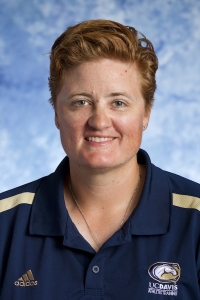
Women in athletics: Julieta Guzman

0
UC DAVIS ATHLETICS
UC DAVIS ATHLETICS

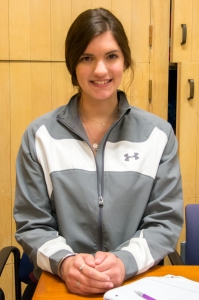
Football is one of the most watched sports at UC Davis, drawing in thousands of attendees every fall. It is also a high-risk collision sport that requires a team of four athletic trainers, two physicians and 10 sports medicine interns to keep the 100 student athletes active and healthy. Leading this team is Julieta Guzman, the UC Davis football team’s head athletic trainer.

“Julieta is the person pretty much in charge with football,” said Tina Tubbs, director of sports medicine at UC Davis and one of the four athletic trainers for football. “She’s highly skilled […] in athletic training, trauma and knowing exactly what to navigate [when an injury happens].”

There are no off days during football season. On weekdays, the players are in practice and those who need rehab receive treatment from Guzman and her team. On Saturday, the stadium lights are on and the medical team is on the sidelines of the game, ready to respond to any injuries and observing the players for potential health problems. Sunday is recovery day, and Guzman’s team helps players recuperate from the previous game.

Aside from her duties as an athletic trainer, Guzman is also the liaison who facilitates communication between all the entities within the football team. She updates the coaching staff about the progression of recovering athletes, discusses referrals for MRI’s and ultrasounds with the head team physician, Dr. Melita Moore, and ensures that student athletes make their doctor’s appointments on time. In addition, she has to document every injury and treatment in a medical software, an important task that protects the university from a liability standpoint and provides athletic trainers detailed information about an athlete’s medical history.

“It’s a big load,” Guzman said.

Guzman is well-qualified for the job, having completed a graduate assistantship at Stanford University, where she treated the track and field and football teams. She also worked as an assistant athletic trainer for the UC Berkeley football team. Ron Gould, formerly in charge of running backs at UC Berkeley and the current head coach of UC Davis football, was so impressed by her work during their time at UC Berkeley that he sent his running backs to be treated specifically by her.

“The fact that he entrusted me with those high-profile athletes [and with getting] them back […] to where they need to be, because their body is their investment going forward into the National Football League […] he must have really respected me and thought of me in high regard,” Guzman said.

It was through this trust and respect that Guzman found herself working for the Aggies. When the position of head athletic trainer for football at UC Davis opened up, Gould, who by then was the head coach for UC Davis football, offered her the position. She accepted it, and has been here ever since.

Transitioning from UC Berkeley to UC Davis was not without its challenges, and Guzman had to find ways to work around a lack of certain facilities and resources. Although equipment like underwater treadmills are not available at UC Davis, she used her creativity to come up with alternative programs that utilized the resources at hand, such as Hickey Pool and Aggie Stadium. She has also learned how to fabricate various splints and casts, a skill gained from observing techniques that physical therapists, casting technicians, surgeons and other health professionals use. The splints that she makes are protective but also functional, allowing the athlete to continue to practice while wearing them.

“[The difference in facility resources] forces me to be a better athletic trainer and get creative and use the resources I have,” Guzman said.

Since rehabilitation is gradual, it often takes months from the time of injury to full recovery. In between, the athlete makes daily trips to the athletic trainer, who plans out the steps necessary to get the athlete back on the field.

Russell Reeder, a junior linebacker who entered the football program the same time as Guzman in 2013, has been going through rehabilitation with her on a daily basis for the past twelve weeks.

“Getting to know her personally, she is really cool and understanding. [The rehabilitation] has been really helpful,” Reeder said. “Looking back, it’s great how far my recovery has come […] We really don’t give her enough credit.”

As with many others working in the sports medicine field, there is a certain amount of passion that drives Guzman in her work. Every treatment that she gives and every decision she makes is based off years of being involved in football both as an athletic trainer and as a fan of the game. The preparation that goes into every Saturday night game, the camaraderie that the players develop and the high stakes of every game inspire her.

“To take an operation as big as football and put it out there every Saturday and watch these guys just have a great time and have fun, to me it’s the most exciting thing to be a part of,” Guzman said.

Written by Julia Wu – sports@theaggie.org
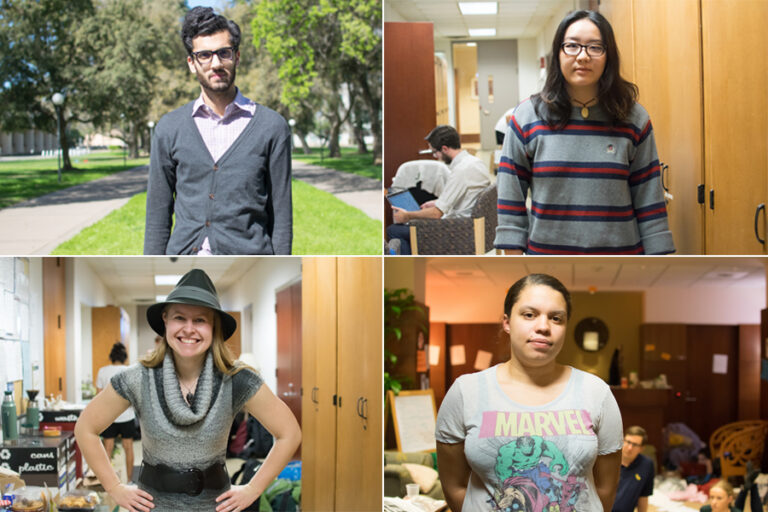
The Faces of #FireKatehi

BRIAN LANDRY / AGGIE

Student activists occupying 5th floor of Mrak speak out

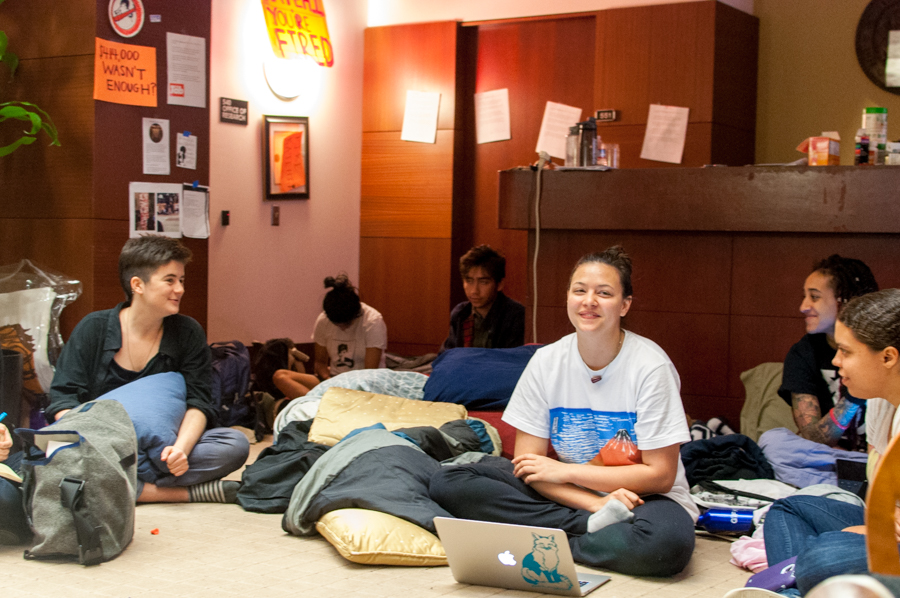
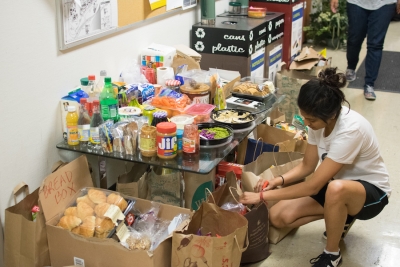
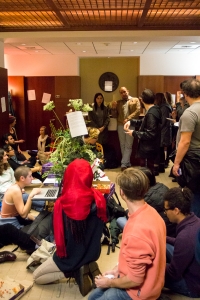
It’s mid-afternoon on Thursday, March 17, which means it’s been seven days since students involved in the Fire Katehi protest took up residence on the 5th floor of Mrak Hall. Blankets, pillows and backpacks are strewn about, and out in the hallway stands a small table laden with snacks donated by supporters. There’s a gentle buzz that hums throughout as people sit against the walls, study for finals or talk and laugh amongst themselves. The protesters welcome new recruits and have tried their best to make the small space welcoming for anyone wanting to join the movement.

In only a week, they’ve formed a community — a community calling for justice through the resignation of UC Davis Chancellor Linda P.B. Katehi. It was revealed in February that, without approval by the University of California, Katehi has been a member on various boards, such as DeVry Education Group during her time as chancellor. She has also been a member of John Wiley & Sons, a board position approved and renewed annually by the University.

Not only can these board positions be construed as a conflict of interest, they also earned Katehi an estimated $490,000 over her time in the positions. Considering she earns $424,360 in annual salary as chancellor, many students, faculty and community members have questioned Katehi’s competence and commitment as the university’s chancellor.

“The sense of community has been so amazing,” said Kyla Burke, a fifth-year environmental science and management major and Mrak Hall occupier.“The people who I’ve been here with for all this time and the people who support us are incredible. I’m passionate about this issue, I want change and I think what’s happening at our university is wrong, but I’m also inspired by what I’ve seen here with the students and their dedication.”

Several of Burke’s peers echoed her sentiments, citing the surrounding group of people as one of the most rewarding aspects of an otherwise challenging protest. The community of protesters is both unified and diverse; while they all believe that Katehi should be fired as chancellor, each student has their own motivations for participating in the movement.

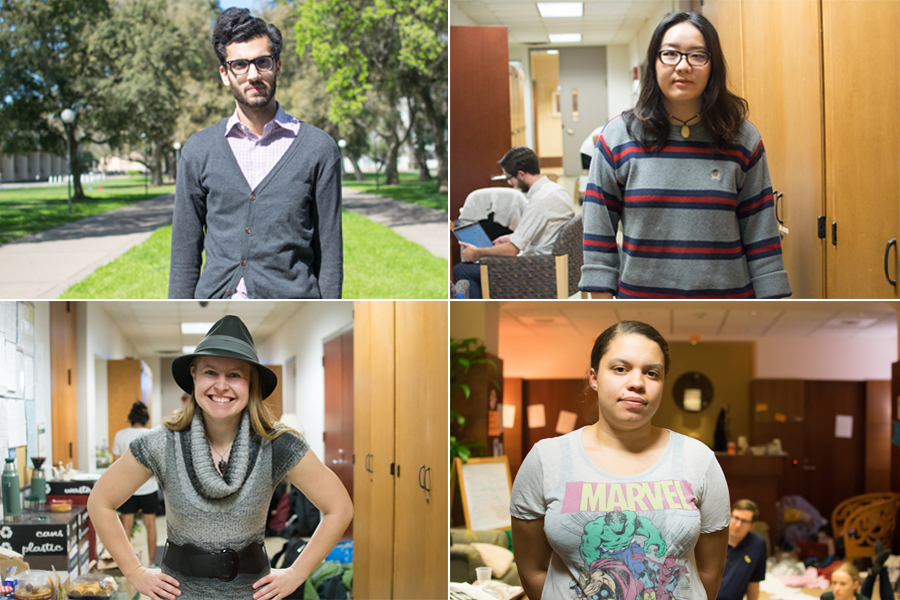
Learn more about some of the faces and voices of #FireKatehi below.

rehaan_jahangihir_firekatehi_fe_Landry2Faces of #FireKatehi: Rehaan Jahanghir

Fourth-year economics major Rehaan Jahanghir first arrived at UC Davis as an idealist — eager to engage in research and embrace the opportunities he’d been given. Having over four years in Davis now under his belt, he believes that the university administration has failed to fully support him and his classmates in their academic endeavors.

“I really did and do believe [that] public education [is] a right. It’s something many of our families make sacrifices for, including members of my own family,” Jahanghir said. “More than anything, this particular infraction has just been the high-water mark for the pattern of behavior from our chancellor. She has demonstrated that her priorities lie in profitability, in interests outside of the well-being of the students, faculty and staff here.”

According to Jahanghir, if students or faculty violated the rules and regulations that Katehi has, they would be dismissed from the university without question, or even sued. He hopes for greater accountability from administration, as well as committed university officials for his generation and beyond.

“I don’t think anybody who goes here should think that their administration — the people who manage your livelihood at the university — should be above the law,” Jahanghir said.

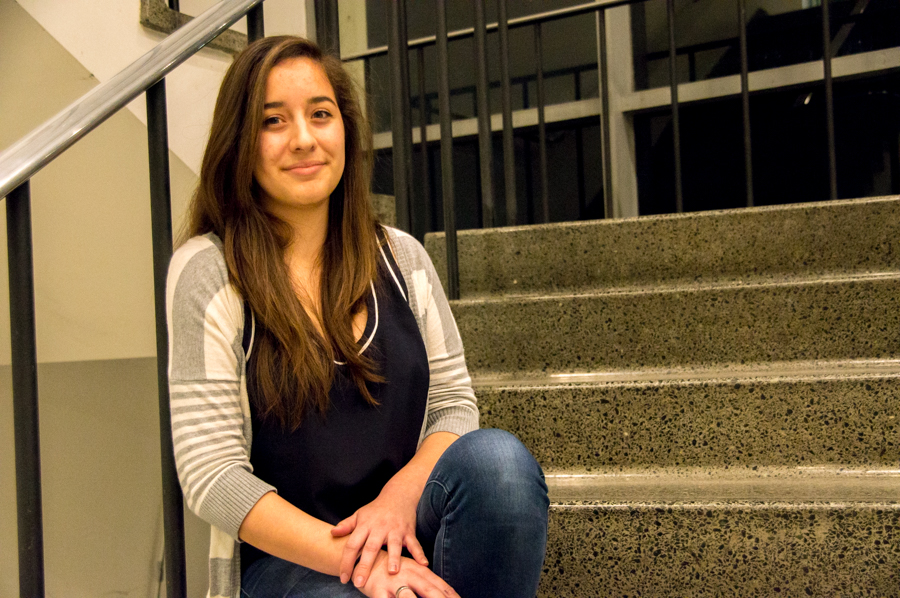
kyla_burke_firekatehi_fe_Landry3Faces of #FireKatehi: Kyla Burke

Fifth-year environmental science and management major Kyla Burke has years of experience in activism, having run various demonstrations with her on-campus group Davis Stands with Ferguson, a group that stands in solidarity with the Black Lives Matter movement and aims to combat anti-blackness in the community and the U.S.

She has recognized and formed connections with other involved individuals through her activism. On another note, Burke’s five years at the university have given grave insight into how Katehi responds to student and community concerns.

“Personally, I want Katehi to be fired because her involvement with Devry [Education Group] and Wiley & Sons are examples of her corruption,” Burke said. “Also, the pepper-spray incident happened in my first year here. I thought she should have been fired then, and since then, there has been a history of her messing up in ways that really affect students.”

Despite her extensive experience with activism, Burke said the sudden call to action and its length thus far has taken a toll on her mental health and academics. During Week 10, Burke mapped out a schedule to study for her final exams; however, that schedule went askew when the occupation gained momentum on Friday, March 11. Burke leaves the 5th floor of Mrak around or 2 or 3 a.m. every night to find a few hours of rest before another day of occupation.

“I wish we didn’t have to spend our time doing this during finals,” Burke said. “Students shouldn’t have to go to these kinds of extremes to get accountability within their university. But we do, and it’s been a struggle for everyone to find the time to do that. It’s draining to do this kind of work, but people are so dedicated because they want to see change.”

lorraine_ye_firekatehi_fe_Landry4Faces of #FireKatehi: Lorraine Ye

Fourth-year Chinese and linguistics double major Lorraine Ye believes the protest is an opportunity for her to advocate and speak up against inconsistencies in the administration’s handling of criminal activity and other events.

“I intend to be a fifth-year and that’s why I care. I know a lot of my peers are thinking, ‘I’m a senior, I don’t have to worry about this,’” Ye said. “For me it’s a very tangible reality that I might face another year under this ridiculous chancellor and see all of these hate crimes [occur.]’

Ye was most influenced by a Black UC Davis student’s account of racial harassment while riding Unitrans. In his Youtube video describing the incident, the victim noted that since he was Christian, he had prayed someone would stand up for him. Ye, who also identifies as a Christian, was so moved by his statement that she felt inspired to stand with and for him in solidarity by participating in the protest.

tricia_bohls_firekatehi_fe_Landry5Faces of #FireKatehi: Tricia Bohls

While first-year PhD student in entomology Tricia Bohls has been frustrated with university administration behaviors since her undergraduate days in the Midwest, she said this is the first time she’s seen a such a large group of people rally behind a movement.

“I’ve never been a part of a protest this large or intense. Some of it’s exciting, but some of it can be nerve-wracking as well,” Bohls said. “I was here Sunday night but also ended up leaving that night because administration brought up the threat of suspension, and then it was intimidatingly surreal to be on the phone with a lawyer at 11 p.m. on a Sunday night. I’ve never had to get legal counsel before.”

Still, Bohls feels comforted by those she has met through activism and continues to participate in-part because of the relationships she has formed within the student body. She views the experience as overwhelmingly positive, especially as a unifying movement.

“It’s drawn together so many unique people that I never would have met otherwise,” Bohls said. “I still don’t know all of the people here, but I can go up to someone and introduce myself, and we already have something in common in our goals. Something we can bond over. I see that as being really beautiful.”

Written by: Anjali Bhat — features@theaggie.org

Correction Note: An earlier version of this article stated that Chancellor Katehi served chair positions on various boards. She serves as only a member, and her position on the John Wiley & Sons board is approved and renewed annually. 

Mrak occupiers continue sit-in of Chancellor’s Office

JAY GELVEZON / AGGIE

Occupiers reach day six of occupation

UC Davis students occupying the Office of the Chancellor on Mrak Hall’s fifth floor have reached day six of their sit-in since beginning their occupation last Friday as part of the Fire Katehi protest.

“For the most part, the atmosphere has been really optimistic. People are really tired; it’s finals week, and when we aren’t talking about next steps or strategies, we are studying for our finals,” said Elly Oltersdorf, a third-year history major and Mrak Hall occupier. “People have been incredibly supportive of each other both inside and outside of the space.”

The occupiers, who have been rotating in and out of the chancellor’s office with food and supplies brought in by supporters, posted several posters across the office walls calling for Katehi’s resignation over her controversial moonlighting activities. Posters included phrases such as “$414,000 not enough?” and “Katehi. The Zodiac Killer,” as well as a cut-out of the chancellor covered in resignation forms.

“People have known for a long time that the chancellor doesn’t have the best intentions for students,” Oltersdorf said. “The instances of moonlighting just spotlighted her corruption.”

Additional issues the occupiers raised in a statement include Katehi’s alleged failure to address anti-Blackness and Islamophobia on campus, as well as increasing police presence at the university.

“The type of leadership that Katehi demonstrates is just so far removed from the student voice that students lose a sense of the fact that they have a say in how this university runs and how the administration behaves,” Oltersdorf said. “By taking up space, we are trying to take back that right. If students aren’t given a voice, we will make our voices heard and force the administration to listen, whatever that takes. Even if that means sitting in the building they work in for one week or two weeks or three weeks. We refuse to be silent.”

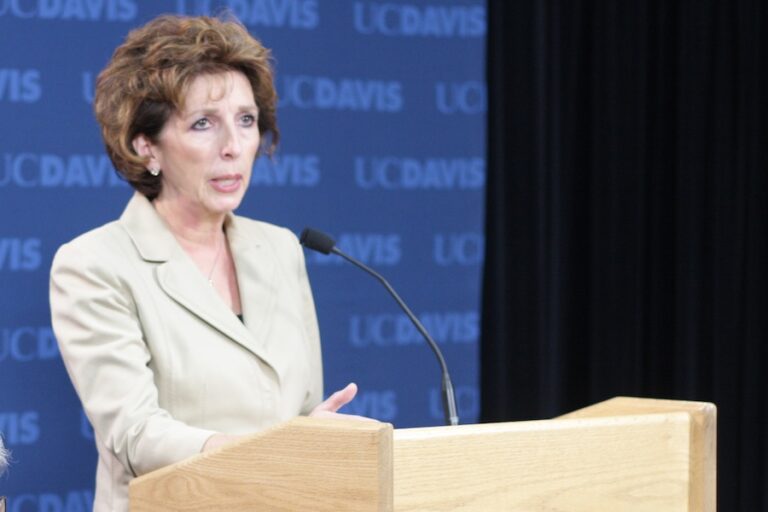
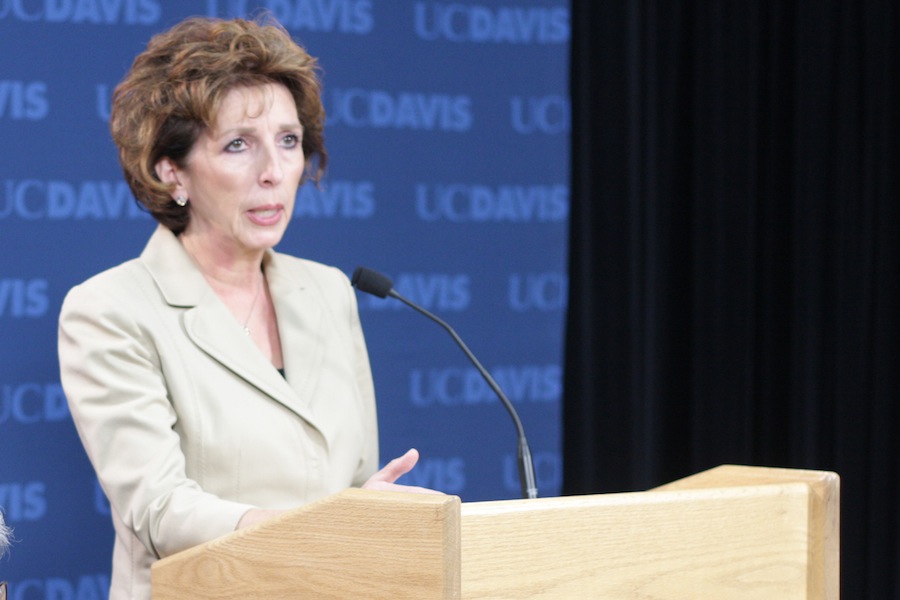
On Tuesday, March 15, Katehi spoke to the demonstrators after five days of their occupation. The meeting resulted in an approximate five-minute talk where Katehi remained tight-lipped on several questions, deferring to other faculty members for answers.

BRIAN LANDRY / AGGIE

“I’m here obviously to listen to your concerns. You have a number of issues about the university and I wanted to hear your concerns about the institution. I’m here to have that conversation,” Katehi replied to a question asking if she was going to resign.

The chancellor, along with several other administrators, attempted to arrange a more formal meeting with the group to voice their concerns.

“I’ll tell you one thing. Of all those lists of issues you have outlined, a lot of what has said is totally incorrect and untrue. If you want to sit down and have a discussion and take each one of those, I’m willing to do that,” Katehi said. “I will bring my team because these issues, I’m not the only person as a leader of this institution that makes decisions. There is a team of us that make decisions together […] I will get my team together and have a discussion with you about what is untrue about the things that you mentioned and the issues of privatization and defining it and talking about it that is happening to this institution.”

According to Oltersdorf, many of the occupiers were frustrated with Katehi’s short response.

“Chancellor Katehi is not in touch with the students. She has no interest in speaking to them about their concerns or making changes that students are demanding right now,” Oltersdorf said. “It was honestly really frustrating for us to have been there for five days, and she couldn’t stay in the room for five minutes before she made it clear that she had better things to do than speak to the students of the university.”

Several university organizations have voiced their support for the occupiers in statements, including ASUCD, the Davis Faculty Association, UC Davis alumni and UAW 2865, the UC student workers union. In support of the chancellor, administrators such as UC Davis’ Provost and several college deans also released a statement backing Katehi as a university leader.

Written by: Jason Pham – campus@theaggie.org

Photo of the Week: 3/16/2016

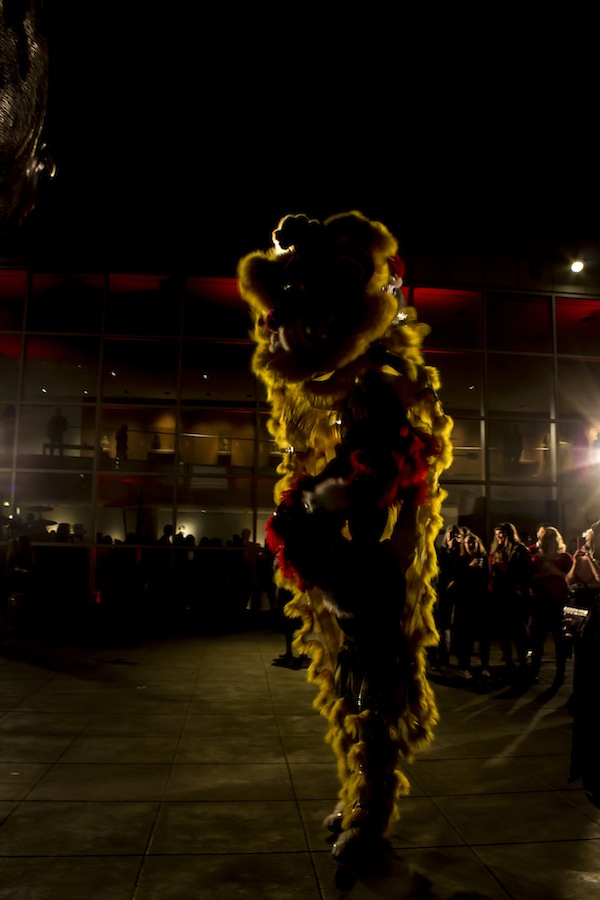
UCD's Golden Turtle Lion Dance team kicks off a Chinese New Year celebration. (DIANA LI / AGGIE)
UCD’s Golden Turtle Lion Dance team kicks off a Lunar New Year celebration. (DIANA LI / AGGIE)

Racking up the damage done by the 2015 methane leak

0
DR. STEPHEN CONLEY / COURTESY

Aliso Canyon gas storage facility leak secured on Feb. 18

Since Oct. 23, the Porter Ranch community in the San Fernando Valley has been the victim of the methane leak at the Aliso Canyon gas storage facility — one that was said to be discovered in a well 3,000 feet underground. While the cause of it is still unknown, the leak persisted for months and was secured on Feb. 18.

“It was the largest point source in the U.S.,” said Dr. Stephen Conley, pilot and UC Davis project scientist. “Back in November, there was no news coverage of the leak because nobody had any clue how large it was. After our first flight of November, that all changed.”

During his early November flight, Conley completed the first measurement of methane in the area surrounding the leak.

It wasn’t until Feb. 11 that the Southern California Gas Co. announced that the leak was temporarily controlled. Even though some progress was made, an entire week passed until the leak was permanently sealed through the use of heavy fluids and thick cement.

Conley remains optimistic regarding the recent actions to stop the leak.

“The leak totaled five billion cubic feet — there were still another 80 billion cubic feet of gas in the reservoir that didn’t leak,” Conley said.

According to Phillip Tran, a UC Davis alumni in Environmental Policy Analysis and Planning, the leak was just as damaging as the BP oil spill in 2010.

“A capping on the leak is definitely helpful,” Tran said. “This leak is one of many causes for future problems associated with global warming, but so too are the millions of other pollutant sources.”

Sixteen weeks of methane being released into the environment passed before any action was taken.

“The fact that this leak had the same 20-year climate impact as burning a billion gallons of gasoline is alarming,” Tran said.

Methane is the main component of natural gas; because of its hydrocarbon structure, leaks can only be detected when methane is burned . Methane is a greenhouse gas that is 25 times more efficient at trapping heat in Earth’s atmosphere than carbon dioxide.

This spells bad news for the environment and climate. The 16-week leak released an estimated 107,000 tons of methane into the global community. As of late February, the leak is roughly equivalent to 1,666,737 passenger vehicles being driven for one year, or even 2,837,634 tons of waste sent to a landfill.

The chemical and environmental effects have had serious ramifications for residents of the Porter Ranch community. In high enough concentrations, methane can occupy the same place as oxygen in blood cells. This methane exposure results in headaches, nausea, vomiting, dizziness, weakness and loss of coordination, all of which residents have experienced as a result of the leak.

More than 2,000 residents have evacuated their homes and two schools in the Los Angeles School District have closed. In addition, gas has been seeping into homes in the area, causing decreases in resale value due to safety concerns.

Now that the leak has been contained, the concern is now how to prevent major incidents like this from happening again. The leak has led to new emergency regulations for California’s Division of Oil, Gas & Geothermal Resources. The new regulations will address inspections and the need for risk management plans.

“Here’s the biggest lesson: cheap energy ain’t cheap,” Conley said. “The well that blew out was 61 years old. If we want to stop leaks like this, we need more maintenance [and] more inspections to upgrade the infrastructure. That costs money, and payers typically aren’t excited about paying higher rates.”

Active environmentalists like Tran hope that the leak will prompt changes in how the community sees events like this shaping the global community.

“I think a positive way to look at this event is that it can hopefully prompt our government and companies to take a closer look at the natural gas extraction process,” Tran said. “Hopefully this event can bolster public support and force companies and government to take a new perspective on the process as a whole.”

Written by: Alan Castillo — features@theaggie.org

Incoming ASUCD President Alex Lee withdraws bill to reform student government, dissolve Academic Affairs Commission under executive branch

KATIE LIN / AGGIE
KATIE LIN / AGGIE

Lee retracts bill amid criticism of altering commission’s intention, creating popularity contests

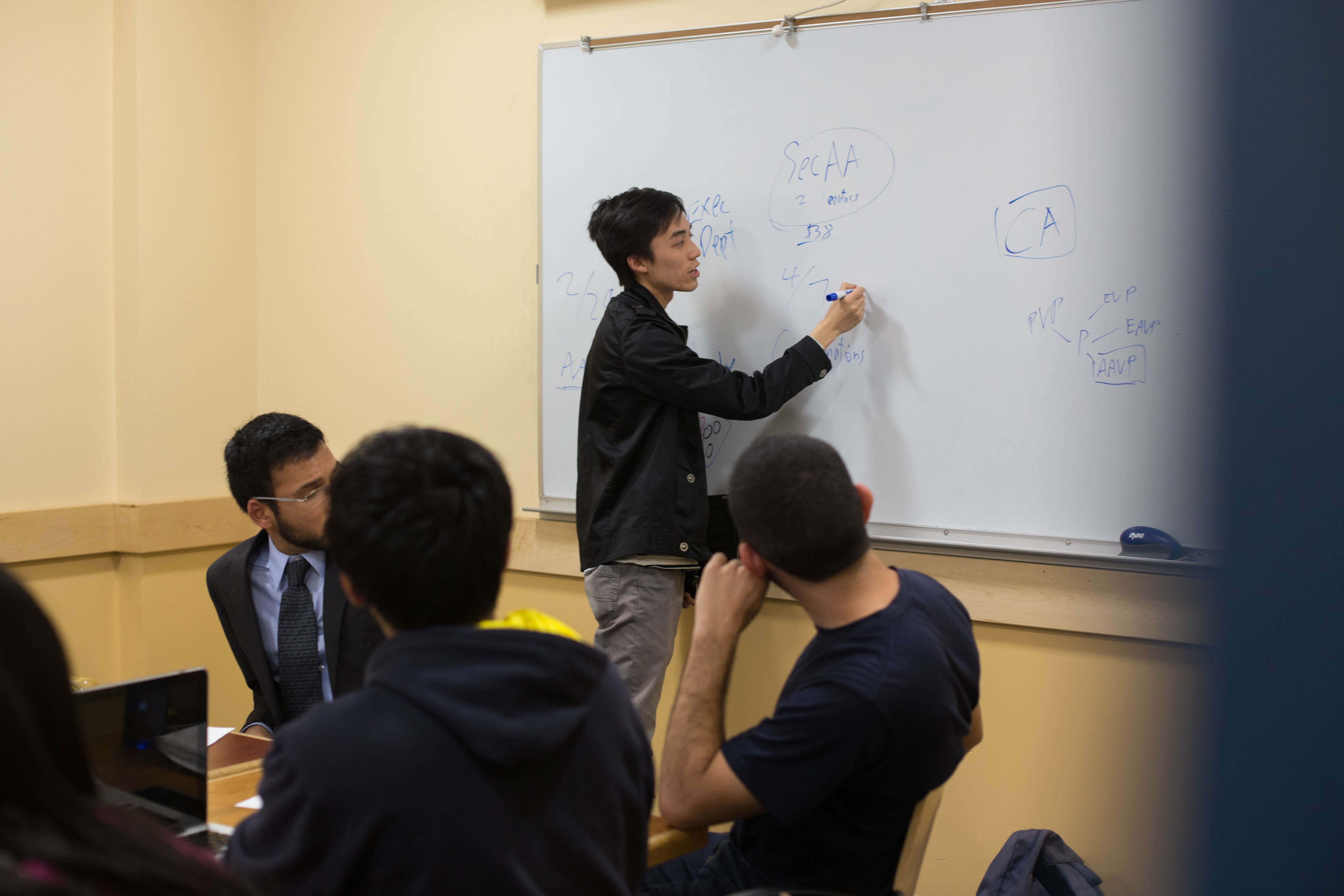
On Feb. 29, incoming ASUCD President Alex Lee withdrew the first of six bills designed to restructure UC Davis’ student government leadership by establishing a larger executive branch and dissolving the Academic Affairs Commission (AAC).

Lee’s retraction followed criticism that the bill would result in popularity contests and an executive branch-heavy assembly, which some argued detracted from the commission’s original intention of being comprised of students separate from the executive branch.

Lee presented his plan to create a more centralized and coordinated government at UC Davis.

“To ensure ASUCD is truly run by students for students, we must empower the chief decision makers of ASUCD with a better executive branch. By creating a more robust executive branch, we strive to establish a central authority to manage our diverse association,” Lee wrote in his outline of the bill. “The goal of these changes will be effectively managing the core issue areas and operations of ASUCD that the presidency is vested with.”

The executive branch under Lee’s proposal would have included a cabinet-style government, in which separate secretaries appointed by the president with approval by the senate would have worked as chief advisors representing their specific departments, including a Department of Academic Affairs, a replacement for AAC.

The Department of Academic Affairs would have comprised of an assembly, made up of 13 elected members representing the different colleges, or districts, at the university.

Several critics worried that by transforming AAC into an elected assembly, commissioners would be elected based off of popularity rather than qualifications. Critics also argued that the assembly’s college-based focus was too limited in scope and ignored the needs of other communities, including the Latinx, southeast Asian and Black communities.

Present at the meeting were several members of the UC Davis community and government, including Ritesh Mishra, chair of the AAC, who opposed the bill for what he called a lack of planning.

“Can you leave this room today with the same objective view that you were able to access this resource and tomorrow someone might not be able to?” Mishra said. “This commission serves 35,000 students here, the countless who have come and the countless who will have gone. Elections and popularity will not show who becomes the voice of academics.”

Adilla Jamaludin, an ASUCD senator and second-year environmental policy analysis and planning major, talked about the difficulties that the executive office and students would face with these new changes.

“It just sounds like it’s a lot of bureaucracy, and it feels like it’s going to be bogged down,” Jamaludin said. “If I want to go to AAC to talk about something I feel like I’m going to be going to exec. I’m not going to students on a commission, I’m going to exec, and I feel like that just ruins the entire idea of this commission.”

Including six senate positions and 13 elected assembly seats, the Fall 2016 elections would have included a ballot of 19 seats that would have needed to be filled under Lee’s bill. Lee argued that the elections would result in passionate individuals.

“My theory about electability is that you find people that are more passionate and become spokespersons for issues,” Lee said. “I say this as a person that ran for senate, like other senators in here, you’re compelled with your passion to do that and make that change, so you want to run for that office. So hopefully the districting will narrow those platforms.”

When referencing the need for a stronger executive office, Lee noted a report headed by Shaitaj Dhaliwal, a third-year international relations major and a research analyst for at the ASUCD Office of Advocacy and Student Representation. Dhaliwal is also an incoming ASUCD senator.

“A lot of other schools and AS’s function in a very cabinet-heavy kind of government. If you look at the report that [Dhaliwal] and her team compiled, they will have things like executive vice president, like internal vice president, what we have,” Lee said. “What they do, is that they put academics as an executive priority, because as president, you are representative of the entire association and by extent, the entire student body, because they put academics as one of their forefronts of their priorities and that’s what I want to do with this presidency.”

Dhaliwal, who was present at the meeting, responded to Lee’s reference, noting his misreading of the report.

“So I appreciate you mentioning the fact that my team and I made that UC report, but what you failed to do was read it,” Dhaliwal said. “You haven’t been a president yet, so you don’t realize how much time you don’t have. You’re not going to be able to contact your secretary to see if they’re doing anything or not. A lot of these UCs that have this type of setup aren’t working well. We did this report to realize that we as an association currently are one of the most productive AS’s in the UC system, and by changing that up, you might actually be ruining it and making it worse instead of reforming for the better.”

Written by: Ivan Valenzuela – campus@theaggie.org

Women’s Team of the Quarter: Swimming and Diving

DEBPARNA PRATIHER / AGGIE

The UC Davis swimming and diving team has quietly become one of the most successful sports programs on campus, capturing their fourth Mountain Pacific Sports Federation (MPSF) championship in the six-year history of the conference, and as a result, is The Aggie’s choice for Women’s Team of the Quarter.

Under the leadership of head coach Barbara Jahn and associate head coach Pete Motekaitis, the Aggies dominated the MPFS championship meet held from Feb. 17 to Feb. 20, finishing with 735 total team points, well ahead of second-place Hawai’i which finished with 673 points.
“It’s quite an honor to be selected as the team of the quarter, and I think it’s a testament to the hard work and dedication [our student-athletes put in],” Jahn said. “We like to think that we are the hardest training team on campus, and I truly believe that all of the hard work paid off.”

Freshman Solie Laughlin won an individual conference title at the MPSF championships in the 200-yard Backstroke with a time of one minute, 56.64 seconds. Senior diver Lucy Lafranchise also posted a season-best score of 188.5 in the 2016 NCAA Zone “E” Diving Championships in Flagstaff, Ariz. the following week to finish 36th on the platform.

“The women here are really proud to represent UC Davis. Not a little bit. They are really proud,” Motekaitis said. “They really love to swim with UC Davis on their cap.”

UC Davis will also once again be represented in the NCAA swimming and diving championships next week from March 16 to 19 in Atlanta by junior Hilvy Cheung, for the second time in her collegiate career. Cheung will compete in both the 100 and 200 Fly after posting a school-record and season-best time at the MPSF championships.

“Hilvy just needs to stay in her lane and perform at her best,” Motekaitis said. “It sounds really easy, but when the stage gets really big and the lights get really bright, it’s who does the best job focusing on what they can control.”

For a school where the traditional big time sports programs have struggled in recent years, the UC Davis swimming and diving team has brought consistent success to campus. The 2015-2016 campaign was no exception, bringing yet another MPSF title back to UC Davis in addition to earning the right to compete in the NCAA championship.

Honorable Mention: UC Davis Women’s Basketball

The 2015-2016 UC Davis women’s basketball team posted its best regular season record since the 2011 playoff run, finishing the season at 17-12 overall and 10-6 in the Big West conference. Led by the explosive scoring of redshirt freshman forward Morgan Bertsch and yet another outstanding year for senior forward Alyson Doherty, the Aggies carved up the Big West, outscoring their opponents by an average of 4.07 points per game.

The Aggies upset top ranked UC Riverside in the second round of the Big West tournament in Anaheim on Friday, delivering the Highlanders their first conference loss of the season in the 81-72 victory. UC Riverside entered the matchup on a 17 game win streak, but the Ags shot 68 percent in the second half to eliminate an eight point deficit and earned the right to move on to the Big West Championship game, where they fell to Hawai’i.

Written by: George McConnell – sports@theaggie.org

High scores all around on Senior Night

0
BRIAN LANDRY / AGGIE

UC Davis women’s gymnastics place second in Cal/Sac State meet

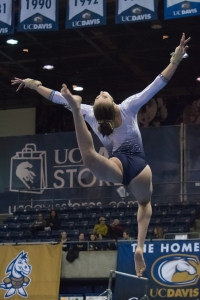
After placing first in the March 6 meet against San Jose State and Brown, the Aggies continued their wave of success by scoring a season-high of 196.025 on Friday night against UC Berkeley and Sacramento State. Just edging out the Hornets by a little more than half a point, the Aggies secured second place in the meet while the Cal Golden Bears took first place with their season-high score of 197.500.

Concurrently, it was Senior Night for the Aggies, and Dani Judal, Taylor Baron, Stephanie Stamates and Jamie Yamashita were honored for their four years on the team.

BRIAN LANDRY / AGGIE

As usual, UC Davis started off at the vault. Sophomore Alexis Brown led with a score of 9.800 while freshman Kara Jones, returning from an injury sustained during the dual against Alaska Anchorage, and junior Katy Nogaki both scored 9.775. Junior Yonni Michovska followed with a 9.725. The Aggies received an overall score of 48.750.

Next up, the Aggies went to bars. It was a strong showing on all fronts, with Brown scoring a 9.875 and Judal with a 9.850. Michovska contributed with a 9.800 and helped the Aggies earn a season-high score of 48.950 in the event, tying Sac State. Cal swept the event with a three-way tie of 9.900 and one score of 9.925.

The high score on bars showed improvement from previous meets.

“We have struggled on uneven bars all season long, [but] we have come to the gym everyday, we have put the work in, and tonight it paid off,” said head coach John Lavallee.

History was also made on the balance beam event. The Aggies’ score of 49.125 in the event put them at a fourth place tie in the Mountain Pacific Sports Federation records. Stamates led with a 9.875, tying her personal best, while Nogaki and Brown each scored 9.850. Freshman Yasmine Yektaparast and Judal followed with a score of 9.775.

The Aggies went out with a bang on the floor event. Their total for the event was 49.200, a season best and No. 8 in the program’s history. Stamates once again recorded the highest score on the Aggie lineup, rounding off a strong showing with a 9.900. Yektaparast and sophomore Amanda Presswood both followed with 9.850 a piece. Baron recorded a career-high score of 9.825, and Jones also delivered with a 9.800.

Despite the end of the competition, the night was far from over. The seniors from all the teams were called on to the floor to be honored and were presented with flowers. A video montage highlighted moments from the graduating Aggies’ gymnastics careers.

“It’s a really emotional night, but to just finish out with my teammates and have fun out here tonight […] I couldn’t have asked for a better ending,” Stamates said. “The team is everything to me.”

Baron seconded the sentiment.

BRIAN LANDRY / AGGIE

“These girls are my family. They push me to be a better person each and every day, so I’m just going to enjoy each and every moment of my last season,” Baron said.

The seniors have one last chance to compete with their teammates in the post-season MPSF conference championships. Scheduled on the Saturday of finals week, the Aggies will be juggling practice and studying over the next few days.

“We have some pretty strong goals in the classroom as well, so we’re going to adjust our training […] and finish strong there,” Lavallee said. “We [want to] come out the end of the week and put this back together and hopefully be able to walk out of the gym next Saturday as satisfied as we are today.”

The MPSF championship will be held at Sacramento State on March 19.

Written by: Julia Wu – sports@theaggie.org

Men’s Team of the Quarter: Tennis

DANIEL TAK / AGGIE
DANIEL TAK / AGGIE

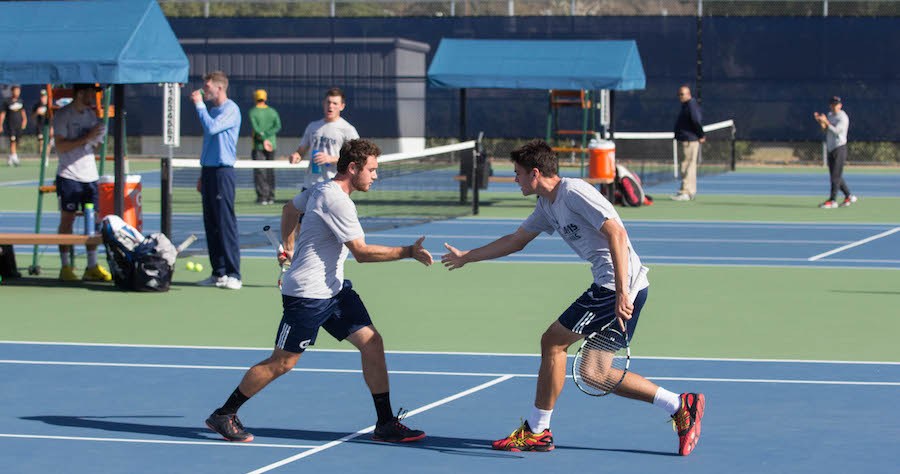
One year is all it took for last year’s regular season co-champions to improve on their past accomplishments. The UC Davis men’s tennis team has shown flashes of dominance this season, with a record of 13-3, more than earning The Aggie’s choice as Men’s Team of the Quarter.

The team’s success has stemmed from their dedication to improve and work hard, while also bringing back veteran experience.

“The effort of the guys [has made us successful], that’s number one,” said head coach Eric Steidlmayer. “We have everybody back from last year and to be honest, everyone’s gotten a little better.”

Seven of the nine Aggies are upperclassmen and the two others are sophomores. And with age comes more maturity, both mentally and physically.

“Everybody’s a year older, everybody’s been in the system a year longer,” Steidlmayer said. “Talking about physical maturity, stronger physically, but also mentally. [They’re] understanding what we’re trying to get done with training, [and] how to bring a passionate level each day so that our guys are focused a little better.”

Talent and dedication can go a long way, but what sets this team apart is their strong bond and chemistry. They’re always cheering one another on during their matches and shouting words of encouragement.

“I think just as a team we really enjoy hanging out together. We’re really connected.” said junior Alec Adamson. “We’re playing for each other; we’re not playing for ourselves out there. Just playing as a team.”

Fighting for one another has put the Aggies on a 10 game winning streak after winning their own tournament this weekend, the Golden State Invitational. This is the team’s longest streak since the 2001 season. The team has also received well-deserved recognition when they were ranked No. 49 in the nation on Feb. 23 by the Oracle/ITA Division I rankings.

“I don’t think [we’ve] exceeded [expectations], no,” Steidlmayer said. “I think what we’ve done is we’ve been real competitive each and every time.”

Although the team has enjoyed the wins, they know that there are still four important matches against conference opponents. The schedule includes, Cal Poly, UC Riverside, UC Santa Barbara and UC Irvine, with the latter two teams ranked 52 and 57 in the nation, respectively.

Given that they were co-champs last year and look even better than before, the Aggies have confidence in their future matches. Being crowned as regular season champions is only one of the team’s two biggest goals.

“Obviously [we want to do well in] the Big West tournament in April down in Indian Wells,” Adamson said.  “We’ve never won that tournament before so that’s our main goal for this year. We’re just trying to improve a little bit each and every week and try and get that Big West [tournament] championship.”

Honorable Mention: Men’s basketball

An honorable mention for Team of the Quarter goes to the men’s basketball team, who made every game interesting. The team fought hard in virtually every contest, including three games that went into overtime. Many of the team’s losses were by slight margins.

Senior forward Josh Fox averaged a team high 14.9 points per game. Fox is the only graduating starter, meaning that the Aggie squad will be able to maintain their competitiveness into next year.

Freshman guard Siler Schneider set the freshman UC Davis scoring record with 290 points on the season. Junior guards Darius Graham and Lemar Brynton also had solid seasons and will look to lead their team to an even better season next year.

Written by Michael Martinez – sports@theaggie.org

UC Davis students, workers protest to fire Chancellor Linda P.B. Katehi

BRIANA NGO / AGGIE
BRIANA NGO / AGGIE

Protest follows recent criticism of Katehi’s appointment on boards of two for-profit companies

At noon on Friday, March 11, approximately 40 UC Davis students, faculty and staff flooded the Quad in support of firing university Chancellor Linda P.B. Katehi. The protest, titled Fire Katehi, follows the recent controversy over the chancellor accepting paid board positions for two for-profit companies, sparking widespread criticism from students and state assemblymembers.

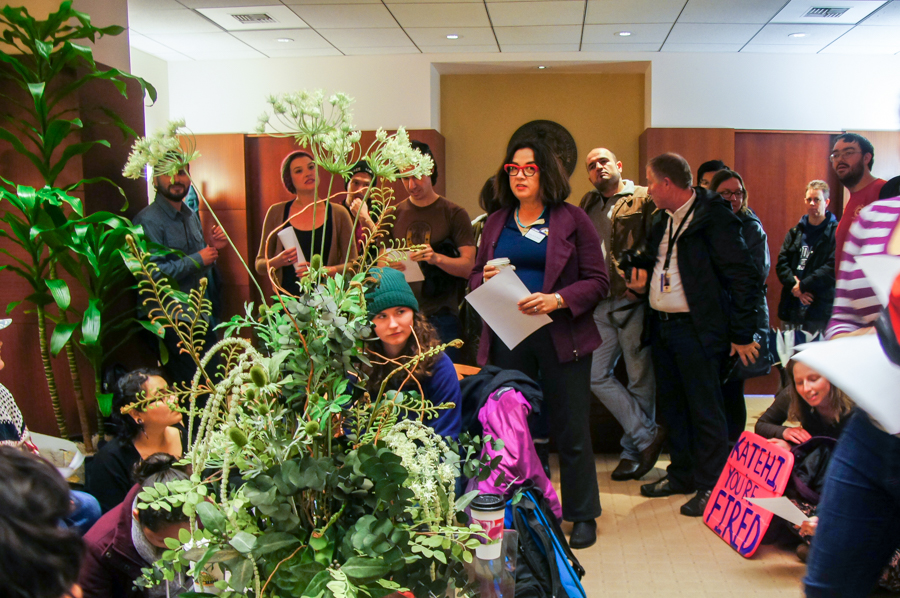
The protesters made their way across campus from the Memorial Union to Mrak Hall, where they sat in the Office of the Chancellor demanding Katehi’s resignation. They also called for her replacement to be selected and approved by UC Davis students and workers. The demonstrators taped resignation forms across the office walls and chanted phrases such as “Rain or shine, Katehi must resign” and “Katehi, you’re fired.”

“It’s my job here as a TA to advocate for students. My students are working-class and people of color. They are the ones that are mostly affected by Katehi basically incentivizing our tuition and expensive textbooks,” said Marco Rosales, a Ph.D. student in the history department. “As the chancellor of a public university, it’s her job to stand for public education and stand for education that has the interest of students and doesn’t have profit motives as her main interest.”

Adela de la Torre, UC Davis vice chancellor of student affairs, spoke on behalf of the chancellor who was not present for the sit-in. Torre, who explained that there is a long process involving the UC Board of Regents and UC President Janet Napolitano to a fire a chancellor, remained tight-lipped on the recent controversy.

“[Katehi] is not here, but I will relay any message to her. All I can do is listen and talk to you right now,” de la Torre told the crowd. “My opinion is that students have the right to voice their opinion. I think [the situation], is in the context of what I do. I work with students every single day.”

BRIAN LANDRY / AGGIE

Duane Wright, a graduate student in the sociology, shot back at Torre’s statement, arguing that the firing process is inherently corrupt because it lacks student and worker involvement.

“We have to change who selects and who fires [Katehi]. It should be up to the students and the workers,” Wright said. “You say you work with students. I work with students all day. I make less than $20,000 and my tuition is paid because I have a union, but I still have to take out loans to pay my rent. I don’t have an extra job where I can moonlight and make an extra $400,000.”

Roughly an hour into the sit-in, Emily Prieto-Tseregounis, Chief of Staff of student affairs, informed the demonstrators that Katehi would not be able to address the demonstrators because she was in a meeting. Pizza was also brought in to feed the demonstrators while they sat.

“A lot of the [university’s] leadership is at an undisclosed location having a monthly leadership meeting. It’s supposed to be over at five,” Prieto-Tseregounis said. “We don’t know if she will come.”

In February, Katehi made headlines after news was released that the chancellor accepted a position on the board of Devry Education Group, a for-profit higher education corporation, for which Katehi would’ve been paid $70,00 annually. Days later, news was released that Katehi received $420,000 in income and stock as a board member for private textbook publishing company Wiley & Sons from 2012 through 2014.

Other controversies brought up during the protest included Katehi’s history with overseeing the pepper spraying of UC Davis students by campus police in 2011 and a historic lack of action taken in regards to sexual assault cases.  

Amid the criticism, Katehi stepped down from her role on Devry and issued an apology to the campus. In her apology statement, Katehi vowed to donate $200,000, the amount of stock proceeds she made while serving on Wiley & Sons, to a scholarship fund for UC Davis students.

“I take my responsibilities as chancellor of UC Davis, and to the entire University of California, very seriously and sincerely regret having accepted service on boards that create appearances of conflict with my deep commitment to serve UC Davis and its students,” Katehi said in the statement.

Written by: Jason Pham – campus@theaggie.org

Guest Opinion: To anyone who calls for intifada: our doors are still open, and we’ll be waiting

0
ZACH NELSON / COURTESY

I’m an Israeli Jew. Yes, someone named “Yinon” who’s never used his real name at Starbucks finally admitted it. My parents raised me speaking Hebrew, I put ketchup on my rice and I sometimes argue with inanimate objects because I’m so used to arguing. So yes, I’m biased, and yes, I have a vested interest in the Israeli-Palestinian discussion on campus, and yes, I’m hairy. And I’m here to talk.

Before I set out to college, people tried to warn me about UC Davis. They told me that it’s virulently anti-Semitic and that I’d be harassed or threatened for supporting Israel. I was undaunted. I told them I couldn’t wait to leave my heavily Israeli town in the Bay Area and meet people with different backgrounds and perspectives. I was excited to have my opinions challenged. 

This past Monday, I helped coordinate a speech by George Deek, a Christian Arab Israeli citizen who grew up in Jaffa, Israel. Organizing this event was part of my job at a pro-Israel campus organization. Deek is a grad student at Georgetown University who previously worked as a diplomat for the State of Israel in Nigeria and Norway. I expected an anti-Israeli presence there. I expected there would be students who held different opinions than my own. I didn’t think we’d all sit on the floor after and hold hands and sing songs together, but I did expect the kind of mature, civil discussion you’d find at a world-renowned university. 

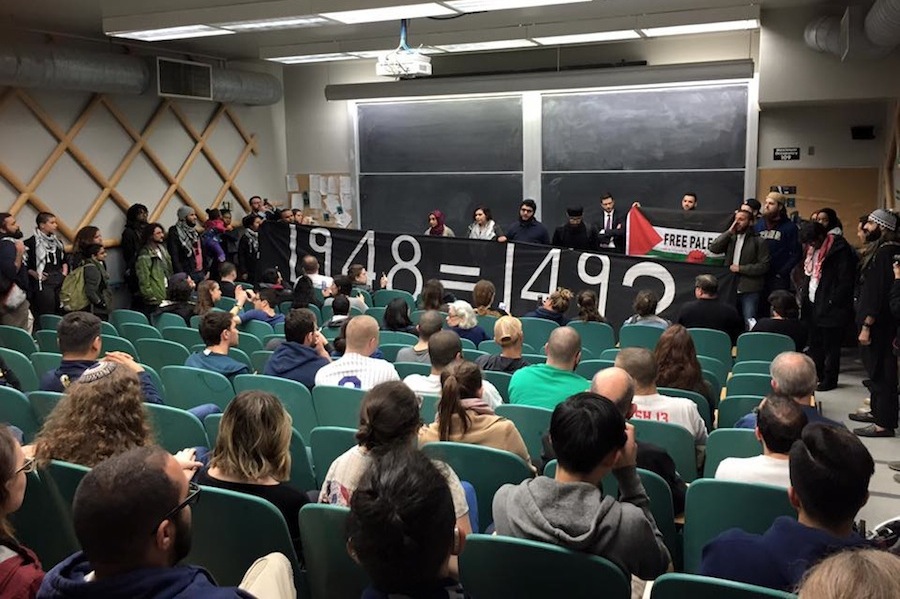
A mature, civil discussion did occur. But not before 30 protesters interrupted the speaker by standing up, screaming at everyone in the room and at the speaker, and invoking the murder of Israeli Jews in the name of political struggle. When kids your age call for an “intifada,” it’s triggering. An “intifada” means a violent uprising, and refers to the First and Second Intifadas – terror waves against innocent Israeli civilians. Suicide bombings of cafes. Stabbings of pregnant women and elderly grandparents. That’s what they were chanting before leaving the room.  

For a second, I didn’t care about their reasoning. They called for my family to die. Their intentions didn’t matter. Their actions did. 

But what hurt most was what they didn’t do. They didn’t go back to their seats. They didn’t stay to ask questions. They just walked out of the room. It’s not even a question for me: that was by far the most hurtful thing they could have done to my community.

Say what you will about Israel. Seriously. Say it: to me, to members of my community, tell us how you feel about Israel. And we’ll tell you how we feel about your perspectives. And just like we listen to you, we want you to listen to us. Not to agree with us, but to process what we have to say, to understand our narrative just like we want to try to understand yours.

No one is claiming that Israel is perfect. I have a lot of feelings on what can and should be changed in Israeli society. But there’s such a huge difference between criticizing an entity on an intellectual level and stepping into another community’s space and screaming for their murder. Neither side grows from that. Both sides regress. We all lose when one side plugs their ears, stamps their feet, and throws a temper tantrum.

But, you know what?

I want the protesters to come back.

In his speech, George Deek said that one of his biggest frustrations so far was that the Israeli-Palestinian conflict has been seen as, “a zero-sum game, where one side has to win and the other side has to lose. History is not a football game. When one side loses, the other side loses, and when one side wins, the other side wins.”

I didn’t plan the event thinking anti-Israel activists would leave the event shouting “Am Yisrael Chai!” nor did I want that to happen. I planned the event because I welcomed a conversation, so my community could grow, so their community could grow and so both sides of the most divisive issue in the UC Davis community could grow. So we both could win, for once. 

I’m not giving up. The invitation is still waiting. 

YINON RAVIV is a second-year communication major and the Grinspoon-Morningstar Fellow for the Israel on Campus Coalition. He welcomes discussion, feedback and compliments at yraviv@ucdavis.edu.

Aggie Style Watch

0
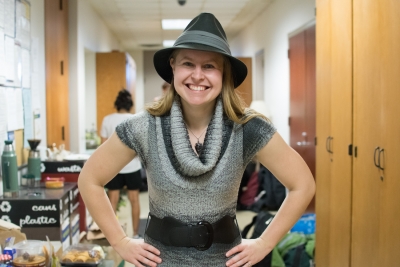
Maria Miramontes (BRIANA NGO / AGGIE)

Student Fashion Association casting calls

This past week, the Student Fashion Association (SFA) held a casting call to find models for its fashion show, which is happening next quarter on April 30. Many people showed up to audition and each brought a fresh and unique sense of style. I first spoke with Maria Miramontes, a third-year managerial economics and international relations double major. She is part of SFA and decided to try out on a whim.

ASW: What made you want to model?

Miramontes: I originally came to help out with the event and they asked if I wanted to audition to be a model. I always wanted to be a model in the back of my mind but I [thought I was] not tall enough.

ASW: Where did your interest in fashion begin?

Miramontes: Since I was young, I was always interested in clothing. I just like the confidence and creativity it gives you. It really started when I was in high school. I follow fashion weeks, mostly the New York one, but I look at other ones too.

ASW: What is your favorite style?

Maria: I really like classic stuff, very basic.

ASW: Do you have any role models?

Miramontes: Kendall Jenner is the person [whose fashion] I follow the most.

ASW: Any advice?

Miramontes: Be confident in what you want to wear, if you like it and it makes you feel good, then just own it. Fashion is a part of who you are.

Wen Fong Goh
Wen Fong Goh

My next interviewee was Wen Fong Goh, a third-year graduate student in physics.

ASW: What made you want to come out to this casting call?

Goh: Because I haven’t done it before and it seems cool. I would like to give it a try.

ASW: Do you like fashion?

Goh: Yes I do, many people like fashion because we are able to put on beautiful clothes.

ASW: When did you start getting into fashion?

Goh: When I started to be interested in girls. I wanted to attract the females.

ASW: Do you have any fashion tips?

Goh: Be confident and be comfortable!

Lastly, I spoke with Grace Young, a third-year design major who is also in SFA.

Grace Young
Grace Young

ASW: What made you want to audition?

Young: I’m part of SFA and I’m actually really interested in modeling. I did the Picnic Day show last year and it was really fun so I thought I’d give it another go.

ASW: Would you describe yourself as being really passionate about fashion?

Young: In my own way. I like fashion a lot but I like to put my own twist on fashion trends.

ASW: How would you describe your style?

Young: I have multiple styles depending on my mood of the day. It can be sluggy cute or dress up, like be preppy and curl my hair.

ASW: Who are your fashion role models?

Young: I really love Victoria Secret models, like Candice Swanepoel.  I love their clothes. TV shows and magazines [are also inspiring].

ASW: Do you have any advice for people who are just starting to develop their sense of style?

Young: For fashion shows, it may be intimidating at first but if you put yourself out there, and aren’t afraid to talk to people, it will really work out in your favor. Be bold and get out of your comfort zone.

WRITTEN BY: CaraJoy Kleinrock – arts@theaggie.org


More transparency needed from UC Davis chancellor

1
HANNAH LEE / AGGIE
HANNAH LEE / AGGIE

Katehi violates UC policy, fails to disclose corporate board positions

UC Davis Chancellor Linda P.B. Katehi came under fire last week when the Sacramento Bee reported that she had accepted board positions at dubious corporations during her time as chancellor. In February, Katehi took a board position at DeVry Education Group, a for-profit company that offers college degrees. DeVry is currently under federal scrutiny for “allegedly exaggerating job placement and income statistics,” according to the Bee’s report. UC spokeswoman Dianne Klein has said that Katehi accepted the DeVry board seat without UC permission, which is a violation of policy. The DeVry board position pays $70,000 annually. The chancellor must be held accountable for her actions.

In addition to her position on the DeVry board, from which she resigned on March 1, Katehi also served as board member for John Wiley & Sons, a publisher of textbooks, college materials and scholarly journals, from 2012-2014, according to the Bee’s report. During her time at Wiley & Sons, Katehi received $420,000 in pay and stock.

In light of these reports, there has been widespread discontent across the state. On March 4, Assemblyman Kevin McCarty (D-Sacramento), who heads the budget subcommittee on education finance, called for Katehi’s resignation. Assemblyman Evan Low (D-Campbell), a member of the Assembly’s Higher Education Committee, has also called for Katehi to step down. This Friday, March 11, the UC Student Workers Union at Davis is hosting a “Fire Katehi” rally at the Memorial Union.

Acknowledging mistakes after they have been made is not enough. Katehi earns $424,360 a year as chancellor of UC Davis. She should focus her energy on making UC Davis a stronger, more inclusive, more cost-effective campus, not moonlighting on corporate boards. Additionally, Katehi’s activities present a clear conflict-of-interest. As chancellor, her job is to advocate for the UC Davis student body, one currently facing heavy debt as a result of staggering tuition and textbook costs. How is serving as a board member for a textbook company, which makes its profit on high textbook prices, advocating for UC Davis students?

The chancellor has attempted to mitigate the outcry over her paid board seats by pledging to give $200,000 (the value of her Wiley & Sons stock) to a scholarship fund for UC Davis students. While this move might be smart from a public relations standpoint, the Editorial Board would feel much more comfortable with the chancellor seeking to establish funds and revenue streams for UC Davis services on her own, not just when she is pressured or playing damage-control.

Katehi can begin to regain the trust of the UC Davis campus by becoming more transparent. The student body deserves to know which outside boards or corporations the chancellor is making or has made money from, considering that many of us, our parents and our families are paying taxes to fund the chancellor’s already-exorbitant salary (and house).

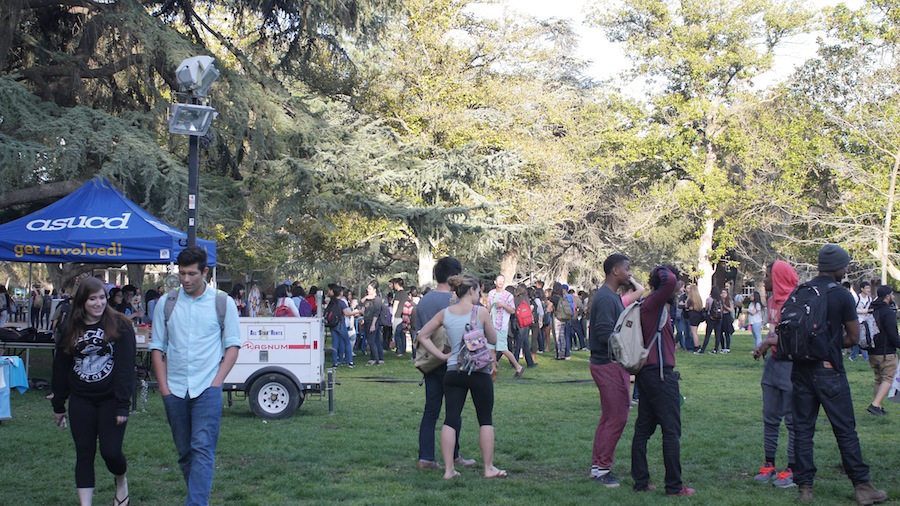
ASUCD draws criticism for sumo wrestling costumes at Block Party

ASUCD's Block Party was held on Feb. 25, 2016. (AGGIE STUDIOS / COURTESY)
ASUCD’s Block Party was held on Feb. 25, 2016. (AGGIE STUDIOS / COURTESY)

ASUCD Executive Office issues apology following accusations of cultural appropriation and fat shaming

On Feb. 25, ASUCD hosted its Block Party on the Quad, where the association offered a myriad of activities for students to participate in as part of its Student Appreciation Week closing celebration.

Among those activities was an attraction in which students could dress in sumo suits and wrestle each other. The activity immediately drew criticism from members of the student body, who accused ASUCD of fat shaming and culturally appropriating Japanese culture.

According to the students who raised this issue to ASUCD, the sumo suits trivialized Japanese culture and the history of Japanese rikishi or sumo wrestlers.

Once the issue was brought to ASUCD’s attention, ASUCD’s Executive Office, consisting of President Mariah Kala Watson, Vice President Gareth Smythe and Controller Francisco Lara, immediately issued an apology for the incident and commended the students that brought the issue to light.

We’d like to apologize for any harm the ‘Sumo Suit’ may have caused you all. This lapse in judgment is completely ASUCD’s fault and responsibility alone,” said ASUCD’s Executive Office in a Facebook post. “We are thankful to the student who courageously brought this issue to our attention […] This was an egregious oversight and it will hopefully not happen in the future.”

Scott Tsuchitani, a Ph.D. student in cultural students, believed the incident was evidence of the lack of awareness of the racism against Asian and Asian American students.

“My overall impression is that this conversation is in itself an expression of white supremacist anti-Asian structural racism. If people are genuinely concerned with the needs of Asian Americans, then why are Asian American voices not front and center in this conversation?” Tsuchitani said via email. “Instead, Asian Americans are treated as mute, hapless victims, devoid of agency, a.k.a. the ‘model minority’ stereotype. That is what I see being reinscribed by this conversation.”

Tsuchitani went on to say that he was not pleased by ASUCD’s apology and called for more action from the association.

“It is pitiful that the ASUCD would pathologize the so-called victims as in need of treatment instead of reflecting more deeply on what is needed to address ASUCD’s own failure in this situation,” Tsuchitani said. “From my limited perspective, I would suggest that the foremost need for treatment might well be for cultural competency training for ASUCD itself.  That is much more relevant here than any Orientalist history of sumo wrestling.”

Tsuchitani was not the only student who felt victimized and upset by the sumo suits. Phil Jones, a fourth-year economics student, said that he was shocked by the sumo wrestling event at the Block Party. He also claimed that the sumo wrestling showed insensitivity to overweight Americans.

“To be honest, I was shocked. February 19 was Remembrance Day for Japanese internment during WWII, and some of my Japanese friends were heavily traumatized by seeing their culture mocked in such a clearly racist fashion,” Jones said in a Facebook comment on the Block Party’s event page. “Not to mention, as a Heavy-American, I don’t appreciate the blatant Fat-Shaming involved with caricaturing one of the few sports traditionally enjoyed by Heavy individuals. I honestly feel reparations payments are in order to affected individuals, and that those responsible for the grossly negligent oversight should immediately resign from their ASUCD posts.”

However, not all students were as offended by the sumo suits and felt that the situation was blown out of proportion.

This was obviously not malicious, this is just people finding something to be mad about,” said Taylore Kadin, a third-year international relations major, in a Facebook comment.

For more information on the situation, view the discussion on the Block Party’s event page or email president@asucd.ucdavis.edu.

Written by: Sangeetha Ramamurthy – campus@theaggie.org

Guest Opinion: Katehi unfit to be chancellor

0
BRIAN NGUYEN / AGGIE

I have lost confidence that Chancellor Linda Katehi can effectively represent UC Davis. This comes as a direct result of her decision to join the board of directors for DeVry University and from her past involvement on the board of John Wiley & Sons. Her actions demonstrate a complete disregard for student interests and a commitment to her own self-gain.

Shortly after accepting the DeVry position, lawmakers in Sacramento and public interest groups voiced their concern over a potential conflict of interest. DeVry University is a for-profit university that is currently engaged in a lawsuit with the Federal Trade Commission (FTC) over allegedly fraudulent claims the university made in regard to the earnings and employment prospects of its graduates. Another point of concern is that as a public servant, Chancellor Katehi earns $424,360. In addition to her current salary, the board position would have paid $70,000 annually, plus an additional $100,000 in stocks. It is outrageous that she feels justified in earning even more money when students are struggling to pay for school. Under pressure, Katehi resigned from the DeVry Board after eight days.

Joining the board for DeVry University is not the first major mistake the Chancellor has made. From 2012 to 2014, she sat on the board of John Wiley and Sons, a textbook publisher. During this three-year period, she was compensated $421,215, of which a little less than half came in the form of stocks from the publisher. In a time when the cost of textbooks is a controversial issue, Chancellor Katehi sided with and profited from a corporation that benefits at the financial expense of students.

It is worth noting that it is commonplace for university presidents or chancellors to have positions on various boards. The president of Stanford, for example, serves on the board of Cisco Systems. The connection between education and industry develops beneficial relationships that can generate funding or jobs for graduating students. However, it is an issue when our chancellor accepts positions on boards that gain financially from students. These organizations profit through the exploitation of students.

The list of questionable decisions the chancellor has made lengthens as we look through her tenure. In 2011, her policies instigated the infamous pepper spray incident that garnered national attention. Last year, in the middle of the tuition increase dispute, she hired Joanna Regulska as the chief global strategist for $250,000, an expense that has yet to be justified.

We, the students of UC Davis, are being taken advantage of by a corrupt administrator who has demonstrated a commitment to companies that profit on the students she represents. She is a blemish on the reputation of UC Davis and the UC system. There is no apology sincere or scholarship fund large enough to repair the damage dealt by Chancellor Katehi. The fact that she could not recognize the conflict of interests in taking her board positions is deeply distressing and further demonstrates her disinterest in the concerns of students. Therefore, the only appropriate action moving forward is her resignation — such would be reparation to the students she has betrayed for her own personal wealth.

JOHANN PRAMBS is a second-year biomedical engineer major.