55.7 F
Davis

Davis, California

Tuesday, December 23, 2025
Home Blog Page 737

ASUCD passes prison divestment resolution

0
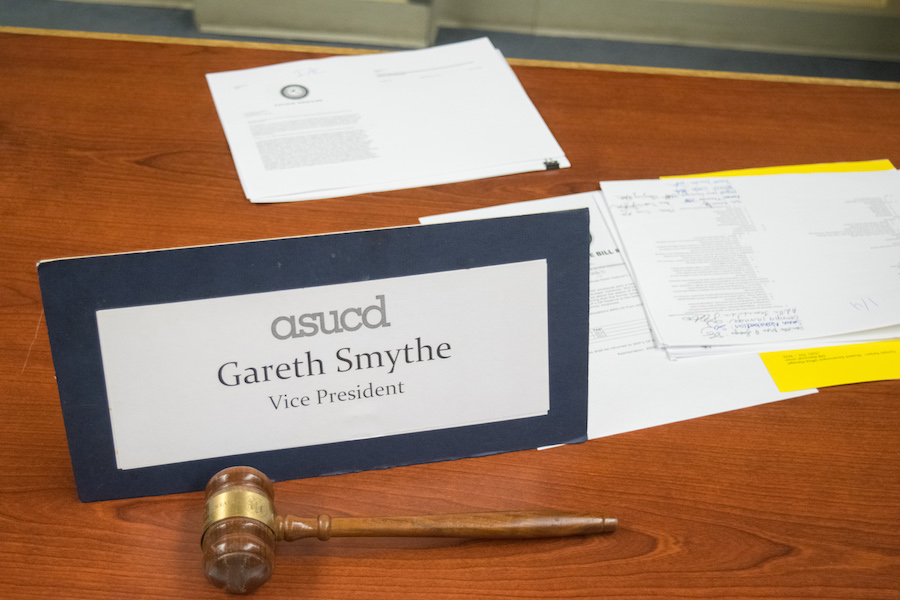
ASUCD Vice President Gareth Smythe presides over ASUCD Senate in regards to the prison divestment resolution. (BRIAN LANDRY / AGGIE)

Resolution urges UC Board of Regents to divest from private prisons, private prison-investing corporations

In late February, ASUCD passed Senate Resolution #14 (SR# 14), a private prison divestment resolution which urged the University of California Board of Regents (UC Regents) to take social accountability for their involvement in for-profit prisons.

The resolution urged the UC Regents to divest from private prison-investing corporations such as Wells Fargo, to remove themselves from other unethical businesses and to refrain from partaking in corporations that are directly or indirectly involved in the private prison enterprise in the future.  

Demands include, but are not limited to, an ASUCD evaluation on all companies where future investments will be made, UC Davis and UC Regents to implement a Socially Responsible Investment screening policy and an emphasis to invest in companies that maintain ethical and fair products and services.

University of California recently sold approximately $30 million of its $100 billion investment portfolio after a meeting with the Afrikan Black Coalition on the coalition’s concerns with UC investments in private prisons.

After that meeting, we evaluated those holdings […] based on risk over the next several years. These holdings were not a good investment for a long-term investor such as UC […] and decided to sell,” said Dianne Klein, director of media engagement and strategy for the University of California Office of the President (UCOP) in an email interview. “Many factors figure into this perspective, such as whether social, governance, or environmental issues make the asset too risky over the long term.”

Joshua Dalavai, an ASUCD senator and co-author of the private prison divestment resolution, critiques UCOP on its business explanation rather than the moral reason for divesting.

“The chief investment officer or equivalent of that position in the UC said that the reason they divested wasn’t because of student pressures or the Black coalition or unethical investment practices, but rather because it was an unsustainable business model,” Dalavai said. “They still haven’t acknowledged the inherent racism of private prisons.”

According to Dalavai, private prisons disproportionately affect the Black community through their ongoing and vast implementation of a biased Black imprisonment rate. He argues that crimes made by ethnic non-Black counterparts committed in equal rates are subjected to far less imprisonment.

Dalavai explains his reason for committing to the ASUCD private prison divestment resolution as a call to action for the marginalized Black community.

“As a person of color, I thought it was extremely important because you have to show intersectionality and solidarity with other oppressed groups and the most historically oppressed group have been the Black people of this country,” Dalavai said.

According to supporters, the private prison divestment resolution pushes the Black Movement forward and keeps Black rights a relevant issue.

“This resolution is statistically important because on a lower level or grass roots level it keeps the movement going and […] does keep the conversation going,” said Eyonna Woghiren, vice president of UC Davis’ Black Student Association. “The resolution is another way to keep people accountable for what they are going to say and do.”

Woghiren cited that the recent trend in UC schools, like UCLA and UC Santa Barbara,  authoring private prison divestment resolutions is due to the current prevalence of Black lives movements in popular media.

“I think that a lot of people have been working on these issues for a long time and given that the Black Lives Matter Movement and a lot of different movements for Black lives are coming out, it’s being noticed,” Woghiren said.

For Woghiren, the ASUCD private prison divestment resolution is a move in the right direction, but she still believes there is more work needed to be done.

“I think that it’s a great step and I think that the UC is a leader in the world and in a lot of movements in that it pushes other people to divest as well,” Woghiren said. “But I definitely still believe that we have a lot of work to do.”

Written by: Yvonne Leong – campus@theaggie.org
California National Primate Research Center to begin experiments on Zika virus

0
ASHLEY LUGO / AGGIE
ASHLEY LUGO / AGGIE

Researchers hope to discover developmental impacts, test potential vaccines for virus

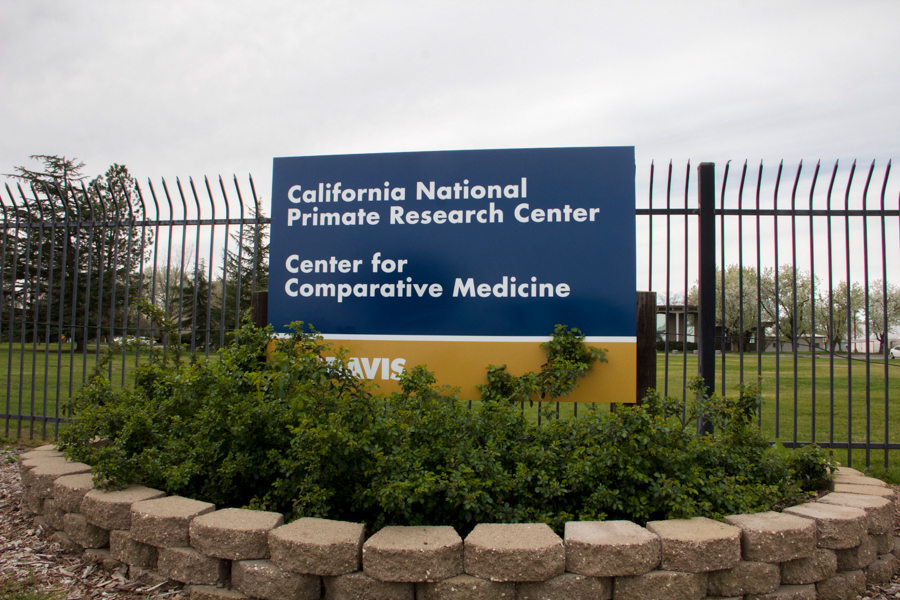
UC Davis’ California National Primate Research Center (CNPRC) will commence its study on the effects of the Zika virus on primates on March 16. Led by virologist Dr. Koen Van Rompay, the research team will work toward discovering the developmental impacts of Zika virus and eventually test potential vaccines.

The project is split into two phases; the first examines how the Zika virus is transmitted and its physiological effects on primates, while the second studies the virus’ effects on the fetuses of pregnant primates. The primates in this experiment, rhesus macaques, will be injected with the Zika virus in a controlled environment.

“From this study, we hope to confirm the proof of concept: firstly, that the Zika virus can infect macaques, and secondly, to see if it has any effects on the fetus,” Van Rompay said. “Once we have that proof, we can go into further study to see how the virus moves into the brain and also test vaccines.”

Van Rompay has previous experience studying viruses and testing vaccinations at CNPRC. In the 1990s, he contributed to the development of the antiretroviral drug Tenofovir, which is commonly used today to treat Hepatitis B and HIV. In one study, Van Rompay recorded the effects of Tenofovir on HIV-positive pregnant rhesus macaques. The results determined that the drug could reduce the chances of a fetus contracting HIV in utero.

Since its discovery in 1947 in the Zika forest of Uganda, the Zika virus has infected millions throughout the world. According to the Centers for Disease Control and Prevention, Zika virus outbreaks occurred in areas including Africa, Southeast Asia and the Pacific Islands prior to 2015. More recently, outbreaks have occurred throughout Central and South America, specifically in Brazil. Researchers expect the virus to spread with increased traveling rates.

Zika virus symptoms include joint or muscle pain and feverish fatigue. It is most commonly transmitted via mosquitos. The Zika virus causes an acute disease, rather than an autoimmune disease like HIV, which means that adults may be able to clear the virus within a few weeks through the strength of their own immune systems.

“Zika virus is similar to measles in that they cause very acute diseases,” Van Rompay said. “Most people will get over them because their immune systems make a good immune response that controls the virus. So, what we need to do with the vaccine is just imitate that.”

Van Rompay said that studying fetuses with Zika-infected mothers is important in order to develop a vaccine for unborn children that risk developmental issues by this virus. Based on previous studies, Zika virus has been correlated with a negative impact on the placenta and amniotic fluids of pregnant women, and it also may increase the risk of microcephaly (deformed head shape of newborn).

Van Rompay also said that the Zika virus can be sexually transmitted. From his research, despite the virus being acute, it appears to survive longer when using sperm cells as hosts.

Some members of the UC Davis community have voiced their concerns for the well-being of the primates under experimentation at the CNPRC.

“There will always be more diseases to study and more humans suffering from illness, but it is time to stop using this fact of life to justify the enslavement, torture and murder of innocent beings,” said Caroline Webb, a geology graduate student and member of the activist group Free Davis Primates. “We have the intelligence and technology to develop better ways to improve our medicine and maintain our ethical integrity.”

Others have expressed how a stressful and unnatural laboratory environment may contribute to skewed results. Stop Animal Exploitation Now (SAEN), an organization that strongly advocates the cessation of animal cruelty and exploitation, believes that using animals for scientific research creates an ethical dilemma.

“Any study of Zika is essentially an infectious disease study, which is dependent on the immune system of the animals,” said Michael Budkie, the director of SAEN. “The stress of the laboratory environment is sufficient to cause many primates to become self-destructive. Similarly, the stress of the laboratory setting is also sufficient to have a major impact on the immune systems of the monkeys. Therefore, you would likely not be able to generalize any study of captive primates even to a population of primates in their natural habitat, let alone to humans.”

Van Rompay and his research team have stated that the primates will be quarantined in order to prevent outside disturbances that could affect the experiment, and that the research team will protect the primates from harm to the best of their ability.

Van Rompay hopes to have some sort of vaccine developed for the Zika virus by next year. He believes that his strong connection with his research team will contribute to finding more sufficient data.

“I have a lot of hope for the future,” Van Rompay said. “Especially with the Zika virus research, I’m very impressed with how much people are interested to share their data. We’re working with different groups and contacting them every day about their findings. I am hoping that this will set a good example for future researchers.”

To keep updated on this study, the CNPRC is providing real-time updates on their website.

Written by: Emma Sadlowski – campus@theaggie.org

Older, Wiser Learners (OWL) strives to increase visibility for non-traditional students on campus

0
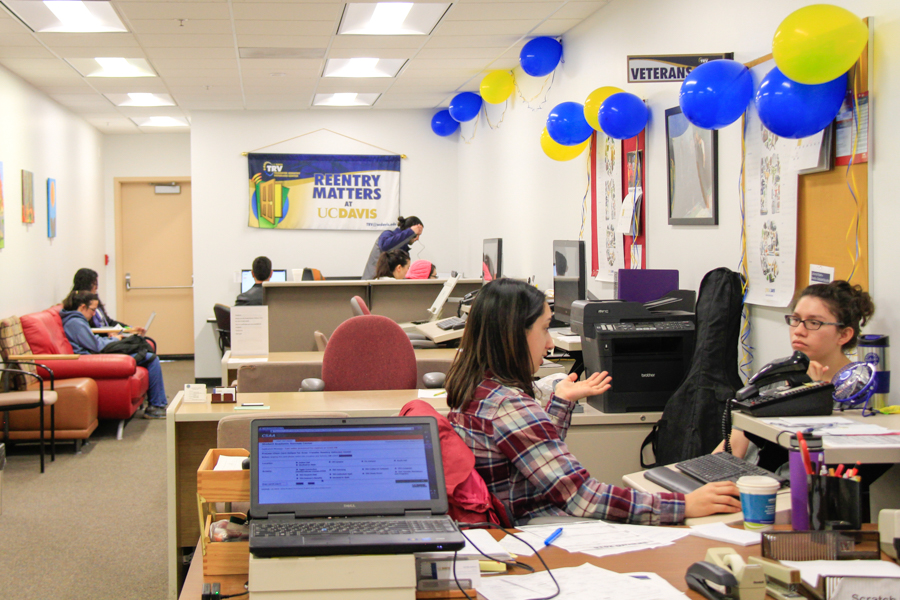
The Transfer Reentry Veterans Center. (MONICA CHAN / AGGIE)

Resurrected student organization seeks to restructure orientation to cater to reentry students’ needs

Older, Wiser Learners (OWL), a student organization run by transfer and reentry students, recently reactivated at the end of Fall Quarter 2015 for the first time since its discontinuation back in 2007.

OWL, which is primarily made up of undergraduates who do not fall within the 18- to 22-year-old age range, aims to make this smaller and more non-traditional group of older students more visible at UC Davis in order to foster a sense of community with other transfer, reentry and veteran students.

The organization is supervised by Victor Garcia, who also serves as the primary advisor for students at the Transfer, Reentry and Veteran (TRV) Center. The TRV Center addresses the needs and concerns of TRV students who usually begin their studies at UC Davis with special circumstances, such as raising dependents, or entering or reentering the university after serving in the military.

“OWL is a student organization resurrected by students who participated in a seminar that I facilitated [EDU 198],” Garcia said. “These are students who are over 25-years-old, students who have dependents, and even single parent students. The transition is especially hard for them because, in addition to being a student, they have other responsibilities like raising their kids, being the head of the household and working to pay the bills.”

Thea French, a reentry sustainable environmental design major and the secretary of OWL, said that her responsibilities as a mother have often interfered with her lecture attendance.

“I decided to leave my high school girls back in Sunnyvale because I didn’t want to uproot them,” French said. “Sometimes life happens. They get sick or they’re having a mental breakdown, and I have to miss three or four lectures in the middle of the week because I have to take a train home to take care of them. It would be nice if the faculty had some sort of sensitivity training to understand these circumstances.”

Another OWL member, Ilse Manuela, a 27-year-old transfer/reentry cognitive science major, has a nine-year-old daughter living with her in Davis and struggles to plan her school routine around her daughter’s schedule.

“The first challenge I had was when I came to orientation to sign up for classes,” Manuela said. “I had to keep in mind the hours of childcare, when my daughter would be in school, and who’s going to pick her up. Resources to help me with those issues were not readily available. At orientation, everything seems geared toward the traditional students, the 18-year-olds.”

Receiving financial aid has also been an issue for Manuela.

“Even at the [financial aid] department, I applied for some scholarships [for students with dependents], but the cut-off was for people who have children who aren’t older than six-years-old. I thought that was unfair. It’s not like children get cheaper as they get older,” Manuela said.

One of the main goals of OWL is to push for a reform of the first-year experience (FYE) orientation structure, such as holding a special orientation session for TRV students led by TRV orientation leaders.

Manuela specifically said that priority registration and advisers who can direct students to programs like child-care should be offered at orientation. She also said that there should be more financial aid opportunities for students with dependents and that Unitrans should be free for the children of university students.

Sam Park, one of the incoming ASUCD senators who identifies as a transfer student, promised to advocate for the restructure of orientation in his election campaign.

“We are currently researching better ways to outline resources on the FYE packet,” Park said. “I want to provide a better directory for advising, student health and mental health issues for these students. Overall, we’re trying to improve the current packet that we have.”

OWL has many plans to voice these issues and make themselves more visible on campus.

“OWL is going to outreach more and get involved during events like Picnic Day and Whole Earth Festival,” Garcia said. “Many of these students can’t experience campus life because they have kids to take care of. I hope that OWL will give these students more of a reason to stay on campus and to spend time with people who they can relate to. I don’t want them to feel isolated.”

Written by: Julian Leus – campus@theaggie.org

Not-so-social media

0
LUCY KNOWLES / AGGIE

Students discuss social media usage on college campuses

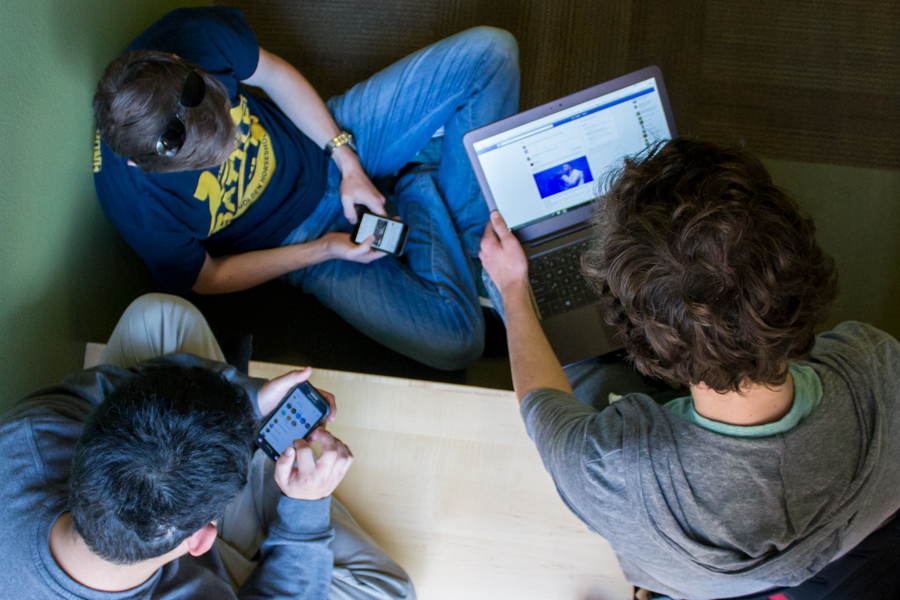
1000 percent. That is the percentage that social media usage for Americans ages 18 to 29 has increased by since 2007. Simmons National Consumer Study estimates that 98 percent of college-aged students now use social media platforms. It’s not just these numbers that appear so daunting and magnified; when it comes to social media, nearly everything seems amplified and larger than life.

When first-year English major Hadley Roberts-Donnelly entered UC Davis last fall, she thought she had a good sense of what “the college experience” was. Many of her friends at semester-system universities had already been in school for a month or more, and she’d seen their Instagram posts, Snapchats and Facebook timelines. College appeared to be extremely social and eventful — everything that an eager teen straight out of high school could want.

Unfortunately, Roberts-Donnelly’s first Fall Quarter fell short of her expectations, and she found herself struggling to find a close circle of friends, but the photos of her friends at other schools continued to portray a college life that was much different than her own.

“I believed that I wasn’t having as much fun as they were, and so I thought there was something really wrong — either with the school or with me and how I was indulging in the school,” Roberts-Donnelly said. “In that sense, social media can be harmful because it was a false reality of what was going on. We were all actually having the same experiences, but it didn’t seem like that. No one knows that, unless you talk.”

It wasn’t until later in the year that Roberts-Donnelly realized she was hardly alone in her situation. A friend from University of California, Santa Cruz admitted that she too, had difficulty finding a core group of friends. Roberts-Donnelly was shocked at this admission since her friend was so active on social media.

“I told her, ‘It seems like you’re having so much fun! I see so many people with you in your posts online,’” Roberts-Donnelly said. “My friend responded that those were people that she knew, but not ones that she really considered friends. I realized that it was the same with me.”

This experience could be more common among students who primarily use social media platforms that are photo-centric, like Snapchat and Instagram. Snapchat videos and photos show no more than 10 seconds at a time and disappear after 24 hours. While Instagram posts are permanent unless deleted by the user, they are another example of a capture of a single moment which might not accurately represent reality.

Both Roberts-Donnelly and second-year human development major Kelly Le use these two apps more frequently than outlets like Facebook and Twitter. This is especially interesting when Le recalled a freshman experience that was similar to Roberts-Donnelly’s.

“I went through a tough transition going into college. At first, I spent a lot of time on my own,” Le said. “On welcome week, everyone is partying with their peers. It became very tough for me to even check social media in that time because I was comparing myself to what everyone else was doing even though it was just a single snapshot I was seeing. I told myself that these people were having fun every weekend, then every day, then almost every second of their lives.”

According to Le, when she became more comfortable attending social events, she noticed people using their social media more often at parties than in other situations — using the opportunity to document themselves. Le said that this made her hyper-aware of her image on social media.

“Just earlier this year, I posted a Snapchat with a couple of girls I’d met at a party. I only knew like half of them though, and I don’t really know why I posted it,” Le said. “Once I did post, I kept wondering if people were judging me or viewing me a certain way because of that photo. In reality, I don’t party that often, and now I post my pictures pretty infrequently. I don’t want people to view me as a girl that just parties because they only see my photos.”

So, what’s the case with social media that goes beyond just photos? Fourth-year civil engineering major Aaron Keonorasak is active on photo-sharing apps including Snapchat, Instagram and Facebook. However, he spends the most time on a social networking platform that both Le and Roberts-Donnelly have not used in college: Tumblr.

“Facebook has mostly become a place for me to upload photos now, and everything that I used to do on Facebook seems to have transferred to Tumblr,” Keonorasak said. “I’ll write posts when I’m feeling witty or funny. I reblog a lot of things dealing with social justice, like issues that people of color face, or articles and opinions about feminism. I’ve used it to connect with awesome people from all over the nation and in other countries.”

Keonorasak uses the microblogging site to learn more about social conversations that take place outside of his immediate friend group. In fact, he prefers that his friends at school don’t follow him on Tumblr at all, and discourages them from actively trying to search for him. After years of keeping his world on Tumblr separate from his real life, it is something he has grown into. For him, Tumblr is a form of social media, but it’s also somewhat of a safe haven.

Le also keeps some of her social media activity private, though in different ways and for different reasons. Instead of liking or sharing a news article immediately which would make the posts reappear on her friends’ newsfeeds, Le chooses to use Facebook’s “save link” function or copy the link onto a separate page. She does so to avoid being traced back to the article through Facebook. She also attentively avoids liking Instagram posts that may resurface in a page where followers can observe what other users have liked.

“I don’t really want people to see that I’ve liked a 10-week old picture of Nick Jonas or something. So I’ll just look at it and avoid double-clicking,” Le said. “I don’t want people to attribute that to me or think that I am a certain way or that I believe in certain things just because they can see that I’ve read about it or liked it.”

Though Roberts-Donnelly said she doesn’t mind if people are made aware of her beliefs, she is careful not to incite too much conflict with family members that may disagree with her — especially ones who are friends with her on Facebook.

“A huge reason why I don’t use Facebook that often is because I have a lot of relatives on there,” Roberts-Donnelly said. “While they’re not exactly conservative or anything, they sometimes don’t take criticism of their generation very well or understand concepts that me and my friends care about.”

Instead, Roberts-Donnelly chooses to write about the Black Lives Matter movement, the #YesAllWomen campaign and other feminist projects through Twitter. Since starting university, she found that her social media presence isn’t as prominent as it once was in high school. Le’s social media habits have not changed too drastically either, however she prefers that people who want to stay updated on her life call her, text her or meet in person. And while Keonorasak admits that he finds it “a little weird” when people don’t have Facebook accounts, he understands there is likely a good reason.

All three people have unfollowed and unfriended individuals whom they no longer keep in touch with, simply because those persons’ posts and photos are no longer relevant to their life at Davis.

“I think the thing about social media is that it makes it very easy to make friends and keep up with them,” Keonorasak said. “But it’s very easy to lose them too.”

Written by: Anjali Bhat — features@theaggie.org

Assault of Ethiopian male investigated as hate crime

32-year-old Ethiopian man fell victim to an alleged hate crime outside the Davis Amtrak station. (ANGELICA DAYANDANTE / AGGIE)

Incident at Davis Amtrak station second hate crime in eight days

A 32-year-old Ethiopian man was the victim of an alleged hate crime outside the Davis Amtrak station on Feb. 22. The suspect, described as a white 40-to-50-year-old man, was possibly intoxicated as he was witnessed holding a bottle at the time of the attack.

According to a report on Davis Vanguard, the police stated that the assault was unprovoked. The victim was sitting on a bench at the station when the attack occurred.

The suspect allegedly “approached [the victim] and made an unprovoked and racially derogatory comment towards him,” said Davis police in the Davis Vanguard report.

The police stated that the suspect kicked the victim in the shin and pushed him down. The victim lost his balance and fell onto a nearby bench. Although the victim suffered minor scrapes and bruises, he declined medical attention.

Due to the nature of this incident and the derogatory language used, the police are not only assessing this attack as assault and battery, but also as a hate crime.

Richard Barajas, retired chief justice and executive director of the National Organization for Victim Assistance (NOVA), heard about the Davis attack shortly after it had occurred.

“When you have a crime like that committed with racial or ethnic overtones and is part of the reason why the crime occurred, it is classified as a hate crime in most states, including California,” Barajas said.

Barajas went on to explain that racially motivated crimes have become more prevalent nationwide. Out of all the hate crimes reported in 2014, 48.3 percent were racially motivated, and 62.7 percent of those hate crimes were Anti-Black or based on African American prejudice. Davis alone has seen at least three hate crimes this past February.

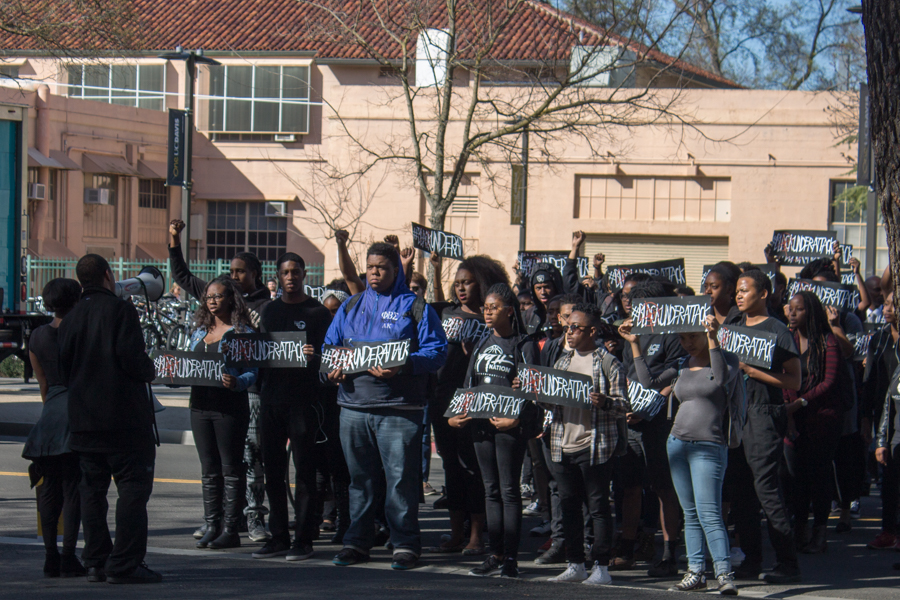
The Black Under Attack movement released a statement on its Facebook page, commenting on the hate crime at the Amtrak station and another recent incident.

“Within the span of a week, we witnessed two hate crimes occur that were directed toward members of the African Diaspora. We stand by our statement that members of the Black community do not feel safe,” said Black Under Attack leaders on the Facebook page.

The other hate crime refers to an incident that took place just eight days before the occurrence at the Amtrak station. In another allegedly unprovoked attack, an African American female student of UC Davis was assaulted by a group of three Caucasian males. The males, from West Sacramento, were also reportedly intoxicated. This confrontation is also being investigated as a hate crime, due to the racial epithets and derogatory terms used against the victim.

The Amtrak hate crime also occurred shortly before a video went viral of an elderly African American male verbally abusing another African American UC Davis graduate on a Unitrans bus.

With hate crimes on the rise, many students feel uneasy and unsure of what to do to resolve the problem and keep the community safe.

“When you look in terms of the educational environment, so much of it is having opportunities to show each other, whether it’s through athletics or social events, that we are all in the same boat,” Barajas said. “Regardless of religion or sexual orientation or ethnicity, we are not lesser people [because of it].”

The suspect involved in the Davis Amtrak attack is described as a white male, 40 to 50 years old, medium build, approximately 5’7” in height, with short brown hair and a mustache. Anyone with information about this case may contact the Davis Police Department at (530) 747-5400.

Written By: SAMANTHA SOLOMON & BIANCA ANTUNEZ – city@theaggie.org

Humor: School administration does not care about uninvolved students

0
DEVIN McHUGH / AGGIE

In a leaked tape, UC Davis administrators were recorded saying that they do not care about students who do not provide revenue for the school. Students who are not involved in clubs, athletics or organizations on campus are seen as “useless” to the university.

In a scene very similar to Mitt Romney’s 47 percent gaffe in the 2012 election, UC Davis officials held a closed-door meeting to discuss ways to increase revenue for the school. An anonymous member of the conference recorded the speech and sent it to The California Aggie. The video can be found at the Twitter link below.

The speech, made by Caspar Darry, head of UC Davis Tax Collection and Revenues, was addressed to department heads and financial pundits.

“We feel as though we need to invest in where the money comes from. We should be funding people that bring us revenue,” Darry said. “If a student does not provide a positive impact on the school’s budget, we shouldn’t care about them. If you sit in your dorm or house all day, we don’t care about you.”

In response to the speech, the student population and the Davis community have united in protest.

“We are all uninvolved students,” said John Clarence, a second-year biology and mechanical engineering major. “I know I make money for the school with my research, but that doesn’t mean I should look at people who don’t negatively. We are one.”

Local activists have planned a “Do Nothing Day” Wednesday of next week. Students are encouraged to stay at home and to avoid providing the school with any of the resources that the school needs, namely, themselves.

The administration is expected to release a statement on Monday in response to “Do Nothing Day.”

You can reach ETHAN VICTOR at ejvictor@ucdavis.edu or read the nonsense he posts in the Twittersphere @thejvictor

The soundtrack to your finals: an introduction to Elliot Root

VENOOS MOSHAYEDI / AGGIE

Alternative group Elliot Root puts catchy, melodic spins on rock rhythms

Finals are full of stress, caffeine-induced anxiety and exhaustion. Nashville-based group Elliot Root, however, manages to conjure melodies that console, rhythms that satiate and a sound that just might get you through next week.

Elliot Root is a staple in any alternative rock playlist, especially for fans of Young the Giant, Mumford and Sons, The 1975 and James Bay. The group’s emphasis on melody inevitably results in catchy tunes, but they also manage to maintain a matured and developed sound via the texture and range of Scott Krueger’s voice. These sing-along choruses successfully avoid the predictability of radio pop. Catchy? Absolutely. Overdone? Not at all.

It is no surprise that they have slipped under the radar since they haven’t yet released a full-length album. Their top hit, “Punks & Poets,” has a little under 300,000 listens on Spotify, and most tracks aren’t even available on Youtube. But, despite this, Elliot Root seems destined for mainstream success.

The band’s music is currently available on SoundCloud, iTunes and even Spotify. But, better yet, according to the band’s website, Elliot Root plans to make a national appearance touring their newest EP. In fact, they have already announced an appearance at Firefly Music Festival, sharing the stage with headliners like Mumford and Sons, Florence & the Machine, Fetty Wap, Porter Robinson and numerous others.

Though I would recommend all of their songs (all 12 of them!), “Punks & Poets” remains one of my personal favorites; the passion of Krueger’s voice in the chorus makes for an excellent car sing-along in which embarrassment becomes irrelevant. No, I am not the person your friend saw dancing alone in a black Kia Spectra on University Avenue shamelessly belting “It’s an alliteration / Punks and Poets / Praying for no pain.”

“Soul is Fire,” a close second on my list of top 12 favorite Elliot Root songs, is the best example of this group’s two most striking aspects: lyricism and warm acoustics. The intro reverberates a simple chord progression, closely followed by the clarity of Krueger’s voice: “Maybe I don’t have the answers / Why you stand where people fall.”

One of the most interesting tracks, “Believe” highlights the group’s ability to test the boundaries of their sound. With prominent electric guitar riffs and the unique, rhythmed manner of speech found around 1:35, this track, yet again, validates their talent.

It won’t, sadly, make up for the Saturday evening final delaying your spring break by a gruesome 48 hours. But maybe it can help.

WRITTEN BY: Ally Overbay – arts@theaggie.org


Hometown heroes surmount the Catamounts

0
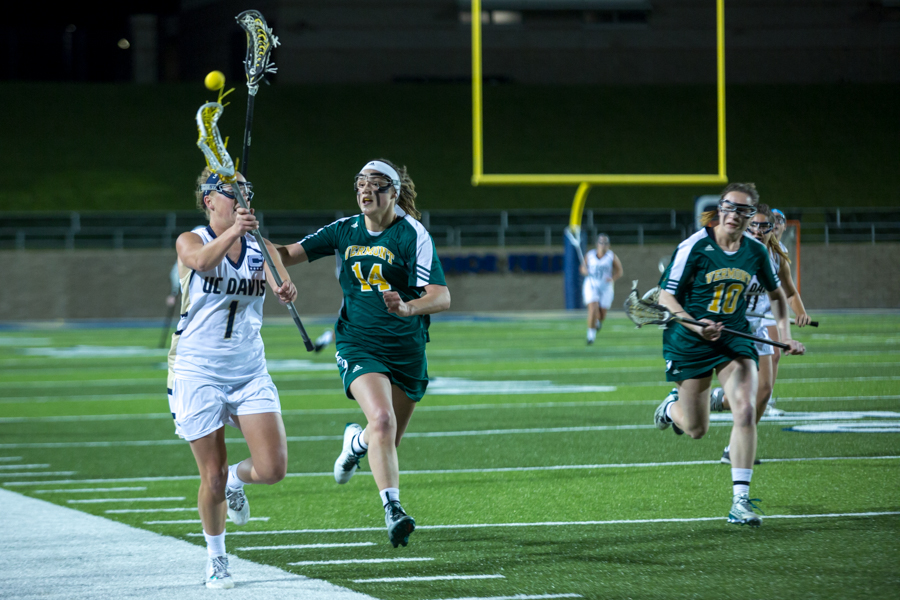
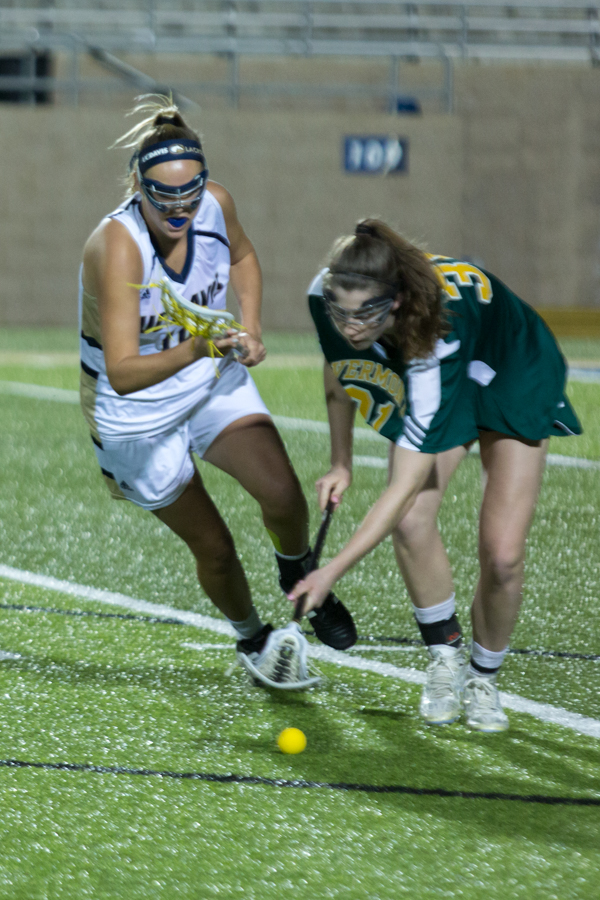
With no one able to catch her, senior midfielder Courtney Neff drives down the line before passing the ball to set up an Aggie scoring opportunity. (JAY GELVEZON / AGGIE)

UC Davis women’s lacrosse defeats Vermont 10-9 in overtime

On Wednesday, March 8, when senior midfielder Courtney Neff slammed in the game-winning goal during overtime, she proved that a single opportunity is all it takes to make a difference.

For their first time under the lights of Aggie Stadium this season, the UC Davis women’s lacrosse team hosted the University of Vermont Catamounts in a match that would end in an Aggie victory.

This 10-9 victory brings the Aggies to an even 2-2 record, and is a perfect springboard for their series of home games.

“We were just so excited [because] it’s our home opener and we knew that we’ve been working so hard in practice and that we had it in us,” said

JAY GELVEZON / AGGIE

senior midfielder Ellie Delich. “There wasn’t a doubt at any point in the game that we were going to pull through.”

The first half of regulation was a back-and-forth affair characterized by each teams’ defensive plays. The Aggies were only able to take the lead once, but that was short lived as the Catamounts quickly equalized. The half ended with scores tied 4-4.

“There were a few slips, but everyone had each other’s back,” Neff said. “When the ball hit the ground, we got that ground ball, and if we let a goal in, we hopped back on the line and knew we would get the next one.”

Getting the next one was exactly what they did. After the two teams traded goals for 12 minutes of play, Neff scored twice in two minutes, putting out a rallying call for the Aggies. Freshman midfielder Taylor Cuenin and Delich, posting her second goal, answered that call, giving the Aggies a three-point lead.

However, some fouls on the Aggie’s defensive end gave the Catamounts three free position shots, which they converted into goals. With only 11 seconds left in regulation play, Vermont looked like it had secured the victory with a shot into the back corner of the net. A judge’s ruling changed the ending score when Vermont’s Vanessa VanderZalm was called for a charge against junior defender Tess Kevorkian just outside the crease. Regulation ended at 9-9, forcing an overtime.

Three minutes into the overtime, Neff took a free position shot after a foul by Vermont. Just like in practice, Neff put the ball in the top corner,

JAY GELVEZON / AGGIE

marking her tenth career hat-trick and giving UC Davis the victory.

Head coach Tee Ladouceur could not have drawn up the night’s victory any better.

“Obviously our goal every year is going to be to win the [Mountain Pacific Sports Federation], but overall my goal is for them just to have the best experience possible, and to come out of games like this being like, ‘Yes!’,” Ladouceur said. “That’s what it’s all about, that’s what we grew up playing for, that’s why we’re here.”

This brand new coaching staff has a lot to prove, but are well on their way to show the Aggie family that they have it all under control.

“I would say, from my perspective, the new [coaching staff] is what is most exciting about [the team] because everyone is experiencing [the new team dynamics] for the first time, it’s not routine for anyone anymore,” Cuenin said. “So I think even though there are freshmen, all the way up to the senior class, those seniors and those juniors and those sophomores all have that excitement.”

The women’s lacrosse team will continue play with a home game on Sunday, March 13, at noon, when they host Saint Mary’s College.
Written by Aaron Sellers – sports@theaggie.org

B More to address issues of race and police brutality

0
B MORE / COURTESY
B MORE / COURTESY

Greg Pierotti’s play explores the death of Freddie Gray through personal narratives

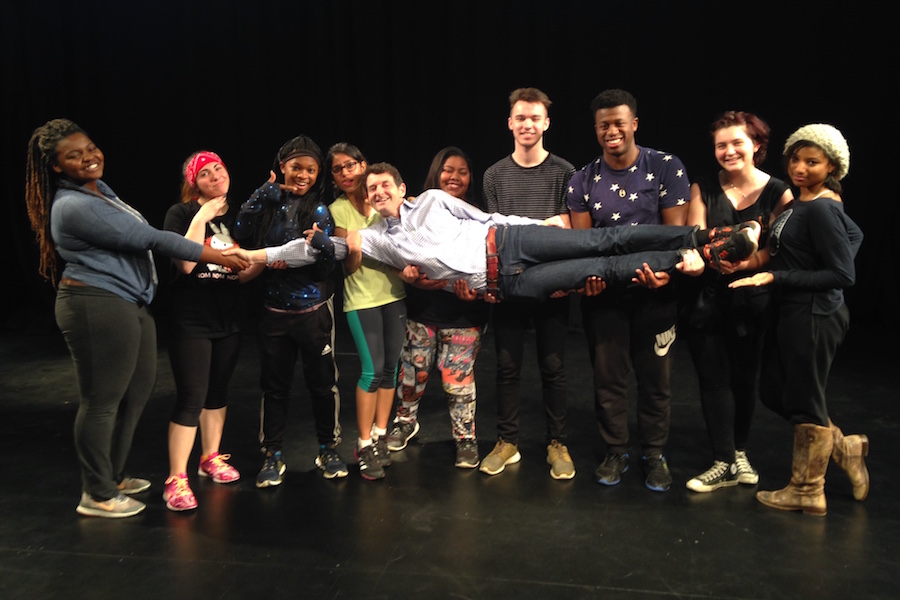
Playwright and director Greg Pierotti’s performance piece B More will premiere at Wright Hall’s Arena Stage on March 11 at 7:30 p.m. B More focuses on different perspectives on the death of Freddie Gray, a young African American man who was killed by Baltimore police in April 2015. The circumstances surrounding his death launched a series of anti-police brutality protests in Baltimore and across the United States.

Greg Pierotti describes his piece as a factual narrative based on a collection of stories that reveal greater insights into issues of race in the United States.

“On its surface, the play, constructed from the actual words of Baltimore residents whom I interviewed over the summer, recounts the narrative of Freddie Gray’s arrest and death and the ensuing street protests,” Pierotti said. “But the play in fact retells these stories to conduct a deeper investigation into the trauma of race relations in the United States. We are also investigating the question of authorship, representation, ownership and spatial politics in the piece.”

The cast of B More is comprised of students from a variety of backgrounds, including some first-time actors. For Gabriel Johnson, a fourth-year economics major, B More marks his first foray into acting. His willingness to get involved with the production stemmed from wanting to give a voice to his community.

“I wanted to get involved because I wanted to ensure my community’s story was being told to the best of its abilities,” Johnson said. “Often black stories are erased or commodified in order to serve the larger public, and I wanted to have a direct hand in how the play was portraying our community, especially during a time where the violence against us is so readily available now.”

Jasmine Washington, a second-year theatre and dance major, will be playing three different roles in the play. Washington explained that the piece is particularly significant to the UC Davis community because of the recent hate crimes that have taken place on and around campus.

“I think being in this production while these clear signs of anti-Blackness were being made on our own campus made this play feel so much more relevant and necessary. It made this feel more universal,” Washington said. “This isn’t just a problem in Baltimore, it’s a problem that our entire society needs to address.”

B More promises to be a thought-provoking and community-building piece, full of emotion and cultural relevancy. The production is slated to run from March 11 until March 13, with shows at 7:30 p.m. each evening as well as a 2 p.m. matinee show on Sunday. Tickets are a $5 suggested donation and can be purchased at the door. For more information please visit the Facebook event page.


WRITTEN BY: Sara Williams – arts@theaggie.org

Step ‘Outside the Lines’

0
DUCKIE PHILIPS / COURTESY

Come see the Theatre and Dance Department’s second event in a three-part dance series

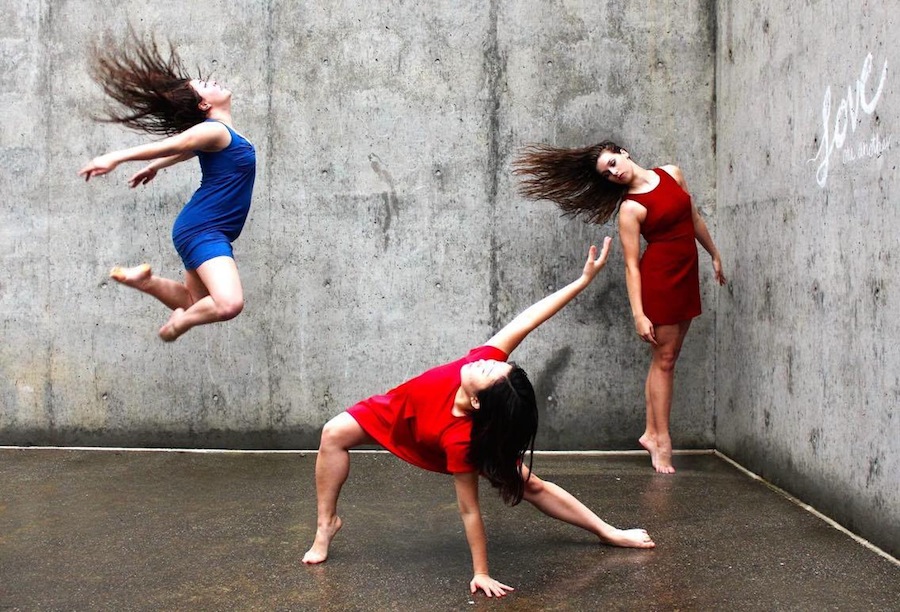
From March 10 to 12, the Theatre and Dance Department will be presenting Outside the Lines 2, the second event in a three-part dance series that allows audiences to witness the evolution of an artist.

The show will feature new choreography from students who danced in the previous show, which was held in December, as well as new students who will be presenting their own choreography. This event features styles representative of the dance department and is a unique chance for people to see a production in various stages of conception and development.

Olivia Schlanger, a second-year psychology and dance double major, feels fortunate to be featured as both a dancer and choreographer in the production. To her, dance is more than movement created just to please an audience — it’s a way to heal both mentally and physically.

“Dance is a gateway to explore the world while simultaneously being an amazing form of communication,” Schlanger said. “[It] begins with space, but there are so many other factors to take into account such as facing, spacing, timing, emotions, theme, motifs, variations, patterns and relationships,” Schlanger said.

Caitlin Vanderveen, a third-year dramatic arts major with an emphasis in dance, said that the main goal of the three-part dance series  is to educate audiences about the process of choreographing a show.

“The second installation of Outside the Lines focuses on the continual development of more abstract ideas in the choreographic process as well as a technical addition of more complex lighting,” Vanderveen said.

At the age of four, Vanderveen choreographed her own dance to the soundtrack of Grease. Since then, dance has been a consistent part of her life, and her way of expressing her emotions.

“[Dance] is also how I cope with anger, frustration, sadness, joy and any emotion in between,” Vanderveen said. “It is creation, it is an embodiment of my soul and it is a way to see the world through another person’s eyes.”

Another dancer and choreographer Sarah Kim, a third-year economics and dance double major, views dance as a way to be creative and active as well as gain life lessons and apply them.

“I love that through dance, I can be myself while challenging myself to be better. Through dance, I’ve learned how to keep trying, work as a team, push through individual obstacles and to stay diligent,” Kim said. “We are, quite appropriately, stepping outside the lines by pushing past our comfort zones and presenting new work that differ from our past work.”

Outside the Lines 2 runs from March 10 to 12 at 8 p.m. in Wright Hall. The suggested donation is $5. Please visit the Facebook event page for more information.

WRITTEN BY: Megan Toy – arts@theaggie.org

Backstage with the creators of Serial

0
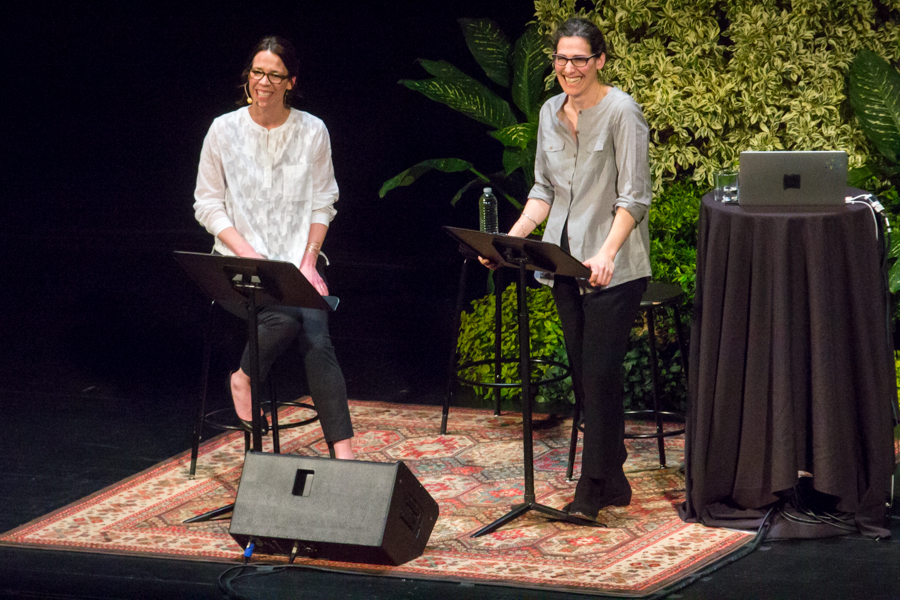
Julie Snyder, the executive producer of Serial (left), and Sarah Koenig, the host and executive produce (right). (ARIEL ROBBINS / AGGIE)
Julie Snyder, the executive producer of Serial (left), and Sarah Koenig, the host and executive producer (right). (ARIEL ROBBINS / AGGIE)

Co-producers of popular podcast give talk in a packed Mondavi Center

During Monday’s “Backstage with the Creators of Serial” event, co-producer Julie Snyder talked about how difficult it can be for journalists to own up to the fact that they don’t know everything about a story and probably never will.

“It puts you in a vulnerable position to admit uncertainty,” Snyder said.

So, in the spirit of Julie Snyder, I’d like to admit that I haven’t listened to every episode of Serial, haven’t gone back and listened to Season One since I first listened over a year ago and haven’t kept up with Season Two’s exploration of the Bowe Bergdahl case. But none of that stopped me from thoroughly enjoying my evening at the Robert and Margrit Mondavi Center for the Performing Arts.

For those who have never heard of Serial or for those who are confused as to how two public radio producers managed to sell out the Mondavi Center on a Monday night, here’s a quick rundown. The podcast originally began as a spin-off of “This American Life,” the long-running radio program hosted by Ira Glass. While “This American Life” consists of hour-long podcasts focusing on a new theme every week, Serial is, as the name suggests, a serialized podcast that tells one story over the course of several weeks. Launched in October 2014, the podcast quickly exploded in popularity and became the fastest podcast to reach five million downloads in iTunes history. As of February 2016, Serial had been downloaded over 80 million times.

And after watching Julie Snyder and co-producer and host Sarah Koenig take us backstage and show us some of the less glamorous aspects of podcast production, it’s easy to understand why Serial exploded the way it did. Snyder and Koenig are clearly committed to telling stories in a complex and nuanced way. They understand that the most compelling stories are the ones that lie in the details, the stories where the truth is much less black and white than it appears to be.

Koenig and Snyder are also experienced and dedicated journalists. In Season One, the team told the story of Adnan Syed, who had been found guilty of murdering his ex-girlfriend, Hae Min Lee, and sentenced to life in prison. As part of her job, Koenig had to conduct an immense amount of research on the case. Koenig told an anecdote about her experience sorting through a 2,000-page government document that included everything from diagrams of tires to an obscure drawing of how cell phone towers work.

“It was like asking for a sweater and getting an angry ball of yarn,” Koenig said, to much laughter.

Snyder and Koenig were refreshingly funny and transparent throughout the talk, letting the audience in on behind-the-scenes moments like the time they accidentally posted “Adnan did it” from the official Serial Facebook account or the time Adnan called Koenig from jail to tell her he’d just eaten an entire box of Krispy Kreme donuts.

After the presentation, audience members were allowed to ask questions directly to Snyder and Koenig. While a question about Islamophobia and the presence of Islam in both seasons seemed to throw the creators off (“Islamophobia is bad,” Koenig said), the pair fielded the questions with humor, grace and humility. There was the inevitable question about whether Koenig thinks Adnan Syed had really killed Hae (she understandably didn’t give a yes or no answer), as well as a question about what Season Three would focus on.

The Speakers Series for the 2016 to 2017 season at the Mondavi Center will be announced in April. Here’s to hoping that they’re just as fun and entertaining as Julie Snyder and Sarah Koenig were.


WRITTEN BY: Amanda Ong – arts@theaggie.org

Political Ambiguity: Political language and its effect on the public

0
JAY GELVEZON / AGGIE

Politicians, no matter what policies they promote, strategically use their words to get people to like them. This may sound obvious, but much of the population would be surprised to learn that politicians manipulate words and phrases to sway peoples’ opinions and position on various issues.

When one repeats a word multiple times, it may come off as redundant, but when politicians are repetitive, they are remembered and noticed for what they say. Politicians create a brand for themselves by standing by a certain position and sticking to it. You may remember Bernie Sanders for questioning the “grotesque levels of income inequality in this country.” He is not going to be remembered for something he says for 10 seconds. He gains traction with supporters and detractors alike by letting people hear his message over and over again. Politicians and their speechwriters know what people want to hear. One of the first goals of a politician is to get elected, and that means getting noticed and getting people to adopt their points of view.

Politicians use appealing language to get a majority of Americans to stand with them and to make sure supporters do not question them. If more of the population could see through the flowery language that the current presidential candidates are utilizing, conversations about the election could be far more constructive.  

The way in which politicians and mass media use language affects mainstream discourse. Prior to 2014, the term “undocumented immigrant” was rarely used. Afterwards, presumably through campaigns by various activist groups to encourage people to stop using the term “illegal” when referring to immigrants, many politicians have adopted the term “undocumented.” Politicians, whose repetitive language frequently appears in the media, influence what Americans say at the dinner table. That the term ‘illegal’ is now largely taboo when referring to immigrants is not just due to activists, but also to politicians who have struck the word from their vocabulary.

The atmosphere of hope and change that swept America in 2008 would not have happened if then Senator Barack Obama did not use his language in a manner that touched so many. A lot of people may still remember the town halls and rallies that Obama attended prior to the 2008 presidential elections. His key slogan, “yes we can,” and his attempt to bring regular people into the political process were revolutionary. As he toured America, bringing hope to economically struggling Americans, Obama and his campaign touched the hearts and minds of so many in a way that very few politicians had done before. It seemed that people believed in Obama’s words so much that they believed economic relief would descend upon the country on day one of his presidency. Despite the tough times predicted after the 2008 election, Obama’s positive, charismatic attitude united Americans under the “yes we can” mentality.

What politicians say, the way they say it and the words they use affect how we view them, their policies and our own beliefs. Your own opinion of different politicians may range solely on their speech. You won’t listen to someone talk about something if you are not engaged by the language that they are using. For example, a professor or a banker will use Bernie Sanders’ words about wealth inequality or Ted Cruz’s remarks on ‘Islamic extremism.’ The political debates that happen on television between politicians are reenacted between folks in their daily lives. Phrases and terms used in this very column include slight tidbits of politicians’ arguments or words that have impacted my own beliefs.


You can reach Justin Chau at jtchau@ucdavis.edu. Any questions, comments, and concerns are welcome.

The Elephant in the Room: Wake up to whitewashing

0
ASHLEY LUGO / AGGIE
ASHLEY LUGO / AGGIE

One of the most subliminal and pervasive forms of racism today is whitewashing. When you break down the word, it’s merely a metaphor for covering up or glossing something over. Americans essentially ignore stark racial injustices by “whitewashing” minority plights.

This past month, the Academy Awards placed the issue of racial inequity front and center. (It takes the Oscars because we live in a world where more people will vote in Kim Kardashian’s Twitter poll than in the Iowa caucuses. But I digress.) The hashtag #OscarsSoWhite brought whitewashing to the mainstream in 2015, when it was revealed that not one of the 20 acting nominees was a person of color, despite critically-acclaimed Black-led films like Creed and Straight Outta Compton, and a powerhouse performance in Beasts of No Nation by Idris Elba that was considered a shoo-in for a Best Supporting Actor nomination. It then spread into a wider conversation about the dearth of people of color in Hollywood and the extreme whiteness of the Academy’s 88-year history.The overwhelming underrepresentation of minorities in media and the preference for whiteness is obvious. White people are habitually cast to play non-white roles. For example, Emma Stone played Allison Ng in the film Hawaii (2015), despite the storybook description of an Asian protagonist. I also bet you didn’t know that the character of Ra’s al Ghul in Batman Begins (2005), played by Liam Neeson, was traditionally shown in the Batman comics as an Arab man.

Minority actors also face backlash when they play roles that have been occupied by white people. In Star Wars: The Force Awakens, John Boyega played a stormtrooper, and in a stage adaption of Harry Potter, Noma Dumezweni was cast to play Hermione. These roles are both non-racially specified and set in completely fictional places, but when they were cast, all hell broke loose. This is an issue of racism.

Minority repression occurs behind the scenes too. In storylines with Black thugs, Arab terrorists and Asian karate masters, it’s difficult for viewers to see through these stereotypes they have been fed for decades. Minority roles are limited when groups are confined to one or two clichéd characters that disseminate messages of subjugation. Being in Hollywood can be empowering. But when minorities are given these stereotypical roles, it’s often part of a belittling process. Even in acting, which is traditionally a liberating platform where actors can put on a costume and be someone else, minorities can only be what the white producers or casting directors want them to be.

This issue is whitewashed so literally and figuratively, it is sickening. The practice is covered up with lies. People try to argue that white people are more qualified, or they point out the few extraordinary examples of triumph, like the stories of Morgan Freeman and Denzel Washington. Just because someone beats the odds does not mean that the odds are acceptable. Systematic racism is unacceptable.

Whether you choose to see it or not, racial injustice exists. Social constructs built around race determine the way people interact and perceive each other. Passive racism occurs when the issue is not discussed, and attacking the root of the problem is ultimately not addressed. To become colorblind is to become complicit.

Talking about race is uncomfortable because there is an issue. The film industry is only one system in which minority opportunity is quelled and injustices are covered in white-out.

You can reach KATELYN COSTA at kcosta@ucdavis.edu

Black Lives Matter: Then and there, here and now

LUCY KNOWLES / AGGIE

The Black Lives Matter movement’s evolution, adaptation and growth within the Davis community

Community is generally defined as “a feeling of fellowship with others, as a result of sharing common attitudes, interests and goals.” But as of late, the UC Davis community has fallen victim to several troubling and violent events, causing some students to question the strength of their community.

The Black Lives Matter movement was founded in 2012 following the death of African American 17-year-old Trayvon Martin. In the following years, the deaths of hundreds of Black americans — including Michael Brown and Eric Garner, whose deaths drew national attention — have fueled and strengthened the movement for social progress against the institutional and social anti-Black behaviors that continually occur throughout the nation.

“What inspired people was police brutality, but it was a revitalization of civil rights,” said Kyla Burke, a fifth-year environmental science and management major and co-founder and organizer for Davis Stands with Ferguson. “It’s much more than that and about how they are dispositionally seen because of society. If you want to tackle police you have to tackle white supremacy, microaggression and challenging anti-Blackness as a whole.”

Although Black Lives Matter is a widespread national movement, its power can be felt even in small college towns, like Davis. Davis Stands with Ferguson came about as a local group voicing their support and solidarity with Black Lives Matter. Following a Ferguson solidarity protest on-campus last Fall, the group has met to discuss racial and ethical concerns, and works together with the Davis community to combat anti-Black sentiments and forms of racism in the country that exist today.

“Many of us learned about organizing because we were drawn into this,” said Brandon Buchanan, a fourth-year sociology graduate student and co-founder and organizer for Davis Stands with Ferguson. “We had a conviction to address anti-Blackness on campus. It’s been a really exciting past few years.”

Since then, the movement has progressed and adapted to address current issues which involve not only racism in the face of police violence, but also anti-Black sentiments and racism seen in various factions of society. The group takes action against these broader issues in the hopes of creating change that will last for generations to come.

“It’s become much broader, less reactionary […] and more proactive in getting involved with Black Lives Matter activists, and challenging racism in all kinds of directions,” Burke said. “The single overarching thing is broadening the movement and challenging anti-Black racism on different levels.”

According to Buchanan, Davis Stands with Ferguson’s strategies have evolved from reactionary to focusing on how to address institutional racism present in the minds of many students on campus.

“We realized that only reacting to incidents as they came up wasn’t addressing the long-term structural problems that were present on campus,” Buchanan said.  “There would always be someone new to mourn, but what we needed to do was preempt that mourning by addressing systems and structures that made them vulnerable in the first place.”

One example is the U.S. private prison system. The group has worked with ASUCD on private prison divestments through Resolution 14, their largest effort to combat the prison-industrial complex. The resolution passed late February with an 11-0-1 vote, and urged the Board of Regents to practice social responsibility when divesting from corporations that are directly or indirectly involved with the private prison industry.

The resolution was in response to reports of $25 million investments in private prisons as well as an additional $425 million by the University of California (UC), all of which fall under the category of the for-profit industry of mass incarceration, a system in which racial disparities are prominent. Although African Americans and Hispanics make up only one quarter of the U.S. population, African Americans now constitute one million of the 2.3 million incarcerated population, and when combined with the Hispanic population, they total 58 percent of prisoners in 2008.

In addition, African Americans are imprisoned at ten times the rate of whites for drug offenses, and serve just as much time in prison for minor drug offenses (58.7 percent) as whites for a violent offense (61.7 percent).

The most notable recent development, however, is the introduction of the movement “#BlackUnderAttack” last month. During the past few weeks, the movement caught the attention of community members in their efforts to combat anti-Black feelings pervading not only Davis, but extending outward. The group was founded following the assault of a female African American student in West Village in February.

“After the hate crime happened, there was an email outlining what occurred vaguely,” said Kelechi Ohiri, a second-year textiles and clothing major and media strategist for Black Under Attack. “The next day we wondered what we were going to do and the term that came up was anti-Blackness. We’ve all experienced it to some degree and this was the final straw. It’s our response to the anti-Black climate not at UC Davis, but the institution in general.”

On Feb. 23, just after the West Village attack, a 32 year-old Ethiopian male was attacked by a white male. The assault occurred at the Amtrak station, where the man was kicked relentlessly, verbally harassed and fell onto a concrete bench, sustaining injuries.

“It was very unexpected and more than anything [we] just [felt] sadness,” Ohiri said. “People were just thinking ‘are you kidding,’ and as much as it becomes a problem, there’s still that feeling of thinking there are good people in the world — we hope it won’t happen, but to see it happen is disheartening and angering. I still don’t think we know wholeheartedly how to feel, but that’s why we started the movement.”

What makes Black Under Attack especially unique is the emphasis that is put on communal support. Members focus specifically on healing and working together to ensure that every Black student feels secure in Davis.

“We’ve really learned the power of community and taking time to heal,” Ohiri said. “In between sessions we’ve taken time to listen to each other. We don’t prioritize healing because we’re [so often] focused on fighting. But healing is just as important as fighting, and by taking time to talk about these problems we’re dealing with, we grow a lot.”

Students have created community support by accompanying their peers from class to class, and offering rides or one’s company to feel safe.

It is unquestionable that the events unfolding not only in Davis, but also on a national level, are tragic; to groups such as Davis Stands with Ferguson, they mean a call to action.

Yet despite every barrier, the Black community’s solidarity remains just as strong as ever. According to Buchanan, there is always something new to learn through listening to students’ stories.

“I’m looking forward to the future, but as we mobilize, there are dangers ahead,” Buchanan said. “Dangers from institutional co-optation [and] dangers as Black students fight to get their experiences recognized. When Black students organize, that’s when white supremacy feels their institutional privileges are contested and they have things to lose.”

For Burke, hope is not a question — it is a necessity.

“To be an activist you have to be hopeful,” Burke said. “Because if I don’t think things can change, why am I putting my efforts to change them?”
Written by: Alan Castillo — features@theaggie.org

Photo of the Week: 3/9/2016

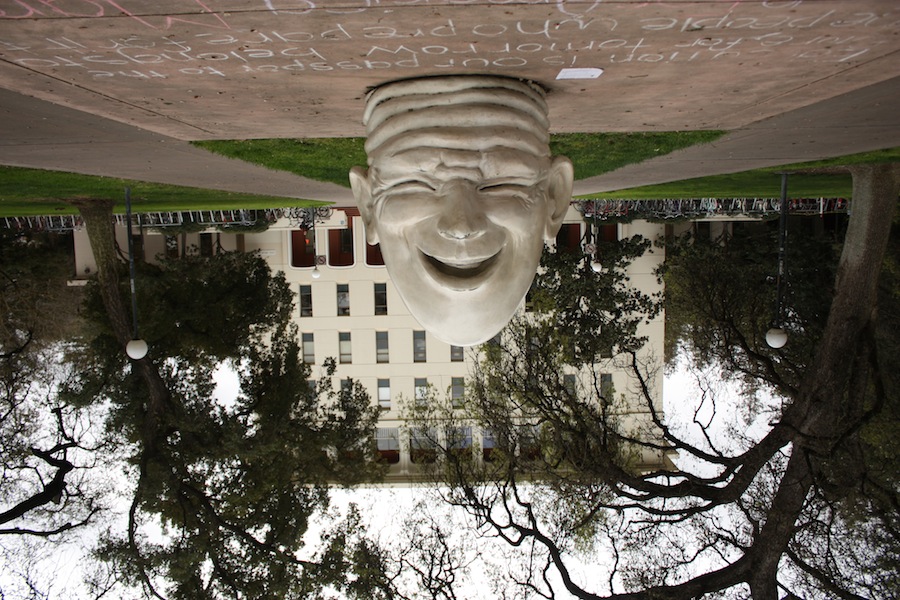
Falling head over heels for UC Davis. (DEVIN McHUGH / AGGIE)