55.7 F
Davis

Davis, California

Monday, December 22, 2025
Home Blog Page 738

Big West Scholar Athletes of the Year announced

KATIE LIN / AGGIE
KATIE LIN / AGGIE

On March 3, the UC Davis recipients for the 2015 Big West Conference Male and Female Scholar Athletes of the Year were announced. Neal Monson of men’s basketball and Ana Marija Sola of women’s soccer were awarded this distinction due to their academic excellence and athletic prowess in their respective sports.

The Scholar Athlete of the Year is awarded to two outstanding student-athletes from each university in the Big West Conference, for a total of 18 honorees.

A senior midfielder for the UC Davis women’s soccer team, Sola helped lead her team to a 10-7-2 overall season, and has twice been selected for All-Big West. She holds a 3.985 GPA and will graduate in the spring with an English and neurobiology, physiology and behavior double-major.

Monson, a junior center for the UC Davis men’s basketball team, has been a defensive star for the team this season. He leads in both total and defensive rebounds, averaging 8.5 and 6.3 respectively. Monson sustains his philosophy major with a 3.888 GPA, and plans on pursuing a law degree.

Written by Bryan Sykes – sports@theaggie.org
Inside the Game with Kaylin Squyres

0
BRIAN LANDRY / AGGIE
UC DAVIS ATHLETICS
UC DAVIS ATHLETICS

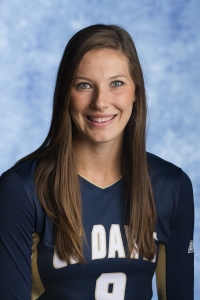
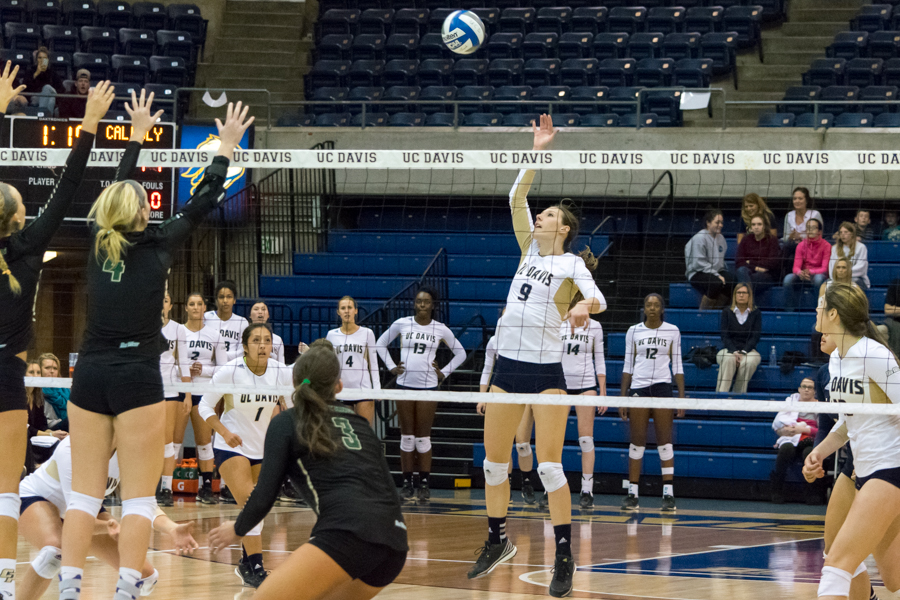
This week, The California Aggie spoke over the phone with Kaylin Squyres, a driven outside-hitter and English major from Rocklin, Calif. who looks forward to rocking the volleyball world. In her final year with the Aggies, Squyres led the conference in kills and non-libero digs. All of her work this season and last year brought her national recognition and success. Recently, the U.S. Women’s National Team invited Squyres to tryouts at the Olympic Training Center. Although the tryouts hosted 220 athletes, Squyres was one of only six athletes specifically invited to the tryouts.


When did you start playing volleyball?

I started playing volleyball in the seventh grade. I tried out for my middle school team and I made it, and then I went on to play club right after that.


What attracted you to the sport why did you want to try out for volleyball specifically?

I had always been told, “Oh you’re so tall, you should definitely get into that sport!” And one of my friends had started to develop an interest; she started trying out for the team, so I decided it was a good thing to do. I just started middle school in the seventh grade, and had tryouts at the very beginning of school, so it sounded like it would be a really good thing to get into. It ended up being a great thing to get into!


So now, more recently with your college and high school careers, what would you say has been the key to your personal success?

I think I am really driven to push myself to achieve as much as I possibly can. I think that from the very moment that I started playing volleyball in some degree, I had always hoped that the next step is to get a scholarship for playing in college. That was a little bit further off than I had realized, but it ended up happening. So that was definitely a big point in my career, envisioning myself in the future and saying, “Okay, what is it going to take to get to that next step?” So, when I was in the seventh grade, [I wanted] to continue with that and play at one of the highest levels that you can play at in this sport. I definitely attribute success to having big goals, and a willingness to achieve and do what it takes to achieve those goals.

Were you personally self-motivated, or did you have a lot of your friends and your family members pushing you to succeed?

I would say I’m very self-motivated. When I started playing power club, which [involves] traveling all over the state and a bit around the country, [my parents] went to the first parents meeting and found out that the goal of every parent on that team was for their daughter to have a scholarship. That was never necessarily their goal for me, it was just, “Kaylin enjoys this sport, she loves playing volleyball, so we’ll let her go ahead and continue playing at this level that she made on the team.” So they had no expectations of going and getting a scholarship; that’s the reason [people in general] are playing this sport.

I was entirely motivated by myself. I made my own highlight film, I talked to coaches myself. My parents were very supportive, but they weren’t very involved in that process.


Could you talk to me a little about how they were supportive? Were they enabling you to do everything that you wanted, or was it something else?

Yeah, they were definitely enabling. Once I had decided that this was my goal, I wanted to make sure that I could play in college, [and] they kept continuing to support me, both financially and with moral support in volleyball. They still do that to this day. When I tell them whatever I’m trying to do they are like, “Great! You can do it!” They are always there on the sidelines, bringing it in whatever way I ask them to. It’s a really good dynamic. I think that because they haven’t pushed me to do anything that I didn’t want to, I was able to have this interest for so long, instead of the interest dying out because it had been pushed on me so hard. I think it was a really good balance.


Talking about your collegiate experience here, when I imagine it became less of your parents helping you and more of your team and your coaches and that sort of thing, could you talk a little bit about that amount of work, and that dynamic and relationships that you’ve built throughout your college career?

Playing, going through sports, is definitely something that you have to be tough for, physically, mentally and emotionally. Having our coach, Dan Conners, come in when I was a junior, that was something that was a big question mark right before he came in. Like, is he going to invest the time in me? Since I’m a junior now, he probably wants to develop his own program and do things his way. I wasn’t sure how that was [going on] in his mind. But it ended up being a really great change for our program. Dan really helped develop a culture of support and sort of a familial structure. So that was a great change to our team.

It made everyone a lot closer, I think. He really encouraged people to be the best person that they could be, and part of that was being the best teammate that you could be. Coaches say that all the time, but I think he really emphasized that. Whoever is on the court, everyone else should be supporting them. If you have an issue with someone or something that is going on, you address it. He gave us the time to do that, instead of just preaching it and not really following through. I think that was a great part of the way our team operated.

In terms of the girls, when you are around someone, around a group of people so much, it can be tiring. There are times when people get on each other’s nerves and everything, but it also creates this bond that I don’t think you can have with anyone else. You go through great wins, you go through bad losses, you go through hard times in practices, hard times emotionally when there are issues on the team. I think that playing college sports is such a gift, because you have that kind of relationship with someone that you really don’t have with many other people.


I’m glad you’ve gotten to experience that since it seems like you’ve personally grown a lot and shown that it’s helped you.

Absolutely.


To talk about last year, transitioning from junior to senior year, you had a stellar last season. I just want to know, did you expect this outcome? To be invited to continue on with volleyball, even though you said you had some question marks about whether or not you were going to be played or given opportunities.

I had a really successful junior year and I developed a really good relationship with Dan. I think going into senior year, I had expectations that I would be a big role on the team, and that I would be getting a lot of swings in matches and all. I don’t think I expected that I would be invited to try out for the National Team, which was the pinnacle of my career so far. Getting the opportunity to compete at that level, regardless of the outcome, the opportunity to compete for a spot even, was just such a blessing. I’m really grateful for that.


I take it you haven’t heard back from them yet?

I have not heard back from them yet. I think they will be reaching out to people in March, so sometime this month.


I know that you planned initially on going to law school here at UC Davis. Has this non-expectation of continuing on with volleyball changed your five-year plan or trajectory in your life?

I wasn’t sure early in my college career if I would still be interested in playing or not, because there are a lot of opportunities to play professionally overseas, primarily in Europe. I wasn’t sure if that was something I’d be interested in early on in my career because I thought I might have burnt out by this time. But, considering how my junior year and senior year went, I am still totally in love with this sport, and had actually planned, before the National Tryouts, on trying to play overseas professionally.

I think that it is still on my radar; I want to continue this sport. I’m not quite done, I have a little bit more to give, and I want to see where I can end up. That was my plan, and still is my plan. I hope to continue, whatever happens with the national team. I entered that with not a whole lot of expectations, but with excitement and gratitude that I could be there.

I plan on continuing my volleyball career, either way, for some time. Then I do hope to go to law school after that.


Have you made any concrete plans for playing overseas?

I do have contacts. Right now I’m in the middle of working with an agent who is in the United States. I’ve been in some very brief contact with some managers overseas. I’m in the very early stages of that process, but it’s looking like something will be able to work out. I’ve been contacted by a few teams, who are wanting me to sign right now.

They’re trying to get me to take the last quarter of my academic career off, and come back to it later. But that is something that I’m not interested in, I want to make sure I finish my degree and then go play volleyball.

I’m in the early stages of figuring that out, and I hope that I will be somewhere abroad, probably in the fall.


Aaron Sellers can be reached at sports@theaggie.org

Urinetown: so much more than a show about pee

LUCY KNOWLES / AGGIE

Studio 301 presents Urinetown The Musical

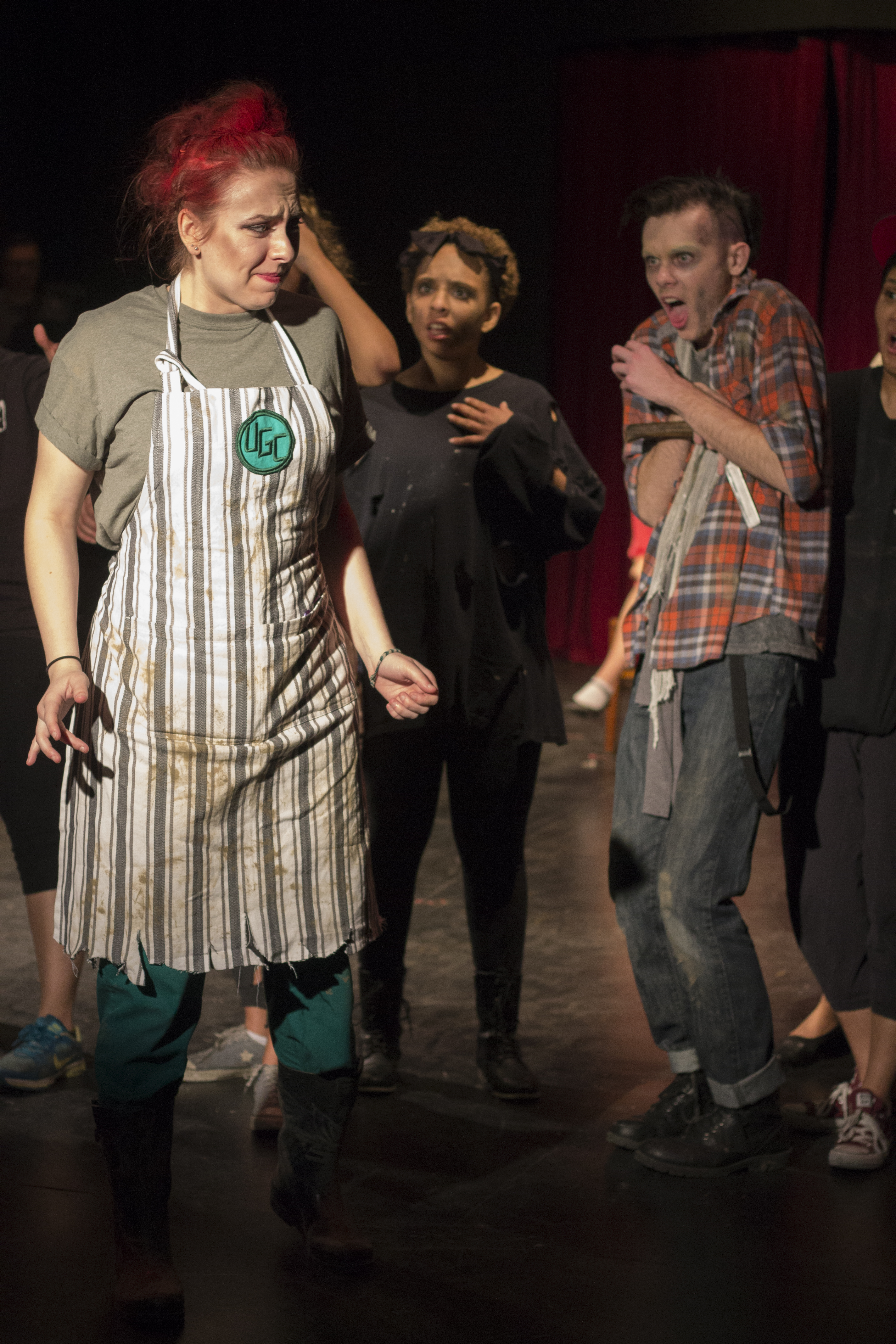
Do you like musical theater? Then urine good company! From March 10 to 13, Studio 301 at UC Davis is presenting “Urinetown The Musical” at the Wyatt Theater. The musical is about a dystopian society where there is a severe drought that requires people to pay to use the toilets. When asked how they would describe the play, cast members said that it was “complicated, hilarious, satirical and messy — in a good way.”

Rachel Wurr, a third-year animal science major who plays Penny Pennywise, the loud and annoying girl who’s in charge of the toilet, expressed a sentiment the entire cast seemed to agree with — Urinetown is a very difficult musical to describe.

LUCY KNOWLES / AGGIE

“You can’t describe [Urinetown] in a few words, even with a whole sentence. You just have to see it,” Wurr said. “Everyone says to me, ‘Why are you doing a show about pee?’ But it’s so much more than a show about pee!”

Jason Moscato, a fourth-year dramatic arts and linguistics double major and director of Studio 301’s production of Urinetown, said that he has wanted to direct Urinetown since he first saw it, and is especially excited to be doing it at a time when the musical is so politically relevant.

“It’s a little unsettling how similar [Urinetown] is to real life events that are happening right now, especially with the upcoming election and in light of the drought that we’re in,” Moscato said. “It’s very topical and a little eerie.”

Matthew Benitez, a third-year computer science major, plays Senator Fipp, a nervous trainwreck of a horribly selfish and cowardly person who is supposed to represent corrupt government. Benitez hopes Urinetown will challenge the audience’s beliefs and make them think critically.

LUCY KNOWLES / AGGIE

“It makes you think about systems of power and inequality, who has authority and how people abuse their power,” Benitez said. “A lot of the time you’ll find your perspective and your opinions changing throughout the show, and that’s my favorite part about it.”

Though Urinetown is a challenging play that deals with complex issues, it’s also hilarious and action-packed, full of stunts and lifts and fake blood.

Karl Uriza, a fifth-year dramatic arts major, plays Caldwell Cladwell, the devious and rich owner of Urine Good Company who takes advantage of the drought. Uriza believes Urinetown is definitely worth watching, even right before finals week.

“It’s a good break before finals,” Uriza said. “It has good humor — toilet humor, pun intended — and I think students on campus will love this show.”

The show runs this Friday and Saturday at 8 p.m. and this Sunday at 2 p.m. Tickets are $8 for students and $10 for the general public. The final dress rehearsal is on March 10 at 8 p.m. and tickets for that are $4 for students and $5 for the general public, with half-price admission for those who bring a canned good or dry food item. Check out the event on Facebook and make sure to like the Studio 301 Facebook page.


WRITTEN BY: Sofie Bates — arts@theaggie.org

The handy dandy guide to putting sauce on your food

0
HEE-AH YOO / AGGIE
HEE-AH YOO / AGGIE

This week we’re going to talk about sauce (or as I like to pronounce it, “sowse”). Often, sauces bring flavors to life, help mix two otherwise incompatible flavors or, in more dire cases, mask the bland or unpalatable thing that somehow ended up on your plate. Thanks to Cholula, I’ve been able to get through some pretty boring pasta dishes I’ve ordered. Thanks to hoisin, a mediocre Bahn Mi can taste like an Asian deli sandwich. And when I’m eating Mexican food and it’s one of those places that charges you for a salsa refill, Tapatio has helped me get through my remaining tortilla chips. But sauce shouldn’t always be used like duct tape on a broken rearview mirror. Learn to apply the right sauces, in the right amounts, to the right ingredients, and you might be surprised with the results. Just buy a three-pack of these and start experimenting with putting sauces on everything you eat. Before long you’ll know what goes best.

Davis is home to a somewhat diverse selection of interesting sauces. Here are my nine favorite ones to order around town:

  • Ali Baba – White Sauce

I lied. I’m not actually particularly crazy about this sauce, but I know people who live and die by it, so I figure it’s worth a mention. This yogurty, homemade sauce might strike your taste buds the way you like. Another sauce related tid-bit about Ali Baba: they put honey and tapatio in their breakfast burritos, which is why they’re so delicious.

  • Taqueria Guadalajara – Brown Spicy Salsa

I’m sure many of you have been to the Taqueria Guadalajara near the Save Mart off Anderson Road and Covell Boulevard. That location is good, but their salsa bar is lackluster. The other location of “Guads” is located in South Davis on Mace Boulevard. It’s well worth the bike considering the chips are much fresher and the salsa bar is miles ahead of the other Guads. South Davis Guads has a brown spicy salsa that tastes dark and earthy, almost like mole, but with green onion and cilantro and other fresh chunks to give it a crisp, layered taste. While it’s my favorite salsa there, the rest of the salsa bar is also worth checking out.

  • Zia’s Delicatessen – Pesto Mayo

This homemade pesto mayo is one of my favorite sauces in Davis — I usually ask for extra. It’s thick and creamy, like mayo, yet fresh and light, like pesto. It’ll make you feel dirty (mayo) and clean (pesto) simultaneously. I like to think that after Jesus turned water into wine, he turned the wine into Zia’s pesto mayo. Lucky for you, Zia’s and Jesus are homies.

  • El Burrito – White Sauce

El Burrito has a pretty good salsa bar (with an overlooked smoky, dark red salsa), but there’s one stand out sauce: the white. El Burrito white sauce is good because you can’t even really taste it specifically, your food just tastes generally better with it. It accentuates flavors, makes meats taste sweeter and blends flavors together more cohesively. And because Mexican food is often the same seven ingredients mixed together in various ways, it’s pretty much good with anything on their menu.

  • Shanghai Town – Eggplant Vermicelli Sauce

You’d be remiss not to order the Eggplant Vermicelli next time you visit Shanghai Town. This sweet garlic sauce is not only delicious, but they always give you way too much of it. This means that after you eat the eggplant, you can pour your remaining sauce over rice. It’s incredible.

  • Dos Coyotes – Mango Salsa

The Dos Coyotes mango salsa is the crown jewel of their salsa bar. I usually end up filling up about four containers with various Dos salsas, including an additional two to three containers of the mango salsa. This salsa is extremely sweet with cubes of mango, onion and chopped parsley that add a bright, clear quality to the sweetness. It pairs well with everything from their chips to their wet burritos to their pulled pork nachos.

  • Mr. Pickles – Baja Sauce / Garlic Sauce

When you order a sandwich from Mr. Pickles, you have the option to get “everything” on it, which includes all your typical sandwich toppings plus their scrumptious garlic sauce which is rich and slightly creamy. I recommend the “Summer Love” sandwich as it comes with baja sauce and you can add garlic sauce. The combo is sensational.

  • La Pinata – Habanero Salsa

It took me a while to notice this salsa because it’s in one of the smaller salsa containers and has a bright orange hue that doesn’t look overtly appealing. But it’s the best salsa there. Not for the faint of tongue, this salsa is marked “very hot.” As you struggle under the heat of this sauce, you pick up the subtle smoky flavors of the habanero peppers. It’s for all you heat-seekers.

  • Dumpling House – Sauce

The Dumpling House sauce is 50 percent of the reason why this establishment is so good. That is, the dumplings would not be the same without the sauce, and the sauce would not be the same without the dumplings. The two match perfectly together, intertwined in holy fried matrimony. Whatever is left of this hyper-tangy, yet viciously sweet sauce is worth taking to go for your next stir-fry or potsticker sesh.


JONAH VERSMAN was recently awarded an honorary degree from UC Davis’ non-existent culinary program. He can be reached at jiversman@ucdavis.edu.

Bring ‘insert big-name musical artist here’ to Davis

0

tilt_fe_GelvezonUC Davis students use Tilt, Entertainment Council as mediums to bring musical artists to campus


UC Davis students unwind from responsibilities such as classes, extracurriculars and other routine activities through many platforms. However, one of the more popular ways lies in looking forward to and attending concerts, a method that currently fills Facebook with a multitude of pages all titled something along the lines of “Bring ‘Blank’ to Davis.”

“A concert is a nice break from schoolwork,” said Christopher Lim, Entertainment Council (EC) productions coordinator and first-year undeclared physical sciences major.

To satiate this concert craze, students have discovered unconventional ways to bring artists to campus. Tilt, an app where users collect money and donations to put towards an event, is one of these methods. Recently, Tilt was used to coordinate The Chainsmokers concert in Sacramento.

“Tilt is the easiest way to collect money for free,” said Isabella Kashefi, Tilt ambassador and second-year communication major. “Everyone contributes, and no one gets charged until [the event] actually gets tilted, which means it reaches the final [amount needed for the event to happen]. [The Chainsmokers] said that the first eight schools in the U.S. to tilt 800 tickets would get [a concert].”

The Chainsmokers concert in February was inspired by a similar concert that took place at San Diego State University, after a student Tilt ambassador brought G-Eazy to San Diego.

     “He set up a Tilt for G-Eazy and […] got a lot of people to contribute, and then eventually G-Eazy heard about it and […] said, ‘If you sell 800 tickets, I’ll come to SDSU,’” Kashefi said. “And then they ended up selling 1,100 tickets on Tilt, so G-Eazy came.”

According to Tilt Head of Partnerships Grace Lee, on the average music tour, Sacramento and Davis aren’t usually stops on the map. In this way, Tilt provides students with a way to bring these artists to places that they might not normally tour.

“With different technologies and platforms like Tilt, you’re allowed to put the fans in the driving seat,” Lee said.

According to Lee, the movement is especially enticing to students because of the self-empowerment it involves, as students themselves singlehandedly bring these artists to campus.

“This movement that we’re seeing students banding together to create something it is truly something magical,” Lee said. “Every person that walks through that door [of the concert] walks in thinking, ‘We made this happen.’”

While concerts through Tilt are a relatively new phenomenon, on-campus concerts are not. EC hosts two concerts for students every year, usually in spring quarter.

“On the back of our EC shirts, we have the names of all the artists that have been to UC Davis,” Lim said. “People usually notice big names like Drake and Kendrick Lamar, but […] we’ve also had [artists like] Passion Pit, so there’s definitely indie performers [as well as performers of] all genres.”

To make these concerts happen, EC must go through the process of bringing an artist to UC Davis. After drafting a list of artists, EC sends the list to ASUCD for approval.

“Once we get approval, we send offers to the artist, [and] if they choose to accept, we exchange contacts and the school works out policies,” said Megan Meza, EC director and fourth-year communication and psychology double major. “After that, it comes down to organizing production, […] sound, lighting [and the] venue. When all of those details are finalized, we deal with marketing and promoting the show.”

According to Meza, last year, EC hosted artists Giraffage and Slow Magic, both of whom performed on the Memorial Union Quad. EC also partnered with the company Goldenvoice to put on the artist Flume in the Activities and Recreation Center (ARC) Pavilion.

“[This year], we will be doing two shows in the spring, [including] Lawntopia in May,” Meza said. “It’ll be open for all students. We’re going to try to make it a little bigger this year. We’re looking to make it more of an event, an experience rather than just a concert.”

Location, cost and available resources all play a factor in bringing a big-name artist to campus. Since many artists tend to skip over the Sacramento area when touring, this leaves UC Davis with fewer opportunities when it comes to concerts, compared to other UC schools.

“L.A. is such a big performing arts hub,” Lim said. “If someone’s performing in L.A., it’s not that much more out of the way to go to UCSB or UCSD.”

Another issue that EC faces in planning for concerts is the cost of hosting shows for popular artists. Since EC is funded by ASUCD, it can only plan concerts that fit within its budget.

“UCSD and UCSB get a lot of big names […] more frequently,” Lim said. “I think it’s because they get more funding, and it’s hard to entice a big name artist to come to your school if you can’t pay them well.”

Aside from free shows on the Quad, the only current accessible places to host an artist are the ARC Pavilion, which holds 5,000 people, and the ARC Ballroom, which holds 400 people. Freeborn, which holds a happy medium of 1,000 people, is currently under construction.

“We don’t have the most available venue options,” Meza said. “When Freeborn is to open up again, that will allow for more partnerships […] with promoters.”

Regardless of the medium through which concerts are brought to UC Davis, both Tilt representatives and EC seem to agree that music is a sensation that inspires unity in students.

“Music plays such a big role in our lives,” Meza said. “[Concerts are] a form of entertainment that isn’t an everyday form of entertainment. [They’re] something new and exciting.”

Written by: Allyson Tsuji – features@theaggie.org

Conference brings math, art together

0
VENOOS MOSHAYEDI / AGGIE

Math Association of America holds annual conference at UC Davis with special art exhibit

When an outsider thinks of the math world, images of bowties and pencil protectors might come to mind, but on Saturday, Feb. 26, at the Math Association of America (MAA) conference, Davis’ math world took a turn for the wonky.

Hosted by the UC Davis Department of Mathematics, the conference brought together professors, graduate students and undergraduate students to discuss research and present side projects with clear mathematical foundations.

There were 25 art exhibits that lined the Activities and Recreation Center (ARC) Pavilion to showcase various interpretations of mathematical artwork. The genre might have sounded oxymoronic several years ago, but has become increasingly popular with “maker movements” and interactive STEM exhibits, like the Exploratorium.

Gwen Fisher, a mathematician and former associate professor at California Polytechnic State University, San Luis Obispo, turns highly abstracted mathematical forms into beaded guides. While in college, Fisher was always interested in both math and art, and longed for a class that would combine these interests. She eventually found a unique way to portray the junction of these two fields through her beaded patterns, which have given many people access to this world.

The beaded patterns provide a step-by-step guide to creating the complex forms. Fisher said this process is important to her work because it allows her audience to tangibly explore each figure with a level of detail that most would not otherwise notice.

“I think of art as [a] process, not just as arriving at an object,” Fisher said.

Although math visualizations have become popular in the classroom, Santa Clara University professor Frank Farris was quick to note that this practice is different than the mathematical art on display at the conference.

“Math is real and perfect, but [it is a] limited part of human knowledge and art is more human,” Farris said. “Math art is the intersection of real and platonic things. Teaching classes with software shows students the math, but in the realm of human experience.”

According to Farris, mathematical art is the expression of passion, not too dissimilar from other forms of art. To Shirley Yup, professor at California State University East Bay, mathematical art exposes people to a passion that is often hidden in a traditional classroom.

“If I were to ask if math is a creative subject, most would say no,” Yup said.

When Yup started college she didn’t think of math as creative. She wanted to be an engineer in the Peace Corps, and took math classes out of necessity rather than enjoyment. Her views of math changed, however, when she started taking higher level art classes that incorporated the mathematical concept of proofs.

“I was put in [a class] with proofs and I was like, ‘Wow, there are no rules here,’” Yup said. “Two people can arrive at the same answer in completely different ways.”

Since her own change of course — from engineering to mathematics — Yup has put a lot of energy into displaying some of the wonder that she finds in the field, in the hopes of attracting more students to the creativity she sees in math.

Since, generally, more people are interested in art rather than math, Yup hoped a math exhibit at the conference might interest those not traditionally represented in the math world.

“People find art more acceptable than math,” Yup said. “But there are so many of us in the mindset that math is beautiful and creative, [at the math conference] they [showcased] what they find beautiful.”

Math and art are two fields typically thought of as existing on opposite sides of a spectrum: math as logical and art as creative. Although the goals of these two fields might differ, a closer look at the math world might reveal that the bowtied professor and the art student are not as different as one might initially think.


Written by: Anna Nestel — features@theaggie.org

City prepares for potential statewide marijuana legalization

0
HEE-AH YOO / AGGIE
HEE-AH YOO / AGGIE

City council approves 10 percent tax on recreational marijuana dispensaries to be placed on June ballot

On Feb. 16, the Davis City Council unanimously approved an ordinance to place a tax on marijuana dispensaries on the June 7 ballot.

The proposal to place a business license tax of 10 percent on recreational marijuana dispensaries was introduced by councilmember Brett Lee.

The ordinance follows the Santa Cruz marijuana business license tax that is set at 10 percent, compared to the tax in Sacramento that is set at four percent.

“We don’t have to charge the full 10 percent if we think 10 percent is too high,” Lee said. “It just seemed like what other places are doing.”

Cal Heritage community officer Katie Stone explained that a 10 percent tax is acceptable, but people care a lot about where tax revenue goes. Cal Heritage is a company that seeks to help integrate hemp and cannabis companies in California communities.  

“If people are going to fight back it might be over something like that,” Stone said.

With the possibility of a statewide legalization of recreational use of marijuana in the November election, marijuana will then be legally sold in Davis shortly after. If the council wants to implement a tax on marijuana after the state initiative is approved by voters, they would have to wait until the next municipal election in 2018 to do so.

Lee expressed concern about the possibility of people coming from out of town to buy marijuana in Davis without additional taxes if the council was not to put a tax on the ballot.

“If we don’t have a tax on the books, we would potentially be the lowest-cost municipality for people to buy marijuana. I’m not sure that’s the place people want to be,” Lee said.

If the tax is placed on the November ballot, it would require two-thirds approval in order to pass, but as a general tax during a general election, it only requires a simple majority.  

Worried about how the tax would affect medical marijuana patients, Mayor Pro Tempore Robb Davis said the tax might only make marijuana more expensive for patients who rely on it.

The Council agreed to exclude dispensaries that solely provide medical marijuana from the marijuana business tax, but they will still be subject to the regular business license tax.

It is still unclear how the Council will enforce the differentiation between medical and recreational marijuana dispensaries. There is a possibility that dispensaries might try to avoid the tax by labeling themselves as medical dispensaries.

If California legalizes marijuana, it will generate more revenue from taxes that could benefit the state and local governments. Stone said that a sensible, responsible and mature cannabis economy could be very beneficial for Davis.

“There’s all these avenues of revenue that start streaming back into the community; it’s not just reserved for the cannabis community, it’s everyone who gets the benefit,” Stone said. “Creating a legal market creates opportunities for job growth. It’s not just the cannabis businesses that will have employees, it’s all the extra services that come with it, human resources departments who now have to be in charge of handling payroll and all these other things.”

Stone said the city’s attempt to address the regulation of marijuana shows they’re trying to find a way to make it work in Davis. She said the legalization and regulation of marijuana can open up a conversation about its impact on society and can bring additional benefits in the long run.

“You can potentially start talking about more sensible approaches for drug policy reform in general. Understanding that adults have the rights and the ability to make decisions for themselves and what they choose to do with their body and mental health,” Stone said.

Residents at the meeting showed general support for the tax, but questioned some of the details about how the tax would be implemented.

“I think it might be tougher to pass a tax once you have these [recreational marijuana shops] already doing business because now they’re going to fight against it. It’s a smart thing to do it ahead of time,” said Davis resident William Arnold, at the City Council meeting.  

According to Harriet Steiner, city attorney, the tax is estimated to raise about $100,000 in annual revenue.


Written By: CARLA ARANGOcity@theaggie.org

Woodland-based Nugget Markets expand to Sonoma

0
BECCA RIDGE / AGGIE
BECCA RIDGE / AGGIE

In late February, Nugget Markets purchased Sonoma’s Glen Ellen Village Market and Sonoma Market

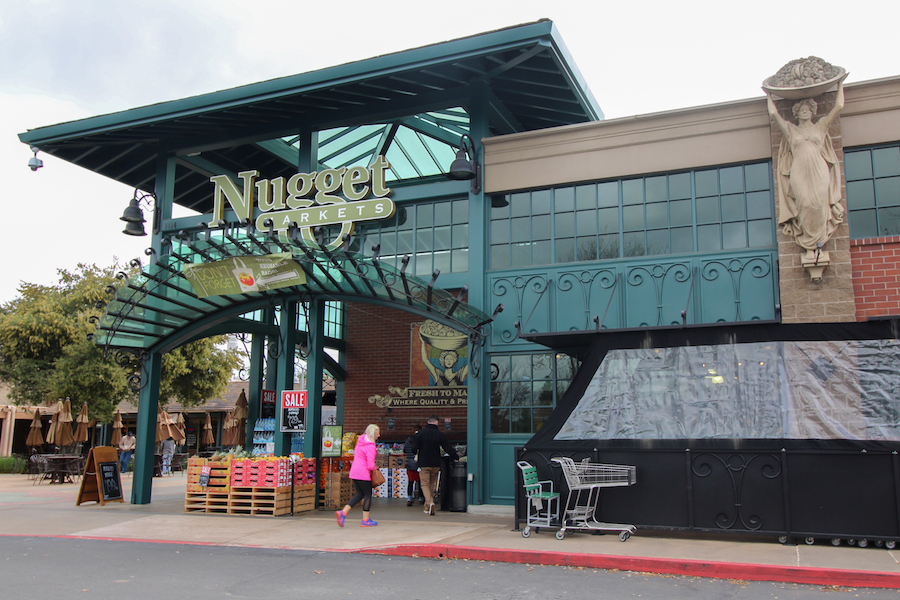
On Feb. 24, Woodland’s Nugget Markets announced that they would be purchasing Sonoma-based Glen Ellen Village Market and Sonoma Market. The deal is expected to close on March 31.

Don Shone opened Glen Ellen Village Market in 1963 and was joined shortly after by Dale Downing, his brother-in-law. Together, they opened Sonoma Market in 1985.

Nugget Markets is a family-owned company which opened its first store in 1926. The Stille family still runs and operates the business, which has grown steadily over the years and now employs approximately 1,300 people. The company is known for its high-quality produce as well as its community based and employee-friendly culture. It is currently listed at number 11 on Fortune Magazine’s list “100 Best Companies to Work For.”

In an email interview, Kate Stille, director of Marketing at Nugget Markets, highlighted that Shone and Downing sold the stores to Nugget because of their shared values and philosophies. Some of these values include providing support to local communities and recognizing employees through various benefits.

“The sellers were looking to sell the business to another family-owned and operated business so that they can retire,” Stille said. “Both parties feel that Nugget Markets and the Sonoma Market pair are a perfect fit.”

After the purchase is complete, Nugget Markets, which currently has 13 stores across the Greater Sacramento area, will operate 15 stores. It is understood that the names of both Sonoma Market and Glen Ellen Village Market will not change and that the management and staff will remain in place with no cut to their pay.

Peter Chavez, a third-year international relations major at UC Davis, lives in Woodland and shops at Nugget Markets because of its proximity. He says that he chooses to shop at Nugget because of the values the company pushes.

I like that it’s different from other grocery stores in general,” Chavez said. “The aura is nicer, it seems a lot more clean more often, the people are often happier. I have a lot of friends that work at Nugget too and they’re all happy. It’s a good culture, it’s a different experience […] a much more personalized experience.”

Sonoma Councilmember Gary Edwards emphasizes that Glen Ellen Village Market and Sonoma Market were a central part of the local community and often embraced charitable causes. He feels that the community, overall, is not opposed to the takeover and trusts Shone and Downing’s judgment.

“The community has always been very supportive of Don and Dale and their family and I think that they trust their decision of who to sell to, as keeping their [own] standards in place […] They are some of the most generous people I have ever met in the work that they do, and I think it’s completely amicable with the family, the selling and picking the right company to sell to,” Edwards said.

Nugget Markets’ shared philosophy with the Sonoma stores has obviously been a major reason for the acceptance of the deal by Shone, Downing and the local community. However, Councilmember and former Mayor of Sonoma David Cook admits that the community is still in dismay at the departure of the original owners.

“I think it’s sad for any small community to lose icons and legends, they’ve been here forever and I assume they are going to stick around, everybody knows the Shone family,” Cook said. “I think everybody knows things change and they were going to retire and there didn’t seem like there were any other family members [who could take over], and it was time for them to retire.”


Written By: JUNO BHARDWAJ-SHAH – city@theaggie.org

UC Davis Chancellor Linda P.B. Katehi steps down from the board of DeVry Education Group

JAY GELVEZON / AGGIE

Katehi under fire for accepting roles on two for-profit companies, DeVry Education Group, John Wiley & Sons

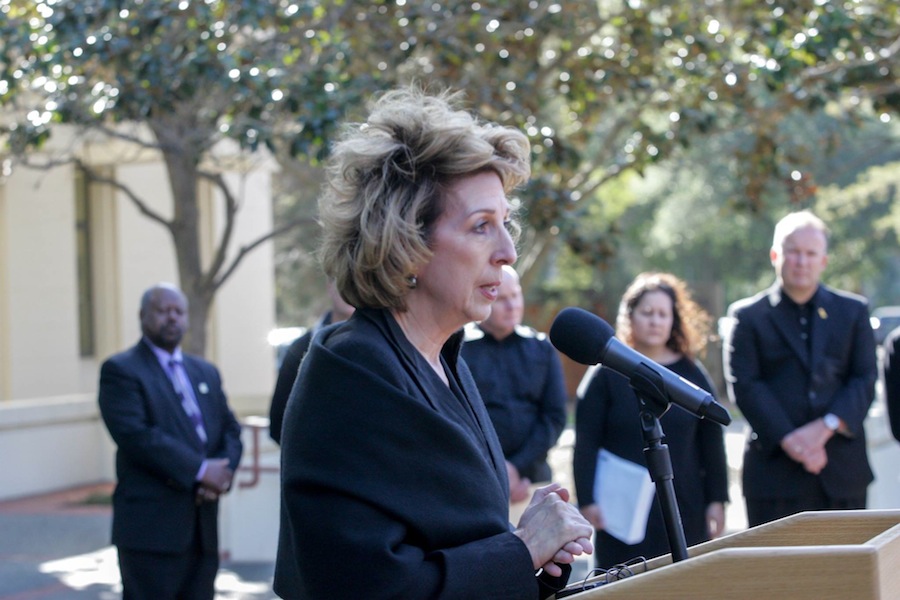
UC Davis Chancellor Linda P.B. Katehi has stepped down from the board of the DeVry Education Group, a for-profit company currently being sued by the Federal Trade Commission (FTC), after facing criticism from Assemblymember Kevin McCarty (D-Sacramento) and public interest groups.

Katehi, who was appointed to the board in February, would have received $70,000 per year for this position. According to The Sacramento Bee, Katehi did not receive approval to serve on this board from UC President Janet Napolitano before accepting the position, as protocol required.

“Chancellor Katehi receives a taxpayer and tuition-funded salary of $424,360,” said McCarty in a statement calling for Katehi to resign from her role as chancellor. “It is unseemly for the chancellor to be moonlighting side deals to fatten her bank account, especially when it runs contrary to the interests of our students.”

The Bee also recently revealed that Katehi received $420,000 in income and stock as a board member for the textbook publishing company John Wiley & Sons from 2012 through 2014.

“Publishers are gouging students for the cost of textbooks,” McCarty told The Bee. “The optics of this are horrible.”

Katehi released a statement on March 4 addressing both the DeVry board and John Wiley & Sons board controversies.

“I take my responsibilities as chancellor of UC Davis, and to the entire University of California, very seriously and sincerely regret having accepted service on boards that create appearances of conflict with my deep commitment to serve UC Davis and its students,” Katehi said in the statement. “I have resigned from the DeVry board and intend to donate all the stock proceeds I made from serving on the John Wiley & Sons board to a scholarship fund for UC Davis students. I look forward to continuing to serve the UC community.”

In response to these events, the UC Davis Student Workers Union is leading a Fire Katehi protest at the Memorial Union on Friday.


Written by: Alyssa Vandenberg – campus@theaggie.org

New UC Davis engineering course explores the science behind superheroes

0
KATE SNOWDON / AGGIE

Instructor Ricardo Castro spearheads creative engineering class focusing on the physics of superheroes

Have you ever wondered how Spider-Man’s spidey-suit gives him the ability to crawl on walls? Or what makes Captain America’s shield so resistant? Or how Tony Stark created his Iron Man super-suit? A new UC Davis course, Materials Science and Engineering (EMS) 2: Materials Marvels: The Science of Superheroes, attempts to answer these questions by applying engineering knowledge to the powers and abilities of superheroes.

Created and currently taught by associate material engineering professor Ricardo Castro, Materials Marvels: The Science of Superheroes is a new lower division course that examines engineering under a creative lens.

A superhero fan himself, Castro wanted to use the subject of comic book superheroes to foster a sense of creativity and enthusiasm in engineering.

“[When creating the class], I wanted to show new students how far materials science could go, and there’s no better place to show that than through superheroes,” Castro said. “I wanted the students to relate to this and think, ‘I can do that! I can make that happen.’”

The course was piloted in Winter 2015 by the UC Davis Department of Chemical Engineering and Materials in an attempt to increase enrollment under the Materials Science and Engineering program. Materials science emphasizes the study and application of the properties of solids.

In his class, Castro tells his students a superhero story and explains how that superhero’s suit and powers would work under physics.

Jonuhey Ferreira Da Costa, a visiting student majoring in chemical engineering, described learning about Captain America’s shield in Materials Marvels: The Science of Superheroes.

“On one of the first days of class, [Castro] talked about Captain America’s shield and how it resists force and fire,” Da Costa said. “He showed us some of his research and some material that can resist fire, and he even brought it to class and showed us its resistance.”

Although the course was initially designed for freshmen and sophomores, this class is open to all years and majors.

Pedro Victor Oliveira, a fifth-year plant science major, enrolled in the class because of his interest in superheroes. He has enjoyed Castro’s enthusiasm for materials science and the creative space to think outside of the box.

“[In lecture, Castro] talks about how comics can influence real material and reality,” Oliveira said. “A lot of things seem surreal, but scientists are actually working on making them real.”

For the course final, students develop their own superhero-themed inventions, such as super-suits or weapons, and apply physics to explain how their inventions could work in reality.

Castro has recognized his students’ eagerness to learn more. Fourth-year materials science and engineering major Nicolas De Olivas expressed his excitement for the course.

“It’s such a fun way to learn about materials science,” De Olivas said. “The professor shows videos and does experiments during class […] His enthusiasm is contagious.”

By bringing superheroes from the screen or comic books to the classroom, Castro hopes to continue educating his students in a fun and entertaining way.

“My hope is that these students become creative engineers,” Castro said. “I want them to use this class as a mental trampoline to think outside of the box, to think about the impossible and to use their scientific and technical knowledge to understand that what’s a little crazy is possible and you can make something new.”

Materials Marvels: The Science of Superheroes will be offered during Spring 2016 and is open to all majors.


Written by: Emma Sadlowski – campus@theaggie.org

UC Davis student Nick Doherty relaunches academic app Study Cal

0
ANH-TRAM BUI / AGGIE

App helps students stay organized every quarter, keep track of events and GPA

UC Davis second-year computer science major Nick Doherty recently relaunched Study Cal, an educational app to help students organize their academic schedules and to keep track of their GPAs.

The app is free and available for the iPhone and iPad. It has surpassed 135,000 users and has received high ratings on the Apple App Store.

On the app, students can add classes, instructors, assignments, notes, grades and events. Students can also schedule daily reminders for their upcoming events, assignment due dates and exams.

The app tells students the weight of their exams and assignments, as well as what grade is needed on individual assignments in order to raise or maintain their current letter grades. The app works for both point and percent-based grading systems.

“I felt I had the best perspective on the subject, being a student and a developer,” Doherty said. “There are a few apps out there aimed at students, but they are made by big companies or made by people who haven’t been in school for a while, and I think [they] are out of touch with

ANH-TRAM BUI / AGGIE

it. I have the advantage that I’m going through it right now, so I know what every student goes through.”  

Kaitlin Chao, a third-year psychology major, recently downloaded the app and has found it very useful.

“The app helps me make sure I don’t slack off and do bad on a test or exam because it lets me know how much it’s worth my grade and how important it is,” Chao said.

Doherty initially created Study Cal before his senior year in high school. Afterwards, the app took off with features on news sites and Apple stores. He began working on the app again, updating it Fall Quarter of his freshman year at UC Davis by making a few tweaks and creating an overall better user experience. This update was released on Feb. 25. He has since been promoting the app around campus and has gained around 40,000 more users since the update.

Doherty began programming the summer before his freshman year in high school, while taking a programming class at Stanford University. Since then, he has created and helped develop various apps available on the Apple store, including Aggie Health, which helps track students’ calorie, macro and micronutrient consumption at the dining halls.

This past summer, Doherty interned on the iOS apps and frameworks team at Apple, and will return this summer with the iPhone team.

He plans to continue improving Study Cal and to start new app projects in the near future. He also hopes to one day start his own software company and develop other useful hardware that can affect the lives of many.

Sarah Forsick, a third-year communication major, said Study Cal has helped improve her class grades dramatically and has recommended the app to all her friends.

“I love it,” Forsick said. “I like how it keeps me updated and lets me know when I need to put in extra work for a test to get a certain percentage grade on it. It’s exactly what I need. When my friends are complaining about their grades I say, ‘Get Study Cal!’”

Written by: Demi Caceres – campus@theaggie.org

Six UC campuses rank in top 30 public universities in the country

BRIAN LANDRY / AGGIE

UC Davis ranks behind five other UC campuses

Six University of California (UC) campuses, including UC Davis, were rated in the top 30 public universities by the business journal Buffalo Business First. UC Davis ranked at 29, falling behind five other UC’s: Los Angeles, Berkeley, San Diego, Santa Barbara and Irvine.

“I enjoy the fact that the UC system is doing well in the ranking,” said Sidney Adebayo, a third-year political science major. “I think it is nice to be ranked so high but I think [we] should be ranked higher. UC Davis has so many more resources in my opinion that are under-counted compared to other public universities.”

A 20-part formula was used to analyze over 450 universities that qualified for the journal’s rankings, using the latest data available from the National Center for Education Statistics and the U.S. Census Bureau’s American Community Survey.

“I feel that UC Davis offers an incredible experience to supplement the educational opportunities here,” said Mimi Darby, a third-year genetics major. “Upon looking over the rankings, I was actually surprised that it was ranked so low among the other UC schools; I strongly believe that Davis deserves this spot and much more.”

Darby also believes that the rankings should fully take into account all the resources that the university has to offer.

“Davis is comprised of faculty that goes above and beyond to ensure that students have learned the course material, a plethora of student-run clinics, clubs and various other activities designed to help everyone here find and pursue their passion,” Darby said. “We are among faculty and students alike who create a welcoming, diverse and compassionate atmosphere that also manages to provide a rigorous academic setting.”

Although not completely satisfied with the ranking that UC Davis received, Darby remains proud of the university.

“I will proudly leave this university with more knowledge in my field of study, the ability to critically think about novel problems and most importantly, with an expanded worldview,” Darby said. “I’m proud of the well-earned ranking and proud to be an Aggie!”

Andy Fell, associate director of News and Media Relations at UC Davis, voiced the university’s gratitude toward being recognized for academic quality.

“UC Davis is proud to be noted again for its student quality, academic excellence, accessibility and affordability and other factors that make us a world-class university and an asset to California,” Fell said.


Written by: Nick Griffen – campus@theaggie.org

UC Davis scores higher than all other UC’s in recent mental health evaluation

KATE SNOWDON / AGGIE

An average score of a C was attributed to all nine UC campuses

The University of California Student Association (UCSA) recently conducted a mental health evaluation at all nine of the UC campuses. Each campus was graded on an A through F scale, based on questions that relate to accessibility, diversity of staff and outreach to students.

“UCSA developed a rubric of questions, and we sent it to our Counseling and Psychological Services directors for them to fill it out,” said Sam Alavi, external vice president of UCSA. “We augmented our data by reaching out to students too, so that we could capture the entire picture of what services we offer, not just what we are on paper.”

UC Davis received the highest evaluation score of all the UC’s with a B-, while UC Merced received the lowest score, an F+.

“There’s a lot we are doing well with our counseling services,” Alavi said. “[Counseling Services] have a strong presence on campus, the program is supported and our Community Advising Network program is strong. However, there are some pretty big gaps in terms of wait times and diversity.”

Alavi, along with her cohorts at UCSA, attempted to get a holistic view of each of the universities’ mental health programs, surveying both students and faculty.  

“Almost everyone we talked to had interacted with counseling services in the past, or worked in areas on campus where they often referred students to counseling services or heard feedback from students,” Alavi said.

Sarah Hahn, director of Counseling Services at UC Davis, has said that the university is constantly improving its mental health services by increasing staffing and adding new positions.

“As a campus, we all need to do our part to provide an environment that encourages stable mental health and have services ready for students who are struggling,” Hahn said. “We have so many units, inside and outside of student affairs, who are partnering with us to create a community of prevention and an ever vigilant safety net for students in crisis or despair.”

Although the university did receive the highest score of all the UC’s, Hahn said that the partnership between students and mental health services will continue to improve.

“We welcome the perspective of our students and accept our given grade as a valid symbol that there is work yet to be done,” Hahn said. “We will get there in partnership with our students, and with the support of our whole campus.”

Diana Davis, clinical director of Counseling Services at UC Davis, views mental health as an ongoing challenge for the university.

“We’d like to be accessible, so we appreciate that the students here see us as a B-,” Davis said. “I think it’s realistic to say that campus mental health services always has been less than what we need, but it’s always going to be challenging to have every service for every need.”

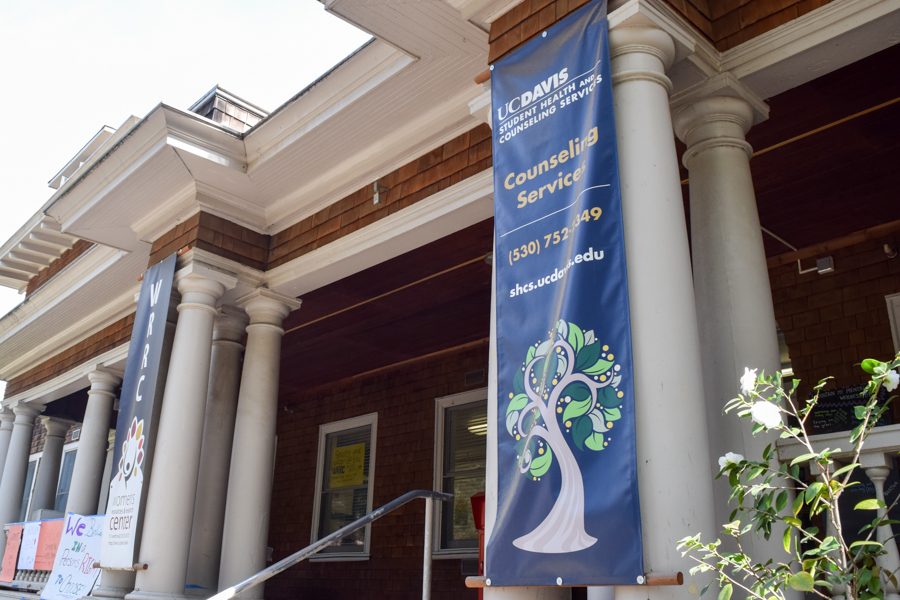
Davis mentioned that mental health services are available for students in different capacities through appointments, urgent care and even a 24-hour phone line.

“I think what’s helpful for students to know is that mental health services are on this campus,” Davis said. “Student health and counseling services are available to them on an appointment or an urgent care basis.”

Written by: Nick Griffen – campus@theaggie.org

The Lounge Lizards to host annual No Instruments Attached performance

The Lounge Lizards previously performed at the LocalTones 2015. (JAY GELVEZON / AGGIE)

Oldest Davis a cappella group takes to the stage alongside The Spokes,  Jhankaar and UCSC’s Acquired

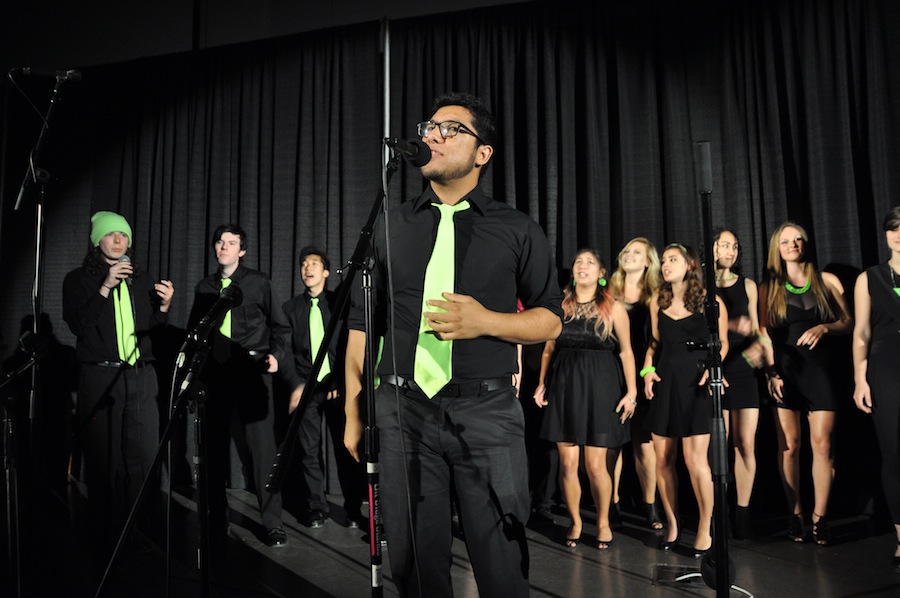
The Lounge Lizards, one of Davis’ student a cappella groups, will be hosting its annual “No Instruments Attached” showcase on March 11 in the Sciences Lecture Hall. The showcase normally takes place around the end of Winter Quarter, and is one of the many opportunities for students to enjoy the sweet voices of the Davis a capella community.

The Lounge Lizards have been a fixture of campus life and entertainment since 1995, making them the oldest a capella group on campus. Miguel Guerrero, a fourth-year economics and political science double major, has been involved with the Lounge Lizards since his first year.

“What makes us different from other groups is that we are unusual. We are weird and we aren’t afraid to show it,” Guerrero said. “We have a bunch of interesting personalities in the term of performing and identities in the group. We are very much like a family and we really cherish [that].”

The Lizards perform music from a variety of genres, including Top 40 pop and older classic numbers. Their performances are reflective of the diverse musical interests of the group, and help keep audience members surprised and entertained.

Kellina Doerr, a second-year food science major who has been involved with The Lounge Lizards since last year, is excited to perform renditions of well-known songs in front of a larger audience.

“This year we will be performing ‘Marvin Gaye’ by Charlie Puth, ‘Madness’ by Muse, and ‘Big Yellow Taxi’ by Joni Mitchell, to name a few,” Doerr said. “My personal favorite genre to perform is pop because the songs are upbeat and fun to dance to onstage, plus the audience usually knows the songs and will get excited to hear our version of the song.”

No Instruments Attached will also feature two other UC Davis vocal performance groups: The Spokes, an all-female a cappella group, Jhankaar, a South Asian a cappella group, as well as Acquired, a group hailing from UC Santa Cruz. The Spokes are hot off of their recent 2nd place finish at ICCA semi-finals, and are looking forward to performing with The Lounge Lizards before their own showcase in April.

Molly Huff, a second-year international relations and French double major, will be performing with The Spokes in No Instruments Attached. Huff enjoys having the opportunity to sing in front of a large audience.

“I love performing in front of a large audience because you can really vibe off of their energy,” Huff said. “A lot of our music is high-energy and gets people excited. We love hearing the crowd cheer for us; it gets us pumped.”

Tickets for “No Instruments Attached” can be purchased online for $5 presale or purchased at the door for $7. The Sciences Lecture Hall will be open to audience members at 7:30 p.m. and the show will start at 8 p.m. For more information, please visit the Facebook event page.


WRITTEN BY: Sara Williams – arts@theaggie.org

Humor: Why you won’t make any friends

0
VENOOS MOSHAYEDI / AGGIE

The Anglo-American poet W. H. Auden once said:

I am beginning to lose patience

with my personal relations.

They are not deep

and they are not cheap.

Auden’s quote may sound like the lyrical cynicism of a grumpy recluse, but it points out some hard truths about friendship that some people are hesitant to realize. Friendship is like a bag of Doritos: everyone loves it, but are not always enthusiastic to know what actually goes into making it. There are aspects of friendship that may sound like a drag or even frightening, which might deter even the most outgoing people. Here is a list of a few of those depressing reasons why you won’t make any friends.

Selfishness

One problem you might face is the same issue that many psychopaths, flamboyant dictators and vulture capitalists suffer from: mind-boggling selfishness. Being outwardly friendly is not the same as genuinely having other people’s needs in mind. It’s like House of Cards. Sure, Frank Underwood might woo you with his fake southern accent and assuring friendliness, but would you really be friends with a guy who will sooner or later send you to Guantanamo or murder you for his own profit? I didn’t think so.

Time

If Pink Floyd taught me anything, it’s that the feeling of lost time draining away your potential to do meaningful things can drive a person crazy. That’s a frustration many other college students face, so don’t be surprised when other people don’t have time for you. That being said, it makes shared time all the more precious because it is so rare and yet easily lost. Don’t spend time alone destroying your brain cells by binge-watching old episodes of Cheers. Spend time meeting people and destroying your brain cells by binge-drinking like the people in Cheers.

Social Circles

But don’t get too excited about doing well with new people. You know the saying,Make new friends, but keep the old. One is silver, the other gold?” Well, just like Bond villains and Spanish conquistadors, some just prefer gold. This doesn’t mean some people actively exclude others, but it does mean that their attention is more likely spent on people they are already familiar and comfortable with. This can happen for various reasons, including having relatively longer friendships, having more things in common or maybe they are disguised aliens trying to avoid drawing attention to themselves. You can either try to be patient and optimistic when trying to get accepted by others, or you can take the evilicious choice by becoming incredibly famous and talking smack about them in your memoirs/movie biopics/Grammy-winning rap songs.

Confidence

The phrase “You just need more confidence” may sound like one of those things people tell you when they don’t know what to tell you, but it actually has some truth. Sometimes thinking people are not going to like you is the ONLY thing that stops you from meeting people. Fear of social interaction can be incredibly inhibiting and make one feel powerless to do anything. This doesn’t mean you have to mentally pump yourself up and charge into a social gathering like Rocky Balboa at a New Yorker magazine staff party, but it is important to realize the effects of fear as an obstacle in itself and not infallible proof that you can’t do something. Next time you feel intimidated about approaching people, just ask yourself, ”What would the crew of the Titanic do?” Answer: They’d start with an ice-breaker.

Misunderstandings

We human beings would like to think we’re in control of our future, but that is just an illusion. We are subject to mistakes, miscommunications, changing fortunes and autocorrect settings that turn your text messages from a simple greeting into a nude picture. One example was the Biggie Smalls vs Tupac story, the rap industry’s Greek Tragedy. The two used to be close friends until a tragic twist of fate ended their relationship. After Tupac left for the West Coast rap scene, Smalls released a song titled “Who Shot Ya.” It was unintentionally released right after Tupac survived a near fatal gun shooting. Thinking the attempt on taking his life and the song were both the work of Smalls, Tupac retaliated with anger and fury with “Hit Em Up.” Mistakes and miscommunication don’t always come in bullet or song form. Friendships can easily end because of little things. If you want to be a true friend, you need to be willing to listen to people and have faith in the power of forgiveness. No amount of platinum record labels and #1 hits will ever fill up the hollow shell of your soul after you’ve dissed everyone you once held dear.

Criticism

Another reason you might not be connecting with people is your tendency to automatically correct people all the time. This habit can range from “That song was by Ray Charles, not Jamie Foxx,” to “Your humor column idea about not making friends is gonna suck. It sounds too depressing to read.” It’s ok to correct someone when it shows you’re interested in a discussion topic or genuinely concerned about them making a mistake, but when it comes to constantly pointing out small frivolous details, it can be rude and downright petty. Friendliness is not about judging people and making them feel self-conscious about their skills, knowledge and intellect. That’s what GPAs and internship applications are for.

If you think giving attention to the hassles of forming meaningful relationships is like saying, “The glass is half empty,” you’d be right. But let me ask you this: if you’re the person who only cares about yourself, demands time from others, assumes people don’t have social lives of their own, lets fear ruin your every decision, refuse to forgive others and constantly judge them…

Then you won’t make any friends (drops mic).


You can reach EVAN LILLEY at etlilley@ucdavis.edu