57.9 F
Davis

Davis, California

Monday, December 22, 2025
Home Blog Page 739

Students fighting for students

0
JAY GELVEZON / AGGIE

UC Davis student organizations launch campaigns to benefit Syrian refugees

Most students are familiar with the typical stresses that working towards a higher-level education entails. But that stress pales in comparison to the struggles of a Syrian refugee trying to obtain an education in the face of a devastating war.

“With the Syrian refugee crisis, a major issue is that Syrian citizens who are already attending a university […] don’t have an opportunity to continue their education,” said second-year managerial economics and political science double major Luna Ascha. “These citizens have nowhere to turn to.”

Ascha is a member of Students Organize for Syria (SOS), a national organization that works to raise awareness of the Syrian refugee crisis. SOS is currently launching a campaign called Books Not Bombs across the country to advocate for the education of Syrian refugee students.

“A lot of the schools are being targeted and bombed in Syria,” said fifth-year international relations major and SOS member Derek Matthews. “[This makes it] really difficult to get an education, [especially if] you’re [a student] in a refugee camp.”

Rather than taking directly from student fees, the Books Not Bombs campaign is petitioning for UC Davis to allot ten scholarships out of the university’s usual international scholarships,and grant them to Syrian refugees who are seeking a higher education.

“We’re trying to garner awareness through this petition,” Matthews said. “We’re asking students to support the idea of bringing Syrian students to UC Davis by signing […] the petition.”

Once SOS receives enough signatures from UC Davis students, faculty or alumni, the campus chapter will draft a bill to present to ASUCD. Students will then vote on the initiative.

“Right now, we’re focusing on getting members, […] drawing the outlines of our club and working on the campaign,” Ascha said. “It’s just a matter of spreading awareness about […] Books Not Bombs.”

Currently, there are 40 universities worldwide who offer Syrian refugees the opportunity to continue their education abroad. The Books Not Bombs campaign hopes to expand this number in the near future.

“Syrians are going to need an education to help rebuild their country,” Matthews said. “They’re going to need architects, they’re going to need lawyers, they’re going to need doctors.”
JAY GELVEZON / AGGIE

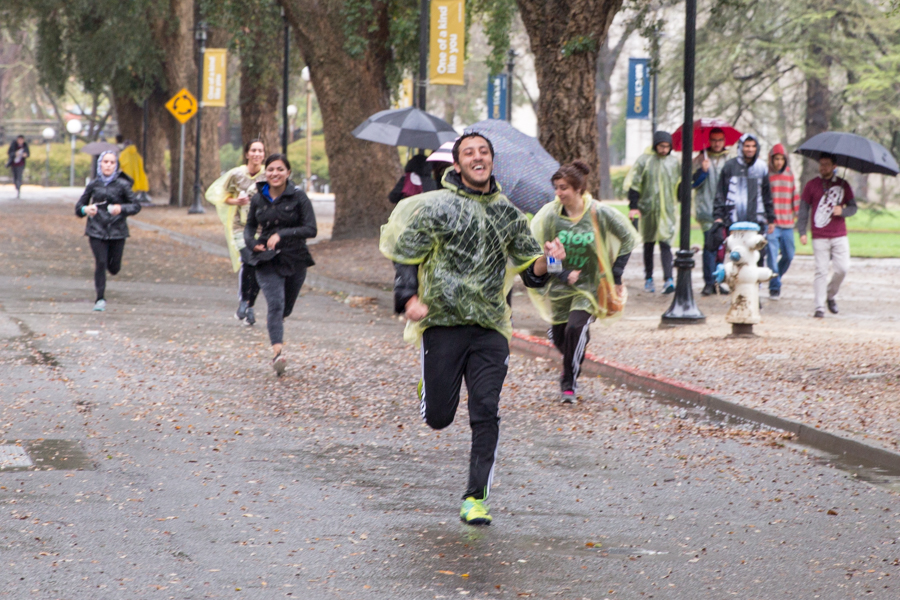
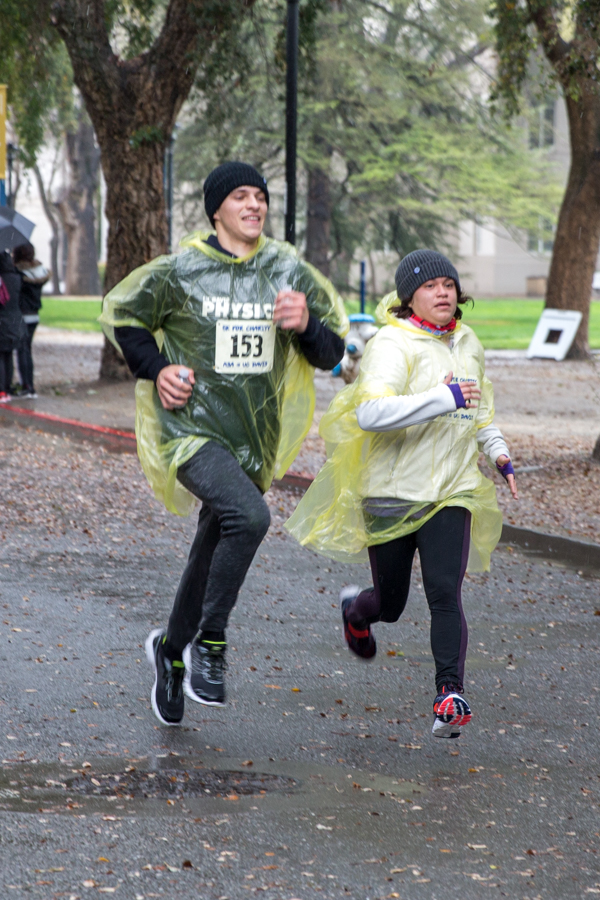
SOS is not the only organization supporting the Syrian cause at UC Davis. On March 5, the UC Davis Muslim Student Association (MSA) hosted the first Annual Walk/Run for Charity, with all proceeds going to local and national Syrian refugees.

“The inspiration behind this project was […] to find a way to give back to the crisis that’s going on,” said third-year psychology major and MSA President Omar Awad.

The MSA is working with other local organizations, such as Opening Doors, to fund Syrian students who have relocated to the Sacramento area. The proceeds of the first Annual Walk/Run for Charity aim to benefit refugees in their search for housing, jobs, school enrollment and other necessities.

“We’ve been extremely blessed to have received so much support from […] student organizations […] and businesses in the downtown area,” Awad said. “We’re really grateful that people have rallied behind this cause and joined us in this process.”

Both MSA and SOS are working actively to spread awareness and gather support for their cause. In particular, SOS plans to build their chapter by hosting speakers and cultural events that will give students a better understanding of Syrian culture.

“As important as it is to focus on the issues that face the immediate community, you can’t disregard the rest of the world,” said second-year economics and philosophy double major and SOS member Ryan Abusaa. “I will fight tooth and nail on this campus to make sure people are aware of [this cause].”

As a second generation Syrian, Ascha is one of many who connect personally to this crisis.

“Having known people who have been affected by this crisis, all I want to do is be able to help them […] get back on their feet,” Ascha said.

According to Keith David Watenpaugh, historian of the Modern Middle East and UC Davis professor and director of the human rights studies department, UC Davis has been the American university at the forefront of efforts on behalf of Syrian students through the Human Rights Studies Program’s “No More Lost Generation Project.”

The project, which was done in cooperation with the Institute of International Education and the Carnegie Corporationof New York, focuses on education and protection for children affected by the Syrian crisis.

“In fact [on March 10], our work will be the focus of a special session of the national best practices in higher education meetings being held here at Davis,” Watenpaugh said in an email.

Overall, many students agree that the opportunity to receive an education is something too valuable to take away from any one individual group.

“Many […] times we take for granted the opportunity we’re given,” said second-year political science and communication double major and SOS member Tony Flores. “For many people out there […] being here at the university would be a huge blessing.”

However, SOS members are looking not only at the education crisis, but also at the larger humanitarian crisis. For this reason, the organization advocates for an open-minded view of the situation.

“[Race] shouldn’t be a barrier or a sense of divide for one person trying to help another person,” Flores said. “We’re […] a stronger world when we all try to help each other out.”

Both SOS and MSA plan to continue their fight for the Syrian refugees in the future in order to raise awareness to the cause.

“Getting people to recognize [a] common humanity […] breaks down […] barriers,” Matthews said. “It’s important that we recognize that there are people with the right to education, and the right to life, and the right to pursue their dreams just like we are.”

Written by: Allyson Tsuji – features@theaggie.org

#Agua4All raises awareness for water equity issues in California

0
ASHLEY LUGO / AGGIE
ASHLEY LUGO / AGGIE

Initiative announced at town hall event hosted at California Museum in Sacramento

On Wednesday, Feb. 24, a panel of experts, community members and advocates spoke at the #Agua4All town hall event at the California Museum in Sacramento. The event was hosted by The California Endowment, an advocacy group that creates solutions and awareness regarding health and inequity issues in the state of California.

“The purpose of the event was to help bring awareness to California’s drinking water crisis,” said program manager Craig Martinez. “There are communities in California that don’t have access to safe drinking water, many of whom have connections to or work in agriculture. Some communities have dealt with these issues for decades, and are now gaining more public awareness due to the issues happening in Flint.”

One of the main talking points at the #Agua4All event was California’s drought, which has drastically worsened California’s water access issues.

“Both the drought and poor infrastructure affect water affordability,” said Asha Kreiling, a policy and communications analyst at the Community Water Center, an organization that advocates for water rights in the San Joaquin Valley. “Some of the residents on the panel spoke about having to buy alternative water sources because their wells have gone dry due to the drought. That impacts their finances because they are already low-income and have families to feed.”

The #Agua4All initiative brings safe and accessible drinking water to over one million Californians who lack access to a clean and safe water supply. The campaign website notes that low-income families spend a disproportionate percentage of their income on bottled water due to a lack of consistent access to clean water in their homes, schools and public spaces. This can cause families to choose soda or other sugar-laden drinks as an alternative to water, leading to potential health problems.

Additionally, #Agua4All brings more accessible water supplies to underserved communities in several ways. The project raises awareness on water equity issues through its Spanish and English school curriculums, which emphasize the health benefits of choosing water over other beverages. The project also installs water taps in public places where local residents can fill reusable water bottles at no cost.

Both Kreiling and Martinez noted that a large portion of Californians who lack access to safe water supplies are low-income, agricultural workers who often speak only Spanish. They therefore face greater barriers to knowing what resources are available to them.

Erasto Terán, a Community Water Center specialist and resident of East Porterville, spoke on the #Agua4All panel about what steps can be taken to improve water access for struggling communities.

“The resources are there, but they need to get to the communities in need,” Terán said. “We need to connect bigger systems to smaller systems. Smaller, unincorporated communities should merge and connect with bigger communities nearby because then it would be less expensive and [more] economical to connect water systems.”

California’s Assembly Bill 685, signed into law by Governor Jerry Brown in 2012, asserts that clean water is a human right; California was the first state to pass such a bill. However, Terán noted that the law is still not fully implemented because not every city and county knows about their obligations, even though it has been in effect for approximately four years.

For further information about the #Agua4All campaign, follow the #Agua4All hashtag on social media.

Written By: CAROLINE STAUDENRAUS – city@theaggie.org   

UC Davis helps fight stunting in Africa with orphan crops

0
KATE SNOWDON / AGGIE

UC Davis partners with African Orphan Crops Consortium to sequence genomes of 101 indigenous African foods

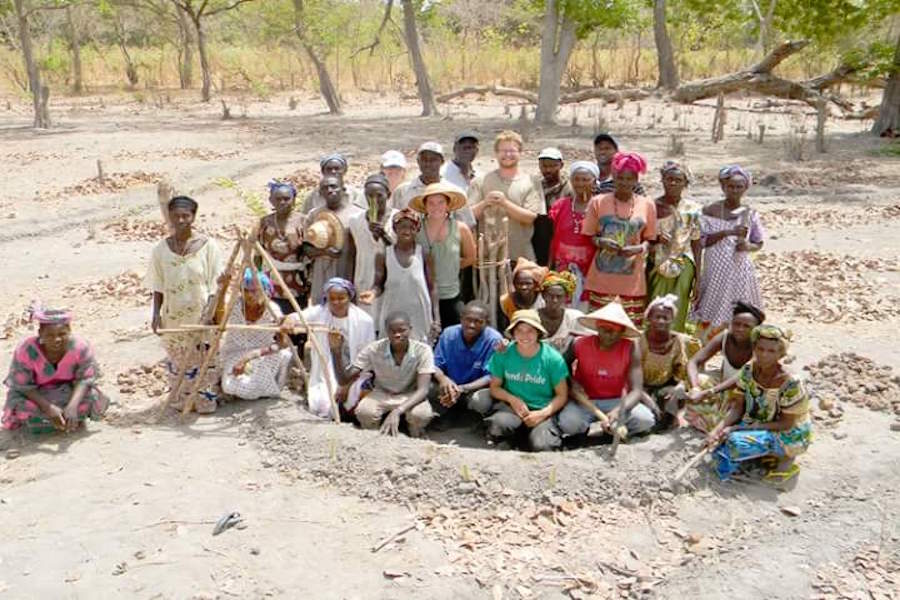
UC Davis, in partnership with the African Orphan Crops Consortium, is working to improve the indigenous crops of Africa in order to eradicate stunting, a medical condition resulting from malnutrition and chronic hunger.

The African Orphan Crops Consortium was launched in 2012 by Dr. Howard-Yana Shapiro, a senior fellow at UC Davis College of Agricultural and Environmental Sciences and chief agricultural officer at Mars, Incorporated, who took on the task of sequencing the genomes of 101 indigenous African foods in order to help plant breeders improve these foods’ nutritional content, productivity and resiliency.

“We were told, in order to have any impact on nutrition, we would need to improve at least 100 crops,” Shapiro said in a press release. “In the end, we went with 101 crops, including the baobab tree, which can survive even the worst drought. You can eat its leaves, which are actually quite tasty.”

The consortium brings together Mars, Inc., UC Davis and many other researchers, industry groups and policymakers to contribute their support. One of the groups involved is the UC Davis Plant Breeding Academy, whose aim is to teach Africa’s top breeders the latest breeding strategies.

“UC Davis is responsible for delivering its advanced professional development program, the Plant Breeding Academy, aimed at training the top active plant breeders in Africa in the application of the latest technologies, statistics and breeding strategies,” said Dr. Allen Van Deynze, a professional researcher in the UC Davis Department of Plant Sciences and a founding member of the consortium, in an email interview. “This includes the application of genomics to breeding, quantitative genetics, selection theory, seed science and management.”

When the genomes of the chosen crops are sequenced, breeders will be able to hone in on genes that influence certain traits such as disease resistance, nutrition content and flavor and select for desired genes at the seedling or seed stage.

The consortium is focusing on these “orphan” crops because they are vital to African livelihood and nutrition. But, these crops have mostly been neglected by science and seed companies because they are not traded internationally like wheat and corn.

“[The project] has a much better chance of success, because it focuses on species that are already adapted to the continent’s climates, environments and cultures,” said Dr. Iago Hale, who received a Ph.D. in horticulture and agronomy from UC Davis in 2011 and also teaches at the UC Davis Plant Breeding Academy in Africa. “The project focuses on the food people eat, not the food we think they should eat, from a global commodity perspective. I believe we will look back in a generation and understand this was the beginning of a new era in human well-being.”

Once these crops are sequenced, all the information will be made available for free online as long as it is not patented so that people can build on each other’s research.

While UC Davis continues to help train the top active plant breeders in Africa, they do not plan to stay in charge of the project forever.

“This project is about enabling Africans to curb stunting due to malnutrition and chronic hunger,” Van Deynze said.Like many of our projects, it is about working with the top people and institutions in the world dedicated to making this happen […] Our goal is to replace ourselves with African plant breeders, scientists and instructors. This is already happening.”

According to Van Deynze, the researchers expect to complete the project in three years.

Written by: Jennifer Puza – campus@theaggie.org

Some novel ideas

HANNAH WODRICH / AGGIE

Students reveal what their book would be about, if they were to write one

If you were going to write a book, what would you call it and what would it be about?

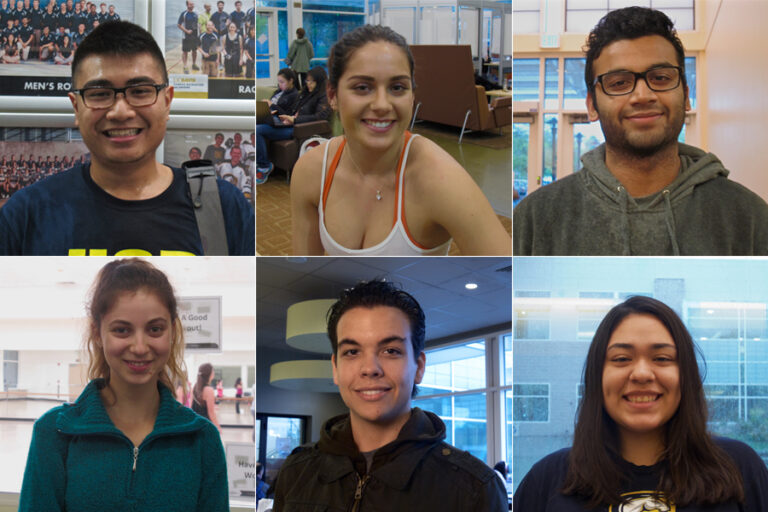
natalie_saddicNatalie Saddic, first-year biochemistry major
“[It would be called]: ‘Life As a College Athlete.’ Just [about] balancing school work with your schedule and the relationships you make with your coaches and your professors.”


Adam_mangosingAdam Mangosing, third-year animal science and management major
“All the mistakes I’ve done in the past and what not to do. I don’t know what I’d call it though — I can’t think of a title.”


alma_rodriguezAlma Rodriguez, first-year international relations and women and gender studies double major
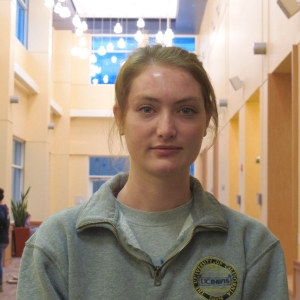
“[It would be called] ‘Empowering Vaginas’ [and it would be] about female empowerment and self-empowerment.”


corinne_cookeCorinne Cook, second-year mathematical research and operations major
“[My book would be about] politics in the Middle East. I’d call it ‘Middle Eastern Politics.’”


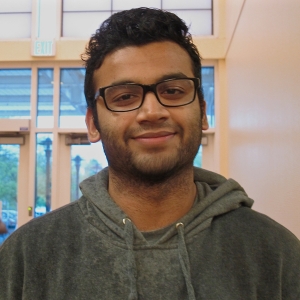
akhil_uddandamAkhil Uddandam, third-year biomedical engineering major
“If I were to invest the time to write a book, it’d be something sassy or inspirational. [I’d call it] ‘The Power of People,’ just about the power of people — like believe in yourself — something cliché.”


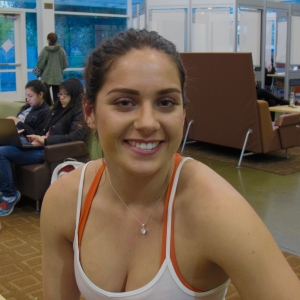
ayla_mcneilAyla McNeil, first-year neurobiology, physiology and behavior major
“Maybe like, ‘The Truth.’ And it’d be about happiness and what the true meaning of life is.”


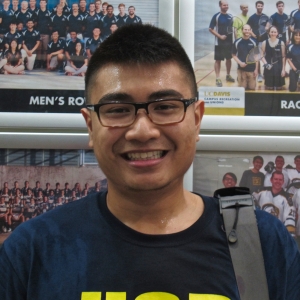
kemmeth_calicdanKenneth Calicdan, first-year aerospace engineering major
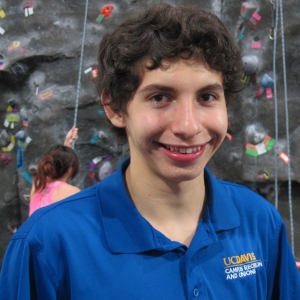
“It would be about getting into higher [education] systems from high school to college and still not feeling like you can learn enough always wanting to learn more.”


vince_gallegosVince Gallegos, second-year managerial economics major
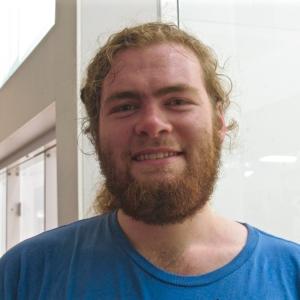
“I actually started writing a book. I called it Oh, Life. It’s like five pages in. It’s my own interpretation of the social dynamic of the U.S. and where it’s headed. If I were going to write a book, I think that’d be it.”


joshua_wadeJoshua Wade, third-year biochemistry major
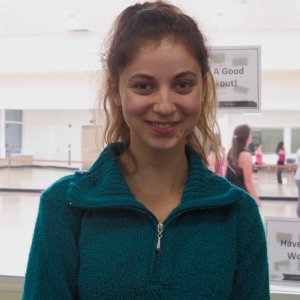
“I feel like I would write an escapist novel where this person feels trapped by the routine of their life and gets transported to an alternate dimension where they have to battle evil and are faced with estrangement from their technological life. It’d be called something abstract like ‘Decomputerized Stress.’”


sophie_marinoffSophie Marinoff, fourth-year human development and psychology double major

“Maybe a book about micropigs because I love them. It could just be called ‘Micropigs.’”


Written by: Lindsay Billings — features@theaggie.org

This week in women’s sports

0
TIFFANY CHOI / AGGIE

UC Davis athletics from Feb. 29  to March 6

Women’s basketball (17-12)

UC Davis at Long Beach State (L, 74-64)

UC Davis at UC Irvine (W, 76-70)

Redshirt freshman forward Morgan Bertsch finished with her ninth 20-point game of the season, and senior forward Alyson Doherty finished with seven points to move her to seventh place on the school’s all-time scoring list. Long Beach State won after shooting 48 percent while UC Davis shot 41 percent for the game.

After the win at UC Irvine, Doherty finished with 15 points on the game to move into sixth place on the all-time scoring list. Sophomore guard Rachel Nagel and freshman guard Kourtney Eaton each added ten points.

UC Davis earned a bye for the first round in the Big West Conference Tournament and will play the highest remaining seed on Wednesday.

Softball (8-13)

UC Davis at Sacramento State (W, 1-0)

UC Davis at Sacramento State (L, 5-2)

Stacy Winsberg Memorial Tournament (L, 4-2; L, 5-4; L, 1-0; L, 17-3; L, 9-1)

Picking up 19 days after the game officially started on Feb. 12, UC Davis hit a single through the middle infield to win the game 1-0.

The Causeway Cup was run by the Hornets 5-2. The Aggies were able to cut the Hornets’ lead to two runs but were unable to defeat Sacramento State. A sacrifice fly by sophomore infielder Ashley Lotoszynski pulled the Aggies within two but they were unable to score the rest of the game.

UC Davis played against CSU Bakersfield in the Stacy Winsberg Memorial tournament in Northridge, Calif. The Aggies had a 2-0 lead until the final two innings, when CSU Bakersfield scored three in the sixth and another in the seventh to beat UC Davis 4-2. The sixth-inning scoring by the Roadrunners could have led to more but senior pitcher Leah Munden was able to get the final out with bases loaded.

The Aggies then faced Charleston Southern and took an early 3-0 lead after having eight batters go in the first inning. UC Davis then committed an error in the first which Charleston Southern took advantage of to score two unearned runs. After a wild pitch, the Buccaneers were able to get two runs across the plate and took the lead. UC Davis was unable to get the lead back and fell 5-4.

Syracuse and UC Davis had four scoreless innings before the Orange were able to score a run to take the lead and the game.

Later in the day, UC Davis played Florida State. The Aggies scored three in the fourth inning but the Seminoles scored in every inning. Florida State defeated UC Davis 17-3 in five innings.

UC Davis played UCLA and fell 9-1 at the Stacy Winsberg Memorial Tournament.  The Aggies had the lead early on, but UCLA had a six-run fourth inning to help them capture the win. Freshman infielder Meghan Bradbury, junior utility Taylor Peters and senior Kalia Olson recorded the three hits of the game for UC Davis.

The Aggies next play at the Aggie Invitational on March 11.

Women’s tennis (5-8)

UC Davis at Long Beach State (L, 4-0)

UC Davis at UC Riverside (W, 7-0)

The Long Beach State 49ers took the win in both the doubles and singles matches to defeat the Aggies 4-0 on Saturday. UC Davis bounced back when they faced UC Riverside and took the win on all three doubles and all six single matches for a 7-0 victory.

The Aggies next play against Eastern Washington on March 22 at home.

Women’s track and field

UC Davis at UC Berkeley (First place finish)

The Aggie women scored 177.5 to win over Long Beach State, who came in second with 162.5, and UC Berkeley who came in third with 161. UC Davis won seven events on their way to winning the Cal Opener.

They will compete next at the Aggie Open on March 11.

Water polo (12-8)

UC Davis vs. UC Berkeley (W, 8-6)

UC Davis stunned in an 8-6 victory against UC Berkeley to win their first game against the Golden Bears. The Golden Bears had a chance to make a comeback but the Aggies’ defense came to the rescue to keep the lead. Junior utility Hannah Harvey scored three goals for the Aggies and junior utility Bryn Lutz scored two goals, one of which was the winning goal with 2:19 left to play.  The game on Sunday at CSU Monterey Bay was cancelled due to inclement weather.  

The Aggies play next on March 11 against Azusa Pacific and Hartwick.

Written by Lindsay Yim – sports@theaggie.org

This week in men’s sports

0
DEVIN McHUGH / AGGIE

UC Davis men’s athletics from Feb. 29 to March 6

Men’s Baseball (4-7)

UC Davis vs. San Francisco (L, 2-1)

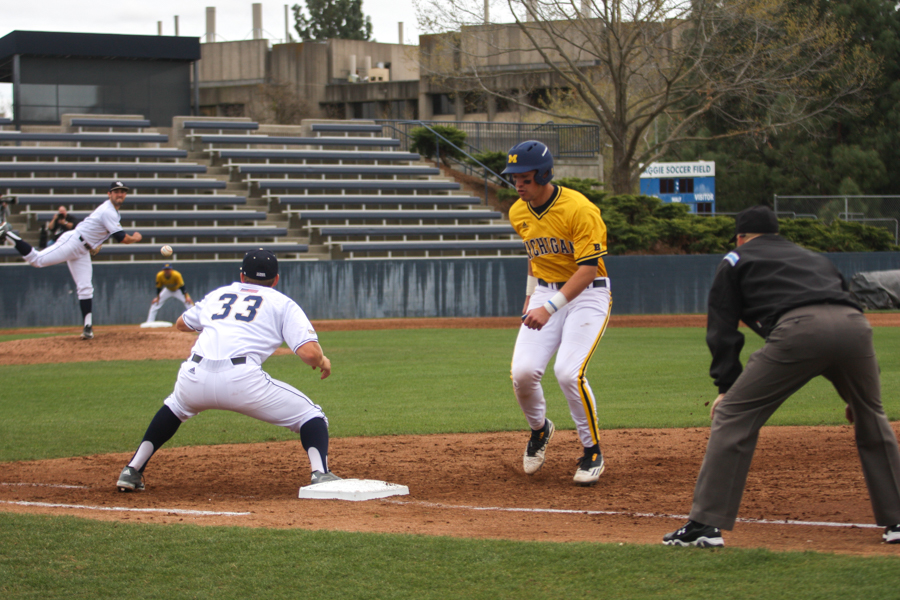
UC Davis vs. Michigan (W, 4-3)

UC Davis vs. Michigan (Postponed)

UC Davis vs. Michigan (Cancelled)

Freshman pitcher Chris Brown got the start for the Aggies and gave up two runs in the first two innings of the game. The Aggies threatened the Dons’ lead in the top of the fourth as they were able to put a run across the plate off a single from junior left fielder Mark Cardinalli. Cardinalli totaled three hits in the game. The team was unable to add any more runs, which cost them the contest. Brown only allowed two runs through five innings on four hits in a tough loss. Redshirt freshman pitcher Robert Brown performed well in three innings of relief with a career high seven strikeouts, while keeping the Ags hopes alive in the game.

The Aggies hosted Michigan two days later, a team ranked 20th in the nation in Division I collegiate baseball. Both teams added a run in the first inning. The Aggies’ first run came off a homer down the left field line by redshirt sophomore Alex Aguiar, who was the designated hitter in the game and has been on a tear this season. The Wolverines added another run in the second for a 2-1 lead through two innings. The Ags tied it up at two in the bottom of the fourth off a throwing error by the pitcher. Unfortunately, Michigan answered right back in the top of the fifth to regain the lead, 3-2. The bottom of the sixth saw the Ags put two runs on the board for the lead. Redshirt junior first baseman Mason Novak had an RBI single, and the other run came off another error by the Wolverines. Sophomore pitcher Matt Blais picked up the win, only allowing three runs through six innings.

The Aggies played Michigan last Friday and were able to get through two and one third innings before rain postponed the game. Senior pitcher Nat Hamby was on the mound and pitched well before the game was stopped.

The games against the Wolverines were cancelled due to rain. Be sure to stay tuned for any news regarding the rest of this series.

The team will take on South Dakota State at Dobbins Stadium on Wednesday at 2:30 p.m.

Men’s Basketball (11-18, 6-10 conf.)

UC Davis vs. Hawai’i (L, 67-65)

UC Davis vs. Cal State Northridge (W, 87-83)

Facing off at home versus Hawai’i, the Aggies lost in a battle that came down to the final seconds of the game. The Aggies had a four point deficit to overcome with 16 seconds left in the game. Freshman guard Siler Schneider stepped up yet again with a three-pointer to bring the score within one. Hawai’i was fouled and made one out of the two free throws, giving the Aggies hope of making the final shot. Junior guard Darius Graham quickly raced down the court to put up a 35 foot three, which rimmed out and led to the loss. Senior forward Josh Fox totaled 19 points and eight boards, both team highs. Junior guard Brynton Lemar added 15 points to tie a career high with four field goals from beyond the arc.

Veronica Vargo covered the game for The Aggie, check out a recap here.

Saturday’s game for the Aggies was yet again another thriller as the team headed down to Southern California. In fact, the game went into triple overtime, which saw the Aggies pick up a win. The Aggies were down by 11 early in the second half, but were able to hang around and had a 56-51 lead heading into the final minute. Through regulation, both teams were tied at 56. The Matadors had the lead late in the first overtime but Graham kept the Aggies in the game and eventually helped the team get into a second overtime, tied at 69. The Aggies had the final shot of the second overtime, but they were unable to convert and both teams were knotted at 77. Fox and Graham were big in the third extra period and eventually the Ags pulled out the victory, 87-83.

Junior center Neal Monson notched a double double with a career high 21 points and tied a career high of 15 boards. Fox scored 20 points and grabbed nine rebounds while Graham totaled 18. The seniors were pivotal in the extra periods and helped them get their sixth straight victory against CSU Northridge.

The Aggies are the fifth seed in the Big West Tournament and will face off against fourth seeded UC Santa Barbara on March 10 in Anaheim to kick off the tournament.

Men’s Golf

National Invitational Tournament at Arizona

The Aggies opened up the tournament on Feb. 28 and it went on through March 1. The Aggies were able to finish ninth out of 14 with a good first day and a little bit of a fall back on the second. Freshman Ryan Knop had a great weekend, shooting three under in the tournament. Knop’s scored tied him for 14 overall. Senior Luke Vivolo shot on par for the weekend.

On March 24 the Aggies will head to Palo Alto to take on the Stanford Cardinals.

Men’s Tennis (10-3, 1-0 conf.)

Pacific Coast Men’s Double Championship

The men’s tennis team headed to La Jolla to compete in a doubles tournament after a long layoff. Junior Alec Adamson and senior Adam Levie made it the furthest in the tournament at the round of 32. The two were defeated by the number one seed, who would go on to win the tournament.

The Ags will head home to take on Fresno State at 2 p.m. on March 9.

Men’s Track and Field

Cal Opener at UC Berkeley (Third place finish)

The men’s team grabbed third place with a score of 96 points, taking on Cal and Long Beach State. Senior Jason Chandler placed first in the 400 hurdles; junior Marco Toney took first place in the pole vault. The Aggies also took first in the 4×400. Cal won the meet with 144 points.

On March 11 and 12, UC Davis will host the Aggie Open.

Written by Michael Martinez – sports@theaggie.org

Bittersweet loss for Aggies as they say goodbye to sole senior

JAY GELVEZON / AGGIE

Bittersweet loss for Aggies as they say goodbye to sole senior

The Aggies have been known for their heart-stopping performances at the end of games this season, and their recent match against Hawai’i, ranked number one in the Big West Conference, was no exception.

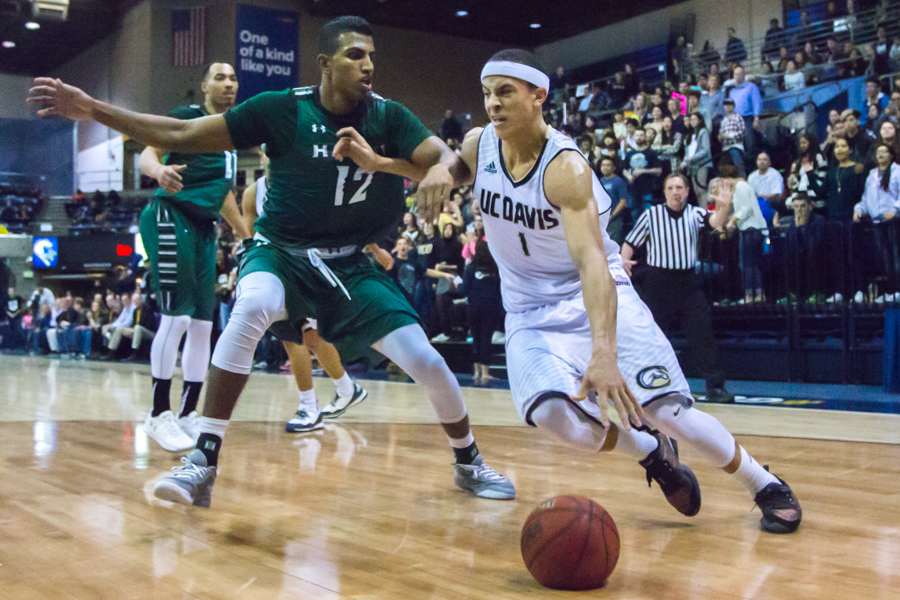
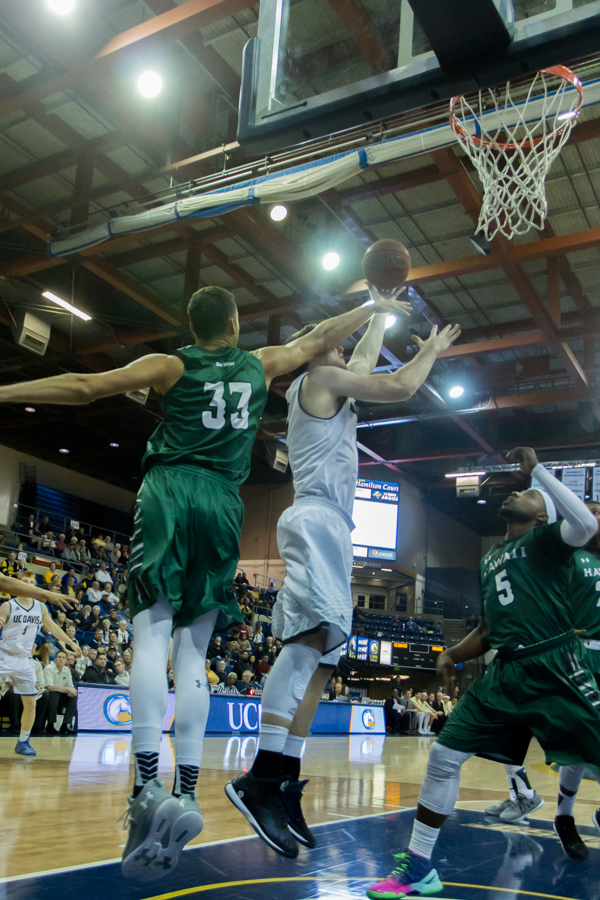
Thursday, March 3, was a near replica of the game against UC Irvine last Saturday, resulting in another loss off a foul by junior guard Lawrence White and a final attempt to win the game with a three-point shot by junior guard Darius Graham.

JAY GELVEZON / AGGIE

“It stings,” Graham said. “But I’ll take those shots every single time if I need to. I’ll shoot with confidence every single time […] I know my hard work will eventually pay off.”

The message was the same as last week from head coach Jim Les: “They deserve a better result.”

Picking up an early lead against the Rainbow Warriors, the Ags played aggressively with immense intensity to stay in the lead, but near the end of the first half Hawai’i managed to catch up just in time to make the second half of the game all or nothing for UC Davis.

The court lit up with an incredible seven steals by the Ags and 16 turnovers by the Rainbow Warriors along with the spectacle that is senior forward Josh Fox.

The senior put up 19 points and eight rebounds against Hawai’i, his last game in the Pavilion, in what he described as a surreal experience.

“I tried not to think about it all week long, but reality hit when the buzzer sounded,” Fox said.

Notably, the senior said goodbye on a good night as some career highs were tied by the Aggies, including junior guard Brynton Lemar’s 15 points and freshman guard Siler Schneider’s eight rebounds.

Fox received a standing ovation at the end of the game as he finished his final home game as an Aggie.

“I’m very sad that it’s coming to an end,” Graham said. “That’s the guy I’ll run through a wall for. It’s the last game here, but it’s definitely not the last game together.”

The sole graduating senior and former Sixth Man of the Year shares that upon graduating from UC Davis, he would prefer to stick with basketball, but has other plans as well.

JAY GELVEZON / AGGIE

“If not, open a restaurant or something,” Fox said jokingly. “[I think I’m going to leave this team] with some cooking recipes. But hopefully I showed them to just try hard. Every night I just try to leave it out there, [and] hopefully it shows to the guys […] this is an emotional game. I wear my heart on my sleeve when I play and hopefully I leave that with the guys and they continue this legacy of Davis basketball.”

While Hawai’i picked up their seventh road win (zero losses), the Aggies prepared for their match on Saturday, March 5. They ended up defeating CSUN 87-83 in triple overtime.

With their regular season now behind them, the UC Davis men’s basketball team prepares for the Big West Tournament. They went 11-18 overall, and 6-10 within their conference. The fifth-seeded Aggies will play fourth seed UC Santa Barbara on Thursday.

“They’re giving me everything they have,” Les said. “They are peaking and playing their best basketball at the right time […] when it matters the most.”

Written by: Veronica Vargo – sports@theaggie.org

UC Davis Police to hold safety walk to check faulty lighting on campus

CIERA PASTUREL / AGGIE

Safety walk held in response to recent hate crime against female African American student

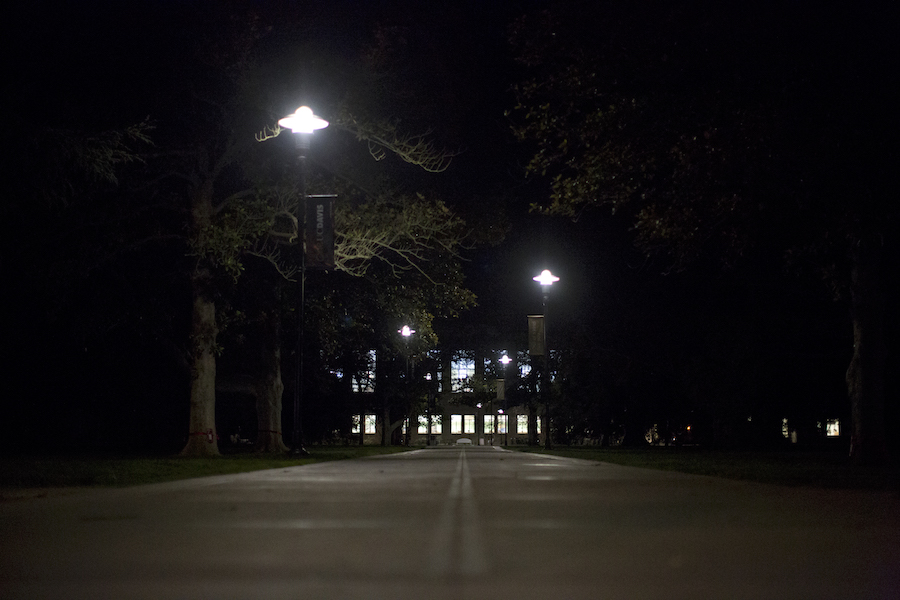
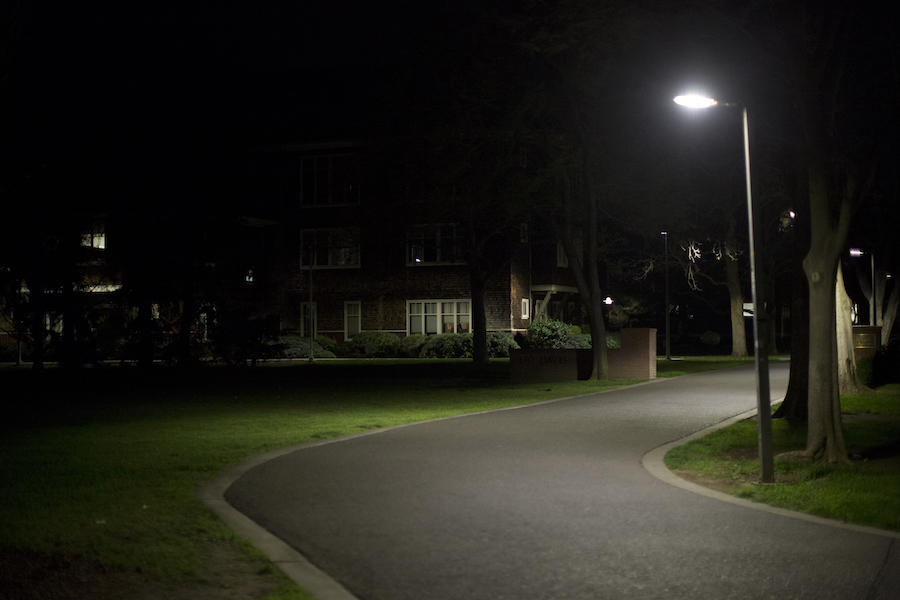
On March 9, the UC Davis Police Department will be holding a safety walk, which students are invited to join in order to check and fix malfunctioning lights on campus.

Participating students will be asked to come to the flagpole on the Memorial Union’s South Patio at 6:30 p.m. Hot chocolate and snacks will be provided for participants.

Students will work in teams with police officers and report any malfunctioning lights to Facilities Management.

The safety walk is an annual event. However, this year’s walk was specifically scheduled to address the recent hate crime perpetrated against a female African American student in West Village on Feb. 15.

In addition to the walk, UC Davis police have committed themselves to creating a safer campus by continuing to check lighting prior to the walk, as well as working on installing emergency phones across campus. The first phones are expected to be up by Decision Day on April 2.

According to Matt Carmichael, UC Davis police chief, the goal of the walk is not only to check the lights on campus and ensure that the campus is well-lit at night, but also to help create a healthy relationship between students and the campus police officers.

CIERA PASTUREL / AGGIE

“This is, for us, addressing security as a community,” Carmichael said. “When you think of security, sure, campus police play a role, but it’s a collaborative effort. One way we improve security on campus is obviously building trust with police in the community. I know that people won’t report anything if they don’t trust the police. In order for me to protect the community and stop people or apprehend people who will do harm to us, we have to make sure that students feel that the police are a resource and trust in reporting to us.”

Nicole Hage, a second-year animal science major, said she appreciates the campus safety walk and would like to participate should time permit, but does not necessarily feel unsafe on campus, claiming that most of campus tends to be very well-lit when she has late classes.

“I think it’s a good idea,” Hage said. “I think it’s admirable that they are making an effort to help students feel more safe as they go across campus. One thing though is that I feel like the safest part is campus. I never really feel unsafe walking on campus. I usually stay in the more well-lit parts, so maybe if they wanted to improve lighting in the other parts, or crevices of campus that are not as well-lit, then that would help, but I think that the part that should be better lit is around campus and off-campus and in-town.”

Jack Foley, a second-year political science major and former ASUCD Senate candidate, put specific emphasis on fixing campus lighting during his campaign earlier this quarter. While he said he was happy that the police are responding to the hate crime and acknowledged the importance of the walk, he also said that he wished the police used more proactive ways of stopping incidents like this from happening.

“We’ve had these safety light walks since 2007, and we still have these problems,” Foley said. “I think it’s time for real action. I think it’s time to do more than just these campus safety walks, and I hate to think that we’re going to have a hate crime, a sexual assault crime [before we do anything]. What is it going to take before we actually have action beyond these walks? It’s a noble goal, but it’s too little, too late. This is why I think we need an advocate for this kind of stuff, just so we don’t have to have #BlackUnderAttack [supporters] demanding change. I don’t think the safety walks do enough.”

Written by: Sangeetha Ramamurthy – campus@theaggie.org

Youth Art Month exhibit at the Crocker Art Museum

WINTER WONDERLAND / KLARYCE AHO / COURTESY

An exhibition of student artwork

From March 3 to April 3, the Crocker Art Museum in Sacramento is featuring an exhibition of local students’ artwork as a part of Youth Art Month (YAM). The YAM exhibition features a total of 70 pieces of original artwork by students from kindergarten through twelfth grade. The students come from 26 schools in the greater Sacramento area. Most are two-dimensional pieces — paintings, drawings, mixed media and a few digital paintings — but there are also some three-dimensional sculptural and stained glass pieces.

YAM, which began in 1961, is a statewide program presented every March by the California Art Education Association (CAEA). Pam Avery, a retired high school art teacher of 21 years and current CAEA Northern Area President, explained why Youth Art Month was created.

“The purpose of Youth Art Month is to encourage students to make a commitment to the arts throughout their lifetime,” Avery said. “YAM promotes a holistic education program including arts to develop future citizens of a global society.”

Alison Flory, who works in the Education department at the Crocker Art Museum, said the event is a great chance to raise awareness about the local art community.

“This is an opportunity for people who come into the Crocker who may not be aware of the types of programs that are highlighted in the exhibition to be introduced to them,” Flory said.

Li Ezzell, YAM chair and art teacher at Hiram W. Johnson High School in Sacramento, has submitted his students’ artwork to the show before and believes the Youth Art Month exhibit at the Crocker is an amazing opportunity for students to share their artwork with the community.

“We teachers see [the students’ artwork] in our classrooms,” Ezzell said. “But oftentimes, the outside world does not have the opportunity to see the wonderful work our students create.”

Ezzell hopes this exhibition will be beneficial for both the students themselves and the entire community.

“I hope seeing the artwork students make will cause more people to want to support visual art programs, and to join us in advocating for the arts,” Ezzell said. “I hope it gives student artists a boost of confidence that they have the skills to continue with art, if that is something they are thinking of pursuing.”

The Crocker Museum is also featuring exhibits such as “Back To Life: Bay Area Figure Drawings” and the “Ai Weiwei Circle of Animals: Zodiac Heads” and, starting March 13, an Andy Warhol exhibit. General admission is $8 for college students. Check out the Crocker Museum’s website for more information.

THE BEAUTY OF THE BEAST / EMMA BRINK / COURTESY
FEET IN THE SAND / AN DO / COURTESY


WRITTEN BY: Sofie Bates — arts@theaggie.org

Elephant in the room: The delayed decriminalization of marijuana

0
ELI FLESCH / AGGIE
ELI FLESCH / AGGIE

As a kid, I was always trying to skirt my parents’ rules. I stayed up late reading under the covers and I snuck extra cookies I wasn’t supposed to have. Yet, there is no clearer disregard for authority than marijuana use among Millennials. As punishment for use, members of the older Boomers and Generation X-ers in the federal government seem hellbent on keeping marijuana illegal, despite its popular recreational use since 1965.

In 1970, Congress placed marijuana on Schedule I of the Controlled Substances Act, making its sale and cultivation a felony. This decision came after a uniform consensus among some scientists that marijuana has “no accepted medical use.” Since then, 23 states and the nation’s capital have legalized medical marijuana. Recently, the surgeon general has called for a review of all drug policies. The federal government has yet to jump on board.

When it comes to weed, there really is no debate surrounding its safety. When you compare it to alcohol, another popular and easily abused yet legal substance, you’ll find that cannabis has been deemed by many medical professionals as much less harmful. In many cases, alcohol will be far more intoxicating than marijuana, and chronic drinkers will have a significantly worse withdrawal process.

People often associate drugs with crime, yet most crimes associated with weed have to do with possession and distribution, not with the physical reactions of those who smoke it. In fact, the rate of interpersonal violence is lower among people who smoke weed than among people who don’t. Violent assaults are often exacerbated by the presence of alcohol.  

Those who oppose marijuana legalization point to its potential as a gateway drug. However, research has shown that those who experiment with weed are half as likely to become addicted as those who experiment with alcohol.  

The greatest consequences stemming from illegal marijuana are the enormous social costs. In 2012, 658,000 people were arrested for marijuana possession. Interestingly, of these, less than 200,000 were white. Despite the discrepancy in arrest rates, actual cannabis use is roughly equal, varying at most around 5 percent. Legalizing marijuana will be a step forward in combating the injustice of disproportionate incarceration rates.

The people who oppose the decriminalization of marijuana are overwhelmingly old and white around 70 percent of people aged 55 to 74 vote, compared to half that number for people under 25. Elected leaders mirror the will of voters, but not necessarily the population at large. While Millennials are far more progressive than their predecessors, leaders are still of the older Boomer generation — the generation most eager to support Donald Trump. Legislators continue to push their antiquated agenda despite the largest generation’s overwhelming support for its decriminalization.

Millennials are out to change the previous taboos. As the most progressive generation yet, 69 percent of Millennials favor legalizing weed. They also more fervently profess a deep commitment to fairness and equality. Embracing core values of diversity and tolerance opened Millennials to new ideas and virtues unprecedented in the young adult lives of previous generations. Cannabis is kept illegal according to old wills. Perhaps marijuana possession and distribution remains a felony because the people who regulate its criminality are put at an advantage by its illegality. Perhaps systematic flaws are overlooked, and as a consequence, minorities are oppressed to the benefit of privileged white populations.

It’s difficult to justify the continued restriction of cannabis when far more dangerous drugs are legal and available. Perhaps it’s just social tradition that makes older generations partial to alcohol’s perpetual acceptance. Or perhaps it’s something more.  

You can reach KATELYN COSTA at kcosta@ucdavis.edu.

Humor: School set to renovate Olson Hall because it is old

0
NICKI PADAR / AGGIE
NICKI PADAR / AGGIE

One of UC Davis’ hidden gems is finally getting the renovation it deserves. Olson Hall, originally built in 1963, has seen very few changes in its 50-plus years on the UC Davis campus and is simply too old. Minor changes have occurred, such as a decision to fasten plastic chairs to the floors in 2000.

Liberal arts students are excited for this change that they feel is long overdue.

“I feel like there are times that people forget that Davis has things besides science. It’s nice to get some attention,” said Leslie Given, a fourth-year communication major. “We have state-of-the-art science facilities. All I’m asking for is certain buildings not look like large cinder blocks.”

Olson Hall will offer updated facilities, including a new Mac lab and bathrooms with mirrors. Much to the enjoyment of UC Davis students, there will also be more scantron vending machines located in the basement. Additionally, the students from a local elementary school will be painting an Aggie mural on the northwest wall.

School officials also appear to be excited for the new look.

“Olson Hall has been a staple on our campus for a long time. Other buildings have been renovated,” said Bill Bogart, head of construction and design. “Olson Hall has stood strong for over 50 years without any major changes. We want the creativity of the building to reflect the mentality of our students.”

While the blueprints have yet to be unveiled, UC Davis has announced that it will incorporate the opinions of some of the school’s most storied alumni in the design process.

“The building screams old,” said Paul Bergman, architecture critic from the graduating class of 1995. “Nothing says, ‘new’ like fresh carpet and modern vending machines.”

Construction is set to begin June 2016, during finals week.

You can reach ETHAN VICTOR at ejvictor@ucdavis.edu or read the nonsense he posts in the Twittersphere @thejvictor

UC Davis ranks high on Peace Corps lists

0
AUSTIN ALCORN PETERSON / COURTESY

Peace Corps’ humanitarian efforts shine at UC Davis

A student’s life during college is met with many opportunities for growth clubs, greek life, research teams all serving as ways to further student-grown ambitions. One opportunity that stands out to many dwells on the second floor of South Hall, where the Peace Corps at UC Davis office resides. Students come with the hope of spreading humanitarianism and sustainable change to the rest of the world.

This February, UC Davis was recognized by the Peace Corps for its efforts, and has been ranked no. 14 on the organization’s 2016 Top Volunteer-Producing Colleges and Universities List. UC Davis has held the no. 14 position for two years — this is also the 15th year in a row that UC Davis ranks among the top 25 schools.

“It’s extremely exciting,” said Austin Alcorn Petersen, a Peace Corps recruiter at UC Davis. “There’s a huge service mentality in this part of the world; a lot of people here want to get into the world and do some good.”

As volunteers for the Peace Corps, students travel overseas to combat issues facing the rest of the world. Services last for 27 months, and traveling options include Asia, Central America, Africa and Europe. Volunteers work together with various departments to improve the standard of living for the country’s citizens. These departments include sanitation, health, agriculture, education and technology.

“It is an exceptional opportunity,” Petersen said. “It gives you the kind of time to establish those relationships [with the community]. It helps that it is a paid program […] so it makes it accessible for just about anybody who wants to do it. I didn’t have any family backing [or] any savings when I decided to do it and I ended up staying for five years — so it’s possible.”

With such a variety of fields to assist in, there are opportunities for everyone to thrive. Students look to the Peace Corps with strong social consciousness and hope for greater things not only beyond their own lives, but also for the rest of the world.

“The peace corp provides students with an excellent opportunity to experience something they may never have thought possible,” said Karishma Sethi, a third-year global disease biology major. “It is an excellent way to expose students to different cultures, foods, health systems and societies after being at university for so long.”

Fifth-year international relations major Choua Vue was accepted to the program for Sierra Leone, West Africa, which departs in August.

“I decided to join the Peace Corps because I wanted to experience and see the world outside of my community,” Vue said. “I believe that the unique experience Peace Corps offers is what drives other students to apply for Peace Corps.”

Alumni are not excluded from this recognition either. Since its genesis in 1961 under President Kennedy, 1,467 Aggies have served in the Peace Corps. In addition, students that have already graduated and are interested in graduate school have the option of joining the Peace Corps Master’s International Program, five of which are in UC Davis.

With the Master’s International Program, students can integrate their time at the Peace Corps with academic work toward their master’s degree. Students go through training and their services with the host country, and then they spend the following two years working on academic projects and finishing up their schoolwork when they return home from their service.

“With the Master’s International Program, you are actually capable of shortening that process down to three or four years,” Petersen said.

Amidst the titles and rankings, the Peace Corps has already seen a highly-competitive time for applications as students are eager to give their time and knowledge towards the rest of the global community. The program received 23,000 applications in the 2015 fiscal year alone, and has seen a 32 percent increase compared to 2014. This followed a reform in the application process that allowed volunteers to choose their country of interest and the specific field that they want to help in. According to Peterson, the length of the application has also been reduced, now taking about an hour to fill out.

“It definitely feels like the word is out right now; people are talking about it and it’s exciting,” Petersen said. “It is a highly-competitive program and applications have skyrocketed. We need the most capable, most competent people working in the field. That level of competition in the end benefits those communities on the ground and around the world.”


Written by: Alan Castillo — features@theaggie.org

Coastal restoration projects receive local support and federal funding

0
TIFFANY HEITZ / USFWS

US Fish and Wildlife Service, Bay Area community contribute to wetland, habitat restoration efforts  

Under the National Coastal Wetlands Conservation Grant Program, the U.S. Fish and Wildlife Service (USFWS) awarded just over $5 million to fund nine California coastal projects, six of which are located in Northern California.

The federal grants are part of a $20 million award given to 28 projects of more than 10,000 acres of coastal wetlands and habitats to protect, restore or enhance.

State and local governments, private landowners and conservation groups will also provide an additional $20 million to fund the 28 wetland restoration projects.

The California State Coastal Conservancy received money to fund the Integrated Restoration in San Francisco Bay (IRSFB) Project, the South Bay Salt Pond Restoration Project (SBSPRP) and the Eel River Estuary Preserve Enhancement Project (EREPEP). IRSFB received $500,000 and the other projects received $1 million each in grants.

IRSFB will enhance 100 acres of native habitat, protecting shoreline, minimizing erosion and maintaining coastal processes while protecting and improving habitat for fish, birds and other estuarine species. In addition, IRSFB will protect numerous species including fish, endangered birds and special status species.

According to the USFWS, wetlands have been destroyed to make room for urban development and agricultural use, but conservation of wetlands enhances flood protection and water quality. Additionally, wetland conservation protects biodiversity and supports coastal wetland-dependent wildlife.

The California State Coastal Conservancy will also restore historical hydrological linkages, estuarine functions and aquatic and terrestrial habitat conditions to 227.3 acres of wetlands and associated uplands in the Eel River Estuary.

Eel River has experienced a decline in fish population like salmon, steelhead and green sturgeon due to the loss of aquatic habitat. The estuary is a critical habitat for juvenile salmonid species; restoration will restore critical fish passage and nursery habitat.

“The project will restore 1,250 acres of fish and wildlife habitat in the Eel River Estuary Preserve,” said Project Manager Michael Bowen.

The SBSPRP includes three major areas of the South Bay — the Alviso Ponds, Ravenswood Ponds and Eden Landing Ponds.

The grant will be used specifically for pond A1, a small salt pond at the Alviso Ponds. Pond A1 is one of 23 ponds within the Alviso Ponds project, and it will help recover lost biodiversity and ecosystem functions.

“[The grant] will be used to leverage more local and state funding and make a significant difference in improving the vitality of the San Francisco Bay,” said Brenda Buxton, deputy program manager of the San Francisco Bay Conservancy Program.

The main goals of the project include restoring and enhancing a mix of wetland habitats, improving flood management in the South Bay and providing wildlife-oriented public access and recreation.

Upon its completion, the SBSPRP will restore 15,100 acres of tidal wetlands and habitats.

In addition to the funds received from the USFWS, local communities started efforts to raise money for wetland protection and restoration. In the Bay Area, wetlands have been depleted over the years, decreasing from 350,000 acres to about 30,000 acres. The AA initiative was created to gain local support and raise revenue for restoration projects in the Bay Area.

Jeffrey Cardenas, Santa Clara County coordinator for the Yes on AA campaign, explains that although the San Francisco Bay is one of the largest and most influential bays in the nation, it receives less federal funding than east coast bays, which aren’t as big or economically significant.

In June, voters from all nine Bay Area counties will vote on measure AA, which will implement a $12 parcel tax on all residential, commercial and industrial properties in the South Bay to protect and restore the San Francisco Bay and its wetlands.

“It sends a message to the state and federal government about the necessity for [funds] so that hopefully we can get what we should be receiving now […] It’s important that the state and federal governments are able to contribute other funds as well,” Cardenas said.

The San Francisco Bay Restoration Authority will distribute the revenue collected from the parcel tax through grants so that anyone with a restoration proposal can apply to receive funds.

“[Under Measure AA] distribution of money has to happen equitably so that all areas of the Bay Area benefit,” Cardenas said.

If locals approve the measure, it could be the first time in history that a region as large as the Bay Area places a parcel tax to collectively pay for restoration projects.
Written By: CARLA ARANGOcity@theaggie.org

Restaurant by day, bar by night, prohibited from serving alcohol for 30 days

0
NICKI PADAR / AGGIE
NICKI PADAR / AGGIE

The California Department of Alcoholic Beverage Control suspends KetMoRee Thai restaurant and bar liquor license

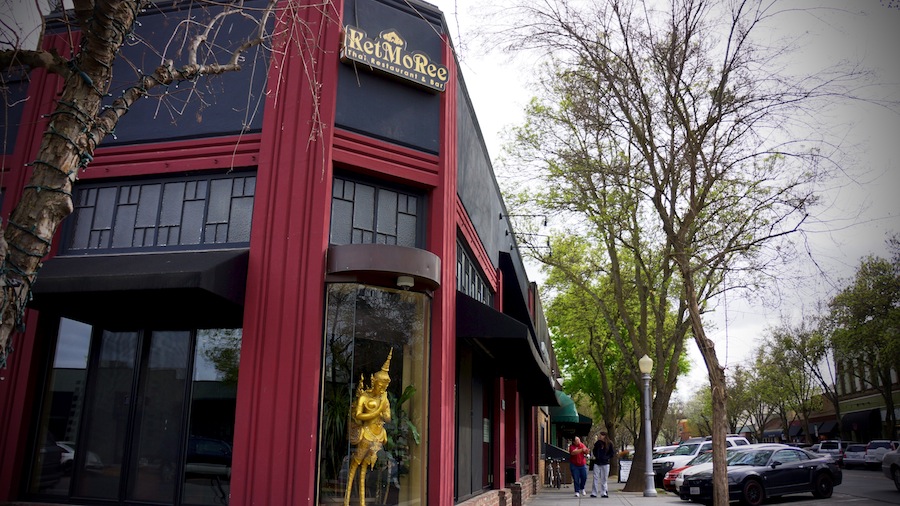
On Feb. 25, the California Department of Alcoholic Beverage Control (ABC) declared a 30-day liquor license suspension upon the KetMoRee Thai Restaurant and Bar located on 238 G St. in the City of Davis.

KetMoRee is prohibited from selling or serving alcoholic beverages to patrons for 30 days. If the establishment fulfills the 30-day suspension without any penalties, they will move into a two-year probation period, during which the bar and restaurant will be watched closely for disruptive behavior.

ABC filed an accusation against KetMoRee for operating as a “disorderly house,” a term used by the California Business and Professions code. This violates the ABC Act, requiring excessive police services in one location due to alcohol-related incidences.

“Davis police has responded to KetMoRee over 24 times in a two-year period for issues such as public drunkenness, fights, assaults and a tragic fatal stabbing in September 2015,” said John Carr, an information officer for ABC. “They are expected to be compliant with the law and hire security guards to help keep things orderly at the premises. If they are compliant with the law, there will be no problems.”

According to Darren Pytel, assistant police chief for the City of Davis, if a homicide occurs inside of a licensed establishment, ABC will look into the licensed establishment and request local agencies to report all calls for service regarding the establishment. ABC then takes action as necessary.

Pytel explains that, since 2010, there have been 196 incidents at the KetMoRee Bar that police have responded to. However, prior to the KetMoRee liquor license suspension, the Davis City Council began developing an ordinance to control violent and disorderly conduct at Davis bars.

“The Davis City Council has directed city staff to draft an ordinance and the ordinance will deal with requiring entertainment permits for certain defined establishments, businesses and venues,” Pytel said. “Through entertainment permitting, consistence can be placed on business activities.”

Dessere Givertz, a fourth-year human development major at UC Davis, explains that she has been to KetMoRee bar a few times and has experienced a more strict security staff than any of the other bars in Downtown Davis. However, she has still had negative experiences with customers who go to the bar.

“I have mixed feelings about [the KetMoRee license suspension], because whenever I’ve gone to KetMoRee, the management has been really strict about checking your bags and making sure you don’t have a fake ID, but at the same time I’m not sure if the bar is accountable for who frequents it, because it’s definitely one of the bars that has the most fights and problems in Davis,” Givertz said.


Written by: SHIREEN AFKARI – city@theaggie.org

Gunrock wants you for the UC Davis Basketball Team

0
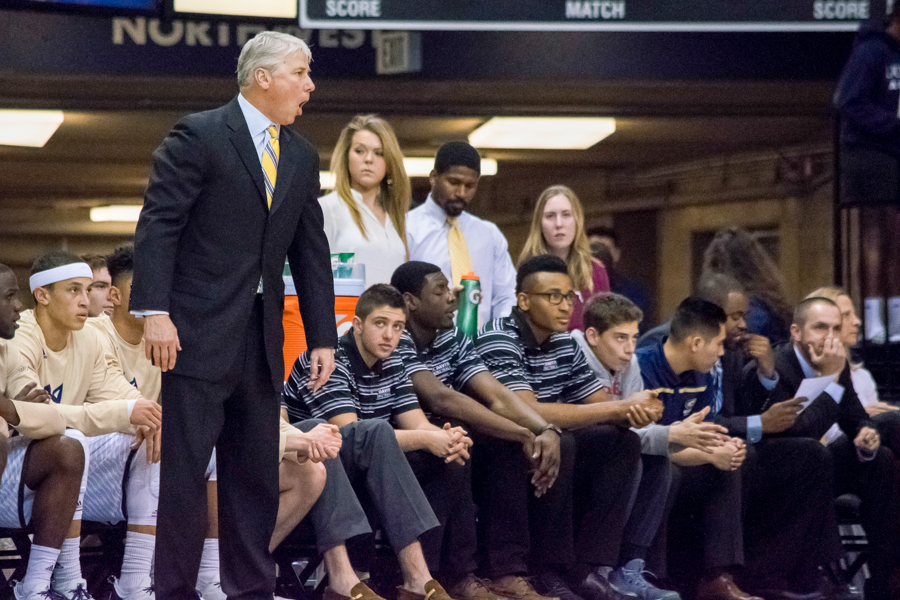
Head Coach Jim Les' commanding presence has been an attractive factor for the UC Davis men's basketball team. (BRIAN LANDRY / AGGIE)
Head Coach Jim Les’ commanding presence has been an attractive factor for the UC Davis men’s basketball team. (BRIAN LANDRY / AGGIE)

According to the National Collegiate Athletic Association, there are approximately 541,054 players in high school men’s basketball. Only 3.41 percent of these players continue on to play at the collegiate level. UC Davis is home to 15 such individuals, six of whom joined the team this year as freshmen.

College basketball has three time periods for official open recruitment. The first is from Sept. 9 to Nov. 8 and is followed by a few days of break before the second period takes place from Nov. 13 to March 20, excluding several days from the Christmas holiday. The final period goes from April 7 through April 20, with six days subtracted out for Easter.

These times pose an interesting challenge for college basketball. The official season starts on Nov. 13, the same day that the second open recruiting period begins. High school basketball is on a similar schedule and plays during the winter months. Therefore, many students make use of the early signing period in November to commit to their universities.

“Unofficially, you’re recruiting all the time,” said men’s basketball head coach Jim Les in a phone interview. “It’s the lifeblood of our program.”

Yet, because one of the major recruiting times is during active play, many programs follow UC Davis and have adjusted their schedules accordingly. Furthermore, basketball has changed the manner in which college programs gather information on potential recruits.

One of the major trends has been a shift away from recruitment camps held by the respective universities, with staff traveling to and getting

BRIAN LANDRY / AGGIE

information from Amateur Athletic Union tournaments instead.

“We can go watch, sometimes there are three to four hundred teams in a tournament, so we can go in one venue and over the course of a weekend see numerous potential recruits, and see them multiple times,” Les said. “A lot of the times [we can just] get the recruiting process started.”

These tournaments have given college programs better access to players throughout the athlete’s high school careers. This in turn has changed the recruiting window for prospective student-athletes. Now coaches are able to look at players as early as their sophomore year.

But what exactly are coaches looking for in these tournaments? Are they trying to find the best players possible? Are they looking for someone they can mold into a role they need filled, or are they recruiting a type of player that would fit well with the school and team they represent?

It’s all of the above.

“Each recruiting class is a little bit different, based on the size and based on your needs for the year,” Les said. “There may be specific needs or a specific position that we are targeting in a given recruiting year, and obviously that’s ever changing.”

That being said, UC Davis is a major institution and has to compete at certain levels. The staff on the men’s basketball team has to make sure that they are not wasting their time and money.

“We want to make sure that the basketball players we’re going to watch have a Division I skill,” Les said.

Equally important for these potential recruits are robust academic profiles and genuinely good character. The culture that surrounds the UC Davis men’s basketball program is one that couples outstanding achievement on the court with achievement in the classroom. It’s a program that focuses on molding these individuals into the best they can be.

“Everybody progresses at their own rate, once they get into a program,” Les said. “What I’m very pleased about is some of the things that we evaluated […] that put these young players on the fore-front of being recruitable to UC Davis. Those traits have held true.”

The timetables may all be a little bit different, but the main thing is that both parties understand exactly what is necessary and make sure that the fit would be good for everyone involved.

The entire recruiting process boils down to how the program and the recruits build their relationships. Throughout the process, members of a university’s staff will get in contact with players, sometimes visiting the them or having the players visit the school. Each party will do their research on the other and develop a working rapport.

“We all get a really good feel for that person, and also that person gets a really good feel for our staff,” Les said. “They are going to interact with our staff for the next four or five years on a daily basis. So it is important that they know not just one person or just the head coach, but that they know everybody.”


Written by Aaron Sellers – sports@theaggie.org