58.6 F
Davis

Davis, California

Monday, December 22, 2025
Home Blog Page 740

Letter to the Editor: Not enough Aggies are registered to vote

0
HANNAH LEE / AGGIE
HANNAH LEE / AGGIE

To the Editor:

Voting is our right, but registering to vote is a hassle. California’s voter registration process is outdated, inefficient and prone to error, which helps explain why the number of eligible voters registered is declining, as noted in the California Aggie article, “Have you registered to vote?

As the article mentions, the complex bureaucratic maze students must navigate in order to register severely limits their capacity for active civic participation. According to Paul Mitchell, the head of Political Data Inc., 18- and 19-year-olds in California are more likely to be arrested than registered to vote.

Unfortunately, voter registration is no easier on the UC Davis campus, and as an alumna, this issue hits home.

The Center for Information and Research on Civic Learning and Engagement finds that when young people are registered to vote, their turnout rates are close to those of older voters. That’s why I am currently leading a campaign to implement automatic voter registration pilot programs at California universities. Under these programs, when students register for classes each quarter, they would be automatically registered to vote at their current address unless they decide to opt out. This is an important step toward ensuring that our elected leaders represent the interests of all their constituents, rather than tending toward older voters.

I encourage UC Davis students to show their support for the automatic voter registration pilot program by working with student government to make this an issue addressed on campus. We need a more efficient system for registering to vote, and it’s time we demand that student voices are heard.


Ruth Rothstein

Campaign Organizer

CALPIRG

Sacramento
Local salon participates in fundraiser for recovering Davis teen

ZHEN LU / AGGIE
ZHEN LU / AGGIE

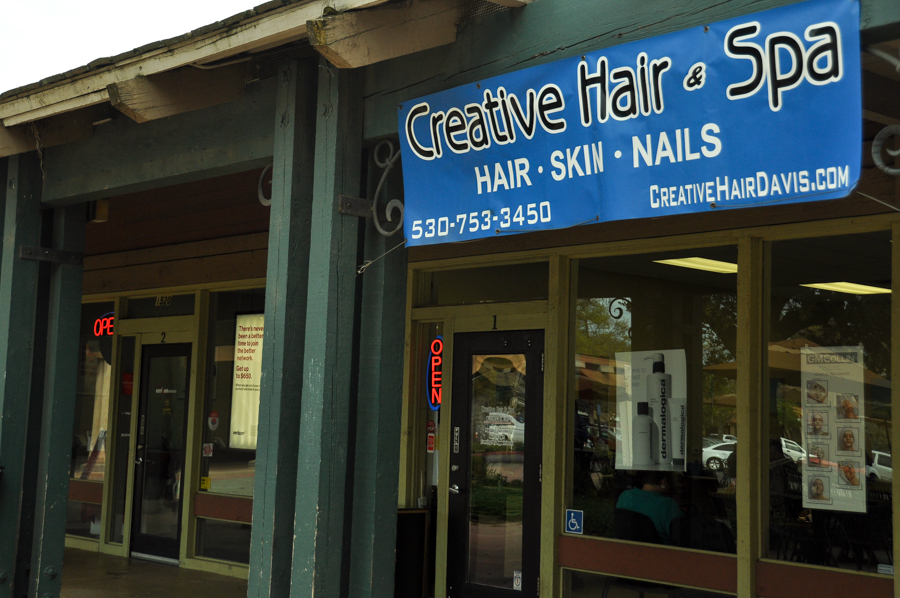
Creative Hair & Spa opens its doors March 6 to raise money for Jillian Foster Trust

While many may be spending this Sunday catching up on sleep or studying for finals, the women at Creative Hair & Spa, located at 1520 E Covell Blvd. in Davis, will be devoting their day off to Jillian Foster, a Davis teen who suffered a tragic spinal injury in early February.

Foster, a sophomore at Davis High School, participated in a ski competition at Boreal Mountain Resort in Truckee on Feb. 8. After placing fifth place (her personal best) in a slalom race, she enjoyed time skiing with some friends. While on the slopes, Foster skied past her friends and collided with a tree at full speed.

She was immediately airlifted to Renown Medical Center in Reno. There, the doctors discovered significant injuries, including a broken back and spinal cord damage. On Feb. 11, Foster underwent surgery, but the doctors deemed her spinal cord irreparable; she was left paralyzed from the waist down.

Although she keeps her spirits up during rehabilitation at Shriners Hospital for Children in Sacramento, her parents are facing extensive medical bills and other expenses related to her recovery and future accommodations.

Families from DHS rallied support for Foster and a trust fund was set up to help her and her family. The Jillian Foster Trust has met almost 90 percent of the $100,000 goal through the generous donations of Foster’s many supporters.

Creative Hair & Spa in East Davis has joined the effort, opening on Sunday, March 6, from 9 a.m. to 6 p.m., when the salon is typically closed. The salon will be donating 100 percent of the proceeds to Foster’s trust.

“There will be four stylists and two manicurists [at the fundraiser on Sunday],”  said Luz Gomez, owner of Creative Hair. “We all decided to donate all of the money to her […] We really just want to help.”

The salon will be providing adult haircuts for a minimum donation of $30 or $15 for children 12 and under. Manicures will cost $15, pedicures $30 and brow waxes $15. Gomez wanted to ensure that all of the money would go directly to the fund and decided to accept only cash or checks for the fundraiser, with all checks made out to Jillian Foster Trust.

Davis resident Wendy Weitzel is enlisting volunteers for the event. Weitzel explains that Gomez did not want any of the money from the fundraiser. In fact, she insisted that volunteers handle all of the money. Many of the volunteers are teens, who cannot necessarily donate a large amount to the trust, but instead are donating their time to help Foster.

“It’s amazing how the community is coming together to support her,” Weitzel said. “It is a cool way to go [to a salon] if you already need a haircut or want a pedicure or something and know that the money is going to a good cause.”

While some people may not have known the local teen directly, many, like 19-year-old nail technician Daniella Reyes, find some sort of connection to Foster and her family.

Reyes went to school with Foster’s older brother. She recalls that all of the women at the salon readily decided to donate all of the proceeds to the trust.  Foster hopes that if something similar were to happen to her own family, the community would return the favor as it had with the Foster’s.

“I just hope we can accommodate everybody that wants to donate that day because it is a special day,” Reyes said. “We are only doing it one day and I hope that as many people can come out as possible and support [the Foster family].”

Anyone unable to participate in the fundraiser is welcome to donate to the Jillian Foster Trust.
Written By: BIANCA ANTUNEZ – city@theaggie.org

University of California revises Sexual Violence and Sexual Harassment Policy

KATE SNOWDON / AGGIE

New policy extends UC Davis employee responsibilities when reporting sexual violence

In early January 2016, the University of California issued a revised edition of the Sexual Violence and Sexual Harassment Policy. This updated policy requires UC Davis employees, faculty and staff to report to the Title IX office when a student or campus community member has experienced some form of sexual violence. The policy also requires that UC Davis employees receive additional annual training that emphasizes how to handle situations that deal with sexual violence.

UC Davis Chancellor Linda P.B. Katehi notified students of this policy change in a campus-wide email on Feb. 3. In the email, Katehi highlighted the importance of educating UC Davis employees on what to do when learning that a student is experiencing sexual harassment.

Under the new policy, UC Davis employees must immediately inform Wendi Delmendo, UC Davis’ Title IX officer, if they become aware that a student or campus community member has experienced a possible incident of sexual harassment. From there, Delmendo will work with the victim to report the incident and ensure that the university addresses it.

“I view my role as ensuring that UC Davis has a comprehensive policy and a coordinated and effective process for responding to reports of sexual harassment and sexual violence and that we provide sexual harassment [and] sexual violence education and awareness to the campus community,” Delmendo said.

UC Davis faculty and supervisors who previously took required training that focused on sexual harassment situations will now see updated content in training programs. All other employees, including student employees, will be required to take a new online training course.

To encourage reporting, the new policy also provides immunity in most cases for individuals using alcohol or drugs around the time the sexual violence incident occurred.

“Because alcohol, drugs and other intoxicants are often involved, complainants may be afraid to report prohibited conduct, where they have also engaged in an activity that violated university policy or state law, such as a person under age 21 drinking alcohol,” the policy states. “UC encourages the reporting of prohibited conduct and therefore generally does not hold complainants and/or witnesses accountable for alcohol or drug-related student violations that may have occurred at the time of the prohibited conduct.”

Despite these efforts, there are still some concerns over the vulnerability of high risk communities of sexual violence. Fourth-year technocultural studies major and the Gender and Sexuality Commission Chair Ivon Garcia expressed their thoughts on what the university could do to improve resources for community-specific victims.

“People who are low-income, who are undocumented, who are trans, who are queer and people of color are still at high risk of sexual violence,” Garcia said. “UC Davis should consider providing more services for survivors, such as long-term counseling, and making sure community-specific counselors are available.”

According to Garcia, UC Davis should also increase the transparency of its resources so students know where to report incidents of sexual violence or harassment.

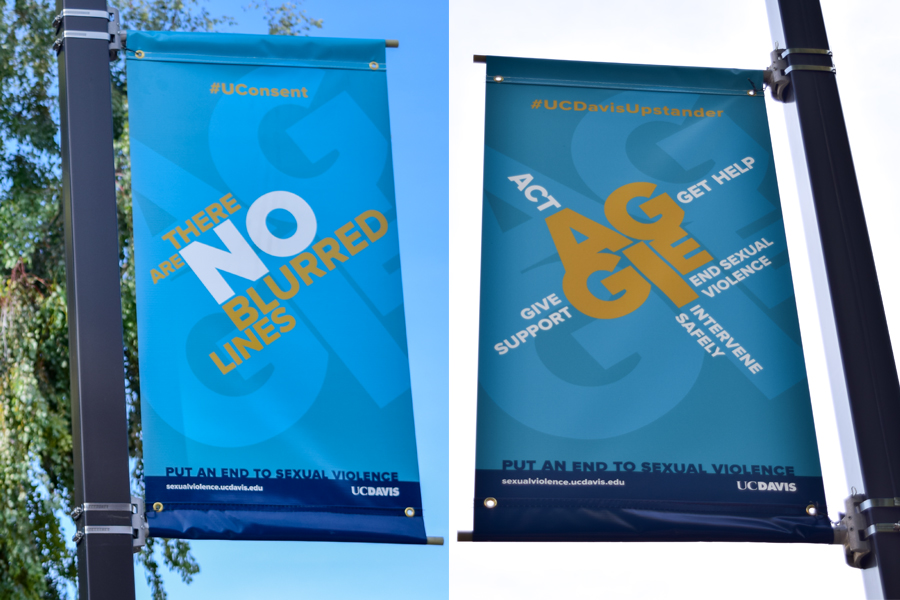
Since launching the #UCDavisUpstander campaign in November 2015, Katehi has continued to advocate for sexual violence prevention programs and reporting sexual violence.

“Preventing and responding to sexual harassment and sexual violence on our campuses is a responsibility we all share,” Katehi concluded in her email addressing the new policy. “I am confident that together we can create and maintain a safe environment for all our students, faculty and staff.”

Written by: EMMA SADLOWSKI – campus@theaggie.org


Finding the cure through household pets

YASH NAGDA / AGGIE
YASH NAGDA / AGGIE

UC Davis physicians and veterinarians collaborate in the Comparative Oncology Program to find a cure for cancer

Known as man’s best friend, dogs provide their owners with unconditional companionship, love and loyalty. And just as humans can learn a lot of things from a dog’s behavior and personality, they can also learn a lot from a dog’s immune system.

At UC Davis, physicians and veterinarians teamed up in the Comparative Oncology Program to conduct research on dogs with cancer. They then applied their research and findings to cancer in humans.

“What we’re looking at is what we can learn about from companion animals, particularly dogs and cats with cancer, and how it relates to cancer in humans,” said Michael Kent, a researcher, professor of surgical and radiological sciences and director of the Center for Companion Animal Health at UC Davis.

Although the team is just beginning their research with mice as the subject, there is more to be learned from cancer in many other species.

“[Being] the top vet school in the country, [UC Davis] obviously has access to these other potential models for learning about cancer,” said Arta Monjazeb, a professor of radiation oncology at the Comprehensive Cancer Center. “The comparative oncology and comparative pathology programs try to take advantage of that in really being able to compare cancer and compare pathology across species, and find the common ground to find models of disease that better represent human disease.”

The research is a two-way street both those dealing with veterinary medicine and with human medicine are able to learn from each other’s findings.

“It’s kind of a win-win situation in the way we get to learn more and study [what] we otherwise wouldn’t be able to do,” Monjazeb said. “[Veterinary researchers] get access to medicines and new cutting-edge techniques […] that really aren’t generally being developed for veterinary oncology.”

Before trying out a new therapy or treatment, the physicians and veterinarians must go through a research review board to ensure everything meets ethical standards. The review board also assures, that there is reasonable expectation, that there will not be any injuries and that there will be some sort of response from the treatment. Animal owners are then presented with all the treatment options to decide if they would like to participate in a clinical trial. From there, the clinical trial is conducted in order to develop a treatment or therapy.

Monjazeb’s focus, in collaboration with other veterinarians and physicians, is on understanding how the human immune system combats cancer. He and his team are trying to find ways to reinvigorate the immune system to help fight cancer.

“The idea is that cancers are mutated parts of our body so they express abnormal proteins,” Monjazeb said. “Our bodies should be able to recognize these abnormal proteins and kill the cancer cells the same way that they would kill a cell infected with a virus, because it would be expressing abnormal proteins. But in reality, what happens is the cancer develops very intricate ways to actually trick the immune system and kind of escape.”

Dogs are commonly used for research because their immune systems and cancers are similar to humans’. Like humans, cancer in dogs is known to develop spontaneously.

“The mouse models that we use are very artificial models; they’re all inbred,” Monjazeb said. “Their immune systems don’t necessarily closely reflect the way that the human immune system works, and the cancers that we give to these mice are definitely nothing like human cancers. The cancers are grown in petri dishes and injected into mice and used for studies.”

Some of the current clinical trials include identifying lymph node metastasis, assessing ventricular arrhythmias during treatment for lymphoma, evaluating a diagnostic tool for large bowel disease in dogs, assessing a new addition to treatment of canine osteosarcoma and assessing an immunotherapy in canine osteosarcoma.

In particular, this assessment is a new addition to the treatment of canine osteosarcoma, and involves 19 other veterinary schools and approximately 160 dogs nationwide.

“It’s evaluating whether an oral medication called Rapamycin can help improve outcomes for dog with osteosarcoma,” said Jenna Burton, assistant professor of clinical medical oncology at the UC Davis School of Veterinary Medicine.

Burton is also working on a clinical trial of a new formulation of doxorubicin, a drug that is widely used to treat lymphoma and other cancers in humans.

“We’re giving that drug to dogs with lymphoma to get some more information about it,” Burton said. “[Such as its] safety, its tolerability, how well it works and whether we can potentially reduce some of the common side effects that we see with doxorubicin, namely toxicity to the heart.”

Kent said that one of the major challenges overall is dealing with cancer and its ever-changing form.

“Cancer is tough,” Kent said. “It’s not one disease. Cancer is thousands of different diseases and not to anthropomorphize cancer, but cancer is really smart. It almost works in a Darwinian way. You kill a batch of the cells this way and they develop new ways to get around it and they get resistant to treatment.”

According to Kent, the research has not really been a challenge in terms of working with their physicians.

“It’s been great working with the medical school,” Kent said. “And there are some differences between the species but not that much. I’d say our biggest challenge is the fight against cancer. You have to be in it for the long haul.”

Butron also pointed out the fine line between people’s perception of animal research and actually conducting  clinical trials in companion animals. She said that since dogs and cats are “people’s animals,” it is really important that they are treated as someone’s pet and not as a research subject.

“We never lose sight of the fact that these are someone’s family members,” Burton said. “I think part of the challenge is communicating our message that clinical trials in dogs and cats ultimately are designed to help our pets and help us answer questions about ways that we can treat cancer more effectively with less side effects.”

Kent reiterated Burton’s point, while also pointing out the importance of the Hippocratic Oath: “first do no harm”.

“It’s really important to realize that we’re dealing with someone’s beloved pet,” Kent said. “These are not lab animals and we have to make sure we do things in an ethical way, but also it’s really important to realize the promise of using these kind of patients that we have in a way that can help other dogs and then down the road, that will hopefully help people too.”

Written by: Jacqueline Chu – features@theaggie.org

UC Davis professor honored with Presidential Early Career Award by President Obama

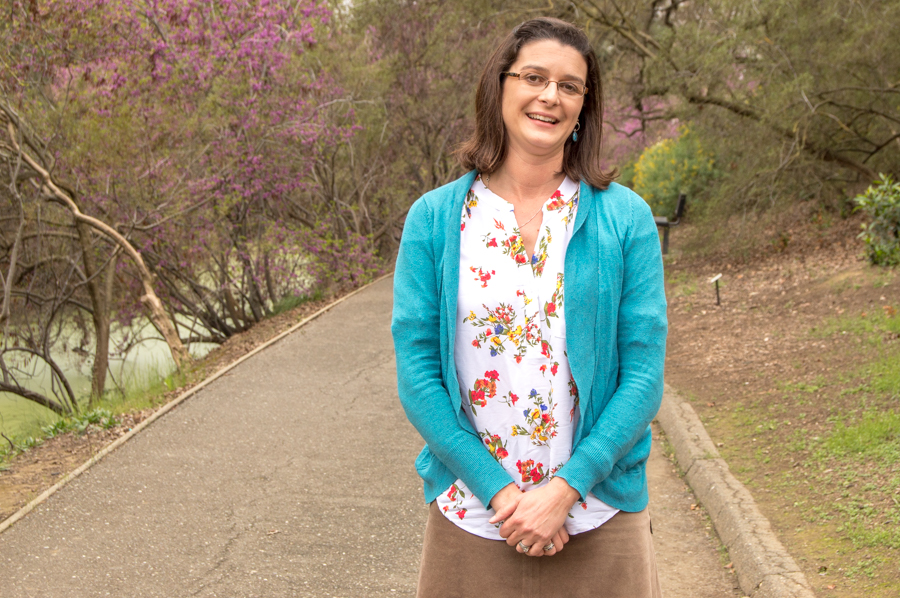
Professor Tessa Hill. (ARIEL ROBBINS / AGGIE)

Professor Tessa Hill honored for her work in the Department of Earth and Planetary Sciences, along with 14 other University of California researchers

On Feb. 18, President Barack Obama named 14 University of California (UC) researchers as recipients of the Presidential Early Career Awards for Scientists and Engineers. Among the recipients was Tessa Hill, an associate professor in the Department of Earth and Planetary Sciences and at the Bodega Marine Laboratory at UC Davis.

The award is the highest honor granted by the U.S. government to scientific professionals in the initial phase of their careers.

Upon discovering that she received the award, Hill quickly contacted her friends and family to share the news.

“I emailed my parents, sister and husband with this rather unbelievable news,” Hill said. “I felt and still feel shocked and very honored. In the days after getting the award, I heard via email and phone from many of my colleagues and mentors, which has been the best part so far.”

Every year, government agencies and departments select recipients based on the innovative nature of their research and their commitment to public service. This year, 105 scientists and engineers earned awards, and researchers from seven different UC campuses were represented, including Berkeley, Davis, Irvine, Los Angeles, San Francisco, Santa Barbara and Santa Cruz.

Three UC-affiliated laboratories, Lawrence Berkeley National Laboratory, Lawrence Livermore National Laboratory and Los Alamos National Laboratory, were also honored.

Hill is the associate director of the UC Davis Coastal and Marine Sciences Institute.

As a member of the Bodega Ocean Acidification Research Group, she studies the response of marine species to environmental disturbances, including the impact of ocean acidification on oysters.

“I study how marine animals respond to climate change and other human impacts on the ocean,” Hill said. “The ocean is an essential part of our everyday lives. It influences our weather, the food we eat and how we connect with the natural world. The only way we can make wise decisions about how to manage and interact with the ocean environment is to learn more about it.”


Hill is also one of the leaders of the National Science Foundation, a U.S. government-supported program where she helps future elementary and high school science teachers learn how to incorporate climate change science in their classrooms.

Earlier this year, Hill was named a Public Engagement Fellow by the Leshner Leadership Institute, an initiative of the American Association for the Advancement of Science Center for Public Engagement with Science and Technology, due to her high involvement with and contribution to the science communications field.

Colleagues believe that Hill is very deserving of this presidential award due to her outstanding work and dedication to the field as well as her ability to communicate with others about her research.

“Professor Hill was nominated for the award because she is an outstanding scientist,” said Dawn Sumner, chair of the Department of Earth and Planetary Sciences and geology professor. “Her research pushes the boundaries of what we know about how life interacts with the oceans, particularly for shell-forming organisms. In addition to her outstanding research, Professor Hill is an outstanding teacher and communicator. She takes great care to clearly explain her research to community members and students who can benefit from her research insights.”

Anna Hart, a third-year geology major, is grateful to study in a field where UC Davis has one of the best researchers.

“It’s amazing [that] one of our professors is honored by the president,” Hart said. “[It] just shows how prestigious UC Davis is and how dedicated the researchers are on learning and providing valuable information for our society.”

Hill plans to continue working on understanding the depths of climate change, both natural and human-caused, as well as its influences on ocean environments. She hopes to encourage students to investigate the ocean and to understand how it works.

Written by: DEMI CACERES – campus@theaggie.org

A major switch-a-roo

KATE SNOWDON / AGGIE

UC Davis advisors reflect on process of switching undergraduate majors

Though many students enter college with the next 10 years of their lives already scheduled in their life planners, some students switch majors late in their college years.

“Some students get here and realize maybe that’s not the right major for them, or once they learn more about it they feel it’s not a good fit,” said Alin Wakefield, an advisor in the College of Engineering Dean’s Office. “They might explore other majors or other interests or fall back on a different interest that they have and pursue a different path.”

Switching majors is common with many undergraduate students who are still deciding where they want to focus their studies. According to the National Center for Education Statistics, around 80 percent of students change their major after entering college as undergraduates.

“Over half of students change their major within the first two years,” said Dr. Brett McFarlane, director of academic advising in the Office of the Vice Provost for Undergraduate Education. “Advisors expect that; that’s […] a normal part of the process.”

So what makes students switch their majors, and how do they decide what to switch to? McFarlane believes that the reasons behind these decisions vary from student to student.

“[For] a lot of students it’s really just a matter of maybe they thought [their original major] was something they would be interested in,” McFarlane said. “After taking the class, they […] realize that’s not what was fueling them.”

Oftentimes, students find their major path through the many introductory classes that UC Davis offers.

“I took NPB 10, which was a great class,” said fourth-year neurobiology, physiology and behavior major Kelly O’Callaghan. “That kind of solidified that that was the major that I wanted to switch to.”

Taking classes is not the only thing that seems to change students’. minds. Future career plans or changes in academic interests can also serve as factors in the decision.

“Really what it comes down to from an advising perspective is helping students clarify what their goals are and [narrowing down] the process of how to achieve those goals,” said Joseph Lee, academic counselor in the College of Agricultural and Environmental Sciences Dean’s Office.

Students often make switches based on their career goals as they develop throughout their college experience.

“I realized that American studies was more of an interest than it was something I wanted to pursue as a career,” O’Callaghan said. “I went to the UC Davis website and literally copied down all of the majors and then crossed off the ones that didn’t interest me, and then I […] narrowed it down [from there].”

According to McFarlane, most switches out occur in Science, Technology, Engineering and Mathematics (STEM) fields due to the “technical nature of […] those [majors].”

Though many students switch from one major to a different one within the same college, many also end up switching to another college altogether.

“I’ve seen students [in engineering] change to biology majors, music, managerial economics [and] physics. I knew somebody who switched from engineering to viticulture and enology,” Wakefield said. “It’s across the board where students change their major to.”

Many students switch into the College of Agricultural and Environmental Sciences because of UC Davis’ strong agricultural reputation.

“The two largest majors in the College of [Agricultural and Environmental Sciences] would be managerial economics and animal science,” Lee said. “Those tend to be the common ones that we see students transferring into on a more regular basis.”

UC Davis academic advisors and counselors tend to steer students toward majors based on their strengths and weaknesses.

“Often times with some students we see […] more struggles in the sciences, but still [strong performance] in mathematics,” Lee said. “[Because of this,] they may […] transition into managerial economics.”

The advising staff at UC Davis encourages students to be proactive in their search for the right major.

“It’s a process […] that really involves students looking within [themselves] and deciding ‘what do I want, what are my goals, what are my ambitions career-wise, what do I want to do and is there a major or program here that can help me get there,’” Wakefield said. “A lot of students also talk to family members, friends, hopefully some advisors as well, about what the new major might be.”

Lee agrees that students should use their long-term goals as a determining factor in choosing or switching to a major.

“It’s about taking a step back,” Lee said. “Let’s take a look at what your interests are, and why you might have those interests. From there it’s about […] clarifying what […] you want to get out of your time here at Davis and how we can use some of these [major] pathways […] to get to some of those end goals.”

UC Davis offers multiple resources on campus to aid those students who plan to declare or switch their major, including the student counseling center in North Hall, which offers student assessments and a career exploration group.

“Use the resources that are here,” Wakefield said. “Not only the advisors in the departments but also the Internship and Career Center can really be helpful in terms of after college. Ask professors — [you] might learn something that [you] didn’t know.”

According to Lee, students should remember the bigger picture when deciding a major.

“I think that the way the system is designed is really to try and help students find majors […] but that’s not all that we’re here to do,” Lee said. “The way that I see education, and especially time at UC Davis, is preparing students for what comes next. We find Davis to be a great university, and opportunities are all over the place, but ultimately we want students to […] put into practice what they’ve learned after they graduate.”

The advising staff works as both a resource and a place of encouragement for students at UC Davis.

“We present the curriculum as very linear […] but real life isn’t like that,” McFarlane said. “I think the major selection process is more […] aligned with real life. The whole process is really absolutely perfectly normal.”

Written by: Allyson Tsuji – features@theaggie.org

Review: UC Davis Rocky Horror Shadowcast

SEBASTIAN DOORIS / FLICKR

Sensual Daydreams thrill and chill students at the Grad with their Rocky Horror Shadowcast

Watching the opening sketch by Sensual Daydreams Shadowcast, a Star Wars-based romp filled with exactly the right amount of dirty jokes, awkward puns and outright obscenity, I knew we were in good hands. Having interviewed various members of Sensual Daydreams last week before their Rocky Horror Picture Show performance on Sunday, I was expecting both the best and the worst — and I received it in abundance.

We started with a little intro for the virgins amongst us who haven’t seen a Rocky Horror Picture Show live before. This intro consisted of six people finding cherries in pie dishes filled with whipped cream, to represent the popping of their virginal “cherries.” Oh, and they had to do it with their mouths. Whilst this palaver was going on, the three pie dish holders had it no better. Whilst holding the dish at crotch level, they imitated their favorite cartoon characters having an orgasm. Thankfully, Pikachu came away unscathed, but I’ll never ever watch Scooby-Doo the same way again.

The cast then ran through a brief slideshow detailing the key audience participation scenes, such as throwing various food items at the cast and yelling obscenities. Let’s just say that “asshole” and “slut” became a large part of my vocabulary for the night. This debacle swiftly ushered on the movie and with it, cries of “The lips, the lips!”

Highlights included the window wipers in the driving scene cueing a back and forth from the crowd of asshole, slut, asshole, slut, being hit in the elbow by a corner of toast, laughing hysterically at some of the more colourful callbacks and the incredible costume efforts. The actors made a glorious effort with their costumes, with sparkles abounding, lipstick galore and corsets laced tight.

The cast kept the callbacks and miming up to a perfect tee, all the way up to the climax (no pun intended). The penultimate scene of the floor show was an absolute delight, with a barely-in-sync cast mimicking a wonderful cabaret for us, tottering in impressively accurate (and by accurate, I mean glittery) heels and costumes. I felt genuine sorrow as our Frank N Furter strode down the centre aisle proclaiming that he was going home, corset on backwards and mascara streaming. The audience ceased to callback as the tension rose and the absurdity reached an all-time high as the castle took off into space, half of us staring in awe and half in bafflement. Thankfully, our sorrows were alleviated by the cast coming on for their bows, still intensely be-glittered, and smiling fit to burst.

Sensual Daydreams meets Sundays at 3 p.m. in Giedt 1003 to rehearse and anyone is welcome to join. Check out its Facebook page and contact them to find out more about their upcoming performance in April.

WRITTEN BY: Kate Snowdon – arts@theaggie.org

Support a woman’s right to choose

0
HANNAH LEE / AGGIE
HANNAH LEE / AGGIE

Anti-abortion zealots take to the Quad

A group of anti-abortion protesters took to the Quad on Feb. 29 and March 1, displaying graphic images as an attempt to shame and pull back the curtain of the supposed atrocities practiced by those who believe in a woman’s right to choose.

The UC Davis Women’s Resources and Research Center (WRRC) led a coordinated response in the face of these demonstrations to offer a different perspective. Volunteers from the WRRC, Women’s Health Specialists and Health Education and Promotions tabled at the Memorial Union to provide a “full spectrum of reproductive health resources and education.” These advocates displayed signs of their own to warn students of the demonstrators and offered several umbrella escorts for those who needed to walk past the protesters but felt the graphic images may be triggering to them.

The Editorial Board commends the WRRC for its swift action taken against these potentially harmful and triggering demonstrations and for increasing the services provided to the UC Davis community during the protests.

According to its website, the WRRC gives UC Davis students a place to learn about and utilize resources that focus on gender equality and social justice. It has a wealth of information on a variety of subjects and is an invaluable part of the amenities offered by the university.

This week’s incident draws many parallels with what is happening on the national stage against Planned Parenthood, an organization that supplies information, resources and reproductive and health services. Planned Parenthood has been criticized for providing abortions to those who seek help. Though no government funding goes toward abortion, supporting Planned Parenthood has become a wedge issue.

The demonstrators on campus and other supporters perpetuate the false belief that these sort of organizations primarily perform abortions when in reality it is only a small fraction of the services provided. Whether one has pro-life or pro-choice beliefs, it is crucial to know that abortions are not the sole service offered by women’s health clinics, just like women’s resource centers do not exclusively offer information about where to go for them. Cutting funding to either type of organization will only harm the remaining services that directly benefit many members of society.

The Editorial Board encourages all UC Davis students to utilize the resources offered by the WRRC. Resources can be found at North Hall 113 on Monday through Thursday from 9 a.m. to 5 p.m., and Friday from 9 a.m. to 4 p.m., and at the Student Community Center 1413 on Monday and Wednesday from noon to 4 p.m. and Friday from 1 to 2 p.m.

Photo of the Week: 3/1/2016

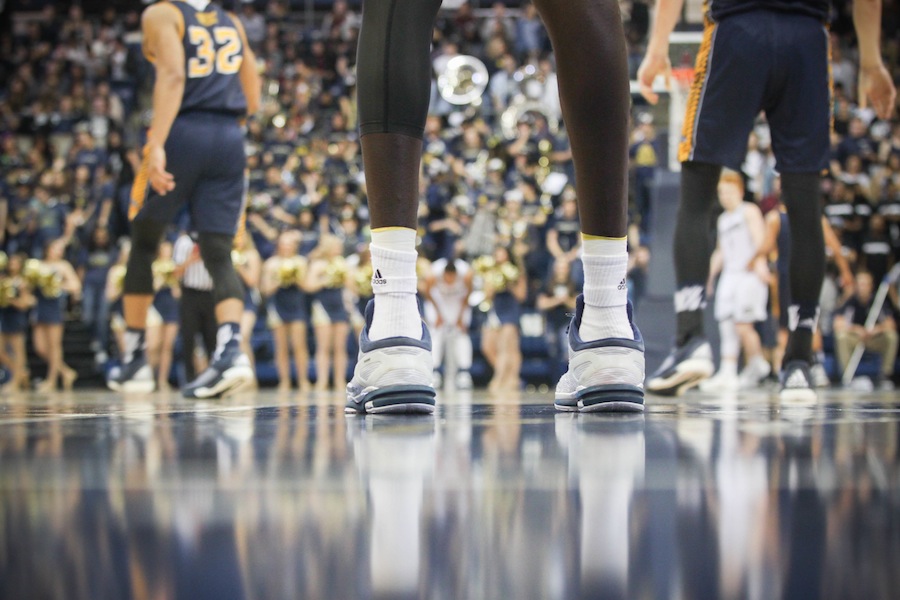
He dunked without even jumping. Mamadou N'Diaye, the tallest NCAA player in the nation at 7'6". (DANIEL TAK / AGGIE)
He dunked without even jumping. Mamadou N’Diaye, the tallest NCAA player in the nation at 7’6″. (DANIEL TAK / AGGIE)

Aggie Style Watch

BRIANA NGO / AGGIE
BRIANA NGO / AGGIE

Classy over clashy

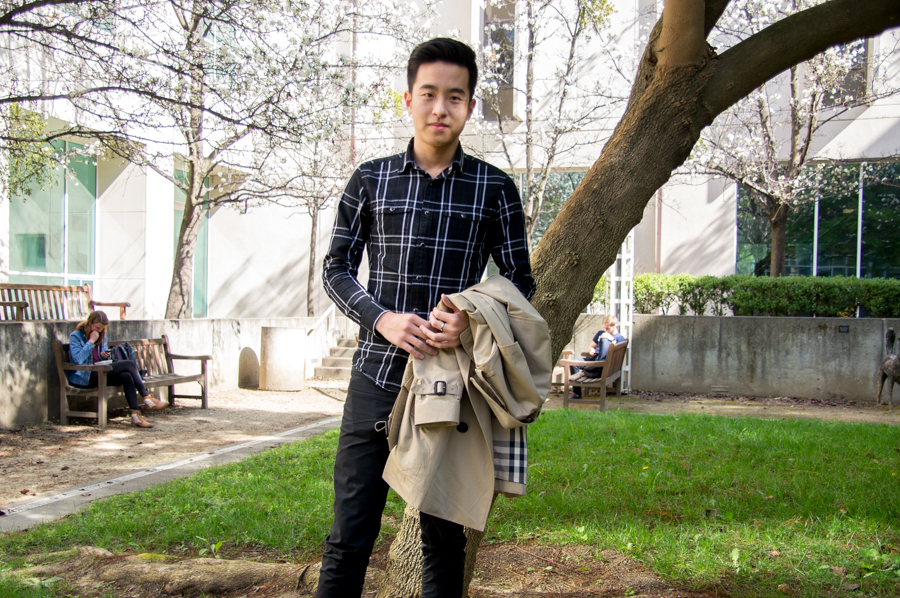
For Jiarong Kang, a second-year material science and engineering major, fashion is not a choice, it’s a lifestyle. Jiarong is an international student from China who chooses to look classy and put together everyday because it makes him feel the most comfortable. A lot of college students may throw on the first clean pair of pants and shirt they see, but not Jiarong. He takes pride in how he looks and takes great care to put together outfits that are both stylish and practical for a university student.


BRIANA NGO / AGGIE
BRIANA NGO / AGGIE

How would you describe your style?

Jiarong: My style is [similar to] British style.


Where do you get your inspiration for your style?

Jiarong: I just read some magazines [for fashion inspiration]. [I read magazines] about Chinese fashion and from celebrities that I like.


What is your least favorite style?

Jiarong: My least favorite style is sports-style clothing, it’s just not for me. I normally am more dressy.


Last one: Do you have any style advice for people?

BRIANA NGO / AGGIE
BRIANA NGO / AGGIE

Jiarong: My advice is to just make yourself comfortable.


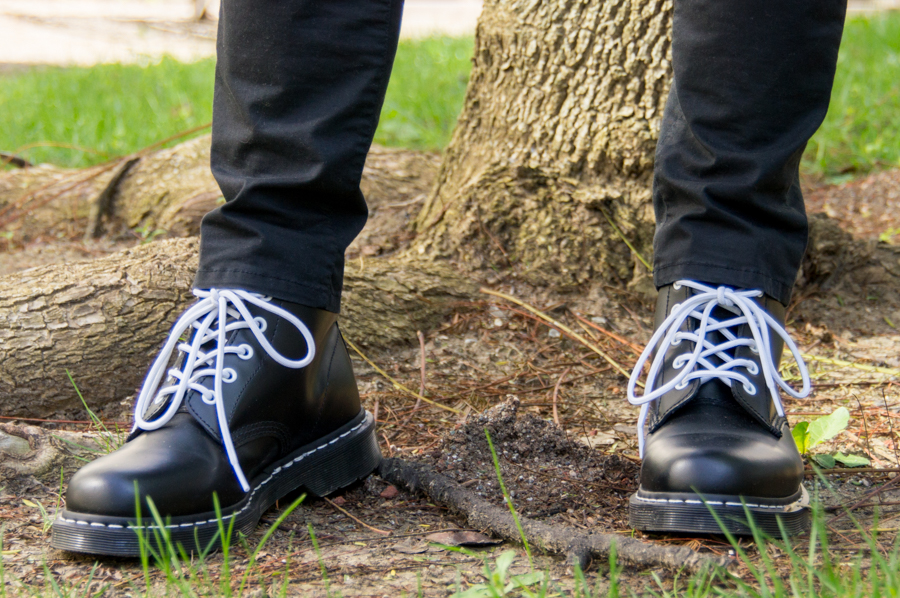
Jiarong told us that his two staple pieces are his Burberry trench coat and Dr. Marten boots. These articles of clothing may be a bit pricier but they’re well worth the investment. As you can see in these pictures, Jiarong’s outfit is extremely versatile and works for a variety of different occasions. He is able to wear this outfit when it’s chilly because the trench coat provides him enough warmth.  But he also wears this outfit when the sun is out because his pants and shirt are made out of a light, breathable material. And, because Jiarong invested in timeless, high-quality pieces like his coat and boots, he will be able to wear this outfit for years to come.

WRITTEN BY: CaraJoy Kleinrock

The 7 best places you’ll eat in the Bay Area

0
HEE-AH YOO / AGGIE
HEE-AH YOO / AGGIE

Next time you’re in the Bay Area visiting a friend or seeing a show, think about giving one of these places a try:


Topping off the list, we have the San Francisco Hometown Creamery (SFHTC). This is the only place in San Francisco that makes their ice cream completely from scratch, with all the necessary machinery and ingredients mixed in house. SFHTC makes the best ice cream I’ve ever tasted in my life. As someone who likes to look at the cone half full, let me say this: if those pesky politicians in Congress can’t get anything done about global warming, there will at the very least be more warm days in September to enjoy these frozen treats. Hometown Creamery menu items are riddled with creativity and intrigue, with selections like Honey Lemon Rosemary, Strawberry Balsamic and Coconut Lime sorbet. Oh what the hell, I’ll name a couple more: Sake Ginger Pear, Caramelized Roasted Banana, Earl Grey and Lavender, Cardamom with Salted Honey Caramel — you get the idea. If you can’t decide which flavors you want, you can order a flight of five different ice creams for $12 that feeds two to four people.


Vegetarians kindly skip to number three. I don’t need to try to convince those who have been to a Brazilian steakhouse before to try this place. Espetus Churrascaria is the quintessential luxury dining experience for those who enjoy the finer meats in life. Their steaks are so good that you won’t notice the giant hole burning through your wallet (oh no, my stamp cards!). Here’s how it works: first, you enter and grab a plate. Ignore the giant, incredible all-you-can-eat buffet in front of you. It’s just a diversion to try to distract you from all the ambrosial animal-parts about to enter your taster. Sit down, tuck your napkin in your shirt ‘cause the real is on the rise and commence the feast. Note: the proper stance to indicate you’re truly ready to partake in this meat-laced extravaganza is properly displayed by this stock image I found. Over the next hour and a half, large Brazilian men with swords will shave off choice cuts of angus every 10 minutes or so, as you struggle to make room for 14 different cuts of meat, all roasted delectably over mesquite. A few of my favorites include the sirloin, bacon wrapped filet mignon and the chicken hearts. It’s $60 for dinner, but the San Mateo location has a $35 lunch special. Well worth it. You can buy me a gift certificate to this place, here.


Sol Food is an authentic Puerto Rican restaurant and the culinary treasure of San Rafael. It’s not to be confused with Soul Food, or Southern Cajun/Creole type food (but don’t worry we’ll get to that later). If you’re ever within 20 minutes of the area, I suggest you try it, because it never disappoints. Sol Food somehow manages to taste incredible with the simplest ingredients. Everything is cooked to perfection. The savory flavors blend with the fresh flavors in perfect harmony. When they ask about sides, get the pink beans and try each style of their plantains (sweet and savory). I recommend the bistec encebollada (steak with onions), although the bistec sandwich is popular as well. Use the sauce they place on every table on your salad, or just everywhere in general. Finally, order a limeade if you want to take your taste buds on a rollercoaster, or a mango iced tea to send your taste buddies gently floating down a fruity river. If the line is too long (which it often is), fret not, there is a Hawaiian BBQ place next door with incredible BBQ Chicken.


Ooooh boy. This hole-in-the-wall ramen joint looks like a brick-nothing from the outside. But inside its tinted windows lies the tender noodles and rich broth I dream about every time I rest my head at night. Cheap prices, big bowls of top-quality ramen complete with sprouts, bamboo shoots and topped with a little bird egg. It’s the perfect way to forget about the fact that you somehow ended up in San Mateo.


Taqueria La Victoria, or better known as “La Vics,” is the shining gem of San Jose. Frat boys from San Jose State may claim that Iguana’s is better, but pay them no mind — they didn’t grow up here. While it’s true that Iguana’s makes a mean burrito, there’s no beating the South Bay staple and it’s signature Orange Sauce. Order anything on the menu (so a burrito) and douse it with their spicy and addicting orange concoction that is somehow vegan. If you want to try something rare, ask for Milanesa meat in your burrito, which is like a Latin chicken fried steak. And don’t forget to take some Orange Sauce to-go.


It’s certainly no Roscoe’s of SoCal or LoLo’s of Arizona, but it isn’t trying to be. It is, however, the best chicken and waffles in the Bay Area that I know of. They tote the Bay’s juiciest chicken and their waffles strike a fine balance between soft and crispy. It also has awesome decor and the menu items, much like you, are dipped in butter sauce.


A few years back, the website FiveThirtyEight released an article that claimed it ranked every major burrito in America. The website gave each burrito a VORB score (value over replacement burrito), and to my surprise, two of the top 10 were located in San Francisco. La Taqueria, ranked 11th (VORB 14.2,) is located two blocks down from El Farolito, ranked 1st (Vorb 20.7.) My Dad and I made a plan to each get a burrito, cut them in half and decide which place was better. In a spectacular upset, David beat Goliath, Bernie beat Hillary, and La Taqueria’s burrito beat El Farolito’s. Over time, repeat experiments with all relevant meats were conducted with similar results at the 5 percent level of significance. La Taqueria’s burrito is better. Less filling with a worse salsa bar, but a better tasting burrito. Still, it’s fun to grab a friend, try both burritos and decide for yourself. P.S. Definitely get the guacamole.


3 Honorable Mentions

Burma Superstar in Oakland has quality Burmese food, a rarity in itself.

Huong Tra in Richmond has cheap and delicious Bahn Mi sandwiches.

Gordo’s in Berkeley is good for some late-night drunk burritos.
Jonah Versman is a human encyclopedia of Northern California restaurant knowledge. If you need advice about to where to eat in NorCal he can definitely Yelp you out. You can reach him at jiversman@ucdavis.edu.

Humor: FBI begs UC Davis for Smartsite backdoor

0
BECCA RIDGE / AGGIE
BECCA RIDGE / AGGIE

Hide yo kids hide yo Smartsite

It’s all over the news and your Facebook timeline. Some guy you went to high school with shared it and added a very long paragraph with several emojis that you deemed TL;DR. For those of you reading this and asking yourselves, “What the heck is this woman talking about?” here’s the short and sweet: The FBI has asked Apple to build a backdoor that would have the potential to unlock any iPhone in someone’s physical possession. Apple is refusing, and the FBI is giving up. They’re moving on to bigger and better technological platforms — Smartsite.

You know it well, the familiar blue and gold webpage that allows professors, teacher assistants and students to interact with one another. What if I told you that your class chatrooms and syllabi were under attack by the FBI?

That’s right. In a string of private emails I have gained access to (don’t ask), the FBI is begging UC Davis’ administration for a backdoor to “unlock” Smartsite. How hard can it be to hack Stupidsite, right? It always crashes right before you submit an assignment, and sometimes it does that weird glitch where it looks like there’s a Smartsite within a Smartsite.

Little known fact: Smartsite is the most protected website on the planet. Back when it was built in 2004, a bunch of really incredibly intelligent men and women created a firewall so hot that Nelly was inspired to release Hot in Herre (OK, it was actually released in 2002, but that’s not as funny).

Those brilliant men and woman were trying to protect your privacy (wooo! crazy idea alert!). Twitter and Instagram hadn’t been created yet, and Facebook would be founded later that year. So privacy was still a thing. But Smartsite’s now middle-aged creators are probably rolling in their wheelchairs at the amount of private information that’s made public daily. Today, everything can be made public, from nude photos to private emails (oops) — everything, except for Smartsite.  

Okay, Alex, thanks for the social media history lesson, but why the hell does the FBI want it? They want access to your class chatrooms. The place where group projects are haggled about and desperate cries of, “Can someone make a study guide? Plz?!?” are heard.

It seems random, but what better place to observe young people communicating? Basically, FBI agents are really bad at “catfishing” young suspects. It’s hard to get someone to confess they pirated Kanye’s newest album to you when you think LOL means “Lots of Love.” Tumblr was way too confusing, but chatrooms are easy. Apparently they haven’t heard of Urban Dictionary, but maybe it’s better that way. They probably don’t need to know what ‘on fleek’ means.

UC Davis’ administration has declined to answer my emails, despite my very catchy subject line: “DON’T GIVE THE FBI OUR MEMES!!!”

ALEX GUZMÁN is a subpar whistler and an orange juice connoisseur. You can reach her at almguzman@ucdavis.edu or on Twitter @cactasss.

Sacramento Beer Week continues through March 6

0
JAY GELVEZON / AGGIE

Sacramento Beer Week, Capitol Beer Fest feature live music, food, local and international brewers

Hosted by the Sacramento Area Brewer’s Guild, the seventh annual Sacramento Beer Week started on Feb. 25 and will continue through Sunday. The festival started in 2009 to showcase nine local brewers in the greater Sacramento area, but has grown significantly to include over 35 breweries.

The week is nothing short of a beer lover’s dream. Events include meal pairings, a 3.1-mile “beer run” with craft beer at the finish line and a chili cook-off, an event highlighting women in the beer industry and beer trivia.

Trent Yackzan is the operations manager for Sudwerk Brewing Company, which has operated in Davis since 1989 and will be hosting multiple beer week events.

“The idea behind [beer week] was that beer sales would always slow down around February, so they wanted to promote beer in the region and beer as a whole and increase sales,” Yackzan said.

Sudwerk Brewing Company is hosting the Hopped Up Comedy Show on Friday, March 4, which will feature Sudwerk beers and comedian James Frey, in addition to other Los Angeles comedians. The full listing of events hosted by Sudwerk in Davis can be found on its website.

Sacramento-based Rubicon Brewing Company is also heavily involved in beer week, as it was one of the founding nine breweries in the first beer week in 2009. Rubicon has been independently owned and operated since 1987.  

“We love beer week, even though every week at Rubicon is Beer Week. We truly have fun the beer we make every day,” said Glynn Phillips, owner of Rubicon. “Our involvement is to be part of the community and showcase great local beers.”

Rubicon will be hosting the Fabulous Firkin Festival event on Thursday, which will feature cask-aged, dry-hopped firkin beers from local breweries.

Beer Week ends with Capitol Beer Fest, a one-day event that will be hosted on Sunday at the Capitol Mall in Sacramento. Capitol Beer Fest features food, over 125 breweries and live music by classic rock band Daze on the Green. Capitol Beer Fest will also feature brewers from outside of California, including Alaska, Iceland and Ireland.

One hundred percent of the proceeds from Capitol Beer Fest go to the Runnin’ For Rhett Foundation, a nonprofit founded in honor of Rhett Seevers. Seevers lived with cerebral palsy and died unexpectedly at age 7. Seevers’ parents started the foundation to support youth fitness programs after running marathons in Seevers’ honor.

“In the second year of Beer Week, the Capitol Beer Fest was looking for volunteers and Runnin’ for Rhett had a large amount of volunteers. As the event grew, we eventually took ownership of the event,” said Larisa Perryman, director of development for the Runnin’ for Rhett Foundation. “We provide over 300 volunteers and it is our biggest fundraising event of the year.”

For more information about tickets and other Beer Week events, see the Sacramento Beer Week and Capitol Beer Fest websites.

Written By: CAROLINE STAUDENRAUS – city@theaggie.org   

UC Davis’ Web Development Certificate Program continues to grow

VENOOS MOSHAYEDI / AGGIE

Program touches on subjects such as coding, web design, database development

In spring 2014, UC Davis Extension launched the Web Development Certificate Program, a fully online program that strives to teach students the skills to design and build functional websites. In fall 2015, the first set of graduates received their web development certificates, with the course expanding in popularity every year since its launch.

In the course, students gain proficiency in computer programming, website and web application development, as well as database design and development.

“[The course is a] hands-on and skill-building program for the craft of creating websites and web design,” said Bill Mead, Web Development Certificate Program advisor. “The program is really geared toward those skills you need to be successful in the industry.”

The Web Development Certificate Program is an exclusively online five-course curriculum, each worth three units. Students take one class per quarter and professors may occasionally set up one-on-one web conferences for struggling students or provide discussion forums for further interaction between students. In the course’s capstone class, students are required to complete a quality portfolio piece where they design and build their own web apps to show to future employers.

With the rapid growth of the global web, the program is intended to help build students’ skills from the ground up so that they can be competitive candidates in any web development setting.

“[The program] is designed to take someone with no background with programming and enable them and empower them with the skills and tools to create their own websites,” said Jordan Oak, Web Development Certificate Program manager.

Oak notes that the difference between this program and other similar programs is that UC Davis’ program focuses more on the introductory concepts to web development.

“It really starts at a ground level and slowly and patiently brings those students through those introductory concepts into the more advanced ones,” Oak said. “It devotes more time to more introductory concepts than other programs do.”

Mead commends UC Davis Extension for the launch of this program.

“I’m pretty impressed with what the UC Davis Extension group is trying to put together a group of classes that complement each other and can give students basic skills they need to be successful in this field,” Mead said.

According to Oak, the Web Development Certificate Program is designed for individuals who want an entry-level position or internship at a web development company or marketing firm.

“We tend to get a lot of people from the design or graphic design side who have good layout design skills and graphic design skills, but they don’t have the backend coding skills you really need to make a website,” Oak said.

In Oak’s opinion, the combination of a keen design sense and the technical coding skills to create a website is useful to bring into the job market and to acquire a well-paying job.

Although the program teaches mostly outside students from around the country, 25 percent of the program consists of either students or staff affiliated with UC Davis, including both undergraduate and graduate students.

Amy Hoang, a second-year design and communication double major, is interested in the the Web Development Certificate Program, but would prefer the curriculum to be included in UC Davis’ core academic programs instead.

“I realized a computer science major or minor was not necessary to excel in web design. […] However, we only have a select few courses in the design major that teach introductory and intermediate level of web coding, so this certificate would be incredibly useful for those interested in a career in web design,” Hoang said.

Hoang’s main concern with the program is the staggering price of $825 per class.

“Personally, what’s holding me back is that the program is quite pricey and out of my budget,” Hoang said. “I wish that this program could be included in students’ quarterly tuition, because it would be beneficial to many students studying design, computer science, communications and more.”

For more information on the Web Development Certificate Program, course fees and information on how to enroll, visit the program’s website.

Written by: Yvonne Leong – campus@theaggie.org

UC workers union calls on Bill Clinton to cancel appearance at UC Berkeley

0
Bill Clinton previously spoke at UC Davis on Oct. 29, 2014. (KENNY CUNNINGHAM / AGGIE)

Speakers boycott seeks to persuade UC to hire subcontracted workers as direct employees

On Feb. 4, the American Federation of State, County and Municipal Employees (AFSCME) Local 3299, the University of California’s largest employee union, called for a speaker’s boycott to bring in nearly 100 subcontracted custodians and parking attendants at UC Berkeley and to hire these workers as direct UC employees.

The protest, which the union hopes will last until the remainder of the spring semester or until the university decides to hire the subcontracted workers, calls for support of speakers who are set to appear at the university to boycott their appearances. Speakers scheduled to appear at UC Berkeley include civil rights activist Angela Davis, former President Bill Clinton and his daughter, Chelsea Clinton.

Kathryn Lybarger, the Local 3299 president, talked about the issues with the university using subcontractors to employ workers.

UC Berkeley’s refusal to in-source its permanent force of subcontracted workers stands in direct conflict with everything it professes about justice, fairness and social mobility,” Lybarger said. “In asking our state and national leaders to honor this boycott, we are asking them to support the middle-class aspirations of nearly 100 workers that have endured years of exploitation and second class treatment at the public university they serve.”

Todd Stenhouse, a communications director for AFSCME, talked about the protest and what the university’s relationship with the workers means.

“This is literally Berkeley turning a blind eye to the exploitation of immigrants and people of color and it’s not OK,” Stenhouse said. “There’s a very simple way to make it stop. Bring these workers in, treat them with the dignity and respect that they deserve and honor their loyalty and their service.”

The workers represented by this boycott comprise mostly immigrants and people of color and are subcontracted by three companies: ABM, Performance First and Laz Parking. Each company has faced allegations of illegal conduct against their workers. Performance First and ABM have each faced accounts of wage theft, while ABM’s issues of sexual assault against its female employees were documented in the 2013 Frontline documentary, “Rape on the Night Shift.”

Janet Gilmore, a representative for UC Berkeley, noted in a statement from the university that the practice of subcontracting workers is permitted under the current contract with AFSCME.

“AFSCME fails to acknowledge that they have a negotiated agreement with the University of California through May 2017,” Gilmore wrote. “Under the terms of that agreement, the use of contract workers is expressly permitted for various purposes, including when they are needed for specialized expertise or when the jobs they fill are temporary in nature.”

The last time Berkeley held a speaker’s boycott was from 2006 to 2007, when students successfully advocated for pay equity for hundreds of UC custodians. Stenhouse is confident that students at the university will be willing to help once again.

“We have great support from students at Berkeley,” Stenhouse said. “If you knew somebody and you saw them everyday and knew that they were being exploited, you would feel a connection to them as well. This boycott is a living and breathing thing.”

Former President Bill Clinton was one of a number of state and national leaders to honor the 2006-2007 boycott. He and Chelsea Clinton are currently set to speak in April when they host a Clinton Global Initiative University event at Cal’s Blum Center for Developing Economies.

Gilmore talked about how discouraging speakers to appear at Berkeley deprives the student body of a meaningful experience.

“It denies our community the benefit of hearing the perspective of state, national and international leaders and scholars and denies our students the opportunity to share their stories and ideas with these leaders,” Gilmore said in the statement. “For many of our students, this type of engagement with political leaders, renowned scholars and others may be a missed once in a lifetime experience.”

Under the University of California’s Fair Wage/Fair Work plan, all non-student UC employees, including contract employees, currently get paid the minimum wage of $13 per hour, which is set to go up to $15 per hour in October 2017. The plan also establishes auditing procedures for contractors to comply with regulations and for employees to report any alleged issues.  

When talking about the UC’s willingness to keep its hiring practices, Stenhouse believes that the university system is above using subcontractors.

“All they want is to be treated as full members of the UC community. Certainly that’s how we see them, certainly that’s how students see them, certainly that’s how many faculty and UC workers see them, but it’s time for the administration and the human resources department to honor them that way,” Stenhouse said. “The UC doesn’t have a problem with the exploitation of this group of primarily immigrants and people of color and they should. UC is a world-class institution, it is a first-class institution, and a first-class institution does not have second-class workers.”

Written by: Ivan Valenzuela – campus@theaggie.org