55.5 F
Davis

Davis, California

Tuesday, December 23, 2025
Home Blog Page 764

UC Davis launches $17 million Agriculture Center with Pakistan

DANIEL TAK / AGGIE
DANIEL TAK / AGGIE

Center part of federal initiative to find solutions in food security

On Oct. 28, UC Davis launched a $17 million U.S.-Pakistan Food and Agriculture Center. The five-year project, funded by the U.S. Agency for International Development, will help faculty and graduate students to study and perform research at UC Davis and the University of Agriculture, Faisalabad (UAF) in Pakistan.

UC Davis will receive $10 million of the funding, and during its first year, the project will consist of workshops to help Faisalabad build relationships both through technology and entrepreneurship.

“UC Davis has been partnering with colleagues in Pakistan since 2009, sharing expertise in agriculture from crop production to post-harvest handling,” said James Hill, associate dean emeritus of International Programs for the College of Agricultural and Environmental Sciences in a press release. “Establishment of this new center will allow us to build on those efforts, with a renewed emphasis on an exchange of faculty and graduate students.”

Present at the event was a list of speakers, including Joanna Regulska, vice provost and associate chancellor of Global Affairs, Alan Van Egmond, senior policy advisor for Pakistan and Afghanistan, and Ashfaq Ahmad Chattha, a thematic leader for the Center of Advanced studies at the University of Agriculture, Faisalabad.

Also among the speakers was Marwa Zafarullah, a UC Davis graduate student studying genetics and genomics. Zafarullah, who is Pakistani and whose parents currently reside in Pakistan, praised the collaboration as a unique partnership between two of the world’s leading universities in agricultural research.

“[The project] is a symbol of change and beginning of promising friendship between Pakistan’s best and the world’s best agricultural school for the betterment of [Pakistan’s] agricultural community,” Zafarullah said in an interview for the Daily Democrat.

The program, which is being built through a $127 million investment from the United States Agency for International Development, is part of a larger initiative between the U.S. and Pakistan, which includes research from other universities across the country including the University of Utah and Arizona State University. The initiative includes solving issues regarding water, energy and food security. UC Davis helps with food security while The University of Utah and Arizona State University focus on water and energy security.

The plan also includes the construction of libraries, laboratories and research facilities in Pakistan. The new facilities will help with the program’s themes of  biotechnology, outreach, agricultural policy and climate change.

Thomas L. Rost, professor emeritus at the department of plant biology within the College of Biological Sciences, discussed why UC Davis was picked to help with the program.

“The program focuses on agriculture and food security. UAF is the leading agriculture university in Pakistan and UC Davis is the number-one ranked college of agriculture in the whole world, and we have lots of people working on aspects of food security,” Rost said. “Davis is just one of the best in the world so we’re a perfect fit.”

Agriculture is Pakistan’s largest economic sector and provides work for over half of the country. Throughout the five years, the program will focus on crops such as wheat, cotton, rice, sugarcane and maize, specifically on their abilities to adapt to climate change and to become more drought-resistant.

Rost hopes the graduate students and faculty who will travel between the two countries will build strong relationships and learn new technology that can be applied in the field.   

“Some of the benefits are intangible. You’re establishing relationships with faculty members, administrators and students who have the common interests that you have so we’re establishing partnerships so that we can work with them on joint projects,” Rost said. “They can come to us and learn new technology and techniques and find out about things that we’re doing, and it’s reciprocal. We go there and find out things that we didn’t know either.”

Written by: Ivan Valenzuela – campus@theaggie.org

UC Davis unveils new 4.5-acre pastured poultry farm

poultry_ca_Padar

New farm houses 150 chickens, completely student-built ‘Eggmobile’

On Nov. 19, UC Davis unveiled a new 4.5-acre pastured poultry farm that will act as a living laboratory for students and researchers to develop innovations for pasture-based poultry farms, integrative crop-and-poultry farms and backyard chicken flocks.

The pasture also contains overnight housing for the chickens with a student-built mobile chicken coop that has been appropriately dubbed “Eggmobile.” For overnight protection, the farm also uses a portable electric fence to keep predators away from the chickens.

The research team hopes to eventually construct multiple Eggmobiles with different designs in order to optimize cost, ergonomics and sustainability. In time, the researchers are looking to expand the project to include broiler chickens, a subspecies of chickens raised specifically for meat production, as well as cropping systems that integrate poultry, in order to fully maximize the potential of land for food production.

The project was made possible by a $40,000 grant from UC Agriculture and Natural Resources, along with an additional $20,000 from several other stakeholder organizations.

The funding enabled the researchers to obtain 4.5 acres of farm land one mile west of the central UC Davis campus that will house 150 young chickens.

According to Maurice Pitesky, a veterinary medicine professor and the project’s co-leader, allowing chickens to roam through existing farmland provides farmers with an opportunity to explore non-traditional methods of poultry farming. Pitesky believes that having chickens present on farmland with crops will allow the farmers to provide natural fertilizer to the land.

Pitesky stated his belief on how these different methods of poultry farming are important to explore.

“It’s also a way for crop farmers to move into poultry production without expanding their land or adding nitrogen fertilizer to their farming system,” Pitesky said.

Pitesky mentioned the wide array of solutions that may be found from this project and emphasized the variety of fields of research that will be positively affected.

“This is a unique innovation, research and outreach resource for the Western United States,” Pitesky said. “The project includes faculty and students with expertise in veterinary medicine, husbandry, welfare, pasture management and engineering, which allows us to address issues related to predator control, welfare, food safety and food efficiency.”

Participating students have been drawn from the School of Veterinary Medicine, College of Engineering and College of Agricultural and Environmental Sciences. The student and faculty research teams have been looking into the issues involving diseases and chicken health, predation by wildlife and occupational health for workers.

“It’s an area of research that no one has really studied and no one is really sure about disease transition issues or what kind of worker occupation health hazards there are,” said Naomi Dailey, a graduate student in the geography department.

Mitchell McCarthy, a fourth-year biological engineering student who helped design the mobile chicken coop, discussed his own contributions to the pasture as an example of how student-driven the project was.

“My focus on this project for the last couple years was one building the coop and designing a system for the pasture,” McCarthy said.

The students involved with the project showed enthusiasm for what they have accomplished so far and look forward to learning more from having their own farm as time goes on.

“It’s a great opportunity to learn what farmers are looking for on their own properties and try to grapple with them and fix them on our own farm,” Dailey said.

Pitesky encourages community members to stop by the poultry farm and view the project.

“We really want this to be a local and regional demonstration project,” Pitesky said.

Written by: Nick Griffen – campus@theaggie.org

UC Davis expects to launch Center for New Viet Nam Studies by 2018

MONICA CHAN / AGGIE
MONICA CHAN / AGGIE

Center part of pending sister city agreement between Sacramento and Ho Chi Minh City

In the next three years, UC Davis is expecting to launch the Center for New Viet Nam Studies that will work in conjunction with the pending sister city agreement between Ho Chi Minh City and Sacramento. Proposed by Asian American studies professor Kieu-Linh Caroline Valverde, the center intends to serve as the educational component of the relationship between the two cities.

Earlier this year, a Memorandum of Understanding (MOU) between Sacramento and Ho Chi Minh City was signed by representatives from the two cities. Although not legally binding, the document is an agreement for the two cities to increase their cultural, educational, social and economic relations. The document will be valid for five years.

The MOU is a preliminary step toward the establishment of a sister city between the two locations. A sister city relationship is an agreement for economic, cultural and educational exchange between two cities from different countries. Sacramento contains the 11th largest Vietnamese community in the United States and currently holds 11 sister city relationships.

A sister city will be established should the Sacramento City Council vote on it based on the voices of constituents, such as members of the Vietnamese community. The sister city relationship will be finalized once representatives from the two cities each sign a second MOU.

The proposed center will be a site for social science research on contemporary Vietnam and its diaspora population, with a focus on areas of economic and political development, as well as arts and culture. The center intends to move away from known literature about the Vietnam War and instead emphasizes the country’s current global relevance. Valverde envisions the center to be a site for international scholars to research what Vietnam is as a nation and a culture, and what it can become.

“The production of knowledge will not just be useful for academics,” Valverde said. “It will also offer practical strategies for governing bodies to consider […] Vietnam continues to garner global interest from major powers such as the U.S., China, Japan, Russia, Taiwan and other Southeast Asian countries.”

  The proposed center plans to feature an online journal, published in Vietnamese and English, edited by undergraduate and graduate students, as well as symposia with guests speakers and artists. If funding continues as expected, the center will be established over the course of three years, requiring an estimated $96,000. During this time, Valverde plans on incorporating more features like the online journal and symposia as the center approaches its completion. The first events are planned for winter 2016.

Darrell Hamamoto, a professor of Asian American studies, sees the center’s social science research as beneficial toward economic relations between the two countries by providing a cultural context and mutual understanding.

“Let’s say a business person, or someone who is majoring in economics or management, they have to know the cultural, the people, the history, the society,” Hamamoto said. “That’s what we’ll provide: the cultural context, cross-cultural comparisons and communications.”

Austina Nguyen, president of the Vietnamese Student Association, expressed interest in the academic and cultural aspects of the proposed Center.

“I think it’s a really good idea that [the center] wants to talk about how Vietnam has changed and what modern-day Vietnam is like outside of the war aspects that most people know,” Nguyen said. “I would like to know more about how the research is going to be done because the sources that the research come from are very important. But I definitely want people to know more about Vietnamese culture, especially modern-day Vietnamese culture.”

Written by: Viet Tran – campus@theaggie.org

Kicking the habit

VENOOS MOSHAYEDI / AGGIE

New app helps UC Davis students quit smoking

Since the emergence of the smoke and tobacco free policy on campus in January 2014, UC Davis has seen a shift to a healthier environment for students. After almost two years since the policy’s implementation, a new app called “This Is Quitting” has been created to help any struggling students quit their unhealthy habits.

“It was basically up to each campus whether or not they were going to enforce [the policy] and how they were going to do [it],” said Keavagh Clift, coordinator of the Smoke and Tobacco Free Policy and health promotion specialist of Occupational Health Services. “[For us, it includes] informing the campus community about the policy and encouraging an environment of voluntary compliance; that’s placing signage everywhere and encouraging supervisors to speak with their employees about their policy.”

All ten of the University of California campuses joined in on the policy, which extends its reach to every UC owned, leased or rented property. However, since its inception, the policy has caused both increases and decreases in student smoking habits. According to Clift, it is common for non-enforced programs to turn out this way.

“Initially they may work, because you have the signage and more communication about it, but gradually when people realize that there aren’t going to be held accountable for smoking on campus, rates just start to go back up. It usually takes about two to five years [to settle],” Clift said. “There are resources, but [they] are not publicized enough, because if people don’t know [what’s available], that’s something that we really need to work on, and that’s why we’re working with [This Is Quitting].”

This Is Quitting is a free app backed by The Truth Initiative which is available for iPhones and Android phones. The app was created in order for college-age students to express their frustrations with kicking the habit, while also gaining support from a network of peers. It uses social media to give young adults resources for smoking cessation.

“This is what quitting really looks like,” said Megan Jacobs, Lead of Integrated Product Design for the Truth Initiative. “[The app is] a part of the tobacco free campus initiative. [It’s not just about preventing smoking on campus,] it’s about helping people who currently smoke, and giving them resources to stay smoke free and to try quitting.”

With features such as anonymous posts, training tools and options for direct text messaging, smokers can get the psychological support they need to quit by linking different forms of social media to the app. Once linked to a user’s Twitter or other social media account, the app still gives the option to remain anonymous.

Though it is available across the country, UC Davis students can access specific versions of the app through using their UC Davis email. Once linking it to a student account, it provides resources to combat the stress that comes with specific times of the school year.

“We have a new training pack coming up […] about staying smoke free during finals week,” Jacobs said. “We know that finals are a really stressful time, it’s hard to quit smoking or stay smoke-free during that period. We are constantly coming up with training packs inspired […] and co-written by quitters who use the app, to give you strategies or tips to stay smoke-free in different situations.”

Campuses’ ability to utilize the app in order to customize information for their students is just one of the unique ways that This Is Smoking contributes to hopes for healthier future generations of students.

“What we’ve learned […] is that a lot of young adult smokers and people who are trying to quit didn’t feel like there were any quitting resources for them that address their unique needs and circumstance,” Jacobs said. “They aren’t experiencing the same health effects as older adult quitters…[and] don’t have that same motivation they have different kinds of social support. Our goal is to put that social support in your hand, so you don’t have to go find them yourself. We bring the quitters to you.”

The new app, combined with the already-implemented tobacco-free policy on campus, is helping to bring more awareness to the resources available to smokers on campus, in addition to online. Stephanie Lake, coordinator for the Alcohol Tobacco and Other Drug Prevention Service for the Student Health and Wellness Center, conducts regular meetings with clients who are trying is to quit their nicotine addiction.

“We’re able to give [students] replacement therapies, either one month of the patch  or one month of the lozenges or one month of gum,” Lake said. “They do follow up appointments about two weeks later, until they feel like it’s time that they’re feeling great… [from there we] help them to remain tobacco free.”

This resource’s aim is to create a support system that leaves students with both physical and psychological encouragement.

“I can say that since the policy has been in place, my smoking cessation numbers have gone way up,” Lake said. “If they relapse, they can come back and start the process over, and I can give them more nicotine replacements; I don’t want them to feel [like they’re failing]. Unfortunately, nicotine is the hardest drug to quit, and most people have to quit from four to seven times before they quit successfully. “

According to Clift, it is possible that a future of more serious enforcement for the tobacco-free policy may be required to ensure the positive effects that the UC system was hoping to see back in 2014.

“From a lot of people’s perspectives this policy is working, and yes maybe it is, but research shows [that] smoke and  tobacco free policies without clearly defined enforcement are really ineffective,” Clift said. “[Within a progress report,] we looked at what people’s  experiences were with the policy thus far, to see if there was any appetite for enforcement, and for the most part [about] 80 percent were supported some kind of enforcement, which is why we’re moving on with the proposal.”

With the new cessation app in full swing, the Smoke and Tobacco Free Steering Committee is keeping a realistic approach to their actions on campus.

“There isn’t a specific date [where we want the campus to be completely smoke-free]. It’s just keeping the policy relevant it’s just [the goal of] bringing more attention to the policy,” Clift said. “This policy is not requiring anyone to quit smoking, it’s just encouraging them to comply with the policy and not smoke on campus. We’re not trying to dictate anyone’s behavior.”

Written by: Emilie DeFazio – features@theaggie.org

The Internet Explorer: A (subjective) ranking of social media sites

0

garcia_opIn this special edition of The Internet Explorer, I have tasked myself with the mission of ranking the most popular social networking sites. That being said, this list is centered around the very trivial, high stakes question of how I would rather waste my time. As a note, since my assessments are based on experience and ergo, a subjective angle, apps or websites that I do not frequent (what’s a Reddit?) are neither included nor analyzed. So, without further ado, here’s the list:

#7. Instagram

Listen up. I’ve tried the whole Instagram thing. I guess my selfie game just isn’t up to par or #onfleek. I get that Instagram is a wonderful place for many users where they are able to promote a desired self-image. Personally, I have no use for an online photo album and find myself annoyed with the hashtagged, short story descriptions of people’s Starbucks errands. #somanyhashtags #wheresthespacebar

#6. Pinterest

In my head, Pinterest is a diluted version of Tumblr. It’s what you get after downing a lemonade and all that is left is ice and some watered-down drink just sitting at the bottom of the cup. It’s basically Tumblr’s neat freak sibling who’s also kind of crafty. Pinterest is probably a very satisfying invention for those who like to organize potential projects or who like to categorize things. I personally have a creative writing board (“The Write Stuff”), a Harry Potter board and a humor board — to name a few. But no DIY or wedding boards. Because I don’t wish to set myself up for that kind of disappointment.

#5. Tumblr

Tumblr is the Internet’s blackhole. I have to exercise great self control in order to not succumb to typing my URL on the search bar. Tumblr is essentially a day killer wherein you sacrifice all potential productivity in exchange for geeky amusement — or at least that’s been my experience of the site. My one gripe is that it often garners an extremely PC culture in which many users readily attack any mention of a disadvantaged group as if it were an implied insult. Ultimately, however, many consider Tumblr a hub containing fandom blogs, hilarious appropriations of memes and glorious gifs of clumsy animals. I’m sure there are other uses for Tumblr. I just don’t know what they are.

#4. Snapchat

I was immediately sold by the idea of sending photos with silly captions to my friends as a way of keeping in touch throughout our college years. And quite honestly, I have no complaints.

#3. Facebook

I was debating whether to place Facebook lower on this list, considering the pains it gives me every time I log on. It’s a love/hate relationship, because the fact of the matter is, I log on at least ten times a day and I can’t quite pin down the reason why. I think this might be because it keeps me connected to the greatest number of people. My Facebook friend list is far larger than the amount of followers I have on other sites, as well as the number of people I have in my contacts list.

And I don’t necessarily go on Facebook “for fun.” I frequently visit because it’s an extremely accessible and informative environment. I have to give props to Facebook for its innovative nature that connects us to other people (and their unnecessarily aggressive political beliefs, cryptic callouts, etc.) and to the events of the world (such as the fact that Kim Kardashian wore a latex dress to some event or whatever). Like I said, it’s a love/hate relationship. Thanks, Zuckerberg.

#2. Twitter

I’m a fan of two things: soundbites and a challenge. Twitter is the perfect place for self-proclaimed funny people to exercise their wit. Or, if you’re like me, it’s so you can wallow in the possibility that you’re not as clever as you fancied yourself to be. The site’s many users provide enviable humor for you to appreciate. Then you can ride on the coattails of their very funny one-liner by way of the retweet.

And of course, Twitter has gifted us with the monumental hashtag along with its activist implications. Believe it or not, the hashtag aids in our becoming a more protective society in the face of adversity and social injustice. I use Twitter to promote and enjoy all of these things, but mostly to stalk Chris Pratt.

#1. YouTube

For me, it’s a no brainer. Admittedly, YouTube is the most different from the other listed sites because it emphasizes less performance and more watching. Sure, many turn to YouTube to present a version of themselves to the world, but most of its users act as audience members. The videos pertain to a plethora of genres and content matter, whether they be satirical news reports or bootlegged versions of movies and television episodes. You can learn to apply the perfect winged eyeliner, vicariously play Call of Duty and watch laughable ‘90s music videos all in one place. I find it to be a therapeutic site where funny videos abound. YouTube also often benefits its users with educational content, providing supplementary classroom learning materials. And like many sites, it promotes shareable media. It has established and effectively propelled social support movements like the ‘It Gets Better Project,’ which facilitates the coming out experience for LGBTQIA+ members.

Thanks for reading The Internet Explorer this quarter. You may not friend or follow Jazmin García anywhere except to contact her at msjgarcia@ucdavis.edu.

The Good Dinosaur fails to live up to the Pixar name

0
WALT DISNEY PICTURES

New Pixar movie feels too formulaic and familiar

In his first full-length film, director Peter Sohn comes up short when tasked with leading Pixar’s newest animation, The Good Dinosaur. Due to Pixar’s long history of producing classic movies, audiences have come to expect that a certain standard be met when it comes to the company’s animated productions. Unfortunately, The Good Dinosaur fails to live up to the Pixar name. Though the concept may be original, the story feels all too formulaic while the characters are forgettable, a recipe for disaster when it comes to any motion picture.

The film asks the question: what if the asteroid that destroyed the dinosaurs missed? Long story short, there would still be dinosaurs. The movie is set in an alternate timeline 65 million years after the asteroid safely flies over and misses Earth, two Apatosauruses named Henry (Jeffrey Wright) and Ida (Frances McDormand), give birth to three children: Libby (Maleah Nipay-Padilla), Buck (Marcus Scribner) and the runt of the litter, Arlo (Raymond Ochoa). While his siblings quickly adjust to their responsibilities and life on the family farm, Arlo’s nervous disposition sets him apart. Aware that Arlo is struggling with his duties, Henry gives Arlo a sense of purpose and puts him in charge of guarding their silo from pests and helping to set up traps.

The trap works as Arlo manages to capture one of the pests, a wild caveboy that has been eating their winter reserves in the silo. Though instructed to kill any pests on sight, Arlo instead reverts back to his timid nature and sets the caveboy free. Furious that Arlo let him go, Henry decides to teach Arlo a lesson and forces him to join in on tracking down the caveboy. Things go bad when a flash flood causes Arlo to lose his dad; eventually Arlo is swept up by the river and stranded far away from home. With nothing left to lose, Arlo and his now caveboy pet, Spot (Jack Bright), form an unlikely friendship as the two set forth on the journey back home.

Disappointingly, the big question regarding the asteroid that missed Earth turned out to have very little to do with the plot. Though the cinematography is absolutely gorgeous, with the most realistic animated water you’ve ever seen, the glaring contrast between the lifelike scenery and overly cartoonish characters make what you’re seeing on screen a bit jarring. Not one of Sohn’s obnoxious and cringeworthy characters were memorable in the slightest and it’s hard to picture a world where kids want to dress up as Arlo or Spot for Halloween.

It’s clear that this is his first major motion picture, as Sohn’s film seems rushed as well as formulaically pumped out of the Pixar factory as distinct moments are noticeably too similar to Disney and Pixar movie scenes we all know and love. Arlo’s separation from his dad parallels Simba’s reaction to Mufasa’s death in The Lion King, while the field of fireflies near Arlo’s farm is comparable to the floating lanterns in Tangled. Both parallels are so apparent that feelings of sadness, joy and wonder are quickly replaced with apathy as the film unintentionally radiates unoriginality. Don’t get me wrong, The Good Dinosaur is a nice family movie that the kids will love. It has just enough heart and laughs to keep the audience entertained. However, when these same children grow old enough to differentiate between good and bad movies, they’ll all come to the same inevitable truth: The Good Dinosaur is mediocre at best.

To this day, we remember Pixar classics such as Toy Story, Finding Nemo and Up. 10 years from now, these are the types of family movies that will be remembered. However, it’s hard to imagine the same for this film. Simply put, perhaps it would be best if the asteroid did indeed hit Earth, causing the extinction of the dinosaurs and taking The Good Dinosaur with it.

WRITTEN BY: David Park – arts@theaggie.org

28th annual Turkey Trot race takes place in Davis

TIFFANY CHOI / AGGIE

Thanksgiving 5K, 10K, half marathon race through Davis

The 28th annual Davis Turkey Trot race took place on Nov. 21, the Saturday before Thanksgiving. The event consisted of a 5K, 10K and half marathon race, all starting at the intersection of 6th Street and C Street.

A few thousand participants ran in the races, many of whom were Davis residents. Carlos Monsivais, a first-year statistics major, expressed interest in running in the Turkey Trot.

“Unfortunately, I had a pulled hamstring, but it is nice to see the community wanting to get out and run,” Monsivais said.  

This year’s event showcased new courses for each of the three races. Changes were implemented by the Davis Police Department with consideration to residents, as well as impacts on city traffic, detours and road closures.

The 5K, half marathon and half marathon relay started together at 8 a.m. at the corner of 6th Street and C Street. Athletes headed east toward the Davis Co-op, reminiscent of past Turkey Trot routes.

However, instead of continuing down H Street and under the Covell Bridge by the train tracks, they took a left-hand turn, bringing athletes back to F Street and directing them north toward Covell Boulevard. Athletes then turned west on Covell, eventually splitting into separate 5K and half marathon courses. Water stops were set up along the course for all races. Both courses eventually let racers back 6th and C Street where the race began.  

The winner of the 5K race was Nathan Kwan, a third-year biochemistry and molecular biology major.

I knew I just wanted to have fun. I am part of a cross country club at UC Davis, so I met up with some members,” Kwan said. “Just before the race, everything cleared out of my mind except the race. The atmosphere is always great.”

Written by: RAHIL SHETH – city@theaggie.org

Keeping cyclists in the green

0
TIFFANY CHOI / AGGIE

Davis residents consider safety of city bike lanes.

The City of Davis has grown from having a single bike lane to over 50 miles of bike paths in almost 50 years, attracting one of the highest population of cyclists in the United States. This has created an increased need for bike safety.

Jennifer Donofrio, City of Davis bike and pedestrian coordinator, explains that it is important for cyclists to consider safe routes and to find alternate routes where they are most comfortable. She indicates that the roads people drive on may not be the safest for bikes.

According to the American Community Survey Reports, 18.6 percent of the Davis population commutes by bike, making it one of the top cycling cities in the country.

Davis has flourished as a cycling town since the first bicycle lane in America was built in Davis in July 1967 on the portion of 8th Street between A Street and Sycamore Lane. The legislation to allow this construction was signed by the California governor, Ronald Reagan. Before this time, there were bike paths, but this was the first time a part of the road was recognized just for bikes.

Shortly after, bike lanes were constructed on Sycamore Lane, J Street and 3rd Street. Today, there are bike lanes all over Davis and commuters depend on them to get to work and class safely.

Christopher Hart, a fifth-year materials science and engineering major, feels that the high volume of bicycles in Davis is not always a positive thing for commuters. He appreciates that campus has roads that are closed to most vehicles, but cars are not always the problem for cyclists.

Hart was near the Bike Barn on campus two years ago on his way to class when he was passed by an overly confident cyclist who proceeded to hit the curb and crash. According to Hart, the cyclist appeared to try to correct the mistake but still caused a bicycle accident.

“I was in an on-campus crash in Davis in which another rider fell directly in front of me, and I hit them,” Hart said. “I got a bruise on my head from my bike flipping over and a coffee stain on my shirt because he was carrying Starbucks.”

Hart also had a close encounter with a car while on his bike. He was making a left turn and a car in his lane decided to change out of that lane illegally in order to continue straight instead of turning left. As the woman driving began to move out of the lane, the front corner of the car hit Hart on his thigh.

“I leaned into the hit as the car hit its brakes and did a bunny hop to the right,” Hart said. “This allowed me to stay on two wheels and I continued while looking at the driver hoping for an apology.”

Katelyn Peterson, a recent alumna of UC Davis and Davis resident, shares Hart’s sentiments in the dangers of commuting to class safely. She feels that biking to campus became increasingly less safe over the course of her time in Davis because of the increase in students, as evidenced by the decreasing number of available bike parking spots.

“Even though the bike lanes seemed to work well, they became terrifying at peak hours,” Peterson said. “It’s always scary downtown because there’s so many stops and some cars try to wave you on and others try to cut you off so you get confused.”

Chris Stastny and Aaron Curtin, employees at Davis Wheelworks bicycle shop, usually have to help about one to two cyclists a month who are involved in non-racing related bicycle accidents in Davis. Curtin indicates that the most common damage to the bike is either the wheel being tacoed, meaning bent or broken, or the frame being cracked.

“There was a guy in here just last week who came in to buy a whole new bike after being hit by a car driven by a man under the influence of drugs,” Stastny said.

According to Stastny, the cyclist believed the driver to be under the influence of drugs, however it has not been confirmed.

Stastny worries that there is not much cyclists can do if a car is going to hit them. He cautions cyclists to try to avoid roads with heavier car traffic and remain aware of their surroundings while riding.

Hart believes there is a major problem with the La Rue Road and Russell Boulevard intersection, specifically on the south side. He suggests removing the turn-only lanes for cars, installing stop signs or even creating a bridge so as not to inconvenience cars.

According to Donofrio, the City of Davis and UC Davis applied for a grant to improve the intersection at Anderson Road, La Rue Road and Russell Boulevard but it was not funded. Donofrio explains that the city still hopes to slow right-turning traffic onto Russell Boulevard from La Rue Road by moving a traffic signal pole but are currently hindered by financial barriers.

Donofrio believes that the city was able to reallocate part of 5th Street for buffered bike lanes on each side of the road in August 2014.

Hart acknowledges that most roads have bike lanes in Davis, including the green paint indicating the lane specifically for cyclists on 5th Street. He believes this is a positive improvement to the road.

“I appreciate the effort the city and university are putting in to make sure Davis is bike- friendly,” Hart said.

Written By: RIVA BALLIS – city@theaggie.org

Let’s make a climate deal

0
HANNAH LEE / AGGIE
HANNAH LEE / AGGIE

U.N. Climate Change Conference engages world leaders.

Leaders from around the world gathered in Paris on Nov. 30 for the 2015 U.N. Climate Change Conference that will take place over the next 12 days, culminating on Dec. 11. The Paris talks are a critical chance for world leaders to agree on a sweeping climate action plan to reduce global climate change in future decades. Paris will be the third conference in a series of major international climate talks with the common goal of combating global climate change.

The first international climate talk took place in Kyoto in 1997. At the time, many world leaders viewed greenhouse gas emissions, and specifically CO2, as a potential threat, but there was no consensus on the best way to address climate change. According to NPR, the conference was seen as a failure because little action was taken after the meeting ended and some countries, including the United States, never signed the treaty.

In 2007, world leaders met once again, this time in Denmark for the Copenhagen Accord. The conference was only mildly successful and no treaty was created in Copenhagen. According to The New York Times, the accord recognized that developing countries do not have the same economic means to combat climate change as industrialized nations. A fund was developed to help developing countries meet the demands necessary to abate climate change.

Hopefully, Paris will be a more successful step toward reaching an international carbon emission reduction plan. Agreements made in Paris will be based partly off individual countries’ initial proposals on how to best reduce emissions. Scientists caution that if the global climate exceeds a 2-degree Celsius increase, major environmental detriments may ensue. However, they estimated that countries’ current abatement plans would lead to a 2.7 degree Celsius temperature increase. As a reference, there has been a five degree Celsius increase in global temperature since the Ice Age.

California and UC Davis will have specific representation in Paris. According to The Los Angeles Times, California Governor Jerry Brown and at least 10 other state elites will be in attendance. Lew Fulton, who works within the Institute of Transportation Studies at UC Davis, will also be in Paris.

The Editorial Board commends the efforts made by UC Davis and the state of California toward reducing carbon emissions and addressing climate change. Not only do many Davis students help reduce carbon emissions through choosing to bike instead of drive, but the campus has also made recent changes to become more sustainable. UC Davis’ environmentally-friendly efforts include incorporating LEED certified buildings on campus and developing the UC Davis Climate Action Plan. Additionally, the University of California started the Cool Campus Challenge to encourage all UC campuses to reduce carbon emissions and increase sustainability.

As students of UC Davis, residents of California and citizens of the world, it is necessary for all of us to do our part to achieve carbon neutrality. Although the U.N. Climate Change Conference in Paris will likely focus on reducing emissions from large industries and corporations, small changes at the local level can make a huge difference. Let us all follow the examples set by our world leaders and unite to effect change that will benefit the global community.

Male Athlete of the Quarter: Sean Grab

0

maleathleteofthequarter_spSenior utility Sean Grab, a second-year transfer student and communications major from South Pasadena, Calif., has made waves throughout the Aggie men’s water polo program in his short time at UC Davis. After having an all-star senior year in the pool, Grab does not seem to be slowing down and seeks to be involved in water polo in the future.
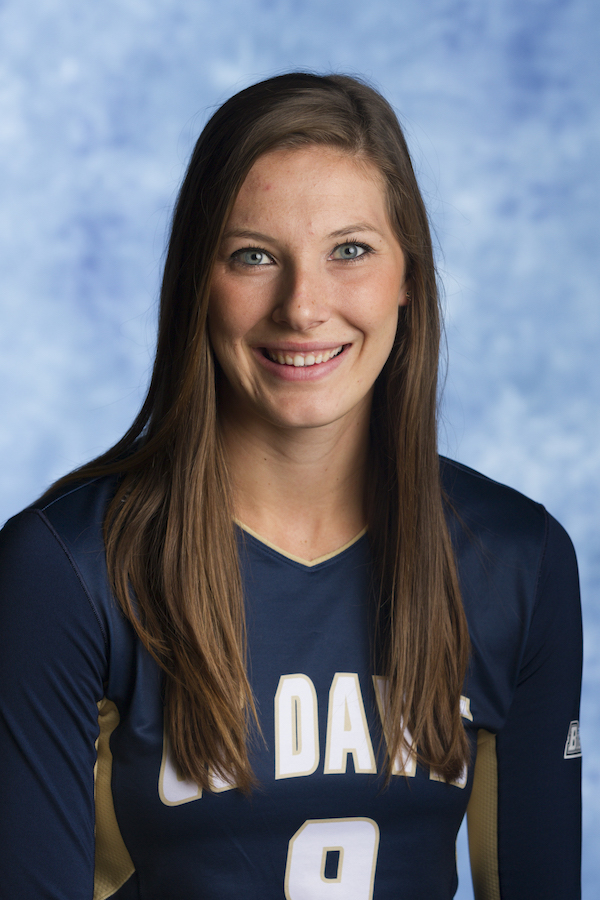
This season was not the first time Grab’s work has been noticed. In his first year at UC Davis, Grab joined the team in a huge way. The only non-senior to play in every single game, Grab led the team in both goals scored and assists, with 64 and 43, respectively. Furthermore, Grab was named to All-WWPA Second Team, and tied Chris Richardson for the most season steals with 33.

After attending Golden West College for two years and being an integral part of the water polo team there, Grab wanted more. He had been recruited by UC San Diego; however, two main factors drew Grab into becoming an Aggie.

An old teammate and one of Grab’s best friends, Evan McCarthy, ended up being a deciding factor in his decision to join UC Davis.

The other was the head coach of the water polo program, Daniel Leyson.

“[Daniel Leyson] is one of the brightest minds I’ve ever [encountered] in the game,” Grab said.

This season, Grab helped lead the Aggies to an undefeated conference record. Grab tallied 44 goals and was an integral part in bringing the Aggies to their second WWPA title game in Leyson’s three years at UC Davis. The Aggies closed out the season 18-8.

“We brought UC Davis water polo [to the forefront], at least in this conference,” Grab said.

Yet for all of his personal success, Grab maintains an air of humility about him. In many ways, his team’s success means more to him than any personal success.

“I hear my name called, WWPA Player of the Year: Sean Grab,” Grab said. “Man, I wanted to take that plaque and I wanted to throw it in the pool.”

Grab could not share his personal success with his team in the ways that he wanted to.

“It’s kind of hard actually, to receive this award knowing that everybody else doesn’t get one,” Grab said. “I wouldn’t be nearly the player that I am, nearly the person I am or in the position that I’m in, if it wasn’t for the people on this team.”

Grab has demonstrated that he has what it takes to motivate and help his team reach their own high marks, as well as the skills and mentality to continue his personal successes. Furthermore, Grab will continue playing water polo post-graduation, as he has been contacted by a Sacramento team that competes on the national level.

Over the next few years, expect to hear more about Grab’s feats in and around the pool deck, for when it comes to quitting water polo, Sean Grab says it best:

“The time will come, but it’s not yet.”

Written by: Aaron Sellers – sports@theaggie.org

Female Athlete of the Quarter: Kaylin Squyres

0
BRIAN LANDRY / AGGIE

Kaylin Squyres is well-known for being one of the most consistently outstanding players to step onto the volleyball court over the past three years. Despite sitting out her freshman year due to an injury, she came back strong her sophomore year and recorded big numbers right off the bat. She was starting games her junior year and earned All-Big West Conference First Team for the first time.

This season, she has managed to surpass all of her previous accomplishments on top of reaching school records. She made over 400 kills and 400 digs this year, which makes her one of the few athletes to do so in Davis history. In terms of UC Davis records, she is ranked sixth for career kills. On top of it all, she was named conference first team again.

Despite her individual accolades, Squyres says that the team is most important to her.

“It’s always cool to have your name in that record book, but I hope to have left something more than just numbers in the program,” Squyres said. “I hope people look up to me [in the future] and remember my teammate-ship and friendship over the years. That’s what I’ve learned it’s all really about.”

Indeed, when asked about Squyres’ impact on the volleyball program throughout the years, Head Coach Dan Conners said her leadership and work ethic are qualities that inspire her teammates.

“For me, it has been incredible having her out there,” Conners said. “She loves the game, she loves winning […] but the biggest thing for me is that she set the tone for the younger players.”

The last game of the season was played against Cal Poly, and it was also Squyres’ final match as an Aggie. She made the last kill of the match – a great way to end the game and the cherry on top of her career.

femaleathleteofthequarter_sp2“It feels awesome to leave my final mark on the program with one last kill,” Squyres said.

The tone of this year’s ending was drastically different from last year’s, when the Aggies suffered three losses in a row. Now, they finish with several consecutive wins under their belts, excluding the game against the number one team in the league, Hawai’i, and have ended on a high note. They also placed fourth overall in the conference, just one win behind third-place Cal Poly.

To Squyres, the improvement indicates the potential of the volleyball team, and she is eager to see them grow.

“I’m so excited for the future of this team. Kendall Walbrecht, Allie Wegener, Sophia Mar and Aima Eichie are going to do such a great job leading next year, and all the freshman are so talented that they’re just going to get better and better during off-season training.”

In short, Squyres sees the team making great strides in the next season.

“I really think they can [give] the conference a run for its money next year,” Squyres said.

With her work ethic, dedication and leadership qualities, it is clear that Squyres can succeed wherever she goes next, and are all reasons why she is The Aggie’s Female Athlete of the Quarter.


Written by Julia Wu – sports@theaggie.org

ALottaCappella promises to be a lotta fun

0
The Liquid Hotplates perform at Cal Aggie Camp’s CAChella. (JAY GELVEZON / AGGIE)

Winter a cappella concert to feature holiday music, contemporary hits and more.

This Friday, Dec. 4, the a cappella groups of Davis will be coming together for AlottaCappella, hosted by the Liquid Hotplates. The concert will be held in 123 Science Lecture Hall at 8:30 p.m. and promises to be a night of music-filled fun. The Spokes, the Lounge Lizards, Davis Chamber Choir, the Afterglow and Cleftomaniacs will be joining the Liquid Hotplates to put on a performance that will have something to please every music fan.

ALottaCappella will be the first college performance for Bailey Cooke, a first-year music major and a member of the Davis Chamber Choir.

“I’m very excited, [and] I’m sure it’ll be a great crowd,” Cooke said. “I think [the] SciLec will be a cool place to perform.”

Cooke also said that the Davis Chamber Choir has kept the holidays in mind when picking songs for the concert.

“We’re performing three songs, and one of our songs will be a holiday classic,” Cooke said. “We’re also doing a collaboration of sorts with another a cappella group, but it’s a bit of surprise.”

Sarah Poplack, a second-year undeclared major and the business manager for the Lounge Lizards, said in an email interview that her group will also be performing three songs: “Barton Hallow” by the Civil Wars, “Big Yellow Taxi” by Joni Mitchell and “Marvin Gaye” by Charlie Puth.

“I am really excited for ‘Barton Hallow’ because it is such a powerful yet eerie song,” Poplack said. “I feel like our group really comes together when we sing it and that’s what a cappella is all about.”

As far as collaboration goes, Poplack said that the Lizards are not planning on doing a song with another group but reflected on last spring quarter’s LocalTones concert, which featured all the Davis a cappella groups joining together to perform one song.

“Last year we all sang ‘Still Haven’t Found What I’m Looking For.’ Almost every a cappella group on campus performed the song and it was such a blast,” Poplack said.

Henry Le, the social media director for the Afterglow and a third-year English and computer science double major, appreciates the supportive community at Davis.

“My favorite performances are the ones we do at Davis because the students tend to have a lot of support for us,” Le said. “We just got a new beatboxer and we have some higher voices [this year]. We’re really excited to see all the new fresh faces [in the a cappella community].”

Nathan Halbur, a fourth-year physics and history double major and musical director of the Davis Chamber Choir, also feels that getting so many a cappella groups together for one concert makes for a particularly dynamic performance.

“[The Davis Chamber Choir] puts on our own small concert at the end of the quarter so it’s pretty exciting to be able to perform with all the other groups for five hundred people in SciLec,” Halbur said.

So whether you’re a fan of pop or rock or jazz, ALottaCappella promises to entertain.

“Even if you’ve never heard a cappella music, I’d say give [the concert] a shot because it’s going to be a really fun atmosphere,” Cooke said. “You’ll see more traditional a cappella singing, some holiday classics and a choral aspect from our group. [The show] often sells out so I’d make sure to get the tickets soon.”

Tickets are $7 pre-sale and $10 at the door. Pre-sale tickets will be available at the Memorial Union and online.

WRITTEN BY: Amanda Ong – arts@theaggie.org

The Millennial Age: Shaping Generation Z

0
JENNIFER WU/ AGGIE
JENNIFER WU/ AGGIE

prokos_opAfter reading a quarter’s worth of columns on the topic, I’m sure you’re just about over anything Millennial. Yet, you can’t help think about the elements and individuals that have defined our generation, from social media innovators like Mark Zuckerberg to courageous education activists such as Malala Yousafzai.

The technological, ideological and cultural revolutions which have taken place thanks to these brilliant figures have defined our society and, more importantly, set a distinct trajectory for the next generation.

Despite being a person who stands, more or less, at the end of the Millennial spectrum and in close proximity to Generation Z, I can tell that there are large and important differences between Millennials and the next generation.

“A 14-year-old in 2015 really does inhabit a substantially different world than one of 2005,” Alex Williams wrote in The New York Times. “Millennials, after all, were raised during the boom times and relative peace of the 1990s, only to see their sunny world dashed by the Sept. 11 attacks and two economic crashes […] Generation Z, by contrast, has had its eyes open from the beginning.”

But who are they, really?

Marketing researchers are scrambling to understand Generation Z, many of whom are now early adolescents. These researchers consider anyone born between the period 1996 and 2011 as members of this new generation.

Since some Generation Z-ers are still in their post-toddler years, it is difficult to form concrete characterizations. Yet, it seems clear that technology has become an integral part of this new generation’s daily life, even more so than Millennials.

In a previous Millennial Age column about why Generation Y may be the smartest generation, I used my goddaughter, a Generation Z-er, as an example of how Millennials are driving the next generation. We have taught Generation Z how to be resourceful with the technology available to them and encourage them to use it for both efficiency and enrichment purposes.

At the same time, we know that both Millennials and Generation Z use technology for so much more.

Even as a late Millennial, I can appreciate how much technology has advanced in recent years. I still have a recollection of dial-up internet and the hype of AOL Instant Messenger as the sole form of digital communication. I remember when texting was a luxury. Today, I embrace advances but recognize the fact that there was a time when they didn’t exist. Personally, this helps me stay grounded.

Yet, as Williams pointed out, this new generation is the first to be raised in an era ruled by smartphones. In fact, many do not remember a time before social media. What’s the result? Speaking generally, Generation Z-ers are a lot like Millennials in that they are accustomed to gathering information instantaneously, and that they are multi-taskers and social media lovers. They also share and intensify the same entrepreneurial, go-getter attitude as Millennials.

The characterization of Generation Z-ers as “Millennials on Steroids” is not inaccurate. They are, and will continue to be, the most complex generation. Aside from demanding everything immediately, their social skills will be far more convoluted. Virtual communication will continue to be their main form of social interaction and a pervasive distraction to face-to-face communication.

I saw a glimpse of this firsthand, through my goddaughter’s then 5-year-old twin brother who sat on a couch for hours playing with his iPad instead of engaging with his peers at a family gathering.

Of course, Generation Z doesn’t (and won’t) see technology and social media as a disruption to their social life. It will continue to be a part of their process.

“People from Generation Z find it easier to talk online than in person,” wrote Laurence Benhamou in Business Insider. “Their friends on social media are as important to them as their friends in real life.”

According to CMO.com, Generation Z-ers utilize five different screens on an average day: a smartphone, TV, laptop, desktop and tablet. This is in comparison to the Millennial average of three screens.

Benhamou also indicated that more than eight out of 10 Generation Z-ers are social media-obsessed and more than half believe that social media platforms are where their real social lives are embedded.

Even to Millennials, this probably sounds a little crazy. But the fact is that Generation Z is the product of Millennial influence. If it weren’t for Millennial figures like Zuckerberg and David Karp, our social media world wouldn’t be what it is today. They created the world for Generation Z to enjoy and expand upon.

When we break it down, each generation naturally influences the next. Sometimes, generations will even bear similarities to generations far before. The Millennial Age was meant to help us understand where we are today as a generation and how we got here. It’s important to look at past journeys and present situations in order to prepare for where we are headed.

More than anything, remaining attentive to and proactive in guiding subsequent generations will be critical in ensuring the success of Generation Z.

You can reach HAYLEY PROKOS at hprokos@ucdavis.edu or @haroulii14.

Sheriff’s Activities League hosts turkey drive

0
TIFFANY CHOI / AGGIE

Drive provides turkeys for families in need.

The Sacramento County Sheriff’s Activities League (SAL) partnered with Walmart stores last week to collect frozen turkeys for hundreds of recipient families for the Thanksgiving holiday. SAL representatives and community members gave out turkeys to less fortunate families so that they, too, could enjoy the holidays.

“The community donated approximately 300 turkeys during last year’s drive,” said Sergeant Cary Trzcinski.

Despite the success of last year’s drive, this year the drive was able to donate even more.

“We donated 350 turkeys over the two days at the Dr. Ephraim Williams Family Life Center as well as the Boys and Girls club in south Sacramento,” said Deputy Cornelius Dutton. “This was 50 more as compared to last year.”

Sheriff’s Activities League representatives and the Davis community K-9, Cooper, were at the Walmart store located at 6051 Florin Road in Sacramento from 9 a.m. to 1 p.m. on Nov. 19 and at the Walmart at 8465 Elk Grove Blvd. in Elk Grove at the same time on Nov. 20 to collect donated turkeys. People were encouraged to stop by and purchase a frozen turkey to contribute to the program.

“I think that this was a very good initiative by the Sheriff’s Activities League because everyone deserves to celebrate the holidays equally,” said Ming On Thomas Ma, a first-year economics major.

SAL also provides other community services, such as an activities and mentoring for youth as part of an effort to prevent crime.

Written by: RAHIL SHETHcity@theaggie.org

Warm up for winter with Downtown Davis holiday festivities

0
HANNAH LEE / AGGIE
HANNAH LEE / AGGIE

Ugly sweater contest, live music, movie specials, carriage rides, to celebrate the arrival of the holiday season.

On Thursday, Dec. 3, Davis will welcome the holiday season by hosting the 34th Annual Downtown Davis Holiday Celebration, which consists of the Holiday Tree Lighting, the Children’s Candlelight Parade and sponsored events throughout downtown.

Numerous downtown businesses and organizations will be hosting small events for residents to celebrate the holiday with festivities. Parking will be available at the free public parking structure on 4th and G St., behind the Regal Davis Cinema Stadium 5 Theater.

“A lot of the event is sponsored by local businesses and the city of Davis coordinates everything. We bring together businesses, local organizations and volunteers to pull this off,” said Bob Bowen, Public Relations Manager for the City of Davis.

Holiday parade participants will line up at the Davis Food Co-op at 620 G St. and will take off at 6 p.m. The Co-op, which has sponsored the parade for more than two decades, will also be providing free candles to children participating in the event.

With the season of giving upon us, the Davis Chamber of Commerce will be hosting a Toys for Tots drop-off station and handing out hot chocolate at their office at 604 3rd St. during the parade.

The Davis Children’s Chorale will perform on the E St. Plaza stage at 6 p.m., followed by the Davis High School (DHS) Jazz Choir. The stage will be sponsored by Watermelon Music and the City of Davis.

At 6:30 p.m., the parade will come to its end at E St. Plaza, where Davis City Council members will traditionally count down to lighting up the holiday tree. People will be able to dispose of their candles in red recycling containers, specifically provided for this reason, at the end of the parade.

According to Bowen, the 25-foot tree is provided by the West Coast Arborists and is decorated by the Twinkle Light Crew, a volunteer organization dedicated to keeping Downtown Davis bright year-round, and by the DHS Cheer teams who are also in charge of taking down the decorations in January.

In exchange for putting up decorations, members of the DHS Cheer Team are allowed to fundraise for their team’s expenses during the event at E St. Plaza by selling snacks and refreshments at the concession booth sponsored by Whole Foods Market.

After the tree lighting, the DHS Madrigal Choir will perform on the main stage of E St. Plaza and Santa Claus and Mrs. Claus will greet visitors at the E Street Salon at 212 E St., where visitors will be welcomed until 8:15 p.m.

Santa’s location is sponsored by Leslie Johnston, owner of the E Street Salon, and A Grand Affair Party & Event Rentals.

In addition to the event at E St. Plaza, the Varsity Theater at 616 2nd St. will be offering free screenings of the classic, “How the Grinch Stole Christmas.”

“Our theater seats 267 people and it usually gets pretty packed,” said Caitlin Andrews, shift leader at the Varsity Theater.

The Grinch TV cartoon specials last about half an hour each. Showings will begin at 6 p.m., 6:40 p.m., and 7:20 p.m. and Grace Valley Carolers will perform outside the theater from 6:45 to 8 p.m.

According to Megan McKay, Varsity Theater’s Assistant Manager, this has been a tradition for years.

“[The free screenings] have been around since 2006, possibly longer,” McKay said.

Davis Downtown will also sponsor a free photo booth from 6:30 to 8:30 p.m. At the photo booth, people will also be able to participate in Davis Downtown’s Ugly Sweater Contest. Winners will be awarded Davis Downtown gift cards worth $150 for “Most Creative,” “Funniest” and “Ugliest” sweaters. The photo booth will be located at the corner of 2nd and E St. next to the Hunt Boyer mansion.

John Brinley Properties will sponsor free horse-drawn carriage rides departing every 10 minutes  from the front of Armadillo Music at 207 F St.

The Holiday Tree Lighting event marks the beginning of the holiday celebrations, but Downtown Davis will continue to share the holiday spirit throughout the rest of the season.

Written By: Carla Arango – City@theaggie.org