56 F
Davis

Davis, California

Wednesday, December 24, 2025
Home Blog Page 810

Basketball in his veins

0

Transfer Nolan Berry ready to play at UC Davis

The UC Davis men’s basketball team is off to their hottest start in years, leading the Big West Conference with an 11-1 record, but their biggest weapon may be one stuck in a blue polo shirt for the season. 6’10 sophomore forward Nolan Berry, currently redshirting after transferring to UC Davis, is the highest ranked recruit to ever join the program.

Berry was born in St. Louis with basketball running deeply through his veins. His grandfather, Ed Macauley was a seven time NBA All-Star, winning NCAA Player of the Year in 1949. In 1956, the 6’8 center was traded by the Celtics for a young center named Bill Russell who soon after made his NBA debut and won 11 championships. Russell failed to capture championships in two years of his career, the first coming in 1958 against Macauley. Berry credits his grandfather, who resides in the Basketball Hall of Fame, as his non-sports hero and a major influence in his decision to pursue basketball.

After growing up surrounded by basketball, and having two older brothers pushing him to excel in sports, Berry attended De Smet High School where he played varsity basketball for all four years. In each of his three years as a starter, the forward scored over 18 points while blocking nearly 2.5 shots per game. Although the 6’10 big man graduated high school ranked No. 120 in the country according to Rivals.com, he had made his collegiate decision long before. During Berry’s sophomore year, his first as a member of the starting five, Butler University coach Brad Stevens called with interest and quickly wooed the young man.

“I committed at the end of my sophomore year, so I committed pretty early,” said Berry. “I went on an unofficial visit and I really liked it. I really clicked with the coaching staff, especially Coach Stevens and really just wanted to play for him.”

Berry moved to Butler ready to play for Stevens, but found out within two weeks that his coach was moving onto an organization his grandfather once called home, the Boston Celtics. Then a freshman, Berry considered transferring immediately, but decided to stick it out for a year.

Despite his high rank coming out of high school, Berry’s freshman year of college was unimpressive statistically, unable to earn much playing time on a veteran roster. Berry played in 18 games, averaging 1.9 points and 1.3 rebounds in just under six minutes per game. The experience ultimately was not what the forward wanted and he began to look at opportunities to transfer.

“I don’t have anything bad to say about the coaching staff [or] the team, they welcomed me and it wasn’t the year we expected, but it was still a good year to learn,” said Berry. “At the end of the day, with the coaching staff, we weren’t clicking and we weren’t on the same page about my future and the future of the program.”

As Berry began to search for programs that fit his criteria, he received a call from UC Davis head coach Jim Les who had seen him play as a freshman and liked what he witnessed. Berry was familiar with Les from his coaching days at Bradley University, but did not know much about UC Davis. One quick visit, including spending time with the entire team, changed that and Berry was sold.

According to Berry, it was a combination of the academics, coaching philosophy and the style of play that drew him to UC Davis.

“I just started to do some research on the school, looking into the basketball program and then I decided to come on a visit. I just really fell in love with the place. It’s just a good fit.”

Coach Les is beyond excited both for the impact that Berry has already made on the team and what he is going to be able to accomplish in games next season when he returns from the redshirt year mandated by NCAA transferring rules. Les raved about Berry’s work ethic and passing abilities, as well as the fact that his versatile offensive game will fit nicely with any of the three rotation big-men who are returning after this year.

Still, Berry acknowledged how difficult it can be to watch his teammates play while he sits out. “It’s tough [to have to sit on the bench]. You want to get out there and do whatever you can to help them. I’m just trying to take it slow and do whatever I can to make them better in practice, so I like to think that I am a little bit of a reason for the success that they are having.”

Despite having to deal with the negatives of taking a year off from games, both coach and player agree that this year has been instrumental in Berry’s growth as a player. “[He is] continuing to work on his game,” said Les. “His shot is improving, especially his outside shot which is big.”

“Lifting a lot, obviously, it has really helped me in getting stronger [which] I think is a big part in improving my game,” said Berry. “Getting comfortable with the guys for a year, figuring out what guy’s tendencies are and what they like to do and they are also getting comfortable with how I play. I think it’ll be fun next year.”

While Nolan Berry may have to watch as the Big West leading Aggies storm the NCAA Tournament this year, he and UC Davis fans should sleep easily knowing that he is waiting behind the wings ready to leave his own mark.

Graphic by Jennifer Wu

Windy wins for UC Davis tennis

0

Aggies dominate against Nevada and Sonoma State in rare double-header

It was a windy Sunday at Marya Welch Tennis Center as the UC Davis tennis team prepared for a long day of matches.  Going up against tough competition in the form of Nevada and Sonoma State in a rare double-header, the Aggies knew they had to stay strong and determined to ensure a victorious day.

Ranked No. 70, the highest rank the program has received during its time in Division I, UC Davis was clearly aware of the heightened expectations.  After coming off a tough loss the day before against the University of San Francisco which ended a six match winning streak, the Aggies were eager to regain the winning formula.

Their morning opponent, the Nevada Wolf Pack, had much practice competing on the road this season.  Despite a poor 1-4 overall record, the Wolf Pack had yet to play at home and were determined to improve their record in enemy territory.

Wind was a major factor in the day’s matches.  With wind gusts of over 30 mph ripping through the Marya Welch Tennis Center, it was clear that ball control would be crucial to winning.  Starting off, the Wolf Pack was in control in the doubles matches, winning 2-3 and taking a commanding 1-0 lead for the day.  After a short break, the Aggies became masters of the winds and sent the Wolf Pack packing as they dominated in the singles round to take a 5-2 victory.

The day was not over for UC Davis as Sonoma State arrived with fresh legs and eager ambitions just as soon as Nevada left. With a 1-5 overall record and coming off a two match losing streak, the Seawolves were eager to steal one away from the Aggies.

Despite having just played a tough contest against Nevada, UC Davis came out and took complete control over the Seawolves in doubles.  Winning all 3 doubles contests, the Aggies put the pressure on Sonoma State as they geared up for the singles contests.  These did not differ much as the Aggies sent the Seawolves back to Sonoma State with a crippling 7-0 loss.  Perfection against the Seawolves gave the Aggies outstanding confidence as they made it known that they belong as a ranked team.

Improving their overall record to 9-3 with 2 wins in one day, it was obvious that a little wind would not be enough to hold the Aggies back.  It was a long day of tennis, but the Aggies embraced it with open minds and determined spirits.

In response to the wind factor, sophomore Bryce McKelvie noted that conditions may sometimes get tough, but he’s proud his guys were able to keep their composure and come out on top.

“We had to make smart decisions, smart shot choices, put the ball in the middle of the court, and move our opponents around as much as we could,” said McKelvie. “For the most part I feel our team did a great job adjusting to the wind and that’s why we came out with the win today.”

McKelvie added, “It was a huge accomplishment for us and we always had that goal to become a ranked team.  Our coaching staff has done a great job working with us.  Getting ranked gave us a lot of confidence and it allows us to really push forward and let us know that we are as good as anyone else out there.  That was a really big milestone for our team.”

Head coach Eric Steidlmayer had a lot to say about the determination and composure his team exhibited to take two strong wins in one day. “I was really proud of our players because I felt that we had really tough conditions with the wind, as did the other team.  I felt that we mentally took on that challenge and especially after not playing our best against USF.”

In response to how being the highest ranking the program has ever been since entering Division I has affected the team, coach Steidlmayer noted that there is always room for improvement.

“The guys are definitely proud to be able to do that.  And they’re happy to be able to show that this university can play some tennis,” said Steidlmayer. “The guys are very eager and hope to continue to improve to give themselves a good chance towards the end of the season with conference matches and the Big West tournament.”

The Aggies have a long road trip ahead of them as they head to La Jolla to face Rice and compete in the 126th Annual Pacific Coast Men’s Doubles Championships.  UC Davis will return to defend the Marya Welch Tennis Center on Mar 15 against Northern Colorado.

Graphic by Jennifer Wu

UC Davis protects the Pavilion

0

Aggies continue perfection at home with close win against Hawaii

After a successful game against Long Beach State, the Aggies were eager to return to UC Davis and find redemption against the only Big West Conference opponent to give them a loss, Hawaii.  Now 12-0 at home, UC Davis students can rest easy knowing their Pavilion record is safe and sound.

Coming into the crowded Saturday night game against the Hawaii Rainbow Warriors, the Aggies had an outstanding 20-4 record and sat strongly atop the Big West Conference with a 10-1 conference record. Hawaii came in with a decent 18-10 record and were fifth in the Big West with a 6-6 record in conference play.  Despite having a worse record, Hawaii is responsible for the UC Davis’ single loss in the Big West. Tensions were high as the Aggies knew they had a tough game ahead of them.

Senior guard Corey Hawkins was met with an impressive cheer from the crowd as he made his first return to the Pavilion after suffering an injury that had him out for three games.  In spite of the high expectations, Hawaii was successful at shutting him down as he scored a career low six points with only one out of eight field goals made.

The Rainbow Warriors, coming into this game sitting fifth in the Big West, were hoping to climb the conference ladder with another win against UC Davis.  Hawaii is well-known for playing big and strong inside the paint, therefore it was expected that their big men would have a major role in the game.  Standing at 6’11”, Hawaii’s sophomore forward Stefan Jankovic had a target on his back as the Aggies knew shutting him down would be key to the victory.

Within seconds of the first half, senior forward Josh Ritchart was assisted off the court with a knee injury after setting a screen.  The Pavilion crowd showed obvious concern as an integral player limped off the court and his injury status is still not confirmed. With Ritchart gone, many wondered who would step up to contain Jankovic.

It was a roller coaster ride of a first half with both teams fighting for the lead.  Senior guard Tyler Les was truly the story of the night.  Making 5-6 from downtown in the first half, his input would be critical towards the win.  Sparking his team with precision shooting from beyond the arc, Les’s importance cannot be understated.  His confidence from three point land was crucial to spreading the floor and allowing his fellow teammates to successfully slash towards the bucket.  With his help, the Aggies recorded an outstanding 66 percent three-point field goal percentage in the first half.

Despite a big lead early for UC Davis, the Rainbow Warriors stayed strong and eventually took a three point lead into halftime.  It was clear for the Aggies that their big men were an issue that needed to be addressed.

Coming into the second half, the Aggies knew they had to find a solution for Jankovic who scored 12 points in the first half.  Junior forwards Josh Fox and J.T Adenrele were the answers.  Despite giving up height to Jankovic, the duo maintained composure and provided enough irritation to ensure he did not repeat his first half success.

After trading baskets with Hawaii for much of the second half, Les decided his team needed another spark.  Quick firing from the three point line, he gave the Aggies an important momentum boost that lead to them taking the lead.  A rare four point play converted by Les was a turning point near the end of the game.  It was a heart-stopping finish to a well-fought game as a few important defensive stops solidified another win at home for UC Davis.

Scoring a season high 28 points and almost tying the school record for three pointers made in a single game with nine, Les beamed with happiness after the victory.  Almost perfect from the field, there is no doubt his long range presence will be important for the team’s future success.

After the game, the younger Les discussed the source of his success from beyond the three point line. “Being a guy that doesn’t really create for himself a lot, I have to give a lot of credit to my teammates.  They hit me in spots, and I was lucky enough to knock them [his shots] down.  It’s about getting the first good looks.  It gives you your rhythm and confidence and that’s all on my teammates.”

Les also commented on the keys to the win despite Hawkins’s performance and Ritchart’s early absence. “We try to build a culture of the next man up.  Josh goes down unfortunately and they were sending a lot of guys at Corey so guys just have to step up.  We got production from a number of different guys.  That’s the character of our team and the next guy is always ready.”

It was a well-fought win for the Aggies.  It wasn’t perfect, but UC Davis had many players step up and make big plays that greatly contributed to the victory.

When asked about Hawkins’s performance, head coach Jim Les responded with optimism. “Corey was not in a great rhythm, but you have to give credit for that to Hawaii.  They were running a couple defenders at him to make it tough on him.  The mentality this team has developed is that we can still win if some of our guys aren’t having their best nights.  We’re expecting guys to be responsible for production and coming in knowing they have to carry their own weight.”

Les continued, discussing the importance of the win. “This group has done a really good job with turning the page.  We will enjoy the win, but they know there is a tough road trip coming up. We are just going to continue one game at a time.  Work hard, trying to get better and hopefully close this thing out.”

After the win, UC Davis maintains perfection at home with a 12-0 record.  The Aggies will take a tough road trip to UC Santa Barbara and Cal Poly before returning to the Pavilion for a two-game home stand against UC Riverside and UC Irvine.

Photos by Jian Gelvezon

All-star artists to visit Mondavi Center

0

Former competition winners gather for special reunion concert

The artists performing at the Mondavi Center this Friday might be young, but they will definitely not be lacking in talent. On Feb. 27, the Mondavi Center is presenting a special Young Artists Competition All Stars performance. This reunion performance will feature the 2014 Young Artists Competition winner, pianist Tianpeng Yu, who is now studying at the Colburn School Conservatory of Music in Los Angeles, as well as previous winners of the competition. Many of the performers have been featured on NPR’s “From the Top” program, a radio program that develops and showcases young classical musicians.

Yu says that he particularly enjoys performing with young musicians because he is able to bond over a passion for music and to help each other develop their talent.

“[Performing with other young musicians] gives me more motivation because we are all in the same process in pursuing the love of music. It gives me much more energy when I play with [young musicians] and talk to them and make friends with them,” Yu said.

Alexi Kenney, a violinist and the 2010 Young Artists Competition Senior Grand Prize winner, shared a similar viewpoint. He said that he always enjoys returning to the Mondavi Center because of the friendly atmosphere and spirit of collaboration.

“To me, music is all about collaboration,” Kenney said. “That’s the beautiful thing about music, that there can be so many different viewpoints and we can all come together and create something greater than the sum of the parts.”

Daren Jackson, a bass baritone opera singer and the 2013 Young Artists Founders Prize winner and winner of an award in the 2014 Southeast Regional Finals of the Metropolitan Opera National Council Auditions, agrees with Yu and Kenney.

“The good thing is that you see the next generation coming up and it’s not just you because a lot of opera music, it’s very centered on an older generation. Competitions like these show you other people are trying to do this too, so there can be this new generation of people working in art,” Jackson said.

The all-star performers believe that competitions like the Young Artists Competition are important because they foster the development of budding musicians. Jackson said that it is often for young performers to gain the encouragement that they need and the Mondavi Center does a great job in providing that encouragement.

“When you’re a young person who’s talented, you might not get a lot of [financial] encouragement from other people so competitions like this are really cool in showcasing talent because it shows that there are people who are willing to support artists,” Jackson said.

Kenney, a native of Palo Alto, also enjoys returning to the Mondavi Center for Young Artists performances because he began his music career in Northern California.

“It’s always so nice to perform in a community when you know so many of the people there and everyone’s seen you grown up and it’s really special,” Kenney said. “It’s special that Mondavi has invited me back time and time again and it’s very important in today’s world to have this sort of connection with community.”

The Young Artists Competition All Stars performance will take place in the Vanderhoef Studio Theater Feb. 27. General admission tickets will be $47, with discounts for students.

Photo Courtesy by Mondavi Center. 

Aggie Style Watch

0

Your weekly dose of campus fashion

This week I spoke with Hannah Kagan-Moore, a graduate student in the art history program. During her undergraduate career at Skidmore College she was involved with costuming for drama productions.

“My official title was wardrobe mistress,” Kagan-Moore said. Her knowledge of theatrical dress and art throughout the ages helps Kagan-Moore (HK-M) teach “History of Fashion” (Design 143) with Professor Susan Avila this quarter.

REISS: What is your favorite era in fashion?

HK-M: That is a tough one because there is so much fashion in the world. I think in western fashion – early modern Western Europe in the 15th and 16th century – [is my favorite fashion era] just because it was so wild for both men and women. The [gendered] lines along which those costumes come to be divided are very weird politically and socially.

[I do] not just [like] Western Europe, I would say [I also really like] Russian folk costume, because it is absolutely gorgeous for one thing, and has a really rich iconographic history.

I can’t pick just one. There are really rich textile traditions in Afghanistan and the Middle East that are really beautiful. In their contemporary uses there’s a lot of iconography that has to do with politics, war and artists who are responding to their current political climate.

REISS: What is your least favorite fashion trend throughout the ages?

HK-M: To me, fashion is so much about play, creativity, subversion and all of these other kind of personal identity and social forces that it’s hard for me to pick a least favorite [type of fashion] because fashion is so bound up in self-representation.

Probably just from an aesthetic perspective, things I can remember really hating things like whiskering and destroyed jeans. [Also] I think “boho” and its reincarnation in the mid-2000s, which was all about wearing really expensive clothing made to look like you had dragged it out of a dumpster, [seemed] really disingenuous and weird [to me].

REISS: Can you give me three words to describe your personal style?

HK-M: Bright, monochrome and mascu-femme. I wear a lot of men’s pieces, but paired with heels or really bright lipstick. I’m interested in the ways that clothing is gendered and the ways that we can subvert that.

REISS: Why are you interested in fashion?

HK-M: I’ve always been interested in fashion just from a tactile, aesthetic and kinetic perspective. The thingness of clothing is really appealing, but also from a cultural and social perspective [clothing appeals to me].

I think what we wear says, perhaps, more than any other art or design form about our own cultural moment, politically and socially. [Fashion is] a particularly interesting tool for someone who is looking to examine how people shape themselves and what things are valued in a society.

REISS: What do you hope do with fashion in your life?

HK-M: Well other than wear it, I [hope to] incorporate a lot of fashion history into my work, looking at things like hats and styles of dress and what they mean to us now and what they meant to us. [By] “us” [I mean], viewers and users of different historical time periods.

I am very interested in costume history and it’s something I’ve considered pursuing longer term. I also have a lot of history working in literal capital costume shops in the theater tradition; that will undoubtedly continue to be a part of my professional toolbox.

REISS: What is your favorite part about being a teacher’s assistant for “History of Fashion”?

HK-M: My favorite part of teaching is discussion section. My students have the most insightful and funny things to say about the subject. Section is when things really come alive for people and that’s always an exciting moment.

Aggie Style Watch would like to thank Kagan-Moore for taking time out of her busy schedule to sit down and talk about her views on fashion throughout history and its cultural importance.

ALLISON REISS can be reached at arts@theaggie.org

Graphic by CA Aggie Graphic Design Team


Hopped Up Comedy 2.0 leaps to Sudwerk Dock Store

0

Winter comedy show to feature comedians from Comedy Central, Nickelodeon, TBS

Drink up and laugh out loud at the Hopped Up Comedy 2.0 show, coming to Davis’ Sudwerk Brewery Dock Store on Feb. 28. The seasonal stand-up comedy show, which will feature comedians from television networks such as Comedy Central, Nickelodeon and TBS, is set to coincide with Sacramento Beer Week kicking off the day before.

Returning for its second run after the comedy event’s inaugural show in the fall, Hopped Up Comedy 2.0 will introduce a whole new lineup of starstudded comedians apart from host and producer James Frey.

The show will open with a set from Frey followed by a set from Los Angeles-based comedian Sammy Obeid, who has performed on the likes of “Conan,” “America’s Got Talent” and The Food Network. Taking the stage after Obeid will be Hollywood comic Dan Frederickson followed by the night’s closer and Upright Citizens Brigade veteran Danny Jolles, who has performed for “Funny or Die” and “CollegeHumor.”

Obeid, who specializes in textbook humor consisting of wordplays and school jokes, said his favorite part about performing at breweries is the heightened sense of humor that alcohol creates for an audience, which allows for greater comedic freedom.

“People at breweries are drinking, so they’re a little looser. You can get away with saying more edgy stuff. There [are fewer] morals,” Obeid said. “If I’m performing in a church, that’s a little different. If it’s a church that has a bar – now I would question that establishment.”

Inspired by his series of comedic shows at wineries in Southern California, Frey decided to bring Hopped Up Comedy up North to expand his Northern California fanbase. Having close relationships with managers at Sudwerk, Frey saw beer and comedy as an appropriate fit. He thought the brewery would be a successful venue for its middle ground between being not too rowdy or too conservative.

“For bars it’s usually a more rowdy crowd. They usually like dirtier humor. The brewery is right in the middle,” said Frey. “It’s not a rowdy bar crowd, but it’s not an uptight corporate show either. It’s people who are not afraid of a good beer. It’s a nice middle spot.”

With over 70 guests in attendance at Hopped Up Comedy’s first show in November, Frey decided to bring it back because of the last event’s huge success and Davis’ fun crowd.

“I’d say it’s one of best shows I’ve ever performed at, actually,” Frey said. “Every comic who was on the last show performs seven nights a week sometimes, and they were all blown away by how fun the crowd was.”

With over 40 guests RSVP’d to the event, Sudwerk Dock Store manager Brady Price expects to run Hopped Up Comedy seasonally with four shows a year.

In addition to a night of laughs, Sudwerk will offer special beer deals for the night. Although Sudwerk will allow guests under 21 to attend the show, Price recommends adult accompaniment to anyone under the legal drinking age.

Price encourages community members to attend the comedy show because of the fun atmosphere and limited amount of professional comedic entertainment in Davis.

“So often in a small town like Davis you do the same thing every week. You always go to Froggy’s, you always go to Woodstock’s. These are traditions you do in Davis because it’s such a small town,” Price said. “We’re trying to work on offering different experiences here at the brewery that gets people out and gets them engaged.”

Hopped Up Comedy 2.0 will begin at 7:30 p.m. with doors opening at 5 p.m. The price for the event is $10, which includes the first pint. Tickets can be purchased at the door or by RSVP’ing to brady@sudwerkbrew.com

Photo by Brady Price.

Sustainability in the built environment: Desalination, we can wait

0

lundheadshot_opMany have heard the quote “Water water everywhere, but not a drop to drink”, which is simply stating that humans ironically can’t drink saltwater. This quote, however, is starting to mitigate away from colloquial language – all thanks to the desalination industry. Simply put, the desalination process removes salt from the ocean water and makes it acceptable for human consumption.  On the surface, the desalination process seems like a viable and effective process which utilizes the massive amounts of water stored within our planet’s oceans.  However, the process is not energy efficient by any means, it is harmful to our oceans, expenive and it generates copious amounts of greenhouse gasses.

With respect to obtaining water, desalination is hands down the least energy efficient form. The water initially needs to be pumped into a desalination plant. From here the water must be intensively treated. The pumping and treating process, with respect to energy, requires many orders of magnitude more energy than traditional well pumping/mountain source waters.

The desalination process is especially bad for ocean ecological groups. The current process requires huge amounts of seawater, and kills countless aquatic species, such as plankton, krill and fish.  Of course, the loss of these species introduces a change of environment for hundreds of miles of coastline. The implementation of a desalination plant generally yields disrupted coastlines and aquatic life depletion.

Personally, the nail in the coffin for me regarding desalination is the cost.  The expense for the entire process to remove the salt from ocean water is extremely cost ineffective. High energy prices coupled with transportation costs shows that desalination is not up to par.

One must not forget the fact that, although desalination has its flaws, it still does create drinking water. An interesting fact is that currently, the industry is dominated by the private sector. Could this possibly be the next form of government owned privatized energy, similar to gasoline? Some food for thought.

Fortunately, the desalination process is not completely useless. The science, however, is not as advanced as it can be. The process of desalination remains a likely solution for our future water needs; but currently, it isn’t the optimal solution.  Ocean water should be converted to drinking water only if ocean ecology isn’t harmed, energy costs (and therefore greenhouse gas production) are reduced, and the cost is feasible and not dictated by privatized business nor strictly controlled by governmental policy.

Brent Lund can be reached at brlund@ucdavis.edu.

Graphic by CA Aggie Graphic Design Team

Photo by CA Aggie Photo Team

Flick Chick: Yes, I’m going to talk about Boyhood

0

defazioheadshot_opEveryone I’ve met, movie buff or general viewer, has an opinion about Richard Linklater’s Boyhood (2014). It came out last August after being filmed over a period of 12 years. I’ve heard, “Oh it’s so great, the perfect indie film, so inspiring!” Uh, alright. But I’ve also heard, “It was pretentious, I don’t even get what we’re suppose to get out of this.” Well then. I guess it’s up to me to decide which judge or praiser of this critically acclaimed movie is correct.

Boyhood is about a kid named Mason, played by Ellar Coltrane, living out his childhood, from the time he enters the first grade at age five, until his mother kicks him and his dirty goatee out the door and into college at age 18. Coltrane’s character became self aware and inquisitive about life itself, which most likely paralleled the stages Coltrane took as he grew out of his own boyhood. This style of directing took these actors out of their normal lives for only one week per summer for 12 consecutive years, creating a unique method of filming unheard of before this time and caused people to talk nonstop about it.

As I watched the film, I felt as if I was watching real life play before my eyes rather than a plot of a movie, which was the intention. Everything the actors did was completely raw and realistic to their own lives, especially for the children. At the beginning of the film, the older sister smacks her brother in the face with a pillow at 6 a.m. just to sing Britney Spears, and I felt connected this character, as I too have been that sister many times. Because the story was driven by time rather than plot, the soundtrack and wardrobe choices gave the film structure where it needed it, without forcing a plot into natural life. Coming-of-age themes came through deliberately and subtly, because reality doesn’t give you checkpoints to move past in order to officially “grow up.” Watching this movie made me feel like there was a camera watching my own every move, like my own life could be Oscar-nominated if there was a crew behind me. That sense of reflection is what gives the movie such depth and consciousness that can rarely be found in today’s hit blockbusters and dystopian genres.

However, when it came to the realizations that Coltrane’s character had, my experiences throughout the movie at first felt cheated and cheap. At the end, Mason agrees with a new college friend that (spoiler alert) “we don’t seize the moment, the moment seizes us.” As it was the last scene, there is major importance to this new understanding. I’ve had many people tell me with great force that this scene is an attempt to be profound, but that hearing a young white male talk about the meaning of life is repetitive and overdone. I, too, am tired of the default white male protagonist, and I could go on about why this movie wasn’t focused on the sister and called Girlhood. But I realized that whatever arrogance was included in the final scene of Boyhood was necessary for the overarching idea of growth and knowledge. People that have been telling me that the end was too predictable aren’t fully aware of themselves in a way that is necessary to fully connect with Linklater’s intentions. Maybe we are convinced that every white young man in American films is what we all can relate to only because that is the only thing given to us by the film industry as a whole, but it is true that the majority of movie viewers will relate to one character or another in this film. My peers who think that Coltrane’s character is attempting to find meaning in a life that already has one probably have just left this stage of self awareness themselves, or worse, are probably still in it. Are we so wrapped up in our own pretentiousness that we can’t stand to see it mimicked on screen?

This movie was built up a lot and to an interesting end. I am naturally pessimistic about the intentions of entertainment in general; I expected the more critical group to be correct. Like any movie that can be discussed at length and often way too much, I thought my experience would feel drawn out and lifeless, as I felt I had already seen it before the movie even started. However, I found myself enjoying the movie immensely but not necessarily for the reasons the pro-Boyhood moviegoers did. I liked the movie because I reflected on myself as I watched Mason and Samantha grow older naturally, just how I’ve seen myself grow over the last 20 years. This method of filming may not be revolutionary, but it was effective for Linklater’s vision and how it grasped audiences by the heartstrings. It’s important to see myself from an outside point of view at this time of my life, and critically viewing Boyhood allowed me to do so.

How has one or many people’s movie experience influenced the way you watched it? Contact me by email (endefazio@ucdavis.edu) or on twitter (@emdefaz10)

Graphic by CA Aggie Graphic Design Team

Photo by CA Aggie Photo Team


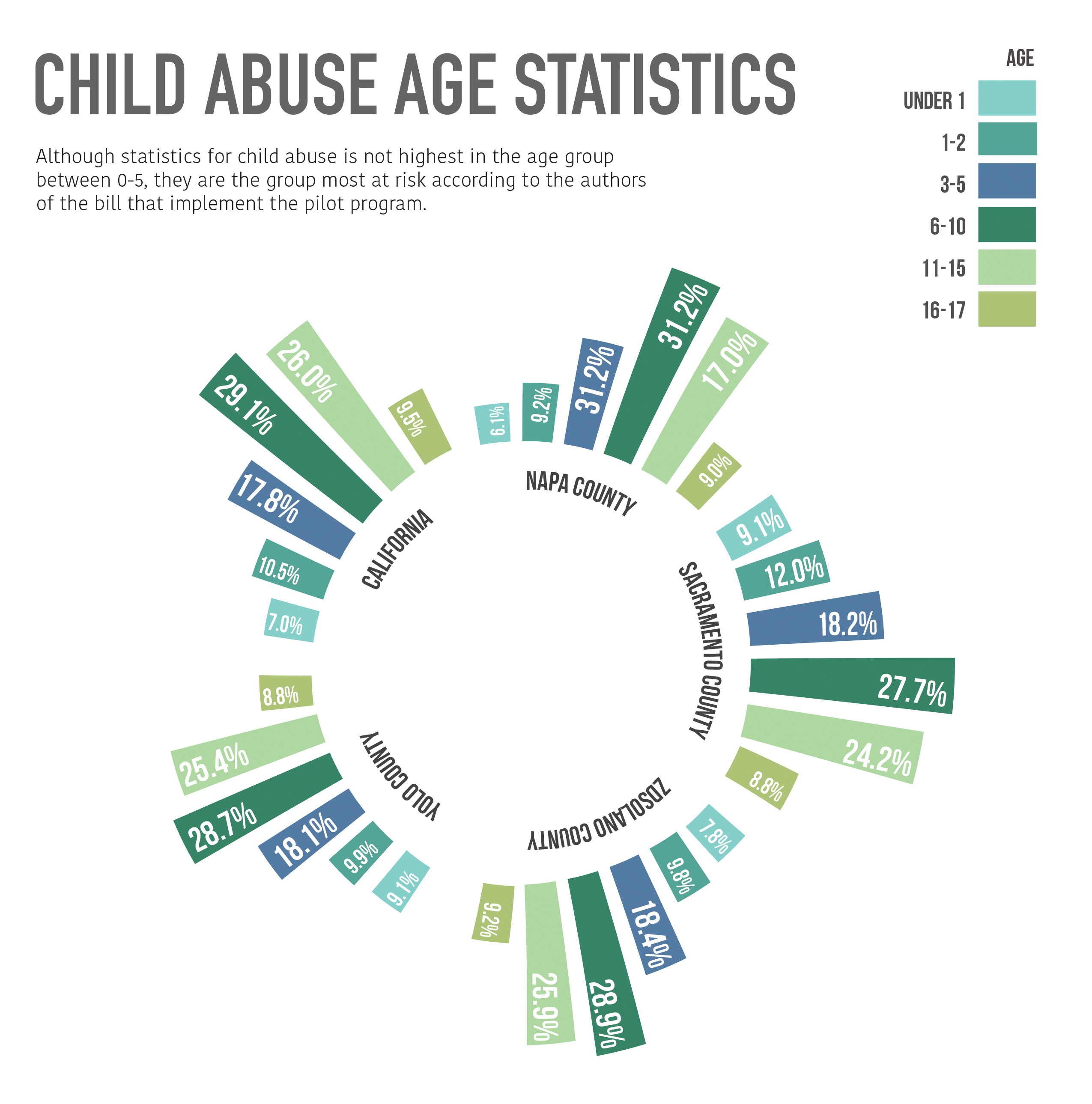
Pilot program proposed to measure the effectiveness of crisis nurseries

Organizers hope validation of pilot program accrues more state funding

Designed by the Graphic Design Team

On Feb. 19 a bill that would implement a pilot program, measuring the effectiveness of the Yolo County and Sacramento County crisis nurseries in preventing child abuse for children aged zero to five-years-old, was introduced to the Senate Committee on Human Services.

Yolo Crisis Nursery serves as a care center for parents to leave their children during times of conflict in order to prevent child abuse. The center will also help parents remedy a conflict and help with stress coping strategies. Children can be placed at the crisis center for up to 30 days.

“Issues of abuse and neglect which begin at a very young age have lifelong impact, so it’s really important to start early and to intervene before there is an abuse. That is why the crisis nursery is so important, it is in a sense a preventative program,” said Senator Lois Wolk (D-Davis) who authored the bill.

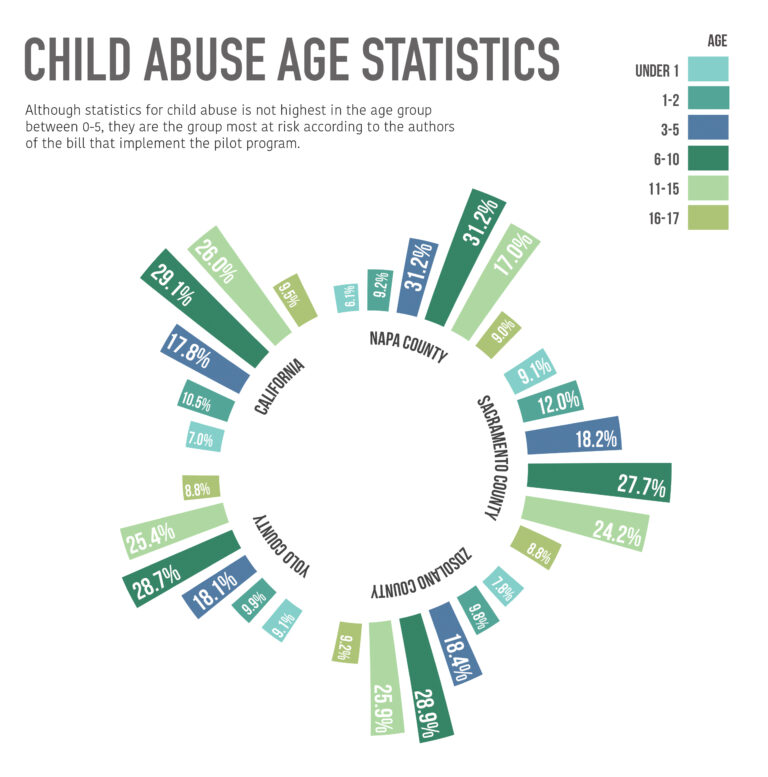
The zero-five age group is the group most vulnerable to child abuse according to Wolk. The nursery aids in mitigating abuse for this demographic by providing respite for parents during times of stress. Children five and under can be placed by a parent in the crisis nursery for care for up to 30 days.

The last study that measured the effectiveness of the crisis nurseries was conducted in 2005.

“It is important to reexamine and look at the facts and get the evidence together so that more families can take advantage of this crisis nursery approach and thereby prevent child abuse,” Wolk said.

One of the goals of examining the effectiveness of the crisis nurseries, according to Wolk, is to encourage more crisis nurseries to open throughout the state. Her hope is that this study won’t go on a shelf, and that instead, it helps show the legislature that the crisis nurseries deserve funding from the state.

“Ultimately I believe we are doing the work of government, yet we receive little to no funding from the state. Once we have the data I would like to see the state of California invest in crisis nurseries statewide,” said Heidy Kellison, president of the Friends of the Yolo County Crisis Nursery, a volunteer group committed to raising awareness and support on behalf of the nursery.

The Yolo County Crisis Nursery is currently funded through private donors, family contributions, community and church fundraising.

“By andin large we have to raise every single dollar,” Kellison said.

The Yolo County Crisis Nursery, in addition to providing care and resources to families in crisis, has partnered with Yolo County Foster Care. Because of this partnership, Yolo County foster parents are able to accept emergency placement at a faster and higher rate than other counties.

“Imagine receiving a call at nine o’clock at night on a Saturday, and the question is can you accept this emergency placement. You’d like to as a foster parent, but you know on Monday morning you need to be at work and you don’t have the time to arrange for child care,” said Kellison. “Our foster families are able to say yes because they know they have the nursery.”

For Yolo County foster families, the crisis nursery, serves as a respite and a resource for back up child-care, however Kellison said the foster families can never really be in crisis. For this reason they refer to the crisis nursery as simply, the nursery.

Cherie Schroeder, instructional specialist and program director for the Foster and Kinship Care Education program which serves Yolo County, said that the partnership between Yolo County Foster Care and the nursery has been critical in recruiting local families.

“Day-care was first and foremost the biggest prohibitive stumbling block for people to say that they would be foster parents,” Schroeder said.

Schroeder said that she believes the crisis nursery helps in mitigating child abuse and would like to see more of them pop up across California if they were modeled after the Yolo County crisis nursery.

“Why I like this nursery is because it is a home-like setting. They don’t have staff overturn, you go in to the same people, so little kids aren’t passed to unfamiliar caregivers. It’s really beautiful, I would be happy to leave my child there,” Schroeder said.

Kellison, like Schroeder believes that opening more crisis nurseries in California would aid in reducing child abuse and have positive effects

“We believe that this movement needs to grow. Every child no matter where they live deserves access to emergency respite care, they deserve to stay with their families and they deserve the opportunity to be safe,” Kellison said.

Graphic by CA Aggie Graphic Design Team


Breaking the Silence event discusses discrimination

0

Dialogue to be held to address discrimination, racism in community

On Feb. 28 from 1 to 3 p.m. the City of Davis Human Relations Commission will hold the third-annual Breaking the Silence event that focuses on addressing issues of discrimination in the community. The dialogue will take place in the Community Chambers building on 23 Russell Blvd.

The event was started in 2012 to address issues of discrimination and racism in the Davis community. Participants are encouraged to share experiences with discrimination that will then be discussed in the hopes of increasing acceptance in the community. A panel of local officials and leaders will be present to address issues brought up by the community. The panel will share their efforts over the past year to reduce discrimination as well as answer questions and provide comments to issues brought up by participants.

Graphic by CA Aggie Graphic Design Team


Congregation Bet Haverim hosts an end-of-life forum


Senator Lois Wolk speaking at Congregation Beit Haverim.
Senator Lois Wolk speaking at Congregation Bet Haverim.

Support for end-of-life act from different perspectives

On Feb. 17 Congregation Bet Haverim hosted their second end-of-life forum at their North Classroom, located at 1715 Anderson Road. While the first end-of-life forum focused on a program called Five Wishes, this one focused on Senate Bill 128.

SB 128 introduced on Jan. 20 by Senator Lois Wolk (D) and Senator William W. Monning (D), allows California residents who are 18-years or older, are diagnosed with a terminal illness and are medically competent to qualify for the end-of-life option. As support for the SB 128 is increasing, more representatives are speaking out about making the end-of-life option available in California.

Forum participants discussed SB 128 in detail and provided personal reasons for support of the new legislation. Wolk attended the forum and expressed her reasons for coming.

“I read about the event and thought that I’d come by today. I also introduced the bill,” Wolk said.

Dr. Michael Amster, an interventional pain specialist at Northbay Healthcare, states his reasons for hosting the event.

“I decided to host it because I believe in the end-of-life option act and I wanted to inform members of the community about the act,” Amster said.

Rabbi Seth Castleman, a member of the Congregation B’nai Harim in Grass Valley, also explains his reasons for speaking at the forum.

“Having worked in the field of hospice for many years and before that and since then having been part of the end-of-life and dying of some relatives very close to me, I’d say it’s a subject that is very near and dear to my heart. Also, as I said at the end of my talk, this is a subject that we should all be grappling with,” Castleman said.

Castleman discusses how people should not just accept dogma but should question and grapple with end-of-life options.

When asked about the end-of-life act, Amster expressed his personal and professional reasons for supporting it.

“Personally I support it because I’ve witnessed death with close friends and family. Most of them have been quite easy and peaceful, but sometimes they don’t go very well and one in particular that I witnessed was quite horrific….Professionally, I have witnessed a number of patients struggle greatly with the dying process…and there are times when every medication we have available does not work,” Amster said.

Wolk emphasizes individual stories in reference to people who have  a personal need for the end-of-life option.

“What I discovered while doing this piece of legislation is that it is unlike any other….People have stories and they want to share it. At the end of each story, what each person says, each of the senators and other people that I have talked to, is it shouldn’t be that hard, it shouldn’t be that difficult. There must be a better way. And I feel that there is a better way… you all have a story,” Wolk said.

Wolk further discussed the details of the bill and her support for it during the forum.

“It’s an easy-to-read bill, it’s not a complicated idea. It’s long overdue in my view and it’s about the humane response to pain at the end of life. It’s not for everybody but it is for many people,” Wolk said.

Photo by Christine Hwang.

Second police community forum held

0

Police, students discuss campus issues

On Feb. 18, UC Davis students and the UC Davis Police Department held the year’s second community forum titled “Problems, Processes, and Procedures.” This forum aimed to discuss external and internal procedures when police officers interact or have contact with students.

This was the second forum in a student-initiated forum series created in collaboration between students and the campus police department. The first forum, “Police Conduct and Police Misconduct,” was held Jan. 7. According to UC Davis Police Chief Matt Carmichael, the forum series is a response to recent national incidents of police misconduct.

“It’s [a way] to be visible to the community when things aren’t wonderful,” Carmichael said.

Many campus leaders attended the forum, including Carmichael, Director of Campus Dialogue and Deliberation Carolyn Penny, ACLU Racial Justice Advocate Chauncee Smith and Acting Lieutenant Jennifer Garcia.

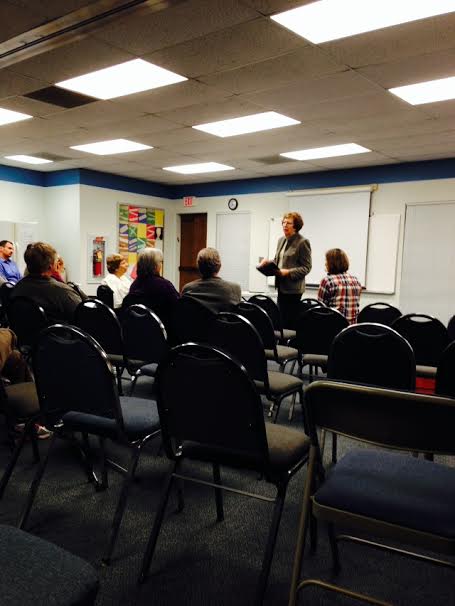
Tim Hunter from the police department and ASUCD President Mariah Watson facilitated the discussion, and at least one police officer or campus leader sat at each table in order to encourage discussion between students and the police department.

After the facilitators introduced the campus leaders in attendance, the forum began with a small group discussion. Students could write questions for police officers on an index card and then ask their questions to the police officer at their table. The forum then transitioned into a large group discussion, in which students were given the opportunity to address their concerns and receive answers directly from police officers. Anyone who asked to speak or who responded to a question was given a two-minute time limit in order to ensure that everyone would have a chance to be heard.

Topics discussed included police training in relation to transgender issues, the preferred names program and a person’s rights when he or she is detained. Racial issues made up a large part of the discussion as well, with students calling on the police department to become more aware of subconscious racial biases.

An additional recurring discussion topic was the need for increased visibility of the police department on campus. Many students said that police officers should become more involved with on-campus events and should interact more with students in order to form a better relationship between police officers and students.

Carmichael believes that these forums are essential to improving the relationship between the police department and the community and said that he wants to answer any questions that students may have. In addition to the continuing forum series, Carmichael said that the police department is working on creating an online thread where police officers can answer questions that they are unable to get to during the forums.

Chief Carmichael plans on continuing the forum series beyond this inaugural year.

“This community forum should take place forever,” Carmichael said. “It should never end. Our student population changes every year. This is an endless series.”

Watson agreed that the forum series is chance to create further understanding on campus.

“When we don’t speak, we cannot connect,” Watson said. “When we don’t connect, we cannot understand the individual needs that each community has.”

According to Watson, the next forum will be held by the first week of spring quarter or sooner.

Photo by Jian Gelvezon.

Shattering the stigma on ‘vagina’ and other gender issues

0

Members of the production Vagina: Our Stories express the importance of using the word vagina

vaginastories_fe

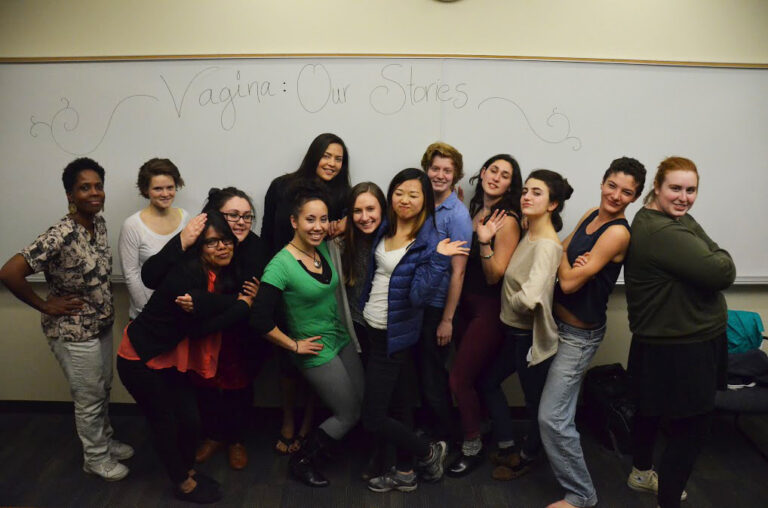
Vagina. According to the cast and crew of this year’s Vagina: Our Stories, it’s a word that is tabooed. But with the annual upcoming production, the members want to break that stereotype.

“There is such a huge stigma around [vagina],” said co-director of Vagina: Our Stories, fourth-year animal biology and Chicano/a Studies double major Edy Campos. “Some people can’t relate with that word, but to have that word is very empowering.”

Vagina: Our Stories will be held on Feb. 28 and March 1 at the Veterans Memorial Center Theatre, and all proceeds will go to local non-profit organization Empower Yolo. Third-year women and gender studies major and stage manager Gylnis Kinciad said members of the production wanted to donate to a more local organization this year.

“Empower Yolo does amazing things and has such a great support system,” Kinciad said. “This organization helps women [who have experienced] domestic violence and assault. We always want to support local organizations.”

Formerly known as The Sexual Assault and Domestic Violence Center, Empower Yolo houses women and children from domestic violence environments, providing them with housing supplies, legal services, education, counseling, childcare and daycare. Locals can volunteer and become peer educators as well.

“The [Women’s Resources and Research Center (WRRC)] has a lot of connections to Empower Yolo,” Campos said. “They fit in our theme of raising awareness of gender violence.”

Vagina: Our Stories first started as Vagina Monologues on campus in 2011, with a complete women of color cast. The following year, the theme and name changed to Vagina: Her Stories, in order to reiterate the word vagina, while also having a specific focus on the Davis community. The name was changed once again to Vagina: Our Stories in 2013 to incorporate gender related issues, such as gender violence and rebranding the word vagina.

“It’s really about breaking the silence around gendered violence and gender norms,” said second-year community and regional development, and women and gender studies double major and co-director Sarah Priano. “Each production is completely unique and tackles these issues.”

The production is sponsored by the WRRC and is based off of Eve Ensler’s 1996 Vagina Monologues. However, the cast and crew say the stories are different from the Vagina Monologues because the stories are written by most of the cast members themselves.

“You can’t google any of these stories, it’s all on stage, it’s all them,” Campos said. “[Vagina: Our Stories] is completely community written, cast and produced. People get the idea that it is like the Vagina Monologues, but it’s not. These people tell their own stories.”

Each member of the cast and crew had to apply and audition in order to be in the production. The application process required each person to tell their own personal story. For third-year international relations and women and gender studies double major and cast member Bernadette Fox, the show marks the first time she will be sharing her story.

“What I have wrote about isn’t something I have really talked about with anybody,” Fox said. “I have definitely been really nervous about it, I have friends and family coming to the show. It’s like a huge step, like a baby step, like a huge baby step. I am doing it in such a metaphorical way that I don’t have to address anything specifically so it feels safer.”

Fox also expressed that the cast had a story to tell and to share it with everyone in the Davis community. Pasha Silva, cast member and writer of Vagina: Our Stories, second-year women and gender studies major, shares Fox’s view, and said that the stories represent them and those who can relate in the Davis community.

“I really want to be able to finally vocalize it,” Silva said. “One of the really cool things is that there will be other people hearing it, people that really want to hear it, not just my friends but also strangers, people to some extent will relate to what I am saying.”

Cast members go through a writing workshop to help write their stories. Silva hopes these stories will invoke positive emotions in others.

“My hope is that it will be received in a way that’s positive, even though what I am saying may be sassy at times, sad at times and maybe even triggering.” Silva said. “It’s important to say what you have to say.”

The crew of Vagina: Our Stories emphasized that the rehearsals and productions are a support system for the Davis community.

“There is definitely a heavy emphasis around survivors because that is what this show is really about, bringing light to these issues that are often stigmatized or silenced because a lot of people can’t tell their stories outside of [the stories],” Priano said. “We often hear ‘I don’t want to hear your story because it is a burden to me.’ I want to make this a safe space and good experience for people. ”

For more info on Empower Yolo, please visit to empoweryolo.org. Tickets for Vagina: Our Stories are currently being sold in the WRRC for $7 until Feb. 20, and will be $10 until the box office date.

Photos by Anna de Benedictis. 

Courtesy graphic by Vagina Stories.

ASUCD holds uncontested election

0

Disconnect between student body, student government greater than ever

If Rome did indeed fall in a day, maybe it’s not so unfathomable that ASUCD has seemingly collapsed in the span of two quarters.

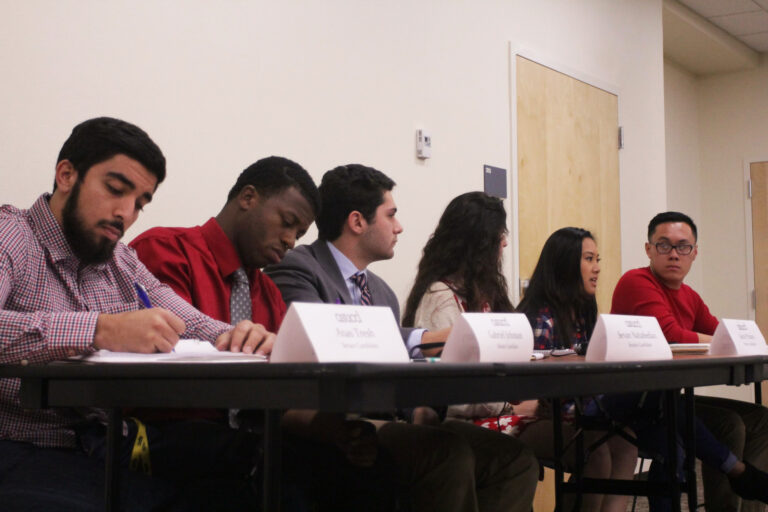
In the ongoing ASUCD Winter Quarter elections, which began Tuesday and run till Friday morning, every single candidate will be elected. There are six senate candidates running for six spots and just one executive team vying for the Executive Office.

It is unclear how this lack of interest and dearth of candidates materialized. UC Davis is a school of action, socially and politically, where students and student leaders often call for change and more representation. Somehow, ASUCD has failed to seize the attention of those who lead different student communities and who desire to effect change on campus.

This election is not the first example of the disconnect between student government and the student body. Even in the fall 2014 election, only seven candidates ran for the six open spots.

Lack of student involvement in ASUCD is detrimental to the student body as a whole. There are fewer barriers to entry, allowing candidates who may not potentially be qualified to serve as student officials. Additionally, the dearth of candidates has led to a supermajority within ASUCD, as the S.M.A.R.T. slate will soon control eight of 12 senate seats. This essentially would allow for the slate to pass any legislation through without any significant roadblocks.

The senate has final control over the ASUCD budget, as it funds bills and allocates money to ASUCD’s various programs and units. UC Davis students should be able to choose the best possible candidates to make decisions with this money, and no group should be able to unilaterally impose its will on the student body. Student government needs open dialogue and discourse to most effectively represent the needs of different constituencies and communities.

While The Editorial Board does not have a singular answer to the cause of the issue, we worry about the ramifications of the current election. ASUCD should increase outreach in order to encourage students to run for student government. There obviously exist many different opinions on major campus issues, and we believe that there should subsequently be more students looking to join ASUCD in order to better represent the needs of the student body and to make a positive difference on the lives of UC Davis students.

The entire campus community would best be served if the discourse found outside the senate table – during student activist protests and demonstrations – thrived within the realm of ASUCD. The Editorial Board hopes that both ASUCD and the student body rise to the occasion between now and the next elections in the fall.

UC Davis students, the future of your university and student government lies in your hands. Seize the opportunity.

Graphic by Jennifer Wu

The Road to Rolex

0

Imagine grabbing a bite to eat in Hollywood, and Reese Witherspoon strolls in. Then, to the left, there’s Brad Pitt and Matt Damon chowing down on a juicy steak. Now replace the city of Hollywood, Calif. with Ocala, Fla., and replace those famous faces with world-renowned Equestrian riders, and you’ve perfectly described a night out in Florida’s horse hub.

Known year-round for its active retirement community and top-notch golfing, Ocala draws the cream of the horseback-riding crop when weather in the Midwest and on the East Coast isn’t conducive to top-level training and competing. Thousands of riders, hundreds of farms and dozens of venues for practicing and competing are jam-packed within the city’s limits. Ocala is truly overrun by the equestrian community during the winter. It’s rare to go into a grocery store without seeing countless shoppers still decked out in their riding attire from the day’s work. Restaurants are crammed full of famished members of the horse community every night. Muddy boots and hay-filled hair are totally acceptable, if not expected, parts of a dinner outfit. Although all disciplines of riders enjoy the sunshine that Ocala has to offer, three-day eventing riders are an especially prominent part of the city’s winter population.

Eventing is commonly referred to as the triathlon of the equestrian world, consisting of three unique phases. Phase one, called dressage, takes place in a small ring, and is a complex pattern of highly technical movements testing the communication between horse and rider. Show jumping presents a course of breakable jumps in an arena, thus challenging the horse and rider to jump quickly and accurately over a series of fences. Finally, the third phase is cross-country. This is the portion that eventers live for. Consisting of a lengthy course of large natural obstacles, such as logs, stone walls, hedges, banks and ditches, cross-country runs through fields, woods and water. The obstacles, generally speaking, are immovable, unlike those in the show jumping. This element of danger can result in some grisly wrecks, yet adds the thrill to cross-country on which these adrenaline-seeking daredevils thrive.

For the best of the best, no cross-country course in the country holds more allure than the Rolex Kentucky Three-Day Event. This competition, called a CCI four star, is the only one of its stature in the United States and is one of just six in the entire world. Eventers often dedicate a lifetime to training and qualifying for this event. Every April, approximately 50 riders vie for this most highly coveted title in American eventing. It is many of these riders that make up the elite class training here in Florida. Some riders are quite flashy, choosing to celebrate with extravagant events such as exclusive parties. Others prefer to stay more under the radar. But all are connected by one factor: their working students.

This is where I come in. It’s common for top-level riders to have dozens of horses in training, and in exchange for room and board, plus free coaching, aspiring young riders toil from dawn to dusk in the stables as working students. Day to day, we clean the barns and handle the daily care of the horses and the facilities. The opportunity to watch the training of the horses and the lessons of other riders is an extremely educational one. We also are able to ride and sometimes compete on a variety of different horses, which is invaluable to ambitious eventers. I arrived down here early January, and I have about two more months in this unique city, working as the right-hand gal to a rider who is chasing the ever-elusive Rolex dream.

Kenzie Wilkinson is writing this series when she isn’t working from sunup to sundown in Florida. If you have any questions for her, contact sports@theaggie.org.