55.5 F
Davis

Davis, California

Wednesday, December 24, 2025
Home Blog Page 811

Lacrosse defies odds

0

Optimism high as No. 66-ranked UC Davis works harder than ever before

lacrosse_sandra_edit

“We get the job done anyway.” These were the words spoken by head coach of UC Davis lacrosse, Kate Henwood, who flashed smiles as she found a few minutes to spare for The Aggie. “We’re not necessarily endowed with a lot of the same resources a lot of other programs are, but we’re the hardest-working.”

“Hardest-working” might just be the right words to describe this lacrosse program, which ranked within the top five lacrosse offensive teams in the nation in 2012. In 2013, Aggie lacrosse took down 14th-ranked Stanford University in the biggest upset of the season, and most recently, the team has seen four wins by over six points against ranked schools Saint Mary’s, Fresno State, Robert Morris and Old Dominion.

The women of UC Davis lacrosse intend to accomplish even greater feats as the onset of the spring season approaches this weekend. Beginning Friday the Aggies will face a total of 17 teams throughout a two-month season, taking on Lehigh and Lafayette Universities in Pennsylvania to start. Fans of the Aggies can look forward to supporting the team in their home games beginning March 2, where they will face Detroit, USC and Stanford University, among others.

“We’re ready to go and the girls are anxious,” said coach Henwood. “We’re confident that we have a really good lineup going into our opening weekend.”

Looking to best her previous statistics this season is senior attacker Elizabeth Landry. Entering the season with 110 goals, and as a leader in the conference in 2014 for goals per game and points per game, Landry couldn’t be happier to continue her work on the field.

“Everything feels right. It’s home on the field. I’ve been there for so many hours — I put in over 20 hours a week,” Landry said. “When you’re out there it’s nice to have a break from everything else that is going on. You just get to focus on the ball and the game and you don’t have to think about school or anything else, just what you’re doing right in the moment.”

Landry will be joined by six other seniors, including attackers Meghan Jordan, Troy Cragen, defenders Rachel Mack, Sara Quero, Allie Lehner and goalkeeper Kai Murphy.

Keep an eye out for scores from their games which begin on Friday.

Graphic by CA Aggie Graphic Design Team
 

Aggie Oscar Predictions

0

Winner predictions for the 87th Academy awards

Here at The California Aggie Arts Desk, we are all about the movies, and with the 87th Academy Awards coming up on Sunday, we are here to offer you lovely readers a 2014 year-of-films review, along with our Oscar-winner predictions. Four veteran Aggie Arts writers, as well as our Arts editor, have offered their opinions on the best and most overrated films of the year and have collectively decided which movies they believe will take home the coveted gold statue. Note that these predictions are not based on what the Arts Desk wants to win, but rather, what they believe will win based on historical Oscar-win patterns throughout the last several decades.


*Winner-predictions are bolded


Best Picture:

The Imitation Game

The Grand Budapest Hotel

Birdman

Boyhood

Selma

The Theory of Everything

Whiplash

American Sniper


Best Leading Actress:

Julianne Moore, Still Alice

Reese Witherspoon, Wild

Rosamund Pike, Gone Girl

Felicity Jones, The Theory of Everything

Marion Cotillard, Two Days, One Night


Best Actor:

Eddie Redmayne, The Theory of Everything

Benedict Cumberbatch, The Imitation Game

Steve Carrell, Foxcatcher

Michael Keaton, Birdman

Bradley Cooper, American Sniper


Best Supporting Actress:

Patricia Arquette, Boyhood

Keira Knightley, The Imitation Game

Rene Russo, Nightcrawler

Emma Stone, Birdman

Meryl Streep, Into the Woods


Best Supporting Actor:

Ethan Hawke, Boyhood

Edward Norton, Birdman

Mark Ruffalo, Foxcatcher

J.K. Simmons, Whiplash

Tom Wilkinson, Selma


Best Animated Feature Film:

Big Hero 6

Box Trolls

How to Train Your Dragon 2

Song of the Sea

The Tale of Princess Kaguya


Best Directing:

Alejandro G. Iñárritu, Birdman

Richard Linklater, Boyhood

Bennett Miller, Foxcatcher

Wes Anderson, The Grand Budapest Hotel

Mortem Tyldum, The Imitation Game


Best Adapted Screenplay:

Jason Hall, American Sniper

Graham Moore, The Imitation Game

Paul Thomas Anderson, Inherent Vice

Anthony McCarten, The Theory of Everything

Damien Chazell, Whiplash


Best Original Screenplay:

Alejandro G. Iñárritu, Nicolás Giacobone, Alexander Dinelaris, Jr. and Armando Bo, Birdman or (The Unexpected Virtue of Ignorance)

Richard Linklater, Boyhoo

Max Frye and Dan Futterman, Foxcatcher

Wes Anderson, The Grand Budapest Hotel

Dan Gilroy, Nightcrawler

Our Opinions:


Chloe “Coen” Catajan, Arts writer

artwriters_chloecatajan_Wu

Favorite Movie: The Grand Budapest Hotel

Ever since third grade I have loved to watch The Royal Tenenbaums. I have pined for a world like one of a Wes Anderson film. Anderson has a knack for tactfully capturing any world imagined, which was further solidified in The Grand Budapest Hotel. On the surface, everything is presented handsomely. The pastel palette perfectly colors inside the lines of each symmetrical frame. But The Grand Budapest Hotel proves more than just a pretty face, as it features myriad characters, all complexed by their pasts, yet empowered by personal quirks and wit. Though his signature style permeates his every film, Anderson consistently executes it with a grace and charm that makes me smitten all over again.

Overrated Movie: Birdman

First, I must establish that I certainly do have appreciation for this film and I do not doubt any of its acclaim. I admire the continuous shooting and believe that the storyline was solid. However, the movie left me with no feelings of personal involvement or attachment; I was not at all as moved as others seemed to have been. I also felt that Emma Stone’s portrayal of a misunderstood 20-something seemed a tad bit forced. And in all honesty, I felt like Birdman was just another Black Swan in the way that both are premised on psychological motifs and… birds…


Rashad “Hitchcock” Hurst, Arts writer

artwriters_rashadhurst_Wu

Favorite Movie: Nightcrawler

It was tough for me not to give director Gareth Evan’s Indonesian crime-drama The Raid 2: Berandal the best of 2014 (at least watch it once to see the best action choreography since its predecessor, which is in my opinion, Kill Bill), but Nightcrawler has the best performance of the year. Jake Gyllenhaal as Lou Bloom, a sociopathic siren-chasing news-vulture, is played to the brink of its twitchy, creep-lordian limits (in a reversal of the blinky detective in Prisoners, he may not blink the entirety of Nightcrawler). Working in tandem with Gyllenhaal’s performance is the script of screenwriter/first-time director Dan Gilroy. Their script drags the audience with Bloom to these psychological limits, while mercifully (maybe too mercifully) not holding them culpable. While the satire on local news as a collection of psychos is heavy-handed, the calculated recklessness of Gyllenhaal’s performance makes the atmosphere an extension of Lou’s force of will to achieve, and makes Nightcrawler the most captivating character-study and film of 2014.

Overrated Movie: Under the Skin

Getting rid of nearly all conventional storytelling, using amazing actors and manipulating some of the best special effects of 2014 couldn’t stop Under the Skin from feeling forced. While I was initially thrilled to see an original film that shed all exposition except for bare essentials – a.k.a. Scarlett Johansson is an alien wearing a Scarlett Johansson skin costume and seduces men for their life force – it affected the pacing in a way that other exposition-less movies (like No Country for Old Men) don’t. If not for Johannson’s convincing performance, albeit, one that is an even more detached version of the same detached role she’s played before, and the soundtrack by Mica Levi, it would have been a complete dud. The best takeaway was that it felt like a densely-layered enough story that I could trick myself into liking it if I rewatched it multiple times.


Amanda “Spielberg” Ong, Arts writer

artwriters_amandaong_Wu

Favorite Movie: Boyhood

I’ve been a fan of director Richard Linklater since watching Before Sunrise so I definitely had high expectations for this movie and it did not disappoint. It was fascinating watching the main character, Mason, literally mature and grow right before my eyes. I love stories about childhood and adolescence, and to me, this movie beautifully captured all the angst and joy that comes from growing up. It made me laugh, it made me cry, and it made me dig Richard Linklater even more than I already did.

Overrated Movie: Interstellar

Don’t get me wrong: I definitely enjoyed this movie and thought the special effects were gorgeous. But apart from solid performances from Matthew McConaughey and Anne Hathaway, I wasn’t really blown away by the acting or the story as much as I was expecting to be. The movie seemed to rely on its special effects to dazzle and entertain, which is totally fine. However, the movies that stick with me long after I’ve left the theater are movies that have interesting and developed characters, and to me, Interstellar lacked characters that I really connected with.


Jason “Scorsese” Pham, Arts writer

artwriters_jasonpham_Wu

Favorite Movie: Boyhood

Cue for groans. Yes, yes, my favorite movie of 2014 is this year’s Oscar race frontrunner Boyhood. While I could’ve picked other favorites such the socially relevant Selma or refreshingly indie Obvious Child, Boyhood has everything to make it as one of my favorite films. It’s coming of age, raw, and incredibly entitled — essentially everything that relates to me on a deeper level. Shot over the course of 12 years (yes, I still think that’s cool), director Richard Linklater paints an incredible cinematic portrait that imitates one’s transition from blissful childhood, to confusing adolescence, to even more confusing young adulthood. From its Sheryl Crow-infused soundtrack to lead actor Ellar Coltrane’s pimply rebellious stage, Boyhood takes me back farther than any throwback Thursday ever could.

Overrated Movie: American Sniper

After coming out of the theater where seas of white people dabbed their teary eyes at Bradley Cooper’s portrayal of U.S. Navy Seal Chris Kyle, I knew American Sniper was going to be my pick for 2014’s most overrated film. Following Kyle’s four tours in the Iraq War where he served as a U.S. sniper and murdered over 150 people, director Clint Eastwood concocts the largest piece of pro-war propaganda since the invention of G.I. Joe action figures. Not only is the film racist, misogynistic and overwhelmingly Islamophobic, it also spends way too much depicting a buffed-out Bradley Cooper as a tortured American hero instead of the insane murderer Kyle actually was. But hey, at least we know Sienna Miller can do a decent American accent, right? I have a theory that that plastic baby circling the interwebs was used because they couldn’t get any real babies to stop crying on the set of this horribly uncomfortable Eastwood film.


Akira Olivia “Coppola” Kumamoto, Arts Editor

artwriters_akiraoliviakumamoto_Wu

Favorite Movie(s): Birdman, Selma and Belle

I reserve the right to not be able to pick a favorite film, simply because I think all three of these movies were stellar and will likely be snubbed by the Academy. Alejandro G. Iñárritu is one of my favorite directors, and Birdman literally (yes, I mean literally) kept me on the edge of my seat for the whole length of the movie. If you’ve seen Selma, the film speaks for itself, which is important since I couldn’t see through my tears. Not to mention that it offers a socially relevant message in alignment with current national racial civil rights movement happening. Finally, Belle was a summer film that you probably didn’t see or hear about, but you probably should have because 1) it passes the Bechdel test, 2) because it features a complex woman of color (WHAT?! yeah man, we exist) and 3) because it has beautiful cinematography.

Overrated Movie: The Interview

It’s overrated.

If you would like to argue with any of these writers about movies and stuff and/or take a photo in Akira Olivia’s glasses because you probably look way cooler in them than she does, you can contact us at arts@theaggie.org.

Photos by Jennifer Wu.

Souper Bowl 2015 to touch down in Davis

0

12 local restaurants to go head-to-head for annual charity soup competition

150219ar_souperbowl (IMAGE IN ARTICLE NOT BANNER)

Warm your hearts and stomachs, and head on over to Davis Odd Fellows Lodge on Sunday for 2015’s Souper Bowl. Hosted by Davis Food Co-op, the ninth annual charity competition pits 12 local restaurants against one another for who has the best soup in Davis.

The Souper Bowl, which benefits a different charity every year, will donate this year’s proceeds toward the Yolo County District Attorney Victim Services Courthouse Dog — an animal service that helps those who have been victims of crime rehabilitate.

Participating restaurants range from the Asian-infused Open Rice Kitchen to Tex-Mex inspired Dos Coyotes Border Cafe to the Davis Food Co-op’s very own Teaching Kitchen, which is currently the reigning champion after taking the title home last year for its vegan Thai sweet potato soup.

Other competing locations include Fat Face, G Street Grill, Jack’s Urban Eats, Osteria Fasulo, Stone Soup and Catering, Tommy J’s, We Cater To You at The Lodge and de Vere’s.

Calvin Liu, chef at Open Rice Kitchen, will be serving a traditional Asian noodle soup with slow cooked beef and a variety of oriental spices such as ginger and five spice.

“It was a favorite of mine growing up, so I wanted to share it with everyone,” Liu said.

Bobby Coyote, owner of Dos Coyotes, will be serving his restaurant’s hatch chile cheddar cheese bisque for the first time at the event. The soup, which is thickened with masa corn flour and topped with sharp aged cheddar cheese, is a twist on a traditional poblano chile soup. The poblano chiles are replaced with hatch chiles, a milder pepper found only in New Mexico. Although Dos Coyotes has been competing in the Souper Bowl for years, Coyote sees the event more as a way for restaurants and the community to give back to local charities.

“We don’t really look at it as a competition,” Coyote said. “It’s always been a really great charity event. We’re all about community. We always do whatever we can to give back to the communities that our business serves.”

Tom Jobst, chef at Tommy J’s, plans on competing for the first time with his Oktoberfest Stew, which brings together a combination of hearty ingredients such as German sausage, potatoes, onions, carrots and celery. Although Jobst echoes Coyote on the Souper Bowl’s philanthropic cause, he also sees the event as a way to enter into some friendly rivalry with his peers.

“It’s all for charity and it’s to have a good time, but of course every cook wants to win just to have bragging rights around town,” Jobst said.

In addition to soups, guests can also enjoy rolls, cookies, soft drinks, alcoholic beverages at the lodge’s bar and live music performed by classical guitarist Matthew Grasso and local jazz band Jonny Gold Trio.

Julie Cross, marketing director at Davis Food Co-op, came up with the idea for this event in a dream and thought it would be a good way for the community to celebrate local businesses in Davis.

“[This event] is great for Davis because it illustrates what great local restaurants we have,” Cross said. “We don’t invite chain restaurants to participate, so it’s a good opportunity to try all these local small [eateries]. It’s nice to get to hang out with your community.”

Doors open for Souper Bowl 2015 at 4 p.m. on Sunday at the Davis Odd Fellows Lodge. The event costs $12 for adults and $4 children 12 and under. Guests can register online before Saturday at davisfood.coop/events/item/758.

Graphic by CA Aggie Graphic Design Team

 

Meat pies and musicals take Davis

0

Davis Musical Theatre Company presents Sweeney Todd

ar_Sweeneytodd2

The Davis Musical Theatre Company (DMTC) is set to bring their rendition of composer and playwright Stephen Sondheim’s dark musical, Sweeney Todd, to their main stage, which is located on 607 Pena Drive. The show opens on Feb. 27 and closes on March 22. The show will take place on Fridays and Saturdays at 8:15 p.m. and on Sundays at 2:15 p.m. during the course of these three weeks.

Set in London during the 19th century, the tragic tale of Sweeney Todd follows the life of Benjamin Barker. Formerly a barber, Barker is exiled to Botany Bay by the lecherous Judge Turpin. Judge Turpin wants Lucy, Barker’s wife, for his own selfish endeavours, and thus sends Barker away, claiming the barber’s wife and child. Years later, Barker returns and assumes the role as the infamous Sweeney Todd to exact his revenge on the Judge with shaving shears and meat pies, and in the process becomes addicted to cold-blooded murder.

Steve Isaacson, director and cofounder of DMTC, recommends this production for those who are 11 years or older, as the show contains dark themes and violence.

“It’s not your father’s Oklahoma!,” Isaacson said. “[I recommend Sweeney Todd to those who] don’t mind throats being slit and people eating people.”

Isaacson described the show as “an assault on the audience” and said that he wants the actors and the audience to leave their comfort level for the length of the performance. This is Isaacson’s third time directing Sweeney Todd. He said that this show is one of his all-time favorites because of its sheer dramatic intensity. The DMTC’s production follows the uncensored format of Sondheim’s Original Broadway production, including all original scenes and musical numbers.

When casting roles, Isaacson looks for talent in singing, acting and dancing. While DMTC is a part-time commitment for many of the participating actors, around 30 members have gone on to perform on Broadway.

Eimi Taormina is the actress who plays Sweeney Todd’s wife, Lucy. She has performed with the DMTC for about six years now. Taormina describes her character as a pure-hearted individual who is driven mad by the atrocities she has been forced to experienced.

“[I would describe the show as] more than a story about right or wrong,” Taormina said.

While the throat-slitting and cannibalism is gruesome, Taormina explained that the most terrifying aspect of the show to her is that the audience can relate to these seemingly horrific characters — the reason being that the characters themselves are based off of the real possibility of everyday humans can be driven to madness.

Nathan Lacy is the actor that will play the role of the malevolent Judge Turpin. Lacy said that he does not mind playing the bad guy in the musical because his character offers important insight into the real-life dynamics of good and evil.

“Only by understanding how much evil there is in the world do you really understand how triumphant good can be,” Lacy said.

Tickets prices for Sweeney Todd range from $9 to $18. For more information on the show and/or to purchase tickets, please visit http://www.dmtc.org/.

Meat pies will be served at intermission.

Photos Courtesy by Davis Musical Theatre Company

Best selling author to visit Davis

0

Author Garth Stein to hold book signing at the Avid Reader

gareth_stein_Ong

Garth Stein has had an illustrious career; he’s produced an Academy Award-winning documentary and his last book, The Art of Racing in the Rain, sold over four million copies. Now he’s back with a new novel, A Sudden Light, which is about a family confronting its long buried secrets as it struggles for redemption and forgiveness.

On March 7 at 7:30 p.m., Stein will give a presentation on his latest book at the Avid Reader, located at 617 2nd Street, which will be followed by a book signing. MUSE had a chance to speak with Stein this past week.

MUSE: It’s been six years since you published your last novel. When writing A Sudden Light, did you ever feel pressure when thinking about the success of your last one and if so, how did you handle that?

Stein: I think there’s always pressure. The Art of Racing in the Rain did very well for itself and following that up, there’s always going to be expectations. But I have to trust that the reader is going to trust me. A Sudden Light took me a long time to write, not because I was nervous of following up [my last book], but because it was such an extensive family history I had to realize. I wasn’t allowed to cheat on what I knew about the Riddell family [the family A Sudden Light is about], so I really had to explore it up to the 1890s. I have 100,000 words of pre-writing that I’ve written about the Riddell family that’s not included in the book that had to be done so I knew the family and understand the trajectory of all the characters.

MUSE: Do you believe that knowing little details about your characters is a crucial part of the writing process?

Stein: I think you have to [know]. When I was doing the play, I went down to LA to see what was going. One time I was at rehearsal and one of the actresses came over to me and she asked me, “What did my character have for breakfast?” It sounds like a funny question but what the character had for breakfast is going to inform how they’re coming into the scene. If she had a lumberjack special for breakfast she’s going to feel different than if she had a bowl of strawberries and yogurt. As writers, we have to know [metaphorically] what every character had for breakfast. How they’re walking into the scene, what their baggage is, what happened a year ago. If we don’t, we’re just pushing around little paper figures and it’s going to be false and readers are going to pick up on it.

MUSE: Your new book is based on a play that you did back in 2005, Brother Jones. Did you encounter any difficulties/challenges in using that play as inspiration for a much longer piece? What did you enjoy about taking your own play and making it into a novel?

Stein: There were definitely difficulties and things that needed to be worked out. Theatre is about the immediacy of the drama as it plays out on stage before our very eyes and a book has more time to go into the history of how we got to the now. The play couldn’t have all the backstory that the novel has so I was allowed to really explore the family to much greater detail. That involves quite a bit of work. I had to do a lot of learning about the Riddell family during the writing of the book.

MUSE: You worked as a documentary filmmaker before becoming an author. How does your documentary experience inform your writing and the way you go about writing or doing research for a piece?

Stein: I went to college and I was an English major and I always thought I would do something with writing but I thought going out and announcing that I was a novelist was kind of irresponsible considering the starting salary for a novelist is zero. But I got caught up with documentary filmmaking because I just loved the idea of telling a story using found objects and still making a compelling story. My documentary background was really useful because it gave me ballast and I met a lot of people and travelled around the world making films.

I like doing field research. I did do some tree climbing. I like to go out and experience certain aspects but for me, it’s about the integrity of the drama. If the drama is not true, it doesn’t matter how much research you’ve done.

MUSE: A Sudden Light is written from the perspective of an older man looking back at his 14-year-old self. What was interesting or enjoyable for you about writing from this perspective and playing with a narrator’s memory? Why did you decide to make the narrator an older Trevor looking back instead of a 14-year-old Trevor?

Stein: For a number of different reasons. I wanted a little bit of wisdom and perspective on this story. Old Trevor knows certain things that young Trevor doesn’t know. I also liked the idea of the lens of storytelling. The fact that we never tell the same story twice. We always embellish, change and modify. He’s embellishing certain conversations to make himself seem sharper and to dramatize certain moments and to skip ahead to other moments. He can tell the story more dramatically than if it happened in real time.

MUSE: You’re also involved in Seattle7Writers, a nonprofit collective of Pacific Northwest authors who support reading, writing and literacy. Why do you think it’s important to give back to the community?

Stein: The great thing about Seattle7 is that it’s not just getting young people involved in reading and writing. We work with people transitioning out of homeless[ness], people who have stories to tell and want to get those stories down on paper. It’s important for writers to remember that the literary ecosystem is very fragile. And there’s four components: readers, writers, librarians and booksellers. And if we lose any one of those arms, the whole system will go down. So we can’t stick our hands in the sand and say who cares. We need to take care of our bookstores, we need to support our libraries and we need to energize the reading public so they’re exciting about reading.

Stein will be at the Avid Reader at 7:30 p.m. on March 7 for A Sudden Light presentation and book signing. The event is free of charge.

Photo by Amanda Ong


AggieAngelous

0

In loving memory of the inclusivity and resilience of Maya Angelou

ThePoetry-ThePoetsAndThePoetesses

ThePoetry

“Science=Art”

By Abbas Mohamed


The universe

Math and love

Chemistry and creation


As above is as below

peer in either direction to let the secrets show

The more you search the more you start to know

No matter what direction you choose to go

Take for instance the earth and a human being

Use imagination it’s the same thing you are seeing

We have more small microbes on us than our  own cells

Like the trees that live on earth and animals like ourselves

The rivers that carry salmon from stream to sea

Are mirrored by the blood streams inside you, inside me

So many more examples you can surely find

But let’s zoom further for the questions in our minds

You go further out now you’re in space

Go deeper down until you’re in an atomic place

Both of these places have similarities abound

Electrons in their orbitals always going around

The nucleus of its atom like its own atomic sun

A sun which above has planets eight,

not counting Pluto, which met a dismal fate

that’s not one thing from which he’ll retaliate

Oh, but science is boring!

Aha! Say, what?? Science bores you, but it’s so exciting!

Formulas, so elegant, biochemical enticing

give in to the wonders, No fighting

its lightning crackling feet above your head,

its shockwaves emanating from the words I have said

Its bread, its butter, and how that’s broken down inside you

It’s the variable air pressures and the flowing around you

ITS TRUE, it’s the freeways

Between cities, between hearts,

Between science, between art,

In every aspect and regard!

Chemistry is emotions,

Its pheromones and love potions

it’s the pull of the moon and the tides of the oceans


When you open your eyes, surprise surprise,

You realize the green of the grass and the blue of the skies,

These colors that can make you smile so wide

Have secrets to be found, the mysteries they do hide

For every light that reaches you takes the shape of a wave

Be it a traffic light or a glowstick at a rave

These waves have shapes and sizes that differ for every color

So when you see these waves you tell the difference from one another

That’s how you can tell the red from the blue

Different frequencies caused by the length of the waves that come to you

How then, can you go through life and see the rainbows around

And not marvel at its science, just one of the mysteries to be found.


With science its precise, its rarely ever hit or miss

The way we discover truth, we discover the definite

So photosynthesis, tell me what you think of this

Living life as an autotroph, some would even call it bliss

Drinking light from the sun, a never ending source of fun

Using solar energy, I make my meals, yup every one

as a plant, I don’t need three meals every day

I need a bit of sunlight and I’m on my way

Marvel at how a plant, in one spot can stay

Yet feed itself sustainably, more than us, I’d say.

So tell me this, are the wonders not obvious?

All the mysteries present themselves for us

Exploration, curiosity, that’s what makes us tick

Not satisfied until the concept clicks

Be it Chemistry or Creation

Math or Love

It is all one and the same

It is our universe


ThePoetsAndThePoetesses

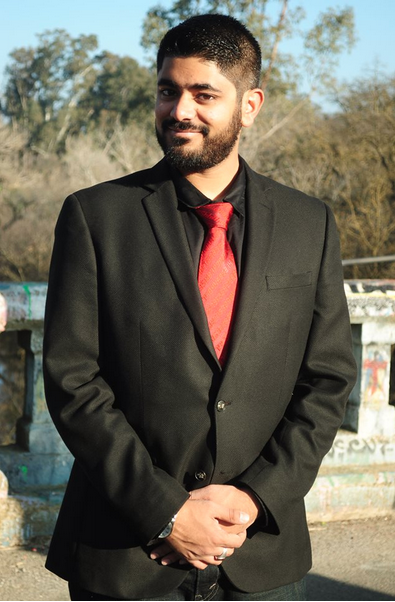
150219_aggieangelouspoet_arAbbas Mohamed

Abbas has been writing poetry since he was ten, when he was first inspired by flowing water under a magnificent bridge. This inspiration continued in the beach town of Santa Cruz where he began to write spoken word. There he formed The Verveside Collective (a poetry collective) with fellow poet Asma uz-Zaman. He is currently pursuing his graduate degree at UC Davis, and is also part of the College Unions Poetry Slam Invitational (CUPSI) UC Davis slam team, which will compete at the CUPSI national spoken word competition this year. Abbas is also organizing the March 12 International Poetry Night where you can go and be marveled by a world full of poetry and culture. You are also urged to sign up and perform, as this event is a reflection of the Davis community and who better than our community poets to represent!


Be Featured in AggieAngelous

Screen-Shot-2015-02-03-at-2.25.52-PMSend your poetry to aggieangelous@gmail.com. Include your name, level of study (undergraduate, alum, graduate, faculty or staff) and field (interest, research, major, discipline), a short, one-to-two paragraph description about yourself and a headshot or personal photo.

Feel free to include your interests and/or hobbies, or maybe even your favorite quote! You can submit as often as you like with as many pieces of creative writing as you would like. Please feel free to email AggieAngelous with any questions, concerns or inquiries.

Graphics by CA Aggie Graphic Design Team

Photo courtesy of Abbas Mohamed

The UCD Files: Why the CoHo Piano should just be decoration this week

0

marxheadshot_opI’m not positive as to what led to pianos being on campus, and I’m sure it was well-intended and is a nice idea in theory. There are a few pianos all around UC Davis, including the ones in the residence halls and the infamous Coffee House piano.

I personally have some piano experience in my life, and know that I could bust out a not-too-terrible “Heart and Soul” or that song the ice cream truck plays to let children and stress eaters like me know there are Push-up Pops near. I choose not to play, however, because I know the damage it can do.

As an employee of the CoHo, one of the biggest perks is that I get to avoid the Coffee House Paradox by having a place to sit at our reserved table. This table is right next to the CoHo Piano. The issues to be discussed below are very relevant to myself and other employees, but through my own surveying, I know the problem stretches to everyone who has sat in earshot during week seven, or any week really.

It actually seems like no one is ever playing the piano during week one; they wait until we need silence before they decide to be loud. I don’t have exact data on this, but a study will be released at a later date. I love “The Office” just as much as everyone else, but the only time I want to hear the theme song is when I go on one of those strings of poor time-management sessions on Netflix. Yes, it’s a piano, and yes you have hands, but no, it is not OK to play it this week with midterms and with Number 5 studiers trying to study.

I know I will take some heat from some people after this, and it’s likely I will receive some angry emails. As a columnist, however, I’ve taken the Miley Cyrus approach: Any publicity is good publicity.

Still, however, I want to try and answer some emails before they come in. These are the things I assume the piano player might say in an email, or in an alternate universe where I would be confronted in person, and not hidden behind my screen.

“I don’t have a piano at home, and I want to practice.” This is actually a very reasonable thing to say. Many people enjoy playing the piano; it’s certainly one of the most common instruments for people of our generation. These pianists aren’t as lucky as the triangle players or the tambourine shakers, as it isn’t very transportable. It’s expensive to get one for a house and expensive to move when the lease is up. My counterargument to that is to invest in a small keyboard, go to the dorm building pianos, or learn to lucid dream practice. There are just too many people in the CoHo trying to study.

The second response would go something like this: “It’s mellow music, good for studying, and it’s not bothering anyone.” Most of the piano players are indeed playing light music, songs I’m sure they are playing perfectly. The issue is that not everyone likes to study to the same stuff. Everyone has their preferences, and the CoHo has established itself as a place for people to study, so they should be able to study their own way. I personally can switch from a one-hour loop of white noise right into a filthy electronic set that you’ll someday hope your kids aren’t seeing live. Aside from showing you I’m kind of a weird person, it shows that this excuse will not fly, as everyone has their own routine.

This leads into the second type of music people like to study to, and that is often played on the piano. This is the movie/video game soundtrack style. I assume these are fun for everyone at a small get-together at a piano-equipped location, or even during week one at the CoHo. I personally love all of this and study to it sometimes. I remember a kid playing Indiana Jones 10 times in a row in the Tercero Service Center while I was not trying to study, and it wasn’t bad at all (emphasis on not trying to study).

I had a roommate once that was very into The Legend of Zelda as a kid and went through a phase of using the soundtrack (and electronic remixes of it) for studying. This was awesome, of course, but I knew at any point we could both put in headphones and choose our own study music. I will never forget the incident last quarter though, when a kid played Zelda on the piano an hour before my midterm. His “Song of Storms” made me want to storm the piano area and Z- C-stick-X him (cue the correction emails, I never actually played).

The final assumed excuse and common playing style is the popular hits. Again, I’ll never ask, but I assume the people playing the Top 40 stuff think it’s fine with everyone because they are great songs. Another thing I’m sure I might enjoy during week zero. In midterm season though, everyone is stressed out, and has no interest in “All of Me” by John Legend, minus the John Legend. No one wants “Fix You” by Coldplay, minus the Chris Martin. These guys have the voices of angels and expensive pianos and expensive producers; you do not.

This is something I’ve needed to say for a very long time, and it was certainly nothing personal to anyone. Although “How to Save a Life” by The Fray is actually making a comeback from an incredibly depressing song to the ultimate crowd pleaser (try it this weekend, trust me), it has a time and a place on a first-generation iPod Nano or a party near you, not on the piano. It is imperative that we control this issue. I hope this article leads to a positive response, and a flow of piano practicing away from midterms and to the other buildings or times when we can all appreciate it.

The UCD Files is your weekly in depth look at our campus and the lifestyle that comes with it, featuring an occasional dropping of knowledge from a senior who has experienced it all.

Feel free to send questions, comments, hate mail, or anything you would like to see in future articles to Adam Marx at almarx@ucdavis.edu.

Graphic by CA Aggie Graphic Team

Photo by CA Aggie Photo Team


Psyches & Serpents: The more you know

0

“The more I learn, the more I realize how much I don’t know.”

Albert Einstein

berezovskyheadshot_opWhen I began this column almost seven weeks ago (more if you count the fact that you submit a column in the fall), I figured that writing on a weekly basis about mental health would teach me a lot of things. Basically, I would be a lot more knowledgeable when talking to shrinks or psychiatrists or the layperson. But as I’ve read (skimmed) books and articles on mental health, I’ve discovered that there’s actually a lot more to mental health than I realized. A lot more that I know nothing, or next to nothing, about. Let me tell you about three areas in which I’ve come to realize that I need to learn more about within the realm of mental health (listed in the order I’ll be discussing them): research, resources and diet.

Regarding research on mental health, I’m embarrassingly unknowledgable. This is normally not a problem in conversation, because without a fact-checker poised at their laptop nearby you can feel free to stray as from the truth on this or that finding (as in, “Yeah. It was a study of 12,000 students. Or maybe it was just 12.”) The exception is if you’re talking to a grad student, who (if they are worth their salt) will ask you for a reference point blank on anything you cite. And there are a lot of things to cite. Yet most people keep citing that same old study (often falsely), like the one that says playing Mozart will develop babies’ brain better. What’s hard for myself is tearing away from some semi-poetic perspective on bipolar from Kay Jamison or Mark Vonnegut in order to read the peer-reviewed scholarly article on mental health parity regulation statistics. If anyone reading this has any tricks to make those journals more interesting or bearable, please let me know.

On one level there are a lot of local mental health resources on which I’m just pitifully uninformed on. For example, UC Davis has at least one mental health club (I can remember reading the group page), but I’ve yet to attend (actually, if anyone knows anything about this, please inform me). There’s a NAMI (National Alliance on Mental Illness) chapter local to Davis. It’s a significant organization, and my mom went to my hometown’s chapter when I was diagnosed (she highly recommends it to anyone, if you’re wondering). There’s also significant homeless/mental health support in downtown Davis (as many homeless deal with schizophrenia and other mental conditions). I’ve biked by two, one that’s run by the Quakers and another on H Street. The reason I’ve yet to learn more usually has to do with time management, another issue I need help with.

On another level, I have used some resources here at Davis, including CAPS (Counseling and Psychological Services) counseling and psychiatry at the SHCS (Student Health & Counseling Services). As an aside, SHCS has the better massage chairs of the two. I consider the ARC (Activities and Recreation Center) to actually be one of the best mental health resources, which I use on a regular basis. Another resource I used recently was a visit to a dietician at SHCS, which leads me to my next topic.

Diet is a subject of endless fascination for me, and one to which I admit to being endlessly ignorant. For example, I’ve had acne for most of my life now, and I’ve yet to eliminate it completely from my life, but with good diet I can get close for periods. There are many indicators that a diet is eliminating acne (mainly visual). But say you’re trying to eliminate something else, say mental “illness.” Whether a mental illness can be eliminated or only reduced is a matter of debate, but it’s besides the point. I won’t go into specifics, but I’ve tried a lot of things (raw, vegan, vegetarian, maple syrup, Ayurvedic, homeopathic, ketogenic, fasting) in the hopes of getting mental clarity, mood stability and – for lack of better words – good vibes. Really though, there are so many factors that complicate a diet plan, such as exercise, sun exposure and sourcing, that it’s hard to tell if one is on the right track. For myself, I think that reading scholarly articles and using diet resources such as nutritionists, who are also mental health resources, in a balanced fashion is the best way to grow my knowledge of proper diet.

So I think it’s fair to say that I do know something about mental health research, resources and diet. But I can use improvement (especially in understanding research, which is a foundation for proper use of the other two). And, looking at it, I can see that a lot of what I wrote here I learned this quarter. But the knowledge I stand on only gives me a better view of the landscape (or mindscape) which I couldn’t see before. And it’s quite vast. I’d like to think that Einstein was a mentally stable guy, but who knows). At least when it comes to views on knowledge, we have one thing in common.

PAUL BEREZOVSKY would like to know what you know at pbberezovsky@ucdavis.edu.

Graphic by CA Aggie Graphic Team

Photo by CA Aggie Photo Team

Disorder in newborn foals may give clues to autism

0

UC Davis researchers study neonatal maladjustment syndrome

Veterinary researchers at UC Davis are studying a well-known disorder in newborn foals that can possibly lead to connections and similarities in children with autism.

Known as neonatal maladjustment syndrome, the disorder is commonly found in newborn foals exhibiting abnormal behaviors, including not recognizing their mothers, wandering away from the closeness of mares and being disoriented in their environment. The syndrome has often been attributed to hypoxia, or lack of oxygen, during the birthing process. However, researchers are currently focusing on the effect of neurosteroids on foals.

“We decided to look at [neurosteroids] to see if they are elevated in these foals with maladjustment,” said UC Davis Veterinary Medicine professor John Madigan. “We found very dramatic elevations of the neurosteroids in the foals affected with maladjustment syndrome than the foals that were normal.”

These neurosteroids act as a sedative for unborn foals and are important in keeping foals calm before birth. There is a biochemical switch that must be activated in order for a foal to recognize the mare, start nursing and become mobile.

The research team consists of molecular biological sciences professor Isaac Pessah, UC Davis Veterinary Medicine associate professor and neurologist Monica Aleman and Madigan. The group believes that the physical pressure of the birthing process is an important signal that tells the foal to stop producing neurosteroids, therefore allowing it to wake up.

Treatments for foals with the disorder include tube feeding and thermal regulation. Third-year animal science major Katherine Griffin recently nursed a foal with neonatal maladjustment syndrome that she helped deliver.

Griffin started working at Victory Rose Thoroughbreds in Vacaville, Calif., during her first year at UC Davis, and is currently involved with foaling mares and breeding. From her experiences, Griffin has seen firsthand what the horses can do in terms of the medical responses between two different species and is not surprised by what she has seen.

“The equine species has so much to offer,” Griffin said. “Not only can they specifically help people with the disorder, but now they’re giving us research information about [it]. It’s amazing to me.”

In addition, a newer technique to address the syndrome recently developed from a study looking at a phenomenon where foals “flop” and go to sleep.

“[It’s] where when you a hold a newborn foal within the first few days of life,” Madigan said. “If you hold them to do a procedure, they tend to flop, they tend to drop their head, go to sleep, collapse.”

The technique is a squeezing system with soft ropes across the foal’s chest and it mimics the pressure and feeling of what foals experience during labor and passage through the birth canal. The researchers discovered that there were hormonal changes in the blood after being squeezed for 20 minutes.

There is also evidence that palpable pressure is also important for infants because there have been reports where sick newborn babies make miraculous recoveries after being placed in the arms of parents. This is a concept called kangaroo care, which is similar to the squeeze procedure.

“You give infants to their mother [and] there’s this dramatic change in how the infant behaves,” Madigan said. “Their nursing is better, their behavioral response are better [and] their blood pressure is better.”

Madigan said that what is learned in one species can be applied to another, specifically citing the One Health concept. This implies the fact that veterinary health and human health are similar.

To further this idea, the research team is working with UC Davis MIND Institute environmental epidemiologist Irva Hertz-Picciotto to see if there are any parallels between the effect of early neurosteroids in horses and humans, and if there is a link to children with autism.

“My interest though is the prenatal period and things that happen around the time of delivery and the neonatal factors that could have an impact,” Hertz-Picciotto said. “Some of our other studies do suggest that those are really the critical time periods.”

Currently, there are two projects at the MIND Institute related to autism in children — a case control study called Childhood Autism Risks from Genetics and the Environment (CHARGE) and a cohort study called Markers of Autism Risk in Babies Learning Early Signs (MARBLES).

CHARGE works to find environmental causes and risk factors for autism and developmental delay, while MARBLES is a study for pregnant women who have a biological child with autism spectrum disorder. This program also investigates possible prenatal and postpartum biological and environmental exposures and risk factors that may contribute to the development of autism.

“[Collected placenta tissue and newborn cord blood] are some of the things we’ll be able to look at and see if neurosteroids or some of the genes that are responsible for regulating the neurosteroids might be out of balance, might be deregulated, or if there might be some [dysfunction] going on,” Hertz-Picciotto said.

Hertz-Picciotto said the big issue is that if neurosteroids really are the problem in children with autism, she would have to further question potential causes.

“Another part of the study would be to really understand what factors might influence those neurosteroids,” Hertz-Picciotto said. “Is there something in the environment that we can modify that might down the road actually reduce risks for children developing autism?”

From a student perspective, Griffin believes research like this needs to be done more often.

“The interaction between animals and humans has so much to offer,” Griffin said. “And there’s an unlimited amount of resources we have here on Earth to actually help us understand disorders. This is something profound, I believe and something that can really help us in so many ways.”

Photo by Joe Proudman.

UC Davis Aggie-Sol team to enter Solar Decathlon

UC Davis student-led group aims to build solar-powered house

solardecathalon_fe1

Next fall, a team of UC Davis students is entering an international competition to build a solar-powered, cost effective and energy efficient home. However, the task that the “Aggie-Sol” team is undertaking is one whose legacy will last much longer than the two-year Solar Decathlon competition.

Aggie-Sol is aiming to build a prototype of a home that will bring a “Zero Net Emissions” lifestyle to below market value for farm workers in California. With California lawmakers considering zero net energy regulations upon residential and commercial structures, the cost of housing may increase with the installation of these measures. Alternatively, the Aggie-Sol team aims to lower the financial cost of being eco-friendly.

“We don’t want people to make a decision between sustainability and affordability,” said engineering manager and first-year civil engineering graduate student Payman Alemi. “There is cost assessment for everything and anything going into the house. We make it affordable by going through every line item, every piece of insulation, every piece of pipe, every kilogram or pound of wood and trying to minimize it as much as possible.”

The Aggie-Sol home will feature various methods of energy and water conservation, including a cooling system in which water chilled overnight lowers the temperature of the house the next day. In addition, water will be conserved by storing and filtering grey-water — which is the water from dishes, sinks or any water that doesn’t come in contact with feces — to be used for irrigation.

The Davis community has much previous experience on energy conservation communities. Similarly constructed environmentally friendly structures include the UC Davis’s West Village — a state-of-the-art, eco-friendly community within Davis.

“UC Davis also pursued West Village, which is the largest planned Zero Net Energy community in America,” said project manager and recent civil and environmental engineering graduate Robert Good. “That achieves zero net energy at market rate technology at market rate cost. UC Davis is approaching this project with these experiences behind us and the experience we learned from them, and trying to achieve the exact same goals, but at a significantly lower cost.”

This housing project has been mainly a student-led coalition, as most of the responsibility and influence within the project has been left solely to the graduates and undergraduates involved.

“We have to give a huge shoutout to students working on this, they have been working very hard,” said project manager and first-year Ph.D student in transportation technology and policy Ben White. “A lot of them [have been] working over 40 hours a week on this project, nights and weekends. It’s really been a sacrifice for them to do well in this competition.”

The team consists of members with diverse academic backgrounds, including design, engineering, management and sociology. Fourth-year design major Tina Chen is currently on the architectural team, working on the design of the house.

“The project itself means a lot to me since I’ve been here since the very beginning,” Chen said. “It is one the few opportunities in Davis to be a part of something so big. It’s a really great experience because how many people get to say, ‘Wow, I designed a house while at Davis!’”

The project allows students to apply the skills they’ve learned at UC Davis on a real-life, major enterprise.

“A lot of students leaving the college are taught how to approach a provided task, so this is an opportunity for them to figure out on their own how to approach a larger project,” Good said. “I have seen students, not only from the engineering department, but from the design department, from communication, English and many other departments at Davis who have taken those skills from each of those respective colleges and applied them very well.”

The students involved are also encouraged to build different skill sets apart from what they are learning in their respective departments. For example, all students on Aggie-Sol are made to learn “Revit,” a three-dimensional autocad modeling software. Combining their pre-existing knowledge and newly learned skills within the project, students in Aggie-Sol learn to work side-by-side with those from many different areas of interest.

“Learning to communicate together is very important in the industry,” White said. “Most students don’t have this opportunity until they are out in the real world. [Students don’t get] just a real world setting, but a real world situation that has great social implications as well.”

This year’s competition will be held in Irvine, Calif. in October. White hopes that UC Davis will continue participating in the competition for years down the road.

“I don’t think we can solve California’s farm worker’s housing problems with our first try,” White said. “We are learning a lot and we are getting a part of the way there. But I think that as a university, if we are able to follow a few more times in subsequent years, I think we’ll be able to make a much bigger impact.”

Courtesy photos by Aggie Sol

Physicians say measles outbreak can be combated with better health education

0

U.S. Senators oppose current California vaccination exemption requirements

Recently, the outbreak of measles in Disneyland California, or “the happiest place on earth,” has caused the nation to refocus on the issue of vaccination exemption.

According to the Center for Disease Control and Prevention the exemptions and required documentation for opting out of vaccinations varies by each state. The three categories for exemption include medical, religious and personal reasons. California is among 20 other states that permit the exemption for personal belief and 48 states allow exemptions for religious reasons.

Individuals such as Jenny McCarthy, a former host on “The View,” played a major role in encouraging parents and other individuals to carefully reconsider, all or some vaccines, before vaccinating their children. A well known concern within the anti-vaccine community is the association between vaccination and autism.

Autism Speaks, a nonprofit organization that spreads autism awareness, declined an interview but provided a statement from their chief science officer, Rob Ring.

“Over the last two decades, extensive research has asked whether there is any link between childhood vaccinations and autism. The results of this research are clear: Vaccines do not cause autism.  We urge that all children be fully vaccinated,” Ring said.

Alongside organizations such as Autism Speaks, U.S. senators Dianne Feinstein (D) and Barbara Boxer (D) have been pushing for parents to get their children vaccinated. Current California law states parents can avoid vaccinating their children by making the choice with a medical professional or claiming to have religious objections to vaccination. In a press release Feinstein and Boxer state their opposition to some of the current exemption requirements as they believe parents who refuse to vaccinate their children endanger other families who choose to vaccinate as well as their own.

“We think both options, [the philosophical and personal exemptions], are flawed, and oppose even the notion of a medical professional assisting to waive a vaccine requirement unless there is a medical reason, such as an immune deficiency,” Feinstein and Boxer said.

Dr. Mark Sawyer, professor of clinical pediatrics at the University of California, San Diego, School of Medicine and pediatric infectious disease specialist, commented on the current measles vaccination situation.

“One thing that this is teaching us is that diseases are still around and can show up anywhere, including Disneyland,” Sawyer said.

Sawyer expresses that physicians are concerned about the outbreaks because he fears that a plethora of unimmunized people will increase outbreaks.

“There are [a lot] of vulnerable people who can’t get the vaccine because their immune systems are suppressed or because their babies can’t get immunized. If everyone doesn’t get immunized, we’re going to get widespread outbreaks of measles and those people are going to get infected and have bad problems,” Sawyer said.

When asked why parents continue to avoid vaccinations after new scientific findings, Dr. Dean Blumberg, associate professor and chief of pediatric infectious diseases at the University of California, Davis Children’s Hospital, responded with several reasons.

“Some parents are feeling that they would rather be a little more holistic with their children’s care instead of exposing them to something like that, a vaccine, and I think they’re misinformed about [the vaccine] because the vaccine is safe and effective and they might not appreciate the severity and infectiousness of the potential infectiousness and complications that may occur with measles,” Blumberg said.

Sawyer and Blumberg raised concerns over some of the reasons for exemption.

“Among [the] government’s responsibilities is to protect the health of the community….In this situation, infectious diseases are a shared public health concern…the importance of protecting the public’s health overshadows the individual liberties that we would like to give individual parents,” Sawyer said.

Blumberg comments on the issue of parental choice.

“These are not parental choices but these are societal choices that we have made….If the science says that vaccines are safe and effective, can a parent opt out of that based on their personal beliefs?” Blumberg said.

He relates this to the enforcement of bike helmets and car seats for children.

Both Sawyer and Blumberg agree the best solution is health education.

“I think it’s important to make sure that people are educated about the issue, so I think the measles outbreak has been an opportunity to re-open the discussion about the safety of vaccines and the effectiveness of the vaccine,” Blumberg said.

Sawyer believes increasing science literacy is a fundamental step in reducing the misperceptions of vaccinations.

“I think that needs to start in middle school and high school science curriculums so that when people grow up and become parents they’re able to read and understand the science that can really inform them,” Sawyer said. “That’s a really hard job and it’s going to take a generation to accomplish.”

Photo Courtesy Creative Commons


Police Brief: Week of 2/9-2/15

0

Our little town of Davis never sleeps and the Davis police department is there to keep the peace. The following are the most entertaining bits of police activity in Davis.

Thursday, Feb. 12:

Sleepy Heads

7:10 a.m.: A couple set off the alarm in their home and requested that officers come to check the cause of it. They could not be convinced to leave their bedroom to check for themselves.

Punching Bag

3:39 p.m.: A man was seen exiting his SUV, walking into a field, punching an unidentified object, getting back in his car and driving away.

Friday, Feb. 13:

Neat and Tidy

11:46 a.m.: An individual who was dusting a phone accidentally dialed 911.

Meow Mix

5:27 p.m.: A raccoon was spotted at a resident’s backdoor. They were concerned because they have had a raccoon kill a domestic cat in the past.

Sunday, Feb 15:

Sister from Another Mister:

A man knocked on a stranger’s door thinking it was his sister’s house.

Graphic by CA Aggie Graphic Team


UC Davis Stores foster new partnerships

University chooses to continue Amazon partnership, form three new partnerships

UC Davis Stores has chosen to continue its partnership with Amazon and has also announced three new partnerships.

September 2013 through September 2014 was a trial period for the partnership between UC Davis and Amazon, and the university recently chose to continue this partnership.

The partnership resulted in a co-branded website (ucdavis.amazon.com). When students purchase items from the website, a portion of the cost of their purchase goes back to UC Davis. The money the university receives goes toward the We Are Aggie Pride Program in addition to the operating costs of the Memorial Union.

“For the UC Davis Stores, we feel [that the Amazon partnership] greatly enhances the retail services we are able to provide to our campus community,” said Jason Lorgan, director of UC Davis Stores.

Lorgan said that the partnership offers a number of benefits for students.

“This program provides our students with many more items than [UC Davis Stores] is capable of providing on its own in our stores,” Lorgan said. “It gives students an easy and secure on-campus delivery option to the Amazon lockers or convenient delivery to their apartments.”

Ripley MacDonald, director of Amazon Student Programs, agreed that this partnership will aid students.

“Amazon and UC Davis have a common goal of helping lower the cost of college for students,” MacDonald said. “This collaboration with UC Davis will help make getting everything students need for life on campus, and especially textbooks, more affordable and convenient.”

By Winter Quarter 2016, an Amazon-staffed pick-up and drop-off location will open in the new Memorial Union campus store, where students can pick up their textbooks and packages.

According to Lorgan, it is likely that the five-year partnership will be renewed in 2019.

UC Davis also recently announced its three newest partnerships with Promoversity, Newegg and Shop24.

UC Davis’ partnership with Promoversity launched Wednesday at an event at the ARC lobby.

“Promoversity provides an opportunity for student organizations to produce UC Davis branded apparel and swag for fundraising events, which I think would appeal to a number of students,” said Jennifer Eting, associate director of communications and marketing at Campus Recreation and Unions.

UC Davis has also partnered with Newegg to give students promotions and savings on a variety of electronics. There will be a launch event Feb. 25 from 10 a.m. to 3 p.m. at the TechHub at the Memorial Union.

Shop24 is a vending machine that will be available beginning on March 23 at the south side of the Memorial Union. This vending machine will provide students with a way to buy food and school supplies at any hour of the day, and could become especially helpful once the Memorial Union Renewal construction begins later this year.

Eting says that part of the revenue from these three new partnerships will go toward the operating costs of the Memorial Union, student programs and services. She hopes that students will take advantage of the benefits that these partnerships will bring.

“We would like to encourage students and members of the campus community to attend [the launch events] and learn more,” Eting said.

Photo by CA Aggie Photo Team

ASUCD Senate found guilty of inequitable financial treatment

0

ASUCD Court mandates that senate correct policies

The ASUCD Senate has been found guilty of unfair and inequitable financial treatment of students, according to a ASUCD Court majority opinion released Feb. 10.

Article IV of the ASUCD Student Bill of Rights states that “[Students] have the right to receive fair and equitable financial treatment.” According to the court’s majority opinion over Rylan Schaeffer v. ASUCD Senate, referenced above, senate violated Article IV by only paying student instructors teaching environmental courses.

Senate currently allocates funds to pay two instructors that teach unit-bearing “98” courses on behalf of the Campus Center for the Environment (CCE), an ASUCD unit. These courses are required to have an environmental focus and are the only courses offered through the Association with paid student instructors.

“98” courses refer to flexible lower-division directed group studies that allow students to earn units for examining a subject not covered by regular courses.

Because there is currently no campus organization financially compensating students for teaching courses unrelated to the environment, the ASUCD Court deemed that the Association is unfairly providing advantages to students in majors directly related to the environment.

In concluding its majority opinion, the court offered the following mandate: “The Senate [shall] equalize pay to all students who teach a “98” class and who follow the proper procedure for its creation and structuring.”

It is unclear if the Association can afford to pay all students offering a “98” class. One option for senate is to stop paying the CCE instructors, according to recently resigned ASUCD Controller Rylan Schaeffer.

Schaeffer petitioned the Court on Jan. 28 after seeking equal financial treatment from the ASUCD Senate and Business and Finance Commission, respectively. Schaeffer is scheduled to teach a “98” course under the Department of Computer Science in Spring Quarter 2015.

Senator Amelia Helland, as a witness for the senate, argued that Schaeffer had not given senate enough time to meet his request.

“I expressed interest at the senate meeting and proceeded to follow-up by going to the Executive Office and talking about it,” Helland said. “I was fully prepared to work with whomever was trying to be involved.”

Schaeffer indicated that, despite Helland’s intentions, no bill was introduced.

The court found that Schaeffer’s course and the CCE courses were similar enough to deserve equitable financial treatment. According to its majority opinion, “Both the Petitioner and the teachers of the currently-funded courses teach a ‘98’ class and are held to similar, if not the same, standards for leading the class.” Both Schaeffer and Senate President Pro Tempore Robyn Huey, the senate’s representative in the hearing, agreed that Schaeffer and the CCE instructors had obtained their positions through similar processes.

Huey claimed that ASUCD does not have the “financial jurisdiction” to pay Schaeffer, stating, “Student-facilitated courses are under the jurisdiction of a policy created by the Academic Senate’s Committee on Courses of Instruction (COCI).” If anything, she claimed, the Department of Computer Science should pay Schaeffer.

At the beginning of the hearing, Schaeffer made it clear to the court that the legal issue at hand was not the real issue he was protesting.

“Everyone in ASUCD prioritizes their community above the interests of the Association,” Schaeffer said. “My entire career, I fought against this. I felt that we should prioritize the best interest of the Association, and students as a whole, rather than any individual community.”

Schaeffer elaborated in a statement released after the hearing that he believed he was disappointed that ASUCD does not build services that students want, because it is too busy dealing with symbolic issues.

“The fact that I have to fight my elected representatives to create a program that students want and will benefit from is the greatest tragedy,” Schaeffer said.


Aggies ready to make a splash in the MPSF Championships

0

UC Davis heads to conference championships

Designed by Sandra Bae

Going 9-0 in 2013-14, the Aggies had the best dual season in school history before moving on to win their second consecutive conference championship in 2014. This season, with a 5-2 record, UC Davis heads towards a third straight victory that is well within their grasp.

The UC Davis Women’s Swimming and Diving Team will be competing at the Mountain Pacific Sports Federation Championships from Feb. 18-21 against seven other teams. The Aggies have a lot to live up to, as they have won the title three times in the past four years, upset only by BYU in 2012.

The swim team will go to Monterey Park at East Los Angeles College, while the diving team will compete at the Rose Bowl Aquatics Center in Pasadena, Calif.

The MPSF Championships act as the conference finale before the NCAA’s, and brings along with it a sense of importance as the season comes to a close.

“The goal is always just to be the best you can be at conference,” said senior swimmer Samantha Shellem. “Just trust in your training and trust that you’ve done all of the work, and it’s going to pay off.”

And done the work she has. Shellem has been awarded the MPSF/Turbo Female Athlete of the Week twice this year, which leaves her with a career-long collection of five such honors.

Hot off a meet against Pacific on Jan. 31, Shellem garnered three first-place finishes, in the 100 free (51.73), the 200 free (1:50.89) and the 200 individual medley (1:45.20) as well as contributed to the 200 medley relay win (1:45.20). Her achievements place her in prime position to be a formidable force in the pool come race day.

“I just want to finish up my last year swimming strong and represent my team well and my teammates and have fun doing it,” said Shellem.

Sophomore Hilvy Cheung and senior Hilary Hunt were the two other Aggies to receive the MPSF/Turbo Female Athlete of the Week, with two and one this season, respectively.

Undefeated in the 200 butterfly this season, Cheung holds school records in the 100 and 200 fly with times of 53.55 and 1:57.50.

“Your times don’t matter,” said Cheung despite her impressive results. “It’s all about beating the next person to score points.”

The swim team knows that it is going to be a challenging meet, but the drive to succeed is there. “It’s going to come down to who gets their hand on the wall first,” said Shellem.

Situated in Pasadena for the duration of the conference, the diving team will have their own battle to win. But they bring with them a determination and eagerness that will be hard to match in the coming championship.

“Hawaii is definitely bringing a few really great girls,” said junior diver Audrey DeNeffe, who holds the Aggie record in three events: the 1-meter, 3-meter and platform. “They’re definitely our biggest competitor diving-wise… so it’s always fun to compete against them and to look up to them.”

DeNeffe and junior Lucy Lafranchise both qualified in the 1 and 3-meter events for the NCAA Zone “E” Diving Championships on Mar. 9-11. This is a first for DeNeffe, and the third time Lafranchise has qualified. With a minimum qualifying score of 265.00 on the 1-meter and 280.00 on the 3-meter, Lafranchise received respective scores of 275.85 and 282.45 while DeNeffe dove her way to 278.55 and 296.85, easily clearing herself for the Zone.

A goal for the diving team was to “improve enough to bring six girls [to conference],” said DeNeffe. Last year the team was only able to field four divers for competition, but they were able to realize their year-long effort.

In the end, it comes down to keeping a calm and relaxed composure. “I hope that I trust my training and have a good time,” said DeNeffe. “That’s all that matters.”

The scores will reveal themselves over the next few days, but the UC Davis Swimming and Diving team looks strong going into the MPSF Championships.