55.5 F
Davis

Davis, California

Wednesday, December 24, 2025
Home Blog Page 812

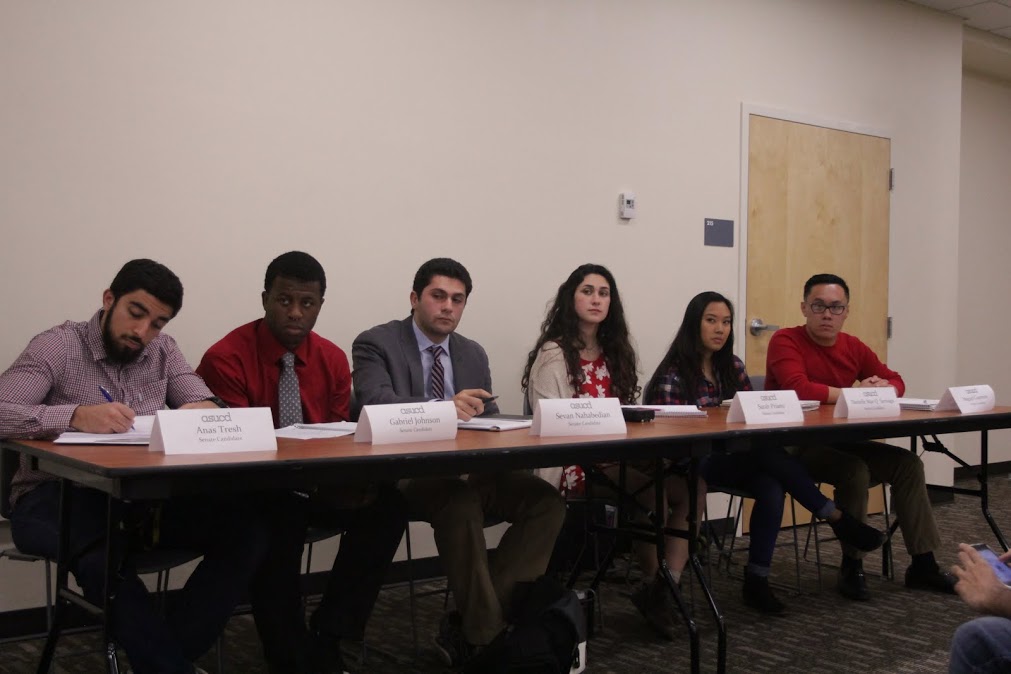
Elections Committee hosts ASUCD candidate forum

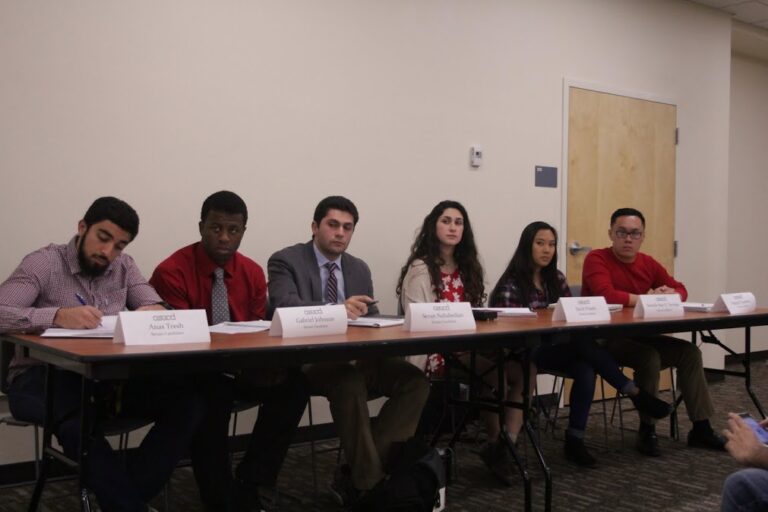
asucd forum 2015With an unprecedented, uncontested ASUCD election this quarter, Elections Committee Chair John Wu decided to shake things up.

In lieu of the traditional ASUCD CoHo debate, co-moderated between the Elections Committee Chair and The Aggie’s own Campus News Editor, the committee set up a candidate forum, held tonight, Feb. 17.

Anyone could submit questions for the candidates via the election website: https://elections.ucdavis.edu. All questions were filtered by the Elections Committee and Wu, who chose which questions to ask.

Candidates answered questions regarding ASUCD’s budget, their respective backgrounds, the relative lack of interest in this election and other topics.

The senate candidates, Miguel Guerrero, Danielle Santiago, Sarah Priano, Sevan Nahabedian, Gabriel Johnso and Anas Tresh, spoke from 7-9 p.m. on the second floor of the Memorial Union, followed by the only executive ticket, composed of Mariah Watson and Robyn Huey, who answered questions from 9-10 p.m.

Five of the six senate candidates, in addition to both executive candidates, are running on the S.M.A.R.T. slate, meaning that S.M.A.R.T will control eight of the 12 senate seats and also the executive team next quarter.

Elections are taking place now until Friday, Feb. 20 at 8 a.m., and UC Davis students can vote at https://elections.ucdavis.edu.


Scott Dresser can be reached at campus@theaggie.org. 

Photo by Jian Gelvezon. 

Davis holds HeART About festival

On Friday from 6 to 9 p.m. the Davis Downtown Business Association hosted HeART About, which is the second in the now monthly Friday Art Abouts. As the next day was Valentine’s Day, the Art About was heart-themed, prompting the name to be HeART About.

“We have from 25 to 35 businesses participating every month. February ArtAbout, or HeART About, is our most popular because it is coordinated to Valentines Day. We thought we would ask businesses that normally do not participate in ArtAbout to [extend their closing times] for this month’s Art About,” said Nina Gatewood, marketing director for Davis Downtown.

According to Gatewood, for the first time, the event held a free photo booth, Giggle and Riot performances, music and dance performances to further entertain visitors. Booths at the HeART About included restaurants, art galleries, music stores and banks. Additionally, many exhibits offered complimentary wine and refreshments.

“We have lots of places, even banks to display artworks. It is mainly local artists,” said Natalie Nelson, director and curator of Pence Gallery located on D Street.

According to Sandy Thai, ArtAbout coordinator, the February ArtAbout is consistently the most popular ArtAbout due to its proximity to Valentines Day. Venues are encouraged to have Valentines Day treats and activities.“We encouraged venues to have either Valentines Day treats, like chocolates and cupcakes, or a heart-shape themed artwork,” Thai said.

The Pence Art Gallery features a Valentines Day card craft table.

Some of the businesses participating included Pence Gallery, Armadillo Music, Mishka’s Café, Fretted Strings, Radiate Art, Logos Books and many more. In the Armadillo Music shop, visitors could eat free ice cream from Jake’s Desserts while listening to a live performance by a local band. In the Pence Gallery, a local theater company, Acme Theater, performed three different plays. Logos Books had live music and storytelling performances to entertain its visitors. According to Thai, the Davis Downtown Business Association occasionally helps the businesses to find performers to play in their venues.

“It’s a great time to cooperate with other art groups and showcase what we all do,” Nelson said.

The ArtAbout event has existed for over 12 years but became more popular five or six years ago after the event was taken over by the Davis Downtown Business Association. According to Nelson, the event brings in people from different community groups around Davis, such as UC Davis students and faculties, in addition to participants from Sacramento and San Francisco.

“The event is to get college students [and] families to be more familiar with downtown [Davis] and what downtown has to offer,” Gatewood said.

According to Nelson, the event is very beneficial for businesses as it offers the opportunity to attract more visitors. For the Pence Gallery, a nonprofit gallery that showcases a variety of local art including ceramics, paintings, mixed media and printmaking, the event is especially beneficial to the gallery. With an estimated 1,100 visitors a month and 300 to 400 visitors only during the three-hour event, ArtAbout helps the gallery to achieve its goal of introducing local artists to the general public.

“In general, everyone I know who lives in Davis loves [ArtAbout]. It’s a great time to talk about art [and] get to walk around downtown. The public really supports it, and the businesses really like it because people go to dinner and buy stuff [from the participating businesses],” Nelson said.

Many visitors enjoyed the engaging atmosphere of the event. Joe Gee, a Davis community member, believe that the event brings a new platform for people to know more of their community while enjoying art.

“It is an amazing [event]… It’s people being people. [I love] watching people meet other people they haven’t talked to for a while,” Gee said. “[They’re] seeing things that they wouldn’t normally see, going to places they might not normally go to.”

Photos courtesy of Sandy Thai. Artwork provided by Jason Branz with “Pirate Moon” and Tom Corbett with”Cupid”.


News in Brief: The Melt at Davis Commons closes its doors

melt_ciThe Melt on First St. closed Feb. 3, just over a year after it was opened in November 2013.

The grilled cheese restaurant is headquartered in San Francisco and has 11 other locations throughout California, including Berkeley and Los Angeles.

The Melt is famous for its simple yet creative grilled cheese menu that includes items such as the “Mac Daddy,” a grilled cheese filled with bacon macaroni, and the “Shroom,” which contains cheese, mushrooms, onions, spinach and spicy brown mustard. The menu also includes soups and salads. Recently however, The Melt has extended its menu to include burgers as well.

“Since we changed our menu to have burgers, at least five or six of our locations closed because, due to city planning, some existing burger joints won’t allow competition on the same city block,” said Stewart Smith, shift supervisor at The Melt in Stanford.

Davis’s Melt was located next to burger chain The Habit.

“I went there once; I got tomato soup and a grilled cheese. I thought it was good but I felt like it wasn’t super special because it was kind of tiny and I didn’t go back since …it’s just because there’s so many other places in Davis to eat,” said Veena Bansal, a fourth-year psychology and political science double major.

Davis Commons has seen a number of businesses come and go over the years. After Ben & Jerry’s closed in February 2012, The Melt was able to take its place and, similarly, Whole Foods was able to expand its space after Jamba Juice closed in November 2013.

“I feel like we get a lot of new restaurants here because it’s a college town and it’s kind of a fad thing,” said a first-year international relations major Corinne Cook. “When a new place comes [into] town, people just go there for the first year or two and then they get bored of it and stop going.”

Courtesy Creative Commons

This week in sports

0

Baseball (2-0-1):
UC Davis @ Texas State (W, W, Tie)

In the first series of the season for the UC Davis baseball team, the Aggies took on Texas State on the road and came home with a 2-0-1 record. The Aggies sputtered out of the start in the first game, entering the final inning with a three run deficit. They were, however, able to salvage the day thanks to three runs in the final inning and three more in the extra inning.

The second game of the series saw less nail-biting than the first, with the Aggies breaking a 1-1 tie in the decisive eighth inning. UC Davis finished the game with a 5-2 score after four runs in the last two innings. In the final game, the Aggies were once again forced to tie the game in the ninth inning to send it into extra innings. In the tenth inning, each team scored one run before the game was called due to the Aggies’ impending flight home.

Men’s Basketball (19-4):

UC Davis vs. CSU Fullerton (W, 75-69)

After facing another Big West competitor at home, the Aggies have moved to 11-0 in the Pavilion for the season. This time, it was CSU Fullerton Titans that faced the wrath of the Aggies and left with another mark in their loss column.

UC Davis was led by junior Josh Fox who scored 18 points while making all six of his shots. Four other Aggies were in double figures as the team played without star senior guard Corey Hawkins.

The Aggies were helped in the Big West standings as both UC Irvine and Long Beach State fell in their games on Feb. 14. UC Davis will now head to Long Beach State on Feb. 19 before returning home to play Hawai’i on Feb. 21.

Women’s Basketball (12-10)

UC Davis @ Cal State Fullerton (W, 74-67 OT)

Don’t look now, the UC Davis women’s basketball team is now second in the Big West after four straight conference victories. The Aggies stole a victory against CSU Fullerton after forcing overtime on a free throw by senior forward Sydnee Fipps.

Fipps scored a team high 27 points, with 20 coming in the second half and overtime. Junior forward Alyson Doherty added 16 points and seven rebounds while junior forward Celia Marfone grabbed 12 boards. The Aggies will face Long Beach State at home on Feb. 19.

Women’s Golf:

Peg Barnard Invitational (2nd)

The Aggies began their 2015 Spring season with a bang, grabbing first place on the first day of the Peg Barnard Invitational which featured several highly ranked opponents. Sophomore Paige Lee was outstanding, shooting a career-best 5-under 66 while leading the field. She birdied all four par-5 holes on the first day.

The team cooled off a little bit on the second day, but Lee was able to capture her first collegiate victory after shooting a par 71. The Aggies fell behind Oregon, but finished ahead of No. 6 ranked Stanford and a number of other teams. UC Davis hopes to continue their strong play into the UC Irvine Invitational on Feb. 23.

Gymnastics:

UC Davis vs. Seattle Pacific (W, 195.175)

For the first time this season, the Aggies were able to reach a score above 195 points, finishing at 195.175 on their way to a victory over Seattle Pacific. Individual Aggies finished at the top of every category, sweeping the all-around competition. Seattle Pacific was only able to place in two events, finishing third in each. Sophomore Katy Nogaki was able to tie the UC Davis school record on the vault for the second time in under a week.

The Aggies will see two of their next four meets take place at home, with stops at San Jose State and UC Berkeley in between.

Softball (4-7):

Fresno State Kick-Off (W, L, L, L, W)

Traveling to Fresno for five games in three days, the Aggies were able to start off their tournament strongly with a victory over Sacramento State. The team jumped out to a two run lead in the first inning and weren’t challenged after that. Against UC Berkeley, the Aggies were able to hold a 0-0 tie until the third inning when the Golden Bears scored five runs. After that, Cal was unstoppable and finished the game with 13 points to the Aggies’ zero.

A day after losing 0-13 to Cal, the Aggies had to face their Bay Area rival again. For the second time in as many days, the Aggies were unable to put a run on the board and fell 0-8. The second game of the day, against hometown Fresno State, was closer, but the Aggies were unable to make up an early six point deficit and fell 5-8. The last game of the tournament, against Santa Clara University, saw the Aggies finally score a victory after forcing extra innings with three points in the bottom of the seventh.

Men’s Tennis (6-2):

UC Davis vs. Sacramento State (W, 6-1)

UC Davis @ Saint Mary’s (W, 7-0)

After two straight matches were postponed due to rain, the UC Davis men’s tennis team was able to win two straight games to move to 6-2 for the year. The first matchup was against cross-causeway rival Sac State, a competition that saw the Aggies lose just one point. Every matchup, besides the no. 1 singles seed, ended in a UC Davis victory.

The next competition, against Saint Mary’s, saw more of the same as the Aggies were able to sweep their opponent. UC Davis has several matches coming up soon, including a doubleheader on Feb. 22 against University of Nevada, Reno and Sonoma State.

Women’s Tennis (3-5):

UC Davis @ CSU Fullerton

UC Davis @ CSU Northridge

Against CSU Fullerton, the Aggies fell into a quick 0-3 hole, losing the doubles point and two singles matches. Needing a sweep of the remaining points to win the meet, the Aggies pulled together and won four straight singles matches to pull out a victory. Freshman Kristy Jorgensen held the fate of the massive comeback in her hands and won in three sets after losing the second set in a tiebreaker.

In the second match in as many days, the Aggies found themselves defeated quickly after holding a 2-1 lead. UC Davis lost four of six singles matches, with the final victory coming after the decisive fourth point for Northridge. The Aggies will play two more away matches before beginning playing 11 out of their final 12 at home.

Track and Field:

Don Kirby Elite Invitational (No team scores)

Once again, several school records were set as the UC Davis track and field team competed. Senior Katie Barber set a record in the high jump, clearing 5 feet, 8.50 inches while senior Ashley Marshall finished the 200-meter in a school best 24.14 seconds. These numbers allowed the senior duo to finish No. 11 and 14 in their respective races.

On the second day, a trio of pole vaulters all reached their season or career bests. Marshall was once again outstanding, nabbing a No. 12 finish in the 60-meter while finishing just short of her record.

With this invitational over, the Aggies will now look forward to the NCAA Indoor Championships which begin on March 11.

Women’s Water Polo (6-6):

Davis Challenge (W, W)

With home-pool advantage, the Aggies were able to sweep their opponents in doubleheader action on Valentine’s Day. The first victory was over No. 11 UC San Diego, one in which the Aggies were able to ride a one point first quarter advantage to a three point victory. Three different Aggies were able to score two goals in the game.

Against unranked Azusa Pacific, UC Davis was led by sophomore Addie Green who scored four goals. Green had one total goal on her resume before the match. Two other players were able to score their first collegiate goals on the way to a 14-7 UC Davis victory.

Graphic by CA Aggie Graphic Design Team

In the mood for a cappella

0

ar_afterglow1

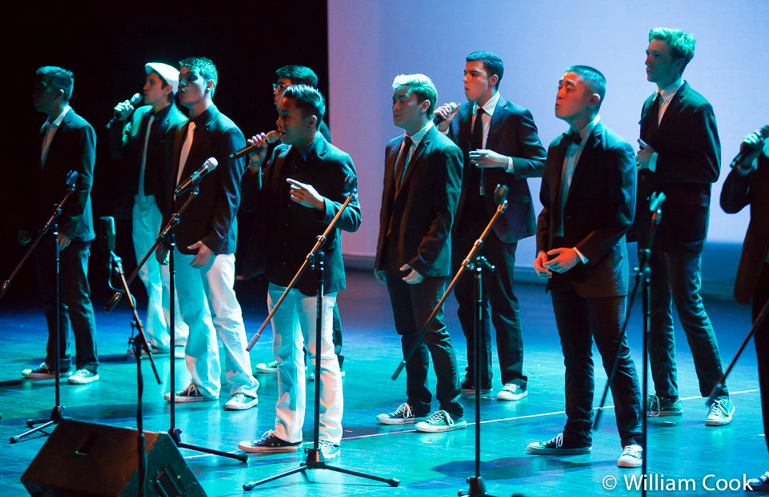
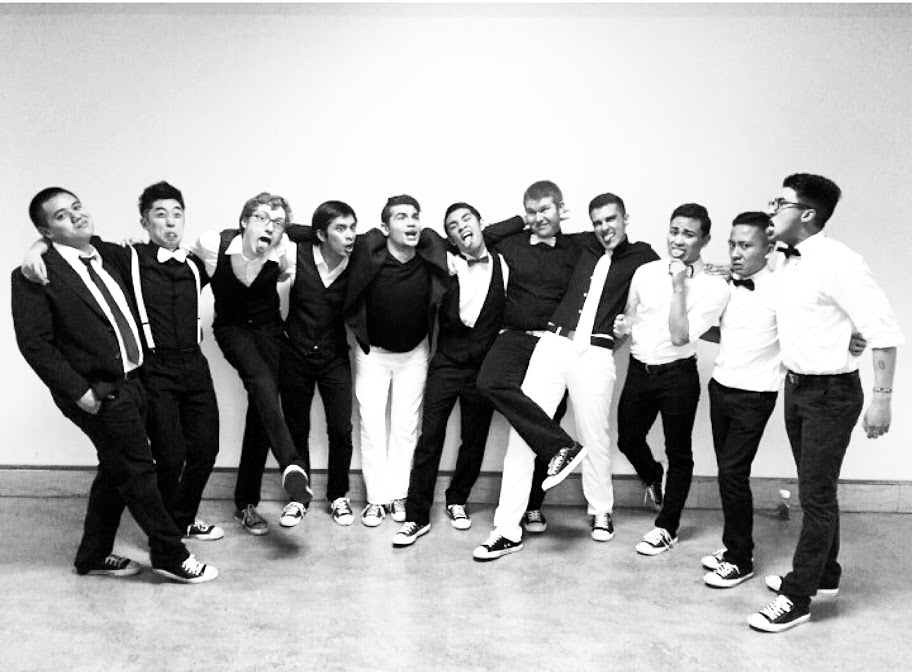
If you’ve ever dreamed of being serenaded by 13 dapper vocalists in front of all your friends, your chance has arrived. UC Davis’ all-male a cappella group, The Afterglow, will be hosting their annual Lights Low with the Afterglow (Lights Low) concert this Fri., Feb. 20.

If you’ve never been to a real-life a cappella performance before, your idea of a cappella is probably based off of the musical-stylings of the film Pitch Perfect. Third-year genetics major and president of The Afterglow, Alex Manela, said that he feels the film misses an important component of being in an a cappella ensemble.

“[Pitch Perfect] may capture the spirit and the energy of a cappella, [but it certainly does not do justice] to amount of work that goes into each performance,” Manela said.

Ian Nool, third-year psychology major and co-music director of The Afterglow, says the show this year will be musically exceptional because of all the extra practice they have put into their songs this quarter to prepare for International Championship of Collegiate A Cappella (ICCA) sectionals. In order to become ICCA-ready, the group averaged five hours a week of practice and Nool said he is confident in the outcome of their sound.

“We worked so hard for [ICCAs] and [now for Lights Low],” Nool said. “We’ve definitely bettered ourselves as musicians and performers.”

Along with their main setlist, this concert will feature intricate small group performances that will showcase individual talents in the group. According to Manela and Nool, the ensemble will also make a point to engage personally with the audience during the show.

“What’s unique about [The Afterglow] is that we really try to get to know our audience,” Nool said. “We interact with them to try to give them a really intimate experience.”

Though the Afterglow are headlining the concert, Lights Low will also feature multiple other collegiate a cappella groups from all over California. The Afterglow will welcome the California Golden Overtones, an all-female group from UC Berkeley, The Hightones from UC Santa Cruz and UC Davis’ all-female group, The Spokes.

Anya Stewart, third-year political science major and co-president of The Spokes, said that her group is always excited to perform at Lights Low.

“It’s going to be so much fun,” Stewart said. “The Afterglow really knows how to put on a show. Every year, the [entire audience] falls in love with them; all you hear by the end of the night is high-pitched [screaming] noises from the crowd.”

This year’s showcase will offer a raffle drawing in which one randomly-selected winner will be invited onstage to be serenaded by the all-male a cappella group in front of the whole audience. Raffle tickets are $1 presale and attendees are allowed to purchase as many as they want; they are also allowed to write anyone’s name on the tickets, not just their own.

“You can potentially get your friend onstage [to be serenaded] if you desire,” Nool said.

Lights Low is the first a cappella concert of Winter Quarter here at UC Davis, and Nool said he is certain anyone who attends will have an awesome time. As The Afterglow’s Facebook event page suggests, “Good music, good environment and good-looking people, what else do you need?”

Lights Low will be located in 123 Science Lecture Hall. Doors open at 8 p.m. and the show will start at 8:30 p.m. Presale tickets are $5 and are available online or at The Afterglow table in front of the MU from 10 a.m. to 2 p.m. this Tuesday thru Friday. Tickets at the door will be $10. For more information on Lights Low, you can visit their Facebook event page.

Photos courtesy by William Cook

So Ra Kim presents the power of percussion

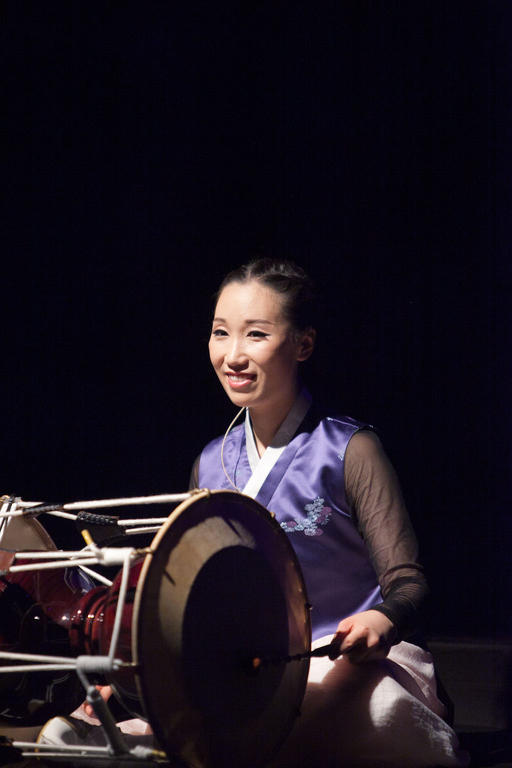
Using the power of percussion, South Korean musician So Ra Kim illustrates constellations of cultural traditions, from original beats to expressions of identity. On Feb. 20, Kim’s percussion quartet will be performing at the Mondavi Center, presenting Korean folk music in contexts both traditional and new.

Kim has practiced p’ungmul and samulnori – forms of traditional Korean percussion music and dance – since the age of 10. Both genres are rooted in Korea’s agricultural customs and are performed during peak harvest cycle times and certain holidays.

Kim specializes in playing the janggu, which is an hourglass drum integral to both p’ungmul and samulnori ensembles. Like a rhythmic compass, the janggu guides a piece through dynamic narratives.

With the janggu’s expressive versatility, Kim explained that she approaches the instrument both traditionally and creatively to showcase its musical capacity.

“Percussion is [both] very sensitive and strong,” Kim said. “I try to show the [janggu’s natural sound, which represents] rain. I also try to change emotions [while] playing janggu, because traditional Korean music has many rhythms.”

Like the heart of traditional Korean music, rhythm vitalizes pieces. Katherine Lee, assistant professor of music and director of UC Davis’ Korean percussion ensemble, stressed the important relationship between rhythm and the janggu.

“Rhythm is an important dimension of South Korean traditional music,” Lee said. “Most [genres] feature [the janggu], as it provides the rhythmic foundation for a piece.”

Kim’s husband, Seung-Hun Hyun, is also a part of the quartet. Like Kim, Hyun has practiced p’ungmul and samulnori extensively. Hyun expressed that rhythm not only allows him to connect to the piece’s structure, but also to the thoughts of past musicians.

“Traditional Korean rhythms [represent] historical emotions [of] our ancestors’ [lives] and history,” Hyun said. “[When I play], I try to understand their emotions.”

While the featured pieces preserve the music’s historical roots, some appreciate the modernized twists in Kim’s music, through the use of audiovisual components and the accompaniment of electronic music.

Kim explained that her desire to explore new ways to play the janggu came from her encounters with many contemporary musical genres.

“I lived in Chicago for one year [and] during that time, I had collaborated with many different [types of] musicians, like audiovisual composers, electronic music composers, jazz musicians, guitarists and electronic bands,” Kim said. “I [thought of] janggu [as a] very traditional instrument, so [I wanted to try] to change the style [and] make a new style [of] janggu music.”

Whether exploring traditional or modern contexts, Kim’s performance aims to unfold Korean folk music in a way that welcomes modern and universal perspectives. Lee noted that Kim’s performance will be an enlightening way for the UC Davis community to ring in the Lunar New Year, which occurs on Feb. 19.

“[The event] will be a rare chance to experience this kind of music at UC Davis,” Lee said. “I think this speaks positively about [the UC Davis community’s] appreciation for diverse cultures on campus.”

For more information about Kim’s performance, please visit https://www.mondaviarts.org/.

Photo courtesy by So Ra

Aggie Style Watch

0

Illustrated by Jennifer Wu

Can we please discuss what Rihanna wore to the Grammys? To me, bad-gal Riri’s huge, poofy, strawberry sherbet-colored ball gown was the absolute epitome of American pageantry and entertainment industry extravagance.

Love it or hate it, the 26-year-old popstar caught the attention of many critics. Some fashion-experts referred to her as “the belle of the ball” (Fashion Bomb Daily) while others made internet memes comparing her to a loofah.

Whether you think she was pretty in pink or resembled a shower accessory, you cannot deny that her dress made a statement.

All clothing makes some sort of statement; people interpret and make sense of what others are wearing within a given social context.

Let’s examine some other statements that were made on Feb. 8, the night of the 2015 Grammy awards.

Taylor Swift’s shimmery aqua gown was the perfect way to communicate her transition from a country artist to a pop artist. In past years, Swift has walked the red carpet in understated palettes of silver, cream and gold gowns. After the release of her first pure pop album, 1989 we see Swift in a louder, more show-stopping Grammy dress.

Aloe Blacc looked extremely dapper in a royal blue suit and powder-blue suede loafers which were noticeably non-traditional and full of personality.

Charli XCX challenged gender roles by sporting an all-white tux with a pink bowtie and mink shawl.

Beyoncé looked elegant in a black long-sleeved gown, though her ensemble was less daring than her usual get-ups. In my opinion, Queen Bey did not walk the red carpet dressed with as much fire and diva attitude as her music suggests she should have.

Lastly, Kanye showed up to the awards show in an all-velvet suit, which exposed his naked chest. To me, this suggests a desperate effort to regain his sex appeal and his single bad-boy persona, now that he has settled down into domestic family-life.

ALLISON REISS can be reached at arts@theaggie.org.

Graphic by Jennifer Wu

Dead Arts Society and Studio 301 to hold collaborative showcase

0

There is no doubt that competition is normal in the sports and academic world. However, there is another kind of rivalry that runs rampant on the University of California, Davis campus: the theatrical competition between the Dead Arts Society (DAS) and Studio 301 (301).

DAS was formed as a side project of 301 in 2010. DAS writes and performs their own productions. The members of the group describes DAS as relaxed and inclusive. They are open to accepting people into the club with little to no theater experience. Because of this inclusivity, this group draws many non-theater-related majors to auditions.

301 was revived in 2004 and is composed of mostly theater veterans. They generally perform published works. Due to the fact that 301 performs published works, the group is more limited to filling character roles with members who have more dramatic experience.

Since 2010, the two clubs have remained separate from one another due to their differences in the practice of theatrical performance. On Jan. 22, however, the two clubs put aside these disparities and the groups held collaborative auditions for new members.

DAS and 301 are coming together to put on a joint showcase, which will include scenes ranging from performances of original scripts, published monologues and Monty Python scenes. The show aims to perform 30 scenes in 60 minutes.

Third-year dramatic art and linguistics major Jason Moscato serves as the president of Studio 301 and is responsible for suggesting the idea of the collaboration.

“[I have taken note of the] climate of hostility between the two organizations,” Moscato said. “[I want DAS and 301] to work together in order to create a cool piece of theater.”

The president of DAS, fourth-year psychology major and theater minor Kazia Hart, was also enthusiastic about the idea of a collaborative audition.

“[I hope we] get more people from the [theatre] department involved in DAS,” Hart said. “[I also hope this creates] more love between the clubs.”

Members of the two clubs have reacted positively to the collaboration project and have enjoyed working together. Third-year cinema and technocultural studies major Alex Yeghiazarian, who is a member of DAS, hopes to be involved in the collective event and help “produce good art.”

“[We are looking past the two clubs’ differences to meet the common goal] of producing the best work we can through a common love of [theatrical performance],” Yeghiazarian said.

Rehearsals have started, but the show is still under development and the members of each group are still looking to add more acts to the performance. DAS and 301 look forward to possible collaborations in the future, but the two theater clubs will remain separate entities.

This show is tentatively set to run on April 11.

For more information, please email studio301productions@gmail.com or deadartssociety@gmail.com. You can also follow the two clubs on Facebook.


#MuslimLivesMatter

0

Three Muslim college students were fatally shot at their apartment near the University of North Carolina, Chapel Hill campus Tues., Feb. 10. Deah Shaddy Barakat, 23; Yusor Mohammad, 21; and Razan Mohammad Abu-Salha, 19, were pronounced dead at the scene. Although a police spokesperson said that the shooting was product of an ongoing parking dispute, the event has sparked a discussion about Islamophobia across the country.

The UC Davis Muslim Student Association organized a vigil Wednesday night in which several hundred students and members of the community attended on the Quad.

Additionally, Chancellor Linda P.B. Katehi sent out an email Wednesday night in which she condemned the crime.

“No matter what the motive for these murders turns out to be, we understand from recent events at UC Davis and the ugly attacks through social media on some of our own Muslim students, that Islamophobia is extremely hurtful and must not be tolerated,” she said in her email.

Regardless of the circumstances of this tragedy, it is important to acknowledge that Islamophobia is a severely overlooked problem on our campus and greater community in general. We should work to maintain the inclusivity on our campus and to be mindful of the diversity of our student body and the right to feel safe at all times. We would like to reiterate that there is no place for hate on this campus, and we offer our deepest condolences to the family and friends of these victims.

Graphic by Jennifer Wu


Guest Submission: Response to “ The UCD Files: Not a Sports School?”

0

Two weeks ago, The Aggie ran an article (“The UCD Files: Not a Sports School?”) that was deeply disappointing.  The columnist poses and answers the question “Given a choice between being good at sports and bad at sports, should we be good at sports?”  In doing so, he reduces the controversy surrounding collegiate athletics to nothing.  What needs to be addressed are the costs of being a big-time sports school.

The first cost is declining academic standards. Since Chancellor Katehi began pushing for a bigger sports program, the SAT scores and high school GPAs of entering student athletes have declined substantially compared to non-athletes. That report, by UC Davis’s Institutional Analysis Student Research and Information, also notes that the percentage of athletes admitted by exception spiked to 11 percent in 2010 and 15 percent in 2011 (data only extends through 2013). I want my degree to mean something when I graduate and that won’t happen if we have the reputation of University of North Carolina or if the NCAA extends its investigation of academic misconduct to us. This doesn’t just apply to non-athletes; it applies to athletes as well. Our student-athletes are students first, and the primary responsibility of this university is to prepare them for successful careers, not use their names, images and likeness to profit from their athletic achievements.

The second cost is increased sexual assault.  When big-time sports are prevalent and “high school phenoms” are “way cooler than us,” it creates a mentality in football and men’s basketball that they can take what they want – even when that means other people.  It’s not a coincidence that large NCAA football (i.e., Vanderbilt, Naval Academy, Montana) and basketball (i.e., Oregon) teams are constantly under investigation for sexual assault, that Blue Mountain State was produced or that the NCAA was pressured to issue a handbook on how to handle sexual assault. Less important, but still significant, is that UC Davis provides a unique ability to befriend D1 athletes and see them as your equals.  Big-time athletics removes that.

The third cost is the opportunity cost. Big-time athletics requires paying teams to train and travel, and paying coaches large salaries and bonuses for performance.  Despite the NCAA (“The Empirical Effects of Collegiate Athletics: An Interim Report”) finding that there is no correlation between spending more on athletics and winning more and that increasing coach salaries has no correlation with winning or increased revenue, according to UC Davis’ EADA reports, ICA’s expenses have continuously climbed since UC Davis moved to D1. Students contribute $18 million annually to ICA’s budget, and the question of whether this allocation is the best use of student fees must be considered.

In short, students should not look at our basketball team’s ESPN games and tout that they want more without carefully considering that those games come at a high cost to our athletes, our students and our school.

Graphic by Jennifer Wu

Sustainability in the built environment: The California drought – a nationwide problem

0

lundheadshot_opIt’s now the middle of February and the city of Davis has had less than 10 days of rain this month. This fact is both troubling and sad. Our water supplies are running low. Most of the state – 82 percent to be exact – is considered to be in extreme drought. What does this mean for the state’s water future? How does California’s water drought affect the entire nation? And what does a drought mean with respect to our future as individuals? The general answer to solve the drought problem is implementation on all types of scales, from small-scale water use in houses all the way up to reducing agricultural and industrial waste.

The California drought initially put a toll on state and local governments to allocate more time and money to water resource projects. However, these investments are lagging, and the money and time allocated by the respective governments aren’t enough to fight the increasing shortage of water. One main problem is the water infrastructure. Take for example, the Los Angeles Sunset Blvd rupture this past July. Over 29 million gallons of water were wasted due to outdated and non-maintained infrastructure.

When trying to solve the drought problem one might look at the past California drought crisis. The last big drought in California occurred from the late ’80s into the early ’90s (however, the current drought is much more severe). Southern California agencies paid over $10 billion to specifically combat the effects of the drought. Obviously, without that capital, the situation would have been much more troubling. Currently, California is combatting the drought problem by pumping more groundwater. Unfortunately, this is not a permanent situation — groundwater wells will dry up as surface water is less frequent. So this solution is not the best.

So how does the California drought affect the rest of the United States? The answer here is agriculture. About half of the United States’ fruits and vegetables come from California. In 2014, California lost over $1 billion in agricutlural revenue. Over 15,000 jobs were lost in the process. This affects both the national economy as well as the national food source.

The best way to combat the drought is to implement change across the entire spectrum of water use. Policy needs to be implemented on a national scale to limit large-scale and industrial use of water. Agricultural industries need laws which limit their water use without limiting production.  Also, on a smaller scale, individual houses and commercial districts must be frugal about their water use. The best solution is the implementation of a widespread philosophy — one that grounds the importance of water use within all individuals. Once we realize how important our water is, only then we can start combatting the drought on a large scale.

BRENT LUND can be contacted at brlund@ucdavis.edu.

Graphic by CA Aggie Graphic Design Team

Photo by CA Aggie Photo Team

Flick Chick: The Oscar Push

0

defazioheadshot_opIt’s the most wonderful time of the year! The Academy Awards are this Sunday. So print out your predictions sheet, place your bets and go over to your favorite aunt’s house for four hours of regulated praise of Hollywood’s most notable, white (literally, every nominated actor and actress is white), and recently overlooked actors and directors. You have seen all the nominees for best picture, right? Birdman, Boyhood, Whiplash, American Sniper, The Grand Budapest Hotel, Selma, The Imitation Game and The Theory of Everything? Oh, come on now.

You really haven’t seen them all?

Oh. Maybe next year.

There is such a pressure to intellectually watch and comment on the Oscars. We feel as if we’ve wasted the entire year on binge watching “Gilmore Girls” on Netflix and rewatching old Disney Channel movies. We have to make up for our immaturity. We’re adults now — we watch the Oscars for the content rather than on who is dressed best. These nominations are thrust upon us in early January and are constantly nagging at us to get on it, watch these movies, have an opinion. As my aunt calls it, this is known as “the Oscar Push.”

We’re college students — why would we do this to ourselves? It’s midterm season (constantly) and we put another deadline on ourselves, as if we get off on being stressed. This year, so far, I’ve only seen three movies that are nominated. Three! This time last year I had already immersed myself in film critique and culture, and had already put myself on a pedestal for maybe almost being done. I love my movies, I love putting deadlines on myself, but stepping away from this time of year and taking my mental and physical health into account shows that no, I can’t take the time out to see Theory of Everything just yet with my two papers, quiz, and midterm on the horizon.

But that won’t stop me from trying. I’ve seen The Grand Budapest Hotel, The Imitation Game, and Birdman, all of which are works of art on their own and in different ways. Budapest was beautifully imagined and translated a story of wealth and justice into the minds of viewers with fantastical chase scenes and characters. Imitation brought to light a previously shrouded element of the winning of World War II with amazing acting and adapted plotline. Birdman took the glory of fame into its barest bones through magical realism, where a man struggles with mental illness, family concerns and reliving the glory days, all through two hours of what was edited to seem as one whole shot.

I am in no way a credible movie critic, I have no authority over what is a good film or not to the Academy and I am not able to influence the panel of privileged Hollywoodites to pick my favorite. And so I will not tell you which movie I find to be worthy of 2015’s Best Picture.

Despite its faults, I love this game. The anticipation, the suspense and the bragging rights I get after watching all the nominees make all the stress worth it. As someone who has way too high of expectations for myself, I can’t get enough. I love reasons to stress myself out. It’s exciting to see your favorite movie crew get what it deserves and be especially grateful in their acceptance speech as you cry at home. I’ll admit it, I haven’t seen all the nominees this year yet. I still have five days — that’s like a movie a day! I’ve done more. Last year I watched Wolf of Wall Street half an hour before the Oscars started. I’m a pro.

Though the Oscars should have little credibility in claiming what is a good or bad movie, I still love the built-in challenge it gives me every winter. The event is exciting, gives me a real purpose in life, and I get to spend my free time watching movies for a “purpose” rather than just to procrastinate. I have to distract myself from reality somehow, right?

Let me know, seriously, what you think of this year’s Best Picture Nominees! My family is tired of hearing it. Contact me on Twitter @emdefaz10 or by email at endefazio@ucdavis.edu.

Graphic by CA Aggie Graphic Design Team

Photo by CA Aggie Photo Team

A day in the life of a UC Davis ROTC student

0


ROTC_fe_Alcala2

Scattered in the tall grass, cadets squat around a fallen comrade, assessing his injuries. Others meticulously plan the group’s next mission. For UC Davis’ Reserve Officers Training Corps (ROTC) cadets, this is a typical Wednesday.

Dating back to 1923, the UC Davis ROTC prepares cadets to lead other soldiers as future Army officers. The program currently serves about 50 students, representing a wide variety of ages and majors.

“I think it’s a great program,” said third-year ROTC cadet and political science major Bryan Valladeres. “If you put a lot of time into it, if you do what you have to get done, the results are worth it.

The first two years of the program allow cadets to try out the military without any obligation to join. After participating in the third and fourth years, cadets have a four-year Army obligation and can serve as second lieutenant officers.

“The program is led by the cadets,” said Gary Suen, ROTC Recruiting Operations Officer. “We have instructors here that guide them along the way, but out in the lab, it’s the cadets that are leading. The seniors lead the juniors, the juniors will mentor the sophomores, and the sophomores will mentor the freshmen.”

The program requires an average of six hours per week for first and second years, and an average of eight to 12 hours for third and fourth years. Cadets participate in Physical Training (PT), Field Training Excercises (FTX) and military science classes (MSC).

PT classes, held three times a week, involve running, push-ups, pull-ups and other training activities. FTX, a weekly lab, alternates between planning and executing missions. Exercises involve land navigation, practicing raids and ambushes, tactics maneuvering, reacting to contact, clearing out bunkers and carrying out planned and rehearsed missions. During MSC, cadets learn tactics which they are able to apply during the next FTX. Squad classes also take place over the weekend, in which cadets instruct younger cadets and prepare them for the following week.

“Sometimes it’s hard balancing out ROTC [and] academic life, because you’re still in college, and still on top of that trying to keep a social life,” Valladeres said. “You definitely have to make sure you have really good time management. But, I feel like everything in life kind of combines, so if you’re excelling in ROTC, you’re going to excel in your academic career.”

All cadets are expected to meet the program requirements in addition to academics and extracurricular activities.

“It’s really hard now because of my job at ROTC, I have to balance this, I’m also on the equestrian team and I’m obviously a full-time student,” said second-year ROTC cadet and history major Paulina Montgomery. “I’m just trying to balance everything, and still be good at everything.”

While the program is challenging, cadets say they enjoy the bonds they build through participating in it.

“I’m not going to say the program’s easy, because it’s not. Getting up at five in the morning is not really ideal, but it definitely has its perks,” Valladeres said. “In this program, you go through a lot, but while you’re going through a lot of this, you meet people who are going through the same thing and you really develop a bond. There’s also a feeling you get, of self-service, that you’re doing this not just for you, but eventually you’ll have the opportunity of serving your country and being a part of something bigger than just yourself.”

Montgomery agreed with Valladeres, saying that the program has allowed her community of friends to grow significantly.

“The best part is definitely the family and the camaraderie we build,” Montgomery said. “I feel like I can rely on anyone. And they also push you outside your comfort zone to achieve things you’d never think you’d be capable of doing. I’ve definitely become more confident in myself, in what I’m doing.”

Both Valladeres and Montgomery joined the ROTC with a four-year scholarship. The scholarship is available to prospective cadets coming straight out of high school and covers either tuition or room and board. Textbooks are covered by a monthly check, and recipients of the merit-based scholarship are paid in stipends of $300 to $500 per month, based off their year in school. At the end of the program, Cadets typically take one of two routes.

According to Suen, they can serve in the active duty army, with an obligation of four years of service, or many cadets opt to enter the US Army reserves and the Army National Guard.

“They serve one weekend [per] month and two weeks [per] year [and] two weeks in the summer. It’s almost like a part-time job for the Army, and they’ll continue on, either doing their education, or they’ll find a job in the normal civilian world,” Suen said.

After graduation, Valladeres plans to spend a couple of years in the infantry before going to law school and becoming a judge advocate general. Montgomery said she would like to commission as an Army second lieutenant, and complete at least 10-15 years in the Army before deciding whether she’d like to spend the rest of her career in the military or not. Both agreed the program has given them skills essential for any career choice.

“This program teaches cadets how to lead in very stressful simulated combat environments, doing challenges they haven’t done before,” Suen said. “Whether they go into infantry or a normal job, they’re going to evaluate leadership potential, and if they can handle this, then they can handle simple things like deadlines.”

Photos by CA Aggie Photo Team

Congregation Bet Haverim hosts end-of-life workshop

0

On Sunday, Congregation Bet Haverim hosted a “Five Wishes” workshop on end-of-life wishes at their Social Hall, located at 1715 Anderson Road.

This workshop is meant to give individuals, 18 years or older, the opportunity to create “the first living will with a heart and soul,” according to the Five Wishes workbook. Five Wishes accounts for not only the physical, but also the personal, emotional and spiritual needs that a person has as they near death.

Rosanne Mandel, the host of the Five Wishes workshop, explains that she decided to host the event because she appreciates Five Wishes’ approach and desires that her family had, had the same options when her mother was passing away.

“I’m hoping we can help people avoid going through the confusion that my family and I went through,” Mandel said.

Cynthia Wolff, the director of community education at Yolo Hospice, who has been a hospice nurse for 15 years and a nurse for 35 years, spoke at the workshop. She said that Five Wishes is “an advanced care-planning tool.”

Much debate surrounds end-of-life options following the case of Brittany Maynard, a 29-year-old terminally ill patient from California, diagnosed with a brain tumor, who moved to Oregon in order to partake in the Death with Dignity approach. The Death with Dignity bill states that adults with a terminal illness can choose to end their lives with the help of medical staff.

Senate bill (SB) 128, introduced on Jan. 20 by Senator Lois Wolk (D) and Senator William W. Monning (D), allows California residents who have been diagnosed with a terminal illness, are 18 years or older and have been evaluated as being medically competent, to qualify for what some call an “end-of-life option” and opponents define as “assisted suicide.”

SB 128 was a response to Maynard’s predicament, which attracted much media attention.

Monica Schmalenberger, a legislative aid under Senator Wolk, relayed Wolk’s views. She said that California legislators have introduced similar bills on seven occasions, the most recent being in 2007.

“We really feel like this sentiment towards [legislation such as the Death with Dignity bill] in California has changed since 2007 and California is ready for this bill,” Schmalenberger said.

However, SB 128 has also raised some concerns.

Dr. Aaron Kheriaty, the associate professor of psychiatry at the University of California, Irvine School of Medicine, explains that the Death with Dignity bill is problematic.

“The idea of suicide…contradicts the physician’s duty to [use] our knowledge and our skills for [the purpose of] healing, to support the life that patients have and to never directly aim at killing the patient…they need encouragement rather than help killing themselves,” Kheriaty said.

Schmalenberger refuted the claim that the Death with Dignity bill is “suicide.”

In reference to Maynard, she stated that the Death with Dignity bill “is not suicide” but is “an end-of-life option for patients that have already been given a death sentence due to their terminal illness.”

Kheriaty disagreed.

“Suicide is not defined by the means that people use, it’s defined by what kind of act it is — the act of deliberately ending one’s life,” Kheriaty said.

He argued that there are better alternatives to “assisted suicide.”

“A hospice offers people medical, psychological and social care in the last stage of their life… [We need to help] people understand that palliative care has been developed to provide highly effective ways to help people be comfortable in their last days,” Kheriaty said.

Wolff agreed that “assisted suicide” is not the answer.

“I am biased because…in my opinion and with the experience that I have had, a hospice can get that patient to the comfort stage where they’re not in pain and their symptoms are not causing them this distress.”

Amongst the controversy surrounding the SB 128, Five Wishes is one end-of-life option that Wolff pointed to.

The five wishes in the workbook are as follows: The Person I Want to Make Care Decisions for Me When I Can’t, The Kind of Medical Treatment I Want or Don’t Want, How Comfortable I Want to Be, How I Want People to Treat Me and What I Want My Loved Ones to Know.

The first two, Wolff explains, are concerned with legal factors, while the last three emphasize emotional and spiritual needs.

Wolff said that the heart behind Five Wishes is advanced care planning.

“[It] is so essential for people because what happens is people make decisions when they’re at a crisis point and that’s what we want to prevent,” Wolff said. “Care-planning prevents people from having to make a decision when they don’t know what the right decision is.”

Graphic by Jennifer Wu


News in Brief: CommuniCare Health Centers holds fifthannual diaper drive

0

CommuniCare Health Centers held its Fifth Annual Diaper Drive on Friday in Davis from 8 a.m. to 5 p.m. at the Davis Community Clinic.

The purpose behind the event was to accumulate enough diapers to provide one month of supplies for each newborn whose mother is a patient at the Davis Community Clinic. Through the diaper drive and the resulting donations, CommuniCare Health Centers seek to relieve the some of the costs associated with purchasing diapers for a newborn.

“Community support has been really good. People bring diapers and they also have written checks for us so it has been a really great community effort and makes a difference for people,” said Jean Mackin, the prenatal program administrator at the CommuniCare Health Center.

Mackin explained that once people drop off their donations, the diapers are then distributed to the mothers who are patients at the clinic. She said that it is the goal of the clinic to provide each mother with at least one box of diapers to help jump start their journey into motherhood.

According to Mackin, about 580 mothers give birth at the clinic each year, and providing for all of them is a “hardy goal” — as a newborn can use up to 200 diapers a month, averaging out to at least one large box of diapers per month.

“Families are very appreciative,” Mackin said. “[Patients] come back after their babies have been born and ask for more diapers.”

Kristie Elfen, a new grandmother, expressed her support for the event and revealed how a newborn goes through diapers quite quickly. Supplying the mother with diapers has a positive financial impact on new mothers.

Ashley Delain, a new mother, said her newborn child tends to go through diapers quite quickly and she prefers to use cloth diapers instead of disposable ones.

“I think that [cloth diapers] tend to be more environmentally friendly,” Delain said.

Although she uses cloth diapers she said her newborn is growing quite quickly and supplying her child with diapers has been challenging financially.

Although the Fifth Annual Diaper Drive event is now over, the Davis Community Clinic, located at 2051 John Jones Road, accepts donations all year.

Graphic by Jennifer Wu