60.8 F
Davis

Davis, California

Wednesday, December 24, 2025
Home Blog Page 816

First sighting of Sierra Nevada red fox in Yosemite National Park after almost a century

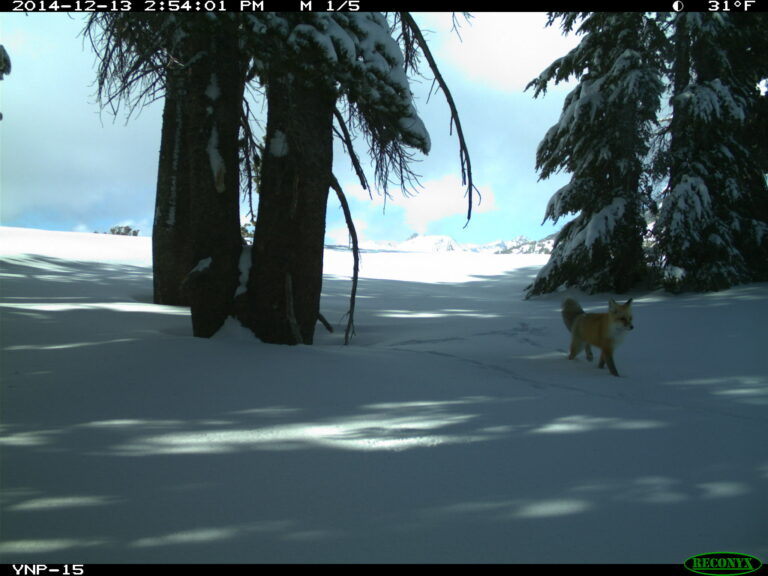
The Sierra Nevada red fox, a state endangered species, was documented for the first time in a century inside the boundaries of Yosemite National Park. A motion sensitive camera captured the sighting on Dec. 13, 2014 and Jan. 4, 2015 in a northern region of the park.

The last documentation of the species was in 1915, almost a century before these two sightings. Park officials have yet to confirm if the same fox was sighted twice or if it was two different foxes.

“It’s been the first time after a hundred years that it’s been seen, so we don’t know the population [in Yosemite National Park]. We know that seeing a red fox in Yosemite hasn’t been documented since 1915,” said Kari Cobb, Yosemite National Park public affair specialist.

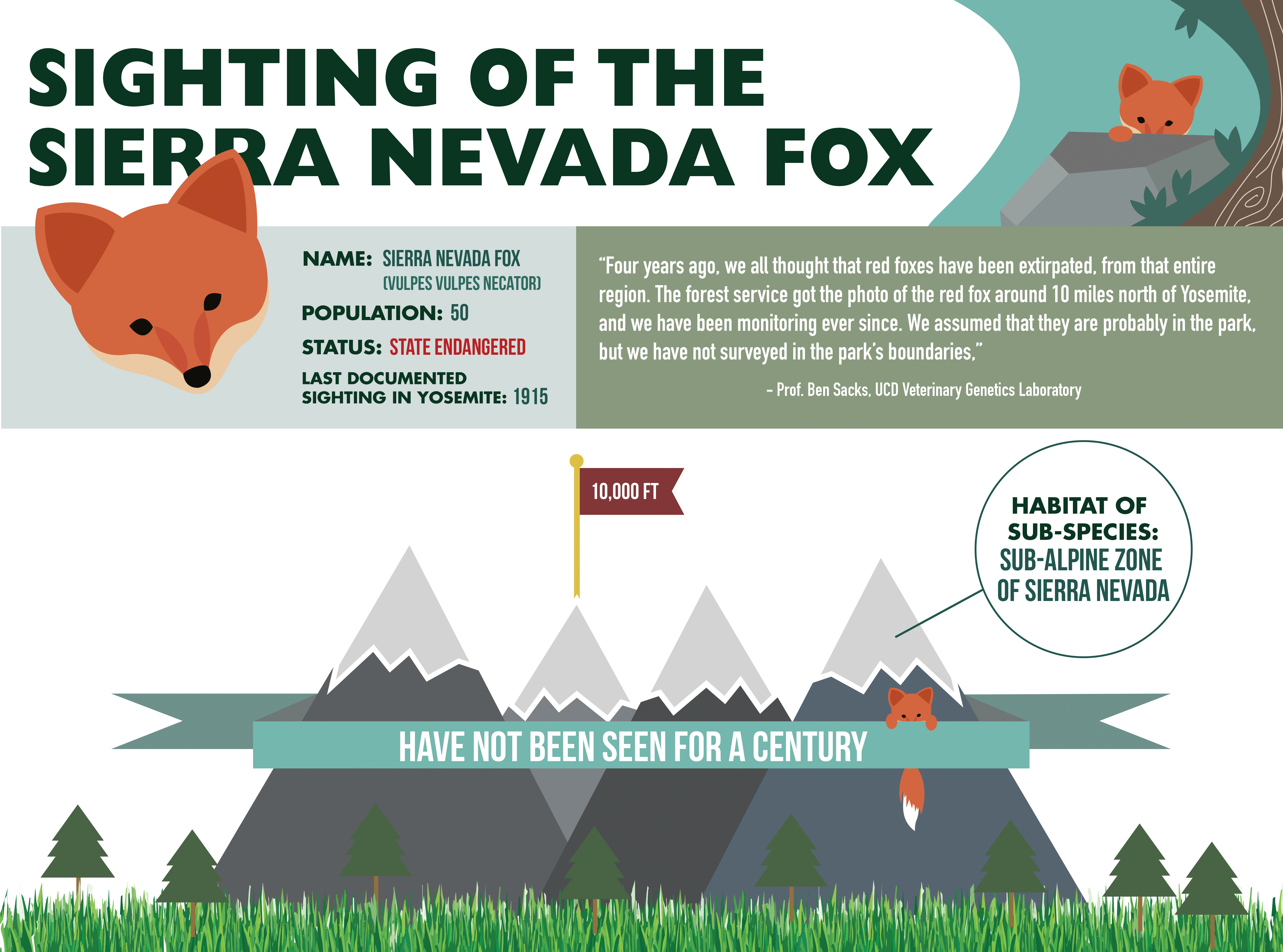
According to Ben Sacks, a professor at the UC Davis Veterinary Genetics Laboratory, there are estimated to be fewer than 50 Sierra Nevada Red foxes in California. Although the species’ biological status is not entirely known, it is listed in the California Department of Fish and Wildlife as endangered on the state level. There is currently a petition to include the fox in the Endangered Species Act and declare it as endangered on a federal level. The petition is currently under review and the decision is expected to come later this year.

Prior to these sightings, scientists believed that the Sierra Nevada red fox had been completely extinct from the Sierra Nevada region. However, this was disproved by a 2010 sighting of the fox 10 miles from the northern boundary of Yosemite National Park.

“Four years ago, we all thought that red foxes [had] been extirpated from that entire region. The forest service got the photo of the red fox around 10 miles north of Yosemite, and we have been monitoring ever since. We assumed that they are probably in the park, but we have not surveyed in the park’s boundaries,” Sacks said.
foxinfographic-revise

There are numerous studies being conducted in the area in relation to the Sierra Nevada red fox. A UC Davis ecology graduate student, Catherine Quinn, currently leads one of these studies. Her research focuses on the size and overall health of the Sierra Nevada red fox population and factors that limit the population’s growth.

“At this point, [the limiting factors are] unknown. There are many hypotheses, but no evidence that put one over another… We don’t have a lot of historical baseline information,” Quinn said.

According to Sacks, those hypotheses include the common practice of trapping the foxes in the early 20th century, cattle grazing and impact from change in forestry practices.

“All of these things can potentially affect [the population]. Changes in forestry practices could have increased habitat for coyotes, which is a larger competitor of the red fox. That could’ve contributed to the decrease in their numbers. And of course, climate change …[can] reduce the amount of the snow in the Alpine zone,” Sacks said.

According to Sacks, the fox tends to be found in the sub-Alpine zones of both the Sierra Nevada and the Southern Cascade mountains, and their elevation depends on latitude. Near Yosemite National Park, the fox is found at a latitude of 10,000 feet. Officials at the national park are not currently disclosing the exact location of the recent fox sightings to protect the species.

There is currently no active effort to restore the population. This is due to the fact that the factors limiting the population growth are largely unknown. According to Quinn, the California Department of Fish and Wildlife is conducting a study to understand the population status and the limiting factors of its population growth.

Yosemite National Park is committed to contribute to any restoration effort by conserving the natural habitat of the species.

“We basically leave everything in its natural state. We strive not to have an impact on the resources, and we strive to increase the population of things such as the red fox through the natural conservation of the park itself. We conserve the natural resources [and] we provide adequate habitat for the red fox to essentially survive in,” Cobb said.

The motion camera, which captured footage of the fox, is one of the many cameras installed in the park for a study funded by the Yosemite Conservancy. Those involved in the study also installed a “hair-sample trap” near the cameras. The trap is meant to collect hair samples, as the name suggests, and is a fence made of barbed wire. Researchers later conduct DNA analysis on the samples. The nonprofit organization has funded other studies conducted in the park.

Scientists and officials hope that the sighting of the fox can bring awareness and, consequently, funding for more studies on the species.

“We hope this will bring some attention to the park’s species, and hopefully some funding…so that we can learn more about what factors are limiting the species both in and outside the park,” Sacks said.

Photo by NPS Photo

Graphic by Jennifer Wu
News in Brief: UC Davis Medical Center prepared to treat Ebola

0

On the morning of Jan. 29, a patient thought to potentially have the Ebola virus was transferred from Sacramento’s Mercy General Hospital to the UC Davis Medical Center in Sacramento. While the patient ultimately tested negative for Ebola, the patient was said to have had symptoms consistent with Ebola and had recently traveled to a country affected by Ebola.

According to Laura McCasland, spokeswoman for the Sacramento County Public Health Department, the patient was kept at the UC Davis Medical Center while the testing for Ebola was conducted at the Sacramento County Public Health lab. The test took about 8 hours to complete.

While waiting for the results of the test, the UC Davis Medical Center team kept the patient in an isolated room to prevent the spread of potential disease.

Although the patient ended up testing negative for Ebola, the situation showed the preparation of those at the UC Davis Medical Center.

“The entire practice, from the beginning to end, went well, due to the extensive planning and preparation between Sacramento County Public Health, UC Davis, the California Department of Public Health and the Centers for Disease Control,” McCasland said.

In December, the UC Davis Medical Center was designated as one of 35 hospitals in the U.S. as Ebola treatment centers, and one of eight sites in California. Dr. J. Douglas Kirk, chief medical officer of UC Davis Medical Center. says that the UC Davis Medical Center had undergone extensive training and created procedures to deal with the possibility of Ebola.

“UC Davis Health System has been closely monitoring information about the Ebola outbreak in Africa and developments in the U.S. and the Sacramento region since late last summer,” Kirk said. “Our care teams have been preparing for months to develop the safest and most effective response to the Ebola virus.”

Earlier this year, the federal Centers for Disease Control and Prevention, as well as state and local public health officials, visited the UC Davis Medical Center to assess its preparedness to treat Ebola. This visit included evaluations of staff training, infection control and personal protective equipment use.

“UC Davis Medical Center has established a reputation for stepping up to meet health-care challenges,” said Kirk. “Responding to public-health threats is nothing new for us. UC Davis is well prepared for whatever comes our way.”

News in Brief: Sacramento Police Department Chief of Police makes surprise visit to writing class

0

special_ca

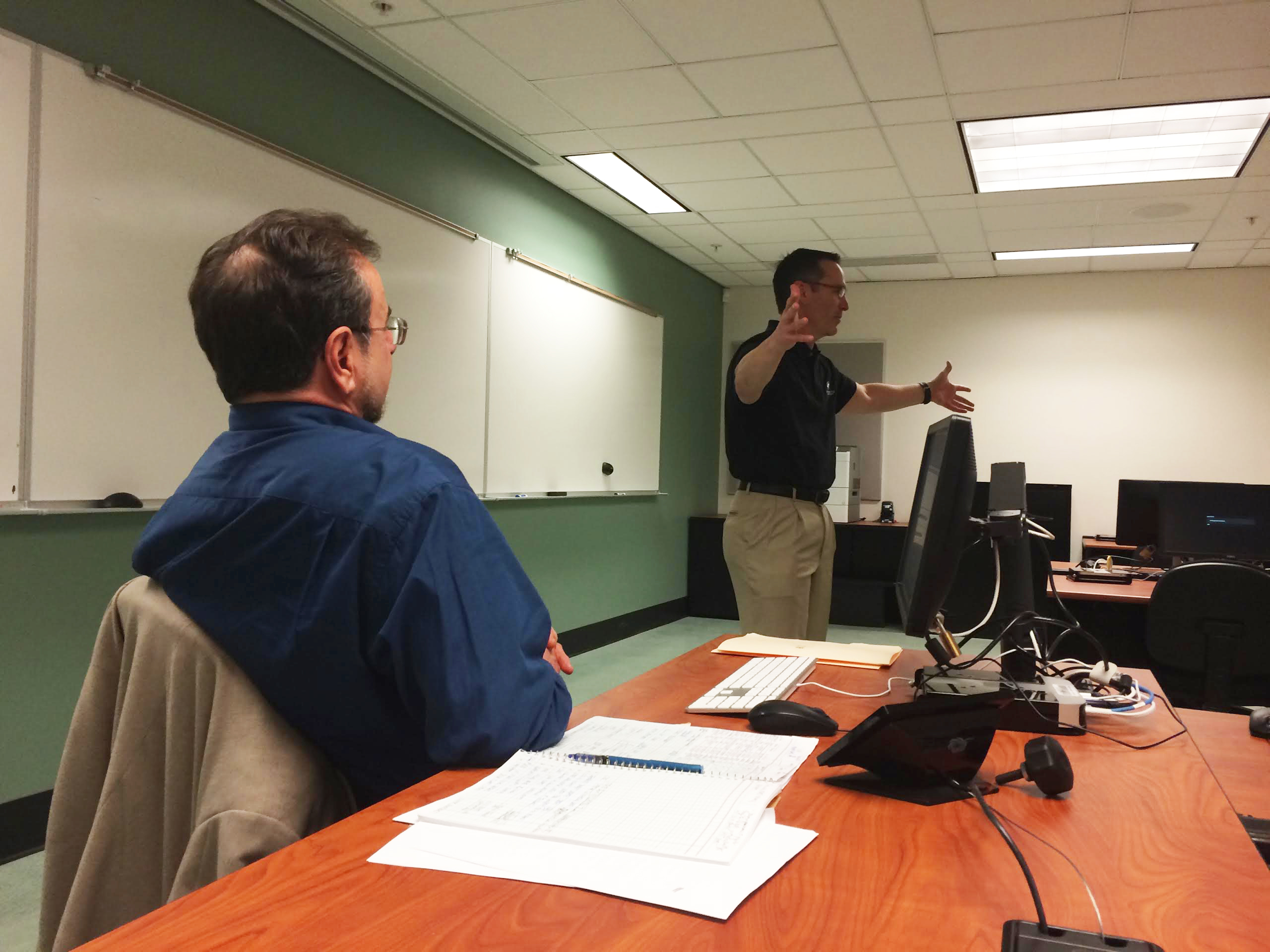
Students fervently jot down clues in their reporter notebooks as their mystery guest speaker answers questions in the University Writing Program (UWP) 111B Investigative Journalism class on Wednesday. They are determined to crack the case.

The Chief of Police from the Sacramento Police Department (SPD), Samuel D. Somers Jr. spoke to the students in a press conference style from 6-9 p.m. in a basement Shields classroom discussing topics among which included the decrease in Sacramento crime rates, the effect of technology on criminals and the police, gun control and mental health in the police force.

“You can’t arrest away a problem,” Chief Somers said in response to a student question on the transient/homeless community in Sacramento, which has seen an increase in recent years.

During his talk Somers shared his career path as a police officer. He was promoted to Chief of Police of the SPD in Feb. 2013. He has served in the police force for 31 years beginning his career as a Field Training Officer in January 1985. He graduated with a B.A. in communications from Sacramento State, later graduating with a  Masters from California State University, Long Beach. Chief Somers has been involved with SWAT assignments, Internal management, teaching, and served as the Director of Homeland Security for the Urban Area Security Initiative (UASI) for the Sacramento Region. He also has three daughters, one of which is a Journalism major at California State University, Chico.

The Investigative Journalism class is taught by lecturer Stephen Magagnini, a longtime writer for The Sacramento Bee who has taught journalism to college students since 1988.

Chief Somers closed the three-hour dialogue listing the many diverse opportunities that working for the SPD offers — be it in the media, management, technology, public relations and generally serving the greater Sacramento community.

Photo by Anisa Bashiri

Police Brief: Week of 1/30-2/4

policebriefs-page-001


Our little town of Davis never sleeps, and the Davis Police Department is there to keep the peace. The following is the most entertaining bits of police activity in Davis. It is meant to be lighthearted and all in good fun.

TUESDAY, FEB. 4:

Afternoon Nap:

Man found sleeping with an open container of alcohol in front of a bike path on 5th Street at 2:45 p.m.

Movie Phone:

Police heard male voices talking about a movie after unsuccessfully hanging up on the dispatcher.

MONDAY, FEB. 3:

This Girl is on Fire:

The subject flicked her cigarette into the face of her property manager after the subject was asked not to smoke so close to the building.

SUNDAY, JAN. 31:

Beef. It’s What’s for Dinner:

A man sold Omaha Steaks out of the trunk of his car.

Those in Glass Houses Shouldn’t Throw Stones:

A person complained that their neighbor was throwing pieces of gravel over their fence and into their yard.

SATURDAY, JAN. 30:

Monkeying Around:

Two males seen passing time on the roof of a gym on Covell Blvd.

Live to Ride, Ride to Live:

A man swerving on his bike was caught with a beer bottle in his back pocket.

Police Briefs are compiled by The City Desk Associate Editor, Sydney Cohen. She is a law-abiding resident of Davis. You can find her sampling popcorn at the Davis Farmers Market or hostessing at Paesanos on the regular.

Graphic by The CA Aggie Graphic Team

Davis competes for $5 million in national Georgetown University Energy Prize

0

Screen Shot 2015-02-13 at 11.08.06 PMThe Georgetown University Energy Prize (GUEP) announced the City of Davis as one of the 50 semi-finalists Jan. 14 in a competition that began in April of last year. The competition encourages medium-sized towns and cities to reduce energy use through creative strategies that can be implemented and sustained long-term. Participants are motivated by a $5 million incentive to engage their community and increase energy efficiency by working with local businesses and local government.

After completing an application process outlining the cities’ plans to reduce greenhouse gas emissions, GUEP announced the quarter-finalists, asking them to submit a more detailed description of their long-term plan. Now, the 50 semi-finalists from across the nation have until June 2017 to implement their strategies for increased energy efficiency.

“[The GUEP is] an opportunity to put forward a really well thought out plan for reducing greenhouse gasses. It’s an opportunity for us to do some of the work that we are interested in doing in terms of figuring out… actions that we can take as a community to reduce greenhouse gases. The planning process is really good for us no matter what the outcome is, and that’s why we are participating in [the GUEP], because it gives us an opportunity to really do some good, significant, community outreach planning,” said Davis Mayor Pro Tem, Robb Davis.

Davis adds that winning the GUEP would give the City of Davis the necessary money to implement further carbon emission reduction. This could be done through further community outreach and education.

Towns participating in the GUEP can either create a plan to reduce carbon emissions or build off of an already existing model. In 2010, the Cool Davis Initiative (CDI) was started as a way to implement strategies to combat climate change and greenhouse gas emissions. The CDI aims to engage residents and local businesses to reduce greenhouse gas emissions in Davis.

According to Nick Buxton, communications coordinator for the CDI, the GUEP encompasses many of the goals established by the CDI and adds to the city’s motivation to achieve those goals.

According to the CDI mission statement, the organization aims to “reduce carbon emissions to 15 percent below 1990 levels by 2015, achieve carbon neutrality by 2050,” and engage 75 percent of Davis households to participate in the initiative.

“We don’t have a coal plant in town or any really big industries so most of the emissions from the city come from how we live, how we work and how our houses are set up. So we look at three areas: energy, transport and consumption because those are the main ways we produce emissions….The Georgetown Energy Prize is part of our work and it galvanizes that work,” Buxton said.

The CDI partners with local businesses to improve their carbon emissions and find ways to save energy. In 2010 the Davis Commercial Food Scrap Collection Project (DCFSCP), initiated by owner of Café Italia Shar Katz, was launched as a pilot program to reduce landfill waste through composting.

According to Katz, the CDI was instrumental in getting the DCFSCP started and motivating other businesses to join. She explains that people in the community hear about these programs through hearsay and if more people are involved, others will join as well.

“Cool Davis has grown and has done a great job getting the word out there that there’s so many different avenues — be it your lights, your household, it starts there. For [Café Italia] as a business it was really interesting to see how on board our crew is. They see things, such as composting, which maybe they had never done before, and then those things can trickle into households as well,” Katz said.

According to a U.S. Census Bureau report, 18.6 percent of Davis residents commute by bike ranking the city number one in the US for percent of residents who do so.

“We’ve got a good track record,” Buxton said. “We want to win this prize and really model how to tackle energy efficiency, not just here in Davis, but in the whole country.”

Photo Courtesy of Georgetown University Energy Prize.

News In Brief: Whole Foods to host Chocolate Tasting Friday

0

gmo(Nathan Chan)

On Feb. 6 from 5-8 p.m. Whole Foods Market will be hosting the event “Valentine’s Chocolate Tasting” where the they will offer free chocolate samples. According to the event description, Melissa A. Schweisguth, a UC Davis graduate student and “chocolate guru” studying international agricultural development will be discussing “Ethical, direct trade practices.”

The event will also include a $2 wine, beer and champagne tasting. Proceeds will go to benefit the Whole Planet Foundation whose mission is to alleviate poverty through microcredit in the communities around the world that supply Whole Foods Market stores with products. Additionally, all cheeses will be 20 percent off.

Whole Foods is located at Davis Commons, 500 1st Street. For more information visit their website.

Aggie softball ready for the new season

The UC Davis women’s softball team won’t have any time to relax this season as incoming head coach Erin Thorpe begins the quest for progress. As the seventh head coach in the history of Aggie softball, Thorpe is ready to expose potential and put the team to the test as the onset of the season comes within batting distance.

“We’re going to put them through a lot of uncomfortable situations and take them out of their comfort zone,” Thorpe said. “All we can ask from them is to understand that they always have something more to give.”

Ready to take the challenge, the women of UC Davis softball head to Las Vegas on Friday to commence the softball season in the UNLV Sportco Kick-off Classic. Playing their first five games on three consecutive days, the Aggies look forward to facing teams which include nationally ranked Washington University and the University of Minnesota.

“We’re really excited to go out there and show everyone what we can do,” said  senior infielder Amy Nunez. Nunez, who was an All Big West Honorable Mention and who ranked third in the league in 2014, hopes to improve upon her .465 slugging percentage coming into this season.

Aggie softball begins this weekend, with the Aggies taking on the American Athletic Conference title holder, the University of Louisville, on Friday morning. They will face the University of Nevada, Las Vegas later that evening, followed by Washington University and the University of Minnesota in back-to-back games on Saturday. Little recovery time is given as the Aggies follow up with a match against CSU Bakersfield on Sunday.

“The biggest goal is to win conference. That’s always been the goal since I’ve been here. We’ve come close,” Nunez said, prior to the onset of the season.

The Aggies will have their first home game of the season at La Rue Field on Feb. 10, when they face-off against University of the Pacific.

Following Tuesday’s home game, the Aggies will wait until early March to compete at home once again following the San Diego Classic.

Graphic by Tiffany Choi.

Blackness without boundaries

0

For nearly half a century, Black Family Week has celebrated the rich cultural history of the African Diaspora community. This year’s 45th annual Black Family Week, which will take place from February 2-13, will include a wide variety of events that all students, regardless of their community, are welcome and encouraged to attend.

If you like to dance, there’s the Step N Stroll event, where you can learn about the history of Stepping and try out a few moves yourself. If you like to sing, you can express yourself at the Soul Speaks open mic. If you’re a film buff, there are a number of film screenings being held.

Black Family Week co-coordinator, second-year international relations major, Danielle Soba, stressed that while planning for the 12 days of programming, she and her co-coordinator wanted to include as many black organizations as possible.

“We tried to fit it into one week but I didn’t want to have six programs a day,” Soba said. “So [we] thought it would be better to spread it out over 12 days. It kind of goes with our theme of Blackness Without Boundaries too,” Soba joked.

But joking aside, Soba feels this is a powerful and important theme because it shows that her community will not be defined by stereotypical representations of what it means to be black.

“People would define black as a certain thing and it would be like ‘you’re not black enough because you don’t do this,’” Soba said. “[This theme] really resonates with me because it means I can be who I want without boundaries.”

Two events in particular from the Black Family Week focus on the importance of artistic expression. Step N Stroll will teach participants about the history of stepping, a form of dance in which the body and surrounding environment is used as an instrument of music. Soul Speaks, one of the most popular events of this week, is a night where individuals and organizations inside and outside of the African Diaspora community are given the opportunity to express themselves.

Kathleen Hinkson, a second-year Environmental Policy Analysis and Planning major and one of the coordinators of Soul Speaks, promises a fun night of singing, dancing, stepping, rapping and spoken word.

“I’ve had a chance to talk to each of the participants and they are so passionate about their performances,” Hinkson said. “I can’t thank them enough for being willing to share [their experiences] with us.”

This attitude of sharing and celebrating both differences and similarities is part of what makes a program like Black Family Week crucial for the UC Davis campus.

“Programs like BFW help students in our community feel welcomed,” Hinkson said. “There’s a low percentage of black people on campus so Soul Speaks is a way for us to see other people that look like us.”

De’Von Walker, a fourth-year sociology major and one of the organizers of the Step N Stroll event, also mentioned the importance of events like this to help students who do identify as part of the African Diaspora community feel more welcomed.

“[We have] a very rich history of using musical expression to get through the most oppressive of times,” Walker said. “Today, we are still fighting oppression [so] it is important for us to understand how our ancestors got through their obstacles.”

Walker also feels that learning about the history of stepping will emphasize the “Blackness Without Boundaries” theme.

“Understanding and learning how to step connects us to our ancestors that used the same art form. This helps to demonstrate that even the boundary of time can be broken,” Walker said.

Though much time has passed since the first Black Family Week at Davis, this year’s Black Family Week coordinators will strive to retain rich cultural ties to the past while still introducing new and exciting programming and to present a blackness that is different from stereotypical media representations, a blackness without boundaries.

To learn more about Black Family Week, check out the Facebook event page.

Courtesy photo by Black Family Week


Temple Grandin to speak at Mondavi Center

0

World-renowned animal scientist and autistic activist Temple Grandin is set to speak at the Mondavi Center on Feb. 10. Grandin, whose book, Thinking in Pictures, was selected as UC Davis’ 2014-15 Campus Community Book Project (CCBP), will be discussing issues relating to animal behavior, different kinds of thinking and autism.

Thinking in Pictures discusses Grandin’s experience with visual thinking and how she believes it is similar to the way animals think. The book was chosen for this year’s CCBP theme of disability.

“I didn’t know, when I was young, that most people didn’t think in pictures the way I did,” Grandin said. “Visual thinking is kind of like continual. When I think about stuff or when I describe stuff – like a cattle-hand facility I designed – I see it in my mind. I can walk through it. And when I design a facility, when I do all the drawings, I can actually see the finished product in my mind. I used to think everybody could do that.”

Although Grandin describes herself as a visual thinker, she also praises different kinds of thinking, including mathematical and verbal types of thought processes. One topic she plans on discussing during her talk is about the different ways to problem solve and how the world can function better if these distinct methods of thinking worked collaboratively.

“One of the things you have on the autism spectrum is uneven skills,” Grandin said. “Like I [have an artistic] kind of mind. [A] designer. Another person might be great at computer programs and engineering. Another person might be good at writing. I want to build on their area of strengths.”

In addition to different ways of thinking, Grandin also plans on discussing her experience with autism. Although Grandin found it difficult to take direction as a student and early in her scientific career, she encourages autistic students to learn how to compromise in the work place. She recounts one of her first design experiences that caused her to deal with this difficulty.

“One of my first projects was for a beauty shop. Well, I didn’t put horses and Star Trek on the sign [like I wanted to]. I had to make a sign that a beauty shop would want,” Grandin said. “[A] UFO? I don’t think they’re going to want the Area 51 beauty shop!”

Mikael Villalobos, CCBP director, praises Grandin’s book for its important themes concerning diversity and he encourages students to attend her talk to gain insight into the way the world’s diverse society works.

“Listening to Temple Grandin speak is just one aspect [that will help to] solidify community-building opportunities [at UC Davis],” Villalobos said. “Part of the diverse experience for students is to find ways to listen to other’s experiences. That’s why it’s important to look at opportunities and listen to speakers informing us on how they view the world; [it helps us to] gain perspectives on things we’ve never thought of before.”

David Amaral, director of research at UC Davis’ MIND institute, praises Grandin’s career as an example of success regardless of mental disability.

“[Grandin] is an inspiration to all families; [she proves that parents] do not need to accept a lifelong sentence of disability for their child with autism spectrum disorder,” Amaral said. “Temple Grandin is a testimony to hope.”

Grandin is currently a distinguished professor of animal science at Colorado State University. She built her career on designing livestock facilities based on natural animal behavior that promotes the humane treatment of animals. In 2010, Grandin was named one of Time 100’s one hundred most influential heroes in the world.

“I want people to realize that there are different ways you can think about things. Don’t get tangled up in a label like autism,” Grandin said. “Let’s look at what a person can do. Not what they can’t do. What they can do.”

Temple Grandin will be speaking and attending a Q&A session at UC Davis’ Mondavi Center on Feb. 10 at 8 p.m. Tickets start at $39 and can be purchased online at mondaviarts.org or by phone by calling 530-754-2787.

Letter of solidarity with AEPi from the University of La Verne

0

We are writing to condemn in the strongest terms possible the spray painting of swastikas on the Alpha Epsilon Pi (AEPi) house across from the University of California, Davis campus this past Saturday, January 31. We commend Chancellor Linda Katehi, Executive Vice Chancellor Ralph Hexler and Vice Chancellor for Student Affairs Adela de la Torre for denouncing this Anti-Semitic act and we agree with them that this kind of behavior cannot be tolerated on any campus, against any group.  These acts are offensive not only to the group targeted, but to all who abhor and reject the kind of hate and violence that this symbol represents.  We were pleased as well to see that Students for Justice in Palestine, the Muslim Student Association, the Arab Student Union, M.E.Ch.A, the Black Student Union, ASUCD and several other organizations condemned the act and urged that the vandals who perpetrated this act be prosecuted to the fullest extent of the law. Regardless of what one’s position is on Palestine, there is no place for these expressions of hate and intolerance in the debate. Regardless of the frequency of these cowardly and hateful acts, it is vitally important to respond publicly, collectively and forcefully when they do occur.

The swastika and what it represents, and other acts of hatred toward Jews, are an affront to all of us, not just Jews.  We can never feel completely safe, but if we feel unsafe, it should not be because of our appearance, ethnicity, surname or religious and other beliefs.  We stand in solidarity with the members of AEPi, other members of UC, Davis Jewish community and anyone who denounces unequivocally these hateful and loathsome acts.

Sincerely,

Héctor L. Delgado, Professor, Sociology

Roberto Catalano, Professor, Music

David Flaten, Professor, Theatre Arts

Michael Frantz, Professor, Mathematics

Randy Gratz, Public School Administrator

Reed Gratz, Professor, Music

Clive Houston-Brown, University Administrator

Jay Jones, Professor, Biology

Jeffrey Kahan, Professor, English

George Keeler, Professor, Communications

Kevin Marshall, Professor, College of Law

Carol Stephenson, Professor, Music

Zandra Wagoner, University Chaplain

Raffi Zinzalian, Graphics


Graphic by Jennifer Wu

UC Student Workers Union Letter of Support for Divestment

0

Dear Students at the University of California, Davis:

The Davis Unit of UAW 2865 would like to extend our congratulations and joy to Students for Justice in Palestine (SJP) and the undergraduate ASUCD senators who voted Thursday night to support UC Davis’ divestment from war profiteering companies in Palestine. Davis joins six other UC campuses in this landmark ruling, which demands that the administration divest from companies including Raytheon, G4s, Veolia and Caterpillar. These corporations reap lucrative benefits by directly contributing to war crimes in Palestine; as such, UC investment in them directly contradicts the University’s stated commitments to upholding human rights nationally and internationally.

We, as graduate students, are immensely proud to have had the opportunity to stand in solidarity with you. We write to encourage you to remember, despite what the opposition may claim, that you have done the right thing. As teachers, we acknowledge that while confronting opinions that challenge your own can be painful, it is an important part of the educational experience of higher learning. We suggest, with humility, that the harm suffered by those being confronted with opinions that challenge their own pales in comparison to the harm suffered by those living a life under occupation. Thank you for standing up against the latter. We acknowledge that it is not with bitterness that you seek divestment but with hope, a hope that a better and more just future exists. SJP’s bravery in speaking out for this hope, despite a history of political suppression of Palestinian solidarity work, is inspiring.

We also write to affirm that you are not alone in this victory. Remember that hundreds of students, from dozens of different national, cultural and religious backgrounds, stood up for Palestine the night of the resolution. Remember also that last December, 82 percent of voting Davis graduate students voted to support divestment. You are not alone. Together, we fight for justice in Palestine and for a more ethical university.

The fight for justice in Palestine continues, but even amid ongoing struggles, let us properly celebrate the victory that has been won. After months and years of hard work and self-motivated grassroots community organizing, you have created the space for Palestine here on campus. We, the Davis Unit of the UC Student Worker Union UAW 2865, thank you for doing so and heartily support your divestment resolution.

In solidarity and warmth,

The Officers of the Davis Unit of UAW 2865 and the Undersigned:

Duane Wright

Connor Gorman

Hannah Kagan-Moore, Davis Representative to the Bylaws Committee

Mai Sartawi

Brandon Buchanan
Evan Sandlin, Political Science Department, Union Liason

Matt Palm


Graphic by Jennifer Wu

The UCD Files: Not a sports school?

1

marxheadshot_opThe second installment of real world horror stories involves one of the main issues I have with UC Davis. For all of the good things this school is, it is fundamentally flawed in that it is not a sports school. All of us have at least one friend at a school in the south or the east coast, or frankly anywhere with a great sports program. UC Davis is one of the only schools with 30,000 undergraduates that has no solid program to boast about. We are in Division 1, but in the Big West: for those who don’t know, it’s the division for schools like us. It’s for schools that have all of the ingredients for a sports school, minus the sports.

Having big-time sports at the school you attend is a very important thing. It changes the dynamic of the school, the people at it and your time as a whole. First of all, school spirit is a much bigger deal when there’s something to cheer about. We typically don’t do well in sports games and seasons, and we don’t have big facilities like other schools. Many schools in the country have football stadiums that are bigger than NFL stadiums. The UC Davis stadium is similar in size and design to what I imagine a Texas Middle School football stadium is (they love that sport).

For me in my almost four years at Davis, and I’m sure other people before me as well, this has truly been upsetting. I wanted so badly to be at a school where everyone went to every game. I wanted to be at a school where the basketball team would refuse to do an exchange with my fraternity because they’re way cooler than us (they accepted, and it was awesome, but that’s not the point).

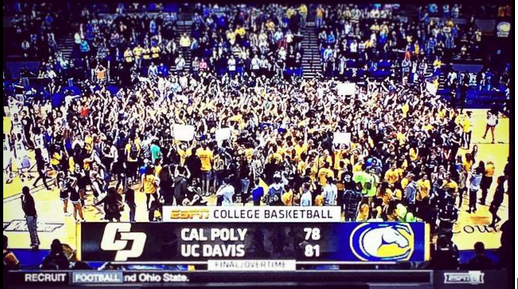
The title of this article is finally being threatened this year, however. Our school was put on ESPN twice for basketball this quarter (you can leave out the U in ESPNU when you tell your friends and family). They weren’t planning to feature the Aggies (sick mascot) on TV a second time until they saw us the first time. On Jan. 10, UC Davis dropped Long Beach State in an ESPN overtime thriller, an instant classic in the UC Davis equivalent of the Super Bowl. I had just arrived back into Davis after a family dinner and was watching the game on TV. It was in overtime, and I knew a bunch of my friends were at the game. Davis pulled off the victory, and when time ran out they rushed the court, changing it from something I didn’t care at all about to one of my biggest regrets in college.

Fast forward to this past weekend, the game was last-minute added to ESPNU because of the previous ESPN game’s excitement and the court rushing. To not deal with the regret and personal defeat from missing the victory, I made sure to go to this one. My friends came up for the weekend and we went all out for the game. Having gone to the ESPN games in the two previous years, I knew how fun they were, and I knew I wasn’t going to miss an opportunity to rush court. The Aggies didn’t look too good in the first half, seeming like a sure-loss. We, as a group, made the executive decision to go home and relax and eat.

Now fast forward to finally being home. I receive a text telling me I shouldn’t have left. I realized I could find out why because my team is on National Television. Sure enough they were staging a comeback. As the game became close and the clock wound down, I found myself rooting intensely for Cal Poly. This had nothing to do with a lack of school spirit (though this is not a sports school, which makes it tough). This had everything to do with a sure-loss becoming full-fledged deja vu for me missing out on being a part of an extremely rare epic college sports experience. Sure enough, after forcing overtime, Cal Poly missed a last-minute free throw because of our very dedicated fans distracting opposing players night in and night out (one game a year, really). After that, I knew in my heart they had won and I had again made one of the biggest mistakes of my college years. All I had left was to pray the court wouldn’t be rushed, but it had to be that way, and I had to watch from the discomfort of my own home, watching some of my best friends partake on live TV.

marxpic_150205

UC Davis students rush the court after an overtime victory Saturday

It’s not all bad, though. There’s something amazing about seeing your friends on TV. I’m talking of course about people in the stands, but a couple of the players too. One time, the players came into a room I was in at a party, and allegedly liked a song my friend was playing. There is no solid proof they truthfully liked the song, but they spoke words to us and then made it on ESPN.  Aside from that, I’ve seen some of the players at Taco Bell late at night, and I’ve asked them to teach me moves to improve my basketball game. They always refuse, but once again, having celebrities speak to me is enough of a confidence boost.

The underlying problem is that I shouldn’t need to feel like I’m missing out when my team is on TV, or when people rush the court. This should happen much more often than once or twice a year, and I should be able to take a family day one weekend and a body paint day the next. We don’t have this luxury, and we are still new to winning games at all.

At the end of the day, these glimpses of big school life are some of the most memorable moments in college. These victories rival the essay due date extensions, the Santa Fe Chicken Salad days at the DC, the not-too-long-ago CoHo lines, the bike lock that works the first time and bringing a ball to the rec pool. Let’s hope this upward trend continues and we can get more and more of this air time. More air time means a better reputation, a better reputation means high school phenoms will consider us. High school phenoms coming here means we’ll win games. Winning games is the recipe to being a sports school and the recipe for an epic weekend. Epic Weekends are the recipe for a memorable college career.

The UCD Files is your weekly in depth look at our campus and the lifestyle that comes with it, featuring an occasional dropping of knowledge from a senior who has experienced it all.

Feel Free to send questions, comments, hate mail, or anything you would like to see in future articles to Adam Marx at almarx@ucdavis.edu.

Graphic by CA Aggie Graphic Design Team

Photos by CA Aggie Photo Team


Psyches & Serpents: Self-Titled

0

berezovskyheadshot_op“Writing can be lonely work.” I read this statement in The Wall Street Journal last week in a column by a man named Edward Gerson. Thirteen years ago, at the age of 87, this man began writing for Dartmouth, his alma mater, chronicling the adventures of his graduating class of 1926. At the time he had about 150 people to write about. Now, at age 100, only 3 of his fellow 1926 alumni remain. So Gerson writes what he can about them, then writes his opinions (hey!) on things in general.


Who tunes in though? Who wants to hear about the three Dartmouth graduates from the Jazz Age? (Besides the occasional journalist trying to find a story for the daily oddball column).  Who wants to read this column, for that matter (I know that you think it’s great, but that doesn’t stop me from feeling insecure about how the others feel). Any of what follows obviously could be wrong, but it’s sort of scratching at the truth of what many writers face and all people contemplate: How do we react to that realization that maybe no one is listening, that maybe we’re alone?

As I write this in a cold garage (don’t ask), I think about Gerson at his old wooden desk writing on a legal pad some 450 miles south of here. What does one worry about at 100? At 23, when I pause to consider my trouble, most seem more like distractions. I’d be lying if I said there wasn’t something in me that longed to spend more quality alone time, to go off into the wilderness on my own, like McCandless, Thoreau or Tolstoy at the end of his life. Why? There are plenty of reasons. Here’s the main one: Sometimes you have to choose between being alone and being lonely.

Really though, loneliness is something you choose, and the choice is always there because you’re always alone (to some degree). Don’t believe me? Well, read on! Remember, I just play the game, I don’t put the writing on the wall. If you think this is off topic for mental health, I strongly disagree. The choice between feeling lonely and being alone may be the most important one you make.

i:

Let’s get back to our centurion correspondent, Mr. Gerson. He’s incredible in my eyes, for taking up the pen at 87. I’m not the only one to think that. In the column, it’s mentioned that one 20-something current Darthmouthian sends him some encouraging fan mail. Knowing that you have fans can be fantastic (no pun intended). I’m no celebrity, but I can’t imagine they ever start to feel too famous. Don’t tell me they hate being mobbed at the grocery store. Anyone saying they don’t want fame is lying or trying to relieve the cognitive dissonance of not getting any. But fame is a double edged sword. If the subject of fame stops working for the sake of work and starts to work to please the fans, the results ring false. Just think of all those bands you know where the first album rocked and the second was eh. When you’re just getting into a band, the go-to album is their Self-Titled release – because it’s usually their first, and it’s probably their best. Those later albums pander to the fans. The choice is between working for yourself or for others. The timeless musicians take on their fans. Whether it’s Dylan going electric or Kendrick Lamar trying new sounds (see subtitle). It’s not like the greats don’t read fan mail or care about their fans, but – like Gerson – it’s not at the heart of what they do.

Darko’s New Friend:

Have you heard the Nirvana song where the singer is happy, because they’ve found all of their friends, and those friends are in their head? When I was in the hospital and outpatient facility, I met people, some my age, who heard voices in their head. To be honest, I pitied those people and was relieved that I was not that crazy. People who live alone with their voices sound like the kind who’d commit an atrocity one day (i.e. – the voice told me to do it). This is garbage, however. It’s garbage because we all hear voices in our heads. I’m hearing one as I write this – speaking these words. Later I’ll be hearing one telling me to finish my Econ homework (actually, I can hear it now).

The writer Eckhart Tolle had a transformative breakdown in his late twenties (as a Ph.D student) when he realized that the only difference between himself and the crazy lady on the train was that she said her thoughts aloud. This inner dialogue is basically the adult version of playing with imaginary friends as a kid. Sometimes when no one else is around, a kid might ask GI Joe or Barbie what they want to do – not realizing that they’re really asking themselves. Most adults don’t have a doll, but they perform the same self-talk without acknowledging it to themselves. When people are together, this self-talk can create problems. Why do you think communication is one of the most important job skills? We think we have conversations with others, but really we’re just talking with ourselves.

Poor Miss Lonelyhearts:

Speaking of other people, aren’t they great? Well the ones we enjoy being around, at least. It can get boring if you’re with boring people. Or worse, it can get lonely. Being lonely when you’re with people may seem like a strange occurrence, but it happens often for some. Maybe you miss someone. Maybe you and those you are with have drifted apart. The most common issue perhaps is simply that we start to feel like Miss Lonelyhearts in Rear Window (1954). In other words, we want a mate. Or at least a lover. And how great it feels to find one but the excitement of a lover can go after a while, and a relationship can develop entrenched patterns, like deep grooves in a record.

My favorite movie is My Dinner with Andre (1981), and in it, Andre Gregory ponders what it would mean to live in a world where people acted on their every impulse. “…They would just be themselves every moment, with others. And we’re not necessarily up to it. I mean, if you felt like walking out on the person you live with, you’d walk out. Then if you felt like it you’d come back. But meanwhile the other person would have reacted to your walking out….” We’re in such a rush to know other people and find a relationship, but we spend so little time finding or knowing ourselves. A friend put it best: Before I can feel good spending time with someone else, I’ve got to feel good spending time with myself.

So there’s my little bit of self-help for the week. Work for yourself, recognize that you’re usually only with yourself, and get to know thyself. It’s not a foolproof theory (sure, some musicians have pretty terrible Self-Titled albums), but the choice between being one and being the loneliest number remains. Even Harry Nilsson struggled with that one, but at least he knew that it only takes a lime and a coconut to have yourself a party.

PAUL BEREZOVSKY can be reached at pbberezovsky@ucdavis.edu.

Graphic by Andrew Li

Photo by The California Aggie Photo Team

What it’s like to watch the Super Bowl for someone who has never watched American football

0

Source www.flickr.com/photos/pdaphoto/Sports in America are quite different from what you would find in Europe, so watching the Super Bowl was a unique experience from what I, an exchange student from Denmark, am used to.

My only experiences with the Super Bowl before coming to the States are from high school, when I would come to school in the morning and my classroom would smell of beer, complete with my male classmates slumped over their tables after a night of watching American football. Given the time difference, they would have had little sleep and definitely no time to shower. The odor of alcohol that still clung to them was hard to deny.

Last Sunday, however, I was able to experience my first, true American Super Bowl Sunday, which was surprisingly more family-oriented. I had spent the night at the house of an American family that I know, and when I woke up Sunday morning it smelled almost Christmas-y. The family had started cooking, and the whole ambience was that of Christmas where you’re excitedly waiting for the good food and for the guests to arrive.

I must admit that I find football boring and that I would probably get a lot more out of the experience if I sat down and learned the rules. Regardless of that, I will argue that football is a weird sport in the sense that to the outsider, a European girl on exchange to the United States, it doesn’t look very impressive.

You can be impressed by tennis without knowing the rules, or you can admire a really good goal in soccer, but football to a non-fan just seems like a bunch of men running into and after each other for 10 seconds before the game is interrupted by a commercial break.

I had aired my misgivings about football before the Super Bowl, but I was told that even if I didn’t like football I should watch the Super Bowl for the sake of the commercials. I thought there was something quite paradoxical about that, because it seems to me that in this country, which is almost drowned in commercials, it’s the very thing that people try to avoid.

No, no, I was told, they spend a lot of money on making good commercials.

Safe to say, I wasn’t very impressed by the commercials. It seemed that it was just your average commercial but with a movie star instead of a nobody to act the main part.

I liked the halftime show, and the highlight of my football-watching afternoon was definitely the dancing sharks that made the whole four hours worthwhile.

Did I like the Super Bowl for the sake of football itself? No, not really. But did I like getting together with good friends and family, eating nice food, and watching the halftime show? Definitely.

Photo courtesy Creative Commons. 

UC officials weigh in on effects of Obama’s free community college announcement

On Jan. 20, President Obama gave his State of the Union Address, in which he declared, “We still live in a country where too many bright, striving Americans are priced out of the education they need. It’s not fair to them, and it’s not smart for our future.”

Obama’s plan for free community college would make education more affordable to low-income students and has garnered much attention from the media, prospective students and higher institutions of education.

It is unclear to what extent passing this plan would affect University of California (UC) schools.

“It is hard to know if this will really impact UCs because community college tuition is so low in California already that folks needing to start at community college for financial reasons are likely already doing so,” said Michal Kurlaender, an associate professor of education policy at UC Davis. “It is unlikely that this proposal will shift UC applicants to the community college, but it may do that in other states.”

According to Kurlaender, more transfer students go to California State University (CSU) schools rather than UC schools because there are more CSU transferable courses than UC transferable courses at community colleges.

Congressman John Garamendi, who previously served as a UC Regent, said he believes that implementing this plan could lead to more students taking their lower division classes at community colleges before taking their upper division classes at UC schools.

Chris Harrington, associate director of the UC, said that the UC is glad that President Obama has put a spotlight on education in community colleges, especially since one-third of UC upper-class students are transfers, and that the UC plans to take an active role in the conversation of students gaining access to higher education.

“UC President Janet Napolitano has directed UC’s Transfer Action Taskforce to review the proposal and provide feedback that UC will share with the Administration, particularly looking at how this would impact the state budget and whether it would squeeze limited resources, or, through the additional federal investment, open up funding opportunities,” Harrington said. “President Napolitano also wants to ensure that the proposal is targeting resources to the right students.”

While it is still early to know the full impact of free community college on UC schools, Harrington emphasized the importance of transfer students to the UC system, especially as transfer applications to the UC have been increasing.

“UC President Napolitano recently sent an email to 130,000 students at California community colleges who expressed interest in four-year degrees, encouraging them to consider transferring to UC and pointing them to resources that would help them stay on track to transfer,” Harrington said.

Congressman Garamendi agreed that, regardless of this new plan to lessen the cost of community college, the demand for acceptance into UC schools will remain high. However, the recent UC tuition increases, coupled with the opportunity for free education at a community college, may affect the number of UC applicants, as students may find it more affordable to complete their lower division classes at their local community college before transferring over to a UC school.

“The tuition increases will dampen the demand simply because kids can’t afford it,” Garamendi said. “They can’t burden the debt … or they don’t have the cash in their family to do it. That will, to some extent, reduce the demand for university campuses. If community colleges were free … I think there would be a switch from the lower division into the community colleges and then into the university.”

However, it remains uncertain if the bill will even be able to pass through Congress.

“[Congress and Senate] are very opposed to new governmental programs,” Garamendi said. “They want to reduce existing governmental programs. There is a significant challenge on passing this legislation, as great as it is for students … Right now we have a very conservative Congress and Senate.”

According to Garamendi, if the bill passes, college students can most likely expect to see its implementation within a year of it being passed. But regardless of the bill’s outcome, President Obama’s plan has made improving access to education an important national goal.

“To address the severe skills gap California faces and improve college attainment overall, we are going to need to do a lot more to keep students in college and finishing their degrees,” Kurlaender said.