41.9 F
Davis

Davis, California

Sunday, January 11, 2026
Home Blog Page 944

KDVS Fundraiser Week

0

Monday marks the first day of KDVS Fundraiser Week. The goal of $60,000, if reached, would help the campus radio station run smoothly for another year.

Although donations are welcome all throughout the year, the money raised this week helps fund two-thirds of KDVS’ operating budget. The fundraiser accepts cash, card and check donations, and each is tax-deductible.

Any and all amounts of donations make a difference, and depending on the amount of each contribution, the station gives back with a variety of premiums. These thank-you gifts include but are not limited to: button/sticker packs, shirts, DJ compilation CDs, vinyls, gift certificates, the opportunity to host your own show and mobile DJ units for your event’s entertainment.

Fundraiser Week includes events that began on Picnic Day and continue throughout the next weekend. Check out the Facebook page for updates on KDVS Fundraiser Week events.

Visit fundraiser.kdvs.org to pledge, or call local number (530) 754-5387 or toll free at (877) 399-5387.

— Elizabeth Orpina
Veterinary students win ultrasound system with music video

The Food Animal and Reproduction Medicine (FARM) Club at the UC Davis School of Veterinary Medicine received a large animal Easi-Scan ultrasound machine, after winning a national music video competition by BCF Technology.

According to a FARM club news release, the machine is worth over $10,000 and is most often used in bovine medicine for pregnancy diagnosis, but can be also be used to diagnose other conditions.

The club created a spoof video (below), “‘COW’-lifornia Girls,” based on Katy Perry’s California Girls.

“We had a lot of fun creating the music video, and hope everyone had just as much fun watching it! We were proud to able to reach a wide network of closely connected people that love to support local California student organizations,”  said Michelle Sanborn, FARM Club Publicity Commissioner and second year veterinary student in the news release.

15 veterinary student organizations entered the competition. Other finalists included student groups from University of Wisconsin at Madison, Purdue University, University of Pennsylvania and Tufts University Cummings School of Veterinary Medicine.

Over 6,100 people voted, according to the BCF website.

The competition began with a photo round that would capture student enthusiasm, then technical articles on suggested topics were submitted and judged by a veterinary panel, according to the release.

BCF Technologies is a leader in bovine fertility detection using ultrasound.

More informtion on the UC Davis FARM Club can be found at www.vetmed.ucdavis.edu/Clubs/farm.

— Muna Sadek


Double homicide in South Davis incurs shock, sadness

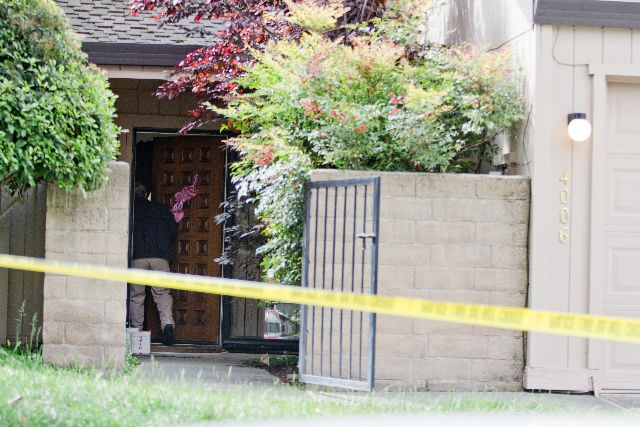
Davis Police are continuing their investigation of the double homicide of an elderly couple in South Davis. On April 14, police were called to the 4000 block of Cowell Boulevard around 9:20 p.m. after receiving a call for a welfare check.

The Yolo County Coroner’s Office released the names of the victims on April 16, and neighbors and family members confirmed them as longtime Davis residents Oliver “Chip” Northup, 87, and Claudia Marie Maupin, 76.

Northup was a local attorney and was part of a local band called the Putah Creek Crawdads, which often plays at the Davis Farmers Market. Maupin was involved with the local theater. The couple had six children and were married for 15 years.

“We are deeply saddened and in shock over the sudden and tragic deaths of two members of the extended Crawdad family,” said a statement on the Crawdads’ Facebook page. “The warmth in Chip Northup’s singing voice matched the warmth in his heart and spirit; he and his wife (and our dear friend) Claudia Maupin were two of the most generous and giving people anyone could hope to meet.”

According to the Davis Police log, the couple’s daughter called for the welfare check after she had not heard from her parents all day. She saw her parents’ car in front of their residence at 4006 Cowell Blvd., and noticed that the lights were on.

“During the course of the investigation, officers discovered signs of forced entry to the residence,” said Davis Police Lt. Paul Doroshov in a statement. “The Davis Police Department (DPD) is currently investigating the two deaths as homicides.”

A statement released by the DPD said it was clear that both victims had suffered stab wounds. The Yolo County Coroner’s Office identified the official cause of death as multiple stab wounds and the manner of death as homicide.

Doroshov said the police have not yet identified if there was a motive behind the homicides.

“They were the kindest, most caring and gentle people,” said Wayne Ginsburg, Northup’s fellow band member. “It’s just a shock and a great loss, and the method of loss makes it even more upsetting and devastating.”

Neighbors said the streets south of the condominiums, in particular Vista Way, faced a recent string of burglaries. However, neighbors said most of the burglars entered through open windows or doors. One neighbor said she remembers hearing about neighborhood watch meetings on the street behind her as a result of the break-ins.

“There have been some burglaries in the area, but not with violent confrontations like this, so it is unclear if the two are related,” Doroshov said.

Residents reported over 18 burglaries and break-ins in the neighborhoods around Cowell Boulevard over the last three months, according to the DPD’s interactive crime map.

Doroshov said homicides are a rarity in Davis and because of the violent nature of the crime, police deployed extra patrol officers as a precaution.

This is the first homicide in Davis since Oct. 1, 2011, when James Elron Mings fatally strangled Kevin Gerard Seery in Seery’s J Street apartment. The case was identified as a case of assisted suicide. Mings will go on trial later this month.

The crime scene is near the Clearwater Apartments — formerly the Tennis Club Apartments — where in 2004, Dennis Edward Thrower was shot in the doorway of his apartment. The assailant, Eric Steven Chase, Jr., is serving a 20-year sentence for his crime.

“While Davis achieves a high degree of safety through our police and the watchful eyes of all, we are not im[m]une from terrible acts,” Mayor Joe Krovoza said in a statement. “Let us all redouble our efforts to protect our fellow citizens and give support to those who have suffered this irreversible loss.”

Doroshov said the DPD is working with the Federal Bureau of Investigation, State Department of Justice, Yolo County District Attorney’s Office, Yolo County Coroner’s Office and West Sacramento Police Department to follow numerous leads.

PAAYAL ZAVERI can be reached at city@theaggie.org.

Trajectories change in aftermath of athletic cuts

Editor’s note: Three years ago, four sports were discontinued. While most of those 153 athletes are long gone, a handful of seniors remain. We caught up with them — and seniors who transferred schools — before the last directly affected class graduates.

Josef Stitts was 8 years old when his older sister brought home an Olympic gold medal. After that, his chief goal in life became to get to the Olympics and make his family of swimmers proud.

Everything seemed to be in place. He had already been swimming competitively since the age of 4. He went undefeated in high school and was recruited to swim at UC Davis — a Division 1 school. In his first quarter as a college athlete, he was swimming 20 hours a week and still made the Dean’s List. He fell in love with the university and the town. He got a scholarship. He was having a great season. He was even getting faster.

Then April 16, 2010 happened. Citing a financial crisis, UC Davis dropped the hammer on four sports — men’s swimming and diving, men’s wrestling, men’s indoor track and field, and women’s rowing. Suddenly Stitts had no team.

“Everything I believed in was taken away from me,” he said.

The announcement
Stitts was biking all over campus trying to find his coach to confirm the rumors. Others were huddled outside the conference room waiting for officials to utter the news. Others were hanging out in the dorms, unaware of what was happening until they received a startling text message.

“People were already emotional. But when the announcement came, it was a total, complete breakdown,” said Geneva Azevedo, managerial economics major and former rower.

In February of that year, Chancellor Linda P.B. Katehi set out to cut $36 million campuswide for 2010-11. The athletic cuts amounted to $2.4 million in savings and directly affected 73 female student-athletes and 80 male student-athletes as well as the coaching staffs. Athletes who chose to stay at UC Davis were able to keep most of the perks, including their scholarships.

Azevedo, Stitts and other student-athletes were warned in advance that cuts were inevitably happening, and that their teams were on the chopping block. The exception was the wrestling team, who athletes say had been explicitly told that they were safe.

“We had no idea,” said Sean Dougherty, sociology major and former UC Davis wrestler. “It was devastating watching all these guys you’ve gotten so close to crying in a locker room.”

Athletes tended to use the same words to describe how they felt: in disbelief, betrayed, angry and most of all, defeated.

“Everyone went separate ways immediately. It was like shattered glass,” Stitts said. “I had friends drop out of college. Others turned to alcoholism.”

Defeat
Just after the cuts were announced, athletes from all four sports rallied and protested while parents, alumni and community members persistently called administrators to no avail.

April 17 was Picnic Day, and athletes passed out fliers to students and visitors to raise awareness. For Stitts, the lack of support marked a major point of defeat.

“People actually said to me, ‘I’m glad the team was cut.’ That’s when it became a reality — I am not a student-athlete anymore. People don’t care. Fall in line.”

Some held onto hope that they could fundraise enough money to reinstate their teams. Hope was lost when they heard the numbers.

“It was a slap in the face to say we needed $10 million in four weeks. Obviously that wasn’t going to happen,” Stitts said.

Wrestlers remember being told to raise $14 million — $7 million for the men’s team and $7 million to endow a women’s team. The endowment would have been necessary to comply with Title IX, a law aimed at preventing sex-based discrimination in educational programs. On top of that, they say the university sold the wrestling mats without warning, eliminating the chance for a club team to form.

“It seemed like they were trying to get rid of us,” said Michael Nakagawa, an international relations and Japanese double-major and former wrestler. “It felt like a back-stab.”

University officials said they weren’t familiar enough with what happened to confirm or deny the athletes’ recollections about fundraising, or about the wrestling mats being sold off.

Melanie LaCava, a wildlife, fish and conservation biology major and a former rower, said some athletes gave up on their sports because they felt abandoned.

“We worked so hard fighting, and all that effort was completely lost,” she said. “We felt like children disowned by their parents.”

‘A life-changing decision’
With rosters at other universities filling up, athletes had to decide quickly whether or not to transfer schools. And then they had to scramble.

“It was a life-changing decision that no one could prepare for,” Dougherty said.

Dougherty transferred to a junior college in order to eventually transfer to Cal Poly San Luis Obispo — the only option in California to wrestle D-1 besides Stanford.

Conrad Snell, a business major and former UC Davis wrestler, left for the University of Wyoming but had trouble adjusting. It wasn’t what he expected, and he felt too far from his family, friends and even UC Davis, which to this day is still his favorite school. He transferred again, making another 1,000-mile move to San Francisco State University.

Jeremy Smith, economics major and former UC Davis swimmer, took a year to figure things out. His junior year, he joined a couple of other Aggies at UC San Diego.

Those who switched schools say they don’t regret their decisions. They had to adjust to new workouts and team dynamics and deal with unit transfers that ultimately set them behind academically — but at least they still have their sports.

Stitts ultimately chose to stay at UC Davis — the school he adored — and thereby end his swimming career. He started focusing on his art studio major, hoping his sport could be reinstated before he graduated.

“Leaving meant abandoning all hope of resurrecting. We thought that if we kept fighting, used logic, we’d get it back,” he said.

A club team emerges
Led by a passionate coach, women’s rowing successfully transitioned to club status.

“Rowing still had to have a presence on campus,” LaCava said.

Even still, some rowers transferred to other schools and others couldn’t afford to pay $600 per quarter to get the team started. Out of 73 rowers, nine returned to build a team from scratch.

“We knew that year would be awful. But we thought if we got through that first year, the team would survive,” LaCava said.

Now, rowing is an established club sport that LaCava is both amazed by and proud of.

The transition was difficult though, particularly without the ICA perks. The lack of funding meant no scholarships and little recruiting incentive. The lack of priority registration meant the team would have to practice at 5 a.m. to avoid class conflicts. And the lack of access to trainers and physical therapists proved perhaps most distressing to LaCava, who had to end her rowing career as a sophomore due to a back injury.

“It’s hard to say if I could still be rowing if I had access to those facilities,” she said. “I try not to think about it.”

‘Why us?’
The most frustrating part for many of the affected athletes — particularly the wrestlers and swimmers — is that they still don’t know why they were cut.

“The only answer we got was ‘budget cuts,’” Smith said about the swimming team. “It all seemed very shady to us. We wanted to know why it was our team that got cut over other teams.”

Administrators used a variety of criteria in the decision-making process, but potential financial savings and Title IX compliance were at the top of the list.

Affected athletes blame Title IX, the school’s allegiance to football and other high-profile sports, and the Chancellor and former Athletic Director Greg Warzecka themselves.

UC Davis was the last UC campus to have wrestling — the college sport has been getting cut all across the nation. Within the past five years, CSU Fullerton, CSU Bakersfield, University of Nebraska-Omaha, Portland State University, Duquesne University and other schools cut their wrestling teams. Boston University is ending its wrestling program after the 2013-14 season. Even the Executive Board of the International Olympic Committee recommended dropping wrestling from the 2020 summer Olympics.

“Wrestling’s an easy target. It’s not as popular in the public mind,” Snell says.

The sport that felt the cuts least was men’s indoor track and field. Indoor athletes could still compete in their same events during the outdoor season.

“It wasn’t too integral to our sport,” said Blake Asbill, a former indoor thrower who quit to focus on his studies in computer science. “But there was sadness for all the other teams who were left with nothing.”

New opportunities
Nakagawa considered transferring at first, but he couldn’t find a school where he could wrestle and still get an education comparable to UC Davis. He stayed and went through withdrawals until he discovered a passion for mixed martial arts. He’s now in his second year of training and plans to make it his career.

“A lot of us lost our spark until we found something else,” he says. “I feel very fortunate.”

Azevedo contacted the women’s diving coach and nabbed a spot on the team her sophomore year. Her past training as a gymnast served her well, and she’s grateful to still be a student-athlete.

Meanwhile, Stitts is enjoying his college experience in a way that would have been impossible had he continued swimming. He’s made academics a priority. He picked up gardening at the Experimental College. He’s stayed connected to the water through lifeguarding.

“It’s a new zest for living.”

Never forget
For the most part, the student-athletes said they feel like the campus has forgotten about their sports. The majority of current undergraduates, after all, weren’t around when the cuts were made.

But the students themselves think about their old teams often and still stay in touch. LaCava and Azevedo are roommates and best friends, and rowers have gone to Azevedo’s diving meets to cheer her on. Dougherty and Snell regularly visit Davis for unofficial wrestling reunions — like Picnic Day this year. Snell remarked that, in his friend’s houses, he still sees “Save Wrestling” and “Support Athletics” posters hanging on the walls.

And despite all the feelings of defeat, some still believe their sports might be reinstated one day.

“It’s been repressed and beaten back, but I don’t think I’ve ever given up hope,” Stitts said.

JANELLE BITKER can be reached at editor@theaggie.org.

New MU venue expected in summer 2015

The Memorial Union (MU) is scheduled to receive a new venue in July 2015.

During the renewal project of the MU, the space that is currently occupied by the post office will feature an entertainment venue which will also function as a pub.

The addition of this venue to the MU will be a component of the $19 million east wing renewal project. The east wing renewal project consists of renovating the outdoor spaces on the Quad, the first two floors of the MU and the bookstore. The money for the renewal will also go toward renovations of the Bike Barn, third floor of the Memorial Union and South Silo.

The east wing renewal project will begin in January 2014 with the first phase being the renovation of the bookstore, according to John Campbell, executive director for Campus Recreations and Unions. The east wing renewal project is scheduled to be completed in July of 2015, as well.

According to ASUCD president Carly Sandstrom, since the venue will be located where the post office is now, there will not be any structural changes.

The MU renewal project has provided an “opportune moment” to bring this entertainment venue to campus, according to Sandstrom.

Bringing a pub to UC Davis was one of the platforms of Sandstrom and vice president Bradley Bottoms. However, the idea originated from the previous term’s executive office. Sandstrom and Bottoms are collaborating with Campus Recreation and Union on the MU east wing renewal project and creation of the venue.

“We really just want to have a pub on campus because we think we need a new center for student life. We want something that will also be a headquarters for Aggie pride. We just really need something that is kind of the basis for that, since we think that’s something that’s so lacking on campus, is that sense of tradition and pride,” Bottoms said.

The cost of the venue is still uncertain. According to Campbell, it is estimated that the venue will be 2,800 square feet and that construction will cost between $400 to $500 per square foot.

“[ASUCD] would have the build out responsibilities [in] regards to the food service. [They] are still trying to come up with that platform and [the kitchen],” Campbell said.

He also said that the type of furniture usually seen in a pub will be included.

The funding for the MU east wing renewal will come from the reserves of the memorial fee and bonds. The memorial fee is an $85 fee students pay annually and between $5 million and $7 million of those reserves will be used for the project, according to Campbell. The remaining balance will then be financed through bonds.

“There had been a feeling all along by the associated students or at least the leadership of the associate students that they need to participate at some level with the program,” he said.

ASUCD will be contributing approximately $500,000 to the MU east wing renewal project, according to Sandstrom.

“The more money we invest the more we’re going to get out of it and I don’t know the exact number of how much the pub will be per se, but overall it’s a pretty expensive project. What’s great about it is that we’re not increasing student fees for it. We’re taking all kinds of money that we either already have or are in our reserves or are preparing for this project in taking out bonds to pay for this slowly in time,” Sandstrom said. “But we’re not increasing student fees and I think that’s [the] great ingenuity of UC Davis being really committed to not increasing fees.”

The space is still in the early stages and therefore there are many things that are still to be determined including the name, the hours and the menu of the pub.

Campbell expects that it will be open between 85 to 100 hours weekly.

“It’ll be open as much as the students want it to be open … When completed, the Memorial Union will be open for extended hours much more than it is today. It will probably follow the hours of this facility [ARC] closely,” Campbell said.

The menu is currently being discussed, but the food that is expected to be served is the “CoHo’s take on pub food,” according to Sandstrom. The beef will come from grass-fed cows and the chicken from cage-free chickens. Healthy options will also be available for those that prefer them.

“I think the people that we would be serving our pub grill concept is completely different from what Gunrock Pub is. It’s more that student environment and really I think the only maybe competition we have is with the Coffee House — and it would be run by the same management so we’re really happy about that,” Bottoms said.

The entertainment venue is being modeled after other university student unions, pubs and bookstores that Sandstrom, along with Campbell, former ASUCD controller Melanie Maemura and former President Rebecca Sterling toured.

“We didn’t like that [UC Irvine] didn’t have a very Irvine feel to it and here we have so many bars, the bar scene kind of goes along with Davis because what else do you do? … We really have to identify ourselves as why you want to come here and it looks cool, it feels cool and it’s a multifunctional space that you can study at you can drink it you can have fun at all in one,” Sandstrom said.

The new part of the MU will feature an indoor and outdoor venue along with space that permits performances, something that is not currently possible.

“We’d have karaoke, trivia and local bands play. KDVS and Entertainment Council are really excited to start working on the entertainment aspect of this because we don’t have anything like that, that small to midscale show,” Bottoms said.

Although alcohol will be served, the venue will be available to all, and students will be asked to provide identification at the bar when purchasing an alcoholic beverage, according to Sandstrom.

According to Campbell, alcohol will not be served the whole time the venue is open.

“It’s a different scene from the bar scene in downtown on the weekends. It’s a completely different concept where we’re looking to have it be a fun activity space rather than a heavy drinking space,” Bottoms said.

The space will also feature entertainment in the form of shows, trivia and showcasing Aggie away games.

“We really want it to be an environment where people can feel the presence of the history of where we come as a university to where we are today, and kind of the culmination of that and we think it’ll be a really cool location for that in addition the whole Aggie pride thing,“ Bottoms said.

LILIANA NAVA OCHOA can be reached at campus@theaggie.org


EDITOR’S NOTE: This article was updated for accuracy. 04/23/13

Studio 301 Productions presents ‘Batboy: The Musical’

This month, Studio 301 Productions presents a comedic musical with themes of social acceptance, gothic overtones and a half-man, half-bat protagonist.

Batboy: The Musical tells the story of Batboy, a monster who is found in a cave in West Virginia. Batboy is adopted and educated by a local veterinarian. However, a cattle plague kills the town’s livestock, causing the locals to scapegoat Batboy, kicking off the plot.

“The musical is based in gothic literature and horror films and it gets bloody and gory, but in a fun way,” said Christopher McCoy, a performance studies Ph.D. candidate and the show’s director.

McCoy saw the original off-Broadway production in 2001 and loved it. “At the time it was so fresh and new to see a musical that was a parody of other musicals, but now we’re very used to this type of humor. I felt like it would be fun to return to one of the originals and reinvent it for our time,” he said.

McCoy showed the musical to Alexander Stalarow, a musicology Ph.D. student who had previously worked as an assistant music director on RENT.

“I gave it a listen and my first thought was that it was going to be really hard to pull off, since there are a lot of tight harmonies, meter changes, rhythmic irregularities and musical styles,” Stalarow said.

Stalarow joined the production as the musical director after being convinced by McCoy and began to work through the score.

“The show parodies other styles of musicals, and the music goes along with it,” Stalarow said. “There are numbers right out of vaudeville, country, rock and heavy metal. There are direct musical quotations from other musicals and it has been a great pleasure to find them.”

Stalarow noted that the show has appeal to audiences regardless of their knowledge of musicals.

“If you’re into musicals, you’ll have a lot of fun with all of the parodic moments. If you’re not, the music is catchy, clever and fun enough to keep you engaged,” he said. “The live musicians from the music department are very talented, the singers are wonderful and we put together something that sounds very good.”

Cheyenne Splinter, a second-year animal science major, is the stage manager for Batboy, and it’s the first time she’s held this position for a UC Davis production.

“I did stage managing in high school, and I’ve been an assistant stage manager here,” Splinter said. “The experience was different than I thought it would be, but in a good way. I expected this to be more difficult than it turned out. The cast works really well with me and each other. This is one of the best experiences I’ve had as a stage manager.”

The cast is also very engaged in the musical. Marcos Sastre III, a junior specialist at the UC Davis Center for the Mind and Brain, stars as Batboy.

“Batboy starts as an illiterate bat-child who eventually becomes an erudite literary scholar. He comes into his own and discovers how he fits into society. It has been interesting to develop this character honestly and exhibit his changes in a way that keeps to the spirit of the play’s mock nature,” he said.

Sastre has high praise for the crew as well.

“There’s a lot of stuff that goes on in this musical and both Chris and Alex provide specific guidance, which has helped me grow as an actor. I’ve been grateful to have had them and everyone else in the cast to guide me,” he said.

Sastre urges people to come and see the show.

“It’s not what you may expect. It’s really funny, it features a talented group of individuals and I’m shaving my head for it,” Sastre said.

JOHN KESLER can be reached at arts@theaggie.org.

Baseball Preview

0

Teams: UC Davis vs. UC Riverside
Records: Aggies, 12-22 (0-9) ; Highlanders, 17-15 (6-3)
Where: Dobbins Stadium — Davis, Calif.
When: Friday at 2:30 p.m.; Saturday at 1 p.m.; Sunday at 1 p.m.
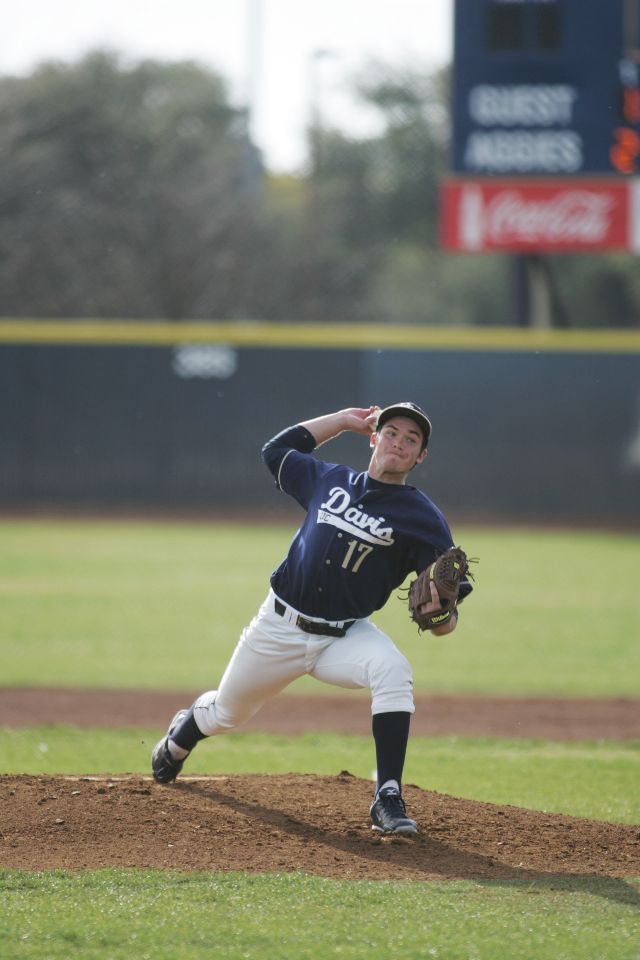
Who to Watch: The lack of recent run support for the Aggie pitchers cannot be blamed on junior Nick Lynch. Lynch’s batting average stood at a blistering .349 after the Long Beach series. UC Davis has struggled to hit the long ball and has only managed to hit six home runs this season. Lynch has two of those six home runs to go along with his 18 runs batted in.

The lack of recent run support for the Aggie pitchers cannot be blamed on junior Nick Lynch. Lynch’s batting average stood at a blistering .349 after the Long Beach series. UC Davis has struggled to hit the long ball and has only managed to hit six home runs this season. Lynch has two of those six home runs to go along with his 18 runs batted in.

In other words, Lynch has hit a third of the Aggies’ home runs and has driven in almost 12 percent of the Aggies’ runs. Lynch has been UC Davis’ most consistent offensive threat, constantly getting on base.

Lynch is currently sixth in the conference in batting average. He is one of three UC Davis players currently ranked in the top of the conference for any given statistic. As such, Lynch’s production is not simply impressive in comparison to the team, but in comparison to the conference as well.

Lynch bats in the middle of the order and as a result should have some great opportunities to drive in runs. However, the Aggies simply do not get on base enough for Lynch to do some damage. If UC Davis can manage to get runners on base, Lynch should be able to catalyze the Aggies’ offense against UC Riverside.

Did you know? The Aggies have a 3-0 record when they hold their opponents to two runs or less. This is a little surprising as the Aggies have had trouble bringing in runs as of late. However, it does highlight the importance of solid pitching.

UC Davis does manage to score a decent five runs per game. However, they have also been giving up around 6.5 runs a game. Thus, the Aggies’ pitching staff needs to buckle down and hold teams to fewer runs. The 5.31 team-earned run average is simply too high for UC Davis to consistently compete and win games.

As evidenced by the statistic, if UC Davis pitches well, it will win. The offense has generally been able to produce at least two or three runs a game. If the Aggies can hold their opponents to a few runs a game, they stand a good chance of turning their season around.

Preview: Good news for Aggie fans: the UC Davis baseball team recently managed to snap their seven-game losing streak against Saint Mary’s by the score of 16-15. Bad news for Aggie fans: the Aggies were swept by Long Beach State after the win against Saint Mary’s.

The Aggies are now 0-9 in conference play as they have been swept by Cal Poly, Cal State Fullerton and now Long Beach State. Of the three, Long Beach State seemed to be the most winnable game, as the Dirtbags’ record was far from impressive.

However, UC Davis must now look past their rough Big West conference start, and look toward the next series against UC Riverside. The Highlanders have a better record than the Dirtbags, but are a team which the Aggies can beat.

One of the biggest struggles which the Highlanders have faced is winning on the road. They have a 5-11 record on the road, while maintaining a perfect 11-0 record at home. Hopefully their struggles continue as they come to face the Aggies.

The UC Riverside pitching staff has struggled to keep runs off the board as evidenced by their 4.59 team ERA. This includes a starting pitching staff with an ERA of 4.71. The Aggies’ batting order, led by junior Nick Lynch and senior Paul Politi, should be able to take advantage of the weak Highlander starting pitching. The more runs UC Davis is able to score, the better the chances are of winning the weekend series.

However, senior Trevor Frank has a 4-0 record with a 0.75 ERA. The Highlander relief pitcher has more wins than any other pitcher on the pitching staff. This might not be impressive, were it not for his 26 strikeouts. Frank has one less strikeout than the Highlanders’ leading strikeout pitcher, junior Ben Doucette, but has pitched 17.2 innings fewer than Doucette. The Aggies may run into some trouble against Frank if his name is called on often to relieve UC Riverside’s starting pitching.

— Kenneth Ling

City Council postpones fire department reconfiguration

1

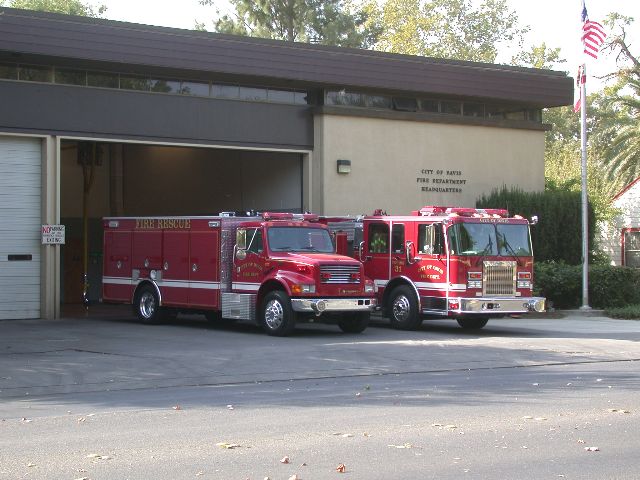
At a March 5 meeting, the Davis City Council voted to delay the decision to reconfigure fire engine staffing for the Davis Fire Department until June.

“We wanted to get more information and look at [it] in the greater context. At the time of the meeting, it was getting late and we didn’t want to make important decisions when so many community members weren’t present,” said Davis City Council member Rochelle Swanson.

At a fall 2012 city council meeting, former Interim Fire Department Chief Scott Kenley proposed to make changes to the fire department staffing model, in hopes of a safer and more cost-effective model.

The current model calls for 12 on-duty members with four people per engine at the West, Central and South Davis stations. The new model would instead require 11 people on duty with three people per engine, as well as an additional two medical responders at the Central Davis station.

“Ninety percent of calls the fire department receives are non-fire related. The proposed two person medical crew would allow the fire crew to stay in [the] station while the medical team could handle the medical call,” said Davis City Council member Brett Lee.

Over the past year, the fire department has been in a transitional state where many changes in addition to this proposal are being considered.

The four phases in consideration for improving the Davis Fire Department include changing the boundary lines for the three stations, changing the response time to meet national standards — six minutes for medical calls and six minutes and 20 seconds for fire calls, considering new management models and the proposal in question.

The changes being considered have been debated at various city council meetings since fall 2012.

“We are making these decisions carefully by looking at former Interim Chief Kenley’s report, the overall picture and how we do service for the entire community,” Swanson said. “It is not an anti-public safety decision, but rather it’s a long-term, sustainable service inquiry in consideration. We have to look at each factor with the budget in mind. It’s not just about cutting costs, but [seeing] what we can do with the resources that are available.”

The current interim chief of the Davis Fire Department is Davis Chief of Police Landy Black, who has been working closely with fire department division chiefs on the operational components of managing the department.

“Chief Kenley offered good statistics supporting the concept of a different model than what we’re already doing. I was convinced by the information he provided that we need to seriously consider a change. We need to find a model that provides high confidence but low enough of a cost to be able to continue providing to other city programs,” Black said.

Assistant Police Chief and Interim Fire Department Chief Steve Pierce who oversees the fire department’s administrative operations is optimistic about the upcoming changes.

“We will do our best to make whatever resources [that] the council gives us go as far and be as effective as possible. I think every model has some good and bad aspects and that’s what the council will weigh in on. The old way does have its advantages and disadvantages,” Pierce said.

Even though many decisions in regard to the future structure of the Davis Fire Department are still up in the air, council members see this as an opportunity.

“I think in some ways, it’s been positive,” Swanson said. “What’s good about this transition period is that we are getting policy in place so that when we hire our next permanent fire chief, we will hire holistically based on who fits our community ethics best.”

GABRIELLA HAMLETT can be reached at city@theaggie.org.

Picnic Day sports events

1

Women’s tennis — 11 a.m. at Marya Welch Tennis Center
The UC Davis women’s tennis team will have its last match of the regular season on April 13 against Sonoma State.

The Aggies have already finished Big West Competition and sealed a sixth-place finish in the league with a 4-5 conference record. UC Davis holds a 9-12 overall record and is coming off a split weekend.

UC Davis grabbed a 5-2 victory over Pacific on April 12 and then fell in a tightly contested match to UC Santa Barbara 5-2.

The Aggies will face off with the Sea Wolves and hope to get a win in order to swing momentum in their direction as they prepare for the conference tournament, in which they will most likely face off against UC Santa Barbara.

Women’s Water Polo — Noon at Schaal Aquatics Center
The 19th-ranked UC Davis women’s water polo team will face cross-town rival Pacific on Picnic Day, an intense matchup that has become quite a tradition for the Aggies.

UC Davis is coming off a 13-5 trouncing of Cal State Monterey Bay, improving their record to 13-15 overall. Still, the Aggies’ 0-6 conference record does not bode well for the team as they get ready for the Big West Championship tournament.

Senior Carmen Eggert put down five goals for UC Davis and leads the team in scoring this year, with 66 goals on the season. This will be the Eggert’s, as well as Jessica Dunn, Hannah Breen, Kathryn Bailey, Riane Woods and Danelle Kenny’s final game at Schaal Aquatics Center.

Baseball — 1 p.m. at Dobbins Stadium
The UC Davis baseball team will face off with UC Riverside in this Picnic Day matchup, a very winnable game for the Aggies.

The Aggies’ recent slump, in which they lost 10 out of 11 games, has them standing at 12-22 overall and 0-9 in conference. Still, UC Davis has had bursts of impressive baseball.

The Aggies just took down Nevada 10-7, the product of a six-run sixth inning that propelled the team over the Wolf Pack. UC Davis has lacked runs this season but have shown they are capable of putting up offensive numbers. UC Riverside should be a good team for the Aggies to try to get into a groove with another month of competition remaining.

Track — All Day at Toomey Stadium
The UC Davis track team will host the Woody Wilson Classic on Picnic Day. This is a chance for athletes to compete individually and prepare for the high-level meets that are approaching.

Other than displaying their strong talent in the field, UC Davis will also be warming up for the Causeway Classic Dual with Sacramento State as well as the Big West Championships that are to come in a couple of weeks.

The Aggies just finished competition at the Mt. SAC competition and the Mondo Mid-Major Challenge at Sacramento State. The women placed third and the men fifth.

– Matthew Yuen

YouTube pro

YouTube, one of Google’s most popular services and the third most popular website worldwide, offers the most features and content of any video sharing website to date. With roughly a billion unique visits every month, the company is constantly upgrading and adding features. Naturally, it is useful to know some of the tips and tricks to help improve your browsing experience.

Before watching another video, one of the first options is to opt into the HTML5 beta testing for YouTube. The setting is like a performance boost. This means less time yelling at your computer or complaining about slow internet (especially off-campus) when watching hilarious videos. This option can be enabled by going to youtube.com/HTML5 and joining the beta trials.

While many of the videos have already been encoded in this format, videos that contain ads have not yet all been converted. This feature can be enabled natively in the Chrome browser or any browser that supports HTML5, which is just about every browser available on the market.

Now that you have this performance boost for video streaming, you should know how to efficiently share your favorite videos with friends and family.

Time and time again, I receive links from friends with messages such as “go to this time and watch this part.” There’s an easier and quicker way to share the moment. Simply right-click the video at the specified time, and select the option to “copy video URL at current time.” This will allow users to share a video with a link that will go directly to the specific time, making video sharing just a little less complicated.

YouTube isn’t just meant for videos; it can also be a useful substitute for a music-streaming service. As one of the most popular music video upload sites, YouTube has virtually unlimited access to free music.

For those of you who use Pandora, Spotify or any other music streaming services, YouTube offers an alternative service called Disco. This simple-to-use interface allows people to look up songs, artists or genres and create a playlist of the searched item. The advantage of this feature is the ability to make playlists without all the commercial breaks, limited number of songs that can be skipped or data stream limit — all for free.

Another new feature for 2013 is the ability to opt out of ads. Originally, the only way to do this way to use a program such as AdBlock. Now, YouTube allows users to skip ads completely under the settings option, saving you some time when you’re on a video marathon.

These are only some of the features that help make YouTube a little friendlier to browse, but there are many more.

ALLEN GUAN can be reached at science@theaggie.org.

Women’s tennis to host Sonoma State in Picnic Day feature

0

The beating winds will blow, Picnic Day festivities will come but the tennis will not stop. The UC Davis tennis teams are entering their final weekends of competition before the Big West Conference Championships tournament.

The men’s team is coming off a tough weekend with tightly contested matches. They faced off with Cal Poly on April 12 and fell 5-2.

Three of the matches went to three sets, but only junior Kyle Miller was able to pull his out. Junior Parker Kelley contributed the other Aggie point at No. 3 singles.

The next day, UC Davis matched up with UC Santa Barbara and fell in a close battle by a score of 4-3. The Aggies lost the doubles point but bounced back to win half the singles matches.

Unfortunately this wasn’t enough, as the Gauchos’ three singles points were enough to edge the Aggies. Kelley took a three set victory at three while freshman Brett Bacharach won at four by a 6-4, 6-4 score. Senior George Horowitz took a 6-4, 4-6, 6-4 victory at six for UC Davis’ final point.

Looking forward, the 6-11 UC Davis team is 0-4 in the Big West Conference and will have three straight away matches this weekend. The Aggies will face off at Loyola Marymount on April 19 before traveling to UC Riverside and UC Irvine on April 20 and April 21, respectively.

UC Davis should get a win over the Highlanders, but traveling conditions will be difficult, with several different stops within 48 hours of each other.

The match against the Lions will be a good matchup for the Aggies, who could use all the matches they can get before the conference tournament that will take place April 25 to 28.

The Anteaters will provide a considerable challenge for UC Davis, since they have already beaten several ranked opponents this year.

Most recently, UC Irvine took down Cal Poly in a 4-3 upset that displayed the Anteaters’ strength in singles. The Aggies are in sixth place in the conference, ahead of UC Riverside, while UC Irvine is 2-1 and in third place in the Big West.

The matches this week will get progressively difficult for UC Davis, and the men will need all the focus they can muster to close out their season strong before the Big West Conference tournament.

As the UC Davis women’s tennis team steps onto the courts, they will be doing so for the last time in the 2012-13 regular season.

The Aggies will take on Sonoma State at 11 a.m. at Marya Welch Tennis Center for a Picnic Day feature.

UC Davis just recently closed out conference play with a 5-2 loss to UC Santa Barbara. The Aggies won the doubles point, but got blown off the court in singles play.

Several of the matches were tightly contested, but only junior Melissa Kobayakawa was able to grab a singles win in her 1-6, 6-0, 6-2 match in the fourth slot.

On April 12, UC Davis took down Pacific in a match at home by a score of 5-2. The Aggies swept the doubles competition to grab a 1-0 lead entering singles play, then took victories in the bottom four singles slots for the win.

Senior Lauren Curry came back from a 6-1 first set loss and took the next two 6-1, 7-6 (3). Senior Ellie Edles finished her match 6-4, 6-1 and Kobayakawa took a 6-2, 6-1 win at five.

As the Aggies play their final match at home, their seniors, Edles and Curry, will be honored for their services to UC Davis tennis. After, they will set their sights on the Big West Conference Championships.

UC Davis currently stands at 4-5 in the conference, good for sixth place as they enter competition for the Big West tournament.

MATTHEW YUEN can be reached at sports@theaggie.org.

Letter to the Editor: Give international students tuition break

0

Have you ever wondered how much you pay for tuition in comparison to your friends each quarter? Certainly, California residents pay way less than nonresidents. Yet, local students moan about the tuition hike and how much it hurts Californian families. How about nonresidential students?

Simply, if you are not a California resident, you get charged with a higher price for the same education. Although California residents pay taxes to fund California universities while nonresidents and international students do not have to, the tuition for non-residents and international students is still unfairly high. Perhaps, American students still get financial aid support. International students especially suffer the most of all.

If you took a basic microeconomics class, the case of imposing two different tuition prices is the perfect illustration to explain the abstract concept of price discrimination. From the start, UC Davis tuition discriminates into two sub-categories: California residents and nonresidents. The nonresident and international student’s tuition includes the amount that California residents pay, plus the “Nonresident Supplemental Tuition,” costing $22,878 yearly. With this $22,878, a California student can afford another year of school, including books, groceries, housing and perhaps shopping. What hurts most international students more is that there is no health insurance included, whereas some American students may have this paid by their parents.

Every year, the most exciting news for us — international students — is not who won at the Super Bowl, but whether Gov. Brown’s UC Regents budget allocation is adequate so there is no big increase in yearly tuition. Especially harsh for students who come from countries with high inflation and exchange rates, their families possibly can’t continue to support further education for their children overseas.

In conclusion, there are arguable reasons to explain why California residents should pay less. However, tuition for nonresidents and international students is still unfairly high. As Spring Quarter is starting with a new wave of bright student senators, please put more attention to help this group of silent minority — international students. In the end, we are the people who have the weakest voice on the campus.

Vy Nguyen
Third-year economics major
mvhnguyen@ucdavis.edu

Campus Judicial Report

0

Tardy for the Party
One night in the dorms, two resident advisors (RAs) were doing their routine rounds in one of the buildings around midnight. They were heading to the stairs when they heard residents talking loudly, and as they listened closer they heard some comments regarding alcohol. The RAs knocked on the door of the dorm room where they heard the talking, and after about 30 seconds of items being shuffled around and people moving, the resident of the room opened the door. The RAs stated that it smelled like alcohol and asked for the residents to take out any alcohol. However, the resident claimed that he had nothing but soda in the room. The RAs could tell that there had been alcohol in the room, but he insisted that he had none, so the RAs copied down his ID number and informed him of the documentation process. The resident received a censure, a formal warning from Student Housing, and referral to Alcohol, Tobacco, and Other Drug Intervention Services.

Loud Mouth
An evening discussion section for an upper-division course took a surprising turn when a student proceeded to interrupt the TA about a particular exam question. The professor requested that all students submit regrade requests in writing. The student disregarded this and disrupted the class loudly, using profanity and complaining about the structure of the exam. Another student then jumped on the bandwagon and continued the cursing over the exam. The TA reported that he did not feel threatened despite the bad language that was used, but the students were still referred to Student Judicial Affairs (SJA). While meeting with the Judicial Officer, the students came to realize that they had been disruptive to such an extent that they had violated University policies. Both students recognized that their behavior was inappropriate, and were warned that if such behavior were to happen again, they could face more serious consequences.

Buddy System
In a lower-division class, two students were referred to SJA for suspected cheating on a quiz and then on a midterm. During an in-class quiz, one of the students was missing and texted her friend that she was not going to make it to class and asked if she could fill out the quiz for her. The friend in class wrote the answers to the quiz on two pieces of paper, putting her name on one and her friend’s name on the other. Not long after, during a midterm the TA noticed that the student who had been absent for the quiz was looking at the paper of the same friend who had filled out the quiz for her. The TA separated them and after collecting the exams, it was apparent that there were numerous identical answers on both their papers. The student who had been copying met with a Judicial Officer who explained how copying from another student was strictly against the University’s policies. As a result, she accepted disciplinary probation and 10 hours of community service. The situation with the friend was handled separately.

New York Federal Reserve reports student debt tripled

2

On Feb. 28, the New York Federal Reserve released a report stating that student debt has tripled in the past eight years.

The federal report indicated that the increase in student debt is a result of more people attending college and graduate school, as well as staying longer in college. Additionally, discarding student debt is difficult and the balance stays with the borrower.

“Due to increasing enrollment and rising cost of higher education, student loans play an increasingly important role in financing higher education. Student debt almost tripled between 2004 and 2012, and stands at $966 billion as of 2012,” said author Donghoon Lee in the Federal Reserve’s Household Debt and Credit: Student Debt report.

Joyce Cleaver, data analyst for the UC Davis Financial Aid Office, responded with a different take in regard to debt at UC Davis.

“This [student debt tripling] has certainly not been the case at UC Davis. We feel very good about the fact that our students are graduating with far less debt than the national average, and roughly 44 percent of the undergraduates who graduated in 2011-12 did so without taking out any loans while on our campus,” Cleaver said in an email. “Each year, our campus has seen an increase in the amount of financial aid that we provide to our students.”

Ann Stevens, chair of the UC Davis Department of Economics, participated in a study group on access and affordability, again stating that UC Davis is less affected by debt than other universities.

“Students who usually get in trouble with loans are those who attend expensive private universities or for-profit schools — such as art institutes and culinary academies — where they must borrow more money. Some even borrow their full tuition amount,” Stevens said.

Steven’s study group also researched the manageability of debt among graduate students at UC Davis.

“The bottom line is that students at UC Davis, or [the] vast majority, have manageable loan amounts. The average loan debt is around $17,000, which is a repayment of $200 a month,” Stevens said. “There’s a lot of hype and scare around paying off student loans. It is easy to go to the web and calculate how much you will have to pay back. Students should not be afraid, but informed about loans.”

In Stevens’ study, it was reported that in 2009 the average California graduate student between the ages of 25 and 28 earned $45,000, which compensates for the average $17,000 loan debt. Between 2010 and 2011, 54 percent of UC Davis graduates had loan debt. Eighteen percent of those had greater than $25,000 in debt and 1.8 percent had over $50,000 in debt.

Jennifer McSpadden, a fifth-year graduate student in French literature at UC Davis, has taken out two different loans — a federal and a private loan — over her 10 years of schooling both at Texas Technological University for undergraduate studies and UC Davis for graduate school.

“The federal loans I receive here at Davis are manageable and as long as I’m in school there is no repayment. However, when I started college at Texas Tech, I was 16 and they advised me to take out a private loan from Wells Fargo, their corporate partner. This private loan has a higher interest rate and starts accruing interest before I even graduated. It runs very much like a business,” McSpadden said. “I was young and completely unaware of the consequences of this loan. When I found out all the information, I was shocked and I did a lot of grieving, but now it is just a part of my reality.”

McSpadden advised fellow students to be wary when taking out student loans.

“I have a lot of debt, which will probably take me four years to pay back. I wish I could have avoided loans altogether, especially private loans,” McSpadden said. “The ability to pay back loans is entirely dependent on whether you get a job or not after college, which does not happen easily.”

Miriam Wyatt, a first-year international agricultural development major, takes out two federal student loans — the Federal Perkins Loan and the Federal Direct Stafford Subsidized Loan. Both are need-based and subsidized, meaning that they do not accrue interest until after the student graduates. Unsubsidized loans are not need-based and begin accruing interest once the loan is taken out.

“Students are afraid to take out loans because they don’t know anything about loans,” Wyatt said. “Many assume there [are] only unsubsidized loans and that there is debt always accruing at high interest rates.”

Wyatt isn’t worried about the debt she’ll have after college, saying it’s manageable.

“I’m in a successful environment here and have more opportunities than anywhere else,” Wyatt said.

Steve Turkowski, a second-year electrical engineering major, said he has no experience taking out loans and has a more cautious outlook on doing so.

“I will probably have to take out loans eventually, but my grandma said I should never take out student loans because they are a rip-off. I [would] end up borrowing loans from my grandma since she would give me zero interest rates,” Turkowski said. “People are afraid to take out loans because it is possible that we will graduate and not get a job, and be left with only debt.”

MELISSA GAHERTY can be reached at city@theaggie.org.

Smart cells

Editor’s note: This article is part one of two in a series about the human intersection of technology and medicine.

Although the body is one single entity, it is one single entity that is far greater than the sum of all of its many interconnected parts. Look at the body as a set of systems — skeletal, neuronal, muscular, digestive, respiratory, circulatory, immune, lymphatic and many many more, all working in concert to make one lean, mean, Call-of-Duty-4-playing yet socially “successful” machine.

These systems contain parts, all moving and interacting in ways that modern science is still playing catch-up to understand. While I understand that my head bone is connected to my neck bone, until a few days ago, I had no idea that taking a bite of polar bear liver could make me die of vitamin A poisoning … par exemple. Recently, medical science took a sizable leap forward in regenerative medicine, spurred by a discovery in an unassuming, unexpected field: dermatology.

Researchers at UC Davis’ stem cell research center, the Institute for Regenerative Cures, have observed that cells and cell fragments (membranous vesicles that lack organelles and DNA) migrate in response to both naturally occurring and artificially applied electrical fields.

“The research first came from looking at wounds. When there is a wound, you would notice the cells moving and dividing directionally toward it,” said Min Zhao, a lead investigator in the study.

Let’s take a step back and look at some of the ways parts of the body get along with one another. We’ll recall that all cells have a membrane, which takes on the integral role of keeping the outside out and the inside in. Some of these units managed by a cell’s membrane are ions, particles that have a positive or negative charge that create a field that acts on surrounding charged particles, otherwise known as an electric field.

Alex Mogilner, a professor in the UC Davis Math Department and another key investigator in the study, had the following to say about how cells sense fields.

“One important thing is [that] negative electric fields cannot enter the inside of the cell, [the] same [way they] cannot penetrate any good conductor. So, all sensing of the electric field has to be done on the cell surface,” he said. “We demonstrate that it is not the flows of ions, but spatial redistribution of some charged proteins in the cell membrane dragged by the electric field to the cell edge, that is the initial sensing mechanism.”

When something goes wrong in the body, like a cut or other wound, membranes are damaged and the balance of charged bodies changes. This upsets the homeostasis of the existing electric fields in play and triggers a series of events. In response to the changed ionic field, the body restores equilibrium by preferentially producing more cells and membranes in the wounded area to restore homeostasis.

The idea is that by drawing extra materials and resources to the site of the wound, the wound would heal faster than if the same task was accomplished with local materials. It’s as if one were to build a house. You would build it much quicker if you had brought in additional lumber, rather than waiting for trees to grow and cutting them into convenient 2×4 beams on-site.

This phenomenon illustrates beautifully how no system in the body is completely autonomous and operates in a vacuum. A process like cell division has the faculties to occur on its own, but when it acts without guidance from the body’s internal stimuli, we give it another name: cancer. When cell division is applied properly and plays well with others, it saves lives and helps people grow. When left to its own devices, it becomes an almost insurmountable affliction.

Through the efforts of researchers such as Zhao and his colleagues, we understand that electric fields play a role in the direction of cell motility and growth. Theoretically, if we could better understand the mechanisms by which cells interpret these fields, we could one day manipulate the way cells move and divide in the body.

Wouldn’t it be something if there was a cheap, lightweight and effective way to produce electric fields around the body on something like a bandage, augmenting the body’s natural ability to direct cell movement?

Ric Kaner, a researcher in the UCLA Department of Inorganic Chemistry, and his colleagues have recently designed a graphene microsupercapacitor. The “micro supercap” represents a cheap, organic way of storing electricity. The brilliance of this is that the device is lightweight, theoretically cheap to manufacture and has the potential to hold a charge to power a circuit.

But wait, there’s more! As a carbon-based material, it lacks any of the hazards associated with keeping heavy metals in batteries near open wounds.

“It’s cheap, highly conductive and if you give it a high surface area, you’d have the ultimate electrode,” Kaner said.

So how are tiny organic batteries and directed cell replication related? See part two in next week’s Aggie.

ALAN LIN is just filled with ions and can be reached at science@theaggie.org.