45.6 F
Davis

Davis, California

Saturday, December 27, 2025
Home Blog Page 948

Rape and the media

0

During finals week, the Steubenville story was erupting in every news source, social media site and coffee shop conversation in the country. It’s been two weeks, so unsurprisingly the Steubenville case is no longer on anyone’s radar.

Why write the column, then? Because I’m just as angry about this now as I was then.

Hopefully I won’t need to go out of my way to convince you that what happened to this girl was rape, and that rape is wrong. If you disagree with me there, you should probably stop reading (and hope I don’t find you).

What I would like to focus on is what we can take away from this story, now that the dust has settled a bit and we’ve all had some time to reflect.

As angry as I am at the offenders, what really gets me bent out of shape is the way the media portrayed the case.

Rape is a multifaceted cultural issue, an issue so complex that many feel there is not much that can be done about it (besides advising women to trade in their “provocative” clothing for pepper spray). And as satisfying as it is to read snarky blog posts that claim the best rape prevention strategy is “don’t rape her,” in reality, we don’t have such immediate control over those individuals who choose to rape.

What we do have control over, however, is the media, especially in its portrayal of sexual assault cases like these.

The most obvious reporting blunder (as few will let CNN forget) was over-sympathizing with the two convicted boys. But I won’t beat a dead horse.

In reality, the media problem extends far beyond a single screwed-up news segment.

One piece of “advice” I’ve heard and read repeatedly surrounding the Steubenville coverage is that we should take this case as a lesson — to practice more discretion with technology and social media, rather than be aware of rape and know when to intervene.

If the use of social media here should teach us anything, it is that the bystander effect is only evolving with technology. There were not only a number of “uninvolved” witnesses present at this crime, but also many who felt entitled to document and circulate the victim’s humiliation via Instagram photos, Twitter updates and a now infamous YouTube video (not to mention those who saw these things online and did nothing).

It’s much harder to claim the bystander effect when you tweet that the “Song of the night is definitely Rape Me by Nirvana.”

And it’s infinitely more maddening to see intelligent people interpreting this case as a cautionary tale about getting caught, not as a failure to recognize the seriousness of the situation and intervene, or even call the authorities.

Another aspect of the Steubenville media coverage that irked me was the emphasis on the victim’s intoxication.

Don’t get me wrong — there is evidence that the girl was drunk, and that is an essential part of the story. I don’t blame any news sources for including this fact. I only blame those who used it in the context of victim-blaming.

And citing the girl’s intoxication wanders into this context when reporters use it to emphasize the “gray area” of her consent. If anything, the fact that the girl was drunk to the point of being unresponsive should clarify the issue; by indicating otherwise, these news sources have equated silence with consent.

While reporting such as this is clearly irresponsible, it also provides clues for those wondering how much a thing could happen in the first place. Presenting the case’s “takeaway” as online discretion skirts the issue of awareness and intervention. Focusing on the victim’s inebriation muddies the definition of rape when, in this case at least, it should solidify it.

If one good thing has come of this, it’s that the story has opened up the rape dialogue across the country. It’s snapped many people out of their blissful ignorance by reminding them that rape culture is here, pervading our media just as much as our parties.

MARISA MASSARA wants to hear your reaction to the Steubenville media coverage; she can be reached at mvmassara@ucdavis.edu.

Beating suspect charged with hate crime

Twenty-year-old Davis resident Clayton Daniel Garzon was released from Yolo County Jail last Thursday on a $520,000 bail. Garzon is suspected in the March 10 beating of 31-year-old Lawrence “Mikey” Partida, also a Davis resident.

Garzon pleaded not guilty to three felony counts of assault, battery and criminal threats. The day before his release, Garzon’s bail increased from $75,000 to $520,000 at the urging of the Yolo County District Attorney’s Office, who charged that the incident was a hate crime and that Partida was targeted because of his sexual orientation.

The beating is being investigated as a hate crime due to the anti-gay slurs allegedly said by Garzon before, during and after the early-morning attack outside a house party on Third and I Streets, which left Partida bleeding, unconscious and in need of hospitalization for a fractured skull, brain hemorrhaging and a broken eye socket.

The bail increase was also supported by the local Sikh community as stated in a press release issued by the American Sikh Political Action Committee (PAC). Sacramento Sikh Temple president Balbir Singh Dhillon mailed a letter to Yolo County Superior Court Commissioner Janene Beronio urging her to grant the bail increase.

“Hate crime statutes recognize the insidious nature of these crimes by punishing those that seek to place fear in the hearts of our community,” Dhillon stated in the letter. “We request that you protect the community’s safety by setting bail at $500,000.”

The press release also mentioned that when he allegedly attacked Partida, Garzon was out on bail after a September 2012 stabbing in Dixon.

“Clearly, this is not the type of person that can be given the benefit of the doubt with a low bail amount,” said attorney and American Sikh PAC board member Amar Shergill in the press release.

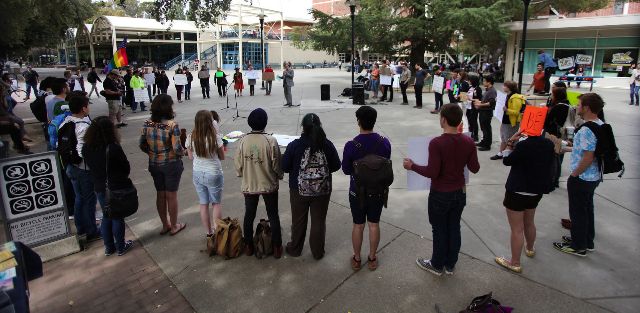
Support for Partida was given in a candlelight vigil held on March 16 in Central Park. On March 18, UC Davis students held an event on the Quad to increase awareness. WunderBar on G Street also held a “Mikey’s Night” on March 22, with a portion of the proceeds going to Partida and his family.

Garzon is currently under the supervision of Yolo County’s Probation Department. He is required to wear a GPS monitoring device at all times, along with a device to detect if he has consumed alcohol. Garzon must also stay 100 yards away from Partida at all times. According to The Davis Enterprise, Garzon’s attorney Linda Parisi said in court last week that Garzon’s allegedly hateful language was merely slang.

“It is an ongoing investigation, and we are trying to maintain the integrity of the investigation because there is still an entire legal process that needs to take its course,” said Lieutenant Glenn Glasgow of the Davis Police Department.

Garzon is due to appear back in court on April 12 for a pre-hearing conference.

MEREDITH STURMER can be reached at city@theaggie.org.

Men’s basketball turnaround season ends in disappointment

When the Aggies headed down to Anaheim, Calif. to participate in the Big West Tournament Championship, they had every intention of winning. Despite being ranked sixth in conference, this team knew they had what it took to bring that championship banner home.

While the UC Davis men’s basketball team was not able to capture the championship, it was not wrong about its talent. UC Davis is home to Corey Hawkins, now named Big West Newcomer of the Year and CBS Sports Big West MVP. The Aggies’ roster also boasts Ryan Sypkens, the second most productive three-point shooter in the nation. The team is also joined by big man J.T. Adenrele whose size allows him to be a presence on all sides of the court.

This team was blitzing toward a Cinderella finish, but their tank ran a little dry after their historic game against Long Beach State on ESPN2. The Aggies suffered a heartbreaking loss that night, and they followed it up with another collapse against UC Irvine a few days later. Between the injuries and emotional letdowns, they may not have been best prepared for the Big West Tournament.

UC Davis drew Cal Poly for its quarterfinal match-up. During the regular season, the Aggies and the Mustangs split the contests, each winning their respective home games.

Down in Anaheim, the first half was a grinding back and forth battle that pushed both defenses to make a stand.

Thanks to a quick Adenrele dunk and another Sypkens three, the Aggies jumped out to a 5-0 lead. However, Cal Poly went on an uncontested 10-point run that put them up 10-5. Adenrele and Josh Ritchart combined for another dunk and three-pointer combination that tied things up at 10-10. There were five more lead changes during the first half which finished with a 20-19 Cal Poly advantage.

The Aggie defense has been the focal point for head coach Jim Les this season. He has been emphasizing the importance of pairing an explosive offensive with a strong defense since the first game of the season and he was impressed with his team’s effort during the first half.

“I thought it was one of the better defensive halves that took place this season, all five guys on the floor were in sync,” Les said.

Unfortunately, UC Davis lost some of that fire before returning to the court. The Aggie defense fell flat for the first three minutes of the half, allowing the Mustangs to go on an 11-point run to give them a 31-19 advantage.

Senior Paolo Mancasola ended Davis’ scoring drought and eventually the Aggies started to put some points together. Tyler Les added a nice three-pointer that cut Cal Poly’s lead back down to nine points, but UC Davis was never able to draw within 10 points again.

The Mustangs blitzed past the faltering Aggies and finished the game with a 64-41 lead. UC Davis was eliminated from the Big West Tournament, and their season ended much sooner than they had anticipated.

Coach Les acknowledged that the game could have gone either way. Unfortunately, it did not fall the Aggies’ way that night.

“The first team that was going to break out into an offensive rhythm was going to have the upper hand (in the second half), and that was Cal Poly,” Les said.

With the season over, the team has a lot to be proud of. They also have a lot of work to do. UC Davis is graduating two seniors who were key participants in the roster. Senior Paolo Mancasola was the starting point guard and senior Ryan Howley was a workhorse player who had great shooting capabilities and an incredible knack for pulling down rebounds.

“I am really appreciative of my guys for battling, and for everything they gave me this season.”

The Aggies have a large cache of young talent to step up and replace Mancasola and Howley, but coach Les will have plenty of development to work on during the offseason.

While the Aggies may not make the Elite Eight next season, they will certainly have every chance of winning the Big West Tournament. This year’s roster broke through countless barriers to turn their record around. There is still plenty of room for improvement and it will be an exciting year if UC Davis can keep improving as rapidly as they have.

KIM CARR can be reached at sports@theaggie.org.

‘Jersey Boys’ returns to San Francisco

More than 14 million people worldwide have experienced the Tony, Grammy and Olivier Award-winning Best Musical Jersey Boys. Jersey Boys showcases the music and the story of Rock and Roll Hall of Famers The Four Seasons: Frankie Valli, Bob Gaudio, Tommy DeVito and Nick Massi and how four blue-collar kids made pop music history.

Nick Cosgrove, John Dardiner, Miles Jacoby and Michael Lomenda are the stars of the show, performing daily and traveling across the continent to entertain audiences and live their dreams.

The Aggie was invited to the first-ever SHN cocktail hour with the Jersey Boys that took place the weekend before opening night in San Francisco. The crowd, made up of a few lucky SHN subscribers, reporters and photographers, got to view the loading-in of the stage, take pictures inside of the theatre (a rare opportunity, as photography is never allowed before, during or after a show) and interact with the main men of Jersey Boys. The hour and a half was filled with hilarious inappropriate questions, personal stories and special Jersey-themed cocktail drinks.

MUSE also received front-row loge seats to opening night and then had the opportunity to converse on the phone with the talented Michael Lomenda, a Canadian returning to his role as Nick Massi. Lomenda explains why the show loves San Francisco, how he actually almost became an architect and why both college students and their grandmas can both enjoy the show.

MUSE: First of all, amazing show last night. How was it from the stage?
Lomenda: We’ve had a great time already. We’ve had some incredible audiences. [San Francisco] gets the show. They get the references and have a good time.

Speaking of this audience, how has San Francisco been for you so far?
Some people in the current cast were in the show last time it was in SF — they’re really excited to bring it back. I had never been to San Francisco. We were just so excited to bring it to this theatre — it’s such a beautiful theatre. We hire from the area for the backstage crew … The crew from town has been very welcoming.

With the weather as great as it is, I’ve finally been able to use my bike. I’ve been walking a lot. There’s great seafood.

What has been your favorite place to perform on tour so far?
Portland was a cool and funky city. Chicago is a great theatre town. D.C., Miami and Vancouver were great too. I actually ended up performing on the stages that I saw my first major shows on.

When we performed in Canada, it was a trip to perform on my home terrain. My old French teachers to ex-girlfriends attended the show. One of the first shows I got to see was Phantom [of the Opera]. I’m from Alberta (the Texas of Canada with blue-collar workers, cows and oil), and we had giant theatre companies coming through town. I also saw Tommy the Musical, and it turns out I ended up working with performers that I saw in that show.

What do you see yourself later on in your career?
I’m in my 30s, and I’m asking myself, “Do I want to be performing the rest of my life?” I can definitely see myself in the directing field. I love working with other actors. And to be a director who also worked as an actor … I’d be able to bring something different to the job. I want to write. I want to create new theatre. New York is the hub of that. Everyone is there wanting to create new stuff, and I think that’s an exciting vibe.

My goals … have changed a lot. I used to want the Governor General’s Award in Toronto — many prestigious people in Canada receive it. It signifies that you have created, developed and contributed to your career field. But now that I have this national tour, I might want to go to the U.S. and write material and surround myself with great people. Honestly, I want to buy a building. The first floor will have a restaurant with home cooking, the second will have a theatre company that focuses on edgy new works, the third floor will feature an art gallery, and the fourth floor will be a place that actors can work. The top floor will have [an] awesome city-view patio.

What are your plans after Jersey Boys?
I’m going home. My apartment is a black hole of everything I’ve sent home. Before Jersey Boys, I wasn’t stationary either. I’m going to have a great big garage sale. You’re invited. You’re all invited. Then I’m going to New York — I’m working on my green card. I plan on approaching New York with an open heart, but I also need time to reevaluate things.

But I do hope that there’s a future for me in this Jersey Boys life. All guy actors want to do this show so badly. This music doesn’t ever tire out. Twelve hundred shows. I’ve banged my head on that table 1200 times.

How has the tour influenced your life?
We’re playing guys on the road and also living it in life. In Toronto, I got to sleep in my bed. I’m more mature now. I was 28 and then joined when I was 31 or 32. Tour life does affect you in a certain way — I’ve oddly become more like my character. The soaps are still as tiny.

What’s the single worst thing a person can do during an audition?
The worst thing is when a person walks out feeling like they didn’t show who they are. I think a lot of people try and go in and fit themselves into a box. Even if you nail the audition, I think what people are actually looking for is your own personality and your own take on the role. So many people can sing and act. If you don’t have your own personal opinion of the material, you get lost in the mix.

You wanted to be an architect at first … when did going into theatre become reality for you?
In my last year of high school, a friend came home from acting college. She told me that I had to go. I thought that maybe I do. I abandoned the architecture ship. I had to reschedule everything in order to get into this school, and I had to make it work and I got in. Then I got into a three-year program. I was thrust into the business, but it helps that Toronto is a great theatre city. A couple of years into it, my parents realized that I was always busy and wasn’t asking for money anymore. You can make a living in this business. My motto is to work as hard as I can and do my best work.

Any last words?
A lot of people think Jersey Boys is old people music. It actually speaks to a wide variety of people and a wide generation. There are elements of the show that speak to college students: There are guns and cool stuff in the show. But you can also bring your grandma.

Jersey Boys runs through April 28 at the SHN Curran Theatre in San Francisco. To buy tickets or find out more information, visit shnsf.com.

ELIZABETH ORPINA can be reached at arts@theaggie.org.

Gospel Choir performs for campus and state events

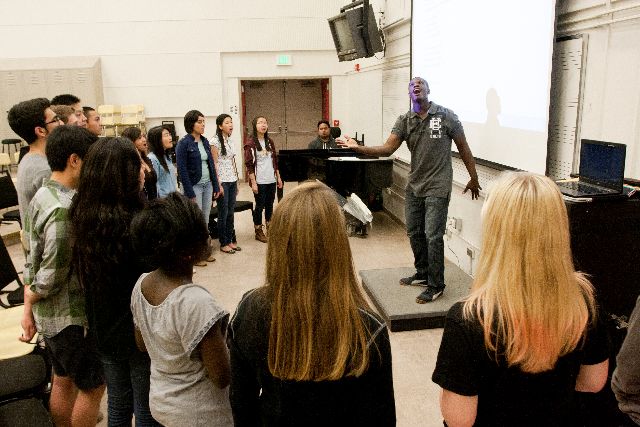
The Gospel Choir at UC Davis may not be an official course with academic credits like the University Chorus, but it remains legitimate and stays active, managing to tour every quarter.

The Gospel Choir has been around before some of its current members were even born.

“The choir was directed by Calvin Lymos for 20 years,” said Louise Ramos, a fourth-year psychology major who serves as co-president for the gospel choir.

With years of dedication and a growing group of inspired members, the Gospel Choir continues to exist after Lymos. Joseph Gray, a third-year sociology major who serves as the current musical director and arranger, has a lot of respect for Lymos.

“He really left a strong legacy here and in the surrounding communities that I’m trying my best to keep going. He’s been a real mentor to me,” Gray said.

Gray composed many of the original songs that the choir performs, such as “Jesus You Are.” The choir still performs some of the songs that Lymos composed, such as “What Would You Do.” In addition to its own work, the choir performs songs by Kirk Franklin, Tasha Cobbs, Deitrick Haddon and Israel Houghton.

Natalie Chieng, a fourth-year biological sciences major who serves as the other co-president of the Gospel Choir, has been exposed to and experienced a variety of gospel songs introduced to the choir.

“[‘Awesome’ by Charles Jenkins] really speaks to me, and it says a lot of the character of Christ,” Chieng said.

The Gospel Choir performs not only on campus but also at events all over California.

“We’re performing at a benefit show on campus called Pilipin@ Time for the BRIDGE group on April 6, [and] then at the Santa Clara University Gospel Festival on April 13,” Ramos said. “We’re also performing on Picnic Day.”

In addition to concerts, the Gospel Choir also performs for various church services, an experience that Sean Lo, a second-year microbiology major, really enjoyed.

“It was interesting seeing what other churches do and how they perform services,” he said.
For the members of the Gospel Choir, the experience provides a way to combine their interest in music with their faith as well as a way to meet people who share similar interests.

The group is not exclusive to just undergraduate students. Graduate students are also welcome to join the family of gospel choir fans.

Joe Voss, a graduate student in mechanical and aeronautical engineering, enjoys the choir as a community.

“I like spending time with like-minded people, so I feel like the music we do here adds a lot to my spiritual life and helps me cope with other, more difficult things in my life,” Voss said.

Not only does Gospel Choir seem to provide a community and gathering place for singers, performers and fans of gospel music, but it also allows the group to unwind, mentally and physically.

“It’s very energetic, soothing for the most of us,” Gray said. “Since we have it at the beginning and end of the week it’s a very good way of coping and releasing stress built up during the week.”

In the end, Gray and many other members are thankful for the entire experience. Aside from the choir environment, the uplifting music and the growing family of members, the Gospel Choir finally serves as a place of worship for those interested.

The Gospel Choir meets in the UC Davis Music Building Room 105 on Mondays from 6 to 8 p.m. and Fridays from 5 to 7 p.m. For more information about the Gospel Choir, including upcoming performances, visit gospelchoiratucdavis.wordpress.com.

JOHN KESLER can be reached at arts@theaggie.org.

Whole Foods proposes full GMO labeling transparency


gmo(Nathan Chan)

At the March 8 Natural Products Expo West, Whole Foods committed to a full transparency of genetically modified organisms (GMO) labeling plan. By 2018, over 340 Whole Foods stores in the U.S. and Canada intend to have GMO labeling on all food products.

This plan is in response to the increasing prevalence surrounding the national conversation concerning GMOs — plants whose genetic makeup is altered to produce traits unattainable in nature.

“GMOs are pervasive — 93 percent of soy, 88 percent of field corn, 94 percent of cotton and over 90 percent of canola seed and sugar beets planted in the U.S. are GMOs,” said Libba Letton, spokesperson for Whole Foods Markets.

Because of this, there has been a push from Whole Foods by their customers for GMO labeling.

“We are committing to full transparency and setting a five-year deadline to label all products to support the consumer’s right to know. Our customers have consistently asked for clear labeling,” said Kate Lowry, global PR director for Whole Foods.

The commitment to organic foods and transparency has been ongoing, as Whole Foods has worked closely with supplier partners, such as the Non-GMO Project — a nonprofit that works with over 15,000 food retailers to put out their 365-Everyday Value line of verified GMO free products — since 2009.

“The Non-GMO Project is committed to building and preserving non-GMO food supply. We have project verification programs all through the food supply chain. I think this is fantastic to see a store of this size making this level of commitment,” said Courtney Pineau, assistant director of the Non-GMO Project.

As the eighth largest food and drug store in the U.S., Whole Foods Markets sell 300,000 products from more than 10,000 vendors annually, over 3,300 of which are non-GMO verified products from 250 brands. In the 2012 fiscal year, they made $11.7 billion.

“The prevalence of GMOs in this country makes it hard for retailers to source GMOs. It also makes it hard for consumers to choose, so we are recommitting ourselves to full visibility. Offering those choices in our products is paramount to a more informed consumer,” Lowry said.

Not only has Whole Foods worked with the Non-GMO Project, but it has also extended support for current policy-changing efforts for GMO labeling. Examples include JustLabelIt.org in Washington, D.C., efforts in Washington state and Proposition 37 in the most recent California election.

“While we are encouraged by the many mandatory labeling initiatives, we are committed to moving forward with our own GMO transparency plan,” said Walter Robb, co-CEO of Whole Foods Market in a released statement.

The proposal is intended to push the national debate surrounding GMO labeling forward.

“We are Americans and we have a right to know what is in the products we buy and consume. We hope our efforts and the efforts of JustLabelIt.org and the others putting it to [the] test on ballot initiatives will lead to uniform national standards. We hope our proposal creates a ripple effect,” Lowry said.

Whole Foods Markets representatives do foresee challenges with the proposal in the next five years.

“Growing enough non-GMO food to meet demand could be a challenge, because it’s going against a 30-year trend in agriculture which favors GMO crops. Many suppliers are looking overseas for non-GMO grains and other ingredients. We want to encourage more American farmers to transition to growing non-GMO crops so supply can meet demand,” Letton said.

Students at UC Davis have differing opinions on GMO labeling, especially because Prop. 37 proposed full disclosure of GMOs on all food products.

“I believe that having to repackage everything would lead to more of a cost to consumers. If every company had to label their GMO products, then in addition to the cost of GMO foods going up, the price of non-GMO food would also go up because it would be considered ‘better,’ sort of like organic food. However, labeling GMOs might stigmatize them, and that could slow progress on those kinds of endeavors,” said David Belcher, a first-year political science major.

Other students feel supportive of GMO labeling.

“I really think we should be labeling food that has been altered. I want to know what is in my food. If we are able to label all organic food, we should be able to label GMO products without much of a difference in cost,” said Zach Dahla, a first-year economics and communication double major.

Ultimately, Whole Foods hopes that its commitment to GMO labeling will influence other retailers to make changes and have a higher regard for informing consumers about what’s in their food.

“I think it’ll motivate and drive change for many retailers and that’ll be the biggest area of growth for a more informed consumer,” Pineau said. “What Whole Foods has committed to is so exciting for us at the Non-GMO Project.”

GABRIELLA HAMLETT can be reached at city@theaggie.org.

Q&A with local roller derby team Rage Blockout

0

The Aggie sat down with Annastasia McPherson, president of the SoYo (Solano-Yolo) roller derby team Rage Blockout, to discuss how the only roller derby team in the county developed.

The Aggie: When was the team created? How did it start?
McPherson: Back in May of last year, I had been looking for a roller derby team. Nothing was close enough. [There’s] not much in Yolo County, so I always had to drive over an hour to try to play.

I got into touch with the only skater in Woodland [and] I set something up on Facebook — over 20 people came over. We started with the basic skating skills and we formed the board.

From the very beginning, we were hoping to possibly become a big part of Sacramento. It’s a lot of sweat and tears. It’s really hard to start a league from nothing. We lost girls on the way because of money and injuries. We’ve done everything that we’ve had to. We recently got [into] the league; we are now working to get outing. It’s a lot harder said than done.

How are you recruiting?
We [need] 14 girls to have a roster team [an official team]. We’re not there yet. Last night at Davis, we had quite a lot of girls come in. Up until this time, we have had an open rolling that anybody can come in. Since we had so many new girls coming, we couldn’t move forward. Since it was really difficult to move forward, we made the decision to stop the recruiting.

In April, we are stopping the open call so those girls will be able to get a 10-week training, allowing our team to become much better. We are not nonprofit technically since it costs a lot of money.

What does this community mean to you and the other girls?
We found it with the intention to inspire girls from all over in athleticism and have an outlet to do something. A lot of our girls are moms and you wouldn’t expect them to be doing this. It is kind of cool that they are going out and are able to do something that they wouldn’t be able to do otherwise.

Personally, it is really great for me. It’s not all about my kids, but something else for me. It’s a really good workout and the girls are awesome. It’ll be a lot easier when we are nonprofit and are able to help people in the area. This was the goal from the very beginning.

How will the team reach out to the community?
With our rink time, it’s not cheap and the majority of the dues have been going to that. We have to pay for things as things are going on, so the big thing is for sponsors to give us money.

Now we’re trying to find a new location to practice and support the amount of money to become a nonprofit team. Even when we get to the profit to have a non-roster team, we still need to pay for uniforms and gear, and we will have to pay monthly dues so that the dues cover that. It takes a lot of involvement and commitment.

We can raise money through canned food drives and local charities. Sponsor money that comes in every month [will also help]. This way we can give back to the community. Once we get that, it will help us with our rink time and operational time.

Do you compete?
Once we get a roster team we will. We don’t have the level yet. But we are hoping it will happen soon.

How often are practices and where are they?
Right now we practice once a week. So far we have been practicing at a skating rink. We basically get the leftover time to practice, so that kind of sucks. We’ve been using outside places as well.

The problem is finding someone to let us use a space. We use the type of wheels that don’t mess up the floor. There’s no damage done, but people have this general idea that it’s going to hurt something. I’ve been diligently trying to find somewhere. We’ve learned to skate properly so that we don’t fall. People have practiced in airplane hangers. Yesterday, we got kicked out and we ended up skating in the basketball court. It’s difficult but we’re working hard to figure it out.

If people are interested but don’t want to necessarily skate, is it still possible to be involved?
If there are those interested in roller derby, there are a lot of things to do that are not only skating. We need non-skating officials for timing and penalties. We’re trying to do a promotional video — [it can be for] a school project or something. It’s been difficult to find them, but we need all kinds of people.

When will you be having your next info session and tryouts?
At the end of the month, the open call will be closed. The next open call would be in about 10 weeks. People are welcome to come to practices and watch.

For more information visit soyorollerderby.com.

KAMILA KUDELSKA can be reached at city@theaggie.org.

State representative introduces bill terminating textbook sales tax

1

On Feb. 19, State Rep. Tim Donnelly (R-Twin Peaks) proposed the Textbook Relief Act, which would exempt textbooks from sales tax in California. Donnelly said the initiative is an investment in California’s future.

“We need to do something to signal to students in California that we actually want them here, and that we want them to complete their education,” Donnelly said. “Every student’s success is California’s success.”

Donnelly said he believes the bill aligns the financial incentives with the desired behavior, which is completion of higher education.

“When students get out of school and get a full time job, they become part of the income stream for the state,” Donnelly said.

According to Donnelly, California has a surplus of money that simply needs to be redistributed so that money isn’t wasted. Donnelly said that the sales tax exemption on textbooks wouldn’t be detrimental to the state’s budget.

“There’s money all over the place that we’re wasting on things. To me, this would be a sound investment because it essentially says we’re serious about producing an educated workforce — we’re willing to invest in students that show promise,” Donnelly said. “I want to make this the most prosperous and freest state in the Union so [that] everybody wants to come here.”

Donnelly estimates the tax exemption would put approximately $100 back in the pocket of the average California student.

According to Kato Meley, assistant director of course materials at UC Davis, the UC Davis Bookstore sells books to approximately 60 percent of enrolled students.

“Our unit sales have increased based on our rental program,” Meley said.

Meley said she believes that although a tax break provides relief, the bookstore has been providing relief through the rental program.

As the assistant director of course materials, Meley seeks out as many variations of the course material as possible to ensure students are confident in their purchases.

“Quite a few instructors say, ‘I want this version because it costs less,’” Meley said.

According to Jason Lorgan, stores director at UC Davis, the rental program lowers the cost of textbooks by 70 percent and is utilized by 15,000 UC Davis students.

“Our goal is for as many students to have course material as possible, and at the lowest price,” Lorgan said.

Lorgan said that he believes instructors’ first priority is content, but that they are still concerned with price.

“We often hear from publishers that the conversations they used to have with faculty used to just be about content, and now it’s about content and price,” he said.

UC Davis political science professor Ethan Scheiner forgoes using a textbook for a low-cost course pack for his Political Science 2: Introduction to Comparative Politics class.

Scheiner said that if he found a textbook of equal or only slightly better content-value to his customized course pack, he would choose a course pack to save students money.

“If I wanted to, I could just grab [a textbook] and teach to the textbook, but the other part is to save students money,” Scheiner said. “I wouldn’t say the main driving force [to choosing a course pack] is to save students money, but it’s certainly a big part of my thinking.”

Scheiner said when it comes to students who study the social sciences and humanities, the Textbook Relief Act would have a lower impact because of the lesser use of textbooks in their courses. In contrast, he said the bill could save students in the natural sciences and related majors a much more significant amount of money simply because of the use of textbooks in their courses.

According to Scheiner, his colleagues in the political science department make a conscious effort to choose course material with prices in mind.

“An example would be someone who uses a single textbook for one class, as opposed to using multiple books and that kind of stuff — they’re doing this in part to contain the cost for the student,” Scheiner said.

Scheiner said he thinks anything that can be done to encourage people to continue higher education is a positive thing.

“I think this a great idea. In fact, it is something in my view that [textbooks] should not be taxed,” Scheiner said.

Second-year managerial economics major Jodi Brenner said that although she would prefer to have textbooks exempt from sales tax, she is concerned about the effect the tax exemption could have on students financially burdened when it comes to the price of tuition.

“Would the government have less money to provide financial aid for students?” Brenner said. “If taking out the tax doesn’t negatively affect students, then I would encourage it.”

Donnelly said that supporters of the Textbook Relief Act should write emails proclaiming their support and deliver them through the Textbook Relief Act website. The website also provides a link to sign a petition to aid the bill in getting passed.

SYDNEY COHEN can be reached at city@theaggie.com.

Picnic Day regulations to stay the same

0

Due to a decrease in arrests last year, UC Davis and the City of Davis are keeping the same regulations for this year’s Picnic Day.

Problems in the past include open containers of alcohol, public urination, noise violations and smoking. The first three will be subjected to a $403 fine and smoking will be subjected to a $480 fine due to the safety enhancement zone.

In 2011, the Davis City Council established a safety zone in downtown Davis during Picnic Day. The next year, the council extended the zone to include Old North Davis.

The zone doubles fines just for Picnic Day in the downtown Davis area — along Russell Boulevard, between Anderson Road and the railroad tracks as well as between First and Eighth streets.

“Some other big issues are people coming from other cities. We have cut advertisement to limit the people coming out of town or out of state who have no affiliation with UC Davis. Picnic Day only means something to people in Davis,” said Jonathan Wu, chair of Picnic Day and a fourth-year neurobiology and psychology double major.

Paul Cody, interim director for the Center for Student Involvement, said the center, Davis City Council, Davis Police Department and Davis Fire Department have worked together since 2009 to propose and administer new regulations to keep Picnic Day safe and fun for everyone.

“Since these problems have occurred, we have put more resources towards the event, increased enforcement and police presence and created an extended safety enhancement zone, along with rules that have already been set in place such as zero-tolerance on campus,” Cody said.

Davis Police Lieutenant Paul Doroshov gave advice on how to avoid dangers involved with Picnic Day and how to avoid conflict.

“Last year, we still made over 50 arrests, mostly for misdemeanors and alcohol violations. The bulk of issues with Picnic Day regard drinking and public intoxication, which can lead to fighting and sexual assault. The highest danger is typical house parties,” Doroshov said. “Many people don’t know what they are getting into and a lot of uninvited guests end up coming from out of town looking for a party.”

This year’s Picnic Day lands on April 20 — also referred to as four-twenty or 4/20 — a “holiday” in cannabis culture during which people celebrate by smoking marijuana. Despite this coincidence, the police department has not prepared any new regulations regarding this day.

“When it comes to enforcement, there is not a whole lot new this year. We are aware that Picnic Day lands on 4/20, but we don’t know if this will make a big difference,” Doroshov said. “Smoking is still a violation and police will respond properly. The main concern is alcohol consumption.”

Several bars, restaurants and supermarkets have agreed to a Picnic Day Covenant, preventing the selling and purchasing of alcohol before 11 a.m. Fire marshals came into restaurants and bars to make official maximum capacity standards, allowing only a certain number of people inside at one time. The restaurants and bars have also helped fund Porta Potties that will be placed throughout downtown to stop public urination.

Wu said the main problem is the students’ mentality.

“People come into college as freshmen and hear about the parties involved with Picnic Day. They do not think that this day is about families and events. Their ‘let’s get plastered and ruin it’ attitude is the biggest issue,” Wu said.

Carly Sandstrom, ASUCD President and a third-year international relations and economics major, agreed with Wu.

“I don’t want students feeling like they weren’t informed on policies. Don’t come onto campus if you are inebriated. It’s not worth the money or having something be put on your record,” Sandstrom said.

Sandstrom said if people want to party, it is advised that they do not come onto campus.

“In the next couple weeks, if there are student groups that want advice, they can contact the police department or me so we can come in and talk about our expectations. We have gone in and talked to Greek organizations, so I hope to find other obscure groups — whether if it’s a club or sports team to talk to,” Doroshov said. “Anyone can and should contact the police in advance if in need of assistance with something regarding your event.”

Despite all of the potential dangers involved, ASUCD wants to emphasize the events and the enjoyment to be shared.

“I encourage everyone to have a fun time and go to events. It’s the beginning of Spring Quarter, everyone is excited to get back on campus and the weather is great,” Sandstrom said. “Just don’t take too many shots too quickly and have a small party off campus, if need be. Just enjoy campus events, maintain yourselves and don’t do anything illegal.”

MELISSA GAHERTY can be reached at city@theaggie.org.

Letter to the Editor: Humanure

0

Congratulations Davis, we just passed Measure I! For all of you not paying attention, or for those making amateur porn, this means that the city of Davis will shift its water supply from ground water to the Sacramento River. What does that mean for me you might ask?

Well, you might notice a better taste in the water due to the decrease in selenium, boron and salts present in our new water, but more likely than not you’ll notice your water bill will triple since this project is proposed to cost at least $100 million. Why did we decide this you ask? Well, there are a number of reasons, but one basic answer is that we have over-pumped from the ground water for too long and need to find a new supply. But why did we over-pump in the first place? Good question. At this point I could attempt to explain the history of our over-consumption of water because of industries such as agriculture, paper mills, mining and most recently hydraulic fracturing, but instead I’d like to focus on the toilet.

I saw a meme the other day that depicted a child from the Global South with a skeptical look on his face. The text read, “So you’re telling me that you have so much clean water, that you sh*t in it?” Damn, that kid has a point. Every time we use the toilet we are basically contaminating otherwise clean water. I mean, it’s not our fault, it’s what we’ve been taught to do. It’s what we are reminded and reinforced to do every time we enter into the defecation/urination room. But what else could we do? If we pee or poop on the street then we risk an indecent exposure charge or if we just bury massive quantities of it then we risk contaminating groundwater or risk bacterial infections.

Hmmm … what to do, what to do … I got it, we could compost it! Surprisingly the process is really simple. Step 1: poop/pee in a bucket. Step 2: wipe your butt (you can still use toilet paper). Step 3: cover the poop and used toilet paper with a liberal amount of wood chips (the wood chips will neutralize the smell and speed up the composting process). Once your bucket is full, empty this into a barrel lined with straw and repeat the process. Once your barrel is full and topped with straw, put a piece of chicken wire on top to ensure pests don’t dig around in it. Plop in a thermometer and let it sit for six to eight months.

But wait — not everyone can do that, not everyone has the space. That’s true, but the city does have the space. So let’s think about it; the most efficient toilet on the market uses 1.3 gallons per flush (toilets manufactured after 2006). As many people may find out by going into their bathroom, this is not what the majority of toilets are. But for the sake of math we’ll go with this number. So 1.3 gallons H2O x 4 flushes per day (including urinating) x 365 days/year x ~60k residents of Davis = 113,880,000 gallons H2O per year for Davis, Calif. Damn… and that’s the conservative estimate.

I guess at this point I could make a plea to change your toilet to high efficiency or tell you “if it’s yellow let it mellow” but that just doesn’t seem like enough. Especially when you look at the water use of those industries I mentioned earlier (1 natural gas well with hydraulic fracturing = ~ 6 million gallons of water). Thinking back to that meme, there is something definitely off about a culture that believes the best way to deal with waste is to flush it away with clean water.

I got it, poop in buckets and drop them off at your representative’s house until they change things.

Kase Wheatley
Fourth-year sustainable agriculture major

Letter to the Editor: International student relations

0

This letter is from a group of international students at UC Davis who would like to send a message to all of you in the larger community. International students are a demographically significant part of the UC Davis student body which has been rapidly increasing every year for the past few years. There are currently about 2,000 undergraduate internationals, and by 2020, UC Davis’ goal is to increase the proportion to 5,000, which is 20 percent of the entire undergraduate population. Because of this, UC Davis needs to make attempts to understand the experiences of international students better.

As international students, we came to UC Davis to learn about American culture, to develop an international network, to learn English and to achieve academic success in a competitive environment at a globally-recognized institution.

However, language barriers, cultural conflicts and references often hinder our ability to be successful at UC Davis. For example, professors often fail to recognize if we’re struggling with class material or the wording of tests. We know that we need to use English to do the homework and tests, but this is a double burden for us compared to native speakers: we need to understand the concepts and the language.

We have made the decision to accept this double burden. It is worth the extra financial investment (international students pay nearly three times more than California residents per academic year in fees) and extra investment of energy for us to learn such an international language as English. We are motivated to make these investments but sometimes resources available to us are not meeting our needs.

Furthermore, cultural differences regarding the relationships between teachers and students in the United States versus many of our home countries are quite different. In East Asia for example, students generally do not ask questions in class, particularly questions for clarification or basic questions regarding the content, whereas it’s encouraged and expected here.

In addition to academic challenges, we are facing another important barrier: networking with local students. It is a common phenomenon for international students to stick together and not communicate with local students. The reason for this is twofold: First, we are often insecure about speaking our second language with native speakers; it’s not a comfortable language for us. Second, many native speakers are impatient or indifferent about interacting with us socially.

Furthermore, we rarely have a chance to get involved in American cultural topics (e.g. popular TV shows, American sports, political issues, etc.). International students often join popular organizations like Club-International (Club-I), a club designed for international students to make friends, but just with each other and not with American students.

We suggest that the following recommendations be considered by the UC Davis community with regards to the diverse experiences of the student body.

Academically, we want to get good grades but we need to already speak, read, write and understand English well. Speaking with native speakers of English is one way that we try to become better at English, but many native speakers do not have patience for those learning the language. Please take the time to listen and try to understand us.

Organizations like Club-I provide benefits, but we want better clubs run by both local and international students in order to break the invisible walls between each other. We are seeking various chances to get connected with local students and get involved in university community.

Finally, there are already a number of resources for international students, but we experience difficulties finding and utilizing them. So, there should be better outreach.

Thank you for listening,
Yuxuan Han, Bei Jia, Zehui Lin, Siyuan Liu, Naoto Tanaka, Xiezhe Wang, and Junghee Woo
Your friends from EDU 98, Winter 2013

Letter to the Editor: Response to ‘Master gardeners…’

0

I was browsing through The Aggie website when an article, “Master gardeners emphasizes sustainable, water-wise gardening,” caught my attention. After reading a couple paragraphs, the methods and content reminded me of a debate from my environmental history class; the topic was Conservation vs. Preservation of the land and its natural resources. This was brought up when the first national park was opened; two advocates, Gifford Pinchot for conservation and John Muir for preservation, argued how the land and the natural resources within the park should be handled and used. Although the two principals focus on protecting nature for future generations, there is a fundamental difference in the way they go about it.

Preservation is reverting nature back into its primal state in which human influence and presence is nonexistent, while conservation focuses on environmentally-sustainable practices to directly ensure the wellbeing of the ecosystem while providing the most use to the public. The article is a prime example of conservational methods, informing people how to tend gardens, as well as sustainability. They covered basic knowledge about gardening, water conservation techniques and knowledge about what type of plants would thrive in certain settings. The article shows a direct human approach toward taking care of the environment while minimizing human impact.

Nowadays, I believe that society as a whole is leaning towards conservative ideas and policies. As we see more and more people and projects focusing on sustainable techniques and methods while maximizing our use of resources, like water and electricity, we also see more campaigns to limit the amount of industrial waste produced by factories, protests against certain construction sites, and spread the information to make the public more environmentally aware. More and more groups are dedicated to the “green movement,” reducing our carbon footprint and encouraging research and application towards green technology such as renewable energy and recycling.

I believe the reason why people lean towards these kind of policies, directly involving ourselves with the wellbeing and management of our environment, has less to do with preserving the “wild, pristine state of nature” and more with how aware we are of our impact of the environment. There are all kinds of messages and statistics that made us increasingly aware of how various aspects of our society, from our local households to industrial factories, have affected the environment over the years. Such messages showcase a disaster, like the BP oil spill, or studies of the accumulation of pollutants that we have released over the years.

I believe it due to these messages that society as a whole perceives most forms of natural crises to have resulted from our hands in one way or another and that we must take responsibility for our actions. There is also the message that if we do not actively undo the damage and pursue a greener lifestyle, we would evidently cause irreversible environmental damage and climate change. Thus it is no longer a concern about the aesthetics or beauty of the wilderness, but a matter of survival.

I see this article as a sign of where our current mindset is heading, where our belief in what our role in the environment should be, and our image of nature. Thus it is my thought that as the world changes, a tremendous amount of pollution is released each day, and energy demands increase, that I take care to do my part and properly manage the garden. Hopefully, I would be alone and just be one of the many who are encouraged to engage in a greener lifestyle and an environmentally friendly way of thinking.

William Wen
Second-year history major

Aggies struggle to find consistent play

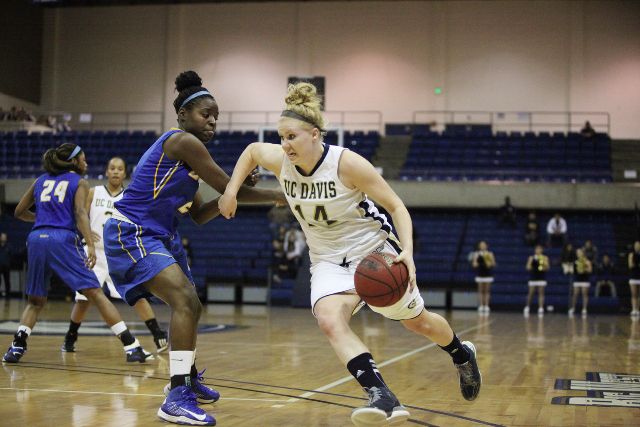
There is a saying in basketball that if you live by the three, you die by the three. This adage holds true in the case of the Aggies. The UC Davis women’s basketball team was an interesting squad this past season as they were filled with players who could shoot the long ball. At any given time, all five players on the court could be liable to hit a three-pointer.

The high-scoring Aggies gave other teams a lot of headaches, as they were third in the conference in shooting the three-pointer, posting an impressive 31 percent as a team. Their long-range prowess caused many mismatch problems as all five players on the court were threats from beyond the arc. However, the reliance on three-point shooting to account for a majority of the team’s scoring led to inconsistent results.

The characterization of Dr. Jekyll and Mr. Hyde reflects the nature of the team’s results. Some nights, the rim had a lid on it and the Aggies just could not buy a shot. On these nights, they struggled to score and could not find a rhythm. This was most evident in the Big West playoff loss against Cal State Northridge, where UC Davis shot a rough 17.2 percent from beyond the arc in the game. This was compounded by also shooting 23.3 percent from the field. Shooting performances like these do not allow any margin for error, as shown in the 61-40 loss.

However, just as often as the cold shooting hurt the Aggies, it also saved them. In UC Davis’ solid 78-69 win against USC on Dec. 21, the Aggies showed what a good shooting night can do for a team. The torrid shooting of the Aggies was a key factor in the win against a decent Pac-12 team. Shooting a fantastic 50 percent from the field including 53.8 percent from beyond the arc, the Aggies put up points in a hurry and the Trojans simply could not keep up. Games like these showed the ability of the Aggies to simply dominate teams when their shots were falling.

Through the good and the bad, the Aggies had one player who provided consistent scoring and rebounding. That player was sophomore Sydnee Fipps. Averaging 5.2 points and 2.7 rebounds a game last year, as a freshman, Fipps contributed quite a bit to a very senior-driven 2011-12 team.

Entering this year with only two seniors on the team, Fipps became one of the most experienced and important players for the Aggies. She did not disappoint, leading the team in both points and rebounds. Her 17.1 points and 5.1 rebounds a game was noticed around the conference as she was named to the All-Big West first team.

However, UC Davis’ productivity was not totally dependent on Fipps’ production. The Aggies truly played team basketball. Though Fipps led the team’s offense, the Aggies had very balanced scoring and anybody was capable of catching fire on any night.

Graduating seniors Blair Shinoda and Cortney French will be missed for their production. Shinoda was the floor general of the team, leading with her great vision and unselfish play. French was the three-point specialist who could put points up in a hurry.
“They took us to new levels,” said head coach Jennifer Gross. “Their intangibles were unmatched.”

Both players provided more than just stats though, as they were the calming and guiding influence for a fairly young Aggie team.

“Blair’s calm and leadership did not always show up on the stat sheet, but was so important to our team,” Gross said. “Cortney is going down in history as one of the best three-point shooters in UC Davis history and her leadership meant a lot to our team.”

The loss of these seniors will take an adjustment period. However, the Aggies have much to look forward to next year, despite the losses of Shinoda and French. With another year of experience, freshmen Celia Marfone, Molly Greubel, Aniya Baker and Alyson Doherty will be able to contribute even more than they did this season. Both Doherty and Greubel were already recognized for their impact play as they were both named to the conference’s all-freshman team.

“The biggest growth of a player is from their freshman to sophomore year,” Gross said. “We have five freshmen who played significant roles on our team this year, and I know they are going to put in the work and definitely improve next year.”

Furthermore, the Aggies still have their leading scorer and rebounder in Fipps. If she continues to progress as a player, UC Davis will be in a good position to succeed next season. The future of Aggie basketball looks bright, maybe even including a bid to the NCAA tournament.

KENNETH LING can be reached at sports@theaggie.org.

This Week in Science

*Editor’s note: This is a new section of the science page. Every week, we will publish the top seven (according to us) most fascinating science breakthroughs that we don’t have space to write articles about.

A study published last week showed that the fossil-fuel industry has been subsidized by nearly $2 trillion in 2012. Trillion with a “T.” And the United States was responsible for $509 billion of that amount.

NASA just released a study showing that nuclear power has prevented more deaths than it has caused.

Engineers are upgrading the Large Hadron Collider (LHC) to make it even more powerful. The upgrades will double the strength of the world’s most powerful particle accelerator. They hope to be able to finally produce dark matter.

A study released by the American Chemical Society has just shown that solar panels have finally reached the tipping point — that is, they finally produce more energy than it takes to manufacture them.

The Los Alamos National Laboratory alleges they have unraveled how HIV attacks the body. This could potentially open up a whole new realm of treatments and possible cures.

An extract from a Chinese tree that has been used for generations to cure hangovers has finally been converted to pill form. It has the added ability of preventing you from getting drunk, no matter how much you drink.

A recent study from researchers at the Imperial College of London has shown that feline urine acts as an aphrodisiac for multiple species of rats and mice, and might even affect humans.

City council approves water rate increase

0

Without a majority protest at the March 19 public hearing, Measure I’s proposed water rates were officially passed. Water rates are expected to be tripled by 2018, and the increased rates will help fund the Woodland-Davis Clean Water Agency surface water project.

The project, supplying Woodland and Davis with drinking water from the Sacramento River, is estimated to cost $113 million for the City of Davis, making for a combined $245 million for both cities.

“The project will give city residents a supplemental water supply so they are not just relying on groundwater,” said Herb Niederberger, the City of Davis general manager of development, utilities and operations. “Groundwater contains many elements, so surface water is a cleaner option.”

The project includes construction, operation and maintenance of a water intake facility, a water treatment facility and pipelines. These would be owned and operated by the Woodland-Davis Clean Water Agency.

Rates will rise starting May 1 and will be raised differently depending on income levels. The first increase will be 5 percent and the next, in January 2014, will be 20 percent.

Niederberger said that for an average single-family home in Davis, the rate will be increased to $31. The next raise in January 2014 would make the water bill $36. By Jan. 1, 2018, the rate for an average single family home is expected to be $98.27.

The City of Davis offers a calculator tool in which residents can estimate how much their rates will be increased based on their individual situations. It can be found on the City of Davis’ website.

The water project was approved by 54.1 percent of those who voted in the March 5 election. However, Proposition 218 requires a hearing to see if a majority protest still exists; over half of the city’s 16,500 ratepayers would have had to protest in order to prevent the rates from increasing.

There were still a few people who came to the public hearing to voice their concerns over the rate increase.

“I’m here to ask you to reconsider the proposed water project and the water rates change,” said John Munn, supporter of No on Measure I and the former president of the Yolo County Taxpayers Association. “Many residents of Davis cannot afford to have their water rates tripled. And for each issue we have looked at specifically, it’s just not necessary.”

The Yolo Ratepayers for Affordable Public Utility Services are challenging the current water rates in a lawsuit filed against the city. The suit claims that the current rates violate Prop. 218.

Prop. 218 was brought into question during the public hearing when some residents felt that the protest process was flawed and should be reviewed for future rate increases.

“I hope that the next time, the city pays attention to real democratic local process, and regardless of your position on issues, that you take this very seriously to set an example and to model how democracy should operate in this city,” said Davis resident Nancy Price at the hearing.

Price is also one of the plaintiffs on the lawsuit.

Mayor Joe Krovoza said at the hearing that he supports the project fully because it will help Davis in the future.

“The proponents of this project have helped us create a much, much better system for the City of Davis,” Krovoza said at the hearing. “They should be proud and this mayor and, I think, this council as a whole is very thankful.”

Additionally, the Davis City Council voted on March 19 to approve a water fee assistance program for homeowners. The new Lifeline Water Utility Rate Assistance program will help about 250 qualifying residents with about $120 per year in rate assistance.

Kelly Stachowicz, City of Davis deputy city manager, said that city officials are aiming to have the program ready by the time the rate increases begin in May.

In order to qualify, residents have to be accepted into the Pacific Gas and Electric company’s (PG&E) California Alternate Rates for Energy (CARE) program. Residents have to have a combined gross income at or lower than the amounts required by the CARE program. A random lottery will decide who gets accepted into the program, with a first-come, first-served basis.

According to a staff report submitted to council members, the program will be funded by the fees from late utility ratepayers. The council also requested staff to ask ratepayers for donations when paying monthly utility bills.

“I respect the views of folks who did not agree with Measure I and who protested the rates tonight [at the public hearing], but I am grateful that Measure I did pass; I think it’s very important for our community,” said Davis Mayor Pro Tempore Dan Wolk.

PAAYAL ZAVERI can be reached at city@theaggie.org.