53.2 F
Davis

Davis, California

Thursday, December 25, 2025
Home Blog Page 154

Third stabbing in Davis leaves woman in critical condition

An overnight shelter-in-place order has been lifted as police continue to search for suspect


By KATIE DEBENEDETTI — city@theaggie.org


Late Monday night, a third stabbing in less than a week took place in Davis. The female victim is currently in critical condition after being stabbed multiple times through a tent. The attack took place at a homeless encampment on 2nd and L Streets.

The Davis Police Department and UC Davis issued a shelter-in-place around 1 a.m. on Tuesday and it remained in place until 5:15 a.m. when police reported they had completed a thorough search of the area. 

The search was unsuccessful and the suspect, last seen running westbound on 3rd Street, is still at large. Police say he resembled the profile of the suspect in Saturday night’s stabbing and was described as a “light-complected male” and is thought to be thin and between 5-foot-6 and 5-foot-9. He was last seen wearing “a black or blue sweatshirt, black Adidas pants with white stripes, black shoes carrying a brown backpack,” according to the Davis Police Department.

Last night’s search brought in Yolo and Sacramento County sheriff departments as well as drone and K-9 units to conduct yard-to-yard searches in the downtown area. The FBI has also been called in to assist with the investigation.

According to the Davis Enterprise, Isaac Chessman and Christine Berrios, an unhoused couple, said that they awoke to the woman yelling for help. According to the couple, their friend, Kim, yelled “He’s on me! Help! Get off me! The guy with the curly hair!”

Chessman also reported that believes he saw the suspect about two hours earlier on Monday night and called police, but received no response.

This is the third stabbing in Davis since Thursday. On Thursday morning, David Henry Breaux, 50, known as the “Compassion Guy” in the community, was found in Central Park with multiple fatal stab wounds. On Saturday night, UC Davis student Karim Abou Najm was fatally stabbed in Sycamore Park while biking home from an undergraduate awards ceremony. 

The suspect in Saturday night’s stabbing was described as a “light-skinned male, possibly Hispanic, 5’-7” to 5’-8” tall, 19-23 years of age, with long curly loose hair.” Though the crimes have not been definitively linked, the suspects in both Saturday night’s and Monday night’s stabbings appear to bare a resemblance.

According to Lt. Dan Beckwith, it is too early to tell if these crimes are related.

“I can say that the description is similar to what was provided to us in the most recent homicide, however, it’s still very, very early on,” Beckwith said.

Though the shelter-in-place order has been lifted, Davis PD spokesperson Jean Lyon said that heavy patrol will continue in the downtown area as the search for the suspect continues. 

Police have warned the community to be vigilant and take precautions at this time. They recommend not traveling at night, and if necessary, doing so in groups. If anyone has information about any of the incidents or has seen anyone matching the suspect description or acting suspiciously, contact Davis PD immediately. 

The Davis Police Department can be reached at 530-747-5400 or via email at policeweb@cityofdavis.org. Anyone wishing to remain anonymous can call at 530-747-5460. If you are experiencing an emergency, call 911.


This story is developing, check back for updates. Last updated: May 2, 9:35 a.m.


Written by: Katie DeBenedetti — city@theaggie.org

Whole Earth Festival returns for 54th year from May 12-14

This year’s festival is themed “Sell Out to Love”


By SYDNEY AMESTOY — campus@theaggie.org 


The Whole Earth Festival (WEF) will return to campus from May 12-14 for the sustainability-focused event’s 54th year.

Co-unit director and fourth-year sociology and art studio double major Madeline Dei Rossi has been helping organize and plan this year’s celebration, which she said is themed around local businesses.

“This year, our theme is ‘Sell Out to Love,’” Dei Rossi said. “And that’s basically meant to highlight the fact that we are only sponsored by local businesses.”

WEF is a family-friendly, zero-waste event that began in 1969 and features artisans, food and musical performances, according to the festival’s website

According to Dei Rossi, all of the artisans who will be selling items are from small businesses, many of them local.

 “All of the vendors that you see present at the festival are hand artisans,” Dei Rossi said. “They are making what they’re selling by hand for their friends and their family, and that’s their means of livelihood. I think the essence of wealth is to directly support people […] We are part of a community, and we try to support that community.”

Another feature of WEF is the kids’ space, which hosts programming and events for younger attendees. Second-year English major Katherine Krinsky is one of the coordinators of the kids’ space.

“Kids’ space is basically a family-friendly area on the Quad that has multiple arts and crafts tables with different activities,” Krinsky said. “And then [there are] other activities, facilitated either by us or by on-campus or off-campus groups.”

According to Krinsky, some of these activities include yoga instructions, a bubble station and a potato-sack race. 

Krinsky said that she was inspired to join WEF after attending last year’s event. She said that the festival’s commitment to zero waste and the energy of the event drew her in. 

“The vibe or the energy there, it’s just so joyful and inclusive and warm,” Krinsky said. “And that was the other thing that really drew me to it: I felt like, even if I didn’t get put on staff, I would have volunteered. I just wanted to work with people who had the same shared goals of sustainability as well as that goal of coming together as a team and producing something that’s really amazing.”

Most of the staff members who are running the event are student volunteers. According to Dei Rossi, WEF is still actively looking for more volunteers to help during the three-day event. 

Volunteering is the only way to get a student-designed WEF shirt, according to Dei Rossi.

“I really encourage people to volunteer,” Dei Rossi said. “There is a four-hour shift minimum. I’m biased because we need volunteers, but everyone I’ve talked to who has volunteered has said it’s been one of the most amazing times that they’ve had at Davis — and it just connects you to this whole network of people.”

The festival will take place during Mother’s Day weekend on the Quad, from 12 p.m. to 10 p.m. on Friday, 10 a.m. to 10 p.m. on Saturday and 10 a.m. to 6 p.m. on Sunday.

“It’s just like a celebration of spring,” Dei Rossi said. “And we’re this ongoing community of people who care for the earth and care for each other. We invite everyone to come hang out.”


Written by: Sydney Amestoy — campus@theaggie.org


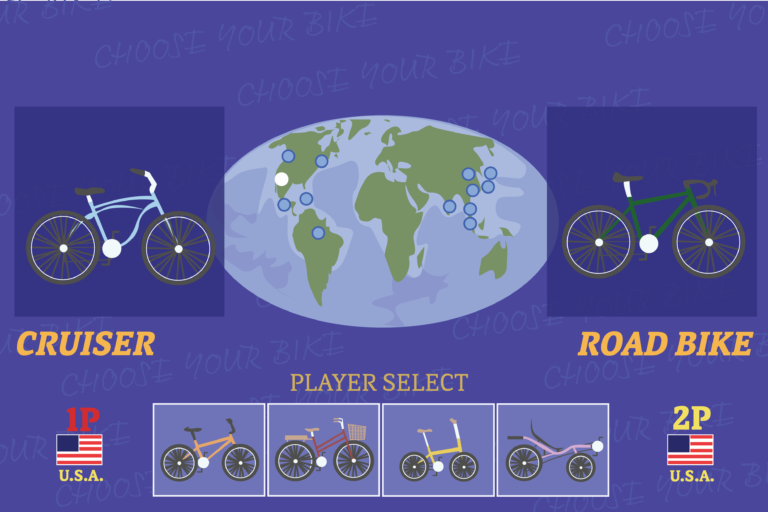
What the bike you ride says about you

Bicycle <3


By CARMEL RAVIV — craviv@ucdavis.edu


Transportation via bicycle is extremely popular at UC Davis. Almost too popular, if you ask me. After years of observation and careful research, I have deduced that you can tell a lot about a person by what kind of bike they ride. Here are my findings.


The yellow Walmart bike

You have never ridden a bike before coming to Davis. You have trouble finding your bike because a third of this school has this exact model.


A bike with two or more locks

Why do you think you are so important?


Electric scooter

No.


The bike with really thin wheels

You probably signal when you turn in a bike circle. 


A bike that’s too small for you

You stole this.


A rusty old bike from your garage

You’re here for a good time, not a long time. And your bike probably got stolen this year by the person above.


A bike with a basket, phone holder, fenders, front light and back light

You would not survive in the wild.


A bike you put tape on yourself to make it look cheaper

You think you’re so cool, huh? You think you’re so tough? Oh yeah, you’re so smart — no, you’re not.


An expensive racing bike

The craziest party you went to this year was when the cycling team drank beer at Pizza and Pints. The only person you take back to your room is your $2,000 bike.


An electric bike

What.


Any bike but you’re wearing a helmet

You’re a professor.


A car

Do you want to be friends with me?


A Trader Joe’s shopping cart

You’re drunk.


Skateboard

You know you want a bike. Conform. Conform. Conform. Conform.


Written by: Carmel Raviv — craviv@ucdavis.edu


Disclaimer: (This article is humor and/or satire, and its content is purely fictional. The story and the names of “sources” are fictionalized.)


Commentary: Creating compelling story arcs in films

Filmmaking undergoes various stages to craft audience-gripping movies


By SARAH HAN — arts@theaggie.org


Films are one of the most enthralling educational mediums today: from motion pictures to comedies, they take the audience on rides that provoke emotion, teach lessons and stir inspiration. One of the most imperative parts of filmmaking is creating the story — this helps the film connect with the viewers personally. However, the journey of creating a captivating story includes several stages, making filmmaking one of the most intricate processes there is.

The first stage is to contrive characters that will seamlessly fit in with the storyline. Most filmmakers create the protagonist or the main character of the film because they are key to the plot and conflict of the story. These characters propel the “emotional narrative” of the film and often play a big part in making audience members feel connected. 

However, solely creating the main character(s) is not enough; a good film usually takes the time to develop the character’s personality as the story progresses. 

A clear example of this is the character Miranda Priestly in “The Devil Wears Prada.” Throughout the entire movie, Miranda is characterized as condescending yet powerful; therefore, there is not much else to say about her personality. When she encounters Andy Sachs, however, her personality becomes more complex, as she is puzzled when Andy decides to split from the company. Although subtle, Miranda’s character development is crucial because it shows how life’s circumstances can soften even the most rigid of personalities.

The antagonist and side characters are important in aiding the protagonist’s journey. Four components are key to writing good side characters. 

One is to make sure that each side character has a purpose; for example, a villain’s purpose is to challenge the protagonist and see how they react to unexpected situations. Without a villain, a film would be dull, as it lacks a foundation for the story’s conflict.

The second component is to make them memorable. Like the protagonist, side characters’ personalities should be developed through the provision of screen time exploring their emotions. This will not only make the story more complex but also make interactions with the protagonist interesting.

The other two components are to make the secondary characters unique and memorable. This can be done by focusing on the first two components, but to make them stand out even more, filmmakers should brainstorm how they can clearly communicate each side character’s interests, flaws and personality.

The next part of the storyline is to answer the who, what, why, when, where and how questions. Who are the characters? What is the conflict? Why are they trying to solve the conflict? When and where is the story happening? How are the characters going to solve that conflict? These questions can change based on the story, but answering ones along the same lines lays the foundation for a compelling storyline.

Perhaps the most important component is the conflict because it contains the climax of the story. The conflict tests the characters and puts them in the hot seat, which reveals their “true” personalities. In other words, the conflict uncovers a more complex meaning of the narrative and emphasizes each character’s motivations, values and weaknesses.

However, the conflict and climax do not mark the end of the story. There can be unexpected twists that could deter the character’s initial success in solving the conflict; in fact, I think these twists help drive the complexity of the film’s storyline because they will keep the audience hooked until the very end.

After the characters solve the conflict, there comes a resolution stage which shows how the characters have changed. This is when the protagonist’s character development comes to fruition, which is usually shown through reflections and/or monologues. 

Although this is the basic structure of most films, many are breaking off from this traditional construction in favor of exploring other ways to tell stories. For example, “Shutter Island” follows one of the most unique structures I have seen. This was a snippet of how good films develop, and hopefully, it inspires you to film a story of your own.

Written by: Sarah Han — arts@theaggie.org

Fight food waste on campus

The surprisingly large impact of food waste and what you can do about it


By EMILIE BROWN — emrbrown@ucdavis.edu


With Earth Day just behind us, it’s the perfect time to examine the impact you have on your environment. It’s no secret that college campuses have food waste. From dining halls to dorm rooms, students are notorious for tossing out perfectly good food without a second thought. But what many don’t realize is the impact that this waste has on our planet.

Food waste is a major issue that plagues modern society. According to the EPA, it’s estimated that a third of all food produced goes to waste, totaling up to a staggering 133 billion pounds in the U.S. each year. To put that into perspective, that’s equivalent to about 450,000 Statues of Liberty or 15.8 Great Pyramids of Giza. This excess waste has a serious environmental impact.

When food waste ends up in landfills, it produces methane, a greenhouse gas that’s 25 times more potent than carbon dioxide. Food waste is responsible for a whopping 18% of U.S. methane emissions and up to 8% of global greenhouse gas emissions, making it a major contributor to climate change. Eliminating food waste would be the emissions equivalent to taking one out of every four cars off the road.

That being said, we are lucky enough to be on one of the most sustainable campuses in the world. However, we are still producing food waste, and it still has an impact. The good news is that there are plenty of easy ways you can make a difference when it comes to food waste.


  1. Plan. Before heading out to the grocery store, take a few minutes to plan out your meals and make a list of what you need. This will help you avoid buying unnecessary items that could go to waste.
  2. Take what you need. The next time you’re at the dining hall, don’t overload your plate. Instead, start with only the food you know you are going to eat. Then go back for more if you’re still hungry.
  3. Save leftovers. Feeling forced to finish all the food on your plate is awful, so instead, take advantage of leftovers. Research the best ways to keep your meal fresh and reheat it later.
  4. Compost. Have you seen all those compost bins around campus? Take advantage of them. Composting is a great way to turn food waste into something very useful. If you’re about to throw out some food waste, look to see if there’s a compost bin instead of a trash can.
  5. Tell others. Inform others about the dangerous consequences of food waste and the easy ways to reduce it. Encourage your friends and classmates to do their part.


Food waste is a serious issue that affects us all, but there are plenty of easy ways to make a difference. The next time you’re tempted to toss out that half-eaten sandwich or extra slice of pizza, remember that every little morsel counts.


Written by: Emilie Brown — emrbrown@ucdavis.edu


Disclaimer: The views and opinions expressed by individual columnists belong to the columnists alone and do not necessarily indicate the views and opinions held by The California Aggie.

Residents debate rights of trans youth at recent school board meeting

Activists, families and DJUSD community members address anti-trans rhetoric across the nation and in Davis


By CHRIS PONCE  city@theaggie.org 


Content Warning: This article contains discussions of transphobia.


Davis Joint Unified School District’s (DJUSD) recent school board meetings have featured discussion and controversy regarding the rights of transgender and non-binary youth. On April 6, DJUSD held its first meeting of the month. And while it was not an item that was listed on the agenda, during the public comment portion of the meeting, many residents shared support for trans youth while some residents expressed anti-trans rhetoric. 

The second speaker of the public comment portion who said she is a Davis resident, a mother of two kids and a registered Democrat addressed the school board. She approached the podium with a Davis Phoenix Coalition flyer, which advertised a drag show workshop hosted by the Davis Queer Teen Group, in her hand.

She asked the school board to break ties with the Davis Phoenix Coalition, accusing the group of hosting the event without parental consent. The speaker stated that the drag workshop was “sexual” and said that the organization was committing “predatory behavior.” 

Anoosh Jorjorian, founder of Inclusive Futures Consulting and director of Yolo Rainbow Families (a Davis Phoenix Coalition project), said that the kids in attendance at the school board meeting laughed at the way the speaker characterizes the drag workshop. Jorjorian discussed the drag workshop in more detail, expressing its popularity with students.

“We had a drag workshop for our Davis Queer Teen group,” Jorjorian said. “We had to move that location of that workshop because we were concerned that the anti-trans parents had discovered the location, so we wanted to make sure that activity was secure, and it went well. The kids had a blast […] One of the parents supplied dresses and wigs for that. One of our facilitators had put together makeup kits, some of the makeup was donated by community members and the kids just had so much fun. We [were] smiling and laughing and interacting with each other in a way that would just warm any parent’s heart.”

Allie Snyder, another speaker at the school board meeting, claimed she was “publicly denounced” prior to the meeting for being “hateful.” Snyder spoke in opposition to gender-affirming care and after the meeting, took to Twitter to share her exchange with the board. In Snyder’s Twitter post, she shared that she participated in a local protest in Davis during which demonstrators held signs that Jorjorian said had anti-trans messaging on them. 

Jorjorian discussed the protest and how anti-trans protests like these LGBTQIA+ youth in the community. 

“In this campaign, they have done things like shown up in front of the Davis High School with signs and banners that have anti-trans messages,” Jorjorian said. “There was one banner that mentioned surgical transition on the same level as lobotomies, so it’s really offensive and it’s also been extremely harmful for our kids who are trans and gender-expansive as well as the others who are LGB, but are cisgender, but know that their peers and friends are being attacked in this campaign.”

The recent school board meeting garnered more attention following Snyder’s tweet. On April 12, InfoWars, a right-wing news outlet founded by Alex Jones, published an article about Snyder’s comments at the DJUSD school board meeting. InfoWars criticized the Davis Phoenix Coalition and supported Snyder’s work. Jorjorian discussed the backlash the Davis Phoenix Coalition received for their advocacy and shared how many members reacted to the article. 

“Unfortunately this is not the first time the Phoenix Coalition has been attacked by the right-wing [media],” Jorjorian said. “First of all, one of the moms who is leading this campaign is in direct contact with the person who runs the ‘Libs of TikTok’ social media account. […] I, personally, have needed to be very conscious about my security, since I am named in these [articles]. I am concerned about my safety and my family.”

While Jorjorian expressed concern about this media attention, she said the group is not intimidated.

“We have a small group of people who live in Davis, headed up by two moms of children in our school district, who have picked up this national campaign against trans kids’ rights,” Jorjorian said. “And so they have been railing against the Davis Queer Teen Group and against various services that are provided to kids in the Davis school system.” 

Jorjorian mentioned that while there is an anti-trans campaign that has trickled into Davis, the majority of residents has signaled support for trans and gender-expansive children in the community. At the school board meeting, many DJUSD trustees expressed support for trans students as well. 

“We are looking to protect our children from any kind of abuse,” DJUSD Trustee Elizabeth Moon said at the meeting. “And sometimes that abuse happens in the home, sometimes it happens in the community and sometimes it happens by organizations who believe that they are doing the right thing when they’re not […] We as a community, and [I] particularly, will not stand for anyone not supporting our trans children [and] not supporting our LGBTQ community. If you have an issue as an individual, keep it to yourself and your family and work it out and have communication with your family. It is not your right to take away someone else’s right.”

DJUSD shared that its goal is to protect all children, but specifically trans youth, in the Davis community. It cited the Nondiscrimnation/Harassment policy and “We All Belong” Resolution from 2017, which set aside protections for gender-expansive and trans students.

“We know that when students have a strong sense of belonging at school, they perform better, have more meaningful relationships and, as a result, they have increased opportunities for the future. Our [“We All Belong”] resolution aligns with legislation, board policy and administrative regulations,” a representative for DJUSD said via email. “Our top priorities are to ensure the safety, well-being and mental health of our students and to ignite their love of learning, all while increasing their feelings of acceptance in their community.” 

Another speaker at the meeting, a 10th-grade student, shared their reaction to the anti-trans rhetoric in Davis. 

“I come to you as a teenager,” the speaker said. “A 10th grader, talking about the rights of my friends, which are so quickly being stripped away in other places, and by the people who they thought they could trust. Davis is a small town, I grew up here, I know it like the back of my hand. And I hate to see it spiral into a place that isn’t safe for me, for people like me, [for] my friends and all of the queer people in the world. I’d hate to see it become somewhere where they can’t be themselves. At the end of the day, queer people do not decide to be queer, they do not get forced by adults in their life to be queer.”

Written By: Chris Ponce city@theaggie.org

April 28: ASUCD spring elections, local conversations about trans youth and more


This week on The Aggie’s Weekly Roundup, we’re talking about ASUCD spring elections, recent discussions about trans youth in the Davis community, the upcoming Whole Earth Festival and women’s waterpolo. Links to all of the stories referenced during the show can be found below.


Meet the Candidates: https://theaggie.org/2023/04/26/2023-spring-elections-meet-the-candidates/

What is TGIF?: https://theaggie.org/2023/04/25/the-green-initiative-fund-at-risk-of-dissolving-posing-a-threat-to-campus-sustainability-projects/

The Editorial Board’s ASUCD Election Endorsements: https://theaggie.org/2023/04/25/asucd-spring-election-endorsements-consider-the-following/


ASUCD spring 2023 election results announced

The Green Initiative Fund failed for a third time due to a lack of voter turnout


By SONORA SLATER — campus@theaggie.org


In this spring’s election, two executive ticket pairs ran for president and vice president, 13 candidates ran for six seats in ASUCD Senate, one candidate ran for External Affairs Vice President, two candidates ran for International Student Representative, two candidates ran for Transfer Student Representative and one candidate ran for Student Advocate.


Voter turnout was 15.96% of UC Davis’s undergraduate population — a 286% increase from last fall and a 133.2% increase from last spring.


Francisco Ojeda and Aarushi Raghunathan were elected as president and internal vice president, respectively. 


Celene Aridin ran uncontested for the role of External Affairs Vice President and was elected.   


Travis Haskin ran uncontested for the role of Student Advocate and was elected. 


Asif Ahmed was elected as the International Student Representative. 


Kaito Clarke was elected as the Transfer Student Representative.


Binh Do, Trinity Chow, Danielle Antonio, Nur Ambaw, Gabriel Gaysinsky and Chasa Monica were elected as senators. 


The Green Initiative Fund (TGIF) fee referendum, which sought to reinstate a small per-student fee in order to continue offering students funding to develop and launch innovative sustainability projects within the UC Davis campus community, did not pass. Although 81.92% of voters voted yes on the referendum, it ultimately failed to meet the required 20% voter turnout threshold. 


CA #79, which allows for a student body vote on a replacement candidate at the same time they vote on a recall, passed with 94.87% of the vote. 


CA #84, which addressed issues in the ASUCD Constitution related to electing a temporary presiding officer of the Senate, training methods for new members of ASUCD and other sections of the bylaws, passed with 94.95% of the vote.

Written by: Sonora Slater — campus@theaggie.org

Gems of San Francisco

A few of the best SF destinations, from a local expert


By MAYA KORNYEYEVA — mkornyeyeva@ucdavis.edu


Growing up 30 minutes south of San Francisco — a city of skyscrapers, innovation and diversity — meant lots and lots of visits to “The City.” Below are my top cost-conscious picks for a weekend trip, with both local gems and popular tourist attractions that allow you to enjoy SF safely and to the fullest.


Golden Gate Park

Golden Gate Park is my personal favorite location in all of San Francisco. With 1,017 acres of breathtaking scenery, including the San Francisco Botanical Garden, the Japanese Tea Garden and The California Academy of Sciences, there’s always something to do and see. There’s also a rose garden, rentable paddle boats and several fairy houses hidden all around the park. Mornings and weekdays are the best times to visit, as parking fills up quickly.


SFMOMA

The San Francisco Museum of Modern Art (SFMOMA) is a massive, multi-level museum filled with constantly changing exhibits and interactive modern art. Featuring pieces from Paul Klee and Barbara Stauffacher Solomon, Julian Charrière, statement furniture pieces and historical installations from the past century, you will likely end up getting lost (in a good way). SFMOMA is also located near one of my favorite eateries in the city — Sushirrito — which offers Japanese cuisine with a Latin twist.


Legion of Honor, Golden Gate Bridge

The Legion of Honor is a beautiful museum situated at the very corner of San Francisco, right before the Golden Gate Bridge. It’s free every Saturday for Bay Area residents and proudly displays Roman and Greek statues, several of Claude Monet’s waterlily paintings and a wide range of exhibitions from the Renaissance onward. After a visit to the museum, I would recommend a walk or drive along the Golden Gate Bridge, especially if you have never visited San Francisco before. The views are truly spectacular — you get a clear view of Alcatraz Island and the dozens of boats entering and exiting the peninsula into the Pacific Ocean. 


Marin Headlands

This nature preserve is located on the other side of the Golden Gate and offers one of the best views of the bridge and surrounding San Francisco area. Catch it on a sunny day and you’ll find hiking trails, lookout spots, a historical military facility and a gorgeous beach to explore. This is a prime area for wildlife, and I have, on occasion, seen coyotes, cottontail bunnies, red-tailed hawks and even whales. This is a great option if you want to escape the busy city and get reconnected with native Californian flora and fauna. 


Japantown (Nihonmachi) and Chinatown

Visiting these two cultural areas of San Francisco are a perfect way to immerse yourself in the vibrancy of East Asian communities. Chinatown has shops and restaurants selling dumplings and rolls, statues, art, ceramics, engraved stamps and more. While significantly less famous and smaller than Chinatown, Japantown is also a great place to walk around and explore, and it features an assortment of delicious ramen and sushi places, as well as tea shops and anime-inspired merchandise. I would definitely recommend grabbing some friends and taking a few hours to simply wander.


Fisherman’s Wharf and Pier 39

Fisherman’s Wharf is one of the top tourist destinations in San Francisco, with merchandise pop-up stores on practically every corner. It is often busy and parking can be difficult, but the Boudin Bakery, Ghirardelli Square and views of the harbor make it well worth it. There are pirate ships and tour boats floating in the water, and Boudin’s clam chowder is particularly delicious.


Twin Peaks

Is this the best view in San Francisco? It may very well be, depending on what time of day you decide to hike up and if you receive a special visit from Karl the Fog. The Twin Peaks north overlook offers visitors a 180-degree view of SF and the surrounding cityscape, as well as a rare glimpse into the natural grasslands of the Bay Area that have long been covered and destroyed by industrialization. A 360-degree view is also possible if you decide to hike along the network of trails ascending the two peaks.  


There’s so much more to San Francisco than just my top picks listed here (like Union Square and Oracle Stadium), but, that being said, these are a great place to start and guaranteed to be worth the two-hour drive from Davis. Good luck with your travels!


Written by: Maya Kornyeyeva — mkornyeyeva@ucdavis.edu

Disclaimer: The views and opinions expressed by individual columnists belong to the columnists alone and do not necessarily indicate the views and opinions held by The California Aggie.

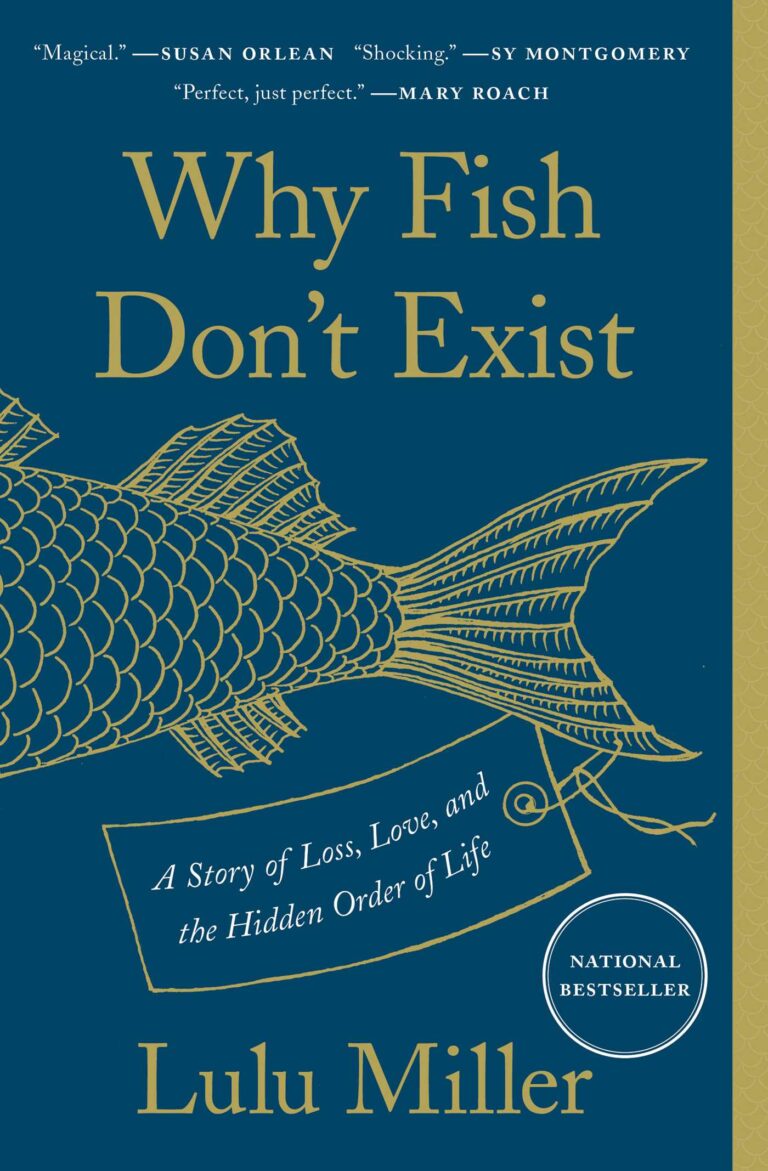
Review: Existential Questioning in ‘Why Fish Don’t Exist: A Story of Loss, Love, and the Hidden Order of Life’

Lulu Miller’s 2020 autobiography explores fish and taxonomy as a lesson on life 


By RUMA POUDELL — arts@theaggie.or


The story of a girl who’s obsessed with learning about the history of a scholar who was obsessed with fish; “Why Fish Don’t Exist” by Lulu Miller is an autobiographical novel full of existential life crises, moving onto better things and finding meaning in life. Sounds weird? That’s because it is — but in a really cool way.

Miller grew up pondering what it was that ordered the chaotic world we live in. She searched for rules, philosophies and principles that she could live by. But nothing really seemed to stick. 

Her father was a man who seemed to have found his own way. In the book, Miller says that he lived by the phrases “you don’t matter,” “live as you please” and “treat [others like they do matter].” But these words of “wisdom” always left her with an unsettled feeling.

Beginning her own search for understanding and being, Miller hears and briefly reads about the late scholar David Starr Jordan. Jordan was a taxonomist, someone who sought to organize the world into categories and hierarchies — he examined fish, determined what species they were and decided which were further along the evolutionary line of development. 

“Why Fish Don’t Exist” goes into detail about Jordan’s career and life as Miller becomes increasingly obsessed with the scholar. Readers are walked through how much he relentlessly studied his fish — disaster after disaster, failure after failure. 

While I was not particularly excited to read about taxonomy and did not expect to read about it in such depth, I found myself thoroughly enlightened by the book — about something beyond fish: the world as a place with no limit to possibilities. 

The way the novel takes the concept of fish taxonomy and uses it to answer existential life questions awed me. It was so bizarre, yet well executed. 

I couldn’t particularly relate with Miller’s experience of existential confusion to the extent that it left her feeling confused and small. However, I can see how this book may be life changing for those going through an existential life experience — something that college students and young adults in particular may resonate with. 

By the end of the novel, despite the fact that I didn’t relate to her at first, I found that I shared parts of Miller’s new outlook on life. As she learned from Jordan, I did as well, and it ended up having a similarly impactful effect on me. 

My biggest takeaway from “Why Fish Don’t Exist” can be summed up in this quote from the book: “The best way of ensuring that you don’t miss them, these gifts, the trick that has helped me squint at the bleakness and see them more clearly, is to admit, with every breath, that you have no idea what you are looking at.” 

We often get so used to our daily routines, our search for something more meaningful and the complexities of our own minds. But if we take moments to become more aware of what we are looking at in the here and now, we might find that what we are looking os right in front of our eyes. 

We can be engaged with the world by maintaining a sense of curiosity. By staying grounded and focused on learning more from what’s in front of us, we can spend less time in our heads — often time spent worrying about things that don’t necessarily hold weight in the real world. 

While Miller may now live by this, not everyone has to. Remembering to find your own way and respecting others’ ways are equally important. Everyone may resonate with something totally different, but “Why Fish Don’t Exist” provides an interesting perspective on existentialism that makes it worth the read. 


Written by: Ruma Poudell — arts@theaggie.org


Aggie Compass Basic Needs Center introduces pay-as-you-can food truck

The AggieEats food truck provides free and low-cost food to students in initiative to address on-campus food insecurity


By JADE BELL — campus@theaggie.org

Lea este artículo en español.


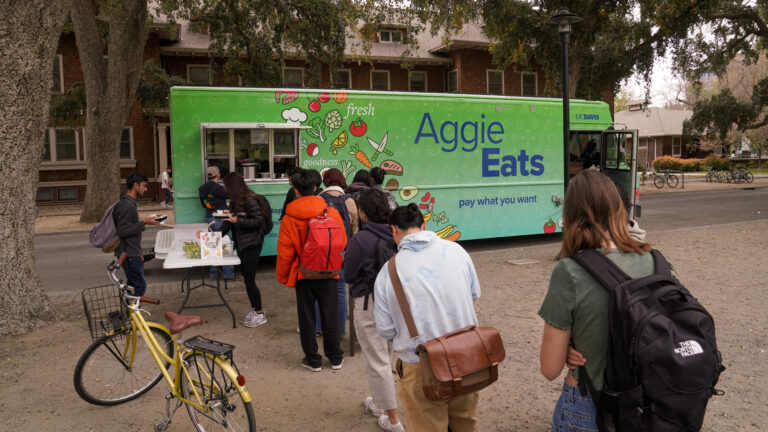
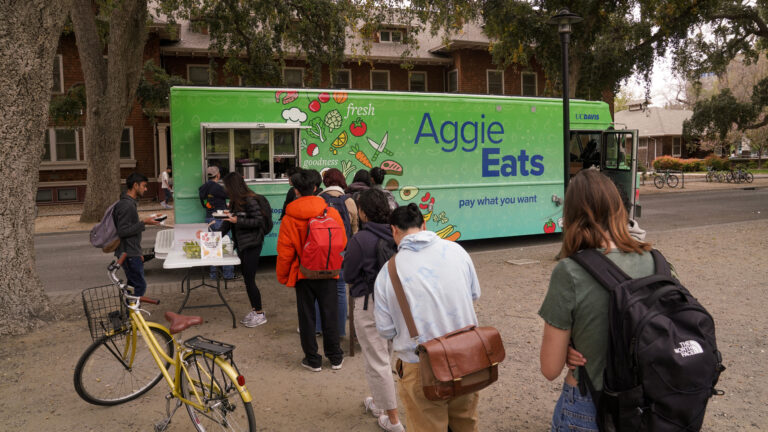
On April 17, the Aggie Compass Basic Needs Center introduced the pay-as-you-can AggieEats food truck, which is part of a program designed to “increase student access to delicious, nutritious, healthy food and other basic needs resources,” according to its website. 

Leslie Kemp, the director of the UC Davis Basic Needs Initiative and the Aggie Compass Basic Needs Center, said that ordering from the food truck is a simple process: pay what feels comfortable for you — even if the price you’re willing to pay is $0.

“Basically, students just stand outside the truck, scan a QR code, look at the menu, decide how much they can pay for their meal and the order goes in,” Kemp said. “If you can’t pay, enjoy some free food. If you’ve got some extra, pay it forward. Either way, you leave with a full stomach and hopefully the feeling that we’re all in this together.”

The food truck provides healthy and freshly prepared food from UC Davis dining commons kitchens in addition to offering recovered food, such as produce, sandwiches and other food that didn’t sell in campus markets. It serves up to 500 meals a day and has a four-week rotating menu. 

Kraig Brady, the executive director of Dining Services at UC Davis, shared his and his colleagues’ thought process when developing AggieEats.

“We were brainstorming how to put forth a program to provide a real solution to food insecurity and one common denominator was that we have plenty of kitchens,” Brady said. “So we were asking ourselves, ‘Could we use our existing infrastructure to produce enough food to distribute and make a difference? And what would that look like?’ We realized that food trucks are all around campus and are very well-received.”

Brianne Yale, a third-year wildlife, fish and conservation biology major, shared her thoughts on the new food truck initiative.

“It’s reassuring to know there is an option,” Yale said. “My bus was 20 minutes late, so I just came here and that was really helpful.”

Kemp said that while the project is going well so far, there are some issues that she foresees arising in the long term. She noted that funding will be an ongoing issue, but said that currently, funding for the next year has been secured.

“I think funding is always going to be a challenge,” Kemp said. “For the next year, we’ll be funded by an anonymous donor who approached the school, but after that, it will be a challenge we have to figure out.”

The food truck will be posted at four different locations around campus Monday through Friday. These locations change every week, and it’s recommended to check the website for any location updates. The truck accepts credit, debit or ApplePay via smartphone, according to their website, and the amount you choose to pay is confidential.


Written by: Jade Bell — campus@theaggie.org

El Centro de Necesidades Básicas de Aggie Compass introduce un camión de comida de paga como puedas

El camión de comida “AggieEats” provee comida gratis y a un bajo costo a estudiantes en una iniciativa para enfrentar la inseguridad alimentaria en el campus


Por JADE BELL — campus@theaggie.org

Traducido por JOSÉ HERNANDEZ

Read this article in English.


El 17 de abril, el Centro de Necesidades Básicas de Aggie Compass presentó el camión de comida de paga como puedas “Aggie Eats” el cual es parte de un programa diseñado para “aumentar el acceso estudiantil a la comida deliciosa, nutritiva y saludable y otros recursos básicos y necesarios,” de acuerdo con su sitio web. 

Leslie Kemp, la directora de UC Davis del Centro de Necesidades Básicas de Aggie Compass, dijo que pedir comida del camión es un proceso simple: paga con lo que te sientas cómodo — incluso si el precio que estás dispuesto a pagar es $0. 

“Básicamente, los estudiantes se paran afuera del camión, escanean el código QR, miran el menú, deciden cuánto pueden pagar por su comida y la orden entra,” dijo Kemp. “Si no puedes pagar, disfruta de comida gratis. Si tienes algo extra, págalo. De cualquier modo, te vas con el estómago lleno y ojalá con el sentimiento que todos estamos en esto juntos.”

El camión de comida provee alimentos frescos y saludables preparados de los comedores de UC Davis además de ofrecer comida recuperada, como productos, sándwiches y otra comida que no se vendió en los mercados del campus. Sirven más de 500 comidas al día y tiene un menú rotativo de cuatro semanas. 

Kraig Brady, el director ejecutivo de servicios de comidas en UC Davis, compartió el proceso de pensamiento de él y de sus compañeros cuando desarrollaron “Aggie Eats.” 

“Estábamos haciendo una lluvia de ideas sobre cómo presentar un programa para dar una solución real a la inseguridad de la comida y un denominador común era que tenemos muchas cocinas,” dijo Brady. “Entonces nos preguntamos a nosotros mismos, ‘¿Podemos usar nuestra infraestructura existente para producir comida suficiente para distribuir y hacer una diferencia? ¿Y cómo se miraría?’ Nos dimos cuenta de que los camiones de comida están por todo el campus y son muy bien recibidos.”

Brianne Yale, estudiante de tercer año de vida silvestre, peces y biología de la conservación, compartió sus pensamientos en la nueva iniciativa del camión de comida. 

“Es tranquilizador saber que hay una opción,” Yale dijo. “Mi autobús se retrasó 20 minutos, así que acabo de llegar aquí y eso fue muy útil.”

Kempo dijo que mientras el proyecto va bien hasta el momento, hay algunos problemas que ella anticipa que surgirán a largo plazo. Ella notó que los fondos serán un problema constante, pero dijo que actualmente, los fondos para el próximo año han sido asegurados. 

“Creo que la financiación siempre será un desafío,” dijo Kemp. “Para el próximo año, vamos a ser financiados por un donador anónimo que se acercó a la escuela, pero después, será un reto que tendremos que resolver. 

El camión de comida estará en cuatro lugares diferentes alrededor del campus de lunes a viernes. Estas ubicaciones cambian cada semana, y es recomendable revisar el sitio web para cualquier actualización de ubicación. El camión acepta tarjetas de crédito, débito o Apple Pay a través de un teléfono inteligente, de acuerdo con su sitio web, y la cantidad que escojas pagar es confidencial. 


Escrito por: Jade Bell — campus@theaggie.org

Traducido por: José Hernandez

First nephrectomy performed with the use of a robotic arm on living kidney donor

The use of robotic technology decreases scarring, blood loss and hospitalization time


By KATIE HELLMAN — science@theaggie.org 

Lea este artículo en español


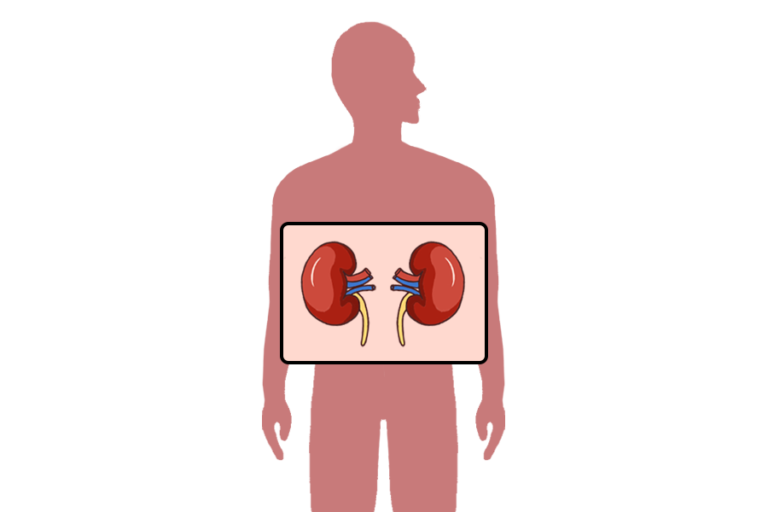
The first fully robotic nephrectomy was performed on a living donor in Sacramento through UC Davis Health, which offers robotic-assisted technology for transplants. A living-donor nephrectomy is a surgery where a healthy kidney is removed from a living donor and inserted into the body of someone without healthy kidneys.

“Living donation gives the recipient freedom from dialysis and allows them to enjoy a longer life full of energy and productivity,” an article by the UC Davis Health Transplant Center reads. “About half of all kidneys available for transplant come from people who have died and whose families give permission for organ donation. There are not enough of these organs, however, for everyone who needs them.”

The nephrectomy was performed using the Intuitive surgical robotic system, which has robotic arms that can be operated by surgeons from a console. The robotic arms have greater precision than human ones, which allows surgeons to make small incisions and gain better visualization to perform the procedure. The use of this technological method allows for a quicker recovery time and less scarring for patients than there would be with a minimally invasive abdominal surgery, laparoscopy or an open surgery approach.

Bahareh Nejad, the medical director of robotic surgery at UC Davis Health, commented on the benefits of the use of robotic technology.

“In comparison with laparoscopic surgery, you have a 360-degree range of motion of your instrument and it has tremor reduction and ten times magnification,” Nejad said. “We’re doing surgery with smaller incisions, so it allows for a much more precise operation with lower blood loss and a faster return to home.”

While it can take time to adjust to the techniques, robotic surgery can become much more efficient with practice.

“When you switch to robotic surgery, at the beginning of your learning curve, you’re going to take longer — sometimes even one or two hours longer,” Nejad said. “Usually after about 20 cases is when most people start to get faster at robotic surgery, and then, after 50 cases, they’re significantly faster.”

Junichiro Sageshima, the surgical director of the living kidney donation program at UC Davis Health and the physician who performed the procedure, commented on the broad services that robotics can provide in the medical field.

“Robots are also used in other surgical specialties, such as cardiac, thoracic, colorectal surgery, gynecology and urology,” Sageshima said via email. “The implementation of advanced technology at UC Davis Medical Center has improved the quality of patient care.”

The program consists of a large group that includes the transplant team, robotic surgery team, operating room staff and nurses. The faculty hopes that technology-assisted surgical techniques will continue to be utilized to improve the outcomes of various surgeries. 

“In our specialty, not only donor surgeries but also some of recipient surgeries will be performed robotically in the future,” Sageshima said. “This will be good news for patients whose access to kidney transplant surgery using conventional techniques has been limited due to their body habitus [or physical build]. We hope that robots using artificial intelligence will act as co-pilots to assist surgeons, allowing for less invasive surgeries.”


Written by: Katie Hellman — science@theaggie.org

Primera nefrectomía realizada con un brazo robótico en un donante de riñón vivo

 El uso de la tecnología robótica disminuye cicatrices, pérdida de sangre y tiempo de hospitalización


Por KATIE HELLMAN — science@theaggie.org 

Traducido por LAUREN KIM y EDUARDO LACTAOEN

Read this article in English.


La primera nefrectomía totalmente robótica se realizó en un donante vivo en Sacramento a través de UC Davis Health, que ofrece tecnología apoyada por robótica para trasplantes. Una nefrectomía de donante vivo es una intervención quirúrgica en la que un riñón sano se extrae de un donante vivo y se inserta en el cuerpo de alguien sin riñones sanos.

 “La donación en vida ofrece al destinatario liberarse de la ​​diálisis y le permite disfrutar de una vida más larga, llena de energía y productividad,” expresa un artículo de UC Davis Health Transplant Center. “Cerca de la mitad de todos los riñones disponibles para trasplante provienen de personas que murieron y cuyas familias dan permiso para la donación de órganos. Sin embargo, no hay suficientes órganos de estos para todos los que los necesitan.” 

La nefrectomía fue realizada con el sistema robótico quirúrgico Intuitive, que tiene brazos robóticos que los cirujanos pueden controlar desde una consola. Los brazos robóticos tienen más precisión que los brazos humanos, lo que permite que los cirujanos hagan incisiones pequeñas y gocen de una mejor visualización para realizar los procedimientos. El uso de este método tecnológico permite una recuperación más rápida y menos cicatrices para los pacientes en comparación con la cirugía abdominal mínimamente invasiva, laparoscopia o cirugía abierta. 

Bahareh Nejad, directora médica de Cirugía Robótica en UC Davis Health, comentó los beneficios de la tecnología robótica.

“En comparación con la cirugía laparoscópica, tiene un rango de movimiento de 360 grados del instrumento, reducción de temblor y aumenta la ampliación diez veces,” dijo Nejad. “Estamos haciendo cirugías con incisiones más pequeñas, lo que permite una operación mucho más precisa con menor pérdida de sangre y un regreso más rápido a casa.”

Aunque requiera tiempo adaptarse a las técnicas, la cirugía robótica puede volverse mucho más eficiente con la práctica. “Cuando se cambia a la cirugía robótica, al comienzo de la curva de aprendizaje, le llevará más tiempo –a veces incluso una o dos horas más,” dijo Nejad. “Usualmente después de veinte casos es cuando la mayoría de las personas empieza a ser más rápida en la cirugía robótica, y después de cincuenta casos, son significativamente más rápidos.”

Junichiro Sageshima, director de ​​cirugía del Programa de Donación de Riñón en Vida de UC Davis Health y el médico que hizo el procedimiento, comentó la amplitud de servicios que la robótica puede brindar en el campo médico.

 “La robótica también se utiliza en otras especialidades quirúrgicas, como cardíaca, torácica, colorrectal, ginecología y urología,” dijo Sageshima por correo electrónico. “La implementación de tecnología avanzada en el Centro Médico de UC Davis ha mejorado la calidad del cuidado de los pacientes.”

El programa consiste en un grupo grande que incluye el equipo de trasplante, el equipo de cirugía robótica, el personal de quirófano y las enfermeras. La facultad espera que las técnicas quirúrgicas asistidas con tecnología sigan siendo utilizadas para mejorar los resultados de diversas cirugías. 

 “En nuestra especialidad, no solo las cirugías de donantes sino también las de receptores se ejecutarán robóticamente en el futuro,” dijo Sageshima. “Será una buena noticia para pacientes cuyo acceso a la cirugía de trasplante de riñón con técnicas convencionales ha estado limitado debido a su contextura física. Esperamos que los robots que usan la inteligencia artificial actúen como copilotos para apoyar a los cirujanos, permitiendo cirugías menos invasivas.”


Escrito por: Katie Hellman — science@theaggie.org

Traducido por: Lauren Kim y Eduardo Lactaoen

Lights, Camera, Action! The Davis Filmmaking Society allows film lovers and filmmakers to express themselves

Students at UC Davis draw from various inspirations to make films and tell stories in different genres


By FAITH DEMEULENAERE — features@theaggie.org

Lea este artículo en español.


The Davis Filmmaking Society (DFS) is a student-run organization that has been making waves on campus and beyond. Club President Sophie Martinez, a fifth-year design major, said students find friends and creative outlets through DFS.

“Everyone is looking for ways to help each other’s personal projects and are extremely passionate filmmakers,” Martinez said. “I think DFS is all about learning new filmmaking skills and developing great stories together.”

According to Martinez, this club, which focuses on bringing together students who share a passion for filmmaking, has become a hub for creative expression and collaboration. Over the years, the Davis Filmmaking Society has brought together multitudes of filmmakers and film lovers.

“I write scripts that always reflect things happening to me but translated into much more interesting characters,” Martinez said. “I am always inspired by my friends and family, as well, who have a huge impact on my life and therefore my stories. I don’t like confining my writing into one specific genre, but I always add comedy into them.”

Every film enthusiast gains inspiration from some of their favorite films. Martinez favors “Memento,” “Lady Bird,” “Spirited Away” and “Mulan.” 

“My favorite films are always rotating, but these four are really the ones that made me fall in love with filmmaking,” Martinez said. “‘Mulan’ and ‘Spirited Away’ are beautifully animated and are very nostalgic, as I grew up watching them every summer with my family. […] ‘Lady Bird’ was a film that resonated with me because I watched it during a time [when I] was so similar to the protagonist and ‘Memento’ was the first film that showed me that stories can be weird, challenging and still compelling.”

Alec Gossage, a third-year cinema and digital media and communication double major and vice president of the Davis Filmmaking Society, said that most of the movies that inspire him are lighthearted.

“I love fun films,” Gossage said. “‘Zoolander,’ ‘Cars 2’ and ‘Shrek 2’ are definitely some of my top ones.” 

Gossage mainly produces documentaries, but according to the Davis Filmmaking Society’s Discord, there are multitudes of opportunities on campus for filmmakers to express their creativity, including in sports broadcasting for the UC Davis Athletics Department, creative directing for graduate projects in dramatic art and filming advertisements for local businesses. 

Some students choose to develop their own short films independently, such as Brian Kim, a fourth-year cinema and digital media and communication double major. Kim said he has directed a few thriller films, claiming that although they are difficult to produce, the end product is always worth it. 

Sumeer Malik, a fourth-year student double majoring in psychology and cinema and digital media, said his love for movies extends beyond just being a part of the club. He cites films like “Jaws,” “GoodFellas,” “Memories of Murder” and “Seven Samurai” as some of his all-time favorites, each of which has left a significant impact on him as a filmmaker. 

“I think these films exemplify what cinema is capable of eliciting,” Malik said. “These films have inspired me with their filmmaking and shaped my voice as a storyteller.”

Malik said one of his favorite things about movies is their power to bring people together. 

“Movies unite people,” Malik said. “It’s only in those two hours in a dark room where we forget our race and ethnicity, and we’re in a shared communal experience — that gives me hope.”

The Davis Filmmaking Society will showcase its work at its annual film festival on June 2 at the Manetti Shrem Museum. 

Written by: Faith DeMeulenaere — features@theaggie.org