55.9 F
Davis

Davis, California

Tuesday, December 23, 2025
Home Blog Page 257

SeaDoc Society podcast highlights threats facing killer whales, pushes for positive change

The SeaDoc Society, a donor-funded program of the UC Davis Karen C. Drayer Wildlife Health Center, presents a collaborative project aimed to help save the wild southern resident killer whale population from extinction

“Free Willy,” which came out in 1993, portrayed killer whales as beloved and personable animals rather than killers—quite different from public perception of the marine mammals in the 1960s and ‘70s, when they were commonly hunted and deeply feared. 

And yet despite current public empathy for the animals, the killer whale population is still facing a multitude of threats resulting from human interference. 

The SeaDoc Society, a donor-funded program of the UC Davis Karen C. Drayer Wildlife Health Center, is based on Orcas Island in the Salish Sea off the coast of Washington and British Columbia, and part of their mission involves studying southern resident killer whales. These whales are one of four populations of resident killer whales in the Pacific Northwest; the populations are separated by their own unique “culture,” a distinction which is tied to their main food source, hunting style, and auditory communication. 

According to a post by the SeaDoc Society, the scarcity of salmon, as well as shipping traffic, boat noise and water contaminants have all factored into why only 75 southern resident killer whales remain in the wild today. 

In an attempt to effect positive change, and in line with their mission to “[bring] together interested parties to share information, forge common understandings and design region-wide solutions,” the SeaDoc Society recently released a podcast series called “Pod of Orcas: Saving Southern Resident Killer Whales,” which is comprised of seven episodes that each feature a guest speaker.

The series is co-hosted by Justin Cox, who is the SeaDoc Society communications manager as well as the producer of the podcast, and Kevin Campion, a member of the Board of Directors at the SeaDoc Society. It explores various topics including whale culture, the history of captivity, the deep spiritual connection of the whales to the native tribes of the Salish Sea area and more.

Cox explained how the project began, saying that the organization would usually hold a series of events called “Ocean Nights” consisting of speaker presentations, film screenings and more, but this wasn’t held during the 2020-21 season due to COVID-19 restrictions.

“Ocean Nights wasn’t going to happen,” Cox said. “The idea of doing a series of Zoom calls over a weekend through the winter kinda depressed me. During quarantine, I messed around doing a podcast—one of those weird quarantine hobbies—and it surprised me how much I liked it.” 

Cox went on to explain that he didn’t want a podcast that would go on indefinitely, given the amount of projects the SeaDoc Society was already working on. Instead, they needed a specific, directed topic—and they landed on the southern resident killer whales. 

“This area of work is such a collaboration,” Cox said. “There were so many people we wanted to feature, shine a light on their work.”

Jason Colby, a history professor at the University of Victoria with a special focus on environmental history, was featured on episode three of the podcast. He emphasized how important he believes this collaborative viewpoint to be. 

“I love how SeaDoc integrates different modes of thinking into one production,” Colby said. “The integration of different forms of knowledge… I wish they did it more. I wish historians talked to scientists more, and so on. And I think that podcasts are great for that, because they have the time to go in depth and explore topics from a variety of perspectives.”

Colby explained how he came to be personally invested in the story of the whales. 

“My father was actually in the industry to capture orcas,” Colby said. “I had this bouncing around in my head for a long time because as a child I watched him struggle with guilt and try to come to peace with his part in this story.” 

Colby then gave an overview of what he talked about on the podcast.

“How did we come to care so much about this apex predator?” Colby said. “For most of the colonial and national history of the U.S. and Canada, humans have had this fear of ocean predators. My interest was in the transformation of the relationship between people and orcas. What caused that?”

Cox detailed how he feels the podcast format enhanced the project’s effectiveness.

“A podcast can be a short series or a long ongoing thing, and my approach to making this one was [to] imagine a short, seven-chapter book where when you finish it, you feel like you’ve gained some sense of understanding,” Cox said. “I wanted it to be accessible, even to people who have no idea about any of this.” 

Cox then described how this idea of accessibility translates into the SeaDoc Society’s overarching goal. 

“SeaDoc Society is an educational society, but they specifically have a really big focus on science that makes an impact,” he said. “Translating complicated things into palatable things, which moves to caring, which moves to action.” 

According to the SeaDoc Society’s website, this is even more important to their team than the scientific research that it builds upon. 

“While performing world-class research is of paramount importance, ensuring that our findings effect positive change is just as vital,” the website reads. “One of SeaDoc’s unique strengths is translating science into action. We act as a catalyst.”

With the final episode of the podcast released on May 18, Cox talked about what he sees happening with the podcast’s platform moving forward.

“That feed is there, and while not totally knowing, it could be that feed exists where it constantly checks back in with killer whales,” Cox said. “It could bounce around from species to species. Being transparent, I don’t know what it’s going to be used for yet, but it’s definitely going to be used for something.” 

Colby shared some final thoughts about the story of the whales and all of our parts in it. 

“A hilarious misconception people have about history is that it’s only about people,” Colby said. “One of the deepest relationships we have is with the natural world. We transform the world, and it transforms us.” 

Written by: Sonora Slater — science@theaggie.org

Uncovering the New Deal’s architectural legacy in Davis and Sacramento

The Depression-era programs have left a lasting physical imprint on Northern California

Ask yourself: what do Shields Library, the Davis Central Park restrooms and the iconic Tower Bridge in West Sacramento all have in common?

If you’re a 20th century history buff or studying to become an architect, you might know. But for those who don’t, the answer may come as a surprise. They were all built as a part of projects funded by the New Deal programs of the 1930s. Whether it was when you were walking down the street in Downtown Davis or making your way through one of Sacramento’s countless parks, odds are you have passed by some of the enduring physical legacy of Franklin Delano Roosevelt’s New Deal.

Enacted amid the Great Depression, the New Deal intended to provide immediate economic support and financial reform in the U.S. These efforts ranged from the formation of government agencies like the Social Security Administration to major changes in regulatory fiscal policy, all with the intention of restoring the broken American economy. Two of the programs most responsible for the New Deal’s architectural legacy were the Public Works Administration (PWA)—enacted as a part of the First New Deal in 1933-34—and the Works Projects Administration (WPA), which was established by the much more ambitious and controversial Second New Deal of 1935-36. 

    The intentions of programs like the WPA were two-part: providing jobs to the unemployed while building up America’s infrastructure system. At its peak in 1938, the WPA employed 3.3 million people. In the end, 8.8 million jobs were created by the program.

“The workers would be helped by getting paychecks. Then they would spend their salaries on consumer goods, thus helping the economy as a whole to recover,” said Kathryn Olmsted, a UC Davis history professor and current interim chair of Gender, Sexuality and Women’s Studies, via email. “At the same time, the economy and the people of the United States would benefit from the roads, bridges, schools, airports, public art and other projects of the WPA.”

The aesthetic provoked by the New Deal would become known as “PWA Moderne,” a unique architectural style heavily influenced by the French traditions of Art Deco and the neoclassical Beaux-Arts. The style favored linear and geometric decorative components, and the monumental aims of much of the New Deal’s engineering projects ensured that these buildings would leave a lasting physical and cultural legacy.

“The PWA and WPA definitely had a lasting cultural impact,” Olmsted said via email. “More generally, the art and architecture and public works projects of the New Deal continue to surround us and to influence artists and architects today.” 

The PWA post office style, in particular, Olmsted noted, has become instantly recognizable. In the Sacramento metropolitan area, it’s easy to see the influence.

The north wing of Shields Library—presently containing the 24-Hour Study Room and Main Reading Room—for example, was completed as part of a PWA program in 1940. The oldest high school in Sacramento, C.K. McClatchy High School in the Land Park neighborhood, was likewise constructed in 1937 with funds garnered from both local sources and the PWA. It continues to be home to around 2,000 students.

The projects constructed by the PWA and WPA also helped spur the advancement of other architectural styles. The old Davis City Hall, notable for its iconic Spanish Colonial Revival look, was constructed by the WPA in 1938, and has since been used as a fire station, police station and most recently, as a component of the recently-closed Bistro 33. The Tower Bridge, linking West Sacramento and Yolo County to the state capital, was built using a unique Streamline Moderne style. It has since become an iconic symbol of Sacramento.

So next time you’re logging a late night study session in Shields Library—or reminiscing on your alcohol-laden antics at Bistro 33’s Mojito Night—try to see if you can remember what programs were responsible for building the structures you use to this day. You might even impress someone with your worldliness (no guarantees). 

Written by: Brandon Jetter — arts@theaggie.org

The Editorial Board encourages professors to retain some distance-learning norms

Recorded classes, open-note exams and better professor etiquette should continue into Fall Quarter and beyond

All of the non-graduating members of the Editorial Board are excited to return to in-person learning. We can’t wait to socialize with our classmates and professors more easily, connect with people in our majors and engage in more active discussions. Despite our enthusiasm for in-person learning, the pandemic has brought many improvements to the educational system that should become permanent fixtures.

Recording and posting classes online gives students more flexibility to choose how to manage their time and succeed academically. It allows students to take classes with time conflicts, which could help to reduce the number of fifth-year students forced to take an extra year due to scheduling issues. For students able to attend class regularly, recordings would provide an opportunity to review material and utilize the pause feature to take better notes. Class recordings would also make it possible for students unable to return for Fall Quarter—either due to health reasons or international travel restrictions—to continue receiving a quality education. 

It shouldn’t be difficult for professors to continue to record classes, since they already have the technology in the form of Lecture Capture and are familiar with the recording process from four quarters of online learning. Offering recordings of classes also likely won’t impact attendance rates—students will still go to mandatory lectures because they care about their grade, and students have always slept through optional lectures, even when there are no recordings. 

The Editorial Board also believes that the ability to memorize facts is not an accurate measure of intelligence or a student’s understanding of the material, so some classes should continue to offer open-note midterms and finals. Although this isn’t feasible for all classes, allowing students to use handwritten notes reduces student stress and anxiety with no downside. It benefits learning outcomes and critical thinking as well, encouraging professors to write thought-provoking, comprehensive questions rather than relying on simple multiple choice or fill-in-the-blank. 

In addition to offering open-note tests, professors should continue to offer asynchronous exam options. It’s more convenient to be able to take exams in 24-hour windows—who doesn’t dread midterms at 7:30 a.m. or finals from 8-10 p.m.? Offering exams asynchronously would also give students the ability to take their exams in the comfort of their home, rather than the ridiculously tiny desks offered in many lecture halls. It’s miserable attempting to balance a scantron, exam booklet, permitted notes, scratch paper and a calculator on a desk barely larger than a textbook. 

Another benefit of Zoom university is that professors can’t yell at students for being late, leaving early, going to the restroom or eating a quick snack. Students can simply stop their camera and walk away or click the “Leave Meeting” button. Before the pandemic, multiple members of the Editorial Board witnessed professors yelling at students in crowded, attendance-optional lecture halls for leaving early and demanding an excuse. One member even witnessed a professor chase two students down the hallway to confront them. We ask that professors let us do our thing in peace. As adults, we should have the agency to go to the restroom or to a doctor’s appointment without causing a massive scene.

We applaud the professors who have been accommodating and understanding during the pandemic, but we urge them to remember that returning to in-person learning will also be a difficult transition. Many students will likely be struggling with social anxiety, time management issues and busier schedules in general during a live Fall Quarter. 

In-person lecture halls will likely be difficult for many of us to return to—awkwardly clambering over strangers to reach middle seats, bumping elbows while taking notes and getting sneezed on by someone in a back row will be strange and potentially upsetting experiences. Students will spend more time commuting, from home to class and back home again, which will cut into time they could have spent studying during the pandemic. 

Even though we’re excited to return to campus, Fall Quarter won’t be easy for students and professors alike. By then, we’ll have spent almost a year and a half indoors with minimal social contact, and it will take a long time for many of us to return to our normal routines. Implementing these few, easy changes gives professors and university administration an incredible opportunity to make learning more enjoyable and less stressful for years to come. 

Written by: The Editorial Board

Provost Mary Croughan discusses option of hybrid classes for Fall Quarter 2021

Fall registration is underway, and UC Davis is still planning for classes that create a safe environment for students returning to campus

With the release of vaccinations and nationwide rollbacks on COVID-19 restrictions, UC Davis is making plans for the instruction of Fall Quarter 2021 classes. 

    “We are planning for the vast majority of courses to be in person,” said Provost Mary Croughan, via email. “A very limited selection of courses [are] to be remote, [with] very few to no courses that would require an instructor to manage two modalities at once.”

    In a meeting with The California Aggie’s Editorial Board, Croughan discussed plans for hybrid classes that will cater to students with medical needs and international students who will not be able to attend in-person classes. 

    “We assume that the term ‘hybrid’ is referring to a class where some students are attending the class in person, some students are attending remotely, and the instructor is managing the delivery of instruction in two modalities,” Croughan said. 

    The process for professors to request hybrid or remote classes will most likely be similar to that of requesting in-person classes during this past school year, said Croughan in the meeting with the Editorial Board. Instructors may petition to have remote or hybrid classes. The administration is still working out the details for this request process and will notify the campus and professors when the forms are available.

    “We have not designated any classes as having a remote option,” Croughan said. “At this time, we do not know how many students or instructors may have circumstances that would prevent them from returning to campus in the fall or from participating in in-person instruction.”

    Croughan said before any decisions can be made on remote and hybrid classes, they must wait for information about student visas and other outstanding information from instructors and students. 

    “We anticipate that any adjustments will start being made in mid-July,” Croughan said. “As a limited number of remote courses are approved for fall, we will communicate that to students so that they may consider those options.”

    The Registrar’s Office was still working on placing classes into classrooms during the first pass registration, so information on remote classes or location is not yet available on Schedule Builder.

“This work continues, and we know that it may cause some schedule changes for those students who have already registered,” Croughan said.

     Croughan said that information on remote classes and in person locations should be available after the adjustments are made mid-July and students who have already registered can make necessary changes during Open Registration. 

Written by: Emily Redman — campus@theaggie.org

UC Davis sheep mowers highlight the interconnections between sustainability, practicality and aesthetics

Landscape architect’s recent sheep project explores the use of sheep in maintaining landscapes

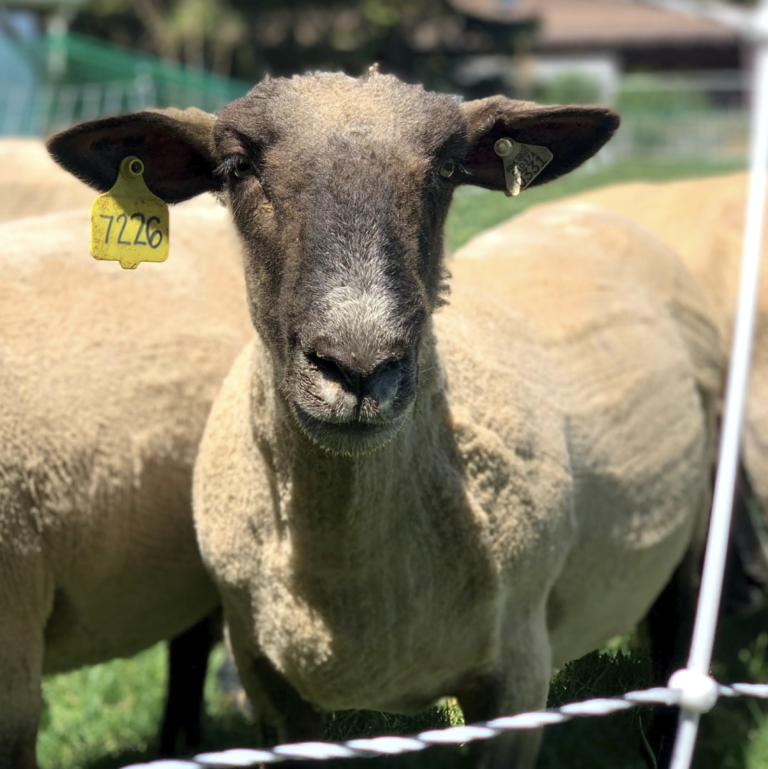
Imagine if all lawn mowers on campus were replaced with grazing sheep who worked shifts to maintain our lawns. This idea is one that Haven Kiers, an assistant professor of landscape architecture in the Department of Human Ecology, is exploring through her project, which was piloted from May 5 to May 7, 2021. During this three-day initial trial, Kiers split the Solano field into two halves to compare one half—which was mowed conventionally—with the other, which was mowed by sheep. Kiers was inspired to begin this project after reading an article in The New York Times about sheep grazing lawns in front of the Eiffel Tower in Paris

    “There was just something about that,” Kiers said. “It was just so romantic, the notion of the sheep and the maintenance and the Eiffel Tower, that it just stuck with me.”

    She initially thought of this idea while working at the Arboretum and took the opportunity to conduct this research project once she became a professor. Kiers emphasized that as a landscape architect, she does not want her landscapes to serve only aesthetic purposes, but also be used in a productive way to gather scientific data.

During her sheep experiment, Kiers measured grass length to see how successful the sheep were at mowing the grass and soil samples to see if the sheep added fertilizer while grazing and species biodiversity. 

Miles DaPrato, an environmental steward of the UC Davis Arboretum and Public Garden, explained that Kiers asked him to help identify what kinds of plants were in the areas where the sheep would be grazing. DaPrato said that with his background in restoration ecology, he supports the idea of sustainable management practices that Kiers is implementing. 

    “[The experiment is] trying to approach things a little bit more sustainably and see how we can just change the culture of what we do and how we do it, which is not easy,” DaPrato said.

    According to other studies conducted on the effects of sheep replacing traditional lawn mowers, this experiment has been shown to benefit landscape management. In a study done in 2016 at the University of Edinburgh, researchers found that net lawnscape management emissions were reduced by over 30% by switching to sheep grazing. Although, in addition to the ecological benefits of using sheep in lawnscape management, Kiers is also interested in how people will react to the sheep project as a whole. 

    “I’m really, really interested in this idea of the healing power of nature and the concept of Nature Rx,” Kiers said. “I want to see if bringing in sheep to campus and having people able to view them can actually help reduce stress and anxiety, […] much like when people are stressed, they go for a walk in the Arboretum.” 

    Kiers elaborated that the concept of Nature Rx, or having contact with nature even if it’s a view out of a window, can have a calming effect on people. Through the sheep project, she hopes that the sheep can become more integrated into the campus brand and become something that is engaging and that people want to be a part of. 

    “I do want this to be more of an exhibition and a kind of spectacle so it really becomes […] a destination to come watch the sheep,” Kiers said.

    Kiers also expressed excitement at the vast potential for collaboration across disciplines for this project. From doing a cause-effect analysis of sheep versus lawnmowers with a professor of public health economics to collaborating with the design department to develop a way to integrate the sheep into the university brand—such as by naming them the UC Davis Sheep Mowers—this project has opened a multitude of opportunities for multidisciplinary research. 

    “I really want my landscapes to highlight the value and the importance of designing for maintenance,” Kiers said. “That’s another reason to bring out the sheep or to create landscapes that show part of that landscape is the stewardship and the ongoing maintenance that’s required. So those three—practicality, science and aesthetics—all overlaid.”

Written by: Michelle Wong — science@theaggie.org

A wildflower guide to the Arboretum

The flowers of UC Davis and their impact on the local organisms and communities

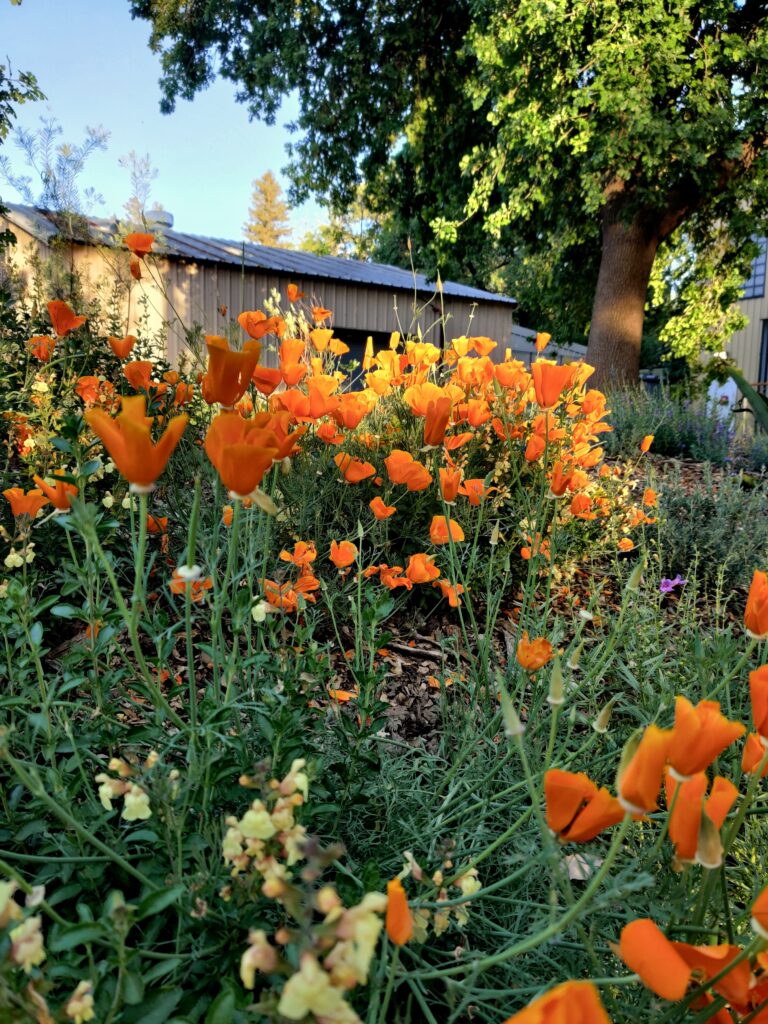
A great place to find wildflowers in Davis is the UC Davis Arboretum and Public Garden. The Arboretum is made up of 100 acres of land and includes demonstration gardens, scientific collections and the Putah Creek Riparian Reserve. Their mission is, “To inspire human potential to help people and environments thrive,” according to the Arboretum and Public Garden website.

Rachel Davis works at the Arboretum and Public Garden as a GATEways horticulturist. Davis has the responsibilities of being a mentor for the habitat horticulture team and managing some of the Arboretum’s collections such as the habitat gardens and environmental gateway, the foothill redbud desert contemplative garden and the terrace garden. She is aware of all the plants that are blooming this spring.

Some of the trees that are growing right now are the desert willows that are a part of the desert collection in the Arboretum. They are also located in the hummingbird garden by Scrubs Cafe on campus. These yellow flowered trees are drought tolerant since their natural habitat is the desert. Hummingbirds are one of the many local pollinators that visit these trees. They are a good size and fit for a home garden because they are more like large shrubs than huge trees, according to Davis.

Coral trees are also on display right now. They are from all over the world and are featured in the Argentine section of the Arboretum, as well as in the Storer Garden and the habitat gardens also near Scrubs Cafe.

The yellow trumpetbush is displayed throughout the Arboretum. The trumpet flowers are sources of food for hummingbirds and other pollinators.

Grevillea thelemanniana are year-round flowers that are also important sources of food for hummingbirds. They resemble clusters of red ribbon among the green space.

Another species Davis wanted to highlight is milkweed. Different species of milkweed are starting to bloom and they are host plants for the monarch butterfly as well as the honey bee. They are displayed in the Mary Wattis Brown Garden on campus.

“There is a little meadow out there and little stepping stones that you can walk through the meadow and really experience and take them in,” Davis said. “That is a highly recommended spot right now.”

These plants spread throughout gardens by rhizomes. 

“If you plant it in one area, it can move throughout your garden, so give it space,” Davis said. 

Kimberly Chacon, a Ph.D. candidate in the Geography Graduate Group at UC Davis, has done research on the most popular flowers for pollinators. Chacon did her dissertation research at the UC Davis Arboretum and Public Garden and monitored all the gardens for pollinators to see which pollinators were feeding on which plants and if there were indications of habitat fragmentation. 

Chacon is fascinated with the idea of designing connected habitats for bees. It has not been well understood until now, according to Chacon.

“It is a complicated topic that requires more studying,” Chacon said.

Chacon conducted a study that showed that, based on all the foraging events she saw in the Arboretum throughout a year, there were approximately 34 bee genera found and they were feeding on 303 different plant genera. 

“There’s different mixes of how they match up. You have the bee type and the flower type and sometimes they interact and sometimes they don’t,” Chacon said.

Of the 7,800 breeding associations she saw between all of the gardens, there were 589 bees paired with salvia.

Salvia is the most diverse plant genera in existence and this creates conditions for a lot of unique pairings between bees and the different types of salvia flowers. 

Another pollinator-friendly flower is the California Fuschia. Rachel Vannette, an assistant professor in the Department of Entomology and Nematology at UC Davis, is researching California fuschia flowers and the value of their nectar. For one of the classes Vannette teaches, she does a project where students sample nectar from fuschia flowers in the Arboretum and measure instances such as pollinator visitation and see how it corresponds to the amount of nectar that is bound in the flower.

“The Arboretum is really cool in that we have over 10 different cultivars or genotypes of California Fuschia that differ in when they flower, how big the flowers are, the color of the flowers and amount of nectar they produce,” Vannette said.

The California Fuschia grows throughout the Arboretum and starts flowering in late June and the beginning of January. They are abundant floral resources for many pollinators. These long red tubular flowers produce nectar that is 25% sugar by weight and are a great source of food for the Anna’s hummingbird, carpenter bees and honey bees, according to Vannette.

Carpenter bees have strong jaws and bite through the side of the flower tube because their tongues aren’t long enough to reach the nectar. They make it possible for other organisms with short tongues to obtain nectar as well. This is something to look for when walking in the Arboretum.

“[The walker] can look at the side of the flower and see if there is a hole there,” Vannette said. “If there is a hole, that probably means it has been chewed on by a carpenter bee. But if they are just walking past, I would appreciate the diversity of flower colors and morphology and really the diversity of the form the flowers take because each of the different varieties benefits different types of pollinators.”

Flowers are more than just pretty things to look at. They are also embedded into moments in our life. Anita Shahriary works for the Arboretum and Public Garden through the Learning by Leading Program and is a GATEways outreach internship co-coordinator. Flowers have defined key moments in her life, especially at UC Davis.

“Anytime I see lavender I think about the story where me and my roommate used to go to the lavender plants outside the lab science building, and we used to go pick those flowers and take them back to the dorm,” Shahriary said. “I feel like [the flowers] are a big part of my life and so I can find a way to connect it to every step of my way.”

Written by: Francheska Torres — science@theaggie.org

An analysis of Nicki Minaj’s iconic “The Pinkprint”

No one can do the rap game like Queen Nicki Minaj

Very few artists could ever garner the media attention, musical success or have the lyrical genius of the woman who revolutionized the rap game—Nicki Minaj. Onika Tanya Maraj-Petty, professionally known as Nicki Minaj, and crowned as Queen of the Barbz, is the woman who has defined a generation of music.

The queer icon, the woman known her for comical Instagram lives and the person who constantly reminds her army of Barbz—her fans—to stay in school, is known for her rapping prowess, genius lyrics and a ride-or-die fan base. Minaj is considered one of the highest selling female rappers of all time, has released four studio albums and has sold over 3.7 million copies of her music. Her critically acclaimed platinum album, “The Pinkprint,” is one of her most serious and lyrically diverse albums. The deluxe version of the album comes with 19 songs. 

There are somber tones laced throughout the discography. In the song “All Things Go,” Minaj reminisces on her past, how far she’s come, how nothing in life is permanent and that “All things go, all things go.” Listeners are given an intimate and sardonic peek into Minaj’s personal life with “The Crying Game” featuring Jessie Ware. As Minaj raps “How come you never show it? All this love you speak of/All I want is to love and be loved (To love and be loved).” 

The album takes a lighter turn with the song, “The Night Is Still Young,” in which Minaj reminds her fans to not worry too much and that “life is a journey/I just wanna enjoy the ride.” 

Yet, the powerhouse, confident and borderline cocky Minaj that fans love and adore makes an appearance with hits like “Feeling Myself” featuring Beyoncé, where the two icons remind the Barbz that “we dope girls we flawless/We the poster girls for all this (Uh).” 

A personal favorite, “Win Again,” is the perfect hype song to remind us that we always come out on top no matter how hard life gets and that “I win again, and I win again.” Minaj reminds us to never listen to haters because their “opinion is invalid,” and to “Go against me, then you made a mistake.” 

On the other hand, there is the empowering, boost of personal-confidence and gym anthem, “Get On Your Knees,” featuring Ariana Grande. In the song, Minaj tells her listeners to find their inner confidence and remind themselves that their “ass is a present.” 

Even though the song is sexually-explicit in nature, it still holds the familiar, Nicki Minaj-approved messaging of confidence, self-love and recognizing our self-worth.

Whether you want raps that make you take a pause and think twice about the double entendres Minaj just dropped, the perfect gym song or just want to have an angry, emotional rap session in your car, “The Pinkprint” is the album for every occasion. 

In addition, the album perfectly compliments her brand new album, “Beam Me Up Scotty,” which has many Barbz and listeners excited for the new golden era of Minaj. 

Nicki Minaj is a one of a kind artist who changed the rap game for everyone, and the woman who inexplicably changed me—for the better. When I heard her soul-touching rap, at time stamp 3:36, in Kanye West’s, 2010 hit song “Monster”; the only person who constantly inspires me to work hard as she once said “broke people should never laugh,” and I enjoy laughing.

Written by: Muhammad Tariq — art@theaggie.org

Let’s talk about National Parks

Public Lands are inherently valuable and don’t need commercial value to warrant protection

I’ve read a lot of articles recently detailing lengthy lists of why we should protect public lands. There is always a new angle coming out, whether it’s the mental health benefits of green spaces or the incalculable economic value of their ecosystem services. All of these are completely valid and worthwhile angles, but I think sometimes they obscure the most important fact of all. A forest, a lake and a mountain have intrinsic value. They don’t need reasons to exist, they just are.

American history has been characterized by a series of broken promises. With the genocide and exploitation of Indigenous peoples also came the degradation of our natural world. You can argue about intention all you want, but the results are undeniable: the Western world was founded upon the intentional extermination of natural places.

    I often think about what the world was like before colonization, when streams were so imbued with fish you could walk across them, and bears and wolves were as common as cars. A landscape of dangerous unpredictability, but also capable of immense beauty. At their best, this is what National Parks try to live up to: mere imitations of a long-gone reality. 

    This is why people go to National Parks. To capture those brief moments of wilderness, catch a glimpse of a wandering coyote or to hear the bugling of an Elk in the morning fog. Public lands have never been about stimulating the economy or being a part of some grand scientific crusade. Setting aside something just for the sake of itself doesn’t make logical sense, yet we continue to protect more and more land in the U.S. Why? Because there is something indescribably valuable about the vast expanses of the Grand Canyon or the cinnamon ancient giants towering over Redwood National Park.

    This is also what makes them such an easy target for private enterprise. Look at Bear Ears National Monument, which was reduced by 85% by the Trump Administration after a big push by the oil and gas lobbyists. This reopened the area, which has some of the largest untapped coal reserves in the country, to drilling and put many sacred cultural resources of the Navajo, Hopi and many other Indigenous Nations at risk. Bear Ears serves as an unfortunate lesson in public lands conservation. Without continued public engagement and lobbying to keep them protected, these areas aren’t protected from commercial interests. 

In my short time this year at The California Aggie, I’ve covered public lands extensively. From plans to permanently establish ranching in a National Seashore in our own backyard to opening up protected deserts to renewable energy development. In fall 2020, the Trump Administration even tried to reintroduce plans for the disastrous raisal of the Shasta Dam. All of this happened in California just since September. California is widely considered one of the most environmentally conscious states in the country. If this is happening in California, imagine how bad it is everywhere else. 

    “Any fool can destroy trees. They cannot run away,” penned John Muir, naturalist and founder of the Sierra Club. Although Muir was not the monumental progressive figure he is often portrayed as, we can learn from his writing and decades of advocacy. Muir’s absolute uncompromising resolve, even in the face of the worst odds, is the reason why many California parks, including Yosemite, are protected today. He believed, much like I do, that conservation starts with the heart before it gets to your head. 

    Sometimes I get so preoccupied with a problem that I forget why I even care in the first place. Rolling up my sleeves and getting waist deep in a stream or halfway up a mountain is always a good enough reminder for me. These wonderful wild places will only stay protected if people like you and I care enough to keep them that way.

Written by: Joe Sweeney — jmsweeney@ucdavis.edu 

Disclaimer: The views and opinions expressed by individual columnists belong to the columnists alone and do not necessarily indicate the views and opinions held by The California Aggie.

City of Davis gives out 27th annual Environmental Recognition Awards

Davis continues its commitment to environmental sustainability and stewardship by recognizing local organizations

City of Davis officials recognized the recipients of the 27th Annual City of Davis Environmental Recognition Awards at the April 20 City Council meeting. 

    The awards originally recognized organizations and individuals in three categories: Non-Profit, Individuals/Groups and Business. A fourth Environmental Legacy Award has also been added. 

    City of Davis Sustainability Coordinator and Staff Liaison to the Natural Resources Commission Kerry Loux explained that the new Environmental Legacy award was created in addition to these categories to recognize work that has impacted the community over a significant period of time.

    “Five years ago we created a new award called the Legacy Award,” Loux said via email. “For example, Davis was the first city in the country to create bike lanes on our roads, so it was important that we recognized that [in 2017’s environmental awards].”

    Loux detailed the process by which award winners are chosen. 

    “Nominations are made by community members to the Natural Resources Commission using the online nomination form,” Loux said. “[Then] the NRC appoints a subcommittee each year of two to three commissioners to review the nominations and make recommendations to the full NRC.” 

    These awards recognize the importance of environmental work and the positive impact it has on the community, according to Loux.  

“[This recognition] both honors and recognizes businesses and nonprofits who have made a big difference in Davis and the quality of life here,” Loux said. “It also enhances people’s awareness about how important the environment is to us. Our approach to sustainability, our desire to have green belts—these awards recognize this.” 

Loux stressed the importance of collaboration in environmental work, saying that change must occur on many different levels.

“I think [environmental work] is a collaborative effort,” Loux said. “In our regional work, we’ve provided guidance to other communities, but we need both regional and broad scale change. Local, households, regional, state—all levels are important.”  

Davis community members can help to work toward its goals of environmental sustainability and stewardship by engaging with Davis environmental projects, Loux explained. 

“We hope to get broad-based community support—both residents and businesses—to implement the prioritized actions that will provide our roadmap to carbon neutrality by 2040,” Loux said. “Help us move on a path to carbon neutrality. It’s easy to adopt the standard and now we have to make sure that it happens.”

More information about Davis sustainability and its plan to update its Climate Action and Adaptation Plan (CAAP) is available on the city website.    

Among the award recipients in the Non-Profit category was the Episcopal Church of Saint Martin. 

Rector of the Episcopal Church of St. Martin Reverend Dr. Pamela Dolan thanked Davis for the recognition and commended the work of other organizations. 

“It’s an enormous honor to be recognized by the City of Davis, which has a well-earned reputation for being a leader in environmental work,” Dolan said via email. “We’re aware that so many other organizations in Davis, including other churches, are also putting tremendous efforts into caring for the earth.” 

Dolan said that tending to and protecting the Earth is a central value of Saint Martin’s and cannot be separated from the church’s other social justice-oriented missions. 

“We consider environmental stewardship and action to be core responsibilities for Christians,” Dolan said. “St. Martin’s has always been a leader in the area of social justice and we are learning that the biggest threat to justice and equality, or even just basic human flourishing, is climate change.” 

Saint Martin’s commitment to environmental sustainability and stewardship goes far beyond a single zero-carbon building, according to Dolan. 

“It’s much more than that—the whole church operation is now carbon neutral—[we’ve added] solar arrays on two buildings and also built a solar carport,” Dolan said. “We have also made changes in other areas such as our landscaping, and we are making changes that are designed to increase carbon sequestration in the soil and decrease the water use.” 

Dolan recommended that community members and students who want to start enacting these same principles of environmental action and stewardship should start now. 

“Do something right now, even if it’s a small step,” Dolan said. “Students and other young people are leading the way, so if you don’t see a group doing the thing that matters most to you, start one. We’re all in this together.” Written by: Yan Yan Hustis Hayes — city@theaggie.org

Yolo County scheduling Pfizer COVID-19 vaccine clinics for 12 to 15-year-olds

Davis Joint Unified School District Superintendent says that vaccines are an important part of making in-person schooling safer

On May 10, the Food and Drug Administration (FDA) approved the Pfizer-BioNTech COVID-19 vaccine for 12 to 15-year-olds. Since then, Yolo County has run several vaccine clinics targeted toward that age group, according to Yolo County On-Call Public Information Officer Frank Schneegas.  

    “We did a clinic at Woodland high school on Friday [May] 14—of course that one was for people below the age of 18, although we did vaccinate parents as well,” Schneegas said.  

    Schneegas added that adolescents in the 12 to 15 age group can get vaccinated at any clinic that offers the Pfizer vaccine. 

    “We’ll vaccinate anyone 12-15 who is with a parent, has a consent form or is able to give verbal consent from a parent over the phone or whatnot, as long as we have Pfizer,” Schneegas said. “So those are the clinics that we’ve focused on for that age group, but any clinic where we have Pfizer, we’re still vaccinating people in that age group. Those aren’t the only ones, those are just the biggest ones and the most targeted ones.”

    A large number of adolescents have been vaccinated, Schneegas explained via email. 

    “Between Thursday and Sunday we have vaccinated 2,200 people between 12-15 years of age,” Schneegas said via email. “52% of Yolo residents have received at least one dose of vaccine.”

    Schneegas explained that the overall vaccination rate in Yolo County is relatively high. 

    “We’ve managed to vaccinate a large portion of the county—that also includes 83% of ag workers,” Schneegas said. “I think we are ahead of the state average and ahead of surrounding counties, such as Solano.”

    Davis Joint Unified School District (DJUSD) Superintendent John Bowes explained that vaccines for students ages 12 to 15 can become part of a strategy to make the return to in-person school safer. 

    “We’re encouraging anyone and everyone who is eligible for a vaccine to get a vaccination, and that is part of a purposeful strategy to develop multiple layers of safety protections and protocols built into our systems so we can decrease the spread of COVID-19 in our community and have safe classrooms for teachers and staff,” Bowes said. “So there are a couple of things we can all do, and it’s sort of this idea of a Swiss Cheese model of protective layers, both personal and shared responsibilities.”

    Although he encourages eligible individuals to get vaccinated, Bowes said that receiving a COVID-19 vaccination would likely not be required for the return to DJUSD schools in the fall. 

    “[Mandating the COVID-19 vaccine] would take a couple of actions by state organizations and federal groups,” Bowes said. “First, the vaccines currently in use are emergency-use-authorization approved; they would need to be fully approved by the [FDA], and then the California legislature and the governor would need to agree to add any fully FDA approved vaccinations to the list of required vaccinations for entry into California public schools.”

Written by: Rachel Shey — city@theaggie.org

Senate Bill #95 restructuring Chapter 15 of the Bylaws passed at May 13 ASUCD Senate meeting

Three Transfer, Re-entry and Veterans Committee members were confirmed with no objections

ASUCD Vice President Emily Barneond called the Senate meeting to order on Thursday, May 13 at 7:11 p.m. 

The roll call was followed by Transfer, Re-entry and Veterans Committee (TRVC) confirmations. Juliana Oliveira, the vice chair of the TRVC, recommended Evan Rhoderick, Jaina Jogia and Oliver Snow to be committee members. 

“I am excited to put them forward because all three would make strong candidates for our committee and represent a diverse set of backgrounds that would help us to establish a successful transfer student representative office in the fall,” Oliveira said.

There were no objections and all three candidates were confirmed as TRVC members.

Karl Liebner, the unit director of the Campus Center for the Environment (CCE), presented the CCE’s quarterly report. The idea to use bikes to replace old Cyclop vehicles when collecting bins was introduced. 

“We have the Bike Barn next to the Ecohub and it’s on campus, open everyday,” Liebner said. “It would be easy to fix as many of the bikes that have problems, and we are a campus full of bikes, so we thought it would make sense to have bikes.”

Some ideas on how to utilize bikes to replace the Cyclop trucks would be to attach carts to the back of bikes or have bins with bigger wheels. The CCE plans to apply for The Green Initiative Fund grant to fund this project. 

Senate Bill #95, which moves the leadership of Committee on Committees to leadership of the Academic Affairs Commission in regards to Chapter 15 of the Bylaws, was passed with unanimous consent. 

Barneond adjourned the meeting at 7:52 p.m.

Written by: Christine Lee — campus@theaggie.org

The ugly truth of European Football

More recent attempts to mitigate racism within European football brings age old issues to light once again

The reality of racism has struck many European football players within the past few years and numerous players have recently taken a knee before games to demand tougher actions from the infestation of racism occuring within the league’s fans.

    Between September 2019 to February 2021, the European team Manchester United conducted its own research and discovered that of 3,300 posts online, 86% were racist and 8% were homophobic or transphobic. That meant that there has been a 350% increase of racism which was directed toward club players and members of the team. 

Also in November of 2020, the Professional Footballers’ Association players union found 56 racist posts on their Twitter profile and 31 of them were not taken down as of April 2021. 

“There have been other incidents in England, there is no getting away from that, and in Europe in general, there have been many many issues of racial incidents in one season alone. Especially in Italy,” said Craig Burley, an ESPN FC broadcaster.

One of the first major incidents was in 2018—aimed at Arsenal midfielder, Mesut Özil. He was born in Gelsenkirchen, Germany and plays for the German National team as well. He took a photo with the Turkish president, creating an opportunity and a platform for Özil to make a statement on behalf of the thousands of Turkish people mistreated, imprisoned, silenced and terrorized by the regime at the time. The situation in Turkey was only growing worse, and Özil—who was seen as well-liked in the football world—had the chance to possibly stand up for others.

Özil’s grandparents are from Turkey and he wanted to bring awareness to the situations occurring in the country. Nevertheless, German football fans considered him an outsider and Özil faced a number of obstacles when it came to receiving hateful comments.

In a statement he released on Twitter Özil said, “I am German when we win, but I am an immigrant when we lose.” 

As a result, the Union of European Football Associations (UEFA) approved specific guidelines for club officials to follow if racism continued during the games—an occurrence that is well documented around Europe. In the guidelines, football fans in the stadiums only get two warnings and by the third warning the game is abandoned.

For the first warning, the referee has the authority to stop the game and make a public announcement if something racist occurs that affects the game, or if a player tells the referee. If the referee continues to hear racism coming from the stands or the problem persists, he can stop the game for five to ten minutes and request the teams to go into their dressing rooms. Again another announcement is made to that effect. As a final resort, if the racist behavior continues, the referee can cancel the rest of the game.                                         

This had still been an ongoing issue and the protocols were first used when yet again the problem resurfaced during a match between Chelsea and Tottenham back in January 2020. A Chelsea defender Antonio Rudiger, who is Black, was targeted with racist chants by Tottenham’s crowd. It was reported by Chelsea’s captain to the referee in the first half of the game. 

The referee then went over to the sidelines to inform officials, and ultimately, not one or two stadium announcements were made, but three until the game was finally called off. In a big matchup like Chelsea and Tottenham, the action being taken let everyone know that this was a very serious issue.  

“It is really sad to see racism again at a football match, but I think it’s very important to talk about it in public,” Rudiger posted on Twitter following the incident. “If not, it will be forgotten again in a couple of days (as always)… When will this nonsense stop?”

As of February 2021, the European football body launched investigations against a UEFA Romanian referee for referring to Pierre Achille Webo, a Turkish club Basaksehir’s assistant coach, in an inappropriate way. The referee was calling Webo racial slurs and the UEFA argued that the referee violated a code of conduct of the General Terms and Conditions for Referees that states to “behave in a professional and appropriate manner”—something he did not do.

This year in April, English soccer fans decided to boycott social media for four days in response to the ongoing and sustained discriminatory abuse received online by players and many others connected to the game. With no fans in attendance, the players and everyone have been put on notice of the uptick of abuse. The Premier League, English Football League, Women’s Super League, Women’s Championship, FIFA, the English cricket and rugby clubs, the British Lawn Tennis Association and the U.S. Open tennis tournaments all participated in this movement, not posting anything for that period of time to bring awareness to the big issue.

“I’m really proud to hear that there are so many organizations getting involved. I’m not sure why Formula One is not a part of that,” said the only Black racer in Formula One, Lewis Hamilton. “I do believe that social media companies need to do more. There’s algorithms, there’s things they’re able to see, they’re able to take steps to help and create more of an anti-racist society. That’s what we’ve really got to be pushing towards.”

No matter the severity of racism, there will likely always be several sports and leagues around the world that are willing to speak up and implement new policies to protect everyone equally. The recent developments have been another move in the attempt to try to mitigate racist acts within European soccer.   
Written by: Katherin Raygoza — sports@theaggie.org

The Dumpling House is a dumpling home

Chinese restaurant remains a local favorite despite only coming to Davis once a week throughout the pandemic

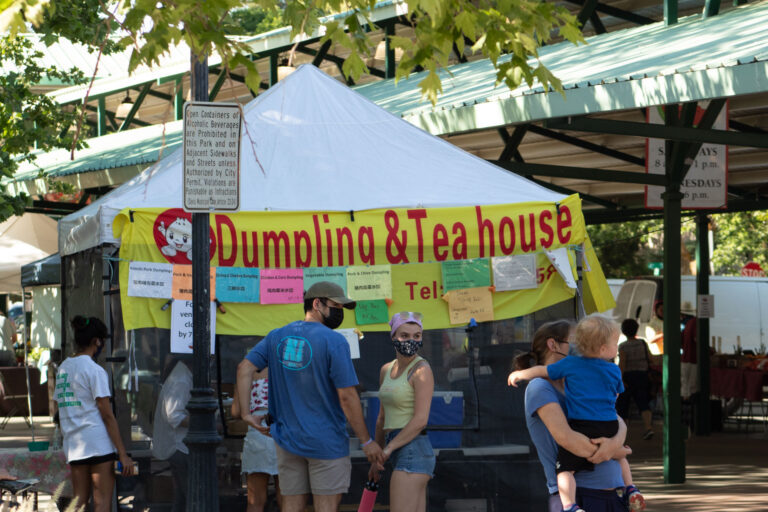
The amazing food that comes from The Dumpling House in its different iterations—both as a restaurant and a farmers market stand—is no stranger to The Aggie and UC Davis students alike. While the Davis restaurant has sadly been closed for almost two years now, students and community members have still been able to enjoy delicious goods from the steamed portion of their menu each Wednesday at the Davis Farmers Market in Central Park. Additionally, over the past year, The Dumpling House has opened three new locations throughout Sacramento, all with the extended menu not found at the farmers market. 

After speaking with Linda Liu, the owner and founder of The Dumpling House, it is clear why this establishment has been such a consistent fan favorite. Liu has a love for the craft as well as an incredibly charming and warm personality that is echoed throughout the restaurant staff, making the trek to Sacramento for some dumplings on a non-Wednesday undoubtedly worth it. 

Liu’s love for making and sharing dumplings is not new, as she learned all that she knows from her grandmother. 

“My whole family would sit around our big round table and wrap dumplings,” Liu said. 

Dumplings have always been communal for Liu, and she has extended that sense of community to all of Davis, even without a restaurant in the city.

 “With the farmers market, we still go because of the community and students who might miss us,” Liu said. Thankfully, The Dumpling House will be returning to its original building on E Street right here in Davis early this fall. 

“The entire inside will be brand new, but it’s the same Dumpling House as before,” Liu said. The UC Davis community will surely rejoice—I know I will—when those doors finally reopen, providing new and returning students and customers with a delicious dumpling experience that is only a short walk or bike ride away. 

In the meantime, I would highly recommend getting in your (or your friend’s) car and heading to one of Liu’s three current locations in Sacramento. I had the chance to visit the Midtown location—an adorable neighborhood I had never visited. This location has that perfect hole-in-the-wall look, with a simple interior made up of just the counter and a small seating area off to the side as well as three or four tables outside—the perfect place to sip on a delicious Thai tea while you wait. This location also offers a few dessert options, one being a chocolate bao that I urge everyone to try at least once. This perfect little savory dumpling consists of the classic fluffy bao bun with hot melted chocolate right in the center. Each of the locations have slightly different menus, making it imperative to visit them all and try each one’s unique offerings. 

Before opening the original Dumpling House in Davis over a decade ago, Liu traveled all around Asia and noticed dumplings were consistently popular everywhere she went. She left feeling inspired to come back to California and open a shop. Being the smart businesswoman that she is, Liu has always recognized that her primary customer base consisted of students in Davis, so she has always sold frozen dumplings at a discounted price for those nights you just don’t want to cook but still want some homemade food. Of course, the frozen dumplings are not only offered in Davis, and with the pandemic, this deal has come in handy. 

“People are pretty lazy, and are now getting tired of cooking in the pandemic,” Liu said. 

The Dumpling House and its masterful creations have become an integral part of the Davis downtown experience over the years, and with its official reopening in the fall once campus is up and running again, I predict it will make a return to Best of Davis for 2022. Liu perfectly summed up her career in the restaurant business and time at The Dumpling House: “I’m 72 years young and I still love to cook.” The Dumpling House has won over Davis’ heart. 

Written by: Angie Cummings — arts@theaggie.org

Best films from Davis’ 21st annual Film Festival

A COVID-19 sitcom stole the show

The 21st annual Davis Film Festival took place on May 19 and 20 at 7 p.m., and was streamed on Vimeo. Fifty films were submitted to the festival and only 29 films made the final cut. The showing this year gave the audience the opportunity to vote for their favorites. Unfortunately, there were some technical difficulties for the second showing and the festival sent an email to its registered audience that a live broadcast will be postponed to a later date. 

While I did not get to watch the second round of films, I did enjoy watching Wednesday’s event with my bag of popcorn. Listed below are my favorite films shown on the Wednesday premiere. 

“Episode 1” dir. by Sophie Martinez 

    My personal favorite of the entire two-day event was Sophie Martinez’s “Episode 1.” The short film focuses on a family who is forced to stay at home during the pandemic. Like many other families during this time, they’re slowly driving each other to the brink of breaking. The days focus on the mother, who works in human resources and is trying to find a memorable acronym to motivate employees. The story starts off with the father, who is used to an online setting as he usually works from home, but as the film progresses we can see how boredom and frustration takes over each member of the family—except for the mother, who is likely the only one continuously upbeat throughout the film. She even sends a Zoom link to her husband while they are in the same room and excitedly tells him that now they can be together all of the time; cue the husband looking annoyed directly into the camera. 

    This short film looks at the family’s life in a sitcom style, clipping each sibling into the film and having a member of the family look directly into the camera out of frustration. I would watch this family making a sitcom over any other scripted reality TV show any day. 

“Teddy” dir. by Charlee Wickemeyer

    The short film “Teddy” features a woman who draws dogs at animal shelters. It was the shortest film throughout the festival but it was the only one that made me tear up. In a matter of what seemed like a minute, Wickemeyer crafted the perfect story of a dog looking for a family. At the start of the lockdown, there were cases of animal shelters completely clearing out, each dog finding a home to go to. 

    Wickemeyer starts off the short film with a woman in an animal shelter drawing a dog with their teddy bear. We see her move along in the short film, drawing all of the dogs, and a couple of days later a young boy and his mother take home the small dog and the teddy bear.
    Anything with any animal is sure to make its way to my heart, but something about animals in shelters finally having a place to call home puts me in a wobbly mess like nothing else. 

“The Danger of a Runaway Train” dir. by Sara Alquist 

    Alquist compared her life to the train, always moving and fast-paced, until one day it was stopped and derailed, and suddenly she had to go through the process of figuring out who she was and who she wanted to be. 

    There’s something about someone unnervingly opening themselves up to an audience that automatically gets my respect. But aside from showing how she felt, it’s nice to see that other people are going through a similar situation. I always appreciate a short film or other artwork with the raw truth of what someone is going through. I have a tendency to get so caught up in my head about worrying what my next steps are in life and if they are the right steps that I sometimes forget I’m not the only person who doesn’t have it all figured out. But every once in a while, I’m reminded that we are all just a bunch of college students acting like we know what we are doing. Alquest’s short film reminded me of that, and it was a comfort especially now toward the end of my last year. 

“Flowers for the Knights” dir. by Linqi Sun 

    “Flowers for the Knights” was one that I didn’t fully understand when I first watched it, but the story was interesting so I went back to watch it again only to discover a telling story about sacrifice. The animated film focused on two warriors, one of whom has to go and slay a monster, but when the warrior gets infected, his friend, the knight, has to go and kill him. Our warrior, as infected as he may be, guides the knight’s sword to himself, understanding what needs to be done in order to save everyone else. As the knight plunges the sword into the warrior, flowers bloom out of his chest and those flowers are a remedy for those who are dying.    

The story starts off with our knight passing through a hospital full of the sick and ends with him kneeling at a graveyard of all of the fallen warriors who had given up their lives to save others. Sticking true to the theme of sacrifice and bravery, Sun dedicated this film to medical workers and essential workers who stepped up during the pandemic. 

Written by: Itzelth Gamboa — arts@theaggie.org

Accent discrimination and the problem with neutral accents

In entertainment, individuals with accents are often reduced for comedic effect, while in the workplace they lose credibility 

In “Modern Family,” Sofia’s Vergara’s character Gloria Pritchett is known for her exaggerated accent and misnomers of the English language; while her accent works primarily for comedic effect, Vergara’s character also breaks down the sobering reality of the way individuals with accents are treated in America.

    “Do you know how frustrating it is to have to translate everything in my head before I say it? To have people laugh in my face because I’m struggling to find the words? I know what I meant to mean. Do you know how smart I am in Spanish? Of course you don’t,” Vergara’s character said. 

In a few lines, Vergara’s character demonstrates how for many individuals whose secondary language is English, it is a straddle between trying to stay afloat amid being constantly lost in translation—while also reconciling with the fact that many people will whittle aspects of them down to judgements on their accent.

In the U.S., a study evaluating American attitudes toward nine non-Anglo foreign accents revealed a distinctive hierarchy: French and German, languages with “higher non-stigmatized categorizations,” were rated more positively compared to accents like Arabic and Vietnamese. What is declared the “Standard American Accent” is not so standard but closer to the speech patterns of someone who is a white upper-middle-class non-recent-immigrant.

Accent discrimination is a pervasive issue that occurs in Hollywood and everyday job listings. Former President Donald Trump himself has reportedly mocked the accent of Asian leaders from South Korea and Japan, as well as Prime Minister Modi of India. For many with accents, they are ridiculed and not treated as intellectual equals.

In Hollywood, actors with accents are faced with playing a typecasted role or receiving no role at all; with the expectation that most productions will not hire someone with an accent, actors must seek neutrality by banishing their accents. Egregious solutions given to actors to remove the “foreignness” from their accents include not speaking to their families in their native speech. Roles that hyperfocus on a character’s accent as a basis of their characterizations are often reduced to a comedic effect where they are not laughed with but laughed at. 

The acceptance of such accents in the mainstream is acceptable for entertainment value, but not so much in environments where accented English is rendered from its intellectual capability. Such is the case with LinkedIn job postings with preferences for “neutral accents” and the way having an accent destroys your credibility. A neutral accent is a standard applied that is a “linguistic improbability, but socially constructed reality.” 

Expectations of a neutral accent create a baseline that Anglo speech is the norm, and those that do not conform to the alignments of the “Standard American Accent” (someone who is a white upper-middle-class non-recent-immigrant) are rendered immediately unintelligible until they are closer to something they are not and should not strive to be. It is important to look toward our own and larger biases and dispel the notion that accented English is inferior—individuals who speak multiple languages and cater to our language that is ripe with contradictions—deserve nothing but respect.

Written by: Renee Wang — reswang@ucdavis.edu 

Disclaimer: The views and opinions expressed by individual columnists belong to the columnists alone and do not necessarily indicate the views and opinions held by The California Aggie.