55.5 F
Davis

Davis, California

Tuesday, December 23, 2025
Home Blog Page 258

UC Davis ranks #35 in annual Forbes, QS rankings for diversity and education

Renetta Tull, the vice chancellor of diversity, equity and inclusion, said the rankings are a “motivator” for future work

Forbes recently ranked UC Davis as #35 on their annual list of America’s Best Employers for Diversity. 

 “UC Davis is honored to be formally recognized as a top employer for diversity,” wrote Chancellor Gary May in an email to The California Aggie. 

“This ranking shows that we are on our way to fulfilling one of the key goals of our ‘To Boldly Go’ strategic plan: to be a national role model in higher education for diversity, equity and inclusion,” he said. 

Dana Topousis, the chief marketing and communications officer at UC Davis, also reflected on the importance of these rankings.

“This rating reflects the clear commitment that UC Davis leaders, faculty and staff have made over the years to prioritize our efforts in these areas,” Toupousis said. “It’s a testament to how we continue to strive for excellence in all we do.” 

In order to establish the diversity rankings, Forbes partnered with the research company Statista to “survey 50,000 Americans working for businesses with at least 1,100 employees and pinpoint the companies they identified as being most dedicated to diversity, equity and inclusion.” 

The final list, which included UC Davis, ranked the 500 best employers that not only received the greatest number of recommendations but also those that had the most diversity in their board and executive positions and the most “proactive diversity and inclusion initiatives.” 

The university also ranked highly in Quacquarelli Symonds (QS) USA rankings, being ranked ninth overall among public universities in the U.S. and being ranked fourth among public universities in the state of California. 

UC Davis also ranked 34th among all university institutions nationwide. 

According to UC Davis News, the QS-USA rankings are based on 17 metrics in four “broad” categories. These include “diversity and internationalization, the employability of graduates, the learning environment and the impact of research.” 

The diversity and internationalization category makes up 25% of a university’s total QS score and is based on both inclusiveness and how well the institution upholds United Nations (UN) Sustainable Development Goals, which include reducing hunger and gender inequality worldwide. 

On top of UN goals, the category takes into account faculty gender diversity and gender equality in pay at the university, which each make up 2.5% of the total diversity ranking. 

Additionally, the ethnic diversity of the student body, the ratio of undergraduates who receive Pell Grants, the proportion of international students and the number of Fulbright recipients each account for 5% of the diversity ranking. 

In total, 38 of California’s universities were featured in the rankings, making it the second most heavily represented state in the QS-USA annual report, with New York being the first. 

“We know that UC Davis is not a utopia, and being first doesn’t mean that our work is finished,” said Renetta Tull, the vice chancellor of diversity, equity and inclusion, via email. “We still have a lot of work to do, and our own standard for excellence at Davis is extremely high––it has to be––we are serving people, and they deserve our absolute best. Receiving the recognition is a motivator.” 
By: Rebecca Bihn-Wallace – campus@theaggie.org

Culture Corner

The Arts Desks’ weekly picks for movies, books, music and TV shows

Movie: “Sid and Nancy” dir. by Alex Cox (1986)

Cox’s follow-up to the cult classic “Repo Man” follows the infamous relationship between Sex Pistols bassist Sid Vicious and shrill teen groupie Nancy Spungen through the band’s collapse and a certain tragic event thoroughly cemented in Punk history. Cox’s style is rude and feverish, but at times beautiful. The film mocks the Sex Pistols (maybe justly) and makes no romance out of Sid and Nancy’s self-destructive lifestyles—here Sid Vicious is a talentless junkie and Nancy Spungen is a controlling, caustic harpy, and yet it’s impossible not to feel sympathy for them. The film flows like sloppy poetry, and a number of these shots stay with you regardless of whether you want them to—a reminder that great filmmakers are capable of locating beauty in what amounts to a wasteland.

Book: “Fear and Loathing: on the Campaign Trail ‘72” by Hunter Thompson (1973)

Thompson’s book is one of the finest pieces of journalism ever written—every sentence runs somewhere on a continuum between “Basically Libel” and “Admission of Felony.” Thompson’s account of the doomed McGovern campaign is uncompromising and demonstrates, somehow, a kind of broken honesty, unmarred by any impetuous veil of objectivity. The whole thing comes together in a flurry, never staying too long in any one place and dangerously extracting fragments of the truth from sleazy conferences and Thompson’s own mescaline-fueled indiscretions on press trains and in crime-ridden streets. The book swallows you whole until the last page—nobody has been able to do it quite like him since.

Album: “The Hollow Mountain” by TwinSisterMoon (2009)

This is a mysterious Psychedelic Folk album from the solo project of Mehdi Ameziane, one half of Natural Snow Buildings, full of lush soundscapes and somber acoustic guitar. It summons a natural aesthetic that sounds something like a fantasy version of “The Glow Pt. 2,” haunted by an implacable voice that drags you further into the wilderness. A friend of mine once described this album as “ritual-core.” Quaint guitar-driven tracks are found between stretches of spiraling ambience, making the whole thing feel as strange as it is soothing.

TV Show: “Cromartie High School” (2003)

Pretty much every line in this show is quotable in some capacity. It’s full of ironic, awkward charm and at no point pretends to have a cogent plot. One of the characters is Freddie Mercury (I’m not sure how copyright or likeness law or whatever works in Japan, but as seriously baffling as it is to me, they got away with this. I guess because he never speaks and they don’t ever say his last name?) and he’s one of the less compelling ones. This show is endlessly funny and more people need to know about it.

Written by: Jacob Anderson — arts@theaggie.org

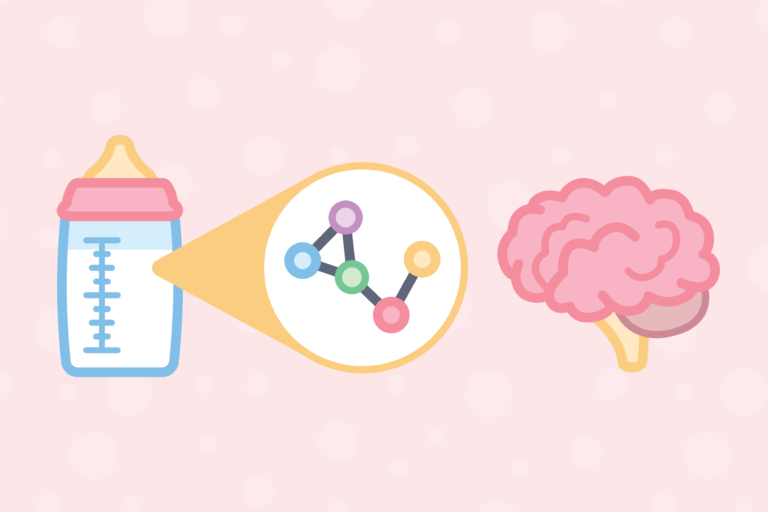
UC Davis Health study finds that lactoferrin protein in milk has different effects on early brain development depending on concentration levels

Lactoferrin, a sialic acid glycoprotein, can promote neurodevelopment or neuroprotection in a concentration-dependent manner

The first two years of a newborn baby’s life are critical: Any changes the rapidly-developing brain experiences in response to environmental factors and any nutrients absorbed become irreversible later on in life. Human milk, the primary source of nutrients for a baby, has a plethora of nutrients that contribute to a baby’s physical development and neurodevelopment.

A recent study focusing on a specific protein in milk concluded with a rather surprising paradox: high concentrations of the protein lactoferrin (Lf), often found in human and cow milk, were associated with increased neuroprotection and possible prevention of neurological diseases, while low concentrations were associated with neurodevelopment, learning and memory. 

    Dr. Frederick Troy, a professor and chairman emeritus at the Department of Biochemistry and Molecular Medicine at UC Davis School of Medicine and co-senior author on the study, defined lactoferrin and its effects. 

    “Lactoferrin is a very highly sialylated milk glycoprotein that promotes early neurodevelopment and cognition,” Troy said. “It’s one of many sialylated glycoproteins, and of those that contain sialic acid, we’re really interested in these proteins like lactoferrin, sialyllactose, and what’s known as a macro glycopeptide. If you fed this sialylated macroglycopeptide to neonatal piglets, you can take dumb piglets and turn them into smart piglets.”

Sialic acids include a family of nine-carbon acidic monosaccharides commonly attached at the ends of sugars in proteins. The highest concentration of sialic acid in the human body is found in the brain, where these acids play a critical role in shaping neural networks and neural transmission. Troy has been studying sialylated proteins for many years, in hopes of providing insight into their biochemical functions and how they ought to be incorporated into the diets of infants. 

“Multiple studies have shown Lf has important biological functions,” according to a recent press release by UC Davis Health. “For example, lactoferrin can modulate immune responses, regulate the body’s iron absorption, and function as an antioxidant and anti-inflammatory. In humans, lactoferrin can reduce fungal infections and late-onset sepsis and lower psychological distress.”

Troy’s team studied 51 neonatal piglets from the age of three days to 38 days, which is equivalent to 10-months old for an infant. The researchers assessed their learning and memory in an eight-arm radial maze test, composed of an easy and a difficult test, in response to different levels of lactoferrin. The concentrations chosen for the high and low levels of lactoferrin matched the levels in mature human milk and 6-month human milk, respectively.

Based on the results, the study further explained how different concentrations of lactoferrin should be used accordingly. 

“… [F]indings suggest that activation of the molecular signaling pathways, function and gene networks in the CNS [Central Nervous System] are different between neonatal piglets on the low- and high-concentrations diet of Lf,” according to the study published in the journal Molecular Nutrition and Food Research. “Our findings imply that the potential clinical applications of bovine milk Lf [like] infant formula should be the low concentration of Lf to support neurodevelopment, while the high concentration of Lf should be used to support neuroprotection.”

Proteins that contain sialic acid like lactoferrin can activate different signaling pathways that result in different outcomes downstream in the nervous system, such as activation of other molecules like polysialylation proteins and brain-derived neurotrophic factors (BDNF) linked with neurodevelopment and neural survival. With lactoferrin’s special case of different effects depending on its concentration, Troy described what people should take away from the study.

“It’s good to have as much [lactoferrin] as you can get naturally early on in neonatal stages, and let the brain decide on what to do with it,” Troy said. “Many people know of Alzheimer’s disease as the second most prevalent of the neurocognitive defects. Nobody knows if ingesting lactoferrin or other polysialic acid later on in life will reduce these defects. There is so much potential for this to become transformative research with controlled clinical studies.” 

Written by: Brandon Nguyenscience@theaggie.org

Pence Gallery’s “Natural Abundance” is worth a trip downtown

The exhibit features work by local artists that is sure to put a smile on gloomy faces

Davis has an abundance of local culture to indulge in, including the Pence Art Gallery. An inconspicuous complex nestled in the heart of downtown is home to a surprisingly impressive number of exhibits featuring work by local artists.

“Natural Abundance: Gardens Flowers and Fruit” showcases paintings from various artists. The exhibition is replacing the annual Pence Gallery Garden Tour, which has been canceled for a second year in a row due to the COVID-19 pandemic. “Natural Abundance” is open now through May 30.

The exhibit is located on the top floor of the gallery, above the gift shop and two other exhibits (which are also worth a look). On the way to the second story, patrons are treated to a hanging display of various donuts that look good enough to eat. Be warned though—these treats are enticing, but given that they’re crafted from various different inedible materials, they likely wouldn’t make for the best mid-gallery-stroll snack.

  Upon entering the room housing “Natural Abundance,” art lovers are greeted with a colorful display. The room has been curated to be reminiscent of a garden, though not all pieces are straightforward renditions of flora. 

I must give props to the gallery curator for their thoughtful work. Even from the perspective of a relative art newbie, I could tell that the gallery curator did a good job with placing the paintings in such a way that the transitions between various art styles made sense, overall contributing to a pleasant walk-through.

The first wall features mainly vivid pieces, with the standout being “The Peony Tapestry” by Janet Crittenden. It is by far the largest artwork in the collection, and one of the few that incorporates human life into its landscape. There is clear inspiration from various other art styles and well-known pieces woven into Crittenden’s work, and the result is a unique, skillfully-made painting that draws your attention right away. 

Moving onto the second face of the square room, the first piece hung up on the wall is titled “Covent Garden Tube Station, London” by Pete Scully. This caught my eye right away, as most other artists interpreted the assignment literally, but Scully took a more creative route and created a piece only loosely based on the theme. Although this does create some disconnect from the rest of the gallery, I enjoyed seeing an artist think outside the box and come up with something completely different. His work was also skillfully made (like every piece in the exhibit), with bold reds and blues overlaying a precisely sketched background that makes the piece come alive and almost transports the viewer from Davis to London. 

Other pieces in this area included beautiful still lifes, as well as a few renditions of various garden landscapes. “Gloria’s Roses” by Sompol Chatusripitak, a delicate watercolor view of a rose bush, is so detailed that you can almost smell the floral scent wafting off the page, and “Daffodil” by Kathleen Gamper is lifelike enough to make someone believe Gamper had simply pressed a daffodil in between the glass and called it a day. There didn’t seem to be a clear theme for this wall, which gave it the slightly sporadic nature of an untamed garden. 

The third wall features darker pieces that evoke a more introspective mood. I enjoyed the change of pace from bright yellows and pinks. The art displayed there featured a moodier color scheme with plenty of purples, dark greens and blues and rounded out the gallery by emphasizing the different dispositions Mother Nature can adopt.  

Lastly, there is a colorful, fun wall. The paintings here screamed spring, and almost seemed to light up the room with their bright petals and bold brushstrokes. Some of the work here was a bit more abstract—the whimsical blues and oranges of “Garden Light” by Trish Mayer and the palm tree featured in “Horton Iris Farm I” by Deborah Hill spring to mind. These pieces certainly left the viewer leaving the gallery on a high note. 

A standout artist to me was Naomi Bautista. Various works of hers dotted the room, and each spoke to me on a deeper level. I was entranced by the way she made her subjects come alive. When you take a closer look at the canvas, it is obvious that each brushstroke is just that—a smudge of paint that had been placed there by someone. But stand back, and the individual strokes meld together into a beautiful bunch of roses (“Roses”), a vase filled with sunflowers (“Sunflower”) or a bouquet of mixed blooms (“Spring Flowers”). 

As someone who can’t successfully draw a stick figure, I was struck by the talent of the artists. Each piece had something unique to offer, and even though the majority of the paintings were still lifes of flowers, it was clear that every artist had put hard work into it. From the varying sizes of brushstrokes to the different mixes of colors, every artist did a phenomenal job and brought something different to the table. The end result is a beautiful collection celebrating community and the environment, with the steadfast resilience of nature being a perfect metaphor for that of our local community during these times. 

Written by: Clara Fischer — arts@theaggie.org

‘Spontaneous social media’ is an oxymoron

 It’s impossible to make Instagram “casual” again

I’ve always been impressed by people who could cultivate perfect Instagram themes.  Whether it’s a certain border, filter or pattern of posts, themes are generally used to define a user’s account and personal style.

    There’s a new calling, however, that is making its rounds on social media platforms far and wide: “make Instagram casual.” 

One of the methods that people are employing in an attempt to make Instagram casual is the “photo dump.” Post a collage containing a few selfies, scenery shots and (most importantly) an air of spontaneity—you’ve got yourself a perfect “photo dump.” Despite its less-than-elegant name, “photo dumping” insinuates that you’ve got a spontaneously perfect life. It also gives off the impression that you don’t care about the presentation of your feed and what people think about you. 

    This Instagram trend was popularized in 2020 and has followed us into 2021, which tells us that people are getting tired of the way that we’ve been posting for the past decade. Having a theme to your account is now considered passé.

I know that we’re all tired of hearing about COVID-19, but there’s no doubt that the pandemic’s reign of chaos touched all parts of our lives, including the online sphere. The shift toward spontaneous, unfiltered posting reflects our lived experience––one that was characterized by political turmoil and “unprecedented times.” Posting erratically gives us the chance to make sense of the world around us, to adapt our old concepts of reality to the new normal. This turn toward spontaneity also has a lot to do with the aging social media generation. 

I got on Instagram when I was 11. Back then, Instagram felt like it was made exclusively for photo dumping. The only people who had themed feeds were famous people and the small beginnings of what would become Instagram influencers. The early years of Instagram were also rife with copious amounts of nostalgia-posting by self-proclaimed “‘90s kids,” ranging from “Rugrats” memes to old Tamagotchi screengrabs. They posted about how the newer generations would “never know” about certain cultural moments and fashions. Those who grew up in the social media generation are doing their own version of nostalgia posting by harkening back to the old days of Instagram. 

    Our lifetime experience with social media has also given us the opportunity to become critics. We’ve become acutely aware of what does and doesn’t work in a social media platform, simply because we’ve had so much experience with social media. The growth of Facebook has leveled in the past five years, giving us the sense that it’s falling out of fashion. This could be in part because of the multiple privacy scandals it’s faced, but it also could be because the formulaic posting method is too established in the superficial. Scrolling through Facebook is like having your eyes assaulted by a barrage of humble-brags—we’ve become tired of it. 

    The use of platforms like TikTok and Snapchat are all significantly higher in younger age groups (ages 18-24) compared to platforms like Facebook. My generation’s embrace of these platforms stems from something that we all have in common: casualness. Snapchat promotes on-the-go photographing and posting, while TikTok encourages users to make short snippets that spin off other creator’s sounds. No one looks at an average user’s TikTok account to get a sense of their personal brand. There’s no stress of creating a persona. “Photo dumping,” then, is a key effort in roping Instagram in with the “chill” social media platforms.  

    Regardless of all of the changes being made in Instagram’s usage, there’s still a question that looms: How much of this is going to work? The app that we know and love has always been about the art of the inorganic façade. Every attempt to make Instagram casual (the addition of “stories,” for example) has eventually grown into a cultivated, formulaic act. It’s only a matter of time until the “photo dump” devolves into the “photo curation.” As long as we’re posting, the world of social media will never be casual.

By: Isabella Chuecos –– ifchuecos@ucdavis.edu 

Disclaimer: The views and opinions expressed by individual columnists belong to the columnists alone and do not necessarily indicate the views and opinions held by The California Aggie.

Healthy Davis Together testing falls as vaccination rises

Despite increased vaccination rates, officials encourage people to keep getting tested

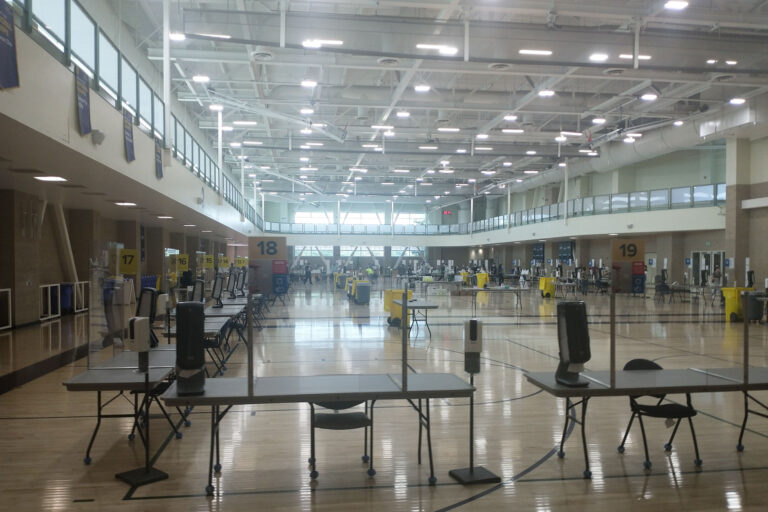
Although the COVID-19 vaccination rate has been increasing in Yolo County, asymptomatic testing through Healthy Davis together has been decreasing. On May 12, 1,811 tests were administered, while only 164 tests were done on May 16—the lowest number of tests done in one day since December. 

Yolo County On-Call Public Information Officer Frank Schneegas stated that testing has not just been declining in Davis.

    “That’s a trend in most places,” Schneegas said. “Generally, once people have been getting vaccinated, they haven’t been getting tested and it’s not really a requirement anymore for a lot of things.”

    As of May 18, 52% of all Yolo County residents have received at least one dose of the vaccine, according to Schneegas.  

    Schneegas added that the ease and convenience of testing options available means there’s no disadvantage to getting tested, whether or not someone has been exposed to COVID-19.

    “It never hurts to get tested, so if you have an exposure, it’s not a bad idea to get tested,” Scheengas said. “I mean especially if you live in Davis, it’s really easy to get tested at Healthy Davis Together. We also offer tests which you can find on [Yolo County’s] website. The state offers tests and so it’s not a requirement per se, but it doesn’t hurt to get tested.”

    The decrease in testing demand has resulted in changes in terms of the various testing options available in Yolo County, Schneegas explained. 

    “We aren’t really pushing testing as much anymore,” Schneegas said. “People haven’t been getting tested, and because of it we’ve had to stop offering our own Yolo County testing as well as the State’s OptumServe or Orale, which is kind of a partnership between different organizations as well as Healthy Davis Together.”

Although testing through Healthy Davis Together has been declining, UC Davis Student Health and Counselling Services Medical Director Dr. Cindy Schorzman said that on-campus testing efforts have been going well. She explained that testing has ramped up since the Daily Symptom Survey, which is required to enter campus buildings or facilities, was revised to check when people were last tested.

    “On-campus testing efforts are continuing to go well, and we have seen an increase in testing numbers since revision of the Daily Symptom Survey to include an automatic calculation of the individual’s last test (or same-day test appointment),” Dr. Schorzman said via email.

    In addition to offering widespread testing to the Davis community, UC Davis is also administering vaccines. UC Davis Health Spokesperson Marianne Russ Sharp explained that UC Davis Health gives a few hundred people each day.

    “UC Davis Health is vaccinating several hundred people per day and our supply remains stable,” Sharp said via email.

    Schneegas added that Yolo County has now also started vaccinating those aged between 12 to 15.

    “Yolo County is vaccinating 12 to 15 [year olds],” Scheengas said. “We just had to wait for CDPH to say we could, but we did start doing that last week.”

    As the university prepares to begin reopening, Schorzman encouraged people to get vaccinated if they can.

    “As we prepare for increased in-person instruction, and as public health recommendations and restrictions are eased throughout the country and state, the only way we will succeed is for as many people as possible to get vaccinated,” Schorzman said. “Please consider getting vaccinated, if you are able, to help support our campus community as we move forward together.”

Written by: Shraddha Jhingan — city@theaggie.org

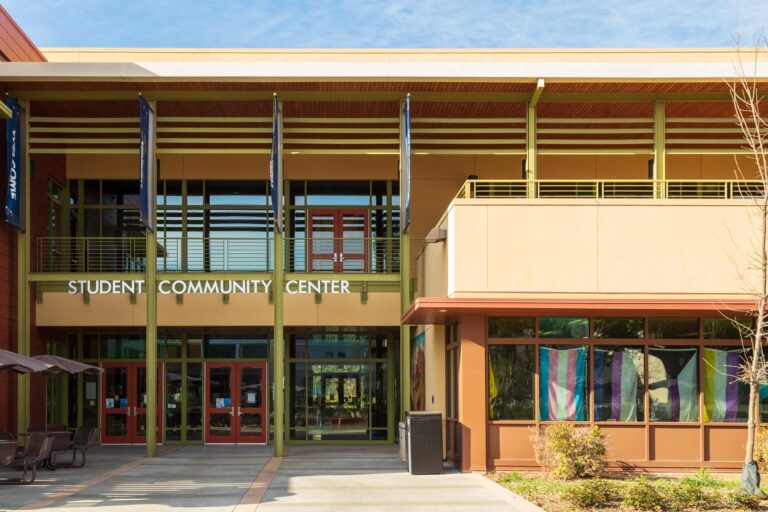
LGBTQIA+ Resource Center organizes 2021 calendar of events for UC Davis’ Pride Month

Events are held weekly throughout May, ranging from supporting LGBTQIA+ survivors to making pride crochet plushies

This year’s Pride Month theme, Queers in Bloom, is meant to provide a space for folks to showcase their individuality and highlight the importance of providing culturally conscious support for the LGBTQIA+ community. 

Although Pride Month usually takes place in June, the overlap between Mental Health Awareness Month and Pride at UC Davis creates an important kinship between the two, both of which occur in May and have had ongoing events throughout this past month.

Jamie Lozano, a third-year cognitive science major, enjoys that UC Davis holds Pride in May.

“The parallels between Mental Health Awareness Month and Pride Month at Davis give us a great opportunity as queer people and allies to have conversations about how mental health impacts the LGBT+ community,” Lozano said. 

Rachel Henry, the education and outreach manager at CARE, facilitated a training event for UC Davis staff and faculty on Tuesday, May 18 titled, “Supporting LGBTQIA+ Survivors.” 

This training was provided to increase understanding about community-specific forms of abuse and how this information can be utilized to better support LGBTQIA+ survivors. 

“LGBTQIA+ survivors face many unique barriers to accessing services that may include, among many others, the danger of being ‘outed’ or the risk of experiencing transphobia or homophobia while seeking support,” Henry said.

The event provided professional development opportunities needed to increase the ability to support survivors, which Henry believes “is an imperative part of centering student experiences that might otherwise be left out of the important conversations on reducing sexual violence.”

On Wednesday, May 19 another event called “LGBTQIA+ Community,” was put on by the Mental Health Initiative (MHI) alongside the LGBTQIA+ Resource Center.

MHI has also provided a Spotify playlist for all of the LGBTQIA+ anthems.

Held via Zoom, the event focused on the intersectionality of mental health, the LGBTQIA+ identity and other personal identities such as race and religion.

 During the event, panelist Jon De Paul Dunbar, a community advising network counselor at Student Health and Counseling Services, brought up the significance of helping individuals find the strength within themselves or what he called “being your own cheerleader.” 

Dunbar also shared how he felt about both Mental Health Awareness and Pride being in the same month. 

“This allows students and the UC Davis Community to celebrate, raise awareness, solidify connections and spread information while the majority of students and staff are on campus, instead of during the summer when most are not,” Dunbar said.  

Other Pride Month events include crocheting pride plushies.

In asking if Lozano was still able to feel connected despite the events being virtual, they said they were able to see the bright side of the situation. 

“I found that it has been easier for me to reach out to my community through virtual events and platforms like Discord,” Lozano said. “Through these virtual events, I’ve made more friends because I’m able to put myself out there, have conversations and ask questions virtually that I wouldn’t know how to word in person.”

 Creating an environment that validates individuals’ experiences while also understanding that every person is different is key for Lozano.

“There is no one right way to be queer, to be trans or to be a human,” Lozano said. “Inclusivity means incorporating every story and acknowledging that individuality is beautiful. Not every person has the same experiences, but we can find common ground with one another and foster positive and sincere relationships.”

On Thursday, May 20, the LGBTQIA+ Resource Center recognized Multisexual Awareness Day. Also known as multiromantic, multisexual is a term used to describe attraction to more than one gender.

For more information, visit ‘ucdlgbtqia’ on Instagram or the LGBTQIA+ Resource Center’s direct website

Written by: Nicholas Murphy — campus@theaggie.org

Mental Health Initiative, Student Health and Counseling working to support students during Mental Health Awareness Month

The town hall meeting hosted by MHI on April 30 raised concerns over the usability of Health-e-Messaging and advocated for counselors who specialize in LGBTQIA+ rights, the neurodivergent community and students with disabilities

    ASUCD kicked off Mental Health Awareness Month with a virtual town hall on April 30 to discuss recruitment needs for Student Health and Counseling Services and to listen to students’ concerns surrounding mental health resources. 

    The event was hosted by UC Davis Mental Health Initiative (MHI) Co-Directors Aparna Manoj and Sammy Veres.

    “For Mental Health Awareness Month, we are providing 20 fully online events in May that focus on the unique intersection of mental health and identity, culture, race and more,” Veres said. “We hope that students attending these events will join the discussion on the intersectionality of mental health and have a chance to learn more about communities that may differ from their own.”

    According to Veres, MHI hopes attendees of these events will also gain a sense of solidarity and realize their individual struggles are real and valid.

    “Advocating for students’ mental health is important because students often struggle silently and are not sure where or how to access mental health resources,” Veres said. “With student mental health organizations like MHI and many others on campus, we are raising awareness for students that may feel like they are alone.”

    While MHI has had to hold community events virtually this year, Veres shared that it has been great to hold these events and interact with students in any capacity the members of the organization can. 

At the town hall meeting MHI hosted, attendees raised individual concerns and suggestions regarding Student Health and Counseling and how it could better support students. 

    “There should be more incentive to develop interpersonal relationships between psychiatrists and the students they prescribe medications to,” said Rowen Clayton, a third-year human ecology major. “Students should feel good about the diagnosis or about medication. It shouldn’t be something they are hesitant to take because they were just randomly prescribed it.”

    Several attendees voiced concerns regarding the difficulty of navigating the Health-e-Messaging website students use to make appointments with a counselor.

    “I had no idea that students could do a free trial with a counselor [and] I tried to do that, but I was so intimidated by how the website worked, that I just completely backed out of it,” said Gianna Santos, a third-year linguistics major.

    Students also voiced the importance of having counselors who specialize in LGBTQIA+ rights, the neurodivergent community and students with disabilities. 

    MHI plans to use the feedback from the town hall to make hiring requests that best meet students’ needs. 

    In addition to MHI hosting virtual events for Mental Health Awareness Month, Student Health and Counseling is also supporting students’ state of mind this month.

    “We are placing a highlight on students’ needs at this time,” said Katie Cougevan, the clinical director at Student Health and Counseling, via email. “‘Listening Sessions’ have been scheduled to hear about concerns from certain student groups (upcoming is one in collaboration with SISS and Global Studies to hear more about what our International Students need in terms of support).”

    Student Health and Counseling is offering 26 different types of groups to meet student needs and foster the connection students are craving right now, according to Cougevan. 

    “Recent outreaches have also been highlighted to connect with students who identify as struggling with National events of hate crimes or targeted violence against specific underrepresented groups,” Cougevan said via email. “We offer safe spaces, processing of struggles in this current climate and exploration of how to address issues of social justice and advocacy.”

    Due to the pandemic, Student Health and Wellness is offering free modules to help students dealing with COVID-19 and loneliness. Students can access these self-help modules by visiting TAO Connect (Therapy Assistance Online) and signing up with their UC Davis email address.

    For students looking to learn more about the campus’ mental health and counseling options, a great resource is the mental health flyer. Additionally, students can make appointments through Health e-Messaging or contact mental health staff at their 24/7 hotline, (530) 752-0871. For 24/7 crisis support, students can text “RELATE” to 741741.  

    “I think our campus has done a great job in reducing stigma around seeking assistance for mental health issues,” Cougevan said via email. “I am excited that we have several recruitments in process and are bringing new counselors to campus for fall that reflect the diverse student body and needs of our campus community.”

Written by: Maddie Duley — campus@theaggie.org 

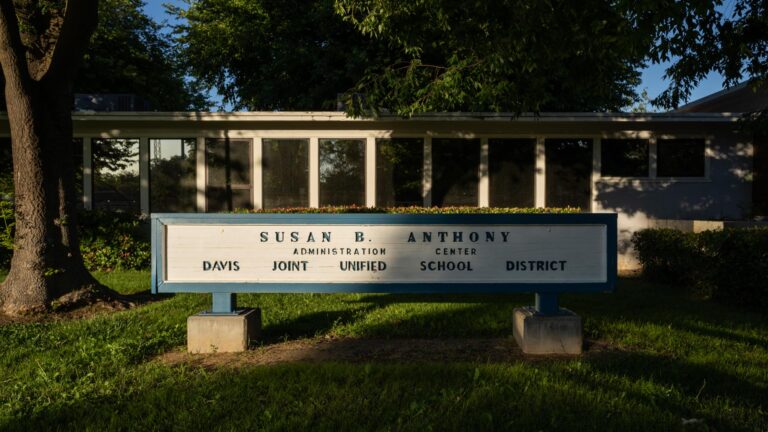
Davis Joint Unified School District educators reflect on the COVID-19 academic year

Jo Eberle and Jessica Beckinger share their experiences teaching during the different phases of the pandemic

Educators continue to adapt to the changing phases of the pandemic, and as the school year comes to a close, Davis Joint Unified School District (DJUSD) teachers Jo Eberle and Jessica Beckinger reflect on this “demoralizing” year for educators. 

    DJUSD schools returned to campus after the district’s spring break on April 12, 2021, which Beckinger and Eberle both expressed concerns about at the time. Mainly, teachers were worried about the lack of adjustment time for returning to in-person instruction and the safety of students’ and their own families. Beckinger, a kindergarten and first grade teacher at Birch Lane Elementary, said that, luckily, the adjustment back to the classroom has been easier than she expected. 

    “I thought there would be a longer period of normalization, getting them into their routines and expected behavior,” Beckinger said. “That actually happened pretty quickly, and it feels easier in terms of management as a teacher because it’s the smallest group I’ve ever had. In terms of getting every child’s attention or just behavior management in the classroom, it feels like a cakewalk because I have half the number of children I normally have in that room.”

    Previously, Beckinger had expressed that she was worried about being able to balance teaching and lesson planning for her in-person students with preparing materials and lessons for her distance learners, but she said that she has been able to focus her afternoons on lesson preparation by simulcasting morning class to her distance learners while she teaches in person.

      “I’ve freed up my afternoons now to prep […] lessons for the distance learners and grade their work and respond to emails and prep for in-person lessons—all the things we need to do,” Beckinger said. “So I freed up two to three hours most afternoons to focus exclusively on lesson work for the distance learners.”

    At Birch Lane, Beckinger’s kindergarten and first grade mixed class comes for in-person instruction from 8:30-11:30 a.m., so she is able to use time after lunch to record and prepare lessons for distance learners, as well as catch up on other work. Though Beckinger said that she still has to work harder to prepare essentially two days of lessons everyday, the real challenge of having kids back on campus has been enforcing social distancing rules and COVID-19 restrictions, as every class is approaching the rules differently.

“My students are not having recess. They’re staying very strictly, three feet apart,” Beckinger said. “And they’re looking out our classroom window and there’s another kindergarten class having full recess, and that’s not fair to my students.”

Beckinger explained that her students, who are five and six years old, do not understand all of the restrictions put in place, and as much as she wishes they could go out to recess, she recognizes that as a parent, she would expect her childrens’ teachers to follow the protocols set by the district. 

Eberle said that it has also been challenging to try to ensure that all of her students are receiving the same classroom experience, even while some of them continue to learn virtually.

“It’s hard to get the kids in the room to really put the effort into connecting with the kids who are still doing distance learning,” Eberle said. “If I make breakout rooms, or group work in Zoom, it kind of feels weird for students to be working with someone in the room and maintaining that connection, making sure that person at home is involved.”

Both educators also expressed that though they are happy to have students back in the classroom, and are looking forward to a more normal academic year in the fall, the pandemic has been challenging for teachers.

Eberle said that as a result of the reopening schools debate, many people were circulating inflammatory posts about teachers. She said she ended up unfriending high school classmates and neighbors on Facebook because of this. She also said that some of the negativity towards teachers during this time has given her space to reflect on her profession.

“It hasn’t affected my passion for teaching, but there’s been a lot of time for reflection on the effort that it takes,” Eberle said. “Do I always want to be working this hard for this payoff? It has been interesting to think about doing other things.”

Beckinger also said that she felt the rhetoric around teachers shifted during the pandemic. She remembers feeling like parents began to blame educators for their kids being stuck at home and feels that educators began to be deemed “lazy,” while she said she was working harder than ever.

Beckinger said that not only was she dedicating significant time and effort to teaching when working from home, but she had to work even harder to adjust to using Zoom and Google Classroom virtually overnight.

“For those of us who aren’t super techie, like my generation up, it was a big challenge,” Beckinger said. “Millennials maybe had it a little easier because they grew up with tech, but I didn’t use email until college […] I didn’t even have a cell phone until college.”

She also said that in addition to preparing for classes, teaching from home and responding to emails, Beckinger had to take care of her own children, since her husband had work in person throughout the pandemic, and their daycare was shut down for much of 2020.

“I did not have help for a good while in any form until 6 p.m. each day, five days a week,” Beckinger said. “Our parents stopped helping because of the pandemic and since older people were getting so sick, so we had nobody coming in and giving us any breaks, and I still had to do my job.”

Beckinger said that the combination of trying to adjust to working from home while taking care of her own children and feeling like the community was turning against teachers affected her mental health during the past year.

“I got kind of depressed last summer and I remember one night just crying in the kitchen, telling my husband, […] ‘I’m gonna lose my mind,’” Beckinger said. “It was hard. It was emotionally harder than I could have anticipated. Harder than life usually is for sure.”  

Eberle  said that she felt very lucky because her children are teenagers and need less looking after during the day. 

“I can’t imagine having small children who need to be supervised and entertained—that just blows my mind,” Eberle said. 

She said that throwing herself into her work actually helped take her mind off of the pandemic at times.

“So actually for some of us, I think being so busy really gave us a focus,” Eberle said. “It almost helped us handle this strange situation because our energy was in preparing for the classes, so it kept us grounded.”

Although this year has been hard on both teachers and students, for Eberle, the hardest past remained the same throughout: reaching her “unreachable” students.

“I’ve gone to people’s houses to drop off materials, but I don’t really have the capacity to do home visits with my personal family life and schedule,” Eberle said. “I can call home, but even if your parents think that you’re online, it doesn’t mean that you’re actually logging in. It doesn’t mean you’re actually paying attention to the lesson instead of doing something else on your computer. If [students] don’t want to be reached, they can stay completely disconnected.”

Beckinger added that though she is looking forward to the fall and is excited to be back in the classroom, she is worried about how the pandemic might change the education profession moving forward.

“I do worry that we’ll go into a bit of a supply and demand issue,” Beckinger said. “I think people are leaving, or wanting to leave, more than people are wanting to come in after seeing the way teachers have been treated and what they’ve gone through this past year.”

Written by: Katie DeBenedetti — features@theaggie.org

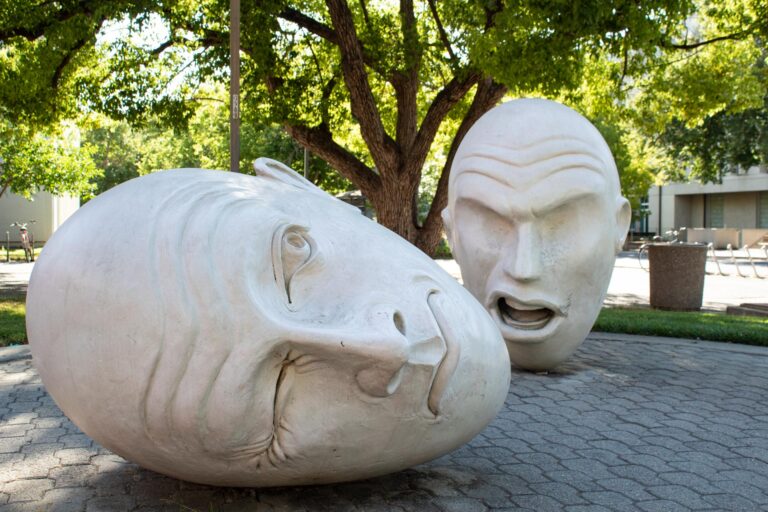
Cracking open the story of the UC Davis Eggheads

Faculty members of UC Davis Library reflect on the history of the Eggheads and their impact on campus

Amid the structures that make UC Davis similar to other college campuses such as classrooms, dormitories and dining halls, the Egghead sculptures stick out as a Davis quirk. The Eggheads, which can be seen in five different locations, are art sculptures that were first introduced to UC Davis in 1991. Quite literally egg-shaped heads, the sculptures were created by late UC Davis ceramics professor Robert Arneson. 

Kevin Miller, the head of Archives and Special Collections and the lead for the Archives and Institutional Assets Program as the university archivist, explained how the initiative to create the Eggheads came to be. 

“Right towards the end of [Arneson’s] career at UC Davis, there was this group that was starting up, a campus committee called the UC Davis Art and Public Spaces Committee,” Miller said. “They worked with donor money to raise some money for some public artworks to beautify campus and make campus a little more unique. Arneson’s Egghead’s were a big part of that.”

Miller stated that while the concept of an “egghead” refers to someone who is highly academic or intellectual, the sculptures serve as an important reminder of UC Davis’ strong arts and humanities presence. 

“In some ways it accomplishes both: it kind of points out that we’re a very serious school in terms of academics with a wide range of disciplines, but it also speaks to the important history of art on campus,” Miller said.

Moreover, Miller explained that it was important for Arneson that the Eggheads be hands-on and interactive, rather than roped off from the public. He wanted members of the community to “be able to go up to them, touch them, experience them.” UC Davis has fulfilled this wish, and anyone can approach the Eggheads. They have even become popular spots for graduation photos.

“Occasionally, there’ll be somebody scratching their name into one or something like that, but for the most part they’re beloved. They’re the subject of practical jokes that are done with love,” Miller said.

While the Eggheads reside on campus, Miller stated that they fused well with Davis as a city. 

“It bled into the town as well, and maybe that was reciprocal because Davis as a town is also pretty well known for its kind of quirky public art,” Miller said. “So that was really nice for the town and college relationship.”

Lee Riggs, a library assistant in Student Services at Shields Library, appreciates the sense of humor and approachability of the Eggheads and how they incorporate fun into an academic campus.  

“You can read your own story into each of them, but you can also see that they have their own story,” Riggs said. 

Riggs shed light on the connections students have made with the different Eggheads over the years, such as the “Bookhead” which is located outside of Shields Library.  

“The other thing that sticks in my head with the ‘Bookhead’ is that over time, people have decided that if you rub it before an exam, that will bring you good luck,” Riggs said. “I’ve actually heard campus tour guides say that, so that’s kind of a myth that has developed on its own.”

Jessica Nusbaum, the Director of Communications and Marketing at the UC Davis Library, described her opinion on the lasting impact of the Eggheads on UC Davis. 

“I’m no art historian, but in my personal view as a member of the campus community, Robert Arneson’s Eggheads have become emblematic of UC Davis,” Nusbaum said via email. “Quirky, witty, challenging us to look at things in a new way—from the upside-down ‘Eye on Mrak’ to the library’s own ‘Bookhead’ […] the Eggheads are truly one of the university’s most visible and recognizable symbols.”
Written by: Nora Farahdel — features@theaggie.org

In light of spring elections and low voter turnout, students share their understanding of ASUCD

Students voice their opinions on the role of ASUCD and the importance it holds for them 

ASUCD provides a variety of programs and services that cater to the UC Davis student body’s needs through its four pillars: social, basic needs, advocacy and media. Among these student-facilitated programs is ASUCD’s student government. Many of the representatives elected by UC Davis students play a role in writing legislation that maintains ASUCD operations and services. Appointed members can also advocate for issues reflecting the needs of students and promote them to campus officials for implementation. 

Michael Navarro, a first-year political science-public service major and a current ASUCD senator, described more about his role and responsibilities as an elected official. 

“As an ASUCD senator, it is my responsibility to actively represent the student body as a whole,” Navarro said. “I review, write and assist in a variety of different legislation that impacts the student body to better support and benefit all people on campus. It is critical to elect student representatives because it is important to have different perspectives.”

In addition to selecting senators and other representatives, students have the power to decide on the measures to be implemented in ASUCD. 

ASUCD hosts two general elections every academic year. Each one provides an opportunity for students to elect new representatives and bring a fresh perspective to student issues and concerns. In both elections, new senators are selected to bring about reform on the items addressed in their running platforms, and the election in the spring contains the executive ticket which elects the president and vice president. 

Although ASUCD elections hold the power to decide the students that will maintain the variety of services and programs UC Davis has to offer, many students do not participate in this decision-making process. The senate race this spring had a voter turnout of 1,786. The executive ticket summary had a comparable number of voters, averaging to about 1,722 voters for this yearly election. 

There are over 30,000 undergraduate students that attend UC Davis, and yet fewer than 2,000 choose to participate in the decisions that are made regarding their campus and student life. Japkaran Singh, a second-year neurobiology, physiology and behavior major, offered his understanding about ASUCD and the importance of the elections for him. 

“From my two years at Davis, I haven’t had an experience that I remember where ASUCD’s elections and policy decisions have affected me at all,” Singh said. “I’ll see the occasional social media post about the elections, but I don’t have a slight idea what ASUCD does as an organization. Even the website doesn’t really provide a clear answer.”

Despite the low voter turnout and the lack of awareness about the role of ASUCD for some, some students are greatly involved in the process of electing their student representatives. Leilani Gonzalez, a second-year gender, sexuality and women’s studies major, shared her opinions about the importance of voting and the impact ASUCD has.

“Since ASUCD strives [to voice] the concerns of the student body, I feel that as a member of the UC Davis community it is important that I use my right to vote and take part in these elections because my voice matters,” Gonzalez said. “These student representatives along with the ASUCD unit are the deciding factors for a lot of my issues and I want to make sure that I am represented fairly.”

Written by: Emmanuel Fonseca — features@theaggie.org

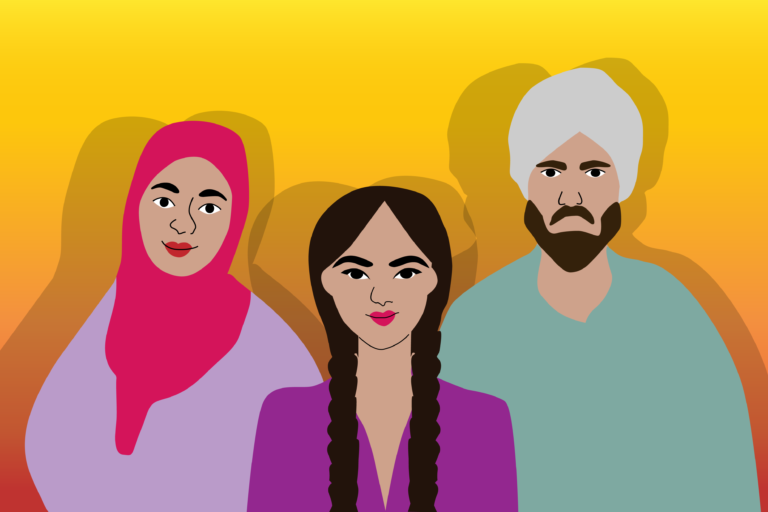
UC Davis students and faculty discuss Arab American Heritage Month

With some opposition toward the heritage month, students and a faculty member discuss their perspective on creating tangible change for the community and acts of performatism

April was Arab American Heritage Month, yet this recognition sparked controversy among content creators who stated that the existence of the month is performative. The month’s history goes as far back as 1990, but has only recently gained more widespread popularity with recognition from the U.S. Department of State this year, the first branch of the federal government to do so.  

    Shayma Hassouna, a professor of Arabic and Middle East/South Asian studies at UC Davis, and Rassa Ebrahim, a third-year law student at UC Davis and a member of the Middle Eastern North African South Asian Law Student Association (MENASA-LSA), both mentioned that they were unaware of the existence of the history month. Ebrahim criticized its establishment, as he believed that creating the month was performative and inadequate at solving racial issues. 

    “I didn’t even know it existed,” Ebrahim said. “Is every month a history month for a different minority now? I don’t see these history months as being particularly effective at changing the way social structures work in this society.”

    Christy Rahal, a second-year political science major and the director of recruitment for the Empowered Arab Sisterhood, stated that she was briefly aware of the heritage month’s existence after seeing a few posts about it on social media. The posts, however, were minimal and Rahal said that they did not have a real impact. 

“I feel like that month really hasn’t done anything because no one really knows about it,” Rahal said. “I just saw the post, and my life went back to normal.”

    Both Rahal and Ebrahim said that the purpose of the heritage month seemed superficial and failed to bring tangible change.  

    “I think it was a performance tactic to make the government look less racist, to be completely honest,” Rahal said. “They do it with every ethnicity or group that they discriminate against. They’re always like, ‘Oh, we’ll have a month or a parade.’ In the background […] they’re not actually fighting for us.”

Coming from a Lebanese-Palestinian and Chinese background, Rahal commented on the frustration she experiences when she has to idenitfy as white on government documents because many do not offer an option she feels comfortable identifying with. In fact, many Arabs and Middle Easterners similarly feel a loss of identity when being categorized in a group that does not represent them. 

Though Ebrahim does not believe that the month influenced change this year, he said that in the future, it could be a push for education about the Arab American community. 

“Perhaps the onset of the history month could help generate elementary school curriculums that substantially expose children from a young age to different cultures,” Ebrahim said.

Hassouna and Rahal said that change would be most plausible with events that showcased the Arab community in a relatable perspective. Hassouna noted that food is one of the best ways to bring people together and said that a greater way to gain unity would be through cultural events that showcased Arab dances like dabke, movie showings and street vendors.

Beyond creating change with the larger community, Hassouna also stated that it’s important to promote unification within the Arab community. She mentioned the necessity of embracing change between the different countries.

“We need to accept difference,” Hassouna said. “Iraqis do things different from Egyptians but […] it’s not wrong. There is no such thing as wrong in a culture.”

Despite Rahal and Ebrahim considering the month to be performative, Hassouna believes that the establishment of Arab American Heritage Month may help overcome discrimination and negative stigmas.

 “Any step is a step forward,” Hassouna said. “Ending the discrimination, that is so huge, but I believe that it ends with people actually meeting us and working with us and realizing that we’re all the same.”

Written by: Farrah Ballou — features@theaggie.org

New branch of Compas opens at UC Davis to support farm workers

Compas at UCD provides essential services and mentorship to farm workers, aims to help their children succeed academically

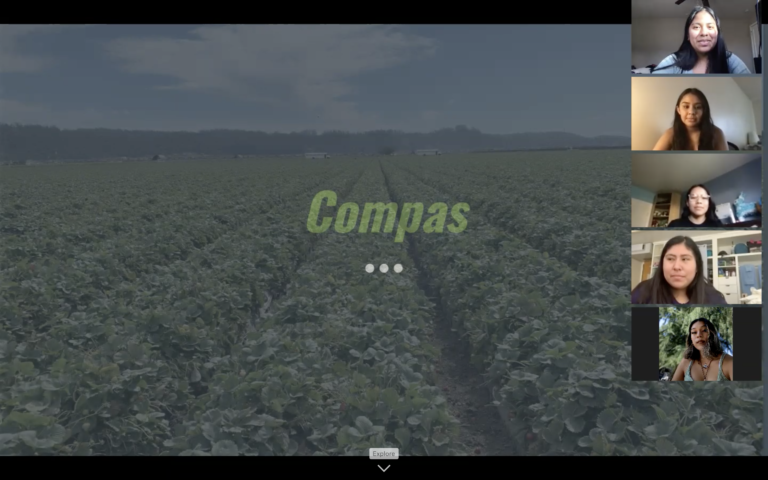
Compas at UCD, a new student-run branch of an organization originally founded at UCLA, is dedicated to advocating for farm workers and their families. Compas hopes to help the children of farm workers pursue higher education and overcome the language barriers they may face as immigrants in the U.S. The organization is mostly made up of members who have either had firsthand experience working in agricultural fields or are the children of farm workers. 

Yesica Guzman, the administrative director and one of the founders of the original UCLA branch of Compas, said that she came to recognize a need for Compas as someone who has been working in agricultural fields since the eighth grade.

“Just seeing the exploitation, that even children were not protected by labor laws […] it just seemed like an issue that really needed to be brought up,” Guzman said.

Luz Lopez, a first-year political science and public service major and the administrative director of Compas at UCD, initiated the new branch of the organization. 

As someone who has worked in the strawberry fields alongside her parents since she was a child, Lopez said that she has seen many of the harsh conditions farm workers may face, one of which includes the California wildfires.

“The skies were orange and there were ashes on the strawberries,” Lopez said. “Your eyes would get watery because of the smell and the ashes that were flying around the air were really strong. I usually cover[ed] my face with a scarf. It still didn’t help that much—I would still get watery eyes and it would be hard to breathe.”

According to Lopez, in addition to the struggles workers faced because of the fires, such as being exposed to severely unhealthy air quality without receiving emergency leave, their employers may terminate them for failing to pick enough quality crops, regardless of the season.

“My parents actually got fired […] because [their employers] were expecting high-quality strawberries, and it was at the end of the year, which is when there are no strawberries, and because of that a lot of people are actually fired,” Lopez said.

Because of this, Lopez said, Compas hopes to give farm workers the tools they need to advocate for themselves when they face similar situations.

“Compas is working on bringing awareness to these issues and trying to at least help farm workers get a little more information on how they could defend themselves and stand up for themselves in the strawberry fields,” Lopez said.

Being a firsthand witness to the treatment of farm workers, Guzman said that one of the main contributing factors to farm worker exploitation is the fact that they aren’t included in certain labor laws. The National Labor Relations Act (NLRA), created in 1935, gives employees the right to form unions and engage in collective bargaining, but farm workers are not protected by this act. Their exclusion from the NLRA means that farm workers may be fired for attempting to organize a union or collectively asking for increased pay. Although farm workers can now receive overtime pay in California, the Fair Labor Standards Act, which gives employees the right to time-and-a-half pay, still doesn’t apply to farm workers in many other states.

Due to the long hours many farm workers with children spend in the fields, it is often difficult for them to help educate their children, according to Marylou Escobar-Gonzales, a second-year sociology and human development major and the outreach director of Compas at UCD. Because of this, Compas provides mentorship services over Zoom to children of farm workers to help them learn English and provide companionship services. Escobar-Gonzales said she did not have access to these resources as a child of farm workers.

    “When we were growing up ourselves, we didn’t have that type of mentorship,” Escobar-Gonzales said. “Our parents were out for several hours of the day, probably at most sometimes 12 hours of the day, so we only really had ourselves and our close family, […] and most of our parents are immigrants who did not get an education themselves.”

    Compas at UCD’s main method of outreach has been contacting the families within the direct sphere of the members of the organization.

“We sometimes know that our family or our family friends struggle, so whenever they do, we’re just like, ‘Hey, I’m in this club, and we do this; are you interested?’” Escobar-Gonzales said. “From there, we draw connections. But we hope to expand and reach more than just the people that we know. We want to expand throughout California, not just the main hotspots.”

Escobar-Gonzales said that through Compas, she’s gained a new perspective on having parents who work in the agricultural sector. 

“Compas has made me realize that there’s no shame in what your parents do and the job that your parents have,” Escobar-Gonzales said. “I remember growing up, I was kind of always ashamed and scared to tell people about what my parents did for a living. Now […] I feel like Compas has really truly made me realize that there is no shame in telling people, ‘Yeah, my mom is a farm worker.’”
Written by: Lyra Farrell — features@theaggie.org

Bear walks onto campus and into traffic

An approximately 200-pound bear was seen near the Arboretum before wandering onto state Route 113 where it died after a collision with a vehicle

Early yesterday morning, students received a text alert from UC Davis police through the campus’ WarnMe service alerting them to the presence of a bear on campus. Two hours later they were informed again—that the bear was dead.

“UC Davis WarnMe: Brown Bear sighting, about 200 lbs, UC Davis Campus please avoid the area of the arboretum, La Rue Rd and South East area of campus until authorities can get it contained,” the text read.

UC Davis police advised that people stay away from the area and the animal. Lieutenant Doug Voska of the UC Davis Police Department’s campus patrol division said he was informed about the bear’s appearance on campus at 3:50 a.m.

“Somebody called in and said they saw a bear, and that was in the area of the 113 and Hutchison Drive,” Voska said.

Voska said UC Davis officers first spotted the bear in the Arboretum near King Hall.

Andy Fell, a spokesperson at UC Davis, said that he learned about the bear through the WarnMe text and went to campus to see if he could help out. 

“This isn’t a great environment for a bear,” Fell said. “We really want to be able to move that animal somewhere where it’s safer.” 

The early morning message was sent for the purpose of preservation of human life, Voska said.

“A bear, an animal that lives in the wild and that finds itself in the middle of a college environment, could feel trapped at some point,” Voska said. “The Arboretum is an area where a lot of people like to jog in the morning.”

Though the bear was described as a “brown bear,” it is more likely referring to the color rather than the species. Fell said that the species of bear is a black bear found within California.

“If you’ve ever seen a black bear, they look brown,” Fell said. “A brown bear is more like a grizzly bear which we don’t have in California.” 

This is the second time a black bear has entered the campus, according to both Fell and Voska.

Voska said in 2019 officers got a call that a bear was in a tree. After Yolo Animal Control was unable to address the issue themselves, Fish and Game was called and arrived a couple of hours later and was able to safely tranquilize the bear. 

“A couple of years ago, we had a bear on campus that Fish and Game were able to track […] and relocate [to] the Sierras, which is a good outcome,” Fell said.

In contrast, the bear spotted this morning moved over to the Equestrian Center toward state Route 113 after moving west along the Arboretum, Voska said.

California Highway Patrol Officer Ernesto Coronel said the CHP Woodland Area Command received a call from a man who said he had hit the bear with his work’s box truck, used to transport wine from a local winery. 

“He reported that he believed the bear had possibly died as a result of being struck by his vehicle,” Coronel said.

Coronel said he had a visual of the bear, deceased, at 6:38 a.m. but based on when they received the call, he estimates the bear was struck around 6:15 a.m. 

Animal Control responded to the scene and removed the body of the bear; the California Department of Fish and Wildlife was also in the process of responding when the bear was removed.

The person who struck the bear did not appear to be seriously injured and was checked in on by Coronel later on in the day.

The WarnMe text updated at 8:25 a.m. to inform students that the incident had ended.

“Bear reported on campus early this morning died in a vehicle collision,” the text read. “All areas clear and open as normal.”

Several students took to the UC Davis sub-Reddit to express their remorse for the bear. 

“It’s pretty sad, I think nobody wants that to happen,” Fell said. “It’s just a shame that we put freeways in the way of these animals and it’s not their fault.”

Written by: Kathleen Quinn — campus@theaggie.org

Sorry ASUCD, UC Davis PTA meetings are taking over

Don’t tell your parents

On this week’s Thursday Thoughts, the following question was submitted: “I miss my overbearing mother being involved in every aspect of my life since coming to college. Is there any way to fix this?”

Chancellor Gary May looked to his wife, LeShelle, and smiled. “Yes, there is. Because as of fall quarter 2021, UC Davis will be replacing ASUCD with volunteer-based PTA meetings!”

Not to fear, anonymous_asker123, your mother will now be in charge of the meat options at the dining commons. Rumor has it she’s thinking of replacing the pork with steamed tempeh.

The university decided to implement a Parent Teacher Association (PTA) as the predominant form of administration, after realizing that ASUCD was “too efficient and too organized.” According to the Chancellor, the university wanted more arguing, nonsense and apathy from their decision makers. 

The association will not only consist of parents of UC Davis students, but also of recruited parents from across the country. While scrolling through Facebook, the Vice Chancellor saw a post about a woman suing her son’s school for making him dissect cat eyes when he was obviously more of a dog person. The university immediately flew this woman, Debra Williams, out to be a member of the association. Personalities like Debra’s are what make a perfect PTA.

With the first PTA meeting held last week, UC Davis students and staff have been incredibly pleased by the actions and goals of the association. In the meeting, the group decided that biking was an unsafe mode of transportation. As a replacement, they suggested students use “Fisher-Price toy cars,” similar to the ones they used on their preschool playground to travel between classes. 

Also in the meeting, the group discussed their concerns that the dining commons wasn’t cutting the crusts off of their sandwiches. This could significantly upset some students and consequently affect their ability to focus in class. The association, however, said they’d table that discussion for the next week’s meeting.

To see how much the students love the new switch of governing bodies, we reached out to previous ASUCD members. Unfortunately though, a majority of them declined to speak with us and even more reported a transfer from UC Davis to UC Riverside. 

Not to fret though, we contacted Debra who was more than willing to talk to us. “Oh, wow, hello! My name’s Debra. I would allow you to call me Debbie, but that’s what my ex-husband called me. It’s a touchy subject. Anywho, I’d like to say that, with my parenting skills and degree from the University of Phoenix, I’m going to make UC Davis better than it’s ever been!”

Written by: Kate Harges — klharges@ucdavis.edu 

Disclaimer: (This article is humor and/or satire, and its content is purely fictional. The story and the names of “sources” are fictionalized.)