57.9 F
Davis

Davis, California

Monday, December 22, 2025
Home Blog Page 360

Culture Corner with Allie Bailey

The Arts Desks’ weekly picks for movies, books, music and television shows

Album: “Flow State” by Tash Sultana

Sultana’s hit song “Jungle” initially turned me on to the “one person band,” and since then, I haven’t been able to stop listening to their most recent album “Flow State.” The Australian singer-songwriter plays over 12 instruments, all of which they use to write and produce their own psychedelic-rock-blues-reggae sound. “Cigarettes” is a slow, sexy tune that picks up midway with an exciting guitar solo. “Big Smoke,” among others, features a long intro, which showcases the many instrumental skills they possess. I recommend checking out their YouTube channel and NPR Tiny Desk concert to see the method behind the masterpiece; they play and record the song live, giving their music a bubbling build. All this paired with a raspy indie voice and effortless steez makes Tash Sultana worth a listen.

Book: “Normal People” by Sally Rooney

Sally Rooney’s second novel was impossible to put down. I randomly picked it up on Christmas Eve and, on my flight the next night, I was sad to turn the last page so soon. “Normal People” follows a high school couple’s tumultuous relationship into college and adulthood. Although appearing to be an awkward teenage love story at first, Rooney’s spectacular writing and captivating character dynamic quickly prove she’s no Sarah Dessen (not a dig, I loved Sarah Dessen in middle school). Rooney touches on the beauty of long-term friendships and relationships and the complications of that intersection. More than that, she takes a look into the balance of wealth and happiness, the danger of assumption and the importance of one’s sense of self. 

TV Show: “Broad City”

I was told to watch this several times before I finally watched the first episode with a friend. As is custom with many pilots, I wasn’t sold. It would be another year before this became one of my favorite series, when I watched episodes nightly with my first-year college roommate. The show, created by and starring Ilana Glazer and Abbi Jacobson, is a comical depiction of two women in their 20s in New York City, unsure of everything other than the strength of their friendship. They find themselves in the most ridiculous scenarios — often the source of humor — and both offer idiosyncratic personalities that can make just about anything funny. It’s heartfelt, it’s hilarious and it’s a must-see.

Movie: “Knives Out” dir. by Rian Johnson 

This take on murder mystery brings a new possibility to the genre. The quirky nature of the film juxtaposes the fact that someone was (supposedly) murdered, balancing humor and suspense perfectly. The audience is entertained initially by the family dynamic and anticipating whodunnit, later to be the only ones who know what happened — or so they think. The cast is great, with some actors playing roles we haven’t seen them in before (Chris Evans is sardonic and bitter, Daniel Craig is a nonchalant southern investigator), making for a more exciting watch. The mystery is revealed in layers, with one plot twist after another and a gut-wrenching realization by the end. 

Written by: Allie Bailey — arts@theaggie.org
Humor: Sponsored content: definitely not a Bloomberg ad

Clorox: when dirty politics need cleaning

6:00 a.m. Monday morning. The temporary, futile, nugatory joys of the weekend now seem like a long-lost dream, much like the one that was just violently pierced, shattered and hopelessly obliterated by the blaring perturbation of your trusty alarm clock — the only honest, reliable thing in this chaotic world that you can believe in anymore. And what does that shrill shriek mean? It means it’s time to get ready for work. Where do you work? Everywhere. When do you work? All the time. What do you do? You clean up other people’s messes. Literal messes. Metaphorical messes. At the end of the day, they’re all the same, whether you’re a high school janitor, the Mayor of New York City or the head of a large media company.

And how do you prepare for this day of cleaning? By cleaning, of course. First, by wiping the smears off the lenses of your glasses — the glasses that your insurer won’t update for another six months — so you can marginally-less carelessly careen out of bed and mindlessly meander into the bathroom, where you find yourself face-to-face with a cadaverous, haggard, hollow-eyed, pasty-faced creature. It’s you. A sense of dread overwhelms you as you begin to recognize this distorted version of yourself. A few discernible features are there, yes — like your graying hair, intensifying wrinkles and eternal frown, all manifestations of your internal scars from the 2016 election — but this figure isn’t really you, is it? In the mirror, you see a resentful, disgruntled American who’s mad as hell and isn’t gonna take it anymore. Someone who wants systemic changes that can transform America into a more liberal and progressive place where people like you don’t have to live paycheck to paycheck and worry about breathing polluted air and drinking contaminated water. Someone who wants to disinfect the corrupted White House and remove the dirty stain on American politics that is Donald Trump.

But that’s not you. You aren’t that hopeful and idealistic. You’re a simple person, and the only things you care about are simple pleasures, like a nice, hot morning shower to cleanse your body and soul and to clear your head of all those unhealthily optimistic thoughts before a miserable day of cleaning up messes. You’re still just barely awake, and the relaxing steam from the shower makes your mind wander. Scant details of your recently-interrupted dream begin coming back to you. You’re in front of a crowd, a crowd paid to cheer for you as you speak into a Mike. It’s only March, but the flowers are already in Bloom, and the iceBergs are melting. 

An ice-cold blast of water shocks you back into consciousness as the hot water heater runs dry. After drying-off, you again look in the mirror, but despite emerging from the shower clean and refreshed, you are still unable to recognize your own reflection. It is at this exact moment that you finally comprend the meaning of your enigmatic dream. And now, you know what to do. You kneel down, reach in the cupboard and pull out a cleaning rag and a bottle of the best disinfecting agent on the market: Clorox. 

You begin spraying Clorox all over the mirror, that dirty, disgusting, besmirched, smudged, smeared, stained, speckled, splotched, splodged mirror. You take the rag and begin scrubbing it, disinfecting it, polishing it. You stop to dry it, pat it down and frisk it, if you will. The mirror is now squeaky-clean, and in it you finally see a crystal-clear reflection of the person you know and love, the person you really are: a milktoast, charisma-impaired, change-averse, quite possibly racist but confusingly still anti-Trump, quasi-center-right Democrat. 

Just like me, Mike Bloomberg is not a socialist. Clorox, just like socialism, isn’t free. $4.99 per bottle. Splurged by Mike Bloomberg.

Written by: Benjamin Porter— bbporter@ucdavis.edu 

(This article is humor and/or satire, and its content is purely fictional. The story and the names of “sources” are fictionalized.)

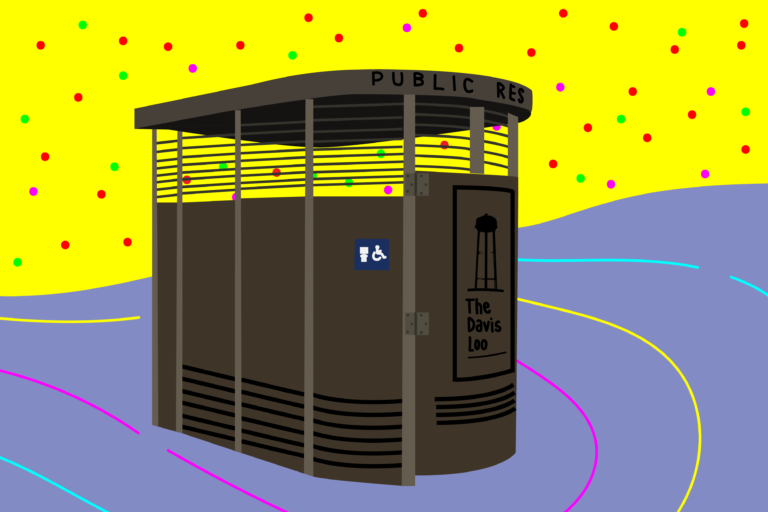
New public restrooms headed to Downtown Davis

Portland Loos will be installed in April, designed to be accessible to public while deterring crime

Two new public restrooms are set to be installed this spring in Downtown Davis, according to an update by Davis city staff on Feb. 11. The restrooms, called the Portland Loos, will be installed in April at the G Street Plaza and at the west end of the E Street parking lot.

Dianna Jensen, the city engineer and presenter at Tuesday’s meeting, clarified the delivery times for the restrooms. 

“We are moving forward with the Portland Loo,” Jensen said. “We were a little worried because at some point, they told us they couldn’t have it until June.”

After discussing it with the president of the Portland Loo, however, city staff was able to get the delivery set to April, according to Jensen. 

The restrooms discussion occurred during a midyear update by city staff. The City of Davis is working on 63 capital improvement projects during the 2019-20 fiscal year, one of which is the installation of the Portland Loos. 

The Portland Loos are constructed in Portland, Oregon by the City of Portland and a local metal fabricator, Madden Fabrication, before being shipped to other parts of the country and the world for installation. They have a minimalistic design specifically intended to “prevent common problems — such as vandalism, illegal drug use or prostitution,” according to the Portland Loo’s website

Evan Madden, the Sales Manager for the Portland Loo, described how the design of the bathroom uses a technique called the Crime Prevention Through Environmental Design (CPTED) to prevent unwanted activities from occurring in the restroom.

“The simplified explanation for CPTED is that you should have open site-lines and be able to see your neighbors to know exactly what’s going on,” Madden said. “You feel like you’re being watched.”

Through the supervision of passerbyers and inclusion of restroom essentials only, the design encourages bathroom-use and discourages other activities. Madden explained how the Portland Loo is different from standard bathroom settings. 

“It’s not about making a comfortable space, but more about giving the bare necessities to make the restroom easy and accessible to anyone who needs it,” Madden said. “It’s free and open 24/7, but then it’s not so much of a burden to maintain and clean as well.”

The Portland Loos include many unique features to deter crime and increase effectiveness, including “rounded anti-graffiti wall panels, open grating, easy-to-clean coating, and interchange-able building components,” according to the Portland Loo’s website. 

Portland Loo’s bathrooms were designed to address issues Seattle faced in its experience with public restrooms, according to Madden.

“We were looking north to Seattle, as they purchased automatic public toilets,” Madden said. “Those self-cleaning restrooms were pay-to-use, had complete privacy inside the restroom and had a lot of moving parts and features that were easily vandalized and broken, so it was always needing to be repaired.”

Thus, Portland worked toward building a simpler and accessible restroom for the public, each of which costs $90,000. In Davis, the total fees for purchasing and installing the two Portland Loos will be about $500,000. 

The restrooms in Davis will add to the growing number of Portland Loos, over 10 in California and over 90 in the U.S. Councilmembers are looking forward to the new addition to downtown. 

“That’s really excellent news,” said Councilmember Lucas Frerichs in response to the new April delivery date.

Councilmember Will Arnold shared his personal experience with a Portland Loo, one of which is currently located in Emeryville. 

“We were taking a road trip with the kids to San Francisco [and] I happened to realize we were in Emeryville, so I pulled over to the Pixar studio, and we tried out the Portland Loo,” Arnold said. “It was fantastic. I’m a fan.” 

Written by: Madeleine Payne — city@theaggie.org 

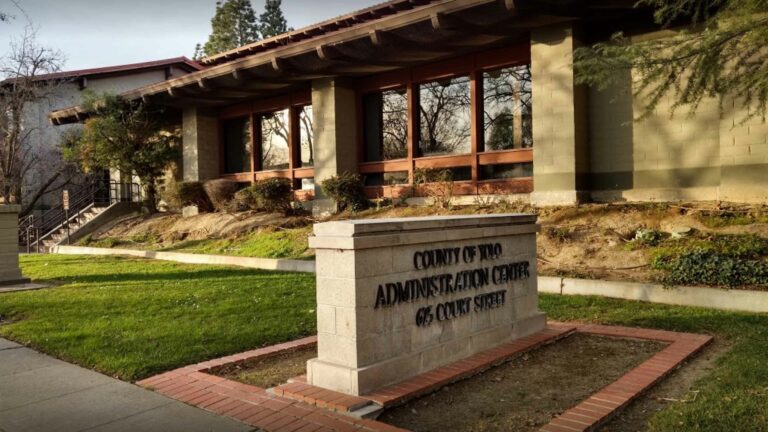
Yolo’s unaccompanied refugee youth detention program ends, prompting talk over future of facility

With former youth detainees transferred or released, the county weighs future use of Juvenile Detention Facility

The Yolo Board of Supervisors met on Jan. 28 to discuss the official end of its contract with the federal Office of Refugee Resettlement (ORR) to house unaccompanied refugee minors in the county’s Juvenile Detention Facility (JDF). The future of the facility itself remains uncertain, and the county will decide over the next two years how to repurpose the space.

The board decided not to renew the decade-long contract with the federal government in a meeting on Oct. 8, 2019. Under the terms of the contract, the JDF housed unaccompanied refugees who the office identified as being “a danger to themselves or to the community,” according to a 2019 review by the DOJ. In the October meeting, Yolo Chief Probation Officer Dan Freinrecht argued that the juvenile detention center was ill-suited for these youth detainees, many of whom reportedly suffered from significant trauma and mental health issues. 

“The last few years, we’ve seen a significant increase of youth suffering from severe mental health issues that have been severely traumatized,” Freinrecht said. “They are assaultive, and I don’t know if we are the ideal place for them.”

During the October meeting, however, a few immigration activists expressed anxiety about where detainees of the ORR program would be transferred to after the program closed. The Yolo ORR program was one of only two facilities of its kind in the country. The other, the Shenandoah Valley Justice Center, is in Virginia. Alison Pease, an 11-year volunteer at the JDF, also voiced this concern during public comments.

“I do want to say […] none of us like seeing the children incarcerated,” Pease said. “I do feel that ORR is a difficult partner. But I think that, by washing our hands of this, we’re leaving those children. We’re not offering them anything better than this incarceration here.”

In January, Frienrecht returned before the board to report on the program’s official closure at the end of the month, as well as placement of former JDF detainees. Fourteen youths were held at the facility in the period of time between the board’s October meeting and the program’s official end, according to Freinrecht. 

“I’m standing before you today — happy to announce — that all youth in custody since that time were released to a less-restrictive setting,” Freinrecht said. 

According to a staff report provided to the board, seven of the detainees were transferred to “staff-secure placement” — group homes with relatively high levels of security and mental health services. Three were transferred to a residential treatment center. Three other detainees aged out of the ORR, two of whom were released to family members and one who elected to repatriate to his home country. One detainee was released into the custody of his brother, according to the report. 

The closure of the ORR program leaves the JDF facilities’ future somewhat uncertain. According to staff report, the 90-bed facility has seen less use in recent years due to declining rates of juvenile incarceration, both in Yolo County and California on the whole. 

“In the past decade, probation departments throughout California have focused on rehabilitation efforts aimed at keeping youth out of juvenile halls,” the report reads. “These successful efforts have led to a drastically lower youthful offender population and an increase in the number of vacant beds in juvenile facilities statewide (over 5,000 in 2018).”

Since November, part of the JDF has been used to accommodate adult offender bookings, according to the staff report. The Sheriff Office and Probation recommended converting additional space in the JDF to temporary housing for adult detainees while the county constructs a new jail, according to Frenirecht. Part of the space will continue to be used to house a limited number of local youth detainees as well. 

Discussion on more permanent use for the JDF will be on-going for the next two years, according to the staff report, and will include further research on the county’s need for youth and general criminal justice detention facilities.

The board members closed out their January meeting by praising the Sheriff’s office efforts in placing youth detainees of the ORR program in less restrictive settings.

“The board remained committed to that recommendation that came directly from the podium,” said Gary Sandy, the supervisor of Woodland. “To see that through was really an amazing thing to witness — it shows us good things can be done here.”

Written by: Tim Lalonde — city@theaggie.org

Future plans for CoHo outlined at Feb. 20 Senate meeting

DREAM Committee Chair confirmed after months of empty chair 

ASUCD Vice President Shreya Deshpande called the Feb. 20 Senate meeting to order at 7:11 p.m. in the Mee Room on the third floor of the MU. Senator Khalil Malik was nominated and elected as interim Senator pro-tempore, the official representative of the Senate. 

Darin Schluep, UC Davis Food Service director, presented the CoHo’s quarterly report. Schluep highlighted Fall Quarter events, such as the chancellor’s Moonlight Breakfast that served about 1,200 students for free during finals week and the Night to End Campus Hunger Benefit Dinner on Dec. 2 that donated all proceeds – about $7,000 – to The Pantry. Schluep talked about the implementation of new protocols for CoHo employees on late and missed shifts, as well as about sick policies to accommodate the student staff’s academic needs while also maintaining day-to-day operations. 

“We want to make sure we listened to [student-employees’] needs and made changes with mental health concerns being more prevalent,” Schluep said. 

Additionally, Schluep discussed future plans to work with the Basic Needs Committee on finding recipes for a $2 meal served in the CoHo on weekdays as an option for students on a tighter budget. Other updates include creating an educational fund and providing testing materials for student employees, increasing the team of volunteers to maintain the Tower Gardens, transitioning the South CoHo to a vegan and vegetarian menu, collaborating with the MU Games Area for food packages for birthday parties or other events and incorporating dispensers for free menstrual products in CoHo bathrooms in collaboration with PERIOD.

Schluep also said beignets will be added to the South CoHo menu and an oat milk option in the Swirlz menu will be added within the coming weeks. 

Following the CoHo quarterly report, the table moved to confirmation of the DREAM Committee Chair. Deshpande and Senator Juan David Velasco provided a recommendation for Alejandro Cervantes, a second-year economics and political science major, to be confirmed.

“I chose to be the chair for the DREAM Committee because I have been personally impacted by the immigration system,” Cervantes said. “I come from a mixed status family and it’s the root of my identity that has inherently been politicized.”

Cervantes said his goals as DREAM Committee Chair include bringing more professional development opportunities in the undocumented community, expanding resources for food insecurity for those who may not have access to EBT and emphasizing interpersonal communication and healing through art. 

“Being an immigrant and having an undocumented or mixed status is tough and comes with trauma, but how can we engage with the healing practices that we’re already learning and how can we apply that to our communities?” Cervantes asked. “I’m a firm believer in art being transformational and a way to publicize and raise awareness for undocumented communities.” 

Cervantes was confirmed with no objections. 

Next, the Committee on Committees and Campus Center for the Environment Chair Yasmeen Qursha presented both committees’ quarterly reports. 

For CCE, Qursha outlined the progress of Project Compost, saying the electric vehicle known as “The Cyclops” had successfully collected compostable organic matter from around campus to the windrows pile at the Student Farm. Qursha also discussed a pending proposal at the Office of Sustainability regarding Project Challenge which would allow students to educate themselves on environmental initiatives. Qursha discussed future plans for weekly workshops for Earth Month this year and a long-term goal of planting fruit trees as a 24-hour resource for students to have access to fresh produce. 

The table moved to ex-officio and elected officer reports, during which time most people reported being mainly focused on elections and referendum outreach. Senator Samantha Boudaie noted her work on the Kosher initiative on campus. 

Deshpande also introduced their project with the Basic Needs Committee which updated the resource box for students on the Canvas webpage to include contact information of the Crisis Text Line and Student Health and Counseling Services. 

“Now, basic needs resources and mental health resources are more accessible to people while they’re freaking out on Canvas,” Deshpande said. 

Ethnic and Cultural Affairs Commission Chair Jonina Balabis mentioned finalizing the annual Pass the Plate event on March 3 and an upcoming cultural humility training for the Senate. 

Following Ex-Officio and Elected Office reports, the table moved to public announcements after all new and old legislation were tabled. Balabis called for support in the March for COLA and all solidarity efforts. 

The meeting adjourned at 8:51 p.m. 

Written by: Graschelle Fariñas Hipolito — campus@theaggie.org

After 54 graduate students dismissed at UCSC, a united front is critical to COLA movement success

University’s reaction to COLA strikers unjust, unwarranted

Last week, 54 graduate students at UC Santa Cruz were dismissed from or did not receive their appointment to teaching assistant, graduate student instructor, tutor or reader positions for Spring Quarter due to their involvement with the Cost of Living Adjustment (COLA) strike. The Editorial Board condemns the UCSC administration’s decision to dismiss these students. We support the strikers, and we urge others across the UC to show solidarity with those choosing to take a stand for a reasonable standard of living.

Misunderstandings of the justification behind the COLA movement could create rifts between undergraduate and graduate students across UC campuses, so understanding the necessity of the demands is essential for creating a united front to support fellow students. We strongly encourage all graduate students across the UC to consider joining their peers — regardless of whether or not they feel connected to the movement, they should recognize the power of a unified strike.

The COLA movement is rooted in the fundamental need for a liveable income. Many of these students allocate over 50% of their income toward housing, and struggle to afford other basic necessities. Some, especially those living in high rent areas, have experienced this disparity more than others. As their contract dictates, graduate teaching assistant salaries are the same at each campus across the UC system, so even while the cost of living has increased in the areas around some UC campuses, wages do not always adequately account for these increases. 

In Davis, where the vacancy rate is infamously and abysmally low, graduate students in the COLA movement at UC Davis decided to withhold grades for Winter Quarter. The fact that a cost of living adjustment is relevant not just for workers at UCSC but also for those at UC Davis underscores the importance of this movement.

Instead of meeting strikers at the bargaining table, the administration has turned to threats and tactics of division to both dilute undergraduate support for graduate students and dismantle the movement itself. In the Notice of Intent to Dismiss sent to the 54 graduate students, UCSC the strikers’ “conduct has harmed graduate students and disrupted University operations.” The graduate students at UCSC, however, have reiterated their intention to cater to students in need of urgent grade submissions. Strikers understand the impact of their actions and have proactively created various resources, including a website featuring an FAQ for undergraduates

Graduate teaching assistants are an integral part of undergraduate education in the UC system. They teach, host office hours, grade assignments and serve as a sounding board and a resource for undergraduates. It is important to note that, while teaching assistants are still grading exams and assignments, inputting those grades is the only labor that they are withholding. 

The UC’s refusal to negotiate with the strikers will ultimately do harm to the institution as a whole. We strongly urge UC administrators to refrain from dismissing additional graduate students involved in the COLA movement and we implore UCSC administrators to reinstate the 54 graduate students who received a notice of dismissal.

Written by: The Editorial Board

As COLA movement gains UC-wide traction, UAW 2865 will hold Unfair Labor Practice Strike Authorization Vote

Outcome of vote would affect over 19,000 academic workers, UC campuses plan solidarity actions for March 5

The Bargaining Team of United Auto Workers (UAW) 2865, which represents over 19,000 academic workers across the UC, said in a March 3 statement that the union will hold an Unfair Labor Practice Strike Authorization Vote in early April. A vote in favor of the strike would mean the union’s membership would stop grading, teaching and researching across all UCs. 

According to UAW 2865 president Kavitha Iyengar, the vote is a result of the union filing multiple Unfair Labor Practice charges against the UC for trying to circumvent the union through bargaining directly with graduate students or student-led organizations. 

“We will not sit back and allow the University to step on our rights without taking decisive measures,” Iyengar said.

The UAW 2865 statement follows the Feb. 28 decision to dismiss or not appoint 82 graduate students striking for a cost of living adjustment (COLA) at UC Santa Cruz to Spring Quarter positions after these students withheld Fall Quarter grades. According to a press release from the UC Davis COLA movement, over 20% of those fired were international students. 

Supporters of the COLA movement across UC campuses held rallies on March 2 in solidarity with those dismissed, with UCSF COLA supporters planning a solidarity event for March 4. COLA supporters at UCLA, UC Berkeley and UC Riverside plan to go on a day-long full strike on March 5. 

UC Berkeley COLA supporters also announced on March 3 that they plan to go on a full strike when they reach a “critical mass of strike readiness” — or 10 graduate departments in support of a strike. UC President Janet Napolitano cancelled a March 3 speaking engagement at UC Berkeley. 

At UC San Diego, out of 303 respondents who took a COLA strike poll that ended March 1, 61% said they would be willing to go on a full strike. Supporters of COLA at UCSD are planning a March 5 walk-out. 

At the UC Davis rally on March 2, hundreds of people gathered at the MU flagpole to show support for the fired graduate students. At the rally, doctoral student Kirin Rajagopalan said the COLA movement was about more than showing collective anger.

“It’s more than just getting into the streets,” Rajagopalan said. “[It’s] about building a future for all of us.” 

Written by: Janelle Salanga — campus@theaggie.org 

Davis community concerned about Airbnb’s impact on quality of life

City considers new regulations for short-term rental services 

The City of Davis is currently reevaluating the state of short-term rentals in light of the impact that it has had on the community. On Feb.10, the Davis City Council revisited the issue of short-term residential rentals. 

Recent outcry in the community induced Ashley Feeney, the assistant city manager, and Kelly Stachowicz, a fellow assistant city manager, to present this topic once more before the council. Feeney provided clarification about what a short-term residential rental entails.

“Short-term rentals are, by definition, temporary in nature — occupied for less than 30 days,” Feeney said. “Oftentimes, they’re in private residences whether they are just part of a home or the entire home.”

The short-term rentals that Feeney and Stachowiz brought into question in their presentation are available for rental through services such as Air Bed and Breakfast (Airbnb) or Vacation Rentals by Owner (Vrbo).

These services have been functioning well in the city’s economy as of late, according to Feeney.

“The last time city council heard about short-term rentals was back in 2015,” Feeney said. “There was some city council discussion in and around the item. There was a desire to let the market mature and see how things go.” 

The City Council met in 2015 to draft an ordinance that would ensure the ability to collect a Transient Occupancy Tax (TOT) from short-term rental services, specifically from Airbnb, according to Davis Enterprise

It wasn’t until Nov. 1, 2017, however, that the City of Davis was able to start gathering TOT from Airbnb, according to The Aggie.

“Since that time, we have entered into an agreement with Airbnb on the collection of Transient Occupancy Tax,” Feeney said. “About $185,000 was collected in 2019.”

Despite the boost in revenue from these short-term rentals, there are people in the city who are dissatisfied with the presence of Airbnb in their neighborhoods. 

“We haven’t had a lot of complaints — we’ve just had some sporadic complaints,” Feeney said. “But recently, we have had some complaints surrounding one specific rental that is being rented where there is more than one party in the home.”

In attendance at the meeting were three members of the community who live in the same cul-de-sac where the problematic rental is located. 

One community member, Jack Clarke, addressed the impact of short-term rentals on his community. 

“Our neighborhood gets an almost daily infusion of noise-producing strangers, with their automobiles and dogs arriving at all hours of the night,” Clarke said. 

Another member of the community, Adrienne Shelton, addressed the council to voice her frustrations. 

“A neighborhood is a vital part of a community,” Shelton said. “Transients are not part of a neighborhood.”

Upon hearing these perspectives from members of the community, Davis Mayor Brett Lee brought the discussion back to the effort to regulate these rentals on a larger scale.

“What we’re talking about tonight is a city-wide regulation of this activity — it’s not specific to one street,” Lee said. “I appreciate the example of what’s going on on one street […] but what we’re talking about is the possibility of city-wide restrictions.”

The council stated that they are going to look into potential regulations and look to other cities for an example of how to better integrate Airbnb into the community of Davis. 

 Lee confirmed that he wants to do what is best for the residents of the community.

“The concerns expressed by the neighbors in this location are quite reasonable and reflective of what’s going on throughout the community,” Lee said. 

Written by: Rachel Heleva — city@theaggie.org

Popular UC Davis professors talk about their undergraduate experiences

Enderle, Dorsey reveal that they too had indirect paths

Whether they’re lecturing to a hall of 300 students or patiently explaining a difficult concept from class during office hours, it’s easy to forget that professors were once in the same shoes as struggling undergraduate students, unsure of their career path and trying to somehow find a healthy balance between academics and a social life.

Before becoming a beloved chemistry professor at UC Davis, Bryan Enderle was an undergraduate student at UC Berkeley, double majoring in chemical and petroleum engineering. Though he’s now known for his “Enderle Readers” for the general chemistry series and his engaging lectures sprinkled with his light-hearted humor, Enderle did not initially intend on pursuing academia.

“Even after grad school, [I had] no idea,” Enderle said. “Going into industry or going into research — that’s what I was expecting to do. I didn’t have much teaching experience before coming to Davis or the chemistry department here, so I didn’t know if I would enjoy it or not. It wasn’t until I got a position teaching that I realized ‘Oh, this is enjoyable.’”

Because he was pursuing an intense course load with his double major in engineering, Enderle said he formed close bonds with his classmates through their collaborative effort to do well. But as the years progressed, he found it more difficult to find a healthy balance between studying and focusing on his own well-being.

“I think I was so focused on school and studying at one point that it became all-consuming, and that wasn’t good for me personally and even for my studies,” Enderle said. “I had a conversation with one of my friends, and it helped realign me because I think when I was overfocusing on school, the anxiousness about school increased and I just didn’t realize it. And when I refocused myself, the weight of academics was lessened.”

Yet, he said that compared to students nowadays, he had much fewer extracurricular activities to balance. He recalls that he only held an undergraduate research position for one summer and noted that students today are often pursuing years of research experience, clinics and other outside experience. For him, though, his undergrad experience was more about learning how to study and achieve his goals in a healthy and effective way, which helped shape the path to his social growth and academic success in graduate school.

Most cognitive science majors have taken a course with Philosophy Professor Jonathan Dorsey, whose research focuses on philosophy of the mind and metaphysics. Though he eventually earned his bachelor’s degree in philosophy at Ohio State University, Dorsey navigated his way through his undergraduate years as a first-generation college student and switched his major from physics to philosophy at the end of his sophomore year. 

As a first-generation college student, Dorsey said he often worked to support himself as much as he could, leaving little time for extracurriculars. In addition, coming from a rural high school in Ohio, Dorsey recalls the transition from high school to college being difficult. 

“I had a bit of a wakeup call, because I thought high school was very easy, so I took advantage of it,” Dorsey said. “When I got to college, I realized it was much harder, and the expectations were a lot higher. I was a good student, but with effort, so I had to work very hard in a way that I wasn’t used to before.”

With his avid interest in astrophysics and intention of becoming a medical doctor, Dorsey began his undergraduate education as a physics major. But after the Winter Quarter of his second year, he realized that his reason for becoming a doctor was motivated by money and prestige and that he was not particularly interested in career opportunities in astrophysics either. Losing his motivation for a physics major, he experienced a moment of uncertainty about his future — a feeling undergraduate students may relate to.

His solution was to take three general education courses the following quarter: introductory level courses in psychology, philosophy and drawing. Though the latter didn’t pan out — according to him, his students can attest to his lack of drawing skills — he found his true love for philosophy and, in particular, philosophy of the mind.

“After that first philosophy course, I just wanted more, I just didn’t want to stop, and I remember looking through the course offerings and thinking, ‘I want to take all of these,’” Dorsey said. “I was thinking, ‘I don’t want to stop doing philosophy, so if I can make a career in it, then that’s what I’m going to do.’ And I was warned about how difficult it is to get into academia and I didn’t care. I just loved doing philosophy so much that if there [was] a way I [was] going to find it, and I just kept following my interest.”

While students may be in awe by the amount of knowledge professors possess or intimidated by the power they have over their grades, it’s reassuring to know that they, too, were once undergraduates with the same crises, conflicts and fluctuating aspirations.

Written by: Lei Otsuka — features@theaggie.org

We aren’t inclusive when we only accept those who are just like us

What does it mean to be inclusive?

UC Davis has been commended for its diversity and values of inclusion. With so many people on campus — 38,369, according to the most recent student profile —  it’s only natural that there should be a variance in students’ rhetoric as a result of varying experiences. 

We’re all different, and there are many ways that we can perceive these differences — from the clothes we wear, to the music we listen to. Superficially, we can tell who we would get along with and who we would avoid. These inward judgments aren’t anything personal, it’s just a matter of having shared interests. 

Our less superficial differences, however, are subtle and often overlooked. It makes complete sense that most aren’t experts at recognizing these nuances in such a sprawling campus. 

Take, for example, the Latitude dining commons. The mecca of food for first years serves international choices that are godly among our usual meals of pizza and Mongolian wok. It’s a lovely place to try different types of cuisines which we wouldn’t otherwise be exposed to.

This is why it was painful to overhear students say they wished there could be more “normal” food at Latitude just a few weeks after its opening. I’m not mad that they want a salad or sandwich bar at the place — it’s the use of the word “normal.” In this context, normal is being used to describe American food, thereby implying that anything outside of American cuisine is strange or unappetizing. 

This is not the only instance where I’ve heard other students unknowingly isolate their peers through their rhetoric. I’ve heard people call certain older residences and lecture halls “ghetto.” 

Then there’s the issue of apartment hunting. Yes, I would love to live in West Village. I know how nice it is. I know that it’s a super quick commute to campus, and I know that many students live there. I also know that (factoring in my roommates and our desired floor plan) the rent stacks up to over $1,000 per month. When other students ask me about my housing situation next year, it’s assumed that I have a substantial level of wealth.

Oftentimes, these little blips go unchecked because there was no malicious intent behind the comments, but people don’t realize how insensitive these comments can be. 

Here’s my frustration: On a campus-wide level, we’re all blanketed in inclusivity and respect, but just because you go to Davis doesn’t give you an automatic license to claim these attributes as your own. When we fail to educate ourselves about these particular issues, it’s a disservice to the inclusivity promoted throughout our campus. 

Davis is wonderful in that it provides plenty of introductory resources for new students. During our first-year orientation, for example, we were given presentations by organizations such as the LGBTQIA Resource Center and the Cross Cultural Center. All of these presentations were highly informative and set a standard for newcomers in Davis.

Why is it that there’s still inconsistency with the way we address each other? We were supposed to have that all covered with these presentations and supplementary resources. Aside from a small population, the intricacies of “woke” culture are largely ignored in favor of an apathetic “she, her, hers” during discussion section icebreakers. It’s infuriating.

A majority of individuals who go to Davis are from California. In our freshmen class, 64.4% of admitted students are California residents. I’m a Florida native, and I’ve noticed, since moving here, that there is a general sense of complacency about social justice education among Californians. As a notoriously blue state, we don’t feel that we need to amend our words and behaviors because we assume everyone shares the same values. 

Doing the bare minimum in terms of advancing social justice feels safer than fully committing yourself, because, as a whole, such efforts have largely faded. To be passionate enough to argue for your opinion opens the possibility of conflict and disagreement, which we often seek to avoid. 

Between mocking “SJWs” and “trigger warnings,” there’s a stigma around caring too much about these issues. This obsession with being “chill” is totally fine in other sects of our lives, but when it comes to ensuring that our spaces are inclusive of all bodies, it’s completely counterproductive.  

This complacency allows certain issues to slip through the cracks. It’s an injustice to those who are simply ill-informed to assume that they would know how to navigate such a liberal campus. 

What we want to avoid, however, is an erasure of other political viewpoints. I find that overhearing individuals call Republican students “idiots” is just as infuriating as when the right attacks the left. 

I am not arguing for all UC Davis students to conform to one particular ideology. What I want is space for dissent that allows for all views to be expressed in a way that is uniformly respectful of all individuals and their values.

Written by: Isabella Chuecos – ifchuecos@ucdavis.edu

Disclaimer: The views and opinions expressed by individual columnists belong to the columnists alone and do not necessarily indicate the views and opinions held by The California Aggie

Police Logs

Stop chasing squirrels!

February 12

“Dogs off leash running the entire area of the park chasing squirrels.”

“Loud banging, vacuuming, cursing, loud video games.”

February 14

“Noise complaint. Weights being dropped.”

“Found dog — female collie wearing bandana.”

February 15

“Lent ID to friend. ID was confiscated by bouncers. Requested police department to assist.”

February 16

“Subject walking with a hatchet. Subject was threatening people with the hatchet and just hit a sign.”

February 17

“Male […] egged reporting party’s house. She chased after him before he drove away in a gray sportscar. Believes she is being targeted as this has occured 10 previous times before recently.”

February 18

“Male subject was seen pushing his bike pedals against the side of parked cars.”

Bumblebees change flight modes to carry heavy loads of nectar

Energy-saving method of flying allows bees to forage for food more efficiently

Bumblebees are the ultimate champions of carrying all their groceries home in a single trip. As UC Davis researchers discovered, bumblebees change their flight patterns to be efficient when carrying heavy loads of pollen and nectar.

Bumblebees exhibit a behavior called foraging as they travel from flower to flower finding food. Flowers provide all the food groups bees need: pollen and nectar. Pollen is high in protein and fat to help bee larvae grow in the hive, and nectar fuels adult bees as a source of sugar. Foraging is a necessary behavior for the survival of the hive, and bumblebees are surprisingly efficient at this task for their size.

“Bumblebees are like fuel tankers,” said Susie Gagliardi, a researcher in the Combes lab at UC Davis. “They carry much more than other insects, often because they’re bringing things back for the hive all the time. At the upper limit, they’re carrying about 80% of their own body weight. Flying with a full belly should be a huge cost for the bees.”

To measure how much energy each bee was using, researchers used tiny flight chambers made of modified snow globes. They pumped pure air without carbon dioxide into the chamber and encouraged the bee to fly for a few minutes with an overhead light simulating the sun. As bees burn energy while flying, they generate tiny amounts of carbon dioxide. The researchers used carbon dioxide measurements to determine how much energy each bee used when flying with light loads and heavy loads.

“If you imagine a person with this setup, they’d be running on a treadmill with a mask,” Gagliardi said. “You can’t put a mask on a bee, so we made an all-enveloping mask for them with the snowglobes.”

Researchers expected bees with heavy loads to burn significantly more energy than bees with light loads, but they found a surprising result: bees with the heaviest loads actually changed their flight pattern to fly more efficiently. 

Bees carrying heavy loads burned more energy overall than bees with light loads, which was expected. But bees with heavier loads were actually more energy-efficient for the amount of weight they were carrying.

“Think about buying something at Costco,” explained Stacey Combes, an assistant professor of neurobiology, physiology and behavior. “It’s always going to be a little more expensive to buy that pack of 12 jars of spaghetti sauce, but per unit, it’s cheaper to buy in bulk. We’re finding something similar in bees. They are actually doing something to fly more efficiently when they’re carrying these heavy loads.”

This unexpected result raised more questions, including how bees could choose to fly in this new efficient method. Bee flight is typically measured using two factors: Frequency, which is how fast bees flap their wings, and stroke amplitude, which is how far their wings travel with each beat. Bumblebees deviated from the expected pattern and switched over to this “economy mode” to save energy when they carried the heaviest loads.

Understanding foraging behavior in bees is important to design beneficial habitats for them in agricultural areas. Bumblebees collect huge amounts of nectar and pollen for their hives and, in the process, they provide valuable pollination services to farmers.

“For example, [bumblebees] are one of the few wild bees capable of pollinating tomatoes,” wrote Jeremy Hemberger, a postdoctoral researcher in the department of entomology and nematology, via email. “Their ability to ‘buzz pollinate’ (vibrate at just the right frequency) is essential for releasing pollen from the anthers of the tomato flower.”

Many farmers rely on honey bees to pollinate crops — sometimes even transporting them cross-country for pollination season — but bumblebees provide equally important services. Crops, including squash, cranberries, blueberries and eggplants, are also buzz pollinated only by bumblebees. 

Farmers can take advantage of bumblebee-provided pollination if they plant flower mixes in or around their fields. Providing this foraging source allows bumblebees to establish colonies nearby and bring back as much nectar to the hive as possible.

“Their services help to provide food for wild animals and humans — all free of charge,” Hemberger said. “While they’re not the only pollinating insect, they are among the most efficient for a number of economically important crops.”
Written by: Lauren Glevanik — science@theaggie.org

We need to slow down traffic

We need the right balance between wide and narrow street lanes 

When I was 12, I went to England and noticed something about the design of the neighborhoods that began to irk me — the two-lane streets were so narrow that they were just about the same size as a single street lane in America. 

Transportation engineers and planners have long held that wider lanes are safer, and common sense would suggest that is correct. Wider lanes means cars have more space, and therefore the chances of scraping or scratching is going to be much smaller. But, as it turns out, that assertion isn’t correct. There are a number of reasons to narrow most street lanes and ironically, safety is the primary reason. 

“Policy on Geometric Design on Highways and Streets,” also referred to as the “Green Book,” is commonly referred to by traffic engineers to inform their projects. The “Green Book,” written by the American Association of State Highway and Transportation Officials (AASHTO), recommends constructing 12-foot lanes where there is a high speed of traffic, such as on freeways. Switching to a narrower lane is perfectly acceptable in other areas of traffic, however, and could even have some advantages. 

A report from the Transportation Research Board found that lanes with widths of 10 feet or more, as opposed to 12 feet, resulted in accident rates that were either reduced or unaffected. Turns out that narrowing lanes doesn’t intrinsically increase the likelihood of an accident and could actually be safer.

“The one way that narrower lanes are safer is because it tends to slow down drivers,” said Dr. Susan Handy, a UC Davis professor in the Department of Environmental Science and Policy and director of the Sustainable Transportation Center. “Psychologically, their space is narrowed and they’re going to drive more slowly.”

A key component to making streets safer is paying attention to speed. When cars travel at high speeds on urban streets with pedestrians and cyclists, the likelihood of pedestrian accidents also increases.  

Research shows that pedestrian fatalities increase around wider lanes as a result of the psychological impact on drivers, which makes them feel they have more room to drive faster, according to Handy.

 “Twenty miles an hour, you’re going to get hurt, but you’re probably going to live,” Handy said. “But by the time you’re hitting 30, 40 miles an hour, if you’re a pedestrian and you’re hit by a car, you don’t have much chance at all, whereas the driver is going to be perfectly fine.”

Lane width doesn’t just affect road safety — it can also be better for the environment.  

“There’s a lot of rock that gets moved to pave our roads, so there’s huge environmental costs,” Handy said. “Then once you have pavement, there’s environmental impacts because that’s impervious cover, meaning [that] when it rains, the water doesn’t trickle down into the earth — it collects and runs off. And we have to collect the storm water from our streets, and that storm water picks up all kinds of pollutants from the pavement that the cars have left behind.”

Unnecessary pavement in wider lanes also contributes to the heat island effect. This phenomenon occurs when the lack of “open land and vegetation” in urban regions causes it to grow warmer, creating an “island” in which the temperature can increase more than in rural areas, according to the Environmental Protection Agency. Using wider lanes means less space for grass and other forms of greenery, as well as less room to create wider biking lanes. 

“That’s space that we could be using for other purposes: housing, […] greenery,” Handy said. “I mean, wide streets make for unpleasant places.”

Yet, this isn’t a call to narrow all streets and roadways across the board. There’s a hierarchy of streets which roughly begins with local streets, then arterials and, eventually, freeways. Some of these roadways could benefit from narrower lanes, but others, like freeways, should be kept wide.

“The whole purpose of a freeway is to go fast, and we don’t have pedestrians —  we’ve kept them off freeways,” Handy said. “So if we’re going to have freeways, then, you know, it probably makes sense to have a little more space there.” 

Street width is one of many design solutions in addressing the safety and environmental concerns associated with automobiles and driving. Speed humps and other road designs can help in achieving this goal.

“There are things you can do — what we call traffic calming. Speed bumps are one part of that, but there are a lot of other techniques,” Handy said. “What we need to do if we want to make streets safer for pedestrians and bicyclists is slow down the traffic. That’s the big thing. And again, that’s why lane widths matter.”

Written by: Simran Kalkat — skkalkat@ucdavis.edu

Disclaimer: The views and opinions expressed by individual columnists belong to the columnists alone and do not necessarily indicate the views and opinions held by The California Aggie

Vote in the California March 3 primary

Same-day registration available on campus, in city

The California primary, consisting of one statewide election and myriad local and district-level elections, will take place on March 3. The Editorial Board strongly urges everyone who can vote to exercise their right this Super Tuesday.

The state’s primary has not been scheduled this early since 2008, and the change is significant. Traditionally, California’s primary was held in June, behind almost every other state in the presidential primary schedule. In turn, the state’s influence on each party’s presidential nominee was minimal. With 494 democratic delegates to award candidates (if candidates meet 15% of the statewide vote or in any one of the 53 districts), California has the highest number of any state and will now be able to wield its power to sway party nominations early on instead of being an afterthought. 

“Candidates will not be able to ignore the largest, most diverse state in the nation as they seek our country’s highest office,” said Secretary of State Alex Padilla in 2017 when Gov. Jerry Brown signed the Prime Time Primary Act.

On the statewide ballot, among races for Congress and the state legislature, voters can decide on Proposition 13, or the School and College Facilities Bond, and a presidential candidate from their party of choice. Prop. 13 seeks to authorize the use of $15 billion in bonds for school and college facility maintenance, upgrades and construction — including at UC Davis. 

As with any election, we encourage voters to inform themselves on who and what they are casting votes for or on. Examining the voting records, careers, stances and histories of various presidential candidates may seem overwhelming to do on top of student priorities, but this decision is one of consequence for the country as a whole. It is well worth the effort to at least become familiarized with the platforms of candidates that seem aligned with one’s personal interests, not just those of friends. 

On the city of Davis ballot, specifically, are Measures G and Q. Measure G regards a Davis Joint Unified School District (DJUSD) parcel tax. If approved by two-thirds of electors, it would introduce a $198 per parcel annual tax, adjusting for inflation every year, for the purpose of competitively compensating teachers and staff in the DJUSD. Measure Q, if passed by voters, would allow the city of Davis to keep collecting an existing sales tax rate of 1% perpetually until voters want to repeal that authority, which is set to expire on Dec. 31.  

If you are not yet registered to vote, it’s not too late. Same-day registration is available at the MU polling station or at any polling station in the state (under new California law). Mail-in ballots can be turned into your county elections office, one of your county’s ballot drop boxes or any polling place or voting center in the county in which you are registered. To ensure a mail-in vote gets counted, ballots must be delivered in person before the close of the polls at 8 p.m. or postmarked no later than March 3 and arrive no later than March 6. It is also important to note that mail-in ballots were printed and sent out earlier, so the options for presidential candidates may not reflect who is still campaigning. As a registered voter not mailing in a ballot, you simply need to visit your assigned polling place on election day to cast your vote in person. 

Recognize the privilege and strength in being able to vote, especially while millions cannot vote or have lost that political power. Show up on March 3.

Getting over the notorious “Sophomore Slump”

Upperclassmen say it gets better

Sophomore year: that awkward middle year between the excitement of freshman year and the anticipation of upperclassman glory. Freshman year is new, and opportunities seem endless, but sophomore year is filled with changes, independence and seemingly endless responsibilities. 

Many students agree that they experienced the sophomore slump at some point during their second year of college — the time when school feels monotonous and any sort of motivation is gone. 

“Everything felt like it was never going to end,” said Jordan Bobbitt, a third-year human development major. “I really felt like I was going to be trapped in Davis forever.” 

As a third-year, Bobbitt has insight on both the sophomore slump and the rewards of getting through it. She also found a silver-lining in the year of responsibility and self-realization. 

“[Extracurriculars] were making me happy since schoolwork seemed daunting,” Bobbitt said. “Once I was able to expand my horizons in terms of opportunities I pursued, […] I was really able to maximize my experience in Davis.” 

Bobbitt said there are changes that go hand-in-hand with sophomore year, just as there were in freshman year. Though students typically overlook these adjustments.

“When people get kind of bummed out sophomore year, it makes total sense because nothing is the same as it was the year before,” Bobbitt said. “There are so many different factors wrong for so long. Going through [the slump] can be really dark […] because it does kind of feel like it’s never-ending. Plus, it’s the first year where you’re not in the dorms — that geographical change has a big effect on just adjusting to Davis again.” 

Along with adapting to new living situations, Bobbitt addressed the daunting task of deciding on a major and sticking with it. During their second year, sophomores are still testing the waters and figuring out what they enjoy and what they want their lives to look like in the future. 

“Not knowing what you’re working toward yet has kind of taken away from the experience,” explained Nick Moran, a second-year undeclared major. 

As a second-year, Moran is smack-dab in the middle of the sophomore slump. He has even considered looking into other schools, however, he has decided to “stick it” through and stay in Davis since he feels he will benefit the most from it in the long run. 

“The greater picture is that I’m at a really good school and I’m going to get a degree that is going to springboard me to things I want to do later in life,” Moran said. 

Originally from Southern California, Moran explained that there are many things he had at home that he does not have in Davis, like a nearby beach and Downtown Los Angeles within driving distance. So compared to his hometown, Davis can feel isolated. 

He made clear, however, that the lack of social aspects in Davis compared to Los Angeles is a “pretty small price to pay” in the grand scheme of things.

“For academic needs, Davis is a great school,” he added. 

Moran explained that by shifting his mindset and expectations, he feels he will get through the slump and continue on the remarkable, yet daunting journey of sophomore year. 

“I had a lot of low points in the year where I was getting really down on myself for not doing well and not being able to find motivation,” said Nick von Schlegell, a third-year environmental science and management major. “It was really hard to find motivation to keep trying. I switched my major a bunch of times and was just kinda really getting over school.”

It seems that the sophomore class is hit the hardest by a lack of motivation. How then does one get over the slump and find that motivation again? 

According to von Schlegell, thinking about his future and the importance of graduation has helped him gain more academic motivation. 

In addition, taking upper division classes helped him realize what he found interesting. 

It was “diving into the things” he enjoyed “rather than just taking [general education] classes that were making [him] anxious” that helped him defeat the slump. 

The changes that come with sophomore year “can shock your system a little bit,” according to von Schlegell. “You’re still settling into college but also doing something completely different from what you were doing last year and being completely independent is something that definitely adds to that stress.” 

The takeaway from these students is that the notorious sophomore slump is indeed a low point of college. Despite the lack of motivation, the increased responsibility and the continual search for self-assurance, the sophomore slump does come to an end. 

“It does get better,” Bobbitt assured. “It really does.” 

Written by: Sierra Jimenez — arts@theaggie.org