58.6 F
Davis

Davis, California

Monday, December 22, 2025
Home Blog Page 359

Students rank their favorite types of Girl Scout Cookies

Answering the Girl Scout Cookie debate

Girl Scout Cookie season has arrived, and the brightly colored boxes can be seen all around campus. The tradition, which began in 1917, has grown into a $700 million dollar industry. The branding and limited availability make these cookies a hot commodity when they finally become available. A man in Oregon even used counterfeit cash to buy a couple boxes of these cookies.

With a wide variety of flavors, the best Girl Scout Cookie is often a topic of debate. Even Justin Timberlake, who is passionate about Samoas, recently posed the question to his followers on social media. After surveying students on campus, here’s a ranking of the top four flavors of cookies, according to UC Davis students. 

Trefoils 

Of the students surveyed, there was consistent praise for this simple shortbread cookie. People appreciate the buttery texture and vanilla flavor of the shortbread. Trefoils are also one of three cookies required to be sold by all troops across America, so they won’t be going anywhere anytime soon. 

Overall, Trefoils (or Shortbread) are strong contenders among the other cookies, often perceived as a staple of the Girl Scout Cookie brand. The Trefoil is an important symbol for the Girl Scouts nationally, and this cookie captures the essence of the organization. Many students, however, might opt to purchase a more exciting cookie. 

Do-si-dos

Do-si-dos — or Peanut Butter Sandwiches — are classic oatmeal cookies with a peanut butter filling in the middle. They are loved for their crunchy texture and strong flavor combinations, and they have been one of the most popular cookies since the 1960s. 

“Do-si-dos are my favorite because I’m a sucker for peanut butter,” said Kyle Shea, a fourth-year managerial economics major. 

According to an article from Insider, Do-si-dos accounted for 11% of all Girl Scout cookie sales.

Tagalongs

A strong competitor of Do-si-dos are Tagalongs (also called Peanut Butter Patties, depending on where you purchase them), which also satisfy those who seek out a peanut butter fix. These vanilla crispy cookies are topped with a layer of peanut butter and covered in milk chocolate, making it a favorite among many. 

Ali Moore, a fourth-year English major, said Tagalongs were their favorite due to the classic combination and the texture of the cookie. 

“I like Tagalongs more because they’re creamy and crunchy, while the other [cookies] are just one or the other,” Moore said.  

Thin Mint

Of the students surveyed, Thin Mints were resoundingly the most popular cookie. This comes as no surprise. Thin Mints make up more than a quarter of all Girl Scout Cookie revenue, according to the Insider article. The crunchy, chocolate-covered cookie gets its flavor from natural peppermint oil, and it continues to dominate any discussion regarding Girl Scout Cookie rankings. 

“I love Thin Mints because mint and chocolate are one of my favorite flavor combinations,” said Amanda Druyan, a third-year psychology major. 

Druyan also recommends eating Thin Mints frozen, as the cookies become even more crunchy. 

No matter what type of cookie is your favorite, make sure to place your order before the season ends in April. 

Written by: Alyssa Ilsley — arts@theaggie.org

New Trend: Old Dresses

Recent Oscar’s saw increase in celebrities recycling outfits on red carpet 

Throughout awards season, some of the most influential people in the world gather to celebrate their achievements in entertainment. In recent years, celebrities have used this platform to bring awareness to cultural issues and social change. 

During the #MeToo movement, a large number of celebrities attended the 2018 Golden Globes wearing all black and sporting #TimesUp buttons. This collective statement dominated conversations that night and in the following news cycle. 

In 2020, the main issue discussed during awards season was climate change. The events themselves have shifted focus — placing an emphasis on sustainability. For example, the Golden Globes, Critics’ Choice Awards and the Screen Actors Guild Awards provided entirely vegan meals to attendees. 

Other private organizations have begun implementing their own changes on the red carpet. One women-led organization, Red Carpet, Green Dress, aims to show that high fashion does not need to come with a high environmental cost. Through an exclusive partnership with the Academy Awards, this organization dressed actresses such as Kaitlyn Dever in a custom-made ethical gown by Louis Vuitton. 

High fashion spurs trends that have a direct impact on everyday consumption, so this movement could very well have a significant impact on everyday fashion. Paris-based luxury conglomerate Kering, which also owns Yves Saint Laurent and Balenciaga, has pledged to reduce its environmental impact by 40% by 2025.  

  The individuals dressed in couture played a large part as well. Most notably, actors have been re-wearing in an attempt to refrain from overspending and overconsumption. Awards season is known for numerous outfit changes: Actresses are typically expected to wear a different dress for every ceremony they attend, and that’s not even including the after parties. This can lead to the excess production of lavish, single-use fashion that is incredibly damaging to the environment. 

This year, especially, many A-list stars were seen sporting old trends. From Joaquin

 Phoenix to Elizabeth Banks, there were numerous examples indicating that sustainable fashion may be here to stay. Laura Dern stunned in a 25-year-old dress that looked just as fashionable and flattering in 2020 as it first did in 1995. 

One of the most outspoken celebrities within this movement is actress Jane Fonda. Fonda is a vocal activist in the climate justice movement — as of Dec. 20, 2019, she has been arrested five times for protesting against continued fossil fuel use on the Capitol steps in Washington, D.C. Fonda has sworn off purchasing new clothing items and has stayed true to her word by rewearing a 2014 dress at this year’s Academy Awards with ethically sourced jewelry from Pomellato. 

“Nothing good ever happened without mass movement — and we need a mass movement now to focus on climate,” Fonda said in an interview with Elle Magazine

Written by: Alyssa Ilsley — arts@theaggie.org

Aggie entrepreneurs: UC Davis students found small businesses

From earrings to tote bags to chocolate-covered strawberries — how three driven students are turning their passions into profits

In today’s gig economy, people — especially students — are often on the hunt for a way to make some extra money and have fun doing it. Here’s how three students at UC Davis have turned their hobbies into successful side-hustles inspired by their families, majors and love for crafting.

Melany Jaramillo, a third-year psychology and Native American studies double major, created Mel’s Treats, which specializes in gourmet chocolate-covered strawberries. Her products range from her exclusive jack-o-lantern Halloween berries to classics, like her signature milk chocolate with white chocolate drizzle strawberries. 

Jaramillo started her business in October, just in time to sell Halloween-themed berries, though she had been thinking of starting the business for some time. She explained that although she works at the CoHo, she was looking for a more creative way to make money and thus, Mel’s Treats was born.

“I was looking for a side-hustle to make a second source of income while doing something I love,” Jaramillo said. “I think [my inspiration] also comes from my mom, because she’s always had side-hustles — she sells tacos and homemade Mexican food and pastries. It really stems from her.”

Jaramillo sells her strawberries through her Instagram @mels.treats, where she posts pictures of her mouth-watering creations and takes orders via direct message. 

Gracie Globerman, a second-year sustainable environmental design major, also created her company so that she could do something she loves — crafting — while making a profit. She and co-founder Abby Golde were inspired to start TOTEally Upcycled, which specializes in upcycled and personalized tote bags and scrunchies. Globerman said she and Golde, who are both passionate about environmental issues, were inspired by the Aggie Trading Post’s mission aimed at educating students on fast fashion and advocating for more sustainable options.

“We were inspired by the Aggie Trading Post to think, ‘What can we do to actually make upcycled clothes when nobody could wear them anymore?’” Globerman said.

They wanted to take the idea of the trading post to the next level to ensure that clothes that were too old or worn to be swapped or sold could still be repurposed. They decided to make their tote bags out of shirts that were past their prime, which they get from Goodwill or from buyers who want to personalize their tote. They also make scrunchies out of the extra shirt material, going the extra mile to make sure that the fabric does not go to waste. Both their bags and their scrunchies can be purchased through their Instagram @toteallyupcycled.

Globerman said the biggest challenge they have run into in creating their company is striking a balance between running a profitable business and focusing on sustainability.

“One of the biggest challenges has been figuring out how much things cost us to make while trying to make the product affordable, because we want to be equitable and sustainable — not just in regards to the product, but as a business,” Globerman said.

Ultimately, Globerman’s and Golde’s main goal is “having fun while making a difference” and putting their “crafting to good use.”

Like Globerman, Julie Torres’ idea for “Earrings for Your Ears” came from her desire to craft and have fun. Torres, a fourth-year managerial economics major, said she began her company almost accidentally, making earrings for herself as a hobby.

 “I like to draw and make cute [earrings],” Torres said. “I love drawing little things on my [promotional instagram] posts. [Making earrings is] really just a way for me to be creative. Mostly it’s just me being like, ‘How can I make this as fun as possible?’”

Torres began her company in the summer of 2019 by making funky earrings for herself to wear as an alternative to purchasing new ones. Soon, however, her friends started noticing them and asked her if they could buy the unique pieces, so she began selling them for $5 a pair.

She uses lots of beads in her earrings, but also loves finding materials that aren’t originally intended to be made into jewelry — her favorites being the plastic mini rubber duckies that she found lying around her apartment. Since starting to make earrings this past summer, Torres has been selling via instagram @earrings_foryourears, where she posts new pairs as she makes them.

One of Torres’s biggest challenges in making her earrings is finding ways to differentiate herself from other jewelry companies, but she finds this task creative and fun.

“Finding things to make earrings out of is more of a fun challenge,” she said. “I like scouting out different antique stores and craft shows [and] finding random knick-knacks around my room and thinking ‘Oh my god, that would be amazing to wear.’” 

Ultimately, all three of these students emphasize the fun that they have in their business pursuits. Their side-hustles have been successful because they are passionate about their crafts and love the work that they do. Torres said she always urges other students to pursue new businesses, but she also emphasized how important it is to love the work that you do to be successful.

“I say go for it,” she said. :But make sure you are really passionate about it and that you enjoy doing it — because I just love making earrings!”  

Written by: Katie DeBenedetti — features@theaggie.org

Entertainment Council presents Beach Fossils

Brooklyn indie-pop band perform at Mondavi 

ASUCD Entertainment Council hosted Beach Fossils on Feb. 22 at the Mondavi Center. “Petrichor,” the title of the event, describes the pleasant smell from rain after a long period of drought. Beach Fossils as well as the opening act, Urbanation, performed with a softness of falling water — a tasteful portrayal of the event theme.

Opening act Urbanation’s lead singer Bianca Ocampo is a student at UC Davis. They shared a song called “Transparency,” a reflection of the stress many students face in school. The song is expected to be released later this year with an accompanying album. The trance-like harmonizing of the song has a lightness that blends Ocampo and the instrumental to create the feeling of losing all awareness while focusing on schoolwork in a busy coffee shop. 

Beach Fossils’ stage presence is that of the guy-friend that your mother doesn’t need to worry about. They were having fun in an environment they made clear was unfamiliar to them. The band prided themselves on using school jargon in between songs by inserting one-liners like “class is in session” and “welcome to lecture” — a dose of wit that gave a glimpse into the band’s personality.

Trevor Goodman / Aggie.

Lead singer Dustin Payseur commented on the setting, “For a seated theater, y’all are f***ing crushing it.” The aisles quickly filled and people moved to the front of the stage. He seemed to know just which lever to pull that would release the crowd from their midterm worries. 

It was easy to fall into the mellowness of the vocals, but one was quickly lifted by the build up served by the guitar. It was difficult at times to hear the lyrics, as if the words dissolved in water before one could read them, but that became the motivation to pay attention to the groove that attracts people to their sound. 

Each song gave the same high and steady energy all the way through, which helped blur time as someone in the audience. At times, I caught myself drifting off into the deep bass, then to soft guitar strokes and finally to the drifting lyrics that felt like traveling fog.

It happened to be drummer Anton Hochheim’s birthday, and everyone in the audience, including the band, sang to him to wish him a happy birthday — yet another glimpse into the group’s personality.

The set concluded with a cover of “Wonderwall” by Oasis. Beach Fossils’ discography is available for streaming on all platforms. 

Written by: Josh Madrid — arts@theaggie.org

Students share their experiences as sex workers

 A lesson in empowerment, self-discovery

Many students at UC Davis will have an on-campus job or a retail job downtown at some point in their college career, but rarely will the job description make someone do a double take. Some, however, have found adrenaline and empowerment from using nothing but their bodies and crafted personas to make a living — but more importantly to understand their capabilities and the societal boundaries they can push.

A neurobiology, physiology and behavior major recently started stripping after previously working as an escort. They have been working in the sex industry since they were 18 in their hometown and didn’t see any reason to stop when they came to Davis. 

“I got used to bringing in a certain amount of income so I couldn’t imagine a lower standard of living besides the one I’d established for myself, especially since I started h-eing right out the gate at 18,” said the NPB major via email. “I like getting paid to workout. I like the performance aspect of it. I like to entertain. I like having eyes on me. It’s empowering. I feel sexy.”

An applied physics major shared that her reasons for choosing to strip are mainly financial.  

“It’s the flexibility, the fact that I work as an independent contractor gives me the autonomy to set my own schedule and rates,” she said via email. “I earn more than I ever would working the same hours at a typical minimum wage job.” 

Aside from the obvious financial incentives, there’s an avenue for self-exploration and a way to take control of deviance and turn it into something artistic.

“The non-conformity [appealed to me] along with the freedom and independence, the potential to make lots of money, the opportunity to become more confident and become a better performer, and the excuse it gives me to spend money on makeup, nails, shoes, and tiny little outfits that I can also wear to raves!” said the NPB major via email. 

They were drawn, in part, to sex work due to frustrations over being forced to live within the gender binary. 

“If society at large is going to insist on categorizing me as a girl or woman and prizing me for my attractiveness, I’m going to f-cking [take] charge of it,” they said via email.

The  applied physics major recalled her first experience that reflected a willingness to try something unfamiliar. 

“The first time I went to a strip club was to apply for my job, and then I started dancing that same night,” she said. “Honestly I learned about it through the internet — lots of random stripper vlogs, I’ve never had any technical dance training or any experience of working in the night industry.”

Societal stigmas can often make sex workers feel that they have to section off their lives, placing a wall between who they are among their friends and family and who they become at work.

“I personally need separation between my work self and my real self, because the me I am at home isn’t ‘sellable,’” the NPB major said via email. “I’m kind of shy, extremely liberal, a total science nerd, queer-identified, and overall an anxious little bean. Maybe some if this is ‘sellable,’ but I’m not willing to put these parts out there to share with customers. It’s self-preservation.”

They said it’s comforting for them to know that they don’t have to be “on” all the time. 

“At work, you can usually find me in two high ponytails with fluffy clip-in ears, big eyelashes, and a black O-ring collar,” they said via email. “Until I come home at 4 a.m., jump in the shower, eat a mug full of cereal, and pass the f-ck out; a few hours later, when I’m in class trying not to fall asleep, that’s actually me.”

For others, they want to blend the spectrum of who they are as much as possible. For the applied physics major, everything is out in plain sight, although her profession is a secret from her family.

“Who I am on the job is authentic,” the applied physics major said via email. “Aside from using a different name, I am exactly the same person — I hide nothing about myself such as my career goals, major, or where I go to school. I constantly remind myself that this is a hustle, a means to an end that aids in my professional development, and the money may be good but it’ll never bring me the satisfaction that pursuing higher education will.”

When asked if she would ever drop out of UC Davis to pursue sex work full-time, the applied physics major said “Never!” 

“If anything it reassured me of my decision to apply for PhD programs,” she said. “I now know I’ll be able to support myself financially for years to come, but gladly welcome any steady career opportunities that follow.”

The applied physics major also commented on how accepting people have been of her job, given the vast misconceptions around the sex industry. 

“I have yet to receive a negative comment about my work, I’ve actually received nothing but support!” she said via email. “My customers find it quite endearing that dancing funds my education.”

A fourth-year viticulture and enology major, who wished to stay anonymous, said he would like to break into the sex work industry at some point in the future.

“I would go into sex work as a college student for the flexible hours,” he said. “I would only be worried about safety.”

Speaking with students who are both sex workers and students, however, shows that the work has the potential to be more empowering and liberating than what might appear at first glance. 

Written by: Josh Madrid — arts@theaggie.org

The names of students who spoke about their experiences with sex work have been omitted in order to protect their identities.

One case of COVID-19 confirmed in Yolo County

Yolo County resident tested positive for COVID-19, confirmed through community transmission

Yolo County released a press release on March 6 confirming that a resident had tested positive for the coronavirus, officially called COVID-19. The patient, an elderly woman, caught the disease through community transmission. 

Yolo County Health Officer Dr. Ron Chapman explained in a press conference that community transmission means she caught it without traveling to an affected county or being in contact with anyone else who had. 

“This particular patient is what we call a community transmission,” Chapman said. “It means that she didn’t have any high-risk factors for getting coronavirus — she picked it up in the community.”

Due to privacy concerns, Chapman was unable to provide details as to the exact location of the patient. Still, community transmission signals that COVID-19 is already present in Yolo County. 

“There is growing evidence that coronavirus is already in our community, and it is spread widely,” Chapman said.

Despite this presumed spread, UC Davis spokesperson Andy Fell explained that the university has collaborated with the county to control the spread of COVID-19. 

“We’ve continued to work closely with Yolo County Public Health,” Fell said. “I think everybody expected there to be a case in the county at some point, so we’ve continued to monitor the situation.”

Less than an hour before Yolo County released the press release documenting the case, the UC Davis Interim Vice Chancellor Emily Galindo sent an email to students stating there were no confirmed cases of COVID-19 in the area.

“As of this writing, there are no reported cases of Coronavirus (Covid-19) on the Davis campus or in Yolo County,” the email read.

Yolo County has declared a local emergency and local health emergency because of community transmission. Chapman, however, reminded the public to remain calm due to the disease’s general lack of severity.

“We know that at least 80% — the vast majority — of cases of COVID-19 […] are mild, meaning that people have a runny nose, a light cough,” Chapman said. “They get better after a few days, and they never know that they had coronavirus.”

To prevent the spread of disease, including the coronavirus, Fell highlighted the importance of cleanliness and staying home when sick.

“The most important thing is for people to look after their health,” Fell said. “We’re told that the most effective ways to prevent flu, coronavirus and respiratory infections are good hand washing, good hygiene around coughing and sneezing and if you’re sick, keep yourself away from people.”

At the press conference, Chapman made similar points, adding that wearing surgical face masks will do little to reduce the chance of getting COVID-19.

“The general public should not be wearing masks — there is no benefit to doing that,” Chapman said. “We need to save our masks for the healthcare workers who are on the front lines taking care of the people who are sick with coronavirus.”

Although it’s uncertain how or if COVID-19 will impede school and work, Fell explained that UC Davis will consider canceling classes as the situation develops. 

“I think [canceling classes] is a decision we will have to make depending on the circumstances,” Fell said. “We’ll talk to public health about it, and all the campuses are actively planning on how we can mitigate the effects of this outbreak and reduce its spread and impact on campus.”

Written by: Eden Winniford –– city@theaggie.org

Sponsored content: definitely not a Bloomberg ad

Clorox: when dirty politics need cleaning

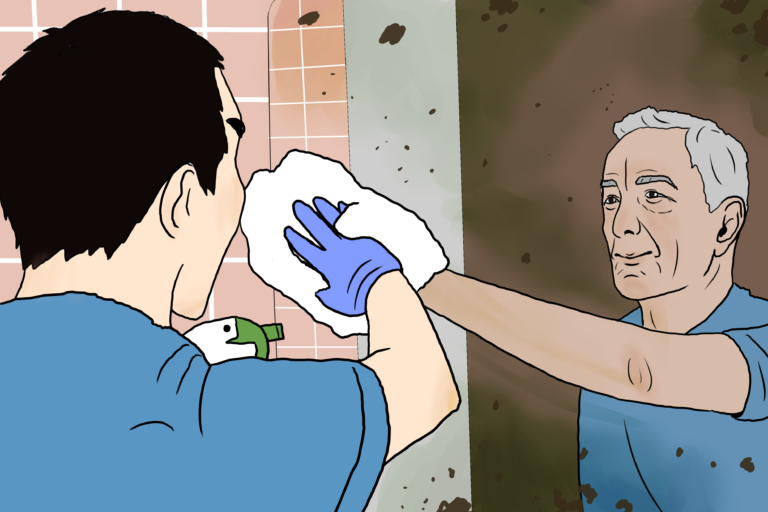
6:00 a.m. Monday morning. The temporary, futile, nugatory joys of the weekend now seem like a long-lost dream, much like the one that was just violently pierced, shattered and hopelessly obliterated by the blaring perturbation of your trusty alarm clock — the only honest, reliable thing in this chaotic world that you can believe in anymore. And what does that shrill shriek mean? It means it’s time to get ready for work. Where do you work? Everywhere. When do you work? All the time. What do you do? You clean up other people’s messes. Literal messes. Metaphorical messes. At the end of the day, they’re all the same, whether you’re a high school janitor, the Mayor of New York City or the head of a large media company.

And how do you prepare for this day of cleaning? By cleaning, of course. First, by wiping the smears off the lenses of your glasses — the glasses that your insurer won’t update for another six months — so you can marginally-less carelessly careen out of bed and mindlessly meander into the bathroom, where you find yourself face-to-face with a cadaverous, haggard, hollow-eyed, pasty-faced creature. It’s you. A sense of dread overwhelms you as you begin to recognize this distorted version of yourself. A few discernible features are there, yes — like your graying hair, intensifying wrinkles and eternal frown, all manifestations of your internal scars from the 2016 election — but this figure isn’t really you, is it? In the mirror, you see a resentful, disgruntled American who’s mad as hell and isn’t gonna take it anymore. Someone who wants systemic changes that can transform America into a more liberal and progressive place where people like you don’t have to live paycheck to paycheck and worry about breathing polluted air and drinking contaminated water. Someone who wants to disinfect the corrupted White House and remove the dirty stain on American politics that is Donald Trump.

But that’s not you. You aren’t that hopeful and idealistic. You’re a simple person, and the only things you care about are simple pleasures, like a nice, hot morning shower to cleanse your body and soul and to clear your head of all those unhealthily optimistic thoughts before a miserable day of cleaning up messes. You’re still just barely awake, and the relaxing steam from the shower makes your mind wander. Scant details of your recently-interrupted dream begin coming back to you. You’re in front of a crowd, a crowd paid to cheer for you as you speak into a Mike. It’s only March, but the flowers are already in Bloom, and the iceBergs are melting. 

An ice-cold blast of water shocks you back into consciousness as the hot water heater runs dry. After drying-off, you again look in the mirror, but despite emerging from the shower clean and refreshed, you are still unable to recognize your own reflection. It is at this exact moment that you finally comprend the meaning of your enigmatic dream. And now, you know what to do. You kneel down, reach in the cupboard and pull out a cleaning rag and a bottle of the best disinfecting agent on the market: Clorox. 

You begin spraying Clorox all over the mirror, that dirty, disgusting, besmirched, smudged, smeared, stained, speckled, splotched, splodged mirror. You take the rag and begin scrubbing it, disinfecting it, polishing it. You stop to dry it, pat it down and frisk it, if you will. The mirror is now squeaky-clean, and in it you finally see a crystal-clear reflection of the person you know and love, the person you really are: a milquetoast, charisma-impaired, change-averse, quite possibly racist but confusingly still anti-Trump, quasi-center-right Democrat. 

Just like me, Mike Bloomberg (not a socialist). Clorox, just like socialism, isn’t free. $4.99 per bottle. Splurged by Mike Bloomberg.

Written by: Benjamin Porter — bbporter@ucdavis.edu 

Coronavirus does not warrant mass hysteria

Remain calm, practice basic hygiene

A novel coronavirus — also known as coronavirus disease 2019 (COVID-19) — first detected in Wuhan, China has spread to almost 70 locations worldwide, according to the Centers for Disease Control and Prevention (CDC). Coronaviruses are commonly spread by contact between people and animals, and the origin of this specific strain of the virus is thought to have been contracted through a human’s contact with bats. This respiratory illness, although now also spread from person-to-person contact, has not been nearly as widespread as the flu. The CDC estimates that there have been as many as 46,000 flu deaths and up to 45 million flu illnesses, which is much higher than the approximately 97,000 total cases of coronavirus and approximately 3,300 deaths. Of that total, almost 54,000 have recovered, and of those currently infected, only about 16% are in a serious or critical condition.

“For most of the American public, who are unlikely to be exposed to this virus at this time, the immediate health risk from COVID-19 is considered low,” according to the CDC.

The UC Davis student who was isolated after showing flu-like symptoms — as well as their two roommates, who were quarantined — has tested negative for coronavirus and has since been removed from isolation. At this time, there are no current outbreaks in Davis.

While the coronavirus does not currently have a vaccine, this does not provide cause for people to go into a mass hysteria. The mortality rate is 3.4% as of March 3, according to the World Health Organization. Many of those infected have minor flu-like symptoms and end up recovering. Those who are more seriously affected by the illness are people who are 65 or older, or those who have prior sickness or weakened immune systems.

There is also no need to go on a mass shopping spree for food, water or masks. Masks aren’t proven to be very effective in preventing the spread of viruses, and may even increase the risk of contraction if worn improperly. N95 masks are also designed to function for a period of only eight hours of continuous or intermittent use, and are ineffective after that. Additionally, a mass influx of people purchasing masks means that there is less of a stock for surgeons and other healthcare professionals, who need them to treat patients.

The House passed an $8.3 billion bill for emergency coronavirus response on Wednesday, according to The New York Times. Of this, $7.8 billion will go toward agencies dealing with the virus, and the remaining $500 million will go toward Medicare providers to assist in at-care home of the elderly. States and cities that have spent resources and money on the coronavirus will also be receiving aid, as would the Public Health and Social Services Emergency Fund, the National Institute of Health and the CDC.

Since this coronavirus strain was initially detected in China, and since the majority of those who were infected or have died live in China, there has been an overwhelming stigma conflating the disease with Chinese people and those of Asian descent. This unwarranted discrimination toward entire nationalities targets people who aren’t any more likely to contract the illness than others.

“Stigma hurts everyone by creating more fear or anger towards ordinary people instead of the disease that is causing the problem,” according to the CDC. “We can fight stigma and help not hurt others by providing social support. We can communicate the facts that being Chinese or Asian American does not increase the chance of getting or spreading COVID-19.”

To decrease chances of contracting the virus or any other sickness, the CDC recommends washing hands frequently; avoiding touching your eyes, nose or mouth with unwashed hands; covering your cough or sneeze; staying home when sick; getting a flu vaccine and practicing other good health habits.

Written by: The Editorial Board

#news

It’s what’s happening

It’s here: Your first self-reported #news article, 100% free of journalistic bias. When we make promises, We Deliver, just like the US Postal Service. So from now on, the journalists will be cut out of the equation, and their inherent bias toward wanting to actually inform you will be forever stymied, like a rugged American individual charging noggin first into a wicked web of bureaucratic red tape. We know we said the tweets wouldn’t be organized in any particular way, but we ran the thousands of tweets through a neural network computer program to pair related posts together in sequence. Baby steps. But don’t worry, real journalists had nothing to do with this. At least we incorporated some Insta stories into this #news report for variety! We’ll be expanding to all social media platforms soon. Now, as an influential social media influencer once said, just moments before millions of people spontaneously became measurably dumber, “Social media makes you smarter.” #news

Headline: Local germaphobe/health guru dies grisly, unsanitary death after contracting infection from soap dispenser at vegan cooking retreat

By THE NEWSMAKERS — 

Probably deserved it haha plus the new vegan thrift shop already closed and theirs liberla tears #news#macklemore. I pre-ferd animal crackers anyway! #news. But what about the sugar in the wrap? If that’s a wrap then it’s a wrap! Game over #news#esports. THat’s not sports. It tis a game. Wear you sacrifice ur life to spend it in front of a tv. Just like jesus at the coho #news. But Judas betrayed him by not voting YES on the fee referendum #news#judaspriest

#easybiblical. And one of the two was communist, like Bernie LOL #news#maga.

George Zimmerman is suing Mayor Pete and Pochahontas for defamation to get money #news that’s actually #news and he’s such a races but at least he likes guns! #news #theblues. He’s from a man from Florida man, but guilty. Enter Florida man and your birthday and you’ll get funny Florida man stories haha like a news article in the news #news #stainformed. Mine says “88-year-old Florida man sets raccoon on fire for eating his mangoes” #news. Was the racoon using a spoon at least? #news.

Wow. My yung son Don just asked if he can eat his apple with a spoon cuz the forks flew away. He’s so cute! #news#insta#nofilter#noforks #breakfastday4of45#45Prez. Wait are there actually a foods u can’t eat with a spoon no matter what like ever? #news#spoon. Yeah no try eating the apply with a spoon dumbass! #news#spoonchallenge. I tried to apply the apple with a spoon and it didn’t work.#news #spoonchallenge. No if you slam the apple on the spoon at the perfect angle, it will break #spoonchallenge #applechallenge #news.

Waddup, I’m ridin’ shotgun in the Subaru with my bruh Tucker here whose driving with apples glued to both his hands for the #applechallenge and we’re tryna get our video on the local new tonight so once we hit 69 he’s gonna turn upside down, put his feet on wheel and try to break all the spoons that are jammed underneath the brake so we don’t crash LOL #applechallenge #spoonchalenge#instajam#news.

Written by: Benjamin Porter— bbporter@ucdavis.edu 

To be or not to be: Is Billie Eilish cool?

I’m the baaaaad guy.

Billie Eilish — the creepy-crawly, mega pop star — has become a household name, seemingly jumping into a premier level of stardom instantaneously. Now, with four major category Grammy Awards and a top-charting debut album, “When We All Fall Asleep Where Do We Go?,” Eilish has established herself as a force to be reckoned with in the music industry. She also just turned 18.

Her fame is not only encompassed by her accolades. Eilish herself — her fashion, her personality and her endearing shock factor — have become part of her charm to her fanbase. A question, however, still remains: Is Billie Eilish cool? 

Of course, cool is subjective, and the term can hold a variety of connotations. Yet, I am referencing the instinctual, gut feeling. The moral compass that determines right from wrong, cool from not cool. You know the feeling. As much as I could point to quantitative evidence to warrant an interpretation of coolness, my gut compass couldn’t do the same. I decided to turn to the student body to help determine the answer.

Emma Ryan, a fourth-year political science major, has been hooked on Eilish since she saw her “when the party’s over” music video. Eilish’s sound, hypnotic and complex, piqued Ryan’s interest.

“I really have not heard an album like that before,” Ryan said. “I thought it was so cool, just the sound effects and every song is so different, too. They have weird sounds making up the bass lines. It’s not all typical instruments. Sometimes it’s even a person clicking their tongue.”

While intrigued by her “steezy vocals,” Ryan’s interest was maintained by the concept of the music video itself. With the simplicity of black liquid streaming from the young artist’s eyes, a grotesque depiction of tears, Ryan instantly found the young artist unique. 

“I felt like she was more,” Ryan said. “It was really well thought out and delivered on her part, versus just like some angsty bands that decide to paint black on their face. I saw that [the black paint] was real and it didn’t have any effects. I saw her dedication to that — apparently it burned. She said how much it hurt in an Instagram caption. And also the song is just beautiful.”

Ryan pointed to other examples of Eilish’s dedication and care taken into her music: Her “Hostage” music video was choreographed by her and the voice distortion in “xanny” is supposed to make the listener feel as if they are walking through smoke. Attention to detail and tangible effort in the production of her own music convince Ryan of Eilish’s coolness. 

“I think everything that she’s doing has a lot of thought behind it,” Ryan said. “I can tell that she cares about it, and it’s not just about making money, getting famous. It’s about just sharing her experiences and putting into the world and validating others. She’s a phenomenal storyteller.”

The successful dichotomy of Eilish might rest in the fact that she is considered just as complex as she is relatable. Second-year communications major Ryan Cohen admires the artist primarily for this reason. 

“She seems genuine,” Cohen said. “She seems like a real human. I see videos of her dancing around on stage, and she looks like a kid like having fun, which I totally love. I just see someone who is pretty stoked to be performing and really genuinely happy to be killing it. She could be my friend, easily.” 

This relatability is what makes her music approachable and digestible without having to directly correlate to the listener’s own experiences. She pushes her listeners to consider her ideas and toy with new concepts. For example, “bury a friend” from the album “When We All Fall Asleep, Where Do We Go?” is about her experience with night terrors. And even more directly, in interviews, Eilish has commented on her own struggle with her mental health. One of her most recent singles, “everything i wanted,” was inspired by a dream she had in which she committed suicide and “nobody cared,” she told BBC Radio 1.

“It is cool because she can comment on how bad her mental health was with her music,” Ryan said. “She would say, ‘I was in a horrible state, but I’m so much better now.’ And that’s how I would react to my own issues, and that makes me feel like it isn’t like a product. She can even laugh at herself. I do think she comes off a little cold and standoffish, but I think that’s just her not forcing herself to be polite.” 

Her genuine persona, however, can easily be a product made by the music industry. Yes, she might be open about personal experiences, and those do not have to be questioned for their validity. But ultimately, the music industry functions as a business, and might serve as the motivation to share these experiences. 

Tapping into these boundary-pushing sentiments would be acceptable for her target fan base: tweens who are increasingly exposed to more progressive ideals. Talking about more deptful or serious issues might be what her target population desires. Afterall, Eilish has a team of 16 people who have helped develop and brand the individual since her breakout, DIY Soundcloud single “Ocean Eyes.” In no way — especially in the context of the modern music industry and her impressive level of stardom — can her success be contributed to her alone. She cannot be considered a solo artist in the purest form. 

More specifically, Eilish’s professional relationship with her brother is often an area of contention to support such a notion. She has not been quiet about the high activity her brother has had on her music making process, especially as a lyric writer. Indeed, in her first Grammy acceptance, Finneas accepted the award with her on stage. 

“I don’t have anything against Billie Eilish, I just think that her rise to fame is mostly credited toward her brother who writes all of her lyrics and produces all of her songs,” said Leah Rossi, a first-year genetics and genomics major. “I think that it is easier for Billie to be the face of their music because with vocal lessons she is able to harness her sounds, however, without her brother the only thing she would have is the ability to sing, which doesn’t cut it in industry if you want to be self-written.”

Eilish’s fans have nonetheless defended her relationship with her brother as collaborative rather than exploitive. 

“I like seeing her interact with her older brother who’s kind of the person that made her famous [in] a lot of ways,” Cohen said. “And that’s how I acted [with] my siblings. I think sibling dynamics are pretty raw.” 

“[everything i wanted] began with a screen grab that said something like ‘I love my brother,’” Ryan said. “It’s a line of defense almost against people that have been criticizing their relationship. She talks about how much she loves Finneus as her brother and her working partner, and how she would not be where she is without him. She knows that and recognizes that. I think that’s why he’s out there on stage performing with her. He goes on tour with her. When they sing ‘i love you,’ it’s just the two of them on stage. I think that is special.”

Another criticism of Eilish, which might diminish her cool potential in a serious way, is also what she has been praised for: her fashion. Her baggy, brightly colored fashion, which she claims is to purposefully limit the gaze of her body from the public eye, imitates 90s Black female rapper style. More significantly, she has not credited this historically oppressed group as her inspiration, or acknowledged this correlation. There are real and serious socially questionable aspects of Eilish’s image that cannot only limit her coolness but demonstrate her inability to recognize the larger responsibility that accompanies world-wide fame. 

Ultimately, Eilish is 18-years-old — her character is not solidified, and she is going to make mistakes in her young career. Although that’s no excuse for potential social injustices, it does not mean her potential for growth had stagnated.  

“It’s hard to be like, ‘That doesn’t feel like Billie, because who is Billie?” Ryan said. “She’s changed so much from her two albums. But […] what makes it Billie Eilish: It’s refreshing, it’s changing and it’s engaging. I think [her music] has always been more than just her singing songs. It’s just like her contribution to the world, and it is genuine, new and refreshing. I think she does it without being afraid of what other people are going to say because she wants to express herself, and I think that’s cool.”

Written by: Caroline Rutten — arts@theaggie.org 

Aggie Profile: Newly elected ASUCD President Kyle Krueger

Krueger talks books, birds, more

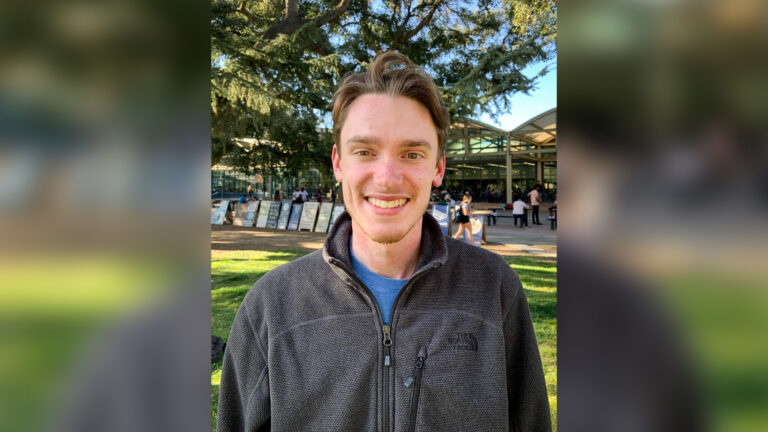
Kyle Krueger, UC Davis’ new ASUCD president-elect, ran on a platform that supported environmental justice through the establishment of affordable housing that is close to campus, hoping to reduce student commute time. As an evolution, ecology and biodiversity major, Krueger connected his policies with his own personal values. The California Aggie sat down with Krueger to learn more about him, beyond his involvement in the political campaign, to get a deeper look at the new student body president.

Growing up in Cleveland, Ohio, Krueger had moved to Orange County before beginning at UC Davis in Fall, 2018. That was a major transition, as he found drastic differences between the Midwest and the West Coast. 

“That was a big jump,” Krueger said. “I made friends faster in Orange County than in Cleveland, and I made friends [at UC Davis] probably faster than I did in Orange County. And I think that has to do a lot with acceptance of diversity.”

He reminisced on his experiences in high school, saying they portrayed the contrast between the two states. This difference, he said, stemmed from an acceptance of a variety of hobbies and passions, something that he thought California embraced.

“I remember cross country,” he said. “In Ohio, it was like, ‘Football or bust.’ When I came here, everyone was like, ‘Oh, cross country, that’s so cool.’ Even that is a small example of the cultural difference between the two.”

Krueger also mentioned his passion for birdwatching. In his free time, he enjoys going to Putah Creek and immersing himself in the natural world. He first began birdwatching in fifth grade, and it has since become one of his favorite hobbies.

“It’s very calming,” he said. “When you are focused on looking for a bird, or trying to find a cool species, it’s your entire focus. It’s also nice to be in nature as well.”

One of his favorite moments birdwatching was when he was in Oklahoma looking for a bird of the painted bunting species. 

 “I was there visiting family, and every morning I would wake up at 5:30 a.m. with my uncle to look for the painted bunting,” Krueger said. “We would spend hours looking for it. On the last day, it kind of fluttered down. It’s this really brilliant bird. It’s got red, blue, green — that’s why it’s called the painted bunting. Just in terms of cool moments, that bird sticks with me.”

The conversation then transitioned to the topic of  books — his favorite being “Superforecasting” by Philip Tetlock.

“It’s about how this scientist demonstrates how people who take in lots of different ideas and theories and put them together tend to be the best at predicting the future, rather than looking at the world from a specific angle,” Krueger said. “Those sorts of books definitely challenge me to think in different ways, and I enjoy that.” 

Written by: Athena Aghighi — features@theaggie.org

A “troublemaker” tells his tale: Longtime activist shares the story behind Stonewall

John O’Brien visits Davis Senior High School to discuss his lifelong contributions to activist causes

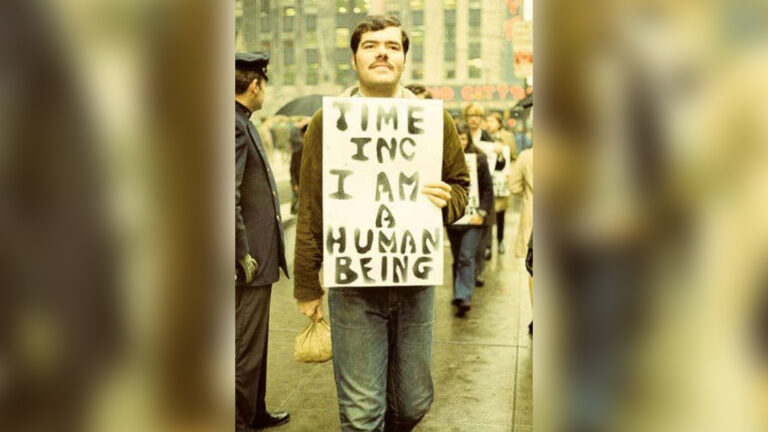
Walking into the Davis High School Brunelle Theater on Feb. 18, Davis and UC Davis community members would have first noticed a large photograph projected centerstage. In the photo, a young mustached man standing outside the Time Inc. building in New York looks slightly above the camera. He holds a sign that reads, “I am a human being,” a reference to the slogan “I am a man,” from a sanitation workers’ strike that occurred the previous year. Behind him are the blurred outlines of many other protestors holding similar signs, responding to the statement in Time Magazine that people who identified as gay were subhuman. 

The man in the photograph is John O’Brien in 1960, a self-declared “troublemaker” based on his participation in the gay rights, civil rights and women’s rights activist movements and participation in the Stonewall riots. O’Brien became involved in activism from a young age, joining the NAACP at age 13. In the photo, O’Brien holds the poster in one hand and a bag in the other.

“I’m holding a little bag in that picture because it’s got a bunch of anti-war buttons, and that night I was going to Penn Station to get on the train to head for the anti-war demonstrations taking place in Washington D.C.,” O’Brien said. “I learned how to multitask, and that’s what I was doing for that and many other events.”

June 28, 1969

The Stonewall uprising began on the morning of June 28 when New York City police raided the Stonewall Inn, a gay bar in New York. The event set off a six-day period of protests. O’Brien said he didn’t plan to participate in Stonewall.

“I was simply down the street […] with a bunch of political people having a discussion, and the police cars came […] and people were running away from that street,” O’Brien said. “When I got there, people were throwing pebbles and cans at the police.”

After O’Brien reached the scene, he contributed to the protest by lifting a parking meter alongside a few other men and used it to barricade the police inside the bar. As the protests went on, O’Brien and other protesters evaded the police until the situation took a turn for the worse three nights later.

“Then the police got really brutal,” O’Brien said. “They clubbed and hurt a lot of people. They were really bloodied, and a couple [suffered] lifetime injuries.”

For O’Brien and other protestors, the great significance of the Stonewall Inn in their community is what fueled the riots.

“Particularly for poor kids like me, we didn’t have any money to go to any elegant places,” O’Brien said. “[Stonewall] was our only place, and these kids were willing to stand up and fight against the police. It’s quite remarkable.”

Pride: 1970 vs. today

On the first anniversary of the Stonewall riots, O’Brien helped organize the first gay pride parade. Fifty years ago, he did not anticipate the expansion of pride into the national celebratory event that it is for the LGBTQ community today.

“I had no idea what this would lead to,” O’Brien said. “We didn’t think we were going to get to the end of the march.” 

According to O’Brien, the police tried to stop the march with barricades.

“We had to […] run past the cops, and then we had to push them twice, physically, to get them to move the barriers,” O’Brien said.

For O’Brien, the commercialization of pride is disappointing, especially because many of the corporations that participate in pride today historically discriminated against gay people.

“We see AT&T and IBM in [the march],” O’Brien said. “The reality is that, in 1969, when we did Stonewall, AT&T and IBM actively fired people for being gay.”

In O’Brien’s words, the parade no longer reflects the original purpose of the movement. He hopes that young people will carry on the spirit of protest of the 1970s.

“Our movement has to go beyond just celebrations,” O’Brien said. “About building [a] community that cares for all.”

Supporting “our sisters”

For O’Brien, LGBT activism is interlinked with other movements.

“Racism [is] an LGBT issue,” O’Brien said. “If we’re going to have a community, a real community, if we’re going to stand up for ourselves, […] we have to have all of us standing up for each other. We have to fight and oppose racism, because it attacks people in our community.”

Healthcare, too, should be something which LGBT activists care about, O’Brien said.

“There are many lesbians, gays, bisexuals and transgenders who are poor, who are disabled, who are elderly,” O’Brien said. “They don’t have healthcare, so what’s going to happen to them if we don’t take care of them? If we’re a caring community, healthcare is our issue.”

Furthermore, as a woman’s rights activist, O’Brien said supporting women should be a concern of the LGBT community.

“Promoting women [in] leadership, promoting all women to go out and do whatever they want to do and to be not seen as second class so they’re paid equally at least, so they’re treated equally, that they’re not violated — those are all, to me, LGBT issues, because how can we not support our sisters?” O’Brien asked. “This movement is for all of us.”

Troublemaking today

Whether it’s the Sunrise movement, or the many women’s marches, when it comes to current activism, O’Brien is hopeful.

“I think [the Women’s March in 2017] was the largest protest that I’ve ever seen in the United States,” O’Brien said. “There were millions of women and other supporters and allies marching in the streets all over this country.”

In the face of adversity, O’Brien offered advice for future activists.

“I think the problem is a lot of young people fear it’s hopeless, [but] you don’t let them win if you give up,” O’Brien said. “In fact, you can win. I won, I beat them, the biggest churches, the biggest corporations, the people with all the power, all the respect. I was a poor kid, but I had the idea, and it’s the idea that won out.” 

*Editor’s note: The California Aggie used the acronym “LGBTQ” in this article. When attributed to O’Brien, however, the acronym “LGBT” is used because, in his talk, he noted that he is “of the generation where queer was a really bad word, it was a word used against me and I’ll never forget that. What I ask young people to do is to respect that.”

Written by: Sophie Dewees — features@theaggie.org

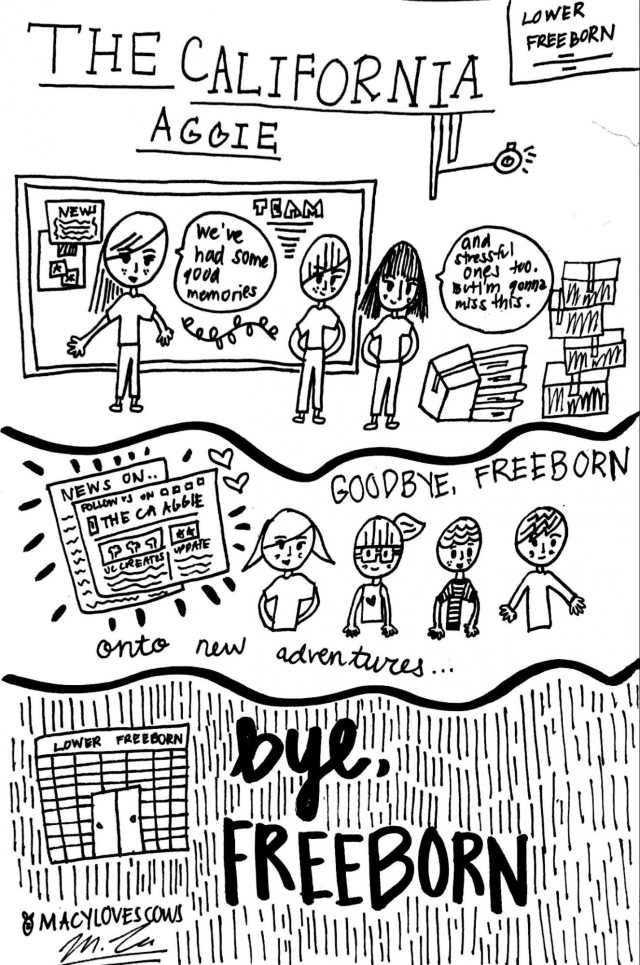
Cartoon: Goodbye, Freeborn

Margaret Lee / AGGIE

Written by: Margaret Lee — mcslee@ucdavis.edu 

“It’s as though animal science tries to kick disabled people out” — Students with disabilities ‘fight’ for accommodations

Lab sections in classes pose challenges for students with service animals 

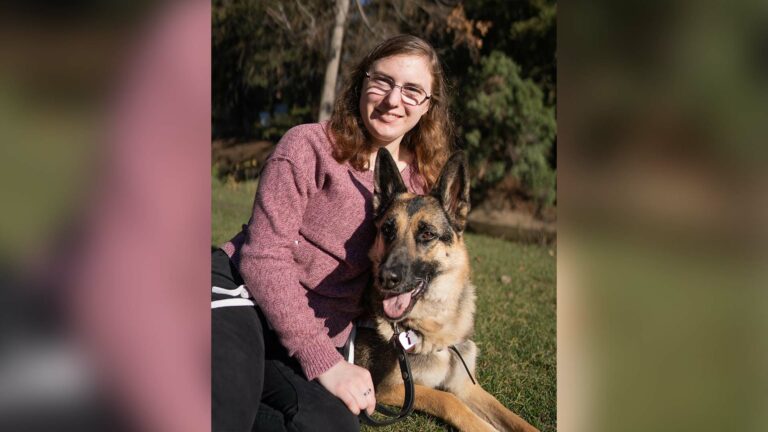
Wheeling down the sidewalks of UC Davis, Isa Rutten is accompanied by her service dog, who trots alongside her. Past the steps of Rock Hall’s main entrance, she goes to the far end of the building, rolling herself up the ramp. The door swings open when she presses the wheelchair button. She enters, wheeling down the slippery, internal hallways. When she finally reaches the lecture hall, she rolls up to the wheelchair desk in the front. Her service dog settles down, always right beside her. 

Despite setbacks from her multiple physical and psychiatric disabilities, Rutten, a second-year animal science and management major, is determined to open her own service animal organization. At UC Davis, Rutten receives helpful services, but she still struggles toward her goal when she cannot receive certain accommodations for required classes in her major.

Last fall, Rutten’s beloved service dog, Winston, a two-and-a-half-year-old Australian Labradoodle, could not attend the nearly three-hour lab portion of ANS 001, an introductory animal science class. Due to the lab’s physical demands, Rutten struggled without Winston. 

“People could see that my functioning level went way down,” Rutten said. “[Winston]’s here for a reason.”

As a multi-purpose service dog, Winston performs psychiatric tasks for Rutten, like mitigating her depression and anxiety. Additionally, he performs physical tasks and medical responses for Rutten, such as deep pressure therapy to lower Rutten’s heart rate.

“I can honestly say that if [I] did not get him, I would not be here,” Rutten said.

After being diagnosed with two co-infections, Babesia Duncani and Bartonella Henselae, and Lyme Disease in January 2019, Rutten took a medical leave of absence during Spring Quarter 2019. She needed time to manage those diseases and recover from frequent dizzy spells due to Postural Orthostatic Tachycardia Syndrome and random allergic reactions she gets from Mast Cell Activation Syndrome. 

“It was the hardest decision to go on [a medical leave of absence] because it’s not only leaving this environment, but there’s a certain extent where it’s admitting defeat,” Rutten said.

Rutten returned to classes in the fall for her second year at UC Davis, yet her situation with accommodations has not improved. Now that she uses a wheelchair, the animal science advisors are unsure how she will complete the lab portion of ANS 002, the other introductory animal science class. Since special safety equipment — like booties and gloves — is required to enter certain animal pens, Rutten said the department does not know how to sterilize her wheelchair. 

“It’s almost as though animal science tries to kick disabled people out, like they try to scare them away, because they don’t want to deal with it,” Rutten said. “It occurred to me that the whole area is not designed to be accessible in terms of classes or their building, Meyer Hall.”

The Animal Science Department could not comment on Rutten’s story since they legally cannot disclose personal information about students. Kelly Wade, animal science’s chief administrative officer, however, said in an email that the department strives to include everyone in its programs.

“The department is fully committed to making our programs accessible to individuals with physical limitations, consistent with campus policy and the campus commitment to equal educational opportunities,” Wade said. 

When the Animal Science Department challenged Rutten’s friend, Lysi Newman, a fourth-year wildlife, fish and conservation biology major, in regards to her service dog, Newman decided to switch out of the animal science major. Rutten, however, is “willing to fight it.” 

“I had a meeting with the [chair of the Animal Science Department] and I said, ‘I don’t know what you want me to do,’” Rutten said. “He said, like at least three times during that meeting, ‘maybe you should think about changing majors.’ I said, ‘No, I’m going to prove to you that I can do this.’”

James Murray, the professor and chair of the Animal Science Department, said that to his knowledge, the department has “never asked a student to leave the major” and does not “think [the department] would.” Murray said that he works to guide students towards the best track or concentration of study within the department of animal science that fits their accommodations. 

“As a faculty advisor, our job is to advise students,” Murray said. “[Students] make the decisions. I would certainly be willing to have a conversation with a student about ‘Is this the best major for you? Is this the best path?’”

Reaching a disability-rich campus 

Across the U.S., students with disabilities face issues similar to Rutten’s. 

The Americans with Disabilities Act of 1990 (ADA) defines a person with a disability as a person who has a physical or mental impairment that substantially limits major life activities.

Nationally, 9 to 11% of higher education students disclose disabilities and request accommodations, according to Jennifer Billeci, the director of the Student Disability Center (SDC). At UC Davis, the SDC served 1,848 students or about 5.25% of the 35,186 enrolled students during the 2018–19 school year. Over the years, the total number of students served by the SDC has increased. In the 2010-11 school year, only 780 students used SDC services.

As more students with disabilities enroll at UC Davis, the accommodation process sparks issues. The SDC, students and professors do not always successfully collaborate, so some students are at risk of not being properly accommodated, according to Michael Sweeney, UC Davis’ chief campus counsel. 

“The good part is that [students are] succeeding and going to college,” Sweeney said. “The bad part is that we haven’t done a good job in supporting our faculty around bearing the brunt of that.”

More professors have been objecting to accommodations, which is allowed as long as they follow the process to object, Sweeney said.

“It’s okay for a professor to challenge and say that an accommodation is fundamentally changing the program,” Sweeney said. “But to do that, the professor has to utilize the right process.”

By law, UC Davis must provide accommodations for disabled students. As a public entity, UC Davis falls under Title II of the ADA and, therefore, cannot discriminate against disabled individuals, Sweeney said. UC Davis must also comply with the Rehabilitation Act of 1973 because it prohibits disability discrimination in programs receiving federal funding. 

“What it means is we have to make sure that our programs are open and accessible to individuals with disabilities,” Sweeney said.

The SDC’s goal is to “facilitate equal opportunity and full participation in UCD services, programs and activities,” according to Billeci. Since the SDC strives to provide reasonable and appropriate accommodations within the context of a student’s disability and the class, students should go to the SDC if they are unhappy with the accommodations they receive.

Accommodations are decided on a case-by-case basis for each individual and a wide range of services are available. For example, Rutten can take tests at the testing center, request a lab assistant or note taker, drop her workload to under 12 units, register for classes during priority registration and receive vision services or extra excused absences.

“It’s one of the things that are really nice to have even if you don’t use them, because you know that they’re there to back you up,” Rutten said. 

With the rise of technological advancements, new devices are available for students with disabilities. Joshua Hori, the accessible technology analyst for the SDC, develops and provides aids and apps to help students with note-taking, speaking, location awareness, project management and email organization. 

For students, faculty and staff with physical disabilities, the Mobility Assistance Shuttle can transport them around campus free of charge, according to Fredna Karneges, the manager of the Disability Management Services.

“We’re here to work it out and to advocate,” Billeci said. 

Animal science aims for inclusion

For students with disabilities in animal science, the department conducts individualized assessments in accordance with the SDC’s policies.

“At the end of the day, decisions are made and we really then implement them,” Murray said. “We’re not making the rules, it’s the Student Disability Center that makes the rules.”

In regards to students with service animals, the department follows the UC Davis Policy on Support and Service Animals. Accommodations depend on the specific lab facility and the extent of one’s physical limitations.

“There may be areas where a service or assistance animal poses a substantial and direct threat to health and safety that cannot be reduced or eliminated by a reasonable accommodation,” the policy states. “These areas may include laboratories, animal research areas, medical facilities and food preparation areas.”

Animal science facilities fall under these categories, which is why some students, like Rutten, cannot bring their service animals to labs. 

Additionally, certain “pathogen-free animal facilities” like the swine and poultry barns require special safety equipment before entering. In order to protect the animals, one must wear booties, walk through foot baths and sterilize shoes. Rutten has struggled with the fact that wheelchairs and crutches must be sterilized as well. It could take time to figure out the best methods for sterilizing this equipment, Murray said.

“[The SDC] tells us we have to figure out how to sterilize a wheelchair, then we will figure out how to do it,” Murray said. “It is difficult, but that’s the way it is.”

With the great range of study areas presented in a large major like animal science, Murray said that students with disabilities can pick the track that best suits them. Students with physical disabilities could work with smaller animals, like poultry or fish, or focus their study on animal behavior, which primarily involves observation. 

“Somebody who, for instance, has perhaps a bad back may not be able to work with cattle or sheep, but they could easily work with rabbits and mice or chickens,” Murray said. 

The department would not prohibit a student from specializing in larger animals, but It would require working with the SDC to figure out proper accommodations, Murray said. 

“Students go through vet school with disabilities,” Murray said. “You have to figure out what that particular individual needs to make it possible. What they are doing in each case is going to be unique.”

Introductory animal science classes, like ANS 001 and ANS 002, require students to handle large animals, regardless of the specialization one decides within the major. Since all students must complete these classes, if a student has physical limitations, the department must work with the SDC to accommodate the student, Murray said. For instance, if a student was in a wheelchair and was unable to “flip a sheep” in order to examine it, that student could instead direct an assistant through the task while still displaying knowledge. 

In the past, Murray said animal facilities have undergone modifications to become more accessible. For example, some facilities have been physically modified to provide access ramps, so students can observe and participate in labs if they use crutches or wheelchairs.  

Through helping students understand the array of opportunities in animal science, Murray said he has “always encouraged students to follow their dreams.” 

“Many students with disabilities have successfully participated in animal science courses and labs,” Wade said. “The department welcomes all students to explore this interesting field.” 

Similar experiences, different majors 

Students with disabilities and service animals deal with challenges across majors. 

Rutten’s friend Newman was born prematurely and was a world-champion cheerleader as a child, which resulted in the development of physical disabilities that affect her today. 

“I can’t remember the last time I didn’t hurt,” Newman said. 

Medical disabilities that have yet to be diagnosed also affect Newman. Even though her episodes resemble seizures, they do not fit the exact definition because she remains conscious. 

Like Rutten, Newman has a service dog. Missy, a German Shepherd that failed out of a police training program, can detect Newman’s episodes before they happen, and can also protect her.

“She’s wonderful because, unfortunately, people tend not to be very sensitive,” Newman said. “If they notice that I’m passed out, shaking, people have come and tried to steal things from me, instead of trying to get help. Missy regularly chases people off who are trying to take advantage of the fact that I’m not aware of what’s going on.” 

Newman also faces issues when bringing Missy to class. In one of her past animal science lectures, another student’s two emotional support Chihuahuas would bark at Missy. Weeks into the class, Missy barked back one day, resulting in the Animal Science Department telling Newman that Missy is too aggressive and could no longer attend any animal science classes or go in any animal science buildings. 

“That is partly why I switched majors, but I always wanted to do wildlife anyway,” Newman said. 

Brian Troupin, a third-year astrobiology major and veteran, successfully worked out accommodations to bring his service dog to his microbiology lab. When Troupin injured his hip after a fall during his army training in Texas, he needed mobility assistance. Cojo, a 12-year-old German Shepherd, assists Troupin over rough terrain. 

“They’re very generous [in the lab],” Troupin said. “They’ve set up a little area specifically for him and I show him where to go and he sits quietly.” 

During the process of figuring out accommodations, Troupin said that students should not be afraid to stand up for themselves. 

“You’re probably not always going to make the right arguments for the first time,” Troupin said. “But, unfortunately, there’s a lot of people out there who are going to interject themselves into your life just because of a service dog. You want to have something to say.”

Rutten, Newman and Troupin also find support on campus through various student organizations. Puppy Pals, a service dog and handler support group, provides dog training, education about service dog education etiquette and hosts events. 

The Student Veterans Organization, which Troupin is the vice-president of, strives to help veterans get involved in student activities. They organize events like tailgates and barbecues to help veterans become part of the UC Davis community. 

“We try and assist that process of bringing veterans into something more, giving them a solid foundation and then trying to make sure that they’re not alone,” Troupin said.

Despite setbacks, Rutten seeks greatness 

Rutten continues to work toward her animal science and management bachelor’s degree, despite the challenges she faces within the department. Currently, Rutten takes other classes for her major, but she has yet to figure out how to take ANS 002. Complications of sterilizing a wheelchair could take time to resolve, Murray said.  

“I’m looking at doing chemistry and [biology] because they’re requirements, but we’re totally ignoring ANS 002 because my advisor is pretty sure I can’t do it,” Rutten said. 

Overall, despite the challenges she faces with her major, and with being a disabled student, Rutten said she is happy to be back at UC Davis and with her friends. 

 “I could not be happier with being back,” Rutten said. “[Davis] is just such a good, supportive place.”

Determined to graduate and open her own service animal organization, Rutten remains confident that she will have success as long as she keeps fighting. 

“I’m a stubborn person,” Rutten said. “It’s a fight, that’s what it is. I’ve done the fight a lot and I’m okay doing it, but also it’s exhausting. I don’t want to have to.”

Written by: Margo Rosenbaum — campus@theaggie.org 

Transfer Triumphs: Katie Toole and Mackenzie Trpcic elevate UC Davis Women’s Basketball

Both transfer athletes have been vital for continued success of program

Although the UC Davis Women’s basketball team currently sits atop the Big West Conference standings once again, the team faced many questions entering the season. After three key senior players, Kourtney Eaton, Karley Eaton and all-time leading scorer Morgan Bertsch graduated last spring, it remained to be seen how this new team would perform without the three major contributors who helped UC Davis win the Big West Conference. 

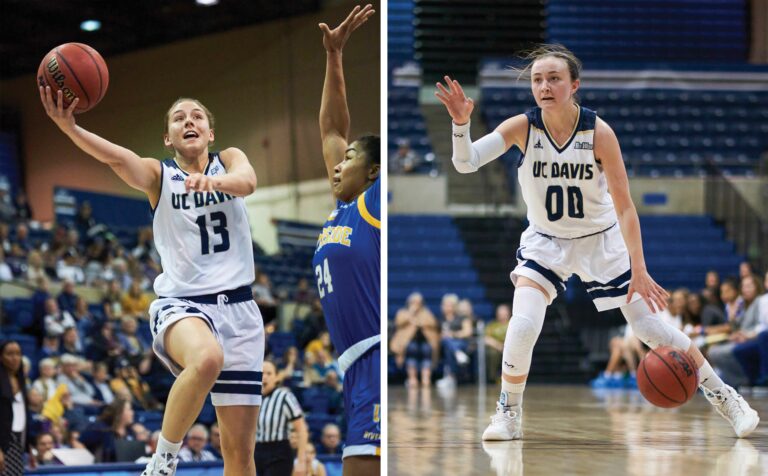
After enduring a stretch of four straight losses in November, it seemed as if the Aggies would be needing time to rebuild and regroup. But along the way, Head Coach Jennifer Gross and her staff learned from the adversity and managed to get the ship right before conference play began. A pair of key veteran transfers, redshirt-senior guard Katie Toole and redshirt-junior guard Mackenzie Trpcic, were instrumental in getting things back on track.

Toole leads the team in scoring with 14.1 points per game to go along with three rebounds. She is also shooting a team-high 51% from the field and nearly 43% from three. The Farmington, Utah native had her highest-scoring game as an Aggie back in November against Saint Mary’s in Moraga, California, where she scored 30 points. Toole’s offensive prowess has her near the top of every offensive statistical category on the team and has provided a boost that the team has been needing. 

As for Trpcic, her ball-handling responsibilities at the guard position have translated nicely for an Aggie team that possesses a number of good shooters. Originally from Hamilton, Ontario in Canada, she leads the team in assists with 4.3 a game and had her highest total of 10 in November against Sacramento State. Both Toole and Trpcic are in the top three on the team in minutes played and have been vital for the continued success of the program.

For such impactful players, it’s amazing that neither Toole nor Trpcic began their collegiate careers at UC Davis. Toole transferred to UC Davis from Utah State after she struggled to get playing time during her sophomore season. Aside from the fact that Davis was her only offer to visit, she decided to transfer and join the Aggies.

“I got here and I got to know the coaches,” Toole  said, following a recent practice. “The coaching staff was the biggest thing for me. I didn’t have the best experience with my coaches at my last school, so that’s what I was really looking for. I talked to the players about how they feel about the coaches and they all had good things to say. When I got here, everything they said was true. They’re just a great group.”

As for Trpcic, her situation was one that is common among certain schools. After playing her first two years at the University of Albany of the America East Conference and being one of the key contributors on the squad, there was a sudden change in the coaching staff. With change usually comes a wave of transfers by players for a variety of reasons. Trpcic decided to open up her recruitment once again, and, when she found UC Davis, it seemed to be a spot that fit what she was looking for. 

“When I looked at UC Davis, I saw a school that fit all the criteria for me,” Trpcic said. “Being a great basketball school and great academically, specifically in [the area] of medicine. That, combined with meeting the coaches and the atmosphere, really drew me in.”

The journey of a collegiate transfer athlete can be rigorous, so it’s no surprise that both Toole and Trpcic express a profound passion for hoops. When asked why they love the game of basketball, both players could trace that love back to an early age. For Toole, she knew since the third grade that basketball was what she wanted to pursue. After going to a basketball camp, she experienced what it was like to play the game and had a good time getting to know other people while doing so. From then on, she told her parents that basketball was what she wanted to do, and the rest is history. 

In Trpcic’s case, sports were a major part of her family, so she began playing competitive basketball when she was six-years-old. After seeing her older brother play basketball, she began to as well, and her passion for the game grew from there. Both players’ experiences and struggles in the game translate into where they are today, but they’ve also used some particular memories to motivate them along the way. 

“I didn’t make my seventh grade basketball team, and that really hurt,” Toole said, laughing. “I wasn’t really expecting it, but it made me take it more seriously. I really worked on my game and made the team the next year. I just carried that forward for the rest of my career.”

As for Trpcic, one of the biggest moments of her career came in a comeback performance at her former school. 

“Something that really made me fall in love with the game were the conference championships at Albany,” Trpcic explained. “That whole year I did well, but [I] got injured and had to get back into it. I came back and did really well in that championship game. I think that was a turning point in my collegiate career, just showing that I can play really well at this level.” 

It’s well-known that life as a student-athlete is not always easy. On top of the already difficult task of being a college student, there are practices, film sessions, training and much more that comes with being an athlete. Self-motivation is required and, for these players, their “why” is what keeps them going. 

“It can be a grind, but honestly the teammates that I’ve had have been amazing. We’re all just a great group of friends,” Toole said. “You get to go out there and be with your friends and be competitive. All of us enjoy being competitive and that aspect of it. [Plus] you’re getting [a scholarship] to do this. What more can you ask for?”

Trpcic agreed with Toole, adding the support of her family as an additional motivational factor.

“My family is very sports and basketball orientated — I know, even though they’re in another country, they’re yelling through the TV screen,” Trpcic said. “Everything my family has put in [my] life, and [they have] supported me. I know this really makes them happy, as well as myself — just watching me live out my dream.”

For any up-and-coming basketball player, a significant motivation for playing the game typically stems from watching players who inspire them. Toole, interestingly, didn’t watch a lot of basketball growing up. She now watches it more and is a big Utah Jazz fan, as well as a Donovan Mitchell fan, who she admires for his hard-work ethic and focus on player development. 

Trpcic named Steve Nash as her favorite player growing up — she has worked to shape her game around him, and it’s noticeable everytime she steps out on the court. 

“Being Canadian as well [as] being this little dude running around the court, passing the ball all over the place, making his teammates look good, I looked up to that and it coincided with my potential in basketball,” Trpcic said of Nash. “So, yeah, a big inspiration.” 

As this is Toole’s final collegiate season, she has her sights set on playing somewhere overseas after she graduates. Although Trpcic has one more year of eligibility following this season, that hasn’t stopped her from looking toward her future. She hasn’t closed the door on continuing her playing career post-graduation, but is looking into medical school and the requirements needed to reach that goal. 

When both players reflected on the season so far and pondered the journey that lies ahead, they expressed that they did not — and still don’t know — what to expect. The loss of three key players last season left a big question mark on where the team’s production would come from. Tough stretches and improvement after every practice has led the Aggies to where they are today. Now, both players have their eyes set on another conference championship and another NCAA Tournament berth, in the hopes of continuing the strong winning tradition of this program. 

On March 1, Toole, Trpcic and the Aggies clinched the program’s fourth consecutive Big West conference regular season title. Now, UC Davis will close out the regular season on Saturday in Long Beach. After that, the team will await its opponent for the Big West Tournament semifinals on Friday, March 13.

Written by: Omar Navarro — sports@theaggie.org