53.3 F
Davis

Davis, California

Thursday, December 25, 2025
Home Blog Page 371

Campus Judicial Board applications close today

CJB members uphold academic integrity, social responsibility through hearing panels, outreach, educational efforts

Since 1911, UC Davis students have played a critical role in academic integrity and responsible behavior from the first student government’s “honor system” to the creation of the Campus Judicial Board (CJB) and Code of Academic Conduct in 1977. The Campus Judicial Board promotes integrity in its role as a hearing panel and through outreach and educational efforts.

“The Campus Judicial Board is a student group on-campus that operates out of the Office of Student Support and Judicial Affairs, so it’s actually affiliated with the university,” said Alisha Singh, a CJB member.

Singh noted that CJB is a unique opportunity to bring the student perspective to the disciplinary process on campus.

Members of CJB, like Singh, participate in the disciplinary process related to academic and social misconduct by sitting in on informal and formal hearings. Informal hearings, which make up the majority of the estimated 1,000 cases of misconduct per year, are informally resolved with a judicial officer and shadowing members of CJB. Formal hearings, which are more rare — about 15-30 cases per year — are held when a student and the reporting party are unable to reach an agreement on the truth of the reported incident. Members of CJB play an active role alongside faculty members during formal hearings.

“The most prominent thing we do are the formal hearings,” Singh said. “On that panel, we question any witnesses that may have been there during the incident, we review all the evidence, we ask questions to the reporting party and the student [and] we listen to testimony. It’s basically a real hearing, and it’s unique for students to actually sit in on that and help make those decisions rather than just one person in administration who makes the decision that affects someone’s life forever.”

By the end of the formal hearing, the faculty and student members of CJB are responsible for deciding whether or not the student is found to be in violation.

Members of CJB also serve as potential advisors for students with formal hearings, answering questions about the process, helping them with documents to submit, reminding them of deadlines and reading over drafts of statements presented during their hearing.

“We can help them draft questions and brainstorm ideas for evidence, but we are in no way a lawyer for them,” Singh explained. “We’re helping them through this process which could be cumbersome and stressful for them. We can never speak on their behalf or tell them what to say, but we could always give them advice on what the panel would appreciate.”

Additionally, CJB hosts outreach events such as tabling, social media programming and speaking to students, faculty and advisory groups to educate the student body on the Code of Academic Conduct.

“What’s new is that students have to read the code and check boxes saying that they did so for all of their classes, so they should be familiar with it, but we still try to clear up any inconsistencies or questions that they may have,” Singh said.

Singh said the student members of CJB provide the most impartial and unbiased perspective and input.

“We can relate, at a certain level, because we are in these classes,” Singh said. “[We]
can bring that perspective to light — not from a place of judgement, but of understanding. I think it’s right to have students doing this because we know where other students may be coming from and we do it in a way that’s not adversarial or intimidating at all. We’re their peers who are just trying to find out the truth of the situation.”

For prospective applicants, Singh emphasized that CJB is not exclusively a pre-law organization and encouraged all majors to apply. Members serve a one-year term, with 13 students serving on CJB each year.

“There are a lot of ethics and morals involved and that echoes beyond more than just law – it applies to every discipline,” Singh said. “We just want people who are bold in their promotion of academic integrity and hold that value.”

Completed applications are due online by 11:30 p.m. on Feb. 10.

Written by: Graschelle Fariñas Hipolito — campus@theaggie.org.

“No more wars” — students fight against American intervention in Iran

With a potential Iran-US conflict looming, students have different ideas for achieving “no more wars”

A group of roughly 20 people gathered around three students holding a folded banner on the second floor of Wellman Hall on Jan. 22. After counting down from three, the students unfolded the banner — “No More Wars” was written across the middle in blocky red letters — and taped it to the Wellman railing. 

Written on the banner were two hashtags: #WeAreDissenters and #NoWarWithIran. Tensions between Iran and the U.S. escalated earlier this month after the Jan. 3 airstrike that killed Qasem Solemani, the top Iranian military general. 

The strike was ordered by President Donald Trump to “stop a war.” Iran’s leader Ayatollah Ali Khamenei vowed “harsh retaliation” in response, prompting the U.S. to send thousands of troops to the region.

UC Davis issued a statement offering support to students and scholars from Iran on Jan. 7, urging students to reach out to Services for International Students and Scholars or the vice provost and associate chancellor of Global Affairs if they had additional needs.

Those opposed to the U.S.-Iran conflict and increased military presence in Iran are mobilizing to advocate against war. One of these opposers is Megan Duong, the administrative coordinator for Southeast Asians Furthering Education and a second-year sociology major. 

Duong and one of her coworkers at the Student Recruitment and Retention Center (SRRC) learned about the organization Dissenters, an “anti-militarist youth organization worldwide,” through their work.
Over Winter Break, Duong and her coworker went to Chicago for a training and came back planning to start a Dissenters chapter on campus that would, she said, stigmatize war and militarism while stressing an intersectional movement fighting against different forms of oppression.

The Dissenters training, according to its organizing director, Timmy Rose, focuses on developing clear skills for connecting and mobilizing communities for change.

“Dissenters understands resisting systems of war and militarism also means unlearning interpersonal and social patterns of dominance and shame,” Rose said. “We also provide space for young folks to develop new ways of relating to each other that honor our commitment to connection, collaboration and vulnerability.”

The Chicago-based organization officially launched on Jan. 2. 

Rose’s parents are Vietnamese immigrants who lived through the Vietnam War. He learned about the impacts of militarism and war through his family’s oral histories. To him, anti-war movements are all interconnected.
“The war on black people waged through genocidal policing and incarceration in the so-called U.S. is part of the same system that seeks to maim and contain excess populations in the Middle East through military intervention and occupation,” Rose said.

Like Rose, Duong family’s background, and her own connection to other struggles, grounds her in her work with Dissenters. Her parents were displaced from Southeast Asia because of forms of war and militarism. 

“[I’m] thinking about the violence that my parents faced and how they’re connected to systems that continue to violate people,” she said. “Whether that looks like remnants of Japanese incarceration or police killings in black and brown neighborhoods, militarism comes in many different forms, and I’m against all of that.” 

That wasn’t the only driving force that motivated Duong to get involved with Dissenters. 

“Working for the SRRC made me see the limitations of student centers on campus,” she said. “I felt the need to find a movement where I could organize freely, one that emphasized building power at the base.”
Anti-war sentiment, according to former ASUCD President Michael Gofman, is a misnomer. Gofman reframed the pro-war and anti-war debate as interventionist versus non-interventionist. 

“No one’s pro-war except for warlords,” he said. “Don’t confuse American influence with a want for war — American influence is what’s staving off war.” 

Despite this sentiment, support for the U.S. pulling out of Iran — instead of escalating military action — has spread to the City of Davis. On Jan. 9, 48 people met at Central Park to hold an anti-war demonstration. 

One organizer urged Congressman John Garamendi to take action on behalf of the troops, according to Patch

“We would hope that the congressman’s great support of our troops, with two Air Force Bases in this district, means he will definitively oppose sending them into an unprovoked and illegal war,” the organizer wrote.

Gofman sees military intervention differently.
“My family are all refugees from the former Soviet Union,” he said. “It influenced my worldview by showing me that America is a global force for good and can help people.”

To Gofman, withdrawing from Iran could have greater consequences than U.S. troops’ deployment.
“I believe the actual way to achieve that goal of no wars is not through withdrawing, but through a strong foreign policy,” he said. “Being well-armed through deterrence, not through apology or withdrawal and isolationism.” 

Gofman acknowledges that the U.S. has made foreign policy mistakes. To some UC Davis students, those mistakes include the Vietnam War and the war in Iraq.

In May of 1969, according to UC Davis News, thousands of UC Davis students marched twice: once to the campus administration building, where they submitted a list of grievances, and once to the State Capitol in the “March for Peace.” 

UC Davis alum Ben Wang, the co-director of the Asian Prisoner Support Committee, remembers the tension that gripped the campus after 9/11, which happened between his first and second year at UC Davis.

“When 9/11 happened, immediately I dreaded it — you could kind of just forecast what could happen,” he said. “There’s gonna be a violent military response, there’s gonna be a lot of racist violence against people of color.”
Being a student on the UC Davis campus in the wake of 9/11 and the start of the war in Iraq challenged Wang to think of ways to connect “old” history to current events.
“I’m Chinese and Japanese American, so some of my relatives were incarcerated in World War II in the Japanese-American internment camps,” he said. “It’s always part of my family history, and coming of age made me want to show how a lot of these legacies, around racism and imperialism, are still very much alive.”

Duong’s own coming-of-age on the UC Davis campus has made her hopeful that her organizing will go beyond awareness and enact systemic change. 

“Young people have the power to turn the tide against endless wars and endless forms of violence in our communities,” she said. “The government better watch out.”

Written by: Janelle Marie Salanga — campus@theaggie.org

Dear Kobe: A final farewell to my idol

Everything he did in the uniform and for the sport of basketball will never be forgotten

“Have a good time. Life is too short to get bogged down and be discouraged. You have to keep moving. You have to keep going. Put one foot in front of the other, smile and just keep on rolling.” — Kobe Bryant

It’s hard to put into words the thoughts that are going through my head, as I don’t seem to know what to say. I still can’t comprehend it. When you grow up idolizing athletes, they become larger than life — almost immortal. It’s times like these when you sit back and realize that the cruel reality of life carries no exceptions. 

I grew up in the greater Los Angeles area, and I discovered the game of basketball when I was eight years old. My earliest memory was watching the 2008 NBA Finals where the Lakers competed against the Boston Celtics. I was too new to the sport and too young to fully comprehend what was going on. After that series, my dad began to teach me how to play, and we would watch the Lakers together as I learned the beautiful game. 

Every other night, I would watch the likes of Pau Gasol, Andrew Bynum, Lamar Odom and Derek Fisher take the court in that pristine purple and gold. But there was always one player who stood out the most: a player who seemed like nothing could discourage him, a player who played every game like it was his last and, most importantly, a player who wanted nothing more than to win. He wore the number 24, and his name was Kobe Bryant.

Residents of the City of Los Angeles watched this 17-year-old from Lower Merion High School in a suburb of Philadelphia grow right before their very eyes. From the four crucial airballs he put up in an elimination playoff game his rookie year to the three-peat dynasty of the early 2000s and the back-to-back championships of 2009-2010, he was there. Since he was drafted, then subsequently traded to the Lakers in 1996, Bryant became Los Angeles’ own and, eventually, he became Los Angeles. From the biggest basketball fans to those who didn’t even know where the Lakers played, everyone knew Kobe Bryant. 

In his 20-year NBA career, he was an 18-time All-Star, a five-time champion, a two-time Finals MVP and a one-time league MVP. He was named to the NBA All-Defensive team 12 times, the all-NBA team 15 times and was a regular-season scoring champion. Bryant currently sits fourth on the NBA all-time leading scorers list. His accomplishments off the court post-career were just as impressive, as he expressed his creative side with his short film Dear Basketball, which won an Oscar in 2017. 

Everything he did in the uniform and for the sport of basketball will never be forgotten by those who saw him, loved him and hated him because he stayed through everything. Whether it was the championship seasons or the 17-win seasons, he was there and he was Kobe Bryant. In a franchise filled with all-time greats, he was the greatest. And in a city filled with stars, he was the brightest. 

After the Lakers’ 2009 NBA Finals win over the Orlando Magic, I received my first ever Kobe Bryant jersey. It was a gold Adidas jersey with the number 24 on the back. I don’t remember ever being that excited about anything before. I would put on the jersey and act as if I was Kobe himself, acting out late-game scenarios where he hit a game-winning shot on a small hoop I had behind my front door. The iconic fadeaway, the runner in the lane and his smooth jump shot were what I strived to imitate because I wanted to be like him. I remember the euphoria outside my apartment building when the Lakers beat their rival, the Celtics, in the 2010 NBA Finals. Fireworks, cheering and honking filled the night air. It was a celebration and a feeling I’ll never forget. 

His final game — and final season to be quite honest — was something basketball fans may never see again. The Lakers won a franchise-low 17 games in the 2015-16 season, but you would have never known it by how many people showed up to Staples Center on Apr. 13. 

In the final game of his career, Bryant scored 60 points en route to a comeback win over the Utah Jazz. It was something so magical that it would be nearly impossible to recreate. The atmosphere inside Staples Center had you believing it was Game 7 of the NBA Finals. In reality, it was a match-up between one of the worst teams in the league and a team that just missed out on the playoffs. But for the City of Los Angeles and Laker fans everywhere, this meant everything. Their icon would step on the hardwood one last time before calling it a career. That magical night will live forever in the history of the NBA. 

On the morning of Sunday, Jan. 26, 2020, Bryant, his 13-year-old daughter Gianna and seven others were tragically killed in a helicopter accident in Calabasas, California. Bryant was 41. 

How could someone so iconic be gone just like that? It’s a question that will never make sense. But, it happened. For people like myself, other fans of the NBA and the people of Los Angeles, it felt like a piece of them was gone as well. 

On the outside looking in, it may be hard to comprehend how one athlete can affect so many people. There were tears shed, tributes posted and memorials built outside of the Lakers’ home arena. As crazy as it sounds, Kobe shaped my life in a way I can never fully explain. Watching him is the reason I fell in love with the sport of basketball, the reason I love the Lakers and the reason why I’m so passionate about the things I am today. For someone who grew up a fan in Los Angeles, Kobe was, and still is, the Lakers. 

Sports is something that brings people of all different backgrounds together — no matter what hardships are going on in your life, you can always count on sports to be there to get your mind off things, at least for a couple of hours. Kobe transcended the game of basketball and it is understandable why this tragedy is causing those affected by it to reflect on life and how fragile it really is for everyone. 

In life, there’s one appointment you can’t cancel. For Kobe, his came less than four years after he played in his final NBA game. As tragic as it was, his legacy will be passed on for generations and he will never be forgotten. His drive for being the greatest ever outweighed whatever hardships he encountered and, for fans like myself, it is one of the biggest parts of his legacy that we will remember for the rest of our lives. 

His tragic passing shook the whole world and should serve as a reminder to live now and not wait until tomorrow, because you never know when it’s your time. There are no guarantees in life, so we have to make sure to keep moving forward, work hard and, maybe one day, we can be idolized as well. 

I never had the pleasure of meeting Kobe Bryant. His impact on me was indirect, but I will never forget the memories he created for me. If I ever had the opportunity to tell him anything, I would simply say thank you. I could never fully explain why I feel the way that I do or why it means so much to everyone, but that’s the beautiful thing about it.

So thank you, Kobe. Until next time.

Rest in Paradise, Kobe Bean Bryant.

Written by: Omar Navarro — sports@theaggie.org

The continued relevance of Kenneth Lonergan’s 2011 masterpiece “Margaret”

 What “Margaret” teaches us about self-preservation

“Margaret, are you grieving / Over Goldengrove unleaving? / It is the blight man was born for / It is Margaret you mourn for.”

These lines, which begin and end Gerard Manley Hopkins’ poem “Spring and Fall: To A Young Child,” are the same four lines quoted in Joan Didion’s “Slouching Towards Bethlehem.” And just as “Spring and Fall” and Didion’s novel are tales of maturation, so too is Kenneth Lonergan’s 2011 film “Margaret,” named for Manley Hopkins’ poem. 

The poem also happens to be my favorite. And it was a moment of pure serendipity when, after Matthew Broderick (in the role of an English teacher) reads the poem aloud in the film, it becomes clear that the loss of adolescence in the poem parallels the loss of adolescence on screen. Both Manley Hopkins’ poem and Lonergan’s movie so precisely and honestly depict the loss of innocence as to be unrivaled by all other artistic attempts to do the same. 

It is difficult to adequately summarize this film in a manner that would do justice to all of the nuanced issues it delves into. The trailer markets it as a movie about a young girl who must grapple with the fact that she has inadvertently caused a fatal bus accident. It is this, but it is also many other things as well — there’s unprotected sex; an abortion; academic cheating and adultery; drugs; the theater and the opera; a search for a cowboy hat; strained parental relationships; a lawsuit; a critique of law enforcement and the legal system; numerous intense arguments and a post-9/11 New York grappling with the unfolding consequences of a terrorist attack. Most of all, it’s all of these things at once.

A Letterboxd review put it best when describing it as “a film bursting with themes, ideas and its own sense of self-importance.”

The extended cut of this movie — the three-plus-hour-yet-undoubtedly-superior version of this film — features recurring instances of people talking over each other. On more than one occasion, we hear the conversation of an irrelevant character (sometimes they’re not even in the shot!) more clearly than we hear the film’s protagonist, Lisa Cohen (Anna Paquin). This, to me, seems a visionary decision. In effect, the viewer’s auditory experience is mirrored with 

Lisa’s unstable emotional and mental state — the consequences of her actions coupled with the perils of teenage emotion crashing down on her simultaneously. 

In what can only be described as a crime against humanity, the final edit of the film excludes these innovative scenes — even cutting an important moment in which Lisa very emotionally and very gently rejects the romantic advances of her friend Darren (John Gallagher Jr., a “Newsroom” legend). We barely hear her rejection. Instead, we hear unrelated gossip being exchanged between two elderly women seated at the table next to Lisa and Darren. A reviewer on Letterboxd very aptly pointed out that it is this scene, an early one in the extended cut, that informs us, the viewers, how to watch “Margaret.”

As a movie, “Margaret” drags: there’s no consistent plot narrative, it jumps from scene-to-scene (slightly less so in the extended cut) and there’s too many plots and characters for every storyline and issue to be fully resolved to satisfaction. So for me, “Margaret” is more wondrous — and more emotionally ruining — when stripped of the many confining, yet widely-accepted expectations placed upon a “movie.” It’s better experienced when thought of as a theatrical performance or an experimental film (and yes, I am aware how pretentious this sounds).

Then again, when I rewatched the film while imposing a theatrical expectation upon it, I felt as if the line “This isn’t an opera!” (a line furiously shouted at Lisa by the grief-stricken best friend of the women whose demise she’s accidentally caused), was directed at me. Lisa becomes obsessed with trying to fabricate justice from the remnants of the completely inexplicable — and truly quite graphic — bus accident she’s partially responsible for. Unsurprisingly, she fails at this because there’s no making sense of it. And aren’t I doing the same thing: manipulating a situation (or a movie) to make meaning of it for my own selfish gain?

I love “Margaret” so much because it brings up important and relevant questions about the blurred line between selfishness and self-preservation. It’s an important distinction that I feel is particularly — and almost painfully — applicable at this moment in time.

It is, undoubtedly, a unique time; there is new and exhausting political and social upheaval to wake up to every day. Occurring simultaneous to this is the increasingly attractive decision to become politically detached. For those who don’t consider this an option, those of us who feel compelled to remain vigilant until the bitter end, aren’t we like Lisa? Just as Lisa helplessly watches a bus plow through a red light and over a human being in slow motion, aren’t we also subjected to watching a national nightmare play out in front of our eyes? Think: Clockwork Orange eye-clamp scene.

Lisa experiences a complete and utter loss of control over her situation, yet her scrappy efforts to bring justice to fruition are her attempt at proving that she is a moral and deserving person. And, experiencing our own total lack of control over our own situation, we also try to make meaning out of this wreckage by desperately clinging on to acts of protest, art and dialogue in order to not only establish ourselves as good and just people, but to affirm our own existences. Is that selfish or is that self-preservation?

Lisa outwardly, openly and passionately screams to the world that she has killed a woman, and the world shrugs in response. It’s the same kind of desensitization to atrocities and crimes that’s so obviously ubiquitous — when’s the last time a headline about corruption or a mass murder produced an audible gasp as opposed to a defeated sigh?

This isn’t, however, a dark film. In fact, the closing message — and perhaps the main message — of the film is reassuringly poetic: an overall emphasis of art as a means for forging human connection, understanding and empathy. Throughout the film, Lisa and her mother struggle to understand one another, and it’s only in the final scene, while watching an opera at The Met, that they exchange a shared knowledge.

We make sense of our lives using art that speaks to us, art that attempts to clarify our experiences in a way we’re often unable to. This, of course, isn’t a novel idea, but maybe it’s a good reminder to continue to seek out good, challenging, painful art when all else seems futile.

And don’t we all need a good cry at the opera with our mom once in a while? 

Written by: Hannah Holzer — arts@theaggie.org

Going to the movies alone isn’t weird

No one cares that you’re by yourself

I remember being in the eighth grade, reading S.E. Hinton’s “The Outsiders” (as eighth graders do) and coming across the line: “When I see a movie with someone it’s kind of uncomfortable, like having someone read your book over your shoulder.” It always struck me as strange that the main character, Ponyboy, engaged with movies the same way he did with books and that he found it to be a more solitary activity than a social one.

Now, whenever I go see a movie with friends, I always have that quote in the back of my mind, and I’m more aware of my friends experiencing the exact same thing at the exact same time. It’s not like finishing a book by yourself and finding someone to talk about it with. You and your friend have started and finished this moving storybook together. 

Although it’s fun to have someone to talk to during the previews or when the credits start to roll, I often don’t have time to formulate my own opinion before my friends tell me theirs.

What Ponyboy and many others prefer is to go to the movies alone. For many, it may seem odd to pay $10 to sit by yourself in a large theater, surrounded by couples or loud groups of friends. We are so used to regarding cinema as a hotspot for dates or hangouts. Movie-going has become its own social culture. The idea of walking up to the ticket booth and saying “one ticket, please” seems far more daunting than it actually is.

Often, when we see people seated alone at the theater, we assume that they’re either lonely or weird. It’s like when someone is eating by themselves at a restaurant — you can’t help but feel bad and assume that they’d rather be seated with someone.

But in the past couple of months, there have been many times when I’ve walked past Regal Cinemas on my way home, looked at the movie posters and felt tempted to walk in alone. 

We shop, go to the gym and get coffee by ourselves — why should going to the movies alone be any different?

There could be a specific movie that you’ve been wanting to see, but none of your friends want to see it. Not everyone wants to spend their Friday night watching “Little Women” or “Frozen 2.” With busy weeks filled with class and work, sometimes your schedules never match up. But if you keep postponing your movie dates, you might never get the chance to see it before it leaves the theater.

You often don’t get the chance to fully digest a film before your friends tell you what they think. On numerous occasions, I have left the theater feeling satisfied and excited to talk about how great it was, only for my friend to tell me how much they hated it. Then, I either have to pretend to agree or try to convince them otherwise.

Also, if you go alone, you don’t have to feel responsible if the movie you picked was bad. Whenever I convince someone to see a movie with me, I’m hoping that they aren’t bored the whole time. If the film ends up being a flop, I always feel a little guilty that I wasted my friend’s time and money.

Most of all, some of us harbor an underlying fear of being seen alone. We watch Netflix or Youtube by ourselves all the time and have no problem with it. It’s the part where we stand out as a loner among groups of people that give us the most anxiety. Reading books or playing video games is designed to be a solo activity. Physically driving to the theater, buying a ticket and watching a movie is marketed to be social. The last thing we want is for people to make inferences about our social lives.

Watching movies at the theater is a more intimate and solitary experience than you’d think. It might not be your friend’s reactions that you hear, but you’re still surrounded by a crowd of people experiencing the same film as you. You’re able to spend quality time with yourself and watch a film that you’ve been wanting to see. And most of the time, no one is even looking at you — even if you think they are.

Written by: Julietta Bisharyan — jsbisharyan@ucdavis.edu

Disclaimer: The views and opinions expressed by individual columnists belong to the columnists alone and do not necessarily indicate the views and opinions held by The California Aggie

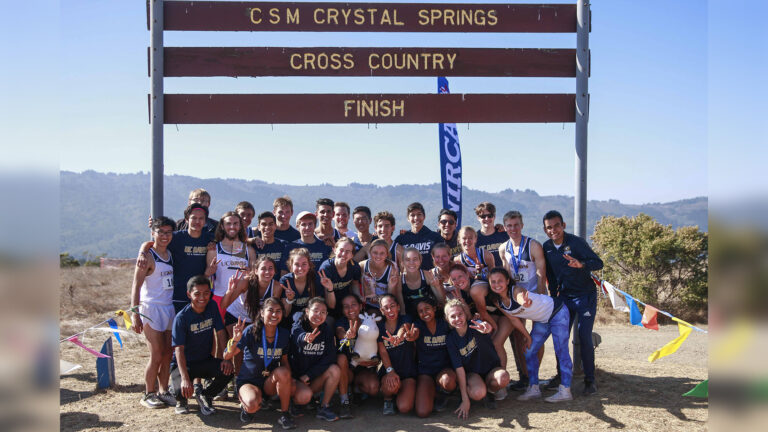
UC Davis Club XCTF continues to see growth, success

0

After placing 2nd in Regionals for Women and 3rd for Men, both teams prepare for 2019-2020 National Championships

Since its formation five years ago, the UC Davis Cross Country, Track and Field Club has given students of all backgrounds an outlet to run. The club is a student-run organization that aims to create a team and community of student-athletes, accessible to both undergraduate and graduate students, per its mission statement

The team covets being a part of students’ healthy, active lifestyle, and supporting all types of athletes. As far as the team’s competitive scene goes, it competes in the National Intercollegiate Running Club Association (NIRCA), which is essentially the club equivalent of the NCAA. The club follows the European club sport model, which is structured to include opportunities for all levels of athletes, including highly competitive squads that are training for serious events, up-and-coming athletes looking to enter the competitive stage and social fitness-lovers who simply would like friends to run with. 

Club members can put in anywhere from 10-80 hours per week, depending on dedication, personal goals or schedule. Although there are plenty of runners who are a part of the team solely for fun, there are a handful of athletes in the organization who are there to prove their worth as high-level competitors. 

One runner in particular, graduate student Clancy McConell — a geography Ph.D. candidate — has excelled on the national stage throughout his collegiate running career. In 2018, running behind a few other dominant teammates, McConell placed 20th in Individuals and contributed strong runs to help Davis capture 3rd place in the Team competition at Nationals in Richmond, Virginia. There was seldom reason for McConell to hang his head, as the top two spots in Individuals went to Davis runners competing in their final college races, teammates Jon Horvath and his close friend, Nathan Kwan. Kwan, the founder of the club in 2014, now coaches the team, yearning for the long-term success of the program. 

McConell himself has had a tumultuous journey over the course of his running career, which has undoubtedly made him a stronger athlete. When he arrived at UC Davis in 2012, the club still did not exist. 

“I jogged when I could, but I essentially took a two-and-a-half-year break in running between high school and college running,” McConell said. “It wasn’t until the fall of my junior year (2014) that I found out about the reorganized running club. I joined immediately and really enjoyed the competitive aspect.”

Since June of 2018, McConell has been combatting Achilles tendinitis in his left leg. It wasn’t until he started rehabilitation at the Student Health and Wellness Center that he saw substantial improvement in his Achilles. With the help of physical therapist Teri Lavallee and her staff, as well as sports medicine physician Dr. Amy Sekhon — who he says he greatly thanks and appreciates — McConnell was able to compete at the 2019 Nationals in November, in which he won the Individual competition outright. He recalled that cross country race as the “hardest race of [his] life, hands down.”

“The race was interesting,” McConell said. “I started out leading, then spent two-thirds of the race looking at the back of competitor Joe Clark. So, I thought I may have gone out too hard. Turns out, I just wore him down with the chase, and I overtook him with 1K to go. I finished about 50 yards ahead of him.”

McConnell won first place in the men’s individuals and pushed the men’s team to place sixth overall in the team competition.

As far as balancing the demands of the sport with academic duties, both McConell and Devan Becker, the current club president and fourth-year environmental science and management major, attribute their success in the classroom to being a part of the club. 

“Running helps me be better and more focused in life, and that includes my academic life,” McConell said. “It also relieves stress, which allows me to have better mental health throughout each quarter. Without a doubt [it helps me be a better student]. It’s the only thing keeping me going in grad school.”

Even though the idea of joining may seem daunting, both of these student-athletes are clear-cut examples of the benefits in joining. And McConell’s advice for prospective members? “Join now.”

“Almost every person on the club who didn’t join when they started college says they wish they’d joined or heard about us sooner. And anyone can join — we have a good mix of all levels and interests in running/field events: XC, track, field, marathon, trail, etc.”

Becker followed a similar sentiment.

“I plan to continue running competitively until I die or am physically unable to run,” Becker said. “It’s just too much fun. Running is for everyone.”

The XCTF Club is always looking to grow, welcoming all prospective members. The group meets Monday through Friday a little before 4:30 p.m. at the Woody Wilson Track.

Written by: AJ Seymour — sports@theaggie.org

Correction: This article has been updated to reflect minor statistical inaccuracies. The Aggie regrets the error.

Culture Corner with Mathilda Silverstein

The Arts Desks’ weekly picks for movies, books, music and television shows.

Movie: “Boy” dir. by Taika Waititi (2010)

With recent box office successes such as “Thor: Ragnarok” and “Jojo Rabbit,” Taika Waititi has become a household name. However, the Kiwi writer and director is not new to the scene. “Boy,” Waititi’s sophomore film, is a poignant coming-of-age dramedy about a young Maori boy (James Rolleston) who goes by the nickname “Boy.” Boy idolizes Michael Jackson and his absent father (Taika Waititi). He has a hard time making friends at school and struggles to navigate his complicated family life, so he uses his vivid imagination to create a more bearable reality for himself and his younger brother, Rocky. The film conjured tears of sorrow and laughter. The North Island coastal scenery is beautiful, the acting is imaginative and the story is both sweet and melancholic. 

Book: “Americanah” by Chimamanda Ngozi Adichie (2013) 

I read this book a few summers ago, but revisited it because of the announcement for the exciting upcoming film adaptation, produced by Lupita Nyong’o, who will also star in the film. “Americanah” tells the story of Ifemelu, a young Nigerian woman who moves to the U.S., gets an Ivy-League education, blogs and falls in and out of love over the course of the story. Adichie’s writing brings the reader in with a stream-of-consciousness style. The emotional imagery is so vivid and moving that in reading the novel, I became nostalgic for Lagos, a place I’ve never visited. It is an excellent story about immigration that shows hardships and romance in a personal and human way. 

Album: “Pang” by Caroline Polachek (2019)

Caroline Polachek’s breakout album “Pang” has a song for every mood. With its Celtic sound and low horn accompaniment, “Insomnia” can be played whether looking wistfully out a window at pastoral landscapes or at your spooky low-fi Halloween party. “So Hot You’re Hurting My Feelings” makes you want to text your ex in the best way possible. “Door” is on my most-listened-to playlist and drives my friends nuts with its melismatic repetition. It is excellent for jamming in the car or studying for midterms. 

Honorable mention: And the Anonymous Nobody… by De La Soul (2016)

“And the anonymous nobody…” is De La Soul’s comeback album from 2016 that I recently rediscovered. With skits that deconstruct popular music and iconic features such as David Byrne, 2Chainz and Little Dragon, it is well worth a conscious, sit-down listen.

Television: “Daria” (1997-2001)

Winter Quarter is widely acknowledged as the darkest, coldest and heaviest quarter to bare. Just as one eats comfort foods to get through the season, I watch “Daria” to brighten up the long nights. With its vibrant colors, dark feminist humor and quirky characters, this throwback cartoon soon became my go-to show for zoning out after a tiring day. The title character is a grungy highschooler who makes snarky, monotone commentary on the mundane nature of growing up in suburbia, often interacting with jocks, cheerleaders, overbearing teachers and her preppy sister. Her best friend, Jane, is similarly cynical and checks Daria on her existential monologues. Its five seasons are available to watch on Hulu.  

Written by: Mathilda Silverstein — arts@theaggie.org

Humor: Confirmed: Democratic Candidate X agreed with YOU on [salient issue] way back in 1996

This is FIRE

You know that thing you care a lot about? That thing you’re willing to start arguments and cancel people over? That thing you write social media posts about everyday? No, no, no — not that thing, the other one. Yes, that one.

Well, the verdict is in. It can now be said with absolute certainty that your opinion on that thing — that issue you care so much about — is the correct one. Yes, the correct opinion. You have it. It must be a relief to finally know that. I’m sure you’ve been pulling your hair out and wasting away for years, waiting to figure out whether your opinion on this issue was the right one. I’m just kidding, I’m sure you’ve never stopped to consider it. If I told you right now that many of your many opinions are the incorrect ones, I’d bet it wouldn’t even faze you.

Anyway, I’m bringing up this issue because we here at “The News” have just uncovered some old archival footage of Demoratic Candidate X. Believe it or not, it reveals that they agreed with YOU about that issue way back in 1996. I know you liked Democratic Candidate Y, but unfortunately, they didn’t agree with you until 2005. This means it is now confirmed that Democratic Candidate X is objectively better than Candidate Y. I’m sorry if you liked Candidate Y, but by now you really should understand that these primaries are about being right first. It’s a race to be right. Whoa, wait a sec, I meant a race to be left. To be left. Left is right and right is wrong. All they can do is make a left turn from the left lane and a wrong turn from the right lane. Yeah, that’s right. I mean left.

Ah yes, Candidate Y. Yes, they were on a good run for several important issues, but in 1996, Candidate X beat them to the left right at the moment they said, “This salient issue is really a major issue, and the American people aren’t going to take it anymore, which is why I support Candidate Z’s solution.” Oh s**t, where the hell did Candidate Z come from? We didn’t know that they believed that. Well this ruins everything now. We’re going to have to totally recalculate who is objectively the best and who you need to cancel. Let me just — wait — ah hell — we’re just getting word from a campaign event in Iowa that Candidate Q now agrees with you too. Normally this wouldn’t matter since Candidates X, Y and Z said it first. But Candidate Q just said it way more authentically than any of them did, so we’re having difficulty computing who’s more authentic as a function of who said it first and who said it in a more charismatic way. We’ll have some nice little think pieces and listicles out very shortly that will let you know who to support and who to cancel. In the meantime, perhaps we’ll just let you decide for yourself. But don’t get used to that.

Written by: Benjamin Porter— bbporter@ucdavis.edu 

(This article is humor and/or satire, and its content is purely fictional. The story and the names of “sources” are fictionalized.)

Nishi lawsuit appeal met with fierce backlash from City Council, ASUCD official

City council will again defend embattled Nishi Student Housing project in court after plaintiff’s appeal

The Davis City Council announced its intention to defend against a plaintiff’s appeal targeting Nishi Gateway — a long-contested student housing development project slated for South Davis — after a closed-door meeting on Jan. 14. News of the appeal drew condemnation from both council members and student representatives who support the project.  

The original lawsuit, first filed by the Davis Coalition for Sensible Planning in early 2018, alleged that the proposed project violated California Environmental Quality Act (CEQA) and the city’s own affordable housing ordinances. In 2019, Susan Rainer, one of the plaintiffs, told The California Aggie that she felt that “Davis leadership is incompetent.” 

“Those of us who oppose the Lincoln40 and Nishi projects are not opposed to more housing being built, especially student housing,” Rainier said. “We are opposed to the way it has been approved and, now, how it’s been done with the plan made by UCD and the city.”

At the time, Rainer cited concerns about potentially dangerous particulates from nearby transportation, as the planned site is located near both I-80 and the Davis Amtrak line.

A Yolo County Court judge, however, ruled in the city’s favor in October 2019, according to the City of Davis’ website. Judge Peter M. Williams ruled that the Nishi project was in compliance with both CEQA and the city’s affordable housing ordinances, and the plaintiffs failed to provide new evidence that the project would cause “an exacerbation of existing environmental hazards or concerns,” according to the city. 

In a different post, the city announced that the plaintiffs had filed an appeal in December 2019. After a closed-door session on Jan. 14, 2020, the council announced that it voted to continue fighting the Nishi lawsuit in court.  

Mayor Pro Tempore Gloria Partida argued that Nishi would provide “badly needed” student housing in Davis’ tight housing market and said that further delays in the project development went against the will of Davis voters. Once completed, development plans say that Nishi 2.0 will provide 700 units of student-oriented housing, adding 2,200 beds in total.

“We as a city make providing fair and affordable housing that meets CEQA requirements a top priority,” Partida said. “In addition, Measure R gives a voice to our voters in this process. We are defending this appeal because housing is badly needed and our citizens’ votes should be upheld.”

Council Member Dan Carson echoed this claim, citing 2018’s Measure J vote, when 60% of Davis voters approved the second iteration of Nishi plans — informally called Nishi 2.0.

 “The voters of Davis spoke clearly that they approved of this version of the Nishi project that will bring more quality housing to town,” Carson said. “I am concerned about the continued effort to overturn the will of more than 11,000 voters who approved of this greatly needed housing.”

  News of the appeal drew condemnation from Adam Hatefi, the ASUCD External Affairs vice president. In a public statement posted on Facebook and dated Jan. 14, Hatefi referred to plaintiffs Rainer and Colin Walsh as “feckless, student-hating, well-fed miscreants” and expressed dismay that the appeal would further delay the project completion. Hatefi said that the Nishi project, once completed, would provide Davis students relief from rising food insecurity, homelessness, debt and tuitions. 

“It is our hope that the battle will end soon, before the cost of these delays kills the project entirely,” Hatefi said. “Housing is needed now more than ever, and this brazen attempt to subvert the democratic will of Davis voters is repugnant and distasteful.”

Some disagreed with Hatefi’s characterization of the lawsuit. Rik Keller, a city planning consultant and blogger at The Davisite called the letter “ridiculous slander” in the comments of Hatefi’s post, also claiming that the “Yes on J” campaign in support of the Nishi project “spent a lot of money buying support from students.” A search for developers ‘Davis Gateway Student Housing LLC’ on the Davis Campaign Disclosure Portal shows that the company spent nearly $300,000 in campaign expenditures in 2018. It is unclear how much of that money was spent specifically targeting student voters.     

Written by: Tim Lalonde — city@theaggie.org

AFSCME and UC reach tentative contracts for service, patient care workers

Tentative agreements signify end of three years of over 25,000 union-represented employees working without a contract

The UC’s largest employee union reached a tentative four-year agreement on Jan. 22 that will serve approximately 10,000 UC service workers. Almost a week later, on Jan. 28, around 16,000 patient care workers represented by the American Federation of State, County and Municipal Employees (AFSCME) Local 3299 learned that the union made a separate, but also tentative, four-year agreement with UC. 

Service workers were expected to vote to ratify their contract by Jan. 30. Patient care workers will vote to ratify their contract on Feb. 4 and Feb. 6. 

In both cases, AFSCME Local 3299’s bargaining team recommends a “yes” vote, according to statements published by the union after the service and patient care workers reached their respective tentative contract agreements.

“We are pleased that after working with AFSCME leadership to address joint concerns and resolve our outstanding differences, we are able to meet the needs of our valued patient care and service workers as well as those of the University,” said Peter Chester, the UC’s director of labor relations, in a statement released Jan. 28. 

Since 2017, AFSCME Local 3299 patient care and service workers have been working without contracts. In their negotiations to update the contracts, AFSCME Local 3299, like other labor unions, tried to advocate for better working conditions, higher pay, health insurance and job security on behalf of over 25,000 workers. 

Under the new contracts, AFSCME Local 3299-represented patient care and service workers within the UC will have salary-based health insurance, annual 3% across-the-board wage increases and annual 2% experience-based wage increases, among other benefits.

“This has been a long and hard process that required both sides to seek common ground and work in good faith,” said AFSCME Local 3299 President Kathryn Lynbarger. 

Additionally, on Jan. 21, K7 Skilled Craftworkers at UC Santa Cruz, who are also represented by the union, also received a contract after two years of negotiating.

A statement from the union cites the new K7 contract as not including mandatory on-call shifts, offering the right to refuse unsafe work assignments, the same protections on healthcare and pension as service workers and job security.

“These agreements provide hardworking UC employees with the benefits and protections they deserve, and it moves [the] UC closer to being the kind of employer we need to be,” said UC Board of Regents Chair John A. Pérez.

AFSCME Local 3299 intern Isabelle Chavez, a third-year sociology major at UC Davis, has been part of the union’s campaign to renegotiate the contracts since she was a first-year.
According to Chavez, the union had a lot of provisions they wanted, and every time the UC and AFSCME Local 3299 leaders met, the UC would only accept one thing on the union’s list. 

“AFSCME had a strict vision of never settling for anything, which was good because they got everything they wanted,” Chavez said.

To advocate for their aims, AFSCME Local 3299 allies and workers focused on more than just strikes. Chavez said student interns for AFSCME Local 3299 have shown up at UC Regents’ houses and that she, along with other folks, often marched to Chancellor Gary May’s house to speak with him.

“We feel sometimes like no one’s listening, but you just have to step up [the pressure],” she said.

Despite the excitement of the past week, the AFSCME Local 3299 campaign was also emotionally trying. Chavez first got into labor organizing after hearing on-campus workers share their stories.

“I’ve heard many counts of harassment in the workplace — I couldn’t just stand around and watch these workers be mistreated,” she said. “Some folks I knew employed by the UC really hated whoever their boss was and how the system operated for them, so this has been a really painful fight.”

AFSCME Local 3299 employees and the union have both faced problems throughout the three-year negotiation period.

A 2018 Supreme Court decision in Janus vs. AFSCME took millions of dollars away from public employee unions, including AFSCME Local 3299, by declaring fair share fees, or dues paid by non-member workers, unconstitutional. The case, sponsored by anti-union organizations, aimed to prevent unions from obscuring details about when members could opt out of union membership. 

Another trying incident occurred on Oct. 25, 2018 when an alleged UC Davis managerial worker “aggressively attempted to drive his truck through the [AFSCME] picket line as he repeatedly honked to scare the picketers,” according to a letter that demanded action from UC Davis. The incident resulted in AFSCME Local 3299 employees filing an unfair labor practice charge with the Public Employment Relations Board in March 2019.

With the tentative contracts close to ratification, Lybarger said she believed AFSCME Local 3299’s work brought income inequality, the shrinking middle class and the power of large public institutions to light. 

“It is our hope that the history we’ve made today can begin a new era of constructive dialogue between the university and its dedicated career workforce,” Lybarger said.

Chavez said AFSCME Local 3299 is still negotiating a contract for workers at UC Hastings.

“Though they’re still waiting, three out of four UC groups represented by ASFCME 3299 got their contracts and made history in the process,” she said. “These workers have some of the best contracts in California and they did that through three years of strikes and direct action. It’s a big deal.”

Written by: Janelle Marie Salanga — campus@theaggie.org

New motto unveiled at UC Davis’ 2020 kickoff celebration: “Outgrow the Expected”

Construction plans for new Student-Athlete Performance Center revealed

The 2020 Kickoff Event held on Jan. 27 celebrated past and current UC Davis accomplishments in an offort to spark inspiration and excitement for future Aggie accomplishments in the new decade. Features included a variety of speakers, associations, live bands, poetry, Aggie-themed snacks and interactive booths. Although each speaker’s specific campus involvement varied, they unanimously exhibited the same theme: “Outgrow the Expected.” 

Banners displaying the “Outgrow the Expected” motto were draped throughout the ARC Pavilion, and each speaker connected their message to UC Davis’ worldwide impact and goal of breaking the status quo. The event began with a speech from Chancellor Gary May about UC Davis’ growing prestige and innovations.

“I think there’s one word that best describes UC Davis, and it is ‘growth,’” May said. “Our roots go back to 1908, when our campus was the university farm. We’ve always specialized in growing things.” 

May transitioned into an applause-inducing list of accomplishments achieved since then, stemming from a variety of fields and studies. May noted that, in the last decade, UC Davis “grew” from a ranking as the #11 public university in the nation to #5.

One literal interpretation of the “growth” theme included recurring praise for UC Davis’ recently earned ranking as the No. 1 “most sustainable” university in the U.S., as noted in speeches by May and Associate Vice Chancellor Bob Segar. 

“We love the UC Davis motto ‘Outgrow the Expected’ because we’re all about growing,” said Carmia Feldman, the assistant director for the UC Davis Arboretum and Public Garden. “We’re part of a movement on campus to get ready for climate change to create a resilient campus landscape for the climate of the future.” 

Gearing UC Davis for the future and increasing the university’s worldly impact were other prevalent themes. May praised UC Davis’s sustainable achievements, specifically detailing efforts by students and researchers in Lake Tahoe and Bodega Bay. May noted the impact UC Davis has on the community, on California and on the planet.

  The 2020 Kickoff Celebration Event also celebrated UC Davis’ efforts in diversity, varied academics, workplace satisfaction and athletics. 

Jim Les, the head coach of the men’s basketball team, described recruitment efforts and efforts to make the campus athletically attractive in the future. Construction plans for the new Student-Athlete Performance Center were revealed. Jennifer Gross, the head coach of the women’s basketball team and UC Davis alumna, emphasized the growth in UC Davis’ prestige both on and off the playing field. Gross recalled her own UC Davis recruitment process and appealed to future Aggie athletic recruits. 

Re-invigorating UC Davis’ athletics program prompted interest for audience members like Eric Pfeiffer, an education and case specialist with the Harrassment and Discrimination Assistance and Prevention Program. 

“I was excited about the speeches regarding athletics, and the growth occurring there,” Pfeiffer said. 

Another goal outlined for this decade is expanding diversity and inclusion on campus, as noted by Jim Hewlett, a KDVS talk show host and supply chain management department member. 

“Everybody who was speaking really had this diversity and real excited empowered speech,” Hewlett said. 

Hewlett said the event prompted him to ponder his own department at UC Davis and how his efforts today will impact future generations of students. 

Provost Ralph J. Hexter highlighted past, current and future efforts to increase campus facilities serving students from every socioeconomic background, reminding those present that “we make it possible for students of all backgrounds to get a UC Davis education.”

Ultimately, all speakers and guests emphasized May’s theme of “growth” in the new decade. May ended his speech by outlining UC Davis’ 10-year plan, stressing the goal to “enhance our visibility” to the world.

“Our days [of] being the best kept secret in higher education are done,” May said. “We’re not going to be shy about success anymore. The sleeping giant is waking up! We’ve risen from humble roots to a powerhouse in higher education. We’ve grown beyond all expectations, and we’re ready to let the world know. As we head into the bold new decade, our mantra is this: ‘Outgrow the Expected.’ Thank you, and Go Ags!”

Written by: Hannah Blome — campus@theaggie.org

UCPath resolution passes at Jan. 23 ASUCD Senate meeting

Senators debate “joke” candidates running in Winter Elections at meeting

The Jan. 23 ASUCD Senate meeting was called to order at 7:02 p.m. by Vice President Shreya Deshpande. Senators Lyla Schmedel and Sahiba Kaur were absent, as was Business and Finance Commission Chair Filip Stamenkovic. Senators Juan Velasco and Samantha Boudaie were late. 

Gender and Sexuality Commission (GASC) Chair Francesca de Nacochea said resolutions regarding gender-inclusive bathrooms on campus were being finalized and would likely come to a vote soon. Each individual then gave an update about their week, with topics including raising awareness about the Basic Needs Referendum and addressing the proposed tuition hike.

Deshpande then introduced SB #24, a piece of legislation clarifying the role of unit directors within the ASUCD Bylaws, which subsequently passed.

Senators then spent a sizable portion of the meeting debating the merits of Senate Bill #26, designed to regulate the ASUCD slate system and to prevent “joke” candidates from being featured on the ASUCD website. 

As concerns have been expressed about ASUCD’s poor reputation — and particularly with the Basic Needs Referendum approaching during a time of extreme voter apathy — there is a concerted effort to clean up the website and present a more professional image of the student government. Thus, SB #26 stipulates that candidates running under a fake name will not be featured on the website. As Deshpande noted, SB #26 would also prevent these candidates from attaching themselves to slates before being vetted by slate leaders. 

The majority of senators agreed that joke candidates need to be removed from the website. For example, there was recently a candidate who ran as “baby Yoda,” and another who ran under the name “F. U. C. K.” Others, however, expressed concern that the bill created too much red tape and overstepped the Bylaws, especially given the current lack of an election commission chair. Some felt that the problem was already solved by the fact that unserious candidates likely won’t be able to gather enough signatures to officially run anyways.

During the public discussion period, former ASUCD President Michael Gofman referred to the bill as both “redundant and counter-productive” and said that no one from the slates had been contacted about it before the meeting took place. Senator J.B. Martinez expressed his wish that the bill be enforced by an elections committee, and former External Vice President Edgar Masias-Malagon said the bill looked like corruption, “optics-wise,” since none of the slate members were contacted about it before the meeting that evening. 

While Senator Mahan Carduny agreed on the suggested removal of fake candidates from the website, he also said proposing more regulations for slates wouldn’t address the “core issue of professionalism” within the organization. Senator Andre Spignolio expressed similar doubts.

Deshpande, as well as Senators Camille Randolph and Shondreya Landrum, expressed their support for the bill. Landrum said minority voters and voters of color are less likely to vote if the website continues to display “joke” candidates.

“Why would I vote for someone who doesn’t represent me and doesn’t take this seriously?” Landrum asked. 

Carduny echoed this sentiment. 

Ultimately, due to a lack of consensus about its stipulations, Deshpande tabled the bill. The conversation then moved on to Senate Resolution #8, which addresses the ongoing problems created by UCPath, the new UC-wide payroll system that was implemented at UC Davis during Fall Quarter 2019. Randolph discussed last quarter’s CoHo walkout in protest of UCPath, saying she wasn’t paid until this quarter, and praised the clauses at the end of the resolution. 

Deshpande said the UCPath debacle was a result of “negligence” and “greed,” adding that they hadn’t been paid their stipend for Senate since Fall Quarter. 

“This was something they knew was going to happen,” Deshpande said. “There was a directive not to prioritize student workers both on the UC Davis and administrative [University of California Office of the President] level. To me, it felt like they shrugged it off and said ASUCD was the only department that faced that much collateral damage.”

  Deshpande also recalled university officials implying that, due to its current budget problems, ASUCD should not have financial autonomy. Deshpande called this suggestion “ridiculous,” as ASUCD workers were either paid on-time or received emergency checks in the event of a glitch before the implementation of UCPath.

“Student workers are the most vulnerable — they chose us for a reason, because they didn’t expect a class-action lawsuit,” DeNocochea said. 

DeNocochea also said she was unable to make credit card payments due to UCPath issues. Carduny talked about a friend who quit their job on campus and went to work at Philz Coffee because they weren’t being paid. 

“People higher up are still getting paid, but people who are paying tuition, who are paying what [they] receive on a daily basis, are not getting paid,” Landrum said. 

Senator Anna Estrada also said she received an insufficient check for her position at the ARC, noting that the check was missing between $90 and $100, even after she verified that she was counting her work hours correctly. 

“For students to be going and babysitting every single paycheck is unnecessary,” she said. “It’s important to address everything that students are being paid in the resolution.” 

The resolution passed to the sound of resounding snaps.

SB #29, which makes the Office of the Controller semi-autonomous in the Office of the ASUCD President, was passed. 

Senators then further discussed the current optics of the Basic Needs Referendum. 

Written by: Rebecca Bihn-Wallace — campus@theaggie.org 

Correction: A previous version of this article used an incorrect name and position for former External Vice President Edgar Masias-Malagon. The article has been corrected to reflect his correct name and position.

Written by: Rebecca Bihn-Wallace — campus@theaggie.org 

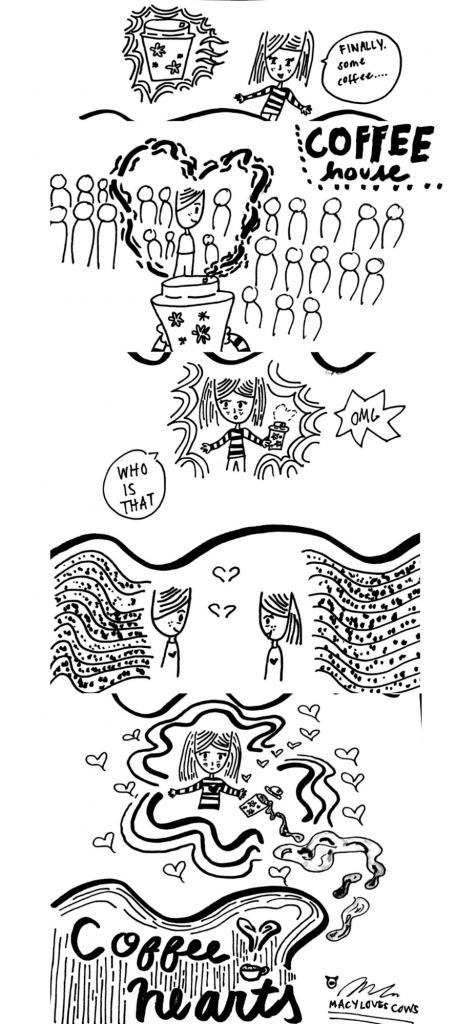
Cartoon: Coffee Hearts

MARGARET LEE / AGGIE

Written by: MARGARET LEE — mcslee@ucdavis.edu 

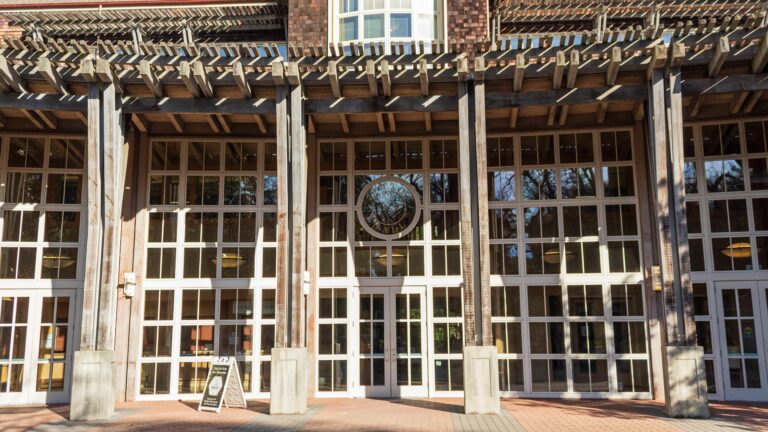
Goodbye, Lower Freeborn

Aggie editors share what the basement means to them

Kaelyn Tuermer Lee, Editor-in-Chief

Dear Lower Freeborn,

Although you’re seismically unsound, have a bagel sitting up by the ceiling that’s been there for who knows how long and have a 99% chance of containing asbestos, I’m thankful to have been a part of The California Aggie’s 105-year history (and counting). After working down in 25 Lower Freeborn for all four years of my college career, I wouldn’t trade it for the world. Thank you for all the memories I’ve made behind your brick walls, and for the friendships that will leave with me. I’m grateful for the late nights in the office putting together layout, the hours of endorsement interviews and the proud feeling of distributing our latest issue (at 6 a.m., I might add). Most of all, thank you for being my second home — your walls might be torn down, but your impact is everlasting.

With much love, Kaelyn

Hannah Holzer, Managing Editor

I was a very indecisive senior in high school and I couldn’t choose a college, so a friend of mine, a first-year at UC Davis, agreed to show me around campus. She knew I was interested in journalism, so the two of us timidly ventured into the depths of Freeborn Hall. What greeted us in The California Aggie’s office was a gaggle of friends who looked like they were having the best time ever. We hesitantly asked for a tour of the office, and the ever-charming Bryan Sykes — who would, two years later, become one of my dearest friends and most relied upon mentors — volunteered. That first impression has always stuck with me, because that’s our office: the best people, trying their absolute best to put out good, quality journalism and having the best time doing it. 25 Lower Freeborn, I’ll miss you dearly.

Kenton Goldsby, Campus News Editor

I knew we’d have to move out of our beloved Lower Freeborn Hall eventually — the university said we must. But now that the day has come and the boxes must be packed, dread has finally set in. It’s the same feeling I felt as a child every time my parents told me that we had to move. The feeling of saying “Goodbye,” with no “I’ll see you later;” especially now, since my home is going to be unceremoniously torn down. Gone forever. On some far-flung, future Picnic Day, I’ll show my kids where you once stood and tell them how you, that windowless room in the basement of a seismically-unfit building, were where I met my best friends, learned more than I ever could have learned in a class and made more memories than I could ever write down. I’ll miss you, 25 Lower Freeborn Hall. 

Stella Tran, City News Editor

A Parody of William Shakepeare’s Sonnet 130

Our Lower Freeborn Hall is nothing like the tall skyscraper of The New York Times. 

The Memorial Union has far better Wi-Fi, than Lower Freeborn has Wi-Fi. 

If Davis is safe, why then is Lower Freeborn susceptible to 5 a.m. alarm crimes. 

If rooms need windows, not a single window is found in Lower Freeborn’s supply.

And yet, I think I’ll miss this place more than ever. 

Nostalgic, Lower Freeborn will have a place in our hearts as we head on our next endeavor.

Hanadi Jordan, Opinion Editor

When I first joined The California Aggie my second year at UC Davis, I didn’t expect to fall in love with Lower Freeborn as much as I would the work I did as a columnist. But almost two years later, and now the place where I find myself almost every day of the week, it’s difficult to say goodbye to this building. It’s not just the memories I’ve made, but the memories and spirit of the work of past editors, writers, copy chiefs, photographers and so many others that fill this room that makes this goodbye so hard. I’ll forever be grateful to my fellow editors for the support and friendship formed in this room the past few quarters, my former editors — Taryn and Nick — who helped me grow within these walls as a writer and to Freeborn itself for providing me all these wonderful opportunities, the memories of which will outlast the place in which they were made.

Claire Dodd, Features Editor

Although the Wi-Fi can never be relied on when you need it most, and the alarm system has attempted to sabotage the staff time and time again and “lower” is really just a nice way to say basement, Lower Freeborn is a comforting place and there is a particular sadness in the air as its tenants begin to vacate. 25 Lower Freeborn is the heart and soul of The Aggie, a place that intrigued and intimidated me when I first interviewed. Since that fateful day in October of 2018, I have grown so much as a writer, student and person, and will always be grateful for my experiences in these seismically unsafe halls. 

Liz Jacobson, Arts & Culture Editor

I remember the first time I walked into 25 Lower Freeborn. I spent over an hour picking out the perfect interview outfit — not too dressed up, but not too casual. I’m happy to say that that interview went well, and 25 Lower Freeborn has become my second home over the past four years. It’s where I have taken many naps on couches that have never been cleaned, squeezed in 10-piece bands, made life-long friends and watched writers and editors grow as both journalists and people. But most importantly, it is where I’ve gotten to be truly the best version of myself, no matter what I was wearing. Thank you and I miss you already, 25 Lower Freeborn. 

Dominic Faria, Sports Editor

It’s not a hall, it’s a home. It’s where history literally lives out loud and in full color upon its cluttered walls; Where I could escape the bustle of UC Davis’ crowded campus without actually leaving campus; Where I ignited my passion for UC Davis sports and deepened by Aggie pride; Where I spent hours describing and reveling some of the most exciting athletic events in this school’s history; Where I learned to love not seeing the sun for hours on end; And where I discovered that CoHo bagels don’t really decompose. Cheers to you, Freeborn, thanks for being weird.

Cecilia Morales, Science Editor

25 Lower Freeborn will always hold a special place in my heart. This office has seen various iterations of me as I grew with The Aggie for four years and throughout my college life in general, always serving as a home on campus for me to stop by. Looking around at all the various jokes, memorabilia, photos, etcetera makes you feel comforted by students that have been here before and excited about how you might leave a mark on our beloved college newspaper. Despite us needing outside validation, the reactions visitors have to our office say it all: This office is worth remembering.

Written by: The Editorial Board

El Toro Bravo shuts its doors

Popular Davis Mexican restaurant closes indefinitely due to increasing minimum wage laws

Downtown Davis restaurant El Toro Bravo closed indefinitely on Feb. 1. El Toro Bravo was a casual Mexican restaurant located on D Street that had been in operation since 2012.

Derar Zawaydeh, the part-owner of El Toro Bravo, Crepeville and Burgers and Brew in Davis, commented on the reasons for the recent closure.

“The location was too small and, as time went on, the expenses got way too high,” Zawaydeh said. “Food costs and the cost of employment, with minimum wage increase and such things. When they raise $1 of [the] minimum wage, for a business, it’s a lot more than that. Total increase in employment really starts affecting everything around it. ”

Zawaydeh explained that he will retain ownership of the location, and said it will not stay empty for long.

“We’ll think of something that would do better,” Zawaydeh said. “We will definitely do something there that will enhance the area we’re in.”

Both Crepeville and Burgers and Brews will remain open for the foreseeable future. Zawaydeh emphatically denied the possibility of an upcoming closure for either of the two restaurants.

“No, no, no, those places are staples,” Zawaydeh said. “Crepeville and Burgers are going to stay there forever.”

Despite the closure, the small-business owner is grateful for the community support throughout the years.

“I just want to thank everybody that frequented the place and for all the great support throughout the years,” Zawaydeh said. “I’m sure we’ll continue to see them at both Burgers and Brew and Crepeville.”

Written by: Eden Winniford –– city@theaggie.org