56.1 F
Davis

Davis, California

Thursday, December 25, 2025
Home Blog Page 370

4th District Board of Supervisors candidates hold community forum

0

Incumbent Jim Provenza, challengers Linda Deos and David Abramson, share policy views on issues from community

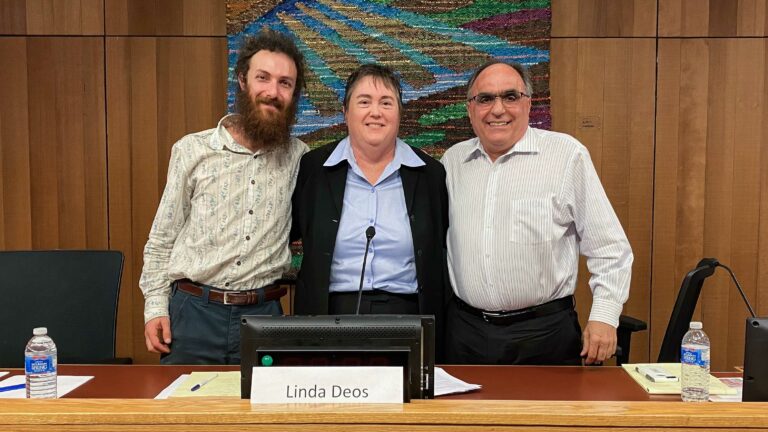
On Jan. 26, three candidates for the 4th District of the Yolo County Board of Supervisors,  Linda Deos, David Abramson and incumbent Jim Provenza, shared their stances on a number of issues. 

The Yolo County Board of Supervisors consists of five non-partisan members and is responsible for establishing county programs and setting annual budgets for departments. 

Each supervisor is in office for four years. 

Provenza is a lawyer and has served on the Board of Supervisors for three terms, since 2009. Deos also works in law and is a consumer protection attorney. Abramson is a climate researcher, small business owner and music teacher in the Davis community. 

The main issues discussed included climate change, seniors, criminal justice reform, finance, land use and housing, interjurisdictional collaboration and water. These topics were chosen by the frequency in which they arose in the questions submitted by community members.

Questions regarding climate change were submitted the most, and all candidates support transitioning the county to clean energy within the next decade. Abramson, who is running on a plan to establish a local Green New Deal, spoke about his goals for Yolo County.

“The biggest problem we face is our economic system, which is fundamentally built on extraction and inequality,” Abramson said. “We need to rethink our economic system to become more localized and in-line with our planetary values.”

Deos, meanwhile, focused on the issue of climate change on a larger scale, sharing her hopes of Yolo County standing at the forefront of climate action. 

“What Yolo County does is fabulous, and we can be a leader,” Deos said. “We can partner with [UC Davis] because they have the research ability to make this happen not just in Yolo County but worldwide. We can be the teachers for everybody.”

Affordable housing was another important topic. Provenza explained how the county can impact housing standards in Davis. 

“Much of [the land around the city] is county land, and we are working in partnership with the city of Davis when they have a project to make sure county standards are met,” Provenza said. “One of those standards is protection of agricultural land. Another is that there is low-income housing.”

Abramson, who is a renter himself, brought up the problem of high rent costs in Davis, especially for students.

“People who are renters and students are doubly vulnerable because they don’t have the time to work enough to pay for an $1,800 apartment,” Abramson said. “It’s such a huge problem, and I don’t think we’ve had renter representation to the extent that we need.”

Provenza described how inter-jurisdictional collaboration between Davis, Yolo County and UC Davis has helped the affordability of the Davis housing market.

“We now have an enforceable agreement that the university will house 100% of its increased enrollment,” Provenza said. “That will do a tremendous amount to take the pressure off the Davis housing market so that when we build houses in Davis, we can build for everybody else, as well as for the students.”

Water conservation was emphasized as well. Provenza, who has worked on water policy during his entire time on the board, explained that groundwater levels are being conserved. 

“Our Yolo conservancy has taken steps to limit the amounts of certain crops that are not conducive to protecting groundwater, such as vineyards and orchards, on a voluntary basis,” Provenza said.

Deos, however, believes groundwater conservation should be more strongly enforced at the county level.

“An issue we have is that it’s voluntary — as far our farmers taking groundwater out for their crops — versus Central Valley areas that are under stringent requirements to only take out so much,” Deos said.

Despite some disagreements, the candidates concurred often and shared similar views on the need to combat climate change and the lack of affordable housing in Davis. The election will be held on Mar. 3, 2020. 

Written by: Eden Winniford –– city@theaggie.org

UC Davis works with conservation groups work to conduct mountain gorilla population survey

Survey shows increase in mountain gorilla population

The mountain gorillas — Bikingi, Bweza, Habinyanja, Kahungye and Rushegura — living in protected areas in central and eastern Africa were all accounted for in the most recent population survey completed by conservation groups and UC Davis. Major conservation efforts for mountain gorillas, an endangered subspecies of eastern gorillas, have been successful as their population numbers rise.

The 2018 Bwindi-Sarambwe mountain gorilla survey shows that mountain gorilla population numbers have increased in Sarambwe Reserve, the Democratic Republic of the Congo and Bwindi Impenetrable National Park, Uganda, according to the Uganda Wildlife Authority. The minimum count of 459 mountain gorillas in these regions will increase after UC Davis finishes their genetic analysis and finalizes their count. The previous count in 2011 found 400 gorillas. 

The total world population of the endangered mountain gorillas now stands at 1,063. The entire population encapsulates gorillas from the whole range, including the 459 gorillas found in the recent survey combined with the 604 gorillas from a 2015-2016 survey from the Virunga Massif (mountains) bordering the Democratic Republic of the Congo, Rwanda and Uganda.

The International Union for Conservation of Nature (IUCN) changed mountain gorilla status from critically endangered to endangered in 2018. But their populations still remain quite small, said Gladys Kalema-Zikusoka, the founder and chief executive officer of Conservation Through Public Health (CTPH) and one of the collaborators on the study, via email.

“Their numbers have been increasing since about the mid to late 80s when they hit their all-time low, that we were actually legitimately concerned they were going to go extinct,” said Jena Hickey, a gorilla ecologist at UC Davis. “They were at the brink, and they are coming back and that’s why the surveys are so important.”

Calculating population levels is a difficult and long process, Hickey said. Starting in March of 2018, researchers collected fecal samples from mountain gorilla habitats in Sarambwe Reserve and Bwindi Impenetrable National Park. The collection team of about 40 people conducted two 10-week sweeps through the terrain, each four months apart, to ensure they got all the samples. 

“We’re going through dense forests, deep and steep terrain,” Hickey said. “They really are in the mountains.” 

Almost 2,000 fecal samples were taken to the Mammalian Ecology and Conservation Unit of the UC Davis Veterinary Genetics Laboratory, said Ben Sacks, an adjunct professor in the veterinary genetics laboratory. Over the span of three months, Liz Kierepka, a postdoc in the veterinary genetics lab, isolated and genotyped the DNA. Like a fingerprint, each sample could be traced to individual mountain gorillas, resulting in the ability to count the population.

“We are trying to figure out which individuals were at each site, and ultimately we can use all that data to determine how many gorillas are out there, because you know they just don’t line up to be counted,” Hickey said. 

It took just under two years to reach the minimum population count, which was concluded in early December 2019. The team has not finished their genetic analysis to reach a final count, which will be higher than the minimum value, but Sacks said they hope to have the number in the next few months.

These surveys are important for conservationists to know the effectiveness of their conservation plans, Hickey said. Researchers use surveys to evaluate population trends and get estimates of whether the populations are stable, declining or increasing.

“We’re basically trying to take roll and see who’s still there, and who had offspring this year,” Hickey said. “If you have immigrants from another population, you can track that and see how that relates to reproductive success.”

The census was beneficial not only for calculating the population numbers of mountain gorillas. It also provided an opportunity to detect and reduce human-related threats to the animals such as disease, snaring and illegal harvesting, Kalema-Zikusoka said. 

Since 1986, when mountain gorilla population numbers reached a low of 250, Gorilla Doctors has worked to provide veterinary care to wild gorillas. In this survey, they also helped collect samples, said Kirsten Gilardi, the executive director of Gorilla Doctors. 

“We’re going into the forest to check on the health status of individuals if we receive reports that an individual gorilla has been injured or is showing signs of illness,” Gilardi said.

Many mountain gorillas have become habituated, or accustomed, to the presence of people due to tourism and the veterinary care they receive, Gilardi said. The census was important because it accounted for both habituated gorillas, the ones that have been given names like Katwe and Mubare, but also the lesser known gorillas in the population.  

Since gorillas share 98.4% of their genetic material with humans, they can catch human diseases and infections. Even though habituation provides protection and economic benefits for gorillas, it is important to minimize disease risks when they come into contact with humans, Kalema-Zikusoka said.

Tourism is important for gorilla conservation because it educates and involves people from all over the world. This revenue helps African governments fund the parks, Gilardi said. 

“The world gets to come and see these animals and it makes them appreciate and value the gorillas, but it also generates revenue for the governments and they use that revenue to manage and protect the parks,” Gilardi said. 

Veterinary care, protection in national parks and revenue from tourism all contribute to the rise in mountain gorilla population numbers, Gilardi said. 

“They’re magnificent animals,” Gilardi said. “Their health is threatened by the fact that they come into contact with people every day. [It] is what saved the species from extinction, but it also means that we have an obligation to take care of them.”

For Kalema-Zikusoka and Gilardi, protecting mountain gorillas is important because they are so similar to humans. 

“One of the things [that has] always struck me when I see them is how like humans they are in terms of the level of affection they have for each other and the way that they interact,” Gilardi said. “It is very heartwarming and very life-affirming to see a wild animal like a gorilla.”

Gilardi’s personal ethics also lead her to want to protect wildlife impacted by humans.

“I think all wildlife have inherent intrinsic value,” Gilardi said. “It’s just really important for everyone, not just veterinarians of course, but biologists, conservationists, ecologists and everyone to be doing what we can to strike that balance between what a growing human population needs but also knowing that wildlife populations often share that ecosystem with us.”

In future surveys, Kalema-Zikusoka expects to continue to see an increase in the mountain gorilla population numbers as long as law enforcement, wildlife monitoring, veterinary care and community engagement efforts continue to improve. 

Many other organizations in addition to UC Davis contributed to the survey. The census was also supported by the Rwanda Development Board, International Gorilla Conservation Programme, Max Planck Institute for Evolutionary Anthropology, The Dian Fossey Gorilla Fund, Institute of Tropical Forest Conservation, Gorilla Doctors, Conservation Through Public Health, Wildlife Conservation Society Uganda Country Office, WWF Uganda Country Office and Bwindi Mgahinga Conservation Trust.

“We’re a big collaboration and there’s a lot of partners to make it happen,” Hickey said. 

The collaborative team is proud of the success of their efforts with mountain gorillas, since there are few positive conservation stories, Gilardi said.

“The numbers of all great apes in the wild are going down,” Gilardi said. “But with mountain gorillas, the census results are showing that they just keep increasing.” 

Written by: Margo Rosenbaum — science@theaggie.org 

What in the world is Champagnegate?

Absurd moments in Season 24 of “The Bachelor” thus far

Pilot Peter Weber is front and center in this season of “The Bachelor.” Every year, the reality television show is notorious for its dramatic content, and this year seems to be the cherry on top of the show’s legacy of drama. Mark your calendars Bachelor Nation, because after the premiere, which aired on Jan. 6, every Monday from 8-10 p.m. is dedicated to Season 24 of “The Bachelor.”

Every social media platform is emanating “Bachelor” memes left and right — there is no end to the onslaught. Absurd highlights thus far in the season, such as “Champagnegate” and Hannah Brown’s reappearance, have gained immense publicity in current popular culture. 

During episode one, when the women met Peter for their first time, ridiculous moments began to take shape at the Bachelor Mansion, and some UC Davis students gave their insight into the drama in the season thus far. 

“The moment in question is really absurd because this Vietnamese woman [Jasmine], starts off by speaking incoherent Vietnamese,” said Kevin Dinh, a UC Davis alumni. “It’s unintelligible for people who actually speak the language, and clearly this white man literally can’t tell what language she’s speaking anyways.” 

Vietnamese people retweeted the moment on Twitter — one user said, “Tell me why I don’t know anything she’s saying except that she just called herself a child.”

According to Dihn, who is fluent in Vietnamese, honorifics are the way in which you refer yourself to someone depending on your relationship with them.

“It seems like she found the words to say on Google Translate and then memorized it,” Dinh said. Apparently, the Asian demographic’s response to this moment is a “mixed bag.” Some are reacting positively because “the fact that a Vietnamese woman appeared on the Bachelor is kind of a win” in contrast to the stereotypical white women who “appeals to a very certain look,” Dinh continued. 

“When ‘Crazy Rich Asians’ came out, it was our ‘Black Panther.’ It was a movie featuring an all Asian cast, so they could see themselves as represented,” Dihn said. “Some people say it kind of runs along those same lines.” 

Some people, however, simply find it “insulting” and a “wrong representation that [Vietnamese people] want in popular media,” according to Dinh.

Although this absurd moment is not as well known, it is in fact, ridiculous. There are myriad absurd moments thus far in the season, and many more to come. As Chris Harrison said in the first episode, “We are in for a truly wild journey.” And he did not disappoint. 

“They always edit it to be dramatic even if it’s not,” said Bella Turek, a second-year global disease biology major. “I mean, they dedicated a whole episode to Champagnegate.”

In case you missed episode two, in summary: Two women fight over a bottle of champagne. During one of the cocktail parties, Kelsey prepared a romantic set-up near the fireplace with a bottle of Dom Pérignon (a bottle that she has been saving for years for a very special occasion, apparently). 

In the distance, she hears a cork pop, and then things go all “Lord of the Flies” at the Bachelor Mansion. Hannah Ann and Peter opened the sacred bottle, with Kelsey looking on in horror. Kelsey then attacked Hannah Ann with accusations that she opened her champagne on purpose and thus, Champagnegate was born. 

“[Kelsey] wildly overreacted to Hannah Ann and used some poor choice words,” said Sarah Machle, a second-year communications major. “She claimed that that was not bullying, but by definition, I mean, it was ugly, to say the least.” 

The “Champagnegate” title was coined as a parody of the 1972 Richard Nixon Watergate scandal. Champagnegate may have also been orchestrated by those in positions of power — there’s speculation that the producers had a hand in framing another champagne bottle at the same time Kesley set hers up to stir up the cocktail party. 

“The producers plant things,” Machle said. “This season, the producers have really been scheming more than usual. They are having a lot of influence on these little scandals for sure.”

Machle is not the only one who feels that the producers have an ill-intentioned, ominous power over the show. 

“I feel like when you watch ‘The Bachelor,’ you really know who stays on because the producers want them to stay on,” Turek said. “But I’m fine with that because I’m a sucker for good/bad TV.” 

In addition to the producers meticulously plotting the chaos of Champagnegate, rumors reveal that Hannah Brown’s return lies in the producer’s hands as well. 

Machle is convinced that it was in Hannah Brown’s contract that she had to come back to “stir things up,” according to a podcast hosted by a previous bachelor from the television show. 

“When Hannah Brown came back for a hot second, she was just there for drama purposes and then she left,” said Yukio Partida, a second-year neurobiology, physiology and behavior major. 

Whether it’s in her contract or not, Bachelor Nation is divided for or against Hannah Brown’s return. Will Peter end up with Hannah, or will he have his chance at love with one of the women on the show? 

Speaking of coming back on the show — Alayah returned, and she returned with a rose. After multiple accusations over Alayah’s supposed on-camera vs. off-camera facade, Peter sent her home at the rose ceremony at the end of episode three. But that’s not the last time the audience will see her. 

Alayah comes back during episode four with questionable intent, and the women on the show are not having it. 

“I like how this season, the girls are calling Peter on his sh-t,” Machle said. “It’s about time.”

“Stand firm on your decisions, man! You have like 25 other women, do you really think that one is that important?” Machle asked in reference to Alayah’s return. This season, it’s apparent that Peter has been “messing up a little bit” and “handling things in a bad way,” she added.

For instance, let’s talk about how Peter handled Victoria F. and Chase Rice’s past romance. There’s talk that the producers set something up once again and had country star Chase Rice perform for Peter and Victoria F. on their one-on-one date, well aware that Rice and Victoria F. had a romantic history. 

“The whole Victoria dated Chase Rice a coincidence? I think absolutely not!” Machle said. 

Victoria F. was not the only one who was surprised. When she finally told Peter about her and Rice’s history, he was speechless. Victoria F. — who ran away crying while Peter sat in shock at the dinner table — had her date ruined due to what again appeared to be meddling by the producers. 

Peter fans are none too pleased with the fabricated drama and the toll it’s taking on Peter’s love life.

 “We protect Peter; I would marry him in a second,” Turek said. 

The season has just begun, but it’s chock full of absurd moments. Tune in on Monday nights to see how Peter handles upcoming scandals. 

“I’m still being drawn in for the drama factor, and there’s a lot of that,” Partida said.

Written by: Sierra Jimenez — arts@theaggie.org

Police Logs

0

January 25

“Female was dropped off last evening in the lobby, female advised she resides in the LA area and has no means to get back home.”

“Vehicle hit with eggs, continuous problem and appears several vehicles were hit in neighborhood.”

“Buttons being pressed then disconnect.”

“Black mini cooper speeding and cutting vehicles off.”

January 26

“College-aged kids drinking/swearing/screaming/playing on zip track.”

“Lost a pair of blue skull candy wireless headphones while riding bike near this area.”

January 27

“Female whispering advised she didn’t want to wake her roommate up — accidentally called.”

January 28

“Reporting party was doing landscaping at this address and witnessed a male trying to steal leaf blower from yard.”

“Complaint of playing keyboard/drums.”

January 29

“Upstairs neighbors walking loudly.”

January 30

“Two males in hockey mask and beanies on bikes.”

“The Biggest Loser” didn’t work then and it won’t work now

True weight loss for obese individuals is not flashy, glamorous or fit for reality television

“The Biggest Loser” is a weight-loss competition that originally aired on NBC in 2004. The series followed overweight to obese individuals as they competed to lose the highest amount of body weight relative to their initial size. 

Although the series ran for 17 seasons, it was highly criticized for the way trainers treated the contestants and for the unrealistic weight loss methods it promoted. Contestants would exercise for numerous hours each day and would eat meticulously planned meals that were not always sufficient to restore their energy balances. 

A longitudinal study in an obesity research journal followed 14 former contestants over six years. It showed that the contestants significantly damaged their metabolism after losing weight so rapidly, and they had all regained the weight.  

Since the series ended in 2016, there have been radical shifts in the way society views body image and weight loss. From the rise of the Health at Every Size movement to a more general acceptance of different body types in the media, it would seem that a show like “The Biggest Loser” would never be popular in today’s political and social climate. 

The USA Network, however, decided to reboot the series, and the first episode aired on Jan. 28. The series made an effort to combat criticisms of the original, such as re-casting hosts and offering an extensive “aftercare package” to contestants who were eliminated, including a gym membership, a nutritionist and guidance towards a support group.

The goal of the series was rebranded as “competing not only to lose weight, but [to] also improve their overall well-being,” according to the USA Network. 

Many, however, are not satisfied with this new take. The  series has been criticized by Dr. Sandra Aamodt, neuroscientist and author of “Why Diets Make Us Fat.” 

“‘The Biggest Loser’ basically glamorizes dieting, which I consider to be quite dangerous,” Aamodt said. “And rebranding weight loss as wellness is a big trend.”

Dr. Jennifer Kern was a contestant in the third season of the original series. She then returned to work as a medical consultant for the following two seasons. 

“I think it at least showed other people who are struggling with obesity that all is not lost, that they can successfully lose weight even if they have 150 pounds to lose,” Kern told Insider

She believes, however, that the format of the series as a whole is problematic. She openly criticizes fallacies the show perpetuates about massive weight-loss. In fact, she co-wrote the longitudinal study showing that re-gaining the weight for former contestants was almost inevitable. 

“To make a good TV show, they’re going to want to show rapid change,” Kern said.

And there lies the fundamental issue with the series: True weight loss for obese and morbidly obese individuals is not flashy, glamorous or fit for reality television. While showing intense workouts and fitness challenges may make for good entertainment, it is, at best, inefficient and, at worst, dangerous for contestants trying to make better lives for themselves. 

Sustained weight loss, especially for obese individuals, should include a strong focus on nutrition and include low impact excercises like walking or swimming. Yet “The Biggest Loser” forces contestants to perform box jumps and run miles in the first few weeks of the competition. 

Based on the lack of significant changes this reboot made, it is hard to believe the series will regain the popularity it had in the early 2000s. Even worse, the contestants will probably suffer the fate of regaining the weight they lost during the competition. While the effort of rebranding the series could have been worthwhile, the execution will probably do more damage than good to those it is setting out to help. 

Written by: Alyssa Ilsley — arts@theaggie.org

Aggie Profile: Dr. Robert Flannery, UC Davis alumnus and Ph.D. of Pot

CEO of Dr. Robb Farms discusses cutting-edge cannabis research, starting his own farm, destigmatization

Dr. Robert Flannery, The First Ph.D. Of Pot™ — a title he has personally trademarked — is both the CEO of Dr. Robb Farms and a UC Davis alumnus. He’s always had somewhat of a connection to plant sciences, however, this didn’t truly manifest until college. Flannery recalled growing up in Southern California where his maternal grandfather grew a large amount of fruits and vegetables on an “itty bitty piece of property.” Flannery’s grandfather was born and raised in Malta, a small cluster of islands in the Mediterranean, where there was not much arable land so families grew their own food.

It was after taking BIS 1C with the late professor of plant biology, Robert Thornton, that Flannery decided to major in plant biology.

“I was growing out a beard, I was wearing my Birkenstocks and socks and things like that — your typical Davis things — and lo and behold, Dr. Thornton and his TA at the time, we [all] looked like we could have been family members,” Flannery said. “We all just had the same look going on.”

As a student athlete, having to submit to urine tests every other week to ensure his eligibility for football meant that he never consumed cannabis in any form — however, this wouldn’t be an accurate indication of how his career would later develop. Flannery is now spearheading cannabis cultivation research and finds his passion in educating the public about the different benefits of the plant and drug. 

Recruited to Dr. Heiner Lieth’s lab after finishing his undergraduate degree, Flannery continued his education at UC Davis as a Ph.D. student. He had been a strong student in his math classes and worked on mathematical modeling related to hydroponics and greenhouse production. Flannery still talks to Lieth often and jokes that the real reason he was accepted to the lab was to carry all the heavy equipment.

Later in his career, as production director at SPARC, “a long-trusted source for the highest quality cannabis,” according to its website, Flannery oversaw all aspects of cultivation and production for the company. As he got more involved in the industry, he talked to many growers in California and other states.

“I really quickly realized that cannabis cultivation at that time was pretty much a Wild West since it’d been illegal [recreationally],” Flannery said. “These growers didn’t have access to quality research or coming to UC Davis or Cal Poly and saying, ‘Hey, I need help with this.’ A lot of them had to figure it out themselves, which is rather impressive.” 

A notable problem, though, was that pesticides and compounds that growers were using for plant growth regulation should not have been used. Myclobutanil, which is used as a fungicide, released hydrogen cyanide when heated — the compound that was used in Nazi concentration camps for mass killings, Flannery explained. 

When he told growers that myclobutanil should not be used on cannabis, many of them would respond with some version of “I don’t care,” which blew his mind. Since the legalization of recreational marijuana, however, the California Department of Pesticide Regulation has myclobutanil listed as a pesticide that cannot be used in cannabis cultivation. Flannery said consumers should feel safe purchasing from a licensed dispensary given the fact that cannabis cultivation is regulated. 

One day when he was at work at SPARC, Flannery received a call from his mother informing him that she had been diagnosed with triple negative breast cancer. Surrounded by cannabis at work, he told her that he could get her access to cannabis if she wanted. 

“My mom went to college in the ‘60s and she was invited to a pot party — she literally thought she was going to a Tupperware showing party,” Flannery said. “She is really naive when it comes to cannabis.”

She said yes, but said she would only take edibles and wouldn’t smoke. Everything that Flannery had grown and knew was clean was to be smoked, and he had the highest of standards when it came to his mom. Eventually he found Kiva, and his mom says that the edibles “really saved her life” when it came to chemotherapy.

Flannery realized that there was a demand for clean cannabis, but a majority of patients didn’t realize what they were getting and didn’t know if it was clean or not. With his Ph.D. from UC Davis and experience in the cannabis industry, Flannery had the idea for Dr. Robb Farms.

  “Ultimately, [recreational legalization] opened up the marketplace,” Flannery said. “California is the largest market for cannabis.”

He recalled a discussion with a colleague about one of the larger Canadian cannabis companies, mentioning that there were 30,000 registered cannabis patients in Canada. In California at that time, there were 1.6 million. 

When recreational use was legalized, not only did the size of the marketplace increase as people moved away from the illicit market, but it also broadened the field in research. 

“Legalization spurred many cannabis producers to seek scientific guidance from UC

Davis, particularly in agriculture and medicine,” Dan Flynn, the Dean’s representative on Strategic Initiatives for the College of Agricultural and Environmental Sciences, said via email.

Flannery agreed with this and mentioned notable findings that contradict common misperceptions about cannabis. 

“‘There’s also a lot of science and [increased] knowledge around cannabis,” Flannery said. “We’ve been fed a lot of propaganda the past 80 years and beyond that cannabis is this terrible, terrible crop. We don’t see an increased incidence of COPD, we don’t see a decrease in lung capacity for people who smoke cannabis every day. This is a fairly benign plant.”

The LD50, or median lethal dose, is the amount of a substance that is lethal for half a population, is unknown for cannabis, but it is estimated to be well over 300 pounds, according to Flannery.

“Ultimately, when it comes down to it, cannabis is less acutely toxic than many other substances,” he said.

Flannery is on the board of advisors for the Cannabis and Hemp Research Institute, which was established to provide leadership in different types of cannabis research. 

“Legalization also prompted the great need for research on the economic, legal,

health and environmental impacts of legalization,” said Cindy Kiel, the executive associate vice chancellor from the office of research, via email. “Unfortunately, legalization in California has not affected federal requirements related to cannabis remaining listed as a Schedule 1 drug. We

must conduct research with cannabis the same way we historically have always had to — with a

Drug Enforcement Administration (DEA) license and using only with the single DEA-approved

source at the University of Mississippi.”

Products offered by Dr. Robb Farms include Mom’s Formula, a daily tablet with CBD and THC, and Eagle, which is Flannery’s ode to his grandfather. Flannery’s grandfather was a paratrooper who landed 20 miles away from the front lines during D-day. In fighting his way up, a grenade exploded by him and his arm was severed below his elbow. After pretending to be dead as Nazis took his belongings, American soldiers helped him bandage his arm and he fought his way back to the frontlines. He was sent back to the U.S., where he earned three Purple Hearts and American citizenship. He subsequently got a large American eagle tattooed across his chest. Flannery’s grandfather died from brain cancer in 2001 and never had cannabis to help him through it. 

A customer who survived the Oct. 2017 Las Vegas shooting had intense anxiety and couldn’t sleep; she got Mom’s Formula and told Flannery that she didn’t realize it was working until she ran out of them because she didn’t feel high. Mom’s Formula is not designed to produce the euphoric feelings associated with a high, and instead it is intended to alleviate anxiety.

When Flannery was initially in the process of deciding where to build a “playground,” he looked all over California —Sacramento, Oakland, Los Angeles, Long Beach, San Diego and the Emerald triangle. Business partners suggested looking at Coachillin Canna-Business Park in Desert Hot Springs.

“Cannabis can be a very energy intensive product,” Flannery said. “That is not lost on me, that’s not lost on people at Coachillin.”

The more Flannery and his business partners ran the numbers, the more they saw that Coachillin was a no-brainer. Not only does the complex aim to be sustainable, the costs were significantly cheaper and they would be able to easily expand.

“More so than anything else, I’m a scientist,” Flannery said. “I like to research, I like to play with the new toys that are coming out. And the best way to do science and research is to eliminate variables, [which] is much easier to do in a controlled environment.”

Flannery remains quite involved on the UC Davis campus, giving an annual lecture on cannabis cultivation in the spring. Last year, he was a guest speaker for a graduate level course, something which he has been asked to do again this year. 

This past fall, Flannery was inducted into the UC Davis Athletic Hall of Fame, which he was “exceedingly honored” to have happen. He is also currently a finalist for the board of directors of the Cal Aggie Alumni Association. He says that he and his wife are indoctrinating their children to be Aggies, and their son’s middle name is Davis, after UC Davis. 

Flannery also mentioned that meeting his wife was the biggest highlight of his time at UC Davis — he was the captain of the football team and she was the captain of the dance team, making them “one of those couples everyone hates.” Meeting the type of people “that you meet at a place like Davis” and playing football were also extremely influential, and his fondest memories of his time in college are with people that he still talks to today.

“UC Davis is something that’s very near and dear to my heart,” Flannery said. “I definitely foresee significant involvement with the campus and university moving forward with cannabis.” 

Written by: Anjini Venugopalfeatures@theaggie.org


College parties: do we actually like them?

0

Our college experiences are dictated by superficial values

When I entered college, I was riding on the coattails of my high school experience in marching band, spring musicals and orchestra tours to define my social standing. To some extent, I stayed within this niche, as my friends are all former high school band kids and we all share similar interests.

As first years, we are offered the opportunity to explore many different groups which we were originally barred from in high school (think “Stick to the Status Quo” from “High School Musical”). It was refreshing to be able to vacillate between different social circles and learn about everyone — from former homecoming queens to class presidents.

I’d also heard plenty of stories about the college party life. I’m sure we all did. It wasn’t UC Davis specific, but college students and alumni often felt it necessary to brief me on the joys and pitfalls of these mystical gatherings.  

So I decided that I would try out these parties — and try I did. 

At my first party, I was grabbed at the waist by a boy I’d met less than a minute before. At my second party, I danced with my friends until we became uncomfortable with the provocative stares of strangers. At my third party, my fingers turned blue while waiting outside in the cold and, upon entering the party, they felt like fire.

These experiences, albeit disturbing, were not necessarily uncharacteristic of typical American university parties. There is a distinctly sexist idea that dominates party culture in college: the importance of your physical appearance. 

The way you look is undoubtedly placed above your whole person. Droves of people scantily clad in summer-y tank tops and shorts lined the sidewalks of frat row. This is the unspoken rule of college parties: More often than not, you have to look a certain way to get in. 

 Many, including myself, are generally fine with putting on a little extra (or in this case, less) to go out. Dressing up and feeling sexy is liberating. When have we ever had the chance to truly do that before? It’s not like we’re going home to our parents after our late nights. 

What is unacceptable is the way that this translates to women becoming ornaments for the party’s attractiveness and popularity. 

Whenever I go out to college parties, I feel like I’m presenting a shell of myself. I dance and I laugh, I’ll chat idly with whoever comes my way, but I never feel truly seen. I just feel like another girl. 

I’ve learned that this isn’t merely a decision to dress up, but a ticket inside. As my friends and I shivered down the street, acquaintances remarked that they were “shocked” that we didn’t get in. If we didn’t get in, there was no way they could’ve. It was a stark reminder that our bodies were first priority, our tickets to a “successful” Friday night. 

If I want to dress up and dance with my friends at a party, I should be free to do so without fear that someone will take it as anything more than that. I’m tired of feeling like eye candy.

Some may argue that when we dress “provocatively” at parties, we are doing so by our own volition; no one is forcing anyone to dress a certain way. This is absolutely true, but personally, I’ve found that it’s largely a matter of feeling included — a feeling desired by everyone.

And it feels like a rite of passage for first years to torture themselves at these parties in this way.

If these parties are so crucial to a college experience, why are they so miserable? Maybe it’s because, despite all the excitement around getting ready and taking pictures, we are only doing what we think we’re supposed to be doing.

In a new environment, with 35,000 people in one space, the world is ruled by your first impression — which, in this case, is your appearance. It’s an unfair, superficial world and we’re all just swimming in it.

Our lives shouldn’t be dictated by movie tropes like “Project X.” A well-lived college life isn’t one where you go out every Friday night, though it can be. The most satisfying life is one where you do what makes you happy, with the people who make you happy, and all of this should be determined by you. 

Written by: Isabella Chuecos — ifchuecos@ucdavis.edu 

Skip the car, take the train

Kids love traveling on trains just as much as they love seeing them

In 2005, when I was five years old, my family moved into a townhouse next to the train tracks. My younger brother would run up to the end of the sidewalk and start shouting, “Train! Train!” while clapping his hands in pure glee. 

My family, like many American families, traveled around in a car without giving much thought to public transportation. My first train ride wasn’t even in the U.S. — it was when I was seven during a family trip to Punjab, India. We landed at the airport in New Delhi where my grandpa came to get us, and we all took the train back to my grandparents’ home. My mom still remembers the complete shock and bewilderment on my face when I saw how congested the station was, even in the late hours of the night. At the time, I loved being able to experience a new mode of travel, but in retrospect, I mostly appreciated traveling in a way that is integral to daily life in another country.

I use Amtrak on a routine basis now — I take the train to go home about every other weekend — yet I only took Amtrak for the first time in fourth-grade on a field trip to Old Sacramento. It was a new experience and felt like an adventure in itself. On the train ride to Sacramento, my friends and I played Go-fish, took silly pictures, hoarded candy from the cafe car and saw California in a whole new way.

Now, I love seeing that same excitement in kids when they see a train. It reminds me of that unique, pure happiness that my brother and I shared in the townhouse so many years ago. Two weekends ago, while waiting to get on the Amtrak back to Davis, I saw a young boy waiting at the station with his parents. When the train finally came, he jumped up in excitement — the way my brother did as a kid. I saw him again in the cafe car, this time with his grandmother. He was prancing around and excitedly looking at the views of Oakland out the window. 

The charm of Amtrak still hasn’t worn off for me, and I try to limit my car usage by taking the train more. In 2019, New York Times columnist Kara Swisher published an article explaining why she permanently gave up her car. This past December, Swisher was a guest on the War on Cars podcast. During the episode, which focused on writer Sarah Goodyear and Swisher’s various views on transportation, Goodyear brought up an interesting point about raising her children and the use of transportation that I hadn’t considered before. 

 “A lot of the time you’re just actually just sitting next to them and you’re looking at the same thing,” Goodyear said.  “You’re engaged with the kid in a different way.”

Traveling with your children on public transportation can provide a very different dynamic from the one in a car. One of the most common arguments I’ve heard from happy car-owners is the sense of intimacy and privacy that it brings. Although this can be true, traveling in a car can feel mundane and, ironically, impersonal. There isn’t enough room to interact with one another when everyone seems to be trying to kill time on their own. 

Of course, everyone has their own prerogative on how to raise children and move around from place to place. Raising a family with an eight-seater van might seem natural, but it doesn’t have to be that way. Trains and other modes of public transportation aren’t just exciting for little kids — they can also be a formative experience. 

Growing up with a car made me passive about how I went from one place to another. I was too accustomed to a particular mode of travel. But as I got older and had to be more responsible for things like getting myself to a friend’s house or school, I took a more active role in how I traveled. Using public transportation as an alternative in daily family travels can be a fun way to better engage with not just your physical setting but with one another as well. 

Written by: Simran Kalkat — skkalkat@ucdavis.edu

Aggie Square to house new Alice Waters Institute for Edible Education

Institute to take inspiration from Water’s Berkeley-based Edible Schoolyard Project

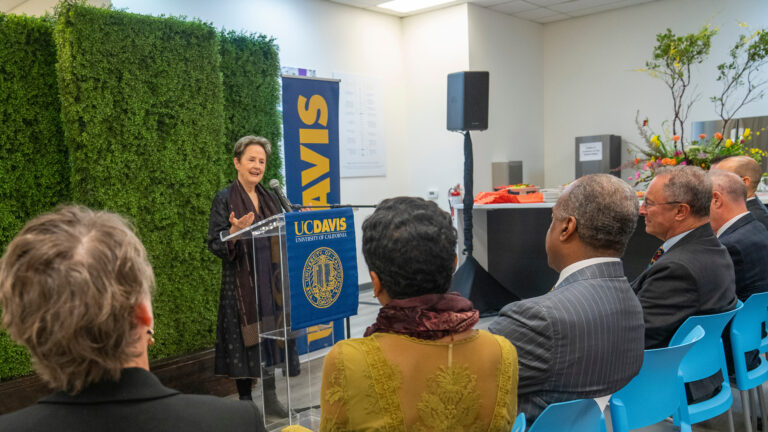
UC Davis Chancellor Gary May, Sacramento Mayor Darrell Steinberg and renowned chef, author and food activist Alice Waters announced the Alice Waters Institute for Edible Education during a press conference in Sacramento on Jan. 16. The institute will be a part of Aggie Square — an “innovation center” and partnership between UC Davis and the City of Sacramento that recently began construction.

In order to increase access to healthy, sustainable and equitable food systems in Sacramento and beyond, the institute will conduct research, hold trainings and connect experts from across a variety of disciplines. 

At the press conference, May said the Institute is an extension of UC Davis’ commitment to the issue of sustainable agricultural practices and food insecurity.  

“We advance research, policy and best practices for agriculture that is healthy, sustainable and accessible to our communities,” May said. “Now we’re taking another great step in our evolution.”

This collaboration follows Waters’ widespread success in her Berkeley-based Edible Schoolyard Project which engages students through hands-on experiences in the garden, kitchen and cafeteria, while also providing free and sustainable school lunches for every student.

The project also empowers other educators to create similar programs in other parts of the country. As the program approaches its 25th anniversary, there are now nearly 6,000 member programs in the network. 

“One of [the project’s] key goals is to provide free, sustainable lunch to all K-12 students in California,” May said. “UC Davis will help advance this mission and do even more. Together we can transform the wellbeing of our communities, our food systems and our planet.”

At the press conference, Waters highlighted the widespread effect that this project will have on the community.

“All the vegetables that are grown regeneratively and organically — I can’t believe that they have the possibility of repairing our broken immune systems,” Waters said. “And, at the same time, they’re addressing climate change. I’ve never really thought about this in any political way because I always thought that we could win people over with taste.”

In addition to the social, environmental and health benefits seen in The Edible Schoolyard Project, Waters also said cooking food from different cultures can connect students to the world history and current events being taught in the classroom.

“That’s what we hope to do at the institute: to have a space that is so engaging, so beautiful — irresistible, I dare say — that you all of a sudden absorb the values of stewardship, nourishment and community,” Waters said. “That is really what we’ve lost and can so easily find again.”

Waters concluded with an aspirational statement of what this institute can accomplish: “I just know that this relationship with the University of California is going to lift these values to the moon [and] give them the kind of credibility that only a great university can do,” she said.

Steinberg referenced the history of the project, saying that an institute of this kind was merely a dream as of recent. 

Steinberg also looked toward the future, saying the beauty of this institute — and of building a modern food economy — lies in “actually beginning to build those career pathways for young people who are the next Alice Waters, the next entrepreneurs or the next leaders in agriculture.”

“To connect this project to the neighborhoods south and north of here where our kids hunger not just for good nutrition, but hunger for every opportunity to live the dreams they deserve to live as well — this is an incredible moment for my city, for our city,” Steinberg said.

UC Davis Provost Ralph Hexter also spoke at the event, praising the collaboration between UC Davis and Waters. 

“Alice and UC Davis have been Northern California neighbors pursuing complementary programs with respect to food for some time,” Hexter said. “I regard The Alice Waters Initiative for Edible Education as a rare and extraordinarily promising opportunity for Alice and for UC Davis to pool our strengths for the benefits of the people in our entire planet.”

Written by: Jessica Baggott — campus@theaggie.org

ASUCD Winter Elections will see new position: student advocate

Students to define what it means to act as students’ voice

 In the upcoming ASUCD Winter Elections, students have the chance to vote for a student advocate — a new position on campus. The student advocate has the potential to serve as an unprecedented guide for the student body, serving as a liaison between students and campus leadership, focusing on student rights, campus rules and other areas impacting students. 

The position was officially introduced to the ASUCD Bylaws last Winter Quarter. Novejot Bal was appointed last quarter and currently serves as the student advocate. This upcoming election will be the first opportunity for students to vote to officially elect a student to the position.

As this new position is still being developed, students also have the unique opportunity to define the roles of the student advocate and decide how this role could best serve the campus.

Modeled after the position at both UC Berkeley and San Diego, the student advocate will assist students “charged with University or campus violations, experiencing financial aid difficulties, disputing grades, and/or filing grievances against members of the campus community,” according to the ASUCD Bylaws.

Beyond that, the current position description does not specify how the student advocate will function in regards to the number of students on the advocate’s staff or the organization of the Student Advocacy Office. 

Jacob Ganz, a UC Davis alumni and former chair of the Internal Affairs Commission (IAC), authored the bill that introduced the position last winter.

“When writing this bill, we kept it very vague,” Ganz said. “I really wanted to give the first person free reign to create this position for themself. I know that’s a little risky and it could backfire, but if they are good, they’ll get to create this position without restraints.”

The student advocate is also designed to be a nonpartisan point of contact within the association.

Ashley Lo, a second-year economics and political science double major, is running unopposed for the position in the Winter Elections.

Lo, a former member of the IAC, helped Ganz create the student advocate position last year. Lo is the current chair of the IAC.

“I would like to follow UC Berkeley’s model of assembling a team of caseworkers who are knowledgeable in each division’s specialty,” Lo said. “My intention is to collaborate with resources on campus, such as the Office of Student Services and Judicial Affairs, UC Davis Financial Aid Office, Academic Senate, Aggie Compass Basic Needs Center, ASUCD Pantry and more to fill the roles and responsibilities not already offered to students on campus.”

Lo is also interested in improving and expanding existing services for students’ access to basic needs. 

“I would like to offer programs such as Emergency Rental Assistance — a resource available at UC Berkeley — that aims to stabilize housing for students in emergency housing situations by providing them with a month’s rent,” Lo said.

Ganz encouraged all students to vote in the upcoming elections, taking place from Feb. 18–21.

“Go vote, your vote is helping elect the position that’s going to make your voices heard,” Ganz said.

Written by: Ally Russell — campus@theaggie.org

Gang task force organized by Woodland Police Department in response to recent surge in violence

0

Reward fund, gang task force, increased patrols implemented after three unsolved deadly homicides in recent months

The Woodland Police Department announced the formation of the Gang Task Force to combat a spike in gang-related violence in recent months. The announcement came after three unsolved homicides occurred in Woodland, including the death of 16-year-old Alvaro Gamera in October. 

In a video posted to the Woodland Police Department’s Facebook page, Sergeant Francisco DeLeon outlines the formation of the Gang Task Force and how it will be supported through other agencies.

“This is a newly formed task force created to investigate and combat gang crime in the City of Woodland,” DeLeon said. “The Woodland Police Department has invited state and local agencies to partner with us, and more information will be shared as it is finalized.”

Anthony Cucchi, the Deputy Chief of the Woodland Police Department, explained how the task force will grow in the coming weeks. 

“Right now we just have two detectives and a sergeant from the Woodland Police Department assigned to the team,” Cucchi said. “We’re expecting that the Yolo County Sheriff’s Office is going to send a detective and Information is going to send a probation officer to be part of it.”

Up until two years ago, the Woodland Police Department had a gang task force similar to the one they are creating now. This task force changed its title to “Special Response Team” and has a more localized approach, according to Cucchi. Now, the Woodland Police Department is reaching back out to Yolo County for more resources in light of recent crimes.

The three fatal shootings remain unsolved, but police suspect that the motives are connected to gang violence. Besides the arrest of one man who was later released, no other suspects have been detained from the shootings, which occurred on Oct. 16, Nov. 17 and Jan. 9. Yet the impact on the community has been lasting. Three people — Alvaro Gamera, age 16, Raymond Ortiz, age 44 and Isaaco Carlos Morales, age 20 — were killed and several others were injured. 

Cucchi said utilizing countywide resources will improve the likelihood that these crimes are solved in a timely manner.

  “These crimes don’t just happen in one jurisdiction,” Cucchi said. “They’re here, in West Sacramento and in Davis. We find that we can’t solve these crimes alone — we need to work together.”

Though gang-related shootings happen throughout Yolo County, they are not often isolated incidences, Cucchi said. 

“When we get to the bottom of it, it will be one incident that will fracture into four or five other incidents with retaliation,” Cucchi said. “Usually, you can narrow it back to a source over time when the investigation is all set and done.”

In an effort to get more information about the homicides, the Woodland Police Department has offered a reward of up to $100,000 for anyone who can provide details that lead to the arrest of suspects involved in the shootings. Cucchi explained that the incentive can encourage those who are scared of giving information to come forward. 

“In these gang-type crimes, we know that a lot of people don’t talk,” Cucci said. “They’re afraid of what might happen, so this is how we try to let people know that they can tell us something if they have a tip, and it can be anonymous.”

The Woodland Police Department is also working on improving communication between the community and its officers. The department has been using its Facebook page as a platform to get crucial information out to the community, and it asks that community members report suspicious activity in their area.

Cucchi said this collaboration, along with increased police patrols paid through extra overtime funds, has led to a recent arrest. Officers found a stolen firearm and cocaine in a vehicle after a neighbor called in to report the car, according to a Woodland Police Facebook post on Jan. 20, 2020.

“This is a perfect example of how together, as a team, we can make this community safer,” the post stated. “Thanks to an alert neighbor, this call led to getting another gun off the street.”

Written by: Madeleine Payne — city@theaggie.org 

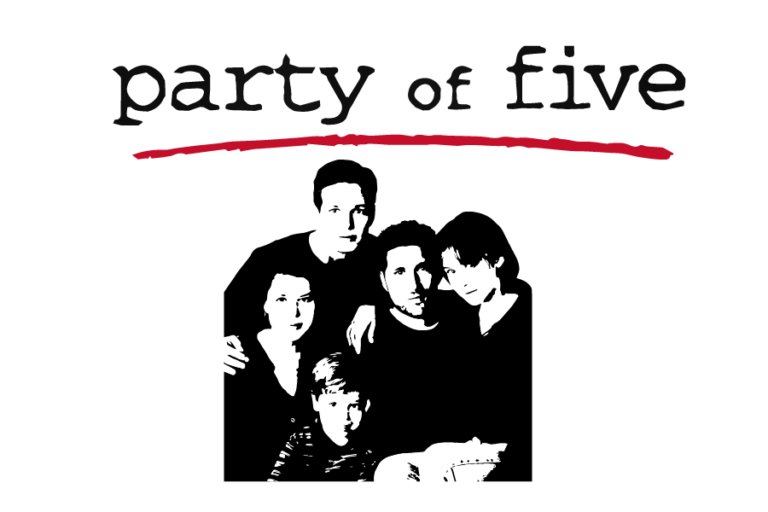
“Party of Five” provides an approachable view into immigration issues

Emotionally hard to watch but necessary 

When I worked in a majority Spanish-speaking classroom, I witnessed two students share a tearful embrace. It was the day before the presidential election, and when I asked the two girls if everything was okay, one of the girls explained she was afraid that she wouldn’t ever get to see her friend again. She was fearful that if Trump were to win, her friend would be sent back to Mexico. These young girls understood the impact of the election, asan unjust fear of being separated had been placed above their heads and it was heartbreaking to see. 

The issue of immigration has become a recurring topic of conversation, especially within the political sphere over the past four years. Yet, public perception of the issues faced by immigrants are largely generalized and there still isn’t enough nuanced exposure of their day-to-day realities. The show “Party of Five,” which airs on Freeform, shines a necessary light on the numerous and varied aspects of deportation and the effect it has on families. It’s hard to grow up without parents, but to have them taken away by Immigration and Customs Enforcement officers is a whole other experience. 

The current show is a reboot of the 1994 to 2000 “Party of Five” that followed a family of five siblings whose parents died. While the earlier version of the show focused on how the siblings would take care of each other following the loss of their parents, this new take relays a different and more complicated sense of parental loss. The Acosta family still have their parents, but they are faced with immense limitations, which keep them from being together. 

This show appeals to those who have immigrant parents, including myself, and to those who have the fears and burdens that exist knowing a loved one is in constant danger of being taken away. 

The youngest daughter, Valentina, is the only sibling to witness her parents being taken away from her family. It’s heart-wrenching to watch anyone be separated from their parents — it’s especially hard in this context because Valentina is the youngest and the most dependent upon her parents — and it’s even more painful because we know her parents won’t be able to come back. All the siblings are left to fight against a faulty system that is set against immigrants and their families. 

Each sibling’s values shift after their parents’ deportation. Emilio puts aside his dreams of pursuing a music career to take care of his family and their restaurant. For Beto, he must deal with the additional pressure of keeping up his grades, as academic failure is a reason for the system to place him and his siblings in foster care. Lucia, who used to be a straight- A student, loses her belief in the systems that failed her and her family and becomes defiant and filled with anger toward the world around her. On top of it all, the siblings must also care for their infant brother.

There’s a harsh reality that comes with life as an immigrant and “Party of Five” gives an in-depth view of this lived experience. Being an immigrant means living with constant paranoia and always being cautious about mentioning one’s status for fear of being taken back. Even though some might want to make the decision to gain citizenship, there are too many hurdles in place that prohibit hopefuls from securing papers. These restrictions force immigrants to choose between mediocre options just to get by and make a decent living.

This limited insight is merely a glimpse into the numerous ways the system is stacked against immigrant families.

The show delves into storylines that genuinely convey authentic experiences (caution: spoilers ahead). The father of the Acosta family tries to make his restaurant successful with a liquor license, but must ask a family friend to put his name on the license for him, due to his own citizenship status. It may seem as if the friend is performing a selfless favor, but he takes advantage of the Acosta family by getting 30% of the bar sales for perpetuity. This sacrifice seems fair in the father’s eyes, but Emilio thinks differently. 

There is another scene where Lucia tries to help a friend renew his DACA status in order to get a job. When they get there, they meet a woman so desperate for money that she offers to sell her baby’s social security number to him — a horrifying example of two disenfranchised individuals willing to do anything to survive. While facing an uncertain future — unsure whether or not his status will be renewed — he believes the woman’s proposition is the best offer.

“Party of Five” is an intimate portrayal of the all-too-common occurrence in which immigrants are forced to drop their standards and make decisions that aren’t always the best, but are necessary. The show gives viewers a clear picture of the limitations placed on the Acosta family members through detailed depictions of racism, discrimination and gender norms the family faces  the effects of separation.

Written by: Gabriela Hernandez — arts@theaggie.org

Black musical excellence in 2019

Highlights of notable Black musical achievement last year


Feb. 1 marks the beginning of Black History Month, and in 2019, there were several noteworthy moments of Black musical excellence that made history. This past year saw strides in Black musical achievement across the charts. Here are just a few: 

Lizzo

Winner of three Grammy Awards including Pop Solo Performance, Urban Contemporary Album and Traditional R&B Performance, Lizzo captivated people with her first major-label album comprised of undeniable authenticity and empowerment. The album “Cuz I Love You” explores the dialogue of the triumphs and tribulations of loving others and ourselves. Every time the first line of the title song projects from Lizzo, you hear the near-cries of the frustration she harbors toward her partner.   

FKA Twigs

Another advocate of self love is FKA Twigs, who released Mary Magdalene. It’s a highly-exploratory album that takes a few listens to appreciate, but it’s undeniably plunging into deep-synth waters. FKA Twigs takes her listeners through the pain of not knowing what to do in the face of a failing relationship in “Cellophane.” She actively pleads with her partner to find out why she isn’t what they need. 

Beyoncé

Beyoncé had an amazing 2019 — winning a Grammy for Best Music Film for “Homecoming” after writing, directing and executive producing the film. Images from the awe-inspiring performance in the Coachella Valley in 2018 are arguably going to remain an iconic encapsulation of Beyonce’s career for years to come. Homecoming is still streaming on Netflix if you haven’t had a chance to catch this must-see. 

Tyler, The Creator

Tyler, The Creator won Best Rap Album this year for his project, “IGOR.” On the trend of heartbreak, “IGOR” explains in the album’s lead single “EARFQUAKE” that his world rotates on whatever axis his partner is on and that it may as well be the end of the world if his partner leaves. The vulnerability of that thought seems almost contradictory to the upbeat production. In contrast, the self-anthem “I THINK” is largely upbeat and experimental in its production, going from synth to instrumental and every combination in between. 

Alicia Keys 

Alicia Keys returned in 2019 with the single “Raise a Man,” a powerful stripped-down ballad about Keys being in the presence of someone who treats her right and helps her raise someone who’s just as caring and thoughtful. It’s a beautiful ode to the power of leading by example. Keys has released a few singles throughout 2019, but no album…yet. Her most recent single, “Underdog” is a corner-to-corner smile of a song that reminds us to look out for the fighters. She recently paid tribute to Kobe Bryant at the 2020 Grammy’s awards this year while hosting. 

Solange

Solange released her fourth album, “When I Get Home,” about her hometown of Houston. This album delights in ethereal, repetitive vocals that pair with soft instrumentals. Solange takes her time with each song, with no obvious build-up or descent. It’s a far cry away from the style of her sister, but she commands a genre and aesthetic all her own.  

Brittany Howard

Listed as one of Pitchfork’s top albums of 2019, this gem of an album “Jaime” remained largely under the radar this year. This refreshing revival of traditional soul takes the listener down instrumental and vocal tangents that blur the world beyond their headphones. It’s nice to listen to something that has as few layers as possible, letting the vocals take center stage.

Written by: Josh Madrid — arts@theaggie.org

Aggie Profile: Treehouse Vintage founder Kenny Gagni

Gagni talks shopping vintage, owning his own shop, shifts in modern fashion

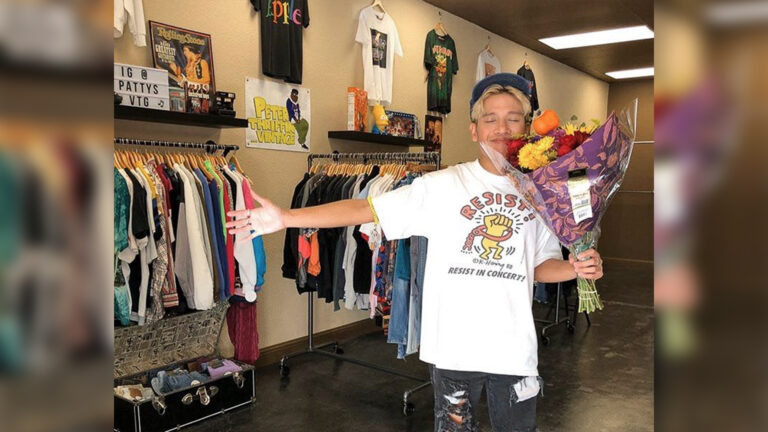
The corners of 2nd and D St. in Downtown Davis boast a few restaurants, salons and bars, but as of October, this corner also became home to a new vintage shop. Small but charming, Treehouse Vintage seems to be Davis’ new spot to buy quality vintage clothing and accessories. When checking out, customers will most likely be assisted by the owner himself, Kenny Gagni.

Gagni, 31, is a California native and a fashion connoisseur, with a specific expertise in vintage clothing. He said the sustainability aspect of vintage clothing is what most intrigued him — thrift and vintage shopping gives customers the ability to buy chic, stylish clothing second-hand, at an affordable price and without contributing to the carbon footprint.  

“I’ve loved clothes my whole life,” Gagni said. “I was always into fashion as a kid.”

Gagni worked in retail for about 10 years and attributes much of his knowledge of unique vintage and fashion to working at other thrift shops like Buffalo Exchange and learning from vendors. 

After becoming a frequent thrifter and a manager at Buffalo Exchange, Gagni decided it was time to explore his retail options. He began small, selling a few of his clothing racks of curated vintage pieces at the Sacramento Antique Fair. From there, Gagni said, his career started to take off.

“People started recognizing what I was doing,” he said.

As more and more clothing vendors shuffled into the Antique Fair, Gagni got to know more and more vendors and felt inspired to bring vendors together in a store setting. He decided to set up shop in Davis, not far from his from his hometown of Elk Grove.

“Davis is a great city,” Gagni said. “I believe they’re about sustainability. I found this spot and I fell in love.”

Gagni said Davis’ younger demographic is especially responsive to second-hand, sustainable clothing. Where better for a second-hand clothing store than a college town? 

 “I think [vintage] is very youth-driven,” Gagni said. “Anyone of any age can appreciate vintage, but especially college kids.”

With an increased interest in saving money and being environmentally conscious, younger people are more interested in buying second-hand, according to an article by the online consignment company ThredUp. 

Just before Gagni’s store opened, Davis customers had to say goodbye to one of the largest retailers in women’s fashion, Forever 21, when it closed down last September. The company announced that it had filed for bankruptcy shortly after its Davis store shut down. 

“Fast fashion is phasing out,” Gagni said. “People don’t want to spend tons of money on things that are being produced in factories and are contributing to our landfills and causing all these carbon emissions we really don’t need. I just think it was symbolic that I opened the store at the same time that they closed. It’s just a shift — it’s a whole cultural shift in fashion.”

Besides changing consumer tastes and ethics, the rise of thrifting also indicates a shift in what thrifting looks like and who’s doing it.

“There used to be a stigma that thrifting was for people who didn’t have a lot of money, it was kinda grimy to go thrifting,” Gagni said. “Before it took off, I did it because I didn’t have a lot of money and I thought it was cool to have a piece that was individualistic and [that] no one else had. I think sustainable fashion is ‘cool’ now. It just became mainstream — it’s now okay to thrift.”

Gagni noted that, as thrifting has become more mainstream, cheaper and typically more affordable thrift shops like Goodwill have taken notice and have started to increase their prices. 

“It’s kind of unfortunate sometimes because now thrifting has become expensive,” Gagni said. “It’s changed a lot. They’ve caught on and the public has caught on and it’s reflected in consumerism. It’s reflected in the pricing, in the supply and demand.” 

Similarly, customers might walk into a vintage store like Treehouse Vintage and notice that some items are on the pricier side. In response, Gagni said the quality vintage pieces his store sells are on the affordable side compared to prices for similar items. When it comes to thrifting, he said, you get what you pay for.

“It’s the curation — the resellers […] do the digging for you,” Gagni said. “Sometimes I’ll tell them, ‘You know, if you wanted to pay a lower price, but you want good pieces, then go to Goodwill, put in the work. Here, we do the work for you. Vintage is so one of a kind, and it’s really well made back in the day, too. I think it’s worth the price to spend on a quality vintage piece that no one else has. It’s well-made, most likely made in the USA and it’s cool, you know? You don’t see that stuff anymore.”

This is what sets Treehouse Vintage apart from stores like Goodwill: Gagni’s store is a vintage vendor collective. Essentially, customers walk in almost guaranteed to find a unique piece that will last a long time. While curated, his store isn’t a buy-sell-trade. The selection is specific, so customers know what to expect.

For those interested in stepping-up their thrift game and buying more second-hand, Gagni said it just requires a little effort.

“It’s consistency, really,” he said. “You just gotta know where to look. Think outside the box. Go to the more mom-and-pop shops, go to the donation centers, the Christian stores, beause sometimes they have hidden gems in there. Go to your local flea market or fair. I think the difference between a good thrifter and a great thrifter is their knowledge of where to find things. Strengthen your eye, do your research.”

And Treehouse Vintage is a great place to start. According to Gagni, business is booming.

“It’s really awesome, honestly. It’s exceeded my expectations,” he said. “The reception I’ve gotten from everyone has been so awesome. Everyone’s so nice in Davis!”

While Buffalo Exchange and the Sacramento Antique Fair are nice, Gagni said his favorite places to thrift are from local vendors — just like him. 

This month, new and returning Treehouse Vintage customers can expect more of the best from Gagni and the store’s vendors — “a good rotation of more heat,” Gagni said.

Customers can check out the store’s instagram @thetreehousevtg or visit @kennythrifts to see Kenny Gagni’s personal collection of unique finds.

“I think it’s just gonna get better — the store’s gonna get stronger,” he said.

Written by: Alana Wikkeling — features@theaggie.org

Social media: the game

Social media is a game we play against others and ourselves 

The video game industry is expected to generate more than $160 billion in revenue this year. It is estimated that 65% of American adults play video games, but we all play digital games of our own each time we scroll through social media. 

Gamification is known as the use of game design elements outside of traditional games, where socialization meets technology. This brand of entertainment is not only indicative of the relationship between social media and gaming, but of our society as a whole — everything from our fridges to our cars are gamified. 

Social media feeds and video games are constructed similarly. Codes, algorithms and assets build the digital worlds that we interface with on a daily basis. Designers make conscious decisions about which features support social play and continued engagement, creating structures for us to interactively communicate. 

Both social media and video games are traditionally believed to be anti-social spaces, but with the rise of connectivity capabilities, they are becoming entirely different ways to be social –– or so we think.

Social media even has arcade-like highscores that we give ourselves in the form of likes, retweets and follower counts. If we write a good comment, we expect to be rewarded with a plethora of likes. 

Risk and reward are at the core of every interaction we have online. Whether that means deciding to post a certain picture or responding to a text or game invite right away, our time depends entirely on how and when we choose to interact. “Black Mirror” depicts this relationship in the episode “Nosedive,” in which characters rate other humans based on their interactions — a world not far off from the one we are creating today.  Rating each and every interaction is what we already do in nearly every gig economy. Uber, Lyft and Airbnb all are built on this form of surveillance to hold users accountable. 

In this massively multiplayer online game — this social media world that we live in —  we construct characters for ourselves and interact with the other characters in our lives. No one really believes that we realistically represent ourselves online, and why should they? It’s all part of the game. We evolve and update our profiles in the same way that we gain experience points and level up our characters.  

Just like all games, there are varying levels of engagement and difficulty which we can all take part. We can be passive and just watch the posts we follow, or we can be active and try to create media of ourselves. 

Media incentivizes users by rewarding them for their endless hours spent on their platform. Snapchat gives you badges for certain achievements that you can collect like trophies. Instagram lets users upload highlights from their life just like you would a highlight, or replay, from a video game. It lets users livestream and share experiences the same way Twitch users can livestream games online. 

Twitch is the ultimate combination of both social media and video games. With more than 15 million unique daily viewers, it is becoming a staple in most households. It uses every social aspect of games and puts it all in one spot. 

Social media is a skill we have to maintain, like a muscle or body that we have to keep in shape. Influencers and content producers, like professional gamers, constantly hone their skills. 

Social media has already infiltrated games. The most profitable entertainment product of all time, Grand Theft Auto V, made social media a part of gameplay through an in-game phone that lets you access apps like “Life Invader.” This Facebook-like app allows users to “stalk” their friends and satirically publicizes data mining. 

Video games and social media are built on social and technical systems. Together they create a network that is highly valued in our increasingly technological society, forcing people to be social in new ways. This demand for social interaction in conjunction with our mounting isolation characterizes much of our generation’s internal conflict. Existing in front of the comfort of our screens while still wanting to be connected to the world is an inherent struggle. We’ve become hooked on the game of social interaction while remaining isolated ourselves. 

Written by: Calvin Coffee – cscoffee@ucdavis.edu 

Disclaimer: The views and opinions expressed by individual columnists belong to the columnists alone and do not necessarily indicate the views and opinions held by The California Aggie